Blog

  • Ajay’s Café honoured with ‘Leading Café Chain of the Year’ award at Pride of Gujarat Awards 2026

    Ajay’s Café honoured with ‘Leading Café Chain of the Year’ award at Pride of Gujarat Awards 2026

    Ahmedabad (Gujarat) [India], June 4: Ajay’s Café, one of India’s fastest-growing homegrown café and quick service restaurant (QSR) brands, has been honoured with the ‘Leading Café Chain of the Year’ award at the Pride of Gujarat Awards 2026.

    The award was presented by Gujarat Chief Minister Shri Bhupendra Patel at a ceremony held at Hyatt Regency, Ahmedabad, on May 30th, recognising Ajay’s contribution to entrepreneurship, employment generation, and the growth of the organised café industry.

    Founded by brothers Ajay Solanki and Jaideep Solanki, Ajay’s has grown from a single outlet in Navsari into a network of more than 265 outlets across 58 cities, emerging as one of India’s fastest-growing cafés and QSR brands. The recognition marks another milestone in the company’s growth journey, which has been built on a franchise-driven model focused on creating opportunities for aspiring entrepreneurs.

    Receiving the award, Ajay Solanki, Founder and Director of Ajay’s, said“Awards recognise what has been achieved, while responsibility lies in what comes next. This honour acknowledges our journey so far, but it also strengthens our commitment to dream bigger, execute better, and create a greater impact. We accept this recognition with gratitude and renewed determination to achieve our future goals.”

    Since its inception in 2014, Ajay’s Café has enabled more than 200 first-generation entrepreneurs to establish and grow their own ventures through its franchise network. The company has also generated direct employment opportunities for nearly 1,000 people, contributing to local economic development across multiple cities. The brand today serves thousands of customers daily across Gujarat, Rajasthan, and other markets.

    The brand’s philosophy extends beyond serving food. With a mission to make quality food accessible and affordable, Ajay’s Café has focused on building a business model that promotes shared growth among customers, employees, and franchise partners. Notably, the company does not charge royalty or profit-sharing fees from franchise partners, enabling them to build sustainable and profitable businesses alongside the brand.

    Looking ahead, Ajay’s Café plans to launch 30 outlets in the Vasai-Virar region, along with additional outlets in Rajkot and Udaipur, under the Company Owned, Company Operated (COCO) model by the end of the current year. It aims to cross 500 outlets by 2027 as part of its vision of becoming India’s largest QSR and café chain by 2030.

  • Kabuni Secures Shreyas Iyer as Super Coach to Advance Its Vision for Global Cricket Training

    Kabuni Secures Shreyas Iyer as Super Coach to Advance Its Vision for Global Cricket Training

    Kabuni secures Shreyas Iyer as their Super Coach.

    Mumbai (Maharashtra) [India], June 05: Kabuni, the AI-powered sports technology platform redefining cricket training, today announced onboarding one of India’s most dynamic batting talents, Shreyas Iyer, as Super Coach.

    Iyer joins a growing roster of legendary Kabuni Super Coaches including Sourav Ganguly, Shane Watson, and AB de Villiers – all four will appear at the Kabuni Showcase in Mumbai on 7th June where Kabuni formally unveils its platform and opportunities for schools, parents, and aspiring cricketers in India.

    Central to the launch is a new nationwide youth tournament, “Want to Play for a Legend?” open to cricketers aged 12–16 and launching in June. Participants will compete using Kabuni’s technology for the chance to play in Shreyas Iyer’s team — putting the platform’s real-time feedback tools at the heart of the selection process.

    Kabuni tracks player movement and ball data in real time, translating it into practical, personalised feedback delivered through voice, video, and visual guidance. The platform is built around a “1% improvement” philosophy — incremental adjustments that compound into meaningful development over time. Leveraging biomechanics and motion tracking, it is designed to make the kind of coaching previously available only at elite level accessible to players at every stage of the game.

    Kabuni’s platform modernises cricket training by tracking player movement and ball data in real time, turning it into clear, practical feedback. Built around a “1% improvement” philosophy, it helps players make small adjustments that deliver meaningful gains over time. Using voice, video, and visual guidance, the platform makes feedback simple to understand and apply, especially for younger players.

    The all-star Super Coach line-up marks another momentous step forward in Kabuni’s mission to make world-class cricket coaching accessible to players at every level, with a flagship youth tournament launching in India later this year. Fans aged between 12-16 will be able to compete for the chance to play for Iyer’s team through a new nationwide tournament, ‘Want to Play for a Legend?’, launching in June and using Kabuni’s technology.

    With another cricket legend putting their support behind the brand, Kabuni strengthens its mission to combine world-class cricket expertise with accessible technology, making high-quality coaching available beyond the professional game. The platform leverages biomechanics, motion tracking, and performance data to deliver personalised, real-time insights, helping players accelerate their development.

    Shreyas Iyer, Super Coach, Kabuni, said:

    “The depth of talent in Indian cricket is currently unprecedented. What’s missing isn’t ability — it’s access to the kind of feedback that tells you exactly what to work on. The margins between where you are and where you want to be are narrow — and that’s exactly what Kabuni is about. Giving young players the tools to close that gap faster than I could in my early years.”

    Nimesh Patel, Founder & CEO, Kabuni, said: “Shreyas Iyer represents the modern cricketer – explosive, energetic, and always looking to move the game forward. Just as importantly, his mentality reflects Kabuni’s wider vision: a platform built to develop complete cricketers, blending technical progression with mental strength to help players perform with conviction, intelligence, and self-belief.”

    As Kabuni continues to expand its footprint, Iyer’s appointment reinforces its ambition to build a globally relevant, technology-led coaching ecosystem – one that bridges the gap between grassroots participation and elite performance.

    If you object to the content of this press release, please notify us at pr.error.rectification@gmail.com. We will respond and rectify the situation within 24 hours.

  • HTL International Drives Sustainable Living Through Thoughtful Design, Circular Innovation and Responsible Manufacturing

    HTL International Drives Sustainable Living Through Thoughtful Design, Circular Innovation and Responsible Manufacturing

    New Delhi [India], June 05: As sustainability continues to shape consumer choices and industry priorities, companies across sectors are re-evaluating how products are designed, sourced, and manufactured. At HTL International, environmental responsibility is increasingly embedded into every stage of the value chain, from material innovation and sourcing practices to manufacturing processes and product longevity.

    Across its portfolio of brands — Fabbrica, Domicil, and Corium — HTL continues to champion initiatives that support more conscious living through thoughtful design, circular material innovation, and responsible production practices.

    Plastic waste remains one of the world’s most pressing environmental challenges. Every minute, more than a million plastic bottles are produced globally, while nearly 90% never enter recycling streams. Recognising the need for alternative material pathways, HTL has introduced fabric innovations that transform post-consumer PET bottles into upholstery materials. Through a proprietary process, used PET bottles are washed, crushed, converted into fibres, and spun into durable polyester yarns suitable for furniture applications. Each metre of fabric incorporates up to 37 recycled plastic bottles, giving new life to plastic waste while supporting more responsible material use.

    This innovation is showcased through HTL’s ECO Collection, featuring sustainable upholstery options such as Belmont and Broderik. Designed to reduce environmental impact while maintaining performance and comfort, these fabrics are both Oeko-Tex and REACH certified, ensuring they are free from harmful substances. Available across HTL’s brands and compatible with a wide range of furniture designs, the collection allows consumers to make more environmentally conscious choices without compromising on aesthetics or functionality.

    HTL’s commitment to sustainable living extends seamlessly into the Domicil Sleep collection, where mattress design combines comfort, wellbeing, and responsible material selection. From Woolmark-certified Australian wool, prized for its natural breathability and temperature-regulating properties, to eco-conscious Swedish fabrics featured in select models, every element is carefully chosen to enhance both sleep quality and environmental responsibility. Toxin-free materials, suitable even for infants and individuals with heightened sensitivities, combined with antibacterial and anti-mite protection, help create healthier and more hygienic sleep environments. Together, these features reflect HTL’s ongoing commitment to delivering sleep solutions that support both personal wellbeing and a more sustainable future.

    Beyond material and product innovation, HTL’s environmental initiatives extend across the value chain, beginning with material sourcing and continuing through production and packaging. Our hides are sourced responsibly from Australia and South America not involving any deforestation of the Amazon Biome. With a leather tracking system to ensure the origin of the hides are traceable. HTL’s tanneries are certified under ISO 14001 environmental management standards and operate water treatment systems to ensure wastewater is treated before discharge. We have sustainable leather sourcing and tanning in partnership with “Leather Working Group”, “Member of BLC Leather Technology Centre” and ‘TUV Nord Cert GmbH from ISO14001’.  Additionally, all packaging uses carton-based materials designed to be fully recyclable.

    “At HTL, sustainability is not limited to a single initiative or product category; it shapes how we think about design, sourcing, manufacturing, and innovation. As awareness around responsible living continues to grow in India and globally, we believe consumers increasingly want products that reflect both personal style and environmental responsibility. Our focus remains on creating solutions that reduce impact today while contributing towards a more sustainable future for the next generation,” said Manoj Nair, Country Head (Brands) – India, Middle East & Africa, HTL Group of Companies.

    As discussions around indoor environmental quality gain momentum, HTL is also focused on promoting safer furniture materials and manufacturing practices. Industry reports have highlighted concerns around off-gassing and emissions associated with adhesives, sealants, and fabric materials used in furniture production. To address these concerns, HTL uses non-toxic adhesives and sealants and works with suppliers adhering to recognised standards such as the Global Organic Textile Standard (GOTS). This approach supports the use of safer materials throughout the production process while maintaining product quality and performance.

    By integrating material innovation, responsible sourcing, and safer manufacturing processes, HTL continues to strengthen its approach towards building furniture solutions designed for both people and the environment.

    About HTL Group:

    Founded in Singapore, HTL is a much admired and trusted global leader in the upholstered furniture industry for 5 decades. Our founders Mr. Phua Yong Pin and Mr. Phua Yong Tat started HTL in 1976 as one of the first sofa makers in the island-state of Singapore. After achieving success in the local market, they turned their attention to acquire technical expertise for design, product development and production of leather sofas from Laauser GmbH, Germany. Our vision of “A Sofa for Every Home” inspires us to build enduring relationships with all our stakeholders.

    • 2.85 Mnseats per year from 4 sofa plants
    • 1,400 + partnering with local businesses
    • 120 Mnsq. ft of leather per year from 2 leather tanneries
    • 5,000 + retail points

    Today, we operate in over 60+ countries. Our global presence enables us to provide local partners in all key markets with exceptionally timely and effective support.

    Visit: https://www.htlinternational.com/

    If you object to the content of this press release, please notify us at pr.error.rectification@gmail.com. We will respond and rectify the situation within 24 hours.

  • Mitsu Chem Plast Limited Scales Up – Announces ~2,550 MT/Year Capacity Addition at Khalapur

    Mitsu Chem Plast Limited Scales Up – Announces ~2,550 MT/Year Capacity Addition at Khalapur

    Mumbai (Maharashtra) [India], June 4: Mitsu Chem Plast Limited (BSE: 540078), a leading certified manufacturer of polymer-based molded products, is pleased to announce a significant capacity addition at its Unit 3 (Khalapur) facility in Maharashtra. The Company is adding approximately 2,550 MT/Year of manufacturing capacity, with the addition of new machinery financed through internal accruals.

    Key Highlights of the Capacity Addition:

    • Existing manufacturing capacity: 29,900+ MT/Year (combined capacity across Unit I, Unit 2, Unit 4 at Tarapur, and Unit 3 at Khalapur) 
    • Existing capacity utilization: 64% for the year ended 31st March 2026 
    • Proposed capacity addition: Approx. 2,550 MT/Year at Unit 3 (Khalapur), in addition to the Company’s existing manufacturing capacity of 29,900+ MT/Year 
    • Mode of financing: Internal accruals 
    • Expected completion: June 2026 
    • Rationale: Capacity addition for sustaining growth, product diversification, meeting market demand, and exceeding customer expectations

    Strategic Expansion and Growth:

    This capacity addition marks an important step in Mitsu Chem Plast’s ongoing growth strategy. By expanding manufacturing capacity at its Khalapur facility, the Company is proactively positioning itself to meet the rising demand from its diverse customer base across industrial packaging, healthcare, infrastructure, and emergency handling product verticals.

    The additional capacity will enable the Company to better serve its OEM customers across chemical, pharmaceutical, agrochemical, and allied sectors, while also supporting its product diversification initiatives. With existing capacity utilization at 64%, this timely expansion reflects the management’s confidence in the sustained demand outlook and the Company’s ability to scale operations efficiently.

    This investment, funded entirely through internal accruals, also reflects the financial discipline and strength of the Company’s balance sheet, ensuring growth without leveraging the business.

    Commenting on this development, Mr. Sanjay Dedhia, Managing Director of Mitsu Chem Plast Limited said, “This capacity addition at our Khalapur facility is a reflection of the growing confidence our customers place in us and the strong demand we continue to witness across our product Verticals. At Mitsu Chem Plast, we have always believed in staying ahead of market requirements through proactive capacity planning and operational excellence. By adding approximately 2,550 MT/Year at Unit 3, we are ensuring that we remain well-equipped to serve our customers without disruption, while also creating room for product diversification and new business opportunities. This expansion, funded through internal accruals, is a testament to the financial strength of our business and our commitment to delivering sustained, profitable growth for all our stakeholders.”

    About Mitsu Chem Plast Limited

    Mitsu Chem Plast Limited (BSE – 540078) is a certified manufacturer of polymer-based molded products, specializing in the creation and marketing of innovative, technically advanced solutions. The company serves a diverse range of growing industries, including Industrial Packaging Solutions, Healthcare Products, Infrastructure Products, and Emergency Handling Solutions, all supported by robust in-house testing and quality control systems. The company’s product portfolio features Molded Industrial Plastic Packaging items like drums, jerry cans, bottles, jars, and related accessories; Infrastructure furniture parts such as chair shells; Hospital furniture components including panels, railings, planks, and trolley parts; and Rescue and safety equipment like spine boards. Mitsu Chem Plast Limited primarily caters to Original Equipment Manufacturers (OEMs) across a variety of sectors, including chemical, pharmaceutical, dyes, agrochemical, disinfectants, diagnostic, hospital, and infrastructure furniture. Its recent product innovations include pails for lubricants and new variants like GL 45 caps and TSV caps. The company’s journey began 35 years ago with its first plant in Boisar, Tarapur. Today, it operates four manufacturing facilities in Maharashtra: three plants in Boisar and Tarapur, and one in Khalapur.

    In FY26, Mitsu Chem Plast reported Total Income of ₹ 35,084.56, with an EBITDA of ₹ 3,466.31 Lakhs and a Net Profit of ₹ 1,561.87 Lakhs.

    If you object to the content of this press release, please notify us at pr.error.rectification@gmail.com. We will respond and rectify the situation within 24 hours.

  • Cultural Envoy Sundeep Bhutoria Calls on West Bengal Governor; Presents Handwritten Copy of Tagore’s Gitanjali

    Cultural Envoy Sundeep Bhutoria Calls on West Bengal Governor; Presents Handwritten Copy of Tagore’s Gitanjali

    Cultural activist Sundeep Bhutoria presenting a handwritten copy of Tagore’s Gitanjali to West Bengal Governor R N Ravi at Lok Bhavan, Kolkata.

    Kolkata (West Bengal) [India], June 05: Cultural envoy and philanthropist Mr. Sundeep Bhutoria, Managing Trustee of the Prabha Khaitan Foundation, paid a courtesy call on the Governor of West Bengal, Shri R N Ravi, at Lok Bhavan. In a gesture of cultural goodwill, Mr. Bhutoria presented the Governor with a handwritten copy of Nobel Laureate Rabindranath Tagore’s Gitanjali — the timeless masterpiece that first carried the voice of Bengal to the world.

    The meeting provided an occasion to discuss the Foundation’s wide-ranging initiatives in literature, arts, and culture. Through its flagship platforms, the Prabha Khaitan Foundation has long championed India’s creative heritage, fostering dialogue across communities and building lasting bridges between the arts and the public.

    A prominent Kolkata-based cultural activist, author, and columnist, Mr. Bhutoria serves on the Board of Trustees of the Victoria Memorial Hall, Kolkata, to which he was nominated by the Ministry of Culture, Government of India. His forthcoming book, Victoria Memorial: The People’s Monument — with a foreword by Grammy Award-winner Ricky Kej — is set for imminent release. He too has also served as a Trustee of the Indian Museum.

    Mr. Bhutoria currently serves on the Advisory Committee of the Indian Council for Cultural Relations (ICCR) and has previously been a Member of the Expert Committee of the Cultural Function and Production Grant, Ministry of Culture. He is a Fellow of the Royal Society of Arts, London, and a member of the Royal Overseas League, London, India International Centre, India Habitat Centre, and the Rajasthan International Centre. He also serves as Trustee of the Education for All Trust.

    In the corporate sphere, Mr. Bhutoria is a Board Member of Petronet LNG Limited, a joint venture promoted by four energy sector majors — BPCL, GAIL, IOCL, and ONGC.

    If you object to the content of this press release, please notify us at pr.error.rectification@gmail.com. We will respond and rectify the situation within 24 hours.

  • From Hyderabad Classrooms to IIT Campuses — Resonance Students Make It Big in JEE Advanced 2026

    From Hyderabad Classrooms to IIT Campuses — Resonance Students Make It Big in JEE Advanced 2026

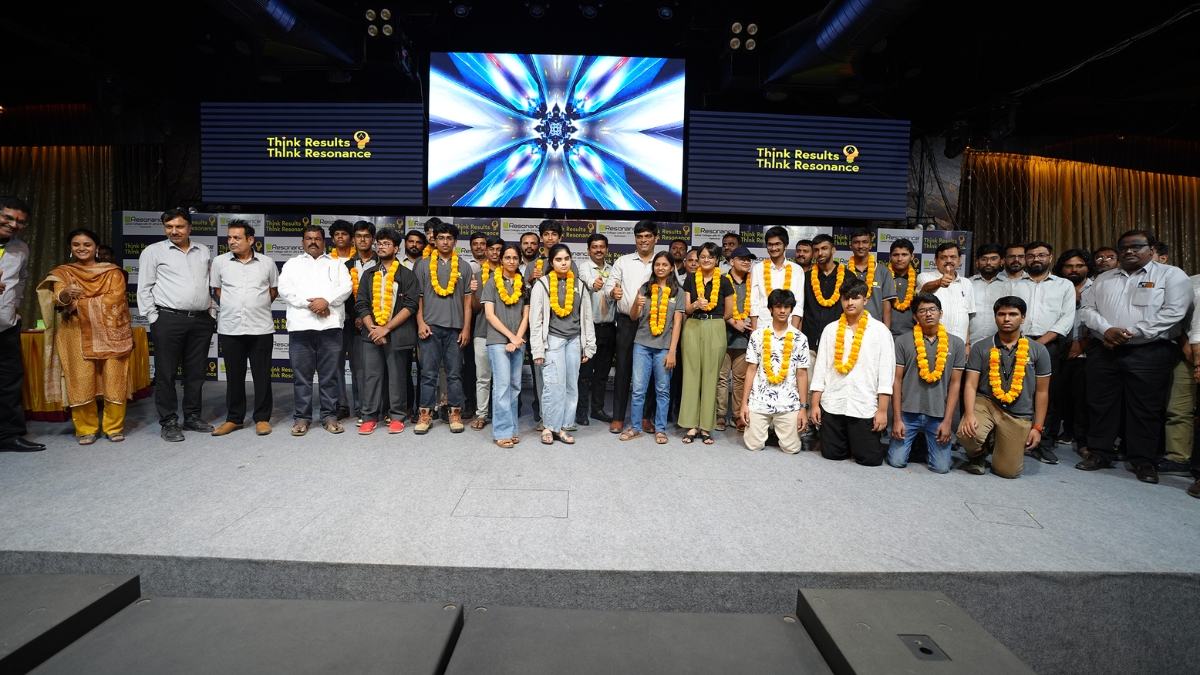
    Resonance Junior Colleges has yet again created an impressive success record.

    Hyderabad (Telangana) [India], June 4: With the JEE Advanced 2026 results declared on June 01, 2026, Resonance Junior Colleges has yet again created an impressive success record. Every Resonance Campus has made its mark by scoring exceptionally high, showcasing exceptional academic performance. 

    17 students have scored under 1000 ranks, an impressive achievement, and it stands as a testament. The result complements the institute’s activities, including a results-oriented academic approach, experienced faculty, practice sessions, and unwavering mentoring.

     Overall JEE Advanced 2026 Result Highlights:

    • 17 students secured ranks below 1000 across Open and other categories.
    • Over 185 students are expected to secure admission into prestigious IITs across India.
    • Every Resonance Hyderabad campus has contributed successful candidates to the IIT list this year.

    Speaking on the occasion, Sri Purnachandra Rao, Director, Resonance Educational Institutions, Telangana & Andhra Pradesh, said:

    • “It is the proudest moment for Resonance Hyderabad as their students reflected hard work, conceptual clarity, and determination to have proven results.
    • Further, he said: “The faculty and academic teams at Resonance Hyderabad work continuously to provide the right guidance, practice, and motivation. These results inspire Resonance Hyderabad to nurture students to become future IITians.
    • While addressing the gathering, the director congratulated achievers, parents, and faculty for their devotion, dedication, and the combined effort of everyone in helping their students succeed.

    Top Rankers Below 1000: All Categories ( Inclusive)


    S.No. Names Application No. Rank
    1. Abhinav Chitturi 266130820 AIR 11
    2. Ganta Pragnesh 266145145 AIR 94
    3. Sapavat Paavana Sameeksha 266132592 AIR 105
    4. Settipalli Anwitha Reddy 266130588 AIR 190
    5. Cheera Manaswini 266132537 AIR 273
    6. Badavath Akshith 266129092 AIR 315
    7. Bornel Harshit Kumar 266137333 AIR 397
    8. Buneti Adithya Reddy 266135849 AIR 435
    9. Pawar Karan Pandu 266134659 AIR 602
    10. Aditya Krishna Varre 266132675 AIR 790
    11. Manda Sathvik 266152015 AIR 803
    12. Tishya Eshwar Konkati 266135090 AIR 804
    13. Samriddh Bhattacharya 266144014 AIR 889
    14. Revanth Vangala 266131487 AIR 956
    15. Prem Kumar K 266146206 AIR 959
    16. Boda Preetham 266145809 AIR 960
    17. Saketh Reddy Bommadi 266145167 AIR 990

    About Resonance Hyderabad:

    Resonance Horizon:

    Having started its flagship junior college in 2018, Mr Purna Chandra Rao Narra focused on a well-balanced, integrated curriculum that combines academics and competitive preparation (IIT-JEE & JEE). Over 7 years, Resonance Institutions in Hyderabad have established several verticals, such as schools, colleges, e-learning, Foundation Centres and Global Studies, aggregating to 50+ campuses across Telangana & Andhra Pradesh.

    Resonance Junior Colleges:

    1. Resonance Hyderabad comprises 34 junior college campuses across all major locations in Hyderabad.
    2. The Resonance Junior College campuses are structured to meet local educational needs, and students can seek admission to the integrated curriculum for IIT-JEE or NEET, depending on the campus’s composition.
    3. Among the 34 campuses, students can join residential or day scholar programs in co-educational, girls-only, or boys-only.

    Resonance Schools

    1. Resonance Hyderabad has well-established schools across 16 campuses in key locations in Hyderabad, and one in Kurnool, Andhra Pradesh. In addition, Resonance Schools have begun Resonance Foundation Centre in Tirupati, Nizamabad, and Karimnagar.
    2. Within the existing educational system adopted by Resonance Hyderabad, the Resonance Schools have adopted a new learning system that includes Nursery through Grade X. This complete educational ecosystem elevates education to the next level.
    3. The new system includes the right foundation at every age that complements the futuristic course of every aspirant, enabling them to achieve their goals.

    If you object to the content of this press release, please notify us at pr.error.rectification@gmail.com. We will respond and rectify the situation within 24 hours.

  • Why Older-Car Owners Need a Different Renewal Strategy

    Why Older-Car Owners Need a Different Renewal Strategy

    Mumbai (Maharashtra) [India], June 4: Renewing car insurance for an older vehicle is often treated as a routine task, but the needs of a car can change significantly over time. As a vehicle ages, its market value declines, repair costs may vary, and certain policy features that were once useful may become less relevant. 

    At the same time, older cars can face a higher risk of mechanical issues and wear-related damage, making adequate coverage an important consideration. A careful review before renewal can help ensure that the policy remains suitable, cost-effective, and aligned with the vehicle’s current condition and usage. 

    Car Value Reduces Every Year

    As a car gets older, its market value usually moves down. This change matters because the value selected in the policy can affect certain claim situations, as mentioned in the policy wording.

    A lower value may reduce the premium, but it can also lower the amount considered in some claims. A higher value may increase the premium, but it should still match the car’s condition. When owners buy car insurance online or renew an existing policy, they should review the car’s age, usage, service record, and general condition before selecting the value.

    Repair Costs Increase with Age

    Older cars may need more repair work because parts and systems can wear down over time. Even a regularly serviced vehicle may need extra attention as it ages.

    During renewal, owners should look at how useful the cover will be if the car needs repair after an insured event. The policy should be reviewed for garage access, claim process, repair support and own-damage cover. A car used daily may need a different plan from one used occasionally.

    Some Add-Ons No Longer Make Financial Sense

    Add-ons can be useful when they match the vehicle’s age and use. However, the same add-ons may not remain suitable throughout the car’s life.

    Some add-ons may cost more than the value they offer for an older car. Others may not be available after a certain vehicle age, depending on insurer guidelines and policy terms. Owners should keep only the add-ons that support a clear need and avoid renewing extras only because they were selected earlier.

    Breakdown Assistance Becomes More Important

    An older car may be more likely to face sudden trouble during travel, especially if it is used often or taken on longer routes. This makes breakdown assistance worth reviewing at renewal.

    This feature may support towing, minor on-road help or service coordination, based on the policy terms. Before adding it, owners should read the conditions carefully. Service location, usage limits, and available support should match the way the car is normally driven.

    IDV Needs Careful Review

    IDV means Insured Declared Value. It is the value considered by the insurer in certain situations, based on the policy terms.

    For older cars, IDV should not be treated only as a way to reduce premiums. Setting it too low may affect the amount considered in relevant claim situations. A fair IDV should reflect the car’s age, condition, and current value. Owners should compare the suggested value with the car’s actual state before renewal.

    Policy Terms Can Change for Older Vehicles

    Insurance terms can differ as a vehicle gets older. These changes may relate to cover, add-ons, inspection, or claim conditions. Reading the renewal details before payment can prevent confusion later. The following checks can make the review simpler:

    • Confirm whether own-damage cover is available for the car.
    • Review add-on eligibility before selecting any extra cover.
    • Check whether an inspection is needed before renewal.
    • Compare garage access with your regular travel areas.
    • Read deductible and claim-related conditions carefully.
    • Ensure third party insurance remains active as required by law.

    Continuing the Same Policy Can Increase Costs

    Renewing the same policy without review may lead to paying for cover that no longer suits the car. Older vehicles need a fresh look at every renewal. Convenience is useful, but renewal should still be checked against current needs. A simple review can support a more suitable decision:

    • Match the premium with the vehicle’s present value.
    • Remove add-ons that no longer serve a clear need.
    • Adjust IDV only after checking the car’s condition.
    • Compare the cover type with the car’s daily usage.

    Conclusion

    Older-car insurance renewal should focus on value, use, and repair needs together. Repeating last year’s policy or reducing the premium without review may not suit the vehicle’s current condition. Owners should review IDV, add-ons, breakdown support, garage access, and policy terms before renewing. A clear renewal check can make the policy more suitable for the car’s present stage and reduce renewal-related doubts at a later stage during future policy checks.

    If you object to the content of this press release, please notify us at pr.error.rectification@gmail.com. We will respond and rectify the situation within 24 hours.

  • Maximus International Closes FY26 with 18% Revenue Growth and Record Q4 Performance

    Maximus International Closes FY26 with 18% Revenue Growth and Record Q4 Performance

    New Delhi [India], June 4: Maximus International Limited (BSE: 540401), a premier manufacturer and distributor of specialty lubricants and petroleum products, announced its Board-approved audited financial results for the quarter and financial year ended 31st March 2026 on 28th May 2026

    Maximus International Limited delivered a strong financial performance during the period, driven by higher business activity across its operating segments. The overall performance indicates solid expansion, characterized by double-digit growth in consolidated revenue and profitability metrics on both a year-over-year (YoY) and quarter-over-quarter (QoQ) basis. Operational efficiencies supported this expansion, while the company’s asset base and future growth capabilities were simultaneously strengthened through strategic capital expenditure investments focused on modernization and infrastructure development.  

    Key Financial Highlights:

    • FY 2025-26 Highlights

    On a Consolidated basis, the full financial year performance recorded robust upward movement compared to the previous fiscal year:

    • Revenue: Revenue from Operations grew by 18% to ₹1848 Mn for the year ended 31st March 2026, up from ₹1569 Mn in the previous year.
    • EBITDA: EBITDA expanded by 14%, reaching ₹173Mn compared to ₹152 Mn in Previous FY.
    • PBT: Profit Before Tax (PBT) reached ₹111Mn, marking a growth of 7% over the ₹103 Mn posted in the previous year.
    • Net Worth increased to 871 Mn as at 31 March 2026 from ₹721 Mn as at 31 March 2025, representing growth of 20.78%.
    • Q4 FY 2025-26 Highlights
    • Revenue for the quarter stood at 560Mn, compared to 435 Mn in Q3’FY26, registering 29% growth.
    • EBITDA improved by 26% and 42% as compared to Q3’FY26 and Q4’FY25 respectively. 
    • Net Profit (PAT) stood at ₹22 Mn, up by 12% as compared to Q3’FY26.
    • Strong Capitalization and Balance Sheet Expansion
    • During the financial year ended 31st March 2026, the company made substantial strategic capital investments. The investment was primarily driven by the modernization of plant and equipment and infrastructure expansion. These investments are aimed at enhancing operational efficiency, improving logistics capabilities, supporting future business growth, and creating long-term value for stakeholders.

    Financial Synopsis:

      All amounts are in INR Mn, unless otherwise stated

    Particulars QoQ YTD
    Mar-26 Dec-25 Change QoQ Mar-26 Mar-25 Change YoY
    Revenue 560 435 ↑29% 1848 1568 ↑18%
    EBITDA 48 38 ↑26% 173 152 ↑14%
    PBT 31 23 ↑35% 111 103 ↑7%
    PAT 22 20 ↑12% 93 91 ↑2%
    Total Comprehensive Income 51 27 ↑91% 150 104 ↑44%
  • Europe Wants Its Digital Independence Back: The New Technology Sovereignty Race Has Begun

    Europe Wants Its Digital Independence Back: The New Technology Sovereignty Race Has Begun

    Mumbai (Maharashtra) [India], June 4: For decades, Europe has occupied a curious position in the global technology landscape. It helped shape the modern internet, produced world-class researchers, established some of the world’s strongest privacy regulations, and built advanced industrial economies. Yet when it came to the technologies defining the twenty-first century, Europe often found itself playing customer rather than creator.

    The cloud infrastructure powering businesses? Mostly American.
    The advanced AI models dominating headlines? Primarily American.

    The semiconductor manufacturing ecosystem underpinning modern electronics? Largely concentrated in Asia.

    Europe’s role increasingly resembled that of a sophisticated tenant living in a digital house owned by someone else.

    Now, European policymakers appear determined to change that.

    The European Union has unveiled a significant technology sovereignty initiative aimed at reducing dependence on foreign cloud providers, strengthening domestic semiconductor capabilities, expanding AI infrastructure, and increasing data-center capacity across member states. On paper, the proposal reads like an ambitious industrial strategy. In reality, it represents something much larger: an attempt to regain control over the technological foundations of Europe’s future.

    The timing is not accidental.

    Artificial intelligence has transformed technology from a commercial competition into a geopolitical one. Nations are no longer merely competing for market share. They are competing for computational power, data ownership, semiconductor access, and strategic independence.

    In that environment, relying heavily on external providers suddenly feels less like globalization and more like vulnerability.

    And nothing motivates policymakers quite like discovering they may not fully control the infrastructure running their economies.

    The End Of The Comfortable Dependency Era

    For years, technological interdependence was celebrated as a feature rather than a flaw.

    American companies provide cloud services. Asian manufacturers supplied chips. European businesses consumed both. The arrangement generated efficiency, lowered costs, and accelerated innovation. Everyone appeared to benefit.

    Until geopolitical tensions started interrupting the script.

    Supply-chain disruptions exposed vulnerabilities during the pandemic. Trade restrictions demonstrated how quickly access to critical technologies could become politicized. Semiconductor shortages reminded governments that modern economies are remarkably fragile when they lack access to essential components.

    Suddenly, dependency looked less efficient and riskier.

    The European Union’s latest initiative reflects a growing belief that technological infrastructure should be treated similarly to energy, transportation, or national defense. It is no longer viewed as simply another industry. It has become strategic infrastructure.

    That realization has fundamentally altered how governments approach technology policy.
    What was once considered a business issue is increasingly becoming a national priority.

    Why Artificial Intelligence Changed Everything

    The rise of artificial intelligence accelerated this shift dramatically.

    Unlike previous digital revolutions, AI requires extraordinary amounts of computing power. Advanced models depend on specialized chips, massive data centers, sophisticated networking systems, and enormous quantities of electricity.

    The organizations controlling those resources wield considerable influence.
    Europe understands this reality.

    While the continent boasts exceptional academic research and scientific talent, many of the world’s most influential AI platforms originate elsewhere. Companies in the United States currently dominate frontier AI development, while semiconductor manufacturing remains heavily concentrated in East Asia.

    That combination creates a strategic challenge.

    Europe can regulate technology.
    Europe can consume technology.
    But increasingly, European leaders want Europe to build technology.

    The sovereignty initiative seeks to address precisely that imbalance by encouraging investment in local infrastructure and domestic innovation ecosystems.

    In simpler terms, Europe would like a larger seat at the table where technological futures are being decided.

    A surprisingly reasonable request for a continent with over 440 million citizens and one of the world’s largest combined economies.

    The Semiconductor Question Nobody Can Ignore

    If artificial intelligence is the engine of the modern technology race, semiconductors are the fuel.

    Without advanced chips, AI systems remain theoretical ambitions rather than practical products.

    This explains why semiconductor manufacturing has become one of the most strategically important industries on Earth.

    Europe is not starting from zero. Companies such as ASML have already become indispensable players in the global chip ecosystem. The Dutch technology giant supplies advanced lithography systems used by leading semiconductor manufacturers worldwide.

    Yet possessing a crucial piece of the supply chain differs significantly from controlling large-scale chip production.

    European policymakers increasingly recognize that future competitiveness may depend on developing stronger domestic manufacturing capabilities. The challenge, however, is financial.

    Building advanced semiconductor facilities requires investments measured in tens of billions of dollars. Individual fabrication plants can cost more than major infrastructure projects. The expertise required is specialized, the timelines are lengthy, and the competition is intense.

    In other words, becoming a semiconductor powerhouse is somewhat more complicated than announcing a policy initiative and hoping physics cooperates.

    The Data Center Arms Race

    Another critical component of the sovereignty strategy involves expanding European data-center capacity.

    Artificial intelligence systems require vast computational resources. Training advanced models demands enormous clusters of processors operating continuously for weeks or months. Running those models at scale requires additional infrastructure capable of serving millions of users simultaneously.

    This is where the numbers become staggering.

    Global spending on AI infrastructure has surged into the hundreds of billions of dollars. Major technology firms are investing aggressively in cloud facilities, networking systems, and specialized computing hardware.

    Europe wants a larger share of that ecosystem.

    The rationale is understandable. Data centers generate economic activity, create jobs, support digital services, and strengthen national resilience. They also ensure that sensitive information can remain within regional jurisdictions.

    Of course, they consume tremendous amounts of energy.
    Therein lies another complication.

    Europe simultaneously wants more AI infrastructure and more environmental sustainability. Achieving both goals may require a level of engineering creativity usually reserved for science-fiction novels.

    The Pros And Cons Of Technological Sovereignty

    The initiative offers several potential advantages.

    Greater infrastructure independence could improve resilience during geopolitical disputes. Increased domestic investment may stimulate innovation, create jobs, and strengthen Europe’s technology sector. Businesses could benefit from additional cloud options and more localized services.

    Supporters argue that reducing dependence on external providers enhances strategic flexibility and long-term competitiveness.

    However, critics raise legitimate concerns.

    Technology ecosystems thrive on openness, collaboration, and scale. Building parallel infrastructure can be extraordinarily expensive. There is also the risk that government-led initiatives become bureaucratic rather than innovative.

    Some analysts question whether Europe can realistically catch up to established technology leaders without spending far more aggressively than it currently plans.

    Others worry that excessive focus on sovereignty could inadvertently reduce global collaboration.

    As with most ambitious policy initiatives, the truth likely exists somewhere between optimism and skepticism.

    The Bigger Story Is About Power

    Beneath discussions about cloud providers, semiconductors, and data centers lies a deeper issue.

    Power.

    Not political power in the traditional sense, but technological power.

    The organizations controlling AI infrastructure increasingly influence economic growth, scientific research, national security, communication systems, and digital commerce. As artificial intelligence becomes more integrated into everyday life, control over that infrastructure becomes increasingly valuable.

    Europe’s initiative reflects an acknowledgment that technology is no longer merely a sector of the economy.

    It is becoming the foundation upon which much of the future economy will operate.
    The continent does not want to watch that future unfold entirely from the sidelines.

    A New Chapter In The Global Technology Race

    The European sovereignty push arrives at a moment when nations worldwide are reassessing technological dependencies. The United States is investing heavily in domestic semiconductor production. China continues pursuing self-sufficiency across multiple technology sectors. India is expanding digital infrastructure and manufacturing ambitions.

    Europe’s latest initiative should therefore be viewed within this broader context.

    This is not isolationism.
    It is a strategic positioning.

    Whether the effort ultimately succeeds remains uncertain. Building globally competitive AI infrastructure, cloud ecosystems, and semiconductor capabilities is among the most difficult industrial challenges of the modern era.

    Yet one reality is increasingly difficult to dispute.
    For years, technology companies shaped the future while governments attempted to keep pace.

    Today, governments have decided they would like a greater role in determining where that future goes.

    Europe’s sovereignty push may not transform the technology landscape overnight. It may encounter obstacles, delays, and criticism. Large-scale technological reinventions rarely proceed smoothly.

    But it does signal something important.

    The age of passive technological dependence is ending.
    The age of digital sovereignty has begun.

    And unlike previous policy debates, this one may influence not only who builds tomorrow’s technology, but who controls it.

    PNN Technology

  • NVIDIA Wants To Put The Brain Back Inside The Machine

    NVIDIA Wants To Put The Brain Back Inside The Machine

    The Personal Computer Is Having An Identity Crisis — And Nvidia Thinks It Has The Cure

    Mumbai (Maharashtra) [India], June 4: For nearly two decades, the personal computer has been living through a quiet existential crisis.

    Once upon a time, the PC was the undisputed monarch of the digital kingdom. It stored your files, ran your applications, processed your work, and occasionally crashed at the exact moment you forgot to save a document. It was frustrating, indispensable, and entirely its own machine.

    Then the cloud arrived.

    Gradually, the heavy lifting moved elsewhere. Storage migrated to remote servers. Software became subscriptions. Streaming replaced downloads. Even productivity began depending on distant data centers humming away in anonymous warehouses thousands of miles from the user.

    The modern laptop became less of a powerhouse and more of a portal.

    Now, NVIDIA appears determined to reverse that trend.

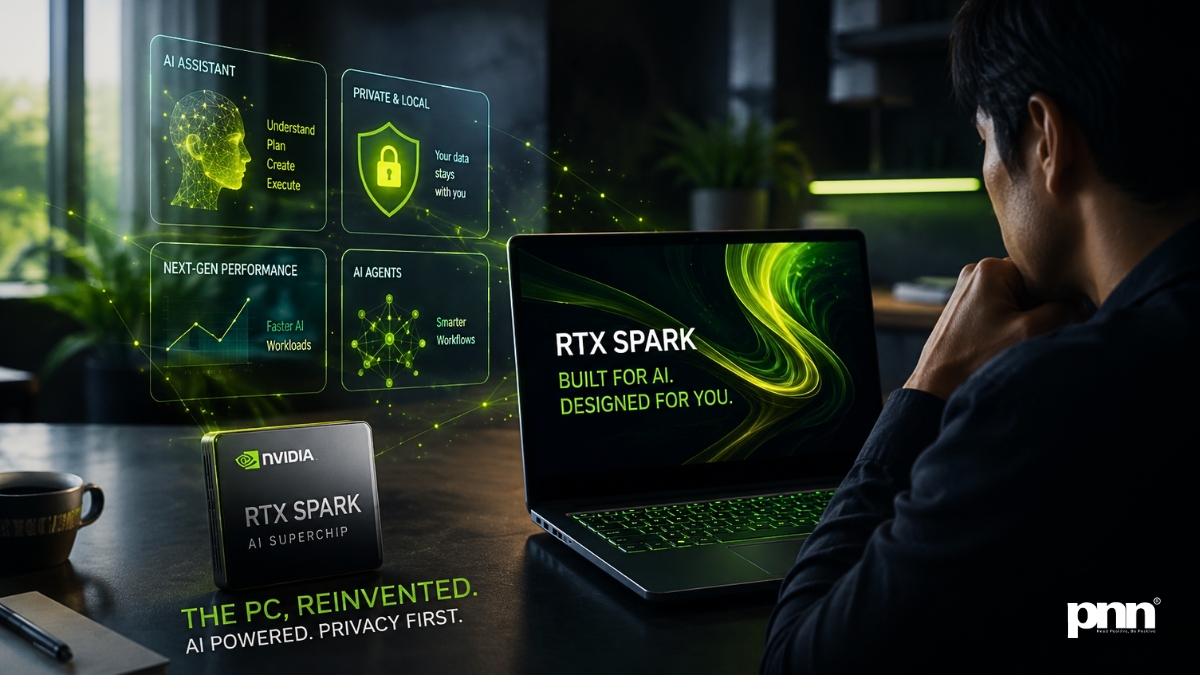
    The semiconductor giant recently unveiled its RTX Spark AI superchip, a platform designed to bring advanced artificial intelligence capabilities directly onto laptops and desktop computers. Major manufacturers, including Dell, Lenovo, Asus, and HP, are expected to integrate the technology into upcoming systems, signaling what could become one of the most significant shifts in personal computing since the rise of cloud services.

    On the surface, it sounds like another hardware announcement. The technology industry produces enough of those to fill several lifetimes. Beneath the marketing language, however, lies a far more intriguing development.

    NVIDIA is not simply introducing a faster chip.
    It is attempting to redefine what a personal computer actually is.

    And if successful, the implications could stretch far beyond gaming, productivity, or hardware sales.

    The Return Of Local Computing

    For years, artificial intelligence has largely belonged to whoever owned the biggest data center.

    Need an AI assistant? Connect to the cloud.
    Need image generation? Connect to the cloud.
    Need advanced reasoning? Connect to the cloud.

    The arrangement worked well enough, provided users were comfortable handing their data, workflows, and digital habits to remote infrastructure operated by some of the world’s largest technology companies.

    Convenience won the argument.

    At least until AI models became powerful enough to raise uncomfortable questions about privacy, latency, cost, and dependence.

    Running AI in distant data centers requires enormous computational resources. Those resources cost money. They consume electricity. They create delays. They also place a remarkable amount of power into the hands of a relatively small number of corporations.

    NVIDIA’s RTX Spark initiative suggests the industry may be exploring another path.

    Instead of sending every request to a remote server, future computers could perform many AI tasks locally. AI assistants, workflow automation systems, creative applications, and even sophisticated reasoning models could operate directly on the device sitting in front of the user.

    In other words, the computer may once again become the place where the work actually happens.

    A surprisingly radical concept in 2026.

    The Age Of The Personal AI Employee

    The most interesting aspect of Nvidia’s strategy is not performance. It is autonomy.

    The technology sector is rapidly moving beyond chatbots toward agentic AI systems capable of performing tasks rather than simply answering questions. These systems can schedule appointments, organize information, manage workflows, conduct research, and potentially execute complex chains of actions with minimal supervision.

    Every major technology company is chasing this vision.
    The challenge is that such systems require substantial computational power.

    Cloud-based AI agents remain effective, but they introduce costs and dependencies that businesses increasingly want to reduce. Local AI processing offers an alternative. If advanced AI can run efficiently on laptops and workstations, organizations gain greater control over their data while reducing reliance on constant cloud connectivity.

    This is where RTX Spark becomes strategically important.

    Rather than positioning AI as an external service, Nvidia is positioning it as a permanent resident inside the machine.

    The distinction may seem subtle.

    It is not.

    One approach rents intelligence. The other owns it.

    Why Nvidia Suddenly Wants More Than Gamers

    Historically, Nvidia built its empire through graphics processing.

    Gaming fueled growth. Visual computing created demand. Data centers later transformed the company into one of the world’s most valuable technology firms.

    Artificial intelligence changed everything.

    Today, Nvidia sits at the center of the global AI boom. The company’s GPUs have become essential infrastructure for training and running advanced models. Its market valuation has soared into the trillions, driven largely by demand from AI companies, cloud providers, and enterprise customers.

    Yet success creates new challenges.

    As AI adoption expands, Nvidia cannot rely exclusively on data centers. The company needs growth across consumer devices, enterprise workstations, edge computing systems, and next-generation PCs.

    RTX Spark represents an attempt to extend Nvidia’s dominance beyond server farms and into everyday computing.

    The strategy is logical.

    If AI becomes embedded into every device, Nvidia wants to supply the engine powering that transformation.

    The company is essentially betting that future PCs will be judged less by processing speed and more by their ability to host intelligent software.

    The Benefits Are Real

    There are compelling reasons why local AI processing has attracted so much attention.

    First, privacy improves. Sensitive information can remain on the device rather than traveling through multiple cloud systems.

    Second, performance becomes more immediate. Tasks can be executed without waiting for remote servers to process requests.

    Third, businesses gain more control over proprietary information, reducing concerns surrounding data exposure.

    Potential advantages include:

    • Faster AI-assisted workflows.
    • Reduced cloud dependency.
    • Better privacy protections.
    • Lower long-term operational costs.
    • Improved offline functionality.

    For enterprise customers especially, these benefits are becoming increasingly attractive as AI adoption accelerates.

    The Catch Nobody Likes To Discuss

    Of course, every technological revolution arrives carrying a suitcase full of complications.
    Advanced AI hardware is expensive.

    The chips required to run sophisticated models locally are not cheap to manufacture, particularly as semiconductor supply chains remain under pressure. Consumers already face rising costs for premium devices, and integrating increasingly powerful AI hardware could push prices even higher.

    There is also the question of necessity.

    Many users already struggle to justify annual smartphone upgrades. Convincing consumers they need an AI-first laptop may prove considerably more difficult.

    History offers numerous examples of impressive technology searching desperately for a practical use case.

    Not every innovation becomes indispensable.
    Sometimes it merely becomes expensive.

    Another concern involves energy consumption. Running advanced AI locally requires significant processing power, which inevitably impacts battery life, thermal management, and device design.

    Building smarter machines is one challenge.
    Building smarter machines that remain portable is another.

    The Bigger Battle Is Just Beginning

    RTX Spark arrives during a period of extraordinary competition.

    Microsoft is integrating AI throughout Windows. Apple continues expanding its AI ecosystem. Google is embedding AI across productivity tools and consumer services. Meanwhile, semiconductor manufacturers worldwide are racing to develop specialized hardware for machine learning applications.

    This competition is transforming the PC industry from a mature market into a battleground once again.
    Ironically, artificial intelligence may be accomplishing what years of incremental upgrades could not.

    It is making personal computers interesting again.

    Whether consumers embrace the vision remains uncertain. What is clear is that the definition of a PC is changing. Future computers may no longer be passive tools waiting for instructions. They may become active participants in workflows, capable of assisting, organizing, creating, and executing tasks independently.

    That possibility explains why Nvidia’s latest announcement matters.
    This is not merely about a chip.

    It is about an attempt to move intelligence out of distant data centers and place it directly into the machine sitting on your desk.

    For years, the technology industry told us the future lived in the cloud.
    NVIDIA is quietly suggesting the future may be coming back home.

    PNN Technology