Category: Entertainment

  • Dipika Chikhlia’s and Suraj Emotional Bond Takes Center Stage in ‘Tera Mera Nata’ Trailer

    Dipika Chikhlia’s and Suraj Emotional Bond Takes Center Stage in ‘Tera Mera Nata’ Trailer

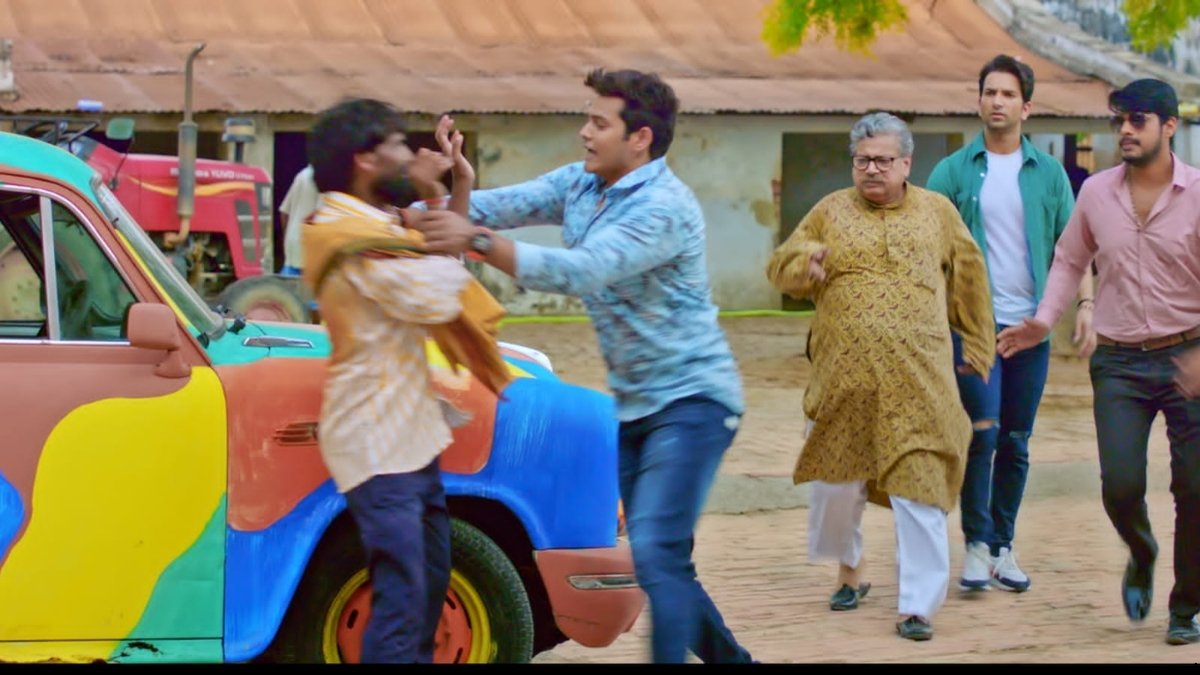
    New Delhi [India], June 18: After receiving an encouraging response from international audiences during its premiere at the 79th Cannes Film Festival, Tera Mera Nata is now gearing up for its theatrical release on June 26, 2026. The recently released trailer offers a glimpse into a heartfelt story of love, sacrifice, and family values. Starring Suraj, Ambika Vani, Dipika Chikhlia Topiwala, Pankaj Berry, Meghna Panchal, and Pragya Mishra, the film promises an emotional cinematic experience rooted in relationships and human connections.

    The trailer blends romance and family drama, but it is Suraj’s performance that stands out. From emotional scenes to romantic moments, the actor brings sincerity and maturity to his role, making him the emotional anchor of the film. His chemistry with Ambika Vani adds warmth to the narrative, while veteran actress Dipika Chikhlia Topiwala lends depth and emotional gravitas to the story.

    One of the most touching aspects of the trailer is the mother-son bond shared by Suraj and Dipika’s characters. Their relationship appears to be at the heart of the narrative, reflecting unconditional love, support, and sacrifice. The emotional scenes between the two hint at a powerful connection that is likely to resonate strongly with family audiences.

    Speaking about the film, producer-director Chanda Patel said, “Tera Mera Nata is a story that celebrates relationships and emotions that connect all of us. The appreciation we received at Cannes was truly encouraging, and we are excited to share this journey with audiences across India.”

    Lead actor Suraj shared, “This film has been a very special experience for me. My character goes through love, sacrifice, and self-discovery, and I tried to portray those emotions honestly. Working with Dipika ji was a privilege. Her experience, warmth, and guidance helped me immensely, and our mother-son scenes are among the most emotional moments in the film.”

    Reflecting on the film, Dipika Chikhlia Topiwala said, “Premiering at the Cannes Film Festival was a proud moment for all of us. The response from international audiences reaffirmed the universal appeal of the film’s emotions. Suraj is a dedicated and sincere actor, and it was wonderful working with him. Together, we have tried to bring a heartfelt mother-son relationship to the screen that audiences will connect with.”

    Directed by Chanda Patel and Swatantra Goel and produced by Chanda Patel under Blue Diamond Production House Presents and CP Production, Tera Mera Nata is set to arrive in cinemas on June 26, 2026.

    Watch the trailer here: https://www.youtube.com/watch?v=7DJI7jxGzUo

    If you object to the content of this press release, please notify us at pr.error.rectification@gmail.com. We will respond and rectify the situation within 24 hours.

  • Bollywood Filmmaker Sachin Gupta Preps New Patriotic Mystery Film; Praises actor Himanshu Goel

    Bollywood Filmmaker Sachin Gupta Preps New Patriotic Mystery Film; Praises actor Himanshu Goel

    Mumbai (Maharashtra) [India], June 16: Award-winning Bollywood filmmaker, theatre director, writer, and producer Sachin Gupta is all set to begin work on his next patriotic mystery drama film, following the success of his acclaimed feature film Sundarnagar Ki Sundari. The announcement has generated excitement among film enthusiasts and industry insiders, especially at a time when audiences are increasingly embracing content-driven Bollywood films, patriotic movies, mystery thrillers, and meaningful cinema. Known for his distinctive storytelling style and commitment to socially relevant narratives, Gupta’s upcoming project is expected to combine suspense, patriotism, emotional depth, and powerful human drama, making it one of the most anticipated independent Hindi film projects currently in development.

    Sachin Gupta, a recipient of the prestigious Natya Bhushan Award, has established himself as one of the leading voices in independent Indian cinema and theatre. As the Founder of Chilsag Entertainment Network, he has spent more than two decades creating impactful stories across films, theatre, OTT content, and digital platforms. According to sources close to the project, the new film will be a unique blend of mystery and patriotism, offering audiences a gripping cinematic experience while celebrating themes of courage, sacrifice, truth, and national pride. The filmmaker believes that cinema has the power to entertain while inspiring meaningful conversations, and his upcoming film aims to strike that balance.

    Speaking about the project, Sachin Gupta said that the film is particularly special because it combines two genres that resonate strongly with audiences today—patriotism and mystery. He shared that the story revolves around compelling characters, emotional conflicts, and unexpected twists that gradually uncover deeper truths. While maintaining suspense throughout the narrative, the film will also carry a strong patriotic message that reflects the spirit of modern India. The filmmaker added that audiences can expect an engaging and emotionally rewarding cinematic experience.

    Sachin Gupta’s own journey into filmmaking remains an inspiring story of passion and perseverance. A software engineer and MBA graduate by qualification, he left a successful corporate career in the United States to return to India and pursue his dream of storytelling. His dedication to the craft led him to study at the prestigious Lee Strasberg Theatre & Film Institute in New York, one of the world’s most respected acting and filmmaking schools. He further pursued Shakespearean studies at Emerson College and gained valuable artistic exposure through the American Repertory Theatre at Harvard University, as well as creative learning experiences in Canada. This international training helped shape his artistic vision and contributed significantly to his success as a filmmaker and theatre director.

    Over the years, Sachin Gupta has written eighteen original plays and nearly fifteen short films while directing and producing multiple feature films. His filmography includes critically appreciated films such as Paranthe Wali Gali, Pakhi, and Thoda Lutf Thoda Ishq, which featured acclaimed actors Rajpal Yadav and Sanjay Mishra. These films were widely appreciated for their engaging storytelling, relatable characters, and strong performances. Gupta has also directed several notable short films, including Mehak, featuring legendary actor Dharmendra and veteran actress Zarina Wahab, and Dryfruit Ka Halwa, starring television icon Shweta Tiwari. His latest feature film, Sundarnagar Ki Sundari, further strengthened his reputation as a filmmaker capable of creating entertaining and emotionally resonant cinema.

    Apart from filmmaking, Sachin Gupta is also internationally recognized for his contribution to theatre. His original plays have been staged across India and internationally, including Off-Broadway productions in New York. He has performed and directed theatre productions in London, New York, and Canada, making him one of the few Indian theatre practitioners with such extensive international exposure. His work has received appreciation from distinguished personalities, including former President of India Dr. A. P. J. Abdul Kalam and former Delhi Chief Minister Sheila Dikshit, among others.

    The upcoming patriotic mystery drama will be produced under Chilsag Pictures, the film production division of Chilsag Entertainment Network, a global media and entertainment company founded by Sachin Gupta in 2003. Over the years, Chilsag has emerged as a prominent name in Bollywood film production, OTT content creation, web series development, international theatre, music production, and film education. With operations spanning India, the United States, the United Kingdom, and Canada, the company has built a reputation for creating content-driven entertainment that appeals to both Indian and global audiences. Chilsag is particularly known for nurturing fresh talent and providing opportunities to aspiring actors, and creative professionals.

    As demand for original Indian content continues to rise across streaming platforms and theatrical releases, Chilsag Entertainment Network remains focused on developing innovative stories with universal appeal. The company has successfully positioned itself as a creative hub that blends artistic excellence with commercial viability, making it a preferred destination for filmmakers, actors, OTT platforms, and production partners.

    While discussing the success of Sundarnagar Ki Sundari, Sachin Gupta reserved special praise for the film’s lead actor Himanshu Goel, whose performance earned appreciation from audiences and industry observers alike. Gupta described Himanshu as one of the most dedicated and versatile young actors he has worked with. According to the filmmaker, Himanshu brought sincerity, emotional depth, and authenticity to his character, significantly contributing to the film’s success. Gupta noted that the actor’s ability to adapt to different roles and his commitment to continuous growth make him one of the most promising talents of his generation.

    Himanshu Goel has steadily established himself as a versatile performer through a series of notable projects. In addition to his impactful role in Sundarnagar Ki Sundari, he has been appreciated for his performances in short films such as Coach, Pakki Wali Yaari, and Mahamrityunjay. These projects showcased his range as an actor and his ability to portray diverse characters with conviction. Whether handling emotionally intense scenes, dramatic conflicts, or character-driven narratives, Himanshu has consistently demonstrated maturity and dedication to his craft. His growing popularity among audiences and filmmakers alike has positioned him as one of the emerging talents to watch in the Indian entertainment industry.

    With the success of Sundarnagar Ki Sundari and an ambitious patriotic mystery drama now in development, Sachin Gupta continues to expand his creative horizons while remaining committed to meaningful storytelling. The filmmaker’s unique blend of cinematic vision, international training, and passion for socially relevant narratives has earned him a respected place in both Bollywood and theatre. As anticipation builds around his next project, audiences can look forward to a film that combines patriotism, suspense, emotion, and entertainment in a compelling cinematic package. Backed by the creative strength of Chilsag Pictures and the storytelling expertise of Sachin Gupta, the upcoming film is expected to be another significant milestone in his distinguished career and a noteworthy addition to the growing landscape of content-driven Indian cinema.

    If you object to the content of this press release, please notify us at pr.error.rectification@gmail.com. We will respond and rectify the situation within 24 hours.

  • Shreya Jha-Produced Documentary Songs They Buried Makes BAFTA Longlist

    Shreya Jha-Produced Documentary Songs They Buried Makes BAFTA Longlist

    Ahmedabad (Gujarat) [India], June 13: Acclaimed documentary Songs They Buried has earned a place on the prestigious BAFTA Longlist, marking a significant milestone for the film and its creative team.

    Produced by Los Angeles-based filmmaker Shreya Jha and directed by Kiki Kuhakan, the documentary has been praised for its emotional depth and powerful storytelling, resonating with audiences and critics alike.

    Expressing gratitude for the recognition, Shreya Jha congratulated the film’s team, including producing partner Uhoman Moltok, cinematographer Andrew Bansal, editors Utkarsh Kumar and Tiami Ziang, sound designers Jeffery Jiang and Tosin Omolola, and composer Vikrant Muthusamy, whose score has been widely appreciated for enhancing the film’s emotional impact.

    The BAFTA Longlist recognition further strengthens Songs They Buried‘s standing in the international documentary space and highlights Shreya Jha’s growing presence as a producer working across both Hollywood and Indian regional cinema.

    Shreya Jha and Kiki Kuhakan are also set to reunite for a new documentary feature, with production scheduled to begin later this year.

    If you object to the content of this press release, please notify us at pr.error.rectification@gmail.com. We will respond and rectify the situation within 24 hours.

  • ‘Navya Chakra’ Trailer Unveils a Dark Psychological World Ahead of June 26 Release

    ‘Navya Chakra’ Trailer Unveils a Dark Psychological World Ahead of June 26 Release

    Mumbai (Maharashtra) [India], June 12: The makers of Navya Chakra have finally unveiled the official trailer of the much-awaited psychological thriller, offering audiences a deeper glimpse into the mysterious and unsettling world hinted at in the film’s first poster.

    The trailer introduces viewers to a gripping investigation surrounding a series of brutal murders that appear to have no logical connection. As the mystery unfolds, law enforcement officers find themselves confronting a chilling conspiracy where the boundaries between reality, memory and human consciousness begin to blur.

    Packed with suspense, intense visuals and a dark atmospheric tone, the trailer creates an intriguing sense of unease from the very beginning. The narrative appears to revolve around a shadowy organization and the people who work for them, known as “PSYCON,” a concept that was first teased in the film’s promotional campaign with the line, “Welcome to the world of PSYCON… we live in a world shared with them.”

    The trailer showcases powerful performances from the ensemble cast including Jitendra Boharaa, Tushar Kawale, Jessica Yadav, Pratiksha Singh, Kshitij Pawar, Sandhya Gemawat, Kailash Chaudhary and Sandeep Rawal. The characters appear to be caught in a dangerous web of psychological manipulation, hidden motives and unexplained crimes, adding layers of intrigue to the narrative.

    Director Amit Dixit builds an eerie cinematic atmosphere through striking visuals, suspense-driven storytelling and intense investigative sequences. Cinematographer Jai Nandan complements the film’s psychological themes with moody frames and a dark visual palette that enhances the mystery surrounding the story.

    The background score and music by Shubhro B emerge as one of the trailer’s highlights, amplifying the tension and emotional intensity of key moments. The haunting sound design further reinforces the film’s psychological-thriller identity.

    Written by Rohit S. Yadav, who has also handled the story, screenplay and dialogues, Navya Chakra promises a narrative filled with twists, secrets and unexpected revelations. The film is produced by Amit Dixit, Ankita Goyal and Ayush Jain under First Film Studios LLP in association with Low Agers Production & Cine Arts, with Ajit Padwalkar serving as co-producer. Abhishek Dubey is the associate producer.

    The trailer arrives after the film successfully overcame certification-related hurdles and title changes. Originally announced as Navagunjara and later Navya Gunjara, the project eventually received approval under the title Navya Chakra. Following multiple postponements, the psychological thriller is now officially scheduled to release in cinemas on June 26, 2026.

    With its intriguing premise, mysterious visuals and psychological themes, the trailer has generated curiosity among thriller enthusiasts eager to uncover the secrets hidden within the world of PSYCON.

    Watch the trailer here: https://www.youtube.com/watch?v=Y11Zsw6DzZU

    If you object to the content of this press release, please notify us at pr.error.rectification@gmail.com. We will respond and rectify the situation within 24 hours.

  • STAGE OTT Reunites with Storytelling Maestro Raghuvir Shekhawat for a Grand Expansion of the Bhairavi Franchise

    STAGE OTT Reunites with Storytelling Maestro Raghuvir Shekhawat for a Grand Expansion of the Bhairavi Franchise

    Mumbai (Maharashtra) [India], June 9: Regional content powerhouse STAGE, India’s leading dialect-based OTT platform, has announced a major creative renewal with celebrated television writer and creator Raghuvir Shekhawat. Following the massive regional blockbuster success of their maiden collaboration, Bhairavi Season 1, STAGE has officially signed the veteran writer to helm the expansion of the franchise, greenlighting an ambitious, dual-season production slate for Season 2 and Season 3.

    Bhairavi, a gripping, high-stakes political drama inspired by true events, has become a massive flagship asset for STAGE across the region. Season 1 captured audiences entirely. Capitalizing on this phenomenal momentum, STAGE has locked in Raghuvir Shekhawat to scale the universe with simultaneous shoots for the next two seasons, set to begin this June. The new chapters will be mounted on an even grander scale, setting a new benchmark for hyper-local production quality in India.

    Moving forward, the franchise will shift its primary strategic direction to explicitly feature a powerful, justice-driven narrative rooted in a female-led revenge theme against exploitation. Leaving behind purely fictional tropes, the upcoming seasons will focus heavily on the human element and the evolving perspectives of its key characters. A major narrative hook will explore the deeply altered motivations of the antagonist, Arjun, and his complex, changing equation with the lead character.

    STAGE continues to aggressively scale its premium content library, solidifying its position as the undisputed leader in India’s regional OTT ecosystem. By merging STAGE’s unmatched dominance and data-driven understanding of dialect-speaking audiences with Shekhawat’s unparalleled, decades-long mastery of heartland narratives, the partnership sets a new benchmark for regional digital entertainment.

    Talking about the strategic vision of the collaboration, Parveen Singhal, Chief Content Officer (CCO), STAGE, said, “The phenomenal response to Bhairavi proved a crucial point: audiences in Bharat don’t just want content in their local dialects; they are hungry for complex, premium narratives told with true cinematic scale. As we expand the Bhairavi universe significantly, our focus is on delivering a grander visual spectacle and a deeply human, justice-driven narrative. We are shifting the spotlight onto a powerful, female-led revenge narrative against exploitation, portraying our protagonist as an authentic voice for women who have faced systemic injustice. Raghuvir ji is an absolute institution, and the entire team is incredibly excited to set a whole new production benchmark for dialect entertainment this June.”

    Commenting on the expansion of the show, Raghuvir Shekhawat stated, “STAGE gave me the exact right canvas to explore real-life incidents with Bhairavi. The overwhelming love for Season 1 has been incredibly rewarding, and for the next two seasons, we are pushing the boundaries of character evolution. The audience will witness a massive shift in motivations, especially the complex psychological equation between Arjun and Parvati. With STAGE granting us the resources to execute this vision, we are moving past conventional political conspiracies to anchor the story in a raw, emotional journey of justice and female defiance. I am thrilled to reunite with the STAGE team and dive straight into filming this month.”

    About STAGE OTT

    Launched in 2019, STAGE is India’s first and largest dialect-based OTT platform, designed exclusively for the audiences of “Bharat.” Operating on the philosophy of “Company nahi, hum kranti hai,” STAGE delivers high-quality, premium narratives and web series in underserved dialects, including Haryanvi, Rajasthani, Bhojpuri, Gujarati, Marathi, Bengali, and more. With millions of paying subscribers and backing from top-tier global investors, STAGE has successfully broken the myth around regional content monetization, offering culturally authentic stories that provide dignity, representation, and world-class production values to India’s heartland.

    About Raghuvir Shekhawat

    Raghuvir Shekhawat is a multi-award-winning Indian writer, dialogue writer, and creator who has been instrumental in shaping modern Indian television. With a career spanning decades, he is best known for his work on landmark heartland dramas, including Balika Vadhu, Diya Aur Baati Hum, and Banni Chow Home Delivery, winning numerous accolades such as the Indian Television Academy (ITA) Awards. With his highly successful foray into OTT through the political thriller Bhairavi, Shekhawat continues to cement his legacy as one of the most versatile and respected creative voices in the Indian entertainment industry.

    If you object to the content of this press release, please notify us at pr.error.rectification@gmail.com. We will respond and rectify the situation within 24 hours.

  • Hollywood’s Favourite Time Machine Is Back: Can Nostalgia Still Sell Tickets In 2026?

    Hollywood’s Favourite Time Machine Is Back: Can Nostalgia Still Sell Tickets In 2026?

    Mumbai (Maharashtra) [India], June 6: There is a peculiar ritual that Hollywood performs every few years. Whenever uncertainty looms, audiences become unpredictable, and streaming platforms continue nibbling away at attention spans, the industry quietly opens an old vault, dusts off a familiar franchise, and confidently announces that this time, nostalgia will save the day.

    This week, that ritual is once again taking center stage.

    Two highly anticipated releases, Masters of the Universe and the rebooted Scary Movie, are arriving in cinemas, bringing with them decades of brand recognition, built-in fan bases, and enough nostalgia to power a small city. For studios, these films represent more than just new theatrical releases. They are test cases for one of the most important questions currently facing the entertainment industry:

    How long can Hollywood keep mining the past before audiences demand something entirely new?

    The answer, at least for now, appears encouraging. Nostalgia-driven entertainment has become one of the most reliable assets in modern filmmaking. From legacy sequels and character revivals to reimagined television properties, familiar intellectual property continues generating significant box-office returns.

    Yet beneath the optimism lies a more complicated reality. While nostalgia remains profitable, it is also becoming increasingly crowded. Every studio wants its own cultural resurrection story. Every executive hopes lightning will strike twice. Every franchise believes audiences have been patiently waiting for its return.

    History, unfortunately, has a wicked sense of humor.
    Sometimes audiences return.
    Sometimes they simply remember why they left.

    The Era Of Familiar Faces And Familiar Stories

    The arrival of Masters of the Universe and Scary Movie reflects a broader trend that has dominated entertainment throughout the past decade.

    Studios are increasingly prioritizing recognizable brands over entirely original concepts.

    From a business perspective, the logic is difficult to argue against. Producing a major theatrical film has become extraordinarily expensive. Marketing budgets frequently reach tens or even hundreds of millions of dollars. Global competition is intense, and audience attention is fragmented across countless platforms.

    Under those circumstances, familiarity becomes valuable.

    A recognizable title immediately provides awareness that original projects must spend years building. Fans already understand the characters, themes, and worlds involved. Merchandise opportunities are clearer. Marketing campaigns become easier to execute.

    In essence, nostalgia functions as a form of risk management.
    Hollywood, despite its reputation for creativity, has always appreciated insurance policies.

    Why Nostalgia Is Thriving Right Now

    The timing of these releases is particularly noteworthy.

    The entertainment industry continues navigating a post-streaming transformation. Theatrical attendance has improved compared to pandemic-era lows, but consumer habits remain different from those of a decade ago.

    Audiences are more selective about which films deserve a trip to the cinema.
    As a result, familiarity often becomes a deciding factor.
    A recognizable franchise offers something valuable in uncertain times: predictability.

    Viewers know what they are purchasing.
    That emotional comfort matters.

    Economic pressures, global uncertainty, technological disruption, and rapidly changing media consumption habits have collectively increased demand for familiar entertainment experiences. Nostalgia provides an emotional anchor in a world that frequently feels chaotic.

    It is less about reliving the past and more about revisiting emotions associated with it.
    Studios understand this exceptionally well.
    Their shareholders probably understand it even better.

    The Return Of Masters Of The Universe

    Few franchises embody nostalgia-driven entertainment quite like Masters of the Universe.

    Originally emerging from toy lines, animated series, comics, and later film adaptations, the property has maintained cultural recognition for decades despite long periods of relative inactivity.

    The new adaptation arrives at a time when fantasy properties continue attracting global audiences. Studios remain eager to find the next major franchise capable of generating theatrical revenue, streaming engagement, merchandise sales, licensing opportunities, and long-term brand expansion.

    The stakes are significant.

    Industry observers estimate that modern tentpole productions often require worldwide grosses approaching $500 million to $700 million before becoming clear commercial successes, depending on production and marketing costs.

    That reality places immense pressure on every franchise revival.
    Nostalgia may open doors.
    It does not automatically sell tickets.

    Why Scary Movie Faces A Different Challenge

    The return of Scary Movie presents an entirely different situation.

    Unlike fantasy franchises, parody films rely heavily on cultural relevance. Their success depends on understanding current trends, internet culture, audience expectations, and contemporary entertainment habits.

    This creates a unique challenge.

    The original films thrived in an era dominated by blockbuster horror movies and shared cultural references. Today’s entertainment landscape is significantly more fragmented.

    Streaming platforms produce hundreds of original titles annually. Social media creates trends that emerge and disappear within days. Audience tastes evolve rapidly.

    A parody franchise must therefore do more than revisit old jokes.
    It must prove it still understands modern audiences.

    That is easier said than done.
    Comedy, after all, ages about as gracefully as expired milk.

    The Business Of Remembering

    From a financial standpoint, nostalgia remains one of Hollywood’s most valuable commodities.

    Recent years have demonstrated that legacy franchises can generate enormous revenue when executed effectively. Sequels, reboots, spin-offs, and franchise expansions have consistently dominated box-office rankings worldwide.

    Several factors contribute to this success:

    • Lower consumer awareness costs.
    • Established fan communities.
    • Strong merchandising opportunities.
    • Multi-platform expansion potential.
    • Global brand recognition.

    Studios increasingly view intellectual property as long-term infrastructure rather than standalone content.

    A successful franchise can support films, streaming series, games, licensing deals, consumer products, and theme park attractions for years.

    In many cases, the movie itself becomes merely the beginning.

    The accountants undoubtedly find this beautiful.
    Artists occasionally have mixed feelings.

    The Positive Side Of Franchise Revivals

    Critics often dismiss nostalgia-driven projects as creatively conservative, but that perspective overlooks genuine advantages.

    Successful revivals can introduce beloved stories to entirely new generations. Younger audiences may discover characters and worlds they otherwise would never encounter.

    Modern filmmaking technology also allows creators to realize concepts that earlier generations could only imagine.

    Visual effects, production design, animation techniques, and immersive sound technologies have dramatically expanded storytelling possibilities.

    Additionally, successful franchise projects create employment opportunities across production, visual effects, marketing, distribution, exhibition, and merchandising sectors.

    Large-scale entertainment projects continue to support thousands of jobs globally.
    When executed thoughtfully, nostalgia and innovation can coexist.
    The challenge is ensuring one does not completely consume the other.

    The Negative Side Nobody Wants To Discuss

    For all its advantages, nostalgia carries risks.
    The most obvious concern involves creative stagnation.

    As studios allocate larger budgets toward established brands, original projects often struggle to secure comparable resources. Emerging filmmakers may find fewer opportunities to launch entirely new intellectual property.

    This creates an industry paradox.

    Hollywood consistently searches for the next major franchise while simultaneously investing most heavily in existing ones.

    Another concern involves audience fatigue.
    Familiarity generates excitement only when used selectively. Overuse eventually diminishes impact.

    Consumers can distinguish between genuine creative passion and corporate opportunism.

    Eventually.
    Usually.

    Sometimes, after purchasing opening weekend tickets.

    What The Latest Industry Trends Reveal

    Recent market analysis suggests audiences are not necessarily rejecting nostalgia. Instead, they are becoming more discerning about how it is presented.

    The most successful franchise revivals typically share common characteristics:

    They respect source material without becoming trapped by it.
    They introduce new ideas alongside familiar elements.
    They offer genuine creative vision rather than simple replication.
    Most importantly, they justify their existence.
    Audiences increasingly expect more than recognition.

    They expect reinvention.

    That expectation may ultimately determine whether this week’s releases become successes or cautionary tales.

    A Bigger Question For Hollywood

    The arrival of Masters of the Universe and Scary Movie ultimately represents something larger than two individual films.

    They symbolize an industry searching for equilibrium between commercial security and creative ambition.

    Hollywood understands the value of nostalgia.
    The challenge is ensuring nostalgia remains a bridge rather than a destination.
    Audiences want familiarity, but they also crave surprise.

    They appreciate beloved characters, but they also want new stories worth remembering.

    The future likely belongs not to franchises that merely revisit the past, but to those capable of transforming it into something meaningful for the present.

    The Final Reel

    As these films arrive in theaters, industry executives will watch ticket sales closely. Analysts will dissect audience demographics. Studios will search for clues about the next phase of entertainment.

    The results may shape future production strategies for years.

    If the films succeed, expect even more legacy properties to emerge from studio archives.
    If they stumble, executives may finally be forced to take greater creative risks.

    Either way, Hollywood’s relationship with nostalgia remains fascinating.
    The industry keeps returning to the past in search of the future.

    And somehow, despite decades of evidence, it still acts surprised when audiences demand both.

    Perhaps that is the real plot twist.

    PNN Entertainment

  • Phoebe Bridgers Wants Your Attention Back: Why Phone-Free Concerts Are Becoming Music’s Most Rebellious Trend

    Phoebe Bridgers Wants Your Attention Back: Why Phone-Free Concerts Are Becoming Music’s Most Rebellious Trend

    Mumbai (Maharashtra) [India], June 6: For years, the modern concert experience has followed a predictable script. The lights dim, the crowd erupts, thousands of smartphones rise into the air like illuminated monuments to digital devotion, and somewhere behind a sea of screens, an artist performs.

    Everyone records the moment.
    Not everyone experiences it.

    That reality sits at the center of one of the most interesting developments in live music this year. Acclaimed singer-songwriter Phoebe Bridgers has announced her highly anticipated Lost Tour, marking her first solo touring run in nearly three years. While the tour itself has generated excitement among fans across North America, the United Kingdom, and Europe, it is one specific decision that has captured industry attention.

    The concerts will be phone-free.

    In an era where every experience is instantly documented, clipped, filtered, uploaded, shared, analyzed, and forgotten within hours, Bridgers is asking audiences to do something unexpectedly radical: simply be present.

    It sounds almost revolutionary. Or perhaps mildly terrifying, depending on one’s relationship with battery percentage.

    The announcement arrives at a fascinating moment for the entertainment industry. While technology continues to reshape nearly every aspect of music consumption, a growing number of artists are questioning whether constant digital connectivity has quietly altered the emotional relationship between performers and audiences.

    Bridgers’ decision is therefore bigger than a concert policy.
    It is becoming part of a broader cultural conversation.

    The Return Of Presence In A Hyperconnected World

    The irony is difficult to ignore.
    Music has never been more accessible.

    Streaming platforms place millions of songs inside every pocket. Concert footage appears online within minutes. Entire festivals can be livestreamed across continents.

    And yet many artists increasingly believe audiences have become less present during live performances.

    Phone-free concerts are not entirely new. Several major performers have experimented with similar restrictions over the past decade, often using secure locking pouches that allow attendees to keep their devices while preventing active use during the show.

    What makes Bridgers’ move notable is the timing.

    The entertainment industry is experiencing a renewed emphasis on immersive experiences. Audiences are increasingly seeking authenticity in a world saturated by digital noise. Concert promoters, artists, and venue operators are beginning to recognize that exclusivity sometimes means removing distractions rather than adding more features.

    In that context, the Lost Tour feels less like a nostalgic throwback and more like a calculated statement about where live entertainment could be heading.

    Phone-Free - PNN

    Why Phoebe Bridgers Is The Perfect Artist For This Experiment

    Few contemporary artists are better positioned to embrace phone-free performances.

    Bridgers built her reputation through emotionally intimate songwriting rather than elaborate spectacle. Her music thrives on subtle moments, lyrical nuance, and audience connection. Songs often feel like personal conversations rather than stadium-sized productions.

    That creative identity matters.

    A phone-free environment complements the kind of emotional engagement her music encourages. Instead of watching a performance through a six-inch screen, audiences are encouraged to absorb details directly—the lighting, the atmosphere, the vulnerability of live vocals, and the collective energy that exists only within a shared physical space.

    From a branding perspective, it is also remarkably consistent.

    The decision aligns naturally with Bridgers’ artistic persona rather than feeling like a publicity stunt.
    That distinction is important.

    Fans generally embrace restrictions when they feel authentic.
    They resist them when they feel manufactured.

    The Business Side Of Going Phone-Free

    Beneath the artistic philosophy lies an equally important commercial reality.

    Live entertainment has become one of the music industry’s most valuable revenue streams. According to industry reports, global live music revenues have continued climbing following the post-pandemic recovery, with major tours generating hundreds of millions of dollars annually.

    As ticket prices increase, audiences increasingly expect unique experiences that cannot be replicated online.

    Phone-free concerts help create that exclusivity.

    Every attendee becomes part of a moment that cannot be perfectly reproduced through social media clips. The event gains a sense of scarcity, a concept marketers have appreciated for centuries.

    Ironically, removing smartphones may actually increase the perceived value of the experience.
    Who knew the most premium feature in entertainment might eventually become fewer features?

    The Growing Fatigue With Constant Documentation

    One factor driving support for phone-free shows is a growing cultural fatigue surrounding perpetual content creation.

    For years, audiences were encouraged to document everything.

    Vacations became content.
    Meals became content.
    Relationships became content.
    Concerts became content.

    At some point, people started wondering whether they were attending experiences or merely collecting evidence that they attended them.

    The answer appears increasingly complicated.

    Recent consumer behavior trends suggest younger audiences, particularly Generation Z, are becoming more selective about digital sharing. While social media remains influential, there is growing interest in experiences that feel authentic, private, and disconnected from online performance.

    Phone-free events fit naturally into that shift.

    They transform concerts from content-generation opportunities back into entertainment experiences.
    An unexpectedly controversial concept in 2026.

    Phone-Free - PNN

    The Benefits For Artists And Fans

    Supporters of phone-free concerts highlight several advantages.

    Artists often report stronger audience engagement and more meaningful interactions. Without screens obstructing sightlines, performers can establish better visual connections with attendees.

    Fans also benefit from improved visibility and reduced distractions. Instead of watching hundreds of screens recording the same moment, audiences can focus directly on the performance itself.

    Additional advantages include:

    • Enhanced immersion throughout the show.
    • Reduced unauthorized recordings.
    • Greater respect for artistic presentation.
    • Stronger emotional connection between performer and audience.
    • Improved atmosphere within venues.

    For artists like Bridgers, whose work often relies on emotional subtlety, these benefits are particularly significant.

    The Counterargument Nobody Can Ignore

    Of course, not everyone is enthusiastic.

    Critics argue that phone-free policies can feel restrictive and outdated. Some fans enjoy documenting memories and sharing experiences with friends who cannot attend. Others cite practical concerns, including accessibility needs, family emergencies, or simple convenience.

    There is also a broader philosophical debate.

    Modern audiences increasingly view smartphones as extensions of daily life rather than optional accessories. Asking people to disconnect, even temporarily, can feel unrealistic.

    Additionally, social media exposure often contributes significantly to tour marketing. Viral clips generate awareness, expand reach, and introduce artists to new audiences.

    Removing phones potentially limits organic promotional opportunities.

    The industry, therefore, faces a delicate balancing act.
    How much connectivity enhances experiences?

    And how much diminishes them?
    The answer likely varies depending on the artist, audience, and event.

    A Larger Trend Is Emerging

    Bridgers’ announcement arrives amid broader changes across entertainment.

    Film screenings, comedy performances, theater productions, and exclusive events have increasingly experimented with technology restrictions. Organizers are discovering that scarcity and exclusivity remain powerful tools in a digital environment defined by abundance.

    Consumers spend much of their lives connected.
    As a result, disconnecting is gradually becoming a premium experience.

    That may sound absurd.

    Then again, paying to temporarily escape the very technology we spent decades building also sounds remarkably human.

    History has always enjoyed irony.

    What This Means For The Future Of Live Music

    The success or failure of the Lost Tour could influence how future artists approach live performances.

    If audiences embrace the concept, more performers may adopt similar policies. If resistance outweighs enthusiasm, phone-free concerts may remain niche offerings rather than industry standards.

    Either way, Bridgers has successfully sparked conversation about the purpose of live entertainment.

    Is a concert primarily a memory?

    A performance?
    A social-media asset?
    A shared experience?

    Perhaps it is all of those things simultaneously.

    What remains clear is that audiences are increasingly searching for meaningful experiences amid endless digital stimulation.

    Phoebe Bridgers appears willing to test whether fewer screens can create more connection.

    And honestly, in an age where nearly everything competes for attention, asking people to pay attention may be the boldest artistic statement of all.

    The Lost Tour is not merely about removing phones.
    It is about recovering something that technology, for all its benefits, occasionally struggles to provide.

    Presence.

    A rare commodity in modern entertainment.
    Possibly rarer than front-row tickets.

    PNN Entertainment

  • The Last Call Of A Country Gentleman: Why Alan Jackson’s Farewell Is Bigger Than A Concert

    The Last Call Of A Country Gentleman: Why Alan Jackson’s Farewell Is Bigger Than A Concert

    Mumbai (Maharashtra) [India], June 6: The music industry loves comeback tours. It adores reunion specials. It practically treats the word “farewell” as a flexible suggestion rather than a contractual obligation.

    Which is precisely why Alan Jackson’s final concert feels different.

    When the country music legend walks onto the stage at Nashville’s Nissan Stadium later this month for Last Call: One More for the Road – The Finale, it will not simply be another sold-out stadium event. It will represent the closing chapter of one of country music’s most influential careers—a career that has quietly shaped the genre for nearly four decades without relying on viral controversies, social media feuds, or algorithm-friendly theatrics.

    The farewell performance, which will be filmed by acclaimed concert director Sam Wrench and later released as a television and streaming special titled Alan Jackson: The Last Show, is already generating enormous attention among country music fans worldwide. What makes the story especially compelling is that this is not merely a retirement announcement. It is a reflection of how entertainment itself has changed. A final concert no longer belongs only to the people sitting inside a stadium. It belongs to millions of viewers watching from living rooms, smartphones, and streaming platforms around the world.

    In many ways, Jackson’s farewell is not just saying goodbye to a performer.
    It is saying goodbye to an era.

    The End Of A Different Kind Of Stardom

    Modern celebrity often operates at the speed of a trending hashtag.
    Artists release snippets before songs.
    Songs become trends before they become records.

    And careers sometimes seem measured less by longevity than by engagement rates.
    Alan Jackson emerged from a completely different universe.

    When Jackson arrived in Nashville during the late 1980s, country music was experiencing a transformation. Alongside artists who would eventually become known as the legendary Class of ’89, he helped redefine mainstream country music while remaining deeply connected to traditional roots.

    His success was built on storytelling.
    Not spectacle.

    His songs spoke about small towns, heartbreak, faith, family, working-class life, and the emotional complexities hidden beneath everyday experiences.

    That formula sounds simple.
    It rarely is.

    Over the years, Jackson sold tens of millions of albums globally, earned multiple Grammy Awards, won countless industry honors, and secured his place in the Country Music Hall of Fame. Songs like Chattahoochee, Remember When, Drive, and Where Were You (When the World Stopped Turning) became more than chart hits. They became cultural landmarks for multiple generations of listeners.

    Why This Farewell Feels Genuine

    One reason fans are responding so emotionally is because Jackson’s retirement does not appear driven by marketing strategy.

    The singer publicly revealed in 2021 that he had been living with Charcot-Marie-Tooth disease, a hereditary neurological condition that affects balance, mobility, and muscle function. The condition has increasingly impacted his ability to tour and perform.

    In an industry where “farewell” tours sometimes last longer than political campaigns, Jackson’s situation feels undeniably real.

    There is a bittersweet honesty attached to it.
    Fans understand that this goodbye is connected to health realities rather than publicity opportunities.
    That understanding changes everything.

    It transforms a concert into something far more emotional.
    And perhaps more meaningful.

    The Streaming Era Changes The Goodbye

    There was a time when missing a historic concert meant missing it forever.

    If you were not there, you relied on grainy photographs, magazine coverage, or stories from people lucky enough to attend.

    Not anymore.

    Jackson’s farewell performance will be professionally filmed and released as a major television and streaming event, ensuring that fans far beyond Nashville can participate in the moment. Sam Wrench, whose concert-film credentials have become increasingly prominent in recent years, will direct the project.

    From a business perspective, this makes perfect sense.
    The global concert-film market has expanded dramatically over the past several years.

    Studios and streaming platforms have realized something remarkably obvious:

    People enjoy concerts.
    People also enjoy sofas.

    Combining both turns out to be lucrative.

    The result is a hybrid entertainment model where farewell events can reach millions rather than tens of thousands.

    Nashville Becomes The Center Of Country Music Again

    Jackson specifically chose Nashville for his final performance.
    That decision carries symbolic weight.

    The city represents the foundation of his career, the place where his dreams transformed into reality, and where country music continues to maintain its spiritual headquarters.

    “We just felt like we had to end it all where it all started,” Jackson previously explained regarding Nashville’s significance.

    There is poetry in that choice.

    A full-circle moment.
    The city that welcomed a young artist decades ago will now host his final bow.

    Not every career gets such symmetry.

    Alan Jackson - PNN

    The Star-Studded Celebration

    Part of the excitement surrounding the event comes from its remarkable guest lineup.

    Country music heavyweights, including Luke Bryan, Carrie Underwood, Miranda Lambert, Luke Combs, Eric Church, Keith Urban, George Strait, Lainey Wilson, Thomas Rhett, Little Big Town and several others are expected to participate in the celebration.

    The guest list reflects something important.
    Influence.

    Artists do not travel across the country for farewell appearances unless they genuinely respect the person being honored.

    Jackson’s impact on modern country music extends far beyond album sales.
    Many of today’s biggest stars grew up listening to his music.

    Some built careers directly inspired by his approach.
    This concert, therefore, functions as both a farewell and a tribute.

    The Positive Side Of The Story

    There is plenty to celebrate.

    The concert demonstrates how enduring authenticity can still resonate in a rapidly changing entertainment landscape.

    It highlights the value of long-term artistry over short-term hype.

    It also creates an opportunity for younger audiences to discover a catalog that shaped modern country music long before streaming algorithms existed.

    Additionally, the event carries a charitable component. Portions of ticket-related proceeds are supporting research efforts connected to Charcot-Marie-Tooth disease, adding another layer of significance beyond entertainment.

    That matters.
    Because meaningful farewells should ideally leave something behind.

    The Less Comfortable Reality

    Of course, not every aspect of the story is purely celebratory.

    The farewell also highlights broader challenges facing live music.
    Ticket prices for major events continue climbing.

    Fans increasingly find themselves paying premium prices for experiences that were once more accessible. Community discussions around the event reflect excitement but also concerns about affordability.

    There is also a deeper question.
    Who replaces artists like Alan Jackson?

    Country music remains commercially strong, but many fans worry that traditional storytelling is gradually being overshadowed by trends optimized for streaming performance and social-media visibility.

    Whether that concern is justified remains debatable.
    But it continues to surface whenever legendary figures leave the stage.

    The Legacy That Matters Most

    Ultimately, Alan Jackson’s farewell is not about one final performance.

    It is about legacy.
    It is about proving that sincerity can survive in an industry often obsessed with reinvention.
    It is about demonstrating that songs grounded in ordinary life can achieve extraordinary longevity.

    And it is about reminding audiences that some careers become larger than charts, awards, and commercial milestones.

    When Jackson performs his final song in Nashville, the applause will not merely celebrate a concert.

    It will celebrate nearly forty years of storytelling.
    Forty years of memories.
    Forty years of a voice that never needed to shout to be heard.

    In a world increasingly driven by noise, that might be Alan Jackson’s greatest achievement.

    The stadium lights will eventually fade.
    The cameras will stop rolling.
    The streaming special will arrive later.

    But for one night in Nashville, country music will pause and acknowledge something increasingly rare:
    A genuine ending.

    And in entertainment, genuine endings may be the most valuable thing left.

    PNN Entertainment

  • When A Cowboy Hat Meets A Pop Crown: How Taylor Swift’s Toy Story 5 Song Became More Than Just A Soundtrack

    When A Cowboy Hat Meets A Pop Crown: How Taylor Swift’s Toy Story 5 Song Became More Than Just A Soundtrack

    Mumbai (Maharashtra) [India], June 6: There are announcements that make headlines, and then there are announcements that seem custom-built for the internet.

    Taylor Swift recording an original song for Toy Story 5 belongs firmly in the second category.

    On paper, it sounds simple enough. One of the world’s biggest music stars has written and recorded a new song for Jessie, the spirited cowgirl who has remained one of Pixar’s most beloved characters since Toy Story 2 first arrived more than two decades ago. According to Swift, contributing music to Jessie was a dream project and one of the most personal soundtrack experiences of her career.

    In reality, however, this announcement says something much larger about modern entertainment.

    It is not merely about a song.
    It is about nostalgia becoming a billion-dollar business model.

    It is about Hollywood understanding that emotional attachment may be the most valuable currency in entertainment.

    And perhaps most importantly, it is about two of the most powerful fan ecosystems in the world colliding at exactly the right moment.

    Because if there is one thing Hollywood loves almost as much as storytelling, it is discovering a way to bring together multiple audiences under one very profitable roof.

    And honestly, who could blame them?

    The Perfect Marriage Of Nostalgia And Stardom

    Few entertainment franchises possess the cultural longevity of Toy Story.

    The original film changed animation forever when it debuted in 1995, becoming the first feature-length movie created entirely with computer animation. Since then, the franchise has generated billions of dollars globally through theatrical releases, merchandise, licensing, theme park attractions, and home entertainment products.

    Jessie herself became one of Pixar’s most emotionally resonant characters.

    Her heartbreaking backstory in Toy Story 2 remains one of animation’s most memorable sequences, proving that a toy cowboy hat and a melancholy song could reduce entire generations to tears.

    Now enters Taylor Swift.
    Swift is no longer merely a musician.
    She has evolved into a cultural ecosystem.

    Her tours generate billions in economic activity. Her albums dominate streaming platforms. Her fanbase has become one of the most engaged communities in modern entertainment.

    From a business perspective, pairing Swift with Toy Story feels almost suspiciously logical.

    It is the kind of idea that probably made executives smile in several different boardrooms simultaneously.

    Taylor Swift - PNN

    Why Jessie Makes Sense For Taylor Swift

    The interesting part of this collaboration is not merely that Swift is involved.
    It is the character she chose.

    Jessie has always represented themes that frequently appear throughout Swift’s songwriting career:

    • Abandonment
    • Resilience
    • Personal identity
    • Emotional growth
    • Reinvention

    These themes have defined both the character and the artist.

    Swift’s ability to translate complex emotional experiences into accessible storytelling aligns naturally with Jessie’s narrative journey.

    For Pixar, that creative overlap creates authenticity.
    For Swift, it offers an opportunity to contribute to a franchise she reportedly admired growing up.

    And for audiences?

    It provides another reason to become emotionally invested before the movie even reaches theaters.
    Marketing departments everywhere probably just framed that sentence.

    The Economics Behind The Excitement

    While official production figures for Toy Story 5 have not been fully disclosed, major Pixar productions routinely carry budgets exceeding $200 million.

    Marketing campaigns often add tens of millions more.

    That means every promotional advantage matters.
    Taylor Swift’s involvement effectively creates a second marketing engine.

    Instead of relying solely on traditional movie promotion, Disney now gains access to an audience that follows music releases, streaming charts, social media trends, and fan communities with almost military precision.

    The numbers are difficult to ignore.

    Swift’s music continues to generate billions of streams globally. Her concert film became one of the highest-grossing concert movies ever produced. Her social media reach spans hundreds of millions of followers.

    In simpler terms, Disney did not just acquire a song.

    They acquired attention.
    And attention is becoming one of the rarest commodities in entertainment.

    The Hollywood Formula Nobody Wants To Admit Exists

    There was a time when celebrities joined animated films primarily as voice actors.
    Today, studios pursue something bigger.
    They pursue cultural convergence.

    Modern entertainment increasingly revolves around combining established intellectual property with globally recognized personalities.

    The formula is straightforward:
    Take a beloved franchise.
    Add a superstar.
    Multiply audience interest.

    Repeat.

    To be fair, the strategy often works.
    But there is a downside.

    Some critics argue Hollywood has become increasingly reliant on familiar brands rather than original storytelling.

    The concern is understandable.
    Every major franchise revival raises the same question.

    Are audiences genuinely asking for these sequels?
    Or have studios simply become extremely good at convincing them they are?

    The answer, as usual, probably sits somewhere in the middle.

    The Positive Side Of The Story

    Despite skepticism surrounding franchise expansions, there are legitimate reasons to celebrate this collaboration.

    First, it introduces younger audiences to an iconic character.
    Many children discovering Toy Story today were not even born when the earlier films premiered.

    Second, original music still matters.

    In an era dominated by remixes, catalog exploitation, and algorithm-driven playlists, investing in new soundtrack material demonstrates creative commitment.

    Third, collaborations like this help preserve animation as a cultural event.
    Streaming platforms have dramatically altered viewing habits, making theatrical releases increasingly difficult to position as must-see experiences.

    A high-profile soundtrack contribution can help reignite that excitement.
    That matters more than many people realize.

    The Less Comfortable Questions

    Of course, every glittering entertainment announcement arrives with shadows attached.
    One concern involves franchise fatigue.

    Hollywood has spent years mining nostalgia because nostalgia remains commercially reliable.
    Unfortunately, reliability can become repetition.

    Some audiences worry that beloved stories risk becoming endless content pipelines rather than complete artistic experiences.

    Another concern involves expectations.

    When a superstar becomes attached to a project, public attention sometimes shifts away from the film itself.

    The conversation becomes less about the story and more about the celebrity involvement.
    Pixar will undoubtedly hope audiences remember there is an actual movie attached to the soundtrack.

    Strange concept, admittedly.

    Taylor Swift - PNN

    The Bigger Trend Hidden Beneath The Headlines

    The truly fascinating aspect of this announcement is what it reveals about entertainment’s future.
    Traditional barriers between industries continue disappearing.

    Music influences cinema.
    Cinema drives streaming.

    Streaming fuels social media conversations.
    Social media creates viral moments.

    Viral moments become commercial opportunities.
    The entire ecosystem feeds itself.

    Taylor Swift joining Toy Story 5 reflects this reality perfectly.
    It is not simply a singer contributing a song.
    It is one entertainment universe intersecting with another.

    The result is attention, engagement, and cultural momentum.
    Three things every studio desperately wants.

    What Happens Next

    As Toy Story 5 moves closer to release, anticipation will continue growing.
    Fans of Pixar want another emotionally satisfying chapter.

    Swift fans want to hear how her songwriting interprets Jessie’s character.
    Disney wants both groups purchasing tickets.

    Everybody gets something.
    At least in theory.

    Whether the film ultimately justifies the excitement remains to be seen.

    But from a promotional standpoint, the collaboration has already succeeded.

    People are talking.
    People are speculating.
    People are emotionally invested.

    And in modern entertainment, that battle is often half won before opening weekend even arrives.

    Final Thoughts

    Perhaps the most interesting thing about this story is that it feels inevitable.

    A franchise built on childhood memories has partnered with an artist whose career has become deeply intertwined with nostalgia, storytelling, and emotional connection.

    It is not a shocking decision.
    It is almost suspiciously perfect.
    And maybe that is why it works.

    In an entertainment landscape obsessed with algorithms, analytics, and audience retention metrics, there remains something strangely comforting about a simple idea:

    A songwriter admired for telling stories is writing one more story for a toy cowgirl who never stopped believing she had one worth telling.
    Of course, Hollywood executives are undoubtedly thrilled about the revenue projections as well.

    Some traditions never change.

    PNN Entertainment

  • SUR Music Announces New 3-Song Collaboration Featuring Rajeev Mahavir and Javed Ali

    SUR Music Announces New 3-Song Collaboration Featuring Rajeev Mahavir and Javed Ali

    New Delhi [India], June 04: SUR Music proudly announces a special new three-song collaboration between acclaimed composer and producer Rajeev Mahavir and celebrated Bollywood playback singer Javed Ali. The project marks Rajeev Mahavir’s third musical collaboration with Javed Ali and further strengthens the creative association between the composer and the renowned vocalist.  

    The collaboration has been structured as an exclusive three-song project under the SUR Music banner. All three songs in the project have been written and composed by Rajeev Mahavir, reflecting his signature style of emotionally driven melodies and cinematic storytelling. The three-song collaboration will explore distinct musical expressions including a romantic melody, a thumri, and a tappa, each presented with an international stylization designed to bridge Indian classical influences with contemporary global soundscapes.

     Produced by SUR Music, the project continues the company’s vision of creating “Passionately Original” music that merges heritage, cinematic emotion, and world-class production values across global audiences. Speaking about the collaboration, SUR Music shared: “This project represents a very special creative journey between Rajeev Mahavir and Javed Ali. The intention is to create music that is rooted in Indian musical traditions while being presented through a modern international lens. From romance to classical expression, each composition carries its own distinct identity.” 

    SUR Music is co-founded and led by Suvarna Pappu, Co-Founder & CEO, alongside a growing international creative and production team. Other directors associated with the company include Kaushal Mahavir, Sameer Mahavir, Yash Mahavir, Malhar Mahavir, Parag Choudhary and Prayas Choudhary. The creative team from the United States also includes Lalitha Ramamoorthy as part of SUR Music’s international creative ecosystem. The recordings are currently underway in Mumbai with official release dates, music videos, and additional project announcements to follow soon. SUR Music is a global music label and production company headquartered in Los Angeles, USA and Mumbai, India, focused on developing original music, films, and entertainment IP for worldwide audiences.

    If you object to the content of this press release, please notify us at pr.error.rectification@gmail.com. We will respond and rectify the situation within 24 hours.