Author: Sutun Nayak

  • Kalahandi’s Youth Step into Modern Workplaces with Vedanta Aluminium’s Skill Initiative

    Kalahandi’s Youth Step into Modern Workplaces with Vedanta Aluminium’s Skill Initiative

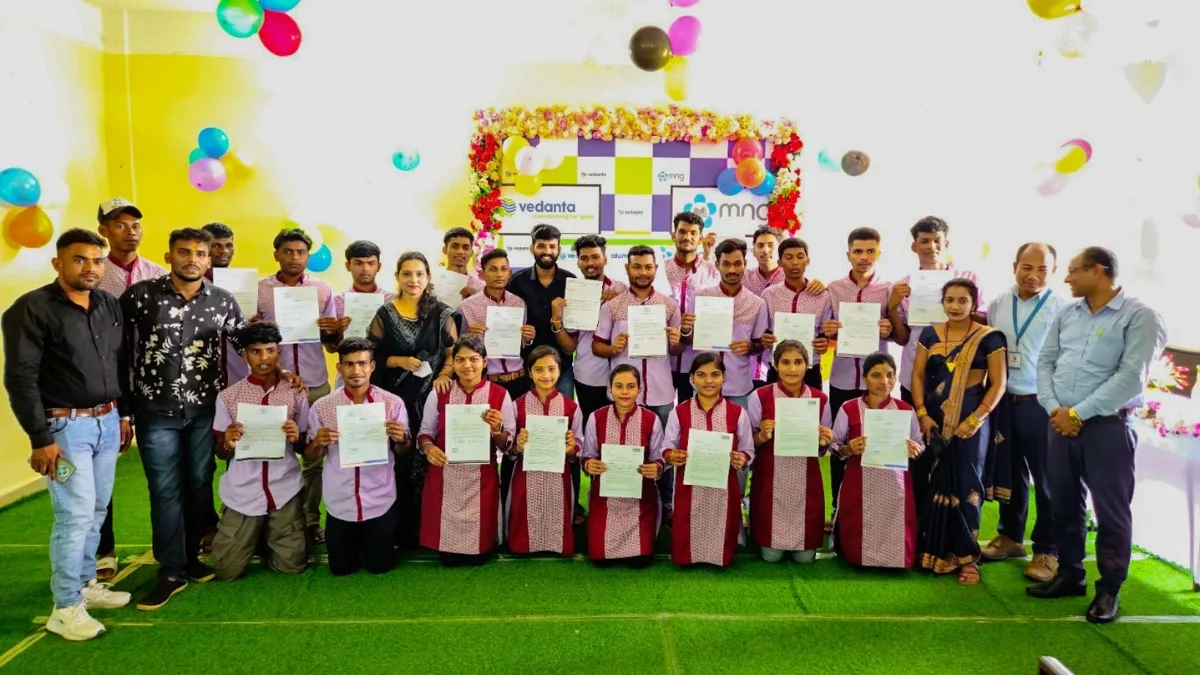
    Bhubaneswar (Odisha) [India], October 30: Kalahandi, a land of vibrant traditions and untapped potential, is now witnessing a remarkable transformation. In its quiet lanes, a new story of ambition, confidence, and self-reliance is taking shape — led by Vedanta Aluminium’s skill development initiative, which has already trained more than 800 young people from Bhawanipatna and Lanjigarh. With 55% female participation, the programme in Kalahandi is opening the doors to an avenue of opportunities for its people as well as boosting gender-inclusive employment and breathing new life into the region.

    For decades, Kalahandi has been a region where opportunities were scarce, and aspirations often limited by circumstance. Today, the tide is turning. At Vedanta’s skill centres in Bhawanipatna and Lanjigarh, young men and women are learning practical, job-ready skills that open doors far beyond the villages they grew up in.

    The centres, run in partnership with the Odisha Skill Development Authority (OSDA) and NABARD, offer industry-aligned courses that blend technical knowledge with hands-on training. From hospitality and retail to food and beverage services, each program is crafted to meet real-world demands and evolving roles. Of the more than 800 youth trained so far, 75% have secured employment, reflecting a strong placement rate and the programme’s impact in creating meaningful career opportunities.

    But the numbers tell only one part of the story. Behind every statistic is the experience of hundreds of individuals with a completely new lease of life. For example, Bighanasini Bisi, a 21 year-old from Bhatguda, now works at Fiesta Barbeque Nation in Pune after completing her training provided by Vedanta Aluminium. “I had never stepped outside my village before this,” she says. “The training gave me not just skills but the courage to step into a world I once thought was not in my reach.”

    100% Placement in a Course: A Moment of Pride

    The program’s 22nd batch of the Food and Beverage course recently achieved a landmark feat — 100% placement. All 24 trainees have found employment with well-known organizations such as AVN Group in Madurai, Sodexo in Bangalore, Club Mahindra in Pune, and Asmita Holidays in Bhubaneswar.

    Each of these young professionals now earns an average annual salary that is above the minimum wage threshold. For families where monthly incomes were once uncertain, these steady pay checks represent both dignity and security. They also ripple through the community, inspiring other youth to follow the same path and dream bigger.

    Pranab Kumar Bhattacharyya, CEO of Vedanta Alumina Business, says, “Empowering youth through skill development is central to our vision for growth. The fact that more than half of the 800 youth we have trained are girls underscores our commitment to gender equality and self-reliance in Kalahandi. This milestone, along with the phenomenal 100% placement of our latest batch, proves the transformative power of quality training and collaboration with the Odisha Skill Development Authority. We are trying to build a more equitable and prosperous future for the region.”

    Beyond Training: Building Sustainable Livelihoods

    The program’s success lies not just in the number of youths placed but in its long-term vision — to nurture self-reliant communities through meaningful livelihoods. By combining quality training with assured employment or entrepreneurial pathways, the initiative gives rural youth a way to stand on their own feet while contributing to the local economy.

    Aligned with global frameworks such as the United Nations’ Sustainable Development Goals — particularly those on gender equality, poverty reduction, and decent work — Vedanta Aluminium’s skill initiative represents a model of how corporate interventions can spark grassroots transformation. The company’s focus now remains firmly on scaling impact. Plans are underway to expand training modules, strengthen industry tie-ups, and explore new vocational streams that match evolving market needs.

    For Kalahandi’s youth, this means jobs and a future filled with promise. What began as a skill program has grown into a movement of empowerment, one that is redefining the strength of rural India. From classrooms in Lanjigarh to workplaces across the country, the story of these 800 young achievers stands as a powerful reminder: when opportunity meets determination, transformation follows.

    If you object to the content of this press release, please notify us at pr.error.rectification@gmail.com. We will respond and rectify the situation within 24 hours.

  • Decoding the New GST Rules on Health Insurance Premiums: Will it Really Lower the Cost of Your Mediclaim Policy?

    Decoding the New GST Rules on Health Insurance Premiums: Will it Really Lower the Cost of Your Mediclaim Policy?

    Mumbai (Maharashtra) [India], October 30: If you have been pricing a new mediclaim policy or preparing for renewal, you have probably heard about the new Goods and Services Tax rules. From 22 September 2025, individual health insurance premiums carry 0% GST. That is a major regulatory change, and it affects how you see your premium on the invoice.

    The big question is simple: Will your cost actually come down, and by how much? Let us unpack the change and what it means when you buy health insurance in India.

    What Exactly Has Changed

    The Ministry of Finance has clarified that GST on all individual life and health insurance policies is now set to zero with effect from 22 September 2025. Family floaters fall under this umbrella. Group covers, such as employer-sponsored health insurance, are not included and continue to attract 18% GST. The applicable rate is determined by the date you pay the premium, which affects renewals and instalments.

    There has also been public guidance and reporting that underline the same timeline and scope, with references to the formal notifications issued in September 2025. These notes state that the exemption applies to individual policies and that group credit life or group term policies remain outside the relief.

    Will Your Premium Really Fall

    Seeing 0% GST on an invoice does not automatically mean an 18% drop in what you pay. Why. Because the way the relief has been framed matters. If a service is treated as exempt instead of nil-rated, insurers cannot claim input tax credit on the GST they pay on their own costs. When input credits are blocked, some insurers may adjust the base premium to cover those costs.

    The net effect you see depends on each insurer’s pricing, its cost structure, and the regulator-approved rates. Early industry commentary has highlighted the distinction between exemption and nil rating, which is central to determining the amount of benefit that reaches customers.

    In short, the line item called GST disappears for eligible policies, but the insurer sets the base premium. It can change due to claims experience, medical inflation, and operating costs. Treat the new rule as a structural positive when you buy medical insurance, but check the final quote rather than assuming a fixed percentage reduction.

    Three Quick Scenarios to Make Sense of the Maths

    Here are three quick senories:

    • Unchanged Base Premium: Last year, your base premium was ₹20,000. Earlier, you paid ₹23,600 with 18% GST. If your insurer keeps the base at ₹20,000, your payable amount now shows ₹20,000 with 0% GST. This looks like an 18% saving versus last year’s invoice. Actual outcomes will vary by insurer.
    • Base Premium Adjusted for Costs: Suppose the insurer revises the base to ₹20,600 to reflect blocked input credits and claims trends. The payable amount becomes ₹20,600. You still pay less than the old ₹23,600, but not the full 18%.
    • Instalment or Renewal Timing: If an instalment or renewal premium was due before 22 September 2025 but you paid on or after that date, the 0% rate applies because the rate is tied to the payment date. If you paid before the date, the old rate applied to that payment. The ministry’s FAQ explains this treatment for due dates and instalments.

    What to Check When You Renew or Buy Health Insurance

    Here you will explore what to check when you renew or buy health insurance:

    • Invoice Break Up
    • Look for a clean premium break-up that shows the base premium and the GST line at 0%. If anything seems unclear, ask for a revised premium sheet that reflects the new rules. The exemption applies to individual policies, including family floaters.
    • Policy Type Matters
    • Employer group policies continue to carry 18% GST. If you rely only on an employer plan and are thinking about a personal mediclaim policy to supplement it, the 0% GST applies to that individual policy.
    • Payment Date Still Counts
    • For renewals around quarter ends, confirm the premium posting date on the insurer’s system. The rate is determined by the timing of payment receipt and invoice issuance, as outlined by the government.
    • Add-ons and Embedded Covers
    • If your individual health insurance includes additional covers such as personal accident within a single product price, the FAQ indicates the combined product would be exempt. Review riders and add-ons separately to ensure the invoice reflects the correct treatment.

    Does This Change How You Choose the Best Health Insurance

    The tax treatment is one piece of the puzzle. The core decision still rests on suitability. When you buy health insurance, weigh sum insured adequacy, room rent limits, disease-wise sub-limits, waiting periods, day care coverage, network hospitals, claim settlement support, and co-payment clauses. Price is important, but coverage design and claim experience often matter more when you actually need care.

    If you want to buy parents health insurance or senior citizens, pay extra attention to pre-existing condition waiting periods and co-payments. When comparing the best health insurance options for young families, consider maternity limits, newborn cover, and restoration benefits. If you prefer a cashless first experience, shortlist plans that have strong network coverage in your city and at your preferred hospitals.

    Conclusion

    GST relief on individual health insurance seems positive, but savings vary. Check your premium breakup and dates, and compare premiums across insurers. Prioritise coverage quality, claims support, and hospital networks. Choose a mediclaim policy that fits needs, not the tax line.

    If you have any objection to this press release content, kindly contact pr.error.rectification@gmail.com to notify us. We will respond and rectify the situation in the next 24 hours.

  • Vishwa Sindhi Hindu Foundation of Associations (VSHFA) to Hold Grand “Shashakt Samaj” at Vigyan Bhawan, New Delhi

    Vishwa Sindhi Hindu Foundation of Associations (VSHFA) to Hold Grand “Shashakt Samaj” at Vigyan Bhawan, New Delhi

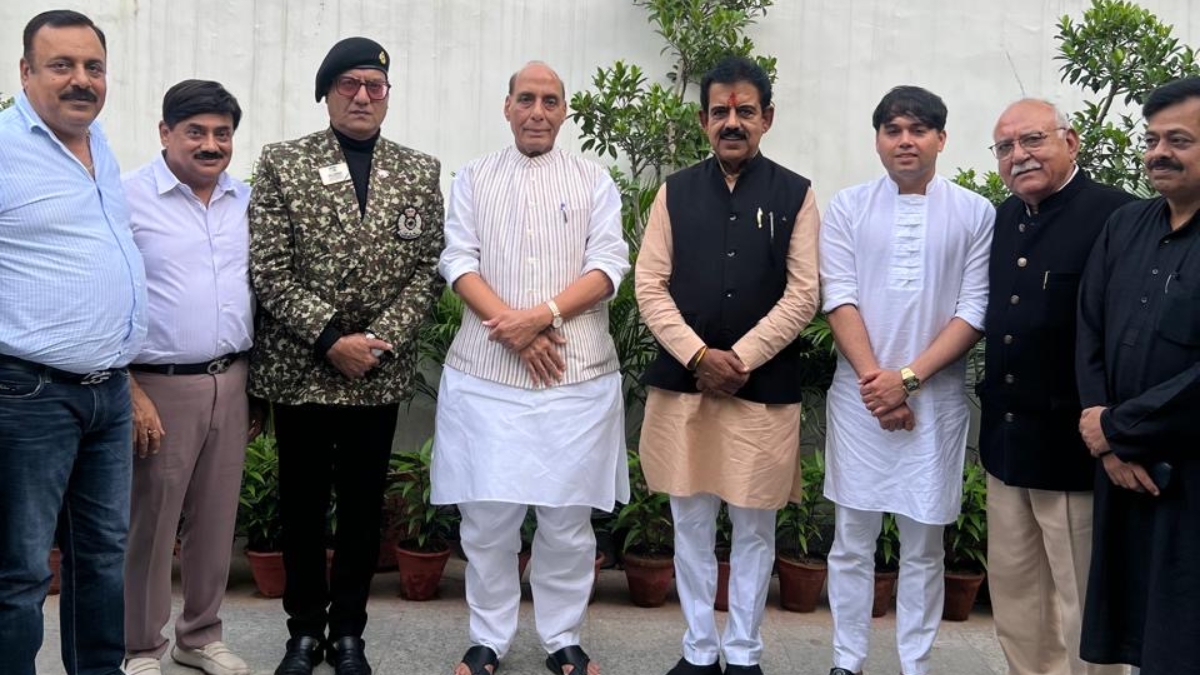
    New Delhi [India], October 30: The date will mark a grand celebration of “Shashakt Samaj – Samridh Bharat” organized by the Vishwa Sindhi Hindu Foundation of Associations (VSHFA), an international conglomeration of more than 400 Sindhi Associations, Panchayats, NGOs, and Trusts across 35 countries, under the guidance of Hon’ble Member of Parliament Shri Shankar Lalwani Ji and the leadership of Dr. Gurmukh Jagwani (Ex MLC and President, VSHFA).

    Shashakt Samaj- Samridh Bharat - PNN

    The event will see Sindhi leaders, Sindhi organizations, and Sindhians from around the globe and across India assemble together to celebrate the atmosphere of unity, empowerment, and the spirit of a strong and independent Bharat.

    This is a milestone event in the continuing mission of the Foundation to enhance the engagement of the Sindhi community in the development of India and to serve the dream of Viksit Bharat 2047. It will also focus on the need to introduce the Citizenship Amendment Act (CAA) as a major move to reinvent Indian society.

    Dignitaries and Guests

    We shall have the sugar and spice of the most exalted dignitaries at nightfall:

    Members of Attendees of the Authorities and Government:

    • SHRI RAJNATH SINGH JI (Hon’ble Defence Minister – Government of India) as the Chief Guest, and
    • Hon’ble SHRI GAJENDRA SINGH SHEKHAWAT JI (Hon’ble Minister of Culture and Tourism) as the Honourable Guest.

    Their presence will bring immense prestige to the event and serve as a reiteration of the government’s desire to empower communities and bring back unity in the country.

    Message from VSHFA Leadership

    As he prepared to make his thoughts known, Dr. Raju V. Manwani, the General Secretary of VSHFA, wrote:

    “The host to come will demonstrate the solidarity of Sindhi people and their effort to make India stronger and more independent. It will be an honourable moment to revere our history and our shared duty in the making of the future of our nation.”

    The Vigyan Bhawan “Shashakt Samaj – Samridh Bharat” festivity will culminate on an encouraging note and will encourage the Sindhi diaspora to have a revival of new zeal.

  • AI Creativity Hacks: How to Turn Boring Content into Art in 10 Minutes

    AI Creativity Hacks: How to Turn Boring Content into Art in 10 Minutes

    New Delhi [India], October 30: Let’s be honest — not every post you make hits the mark. Sometimes it’s the lighting. Sometimes it’s the pacing. And sometimes, it’s just off. But what if instead of deleting it, you could transform it?

     Not re-edit, not redo — just remix it with a fresh spark of creativity. That’s what makes CapCut Web so powerful.

     It’s built for modern creators who want professional results without overthinking the process. From video creation to photo design and audio extraction, everything you need is right inside your browser. Here are three AI-powered hacks to help you reinvent your content — fast.

    1. Turn old ideas into new visuals

    Ever scrolled through your old drafts and thought, “This could’ve been better”?  Here’s your chance to fix that — without starting from scratch.

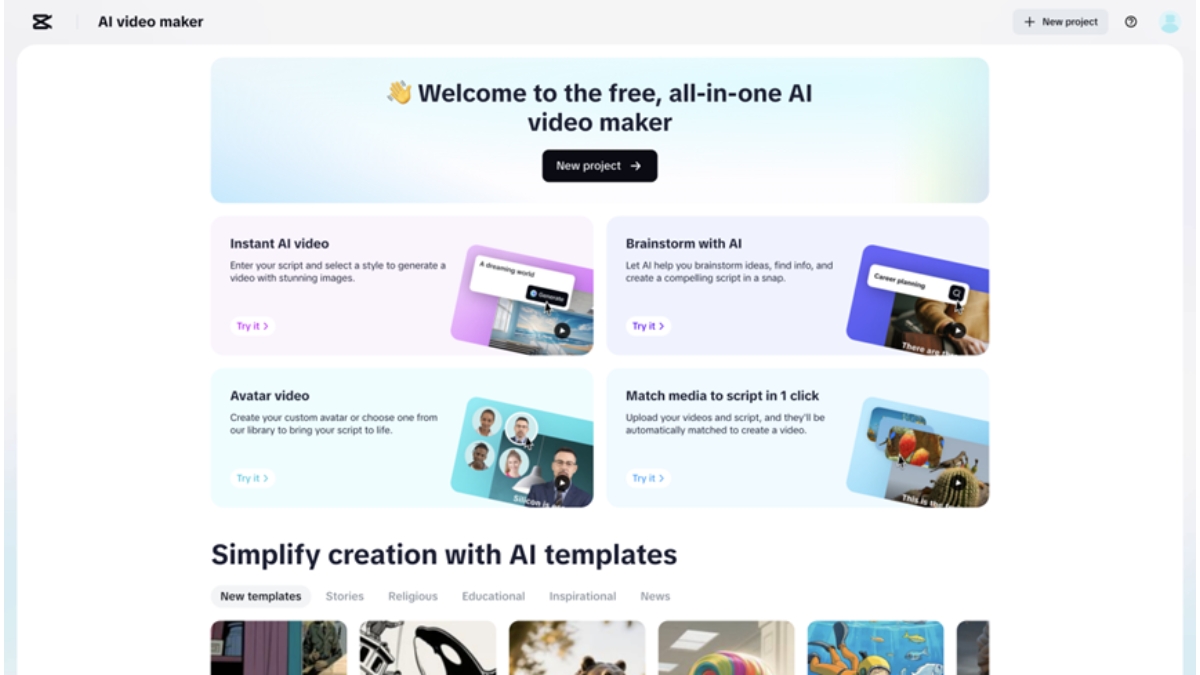
    Inside CapCut Web, you can use its AI video generator to take an old caption, script, or idea and turn it into a polished video.  All you do is type your topic, choose your style, and let the AI generate scenes, transitions, and even matching voiceovers.

    Think about it: that blog post that didn’t get traction last year could become a 15-second viral reel today.  The generator creates pacing, visuals, and even audio that matches your story’s tone automatically.

    CapCut Web PNN

    Try it once — it’s like watching your words turn into moving art.

    1. Redesign your visuals in minutes (step-by-step)

    Every creator has a few images that didn’t quite land. Maybe the lighting was dull, or the composition felt flat.

     That’s where CapCut Web’s online photo editor changes everything. The editor is powered by Seedream 4.0 — a next-gen AI model that can transform your dull visuals into clean, professional-looking designs with just a few tweaks. Here’s how to do it in under 10 minutes:

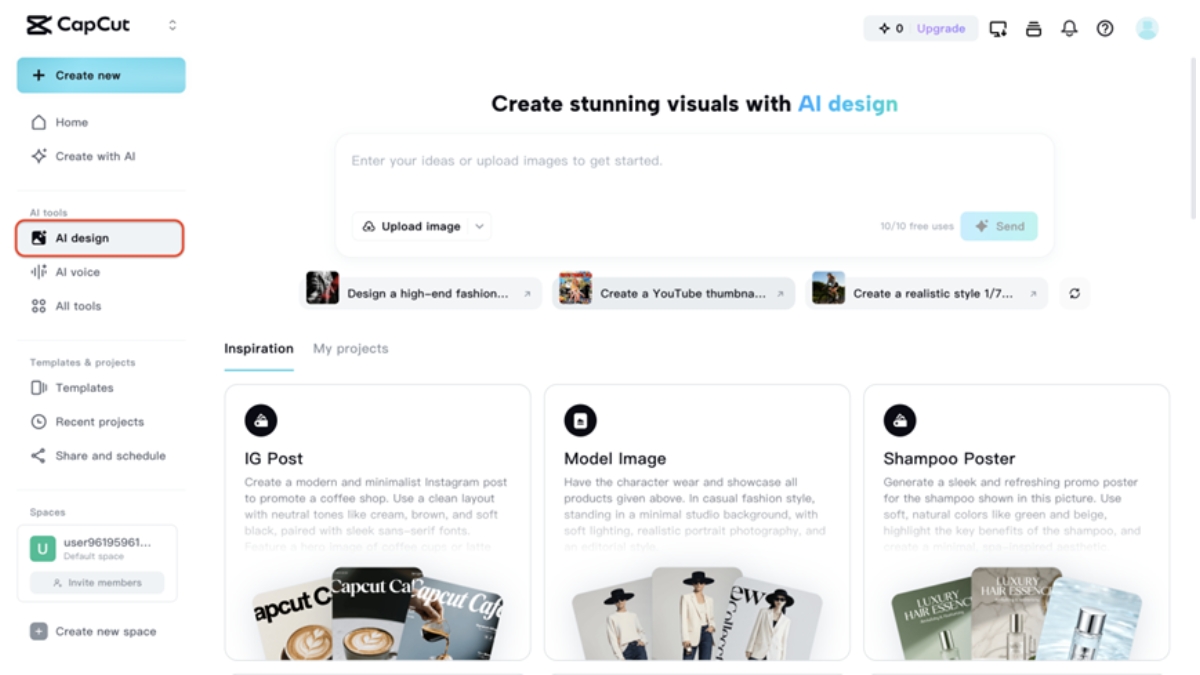
    Step 1: Head to the AI Design workspace

    Open CapCut Web in your browser and click on “AI Design” from the left panel. This takes you to the photo editor interface — an all-in-one space for image editing, background removal, and AI styling.

    CapCut Web PNN

    Step 2: Upload your image or describe what you want

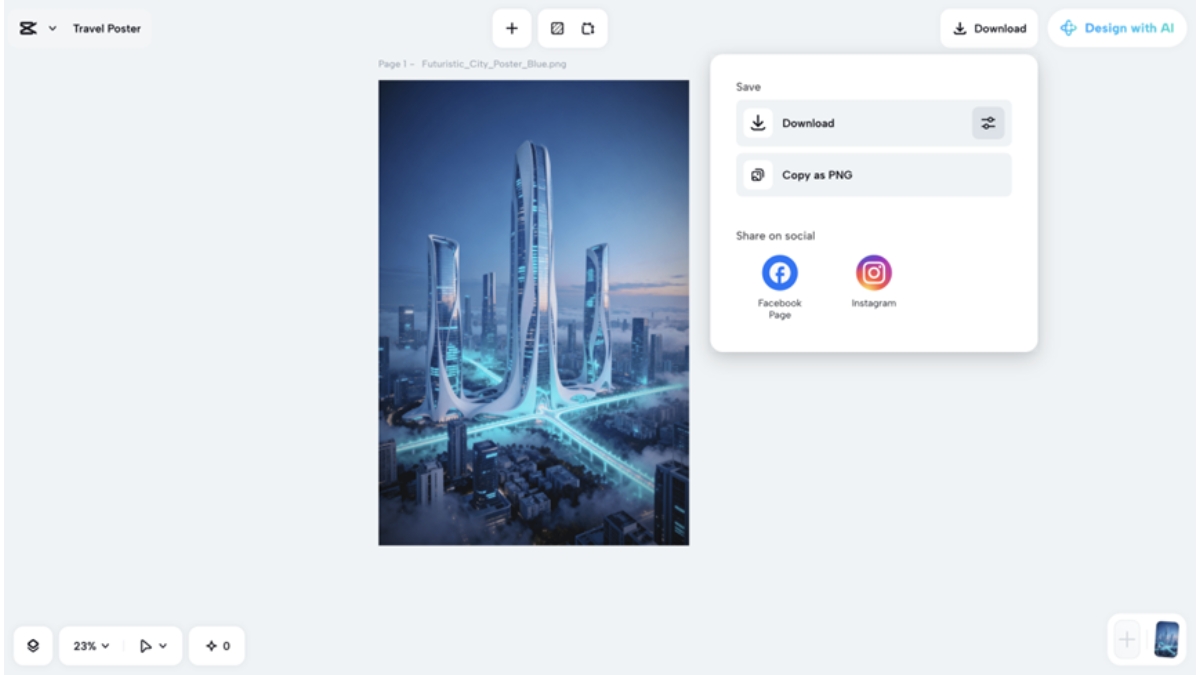
    You can upload your old photo, poster, or thumbnail. Or, if you’re starting blank, describe what you need — for example, “a modern travel poster with soft blue tones and a city skyline.” The AI instantly generates a creative visual that matches your prompt.

    Step 3: Enhance with AI filters and tools

    Now the fun part — refining it. Adjust lighting, add text, remove cluttered backgrounds or expand in one click. If you’re creating branded visuals, you can even color-match your design to your logo automatically. The tool feels intuitive — like designing with instinct instead of effort.

    Step 4: Save or repurpose your new visual

    Once it looks perfect, download your design or send it straight into your CapCut Web video project.  Many creators use this step to refresh their YouTube thumbnails, ad posters, or campaign images.

    In a few clicks, your “meh” image turns into a post that actually grabs attention.

    1. Give your sound a second life

    Here’s a fact: sound gives emotion to content.  And if you’ve ever wished you could reuse a voiceover, song, or effect from an old video — you can.

    CapCut Web includes a handy feature that lets you extract audio from video files instantly.  Just upload your video, and the AI separates the audio for you — crisp, clean, and ready to use. 

    Creators use it to recycle their best moments — a speech, a quote, or even background music. You can trim the sound, change its tone, or layer it on top of your newly designed visuals.

    The process is simple, but the creative possibilities are endless.

    Bonus: Combine all three for a 10-minute transformation

    This is where the magic happens.  When you combine the video, audio, and photo tools, you can rebuild an entire piece of content without recording anything new.

    Here’s how the “10-minute content makeover” looks:

    1. Use the audio extraction tool to grab your favorite soundbite from an old clip.
    2. Redesign your old thumbnail or image in the photo editor using the AI design workspace.
    3. Drop both into the video generator and let the AI assemble it into a brand-new video.

    The result? Something that feels entirely new — but takes a fraction of the time to create.

    Final thoughts

    AI isn’t replacing creativity. It’s making it faster, sharper, and more fun. CapCut Web helps you breathe new life into your ideas — even the ones you thought were done. The AI video generator turns scripts into stories. The audio extraction tool helps you recycle great sound.

    And the photo editor brings your visuals back to life with just a few clicks. So next time you look at an old project and feel like deleting it — don’t.

    Open your browser, head to CapCut Web, and give it 10 minutes.  You’ll see what creativity looks like when AI’s on your side.

    If you object to the content of this press release, please notify us at pr.error.rectification@gmail.com. We will respond and rectify the situation within 24 hours.

  • Game Changers Texfab Hosts Successful Investor Roadshows Ahead of SME IPO

    Game Changers Texfab Hosts Successful Investor Roadshows Ahead of SME IPO

    Surat (Gujarat) [India], October 30: Game Changers Texfab Limited is one of the upcoming SME IPOs that has organised its investor roadshows in Jaipur and Surat on October 25 and 27, 2025, respectively, as part of its upcoming SME IPO on the BSE facility. These investor road shows were a significant avenue for potential investors, institutional buyers, and market players to have a detailed insight into the business model of the company, its strengths in operations, financial performance and future outlook of the company’s growth before its initial public issue. 

    GAME CHANGERS TEXFAB LIMITED - PNN

    NNM Group organised the roadshows and hosted relevant events that helped create meaningful contacts between the management team of the company and potential investors. The inaugural was conducted on a Saturday, 25th October, 2025, at Hotel Hilton, Jaipur and the second event was conducted on Monday, 27th October, 2025, at T.G.B., Emerald Hall, Surat. Both occasions have had a positive attendance, and the investors took part actively in the shows to find out more about the company’s journey and strategic roadmap. The main aim of these meetings was to bring into focus the growth path of Game Changers Texfab, business potential, and future expansion projections and to reassure the investor of its ability to handle its operations. 

    The promoters and senior management of the company were free to interact with the investors during the sessions and answered all the questions in an open and transparent manner. They discussed the basics of the business of the company, its asset-light business structure and how it intends to enlarge its manufacturing and distribution networks. Investors were interested in knowing the strategy of revenue diversification of the company, margins and future expansion of retailing initiatives. The self-assured and evidence-based answers given by the promoters were also well-accepted, which reinforced the credibility and interest of the participating investors. 

    GAME CHANGERS TEXFAB LIMITED IPO - PNN

    The roadshows were held immediately before the IPO of the company, which is to be opened on October 28-October 30, 2025, with a price range of ₹96 to ₹102 per share. The combined size of the issue sums to ₹54.84 crore, and the stock is likely to be floated on November 4, 2025, on the BSE SME exchange. The company will use the proceeds mainly for capital expenditure, working capital needs, general corporate purposes and possible unidentified acquisitions as an indication of its orientation to sustainable growth and operational efficiency. 

    After the successful roadshows, Game Changers Texfab Limited held its anchor investor bidding on the 27th of October 2025, wherein it raised ₹9.15 crore from the anchor investors by allotting shares at ₹102 per share. This news reiterated the increased investor confidence in the company. With the favourable mood, though, a small group of market analysts were worried by the fact that the company was quite highly valued relative to its growth in earnings and the risks that its asset-light business model entailed. Nonetheless, the management of the company insisted that its strategy is scalable, flexible and capable of providing good returns in the long run, which was more acceptable to the majority of the participants at the roadshows. 

    In sum, the investor meet held in Jaipur and Surat proved to be effective in presenting the business vision of Game Changers Texfab Limited, its business strengths, and the credibility of its leadership, which is optimistic about the future of its SME IPO.

  • Language and Learning Foundation and Tata Trusts Strengthen Foundational Learning Through Relationship-Driven Change in Shravasti

    Language and Learning Foundation and Tata Trusts Strengthen Foundational Learning Through Relationship-Driven Change in Shravasti

    Shravasti (Uttar Pradesh) [India], October 30: A quiet but powerful change is taking place in Shravasti’s classrooms. What began as a challenging start to a new education initiative has now turned into a story of trust, teamwork, and measurable impact. Language and Learning Foundation (LLF), in partnership with Tata Trusts, launched a three-year project in 2022 to improve foundational learning in the district’s primary schools. The program focuses on strengthening teaching in FLN classrooms, mentoring support, and local academic leadership.

    At first, many teachers and officials were sceptical. Years of multiple schemes and programs had left them disillusioned. Attendance at early workshops was low, and participation was minimal. But instead of pushing harder, LLF’s field team took a step back, choosing to build relationships first.

    Six Block Academic Coordinators (BACs) began working closely with Academic Resource Persons (ARPs) and teachers, visiting schools, conducting district meetings, and making classroom observations together. Over time, this approach transformed the atmosphere from one of resistance to one of collaboration.

    A District Academic Group was formed along with the LLF district team, comprising DIET faculty, SRGs, and ARPs to plan training and conduct joint follow-ups. Teachers began to engage more deeply, ARPs adopted mentoring roles, and cluster meetings became spaces for academic exchange.

    By 2025, visible improvements followed. A third-party assessment showed over 20% improvement in foundational literacy among Grade 3 students. The district administration has since requested that the initiative be expanded to all blocks.

    Reflecting on this journey, Shveta Lall, Associate Director of Continuous Professional Development, Language and Learning Foundation, said, “We often measure education interventions in outcomes: improved scores, better attendance, and more effective training. But Shravasti reminded us that these outcomes rest on something deeper: trust, empathy, and shared ownership.

    No strategy, however well-designed, succeeds without relationships to carry it forward. Building those relationships is not separate from the work; it is the work. The hall that once shut us out is now open. The keys are held by the very people who once resisted us. That, more than any indicator, is the true sign of change.’’

    About Language and Learning Foundation

    Language and Learning Foundation (LLF) is a system-focused and impact-driven organisation working at scale towards improving the Foundational Literacy and Numeracy (FLN) outcomes of children in government primary schools in India.

    Foundational skills such as reading with comprehension, writing independently, and doing simple subtraction are gateway skills that must be acquired and mastered for all future learning in schools. The World Bank has estimated that more than half of the children in India at a late primary age cannot read and understand grade-appropriate short sentences, also defined as learning poverty.

    Similar findings have been reported by the National Achievement Survey (NAS) and the Annual Status of Education Report (ASER). At LLF, we believe that large-scale transformation in the teaching and learning process is required to address this crisis. With the focus on learning at the bottom of the pyramid, LLF works in educationally marginalized areas where children come from families with low literacy levels, deprived social groups, and where home languages are different from school languages.

    If you have any objection to this press release content, kindly contact pr.error.rectification@gmail.com to notify us. We will respond and rectify the situation in the next 24 hours.

  • Popular baby clothing brand Sprog sets sights on pan-India growth with phased expansion

    Popular baby clothing brand Sprog sets sights on pan-India growth with phased expansion

    New Delhi [India], October 30: Babywear brand Sprog has announced a phased plan to extend its presence across India. From its base in South India, the homegrown label has emerged as one of the country’s leading kidswear brands, winning over parents with its focus on safety, sustainability, and subtle luxury.

    The brand aims to strengthen operations in southern markets throughout 2025–26 before moving into western hubs such as Mumbai and Gujarat between 2027 and 2028. This strategy reflects both the rising demand for premium baby clothing and the trust parents place in Sprog’s approach. A key differentiator is its commitment to safety—garments made with 100% combed cotton, azo-free dyes, and designs free from irritants such as internal tags or harsh elastics. The brand also plans to introduce hypoallergenic fabrics in its future collections, reflecting rising parental awareness of skin sensitivity in infants.

    Dermatologist-backed care in baby clothing:

    • All Sprog fabrics are dermatologically tested to ensure complete safety for delicate infant skin.
    • The brand’s in-house dermatologist offers expert guidance to parents on the ideal fabrics for different skin types.
    • This initiative underscores Sprog’s commitment to safe, sustainable, and scientifically informed baby wear.

    Inspired by the five elements—earth, water, fire, air, and space—Sprog’s designs bring a distinctive identity to a crowded market. Its expansion marks a broader shift towards sustainable and quality-focused newborn wear in India’s apparel sector.

    If you object to the content of this press release, please notify us at pr.error.rectification@gmail.com. We will respond and rectify the situation within 24 hours.
  • ‘Lord Curzon Ki Haveli’ Movie Review: Where Dark Comedy Meets Diminishing Returns

    ‘Lord Curzon Ki Haveli’ Movie Review: Where Dark Comedy Meets Diminishing Returns

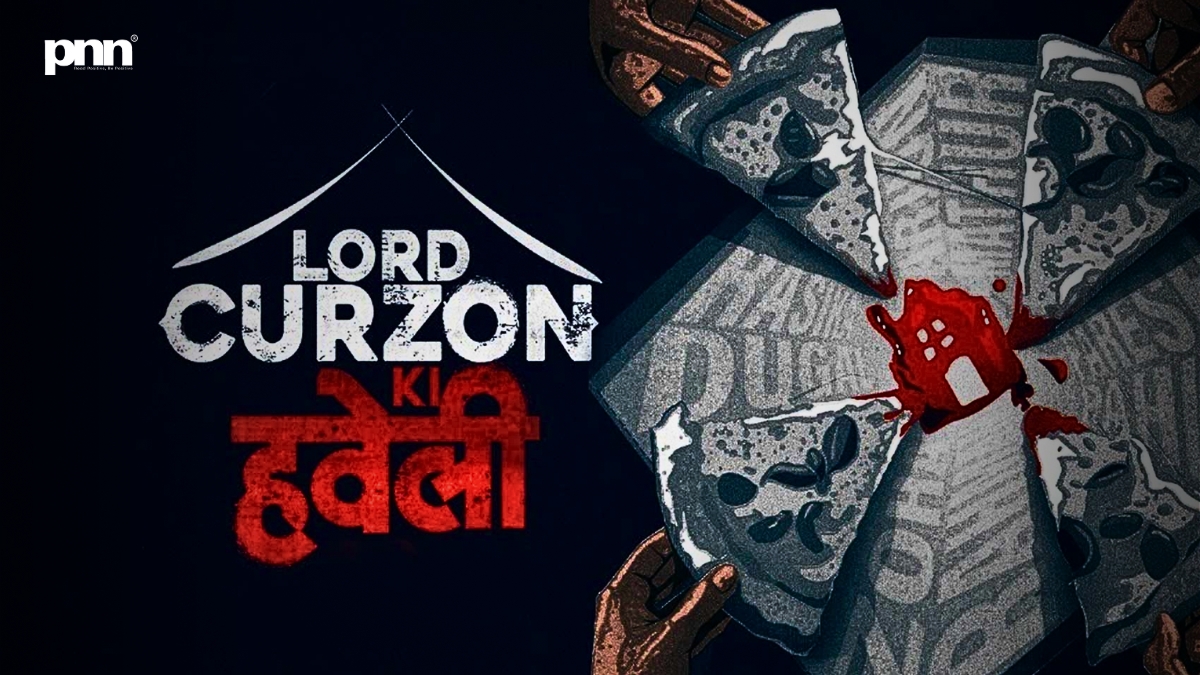
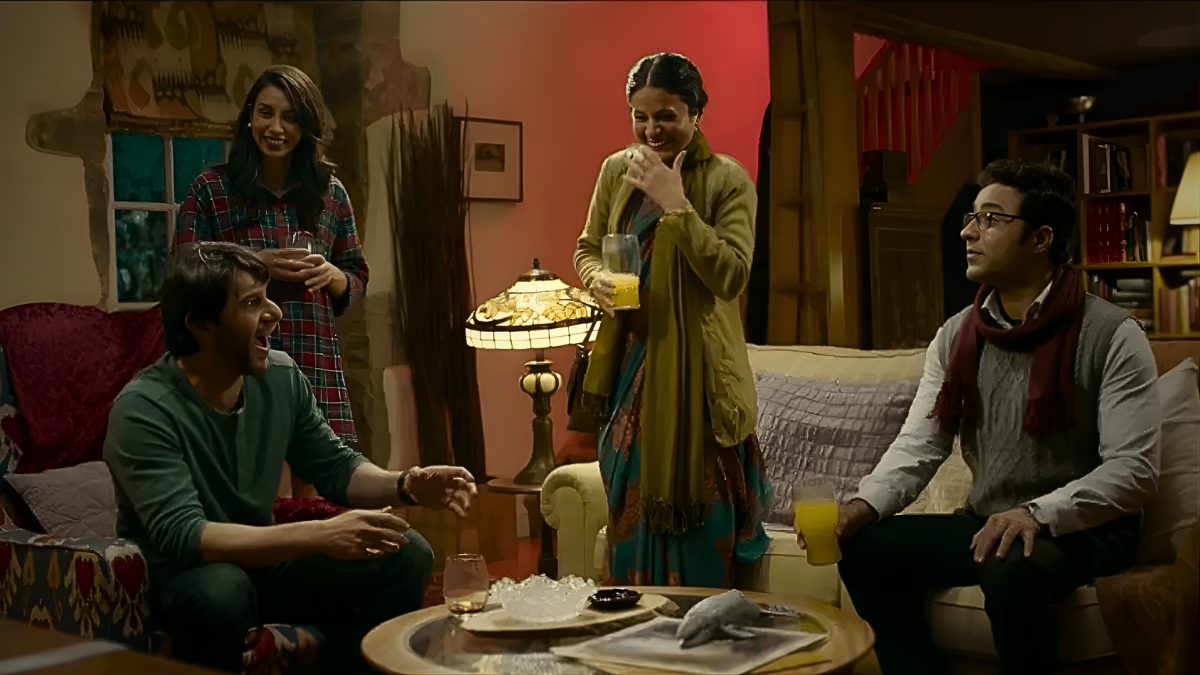
    Mumbai (Maharashtra) [India], October 30: The moment the lights dim and the screen fills with the grim façade of a snow-bound British manor, there’s a promise of something out of the ordinary. In “Lord Curzon Ki Haveli”, director-actor Anshuman Jha stakes his claim to the indie-thriller lane, one part black comedy, one part claustrophobic whodunit. Starring Rasika Dugal, Arjun Mathur and Paresh Pahuja, the film sets up a high-concept dinner-party scenario that descends rapidly into secrets, tension and the unexpected.

    At least, that’s the pitch. The reality? A stylish brew that occasionally fizzles, striving for Hitchcock-adjacent atmospheric jolts, but hamstrung by spots of inert writing and pacing that drags its mantle. Yet for all its unevenness, there’s plenty to admire: crisp performances, an intriguing setup, and a mood that lingers.

    What the movie is about

    The story centres on four Indian friends living in the UK who meet at the remote manor named after the infamous colonial figure, Lord Curzon. Rohit (Arjun Mathur) and his girlfriend Sanya (Zoha Rahman) arrive at the mansion hosted by Ira (Rasika Dugal) and her husband Dr Basukinath (Paresh Pahuja). What begins as casual banter over drinks and witty digressions gradually turns unnerving when Rohit reveals that a corpse is stowed in his car trunk. From here, the game is afoot: tensions flare, past grievances surface, loyalties shift, and the night descends into bizarre territory.

    Set largely within the confines of a single location, the film leans into chamber-drama dynamics. The interplay of cultural identity (the desi diaspora in the UK), class and the haunted echoes of the past provides thematic undercurrents. At its best, it carries a brisk undercurrent of dark humour and satire—mocking expatriate pretensions, colonial legacies and the gulf between polished lives and raw nerves. The trailer promised this blend of suspense and satire, and for the most part, the film delivers.

    Lord Curzon Ki Haveli

    What works – The positives

    Firstly, the acting is a notch above. Rasika Dugal stands out, imbuing Ira with a quiet menace and intelligence; she’s the anchor while things spiral around her. The supporting cast (especially Mathur and Pahuja) bring layered performances: the urbane host with secrets, the husband trying to maintain control while losing it.

    Secondly, the mise-en-scène is effective. Using a singular, isolated manor and a small cast, the film creates a pressure-cooker atmosphere. The bilingual script (Hindi & English) adds authenticity to the expat milieu. Reviews have noted the novelty of setting a dark comedy thriller in this mould.

    Thirdly, the humour (when it lands) is sharp. There are lines and situations that poke fun at cultural chasms, fake sophistication and the inertia of privileged lives. One reviewer remarks how the film “starts on a very interesting note”.

    Where it stumbles – The negatives

    For all its promise, the film doesn’t quite sustain the momentum. A recurring note in criticism: the writing weakens after the interval, the suspense slackens and the final act doesn’t fully deliver the punch. As one Hindi review puts it: “पर कमजोर राइटिंग के कारण अंत तक बांधे रखने में सफल नहीं हो पाती।” (Due to weak writing the film fails to keep you hooked till the end).

    Further, some of the twists feel predictable, and the character arcs don’t always justify the build-up. The film seems to relish its setup more than its payoff — a fault common in thrillers that get bogged down in theatrics rather than tight plotting. The review by The Hollywood Reporter India notably describes it as a “Hitchcock-sized mess.”

    Finally, given the small cast and single location, there’s a risk of monotony. For viewers expecting a roller-coaster of shocks, the pacing might feel languid. Some scenes linger too long, some dialogues trip over their own cleverness.

    Lord Curzon Ki Haveli

    Commercial and industry snapshot

    Released on 10 October 2025, Lord Curzon Ki Haveli entered theatres with modest expectations. While budget figures are not fully confirmed, one credible source estimates roughly ₹6 crore. Box-office reports suggest a disappointing return: according to one tracker, it pulled in a lifetime India gross of only ₹1.10–1.25 crore.  Another industry site reports a mere ₹0.08 crore for the opening weekend. Clearly, it under-performed significantly — either due to limited release, lack of promotion or word-of-mouth that failed to ignite.

    From a PR angle, this is both a caution and a talking point: a film with ambition, strong cast and distinct voice, yet commercially invisible. For the makers, the question will be whether this becomes a cult favorite down the line or simply a misfired experiment.

    Latest buzz & comments

    In the days following the release, social-media chatter has been modest. Among cine-buff circles, there’s appreciation for the ambition: people praising Dugal’s performance, the setting, and the attempt at an Indian take on the chamber thriller. On the flip side, several viewers have voiced disappointment at the flat second half and unresolved threads.

    One comment on a Facebook thread of The Hollywood Reporter India: “You can see why Lord Curzon Ki Haveli sounds attractive on paper… regardless of the budget.” That sums up the larger sentiment: good idea, mixed execution.

    Lord Curzon Ki Haveli

    PR-style wrap-up (with a hint of tongue-in-cheek)

    So, what should you take away from Lord Curzon Ki Haveli? Well, if you’re in the mood for something off-beat, smartly acted, and different from the usual song-and-dance Bollywood fare — yes, it merits a watch. Think of it as a dinner party gone outrageously wrong, with social commentary, cultural jabs and a corpse in the trunk (yes, they go there). The one-location aesthetic, the bilingual interplay, the dark humour — these all hint at a brave filmmaker saying: “Let’s try something new.”

    On the other hand, yes, you might find yourself tapping your wristwatch in the second half, wishing the suspense would sharpen. Yes, the box‐office numbers suggest the mainstream didn’t order in aplomb. And yes, despite its stylised setup, it doesn’t quite stick the landing.

    But isn’t that what makes it interesting? Films that risk something often don’t succeed in the traditional sense, yet they invite conversation. For the team behind it — especially Anshuman Jha, venturing into a direction for the first time — this is less about fiscal triumph and more about stake-claiming: “We can make a different kind of Indian film.” From that lens, Lord Curzon Ki Haveli is worth a salute.

    Final verdict

    Verdict: A compelling, though imperfect, cocktail of dark comedy and thriller.

    Should you watch it? If you like intelligent, dialogue-driven films with an offbeat flavour, yes. If you expect flat-out commercial thrills, perhaps adjust expectations.

    Box-office status: With an estimated budget of ~₹6 crore and its lifetime gross hovering around ₹1.10-1.25 crore (by one source), it didn’t light up the charts. 
    Critical response: Mixed-to-positive on acting and concept; critiques aimed at writing and pacing.

    All told — it’s not flawless, but in a year of formulaic releases, a film like this which dares to be different deserves to be seen, discussed and remembered (even if it doesn’t clean up at the box‐office). If nothing else, next time someone asks if Indian cinema can attempt a chamber thriller in the mould of Hitchcock with desi flavour — you can say, “Well, we tried. And this is what it looked like.”

    PNN Entertainment

  • India Growth Beat: 2 Government Titans and One Policy Push

    India Growth Beat: 2 Government Titans and One Policy Push

    New Delhi [India], October 30: India’s heavy industry just flexed. SAIL and NMDC turned in record-breaking numbers for FY26, while Commerce Minister Piyush Goyal rallied the nation’s export engines. If India’s industrial story was ever looking for a sequel, this is it, and it’s called momentum.

    Steel Has a Spine, SAIL Proves It

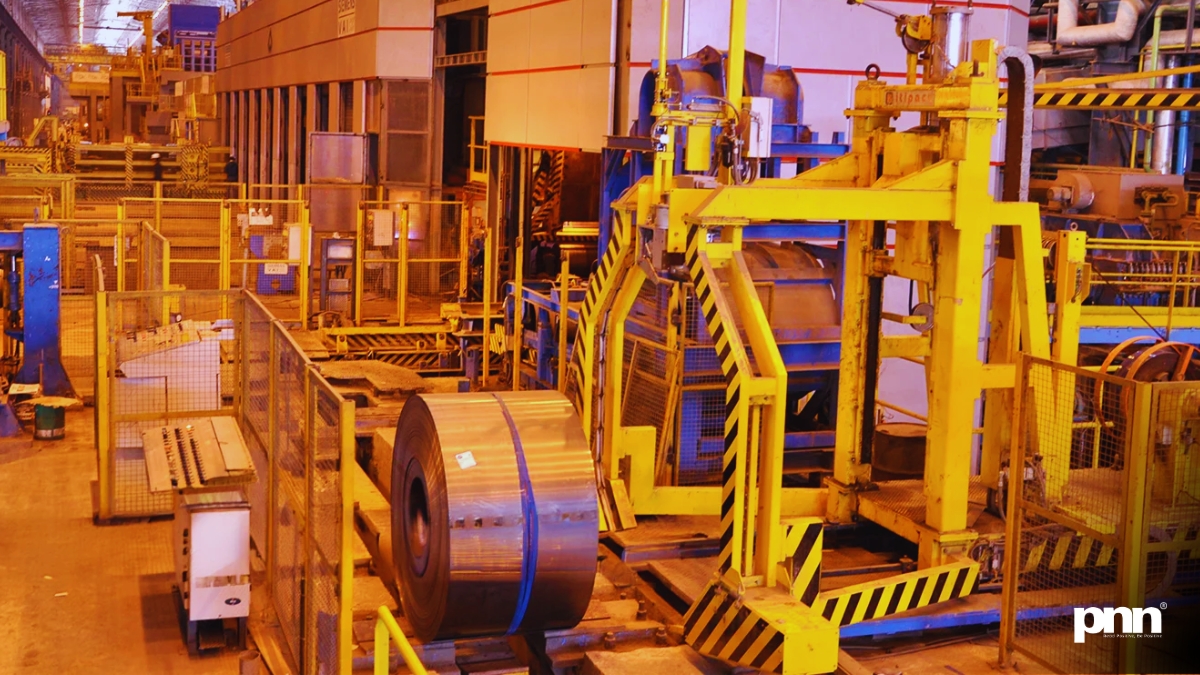
    The Steel Authority of India Limited (SAIL), the Maharatna that quite literally forges India’s backbone, has shown that resilience is not just a buzzword. In its financial results for the first half of FY26, the company delivered both physical and financial muscle.

    SAIL declares Financial results for H1FY’26; delivers strong physical and financial performance - PNN - India

    Crude steel production stood steady at 9.5 million tonnes, keeping plants near peak capacity. But the real power play came from sales. SAIL clocked 9.46 million tonnes in sales volume, up a sharp 16.7% year-on-year. That kind of growth isn’t luck, it’s strategy.

    Revenue from operations crossed ₹52,600 crore, a healthy climb from ₹48,672 crore in the same period last year, despite global steel prices taking a hit. Profit after tax (PAT) shot up 32% to ₹1,112 crore, and debt fell to ₹26,427 crore, marking steady progress toward pre-pandemic debt levels.

    In plain terms: SAIL is sweating efficiency, not excuses.

    Chairperson and Managing Director Amarendu Prakash summed it up best: “High capacity utilisation, increased sales, and relentless focus on efficiency have powered robust financial performance.” Translation: SAIL didn’t just hold the line, it pushed forward.

    NMDC: Mining Momentum Turns to Gold

    Not to be outshone, NMDC Limited, the iron ore giant feeding India’s steel juggernaut, posted a record-breaking Q2 FY26. The numbers read like a case study in operational excellence.

    Strong Q2 for NMDC: Production Peaks, Revenue Surges 30% - PNN - India

    Production hit 10.21 million tonnes, up 23% year-on-year. Sales followed suit at 10.72 million tonnes, a 10% rise from last year’s quarter. Financials? Even stronger, turnover jumped 30% to ₹6,261 crore, profit before tax rose 35%, and PAT climbed 33% to ₹1,694 crore. EBITDA grew 32% to ₹2,385 crore.

    These aren’t just figures; they’re proof that India’s mining sector has learned to perform under pressure.

    Chairman and Managing Director Amitava Mukherjee didn’t mince words: “Record production, record sales, and strong financial growth this quarter are all indicators of our historic reliability.”

    The subtext: NMDC isn’t just supplying ore, it’s fueling India’s industrial future. Its expansion plans are aligned with national priorities for self-sufficiency in steelmaking and a transition toward net-zero emissions.

    The Government’s Chess Move, Exports and Ecosystem

    Meanwhile, over in Delhi, Commerce and Industry Minister Piyush Goyal was orchestrating the next move in India’s economic chess game. Chairing a meeting with Export Promotion Councils and Industry Associations at Vanijya Bhawan, he reinforced what the numbers are already suggesting: India’s industrial base is firing on all cylinders.

    The session brought together heavyweights from the Departments of Commerce, Revenue, DPIIT, and key councils across textiles, engineering, pharma, gems & jewellery, and services. The goal: build a more agile, facilitative export ecosystem.

    The DGFT and Department of Commerce presented the ongoing reforms from the first half of FY26, measures aimed squarely at simplifying exports, diversifying markets, and cutting bureaucratic fat.

    Representatives from FIEO, CII, FICCI, ASSOCHAM, SIAM, and NASSCOM all backed the Minister’s direction. Their message was clear: government reforms are paying off, but now’s the time to double down.

    As Goyal put it, the government remains “committed to strengthening a facilitative trade ecosystem and enhancing global market access for Indian exporters.”

    It’s a sentiment that dovetails neatly with the performance of industrial giants like SAIL and NMDC. The message: the ecosystem is aligning policy, production, and profitability.

    India’s Industrial Engine Is Synchronizing

    Let’s connect the dots.

    • SAIL’s efficiency play shows manufacturing endurance.
    • NMDC’s record output proves supply chain muscle.
    • The Commerce Ministry’s export reforms signal policy alignment.

    This trifecta is how India moves from being the world’s steel supplier to becoming an industrial powerhouse that competes on value, not just volume.

    India’s steel sector alone contributes over 2% of GDP and employs more than half a million people. When giants like SAIL and NMDC perform, the ripple spreads to rail, construction, automobiles, and energy infrastructure.

    What’s even more critical: both companies are threading sustainability into their strategy, moving toward digitalisation, carbon reduction, and efficiency at scale. That’s not just modern; it’s necessary.

    The Road Ahead: From Strength to Strategy

    The takeaway from this week’s industrial scoreboard is simple: India’s growth is no longer dependent on external demand alone. Domestic manufacturing and mining are becoming the engines of consistency.

    The story of FY26, so far, is one of alignment between government intent and corporate execution.

    And while global markets wobble between inflation fears and trade frictions, India’s heavy industries are showing what a confident economy looks like: measured, methodical, and bold enough to scale.

    As the data pours in, one thing’s clear: the era of India as a manufacturing and export heavyweight isn’t on the horizon. It’s already here.

    PNN News

  • From Streets To Fleets: EXELmoto Unveils Commercial Division With Delhivery Association

    From Streets To Fleets: EXELmoto Unveils Commercial Division With Delhivery Association

    Suniel Shetty, KL Rahul, Ahan Shetty and Akshai Varde Showcase Phase 2 Expansion with B2B Logistics Entry and Universal ‘Scoot’ Launch

    Mumbai (Maharashtra) [India], October 30: EXELmoto, the celebrity-backed electric mobility brand, enters a new chapter with a commercial expansion, unveiling its B2B division with Delhivery India Limited and launching a universally accessible ‘Scoot’—an electric cycle with a scooter form factor, designed for intuitive pedal assist and a comfortable bench seat.

    The product is focused on empowering women—whether in the workforce or at home—as well as elderly riders, offering convenience, independence, and ease of use. Addressing India’s growing focus on active lifestyles and health, ‘Scoot’ positions itself as the most economical micro-mobility solution available, requiring no license or registration.

    Milestone Preorders & New Personal Mobility Launch

    Following the June campaign, EXELmoto completed a successful round of pre-orders for its personal mobility bikes, meeting strong consumer demand and celebrating a major milestone for the brand. These preorders pertain strictly to the personal micro-mobility segment and do not include commercial units.

    Delhivery Collaboration: A Strategic Association

    EXELmoto has exclusively designed a bike tailored to Delhivery’s technical and operational requirements, cementing this association as a strategic relationship. The arrangement has entered a phase-wise delivery schedule with the first batch of 200 logistics bikes currently in process of delivery. This next step follows positive pilot feedback and demonstrates the robustness of EXELmoto’s product design and engineering for commercial logistics use.

    “Delhivery validated what we built—reliability under real-world logistics conditions. We’re targeting the logistics and quick commerce segments, and this is truly scalable business. Multiple commercial models will be explored as volume grows. For our personal mobility segment, we’ve achieved unit economics that deliver healthy gross margins from the very first month, setting a strong foundation as we scale,” commented Akshai Varde, Founder & CEO, EXELmoto.

    Inclusive Micro Mobility: 

    The ‘Scoot’ electric cycle offers intuitive pedal assist and a comfortable, bench-style seat. Designed for micro-mobility, it suits women and elderly riders seeking health, independence, and low running costs. The unregistered, license-free aspect of this micro-mobility vehicle further enhances accessibility and mass adoption.

    This marks the first time the trio—actor-entrepreneur Suniel Shetty, celebrated Indian cricketer KL Rahul, and Bollywood actor Ahan Shetty—have united as co-investors in an electric mobility venture, bringing cross-generational credibility to EXELmoto’s positioning as India’s most accessible premium e-mobility brand. Their commitment signifies sustainable mobility as both a lifestyle evolution and a tangible commercial opportunity.

    Suniel Shetty, Investor & Mentor, emphasized, “Clean mobility is for everyone seeking an active life. This scooter exemplifies design that respects riders of all ages—when my generation can confidently adopt electric mobility, the revolution is truly underway. EXELmoto is building trust and impact across demographics. We backed Akshai because he builds products that perform under pressure and understands manufacturing economics. The numbers underpin a real opportunity and we expect profitability within 12-18 months.”

    Investment Perspective: Building beyond Hype 

    KL Rahul, Cricketer & Co-Investor, shared, “Fundamentals will define market leaders. Our commercial pivot, validated by Delhivery, creates clear paths to profitability and makes infrastructure for last-mile commerce possible. This isn’t just about personal mobility anymore, it’s infrastructure for India’s last-mile commerce with clear paths to profitability.”

    Youth Market Evolution

    Ahan Shetty, Actor & Co-Investor, added, “My generation’s looking for brands that evolve and grow with us, not just talk to us. EXELmoto began with style, and now it’s about substance and infrastructure. Expanding with inclusive design and tech means sustainable impact for the future—and that’s why we’re fully invested, both financially and emotionally.”

    Expansion Roadmap & Strategic Priorities

    • 68 outlets with Channel Sales deliveries commencing in November 2025
    • Amazon and Flipkart listings commence November 2025 for national reach
    • Healthy gross margins achieved, with further improvements expected as manufacturing scales in-houseTwo patents granted, four pending across vehicle architecture, frame, and component packaging
    • Modular design and manufacturing partnerships scale annual capacity to 50,000 bikes by Q3 2026
    • Major manufacturing processes will shift in-house post next investment round, improving margins and control
    • Exports and profitability projected within 12 months of the next funding cycle
    • Proprietary tech development in drivetrain and software will enhance user safety, security, and connectivity
    • Planned expansion into Southeast Asian and Middle Eastern markets where regulatory frameworks favor license-free micro-mobility

    Product Launches

    Commercial E-bike Delhivery Edition: High-capacity logistics model, pilot production Q4 2025

    ‘Scoot’ Electric Cycle: Accessible, bench-seat, pedal-assist design for women and elderly, Q1 2026 availability

    For more informationwww.exelmoto.com

    Note to Editors:

    High-resolution images, product specifications, and Founder & CEO, EXELmoto, Akshai Varde’s interviews via email are available on request.

    ABOUT EXELmoto

    EXELmoto designs and manufactures patented electric mobility solutions with motorcycle-inspired aesthetics and sustainable tech. Founded by Akshai Varde with two decades of premium automotive design experience, and backed by Suniel Shetty, KL Rahul, and Ahan Shetty, its products are license-free, registration-free, and engineered for all roads.

    If you object to the content of this press release, please notify us at pr.error.rectification@gmail.com. We will respond and rectify the situation within 24 hours.