Author: Sutun Nayak

  • From Jaipur to Global Leader: The Inspiring Journey of Jagdish Nainwal, a Visionary in Agribusiness

    From Jaipur to Global Leader: The Inspiring Journey of Jagdish Nainwal, a Visionary in Agribusiness

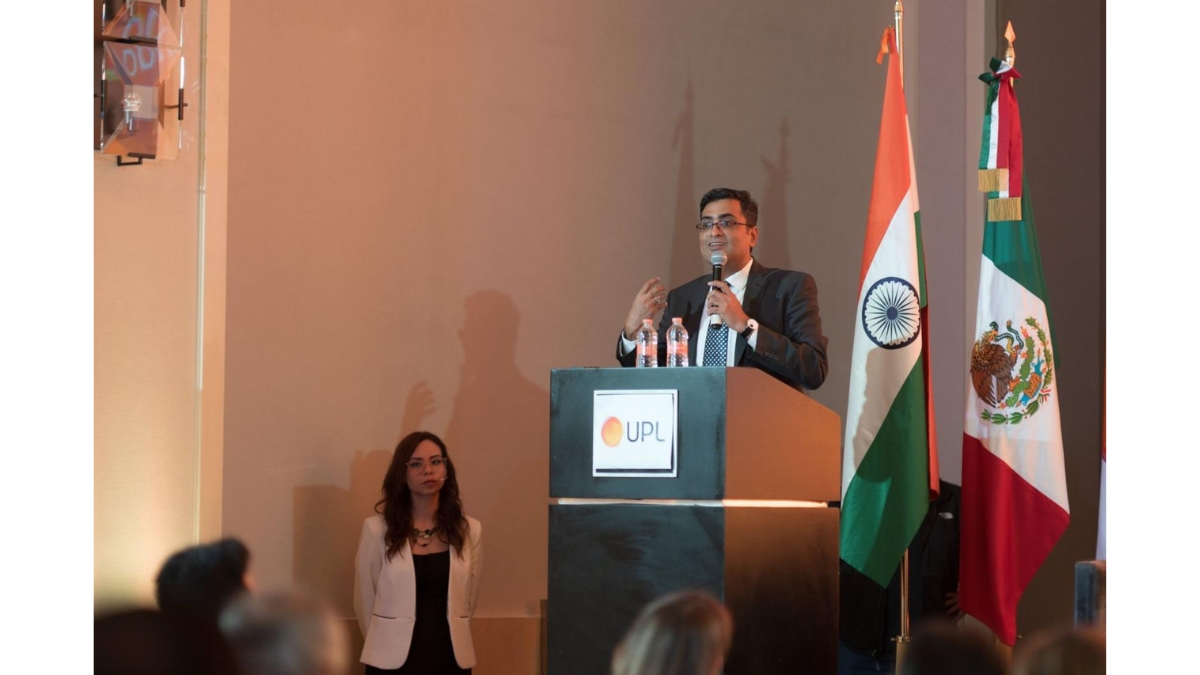
    New Delhi [India], October 16: The story of Jagdish Nainwal is a powerful testament to how ambition, coupled with world-class education and strategic acumen, can propel an individual from a small-town background to the pinnacle of global corporate leadership. Currently steering the UPL Corp as a Global Chief Marketing Officer, one of the world’s largest agricultural solutions companies, Nainwal’s career is a blueprint for aspiring business leaders.

    Key Highlights of Jagdish Nainwal’s Profile:

    • Current Role: Global Chief Marketing Officer (CMO) and Global Head of Natural Plant Protection (NPP) for UPL Corp.
    • Origin: Jaipur, India
    • Education: MBA in Agribusiness Marketing (College of Agribusiness Management, Pantnagar); Harvard Business School Alumnus.
    • Core Expertise: Marketing Management, Agrochemicals, International Business, Business Planning, and Business Development.
    • Previous Leadership: Global Chief Marketing Officer & Head of Global NPP Business Unit, UPL.
    • Industry Contribution: Founder, President & Board Member, India Mexico Trade and Commerce Council (INDMEX).
    • Jagdish Nainwal’s journey from Jaipur to becoming a key decision-maker in a multinational corporation is an inspiring narrative of dedication, strategic vision, and global leadership. He continues to be an influential figure

    Hailing from the historic city of Jaipur, India, Jagdish Nainwal’s journey began with a strong foundation in agribusiness. He is an alumnus of the prestigious College of Agribusiness Management in Pantnagar, where he earned his MBA with a focus on Marketing. This solid grounding in the core principles of agriculture and business provided the launchpad for his remarkable career.

    His professional trajectory is marked by a series of strategic roles that honed his expertise in sustainable agriculture, and with his Indian as well as global experience in agriculture, he is making a strong positive impact on the global farming community. His areas of expertise include Marketing Management, Market Planning, Agrochemicals, and International Business. These skills were pivotal in his ascent to the role of Global Chief Marketing Officer and Head of the Global NPP (New Product Portfolio) Business Unit at UPL, where he was responsible for shaping the company’s global market strategy and driving innovation.

    A significant milestone in his lifelong learning journey was his time at Harvard Business School. As an alumnus, he fortified his strategic thinking and global perspective, enabling him to navigate the complexities of the international chemicals and agrochemicals industry with exceptional skill.

    Today, as Global Chief Marketing Officer (CMO) and Global Head of NPP business, Mr Nainwal is responsible for one of the most critical agricultural markets in the world. He oversees comprehensive business operations, driving growth, market penetration, and sustainable agricultural practices across the region.

    He was invited by the Government of India to the Pravasi Bharatiya Divas in Odisha on 9 January 2025, where, as a panel speaker, he was able to share with his home country how sustainability in agriculture makes farmers more resilient and adds value in the global society.

    Beyond his corporate achievements, Jagdish Nainwal is a fervent advocate for strengthening international trade ties. He serves as the Founder President & Board Member of the India Mexico Trade and Commerce Council (INDMEX) with the help of the Indian Embassy, where he actively works to foster bilateral economic relationships and create opportunities for businesses in both nations.

    If you object to the content of this press release, please notify us at pr.error.rectification@gmail.com. We will respond and rectify the situation within 24 hours.

  • Adrian Dumitru: The Thinker Who Turned Writing Into Self-Therapy

    Adrian Dumitru: The Thinker Who Turned Writing Into Self-Therapy

    New Delhi [India], October 17: The story of Adrian Dumitru, the inspirational author, is one of quiet transformation — a journey of a man who turned introspection into inspiration. He made a name for himself on his own, facing every hurdle and obstacle with resilience and reflection.

    Adrian began writing his first book at the age of 16, with dreams of becoming an author. But when publishing seemed beyond his reach, he set that dream aside.

    Two decades later, he picked up the pen again — determined to succeed. Yet success, as he once defined it, eluded him once more. What could have been another ending instead became a profound beginning.

    Five years after his second attempt, Dumitru returned to writing — this time not for fame or recognition, but for healing. In that process, he discovered what he now calls “self-therapy” — writing not to impress others, but to understand oneself.

    He began to explore his thoughts, emotions, and inner struggles through deep reflection and honest self-expression. His essays — raw, philosophical, and deeply personal — helped him find clarity and peace.

    “I totally forgot that I was chasing success,” Dumitru reflects. “I was simply writing my thoughts … becoming this way … maybe not a writer, but what many define as an essayist.”

    A Thinker Beyond Labels

    Adrian Dumitru refuses to confine himself to traditional definitions. He is not merely a writer, poet, or essayist — he calls himself a thinker.

    He describes his work as a philosophical journey that has taught him everything about life. Through it, he has been able to analyse and define life’s deeper meanings. His essays are driven not by literary ambition, but by a search for truth and understanding.

    “Maybe I am not an essayist either,” he says with humility. “I am just an ordinary person … better defined as a thinker.”

    From Self-Therapy to Global Readership

    What began as an act of personal therapy has made Adrian Dumitru a prolific and globally read author. During this ongoing journey of self-therapy, he wrote — and kept writing.

    Today, he has written and published over 103 books, a reflection of his passion and commitment to exploring philosophy, emotional intelligence, self-awareness, and human nature.

    Each book represents a dialogue between his mind and soul. Readers across the world describe his writing as comforting yet awakening, inspiring them to reflect on their own journeys.

    Without chasing fame, Adrian Dumitru has built a legacy of quiet inspiration — proving that meaning and clarity can be found in introspection, even in a fast-paced world.

    Writing as a Path to Healing

    For Dumitru, writing is more than art — it is a pathway to healing and self-discovery. He encourages others to write not for recognition, but to better understand themselves.

    “Writing,” he says, “is a simple way of understanding who we are … and a process that could help us heal our souls.”

    His message is universal and timeless: when we write honestly, we grow — and in that growth, we uncover our most authentic selves.

    Even after publishing more than a hundred books, Adrian believes his journey is far from over.

    “It’s a non-ending story that will probably continue for the rest of my life,” he says.

    Through his reflections, Adrian Dumitru reminds us that true success lies not in recognition, but in realisation — the ongoing pursuit of understanding who we truly are.

    Selected Works by Adrian Dumitru

    If you have any objection to this press release content, kindly contact pr.error.rectification@gmail.com to notify us. We will respond and rectify the situation in the next 24 hours.

  • Chet Kamal Parkash on Diwali: “The Festival That Teaches Us to Light Up from Within”

    Chet Kamal Parkash on Diwali: “The Festival That Teaches Us to Light Up from Within”

    New Delhi [India], October 15: As twilight settles and the first diya flickers to life, the world begins to glow in soft gold. The air is filled with the scent of incense and marigold. The laughter of families carries through the evening, and hearts feel lighter. This lightness comes not only from celebration, but also from connection.

    For author and thought leader Chet Kamal Parkash, Diwali is more than just a festival. It is a journey that reminds us light is not only something we see, but something we become.

    “Every lamp we light,” he says, “is a promise — a promise to shine, to grow, and to lift others along the way.”

    The Inner Lamp of Awareness

    Chet Kamal Parkash believes the true essence of Diwali lies in introspection. “Lighting diyas outside is beautiful,” he reflects, “but lighting awareness within ourselves brings real transformation.”

    He describes lighting a diya as a moment of quiet meditation. It offers a brief pause to turn inward. “The flame teaches us silence,” he explains. “It remains still even in strong wind. Our minds must learn to glow with the same steadiness when life becomes difficult.”

    To him, Diwali is not just about removing darkness. It is about understanding that light and darkness exist together. Wisdom comes from learning to keep the flame alive in both moments of joy and challenge.

    A Celebration of Connection and Compassion

    What moves the author most about Diwali is the quiet sense of togetherness it creates. Sharing sweets, laughing with neighbours, and exchanging gifts all become simple expressions of belonging.

    “Festivals were never meant to be extravagant,” he says. “They are meant to remind us that joy grows when it is shared.”

    He sees Diwali as a reminder that one diya’s glow is incomplete until it lights another. “True happiness,” he adds, “does not come from the light that surrounds us. It comes from the light we spread.”

    Rituals That Carry Meaning

    Every tradition, according to Chet Kamal Parkash, holds a deeper message. We only need to slow down and listen.

    “When we clean our homes before Diwali,” he says, “we are not just removing dust. We are letting go of old energy, past emotions, and outdated patterns.”

    He believes that this act of renewal is the true preparation for light. “A lamp cannot shine in a room full of clutter,” he explains. “In the same way, a soul cannot shine when burdened by anger, guilt, or resentment.”

    For him, the rituals of Diwali are not just about decoration. In lighting lamps, exchanging sweets, and gathering with loved ones, we discover timeless wisdom hidden in celebration.

    Stillness within the Light

    Even amid the joy and music of celebration, the author reminds us of Diwali’s quieter moments. “When the lamps are lit and the world is filled with joy, there is a brief moment when time feels still,” he shares.

    That stillness, he says, is where gratitude lives. It is the space where we remember our journey and all the grace that brought us to this point.

    In his writings, he often describes Diwali as a festival of inner peace, hidden beneath outward sparkle. He encourages people to sit quietly for a few minutes, to observe the flame, feel its warmth, and listen to their breath.

    “That,” he says, “is the true celebration. It is the meeting point of awareness and light.”

    Ancient Light in a Modern World

    In today’s fast-moving world, Chet Kamal Parkash sees Diwali as more relevant than ever. “We live surrounded by brightness,” he observes, “yet many people feel dim inside.”

    His message is simple and powerful.

    “Slow down. Do not just decorate your space. Decorate your spirit. Do not just light lamps. Light intentions.”

    He believes that reconnecting with the deeper meaning of festivals can help us recover from the weariness of modern life. “Each celebration is a moment to pause, reflect, and begin again. Not with noise, but with clarity.”

    Diwali as a Reflection of the Human Spirit

    Chet Kamal Parkash sees Diwali as a reflection of our inner world, revealed when we pause and step away from routine and rush. “When the lights come on, we see joy around us. But the festival also invites us to look within and recognize the truth of who we are.”

    To him, every diya represents courage, humility, and renewal. “They remind us that strength is not about never burning out. It is about learning to relight ourselves when needed.”

    Each flickering flame is an invitation to forgive, to reconnect, and to start anew. “The true glow of Diwali,” he says, “is not in the fireworks. It is in the quiet spark that tells us we can begin again.”

    A Message of Light

    As the lamps shine on balconies and courtyards, the author leaves readers with a message as radiant as the night itself:

    “Light a lamp not for luck, but for learning.
    Light one not just for prosperity, but for peace.
    And light one for every soul you wish to uplift.
    Your glow may be the light someone else is waiting for.”

    He believes that if each of us chooses to live like a diya — steady, kind, and generous — the world will never run out of hope.

    “The real victory of light,” he concludes, “is not when darkness disappears. It is when we stop being afraid of it.”

    As the night deepens and thousands of diyas glow gently in the distance, his words linger — calm, meaningful, and full of light.

    Diwali, as he reminds us, is not just a date on the calendar.
    It is a state of being. A choice to awaken, to lift others, and to live with light.

    About the Author

    Chet Kamal Parkash is a celebrated author and insightful thought leader whose work explores human connection, purpose, and the ongoing journey of learning. His reflections invite readers to find meaning in daily life and approach growth with an open heart.

    Author | Thinker | Lifelong Learner
    Instagram: @chetkamalparkash

    If you object to the content of this press release, please notify us at pr.error.rectification@gmail.com. We will respond and rectify the situation within 24 hours.
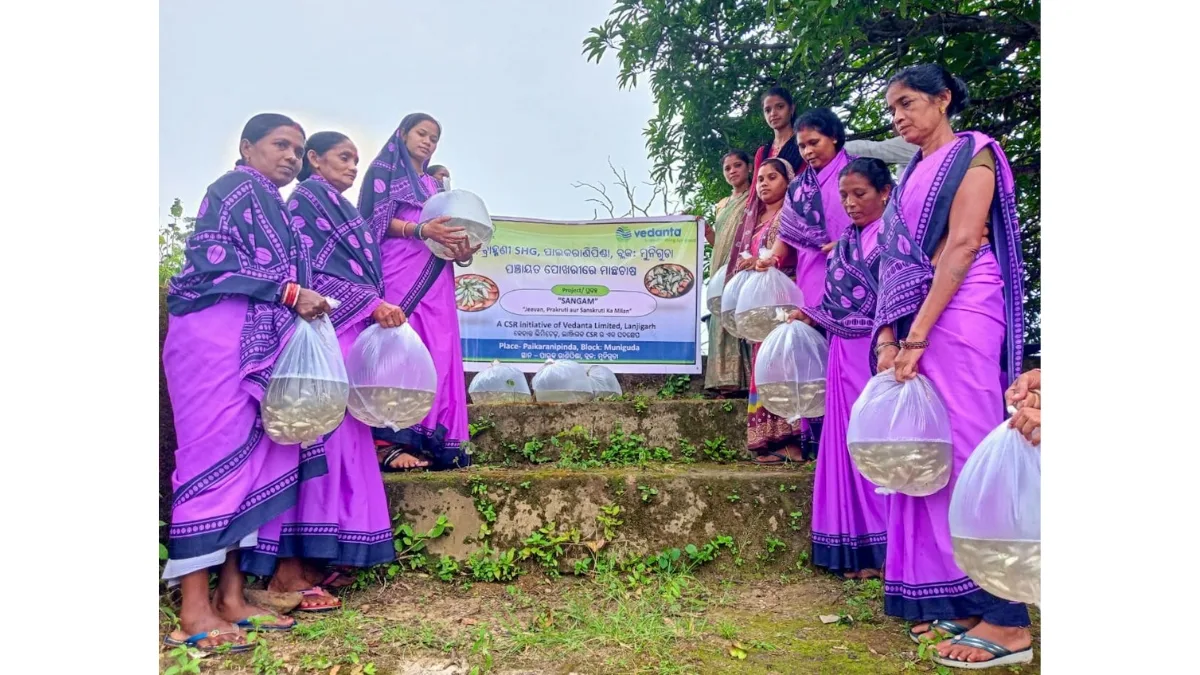
  • Vedanta Lanjigarh Creates New Income Stream for Farmers with Pisciculture Initiative under Project Sangam

    Vedanta Lanjigarh Creates New Income Stream for Farmers with Pisciculture Initiative under Project Sangam

    Lanjigarh (Odisha) [India], October 17:  Vedanta Aluminium, India’s largest producer of aluminium, in a significant step towards promoting sustainable livelihoods and strengthening rural economies, has launched a pisciculture program under its flagship watershed and livelihood initiative – Project Sangam – in Lanjigarh. The initiative is aimed at creating alternative income opportunities for farmers and self-help group (SHG) members through scientific fish farming.

    Implemented in collaboration with the Fisheries and Animal Husbandry Department of Kalahandi, the initiative spans 32 water structures across five acres in 13 villages, directly benefitting 44 farmers and SHG members. It provides them with the resources, training, and technical support needed to adopt pisciculture as a sustainable livelihood activity. The initiative is expected to generate an annual harvest of 20 tonnes of fish, significantly contributing to both local consumption and market supply.

    Commenting on the initiative, Pranab Kumar Bhattacharya, CEO – Vedanta Alumina Business said, “At Vedanta Lanjigarh, we are committed to driving holistic community development through sustainable livelihood opportunities that align with environmental and social goals. The pisciculture initiative under Project Sangam supports income diversification for farmers while strengthening the rural economy and aligning with the state’s development vision.”

    Beyond boosting fish production, the initiative reinforces Odisha’s ‘One District, One Product’ (ODOP) programme by promoting fishery as a key livelihood source in Kalahandi. By leveraging existing water bodies and integrating modern pisciculture practices, the project empowers farmers to unlock new income streams and build resilience against seasonal fluctuations, fostering long-term economic stability.

    Vedanta Lanjigarh’s Project Sangam is an integrated watershed and livelihood project that builds technology-backed initiatives to enhance the livelihoods of rural communities. The project aims to create water-based assets across 41 villages in Lanjigarh, Kalahandi district, Odisha, ensuring round-the-year availability of water for drinking and agricultural purposes. The project also brings irrigation to over 3,500 acres of land in the region by increasing the water storage potential and groundwater recharge rate, ensuring that more than 22,000 people benefit from the project year-round

    Through initiatives like these, Vedanta Lanjigarh continues to reaffirm its commitment to empowering local communities, fostering rural entrepreneurship, and contributing to Odisha’s inclusive growth journey.

    Disclaimer: This is a company press release. The publication or its staff are not responsible for the accuracy of any facts mentioned here.

  • Hafele Presents the Cronus Digi-Step Hobs: A New Era of Smart Cooking

    Hafele Presents the Cronus Digi-Step Hobs: A New Era of Smart Cooking

    New Delhi [India], October 17: With over a century of expertise in premium home solutions and innovative kitchen technologies, Hafele continues to set benchmarks in design, functionality, and performance. Staying true to this legacy, Hafele introduces the Cronus Digi-Step Hobs, a breakthrough in modern gas hob technology that seamlessly blends advanced functionality with sophisticated design. Crafted for the contemporary kitchen, Hafele’s Cronus Digi-Step Hobs deliver the perfect balance of precision, safety, and style, redefining everyday cooking experiences.

    Equipped with Digital Multi Timers, each burner can be individually timed for different dishes, allowing for greater convenience and control. The innovative Graduated Flame Technology offers multiple flame levels, enabling users to achieve perfect cooking results every time.

    For added safety and comfort, the hobs feature Insta Ignition and a Flame Failure Safety Device, ensuring reliable and secure operation. Built with high-quality brass burners and fully sealed technology, the Cronus Digi-Step Hobs promise long-lasting, maintenance-free performance.

    Aesthetically, Hafele enhances the Cronus Digi-Step Hobs with premium metal knobs featuring a sleek gunmetal finish and grooved edges for improved grip and heat resistance. The elegant 8mm tempered glass cooktop with beveled edges, paired with a modern 7-segment digital display and touch controls, creates a seamless fusion of style and innovation that elevates the look of any kitchen.

    Available in 3-burner, 4-burner, and 5-burner models, Hafele’s Cronus Digi-Step Hobs feature specialized burners like the 5kW Dual Function Wok Burner for high-intensity cooking, the Medium Wok Burner for everyday use, and the Dual Ring Burner for slow, delicate preparations, each designed to deliver maximum versatility and performance.

    With the Cronus Digi-Step Hobs, Hafele brings innovation, safety, and style together to enrich the cooking experience.

    https://www.hafeleindia.com/en/info/service/contact-us/410/ to find the nearest

    Established as a wholly owned subsidiary of Hafele Global network, Hafele India has been operating in India since 2003. An authority in the field of architectural hardware, furniture and kitchen fittings and accessories, the company also has a strong presence in synergized product categories like Home Appliances, Interior and Furniture Lighting, Sanitary Solutions, and Surfaces positioning itself as a complete solution provider for interior solutions in India and South Asia. Hafele India has a strong nationwide presence through its offices and design showrooms spread across the country. The showrooms function as a one-stop shop for all home interior and improvement needs – from providing in-depth technical advice to kitchen and wardrobe designing services through a team of experts.

    If you have any objection to this press release content, kindly contact pr.error.rectification@gmail.com to notify us. We will respond and rectify the situation in the next 24 hours.

  • Bihar CM Decision Stunner: Shah Won’t Back Nitish?

    Bihar CM Decision Stunner: Shah Won’t Back Nitish?

    New Delhi [India], October 16: Union Home Minister Amit Shah landed in Patna on Thursday and delivered a master class in political ambiguity. Asked point-blank whether Nitish Kumar would continue as Bihar’s chief minister if the NDA wins, Shah served up a non-answer wrapped in democratic rhetoric: “Who am I to make someone chief minister?”

    Spoiler alert: he’s literally the guy who makes those calls.

    Shah told Aaj Tak that the Bihar CM decision would rest with newly elected MLAs after the November 6 and 11 elections.

    The timing couldn’t be sharper. Hours before Shah’s Patna appearance, Nitish launched the JDU’s campaign in Samastipur with a rally staged under a massive hoarding of Prime Minister Narendra Modi. Subtle as a sledgehammer. The 73-year-old sought his next term by asking voters to remember his two-decade transformation of Bihar, from “jungle raj” (though he didn’t use that exact phrase) to functional governance.

    “The condition earlier was so bad that people were afraid to step out after dark,” Nitish told the crowd, referencing his first stint starting November 24, 2005. He rattled off the usual checklist: schools, hospitals, roads, village electrification. Standard campaign fare, delivered with the enthusiasm of someone reading the phone book.

    BJP’s Not-So-Hidden Agenda

    Shah’s dodge confirms what everyone already suspected. The BJP wants its own man in the top job. They’ve never had a chief minister in Bihar, a state traditionally dominated by Mandal politics. That sticks in their craw.

    Shah even threw in a backhanded compliment, recalling how the BJP graciously made Nitish CM after 2020 despite winning more seats. “Nitishji had called PM Narendra Modi and said Bihar should have a BJP chief minister,” Shah revealed, positioning the gesture as pure magnanimity. The subtext screamed: don’t expect us to be that generous twice.

    For the JDU, Shah’s comments land like a gut punch. The party’s been telling voters and workers that the BJP agreed to another Nitish term. That narrative just got kneecapped on live television.

    The seat-sharing numbers tell their own story. Both BJP and JDU are contesting 101 seats each in the 243-member assembly. Equal partners on paper. But the BJP’s fingerprints are all over the JDU’s candidate list this year.

    Nitish fielded just four Muslim candidates, down from 10 in the previous election. The BJP? Zero Muslim candidates across all 101 seats. For a leader who built his brand on secularism and welfare schemes for minorities, that’s a sharp pivot. Bihar’s 16 percent Muslim electorate might notice.

    The JDU’s new candidate mix leans heavily on traditional bases: 37 OBCs, 22 Extremely Backward Classes, 22 upper castes. Nitish is clearly betting his reduced political leverage means he can’t afford to chase Muslim votes against the PM Modi-Shah juggernaut.

    Still, on the campaign trail, Nitish tried reconnecting with Muslim voters. “Earlier, there used to be many communal incidents, but since my government came to power, there has been peace and harmony,” he said. Words are cheap. Candidate lists speak louder.

    Opposition’s Self-Inflicted Chaos

    While the NDA sorted its house, the Mahagathbandhan opposition is eating itself. Mukesh Sahni’s Vikassheel Insaan Party (VIP) wants 40 seats. Tejashwi Yadav’s RJD capped them at 15. Sahni, who calls himself the “Son of Mallah,” is refusing to budge.

    The VIP claims to represent Bihar’s fishing communities (Mallah, Nishad, Nonia, Bind, Beldar), roughly 2.61 percent of the state’s population per the 2023 caste census. They won four seats in 2020 contesting just 11. Then three MLAs defected to the BJP. One died. Now they have zero representation but want nearly 17 percent of the assembly.

    Sahni’s also demanding the deputy CM post. When told people might not like that, he shot back: “If some people do not like Tejashwi Yadav to be the Chief Minister, will he not be?”

    Bold. Delusional. Probably both.

    The seat-sharing mess means “friendly fights” where opposition parties field candidates against each other. Congress versus CPI in Bachhwara. Congress versus RJD in Vaishali. CPI versus VIP in Janjharpur. Ground-level workers are confused and directionless, waiting for clarity that isn’t coming.

    The RJD withdrew its candidate from Alamnagar at the last minute to accommodate VIP’s Brahmadev Sahni after initially issuing an election symbol to Navin Nishad. Workers are pissed. Voters are watching.

    Supreme Court – ECI Clash Over Voter List

    The Supreme Court weighed in Thursday on Bihar’s controversial special intensive revision (SIR) of voter rolls. Justices Surya Kant and Joymalya Bagchi told the Election Commission they expect full transparency on deleted and added voters.

    The ECI filed an affidavit rejecting claims of “disproportionate exclusion of Muslims,” calling the accusation “baseless and communal.” The poll body noted it doesn’t record voters’ religion, so bias allegations are unfounded.

    NGO Association for Democratic Reforms alleged 25 percent of 65 lakh excluded voters were Muslim, and 34 percent of the final 3.66 lakh deleted names. ECI said these numbers rely on name-recognition software of questionable accuracy.

    Here’s the kicker: zero appeals have been filed against the 3.66 lakh deleted voters. The court slammed political parties for not helping excluded voters appeal. “Political parties were never interested. We all know how political parties have behaved,” Justice Kant observed.

    Most deleted names were people who didn’t submit enumeration forms, shifted permanently, or died, according to ECI. Political parties filed just 25 inclusion claims and 119 objections. Individual voters filed 36,475 inclusion and 2.17 lakh exclusion claims.

    The ECI also convened enforcement agency heads to combat cash, drugs, liquor, and inducements during polling. Chief Election Commissioner Gyanesh Kumar emphasized “zero-tolerance” for fair elections, directing agencies to map constituencies and borders to check smuggling routes.

    For Indian voters watching this election, there’s a lesson: coalition politics is transactional theatre. Today’s ally is tomorrow’s footnote. Nitish built his career on switching sides and cutting deals. Now he’s discovering the house always wins eventually.

    The irony? Nitish’s best chance at another term might be the opposition’s incompetence. If the Mahagathbandhan keeps eating itself, the NDA wins by default. Then, the MLA Shah mentioned? They’ll do exactly what PM Modi and Shah tell them to do. Democracy in action, Bihar style.

    PNN News

  • Yayyy.shop launched by Paramotor Digital Technology to transform digital gifting with 250 Plus brands

    Yayyy.shop launched by Paramotor Digital Technology to transform digital gifting with 250 Plus brands

    Mumbai (Maharashtra) [India], October 17: Paramotor Digital Technology Pvt Ltd, a SaaS-based fintech, announced the launch of yayyy.shop a direct-to-consumer platform aimed at transforming how India approaches digital gifting.

    yayyy.shop brings together over 250 national and international brands across fashion, food, lifestyle, entertainment, and travel categories. The platform enables users to purchase digital gift cards at special discounted prices, allowing them to pay less while receiving the card’s full face value, offering consumers a blend of convenience, flexibility, and savings.

    Unlike conventional gifting platforms that see activity only during festive peaks, yayyy.shop encourages everyday, choice-based gifting, enabling users to purchase for themselves or others anytime. What sets it apart, is its India-first approach. Recognizing that digital convenience has largely remained metro-centric, Paramotor has built yayyy.shop to reach Tier 2 and beyond, making digital gifting and payments more accessible, inclusive, and affordable for millions of new-age consumers.

    “In India, many digital innovations start strong but don’t always reach the audiences they’re meant to serve,” said Sonia Asher, Co-founder and Director of Paramotor Digital Technology. “Our goal with yayyy.shop is to make digital gifting more inclusive and accessible. What began as an offline initiative has now evolved into a platform that extends the benefits of digital convenience beyond metro cities.”

    With yayyy.shop, Paramotor strengthens its footprint in India’s fast-evolving consumer fintech ecosystem, combining its technology and purpose to make digital gifting simple, affordable, and truly inclusive.

    About Paramotor Digital Technology:
    Founded in 2016, Paramotor Digital Technology Pvt. Ltd. is a SaaS-based fintech company providing spend management solutions for direct-to-consumer segment, digital gifting, rewards and loyalty platform for businesses. Recognized under the Start-up India (DPIIT) program, Paramotor serves over 20 million customers through its network of gifting and payment products, contributing to India’s growing digital commerce ecosystem.

    yayyy.shop: www.yayyy.shop

    Website: www.paramotordt.com

    If you have any objection to this press release content, kindly contact pr.error.rectification@gmail.com to notify us. We will respond and rectify the situation in the next 24 hours.

  • Sathlokhar Synergys E&C Global Limited Strengthens industry positioning through Record Order Wins, Diversified Client Portfolio and Credit Rating Upgrade

    Sathlokhar Synergys E&C Global Limited Strengthens industry positioning through Record Order Wins, Diversified Client Portfolio and Credit Rating Upgrade

    Chennai (Tamil Nadu) [India], October 17: Sathlokhar Synergys E&C Global Limited (SSEGL), a Chennaibased EPC Turnkey construction company delivering integrated turnkey infrastructure solutions across industrial, commercial, institutional,healthcare sectors, & solar continued its strong growth momentum during the first half of FY26. The period was marked by multiple highvalue project wins from marquee global and Indian clients, a credit rating upgrade from India Ratings & Research, and a successful preferential fundraise to support future scalability and operational excellence.

    Healthy Order Book and Pipeline

    • Order Book (as of 30 Sept 2025): ₹1200+ Cr (Under Execution)

    • Bid Pipeline: ₹12,800+ Cr worth of projects under evaluation

    • Execution Visibility: 06 to 09 months with strong H2 ramp up expected

    Robust Order Inflow

    During H1 FY26, Sathlokhar Synergys E&C Global Limitedachieved a record order inflow of approximately ₹830 Cr, securing 12 major EPC contracts across industrial, warehousing, and commercial infrastructure projects. These projects reflect the company’s growing national footprint and trust among leading domestic and international clients.

    Key Orders Secured in H1 FY26:

    • ₹338.36 Cr: Reliance Consumer Products Ltd. (RIL Group): Civil and PEB works for beverage manufacturing facility, Andhra Pradesh

    • ₹219.22 Cr: Ceylon Beverage Can Pvt. Ltd. (Sri Lanka Group): Civil, PEB, MEP, and Solar works, Karnataka

    • ₹136.99 Cr + ₹33.71 Cr + 3.75 Cr: High Glory Footwear India Pvt. Ltd. (Pou Chen Group, Taiwan): Civil, PEB, and MEP works for multiple factory and commercial buildings, Tamil Nadu

    • ₹30.31 Cr: MWM Spaces Pvt. Ltd.: Civil and PEB works for factory building, Andhra Pradesh

    • ₹18.76 Cr: Grand Atlantia Panapakkam SEZ Developers Pvt. Ltd.: Civil, PEB, and MEP infra works, Tamil Nadu

    • ₹13.72 Cr: Vishnu Chemicals Ltd.: Civil works for chemical manufacturing facility, Andhra Pradesh

    • ₹12.69 Cr: Almonard Pvt. Ltd.: Civil, Plumbing, and Electrical works, Tamil Nadu

    • ₹12.39 Cr: Karaikal Iyangars Foods Ltd.: Civil, PEB, and MEP works, Puducherry

    • ₹10.37 Cr: Komatsu India Pvt. Ltd.: Civil works for canteen building, Tamil Nadu

    • ₹6.20 Cr: Mudhra Fine Blanc Pvt. Ltd.: Civil works for auto components unit, Tamil Nadu

    • ₹4.95 Cr: Freetrend Industrial India Pvt. Ltd. (Dean Shoes Group): Electrical works, Tamil Nadu

    • ₹3.95 Cr: Thaai Casting Limited: Execution of Civil & PEB works.

    • ₹3.26 Cr: Toyota Kirloskar Motor Pvt. Ltd.: Civil, Electrical, and Firefighting works, Karnataka

    Collectively, these contracts enhance Sathlokhar’s presence across Tamil Nadu, Karnataka, Andhra Pradesh, Maharashtra, Odisha, Uttar Pradesh and Puducherry, strengthening its reputation as a preferred EPC partner for global manufacturing and industrial clients.

    Credit Rating Upgrade

    In July 2025, India Ratings & Research upgraded SSEGL’s credit profile:

    • Long Term Rating: Upgraded from IND BBB to IND BBB+ (Stable)

    • Short Term Rating: Upgraded from IND A3+ to IND A2

    The upgrade reflects the company’s robust financial performance, steady order inflows, efficient execution track record, and prudent working capital management.

    Preferential Fundraise to Strengthen Financial Base

    In September 2025, the Board approved a ₹114 Cr preferential issuecomprising equity shares and convertible warrants:

    • ₹95.93 Cr through 19,90,200 equity shares to non-promoter investors at ₹482 per share

    • ₹18.08 Cr through 3,75,000 fully convertible warrants at ₹482 per share

    This capital infusion enhances liquidity, supports working capital requirements, and empowers the company to scale operations across new sectors and geographies, reinforcing investor confidence in Sathlokhar’s long term vision.

    Future Direction

    • Geographical Expansion: Strengthen presence across southern and western India, with a growing footprint in Andhra Pradesh, Karnataka, and Maharashtra.

    • Sectoral Diversification: Deepen presence across industrial, commercial, institutional, and healthcare infrastructure projects.

    • Sustainable Infrastructure: Expand solar EPC and energy efficient design capabilities as part of a broader green infrastructure strategy.

    • Digital and Operational Efficiency: Adopt advanced ERP systems and site automation tools to improve cost control, tracking, and execution speed.

    • Global Client Relationships: Continue to attract global manufacturing clients from Japan, Taiwan, and Europe through quality, speed, and reliability.

    • Governance and Transparency: Strengthen corporate governance, ESG practices, and investor communication in line with its listed status.

    On the performance of H1 FY26, Mr. G. Thiyagu, Managing Director of Sathlokhar Synergys E&C Global Limited said, “The first half of FY26 has been transformative for Sathlokhar, marked by record order inflows, marquee client additions, and enhanced credit standing. Importantly, this period also marks the completion of one year since our listing on the stock exchange a milestone that reflects how far we have come in a short span. Since the IPO, the company has grown exponentially in scale, client base, and execution capabilities, solidifying our position as one of India’s fast emerging EPC players.

    With a strong execution pipeline and diversified capabilities, we are well positioned to deliver sustainable growth while maintaining operational discipline. Our focus remains on strengthening client trust, expanding geographically, and delivering turnkey EPC solutions that embody quality, efficiency, and innovation.”

    If you have any objection to this press release content, kindly contact pr.error.rectification@gmail.com to notify us. We will respond and rectify the situation in the next 24 hours.

  • Dark Nuns: A Haunting Revival — When Sisters Battle Demons and Box Office Doubts

    Dark Nuns: A Haunting Revival — When Sisters Battle Demons and Box Office Doubts

    Mumbai (Maharashtra) [India], October 17: If you asked me a year ago whether a Korean exorcism horror led by two nuns could open top of the box office, I’d have chuckled. Yet here we are. Dark Nuns (also styled The Priests 2: Dark Nuns) has invaded screens — and minds — in early 2025, bringing with it ambition, dread, and some stumbles along the path of faith and spectacle.

    When Dark Nuns premiered in South Korea on January 24, 2025, it arrived with more than whispers of curiosity — it came with weighty expectations. A spin-off of the 2015 cult-hit The Priests, this version shifts the lens: two nuns named Junia (Song Hye-kyo) and Michaela (Jeon Yeo-been) refuse to remain passive relics in the Church’s shadows. When a boy — Hee-joon (Moon Woo-jin) — is claimed by a malevolent spirit, the institutional priests stall, debate, and hesitate. The nuns strike.

    From the start, the production signals its cross-boundary ambition: Dark Nuns was pre-sold in 160 countries before release. The theatrical distribution spanned Indonesia, Taiwan, Mongolia, the Philippines, Australia, New Zealand, the U.S./Canada, and more.

    Nuns

    Box Office Numbers: A Mortal Wound or Just a Scar?

    Let’s confront the ledger. BoxOfficeMojo reports Dark Nuns raked in ≈ $11,966,674 globally. Its Korean take alone — the beating heart of its launch — was $11,125,100 (≈ KRW 5.71 billion opening weekend) In the U.S. & Canada, it landed a modest $103,433, with a small opening weekend of $54,923.

    In domestic terms, those U.S. numbers may seem puny — but the film never leaned on the American market as its main pillar. In Korea, it opened to the top spot. Variety even declared: “Dark Nuns scares up top spot as new releases surge.”

    By its second week, it had surpassed 1.43 million admissions, a meaningful plateau for a genre film.  And in Indonesia, it reportedly broke records among Korean releases, drawing around 310,000 viewers in its first week. — also earning it a place in Indonesia’s 2025 box office number-ones list.

    So: financial victory? Not exactly. A respectable, cross-border moderate success? Yes — especially considering the niche nature of exorcism horror in 2025’s market.

    Nuns

    What the Film Does Right (and Sometimes Rivetingly)

    1. Female Agency in Exorcism
    Perhaps the strongest current in Dark Nuns is its commitment to giving voice, agency, and grit to women in religious spaces. Junia does not wait, does not sanitise. When institutions falter, she pushes on. This is refreshing in a genre often led by male exorcists shadowing female victims.

    2. Strong Lead Performances
    Song Hye-kyo delivers a restrained but compelling Junia — her emotional beats carry weight without exaggeration. Jeon Yeo-been’s Michaela is torn between faith and doubt, and moments when the two nuns share screen time feel electric, charged. Critics and reviewers praise those scenes as the film’s spine.

    3. Atmosphere & Mythic Framing
    The film doesn’t merely exorcise; it lingers in ritual, silence, and shadows. It mixes Catholic tropes with indigenous Korean folklore, presenting its demon as something ancient, patient, and cunning. SubcultureEntertainment writes: “Dark Nuns explores deep theological questions — the correlation between demon possession and mental illness, science versus faith, ritual and ritual’s cost.”

    4. Commercial Beats Meeting Horror Tropes
    Despite ambition, Dark Nuns delivers accessible horror: possession, confrontation, rituals, and cries in darkness. Collider notes that it follows “similar beats as classic exorcism horror movies,” but stands out for its “strong and compelling lead characters.”

    5. Box Office Momentum
    Maintaining the #1 spot in Korea, exceeding 1.4 million admissions, outperforming many genre peers — these are concrete wins. The film’s overseas distribution, especially in Southeast Asia, added important buffer strength.

    Nuns

    Where the Shadows Creep In (and Sometimes Trip the Exorcism)

    1. Predictability & Script Familiarity
    Several reviews point out that Dark Nuns often mirrors The Priests (its predecessor) — similar structure of church debate, dualism, exorcism escalation. Spectrum Culture criticises the pacing as replicating the older film’s rhythms, without enough new architecture.

    2. Tonal Dissonance & Jargon Overload
    The screenplay occasionally strays into heavy theological or medical dialogue — exposition that clutters the narrative. Sarah Vincent’s Views describes a sluggish first third, with monologues overshadowing momentum. SubcultureEntertainment echoes this: scenes where the “ritual formula” is spelt out feel more mechanical than organic.

    3. Underused Supporting Cast / Secondary Stakes
    Characters like Father Paolo (Lee Jin-wook) and the shaman Hyo-won have rich potential, but sometimes feel sidelined. The emotional weight falls too heavily on the nuns, which is fine, but leaves less room for world-building or side arcs to matter.

    4. Horror That Scares — But Does It Haunt?
    Is Dark Nuns frightening? Yes, in spots. But a few moments linger beyond the scene. As Letterboxd reviewers note, despite good production values, the film rarely achieves urgency or a unique identity.

    5. Margins Under Pressure
    For all its overseas and Korean success, the film’s U.S. earnings are modest — $103,433 on a limited release. For a horror film, international strength is key — but the U.S. market likely won’t tip the profit scales. Also, some of the script’s turns (exorcism, church politics) may not resonate deeply with non-Christian or less religious audiences.

    Nuns

    The Internet Roars: Fan Buzz, Reddit Threads, Praise & Critique

    • On Reddit’s r/kdramas, fans describe Dark Nuns as “a one-time watch,” praising Song Hye-kyo’s screen presence while critiquing script holes and ease of plot obstacles. One user: “Every time there’s an obstacle, they just waltz through it.”

    • Another thread: “The direction was spot-on, but the script was weak.”

    • Nunsploitation communities rejoice: one post titled “Dark Nuns storms box office and breaks records” cites the $3.9 million opening and 160,000 viewers on day one, calling Song Hye-kyo “queen of thrillers.”

    Fans on LinkedIn, Instagram, and local Korean press have echoed this sentiment: Dark Nuns is being positioned not just as a horror spectacle, but a technology of faith — an event where cult horror meets mainstream recognition.

    Final Word: A Sacred Attempt Worth Watching (Even If Flawed)

    Dark Nuns isn’t perfect — it juggles ambition and caution with varied success. But it is brave. It asks: when the priests hesitate, who steps forward? When faith wavers, can conviction still act?

    It walks a narrow line: between formula and innovation, between horror and theology, between spectacle and soul. In many places, it slips. In others, during the rituals, the two nuns in defiance, the haunting silence before the scream — it soars.

    From a PR standpoint, the film has a story: a comeback for Song Hye-kyo, a genre push led by women, a horror movie that doesn’t simply rely on jump scares but asks spiritual questions. That narrative may outlast box office margins.

    If you ask me, Dark Nuns is the kind of film horror lovers will revisit — less for what it resolves, more for what it tries, what it asks, and how it carves space for ghosts and women in worlds that so often silence both.

    PNN Entertainment

  • Hiraba no Khamkar Empowers 21,000 Girls’ Education

    Hiraba no Khamkar Empowers 21,000 Girls’ Education

    Surat (Gujarat) [India], October 16: Surat-based industrialist Piyush Desai is flipping the script on social responsibility, pledging financial support for 21,000 girls under his bold “Hiraba no Khamkar” initiative.

    A Campaign That Means Business… and Heart

    When most entrepreneurs are busy chasing profits, Piyush Desai decided to invest in the nation’s future, literally. The 30-year-old industrialist, whose empire spans textiles, real estate, construction, and finance in Surat, launched Hiraba no Khamkar to mark Prime Minister Narendra Modi’s 75th birthday. The campaign honors PM Modi’s late mother, Hiraba, and channels serious resources into girls’ education.

    Desai is pledging Rs. 7,500 each to 21,000 girls from economically disadvantaged families, covering school fees and essential educational expenses. So far, 251 girls have received assistance in the first phase. Another 151 will benefit on Dhanteras.

    “Educating a girl is the first step toward societal progress,” Desai said. “When a girl is empowered, her family and ultimately, the nation become stronger.” That’s not just fluff. It’s backed by evidence, educated girls are statistically more likely to break poverty cycles, improve health outcomes, and contribute economically.

    Launch With a Stamp of Authority

    Union Jal Shakti Minister CR Patil inaugurated the campaign, giving it political weight alongside social impact. The optics are smart: a young industrialist with big ambition, the government’s nod, and a clear mission to change lives.

    It’s rare to see philanthropy this targeted and immediate. Most initiatives are vague promises; Hiraba no Khamkar is numbers-driven. Rs. 7,500 might not sound earth-shattering individually, but multiply that by 21,000 girls, and you’re looking at an investment of nearly Rs. 15.75 crore into education. And it’s not charity, it’s a strategic societal upliftment.

    Who is Piyush Desai?

    If you’re thinking, “Who is this guy?” here’s the lowdown. Born on April 21, 1993, in Nanota village, Banaskantha district, Desai has carved a name in Surat’s industrial landscape before hitting 30. His story reads like a blueprint for ambitious entrepreneurs: humble beginnings, diversified ventures, and a sense of responsibility most people reserve for later in life.

    Hiraba no Khamkar reflects Desai’s personal philosophy: real success is measured in what you give back. He’s proving that doing well and doing good aren’t mutually exclusive. The campaign also serves as a blueprint for other industrialists: scale, strategy, and heart can coexist.

    Why Girls’ Education is a Game-Changer

    India still faces huge gaps in girls’ education. While enrollment has improved, dropout rates and financial barriers remain high. A single Rs. 7,500 assistance can cover tuition, books, uniforms, or tutoring for a full academic year. Multiply that impact across 21,000 girls, and you’re not just funding education, you’re building future leaders, innovators, and changemakers.

    By focusing on girls, Hiraba no Khamkar tackles social inequality head-on. Educated women boost GDP, reduce child mortality, and create more stable communities. It’s a small investment for a massive return, and Desai is clearly thinking long game, not quick headlines.

    A Model for Young Entrepreneurs

    The campaign also sets a tone for India’s youth and aspiring business leaders. Social responsibility can no longer be a side hustle. Entrepreneurs who genuinely invest in societal progress will define the next decade. Desai’s campaign may be small in media noise but huge in substance, an example that actions, not statements, shape legacy.

    Looking Ahead

    Hiraba no Khamkar is still in its infancy. With 20,598 girls left to receive support, the campaign has runway for expansion. Timing assistance with festivals like Dhanteras adds cultural resonance. It’s philanthropy with strategy, heart, and local impact, sharp, effective, and unapologetically Indian.

    If Surat sets the bar, other cities better take notes. This is a blueprint of how business can blend with social good, and how young Indians can play offense in nation-building.

    PNN News