Author: Sutun Nayak

  • Ek Chatur Naar 2025 Box Office: Divya Khossla’s Bold Gamble Sees Mixed Fortune, But Sparks Curiosity

    Ek Chatur Naar 2025 Box Office: Divya Khossla’s Bold Gamble Sees Mixed Fortune, But Sparks Curiosity

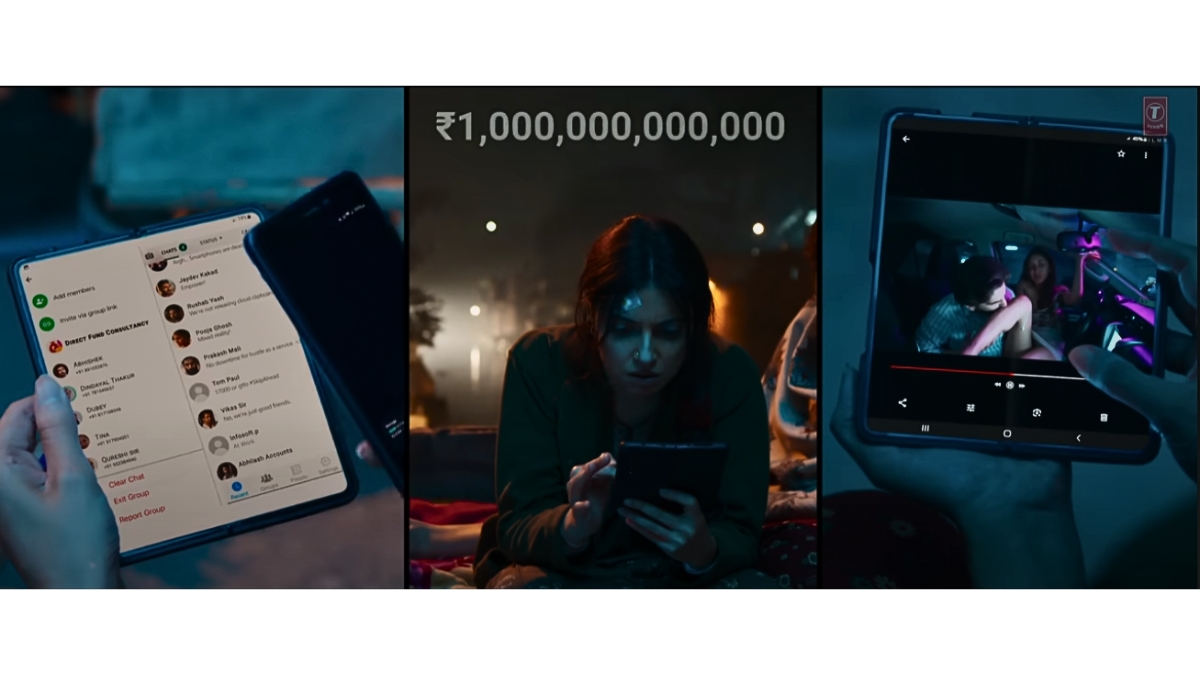
    Mumbai (Maharashtra) [India], September 15: The box office loves its clichés: a rom-com here, a masala actioner there, the inevitable mythological spectacle every few months. But once in a while, Bollywood attempts to swerve into an uncharted lane. Enter Ek Chatur Naar — a black comedy thriller starring Divya Khossla and Neil Nitin Mukesh. A title borrowed cheekily from a classic Bollywood song, a premise layered with dark humor, and an attempt at edgy storytelling — the film had enough ingredients to turn heads. The question was: would audiences laugh, gasp, or simply shrug?

    Three days and nearly ₹3.94 crore in domestic collections later, the answer isn’t simple. For a mid-budget experiment, those aren’t disastrous numbers. But in an industry that now sets weekend benchmarks at ₹100 crore thanks to larger-than-life spectacles, Ek Chatur Naar sits somewhere between “fair growth” and “we’ll take what we get.”

    Chatur

    The Premise: Twisted, Risky, and a Little Too Clever?

    Directed with a taste for irony, Ek Chatur Naar promises a tale of deception, human greed, and absurd moral compromises. The black comedy genre itself is a gamble — Indian audiences often prefer laughs without the bite or thrillers without the uncomfortable mirror. Here, the film dares to combine both.

    Neil Nitin Mukesh acts with restrained menace, and Divya Khossla tries to drop her glamorous, manufactured persona for something rougher. It’s nice to see performers challenging typecasting, but where critics divide is whether the execution lives up to the ambition. Some applaud it as a bold step in an industry dominated by formula films; others criticize it as “dark for the sake of being dark.”

    Chatur

    Box Office: The Good, the Bad, and the “Let’s See Monday” Test

    By its third day, the movie had earned just under ₹4 crore. For context, that’s neither catastrophic (box office blues have already claimed other 2025 releases like Love in Vietnam and Heer Express) nor is it earth-shattering. Industry trackers cautiously term this “fair growth,” given the niche appeal of black comedies.

    What works in its favor:

    • A steady uptick over the first weekend, showing word-of-mouth isn’t entirely absent.

    • A budget-conscious production that doesn’t need ₹100 crore to break even.

    • Curiosity factor: people want to know what this “Chatur Naar” business is all about.

    What works against it:

    • Competition from other mainstream entertainers, which eat into casual footfall.

    • A genre that appeals to urban multiplex crowds but leaves tier-2 single screens indifferent.

    • Polarising reviews — always risky in week one.
    Chatur

    Reviews & Audience Reactions: A Cocktail of Applause and Eye Rolls

    The film has found its champions among cinephiles who appreciate an attempt to break Bollywood monotony. Some praise the sharp dialogues, absurd scenarios, and the nerve to show characters that are unapologetically flawed. Divya Khossla has been singled out for surprising restraint in certain sequences, earning nods even from skeptics.

    But the naysayers are equally vocal. Critics argue the film sometimes indulges itself too much, stretching scenes that could have been snappier. The “dark humor” occasionally borders on preachy allegory. One reviewer quipped: “It’s like being invited for a laughter show, only to find out you’re the punchline.”

    On social media, reactions range from “Finally, something not drenched in melodrama” to “This is neither comedy nor thriller, just confusion.” Safe to say, Ek Chatur Naar is a conversation-starter — which, in PR terms, is a victory in itself.

    Chatur

    PR Game: Gratitude and Narrative Management

    In true Bollywood style, Divya Khossla took to social media to thank fans for supporting “cinema that dares to be different.” It’s the classic gratitude card — heartfelt for some, performative for others. But in a cluttered industry, every bit of narrative management counts. By painting the film as a “brave experiment,” the makers are smartly shifting the yardstick of success away from numbers alone.

    Neil Nitin Mukesh has kept a lower profile, allowing the movie to speak for itself, although rumor has it that he sees this one as a stepping stone to more offbeat roles.

    Chatur

    The Bigger Picture: Hits, Misses, and the Importance of Trying

    Bollywood in 2025 is clearly at a junction. Where blockbusters keep minting, smaller experiments are either hailed as cult classics or dismissed as box office flops. Ek Chatur Naar seems to awkwardly fall somewhere in between. It hasn’t flopped, but it hasn’t set screens on fire either.

    Yet, one cannot dismiss its cultural value. For every “safe” film that plays to the gallery, there needs to be a bold one that at least tries to stretch the medium. If nothing else, Ek Chatur Naar gives audiences something to debate beyond box office spreadsheets.

    Final Take: Should You Watch It?

    If you’re a fan of cinema that mixes discomfort with wit, Ek Chatur Naar might just work for you. If you’re looking for popcorn escapism, you may leave the theater scratching your head — or worse, checking your phone. But isn’t that the point of black comedy? To unsettle you while making you laugh at your own absurdities?

    The film isn’t perfect, far from it. Yet, in a year littered with forgettable flops, Ek Chatur Naar at least ensures it will be remembered — whether as a daring experiment or a cautionary tale, only time will tell.
    PNN News

  • PS Gahlaut applauds Positive Stride for Indian Agriculture, Yet Unmet Needs Remain

    PS Gahlaut applauds Positive Stride for Indian Agriculture, Yet Unmet Needs Remain

    New Delhi [India], September 15: India’s latest GST reforms mark a transformative step for the agriculture sector, with the revised slab structure set to roll out from September 22, 2025. The government has streamlined the system into four key slabs 0%, 5%, 18%, and 40% while effectively rationalizing most goods and services under the 5% and 18% brackets. Importantly, essential commodities and agricultural inputs have been placed within the lower slabs, ensuring affordability and encouraging growth within the farming ecosystem.

    Sharing his perspective on the development, PS Gahlaut, Managing Director of Indian Potash Limited, said that the reforms mark an important shift in the way India treats its primary sector.

    Direct Relief Through Lower Input Costs

    The fertilizer industry will benefit significantly, as finished fertilizers and several key agricultural inputs will now be taxed at just 5%.

    The government’s decision to slash GST rates to 5% (from 18%) on critical raw materials such as sulphuric acid, nitric acid, and ammonia addresses a longstanding imbalance that has burdened manufacturers.

    However, it is important to note that while bio-pesticides have seen a tax reduction, chemical pesticides will continue to attract an 18% GST.

    As PS Gahlaut points out, “inputs such as fertilizers and pesticides make up a major portion of farming costs. With the recent GST rationalization, farmers are expected to save significantly on these inputs, which translates into meaningful additional income per acre. Such savings for farmers cultivating multiple acres can substantially boost their earnings each season.”

    These reductions not only ease the cost burden but also improve accessibility, helping farmers invest more efficiently and prioritize better crop management.

    Mechanization at the Grassroots

    The GST reform has brought farm equipment under the 5% GST slab, significantly reducing the tax burden on various agricultural machinery. This includes tractors (except road tractors with engine capacity above 1800 cc), diesel engines up to 15 HP, hand pumps, nozzles for drip irrigation and sprinklers, soil preparation machinery, harvesting and threshing machines, straw balers, hay mowers, poultry-keeping and bee-keeping machines, composting machines, self-loading trailers, and parts and accessories for tractors like tyres, hydraulic pumps, wheel rims, and transmissions.

    This reduction in GST will benefit farmers by making essential machinery more affordable, encouraging mechanization across small, medium, and large farms. Affordable access to modern farm equipment is expected to increase productivity, reduce labor costs, and improve efficiency in farming operations.

    “By making small tractors, seeders, planters, and sprayers under the 5% slab, the government is directly encouraging technology adoption. In states like Uttar Pradesh, Bihar, and Madhya Pradesh, where landholdings are typically small, affordable machinery can help farmers boost productivity while reducing their reliance on costly and often unavailable labour during peak seasons.” Opines Gahlaut.

    Easing the compliance burden

    Earlier, mandi operators and rural traders faced heavy compliance burdens, struggling due to lack of digital infrastructure and clarity on complex GST rules.

    Under the new GST system, eligible applicants will receive registration within three working days. Businesses will be classified as low-risk based on data analysis and risk parameters. Those who do not claim input tax credit (ITC) exceeding ₹2.5 lakh per month can also opt into this simplified registration scheme.

    This new system is expected to benefit around 96% of fresh applicants, making GST registration faster, simpler, and more convenient, thereby supporting small businesses and encouraging entrepreneurship.

    PS Gahlaut noted, “By simplifying input tax credit (ITC) processes and easing invoicing requirements, the government has made the system far more transparent and farmer-friendly.”

    This streamlining of regulations will reduce the compliance load for small traders and operators, empowering them to operate more efficiently and ultimately benefiting farmers by fostering smoother market operations and price discovery.

    Road ahead

    While praising the positive impact of current reforms, PS Gahlaut stressed the need for long-term measures addressing the entire agricultural value chain.

    He pointed out, “Lower GST on fertilizers and machinery is just the first step. The next big challenge is post-harvest management. Farmers lose 1.5 lakh crore of their produce each year due to poor storage and logistics. Government must work on ways and methods to reduce this number significantly.”

    Despite GST exemptions on cold storage and warehousing for agricultural produce, farmers still face significant losses of 15–20% annually due to several underlying challenges. These losses arise from inadequate infrastructure such as insufficient and poorly maintained storage facilities, limited access to modern cold chain systems, and inefficient logistics networks.

    Additionally, post-harvest handling practices, including improper grading, sorting, and packaging, contribute to deterioration and spoilage during transportation and storage. The perishability of many fruits and vegetables, coupled with high price volatility, often leads to delayed sales and forced disposal.

    Thus, while tax exemptions reduce direct costs, addressing these structural inefficiencies through better infrastructure, technology adoption, and supply chain management is essential to significantly reduce the current magnitude of post-harvest losses.

    However, all in all PS Gahlaut describes the reforms as a “farmer-centric and timely intervention” that signals the government’s commitment to supporting farmers by immediately lowering input costs and fostering mechanization.

    If you have any objection to this press release content, kindly contact pr.error.rectification@gmail.com to notify us. We will respond and rectify the situation in the next 24 hours.

  • PSB Manthan 2025: How 7 Bold Moves Will Transform Indian Banking Forever

    PSB Manthan 2025: How 7 Bold Moves Will Transform Indian Banking Forever

    The PSB Manthan 2025 was a historic summit, held in Gurugram, Haryana, by the Department of Financial Services, which signified a landmark in the Indian banking environment of the public sector. The two-day programme has developed an overall roadmap that will see Indian banks go beyond their traditional boundaries and become globally competitive financial institutions by 2047.

    Strategic Vision Beyond Survival Mode

    Secretary of Financial Services delivered a powerful opening statement that redefined the trajectory of public sector banks. The industry has since gone past the point of survival and stability into being the foundation of the ambitious Viksit Bharat 2047 vision in India. This change is a paradigm shift from defensive measures to offensive expansion measures.

    The conference featured an impressive list of financial stars, such as the Deputy Governor of the RBI, Swaminathan J., the Chief Economic Adviser, Dr. V. Anantha Nageswaran, and the former SEBI Chairman, M. Damodaran. Their wisdom came together to make decisions that will shape the Indian banking well into the decades.

    Seven Critical Areas of Transformation

    Digital Infrastructure Modernization

    The PSB Manthan 2025 deliberations highlighted the immediate technology modernization needs. Legacy systems have to be eliminated, and banks need to adopt agile and interoperable platforms, which can provide smooth digital services. This technological advancement will make cyber resilience stronger and attuned properly with the growing digital population infrastructure in India.

    Technology partners are required to be open and interoperable, and not to create lock-in scenarios with their vendors that would inhibit future innovation. It is a strategic move that ensures that there is flexibility as well as long-term technological development in the banking sector.

    Artificial Intelligence Governance Framework

    The AI governance structures became one of the priorities of the summit. Banks should increase the management of model risk and be responsible in the use of AI. Adequate measures against the risks that may arise through technology will guard the institutions and the customers against the possibility of AI-associated vulnerabilities.

    Customer Experience Revolution

    The concept of customer centricity came to the forefront of discussions, and experts suggested redefining customer experiences in the digital age. Banks cannot afford to only upgrade the existing processes, but reform service delivery to make it more efficient, more inclusive and more trusting to customers.

    The simplification of processes and the provision of redressal of customer grievances on time will be the basic competitive advantages of the changing banking environment.

    Sectoral Championship Strategy

    The traditional advantages that the public sector banks have in agriculture, MSMEs, housing and infrastructure will grow even as they become the enablers of the sunrise sectors. The opportunities for the banking sector’s growth are untapped with renewable energy, electric mobility, green hydrogen, semiconductors, shipbuilding, and digital industries.

    This diversification approach makes banks full-service financial partners instead of old-fashioned lending institutions and generates several sources of revenue and minimises the industry-related risks.

    Global Competitiveness Imperative

    The participants of the summit were unanimous that Indian public sector banks would need to transform themselves to become global institutions. Such banks need the magnitude, global presence and advanced capabilities to serve Indian businesses in foreign markets and compete with the dominant global financial institutions.

    According to one high-ranking speaker at the events, the purpose of a public sector bank is not simply to be a financial mediator but to become an advocate of the national agenda. This attitude redefines banking as a national strategic asset, as opposed to a business service industry.

    Collaborative Innovation Ecosystem

    The key aspect of cooperation with fintechs, academic institutions, international financial bodies, and entrepreneurial projects was emphasized by speakers. Such collaborations will enhance the speed of innovation as well as increase PSB competencies in various aspects.

    Open house sessions provided platforms for PSB leaders to share experiences, propose forward-looking suggestions, and address future concerns surrounding governance, technology adoption, and customer trust maintenance.

    Workforce Transformation Initiative

    The lifelong human resource training became one of the pillars of the banking industry development. The rapidly evolving banking conditions need to empower their employees to learn through extensive skills development programs and adaptive learning programs.

    The technology implementation should not be limited to operational efficiency, but also to strategic thinking and the ability to manage customer relationships.

    Implementation Roadmap

    PSB Manthan 2025 established both near-term priorities and long-term strategic pathways. Immediate focus areas include governance enhancement, customer service optimization, technology integration, and credit delivery improvement. The long-term vision aligns with sustainable growth principles while building globally competitive institutional capabilities.

    The summit was concluded by a common directional agreement that will see the transformation of Indian banking in the next few decades. The future of Indian banking will be bold ambitions and transformative purpose as the public sector banks will take centre-stage in promoting the national interests and also in getting a global identity.

    This holistic approach is not just the strategy of gradual improvement, but it is the re-invention of the role of Indian banking in the global financial sphere. The success of such initiatives will see Indian banks to hit their bold target of global competitiveness by 2047.

  • How Tamil Nadu’s TN SPARK Is Transforming 80 Schools With Robotics and Coding Training

    How Tamil Nadu’s TN SPARK Is Transforming 80 Schools With Robotics and Coding Training

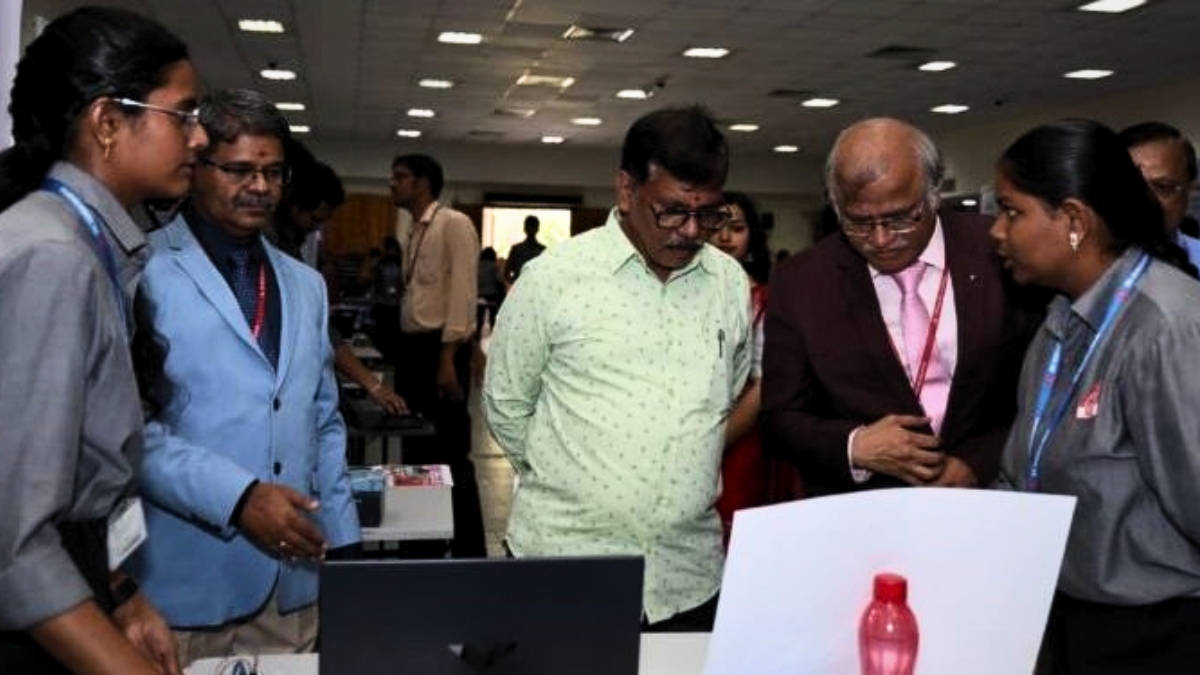
    Chennai (Tamil Nadu) [India], September 13: If you thought government schools in India were forever doomed to chalk-and-talk classrooms and crumbling blackboards, think again. Tamil Nadu’s education department has quietly decided that its students deserve not just the three R’s—reading, writing, and arithmetic—but also the new-age trinity of AI, robotics, and coding. Enter TN SPARK (State Platform for Adaptive Robotics and Knowledge), a pilot initiative that is already turning 80 schools in Coimbatore into testing grounds for tomorrow’s tech-savvy citizens.

    The program promises to train students from Classes VI to IX in artificial intelligence applications, robotics, online tools, and even the dreaded “coding” word that has both parents and ed-tech companies salivating. The textbooks? Bilingual in Tamil and English. The teachers? Handpicked and trained. The pitch? To democratise cutting-edge digital skills for students who otherwise might never have touched a laptop outside an internet café.

    The Glorious Side of SPARK

    On the positive side, TN SPARK is nothing short of revolutionary. Let’s face it—India has long been accused of preparing its students for exams, not life. By injecting AI and robotics into the government school curriculum, Tamil Nadu is attempting to rewrite that script. Imagine a Class VII student in rural Coimbatore, who once memorized multiplication tables on a slate, now experimenting with robotic sensors or dabbling in Python code. The psychological leap alone is worth applauding.

    Even critics agree on one thing: exposure matters. Early exposure to technology not only builds confidence but also removes the elitist halo surrounding coding and AI. If CBSE and elite private schools can flaunt robotics labs, why should state-run schools be condemned to outdated encyclopedias and creaky projectors?

    SPARK - PNN

    The Flip Side—Because Every Spark Can Burn

    Of course, no ambitious project in India is without its flaws. The TN SPARK initiative may sound dazzling on paper, but the ground reality is not immune to skepticism. For starters, 80 schools in a state with thousands of institutions feels like a drop in the digital ocean. Critics argue that unless scaled up rapidly, the program risks becoming yet another “pilot that died a pilot.”

    And then there’s the teacher question. Educating a small group of teachers in Coimbatore is laudable, but maintaining that zeal in classes full of 60 hyperactive adolescents is a different story altogether. Will overburdened teachers—already managing attendance, midday meal monitoring, and syllabus coverage—really have the resources to mentor students through robotics projects?

    And let’s not forget the infrastructure elephant in the room. Reliable internet in rural Tamil Nadu is still as patchy as monsoon rains. Without consistent connectivity, “online tools” could very well mean “offline frustration.”

    SPARK - PNN

    Voices from the Ground

    Interestingly, early feedback from students is glowing. One Class VIII student reportedly gushed, “We built a small robot that could sense light and move towards it. I never thought I could do this in my school.” Parents, too, are cautiously optimistic. A father of a Class IX student admitted, “I don’t know much about AI, but if my daughter learns it in Tamil and English, maybe she can get a good job one day.”

    Teachers, however, remain divided. Some are energized by the new curriculum; others whisper that the state has handed them sophisticated tools without long-term support. One educator quipped, “It’s like giving us a Ferrari but no fuel station.”

    SPARK - PNN

    Why the Timing Matters

    It is no accident that Tamil Nadu is pursuing this agenda presently. With the ed-tech universe in India thriving, and AI proclaimed the buzzword of the decade, the compulsion on governments to reform curricula never been greater. If NEP 2020 promotes coding at early levels, TN SPARK is an ambitious state-level expression of that ideology.

    In addition, by going bilingual with the curriculum, Tamil Nadu has pre-emptively muted critics who fault such initiatives for isolating rural students on a jargon trap. By marrying Tamil’s vernacularity with English’s worldwide appeal, the program achieves inclusivity without compromising aspiration.

    A Sarcastic Reality Check

    Still, one cannot ignore the irony: many government schools still lack proper toilets, uninterrupted electricity, or sufficient desks. Yet, here we are talking about artificial intelligence. It’s the classic Indian paradox—dreaming of the moon while tripping on potholes. Of course, investing in AI does not mean neglecting basics, but critics argue that the state should walk on both legs: technology and infrastructure.

    There’s also the danger of turning buzzwords into hollow slogans. “AI” can easily become the new “Digital India”—a phrase repeated in conferences, splashed on posters, but barely trickling down to actual classrooms.

    SPARK - PNN

    The Bigger Picture

    Even with the misgivings, the potential benefit of TN SPARK is too great to ignore. If it works, Tamil Nadu would be a model for other states in India—and perhaps even in developing countries—about how to demystify advanced-tech education. Consider if all government school students in India were confident in working with robotics kits, writing an app, or knowing how AI touches their lives. That would not just narrow the digital divide but also redefine the future workforce.

    The Road Ahead

    For TN SPARK to shine beyond its pilot stage, the state must address three immediate concerns: scalability, sustainability, and support. More schools must be added quickly, teachers must be continuously trained (not just once and forgotten), and infrastructure must be upgraded. Otherwise, the initiative risks becoming a well-packaged gimmick.

    Final Word

    Call it ambitious, call it unrealistic, or call it visionary—TN SPARK has certainly rocked the discourse on education in state schools. Whether it turns out to be a beacon of change or merely another good-intentioned headline will rest on the state’s capacity to foster this flame beyond the pilot stage.

    For the moment, however, the vision of a 12-year-old from Coimbatore coding a robot in Tamil is enough to make us reconsider India’s future of education. And maybe that’s the true spark Tamil Nadu wanted to light.

    PNN News

  • Urban Company IPO Frenzy 2025: All You Need to Know

    Urban Company IPO Frenzy 2025: All You Need to Know

    Mumbai (Maharashtra) [India], September 13: The Urban Company IPO didn’t just open strong; it detonated. Subscribed 103.6 times, it’s officially the hottest issue of 2025 in India. Investors hurled ₹1.13 lakh crore at a ₹1,900 crore offer. That’s not interesting. That’s mania.

    The IPO Stampede 2025

    You know a market’s frothy when demand makes no sense on paper. Urban Company’s IPO was that moment. Against 10.6 crore shares on offer, bids landed for 1,106.5 crore shares.

    • QIBs (Qualified Institutional Buyers): oversubscribed 140.2x. Foreign investors alone applied for 264.9 crore shares, while domestic funds and insurers bid for 319.7 crore. Mutual funds added 56.7 crore shares.
    • Non-institutional investors (NIIs): oversubscribed 74x.
    • Employees: oversubscribed 36.8x.

    That’s a stampede, not a subscription. And this wasn’t a one-company circus. Urban Company’s IPO rode alongside Dev Accelerator and Shringar House of Mangalsutra.

    Together, the three raised a combined ₹1.22 lakh crore in bids for just ₹2,400 crore on offer. If you’re wondering what “oversubscribed” looks like, this is it.

    Why Investors Can’t Quit Urban Company

    On the surface, Urban Company’s story looks simple: a platform connecting households with service professionals, cleaners, plumbers, beauticians, electricians, and carpenters. Think Swiggy, but for everything your home or body needs.

    But the numbers explain the frenzy:

    • Revenue: ₹1,144 crore in FY25, growing at a 34% CAGR since FY23.
    • Profit turnaround: from a ₹312 crore net loss in FY23 to a ₹240 crore profit in FY25. Even stripping out a one-time ₹211 crore tax credit, profits stand at ₹28 crore. Not massive, but a turnaround’s a turnaround.
    • Customer stickiness: repeat usage climbed from 76% in FY23 to 82% in FY25. For any platform business, that’s pure gold.
    • Expansion: operating in the UAE, Singapore, and Saudi Arabia. In markets where domestic help is expensive or legally complex, UC’s subscription cleaning model fills a real gap.

    That explains why the IPO commanded a 40% grey market premium by closing day. Investors see not just a services platform, but a consumer tech play with scale.

    The Catch: Margins Thinner Than Air

    But before you frame UC as India’s next HUL or Asian Paints, let’s get blunt. Its operating profit margin? Around 1%.

    That’s wafer-thin because new bets, like UC Native (selling water purifiers and smart locks) and international expansions, are still bleeding money. The only thing cushioning those losses is India’s core service business.

    Analyst Gaurav Garg of Lemonn Markets cut through the noise: “Stay cautious. Growth potential is there, but valuations are stretched.”

    Translation: yes, UC’s a strong story. But at 12x sales, you’re paying top-shelf prices for a business with slim margins.

    The Gig Worker Question

    Let’s not ignore the elephant in the room: UC runs on gig workers. They’re labelled “independent contractors,” but many don’t buy it. Unions across states argue UC exercises employer-like control through ratings, tiering, and booking systems.

    • Average hourly earnings: ₹317. Sounds fine until you realise even top 5% pros earn the same hourly rate, the difference is the volume of jobs.
    • Tier system: Gold, Silver, Bronze. Drop 0.01 in your rating? You’re downgraded. Fewer jobs, lower income.

    This isn’t just worker whining. Globally, gig platforms from Uber to Deliveroo have faced regulatory crackdowns. India’s government is slowly moving toward mandatory benefits for gig workers. Great for workers, costly for platforms. UC’s margins could get even thinner.

    The Bypass Problem

    Another risk: customers cutting UC out altogether. Book a service, like the professional, and next time? Call them directly. No commission, no UC. The company tries to police this, but let’s be real, leakage is inevitable. The whole model rests on trust and convenience. If UC can’t keep both airtight, loyalty cracks fast.

    The Competition Wildcard

    UC has no true national rival today. Sure, local players exist, but no one has UC’s scale. The only real potential disruptor? Swiggy. It’s quietly testing an AI-powered platform called Pyng. If Swiggy throws serious money behind it, UC could suddenly face a competitor with a bigger customer base and deeper pockets.

    If that happens, UC risks over-diversifying, chasing too many new verticals and losing focus. We’ve seen this movie before with EaseMyTrip, where spreading thin backfired with both customers and investors.

    India’s IPO Pipeline: Fire in FY25, Inferno in FY26

    Urban Company’s IPO isn’t just about one company. It’s a symptom of India’s IPO mania.

    • 2024: ₹1.5 lakh crore raised through IPOs, putting India in the global top league.
    • 2025: still holding that position, despite volatility.
    • 2026 pipeline: ₹2.8 lakh crore lined up (excluding Reliance Jio). SEBI has already approved ₹1.14 lakh crore worth of issues, with another ₹1.64 lakh crore waiting.

    What’s fueling the fire? SEBI’s reforms. Using AI to scan documents, regulators have slashed approval timelines. For issuers, that means faster entry. For investors, more choice. And apparently, they can’t get enough.

    How Urban Company IPO Compares With Past Blockbusters

    Urban Company’s 103.6x subscription puts it in elite company:

    • Zomato (2021): oversubscribed 38x.
    • Nykaa (2021): oversubscribed 82x.
    • MapmyIndia (2021): 154x, one of the craziest oversubscriptions in history.

    UC didn’t beat MapmyIndia’s record, but it outpaced every 2025 IPO and secured bragging rights as this year’s crown jewel.

    Globally? China and the U.S. dominate IPO charts, but the Indian retail investor army is what makes these numbers pop.

    Retail Investors: India’s New Power Bloc

    The most underappreciated force in this saga is retail money. Millions of Indians are opening demat accounts each month, fuelled by low-cost brokers and FOMO-driven social media chatter.

    In 2024 alone, retail investors accounted for nearly 40% of IPO participation. That’s unheard of in most markets. For Urban Company, retail investors may not have driven the QIB-sized numbers, but they added to the frenzy.

    And unlike institutions, retail rarely hedges. They chase GMP premiums and hope for a day-one pop. That keeps IPOs like UC’s sizzling.

    Listing Day: Where the Rubber Meets the Road

    Grey market premium (GMP) chatter gave UC a 40% markup. But let’s be clear, GMP is smoke, not fire. Real value shows up when the stock lists.

    If UC pops 30–40% on debut, confidence in India’s IPO pipeline goes stratospheric. If it flops, it’ll be a hard slap for those chasing every shiny new offer.

    Either way, Monday’s allotment and Wednesday’s listing will be the true litmus test.

    The Valuation Debate

    At 12x sales, UC’s IPO pricing is bold. Compared to global consumer-tech peers, it’s in line. Compared to domestic, it’s pricey.

    But UC has three things no Indian competitor does:

    1. National presence.
    2. Strong brand recall.
    3. First-mover advantage.

    Is that worth paying up for? Investors clearly think so.

    The India Context

    Step back and look at the macro. India’s IPO market isn’t just hot, it’s leading globally. Despite inflation, global slowdown fears, and oil price volatility, capital keeps chasing Indian growth stories.

    Urban Company is the poster child for India’s rising middle class: households paying for convenience, workers finding gigs through tech, and investors chasing the consumer story.

    This IPO wasn’t about one company. It was about India flexing as the world’s growth market.

    Conclusion: IPO Mania, with Caveats

    Urban Company’s IPO was record-breaking. It proved India’s IPO market is alive, healthy, and downright frothy. But let’s not sugarcoat it: the business model isn’t bulletproof. Margins are thin, competition lurks, gig-worker risks are real, and valuations are steep.

    Still, as India heads into FY26 with a record IPO pipeline, UC will be remembered as the showstopper of 2025. A company that started by scrubbing apartments now has investors scrubbing for allocation.

    That’s poetic. And very, very Indian.

    PNN News

  • Government Stock 2025 Repayment: 5 Critical Steps Investors Must Take Before September 24 Deadline

    Government Stock 2025 Repayment: 5 Critical Steps Investors Must Take Before September 24 Deadline

    The Reserve Bank of India has issued a comprehensive press communiqué on September 4, 2025, outlining the repayment procedures for the ‘8.20% GOVT. STOCK 2025. Investors in these government securities, having a maturity date of September 24, 2025, need to be aware of the essential requirements and the processes that have to be followed to repay their investments without any problems.

    The remaining balance of the 8.20% Government Stock 2025 will be repaid at the value of par on the mentioned maturity date. The announcement offers relief to thousands of investors who hold these securities in their fixed-income portfolios.

    Understanding the Repayment Timeline and Interest Cessation

    The government stock 2025 repayment will be made exactly on September 24, 2025, and there will be no interest on the same after this time. Such a suspension of interest payments highlights the significance of bondholders taking prompt steps in order to conclude formalities.

    Where September 24 is a holiday as proclaimed by any State Government under the Negotiable Instruments Act, 1881, then repayment will be made on the prior working day. This provision also gives the investors the assurance that their money is not withheld needlessly by any regional holiday differences.

    The announcement of the RBI stresses the decisiveness of the date of repayment, and therefore, the investor needs all the necessary documents ready beforehand.

    Electronic Payment Methods and Bank Account Requirements

    The Government Securities Regulations, 2007, namely, sub-regulations 24(2) and 24(3), require that the repayment proceeds to registered holders shall be effected by use of electronic processes or pay orders. This is a digitized practice that is consistent with the government’s efforts of digital payments.

    Investors of securities in Subsidiary General Ledger (SGL) accounts, Constituent Subsidiary General Ledger (CSGL) accounts or Stock Certificates are required to submit their bank account details well in advance.  The payment will be made either through pay orders incorporating relevant bank details or direct credit to the holder’s bank account with electronic fund receipt facilities.

    “The electronic payment system ensures faster and more secure transactions for government security holders,” according to banking sector experts familiar with the process. This digital-first approach reduces processing time and minimizes the risk of payment delays.

    Alternative Repayment Procedures for Manual Processing

    For investors who cannot provide electronic payment details, alternative arrangements have been established. These holders may tender their securities, properly discharged, at designated paying offices 20 days before the maturity date.

    The approved paying offices include:

    • Public Debt Offices
    • State Treasuries and Sub-Treasuries
    • State Bank of India branches where securities are enfranchised or registered

    This 20-day advance submission requirement allows sufficient processing time for manual payments and ensures that all investors receive their repayment on the scheduled date.

    Stock

    Critical Action Items for Bondholders

    Investors must take immediate action to avoid repayment complications. The first priority involves submitting complete bank account particulars to the relevant authorities. This submission should include account numbers, IFSC codes, and proper authorization mandates.

    For those opting for manual processing, securities must be properly discharged and submitted to authorized paying offices by September 4, 2025 – exactly 20 days before maturity. Late submissions may result in delayed payments beyond the official maturity date.

    Investors should verify their securities’ enfacement status and confirm which specific SBI branch or government office handles their particular holdings. This information is typically available on the original certificates or through previous interest payment records.

    Impact on Investment Portfolios and Market Dynamics

    The repayment of the government stock 2025 is a huge liquidity event in the government securities market in India. This repayment will inject a lot of liquidity into the financial system as billions of rupees of outstanding securities mature.

    Portfolio managers and institutional investors have been gearing up for this maturity by modifying their fixed-income allocations. The higher interest rate environment of past years is expressed by the 8.20 percent coupon rate that was attractive at the time of issue.

    The reinvestment option should be considered by individual investors as they get the funds. Existing government securities give varying yield profiles, and financial advisors suggest that one has to analyze new investment opportunities in the current market conditions.

    The methodical nature of such repayment goes to prove that the government is willing to repay the debt in due time. This certainly gives India its own sovereign credit rating, and keeps government securities as an asset class on the menu of investors.

    Investors are requested to contact their registered paying offices directly to acquire detailed procedures and other particular requirements. The press communiqué released by the RBI is transparent and clear on the direction to take by all stakeholders in this momentous repayment episode.

  • Global Excellence Forum (GEF) Successfully Hosts the Prestigious Conference & Bharat Samman 2025 under the Dynamic Leadership of Shri Naeem Tirmizi & Shri Jitendrakumar ‘Ravi’

    Global Excellence Forum (GEF) Successfully Hosts the Prestigious Conference & Bharat Samman 2025 under the Dynamic Leadership of Shri Naeem Tirmizi & Shri Jitendrakumar ‘Ravi’

    New Delhi [India], September 13: The Global Excellence Forum (GEF), under the dynamic chairmanship of Mr. Naeem Tirmizi (businessman, philanthropist working for humanitarian social welfare) successfully hosted the Grand Event of Bharat Samman 2025 at Le Meridien Hotel, Connaught Place, New Delhi.

    The conference focused on Artificial Intelligence (AI), emerging technologies, Self sufficiency and Sustainable Development Goals (SDGs). Over 121 achievers from across India were honoured for their outstanding contributions in various fields.

    The prestigious gathering was graced by eminent dignitaries, including:

    •             Shri Dr.Rabindra Narayan Behra (Member of Parliament & member committee of Communications & IT)

    •             Shri Nyato Dukam (Minister of Trade & Commerce, Arunachal Pradesh)

    •             Shri Alo Libang (MLA, Advisor to CM, Arunachal Pradesh)

    •             Shri Tage Taki (Chairman APSC&T, Former Cabinet Minister)

    •             Shri Dr. Sanjeeb Patjoshi, IPS (DGP, State Human Rights Commission, Kerala)

    •             Dr. Shri Sandeep Marwah (Founder, Film City Noida & VC, AAFT University)

    •             Shri Jitendra Mani, IPS (Dy. Director Training, Delhi Police Academy)

    •             Shri Anil Kumar (Joint D.G., NAI, Ministry of Culture)

    •             Adv. Siddharth Yadav (Adv. Supreme Court & National Spokesperson, BJP)

    •             Shri Girish Chawla, IPS (Retd. IG)

    •             Prof. Viney Kapoor Mehra (Founder & VC, DBRANLU)

    •             Shri Dr. N. D. Mathur (VC, Vivekananda Global University, Jaipur)

    •             Shri K. L. Ganju (Consul General [Hony.] of the Republic of Comoros)

    …and many more leading personalities from politics, administration, academia, law, arts, and culture.

    The honorable dignitaries also felicitated Mr. Naeem Tirmizi & Mr. Jitendra kumar for their contributions.

    The jam-packed conference hall witnessed the presence of over 300 participants, including politicians, educationists, doctors, engineers, researchers, scientists, entrepreneurs, and professionals. Participants from various states also showcased their colourful traditional attires, adding a cultural vibrance to the event.

    “The event was further enriched with cultural performances by school children, an elegant Bharat Natyam presentation, and a mesmerizing performance by child singing sensation Sayesha Gupta.”

    Speaking on the occasion, Mr. Naeem Tirmizi, Chairman of GEF, said:

    “Bharat Samman 2025 is not just an award ceremony, but a celebration of India’s achievers who are shaping our future with innovation, knowledge, and dedication.”

    “Mr. Jitendrakumar ‘Ravi’ said that GEF will continue its noble mission of recognising outstanding achievers and contributing to the betterment of society.”

    International Emcee Simran Ahuja hosted the prestigious event.

    The event concluded with resounding success and became the talk of the town for its scale, diversity, and thought-provoking discussions.

    If you have any objection to this press release content, kindly contact pr.error.rectification@gmail.com to notify us. We will respond and rectify the situation in the next 24 hours.

  • GD Goenka Public School, Lucknow, Clinches Top CBSE Rank in C-Fore School Rankings 2025

    GD Goenka Public School, Lucknow, Clinches Top CBSE Rank in C-Fore School Rankings 2025

    Lucknow (Uttar Pradesh) [India], September 13: GD Goenka Public School, Lucknow, has been ranked the top CBSE school in the city in the prestigious C-Fore School Rankings 2025. The school secured 1209 points out of 1450 in the Co-educational Day School category, reflecting its commitment to academic excellence, innovative pedagogy, and holistic development.

    The rankings, released by C-Fore – India’s pioneer in school evaluation for the past 24 years, assess educational institutions across key parameters such as academic reputation, faculty competence, infrastructure, leadership, and student outcomes. GD Goenka’s leading position underscores its consistent efforts to foster a nurturing and dynamic learning environment for students.

    In the ICSE curriculum category, Seth MR Jaipuria School, Gomti Nagar, leads with 1224 points, followed by City Montessori School, Gomti Nagar, with 1208 points. The All Boys’ and Girls’ Day School categories are led by La Martiniere Boys’ College (1200 points) and Loreto Convent Day School (1182 points), respectively.

    The remarkable journey of GD Goenka Public School is closely associated with its Chairman, Sarvesh Goel – a visionary entrepreneur, film producer, and educationist, whose passion for progressive learning has driven the institution’s success. His leadership reflects a rare blend of business acumen and a deep commitment to social impact. Commenting on the school’s achievement, Sarvesh Goel said,

    “This recognition is a testament to the collective effort of our faculty, students, and parents who have embraced innovation, discipline, and compassion in education. At GD Goenka, we are not just preparing students for exams; we are shaping responsible global citizens, equipped to lead with empathy and excellence.”

    Beyond academics, Sarvesh Goel is a passionate advocate of fitness and wellness, a philosophy he actively incorporates into student life. His leadership has extended to community engagement and health awareness initiatives, with one of the flagship events being the Lucknow Run Half Marathon. Under his guidance, the marathon has grown into a prominent event encouraging youth and adults alike to adopt healthier lifestyles. He further added, “Education must inspire life-long learning and personal growth. We are proud that our students excel academically while also pursuing sports, arts, and social initiatives. Our aim has always been to nurture their potential and prepare them for a meaningful tomorrow.”

    He is currently driving the 7th Edition of the Lucknow Run Half Marathon, scheduled for 2nd November 2025, which has become a beacon of healthy living. The marathon reflects his unwavering belief that physical well-being is an integral part of education. “We want our students to learn the value of perseverance, discipline, and resilience – not only in classrooms but also through sports and fitness,” he remarked. Through this initiative, Sarvesh Goel has successfully transformed the narrative around wellness, making it an essential part of the school’s culture.

    GD Goenka’s curriculum embraces a balanced approach, combining academic rigor with extracurricular pursuits. The school’s success in competitions such as the Youth Olympics, where its boys’ Futsal team emerged champions, exemplifies its commitment to nurturing leadership and teamwork.

    Recently, the school also hosted Times Eduverse 2.0, bringing together over 120 students from classes 1 to 12 to showcase their creativity and knowledge through competitions in writing, painting, and quizzes. These initiatives highlight GD Goenka’s holistic approach, encouraging students to explore their talents while building self-confidence.

    The top ranking in the C-Fore School Rankings is a milestone that confirms GD Goenka’s position as a leading educational institution in Lucknow. With Sarvesh Goel’s forward-thinking approach and emphasis on balanced development, the school is poised to expand its offerings further, integrating advanced technology and global collaborations into its academic framework.

    Looking ahead, the school aims to set new benchmarks in education by strengthening its focus on experiential learning, mental well-being, and community outreach. “Our journey is far from over. We are committed to creating spaces where students thrive academically, socially, and emotionally,” Goel emphasized.

    As GD Goenka Public School celebrates this achievement, it remains a shining example of how visionary leadership, academic excellence, and holistic development can come together to transform lives and communities.

    If you object to the content of this press release, please notify us at pr.error.rectification@gmail.com. We will respond and rectify the situation within 24 hours.

  • At the Historic Savoy, Mussoorie: CIO Horizon 2025 Announced by Tech Disruptor Media

    At the Historic Savoy, Mussoorie: CIO Horizon 2025 Announced by Tech Disruptor Media

    New Delhi [India], September 13: This November, the century-old Savoy in Mussoorie, Uttarakhand, a heritage landmark that has stood for over a hundred years in the Garhwal Himalayas, will open its doors to some of India’s most influential technology leaders. Against this backdrop of history and Himalayan grandeur, CIO Horizon 2025, hosted by Tech Disruptor Media (a brand of Bharat Network Group), will take place from November 7–9, 2025, as an invitation-only residential leadership retreat.

    The gathering will bring together more than 75+ CIOs, CTOs, and Chief Digital Officers from sectors including BFSI, manufacturing, retail, pharma, IT/ITES, and the public sector. Unlike conventional conferences, CIO Horizon 2025 is crafted as a reflective retreat, balancing vision keynotes, thought-leadership panels, peer-led roundtables, and a unique CIO Debate session with immersive treks, wellness activities, and starlit networking evenings.

    The retreat will also feature inspirational perspectives beyond technology, with Chunky Panday on reinvention and perseverance, Ruskin Bond on storytelling and simplicity, and Ashneer Grover on candid leadership in disruptive times.

    By choosing Mussoorie, the summit not only elevates leadership dialogue but also highlights Uttarakhand’s emergence as a knowledge-driven destination where natural inspiration and forward-looking conversations converge.

    For more details, visit ciohorizon.techdisruptormedia.com

    About Tech Disruptor Media:

    Tech Disruptor Media is a content-driven B2B media brand of Bharat Network Group (BNG), dedicated to shaping technology-driven conversations that matter. With a focus on innovation and impact, the brand curates platforms that bring together decision-makers, industry experts, and innovators to exchange ideas, share insights, and chart the future of enterprise technology.

    Through conferences, leadership retreats, publications, and digital storytelling, Tech Disruptor Media redefines how technology narratives are told and experienced in today’s fast-evolving digital era. Its mission is to bridge the gap between technology and its audience, enabling purposeful discussions that inspire transformation and drive business growth.

    Media Related Queries:

    Ashish Srivastava

    Founder & Director

    +91-8882002378

    ashish@thefoundermedia.com

    If you object to the content of this press release, please notify us at pr.error.rectification@gmail.com. We will respond and rectify the situation within 24 hours.

  • Vijay Kedia IPO Leads 5 New Issues Next Week, Key Dates

    Vijay Kedia IPO Leads 5 New Issues Next Week, Key Dates

    Mumbai (Maharashtra) [India], September 13: India’s IPO game isn’t slowing down. Five fresh issues are ready to hit Dalal Street next week, and yes, one has the Vijay Kedia stamp on it. Let’s cut the noise and get straight to the numbers, dates, and plays.

    Euro Pratik Sales IPO: The Big Daddy of the Week

    If size matters, Euro Pratik Sales owns the floor. The decorative laminates player is rolling out the largest IPO of the week.

    • Issue Size: ₹451 crore
    • Price Band: ₹235–247
    • Open/Close: Sept 16–18
    • Listing: NSE, BSE
    • Lead Manager: Axis Capital

    Expect intense institutional action here. If you’re retail, you’re basically along for the ride.

    VMS TMT IPO: Gujarat Steel in Play

    Next up, Gujarat flexes its muscle. VMS TMT, a steel manufacturer, wants its share of investor capital.

    • Issue Size: ₹148 crore
    • Price Band: ₹94–99
    • Open/Close: Sept 17–19
    • Listing: NSE, BSE
    • Lead Manager: Arihant Capital

    TMT bars are the unsung heroes of the construction industry. Not flashy, but the market loves infrastructure plays.

    Vijay Kedia-Backed TechD Cybersecurity IPO

    This is the one everyone will talk about. A cybersecurity SME issue, backed by ace investor Vijay Kedia. That name alone guarantees buzz.

    • Issue Size: ₹39 crore
    • Price Band: ₹183–193
    • Open/Close: Sept 15–17
    • Listing: BSE SME

    Cybersecurity isn’t a fad. Add Kedia’s reputation, and retail investors are going to swarm.

    Sampat Aluminium IPO: Building Materials Bet

    Another SME joins the queue. Sampat Aluminium is pursuing growth in the construction materials sector.

    • Issue Size: ₹30.53 crore
    • Price Band: ₹114–120
    • Open/Close: Sept 17–19
    • Listing: BSE SME

    Small ticket, but aluminium is everywhere, from windows to factories.

    JD Cables IPO: Power Lines to Dalal Street

    JD Cables is plugging into the market with its SME issue. Think electricals, conductors, wires.

    • Issue Size: ~₹96 crore
    • Shares Offered: 63 lakh
    • Price Band: ₹144–152
    • Listing: NSE SME

    Electricity demand in India isn’t going down. Neither is the need for cables.

    Ongoing Issues Still Open

    Two IPOs are already in play and will overlap with next week’s rush:

    • LT Elevator: ₹39.37 crore | Sept 12–16 | Price band ₹76–78 (BSE SME)
    • Airfloa Rail Technology: ₹91.10 crore | Sept 11–15 | Price ₹140 fixed

    If you missed them, the window’s still open.

    Why So Many IPOs Now?

    Markets may look volatile, but liquidity is sloshing around. Retail investors are still hungry. FPIs (foreign portfolio investors) are circling.

    SEBI, for its part, has even eased FPI rules and streamlined IPO processes. Translation: easier for companies to raise, easier for investors to pile in.

    India’s IPO pipeline is looking more like a firehose.

    The Week Ahead: What to Watch

    Five new issues. Two are still ongoing. One Vijay Kedia endorsement. That’s enough to keep both analysts and retail traders caffeinated.

    If you care about subscription trends or grey market whispers, this week will be loud. Just don’t pretend you didn’t know the dates, they’re all right here.

    It’s like the markets are running a buffet and investors are piling plates high.

    The real headline, of course, is Vijay Kedia’s name stamped on TechD Cybersecurity. That’s like Sachin endorsing a cricket bat – people line up before asking the price.

    But here’s the kicker: in India, retail investors don’t need much convincing. A hot name, a shiny sector, and a halfway decent price band – done. SEBI can keep rewriting the rulebook, but as long as liquidity is flowing, Dalal Street’s IPO party isn’t slowing.

    Disclaimer: This article is for informational purposes only and does not constitute financial advice. Investing in stocks includes financial risks, and past performance is not indicative of future results. Readers should conduct their own research or consult with a qualified financial advisor before making any investment decisions.

    PNN News