Ahmedabad (Gujarat) [India], August 17: Janmashtami, the auspicious festival marking the birth of Lord Krishna, was celebrated with great enthusiasm and devotion this year. The day was filled with prayers, devotional songs, and vibrant cultural programs that reminded everyone of the values of love, truth, and righteousness that Lord Krishna symbolizes.
At the celebrations, little children dressed up as Krishna and Radha brought an extra charm to the festivities. Among them, Aarrav Dubal captured everyone’s attention with his beautiful portrayal of Lord Krishna. Adorned in a bright yellow traditional attire, decorated with jewels, a peacock-feather crown, and a radiant smile, Aarrav embodied the playful yet divine essence of Krishna. His graceful appearance left the audience delighted and reminded them of the innocence and joy of childhood.
Communities came together to decorate temples and homes with flowers, lights, and rangolis. Devotees fasted during the day and gathered at midnight to mark the divine birth of Lord Krishna with the chanting of bhajans and blowing of conch shells. Cultural performances such as Ras Leela and Dahi Handi added liveliness to the celebration, reflecting the spirit of unity and festivity.
Janmashtami is not only a religious festival but also a reminder of the timeless teachings of Lord Krishna in the Bhagavad Gita. His message of duty, devotion, and righteousness continues to inspire generations. This year’s celebration, made even more special by the participation of children like Aarrav Dubal, highlighted the importance of passing these values on to the younger generation says Arpit Dubal, father of Aarrav.
As the festival concluded, the community carried home the blessings of Lord Krishna, along with the joy and devotion of a memorable Janmashtami celebration.
Author: Sutun Nayak
-

Celebrating Janmashtami with Devotion and Joy
-

Global India Couture Week Returns: Fashion’s Most Fabulous Playground Is Here In Mumbai
Mumbai (Maharashtra) [India], August 15: Dubbed as the fashion-forward runway of the year, GICW is the first-ever Indian platform to roll out the red carpet for international designers to showcase alongside India’s crème de la crème. We’re talking global couture vibes with desi drama, all under one fabulously lit roof.
From the visionary Anju Modi to the iconic Neeta Lulla, the edgy Narendra Kumar, and the timeless legend Wendell Rodricks, GICW has hosted fashion royalty. And that’s just the beginning. With designers flying in from over 10+ countries, this is where fashion goes global and unapologetically glamorous. Choreographed by Shakir Shaikh, ably supported by Fraganta.
Expect drama. Expect bold. Expect revolutionary couture. Think avant-garde meets heritage. Bring your best pose, because this is the fashion week where trends are born. Whether you’re a fashion lover, a design maven, an influencer, or someone who lives for the thrill of the front row, GICW 2025 is your golden pass into the world of next-level fashion.
If you have any objection to this press release content, kindly contact pr.error.rectification@gmail.com to notify us. We will respond and rectify the situation in the next 24 hours.
-

Rohit Jain: Entrepreneurial Journey and Business Empire
New Delhi [India], August 16: Rohit Jain was born on December 26, 1997, in the small town of Pratapgarh in Rajasthan, India. Growing up in a modest environment, he developed an early interest in business and finance, showing entrepreneurial spark even in his school days. His family and community instilled in him strong values of hard work and ambition, which would later fuel his drive to succeed in the competitive world of business.
For his higher education, Rohit pursued a Master of Business Administration (MBA) at Renaissance University in Indore. This academic foundation in business management honed his knowledge of finance, marketing, and leadership. During his college years, he actively participated in seminars and workshops on entrepreneurship, laying the groundwork for his future endeavors. The combination of small-town values and quality education gave Rohit a unique perspective – he matched practical wisdom with modern business acumen. By the time he graduated with his MBA, he was poised to launch his own venture, carrying forward a vision far beyond the confines of his hometown.
Shreenath Portfolio Management Services: A New Venture
Building on his success, Rohit Jain launched Shreenath Portfolio Management Services, a financial firm that operates in both Dubai and India. As the CEO of this newly established venture, Rohit expanded his reach into international markets and diversified financial services. Shreenath Portfolio Management Services specializes in portfolio management and investment advisory, leveraging Rohit’s 8+ years of experience in the stock and forex markets. Under his leadership, the firm offers comprehensive stock market education programs and tailored portfolio management solutions to clients ranging from novice investors to high-net-worth individuals.
Rohit built Shreenath Portfolio Management Services with a philosophy of low-risk, strategic trading aimed at high returns. Rather than chasing quick profits, the firm emphasizes risk-managed strategies to achieve consistent growth for its clients. This approach helped the company quickly establish a reputation for reliability and expertise in navigating complex financial markets. The services include one-on-one investment consultations, managed trading accounts, and educational courses for those looking to learn trading. Rohit’s role has been pivotal – he ensures that each client is guided with confidence through market fluctuations, reflecting the company’s motto of helping clients navigate financial complexities with ease. With operations in two countries, Shreenath Portfolio Management Services stands as a key pillar of Rohit’s business empire, showcasing his ability to scale a venture internationally while maintaining quality and client trust. Notably, the firm has aggressive future plans, including preparing for an Initial Public Offering (IPO) in the stock market as it continues to grow
Equityfx Trading Academy and Financial Education
Education and empowerment have always been close to Rohit Jain’s heart, which led to the establishment of Equityfx Trading Academy. This venture is dedicated to financial education, specifically training individuals in stock market trading, forex trading, and even emerging areas like cryptocurrency trading. Equityfx Trading Academy offers structured courses designed to cater to different levels of learners – from complete beginners to advanced traders looking to refine their strategies.
Under Rohit’s guidance, the academy’s curriculum covers a wide range of topics. Beginners might start with understanding the basics of the Indian stock market and forex market, learning about market terminology, The programs often combine theoretical knowledge with practical, real-world trading simulations, a method that Rohit strongly advocates for effective learning.
What makes Equityfx Trading Academy stand out is Rohit’s personal involvement. As a seasoned trader and mentor, he often leads masterclasses and interacts with students, sharing insights from his own journey. He emphasizes discipline, research, and continuous learning – traits he believes are essential for success in trading. Equityfx Trading Academy is not just a business for Rohit; it’s a mission to improve financial literacy and help people achieve financial independence by mastering the markets, reflecting his commitment to social impact alongside business success.
Rohit Jain is awarded A.P.J. Abdul Kalam Award
Rohit Jain has been conferred the A.P.J. Abdul Kalam Award, presented by the Magic Book of Record, in recognition of his outstanding achievements as an entrepreneur and motivational speaker. The citation particularly commends his active involvement in various social initiatives and highlights his role as the Director of a national anti‑Corruption commission.instagram.com+3magicbookofrecord.com+3magicbookofrecord.com+3
For more details, you can explore the original announcement here: [Magic Book of Record – Rohit Jain is awarded A.P.J. Abdul Kalam Award Additionally, you can find Rohit Jain’s profile—showcasing his work as an entrepreneur, forex trader, and influencer—on Intellifluence here: [Intellifluence – Rohit Jain]intellifluence.com+2instagram.com+2.
Rohit Jain on Instagram : @entrepreneurrohitjain
If you have any objection to this press release content, kindly contact pr.error.rectification@gmail.com to notify us. We will respond and rectify the situation in the next 24 hours.
-

Delhi Highway Projects: PM Modi’s Massive INR 11,000 Cr Boost
New Delhi [India], August 16: If you’ve ever crawled past Mukarba Chowk at 6 pm or found yourself stuck near Dhaula Kuan with the radio spitting the same ad again and again, you know the helplessness. Delhi’s traffic doesn’t just waste fuel. It eats patience. And time. And sometimes even your mood for the whole evening.
On 17 August 2025, Prime Minister Narendra Modi will cut the ribbon on two big projects that claim they’ll make this madness a little lighter: the Delhi section of the Dwarka Expressway and a long new stretch of the Urban Extension Road-II (UER-II). Together, about ₹11,000 crore worth of work. Big money. Big hope.
Dwarka Expressway: Delhi Joins the Loop
The 10.1 km Delhi stretch of Dwarka Expressway, costing some ₹5,360 crore, finally connects from Shiv Murti to the Haryana border. That means metro lines, the upcoming Bijwasan railway station, even the shiny Yashobhoomi convention centre are now stitched together.
Ask anyone who’s been driving from Dwarka to Gurugram daily. “Bhai, even 20 minutes saved feels like life given back,” said one office commuter while sipping chai at a roadside stall near Sector-21. You don’t need a traffic survey to know he’s right.
The Haryana part, about 19 km, was opened last year. With Delhi’s bit now ready, the road finally feels whole. And that’s a relief because half-finished projects are Delhi’s bad habit.
UER-II: Trucks, Please Go Around
The bigger beast here is UER-II. Costing nearly ₹5,580 crore, it’s a 40 km stretch with spurs going off toward Bahadurgarh and Sonipat. If Dwarka Expressway is for commuters, UER-II is for the trucks.
Delhi’s biggest problem? Not just cars. It’s heavy lorries cutting through the city. They choke NH-09, crowd the Outer Ring Road, and stall traffic at choke points like Azadpur. The new road is basically telling them: go around, not through.
One trucker at a dhaba near Bahadurgarh summed it up between bites of paratha: “If this saves me two hours of idling, that’s one extra trip in the week. My boss will smile, I’ll smile.” Simple economics, really.
And yes, fewer trucks in the centre means less pollution hanging over us in November. Will it fix the smog? No. Will it help? A little. And in Delhi, “a little better” is often the only realistic promise.
Why It Matters Beyond Asphalt
It’s easy to drown in numbers, ₹11,000 crore, kilometres here and there, but the real value lies in ordinary routines. Parents reaching school pickup on time. A student does not miss their metro change. A shopkeeper’s goods arrive before the weekend rush.
Delhi has built a culture around traffic jams. People leave early not because they want to, but because they must. A 40-minute ride often becomes 90. These highways won’t magically erase that culture, but they might shrink it. Even 15 minutes shaved off daily adds up to nearly four extra days a year not spent staring at tail lights.
Also, let’s not ignore money. Faster freight means cheaper logistics. Businesses along these corridors, warehouses, godowns, and industrial hubs suddenly become more valuable. Gurugram, Sonipat, Bahadurgarh, Dwarka… all could see growth ripple outwards.
The Bigger Canvas
Both projects are part of the Bharatmala Pariyojana, the Centre’s ambitious highway program. In Delhi’s case, think of it as a spider’s web forming: Eastern and Western Peripheral Expressways, parts of the Delhi-Mumbai Expressway, and now these two stretches.
You could say Delhi is being taught to breathe again, by pushing long-distance traffic outward and giving locals faster, cleaner links. But let’s be blunt. Roads alone can’t fix Delhi’s transport mess. They need strong upkeep, proper enforcement, and integration with buses and metros. Otherwise, in a few years, jams may creep back like old habits.
Summary
When PM Modi takes the stage in Rohini on 17 August, the speeches will sound familiar: “world-class infrastructure,” “ease of living,” “seamless mobility.”
Delhiites, however, will judge in their own way. Not by slogans. But by whether they can reach home for dinner without inventing another excuse. By whether Mukarba Chowk looks less like a parking lot. By whether kids in Dwarka see their parents arrive on time. In a city where lost hours have become normal, even one hour saved feels revolutionary. And that, more than ₹11,000 crore or shiny plaques, will decide how Delhi remembers this day.
-

ASEAN and India Drive Bold Push to Revamp USD 123B Trade Pact in Delhi
New Delhi [India], August 15: It’s not every week that Vanijya Bhawan in Delhi hums with the voices of ten nations, but that’s what happened between August 10 and 14, when India played host to the 10th ASEAN–India Trade in Goods Agreement (AITIGA) Joint Committee. It’s the table where India and Southeast Asia check in on a pact that’s been moving goods back and forth for years, and decide how to keep it working in a world that’s gotten faster, fussier, and frankly, more complicated.
The chairs at this round were filled by Shri Nitin Kumar Yadav from India’s Commerce Ministry and Madam Mastura Ahmad Mustafa from Malaysia’s trade ministry, with a small army of officials in tow. Brunei, Cambodia, Indonesia, Lao PDR, Malaysia, Myanmar, the Philippines, Singapore, Thailand, and Vietnam, all sent their diplomats. Some in person, some through screens. The mood? Professional, but with enough side conversations to remind you that diplomacy is half about what’s said between sessions.
The Joint Committee’s to-do list was packed. The focus stayed on making AITIGA more usable and better at greasing the wheels of trade. They weren’t starting from scratch; eight rounds of talks had already set the stage. And on the sidelines, seven of the agreement’s eight sub-committees gathered to wrestle with their own specialty topics.
Customs rules, legal wrinkles, who gets access to which market, food safety checks, origin rules for goods, technical standards, and trade remedies, each had their turn.
Think of them as the gears in the bigger machine, making sure no part jams while the main deal is reworked.
What’s interesting is the backdrop. ASEAN accounts for about 11% of India’s global trade, which is no small slice.
In 2024–25, the two-way trade hit USD 123 billion. That’s not just a statistic for economists to nod at, it’s farmers in Thailand shipping fruit to Indian ports, Indian companies selling machinery into Vietnam, and cargo ships quietly crossing the Andaman with goods that keep the whole relationship alive.
The Delhi meetings didn’t end with fanfare or flashy announcements. That’s the nature of these things; the most important work happens in the background, where negotiators chip away at clauses and commas until the language works for everyone. But there was one clear outcome: the next stop will be Jakarta in early October, with Malaysia taking the lead. The conversations there will likely dig deeper, and maybe, just maybe, we’ll see some of this careful groundwork turn into signed pages.
For now, the takeaway is this: India and ASEAN are still talking, still tweaking, and still betting on the idea that open trade, managed smartly, is worth the effort. Truth be told, in a world where supply chains can snap overnight and tariffs can spring up like potholes, that’s no small thing.
-

The Path of Freedom and Unity: Remembering Dr. K.B. Hedgewar
Is it conceivable that the slavery hurts, could impress so sharply on an eight-year-old child, that the boy would make a vow to give his very life- that India would breathe air of freedom? It was a simple vow that Dr. Keshav Baliram Hedgewar made when he was a boy, whose fire, discipline, hard work, and excitement would lead millions of Indians along their route to independence. On the path he laid down, countless people contributed to liberating India without caring for their own lives.
On the 79th Independence Day of India, the great patriot Dr. Hedgewar must be remembered, who, under the incalculable social influence brought him to establish the Rashtriya Swayamsevak Sangh (RSS) in order to wake the spirit of organization and nationalism in the country, because, although the British rule has been over, there has been no reduction in the importance of his work in making India robust in strength since the inside.
India celebrates its 79th Independence Day on August 15 2025. The history of the freedom struggle had numerous organizations and personalities playing an important role.
From 1901 to 1942, the role of the RSS remained connected to the freedom struggle both directly and indirectly. Dr. Hedgewar believed that along with political independence, cultural and social unity were equally essential. This period proves that the freedom movement was not merely a story of political fronts but also a continuous journey of thought, organization, and discipline. Particularly under Dr. Keshav Baliram Hedgewar’s leadership, 13 major episodes between 1901 and 1942 take center stage in this discussion. These episodes not only depict the diverse circumstances of the freedom struggle but also clarify the nature of the RSS and the political-social environment of that time.
- Early Struggle (1901)
Dr. Hedgewar’s first encounter with the spirit of freedom came in 1901. At the age of eight, he publicly spoke out against the British. Earlier, in 1897, the arrest of Bal Gangadhar Tilak during the plague epidemic had already ignited in him the spark of Swaraj.
- Public Awakening and Journalism (1907–1908)
In 1907, through journals such as Rashtrasevak, he began writing against social and political injustices. His first work was to criticize the oppressive orders of this foreign rule, promote Satyagraha and campaigns to make people aware of the situation.
- Proposal for Complete Independence (1920)
The full independence was suggested first by Dr. Hedgewar in 1920 during the session of the Congress but it was not implemented then. However, this notion helped in determining the future course of the movement in future years.
- Participation in the Non-Cooperation Movement (1921)
Dr. Hedgewar was imprisoned in 1921 as a result of his active involvement in the Non-Cooperation Movement. In order to be free, he thought that besides movements, a disciplined organization was necessary as well.
- Founding of the Rashtriya Swayamsevak Sangh (1925)
Dr. Hedgewar was the founder of the non-violent RSS in Nagpur in 1925. His objective was to build up an outfit which could take part in the freedom movement as a patriotic, disciplined, and self-discipled organization.
- Social Awakening and Organizational Expansion (1925–1930)
In the process of distance with the direct political movements, the Sangh during this time was concerned with awakening the moral and cultural consciousness in the society. These years saw volunteer training and an increase in the number of shakhas (branches) of the organization.
- The Civil Disobedience Movement of 1930
The RSS did not directly contribute to this movement, but a large number of volunteers joined in groups. Dr. Hedgewar asked them to do work of national interest.
- Imprisonment in 1931
Once more in 1931 Dr. Hedgewar was sent to a jail. Even at that point, he maintained communications with the volunteers and also labored towards the growth of institutions.
- Activities Before the Quit India Movement (1935–1940)
These were the years when the RSS concentrated on training camps, education and discipline. By the 1940s, the organisation had been founded in different provinces of the nation.
- Support for Individual Satyagraha (1940)
In August 1940, Dr. Hedgewar gave volunteers the freedom to participate in Individual Satyagraha so that they could remain connected to the different forms of the freedom struggle.
- Health and the Final Years (1940–1942)
After 1940, his health restricted his activities, although prior to his death in 1942, he explicitly laid down the future of leadership and of the Sangh. In the Quit India Movement, the organization was not formally involved, but a great number of the volunteers were taken into custody individually.
- The Quit India Movement of 1942
The RSS did not participate directly as an organization, but many volunteers joined individually and were arrested. 13. Legacy The period from 1901 to 1942 was the time of laying the ideological foundation of Dr. Hedgewar and the RSS. He considered freedom the ultimate goal, with a focus on organisation-building, discipline, and patriotism. From 1901 to 1942, the RSS’s contribution remained connected to the freedom struggle in both direct and indirect forms. Dr. Hedgewar’s vision was that, along with political independence, cultural and social unity were equally necessary.
The author, Dr. Rachna Gupta, is a senior journalist, author, and former member of the Himachal Pradesh Public Service Commission (HPPSC)
-

Dr. Kierran Sinha: A JP Senani Shaping Bihar’s Future Through Legacy, Leadership & Innovation
Patna (Bihar) [India], August 15: Fifty years after standing on the frontlines of India’s fight for democracy during the Emergency, Dr. Kierran Sinha, a respected JP Senani and Chairwoman of the J.P Senani Sampoorna Kranti Manch, is shaping a new chapter in Bihar’s growth — one built on legacy, leadership, and forward-looking innovation.
In a decision warmly welcomed by JP veterans, the Bihar Government recently doubled the Samman Rashi for JP fighters per month. Dr. Kierran Sinha personally extended her gratitude to Chief Minister Nitish Kumar for recognizing the sacrifices made by those who fought for democratic rights.
JP Senanis including Vishal Singh, son of former Cabinet Minister Late Mithlesh Singh; Kumar Anupam; Sampoorna Kranti Morcha’s National President Brahmadev Patel; Sampoorna Kranti Manch’s President Shambhu Prasad Singh; Vice President Jai Prakash Mahant; Indu Sharan; Ashok Yadav; and others joined in congratulating the CM on this historic decision.
Beyond her political activism, Dr. Kierran Sinha is a prominent leader in Bihar’s agribusiness sector. She serves as Director of Kiranoday Industries Pvt. Ltd., a food processing company committed to quality and farmer empowerment, and Green Gulabb, a pioneering plantation enterprise focused on eco-conscious cultivation and premium plant products.
She works alongside her son, Kumar S. Sinha, a global entrepreneur and technology leader who runs Cinemofy.ai, an AI-powered media and innovation company in India and the USA. Together, they are committed to modernizing Bihar’s food and plantation sectors through sustainable practices, advanced techniques, and global business strategies.
“The fight for a better India did not end with the Emergency — it evolved,” said Dr. Kierran Sinha. “Today, we are empowering farmers, creating jobs, and protecting the environment through sustainable agriculture and food processing.”
“Our goal,” added Kumar S. Sinha, “is to integrate AI-driven tools into agriculture and food processing so that Bihar becomes a model of sustainable, high-yield, and profitable farming.”
As the state honors JP Senanis with enhanced recognition, Dr. Kierran Sinha’s journey stands as proof that those who once fought for democracy can also lead in economic, agricultural, and environmental transformation — ensuring that Bihar’s next 50 years are defined by both heritage and progress.
This Independence Day, Dr. Kierran Sinha reflects that freedom is not only about the struggle of the past, but also about building a future worthy of that struggle. “The truest tribute to the freedom fighters and JP Senanis is to ensure every citizen enjoys dignity, opportunity, and justice,” she says
About Dr. Kierran Sinha
Dr. Kierran Sinha is a JP Senani, Chairwoman of the J.P Senani Sampoorna Kranti Manch, and Director of KiranodayIndustries Pvt. Ltd. and Green Gulabb. A lifelong advocate for justice, sustainability, and innovation, she played a pivotal role during the Emergency and now focuses on advancing Bihar’s agricultural and food sectors.
About Kumar S. Sinha
Kumar Saurav Sinha is a global entrepreneur and technology leader, founder of Cinemofy.ai — an AI-powered media and video innovation company operating in India and the USA. He collaborates with Dr. Kierran Sinha to integrate advanced strategies and sustainable solutions into the food and plantation sectors for long-term growth.
If you have any objection to this press release content, kindly contact pr.error.rectification@gmail.com to notify us. We will respond and rectify the situation in the next 24 hours.
-
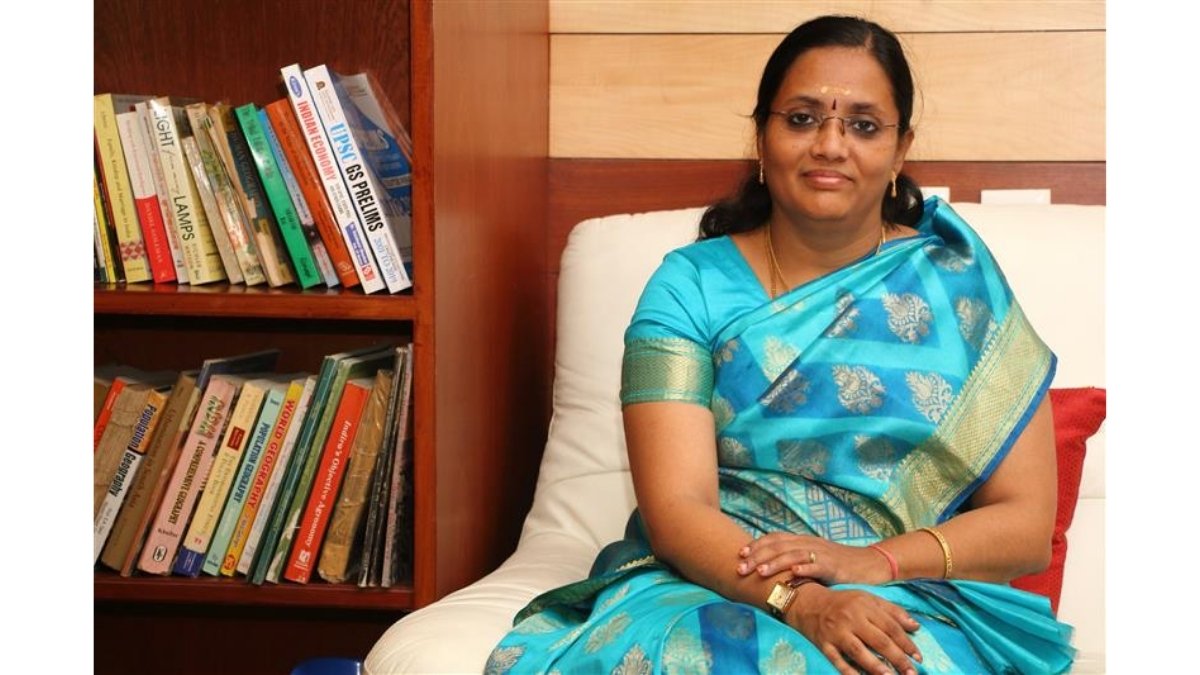
Shankar IAS Academy Wishes the Nation on India’s 79th Independence Day – Saluting the Nation’s Bureaucrats and Future Leaders
Chennai (Tamil Nadu) [India], August 15: Shankar IAS Academy, one of India’s most prestigious coaching institutions for the UPSC Civil Services Examination (IAS, IPS, IFS) and other competitive exams, extends its heartfelt wishes to the nation on the occasion of India’s 79th Independence Day.
For over two decades, Shankar IAS Academy has been transforming aspirants into policymakers, producing thousands of officers who now serve at both state and national levels. The academy’s alumni are a testament to excellence in governance, leadership, and public service. From the UPSC to SSC and Banking Services, its graduates have shaped policies, safeguarded public interests, and contributed significantly to India’s progress.
This Independence Day, the academy salutes its alumni who proudly hoist the tricolour, uphold the Constitution, and embody the “Nation First” commitment. The day stands as a tribute to the sacrifices of our freedom fighters and a recognition of the immense responsibility shouldered by today’s officers.
With 12 branches across India and a proven legacy of academic excellence, ethical training, and visionary leadership development, Shankar IAS Academy continues to mould capable, principled leaders dedicated to serving the nation.
On this 79th Independence Day, Shankar IAS Academy wishes every Indian—and especially its alumni in service—a Happy Independence Day 2025. May the tricolour soar high above every horizon, and may our hearts forever beat for India.
If you have any objection to this press release content, kindly contact pr.error.rectification@gmail.com to notify us. We will respond and rectify the situation in the next 24 hours.
-

Panic to Proactive: Turning Market Lows into Money-Making Opportunities
New Delhi [India], August 14: When the stock market takes a hit, panic often sets in. For many, the instinct is to pull out, freeze decisions, or wait for things to “settle.” But here’s a truth not often told: market downturns are not times to panic, they are, in fact, the best opportunities to invest with clarity, confidence, and long-term vision without facing the emotional turmoil in wealth management.
At SoulFinspire, we believe in shifting the mindset from reactive to strategic. With the right money management principles and expert guidance, this seemingly uncertain time can lay the foundation for your most profitable financial decisions yet.
The Opportunity Hidden in Volatility
Market corrections are a normal part of the economic cycle, not a signal to abandon your financial goals. If history has taught us anything, it’s that some of the strongest portfolios are built during turbulent times. Down markets offer discounted valuations on quality assets, allowing smart investors to enter or add to their positions at significantly lower prices.
Now is the time to explore investment ideas that are rooted in strong fundamentals, aligned with your risk profile, and positioned for long-term growth in panic conditions.
Smart Investment Strategies for a Down Market
- Review Your Wealth Management Plan: Use this time to re-evaluate your current holdings. Are your investments aligned with your life goals and risk appetite? Working with a wealth management expert can help you identify gaps and realign your portfolio to weather volatility.
- Rupee Cost Averaging Works: Instead of waiting for the “perfect” time to invest, adopt a systematic approach. Investing fixed amounts regularly helps smooth out market fluctuations and reduces timing risk.
“There’s no perfect time to invest, what truly matters is how long you stay invested. Time in the market is more valuable than timing the market.”
- Diversify and Strengthen: Avoid putting all your eggs in one basket. Diversification across equity, debt, commodities, and global markets ensures that your capital is better protected and poised for balanced returns.
- Focus on Quality, Not Noise: Downturns are a great time to move away from speculative assets and focus on companies or funds with strong track records, ethical governance, and long-term potential.
- Manage Money with Discipline, Not Emotion: Emotional investing often leads to poor decisions. A calm, data-driven approach to money management, supported by professional advice, can help you stay on track regardless of market and personal sentiment.
SoulFinspire’s Approach: Strategic, Grounded, Inspired
At SoulFinspire, we go beyond spreadsheets and stock charts. We believe in aligning your financial journey with your personal values and vision. Our customized wealth management strategies are designed to help you grow, protect, and manage your wealth with purpose.
Now is the time to act, not with fear, but with foresight. By turning panic into proactiveness, you not only safeguard your present but also plant the seeds for future financial freedom.
Final Word
Don’t let market fluctuations derail your financial journey. With the right investment ideas and expert guidance, this is not a time to retreat, it’s a time to rise. Remember, fortune often favours those who stay calm, stay invested, and stay strategic.
Let SoulFinspire help you turn this market dip into your greatest opportunity.
If you have any objection to this press release content, kindly contact pr.error.rectification@gmail.com to notify us. We will respond and rectify the situation in the next 24 hours.
-

Prometheus Business League concludes with grand closing ceremony
Ahmedabad (Gujarat) [India], August 15: The Prometheus Business League (PBL), an annual initiative of BNI Ahmedabad’s Prometheus chapter, concluded on Thursday with a grand closing ceremony, marking the end of its fourth edition themed Vyuh, symbolising strategy.
The five-week league, which ran from July 2 to August 6, is designed to promote effective chapter activities and strengthen professional relationships among members. PBL 4.0 involved 100 members of the 11-year-old chapter, structured into teams of nine, with participation overseen by three commissioners under defined rules and regulations.

During the league, members of BNI Prometheus engaged in activities such as giving references, introducing fellow members to professionals from various sectors, including medicine, architecture and industry, and inducting new members into the chapter.
The event recorded 107 ‘power dates’, structured business meetings between members, and facilitated business deals worth over Rs. 15 crore. Five new members were also inducted into the chapter during the league. The top three teams in the league received cash prizes for their performances.
BNI Prometheus President, Kushal Dham, said, “The Prometheus Business League is a unique platform where members come together to collaborate, create opportunities, and strengthen bonds. This year, while we played the game and achieved significant business, we also deepened our connections, which is the true strength of our chapter. We are committed to the individual and collective growth of our members and the chapter.”
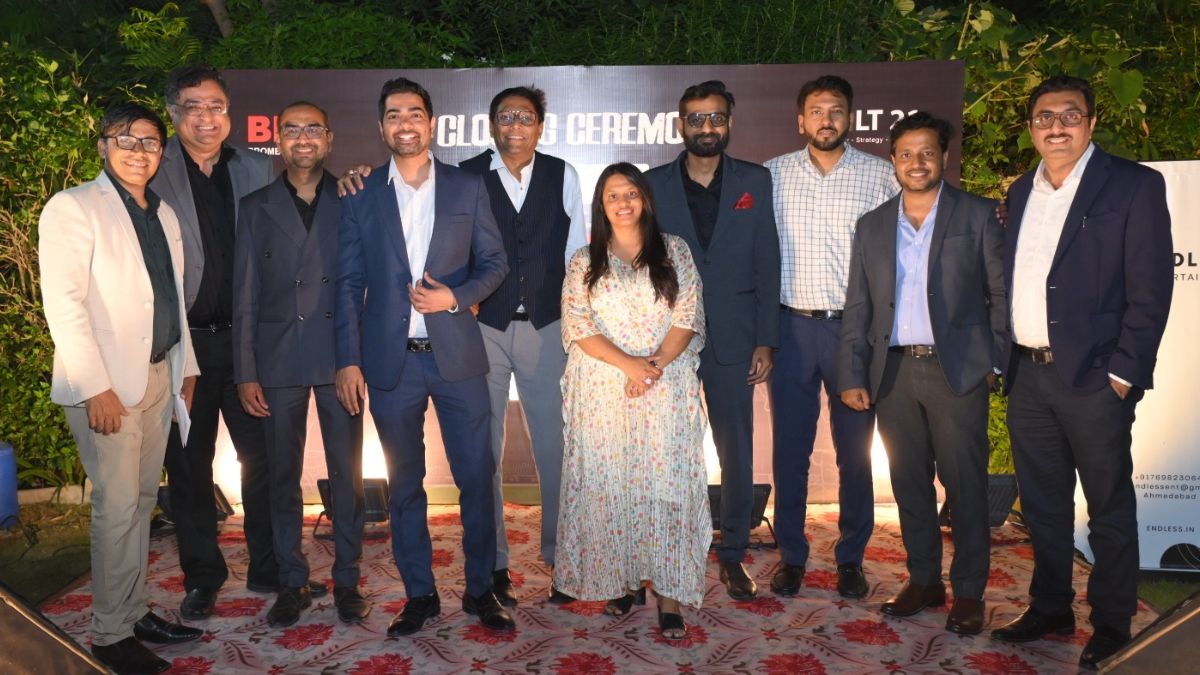
The closing ceremony featured a stand-up comedy show by Kamlesh Darji and the distribution of prizes and awards to the winners. It concluded with a grand dinner for all members of BNI Prometheus.
The Prometheus Business League is a structured programme aimed at promoting personal and collective growth through active engagement, networking and collaboration. Now in its fourth edition, it continues to contribute to the chapter’s focus on building strong, long-term business relationships.
If you object to the content of this press release, please notify us at pr.error.rectification@gmail.com. We will respond and rectify the situation within 24 hours.