Author: Sutun Nayak

  • Grync.io Launches A Unified Revenue Efficiency Platform

    Grync.io Launches A Unified Revenue Efficiency Platform

    Kolkata (West Bengal) [India], April 07: grync.io has launched its Unified Revenue Efficiency Platform, built to solve a critical challenge for modern businesses by turning scattered data into clear, actionable revenue outcomes. Today, most SaaS, fintech, and health tech companies operate with multiple tools across product analytics, CRM, billing, and customer support. While these systems generate valuable data, they often exist in silos, forcing teams to spend more time interpreting dashboards than actually taking action.

    Grync.io eliminates this inefficiency by bringing all data into one unified layer. Using AI-powered analytics and data correlation, the platform not only identifies what’s happening across the business but also recommends the next best action and enables teams to execute it instantly.

    While 44% of Data & Analytics teams are expanding, many still struggle with talent gaps and limited resources. Gartner estimates that poor data quality costs organizations $12.9 million every year revealing the true cost of disconnected systems. That’s where Grync.io steps in, bridging the gap between insight and execution.” said Prithwiraj Roy, Co-founder & CTO, Grync.io. 

    He further added, “We don’t just present data; we identify what needs fixing and enable teams to act instantly. That’s where real revenue growth begins.

    Driving SaaS Growth Through Better Activation

    For SaaS companies, the platform directly tackles customer activation, which is one of the most important drivers of revenue. Activated users often spend 2 – 3 times more than non-activated users, yet many teams struggle to identify where users drop off.

    Grync.io pinpoints these friction points and triggers real-time interventions, helping improve activation rates, reduce churn, and increase customer lifetime value.

    Turning Fintech Insights into Conversions

    In the fintech space, where companies already rely on strong analytics stacks, the challenge lies in converting users and driving deeper engagement. Grync.io bridges this gap by transforming user behavior into a monetizable asset.

    For instance, if a user completes KYC but doesn’t initiate a transaction, the platform can automatically trigger targeted actions to drive conversion without requiring additional effort from tech or sales teams.

    Enabling Real-Time Action in Healthtech

    In healthtech, the platform acts as a real-time orchestration layer for hospitals and healthcare providers. Instead of relying on delayed reports, Grync.io enables immediate action based on live data.

    Whether it’s improving patient follow-ups, strengthening referral networks, or boosting performance in underperforming specialties, the platform ensures timely interventions—without adding operational complexity.

    From Insights to Immediate Execution

    What differentiates Grync.io is its shift from passive analytics to active execution. By combining analytics, marketing automation, and intelligent data correlation, the platform ensures that insights don’t just sit in dashboards—they drive outcomes.

    With this launch, Grync.io positions itself as a powerful growth engine for modern businesses, helping them move faster, act smarter, and turn everyday user behavior into consistent, scalable revenue.

    About Grync.io
    Grync.io is a unified revenue efficiency platform that transforms scattered data into real-time, actionable growth. Built for digital-first businesses, it connects product, customer, and revenue signals to execute intelligent workflows. By enabling instant action, Grync.io helps organizations improve activation, reduce churn, and drive scalable, data-driven revenue outcomes. We drive data monetization, enable seamless interoperability, and enhance process efficiency by minimizing revenue leakage, ensuring businesses unlock maximum value from every signal.

    Website:https://grync.io/
    LinkedIn:https://www.linkedin.com/company/grync-io/

    Media Contact

    Dr. Nita Samantaray

    Media & Communication

    Mobile: +91 8763727091

    If you object to the content of this press release, please notify us at pr.error.rectification@gmail.com. We will respond and rectify the situation within 24 hours.

  • On World Health Day, Dr. Jagdish Sakhiya Educates Teens on Smart Skin Care Habits at G. D. Goenka School

    On World Health Day, Dr. Jagdish Sakhiya Educates Teens on Smart Skin Care Habits at G. D. Goenka School

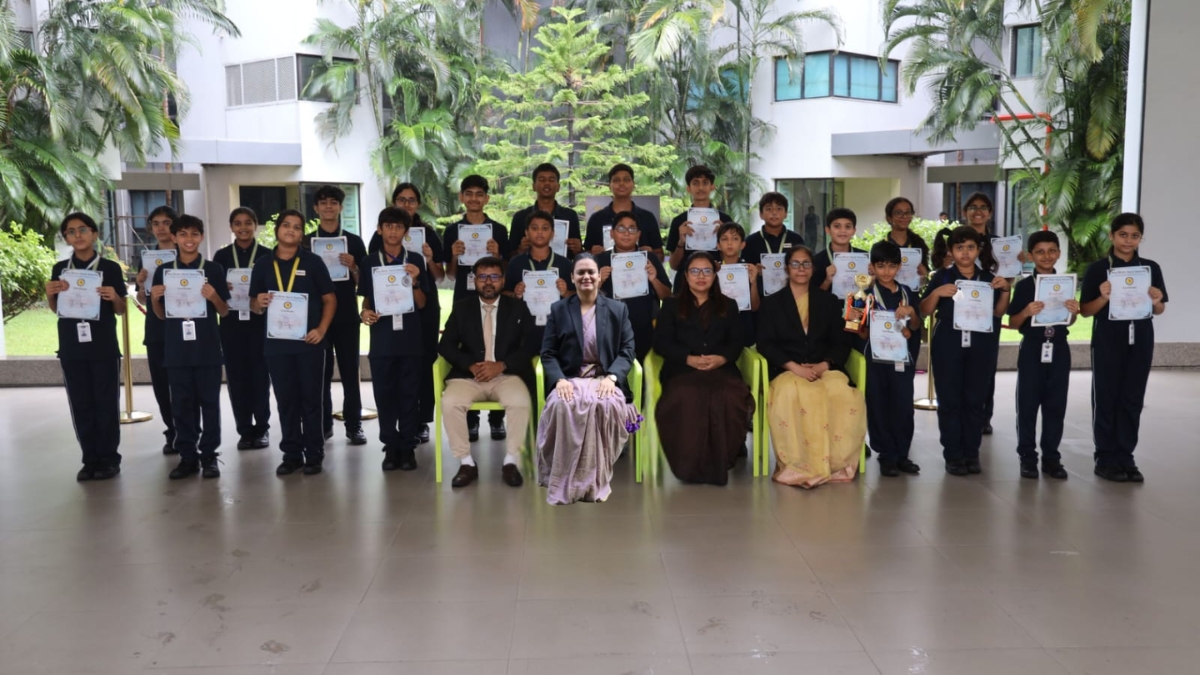
    Surat (Gujarat) [India], April 08: On the occasion of World Health Day, an awareness session on the topic “Teen Skin Care: Myths, Mistakes and Smart Habits for Healthy Skin” was organized at G. D. Goenka School located in Vesu. The session was conducted by renowned dermatologist Dr. Jagdish Sakhiya.

    More than 60 students and faculty members were present at the event held in the school’s AV room. Academic Director and Principal Dr. Shruti Agarwal, along with Primary Section Dean Dr. Shilpa Surya, were also in attendance. The entire session was highly interactive, with enthusiastic participation from students.

    During the session, Dr. Jagdish Sakhiya stated that while water parks are meant for entertainment during vacations, one should not neglect skin care. Commenting on the people of Surat, he mentioned that people here often ignore heart health but are quite conscious about skin care. He also warned that if the health of all the students present were tested, most of them might be found deficient in Vitamin B12 and hemoglobin.

    Addressing myths related to hair care, he said that the belief that applying oil damages hair is false, and in reality, it is beneficial for healthy hair. Expressing concern over the growing impact of fast food, he emphasized the need to control weekend eating habits or replace them with healthier options. He also stated that being healthy from within reflects as natural glow on the skin.

    Students actively participated in the session and showed keen interest in daily skin care routines and dietary guidance. Dr. Jagdish Sakhiya also shared simple and practical daily tips for acne, hair fall, and personal hygiene. He emphasized the importance of a balanced diet, adequate water intake, and a healthy lifestyle so that students can better understand the connection between internal health and external skin.

  • Invited by Actor Sudesh Berry, Varun Gupta of GrahRahasya Decoded Advances Mahabharat Research Through Text-Based Analysis

    Invited by Actor Sudesh Berry, Varun Gupta of GrahRahasya Decoded Advances Mahabharat Research Through Text-Based Analysis

    From the BORI Critical Edition to public discourse, Varun Gupta is redefining how the Mahabharat is understood beyond television narratives

    New Delhi [India], April 08: At a time when the Mahabharat is widely consumed through television adaptations, simplified retellings, and popular cultural narratives, a growing need is being felt for a deeper, textually grounded understanding of the epic. Addressing this gap, Varun Gupta, founder of GrahRahasya Decoded, is emerging as a distinctive voice advocating a text-first, research-driven approach to Mahabharat interpretation.

    Rather than relying on dramatized narratives or derivative storytelling, his work focuses on decoding the Mahabharat through primary textual sources, including the BORI Critical Edition (CE), the K.M. Ganguli (KMG) translation, and traditional Sanskrit references. The study engages primarily with the BORI Critical Edition while also noting relevant recensional variations—bringing analytical clarity to narratives long shaped by reinterpretation and televised portrayals.

    Positioning his work at the intersection of textual scholarship and public discourse, Varun Gupta represents a shift in how the Mahabharat is approached—from passive narrative consumption to critical, evidence-based analysis.

    Reframing the Mahabharat: From Narrative to Textual Inquiry

    A central premise of Gupta’s research is that the Mahabharat cannot be treated as a single, fixed narrative. Instead, it must be understood as a layered textual tradition, shaped over centuries through processes of composition, interpolation, redaction, and reinterpretation.

    His analytical framework engages with:

    ·Narrative stratification across parvas 

    ·Variations between the Critical Edition and later recensions 

    ·Literary construction of major war episodes 

    ·Structural and thematic tensions between textual evidence and popular retellings 

    Through close examination of episodes such as the Ghoṣa-yātrā (cattle raid) and the Virat Yudh, his work demonstrates that events often treated as straightforward historical occurrences reveal patterns of literary structuring, narrative compression and expansion, and heroic amplification when studied through primary texts.

    These findings challenge conventional assumptions and open new directions for understanding the compositional logic and narrative intent of the Mahabharat.

    Academic Recognition: Entry into Scholarly Discourse

    In a significant milestone, Varun Gupta’s research has been accepted for publication in a reputed peer-reviewed journal, marking his formal entry into academic discourse.

    Titled Literary Construction, Heroic Inflation, and the Question of Historicity in the Virāṭa Episode of the Mahābhārata,” the study critically examines how key episodes reflect layered literary construction rather than straightforward historical narration.

    Focusing particularly on the Ghoṣa-yātrā episode and the Virat Yudh, the research identifies:

    ·Narrative compression and expansion 

    ·Heroic amplification of central figures 

    ·Structural inconsistencies across textual traditions 

    By situating these observations within a broader framework of textual stratification, the study contributes meaningfully to ongoing scholarly debates on the historicity and compositional evolution of the Mahabharat.

    This achievement represents a clear transition from digital dissemination to academically recognized research, reinforcing the methodological credibility of his work.

    Invited by Sudesh Berry: A Landmark Mahabharat Conversation

    Further underscoring the growing relevance of his work, Varun Gupta was recently invited by veteran actor Sudesh Berry—known for portraying Vichitravirya in B.R. Chopra’s Mahabharat and Drupad in the 2013 adaptation—for a detailed Mahabharat-focused podcast discussion.

    In a rare and engaging format, Sudesh Berry assumed the role of an inquisitive host, leading a raw, unscripted, one-take conversation centered on text-based interpretations of the epic.

    The discussion explored:

    ·Karna’s positioning within the textual tradition 

    ·Bhishma’s characterization beyond popular narratives 

    ·Krishna’s strategic role through scriptural analysis 

    ·Key divergences between textual sources and televised portrayals 

    This interaction represents a meaningful convergence between mainstream cultural representation and research-driven textual inquiry, offering audiences a deeper and more critical engagement with the Mahabharat.

    GrahRahasya Decoded: A Knowledge-Driven Digital Platform

    GrahRahasya Decoded is steadily evolving into a research-oriented digital platform dedicated to Mahabharat interpretation through a structured, evidence-based approach.

    The platform focuses on:

    ·Textual decoding using primary sources 

    ·On-ground exploration of culturally significant locations such as Kurukshetra and Karnal 

    ·Cinematic storytelling rooted in documented analysis 

    ·Bridging classical texts with contemporary audiences 

    Through its growing digital presence, the platform fosters a community that values informed discussion, textual authenticity, and critical engagement with Indic knowledge systems.

     Watch here: https://www.youtube.com/@GrahRahasyaDecoded/
     Community updates: https://www.youtube.com/@GrahRahasyaDecoded/community

    Why This Work Matters Today

    In today’s information landscape, mythological narratives are widely circulated but often lack grounding in primary textual sources. This leads to a persistent confusion between narrative tradition and textual evidence, resulting in oversimplified or distorted interpretations.

    Varun Gupta’s work addresses this challenge by:

    ·Promoting evidence-based cultural interpretation 

    ·Encouraging deeper engagement with original texts 

    ·Bridging the gap between scholarship and public understanding 

    This approach is particularly valuable for students, researchers, educators, and intellectually engaged audiences seeking credible insights into the Mahabharat.

    Looking Ahead

    With ongoing research, publications, and collaborations, Varun Gupta aims to establish GrahRahasya Decoded as a recognized authority in Mahabharat textual research and interpretation.

    As global interest in authentic, textually grounded Indic knowledge systems continues to expand, such initiatives are poised to play a crucial role in shaping future discourse—both within academic circles and in the broader public domain.

    If you object to the content of this press release, please notify us at pr.error.rectification@gmail.com. We will respond and rectify the situation within 24 hours.

  • Om Power Transmission Limited IPO Opens on April 09, 2026

    Om Power Transmission Limited IPO Opens on April 09, 2026

    Mumbai (Maharashtra) [India], April 08: Om Power Transmission Limited (the “Company”), a power transmission infrastructure engineering, procurement, and construction (“EPC”) company engaged in executing high-voltage (“HV”) and extra-high voltage (“EHV”) transmission lines, substations, underground cabling projects, and providing comprehensive operation and maintenance (“O&M”) services proposes to open its Initial Public Offering on April 09, 2026, with Equity Shares to be listed on the National Stock Exchange of India Limited and BSE Limited (collectively, “Stock Exchanges”). 

    The IPO will comprise up to 85,75,000 equity shares with a face value of ₹ 10 each (“Equity Shares”), comprising of a fresh issue aggregating up to 75,75,000 Equity Shares (“Fresh Issue”) and an offer for sale of up to 10,00,000 Equity Shares (“Offer for Sale” and together with the Fresh Issue, the “Offer” or “IPO”).

    The Total Offer Size is up to 85,75,000 Equity Shares with a price band of ₹ 166 – ₹ 175 per Share. 

    Equity Share Allocation

    • Qualified Institutional Buyer – Not more than 42,87,175 Equity Shares
    • Non-Institutional Investors – Not less than 12,86,475 Equity Shares
    • Individual Investors – Not less than 30,01,350 Equity Shares

    The net proceeds from the Offer will be utilized for funding of capital expenditure requirements of the Company towards purchase of machinery and equipment, pre-payment/ re-payment, in part or full, of certain outstanding borrowings, funding long-term working capital requirement and the general corporate purposes. The anchor bidding is on April 08, 2026. The Offer will open on Thursday, April 09, 2026 and close on Monday, April 13, 2026.

    The Book Running Lead Manager to the Offer is Beeline Capital Advisors Private Limited, and the Registrar to the Offer is MUFG Intime India Private Limited (formerly Link Intime India Private Limited).

    Mr. Kalpesh Dhanjibhai Patel, Chairman and Executive Director of the Companyexpressed, “The Company has progressed over the years as an EPC company focused on power transmission infrastructure, with experience in transmission lines, substations, underground cabling and O&M services. The business of the Company has expanded through execution of projects for utilities and infrastructure-led demand, supported by a growing order book and operational capabilities.

    The proposed Initial Public Offering represents an important step in the Company’s growth journey. The IPO is expected to support the Company’s next phase of growth by strengthening operational capabilities, enhancing execution capacity and supporting participation in larger and more complex projects. This is expected to enable the Company to expand its presence in the power transmission and grid infrastructure space, in line with its growth plans.”

    Disclaimer: This article is for informational purposes only and does not constitute financial advice.

  • NG brand set for comeback as NG Mall opens on April 29, 60% profits for charity

    NG brand set for comeback as NG Mall opens on April 29, 60% profits for charity

    Entrepreneur Sudhir Goyal says funds to be used to provide healthcare support to needy patients

    Surat (Gujarat) [India], April 08: Surat is set to witness the return of the NG brand. Entrepreneur Sudhir Goyal today announced the relaunch of the NG brand with the opening of a new NG Mall in Surat on April 29. The venture will allocate 60 per cent of its profits towards charitable initiatives.

    The announcement marks the brand’s return after a gap of four years. Goyal had launched the NG Lehenga brand in Surat in January 2021, which gained significant recognition in the city. However, the onset of the COVID-19 pandemic and subsequent restrictions impacted business operations. Goyal was also actively engaged in social service at the time but his business suffered.

    Sharing his journey, Goyal said, “I travelled extensively over the past four years. Now, I am returning with a renewed vision to undertake large-scale charitable work through this initiative.”

    As part of the new venture, Goyal will establish the NG Seva Trust, through which 60 per cent of the profits will be directed towards social causes.

    “Our immediate goal is to support patients in government hospitals such as SMIMER and Civil Hospital in Surat, particularly those who are unable to afford treatment. Over time, we will expand this mission. Our long-term vision is to build a seven-star hospital where the underprivileged will receive free treatment. Medicines will also be provided free of cost, without the need for any government card,” he said.

    Providing details of the ownership structure of the venture, he said it will operate as a partnership, with 60 per cent ownership held by him and 40 per cent by his wife. His entire share of profits will be channelled into charitable activities through the NG Seva Trust.

  • How Oil Trends Are Powering India’s EV Growth?

    How Oil Trends Are Powering India’s EV Growth?

    New Delhi [India], April 08: India’s EV story was supposed to be simple. Cleaner air, smarter tech, fewer fuel bills, you know, the usual pitch. And for a while, that’s exactly how it was sold. Almost idealistic. Almost too neat.

    But then reality walked in. Loud, unpredictable, and carrying a barrel of crude oil.

    Because here’s the thing, India doesn’t just consume oil, it depends on it. Heavily. Roughly 85% of its crude oil needs are imported. That’s not a small vulnerability, that’s… well, a structural pressure point. And most of that oil? It flows through the Strait of Hormuz, a narrow stretch that handles nearly 20% of the world’s petroleum supply and about one-fifth of global LNG trade.

    Now pause for a second. One chokepoint. One disruption. And suddenly fuel prices don’t just rise, they spike, they ripple, they mess with everything from transport costs to grocery bills.

    And that’s where the EV story quietly changes tone.

    The Surge That Feels… Different

    India’s EV sales didn’t just grow in FY26; they exploded. We’re talking about a 246% year-on-year jump, crossing roughly 1.7 million units sold across segments. Two-wheelers led the charge (no surprise there), making up nearly 60–65% of total EV sales, while three-wheelers weren’t far behind, especially in urban logistics and last-mile delivery.

    Passenger EVs? Still a smaller slice, about 4–5% of total car sales, but growing steadily, almost stubbornly.

    At first glance, this looks like a classic adoption curve. Early traction, policy push, rising awareness. But honestly… it feels like something else is at play.

    Because consumer behavior doesn’t usually shift this fast without a trigger. And in this case, that trigger seems to be fuel volatility. Petrol prices are flirting with ₹100+ per liter in multiple states, diesel not far behind. People notice that. Businesses definitely do.

    So EVs stop being a “future choice” and start becoming a “cost decision.”

    And that shift? It’s huge.

    Not Just Policy — Pressure

    Yes, government incentives have helped. The FAME II scheme, state subsidies, GST cuts — all of that matters. But policy alone doesn’t create urgency. Pressure does.

    And pressure, right now, is coming from global oil markets.

    India spent over $130 billion on crude imports in FY25, and that figure swings wildly with global prices. A $10 increase per barrel doesn’t just sound abstract; it translates into billions added to the import bill, widening the current account deficit, nudging inflation upward.

    You feel it eventually. Maybe not directly. But it shows up in transport fares, delivery costs, and even food prices.

    So yeah, EV adoption isn’t just about being eco-friendly anymore. It’s about insulating the economy from shocks. A kind of financial self-defense, if you think about it.

    The Hormuz Effect (Yes, It’s a Thing Now)

    It’s strange, honestly. The idea that a distant waterway like the Strait of Hormuz could influence what kind of vehicles Indians buy.

    But it does.

    Any tension in that region, geopolitical conflicts, naval disruptions, or even just the threat of instability sends crude prices upward. Not always dramatically, but enough to create uncertainty. And markets hate uncertainty.

    So policymakers start thinking long-term. Businesses start hedging. Consumers start calculating.

    And EVs? They suddenly make more sense.

    Not perfect sense, not everywhere. Charging infrastructure is still patchy, and battery costs are still high. But the logic of EVs strengthens every time oil becomes unpredictable.

    It’s almost like the old system is unintentionally accelerating the new one.

    Follow the Money, Follow the Shift

    Let’s talk numbers again, because they tell a very grounded story.

    India’s EV market is projected to reach $100 billion by 2030, with penetration expected to hit 30% in private cars, 70% in commercial vehicles, and 80% in two- and three-wheelers. Ambitious? Definitely. Impossible? Not really.

    Battery prices have already fallen by nearly 85% over the last decade, though they’ve seen some volatility recently due to raw material costs. Charging infrastructure is expanding, too. India had around 12,000+ public charging stations by early 2026, and that number is growing fast, albeit unevenly across regions.

    But here’s where it gets a bit messy.

    EVs reduce oil dependency, yes. But they increase dependence on something else, critical minerals. Lithium, cobalt, nickel. And India imports most of these too. So while one dependency shrinks, another quietly grows.

    Different game, same rules.

    So… Is This Really About Sustainability?

    Honestly? Partly.

    There’s no denying the environmental benefits of lower emissions, better urban air quality, and reduced noise pollution. All of that is real and important.

    But if we’re being completely honest and maybe a little blunt, sustainability alone isn’t what’s driving this surge.

    It’s economics. It’s risk management. It’s the need to control exposure to global shocks.

    Because when oil prices rise, India doesn’t just pay more, it feels more vulnerable. And EVs, in a slightly indirect but very real way, offer a path out of that vulnerability.

    Not a perfect path. Not an immediate one. But a direction.

    Where This Leaves Us

    So yeah, India’s EV boom isn’t just about shiny new cars or green ambitions. It’s deeper than that. Slightly more pragmatic. Maybe even a bit reactive.

    It’s about a country trying to navigate uncertainty. Trying to reduce its exposure to forces it can’t control, like global oil routes, geopolitical tensions, and price shocks.

    And in that sense, the connection between Indian EV adoption and the Strait of Hormuz isn’t weird at all.

    It’s logical.

    Because sometimes, the biggest changes don’t come from innovation alone. They come from pressure. From constraints. From systems that stop feeling stable.

    And right now, oil is that system.

    Which means EVs aren’t just the future anymore.

    They’re becoming the fallback plan. Or maybe… the main plan.

    PNN BUSINESS

  • The Hidden Costs of Being Underinsured: Why You Need the Best Health Insurance Policy in India

    The Hidden Costs of Being Underinsured: Why You Need the Best Health Insurance Policy in India

    New Delhi [India], April 08: Many people have health insurance, yet still pay a large amount themselves during hospitalisation. This often happens because the policy is underinsured, not just because the sum insured is low, but because some limits and conditions reduce the payout. Rules around room eligibility, co-payment, treatment caps, and non-payable hospital charges can reduce your settlement even when the claim is genuine.

    In this guide, you will understand these hidden costs clearly and learn what to check while choosing the best health insurance policy in India.

    What Underinsured Really Means

    You are underinsured when your health cover cannot manage real hospital bills without making you pay a large share yourself. This can happen even if you are paying a decent premium, especially when the policy has strict limits and conditions.

    In most cases, underinsurance shows up when your sum insured gets used up quickly, your claim is approved but settled with major deductions, or you are forced to pay upfront and wait for reimbursement, which puts pressure on your cash flow.

    Hidden Cost 1: Room Category Rules That Trigger Wider Deductions

    Some policies link room eligibility to the overall claim payout. If you choose a room above your allowed category, insurers may apply proportionate deductions across multiple bill heads.

    What you face:

    • Reduced settlement on doctor fees, OT charges, and other hospital services.
    • A claim that is approved, but paid out at a lower amount than expected.

    Hidden cost 2: Co-Payment That Becomes Your Regular Expense

    Co-payment means you pay a fixed share of every admissible claim. It is not a one-time charge. It repeats each time you are hospitalised.

    Why it impacts:

    • Your out-of-pocket spend becomes predictable and constant.
    • Multiple admissions can make the policy feel far more expensive than it looked initially.

    Hidden Cost 3: Sub-Limits That Reduce Payouts on Key Treatments

    Many people think covered means the insurer will pay the full cost. But some plans set limits on certain treatments, surgeries, or bill items, so you have to pay the balance yourself.

    What it looks like in real life:

    • The procedure is covered.
    • The insurer pays up to a limit.
    • You pay the balance, even when the claim is valid.

    Hidden Cost 4: Consumables and Non-Payable Hospital Items

    Hospitals often bill several items separately that may be considered non-payable under the policy terms. These can be small items, but they add up quickly, especially in longer admissions.

    What you experience:

    • A big final bill with many charges that the policy does not pay for.
    • A settlement that feels lower than expected, even after approval.

    Hidden Cost 5: Weak Pre- and Post-Hospitalisation Support

    Medical expenses include doctor visits, tests, medicines, follow-ups, and repeat investigations before and after admission. If your plan has short coverage periods or strict conditions for these stages, you may have to pay many of these costs yourself.

    What happens:

    • Your hospital bill is partially settled.
    • Your total treatment journey still strains your monthly budget.

    Hidden Cost 6: Cashless Gaps and Reimbursement Pressure

    Cashless depends on network hospitals and approval workflows. If you go to a non-network hospital, or if cashless is not approved for any reason, you may need to arrange funds first and claim later.

    Why this is a hidden cost:

    • You may need emergency funds even though you have insurance.
    • Reimbursement claims need clean paperwork and can take time.

    Hidden Cost 7: Waiting Periods and Exclusions That Surface at Claim Time

    Waiting periods and exclusions are important. If they apply, your claim can be reduced or even rejected, even if your treatment is genuinely needed.

    Common triggers include:

    • A condition falling within a waiting period.
    • A treatment falling under a listed exclusion.
    • Medical history was not disclosed clearly at purchase.

    Final Thoughts

    Underinsurance is costly because you do not notice it until you actually need the policy. The gaps show up in the hospital, when your claim gets approved, but the payout is still lower than you expected. 

    For real protection, choose a plan with clear rules and a claim process that is easy to follow. That is what separates a policy you just own from the best health insurance policy in India when it matters most.

    If you object to the content of this press release, please notify us at pr.error.rectification@gmail.com. We will respond and rectify the situation within 24 hours.

  • India’s first astro-cultural Mahotsav held in Delhi, Renowned astrologers participated

    India’s first astro-cultural Mahotsav held in Delhi, Renowned astrologers participated

    New Delhi [India], April 08: While astrology is deeply rooted in our ancient cultural heritage, navigating today’s modern world requires a balanced embrace of both tradition and science. Union Minister of State Harsh Malhotra highlighted this perspective during his address at the ‘Astro-Cultural Mahotsav Conclave,’ hosted this Saturday at Constitution Club New Delhi. 

    Mr. Malhotra emphasized that when this time-honored practice is used to inspire positive thinking and offer sound guidance, it can be highly advantageous for society. Echoing similar sentiments, Delhi Assembly Speaker Vijender Gupta highlighted astrology’s enduring relevance in the 21st century, describing it as a reflection of the profound faith connecting human life with the universe. In an age dominated by rapid communication, Mr. Gupta stressed that platforms championing traditional wisdom play a vital role in fostering social harmony and upholding community responsibility.

    Former Union Minister Ashwini Choubey observed that astrology is a significant discipline deeply rooted in our ancient Indian culture and the Vedas, having guided human lives for centuries. He asserted that it should be utilized to cultivate positive thinking and promote the welfare of society.

    Renowned astrologers from across the country gathered on a single platform for the grand and historic “National Jyotish Mahakumbh – Astro-Cultural Festival.” Speaking on the occasion, Kunal Kumar—a ‘Life Designer’ and founder of the Kunal Vastu Kendra – Jyotish & Research Center—stated that astrology offers a scientifically grounded perspective for understanding life’s challenges and possibilities, rather than serving merely as a tool for fortune-telling.

    Vijay Ram Rattan, Chairman of the Ram Rattan Group—a conglomerate that has carved a distinct niche for itself in the real estate sector—also participated actively in the astrology conclave. During the event, he engaged in discussions regarding the significance of astrology within the realm of real estate.

    Davinder Singh, Director of GemLab—an organization dedicated to the scientific identification, testing, and certification of jewelry—was felicitated at the Astro Mahakumbh. He explained that the primary objective of the Gem Lab is to verify the authenticity of any gemstone—determining why, how, and to what extent it is genuine—thereby enabling buyers to avoid fraud and ensure they pay a fair price.

    Dr. Harshvardhan Agarwal, Founder and Managing Trustee of the ‘Help U Educational and Charitable Trust,’ was honored at the Astro-Cultural Festival. He remarked that all noble endeavors are made possible only through effective policy formulation and superior governance. Brajesh Maheshwari, Co-founder and Director of the Kota-based ALLEN Career Institute, was also felicitated on this occasion.

    Talwinder Singh Lali, Director of DH Discovery Electronics, extended special support to the Astro-Cultural Festival conclave. In his address, he pledged to lend a distinct identity to every event associated with the Sanatan tradition through the medium of his speakers. His objective is to amplify every spiritual voice, ensuring it reaches far and wide while empowering it with greater resonance.

    Prateek Pandey, CEO of ‘Astrosage AI’—a platform disseminating astrological knowledge through AI technology—unveiled several mysteries surrounding the world of astrology.

    Kewal Kapoor, a Spiritual Advisor and Creative Entrepreneur/Strategist, was specially honored during the event.

    The festival was also addressed by a distinguished panel of experts, including Celebrity Astrologer Dr. Y. Rakhi, G.D. Vashisht, Ajay Bhambi, Kunal Kumar (Founder of Kunal Vastu Kendra), Vivek Tripathi (popularly known as the ‘Father of Astrology’), Anil Vats, Dr. Niti Sharma, Sarthi Trishala Chaturvedi, Astro Ankit, Acharya Shubhesh Sharman, Corporate Vastu Expert Manoj Jain, Ritu Singh, Acharya Vikramaditya, Professor (Dr.) Jyotishacharya Sujata Sharma, Dr. Arvind Kumar (Jyotish Ratan), Jyotishacharya Satender Prakash, Numerology Expert Rahi Ramesh Yadav, Vastu Expert Pawan Bhatia, and Astrologer Dr. Shweta Sharma. In addition to storyteller Vardha Narayan, numerologist Anurag Puri, Vinay Dhingra (CEO of Riddhi Siddhi Advertising Agency), and Sandeep Kumar, the event was attended by Yogesh Sharma (Director of Music Valley), social worker Rashid Ismail, Ashi Jain from Sudhakar Gasoline, Vivek Shukla (Director of Meghdoot Gramodyog Seva Sansthan), and Sanjay Gautam (President of the ananubhuti organization).

    The Astro-Cultural Festival saw the presence of Ras Bihari (National President of the National Union of Journalists and a senior journalist), senior journalists Ashok Kinkar, Dadhibal Yadav, and Rakesh Thapliyal; K.C. Bishnoi (Editor-in-Chief of the Khari Kasauti national newspaper) and senior journalist Sanjay Poddar; senior journalist and TV anchor Dr. Shrivardhan Trivedi; as well as Anurag Muskan, Vikas Kaushik, Praveen Tiwari, Himanshi Singh, and others.

    Finally, the event organizers, Pradeep Srivastava and Fazle Gufran, expressed their gratitude to all the guests and collaborators for the successful organization of the Astro-Cultural Festival. They stated that if they continue to receive the cooperation and support of the government and individuals associated with the field of astrology, the ‘Astro Mahakumbh’ will be organized in various cities across the country.

    If you object to the content of this press release, please notify us at pr.error.rectification@gmail.com. We will respond and rectify the situation within 24 hours.

  • Blood Shwetz and Tears: A Musical Revival Where Legends and Genres Unite on One Stage

    Blood Shwetz and Tears: A Musical Revival Where Legends and Genres Unite on One Stage

    Mumbai (Maharashtra) [India], April 08: In an era where music is constantly evolving, few live performances manage to strike a  balance between nostalgia and innovation. “Blood Shwetz and Tears” is one such rare  musical experience that promises to deliver an unforgettable evening by blending iconic  classics with bold, genre-defying interpretations. Featuring the celebrated artist Shweta Shetty, the show marks not just a return to the stage but a powerful revival of musical  storytelling. 

    Known for timeless hits like Deewane To Deewane Hain, Rukmani Rukmani from Roja,  Mangta Hai Kya, and Tote Tote from Bichhoo, Shweta Shetty has remained an unforgettable  voice in the Indian music industry. While her stage appearances have been rare, her  influence has never faded. With “Blood Shwetz and Tears,” she reconnects with her  audience, not through a comeback, but through a meaningful reunion with music and  memories. 

    The concept behind the show is both ambitious and refreshing. It is designed as a tribute to  legendary singers who have shaped Shweta’s musical journey. Audiences can expect a  seamless fusion of global and Indian musical influences, where artists like Reshma transition into the powerful vocals of Whitney Houston, and the soulful depth of Abida Parveen blends  effortlessly into popular Bollywood classics. Even iconic Western influences like Aretha  Franklin find their place within the fabric of Indian melodies, creating a cross-cultural  musical journey. 

    What sets this performance apart is Shweta’s fearless approach to experimentation. Known  for her wide vocal range, she will also perform challenging compositions such as Nessun  Dorma, bringing an operatic touch to the stage. This ability to move across genres from  classical to pop, Sufi to contemporary- highlights her versatility as a performer and her  commitment to pushing artistic boundaries. 

    The show is further heightened by a grand ensemble of 13 talented musicians, including  featured vocalists, a beatboxer, and renowned orchestra director Yogesh Pradhan. With an  impressive portfolio that includes collaborations with legends like Asha Bhosle and Lata  Mangeshkar, as well as a long-standing association with Sonu Nigam since 2011, Yogesh  brings depth and precision to the musical direction of the event. 

    Adding a contemporary edge to the performance are collaborations with emerging talents  such as rapper Shia, beatboxer Gaurav D-Cypher, and classical artist AB Madhav. This blend  of experienced maestros and Gen Z artists reflects the show’s core idea, bridging  generations through music.

    Scheduled for May 9 at St Andrews Auditorium, “Blood Shwetz and Tears” is more than just a  concert. It is a celebration of musical evolution, a tribute to legends, and a bold step toward  redefining live performances. With tickets available on BookMyShow, the event is set to  attract music lovers who appreciate both nostalgia and innovation. 

    For those seeking a night where genres collide and legends are reborn through sound, this  performance promises to be truly unmissable.

    If you object to the content of this press release, please notify us at pr.error.rectification@gmail.com. We will respond and rectify the situation within 24 hours.

  • The Real Burden of Arthritis Isn’t the Diagnosis. It’s the Daily Pain That Follows

    The Real Burden of Arthritis Isn’t the Diagnosis. It’s the Daily Pain That Follows

    Namaste Organics pain oil for arthritis & it’s long-term pain management.

    New Delhi [India], April 08: Arthritis comes in many forms — degenerative, inflammatory, even autoimmune. But for those living with it, the experience often converges in one place: persistent arthritis pain.

    The kind that shapes everyday life.
    Climbing stairs becomes effort. Sitting too long becomes uncomfortable. Sleep gets interrupted. Movement needs planning.

    Over time, it’s not the diagnosis that defines the condition —
     it’s the daily negotiation with pain.

    A Growing but Under-Recognised Problem

    Arthritis pain is one of the most widespread forms of chronic pain in India.

    • 80–100 million Indians live with joint and musculoskeletal conditions
    • Chronic pain affects 1 in 5 adults, especially after 50

    For many, arthritis pain isn’t occasional.
     It is chronic, recurring, and often progressive — affecting mobility, independence, and overall quality of life.

    How Arthritis Pain Is Managed Today

    Most patients don’t rely on one solution.
     They rely on many.

    Painkillers for immediate relief.
     Anti-inflammatory medicines for swelling.
     Steroids during flare-ups.
     Topical oils for temporary comfort.
     Physiotherapy or mobility treatments for function.

    Individually, each plays a role.
     Collectively, they create a cycle.

    Monthly spends can reach ₹5,000–₹10,000, yet arthritis pain continues.

    Because arthritis pain is not a single-layer problem —
     and fragmented solutions rarely deliver consistent, long-term comfort.

    What’s Been Missing in Arthritis Pain Relief

    The gap isn’t a lack of treatments.
     It’s the absence of a complete approach to arthritis pain management.

    Patients need something that:

    • Works across different aspects of pain
    • Can be used consistently over time
    • Does not add to systemic strain
    • Supports movement, not just temporary relief

    This is where thinking is beginning to shift —
     from reactive, short-term fixes
     to more integrated, sustainable ways of managing arthritis pain.

    A Different Way to Approach Arthritis Pain

    Traditional systems like Ayurveda have long approached pain differently — not as something to suppress, but something to manage over time.

    Ingredients like Vijaya have historically been used to support pain relief, ease inflammation, and improve overall comfort.

    What makes this approach relevant today is its ability to work across multiple dimensions of arthritis pain — rather than addressing them in isolation — making care simpler and more cohesive.

    From Many Solutions to One System

    Topical oils have always been part of arthritis care.

    But most are designed for short-term soothing.

    What’s now emerging is a more integrated format —
     bringing together multiple benefits into a single pain oil designed for arthritis pain.

    Formulations such as the pain oil developed by Namaste Organics reflect this shift — combining plant-based actives with supportive ingredients to create a more structured approach to arthritis pain relief.

    Not positioned as just another oil —
     but as a more complete, daily-use pain oil for arthritis pain management.

    What This Means for Patients

    For someone living with arthritis pain, the goal isn’t complexity.
     It’s consistency.

    A pain oil that can be used daily.
     A solution that reduces dependence on multiple interventions.
     An approach that supports movement — not restricts it.

    Because ultimately, arthritis pain isn’t just about discomfort.
     It’s about how freely one can live.

    A Shift That’s Already Beginning

    The way arthritis pain is being managed is slowly evolving.

    From multiple solutions… to more complete ones.
     From temporary relief… to sustained support.

    Because the real challenge was never the lack of options.
     It was the lack of a cohesive approach.

    And that’s where solutions like Namaste Organics pain oil for arthritis pain are beginning to redefine how long-term pain can be managed.

    Explore More at

    Disclaimer: This press release is for general information purposes only and should not be construed as professional medical advice. Always consult a doctor before taking any decisions.