Author: Sutun Nayak

  • Abhishek Rungta: India’s GCCs Are at Their Most Critical Inflection Point in 25 Years. Here Is What Must Change

    Abhishek Rungta: India’s GCCs Are at Their Most Critical Inflection Point in 25 Years. Here Is What Must Change

    Abhishek Rungta, Founder & CEO of INT. (Indus Net Technologies Ltd.)

    Kolkata (West Bengal) [India], June 10: India’s Global Capability Centre story is extraordinary by almost any measure. The latest NASSCOM-Zinnov report puts the number at 2,117 GCCs operating across India as of FY26, employing 2.36 million professionals and generating $98.4 billion in annual revenue. More than one-third of Fortune Global 500 companies now have GCCs in India, and over 1,200 centres have embedded AI and machine learning capabilities.

    By the headline numbers, this is a triumph. And in many ways, it genuinely is. But scale is no longer the question. Relevance is.

    After nearly three decades of building enterprise technology systems for clients across 45 countries, I see a deeper shift underway. Many GCCs were built for a world of efficiency, execution and cost leverage. The next decade will reward GCCs that can own outcomes, redesign processes, apply AI responsibly, and influence enterprise decisions. That is a very different game. The decisions made over the next 18 to 24 months will determine which GCCs become genuine global enterprise nerve centres and which are reduced to execution arms, consolidated, or restructured when global boards reassess value.

    The cost-arbitrage era is over. Many GCCs are still managed for it.

    The EY GCC Pulse Survey 2025 found that 92% of GCC leaders say their centres now contribute far beyond cost arbitrage, with 87% aiming to manage end-to-end processes for their global parent organisations. The aspiration is clear.

    The reality is more complicated.

    Most GCCs were designed, staffed, and measured for a world that no longer exists. Their processes are inherited from a decade of execution-first mandates. Their technology stacks reflect what was available five years ago. Their leadership structures are optimised for reporting to headquarters, not for owning outcomes. The aspiration to become an “innovation hub” collides, every quarter, with KPIs built around headcount, utilisation, and ticket resolution speed.

    You cannot build an AI-native enterprise capability centre on a foundation designed for cost arbitrage. The physics do not work. And yet that is precisely what many GCCs are attempting.

    Many of them do not have a technology problem. They have a process-memory problem. They continue to run workflows that made sense when the mandate was efficiency and control. AI will not fix those workflows. In many cases, it will only make the wrong workflow run faster.

    AI cannot be a layer. It has to become the operating architecture.

    India’s GCC sector has moved faster on AI adoption than almost any comparable global segment. More than 58% of GCCs are actively investing in Agentic AI, according to the EY GCC Pulse Survey. The ambition is real. But the execution gap is equally real.

    Here is what I observe from the enterprise delivery side: most GCCs are grafting AI tools onto legacy workflows and calling it transformation. They are adding a GenAI interface to a broken process and measuring success by the interface adoption rate, not by whether the underlying business outcome changed. The result is impressive-looking pilots, rising AI expenditure, and persistent frustration at the senior leadership level when results do not compound.

    The GCCs that will define the next decade are not adding AI to their existing operating models. They are rebuilding their operating models around AI. That is a fundamentally different exercise. It requires different leadership skills, different vendor relationships, different ways of measuring performance, and a willingness to retire processes that still “work” in a narrow sense but were never designed for the speed, complexity, and autonomy that AI-native operations demand.

    The talent problem is real, but it is being misdiagnosed.
    KPMG found that over 70% of GCC leaders identified talent as their top risk. That number does not surprise me. But the diagnosis is usually wrong.

    The challenge is not finding people who know how to use AI tools. India produces AI talent at a scale no other country can match. The challenge is finding people who can think in systems, translate between business context and technical architecture, and own an outcome rather than execute a specification.

    These are leadership skills, not technical skills. And they are not produced at scale by the same hiring pipelines that built India’s first generation of GCC talent. Building this capability requires a different relationship with talent: longer development cycles, broader rotation across functions, and deliberate exposure to strategic decision-making, not just operational delivery.

    What must change, specifically?
    Three things need to happen for India’s GCCs to realise their potential to generate $98.4 billion in annual revenue.

    First, performance measurement has to shift from operational metrics to business outcomes. Utilisation rates and response times tell you nothing about whether the GCC is creating value for the enterprise. Measure revenue impact, product velocity, and decision quality instead.

    Second, the relationship between GCCs and their service partners needs to mature from vendor management to co-creation. The NASSCOM-Zinnov report notes that 75% of India’s GCCs have the potential to evolve into portfolio or transformation hubs over the next five years. None of that evolution happens through transactional vendor relationships. It happens through partnerships where both parties carry real accountability for outcomes.

    Third, the AI strategy must be set by people who understand both the technology and the business context deeply enough to make trade-offs. Not just by technology teams optimising for model performance, and not just by business teams adding AI line items to budget plans. The integration of those two perspectives is what separates productive AI investment from expensive experimentation.

    India’s GCC sector is at an inflection point that comes around once in a generation. The infrastructure is built. The talent pool is deep. The policy environment is supportive. What remains is the harder work: changing the operating system. The next chapter of India’s GCC story will not be written by centres that merely adopt AI faster. It will be written by those who redesign themselves around outcomes.

    That work will define whether India’s GCCs remain efficient delivery engines or become true enterprise nerve centres for the world. The winners will not be the ones who move fastest. They will be the ones that move most deliberately, with clarity on the outcomes they exist to create.

    Abhishek Rungta is the Founder and CEO of INT (Indus Net Technologies), a full-stack digital transformation company serving 500+ enterprise clients across 45 countries. He writes on enterprise AI adoption, digital transformation, and long-term business building.

    If you object to the content of this press release, please notify us at pr.error.rectification@gmail.com. We will respond and rectify the situation within 24 hours.

  • Addressing India’s Employability Challenge: How Tata IIS Is Creating Industry-Ready Talent for the Future

    Addressing India’s Employability Challenge: How Tata IIS Is Creating Industry-Ready Talent for the Future

    Tata IIS and NST provide industry-aligned training, preparing youth for future-ready careers in emerging sectors.

    New Delhi [India], June 11: India stands at a pivotal moment in its economic journey. With more than 1 billion people in the working-age population, the country possesses one of the world’s largest talent pools. Yet a significant challenge remains—while millions of young people graduate every year, only about 45% of graduates are considered industry-ready, highlighting the gap between traditional education and the skills required by employers.

    To bridge this gap, the Tata Indian Institute of Skills (Tata IIS), in partnership with the Ministry of Skill Development and Entrepreneurship (MSDE), Government of India, is building a new model for industry-focused skilling through pioneering institutes IIS Mumbai and IIS Ahmedabad.

    Drawing from the Tata Group’s legacy of institution building, Tata IIS is focused on preparing learners for careers in high-growth sectors through hands-on training, industry-aligned curricula, and exposure to advanced technologies.

    India’s Growing Demand for Skilled Talent

    India’s industrial landscape is evolving rapidly. Large-scale investments in manufacturing, infrastructure, and emerging technologies are creating unprecedented demand for skilled talent.

    The electric mobility sector alone is projected to require a significant workforce as India moves towards an estimated 50 million electric vehicles by 2030. Manufacturing, electronics, hospitality, and retail are similarly expected to generate millions of employment opportunities over the coming decade.

    As industries adopt automation, robotics, artificial intelligence, and smart manufacturing practices, employers are increasingly seeking candidates with practical skills and experience on industry-grade equipment.

    This shift is encouraging students and young professionals to look beyond conventional academic pathways and explore technical skilling programs that are directly aligned with industry requirements.

    Learning Built Around Industry

    At Tata IIS, the emphasis is on competency-based learning that combines theoretical knowledge with extensive practical application.

    The institutes feature infrastructure aligned with global manufacturing standards and are supported by leading technology partners including Phillips Machine Tools, Formlabs, Markforged, Mitutoyo, ZEISS, Hexagon, Schneider Electric, Tata Motors, Siemens, ABB, FANUC, Universal Robots, and FESTO.

    Through this ecosystem, learners gain exposure to the same technologies and systems used across modern industrial environments worldwide, helping them build capabilities relevant to Industry 4.0.

    National Skills Test (NST): A National Gateway to Skilling

    Admission into Tata IIS programs is facilitated through the National Skills Test (NST), a merit-based assessment designed to evaluate technological aptitude, analytical ability, and readiness for technical learning.

    Much like CAT serves as a gateway to management education and JEE serves as an entry pathway to engineering programs, NST is emerging as a structured national gateway for industry-focused skilling.

    Conducted twice every year—in March and September— NST provides learners across India an opportunity to access programs in future-ready domains such as robotics, automation, electric vehicles, advanced manufacturing, and related technologies.

    To ensure accessibility, Tata IIS has established test centres across the country, enabling learners from diverse geographies to participate. The initiative has already attracted thousands of registrations from across India, reflecting growing interest among young people seeking industry-relevant career pathways.

    Registrations Now Open for NST September 2026

    Registrations are currently open for the National Skills Test (NST) – September 2026. Young people aspiring to build careers in high-growth sectors such as manufacturing, automation, robotics, and electric vehicles can apply to take the test and explore industry-focused skilling pathways offered by Tata IIS.

    As industries continue to seek talent equipped with practical skills and technological expertise, NST offers learners an opportunity to take the first step towards future-ready careers.

    Registrations are now open. Don’t miss the opportunity to be part of India’s next generation of skilled professionals.

    To register and learn more about the National Skills Test (NST), visit https://nst.tataiis.org/.

    Know more about Tata IIS: https://www.tataiis.org/.

    If you object to the content of this press release, please notify us at pr.error.rectification@gmail.com. We will respond and rectify the situation within 24 hours.

  • 10 Best CEOs in India 2026 Officially Announced By TradeFlock Magazine

    10 Best CEOs in India 2026 Officially Announced By TradeFlock Magazine

    Noida (Uttar Pradesh) [India], June 11: Today’s CEOs are deeply rooted in their ethical accountability, with a blend of modern technology. They are redefining their role at a higher level by identifying new sources of success in the corporate landscape. 

    Reflecting this evolving role, TradeFlock proudly presents its latest edition, 10 Best CEOs in India 2026, featuring excellent leaders who are driven by AI implementation and domestic growth. They are shaping the future with bold concepts and innovative strategies for sustainable growth and business transformation. 

    The selection process of these outstanding leaders follows an in-depth research and interview with various CEOs across diverse sectors, including finance, tech, pharmaceuticals, retail, etc. Each leader is selected on the basis of their impactful leadership, strategic mindset, innovative approach, governance, and contribution to futuristic organisational growth to be a part of the list. 

    Visionaries at the Helm: Complete List of the 10 Best CEOs in India 2026

    Rakesh Gaur is an exceptional leader with a strong focus on transforming underperforming units within the organisations. His unique leadership drove a remarkable 75%  CAGR turnaround in KEC International Railway Sector while building expertise in global infrastructure and cross-border power. With his strategic vision and bold ideas, he turns challenges into market-leading success across Central Asia. Read his exclusive conversation with TradeFlock in his recognition as the best CEO in India 2026.  

    • CS Jadhav – CEO at Nutricircle Ltd. 
    • Dr. George Noel Fernandes – CEO at MMRI’s Kamalnayan Bajaj Hospital
    • Kishan Dumpeta – CEO at Tierra Agrotech Ltd. 
    • Prahalad Singh Patel –  CEO & Managing Director at ProWaVe Consultants Pvt. Ltd. 
    • Dr. Prasenjit Bakshi – CEO at Sujan Carnival Furniture (ACT Group of Companies
    • CA Raman Khunger- CEO & Founder at Investyn Advisors 
    • T. Hariraj – CEO at Voltech Manufacturing Company Ltd. 

    The brilliant leaders featured here showcase the importance of visionary thinking and strategic leadership, both of which are necessary for operational excellence and inclusive growth. They stand out for their passion for innovation and unwavering commitment to reshape the corporate world. From a customer-centric approach and operational efficiency to scalability and sustainable development, they highlight the meaningful shift within Indian enterprise. 

    TradeFlock Archive: Other Recently Released Editions 

    Size-changed-banner-2.jpg

    TradeFlock is highly dedicated to offering leadership insights and conducting interviews with influential business leaders while sharing impactful success stories across finance, technology, operations, and business transformation. Since 2017, TradeFlock has been inspiring aspiring business leaders through visionary showcases and bold ideas that shape the business in India and global markets. Besides notable editions like 40 under 40, Most Iconic Women Leaders in the USA of the year, and Best CTOs of the year, here is a quick rundown of TradeFlock’s recently released editions. 

    • Best Corporate Leaders in India 2026
    • Most Influential Healthcare Leaders 2026
    • Best CFOs in India 2026
    • USA’s Most Influential COOs 2026
    • Best Tech Leaders from Asia 2026

    About The Publisher – TradeFlock

    TradeFlock is a biweekly business magazine that publishes two to three editions every month, chronicling the stories of leaders, innovators, and organisations redefining industries across India, Asia, and the USA. Built on a merit-first editorial philosophy, every feature in TradeFlock is earned through a structured shortlisting process that evaluates real achievement, industry impact, and leadership contribution. No profile is a paid placement, and that distinction is precisely what gives a TradeFlock feature its credibility.

    The magazine has become a platform where founders, CXOs, and companies across technology, healthcare, finance, manufacturing, real estate, and more than 21 other sectors have shared their journeys with a global readership of over 630,000. Special editions like Company of the Year and Best Companies to Work For have further cemented its reputation as a publication that recognises organisational excellence with the same editorial seriousness it applies to individual leadership.

    Readers and business professionals can subscribe through tradeflock.com or Magzter, with affordable annual plans covering early access to both print and digital editions. In a landscape where publications like Entrepreneur India lean heavily into news and trend coverage, TradeFlock takes a different route, building deeply human narratives around the decisions, failures, and breakthroughs that define real business growth.

    If you object to the content of this press release, please notify us at pr.error.rectification@gmail.com. We will respond and rectify the situation within 24 hours.

  • TradeFlock Announces India’s 10 Most Influential Healthcare Leaders 2026

    TradeFlock Announces India’s 10 Most Influential Healthcare Leaders 2026

    Noida (Uttar Pradesh) [India], June 11: In healthcare institutions, every decision not just directly impacts business growth but also human lives. Healthcare leaders carry responsibilities far beyond the boardroom. They are transforming the healthcare industry from expanding access to providing quality care to strengthening healthcare infrastructure for a more inclusive healthcare ecosystem across the country. 

    Reflecting this evolving role, TradeFlock presents its latest edition, India’s Most Influential Healthcare Leaders 2026, featuring outstanding healthcare leaders who are building stronger, more resilient organisations, combining AI-driven innovation with holistic treatment approaches to deliver impactful healthcare solutions. 

    The selection process involved extensive research and interviews with hospital administration, healthcare founders, medical directors, pharmaceutical executives, and healthcare innovators across India. Each healthcare leader was assessed on the basis of leadership impact, innovative approaches, strategic vision, governance, and contributions to advancing the healthcare ecosystem to be a part of this list of India’s most influential healthcare leaders.

    India’s 10 Most Influential Healthcare Leaders 2026: The Complete List Is Here

    Dr Vijay Viswanathan is widely recognised for his contributions to diabetic research and patient care through clinical excellence, research, and medical education. With decades of experience in diabetology and more than 300 published research papers, he significantly advances diabetes awareness, prevention, and treatment practices worldwide. Dr Vijay Viswananathan was also appointed as the President of D-Foot International, an NGO based in Brussels, Belgium, in 2021. Read his exclusive conversation with TradeFlock in his recognition as the most influential healthcare leader in India 2026.  

    • Dr Atantra Das Gupta – Founder of Khush-AI & Art and Co-founder of Transformed Arrogyam
    • Chetan  Bipinchandra Shah – COO & Director at Senores Pharmaceuticals Ltd.  
    • Divesh Mahendra Parekh – Head of Finance at Clinical Diagnostic Centre 
    • Dr Lakshmipathy Ramesh Nagarajan – Founder & Managing Director and Senior Consultant Geriatrician at Geri Care Health Services Pvt. Ltd.
    • Dr Priyanka Bahl – Medical Director at Woodlands Hospital
    • Santosh Aghamkar – Director International Sales at Medica Corporation

    Read about other leaders among India’s 10 most influential healthcare leaders 

    The exceptional pioneers featured here reflect the significance of purpose-led leadership and strategic thinking, both of which are essential for operational agility and sustainable growth. From patient-focused care and operational efficiency to scalable and inclusive development, their work highlights a silent evolution of healthcare leadership across domestic and international markets.

    Latest Editions from the TradeFlock Archive

    Size-changed-banner-2.jpg

    TradeFlock is dedicated to highlighting leadership insights and conducting interviews with influential leaders, sharing impactful success stories across finance, technology, operations, and business transformation. Since 2017, TradeFlock has been inspiring emerging innovators through visionary leadership and bold ideas that influence both Indian and global markets. Apart from its exclusive editions like 40 Under 40,  Marketing Leaders of the Year, and HR Leaders of the Year, here’s a quick overview of the latest editions published by TradeFlock. 

    • Most Inspiring Global Business Icons 
    • Most Iconic Women Leaders in USA 2026
    • Best Business Leaders in India 2026
    • Best Tech Leaders from Asia 2026
    • Visionary CEOs to Watch in 2026

    About the Publisher: TradeFlock

    TradeFlock is a biweekly independent business magazine documenting the journeys of leaders, entrepreneurs, and organisations. Where publications like Forbes have long centred their coverage around established corporate names and billion-dollar valuations, TradeFlock was built on a different premise entirely. It exists to give emerging entrepreneurs, first-generation business builders, and sector specialists a platform as credible and visible as any legacy publication, one that tells the stories mainstream business media routinely overlooks. It has also diversified its executive branding via its YouTube channelLinkedIn Newsletter, and various categories such as success insights.

    At its core, TradeFlock is a merit-driven publication where editorial features are never sold. Profiles are shortlisted purely on the strength of a leader’s experience, industry impact, milestones, and mentorship. The only costs a featured leader bears are optional, covering reprint rights or physical deliverables such as certificates and awards, none of which influence the editorial decision. This distinction ensures that recognition in TradeFlock carries genuine weight, not a price tag. Nominations are open to everyone, including self-nominations, colleagues, HR teams, and organisations, through TradFlock Nomination.

    With a readership of 630,697 spanning CXOs, startup founders, entrepreneurs, and decision-makers across 32 industries, including finance, healthcare, technology, and real estate, TradeFlock Magazine reaches an audience that is both influential and highly engaged. The magazine is available in print and digital formats through tradeflock.com and Magzter, with annual subscription plans that offer early access and discounted pricing for both editions.

    For those looking to contribute editorially for the press mention, TradeFlock welcomes thought leaders and industry experts to submit authored articles and quotes for its Big Take and spotlight section at editors@tradeflock.com, making it as open to voices as it is to stories.

    If you object to the content of this press release, please notify us at pr.error.rectification@gmail.com. We will respond and rectify the situation within 24 hours.

  • Can India Find a Path to Greater Greenery Under the Guidance of Peepal Baba and Ghosts on Peepal Trees?

    Can India Find a Path to Greater Greenery Under the Guidance of Peepal Baba and Ghosts on Peepal Trees?

    New Delhi [India], June 11: This Environment Fortnight is significant in many ways, with events taking place across the country. To mark the occasion, the highly anticipated book Ghosts on Peepal Trees—based on the environmental conservation work of renowned activist Peepal Baba—was launched in Gurugram. The launch took place on the eve of World Environment Day during a tree-planting ceremony where Peepal Baba planted saplings alongside employees from Penguin Publications. Subsequently, on World Environment Day itself, he formally unveiled the book at the Baba Neem Karoli Ashram in Chhatarpur, Delhi, by planting trees amidst the ‘Ashram of Trees’ alongside his volunteers. Since then, the book has been undergoing daily launches at various plantation sites across the country. A target has been set to launch the book at 15 locations over 15 days; so far, 10,700 copies have been purchased. Furthermore, this book is scheduled to be launched during this Environment Fortnight amidst the forests being created by Peepal Baba at locations such as Sorkha (Noida-115), Maincha (Greater Noida), Rahimabad (Lucknow), Khatauli, Meerut Cantt, Barmer, Pune, Karma Lakeland, and others.

    The book weaves together themes of the environment, spirituality, and human emotion. It is not merely a story about trees but an exploration of the profound bond between humanity and nature that has existed for centuries. Through his life experiences, memories, and reflections, Peepal Baba demonstrates that the Peepal tree is not just a natural entity but a symbol of energy, consciousness, and spirituality. The author presents the special significance of this tree in Indian culture from a modern perspective. The book not only raises awareness about environmental conservation among readers but also inspires them to experience a deep connection—both within themselves and with the natural world.

    Faith is the seed of every movement. It begins with a quiet voice—a desire to do something good—and eventually grows into a forest as others come to share that same sentiment. Peepal Baba reveals that the idea for this book first came to him in 2012. It took over a decade to find the time and peace of mind to bring this to fruition; along this journey—and following a road accident in November 2024—conversations with senior executives at Penguin Books paved the way for the creation of this book.

    It took a long time to process the memories and experiences of the past. Reflecting on those days, Peepal Baba shares, “After working at the grassroots level for nearly five decades—restoring greenery across 270,000 hectares and planting 25 million trees and an equal number of shrubs—I believe that even if the change I brought about is small, I made the effort. That is what matters. The stories in Ghosts on Peepal Trees (In the Shade of the Peepal) are not merely tales; they embody an Indian mindset deeply rooted in our culture, scriptures, mythology, and memories. Certain beliefs have evolved into institutions—sacred and inviolable—becoming part of our collective DNA. The Peepal tree has drawn me to itself since childhood. I have dedicated forty-eight years to planting, protecting, and promoting this vital species. This book is my way of sharing that enduring bond—a relationship that has been bittersweet and sacred alike.”

    See the world as it truly is: How can caring for plants serve the nation? During Environment Fortnight, Peepal Baba’s acclaimed book Ghosts on Peepal Trees has become a favorite among readers.

    Peepal Baba recounts that it was thanks to his grandmother that he had the opportunity to explore the forests of Uttarakhand—places like Corbett, Rajaji, Haridwar, Rishikesh, Narendra Nagar, Tehri, Uttarkashi, Nainital, and Almora. Mysterious, miraculous, and vibrant—this is a story of dedication. I simply want to show how easy it is to love greenery and biodiversity, and how important it is to take small, beautiful steps. I have always written for myself; I loved reading my diary and revisiting old memories.

    Our small family moved to Dalhousie in Himachal Pradesh. Even decades later—even during the pandemic lockdown—I could not bear to stay confined within four walls. I would water the plants, feel the sun on my back, and converse with the wind as if it were an old friend. Nature did not create us for confinement; it created the open sky and called that home. Cambrian Hall School became my first real classroom. Before that, I had studied for a year each in Kolkata, Dalhousie, and Chandigarh—quite a challenging educational journey for a young boy.

    My maternal grandmother had come to assist my mother at the time of my birth, but in reality, she had come to take charge of our household. After living in Dalhousie, Kolkata, and Dehradun, she eventually moved to Allahabad to live with her youngest son. From my birth until my graduation (1966–1986), I lived with her continuously. That patch of land taught me my first lessons about the environment. For more information you can visit https://en.wikipedia.org/wiki/Peepal_Baba

    If you object to the content of this press release, please notify us at pr.error.rectification@gmail.com. We will respond and rectify the situation within 24 hours.

  • The Unspoken Pivot to AI-Native RTM: Is Your Strategy Still Relying on Guesswork?

    The Unspoken Pivot to AI-Native RTM: Is Your Strategy Still Relying on Guesswork?

    Gurugram (Haryana) [India], June 11: For the past decade, consumer packaged goods (CPG) companies have been sold a dangerous illusion: that more data equals better decisions. C-suite executives have poured millions into digital transformation, arming their teams with Sales Force Automation (SFA), Distributor Management Systems (DMS), and endless visualization dashboards. Yet, despite having “perfect” data, a massive execution gap persists. Progress charts highlight what happened yesterday, but they fail to diagnose root causes or dictate what must happen today.

    In this environment of fragmented, siloed tools, commercial strategy continues to rely heavily on the subjective discretion of middle managers. This isn’t just inefficient; it is actively costing brands market share. The smartest executives are quietly recognizing that visibility is no longer a competitive advantage – it is merely table stakes. The real battleground has shifted from passive analytics to autonomous execution.

    The Execution Gap: How Industry Leaders Are Reacting

    The financial toll of relying on legacy, dashboard-driven strategies is staggering. Current market data reveals that 0.5% to 1% of total revenue silently leaks through compounding gaps in distribution, pricing, assortment, and supply. For a ₹5,000 Crore brand, that is a ₹50 Crore blind spot – recoverable capital left on the table due to execution delays and human guesswork. Historically, companies have attempted to plug these leaks by spending ₹2 Crore to ₹5 Crore on periodic consulting audits, only to receive static PDF deliverables that offer no continuous feedback loop.

    Industry leaders are waking up to this reality and rapidly pivoting. According to recent data, 71% of CPG leaders reported adopting AI in at least one core business function, a massive leap as the industry abandons scattered pilot programs. The results speak for themselves: 69% of companies aggressively deploying AI report revenue growth tied directly to these initiatives, and 72% see a distinct decrease in operating costs.

    But the most critical shift is the move toward “Agentic” or autonomous AI. Research indicates that while AI agents accounted for 17% of total AI value recently, that share is predicted to surge to 29% by 2028 as high-frequency decisions—pricing, trade spend, and retail execution—are handed over to intelligent systems. The C-suite mandate is clear: the era of paying for static diagnostics is over. If your organization is not actively deploying systems that can automatically detect anomalies, diagnose root causes, and push immediate corrective actions to the field, you are already falling behind.

    The Architectural Edge: Why AI-Native RTM is the Undeniable Future

    The transition the industry is undergoing is not merely a software upgrade; it is a fundamental architectural shift. The outdated “AI-First” approach involved bolting intelligent features onto existing, siloed tools – using route optimization here or image recognition there. But an AI tool doesn’t care if a promotional strategy makes sense across the broader P&L; it only cares about its specific function.

    The future belongs to AI-Native Route-to-Market (RTM) platforms. FieldAssist is spearheading this transformation with an Always-On Commercial Strategy Agent. Rather than acting as a passive repository of data, this multi-agent architecture operates as a digital strategy consultant embedded at every level of the organization. Powered by 17 specialist agents tracking 150+ precise KPIs, the platform continuously monitors the execution stack.

    The AI-Native edge lies in its continuous reasoning loop:

    Detect: It establishes baselines to flag deviations instantly across 150 KPIs at every grain, from the individual outlet and SKU to the territory and distributor level.

    Diagnose: It walks the P&L decomposition tree, cross-correlating data across domains to identify the true root cause rather than just presenting symptoms.

    Size: It attaches a quantifiable rupee impact to every anomaly, identifying exactly how much revenue is lost, how much margin is leaked, or how much cash is trapped.

    Act: Insight without action is just overhead. The platform pushes targeted tasks, alerts, scheme changes, and escalations directly into the SFA, DMS, and B2B execution layers.

    Learn: By tracking outcomes, it determines which interventions worked and continuously updates its playbooks to create compounding, enterprise-wide intelligence.

    This is the platform consulting firms cannot match. By connecting boardroom strategy with the retail shelf, FieldAssist removes the guesswork that plagues legacy brands. For C-suite leaders, the choice is clear: adapt to a decision-centric, AI-native RTM model, or continue to lose revenue to competitors who already have.

    If you object to the content of this press release, please notify us at pr.error.rectification@gmail.com. We will respond and rectify the situation within 24 hours.

  • AM/NS India Leads Capability Building with BITS Pilani, Celebrates Graduation of First MBA Batch in Manufacturing Management

    AM/NS India Leads Capability Building with BITS Pilani, Celebrates Graduation of First MBA Batch in Manufacturing Management

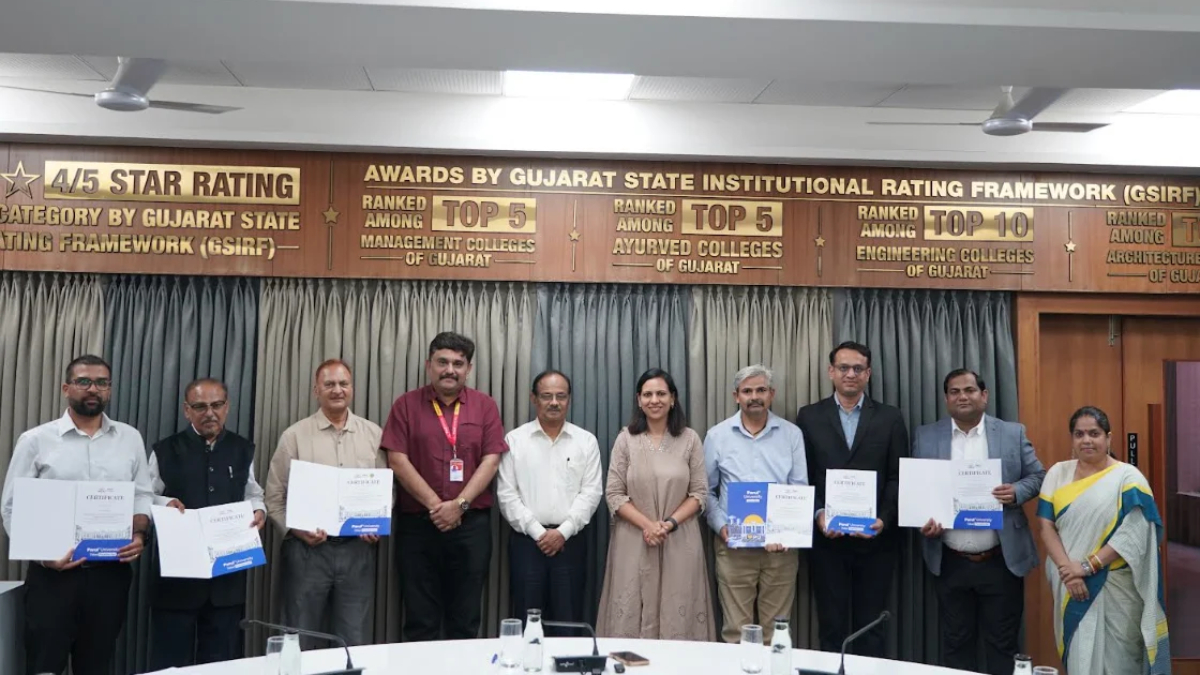
    Surat (Gujarat) [India], June 10: ArcelorMittal Nippon Steel India (AM/NS India), a joint venture between two of the world’s leading steelmakers, continues to strengthen its commitment to capability building through its strategic partnership with BITS Pilani. Building on the success of its B.Tech programme in Process Engineering, AM/NS India has now marked another significant milestone with the graduation of the inaugural MBA batch in Manufacturing Management.

    • Milestone highlights the impact of work-integrated learning in building a future-ready leadership pipeline, with AM/NS India advancing capability development with BITS Pilani
    • Graduates demonstrate real-world impact by applying academic learning to operational challenges, driving efficiencies across key functions

    The convocation ceremony was held on Thursday at AM/NS India’s flagship Plant in Hazira, and was graced by Shri Anupam Singh Gahlaut, IPS, Commissioner of Police, Surat, as the Chief Guest.

    As a frontrunner in adopting work-integrated learning in the steel sector, AM/NS India has been actively leveraging Work Integrated Learning Programmes (WILP) programmes to develop a future-ready workforce. Following the successful rollout and scale-up of its B.Tech programme, the company launched the MBA in Manufacturing Management to further strengthen leadership capability across functions. The programme currently has multiple batches underway, reflecting strong employee participation and organisational commitment to continuous learning.

    Unlike traditional MBA programs, the BITS Pilani curriculum for ArcelorMittal Nippon Steel India (AM/NS India) was specifically customized to address the complex challenges of the modern steel manufacturing landscape. The rigorous program combined core management tenets—such as supply chain optimization, strategic finance, and organizational leadership—with specialized modules on digital transformation, sustainable manufacturing practices, and data-driven decision-making.

    The program enabled participants to seamlessly integrate academic learning with their ongoing roles at AM/NS India. Leveraging the program’s flexible multi-modal delivery system, employees completed their graduation while continuing to contribute to critical business operations, reinforcing the organisation’s strong culture of learning and performance.

    The graduating batch, representing key divisions such as Steelmaking and Digital Technology, has already delivered measurable business impact. Through their capstone projects, participants addressed operational bottlenecks, enhanced efficiencies, and contributed to continuous improvement initiatives across the organisation.

    Shri Anupam Singh Gahlaut, IPS, Commissioner of Police, Surat, said: “I congratulate the graduating professionals on this significant achievement. Balancing demanding professional responsibilities with academic excellence reflects strong discipline and commitment. I encourage all graduates to continue striving for excellence, contribute meaningfully to their organisations and society, and play their part in building a Viksit Bharat by 2047.”

    Ashutosh Telang, Director & VP – HR & Administration, ArcelorMittal Nippon Steel India (AM/NS India), said: “At AM/NS India, continuous learning is central to how we build capability and drive performance. This milestone reflects our commitment to developing leaders who can seamlessly integrate business insight with technological and operational excellence. Through our collaboration with BITS Pilani, we are strengthening a future-ready talent pipeline that will accelerate innovation and contribute significantly to our journey of building a world-class steel enterprise in India.”

    Prof. S Gurunarayanan, Dy. Director, Off-Campus Programmes & Industry Engagement, BITS Pilani, said, “At BITS Pilani WILP, our academic philosophy is rooted in co-creating specialized curricula that address the evolving intellectual demands of core industries. Our partnership with AM/NS India exemplifies the true spirit of work-integrated learning merging academic excellence with industry-leading practices. In today’s dynamic industrial landscape, leadership requires more than traditional management skills; it demands a deep understanding of technological evolution and sustainable growth. These MBA graduates will undoubtedly play a pivotal role in driving AM/NS India’s strategic and operational success.”

  • Dental Krafts Lead Advanced Dental Implants and Invisalign Treatments in Gurgaon

    Dental Krafts Lead Advanced Dental Implants and Invisalign Treatments in Gurgaon

    New Delhi [India], June 11: A confident smile can transform not only your appearance but also the way you feel and interact with the world. At Dental Krafts in Gurgaon, patients now have access to top-tier dental care led by Dr. Ruchi Goel and Dr. Parmod Gulia, both distinguished alumni of AIIMS and PGIMER Chandigarh. With a focus on advanced dental implants and Invisalign treatments, the clinic is redefining modern, personalized dentistry in the region.

    Dental Implants: Restoring Smiles and Confidence
     
    Missing teeth can impact daily life, from eating to speaking, and can affect confidence. Dental Krafts offers implants that are precise, durable, and designed to blend naturally with your existing teeth. With the combined expertise of the Gold Medalist dentists – Dr. Ruchi and Dr. Parmod, every procedure is carefully planned to maintain jawbone health, prevent teeth from shifting, and restore natural chewing function. Patients consistently report a smooth, comfortable experience with excellent results.

    Invisalign: Straighten Teeth with Ease
     
     For those who prefer a discreet alternative to traditional braces, Invisalign offers clear, removable aligners that gradually align teeth without disrupting daily life. Each plan is customized to the patient’s dental structure and lifestyle, ensuring comfort and effectiveness. All India toppers dentists – Dr. Ruchi and Dr. Parmod oversee each treatment, making teeth alignment both simple and efficient.

    Why Dental Krafts Stands Out

    • Expert Leadership: Dr. Ruchi specializes in maxillofacial prosthodontics and implantology, while Dr. Parmod brings extensive experience in pediatric and preventive dentistry.
    • Advanced Technology: Modern tools and techniques ensure precision and effectiveness.
    • Personalized Care: Each treatment is tailored to the patient’s unique needs.
    • Comfort and Recovery: Minimally invasive procedures with faster healing times.
    • Proven Results: Hundreds of patients in Gurgaon have transformed their smiles with Dental Krafts.

    Comprehensive Dental Care
    Beyond implants and Invisalign, Dental Krafts offers teeth whitening, cosmetic dentistry, preventive care, and root canal treatments. The clinic aims to be a one-stop destination for all dental needs, prioritizing comfort, safety, and long-term results.

    Simple Tips for a Healthy Smile

    • Brush and floss daily to maintain oral health.
    • Follow your Invisalign schedule for best results.
    • Avoid hard or sticky foods after implants.
    • Schedule regular dental visits to prevent minor issues from escalating.

    With their combined expertise, Dr. Ruchi Goel and Dr. Parmod Gulia ensure that Dental Krafts remains a trusted name for advanced dental implants and Invisalign treatments in Gurgaon. Residents seeking personalized, effective dental solutions can schedule a consultation to start their journey toward a healthier, confident smile today.

    If you object to the content of this press release, please notify us at pr.error.rectification@gmail.com. We will respond and rectify the situation within 24 hours.

  • Luxury on a Budget: Cranberries Are the Secret to Perfect Gifts

    Luxury on a Budget: Cranberries Are the Secret to Perfect Gifts

    New Delhi [India], June 09: As the festive season is near, gifting trends are evolving toward options that are not only thoughtful but also visually striking and health-conscious. Cranberries, with their vibrant red hue and tangy-sweet flavor, are emerging as an affordable yet exotic ingredient that can instantly upgrade any gift hamper. From dried fruit mixes and gourmet snacks to festive beverages and chocolate treats, cranberries add both elegance and a touch of indulgence to gifting options.

    What sets cranberries apart is that they are more than just visually appealing. Packed with antioxidants, vitamins, and compounds that support immunity and digestion, they bring a healthful twist to festive gifting. This combination of flavor, visual charm, and wellness makes cranberry-based gifts feel luxurious without straining the budget, appealing to both traditional and modern gift-givers.

    For those looking for gift inspiration, cranberry-based hampers can include:

    • US dried cranberries mixed with nuts and seeds
    • Cranberry chocolate bark or truffles
    • Cranberry jams or sauces
    • Festive cranberry mocktails or juice blends
    • Cranberry-infused cookies or baked treats

    Whether for family, friends, or corporate clients, cranberry-infused gifts are proving that luxury doesn’t have to come with a hefty price tag. With a little creativity, even budget-friendly gifts can feel special, thoughtful, and festive.

     US Cranberries are easily available in India with dry fruit stores and e-commerce platforms.

    If you object to the content of this press release, please notify us at pr.error.rectification@gmail.com. We will respond and rectify the situation within 24 hours.

  • From Delhi to Los Angeles: The Indian Entrepreneur Reshaping Health Tech Investments in America

    From Delhi to Los Angeles: The Indian Entrepreneur Reshaping Health Tech Investments in America

    Kinshuk Kocher, Co-Founder – Caredose

    New Delhi [India], June 10: There is a photograph Kinshuk Kocher does not have, but probably should. It would show a young entrepreneur in a New Delhi pharmacy in 2017, watching a newly diagnosed diabetic patient nod politely at a pharmacist — and knowing, with quiet certainty, that the medication schedule being explained would not be followed by the end of the week.

    That unremarkable scene in a neighbourhood pharmacy became the founding insight of Caredose, a medication adherence startup that would go on to manage over one million medicine doses across India, partner with WHO, USAID, the Gates Foundation, Apollo Pharmacy, and Max Hospitals — and eventually achieve a successful exit. It also became the lens through which Kinshuk Kocher now evaluates health technology companies for one of America’s most influential hospital-backed investment programmes.

    Today, Kocher serves as Director of Investment Operations and Special Projects at Cedars-Sinai Technology Ventures (CSTV) in Los Angeles — the venture commercialization arm of Cedars-Sinai, consistently ranked among the top hospitals in the United States. He has led over $20 million in institutional health tech investments across 10+ companies, and has evaluated more than 500 startups through the Cedars-Sinai Accelerator+, where he leads the selection process. He has quietly become one of the most consequential Indian voices in global health innovation — not through proclamation, but through the compounding of three distinct careers into a single, unusually coherent point of view.

    The Making of an Operator-Investor

    Kocher’s trajectory defies easy categorization. He began his career at McKinsey, developing the analytical rigour that would later inform his investment thesis. He went on to complete an MBA at the University of Oxford, where his thinking about healthcare systems broadened from the operational to the systemic. But it was the years spent building Caredose in New Delhi — scrappy, difficult, frequently humbling years — that gave his perspective its most distinctive quality.

    “The pharmacy counter in New Delhi and the clinical floor at Cedars-Sinai are working on the same problem,” Kocher says. The patient is different. The regulatory context is completely different. But the question — whether someone will actually take their medication — is identical.”

    That duality, the operator who built inside India’s chaotic and high-improvisation health ecosystem, now deploying capital inside America’s formalised and protocol-driven one, is precisely what makes Kocher’s perspective valuable and rare. Most health tech investors have sat on one side of that equation. Very few have navigated both.

    At Caredose, Kocher and his co-founding team demonstrated something that many had theorised but few had proved at scale — that medication adherence could be meaningfully moved through the right combination of technology and behaviour design. They grew adherence rates from under 50% to above 80% for provider partners. Following a successful exit, Kocher joined GSK to gain a biopharma perspective on health-tech innovation, where he anchored the launch of their first-ever digital health incubator. This rare, 360-degree expertise across startups and enterprise healthcare ultimately drew the attention of senior leadership at Cedars-Sinai following his move to the United States. 

    The Investment Thesis

    At CSTV, Kocher has developed a framework for health tech evaluation that is unmistakably shaped by his founding experience. The first filter is not the technology. It is the workflow.

    “Most startups that fail in health tech do not fail because their technology was wrong,” he explains. “They fail because they built for how they imagined the clinical environment works, not how it actually does. A physician managing a 30-minute appointment window. A nurse following a workflow designed fifteen years ago. A patient navigating fear and confusion alongside a complex medication regimen. If your product does not fit seamlessly into that reality, it will not be adopted — regardless of how impressive the algorithm is.”

    This philosophy has shaped the companies that Kocher backs. His portfolio reflects a consistent preference for solutions with clear clinical champions, defined procurement pathways, and — critically — behaviour change baked into the product architecture from day one.

    The India Opportunity He Keeps Coming Back To

    Despite building his investing career in Los Angeles, Kocher remains deeply attentive to India’s health tech landscape — and increasingly vocal about what he sees as a significant missed opportunity.

    India, he argues, is producing technically exceptional founders with an intimate understanding of large-scale chronic disease management. What it lacks is the infrastructure of operator-investors — people who have navigated both the startup journey and the institutional deployment environment — to help those founders stress-test their products against clinical reality before they reach the market.

    “The India-US health innovation corridor is not a distant aspiration,” Kocher says. “The problems are similar, and solutions can be transferable. The regulatory and market context is different. Indian founders who understand that distinction have a real advantage. Most have not yet realized it.”

    It is an observation that carries the particular authority of someone who has stood in both rooms — the pharmacy in New Delhi, and the investment office at one of America’s finest hospital systems — and seen, clearly, that the distance between them is smaller than it appears.

    Kinshuk Kocher is Director of Investment Operations & Special Projects at Cedars-Sinai Technology Ventures, Los Angeles. He co-founded Caredose, a MedTech startup that created the simplest way of managing regular, chronic medication. He holds an MBA from the University of Oxford.

    If you object to the content of this press release, please notify us at pr.error.rectification@gmail.com. We will respond and rectify the situation within 24 hours.