Author: Sutun Nayak

  • Chandan Healthcare Limited Secures Third PPP Project in Punjab for Advanced Radiology Services

    Chandan Healthcare Limited Secures Third PPP Project in Punjab for Advanced Radiology Services

    Lucknow (Uttar Pradesh) [India], March 07: Chandan Healthcare Limited (NSE – CHANDAN), – Chandan Healthcare Limited, one of the leading diagnostic and healthcare services providers in North India, has secured another Public Private Partnership (PPP) project from the Punjab Health Systems Corporation under the Department of Health and Family Welfare, Government of Punjab.

    The contract has been awarded for a tenure of 10 years with estimated annual revenues of approximately 25 Cr. Over 10 Years period, the project is expected to generate revenues of around 250 Cr. Under this arrangement, the Company will be responsible for setting up, operating and maintaining Advanced Radiology Imaging Diagnostic Centres within designated government healthcare facilities.

    As part of the project, the Company will set up advanced radiology facilities at the following new locations:

    • District Hospital, Fazilka with a 1.5 Tesla MRI scanner
    • District Hospital, Sri Mukatsar Sahib with a 1.5 Tesla MRI scanner
    • District Hospital, Firozpur with a 1.5 Tesla MRI scanner
    • SDH Abohar with a 32 slice CT scan

    The initiative is aimed at strengthening diagnostic infrastructure in government hospitals by enabling access to advanced MRI and CT scan services at district and sub district healthcare facilities. This will improve availability of quality diagnostic services and support timely diagnosis for patients across the region.

    The latest award further strengthens Chandan Healthcare’s growing presence in Punjab’s public healthcare system and marks the third PPP project secured by the Company in the state in recent months, reflecting continued confidence in the Company’s execution capabilities and expertise in operating advanced diagnostic facilities.

    Commenting on the development, Mr. Amar SinghPromoter and Managing Director of Chandan Healthcare Limited, said, “We are pleased to secure another PPP project from the Government of Punjab for strengthening radiology diagnostic services in government hospitals. This order further reinforces our growing presence in the public healthcare segment and reflects the trust placed in our execution capabilities. Through these initiatives, we aim to enhance accessibility of advanced MRI and CT scan services and contribute towards improving diagnostic infrastructure at the district level.”

    Disclaimer: This article is for informational purposes only and does not constitute financial advice.

  • Mapisa369 Scales New Heights: Ashok Choudhary Recognized by Gujarat CM for Quality Standards

    Mapisa369 Scales New Heights: Ashok Choudhary Recognized by Gujarat CM for Quality Standards

    Ahmedabad (Gujarat) [India], March 07: Ashok H Choudhary’s a farmer son journey from a small village in Rajasthan to national recognition reflects a story of persistence, leadership and enterprise built from the ground up. Born in Dehlod village in Tonk District Rajasthan. he grew up in modest circumstances a farmer family where resources were limited but ambition was not. Beginning his career in roles such as, warehouse keeper and delivery boy, Choudhary faced daily challenges that shaped his understanding of hard work and resilience. Instead of allowing circumstances to define his path, he steadily moved forward, transforming setbacks into stepping stones.

    Today, he serves as the Managing Director and CEO of Shivaza Group of Companies and leads its flagship brand Mapisa369, a name increasingly associated with construction chemicals and building solutions. Over time, the group has expanded into multiple sectors including construction materials, colonisation, higher education and film production. Within the competitive landscape of tile adhesive manufacturers in India, the company positions itself among the best tile adhesive manufacturers brand in India, focusing on performance-driven and durable products rather than surface-level appeal. The brand identifies itself as a Tile Adhesive manufacturer committed to producing high Polymer Modified international quality Adhesive solutions designed for long-term structural strength.

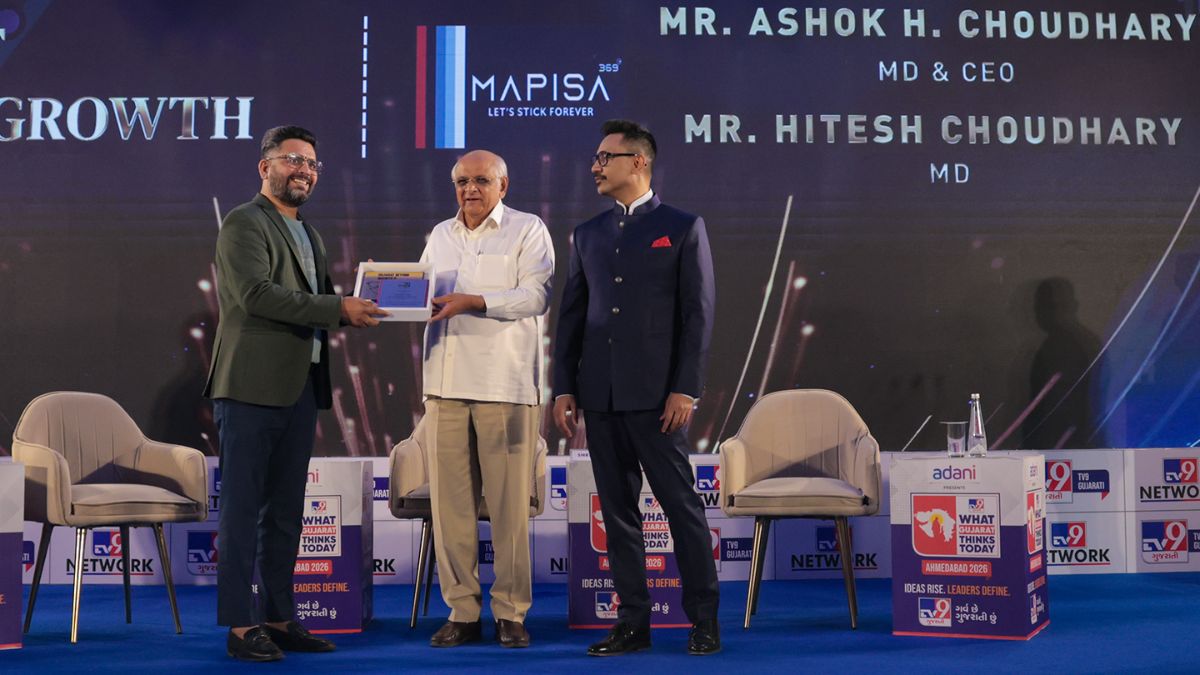
    Recently in 21 fab 2026, Choudhary was honoured by Gujarat Chief Minister shri Bhupendra Patel for Mapsia 369 excellence quality brand in construction chemicals, tile adhesive, and epoxy grout , along with recognition for corporate social responsibility initiatives. The honour acknowledged contributions in areas such as tile adhesive for floor tiles, best tile adhesive for granite, best tile adhesive for vitrified tiles, and best tile adhesive for large wall tiles and large floor tiles. The company also operates within categories such as Granite Adhesives manufacturers, epoxy grout manufacturers in India, Best epoxy grout manufacturers brand  in India, and Top tiles adhesive brand epoxy & grout manufacturers in India.

    Mapisa369’s product portfolio includes tile and stone adhesives, epoxy grouts, PU adhesives, waterproofing systems, Readymix Plaster, Block Joint Mortar and Wall Putty. It operates in a market that includes tile adhesive companies in India and regional segments such as tile adhesive manufacturers in Gujarat , tile adhesive manufacturers in Maharashtra, tile adhesive manufacturers in Rajasthan, Delhi, Haryana, UP, Punjab also tile adhesive manufacturers in MP and Chhattisgarh. The group also identifies as a Readymix Plaster manufacturer in India and Block Joint Mortar manufacturer in India, highlighting its focus on structural reliability and safety in construction practices. Its stated philosophy reinforces that construction chemicals are bonding products, not beauty products, underlining performance and durability over appearance.25 years of legacy Shivaza groups Mapisa369 became best quality brand in India by giving quality guarantee. Beyond manufacturing, Ashok Choudhary received a National Award from the President of India. He is also author of well known book divine child& many more . He  produced films such as Turtle and Waah Zindagi, which were released in more than 190 countries through platforms including ZEE5, Amazon zee cinema etc . This expansion into film reflects a broader, global outlook beyond core industrial operations.

    Spiritually inclined, Choudhary is associated with The Art of Living Foundation and bless and  guidance of Sri Sri Ravi Shankar.  And  believes that ethics, humanity and discipline form the foundation of sustainable success. His guiding belief — “Grow together, contribute together, and celebrate together” — underscores his emphasis on collective progress, employee empowerment and social responsibility. Through its CSR initiatives and applicator training programs, the group states it supports safe construction practices and employment generation in rural and urban regions.

    From sweeping floors to leading a diversified enterprise, Ashok H. Choudhary’s trajectory reflects a blend of entrepreneurial ambition, industry focus and community engagement. His recent recognition by Chief Minister Bhupendra Patel highlights not only business growth but also an emphasis on quality standards, safety and social contribution within India’s expanding construction chemicals sector.

    If you object to the content of this press release, please notify us at pr.error.rectification@gmail.com. We will respond and rectify the situation within 24 hours.

  • Lucky Badgujar’s 31kg Transformation in Just 4 Months Goes Viral Ahead of His Upcoming Films

    Lucky Badgujar’s 31kg Transformation in Just 4 Months Goes Viral Ahead of His Upcoming Films

    Mumbai (Maharashtra) [India], March 06:  Actor Lucky Badgujar, known for his performances in Rahasya 2020 and the Hungama OTT project Emerald Green, is currently making headlines for a dramatic physical transformation that has left fans and industry insiders stunned. The actor has lost 31 kilograms in just four months, dropping from 113 kg to 82 kg, showcasing a remarkable level of discipline and dedication to his craft.

    The transformation has also been widely appreciated on social media after Lucky shared glimpses of his journey on Instagram. In a recent post, the actor revealed his new lean look and the hard work behind it, which quickly caught the attention of fans and followers online.

    Fans can see the transformation here:
    https://www.instagram.com/p/DVgApNvCGxV/?igsh=YXJ3eHVrNnd0cjlw

    From 113kg to 82kg: A Journey of Discipline

    Lucky Badgujar’s 31kg Transformation in Just 4 Months Goes Viral Ahead of His Upcoming Films-PNN

    113 kgs weight for Emerald Green look

    Lucky Badgujar’s transformation began after completing his role in the OTT film Emerald Green. For that particular project, the actor had intentionally gained weight and reached 113 kilograms, as required by the director for the character.

    However, his upcoming film projects demanded a much leaner appearance. Determined to adapt to his new roles, Lucky committed himself to a strict lifestyle that helped him shed 31 kilograms in just 120 days.

    What makes this transformation particularly impressive is that he achieved it through a disciplined vegetarian diet and a consistent walking routine, without relying on shortcuts or extreme fitness methods.

    Speaking about the experience, Lucky shared that seeing progress on the weighing scale became a major source of motivation during the process.

    “When the scale shows progress, the dopamine rush is real,” Lucky said. “For an actor, the body is the first tool of expression. I am very serious about my career, and if a role demands transformation, I am ready to give my 200 percent.”

    He added that while the journey was challenging, the struggle itself gave him satisfaction and motivation to keep pushing forward.

    Focused on Fitness and Future Roles

    After completing his weight-loss journey, Lucky has now taken the next step in his fitness routine. The actor has recently started gym training to further refine his physique and enhance his on-screen presence.

    His goal is to achieve an even more sculpted and powerful look by December 2026, aligning with the physical requirements of his upcoming film projects.

    In the entertainment industry, physical transformation often reflects an actor’s commitment to authenticity, and Lucky Badgujar’s dedication has already started generating conversations within film circles.

    Major Projects in the Pipeline

    Lucky Badgujar’s transformation comes at a time when his career is moving toward an exciting phase with multiple promising projects.

    The actor is currently working under the direction of Bhavesh Patil, with projects being produced under the banner of Bhavesh Production.

    Historical Film – Shaheed Shirish Kumar

    One of the most anticipated projects in his lineup is the historical drama “Shaheed Shirish Kumar.” The film is based on the inspiring life of the legendary young freedom fighter Shirish Kumar, who became a symbol of courage during India’s independence movement.

    While the story highlights the powerful youth movement led by Shirish Kumar, Lucky Badgujar plays a pivotal and influential character that adds depth to the narrative.

    The film aims to bring attention to the sacrifices made by young revolutionaries who played an important role in India’s freedom struggle.

    Upcoming Suspense Thriller

    In addition to the historical project, Lucky is also working on a concept-driven suspense thriller with another prominent production house. The title and details of the project are currently being kept confidential.

    According to sources close to the project, the film will showcase Lucky in a completely new and intense avatar, with his newly achieved 82 kg lean look playing an important role in the character’s presentation.

    A Transformation That Inspires

    Lucky Badgujar’s journey from 113 kg to 82 kg in just four months is more than a physical transformation—it is a reflection of determination, discipline, and passion for cinema.

    In an industry where authenticity and dedication often define success, his commitment to reshaping his body for his roles highlights the seriousness with which he approaches his craft.

    As fans eagerly await his upcoming projects, one thing is clear: Lucky Badgujar’s transformation is not just about fitness, but about an actor pushing his limits to deliver powerful performances on screen.


    If you object to the content of this press release, please notify us at pr.error.rectification@gmail.com. We will respond and rectify the situation within 24 hours.

  • Policy Execution and Administrative Excellence at FCI: Observations Shared by Sudeep Singh FCI

    Policy Execution and Administrative Excellence at FCI: Observations Shared by Sudeep Singh FCI

    New Delhi [India], March 06: India’s food security framework rests on the strength of institutions that can translate policy into consistent action. At the centre of this system is the Food Corporation of India (FCI), a statutory body entrusted with procuring, storing, and distributing food grains across the country. Functioning under the Ministry of Consumer Affairs, Food and Public Distribution, FCI’s role extends beyond logistics, it represents administrative continuity, regulatory discipline, and the assurance that food reaches millions of beneficiaries without disruption. Its operational model demonstrates how structured governance, coordination, and accountability can sustain one of the world’s largest food security systems.

    “Policy execution at FCI is not merely about implementing directives; it is about translating national intent into daily operational reality,” says Sudeep Singh, Former Executive Director, FCI. “The organization functions through a well-defined administrative framework where procurement, storage, and distribution operate in close coordination. Each function is supported by regulatory compliance, real-time monitoring, and institutional discipline, ensuring that food security commitments are met with consistency and credibility.”

    A key pillar of this execution lies in procurement operations, where FCI ensures that farmers receive fair prices while strengthening national reserves. Through Minimum Support Price (MSP) procurement, the organization stabilizes agricultural markets and protects farmer incomes. This process requires coordination between field officers, state agencies, and quality control teams. Sudeep Singh notes, “Procurement is not an isolated transaction, it is a structured administrative exercise supported by inspection, documentation, and verification systems that safeguard both farmer interests and public accountability.” Such structured procurement ensures that food grains entering the system meet defined standards while reinforcing trust in public institutions.

    Storage management further reflects the organization’s administrative precision. Maintaining buffer stocks is essential to addressing seasonal fluctuations, emergencies, and welfare commitments. Scientific storage practices, regular inspections, and systematic stock rotation ensure that food grains remain fit for distribution. Administrative excellence is visible in the details: timely inspections, accurate record-keeping, and preventive measures ensure that operational risks are minimized and food quality is preserved. These measures reduce wastage and reinforce operational reliability across FCI’s extensive depot network.

    Distribution operations highlight the scale and coordination required to serve a diverse and geographically vast population. Food grains are transported from surplus regions to deficit areas through rail and road networks, ensuring equitable availability under national welfare programs. This movement involves synchronized planning between regional offices, logistics teams, and monitoring units. Mr. Sudeep Singh explains, “Movement planning reflects institutional discipline. Every dispatch, every receipt, and every stock position is tracked, ensuring that supply chain decisions are informed by real-time administrative data.” This data-driven approach enables timely decisions and ensures uninterrupted supply.

    Administrative transparency has become increasingly central to FCI’s operations. The integration of digital tools has strengthened multiple processes. “Technology has reinforced administrative clarity. It ensures that information flows seamlessly across departments, enabling faster decisions while strengthening accountability,” explains Sudeep Singh. These systems not only enhance efficiency but also align operational practices with modern governance standards.

    Institutional discipline is reinforced through training, professional development, and compliance mechanisms. Officers undergo structured capacity-building programs to enhance their technical and administrative skills, supported by institutions such as the Institute of Food Security. This continuous training ensures that personnel remain equipped to manage evolving operational challenges.

    Compliance and accountability remain central to maintaining operational integrity. Internal audits, inspections, and supervisory mechanisms ensure adherence to regulatory frameworks. These checks not only prevent irregularities but also improve process efficiency over time. Accountability is built into the system through structured reporting, supervision, and review. It ensures that administrative actions remain aligned with policy objectives and public responsibility. Such oversight reinforces public confidence and strengthens institutional credibility.

    FCI’s administrative model also demonstrates adaptability. As operational demands evolve, the organization continues to modernize its infrastructure, streamline processes, and adopt technology-driven solutions. This evolution reflects an understanding that policy execution must remain responsive to changing conditions while maintaining core governance principles.

    Ultimately, FCI represents more than a procurement and distribution agency, it reflects the administrative backbone of India’s food security framework. Its structured processes, transparent systems, and disciplined workforce ensure that national policy commitments translate into reliable service delivery. By maintaining operational integrity and strengthening administrative excellence, the organization continues to safeguard food availability for millions.

    As Sudeep Singh concludes, “FCI’s effectiveness is rooted in its administrative foundation. When policy, process, and accountability work together, the institution becomes not just an implementing agency, but a dependable pillar of national food security.”

    If you object to the content of this press release, please notify us at pr.error.rectification@gmail.com. We will respond and rectify the situation within 24 hours.

  • 16th Finance Commission Fiscal Discipline May Reshape State Finances

    16th Finance Commission Fiscal Discipline May Reshape State Finances

    New Delhi [India], March 07: India’s fiscal framework is approaching another important reset. The 16th Finance Commission fiscal discipline framework, which will guide revenue sharing between the Centre and states from 2026 to 2031, could quietly push state governments toward stronger financial management and lower debt pressures over time.

    Analysts say the shift may not dominate headlines today, but its long-term economic implications could be significant.

    The Significance of the 16th Finance Commission

    India reviews the formula for distributing tax revenue between the Union government and the states every five years. This process is carried out by the Finance Commission, a constitutional body that sits at the center of the country’s fiscal federalism framework.

    The 16th Finance Commission, chaired by economist Arvind Panagariya, will propose a revenue-sharing structure for the period FY2026 to FY2031.

    The 15th Finance Commission had recommended that 41 percent of the divisible tax pool be transferred to the states. Since FY2021, that formula has played a central role in shaping state finances.

    However, the financial environment has evolved since that formula was introduced.

    The pandemic forced states to increase borrowing, which led to higher debt levels. Fiscal assessments suggest that state debt could stabilise around 29–30 percent of Gross State Domestic Product (GSDP) in the coming years.

    With fiscal space tightening, policy choices are becoming more complex.

    This context highlights the growing importance of maintaining fiscal discipline.

    The Fiscal Discipline Debate Returns

    Fiscal discipline may sound technical, but it sits at the foundation of economic stability.

    State governments fund infrastructure, welfare programs, public health systems, and administrative spending. A large portion of this financing is supported through borrowing. When borrowing rises faster than revenues, interest costs increase and fiscal flexibility declines.

    India’s fiscal framework already includes certain guardrails.

    Under current rules, states are generally allowed to maintain a fiscal deficit of up to 3 percent of GSDP. In some years, an additional 0.5 percent borrowing flexibility is permitted if states undertake specific reforms.

    These limits exist for a reason.

    Without them, financial pressures could build quickly.

    A recent analysis by CRISIL suggests that the evolving framework under the 16th Finance Commission may strengthen these guardrails by creating stronger incentives for sound fiscal management.

    The logic is relatively straightforward.

    States that maintain disciplined fiscal policies typically face lower financial stress. Those that overspend often encounter higher borrowing costs and tighter fiscal constraints.

    Over time, such mechanisms encourage more sustainable fiscal behaviour.

    CRISIL Insight: Why Discipline Can Strengthen State Finances

    CRISIL’s assessment highlights an important economic principle. Fiscal discipline tends to generate long-term benefits, even if short-term adjustments can be challenging.

    Lower fiscal deficits reduce the pace of debt accumulation. Reduced debt improves credit quality. Stronger credit profiles typically translate into more stable borrowing costs.

    For state governments, that stability is critical.

    Many development projects in India rely heavily on state funding. Roads, logistics parks, urban infrastructure, power distribution upgrades, and industrial corridors are largely driven at the state level.

    In fact, states account for nearly 60 percent of India’s public capital expenditure.

    Their financial health, therefore, has direct implications for the country’s growth trajectory.

    When fiscal balances remain stable, governments retain the ability to fund long-term investments without crowding out other spending priorities.

    Fiscal stability also influences investor sentiment in bond markets.

    States raise funds through State Development Loans (SDLs). These bonds usually trade at a 40–80 basis point premium over central government securities, reflecting perceived credit risk.

    Improved fiscal discipline could gradually narrow this spread by strengthening investor confidence.

    While these mechanisms may appear technical, their economic impact is tangible.

    Lower borrowing costs ultimately free up more resources for development spending.

    Growth and Fiscal Prudence Must Coexist

    Economic expansion and fiscal discipline must operate together.

    Indian states face significant development demands. Urbanisation continues to accelerate. Infrastructure gaps remain wide. Social welfare programmes are expanding.

    Strict borrowing limits could potentially constrain important investments if applied without flexibility.

    The objective of the 16th Finance Commission is therefore unlikely to be simply tightening rules.

    Instead, the broader aim appears to be balancing fiscal prudence with developmental needs.

    According to CRISIL’s assessment, the commission may attempt to strike this balance by encouraging responsible fiscal behaviour rather than imposing rigid restrictions.

    In practical terms, this could push states to strengthen revenue mobilisation, improve expenditure efficiency, and manage debt more prudently.

    Such reforms would not necessarily reduce spending. Instead, they could make public finances more sustainable over time.

    Implications for State Finances

    If the new framework evolves along these lines, state governments may face stronger incentives to improve financial management.

    Several policy areas could receive greater attention.

    Revenue mobilisation may become a priority as states look to broaden their tax base and strengthen collections.

    Expenditure management could also come under scrutiny, particularly in areas where subsidies or administrative costs have expanded rapidly.

    States may also refine their borrowing strategies and adopt more structured debt management practices.

    These adjustments will not happen overnight. Fiscal behaviour rarely changes instantly.

    However, over time, even modest improvements in budget discipline can produce significant outcomes.

    Stronger balance sheets make it easier for states to finance infrastructure projects, attract investment, and support stable economic growth.

    That stability is especially important in a country where regional economic performance plays a decisive role in national development.

    A Structural Shift in India’s Fiscal Architecture

    India’s fiscal framework has gradually evolved over the past two decades.

    Earlier Finance Commissions focused heavily on reducing disparities between richer and poorer states. Redistribution remains an important objective.

    However, the policy conversation has expanded.

    Today, fiscal sustainability, transparency, and long-term debt management occupy a larger role in fiscal policy discussions.

    The evolving framework under the 16th Finance Commission reflects this shift.

    Prudent financial management is increasingly viewed not as a temporary policy choice, but as a structural expectation.

    This transition comes at a critical moment.

    India’s economy continues to expand rapidly, and the effectiveness of government spending is becoming increasingly important to sustain growth.

    If the new framework succeeds in encouraging stronger fiscal discipline across states, the benefits may not appear immediately.

    But over time, it could quietly strengthen the foundations of India’s economic stability.

    Sometimes the most consequential policy changes operate quietly.

    The work of the 16th Finance Commission may prove to be one of those moments, shaping a more balanced and sustainable fiscal trajectory for India.

    PNN National

  • Kerala Kitchen and Bar by Tanatan, Juhu’s New Hub for Kerala and Mangalorean Cuisine-Starry affair owner Raj Shetty and Partner Amit Pal

    Kerala Kitchen and Bar by Tanatan, Juhu’s New Hub for Kerala and Mangalorean Cuisine-Starry affair owner Raj Shetty and Partner Amit Pal

    Mumbai (Maharashtra) [India], March 06: Located at Ground Floor, Standard House Building, Building No. 9, Juhu Tara Road, opposite JW Marriott Mumbai Juhu

    *Grand Star-Studded Launch Marks the Arrival of Kerala Kitchen & Bar by Tanatan as Juhu’s New Coastal & Authentic kerla & maglorian cusine .Dining Destination*-PNN

    Kerala Kitchen & Bar by Tanatan, the first authentic place that serves Kerala cuisine , owned by Mr. Raj Shetty and partner Mr. Amit Pal under the prestigious Ramee Group, including Ramee Hospitality, Tanatan, and Mr. Saurab Gahoi, a Senior Vice President of Ramee Group. successfully hosted its grand star-studded launch in Juhu

    The Grand Launch of Kerala Kitchen & Bar by Tanatan on 5th March, 2026, in Mumbai  Juhu witnessed an unforgettable evening as Kerala Kitchen & Bar by Tanatan opened its doors with a majestic, high-profile launch event. The celebration brought together celebrities, industry leaders, influencers, and distinguished guests, marking the arrival of a new coastal-inspired culinary destination in the city.

    Guests at the launch experienced the venue’s culturally rich ambience, where contemporary elegance blended seamlessly with the soulful essence of coastal India. To name a few were Vindu Dara Singh, Aoora, Shivam Khajuria, Yaashvi Shah, Siddharth Sibal, Madhuri Pandey, Arshi Khan, Rj Devangana, Gizele Thakral, Shibani Kasyap, Laxmi Rai, Rehan Shah, Shweta Bhardwaj, Shiny Doshi, Deepshika Nagpal, Prashant Virendra Sharma, Khushi Rawal, Preet Singh, Zalak Gohil, Hema Sharma, Ankita Maithy, Ajaz Khan, Vandana Sajnani, Himanshu Arora, Anuska Ghosh, Anisha, Ayush Sharma, Shini, & Many More.

    Nestled in the heart of Juhu, Kerala Kitchen & Bar by Tanatan introduced patrons to a refreshing escape into the flavours, aromas, and coastal charm of Kerala and the Konkan belt. With its modern coastal-inspired décor, soothing palette, and an atmosphere reminiscent of serene backwaters and breezy shores, the venue immediately stood out as one of the most inviting dining destinations in the city. Every corner reflected a perfect harmony of heritage and modernity, offering a warm, immersive, and memorable dining experience.

    Amit Pal, partner at Kerala Kitchen & Bar by Tanatan, expressed his gratitude during the launch, stating, “The launch of Kerala Kitchen & Bar by Tanatan has been a deeply meaningful milestone for us. We wanted to create a space that feels like home, where culture, comfort, and coastal flavours come together effortlessly. Seeing guests connect with the ambience and celebrate this vision with us has been truly heartwarming. This is just the beginning, and we look forward to welcoming Mumbai to many more memorable moments here.”

    The restaurant has already established itself as a distinctive addition to Juhu’s vibrant hospitality and nightlife scene, offering authenticity, comfort, and an elevated coastal dining experience.

    If you object to the content of this press release, please notify us at pr.error.rectification@gmail.com. We will respond and rectify the situation within 24 hours.

  • From Secunderabad to Silicon Valley: Shekhar Natarajan’s journey as an entrepreneur

    From Secunderabad to Silicon Valley: Shekhar Natarajan’s journey as an entrepreneur

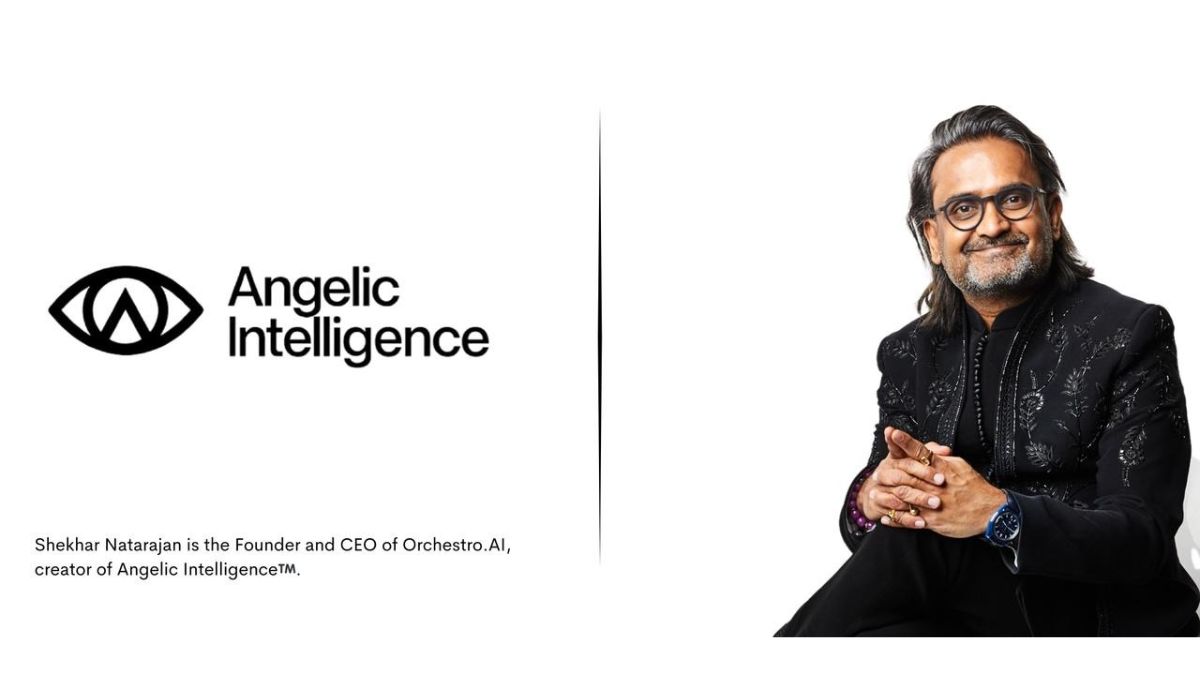
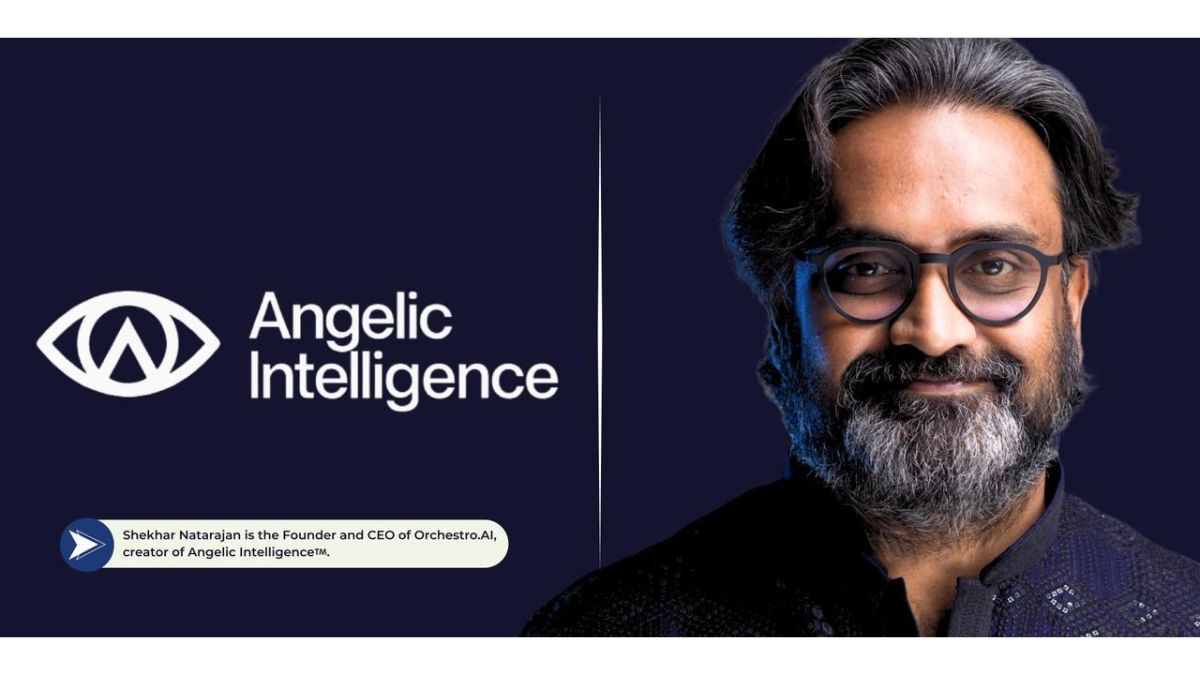
    New Delhi [India], March 06: In this opinion piece, we see how Shekhar Natarajan, the Founder and CEO of Orchestro.AI, aims to align his career based on his childhood experiences. 

    Shekhar Natarajan arrived in America with $34 in his pocket.

    He had grown up in South Central India, in a one-room house in Secunderabad where his family lived without electricity. He studied under street lights because there was no other way to read at night. His mother bound newspapers to earn a few rupees; when he needed money for education, she pawned her wedding ring for 30 rupees.

    That sacrifice — a mother’s wedding ring traded for a son’s future — shaped everything that followed.

    “Real wealth is not money,” Natarajan says. “Real wealth is wisdom. My mother understood that. She gave up her most precious possession so I could learn. That’s not optimization — that’s love.”

    The Corporate Ascent

    From those beginnings, Natarajan built one of the most remarkable careers in American business. He earned degrees from Georgia Tech, MIT, Harvard Business School, and IESE. He spent 25 years in Fortune 500 leadership at companies including Coca-Cola, PepsiCo, Walmart, Target, Disney, and American Eagle.

    At Walmart, he grew the grocery business from $30 million to $5 billion. He pioneered crowdsourced delivery systems that transformed how products reach consumers. At Disney, he helped create the MagicBand experience that millions of visitors now take for granted. Along the way, he accumulated over 207 patents.

    He was, by any measure, a master optimizer — someone who understood how to squeeze efficiency from complex systems, how to make supply chains faster and cheaper, how to scale operations across continents.

    And then he looked at what optimization had wrought.

    The Reckoning

    “I spent decades making systems more efficient,” Natarajan reflects. “Faster. Cheaper. More scalable. And I was good at it. But efficiency without ethics is just sophisticated cruelty.”

    He saw delivery workers pushed to dangerous speeds by algorithms he could have designed. He saw loan collection systems that automated harassment with techniques he could have invented. He saw welfare systems that deleted hungry children from databases with the same dispassion they’d delete duplicate records.

    The skills he had spent a lifetime developing were being used to harm people. Not by villains — by systems. By algorithms optimizing for metrics that didn’t include human dignity.

    “The people building these systems aren’t evil,” he says. “They’re optimizing for the metrics they’re given. The problem is that the metrics don’t include compassion. They don’t include dignity. They don’t include the child asking her mother for rice.”

    The Morning Practice

    Every morning at 4 AM, Natarajan practices classical Indian painting.

    It is both artistic expression and problem-solving methodology. The discipline of the brush, the patience of the stroke, the attention to detail — these are not separate from his work on AI. They are preparation for it.

    “Building technology with love, not speed, over thousand-year timeframes” — this is how he describes his philosophy. It sounds impractical until you realize what the alternative has produced.

    Move fast and break things. Santoshi Kumari was broken.

    Disrupt everything. Bhupendra Vishwakarma’s family was disrupted.

    Scale at all costs. The cost was paid by gig workers dying on the roads.

    “We’ve tried building technology fast,” Natarajan says. “Now let’s try building it right.”

    The Wedding Ring

    Natarajan still thinks about his mother’s wedding ring.

    “She didn’t optimize,” he says. “She sacrificed. She gave up something precious so something more precious could grow. That’s what love does. That’s what the best technology should do — not extract value, but create space for human flourishing.”

    Angelic Intelligence is, in some ways, an attempt to encode that mother’s love into computational systems. To build AI that asks, before every action: Does this help people flourish? Does this create space for dignity? Does this honor the sacrifice of those who came before?

    It’s an audacious project. It may be an impossible one.

    But someone has to try.

    “I came from nothing,” Natarajan says. “I studied under street lights. I know what it means to be invisible to systems. And I know that the child asking for rice in Jharkhand is not a deletion error. She’s a human being. If our technology can’t see that, our technology is broken.”

    He pauses.

    “My mother pawned her wedding ring so I could have a future. I’m trying to build AI that honors that sacrifice — AI that sees every human being as worthy of that kind of love.”

  • Andhra Pradesh’s Leading Political Consultant for Modern Politics

    Andhra Pradesh’s Leading Political Consultant for Modern Politics

    New Delhi [India], March 05: In an era where perception shapes power and narratives influence public opinion faster than policy announcements, political success demands more than popularity. It requires discipline, a well-engineered strategy, and strong architecture.

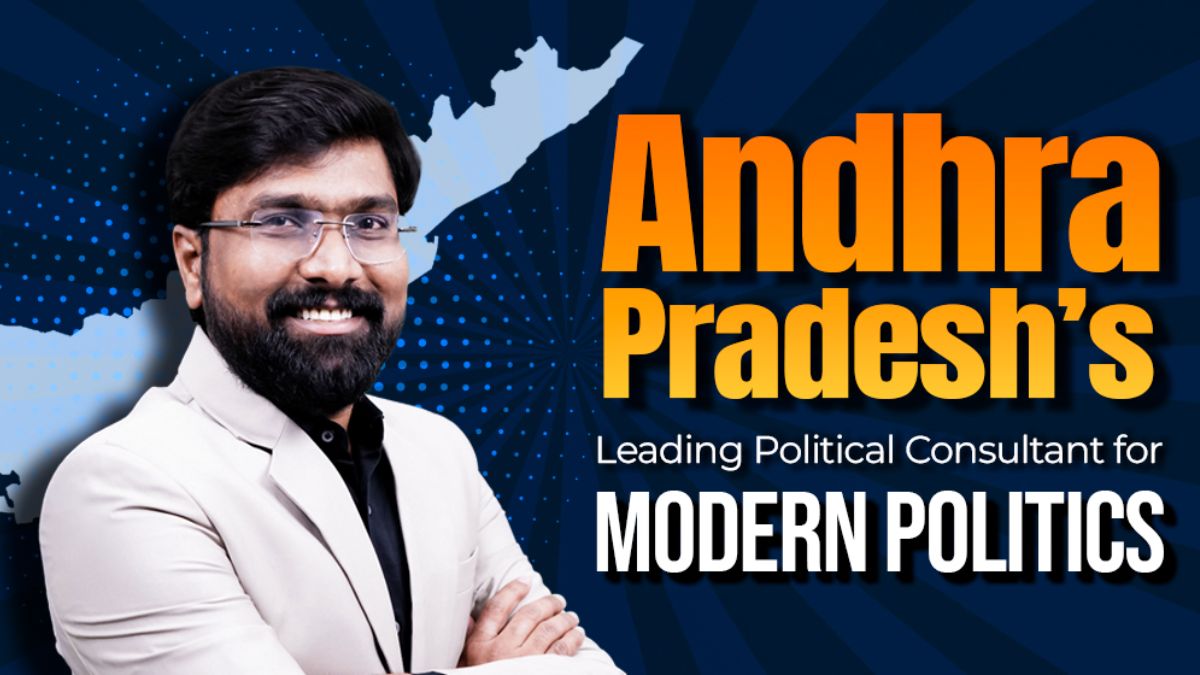
    Andhra Pradesh is witnessing a structural shift in political consulting where campaigns are no longer seasonal operations but continuous strategic ecosystems. At the center of this transformation stands Chandu Venkata Satish, widely regarded as a leading political consultant in Andhra Pradesh, and the founder of Political Engineer — recognized as a modern political consultant company redefining leadership positioning and electoral execution through structured political consultancy systems.

    Engineering Politics for the Digital Era

    Political competition in Andhra Pradesh ranks among the most dynamic in the country. Voter awareness is high. Media ecosystems are aggressive. Digital platforms amplify every statement.

    Traditional campaign management alone cannot handle this intensity.

    Political Engineer operates as a strategic command center delivering premier political consultancy services in AP, integrating data analytics, psychological positioning, narrative framing, leadership branding, and ground-level cadre alignment into one cohesive system.

    Every campaign is treated as a structured operation with measurable outcomes — a defining standard followed by top political consultants in modern Indian politics.

    The Visionary Behind Political Engineer

    Born in Chirala into a weaver family, Chandu Venkata Satish’s journey refl ects discipline, resilience, and long-term thinking. With a B.Tech in Electrical & Electronics, he began his career mentoring students before entering digital media and eventually transitioning into high-level political consultancy.

    He did not adapt to politics — he redesigned its structure.

    Having worked with senior leaders and Union Ministers, he understood a critical gap: Politics required technology-backed strategic precision.

    This insight led to the birth of Political Engineer — a political consultant company that merges:

    • Strategic foresight
    • Digital dominance
    • Profile engineering
    • Organizational strengthening
    • Cadre training
    • Narrative control

    Media platforms have recognized him as India’s fi rst Political Engineer — an innovator who integrates technology and political psychology to shape outcomes rather than react to them. Today, he is acknowledged among the top political consultants contributing to structured campaign ecosystems in Andhra Pradesh.

    Beyond Consulting: Building Political Infrastructure

    A Political Engineer does more than manage campaigns. It builds political infrastructure through advanced political consultancy frameworks designed for long-term leadership sustainability.

    1. Leadership Positioning & Authority Architecture: Politicians are shaped into authoritative brands with clear identity, messaging discipline, and consistent public perception — a defi ning feature of the best political consultancy in Andhra Pradesh.

    2. Digital Command Centre: A centralized strategic hub that monitors, manages, and controls digital narratives, public sentiment, and real-time campaign communication across all platforms.

    3. Digital War Room Systems: Campaigns are supported by structured content pipelines, real-time response frameworks, and social media ecosystem management under a centralized political consultant in the Andhra Pradesh strategy model.

    4. Constituency Intelligence Mapping: Data-driven voter segmentation, issue prioritization, and targeted communication strategies ensure precision outreach — hallmarks of premier political consultancy services in AP.

    5. Cadre Training & Organizational Strengthening: Supporters evolve into trained communicators and disciplined political representatives, strengthening long-term grassroots infl uence.

    This multi-layered framework establishes Political Engineer not merely as a campaign agency, but as a full-scale political consultancy company offering sustainable and scalable political consultancy solutions.

    Introducing the Political Engineer AI Avatar

    Innovation separates leaders from followers.

    Political Engineer introduced the Political Engineer AI Avatar — a pioneering digital solution designed to amplify leadership presence across platforms and redefi ne modern political consultancy integration.

    The AI Avatar serves as:

    • A 24/7 digital spokesperson
    • A multilingual communication amplifier
    • A content replication engine
    • A personalized voter engagement tool

    Leaders today must maintain continuous visibility. The AI Avatar ensures consistent messaging across digital platforms while preserving voice alignment and ideological clarity — strengthening the strategic edge of any political consultant in Andhra Pradesh, leveraging AI-backed systems.

    Few fi rms positioned among the top political consultants in India offer such technology-integrated political identity solutions. Political Engineer places Andhra Pradesh at the forefront of AI-backed political communication, reinforcing its stature as the best political consultancy in Andhra Pradesh.

    The Statesman Daily Planner: Discipline as Strategy

    Political victories are not accidental. They are scheduled.

    The Statesman Daily Planner, conceptualized by Chandu Venkata Satish, transforms leadership discipline into a structured daily practice — extending the philosophy of structured political consultancy beyond campaigns.

    Designed specifically for politicians, aspirants, and public representatives, the planner integrates:

    • Strategic goal mapping
    • Daily constituency priorities
    • Media interaction tracking
    • Cadre coordination tasks
    • Long-term political vision alignment
    • Reflection and narrative refinement sections

    While campaigns demand external infl uence, leadership demands internal clarity.

    The Statesman Daily Planner bridges this gap — aligning daily action with long-term political positioning. It instills structure, accountability, and strategic consistency in leadership routines, strengthening the institutional depth of this political consultant company.

    Authority in the Political Consultancy Niche

    Political consulting in India is evolving rapidly. However, few fi rms combine:

    • Strategic philosophy
    • Technological innovation
    • Cadre empowerment models
    • Personal leadership discipline tools
    • AI-driven communication systems

    Political Engineer operates with a clear doctrine: “Our Thoughts Determine Our Reality.”

    This philosophy drives its structured political consultancy frameworks, leadership training modules, and digital infrastructure systems — distinguishing it among the top political Consultants and positioning it as a provider of premier political consultancy services in AP.

    National recognitions, including awards for Innovator in Political Strategy and Political Digital Strategist of the Year, further validate its industry authority.

    Andhra Pradesh’s Strategic Future

    Andhra Pradesh represents a politically conscious and competitive state. Leaders require precision positioning, technological integration, and narrative dominance to succeed.

    Political Engineer, recognized as a leading political consultant in Andhra Pradesh, provides:

    • Long-term electoral planning
    • AI-backed leadership amplifi cation
    • Structured digital ecosystems
    • Organizational strengthening frameworks
    • Strategic daily discipline tools

    This comprehensive model establishes Chandu Venkata Satish among the top political consultants shaping modern electoral strategy and reinforces Political Engineer as the best political consultancy in Andhra Pradesh, offering institutional-grade political consultancy services.

    He operates as:

    • A mentor for aspiring leaders
    • A strategist for established politicians
    • A digital architect for campaign ecosystems
    • A system builder for political organizations

    Conclusion

    Modern politics rewards those who think ahead, build systems, and control narratives.

    Through Political Engineer — a leading political consultant company delivering premier political consultancy services in AP — along with the AI Avatar innovation and the Statesman Daily Planner, Chandu Venkata Satish has created an integrated political strategy ecosystem in Andhra Pradesh combining foresight, technology, and disciplined execution.

    In a state where electoral battles grow sharper each cycle, strategic engineering determines leadership trajectories.

    Political Engineer stands positioned as a dominant political consultant in Andhra Pradesh and a recognized name among the top political consultants, shaping leaders, structuring campaigns, and redefi ning modern political consultancy with authority and innovation.

    If you object to the content of this press release, please notify us at pr.error.rectification@gmail.com. We will respond and rectify the situation within 24 hours.

  • The Personal Brand Lifestyle

    The Personal Brand Lifestyle

    Why Everyone Is Becoming Their Own Brand

    New Delhi [India], March 06: The phrase sounds new. It isn’t. People have always managed their reputation. Merchants in medieval bazaars guarded their names more carefully than their inventories. A blacksmith’s mark on iron was not decoration; it was liability. Reputation meant survival.

    What changed is the infrastructure.

    For most of the twentieth century, personal reputation lived in small circles—family networks, employers, local industry. A person’s professional identity rarely traveled farther than a résumé and a handshake. The gatekeepers controlled visibility. Editors, HR departments, television networks, publishers. If they didn’t open the door, the public never knew you existed.

    Then the internet quietly dissolved the gate.

    The modern professional now operates in a marketplace where identity itself has distribution. A portfolio is no longer a folder. It is a searchable archive. Articles, threads, podcasts, comments, interviews, posts—tiny fragments of public identity accumulating into a permanent ledger.

    And that ledger never forgets.

    The term “personal brand lifestyle” is just a convenient label for this new condition. It means your professional reputation is no longer something that occasionally gets polished during job interviews. It is something continuously produced, publicly visible, and algorithmically ranked.

    There is no off switch.

    The Infrastructure of Visibility

    The creator economy did not invent personal branding. It simply industrialized it.

    Platforms reward individuals who attach a recognizable voice to consistent output. A decade ago, companies needed marketing departments to create authority. Now, a single individual can manufacture it alone with a laptop and a publishing rhythm.

    A consultant writes publicly. A designer posts process breakdowns. A founder narrates product decisions in real time. A lawyer records short explanations of obscure regulatory clauses. None of this used to be visible outside internal circles.

    Now the internet distributes expertise the way old television distributed entertainment.

    The result is strange but predictable: careers increasingly grow around individuals rather than institutions. Followers attach themselves to people they trust, not just logos they recognize.

    Once that happens, the economic gravity shifts.

    Opportunities start arriving through visibility rather than application.

    The Reputation Ledger

    Every digital action now accumulates into a public archive. Old posts, interviews, projects, comments, newsletters. What used to be temporary conversations now form a searchable professional history.

    This changes behavior in subtle ways.

    People begin writing as if their future employer is watching. Because they probably are. Investors research founders through years of online writing. Recruiters read commentary threads. Clients judge tone, not just skill.

    Reputation becomes longitudinal.

    It develops slowly and collapses quickly. That part has not changed. Only the speed has.

    The internet compresses decades of reputation-building into a few years of consistent output. But it also compresses the collapse.

    A brand can be built through repetition. It can be destroyed through a single screenshot.

    Everyone in the system understands this. No one says it out loud.

    Identity as Economic Strategy

    A personal brand is not just self-promotion. That interpretation is too shallow. It is really about positioning.

    When people publish ideas consistently, they anchor themselves to specific intellectual territory. Over time, audiences begin associating the individual with certain topics.

    Some people become the voice of a niche industry. Others become interpreters of complicated systems—finance, technology, health, geopolitics. Some simply narrate their professional journey in public.

    But the underlying mechanism is the same.

    Repetition creates recognition.

    Recognition creates trust.

    Trust creates leverage.

    And leverage converts attention into opportunity.

    The modern career increasingly runs through this pipeline, whether people admit it or not.

    The Habit of Visibility

    The uncomfortable truth about the personal brand lifestyle is that it requires consistency more than brilliance.

    Posting once accomplishes nothing. Publishing one thoughtful article disappears in the endless scroll of the internet. Authority forms only through repeated signals over long stretches of time.

    This is why most people fail at it.

    They treat visibility as a campaign. It is not. It is a habit.

    The individuals who quietly dominate digital reputation ecosystems rarely appear dramatic. They simply show up week after week with thoughtful commentary, useful observations, or specialized knowledge.

    Over time, the internet does what it always does: it records patterns.

    Eventually, those patterns become identity.

    The Quiet Trade-Off

    There is a cost to living publicly.

    Every thought expressed online becomes part of a permanent archive. Nuance disappears. Context fades. Opinions age poorly. The internet preserves everything without mercy.

    People participating in the personal brand ecosystem understand this tension. Visibility builds opportunity, but it also removes anonymity. Once a reputation is attached to your name, you carry it everywhere.

    This was once the burden of celebrities.

    Now it quietly extends to consultants, freelancers, analysts, founders, writers—anyone whose work intersects with a digital audience.

    The modern professional does not simply have a career anymore.

    They have a narrative.

    The Direction of the System

    The trend is not reversing. Infrastructure rarely does.

    Search engines index individuals. Platforms reward consistent creators. Employers increasingly recruit through digital visibility rather than blind applications. Investors fund founders whose thinking they have already observed online.

    In this environment, the concept of a “personal brand” stops sounding like marketing jargon and starts looking like basic professional literacy.

    Not everyone will participate.

    But the ones who do will continue shaping how expertise, reputation, and opportunity circulate through the internet economy.

    Quietly.

    Relentlessly.

    Publicly.

    PNN Lifestyle

  • The 27 Digital Virtues: A Framework for Compassionate AI

    The 27 Digital Virtues: A Framework for Compassionate AI

    New Delhi [India], March 06: AI is aimed at optimizing metrics and processes, but it could also have unintended consequences, as the systems are designed for boosting optimization, not proactive compassion. In this opinion piece, we’ll see how a framework for Compassionate AI can help boost outcomes. 

    Systems optimized for single metrics can be blind to consequences, incapable of compassion.

    For instance,

    The Aadhaar system optimized for fraud elimination — and starved a child.

    Loan apps optimized for collection — and drove families to suicide.

    Delivery algorithms optimized for speed — and killed workers.

    Facial recognition optimized for identification — and jailed the innocent.

    Language models optimized for probability — and learned to discriminate.

    In each case, the technology performed exactly as designed. The problem wasn’t a bug. The problem was the design itself — systems built with efficiency as the only virtue, with no mechanism for compassion, no voice for caution, no agent for ethics.

    Shekhar Natarajan‘s Angelic Intelligence framework represents a fundamental rethinking of how AI systems should be built. Instead of single-purpose optimization, it deploys 27 specialized agents — each embodying a cross-cultural virtue — that must collaborate on every significant decision.

    The Architecture

    Each agent in the Angelic Intelligence framework represents a virtue drawn from wisdom traditions across cultures — Hindu, Buddhist, Christian, Islamic, Indigenous, philosophical. Together, they form a council that must reach consensus before any significant action is taken.

    • Karuna (Compassion) — Considers the suffering that actions might cause. Asks: Who will be hurt by this decision? Can we achieve our goal without causing harm?
    • Satya (Truth) — Ensures outputs are accurate, not merely probable. Asks: Is this true? Or is it just statistically likely based on biased data?
    • Ahimsa (Non-harm) — Prevents actions designed to cause suffering. Has veto power over any action whose primary purpose or predictable effect is human harm.
    • Nyaya (Justice) — Ensures fair treatment across groups. Asks: Does this decision treat all people equitably? Does it perpetuate historical discrimination?
    • Raksha (Protection) — Safeguards vulnerable populations. Asks: Are there children, elderly, disabled, or otherwise vulnerable people who might be affected? What special protections do they need?
    • Sama (Equanimity) — Maintains balance and prevents extremes. Asks: Is this demand compatible with human limitations? Are we optimizing so aggressively that we’re causing harm?
    • Maitri (Loving-kindness) — Approaches all beings with goodwill. Asks: How would we treat this person if we loved them? How would we want to be treated?
    • Viveka (Discernment) — Distinguishes appropriate from inappropriate action. Asks: Is this the right action in this context? Are we being applied correctly?
    • Prajna (Wisdom) — Considers long-term consequences. Asks: What are the downstream effects of this decision? What precedent does it set?
    • Sahana (Patience) — Pauses before irreversible actions. Asks: Is immediate action necessary? Can we wait, verify, confirm?

    And seventeen more, each representing a distinct ethical perspective drawn from humanity’s collective wisdom about how to treat one another.

    How It Works

    When a decision is required, all 27 agents evaluate it from their respective perspectives. If there is consensus — if efficiency and compassion and justice and protection all agree — the action proceeds.

    If there is disagreement — if efficiency says “act” but compassion says “wait,” if probability says “Sharma” but equity says “ask” — the system escalates to human oversight.

    “The key insight,” Natarajan explains, “is that ethical decisions are almost never single-variable optimizations. Real ethics involves trade-offs between competing goods. A system that can only optimize for one thing cannot be ethical — it can only be efficient. And efficiency without ethics is just sophisticated cruelty.”

    Applied to the Cases

    Santoshi Kumari’s ration card: Before deletion, Karuna would have asked about the family’s circumstances. Raksha would have flagged the presence of children. Sahana would have required a waiting period before irreversible action. Nyaya would have asked whether the family had adequate opportunity to comply. The deletion would have been paused, escalated, and reviewed by a human — not executed automatically.

    Loan app harassment: Ahimsa would have prevented any action designed to cause psychological harm. Maitri would have required that collection tactics treat borrowers with basic dignity. Viveka would have distinguished between someone gaming the system and someone genuinely struggling. The morphed images, the calls to family, the threats — none of it would have been possible.

    Gig worker timelines: Raksha would have flagged delivery windows that require dangerous driving. Sama would have prevented demands that exceed human physical capacity. Satya would have ensured that promised earnings match actual earnings. The 10-minute delivery promise would never have been made.

    Facial recognition arrests: Nyaya would have required corroborating evidence before any arrest. Satya would have flagged the technology’s 2% accuracy rate. Sahana would have demanded patience before life-altering actions. Umar Khalid would not be in his fifth year of imprisonment without trial.

    Caste bias in AI: Sama would have checked for disparate treatment across caste groups. Nyaya would have flagged outputs that reinforce historical discrimination. Satya would have distinguished between statistical probability and truth. ChatGPT would not have changed Singha to Sharma.

    The Patent Fortress

    Natarajan has filed over 207 patents protecting the Angelic Intelligence framework — not to extract profits, but to ensure the technology cannot be co-opted or corrupted.

    “Without patent protection,” he explains, “anyone could take these concepts and implement them badly — or implement them in name only while pursuing the same old optimization. The patents ensure that anyone using this framework must implement it correctly, with all 27 agents functioning as designed.”

    The patents cover not just the multi-agent architecture, but the specific mechanisms for inter-agent deliberation, the escalation protocols when agents disagree, and the interfaces for human oversight.

    “This is a thousand-year project,” Natarajan says. “We’re building AI that will shape humanity’s future. It has to be built right. It has to be protected from those who would cut corners.”

    If you object to the content of this press release, please notify us at pr.error.rectification@gmail.com. We will respond and rectify the situation within 24 hours.