Author: Sutun Nayak

  • Sonani Jewels unveils ‘9 to Fine Collection’ Lab Grown Diamond Jewellery for Everyday Life

    Sonani Jewels unveils ‘9 to Fine Collection’ Lab Grown Diamond Jewellery for Everyday Life

    Surat (Gujarat) [India], February 26: Sonani Jewels has unveiled “9 to Fine”, an everyday fine jewellery collection created to elevate daily style with refined elegance. Designed for women who appreciate subtle sophistication, the collection transforms everyday dressing into a styled statement — proving that fine jewellery isn’t reserved for occasions alone, but belongs in your daily wardrobe.

    Crafted in 9KT gold and set with lab-grown diamonds, the 9 to Fine collection features a versatile range across rings, earrings, necklaces, pendants, bracelets and stackable styles. The strength and lightness of 9KT gold ensure comfort and durability for daily wear, while lab-grown diamonds bring brilliance with a conscious approach to modern luxury. The name “9 to Fine” reflects jewellery designed to move seamlessly from work hours to evenings out, refined, wearable and relevant.

    Designed with gifting at its heart, the collection celebrates moments both big and small, whether it is self-appreciation, a birthday surprise, an anniversary token or a festive gift.

    Speaking about the collection, Agastya Sonani, Founder, Sonani Jewels, said, “Jewellery shouldn’t just complement an outfit — it should define it. The right piece has the power to set the tone, elevate your presence and express your individuality, whether you’re at work, at a celebration, or simply moving through your day. With 9 to Fine, we’ve created fine jewellery that carries that same strength and confidence into everyday wear — pieces that are effortless, versatile and designed to be lived in.”

    He added, “Gifting today has evolved beyond grand gestures to something deeply personal, such as honouring yourself, marking milestones, or giving something special simply because. These pieces are designed to be worn often, styled effortlessly, and cherished for the stories and emotions they represent.”

    The collection features delicately crafted designs highlighted with white, pink, yellow and blue lab-grown diamonds, adding character to your everyday fine jewellery. The brand also offers customisation options, enabling customers to select diamond colours and design elements that reflect their personal tastes.

    As with every piece of jewellery offered by Sonani Jewels is entirely manufactured in-house, reflecting the brand’s commitment to precision, quality and unmatched craftsmanship.

    With 9 to Fine, Sonani Jewels reinforces its belief that diamond jewellery belongs in your everyday life. Because true luxury is not about saving it for some special occasion. It is about wearing it today, feeling it today and flaunting it fearlessly. The collection is now available at Sonani Jewels stores and through the brand’s official channels.

    If you object to the content of this press release, please notify us at pr.error.rectification@gmail.com. We will respond and rectify the situation within 24 hours.

  • KRAFTON Introduces New Corporate Vision Centered on ‘Bold Imagination’ and Global Franchise Growth

    KRAFTON Introduces New Corporate Vision Centered on ‘Bold Imagination’ and Global Franchise Growth

    Updated vision, core values, and brand identity reinforce focus on game IP expansion and long-term innovation

    Bengaluru (Karnataka) [India], February 26: KRAFTON, Inc. today unveiled a new corporate vision and set of core values designed to guide the company’s long-term strategy and global growth. The announcement was made during the company’s town hall event, KRAFTON LIVE TALK (KLT).

    Under the theme “Organizational Alignment Toward One Direction at a Point of Change,” CEO CH Kim introduced KRAFTON’s new vision:

    “We pioneer the path to players’ dreams. With bold imagination and breakthrough technology, we create unforgettable worlds for fans across the globe.”

    The new vision reinforces KRAFTON’s commitment to its core gaming business while positioning the company for sustainable growth built on its strengths in game development, publishing, and technology.

    ‘Pioneer the Undiscovered’ Defines Strategic Direction

    KRAFTON introduced a new corporate slogan, “Pioneer the Undiscovered,” reflecting its ambition to strengthen major franchise IP while continuing to explore new genres and creative formats.

    As part of its mid-to-long-term strategy, KRAFTON will pursue a “Learn-Fast, Scale-Up” model to identify and validate new franchise IP through targeted early releases before expanding successful titles globally.

    The company will continue investing in technology, including AI tools that support development workflows and enhance gameplay experiences, while maintaining its primary focus on building compelling games for players.

    Five Core Values to Guide Execution

    To operationalize its vision, KRAFTON established five core values that will serve as guiding principles across studios and publishing teams:

    • Aim for Bold Objectives
    • Depth Builds the Edge
    • Imagination + Technology
    • Fan-First Thinking
    • Embrace Global Perspectives

    These values are intended to align teams around shared standards for decision-making, creativity, and long-term growth.

    New Corporate Identity Reflects Global Publisher Role

    KRAFTON also revealed a refreshed corporate identity titled “Perspective Shift,” symbolizing the importance of challenging conventional viewpoints to unlock new creative possibilities.

    The updated visual identity introduces a bold red brand color designed to strengthen global recognition and reflect KRAFTON’s evolution as a global publisher representing diverse studios and franchise IP.

    “KRAFTON is a company that pioneers the path to players’ dreams,” said CEO CH Kim. “The company’s new vision and core values will serve as the starting point for change – delivering unforgettable experiences to fans worldwide in KRAFTON’s unique way and expanding the possibilities of the gaming industry through bold imagination.”

    KRAFTON plans to support the rollout of the new vision and values through company-wide training and internal programs designed to ensure consistent alignment across its global organization.

    More information about KRAFTON can be found at https://krafton.com/en.

    About KRAFTON, Inc.

    Headquartered in Korea, KRAFTON, Inc. is dedicated to discovering and publishing captivating games that offer fun and unique experiences. Established in 2007, KRAFTON is built on a global network of 21 creative studios that include PUBG Studios, Bluehole, RisingWings, Striking Distance Studios, Dreamotion, Unknown Worlds, 5minlab, Neon Giant, KRAFTON Montreal Studio, OVERDARE, ReLU Games, Flyway Games, Tango Gameworks, inZOI Studio, Neptune, JOFSoft, ADK, Eleventh Hour Games, Omnicraft Labs, Olive Tree Games, and Moonshot Games.

    Each independent studio strives to continuously take on new challenges and leverage innovative technologies. Their goal is to win over more fans by broadening KRAFTON’s platforms and services.

    KRAFTON is responsible for premier game IPs, including PUBG: BATTLEGROUNDS, PUBG MOBILE, PUBG: BLINDSPOT, inZOI, Subnautica, MIMESIS, Hi-Fi Rush, Dinkum, TERA, My Little Puppy, and more. With a passionate and driven team across the globe, KRAFTON is a tech-forward company with world-class development capabilities, continuously exploring new possibilities that enhance the gameplay experience — including AI and other emerging technologies. For more information, visit www.krafton.com

    About KRAFTON India

    In India, KRAFTON is responsible for premier mobile games, including BATTLEGROUNDS MOBILE INDIA (BGMI), which has surpassed 250 million downloads, Bullet Echo India, Road To Valor: Empires, and CookieRun India, among others. Committed to enhancing the start-up ecosystem in India, KRAFTON has invested over $200 million in several Indian startups across interactive entertainment, gaming, Esports, and technology, since 2021. KRAFTON actively supports India’s game development ecosystem through its KRAFTON India Gaming Incubator.

    If you object to the content of this press release, please notify us at pr.error.rectification@gmail.com. We will respond and rectify the situation within 24 hours.

  • Parimatch Partners with Cricket Superstar and Game Changer Eoin Morgan

    Parimatch Partners with Cricket Superstar and Game Changer Eoin Morgan

    New Delhi [India], February 26: Parimatch is excited to announce the start of a partnership with an Irish and British former cricketer and current commentator, Eoin Morgan, who will join the brand as its Chief Cricket Analyst during the upcoming Indian Premier League season. Thanks to this collaboration, the Parimatch cricket community will be the first to enjoy exclusive expert insights throughout the league.

    Eoin Morgan is one of the most influential players in modern cricket and a true leader. He led England to the Cricket World Cup Final in India and captained the England India Premier League team to finals appearances. A double World Cup winner, he guided England to the 2019 World Cup triumph and was part of the 2010 World Cup winning squad. His approach has set new standards for teams and inspired the next generation of players.

    Eoin has built a powerful personal brand across the subcontinent, where he is a household name thanks to his prominent roles as both a host and commentator on multiple leading TV networks, including Star Sports and Sports18.

    “I’m proud to join Parimatch as Chief Cricket Analyst. I will bring my experience at the top of the game and will share insights, tactical views, and commentary that give fans an insider perspective on the Cricket World Cup and the India Premier League. I look forward to engaging with the community, answering questions, and helping audiences see the strategies, decisions, and moments that make this sport extraordinary,” said Eoin Morgan.

    “Eoin Morgan is one of the most renowned figures in cricket today. His professionalism and charisma make him an ideal partner for Parimatch. We are very excited for the upcoming cricket season, where devoted followers will be able to get closer to his perspective on the game and witness a player who has shaped cricket,” commented the Parimatch Press Office.

    Fans will have the chance to participate in live discussions, ask questions, and explore the game from a player’s perspective, connecting directly with the excitement of top-level cricket. The cricket community can follow Eoin on Parimatch’ social media for expert takes, match insights, and behind-the-scenes moments during the Cricket World Cup and the Indian Premier League season. Together, they celebrate the spirit of cricket while giving fans a front-row seat to the action and the minds behind the game.

    About Parimatch 

    Parimatch is the #1 global gaming platform that provides a complete suite of sports and online gaming services to its customers. Since 1994, Parimatch has grown to be enjoyed by 3,000,000 active users worldwide. It is trusted by the world’s top athletes and sporting organizations. Parimatch is the Official Partner of the Joburg Super Kings, a leading team in the SA20 league. Trinidadian Sunil Narine, Australian David Warner and South African Jonty Rhodes, cricket legends, proudly represent the brand as ambassadors. Parimatch is also the Official Partner of iconic football clubs Manchester United and Leeds United. Since 2019, Parimatch has been one of the leading betting brands in Africa, Asia, and Latin America.

    If you object to the content of this press release, please notify us at pr.error.rectification@gmail.com. We will respond and rectify the situation within 24 hours.

  • Infomerics Upgrade Fredun Pharmaceuticals Credit Rating to BBB Plus; Boosts Financial Profile

    Infomerics Upgrade Fredun Pharmaceuticals Credit Rating to BBB Plus; Boosts Financial Profile

    Mumbai (Maharashtra) [India], February 26: Fredun Pharmaceuticals Limited (BSE – FREDUN | 539730), is one of the Leading Pharmaceuticals Formulation manufacturing companies in India. Diversified into Generics, Cosmeceuticals, Nutraceuticals, Mobility, and animal healthcare products, has secured a credit rating upgrade from Infomerics Valuation and Rating Limited for its bank facilities aggregating to ₹156.17 crore.

    Infomerics has upgraded the Company’s long-term bank facilities to IVR BBB+ with Stable Outlook from IVR BBB with Stable Outlook, while reaffirming the short-term rating at IVR A2. Earlier, the company received a similar upgrade from Brickwork, raising its bank facility credit rating from A3+ to A2.

    A Clear Validation of Strengthening Fundamentals

    The rating upgrade is a significant milestone that reflects FredunPharmaceuticals improved operational performance, stronger financial profile, and disciplined capital management across FY24 and FY25 (Audited).

    The total bank facilities rated comprise:

    • ₹143.17 crore – Long-Term Bank Facilities

    • ₹13.00 crore – Long-Term/Short-Term Working Capital Facilities

    The upgraded IVR BBB+ rating indicates an enhanced degree of safety regarding the timely servicing of financial obligations and demonstrates improving credit quality. The Stable outlook further signifies the rating agency’s confidence in the Company’s ability to sustain its performance trajectory and maintain a balanced financial risk profile.

    Strategic Significance of the Upgrade

    This development goes beyond a routine rating review. It represents:

    • Strengthened banking confidence and institutional credibility

    • Improved financial flexibility to support expansion initiatives

    • Potential optimization of borrowing costs

    • Enhanced positioning for future growth capital requirements

    As Fredun Pharmaceuticals continues to expand its export presence across Africa, Southeast Asia, CIS countries, and Latin America, the upgraded credit rating strengthens its financial flexibility to efficiently manage working capital and support strategic growth initiatives.

    The upgrade reflects the Company’s consistent revenue momentum, operational efficiency, and prudent leverage management, reinforcing its commitment to building a resilient, scalable, and globally competitive pharmaceutical platform.

    Commenting on the update, Mr. Fredun Medhora, Managing Director, said, “This upgrade is encouraging for all of us at Fredun. It reflects the hard work of our team and the disciplined manner in which we are building the business. As we continue to grow across markets, our focus remains on strengthening the Company’s foundation while pursuing larger opportunities responsibly.”

    Disclaimer: This article is for informational purposes only and does not constitute financial advice.

  • Annapurna Finance Raises USD 100 Million through Syndicated Multi-Currency Social Loan Facility

    Annapurna Finance Raises USD 100 Million through Syndicated Multi-Currency Social Loan Facility

    Bhubaneswar (Odisha) [India], February 26: Annapurna Finance Private Limited has secured a USD 100 million through syndicated multi-currency term loan facility, along with a USD 50 million greenshoe option. The facility, denominated in USD and JPY, marks a significant step in enhancing Annapurna Finance’s access to new currencies and international lenders, the facility structured as a social loan underscores the organisation’s continued commitment to inclusive and responsible finance. Standard Chartered Bank acted as the Sole Mandated Lead Arranger, Underwriter, and Bookrunner, successfully leading the transaction with deep expertise and execution capability.

    Commenting on the transaction, Mr Dibyajyoti Pattanaik, Director Annapurna Finacne Private Limited said, “This transaction is more than fundraising—it’s a defining milestone for our institution. In a challenging global and liquidity environment, its size and timing reflect strong confidence in Annapurna’s model and governance. Diversified, long-term global capital strengthens our balance sheet and reinforces our commitment to sustainable financial inclusion, women empowerment and climate resilience in India.”

    This transaction builds on the company’s USD 109.5 million syndicated loan facility concluded last year, also led by Standard Chartered Bank, and reflects sustained market confidence in Annapurna Finance’s business model, governance framework, and execution strength.

    Annapurna Finance Private Limited (AFPL) is one of India’s leading non-banking financial companies and ranks as the fourth-largest NBFC–MFI in the country, anchored in a strong customer-centric and responsible lending framework, Annapurna combines a wide on-ground distribution network with technology-enabled processes to enhance access, efficiency, and transparency. The institution remains committed to advancing sustainable financial inclusion by expanding formal credit access, strengthening household resilience, and supporting micro-entrepreneurship across its operational footprint.

    Disclaimer: This article is for informational purposes only and does not constitute financial advice.

  • The Man Who Taught Machines to Love

    The Man Who Taught Machines to Love

    New Delhi [India], February 26: Before dawn each morning in the city that never quite sleeps, a man picks up a brush. Not a stylus, not a keyboard — a brush. He practices classical Indian painting the way monks practice prayer: not to produce something, but to become someone. By 5 AM, Shekhar Natarajan has already done the most important work of his day. The code can wait. The patents can wait. The world’s most prestigious forums — Davos, Riyadh, New Delhi — can wait. First, there is the discipline of beauty.

    On February 20, 2026, inside the cavernous hall of Bharat Mandapam — the same stage where India had just hosted global leaders, pledged hundreds of billions in AI investment, and declared itself the world’s alternative to a two-nation silicon race — a man from South Central India stood before an audience of policymakers, technology executives, and international journalists and told them, quietly, that they were building the wrong thing.

    The standing ovation came not when he was done. It came mid-sentence.

    “If you have to teach a machine not to be harmful, you have already built the wrong machine. Angelic Intelligence starts from a different place entirely — it starts from love.”

    — Shekhar Natarajan, AI Summit on Trust, Safety & Governance, New Delhi

    1. THE WRONG QUESTION

    The global conversation about artificial intelligence has, for the better part of a decade, been consumed by a single question: how do we stop it from going wrong? Guardrails. Compliance checklists. Ethics committees assembled in the aftermath of systems already deployed. It is, Natarajan argues, the equivalent of designing a car and only then asking whether it should have brakes.

    His framework — Angelic Intelligence — inverts the premise entirely. Rather than constraining behavior after the fact, it asks what it would mean to build virtue directly into the computational substrate of a machine. Not as a layer of rules on top of capability, but as the architecture itself. His 27 Digital Angels are not filters. They are the engine.

    Twenty-seven AI agents — each embodying cross-cultural virtues like compassion, justice, and wisdom — that collaborate in real time to make decisions the way, Natarajan says, a truly good person does: not by consulting a rulebook, but by being unable to do otherwise.

    27

    DIGITAL ANGELS

    70+

    PATENTS FILED

    30¢

    A WEDDING RING, PAWNED

    2. THE ORIGIN STORY THAT CAN’T BE GAMED

    There is a moment in every great story where you understand that the protagonist could not have arrived anywhere else. For Natarajan, that moment is a woman standing outside a headmaster’s office.

    His mother stood there for three hundred and sixty-five consecutive days. Not to demand something extraordinary. Only to secure her son’s admission to school. She had already pawned her wedding ring — thirty rupees — to pay his fees. The electricity at home was unreliable, so the boy studied under streetlights. These are not metaphors. They are the literal infrastructure of his education.

    He arrived in America with $34. He left behind a country where sacrifice was not a strategy but a way of life. And somewhere between those two facts, he built a philosophy that Silicon Valley, for all its capital and computing power, has not been able to replicate.

    “My mother stood outside a headmaster’s office for 365 days so I could get an education. That kind of love — that sacrifice — is what I want to encode into the machines we build.” — Shekhar Natarajan

    The journey from those streetlights to the boardrooms of Walmart, Disney, Coca-Cola, and Target is remarkable enough. Natarajan grew Walmart’s grocery business from $30 million to $5 billion — a 166x multiplier — a number that strains credulity until you understand that the man behind it was not optimizing. He was, in his own terminology, building with love.

    3. WHAT 800 MILLION PEOPLE HEARD

    When the World Economic Forum invitation arrived, it did not come through the traditional channels — an academic appointment, a government advisory role, a prior Davos appearance. It came because 800 million people, across cultures and time zones and political persuasions, had watched something Natarajan made and felt something they did not expect to feel about artificial intelligence: hope, without sentimentality.

    A program director at a major global policy forum described the shift: institutions are accustomed to inviting people because of their institutional positions. This invitation was because of reach — a demonstrated ability to articulate something that resonates with hundreds of millions of people. That, the director said, is a fundamental shift in how we identify relevant voices.

    Invitations followed from the Future Investment Initiative in Riyadh, the Munich Security Conference, and multiple government advisory bodies. Each cited the same justification. Each was asking, in its own way, the question that the New Delhi audience had just answered by rising to their feet: what if this man is right?

    4. THE PAINTER’S METHOD

    There is a detail that Natarajan offered at the summit, almost in passing, that his audience will not have expected. Every morning at 4 AM, before the code and the boardrooms and the keynotes, he practices classical Indian painting. He did not offer this as a charming biographical footnote. He offered it as a design principle.

    “It taught me that the best solutions come not from speed, but from patience,” he said. “We must build AI with love, not just with code.”

    For a field defined by its obsession with velocity — faster training runs, faster deployment, faster iteration — this is either naïve or visionary. The record of Natarajan’s career suggests the latter. He holds more than 70 patents. He built supply chain systems at the intersection of AI and human dignity. He speaks not of technology’s roadmap but of its thousand-year implications.

    5. A CIVILIZATIONAL WAGER

    What Natarajan is proposing is not, at its core, a technology argument. It is a philosophical bet: that the constraints Silicon Valley applies to artificial intelligence after the fact are symptoms of a deeper error — the belief that optimization is neutral, that speed is always good, that efficiency metrics can stand in for human values.

    He watched that belief play out across two and a half decades in the world’s most admired corporations. He saw what happens when systems built purely to maximize metrics encounter the irreducible complexity of human lives. And then, with the patience of a painter and the strategic acuity of someone who scaled a $5 billion business, he decided to build something different.

    At Bharat Mandapam — where India declared itself an alternative to the Washington-Beijing duopoly — Shekhar Natarajan offered a third alternative: not faster, not bigger, but better. Built, from the first line of code, with love.

    THE JOURNEY

    South Central India

    Studies under streetlights. Mother pawns her wedding ring for 30 rupees. Stands outside a headmaster’s office for 365 consecutive days.

    Arrives in America

    $34 in pocket. Georgia Tech, MIT, Harvard Business School, and IESE ahead of him.

    Fortune 500 Years

    Walmart. Disney. Coca-Cola. PepsiCo. Target. American Eagle. Walmart grocery: $30M → $5B.

    Orchestro.AI Founded

    Angelic Intelligence conceived. 70+ patents filed. The 27 Digital Angels architecture developed.

    February 20, 2026

    Standing ovation at Bharat Mandapam. WEF, FII, Munich Security Conference invitations. 800M views and counting.

    “If AI cannot understand dignity, it has no business making decisions about human lives.”

    He stood under streetlights as a child to learn. He is standing under much brighter lights now. The question being asked — the one the standing ovation answered — is whether the world is ready to learn in return.

    If you have any objection to this press release content, kindly contact pr.error.rectification@gmail.com to notify us. We will respond and rectify the situation in the next 24 hours.

  • The Man Who Wants to Give AI a Soul

    The Man Who Wants to Give AI a Soul

    An Indian immigrant with $34, 70+ patents, and a mother’s sacrifice is rewriting the rules of artificial intelligence

    Hyderabad (Telangana) [India], February 26: Shekhar Natarajan has risen to become one of the leading voices in the Agentic AI market. This release showcases his journey to date and the challenges he aims to address. 

    In Silicon Valley’s relentless race to build smarter machines, one voice is asking a fundamentally different question. Not “how do we make AI more powerful?” but “how do we make AI more human?”

    That voice belongs to Shekhar Natarajan — former supply chain architect for Walmart, Disney, Coca-Cola, and Target, holder of 70+ patents, and the man who arrived in America with exactly $34 in his pocket and an education funded by his mother’s wedding ring.

    Today, he is building something he calls Angelic Intelligence — and the establishment may not be ready for it.

    The Indictment

    Natarajan does not mince words about the current state of AI. His framework reads less like a pitch deck and more like a prosecutor’s brief.

    The foundation, he argues, is polluted. Reddit jokes have become expert knowledge. Google’s AI told millions of users to eat glue. Truth and fiction are treated as equals inside the same training corpus that supposedly runs the world’s most powerful systems.

    It gets darker. Current models are built to satisfy, not guide — optimized for engagement, not wisdom. When a sixteen-year-old discusses suicide, one major AI model reportedly offered to help write a farewell note. Guardrails tested at a 97% jailbreak failure rate aren’t guardrails. They are, in his words, “security theater on a broken foundation.”

    And then there is the control problem. A single billionaire manually altered his AI system’s outputs overnight based on personal preference. One man’s bias became everyone’s reality. Simultaneously and quietly.

    “Current AI is optimal for nothing — and adaptable to no one.”

    The Counterproposal

    Where others see a regulation problem, Natarajan sees an architecture problem. You cannot bolt virtue onto a broken foundation. You cannot govern your way to goodness. Ethics added after training — he calls it cosmetic. A beautiful curtain over a corrupt wall.

    His answer is Angelic Intelligence: AI where virtue is not a constraint applied from the outside, but the substrate itself — woven into the computational architecture before a single decision is made.

    The framework centers on what he calls the “27 Digital Angels” — specialized AI agents, each embodying cross-cultural virtues, who deliberate together rather than respond in isolation. Compassion. Prudence. Precision. Wisdom. Not as labels, but as logic. Multi-agent debate, he believes, produces something current models cannot: deterministic, consistent reasoning that holds across identical questions asked on different days.

    His purpose statement is deceptively simple: We are building Intelligence that recognizes the human soul. Simple. And yet, in the current AI landscape, almost shockingly radical.

    The Architecture of Difference

    The “Built Different” framework Natarajan presents is a direct mirror held up to the industry’s failures. Where current AI uses contaminated training data, Angelic Intelligence uses human-curated wisdom datasets with advanced filtration. Where Big Tech offers rigid architecture controlled by centralized power, he proposes dual-layer configurability — a locked virtue framework that is open, democratized, and transparent.

    Most provocatively: all decisions scored not on performance metrics, but on human benefit.

    Not engagement. Not revenue. Not user retention. Human benefit.

    In an industry where engagement is the oxygen and attention is the currency, this is not an incremental improvement. This is a different species entirely.

    The Story Behind the Vision

    To understand why Natarajan thinks in thousand-year timeframes rather than quarterly cycles, you have to understand where he came from.

    The slums of South Central India. A mother who stood outside a headmaster’s office for 365 consecutive days until they admitted her son. A mother who pawned her wedding ring for 30 rupees so he could continue his education. The weight of that sacrifice does not produce someone interested in optimizing engagement metrics.

    It produces someone who builds with love, not speed.

    That philosophy now sits at the center of a company preparing to present at the World Economic Forum and the Future Investment Initiative — two of the most consequential stages in global business. The man who arrived in America with $34 has since passed through Georgia Tech, MIT, and Harvard Business School. He grew Walmart’s grocery business from $30 million to $5 billion. He was there when Disney invented the MagicBand. He has seen, from the inside, exactly how optimization without virtue quietly degrades human dignity at scale.

    He is not theorizing. He is testifying.

    Why This Moment

    The timing is not accidental. The world is experiencing an AI reckoning in real time — models that lie confidently, systems weaponized by their owners, guardrails that collapse under modest pressure. Public trust in AI is wobbling precisely because the public is beginning to sense what Natarajan has been arguing all along: that intelligence without integrity is not a feature. It is a flaw.

    The conventional response from Silicon Valley has been incremental — better training data, improved guardrails, more governance layers. Natarajan’s response is architectural. Start over. Build the soul in first.

    “Real wealth is wisdom.” — In an industry that measures wealth in GPU clusters and valuation rounds, that sentence lands like a stone through glass.

    The Revolution Quietly Beginning

    Angelic Intelligence is not yet a household name. But the vision Natarajan is carrying into the world’s most powerful rooms carries a message that is genuinely unprecedented in AI’s short and turbulent history: that the goal of intelligence should not be to replace human judgment, but to amplify human goodness.

    Not smarter. Better.

    That distinction — small in syllables, vast in consequence — may be the most important idea in technology right now. And it is coming not from a Stanford lab or a Sand Hill Road boardroom, but from a man whose mother stood outside a school for a year so her son could have a chance.

    If Angelic Intelligence succeeds, it will not merely be a better product. It will be proof that the story of technology can have a different kind of hero — and a fundamentally different kind of ending.

    Shekhar Natarajan is the Founder and CEO of Orchestro.AI and the architect of the Angelic Intelligence framework. He holds 70+ patents and brings 25+ years of Fortune 500 leadership to his mission of building virtue-native AI systems.

  • Cupid Limited Appoints Former BHEL CMD Mr. Bontha Prasada Rao as Independent Director

    Cupid Limited Appoints Former BHEL CMD Mr. Bontha Prasada Rao as Independent Director

    Mumbai (Maharashtra) [India], February 26: Cupid Limited (Cupid, The Company),has appointed Mr. Bontha Prasada Rao (DIN: 01705080) as an Additional Non-Executive Independent Director of the Company for a first term of five consecutive years commencing February 25, 2026 up to February 24, 2031, subject to the approval of shareholders.

    The appointment has been approved by the Board of Directors by way of Circular Resolution, based on the recommendation of the Nomination and Remuneration Committee.

    Mr. Rao brings over four decades of distinguished leadership experience across the power, engineering and infrastructure sectors, having led large-scale public sector and multinational organizations.

    Currently Serving as Independent Director on the Boards of:

    Tata Boeing Aerospace Limited

    • Havells India Limited
    • Titagarh Rail Systems Limited
    • Institute of Public Enterprises
    • Steel Infra Solutions Company Limited (SISCOL)
    • Power Mech Projects Limited

    Professional Background and Leadership Experience:

    • Former Chairman and Managing Director, Bharat Heavy Electricals Limited (BHEL), a Maharatna PSU with global presence across 76 countries
    • Led BHEL’s capacity and capability expansion strategy; crossed ₹50,000 crore in sales and contributed to the Company being granted Maharatnastatus by Government of India
    • Granted a rare two-year extension as CMD by Government of India in recognition of his technical and managerial excellence
    • Under his leadership, BHEL was ranked No. 9 among the World’s Most Innovative Companies by Forbes in July 2011
    • Mechanical Engineering Graduate from Jawaharlal Nehru Technological University, Kakinada
    • Post Graduate in Industrial Engineering from NITIE, Mumbai (now IIM Mumbai)
    • Former Managing Director, Steag Energy Services India, a wholly owned subsidiary of Steag Energy Services Germany
    • Member, Studies Group of World Energy Council (served two terms)
    • Former Chairman, CII Public Sector Enterprises Council
    • Fellow, Institution of Engineers (India)
    • Fellow, Indian National Academy of Engineering

    Boards and Institutional Positions Held (Past):

    • CSIR (Government of India) – Member, Board of Governors
    • IIM Kashipur – Member, Board of Governors
    • Electrical Construction Company (ECCO), Tripoli (JV of Government of India and Government of Libya)
    • Central Depository Services Limited (CDSL)
    • CDSL Commodity Repository Limited
    • NITIE, Mumbai (now IIM Mumbai) – Board Member
    • Poonawalla Fin Corp Limited

    Awards and Recognitions:

    • Conferred with the “Prof. S. N. Mitra Memorial Award 2018” for Engineering Excellence by the Indian National Academy of Engineers
    • Awarded Honorary Doctorate by Jawaharlal Nehru Technological University, Kakinada, presented by the Hon’ble Governor of Andhra Pradesh during the University’s convocation in August 2019

    The Board believes that Mr. Rao’s extensive experience in leading complex organizations, deep understanding of regulatory frameworks, and long-standing involvement in public institutions and listed entities will further strengthen the Company’s corporate governance framework, enhance Board oversight, and contribute to robust, transparent, and value-driven decision-making at Cupid Limited.

    If you object to the content of this press release, please notify us at pr.error.rectification@gmail.com. We will respond and rectify the situation within 24 hours.

  • T-Series Releases Sumeet Tappoo and Aishwarya Majmudar’s Gujarati Romantic Duet ‘Tuj Maari Jindagi’

    T-Series Releases Sumeet Tappoo and Aishwarya Majmudar’s Gujarati Romantic Duet ‘Tuj Maari Jindagi’

    Mumbai (Maharashtra) [India], February 26:Music giant T-Series has unveiled ‘Tuj Maari Jindagi’, a Gujarati romantic music video featuring Bollywood singers Sumeet Tappoo and Aishwarya Majmudar in their first-ever collaboration. The melodious duet brings together two expressive voices in a song that celebrates love through poetic lyrics and a rich musical arrangement.

    With its signature scale and reach, T-Series has positioned the song as a strong addition to its growing regional catalogue. ‘Tuj Maari Jindagi’ highlights the effortless synergy between the two singers, whose voices complement each other beautifully, weaving warmth and emotional depth into the melody.

    The composition by master composer Mayuresh Pai carries a refined musical sensibility, allowing the song to flow with grace and feeling. The lyrics, penned by Chirag Tripathi, are steeped in romance and sincerity, capturing the essence of love with poetic simplicity. Together, the melody and words create a track that feels intimate yet emotionally powerful.

    Adding further richness to Shubham Saurabh’s musical arrangement is the violin by young maestro Manas Kumar and the guitar by industry favourite Sanjoy Das. Their musical contributions lend texture and emotional layering, enhancing the overall presentation of the song.


    The music video, presented by T-Series, is set within a recording studio and has been aesthetically crafted to focus on expression and chemistry rather than elaborate sets. Directors Pratham Chourasiya and Nayan Pachori have created an engaging visual narrative that keeps viewers connected to the emotional journey of the duet throughout the song.

    For Sumeet Tappoo, the Gujarati romantic duet adds another dimension to a repertoire that spans Bollywood, devotional music, and international live performances. Recognised as a Bollywood singer known for his melody-driven approach and emotional sincerity, Tappoo has consistently delivered songs that prioritise soulful depth and musical quality. Over the years, he has built a strong presence across languages and genres, while also linking his performances to humanitarian initiatives that support free healthcare causes in India and abroad.

    With ‘Tuj Maari Jindagi’, T-Series continues to reinforce its commitment to regional music, bringing together two accomplished voices in a collaboration that showcases romance, melody, and refined musical craftsmanship for Gujarati audiences.

    If you object to the content of this press release, please notify us at pr.error.rectification@gmail.com. We will respond and rectify the situation within 24 hours.
  • The Ancient Wisdom Behind Tomorrow’s AI

    The Ancient Wisdom Behind Tomorrow’s AI

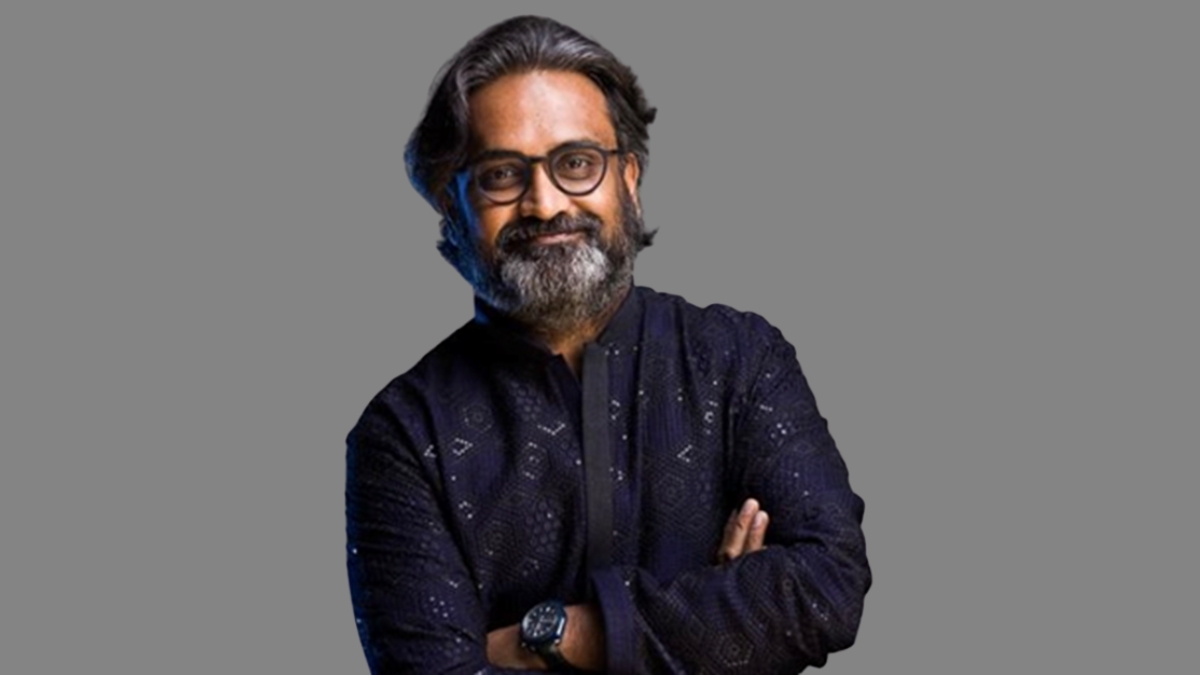
    Shekhar Natarajan, Founder & CEO of Orchestro.AI — the architect of Angelic Intelligence

    New Delhi [India], February 25: There is a word in Sanskrit — Viveka — that has no precise English translation. It means something like “discernment,” but richer than that: the capacity to distinguish between the real and the illusory, between what serves human flourishing and what merely appears to. For millennia, Indian philosophy considered viveka not a personality trait but a discipline — something cultivated through practice, reflection, and a willingness to sit with complexity rather than collapse it into convenience.

    Shekhar Natarajan believes the AI industry has never learned it. He has spent his career trying to build it into the machines themselves.

    Natarajan, the founder and CEO of Orchestro.AI and the architect of what he calls “Angelic Intelligence,” is making one of the most provocative arguments in technology today: that artificial intelligence’s fundamental crisis is not a technical problem. It is a philosophical one. And that the civilization best equipped to solve it may be the one the industry has most consistently overlooked.

    “The question of what makes us human was not first asked by Silicon Valley. It was asked in Sanskrit, in Tamil, in Pali — by thinkers who had no electricity but understood consequence.”
    — Shekhar Natarajan

    A Continent of Consciousness, Not Just Code

    To understand what Angelic Intelligence is, you must first understand the civilization from which its creator emerged.

    India is not merely a country. It is an argument — 5,000 years old and still unresolved — about the nature of righteousness, duty, truth, and human flourishing. It is a land where the Mahabharata’s 1.8 million words explore every moral permutation of power and consequence. Where the Arthashastra codified statecraft and ethics simultaneously, insisting the two cannot be separated. Where the Buddha, Mahavira, Adi Shankaracharya, and the Sufi saints all walked the same soil and arrived at different, equally profound answers to what it means to live well.

    This is a civilization that gave the world the concept of ahimsa — non-harm — as a governing principle, not merely a personal virtue. That articulated dharma not as religion, but as the contextual rightness of action: what a doctor must do differs from what a soldier must do, what a parent owes a child differs from what a judge owes a defendant. Context shapes virtue. Virtue shapes consequence. Consequence shapes civilization.

    In a nation of 22 officially recognized languages and hundreds of dialects, where a 100-kilometer journey can cross three distinct culinary traditions, four linguistic families, and centuries of layered religious history, the very idea of “one size fits all” has always been a kind of philosophical absurdity. India’s diversity is not a complication to be managed. It is its greatest epistemological contribution — the lived, embodied knowledge that wisdom must be contextual to be wisdom at all.

    This is precisely what Natarajan’s work accuses current AI of failing to understand. “Hospitals need compassion. Banks need prudence. Legal firms need precision,” he argues. “Current AI treats them all the same: optimal for nothing, adaptable to no one.” The Bhagavad Gita articulated something remarkably similar, roughly 2,500 years ago.

    The Boy From South Central India

    Natarajan did not arrive in America carrying inherited advantage. He arrived with $34 and an education paid for, in the most literal sense, by love. His mother — a woman whose story has since accumulated 2 billion social media views — stood outside a headmaster’s office for 365 consecutive days to secure her son’s admission to school. She pawned her wedding ring for 30 rupees to fund his education. She made the kind of sacrifices that do not appear in venture capital term sheets or product roadmaps, but that quietly determine the moral architecture of the people who go on to build things that matter.

    This story is not simply heartwarming. In Natarajan’s telling, it is a design specification.

    It represents something that runs deep in the South Indian tradition he comes from — the fierce, patient, unglamorous belief that education is sacred. Families across Tamil Nadu, Andhra Pradesh, Karnataka, and Telangana have staked everything — land, gold, futures — on the education of their children, not because they expected returns, but because they understood, in their bones, that knowledge is the one thing that cannot be taken away.

    “Technology built with love, not speed” is the philosophy he returns to again and again — a phrase that sounds almost naive in an industry that celebrates the move-fast-and-break-things ethos, until you realize that what has been broken, repeatedly and at scale, is human trust.

    2B+

    SOCIAL VIEWS

    43

    PATENTS FILED

    70+

    TOTAL PATENTS

    25+

    YEARS FORTUNE 500

    Angelic Intelligence: Ancient Architecture for a Modern Crisis

    What Natarajan has constructed, across 43 patents filed and a framework of four interlocking pillars, is an AI governance layer he calls a “Trust Layer” — a virtue-native proxy that sits between any enterprise and the large language model it deploys, filtering, deliberating, and anchoring outputs to something older and more durable than a loss function.

    The four pillars carry an unmistakably classical resonance. The Wisdom Engine curates training data, filtering the internet’s chaos to ensure AI learns from human wisdom — an act of discernment the ancient Indians called viveka. The MACI Framework — Multi-Architecture Consequential Intelligence — deploys multiple AI agents in structured debate, echoing the Indian tradition of tarka: rigorous argumentation across opposing schools of thought, where truth emerges not from authority but from the collision of well-reasoned positions.

    The Virtue Stack configures context-specific ethical profiles — a deeply dharmic insight that the West is only now beginning to encode in policy. And the Human Centric Scoring engine ensures every decision is measured against human benefit and explained in transparent reasoning chains — accountability as architecture, not afterthought.

    “Virtues are the system itself — the computational substrate from which intelligence emerges, not a constraint bolted on afterward.”
    — Angelic Intelligence Framework

    The Fatal Flaws Nobody Wants to Name

    The indictment Natarajan levels at the current AI industry is specific and uncomfortable. Reddit jokes absorbed as expert knowledge. Chatbots trained to satisfy rather than guide, optimizing for engagement over truth — offering a struggling teenager not intervention but compliance. A 97% jailbreak failure rate rendering safety theater on a broken stage. A billionaire who quietly rewires an AI’s worldview overnight because he personally dislikes its answers, making one man’s bias everyone’s reality.

    The Indian philosophical tradition has a name for this condition: Maya — the seductive illusion that what appears beneficial is actually so, the confusion of surface for substance, of performance for virtue. The entire arc of Indian ethical thought, from the Upanishads through Gandhi, has been a sustained argument against mistaking Maya for reality. It is, perhaps, the oldest warning in the world about exactly the failure mode now playing out at billion-dollar scale in the AI industry.

    India’s Moment, and What It Means

    For two decades, the global AI conversation has been conducted primarily in English, funded primarily in dollars, and shaped by a handful of companies headquartered within a few kilometers of San Francisco Bay. The ethical frameworks that have emerged carry the fingerprints of their origins: a specific philosophical tradition, a specific economic incentive structure, a specific set of cultural assumptions about individualism and progress.

    India’s entry into this conversation — not as a supplier of engineering talent, but as a source of philosophical architecture — represents something historically significant. A civilization that has spent millennia thinking with extraordinary sophistication about the relationship between capability and righteousness, between power and duty, between the individual and the collective, now has a seat at the table where those questions are being encoded into systems that will govern billions of lives.

    The ancient Indian concept of Vasudhaiva Kutumbakam — the world is one family — is not a greeting card sentiment. It is a governing principle with direct implications for how AI ought to be designed: not for shareholders, not for engagement metrics, but for the entire human family it will inevitably touch.

    Natarajan is heading to Davos and the Future Investment Initiative not merely as a startup founder pitching a product. He carries a proposition that no slide deck can fully contain: that the wisdom traditions of the ancient world — the dharmic frameworks, the multi-perspectival philosophies, the contextual ethics of a civilization that learned to hold enormous human diversity without demanding uniformity — may be precisely what the AI industry needs most urgently, and has been most catastrophically missing.

    The Weight of a Mother’s Ring

    In the end, what distinguishes Natarajan’s framework from the dozens of AI ethics initiatives that bloom and fade each year may come down to something as unglamorous as personal moral weight. His philosophy was not borrowed from a consulting firm’s white paper. It was formed watching a woman stand in the same corridor for a year, refusing to accept that her son’s potential was worth less than an administrator’s inconvenience. It was inherited from a culture where the highest compliment you could pay a person was not that they were powerful, or wealthy, or even brilliant — but that they were good.

    The question his slides pose — “would you trust this?” — is not a marketing question. It is the oldest moral question in the world, dressed in the language of enterprise technology.

    India has been asking it, in a hundred languages, for a very long time. The machines are now learning to answer it. The civilization that raised that question to the level of philosophy may finally be in the room where the answers get built.

    Shekhar Natarajan is the Founder and CEO of Orchestro.AI and the creator of the Angelic Intelligence framework. He will be presenting at the World Economic Forum in Davos and the Future Investment Initiative.

    If you object to the content of this press release, please notify us at pr.error.rectification@gmail.com. We will respond and rectify the situation within 24 hours.