Author: Sutun Nayak

  • India’s Real Estate Enters a Structural Growth Phase: Ashish Joshi on Institutional Depth and Governance-Led Investing

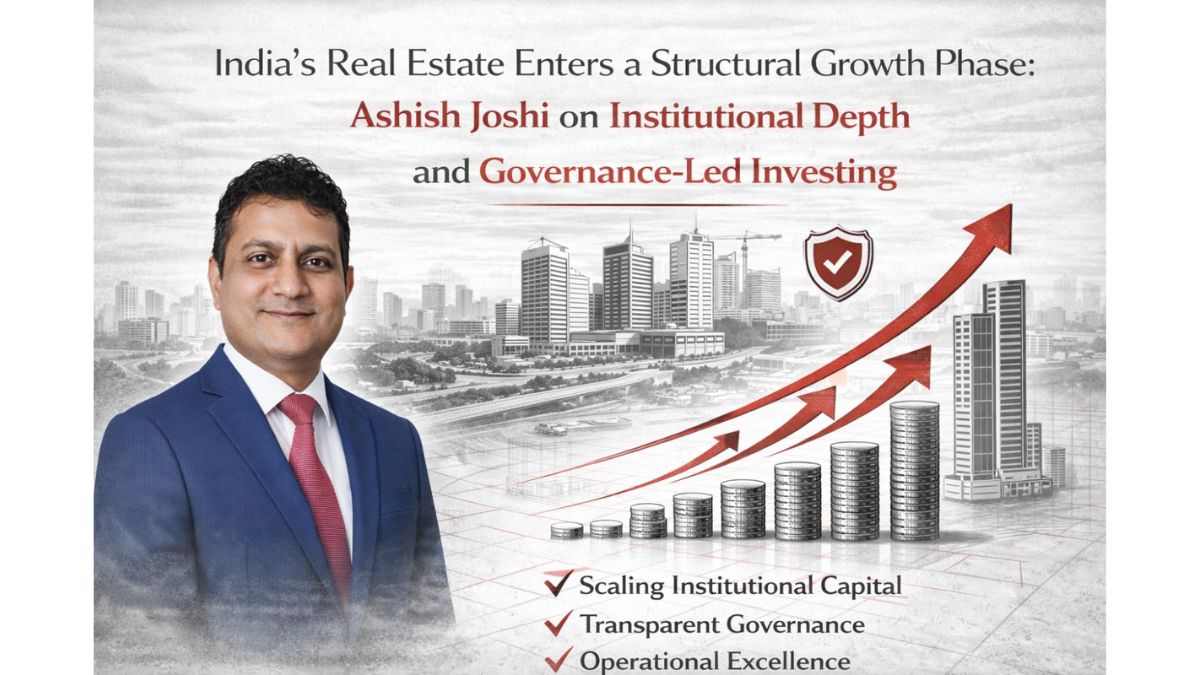
    India’s Real Estate Enters a Structural Growth Phase: Ashish Joshi on Institutional Depth and Governance-Led Investing

    Mr. Ashish Joshi, Managing Director, Landmark Capital Advisors

    Mumbai (Maharashtra) [India], February 26: India’s real estate sector is transitioning from cyclical expansion to structural consolidation. What was once largely liquidity-driven is now increasingly shaped by institutional capital, regulatory discipline, and income-oriented investing.

    According to Ashish Joshi, Founder of Landmark Capital Advisors, Indian real estate is entering a phase defined less by speculative appreciation and more by structural fundamentals.

    “This is not merely another upcycle. We are witnessing ecosystem-level strengthening — from regulatory transparency to institutional participation and capital sophistication,” says Joshi.

    A Structural Shift Backed by Data

    India remains the fastest-growing major economy, with GDP projected to expand at 6–7% annually over the medium term (IMF estimates). This macro resilience is translating into sustained real estate capital flows.

    • Institutional investments in Indian real estate crossed ~USD 5–6 billion annually in recent years (JLL, CBRE reports).
    • Over the past five years, cumulative institutional inflows have exceeded USD 25 billion.
    • Office, logistics, and residential assets account for the majority of this capital allocation.
    • REIT and AIF participation has deepened capital markets transparency.

    Unlike previous cycles, capital today is increasingly long-duration and yield-focused.

    “Allocator conversations have evolved,” Joshi notes. “The focus has shifted from aggressive IRR targeting to income durability, downside protection, and asset-level governance.”

    Institutional Capital Is Reshaping Market Behavior

    Institutional participation — both global pension funds and domestic capital pools — is redefining investment frameworks.

    Recent trends indicate:

    • Global Capability Centers (GCCs) leased over 40% of Grade-A office space in major Indian cities in the past year.
    • India’s total Grade-A office stock has expanded from ~450 million sq ft a decade ago to over 800 -900 million sq ft, with projections exceeding 1.2–1.3 billion sq ft by 2030.
    • Logistics and warehousing stock has grown rapidly, supported by e-commerce expansion and supply-chain realignment.

    Beyond volume, the nature of capital has changed:

    • Structured vehicles
    • Asset-level reporting
    • ESG and sustainability integration
    • Phased deployment strategies

    This signals a transition from momentum-driven allocation to process-driven capital deployment.

    Office Real Estate: Flight to Quality

    India continues to attract multinational corporations and GCC expansion across Bengaluru, Hyderabad, Mumbai, Pune, and NCR.

    Gross office leasing in recent years has typically been in the 50–70 million sq ft annual range, with 2025 touching over 80 million sq ft, placing India among the largest global office markets.

    However, growth is increasingly selective:

    • Prime Grade-A assets show strong occupancy resilience.
    • Secondary inventory faces pricing and vacancy pressure.
    • Sustainability-certified buildings command rental premiums of 8–12% in certain micro-markets.

    “Quality-led dispersion will define performance,” says Joshi. “Tenant strength and asset management discipline will matter more than broad market optimism.”

    Residential: From Momentum to End-User Stability

    India’s residential sector has seen strong recovery:

    • Annual housing sales across top 7 cities crossed 300,000+ units in recent peak years (Anarock, PropEquity data).
    • Inventory overhang has reduced significantly from prior-cycle highs.
    • Premium and luxury segments have outperformed, particularly in Mumbai, NCR, and Bengaluru.

    However, the structural shift suggests normalization rather than overheating.

    Demand is increasingly:

    • End-user driven
    • Supported by urban income growth
    • Anchored in demographic strength (median age ~28 years)

    Landmark Capital Advisors emphasizes underwriting discipline in this phase:

    • Developer governance
    • Execution timelines
    • Capital structuring
    • Cash flow visibility

    “Risk must be evaluated holistically, particularly in under-construction and premium segments where capital deployment spans multiple years,” Joshi explains.

    Governance as Competitive Advantage

    Regulatory evolution — including RERA implementation, REIT frameworks, and strengthened AIF compliance — has enhanced transparency.

    Institutional allocators now assess:

    • Reporting standards
    • Risk frameworks
    • Incentive alignment
    • Capital recycling discipline

    “Governance is no longer a compliance checkbox — it is a performance driver,” says Joshi.

    Platforms that embed governance into structuring philosophy are increasingly preferred by long-term capital.

    The Rise of Income-Oriented Strategies

    Historically, valuation expansion drove a meaningful share of returns in Indian real estate. With cap-rate compression moderating in prime markets, the next phase will emphasize:

    • Rental growth
    • Net operating income (NOI) expansion
    • Leasing execution
    • Structured refinancing

    India’s REIT market, now managing USD 15+ billion in assets, has demonstrated investor appetite for stabilized, income-generating assets.

    Institutional investors are increasingly favoring:

    • Stabilized commercial portfolios
    • Hybrid income-growth strategies
    • Operational value-add frameworks

    “Income visibility will anchor future performance,” Joshi notes. “Operational alpha will separate outperformers from passive participants.”

    Operational Alpha: The Next Differentiator

    As markets mature, execution becomes central to value creation:

    • Leasing expertise
    • Asset repositioning
    • Sustainability integration
    • Financial engineering
    • Structured exits

    Landmark Capital Advisors focuses on phased capital deployment and volatility management frameworks to enhance long-term credibility.

    “India’s growth story remains compelling. But the composition of returns is evolving,” says Joshi.

    Looking Ahead: Precision Over Expansion

    India’s structural growth shift reflects maturation, not slowdown.

    Urbanization, infrastructure development, demographic advantage, and supply-chain repositioning continue to support real estate demand. However, broad-based appreciation is giving way to selective, governance-led growth.

    According to Ashish Joshi, the next decade will reward:

    • Governance integrity
    • Asset-level precision
    • Income durability
    • Operational excellence

    “The future of Indian real estate belongs to disciplined capital.”

    As India advances through this structural transformation, real estate appears less driven by speculative cycles and more by institutional depth — where strategic clarity and execution excellence will ultimately determine long-term success.

    If you object to the content of this press release, please notify us at pr.error.rectification@gmail.com. We will respond and rectify the situation within 24 hours.

  • CEPT University Invites Applications for Postgraduate Programs in the Faculty of Architecture

    CEPT University Invites Applications for Postgraduate Programs in the Faculty of Architecture

    • Studio-based learning across conservation, housing, interiors and landscape
    • Choice-based curriculum and global exposure opportunities
    • Scholarships available for meritorious students

    New Delhi [India], February 26: As climate volatility intensifies, technologies evolve, and cities grow, architecture is being asked to operate with greater responsibility and precision than ever before. Responding to this challenge, the Faculty of Architecture at CEPT University invites graduates seeking intellectual depth, technical rigour and meaningful engagement with the realities of practice.

    At CEPT, postgraduate education is not an extension of the undergraduate program. It is a space for deliberate specialisation. Studios function as laboratories, a space for creative exploration of real-world challenges. Small cohorts work with expert tutors to develop arguments, test prototypes, and refine positions through sustained critique. The coursework, spread across the semester and summer and winter schools, opens up a wide range of explorations in the field of the built environment at large. Students have access to extensive resources in the form of the workshop, software, library, archives, material labs and an extensive network of national and international professionals.

    Emphasising the intent behind the programs, Sameep Padora, Dean, Faculty of Architecture, CEPT University, said, “Postgraduate education in architecture today must go beyond skill acquisition — it must cultivate clarity of thought, technical rigour and the courage to take positions. At CEPT, our studios are structured as spaces of deep inquiry where students confront real constraints, test ideas against material and context, and develop an independent architectural voice. We are committed to nurturing professionals who can critically engage with the complexities of climate, culture and construction, technology, and lead meaningful change in the built environment.”

    The Faculty offers six programs, each anchored in a critical domain that shapes the built environment-

    Programs Offered

     Master’s in Landscape Architecture (MLA): Responding to climate change and ecological transformation, the M.Arch program in Landscape Architecture prepares professionals to work at the intersection of landscape, ecology, and society. Moving beyond garden-making, the curriculum addresses India’s growing environmental, social, and urban challenges, training students to see landscape as a dynamic system and design

    across scales—from regional watersheds to urban public spaces. Graduates join a global alumni network of 500+ professionals to work in practice, academia, and research.

     Master’s in Interior Design (MID): Recognised as one of the most comprehensive and forward-looking postgraduate programs in interior design, the curriculum blends interdisciplinary learning, hands-on practice and exposure to emerging industry advancements. Students gain global perspectives through international exchanges, strong industry engagement and a robust placement ecosystem, leading to careers in top design firms, multidisciplinary consultancies, academics and design-led organisations in India and worldwide.

     M.Arch in Housing Design engages directly with one of India’s most urgent spatial questions- how to build housing that is socially responsive, economically viable, and environmentally responsible.

    The fully choice-based curriculum allows students to design their own academic pathway through diverse studios- ranging from speculative futures to deep engagement with real-world housing challenges. Strong collaboration with peers, national practitioners and international workshops ensures broad professional exposure.

     Master’s in Conservation and Regeneration (MCR): Foregrounding its responsibility to the emerging realities of climate urgency, MCR treats conservation as primarily an ecological act of radical design, allowing for creative and responsible reinterpretations of historical structures that can integrate developmental pressures around. Designed for students interested in the intersection of history, technology, architectural and urban design, this program prepares professionals to address the expanding field of conservation practice. The curriculum is closely aligned with emerging industry and government investments in the contemporisation of historic environments.

     Master’s in Architectural Tectonics: When does a detail transcend construction and become architecture? How precisely must a building be detailed for construction itself to carry meaning? The Master of Architectural Tectonics (MAT) is positioned at the intersection of architecture and technology, where such questions are examined through drawing, computation, prototyping, and full-scale engagement with material and structure. The program is grounded in the conditions and challenges of its time. It recognises that architectural expression emerges through mastery of detailing and construction, where material intelligence and structural clarity give form to ideas.

     Master’s in Architectural History and Research (MAHR): MAHR cultivates the ability to think historically and critically about the built environment, from buildings to larger built-scapes and landscapes. In a time of shifting climate patterns and rapid technological and cultural change, building demands informed judgment — grounded in an understanding of what has succeeded, failed, endured, and evolved. Through research, drawing, archives, and writing, students develop historical instinct and

    analytical depth, preparing them for research, conservation, publishing, curation, education, policy, and informed architectural practice.

    Admissions Open!

    Applications for the 2026 cycle are now open. Detailed information on eligibility criteria, important dates, and scholarships is available at www.cept.ac.in

    For those seeking more than just another credential, for those seeking depth, position, and the ability to engage meaningfully with the built environment, we invite you to apply.

    About CEPT University

    CEPT University is a recognized leader in education and research in the areas of architecture, planning, design, technology and urban management. Its teaching programs aim to build thoughtful professionals, and its research programs deepen understanding in its areas of expertise. CEPT University also undertakes advisory projects to support the national, state and city governments and large sections of private industry. Through its education, research and advisory activities, the University strives to contribute to enriching the lives of people in India’s villages, towns and cities.

    The University comprises five faculties: viz. the Faculty of Architecture, the Faculty of Planning, the Faculty of Technology, the Faculty of Design, and the Faculty of Management. In December 2023, CEPT University was recognized by the Government of India as a Centre of Excellence in Urban Planning and Design. This comes with an endowment of Rs. 250 Crore to be used towards the research and training on India-specific knowledge in Urban Planning and Design over the next 25 years.

    CEPT University was established by the CEPT University Act of 2005 enacted by the government of Gujarat. It was originally started in 1962 as the School of Architecture supported by the Ahmedabad Education Society. The Department of Scientific and Industrial Research (DSIR) of the Government of India recognizes the University as a Scientific and Industrial Research Organization (SIRO). CEPT University is recognized as a Centre of Excellence by the Government of Gujarat. CEPT University has over 30 ongoing collaborations and exchange programs with top-ranked universities across the world.

    If you object to the content of this press release, please notify us at pr.error.rectification@gmail.com. We will respond and rectify the situation within 24 hours.
  • Influencer Act Wins Multiple Honors at BW Next Gen Digi Content Awards 2025; Surpasses 1 Billion Campaign Reach in 2024–25

    Influencer Act Wins Multiple Honors at BW Next Gen Digi Content Awards 2025; Surpasses 1 Billion Campaign Reach in 2024–25

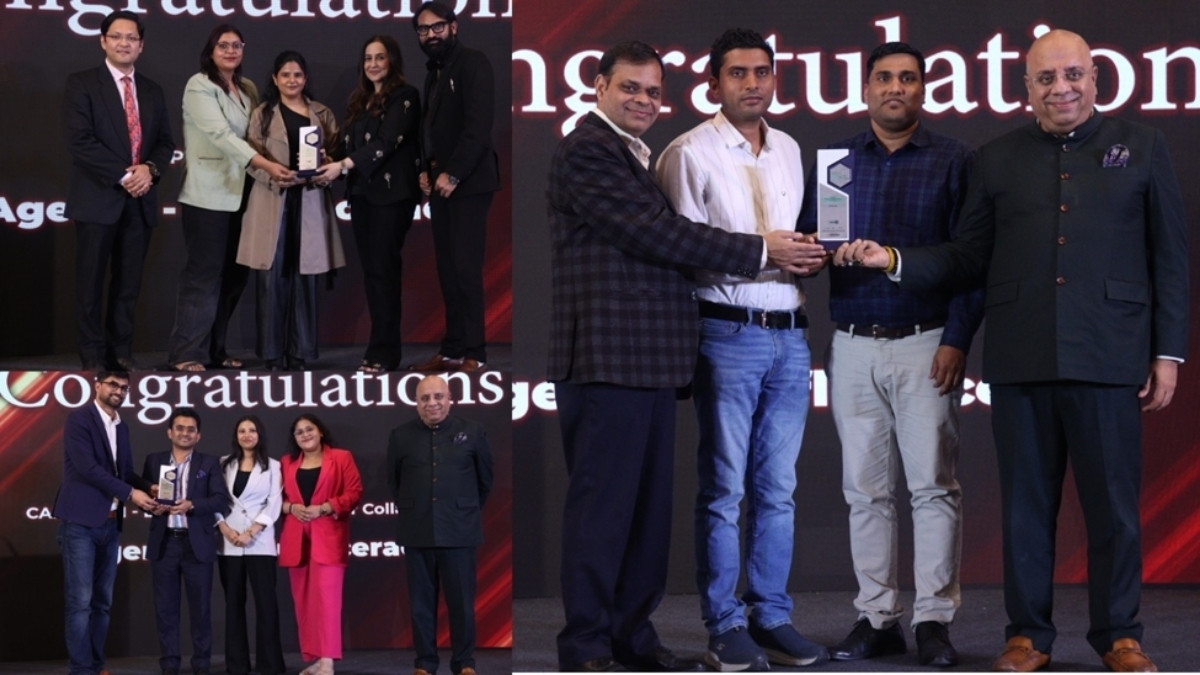
    New Delhi [India], February 27: Influencer Act, a Noida-based influencer marketing and digital strategy agency, has secured multiple awards at the BW Next Gen Digi Content Awards 2025, held at Eros Hotel, Nehru Place, New Delhi.

    The agency was recognized across three key categories — Best Regional Influencer Collaboration – Silver category, Excellence in Finance Content Marketing– Gold category, and Influencer Marketing Agency of the Year– Silver category — highlighting its performance-driven approach to influencer-led digital campaigns.

    The BW Next Gen Digi Content Awards recognize innovation, effectiveness, and measurable impact in digital marketing and content strategy. The event was attended by brand leaders, marketing professionals, and digital agencies from across India.

    Award-Winning Campaign Excellence

    Influencer Act received the Best Regional Influencer Collaboration award for executing region-specific campaigns that leveraged vernacular creators and culturally aligned storytelling to drive authentic engagement across diverse Indian markets.

    In the finance category, the agency was honored for simplifying complex financial concepts into accessible, relatable digital content. The recognition reflects its growing presence in BFSI-focused influencer campaigns, with an emphasis on trust-building and compliance-sensitive communication.

    The agency was also named Influencer Marketing Agency of the Year, acknowledging its structured campaign execution, creator partnerships, and measurable business outcomes.

    Performance Metrics Driving Recognition

    During 2024–25, Influencer Act executed over 150+ influencer marketing campaigns, generating a cumulative campaign reach exceeding 1 billion impressions across platforms.

    According to the company, its campaigns delivered an average engagement rate approximately 8% higher than industry benchmarks (2.5%), reflecting strong audience alignment and content relevance. The agency also reported an average ROI uplift of 4.5%, supported by cost-efficient influencer selection and data-backed media optimization strategies.

    The company attributes these outcomes to its audience-first campaign philosophy. Before campaign development, the agency evaluates the real-world usefulness and relevance of a product for its target consumers. This approach is designed to ensure that campaigns remain relatable to audiences while delivering measurable ROI and sustainable engagement for brands.

    A spokesperson for Influencer Act said, “We focus on aligning product value with authentic storytelling. When campaigns are built around genuine audience utility, performance metrics naturally follow. Our goal is to combine creativity with accountability.”

     Consistency Beyond Award Categories

    The agency stated that its work extends beyond the award-winning categories and spans multiple sectors, delivering consistent creative and strategic execution across campaigns. Influencer Act follows a structured model that includes audience research, influencer identification, regional strategy development, content creation, execution, and performance tracking.

    With these recognitions, the company said it plans to further strengthen its focus on regional influencer marketing, finance content campaigns, and performance-led digital strategies.

    About Influencer Act

    Influencer Act is a Noida-based influencer marketing and digital strategy agency specializing in influencer-led campaigns, regional content marketing, and performance-driven brand collaborations. The agency works with brands across BFSI, lifestyle, and emerging digital sectors, delivering ROI-focused campaigns through data-backed planning and creator partnerships.

    Contact

    Influencer Act

    Sector 63, Noida, Uttar Pradesh

    Visit: www.influenceract.com

    If you object to the content of this press release, please notify us at pr.error.rectification@gmail.com. We will respond and rectify the situation within 24 hours.
  • Technico Industries appoints Amit Pandey as CEO

    Technico Industries appoints Amit Pandey as CEO

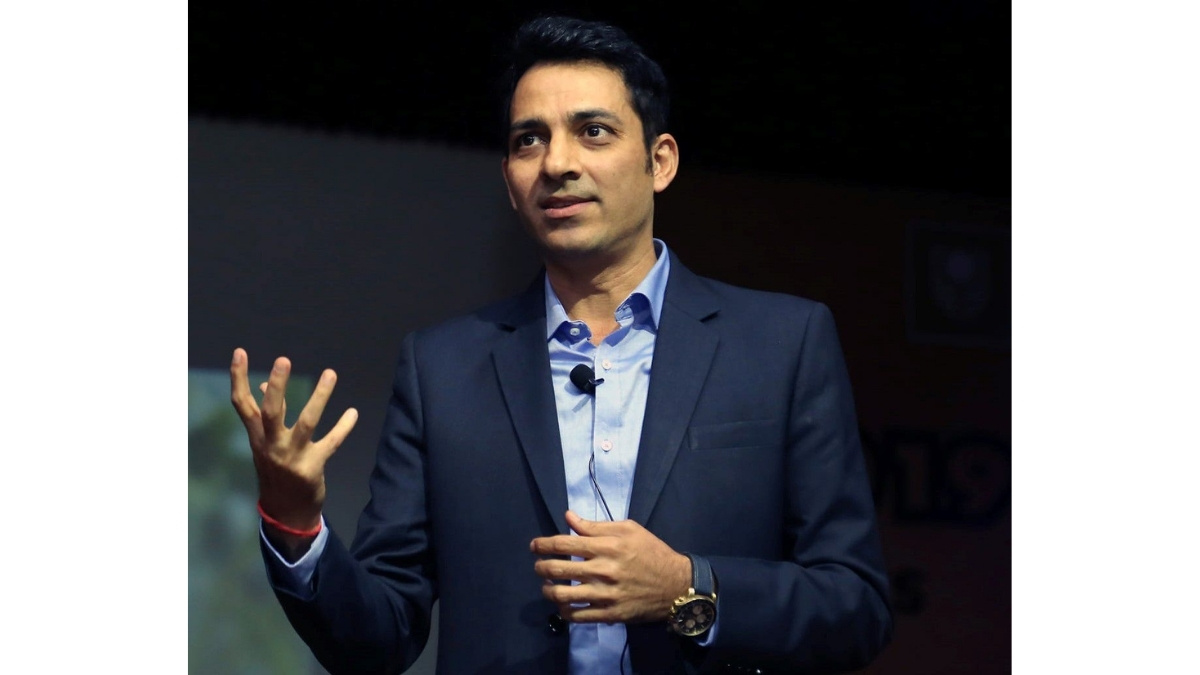
    Gurugram (Haryana) [India], February 27: Technico Industries Ltd., a Gurugram-headquartered automotive components manufacturer and Tier-1 OEM supplier, has appointed Amit Pandey as its Chief Executive Officer, marking a strategic leadership transition as the company enters its next phase of growth.

    The appointment comes at a pivotal time for India’s automotive component industry, which is undergoing rapid transformation driven by electrification, supply-chain localisation, global sourcing realignments, and rising quality expectations from original equipment manufacturers (OEMs).

    With more than five decades of engineering expertise, Technico Industries manufactures precision sheet-metal components, chassis assemblies, body structures, fine-blanking parts, and engineered sub-assemblies. Its advanced stamping operations and in-house tooling capabilities support long-standing partnerships with leading automotive OEMs.

    Pandey brings extensive cross-sector leadership experience spanning manufacturing, operations, supply-chain strategy, and enterprise transformation. Prior to this role, he served as CEO of Orient Cables, where he led operational streamlining and strengthened market positioning. His earlier leadership roles include tenures at Exicom Tele Systems Ltd, PINCAP, and Tikona Infinet, where he drove organizational growth with profitability and enhanced operational efficiency.

    Commenting on his appointment, Pandey said that Technico Industries has “a strong legacy anchored in engineering excellence and customer trust,” adding that the focus ahead will be on strengthening operational rigor while unlocking new growth opportunities aligned with the future of automotive manufacturing.

    Arun Gupta, Chairman & MD of Technico Industries Ltd., welcomed Amit Pandey to the organization. He highlighted that the company is at a defining stage of its growth journey and expressed confidence that Amit Pandey’s leadership will further strengthen Technico’s strategic direction, operational excellence, and long-term value creation for customers and stakeholders alike.

    Also welcoming the appointment, Amit Gupta, Managing Director of Technico Industries Ltd., expressed confidence that Amit Pandey’s rich experience and deep industry expertise will play a pivotal role in accelerating the company’s growth, enhancing manufacturing efficiencies, and exploring new business opportunities, thereby contributing significantly to Technico’s future journey.

    Industry observers view the leadership transition as timely, positioning Technico Industries to scale responsibly and compete assertively as India deepens its integration into global automotive supply networks.

    If you object to the content of this press release, please notify us at pr.error.rectification@gmail.com. We will respond and rectify the situation within 24 hours.

  • Inside India’s School Innovation Movement: How RoboSpecies Technologies Is Turning Classrooms into Real-World Problem-Solving Labs

    New Delhi [India], February 26: On a weekday morning in a typical Indian school, something new is happening. Instead of copying notes from a blackboard, a group of students is wiring a sensor. Another team is debugging code. A younger batch is navigating a small programmable robot across a mat, learning sequencing without staring at a screen. This is not a future concept. It is part of a growing shift inside Indian schools toward innovation labs that focus on practical, hands-on learning. As conversations around employability, artificial intelligence, and digital readiness intensify, schools are beginning to rethink a basic question: Are students being prepared to think, or just to remember? At the centre of this shift is a new generation of structured lab ecosystems, including those implemented by RoboSpecies Technologies Pvt. Ltd., which works with schools to embed robotics, AI, coding, and systems-based learning into everyday academic schedules.

    From Syllabus Completion to Skill Development

    For decades, Indian classrooms have been defined by syllabus coverage and exam performance. Academic rigour remains important, but industry leaders and policymakers increasingly acknowledge a gap between knowledge and application. Reports from global economic forums regularly highlight that future jobs will demand analytical thinking, systems understanding, creativity, and digital competence. These are not skills developed by memorisation alone. They emerge from applied practice. Innovation labs are designed to bridge this gap. Instead of treating science and technology as purely theoretical subjects, labs create environments where students experiment and iterate. When a circuit fails or a programmed instruction misfires, students must identify the cause. That process, more than the final working model, becomes the lesson.

    What Happens Inside an Innovation Lab

    A functional school innovation lab typically includes robotics kits, electronics components, coding interfaces, and guided curriculum frameworks. But the hardware is only one part of the structure. The real emphasis lies in structured progression. Students start with foundational ideas such as motion, balance, sensing, and sequencing. Over time, they move into automation concepts, logic building, and basic artificial intelligence principles. They learn how individual components interact within a system.

    RoboSpecies Technologies has built its approach around this progression model. Its proprietary RobotriX Kits allow students to physically construct mechanical and automation-based models while exploring real-world principles like movement control and response mechanisms. The kits are designed to move from basic mechanical builds to more complex system-based interactions, ensuring students develop layered understanding rather than isolated exposure.

    Coding as Logical Thinking, Not Just Syntax

    In many schools, coding is introduced as a technical subject. However, structured lab ecosystems increasingly treat coding as applied logic. Through TinkerBrix, the AI and coding platform developed by RoboSpecies, students begin with visual sequencing and gradually transition into deeper programming concepts and electronics simulations.

    Younger learners understand how instructions lead to actions. Older students see how conditional logic, loops, and system responses shape outcomes. Importantly, coding is connected to physical application. When logic drives a moving model or automated system, the connection becomes tangible. This integration strengthens comprehension and reduces the abstraction often associated with programming.

    Starting Early: Innovation Beyond Screens

    Innovation exposure in many systems begins late, often in secondary or higher secondary grades. RoboSpecies has extended its model to foundational levels through Tinker Bot, a screen-free programmable learning robot designed for Anganwadi and primary classrooms. The emphasis here is cognitive development rather than device dependency. Students learn sequencing, spatial awareness, and cause-effect relationships through physical interaction. The absence of screens ensures that early learning focuses on reasoning rather than digital consumption. This early introduction aligns with research suggesting that curiosity and exploratory behaviour are strongest during foundational years. Structured exposure during this stage shapes long-term attitudes toward STEM learning.

    Beyond Metro Cities: A Wider Shift

    While innovation labs were once associated primarily with elite urban institutions, structured models are increasingly appearing in Tier 2 and emerging cities. Schools outside major metros are actively exploring partnerships to modernise infrastructure and align with competency-based education goals. RoboSpecies Technologies positions its work within this broader national shift. Rather than offering occasional workshops, the company integrates innovation labs into school timetables, accompanied by facilitator training and curriculum alignment. The aim is sustainability rather than short-term activity. Teachers receive support to guide projects confidently. Students engage in year-on-year learning progression rather than isolated interventions. This continuity is critical. Skill development, especially in systems thinking and automation, requires repetition and gradual complexity.

    The Systems Thinking Connection

    One of the most significant outcomes observed in structured innovation labs is the development of systems thinking. Modern industries do not operate in isolation. Supply chains, digital platforms, healthcare technologies, and financial systems all involve interconnected components. In lab environments, students learn to consider multiple variables simultaneously. A programming error can affect mechanical output. A structural flaw can impact stability. Students are encouraged to trace issues methodically rather than guess randomly. Such exposure builds analytical discipline. It also mirrors professional workflows where troubleshooting and iterative improvement are daily realities.

    Confidence as a Measurable Outcome

    Educators working with innovation lab ecosystems frequently point to one consistent outcome: increased student confidence. When children regularly build, test, and present projects, they become more comfortable articulating ideas.

    Failure is reframed as iteration. Rather than fearing mistakes, students treat them as feedback. This mindset often carries beyond STEM subjects. Participation in regular classrooms improves. Communication strengthens. While exam scores remain part of academic life, confidence and adaptability increasingly influence long-term success.

    A Movement Still Taking Shape

    India’s school innovation movement is not uniform. Infrastructure disparities remain. According to national school data, access to integrated science labs and digital tools is still uneven across regions. Yet the direction of change is clear. Schools are gradually acknowledging that real-world readiness begins with applied exposure. Structured lab ecosystems like those implemented by RoboSpecies Technologies illustrate how this can be done systematically, rather than experimentally. The future of education may not lie in replacing textbooks, but in complementing them with environments that encourage building, analysis, and iteration.

    Looking Ahead

    As artificial intelligence and automation continue reshaping industries, education must respond thoughtfully. Preparing students solely for predictable pathways is no longer sufficient. Preparing them to analyse, adapt, and improve systems is more realistic. Innovation labs represent a shift from passive instruction to active engagement. Students do not simply learn about technology. They understand how it functions and how it can be shaped. India’s education system is in transition. Inside a growing number of schools, classrooms are slowly transforming into structured problem-solving labs. The change may not always be loud, but it is measurable. And it may prove foundational in preparing a generation that is not only digitally aware, but technologically confident.

  • WAE Earns EcoVadis “Committed” Badge, Launching a Structured Journey Towards Platinum Sustainability Certification

    WAE Earns EcoVadis “Committed” Badge, Launching a Structured Journey Towards Platinum Sustainability Certification

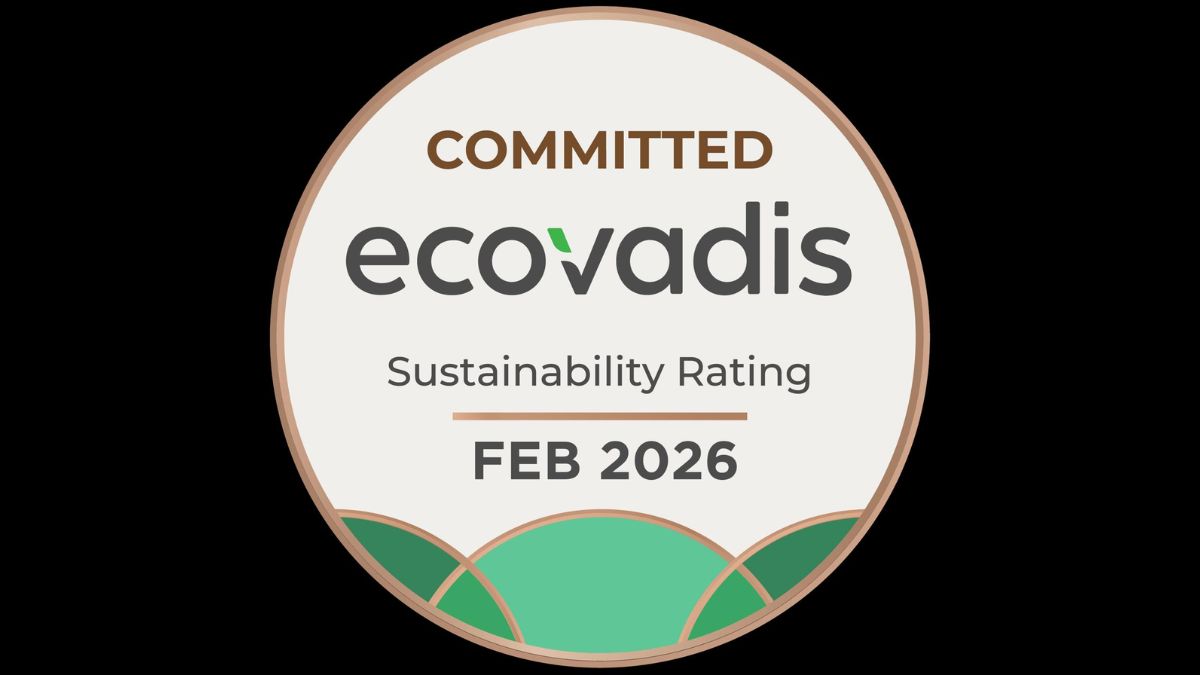
    New Delhi [India], February 26: WAE, India’s leading sustainable hydration solutions provider for institutional and commercial environments, today announced that it has been awarded the EcoVadis “Committed” Badge, a globally recognized sustainability acknowledgment by EcoVadis. The recognition marks the formal institutionalisation of WAE’s Environmental, Social and Governance (ESG) framework and the beginning of a structured, multi-year journey towards EcoVadis Platinum certification.

    EcoVadis is the world’s most widely used provider of corporate sustainability ratings, assessing companies across four critical dimensions: Environment, Labor & Human Rights, Ethics, and Sustainable Procurement. It’s methodology is grounded in international sustainability frameworks including the Global Reporting Initiative (GRI), the United Nations Global Compact (UNGC), and ISO 26000. It is trusted by more than 100,000 organizations globally to evaluate ESG performance and supply-chain integrity.

    The Committed Badge signifies that WAE has successfully completed the comprehensive sustainability assessment by EcoVadis and has demonstrated the presence of formalized policies, governance mechanisms, and performance indicators aligned with global ESG expectations. The Company views this recognition not as an endpoint, but as a baseline for disciplined improvement.

    “We do not view the Committed badge as an accolade; we view it as an audit of intent,” said A Vikram Joshe, Founder and MD, WAE Ltd. “It marks the point at which sustainability stops being narrative and becomes architecture—measured, governed, and accountable. Our objective is not incremental compliance but systemic excellence, with Platinum as a long-term outcome of disciplined execution.”

    WAE is now translating the EcoVadis assessment into a structured transformation roadmap, including the integration of ESG metrics into leadership scorecards, strengthened supplier sustainability due-diligence, and targeted initiatives across environmental performance, workforce practices, and governance.

    EcoVadis is not a certification to be chased; it is a standard to be built into the enterprise over time,” Vikram added. “Our ambition is not to score well—but to operate well, consistently, verifiably, and at scale.”

    About WAE

    WAE is a leading Indian organisation delivering sustainable drinking water and integrated water management solutions across corporate, institutional, and industrial sectors. With a strong emphasis on engineering design, regulatory compliance, and circular water systems, the company operates at the intersection of technology, public health, and environmental stewardship. WAE is widely recognised for advancing responsible water infrastructure within India’s built environment and continues to contribute to the evolution of compliance-driven, resource-efficient water solutions.

    If you object to the content of this press release, please notify us at pr.error.rectification@gmail.com. We will respond and rectify the situation within 24 hours.

  • MIT University Sikkim Invites Applications for UG and PG Programs 2026, UGC-Recognized Degrees with Global Standards

    Namchi (Sikkim) [India], February 26: MIT University Sikkim, a premier institute of higher education, is excited to announce the commencement of admissions for the 2026 batch at its picturesque Namchi campus in South Sikkim. Nestled amidst the serene beauty of the Himalayan foothills, the Namchi campus provides an ideal environment for learning and personal growth. The state-of-the-art infrastructure, experienced faculty, and industry-oriented curriculum make MIT University Sikkim the perfect choice for aspiring students seeking a world-class education.

    MIT University, located in Namchi, Sikkim, is a rapidly growing name in the field of higher education. This UGC-recognized private university is committed to providing quality education to students.

    MIT University Sikkim Degrees Equivalent to Other Universities in India

    • MIT University Sikkim is recognized under Section 2(f) of the UGC Act

    • Its courses are approved by UGC and AICTE

    • Degrees from MIT are valid for any government or private job

    • The university’s teaching is based on global standards

    Therefore, a degree from MIT University Sikkim is on par with other prestigious institutions. Students can confidently take admission here.

    What’s New at MIT University Sikkim?

    • Introduction of new cutting-edge programs in AI, Data Science, and Cybersecurity

    • State-of-the-art infrastructure and labs for hands-on learning

    • Tie-ups with leading industries for internships and placements

    • Focus on holistic development through extra-curricular activities and soft skills training

    MIT University is constantly evolving to meet the changing demands of the job market and provide the best educational experience to its students.

    Courses Offered:

    • BA

    • BBA

    • BCA

    • MBA

    • MA

    • B.Tech

    • Diploma in Digital Marketing

    • Diploma in Artificial Intelligence

    • Diploma in GPT (Generative Pre-trained Transformer) Technology

    Eligibility Criteria:

    • For UG courses: 10+2 or equivalent from a recognized board, with minimum 50% aggregate marks (45% for SC/ST/OBC)

    • For PG courses: Bachelor’s degree from a recognized university, with minimum 50% aggregate marks (45% for SC/ST/OBC)

    How to Apply:

    Interested candidates can apply online by visiting the official website of MIT University Sikkim: https://mituniversitysikkim.com/

    Fill in the application form with your personal, academic, and contact details. Upload the required documents and pay the application fee online.

    After receiving the application, the university will conduct its own entrance examination for admission and then select students.

    Key Highlights:

    • UGC approved courses

    • Internationally benchmarked curriculum

    • Expert faculty from industry and academia

    • Excellent placement record

    • Scholarships available for meritorious students

    Now is the perfect time to enroll at MIT University Sikkim and give your career a head start. Book your free 30-minute counseling session today!

  • The Jaipur Kurti Revolution: How Nandani Creation is Scaling Heritage into a 100-Crore Powerhouse

    The Jaipur Kurti Revolution: How Nandani Creation is Scaling Heritage into a 100-Crore Powerhouse

    Jaipur (Rajasthan) [India], February 26: Nandani Creation Ltd(NSE: JAIPURKURT | INE696V01013)

    In the sun-drenched courtyards of Rajasthan, where the rhythmic sound of wooden blocks hitting fabric has echoed for centuries, a new kind of legacy is being written. Amidst the vibrant chaos of Jaipur’s Johari Bazaar and the timeless elegance of the Pink City, the scent of fresh dyes and the glimmer of Gota Patti have always told a story of royalty. However, the true revolution began when this local fervourwas reimagined for the modern woman. Today, Nandani Creation Ltd (NSE: JAIPURKURT)—the powerhouse behind the iconic Jaipur Kurti brand—is proving that the soul of Rajasthan isn’t just a heritage to be preserved, but a global fashion statement to be worn every day.

    The journey from a local Jaipur label to a National Stock Exchange-listed entity is a masterclass in scaling domestic artistry through modern data and discipline. Founded by Mr Anuj Mundhra and Mrs Vandana Mundhra, the company initially carved a niche as a digital-first pioneer. While many traditional labels were hesitant to embrace the internet, the creators of Jaipur Kurti leaned into the shift, achieving a staggering 52% CAGR during its early digital phase. This first-mover advantage allowed them to master the art of online storytelling before the market became saturated, transforming them from a simple online supplier into a beloved national household name.

    The year 2025 marked a historic turning point for the company as it officially crossed the 100-crore sales milestone in a single calendar year. This achievement is not merely a financial win; it is a validation of their “Concept to Creation” philosophy. Unlike traditional fashion houses that follow rigid seasonal calendars, Nandani operates a high-velocity design engine that launches new styles every two to three weeks. With over 5,000 unique SKUs and an average of 700 new designs annually, the brand ensures it stays ahead of the trend curve, offering “fresh fashion” at an accessible average selling price of ₹900 appx..

    Beyond the numbers, the brand’s strength lies in its strategic multi-brand portfolio. From the everyday elegance of the flagship Jaipur Kurti and the handcrafted premium feel of Jaipur Kurti Luxe to the high-end wedding sophistication of “Amaiva-By Jaipur Kurti”, the company caters to every facet of a woman’s life. This versatility is why the brand resonates with everyone from corporate leaders to college students—a connection further solidified by their earlier partnership with Bollywood icon Madhuri Dixit, who served as the Brand Ambassador, embodying the same grace, longevity, and “Dhak-Dhak” spirit that the brand stands for.

    The most compelling chapter of this story is Nandani’s transition to an “Asset-Light” model. By shifting from in-house manufacturing to demand-based outsourcing, the company has optimized its working capital and improved margins. This operational agility is fuelling an aggressive omnichannel expansion. With over 180+ shop-in-shop counters/LFRS presence in Shoppers Stop, Reliance Trends, Centro, Avantara & Kalanikethan etc. and a growing fleet of Exclusive Brand Outlets in major hubs like Rajasthan, Delhi, Mumbai, Gurgaon, Gujarat, Uttar Pradesh, Bangalore etc., the brand is successfully bringing the authentic fervour of Jaipur to every corner of India.

    As Nandani Creation continues to target a projected 30% CAGR, it stands as a rare example of a business that balances artistic legacy with fiscal precision. The story of Jaipur Kurti is far from over; it is a narrative of how a traditional craft can be re-engineered for a digital age, proving that when you wear a piece of this legacy, you are wearing the future of Indian fashion.

    If you object to the content of this press release, please notify us at pr.error.rectification@gmail.com. We will respond and rectify the situation within 24 hours.
  • Sonani Jewels unveils ‘9 to Fine Collection’ Lab Grown Diamond Jewellery for Everyday Life

    Sonani Jewels unveils ‘9 to Fine Collection’ Lab Grown Diamond Jewellery for Everyday Life

    Surat (Gujarat) [India], February 26: Sonani Jewels has unveiled “9 to Fine”, an everyday fine jewellery collection created to elevate daily style with refined elegance. Designed for women who appreciate subtle sophistication, the collection transforms everyday dressing into a styled statement — proving that fine jewellery isn’t reserved for occasions alone, but belongs in your daily wardrobe.

    Crafted in 9KT gold and set with lab-grown diamonds, the 9 to Fine collection features a versatile range across rings, earrings, necklaces, pendants, bracelets and stackable styles. The strength and lightness of 9KT gold ensure comfort and durability for daily wear, while lab-grown diamonds bring brilliance with a conscious approach to modern luxury. The name “9 to Fine” reflects jewellery designed to move seamlessly from work hours to evenings out, refined, wearable and relevant.

    Designed with gifting at its heart, the collection celebrates moments both big and small, whether it is self-appreciation, a birthday surprise, an anniversary token or a festive gift.

    Speaking about the collection, Agastya Sonani, Founder, Sonani Jewels, said, “Jewellery shouldn’t just complement an outfit — it should define it. The right piece has the power to set the tone, elevate your presence and express your individuality, whether you’re at work, at a celebration, or simply moving through your day. With 9 to Fine, we’ve created fine jewellery that carries that same strength and confidence into everyday wear — pieces that are effortless, versatile and designed to be lived in.”

    He added, “Gifting today has evolved beyond grand gestures to something deeply personal, such as honouring yourself, marking milestones, or giving something special simply because. These pieces are designed to be worn often, styled effortlessly, and cherished for the stories and emotions they represent.”

    The collection features delicately crafted designs highlighted with white, pink, yellow and blue lab-grown diamonds, adding character to your everyday fine jewellery. The brand also offers customisation options, enabling customers to select diamond colours and design elements that reflect their personal tastes.

    As with every piece of jewellery offered by Sonani Jewels is entirely manufactured in-house, reflecting the brand’s commitment to precision, quality and unmatched craftsmanship.

    With 9 to Fine, Sonani Jewels reinforces its belief that diamond jewellery belongs in your everyday life. Because true luxury is not about saving it for some special occasion. It is about wearing it today, feeling it today and flaunting it fearlessly. The collection is now available at Sonani Jewels stores and through the brand’s official channels.

    If you object to the content of this press release, please notify us at pr.error.rectification@gmail.com. We will respond and rectify the situation within 24 hours.

  • KRAFTON Introduces New Corporate Vision Centered on ‘Bold Imagination’ and Global Franchise Growth

    KRAFTON Introduces New Corporate Vision Centered on ‘Bold Imagination’ and Global Franchise Growth

    Updated vision, core values, and brand identity reinforce focus on game IP expansion and long-term innovation

    Bengaluru (Karnataka) [India], February 26: KRAFTON, Inc. today unveiled a new corporate vision and set of core values designed to guide the company’s long-term strategy and global growth. The announcement was made during the company’s town hall event, KRAFTON LIVE TALK (KLT).

    Under the theme “Organizational Alignment Toward One Direction at a Point of Change,” CEO CH Kim introduced KRAFTON’s new vision:

    “We pioneer the path to players’ dreams. With bold imagination and breakthrough technology, we create unforgettable worlds for fans across the globe.”

    The new vision reinforces KRAFTON’s commitment to its core gaming business while positioning the company for sustainable growth built on its strengths in game development, publishing, and technology.

    ‘Pioneer the Undiscovered’ Defines Strategic Direction

    KRAFTON introduced a new corporate slogan, “Pioneer the Undiscovered,” reflecting its ambition to strengthen major franchise IP while continuing to explore new genres and creative formats.

    As part of its mid-to-long-term strategy, KRAFTON will pursue a “Learn-Fast, Scale-Up” model to identify and validate new franchise IP through targeted early releases before expanding successful titles globally.

    The company will continue investing in technology, including AI tools that support development workflows and enhance gameplay experiences, while maintaining its primary focus on building compelling games for players.

    Five Core Values to Guide Execution

    To operationalize its vision, KRAFTON established five core values that will serve as guiding principles across studios and publishing teams:

    • Aim for Bold Objectives
    • Depth Builds the Edge
    • Imagination + Technology
    • Fan-First Thinking
    • Embrace Global Perspectives

    These values are intended to align teams around shared standards for decision-making, creativity, and long-term growth.

    New Corporate Identity Reflects Global Publisher Role

    KRAFTON also revealed a refreshed corporate identity titled “Perspective Shift,” symbolizing the importance of challenging conventional viewpoints to unlock new creative possibilities.

    The updated visual identity introduces a bold red brand color designed to strengthen global recognition and reflect KRAFTON’s evolution as a global publisher representing diverse studios and franchise IP.

    “KRAFTON is a company that pioneers the path to players’ dreams,” said CEO CH Kim. “The company’s new vision and core values will serve as the starting point for change – delivering unforgettable experiences to fans worldwide in KRAFTON’s unique way and expanding the possibilities of the gaming industry through bold imagination.”

    KRAFTON plans to support the rollout of the new vision and values through company-wide training and internal programs designed to ensure consistent alignment across its global organization.

    More information about KRAFTON can be found at https://krafton.com/en.

    About KRAFTON, Inc.

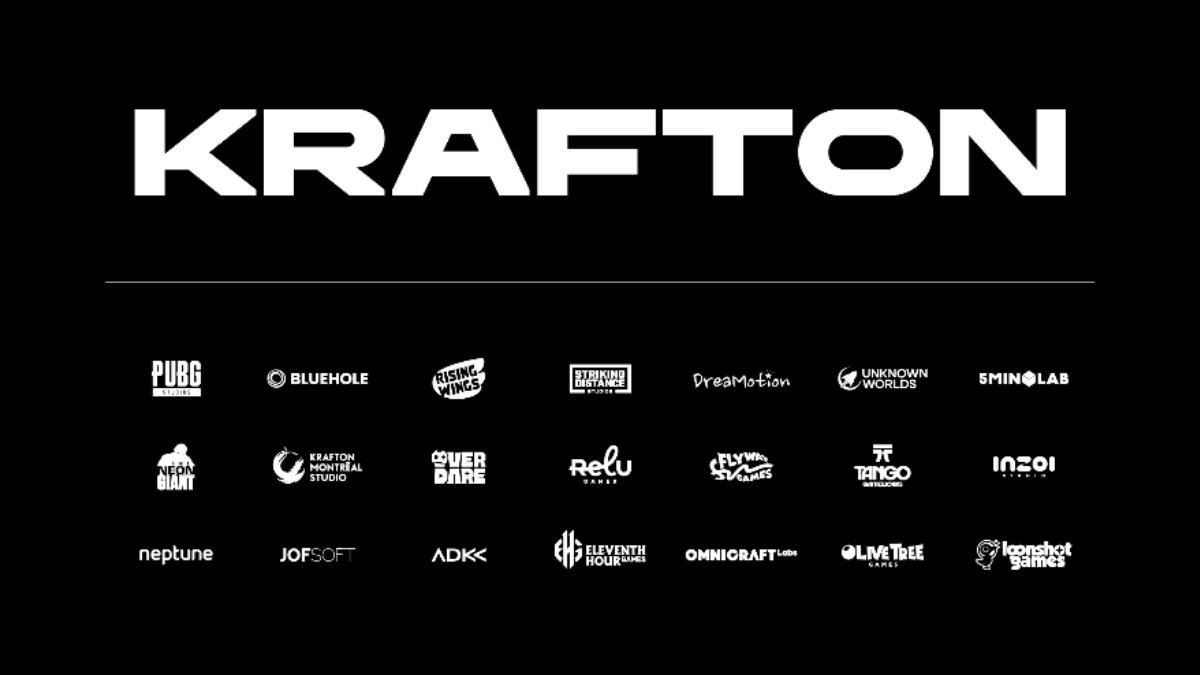
    Headquartered in Korea, KRAFTON, Inc. is dedicated to discovering and publishing captivating games that offer fun and unique experiences. Established in 2007, KRAFTON is built on a global network of 21 creative studios that include PUBG Studios, Bluehole, RisingWings, Striking Distance Studios, Dreamotion, Unknown Worlds, 5minlab, Neon Giant, KRAFTON Montreal Studio, OVERDARE, ReLU Games, Flyway Games, Tango Gameworks, inZOI Studio, Neptune, JOFSoft, ADK, Eleventh Hour Games, Omnicraft Labs, Olive Tree Games, and Moonshot Games.

    Each independent studio strives to continuously take on new challenges and leverage innovative technologies. Their goal is to win over more fans by broadening KRAFTON’s platforms and services.

    KRAFTON is responsible for premier game IPs, including PUBG: BATTLEGROUNDS, PUBG MOBILE, PUBG: BLINDSPOT, inZOI, Subnautica, MIMESIS, Hi-Fi Rush, Dinkum, TERA, My Little Puppy, and more. With a passionate and driven team across the globe, KRAFTON is a tech-forward company with world-class development capabilities, continuously exploring new possibilities that enhance the gameplay experience — including AI and other emerging technologies. For more information, visit www.krafton.com

    About KRAFTON India

    In India, KRAFTON is responsible for premier mobile games, including BATTLEGROUNDS MOBILE INDIA (BGMI), which has surpassed 250 million downloads, Bullet Echo India, Road To Valor: Empires, and CookieRun India, among others. Committed to enhancing the start-up ecosystem in India, KRAFTON has invested over $200 million in several Indian startups across interactive entertainment, gaming, Esports, and technology, since 2021. KRAFTON actively supports India’s game development ecosystem through its KRAFTON India Gaming Incubator.

    If you object to the content of this press release, please notify us at pr.error.rectification@gmail.com. We will respond and rectify the situation within 24 hours.