Author: Sutun Nayak

  • Sathlokhar Synergys E and C Global Delivers Blockbuster Q3 FY26 Performance with 400 Percent Revenue Growth and 340 Percent Profit Rise

    Sathlokhar Synergys E and C Global Delivers Blockbuster Q3 FY26 Performance with 400 Percent Revenue Growth and 340 Percent Profit Rise

    Chennai (Tamil Nadu) [India], February 07: Sathlokhar Synergys E&C Global Limited (NSE: SSEGL), One of the leading EPC players, providing end to end turnkey execution across design, civil works, PEB structures, MEP systems, solar installations, and interior fit outs, has announced its Unaudited Financial Results for Q3 & 9M FY26.

    Key Financial Highlights

    Q3 FY26 Key Financial Highlights Q3 FY26

    • Total Income of ₹ 189.72 Cr, YoY growth of 400.83%

    • EBITDA of ₹ 27.93 Cr, YoY growth of 363.52%

    • EBITDA Margin of 14.72%,

    • PAT of ₹ 19.72 Cr, YoY growth of 340.09%

    • PAT(%) of 10.39%

    • EPS of ₹ 7.59, YoY growth of 308.06%

    9M FY26 Key Financial Highlights 9M FY26

    • Total Income of ₹ 439.93 Cr, YoY growth of 143.88%

    • EBITDA of ₹ 65.67 Cr, YoY growth of 143.31%

    • EBITDA Margin of 14.93%

    • PAT of ₹ 45.81 Cr, YoY growth of 140.50%

    • PAT(%) of 10.41%

    • EPS of ₹ 17.63, YoY growth of 123.45%

    Order Book Snapshot

    • Current order book: ₹ 1397.71 Cr

    • Pipeline Bids: ₹ 15,975 Cr

    Operational Highlights Q3 FY26

    Order from Helmier Private Limited

    Secured Civil work order from Helmier Private Limited in Kanchipuram, Chennai valued at ₹24.06 Cr

    Project from Reliance Consumer Products Limited.

    Order for PEB & Civil work from at BrahmanapalliVillage, Andhra Pradesh worth ₹35.61 Cr

    Order ₹41.88 Cr for Civil works at Kurnool District, Andhra Pradesh

    Order ₹26.56 Cr for Civil work at Brahmanapalli Village, Kurnool District, Andhra Pradesh

    Orders from Grand Atlantia PanapakkamSEZ Developers Private Limited

    Awarded contracts ₹52.47 Cr for Civil works at

    SIPCOT Park, Panapakkam, Tamil Nadu

    from Grand Atlantia Panapakkam SEZ Developers PrivateLimited.

    International Order Presence in Shri Lanka

    Secured International Order from Ceylon Beverage International (Private.) Limited & Ceylon Beverage (Private) Limited ₹35.59 Cr for MEP works.

    Orders from Leading Industrial and Automotive Clients

    Received projects from Toyota Kirloskar Motor Private Limited. ₹6.95

    Krishca Strapping Solutions Limited ₹1.89 Cr

    Commenting on the financial performance, Mr. G. Thiyagu, Managing Director of Sathlokhar Synergys E&C Global Limited said, ““Our strong financial performance during the period reflects the company’s improving scale and execution capabilities. The Company reported revenue of ₹189.72 Cr in Q3 FY26 and ₹439.93 Cr in 9M FY26, demonstrating significant growth compared to the corresponding previous periods. This performance highlights our strengthening market position and growing client confidence across key EPC segments.

    With a robust confirmed order book of approximately ₹1,397.71 Cr, the company has strong revenue visibility and execution momentum over the coming quarters. The expanding bid pipeline of nearly ₹15,975 Cr reflects increasing participation across multiple EPC segments and strengthening relationships with marquee domestic and international clients.

    The infrastructure and industrial capex environment remains favourable, supported by private sector investments and government-led infrastructure development, along with sustained demand for integrated EPC solutions.

    Going forward, our focus remains on selective bidding, maintaining execution discipline, and expanding our geographical and sectoral presence. With strong project visibility, improving scale, and a supportive industry outlook, we remain confident of sustaining our growth momentum while enhancing stakeholder value.”

    If you object to the content of this press release, please notify us at pr.error.rectification@gmail.com. We will respond and rectify the situation within 24 hours.
     

  • From Heavy Diets to Conscious Eating; Gagan Dhawan on Rethinking Nutrition Through a Plant-Based Lens

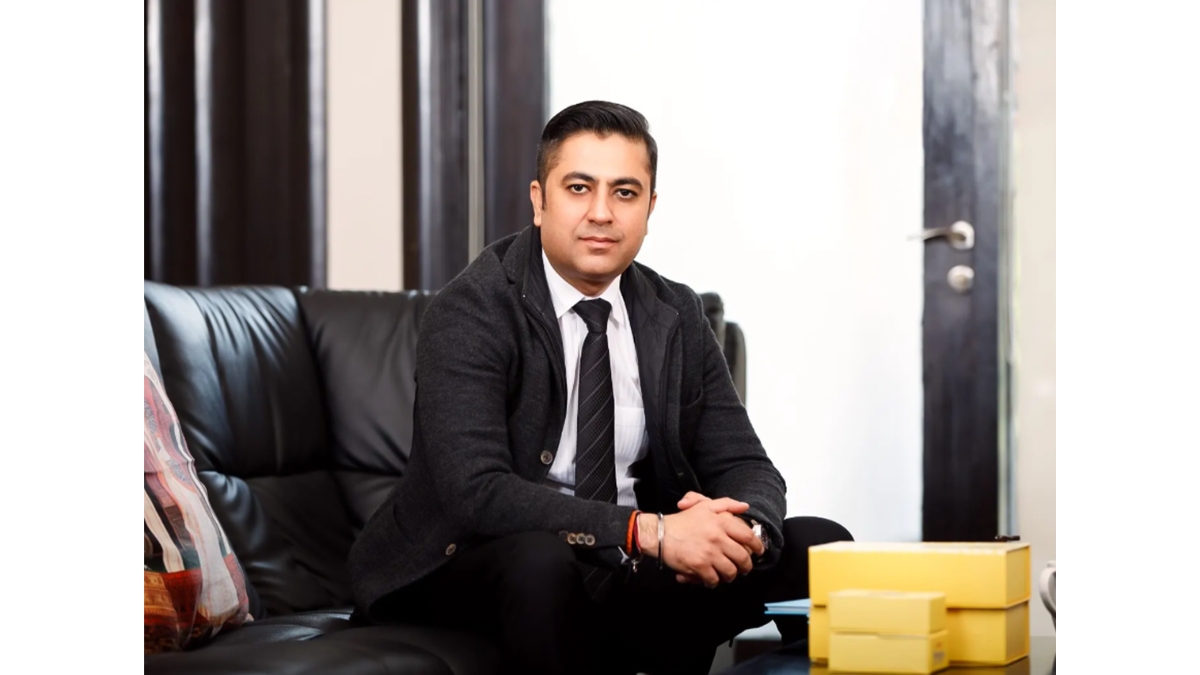
    From Heavy Diets to Conscious Eating; Gagan Dhawan on Rethinking Nutrition Through a Plant-Based Lens

    New Delhi [India], February 07: Indian food culture has a rich and diverse history of being plant-forward. Across the country, grains, lentils, vegetables, and fruits have formed the base of everyday meals. These century-old habits might have been routine at one point in time, but the popularity of modern eating patterns has seen a turn towards faster, more processed alternatives.

    For entrepreneur and wellness thinker Gagan Dhawan, the concern lies in the outcome it has on the human body instead of simply looking back with nostalgia.

    “What we now call a vegan diet is supported by solid global science,” he says. “Interestingly, many Indian food patterns already reflected these principles long before research caught up.”

    When abundance replaces awareness

    As people have become more urbanised, westernised food systems are altering how people eat. Meals are heavier, faster, and increasingly disconnected from the body’s actual needs. Processed foods are an indulgence that have become routine.

    “We are now eating in ways our bodies don’t really understand,” Dhawan explains. “Food may not be bad, but an unbalanced diet can leave us feeling off. Left to itself, the body will always demand cleaner food.”

    The results are now visible at scale. Heart disease, diabetes and cancer remain among the leading causes of death globally. Compounding matters, these diseases are systemic outcomes of the food being produced and consumed.

    From trends to systems

    Like many professionals, Dhawan explored multiple diet frameworks over the years. From his experiences, trendy diets and elimination-based approaches delivered short-term changes but the results rarely lasted.

    “Extreme diets may show quick results, but they also stress the body,” he says. “A diet that is sustainable matters more.”

    His shift came through exposure to whole food vegan research emerging from medical and academic institutions. Large-scale studies, like that by New York University, show that a WFPB diet can significantly reduce medication dependence and, in many cases, reverse conditions such as hypertension and type 2 diabetes.

    Taking this approach means an emphasis on unprocessed plant foods, vegetables, fruits, legumes, whole grains, nuts and seeds.

    “What you eat every day is what you become,” Dhawan says. “When you make the right choices, you see the results in your body. Think of your plate as the direction of how your body will look and feel.”

    Understanding our food

    Dhawan’s framework focuses on a whole food vegan pattern that delivers fibre, micronutrients and bioactive compounds essential for long-term metabolic health.

    “A vegan diet can still be highly processed,” he notes. “A whole food vegan diet is about what you include and how little you rely on refinement.”

    There have been multiple studies proving that whole food vegan diets support cardiovascular health, reduce inflammation, and improve cognitive function. Contrary to common myths, vegan diets are also able to support the building of muscle and strength, with unprocessed carbohydrates playing a key role in fat reduction and performance.

    What science is now confirming

    Nutrition science increasingly points to food as a primary intervention rather than a secondary support. Studies from institutions such as Harvard have demonstrated greater weight loss on vegan diets compared to controlled diets over similar timeframes. An added benefit is that plant proteins deliver significantly higher antioxidant levels than animal proteins, which are linked to inflammation and increased disease risk.

    Another challenge when changing mindsets is the assumption that vegan diets are expensive. Following a whole food diet includes staples that remain among the most cost-effective foods available.

    “When people see this as a restriction, they miss the variety,” Dhawan says. “There are thousands of vegan recipes, and even regular restaurants offer vegan options.”

    Beyond the numbers

    While health outcomes matter most, Dhawan also highlights the broader implications of dietary choices. Going vegan has a lower environmental impact and is one of the most effective ways to shrink your carbon footprint, as per a study published by Oxford University.

    There is also a psychological dimension when avoiding dairy and meat consumption. For many, a change in their diet toward whole foods provides mental health benefits, more energy, and a greater sense of well-being when they shift.

    “It’s about supporting the body properly,” he says. “When it is properly supported, everything else works better.”

    A step forward

    For Dhawan, this way of eating is not a dramatic overhaul of a person’s habits or associated with their identity. It is a series of small, conscious choices made over time to better your diet and opt for healthier alternatives. That’s why he emphasis meals that feel familiar, accessible, and sustainable within modern routines.

    Progress, in this sense, shows up in steadier days, and better lifestyle choices. In choosing foods that work with the body rather than against it, the shift from heavy diets to conscious eating becomes less about trying something new and more about a mental shift.

    In a world overwhelmed by extremes, Dhawan’s approach is deliberately practical. To eat smarter and let the science lead.

    If you object to the content of this press release, please notify us at pr.error.rectification@gmail.com. We will respond and rectify the situation within 24 hours.

  • City of Artesia, California, Honours Cultural Activist Sundeep Bhutoria for Contributions to Indian Culture

    City of Artesia, California, Honours Cultural Activist Sundeep Bhutoria for Contributions to Indian Culture

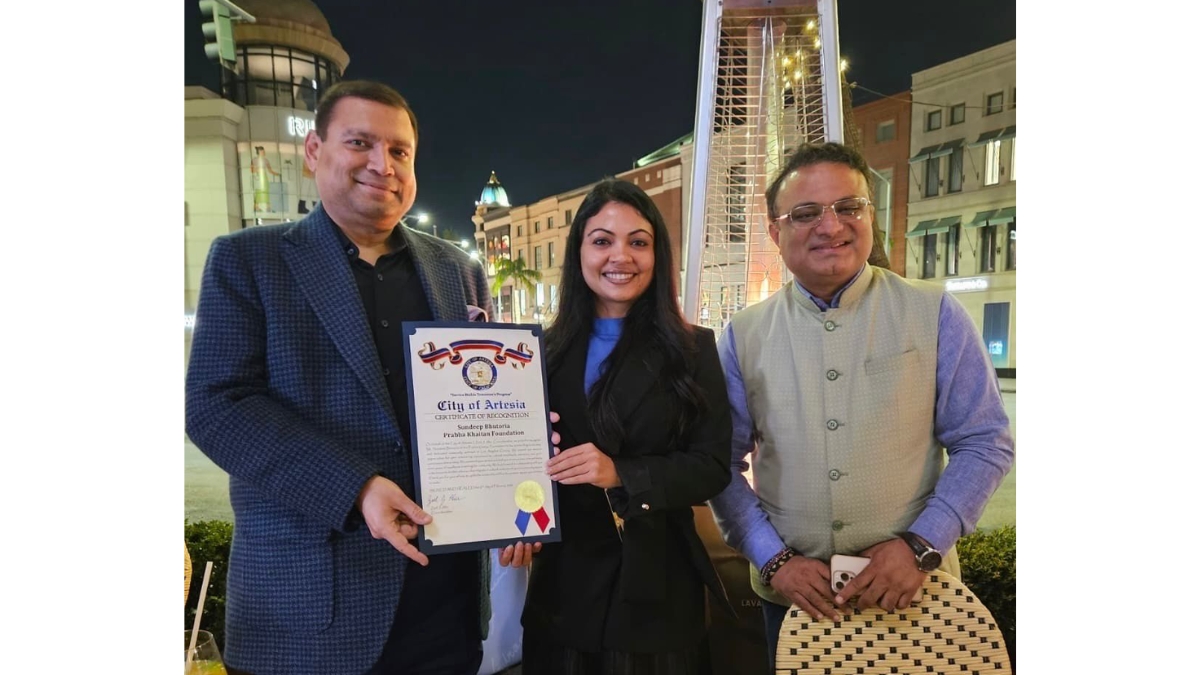
    Zeel Ahir, Council Member, City of Artesia, in presence of K J Srinivasa, Consul General India, Los Angeles, presenting Certificate of Recognition to Sundeep Bhutoria

    Kolkata (West Bengal) [India], February 07: Cultural activist, philanthropist, and Managing Trustee of the Prabha Khaitan Foundation, Mr Sundeep Bhutoria, has been honoured with a Certificate of Recognition by the City of Artesia, California (CA), during his recent visit to the United States to attend the Grammy Awards in Los Angeles.

    The certificate was presented by Ms Zeel Ahir, Council Member of the City of Artesia, CA, at a special dinner hosted in Mr Bhutoria’s honour. The event brought together members of the Indian diaspora and representatives of various organisations from across California. Mr. K. J. Srinivasa, Consul General of India in Los Angeles, was also present on the occasion.

    The recognition was conferred in appreciation of Mr Bhutoria’s sustained social work and his significant contributions towards the promotion of Indian art, culture, and literature on national and international platforms.

    Expressing his gratitude, Mr Bhutoria said, “The honour accorded to me comes as a pleasant surprise, especially since the majority of my cultural and social initiatives are based in India.” He added that the recognition reaffirmed the growing global relevance of Indian cultural engagement and the role of the diaspora in strengthening cultural ties.

    The City of Artesia, located in south-eastern Los Angeles County, is widely known for its vibrant “Little India” district on Pioneer Boulevard and has emerged as a cultural hub for the South Asian community in California.

    The City of Artesia, CA., has its own city government with a five-member City Council and regularly hosts cultural festivals and serves as a significant centre for Indian commerce, cuisine, and traditions in the region.

    Visitors find colourful storefronts selling Indian fashion, jewelry, spices, sweets, and services like henna and eyebrow threading, alongside eateries offering curry, lassi, and thali meals. It draws crowds from Los Angeles County for cultural festivals, while nearby Hindu temples add to the spiritual depth.

    Sundeep Bhutoria is a social and cultural activist, entrepreneur, philanthropist, author, and blogger, who has been working for over two-and-a-half decades in the fields of welfare, international cultural cooperation, and the promotion and preservation of Indian arts.

    Based in Kolkata, India, he devotes his time to conceptualising and curating, strategising and managing a wide array of social and cultural activities in around 60 cities in India and beyond. As the managing trustee of the Prabha Khaitan Foundation, he helps carry out various cultural activities with the aim of preserving and promoting India’s rich cultural heritage.

    Some of the programmes he has been instrumental in instituting and executing are An Author’s Afternoon, Aakhar, Chaupal, Ek Mulakat, Kalam, Kitaab, Lafz, Tete-a-Tea, The Write Circle, and The Universe Writes. These have all secured a place on the social and cultural calendar of India.

    If you object to the content of this press release, please notify us at pr.error.rectification@gmail.com. We will respond and rectify the situation within 24 hours.

  • Sneaker Resale Market 2.0: From Risky Drops to a Dominant Power Economy

    Sneaker Resale Market 2.0: From Risky Drops to a Dominant Power Economy

    New Delhi [India], February 07: The sneaker resale market is no longer a subculture hustle. It is a structured, global economy and Gen Z is running the floor with receipts, data, and profit margins.

    The Sneaker Resale Market Emergence

    Sneaker resale market is at a new peak and this time it is not the hype-driven madness. It is planned scarcity generated by demand.

    Nike and Adidas are putting out limited collections that are reselling at a number of times their retail prices on a regular basis. Some pairs flip for hundreds. Others for thousands. Platforms do not experience spikes; they experience sustained growth. This is not a moment. It is momentum.

    The focus of this shift is on gen z resellers. They can deal with drops, demand cycles and resale algorithms as well as many traditional retailers know their inventory.

    This is not impulse buying. It is counted involvement in a market that provides some reward to timing, information and discipline.

    Why Sneakers Became Financial Assets

    Sneakers used to be footwear. Thereupon, they were collectibles. Now they behave like assets.

    This move was driven by three forces.
    First, scarcity by artificial means of limited drops.
    Second, endorsement by celebrities, athletes and artists.
    Third, e-commerce that facilitated resale with ease.

    A sneaker now has a cultural or social currency and resale value. It is a very potent combination.

    The sneaker resale market is a successful industry since it resembles financial markets. Entry price matters. Timing matters. Holding periods matter. Exit strategy matters.

    No romance. Just math and taste.

    The Gen Z Professionalised Sneaker Flipping

    Elderly generations tossed things around. Gen Z built systems.

    The resellers follow release calendars several months in advance. They apply bots wherever it is allowed. They watch resale websites live. They are aware of the regional demand variations. They price dynamically.

    It is a micro-business of sneaker flipping with this generation. Costs are logged. Margins are calculated. The heartbreaks are taken in stride.

    Many resellers recoup profits by building larger inventories. Others expand to include apparel and accessories and streetwear partnerships.

    What may appear to be informal reselling on the surface is most often a well-organized computer game.

    Auctions that Fuel the Sneaker Reselling Business

    The sneaker resale business operates on platforms, not in parking-lot deals.

    Marketplaces verify products, normalise price information, and build trust. That infrastructure shifted the risk-heavy, bargaining-based resale model to scalable commerce.

    Buyers trust verification. Sellers trust liquidity. Pricing is stabilised on demand and not rumor.

    This is the platform-based transparency that enabled the sneaker resale market to expand to the global scale.

    In its absence, flipping remains little. Through it, flipping becomes economical.

    The Scarcity Game, Nike, and Adidas

    Brands do not stand on the sidelines.

    Nike and Adidas orchestratea  shortage in the release strategies. Limited supply fuels hype. Hype fuels resale. Brand dominance is fuelled by resale.

    Although the brands publicly unlink themselves from the resale gains, they enjoy the advantage of cultural relevance and long-term demand.

    Brand mythology is enhanced by every sold-out drop. Desirability is strengthened by every resale premium.

    The sale of sneakers is not a system leak. It is part of the system.

    The Rising Sneaker Resale Market in India

    India is no exception to this. It is early.

    Gen Z customers in the city are becoming increasingly connected with the sneaker culture in the world. The Indian buyers get the international drops quicker than ever before. The resale societies within the country are on the increase in places such as Mumbai, Delhi, and Bengaluru.

    The price sensitivity coupled with aspiration is what is interesting about India. That is a mixture that makes shrewd traders.

    Sneaker resellers in India are already playing the prices of the world against the local demand. The Indian sneaker resale market will become formal with the further advancement of logistics and authentication.

    This is not just fashion. It is young-run business adjusting to the international trends.

    Risks, Reality, and Regulation

    Let’s not romanticise it.

    The sneaker resale business is risky. Prices fluctuate. Demand shifts. Excess supply has a way of smashing margins. Verification does not mean that counterfeits do not exist.

    Not every pair flips. Not every reseller wins.

    The regulation is also keeping up. Resale income is starting to attract the attention of the tax authorities. YouTube is restricting compliance.

    It is no longer a hobby that does not go anywhere. It is an auditable, visible and taxable market.

    And that is the mark of manliness, not decadence.

    The Future of the Sneaker Resale Business

    The second step will be reduced hype, increased design.

    Expect better data tools. Smarter pricing models. Faster authentication. More cross-border trade.

    Gen Z resellers will become brand consultants, drop analysts and micro-distributors.

    The sneaker resale business is not going to fail. It will consolidate.

    And those who do make it a serious business will not fall.

    PNN LIFESTYLE

  • RSS Centenary Film ‘Shatak’ to Hit Theatres on February 19, 2026

    RSS Centenary Film ‘Shatak’ to Hit Theatres on February 19, 2026

    Ahmedabad (Gujarat) [India], February 07: Commemorating a monumental century of nation-building and selfless service, the feature film “Shatak: Sangh Ke 100 Varsh” is officially set for a nationwide theatrical release on February 19, 2026. This cinematic journey provides a definitive look into the 100-year evolution of the Rashtriya Swayamsevak Sangh (RSS), honoring the countless individuals who dedicated their lives to the welfare and cultural integrity of Bharat. The film aims to offer an authentic glimpse into the organization’s core values, internal discipline, and its historical role in shaping the socio-political fabric of the country since its inception in 1925.

    The film is brought to life by a dedicated team of creators committed to telling this historic story. Directed by Aashish Mall and based on a concept by Anil Dhanpat Agarwal, the project features the significant involvement of Associate Producer Pavan Sindhi, whose role has been instrumental in bringing this vision to the silver screen. Produced by Vir Kapur under Ada 360 Degree LLP, with Kabir Sadanand as Associate Producer and Aashish Tiwari as Co-Producer, the film highlights the collective consciousness that has driven the Sangh’s mission for a century.

    In a significant milestone for the project, the Sarsanghchalak of RSS, Dr. Mohan Bhagwat ji, graced a special event at Keshav Kunj, Jhandewalan, where he officially released two soul-stirring songs from the film: “Bharat Maa Ke Bacche” and “Bhagwa Hai Meri Identity.” These tracks serve as patriotic anthems that reflect the spirit of the film and the ideology of the Sangh. During the launch, Dr. Bhagwat ji spoke about the organization’s tireless journey, emphasizing how the film captures the quiet, persistent effort that has defined the movement for a hundred years, embodying the resilient motto “Na Ruke, Na Thake, Na Jhuke.”

    The makers invite families across the nation to visit theatres on February 19th to witness this historical chronicle. Shatak is presented as more than just a movie; it is a tribute to the millions of volunteers whose service has remained a cornerstone of national pride. By documenting the sacrifices and dedication of those who lived for the nation, the film seeks to inspire the next generation with the values of “Nation First.”

    If you object to the content of this press release, please notify us at pr.error.rectification@gmail.com. We will respond and rectify the situation within 24 hours.
  • India US Interim Trade Deal: A Strategic Win for Growth | 2026

    India US Interim Trade Deal: A Strategic Win for Growth | 2026

    New Delhi [India], February 07: The India-US interim trade deal is not flashy, not dramatic, and not loud. That is exactly why it matters. This is trade policy doing its job quietly, efficiently, and with intent.

    The Importance of the India US Interim Trade Deal

    The structure of the India US interim trade deal is a calculated move away off the negotiating exhaustion to quantifiable steps. The two parties have settled on an organised interim agreement that reduces tariffs on goods of Indian origin to 18 percent and opens negotiations on a non-tariff barrier that have existed long enough. It is not a free trade agreement that is headline grabbing. It is a more practical thing. It is a working bridge.

    Trade negotiations between the United States and India have been going round and round over the years. There was strategic alignment. Economic logic existed. Execution lagged. Such a tentative structure transforms that dynamic by reducing the area and establishing attainable standards. It is significant only because of that.

    The Real Meaning of the 18% Tariff Signal

    The lowering of tariffs on goods of Indian origin to 18 percent is not a figure of speech. It is a signal. It informs the exporters that access is key. It informs investors that predictability is enhancing. It informs negotiators that the two parties are prepared to get beyond defensiveness.

    To Indian manufacturers and exporters, the tariff rationalisation of the pricing power is straight to the US market. The world is operating on slim margins. Freight costs fluctuate. The volatility of the currency is permanent. An expected tariff ceiling minimizes the uncertainty and enhances planning.

    This applies particularly to industries that run on volume and size and not on the premium pricing. Textiles, engineering products, chemicals and some electronics areas would also have an advantage of access ease. No miracles here. Just math.

    The Barriers of Non-tariffs: The Real Warfront

    Tariffs make headlines. The results are determined by non-tariff barriers. The interim trade deal framework is a clear start in the non-tariff barriers. This entails regulatory thresholds, compliance procedures, certification sloths, and procedural smacking to death a competitiveness without noise.

    These obstacles are typically more expensive than the tariffs to the Indian exporters. Documentation, redundant testing and ambiguous regulatory channels slow transportation and increase expenses.

    The India US interim trade agreement accepts reality by explicitly putting non-tariff barriers on the negotiation table. Customs gates are no longer the only barriers to trade. It has been hampered by bureaucracy, lack of transparency, and regulatory disfit. This will mark the start of actual trade reform.

    [Internal Link → placeholder: The changing framework of India trade policy.]

    Digital Trade, Supply Chains and Services

    The framework also preconditions the further collaboration in the field of goods, services, supply chain, and digital trade. This is important since the power of Indian trade can no longer be restricted to the physical exports.

    India still depends on exports of services as the anchor to the external balance. IT services, consulting, engineering design and business process outsourcing are still competitive in the world. Digital trade regulations define the flow of data and functionality of platforms and the scaling of cross-border services.

    Cooperation of the supply chain is also important. International firms are re-balancing risk. They want redundancy. They want reliability. They desire spouses able to climb Mount Everest without unexpected policy changes.

    India US interim trade agreement makes India a more reliable go-to supply chain player as opposed to being an alternative. It is an up-to-quiet improvement.

    The Implications of this to Indian Businesses

    To Indian business, the message is obvious. This deal is not theoretical. Tariff transparency is achieved by exporters. Service companies perceive an avenue to easier entry. Manufacturers receive the signal that there is more integration in the market.

    Stability is an advantage to MSMEs. Regulatory uncertainty can usually hurt smaller exporters. An established interim structure minimises guesses and enhances creditworthiness.

    Policy risk decreases and banks are able to lend more easily. Insurers are more rational in pricing risk. There is an easy time of signing supply contracts. Demand is not made through trade structures. They enable it.

    The India Context: Why Timing is Important

    This accord comes at a time when the world trade is undergoing a crisis. Protectionism is rising. Supply chains are being re-conceived. The tariff wars are trending again.

    The move taken by India, which opted to enter into an interim trade agreement rather than wait indefinitely before securing a flawless agreement can be viewed as pragmatism. It has nothing to do with ideological chastity. It is of the economic momentum.

    The export ambitions of India need opening and not applause. Creeping deals generate trust. Capital is drawn in by credibility. Capital funds expansion. That is more significant than slogans.

    What This Deal Is Not

    Let’s be clear. It is not a free trade arrangement. This is by no means the last thing to say about the India US trade relations. And it is no political triumph lap.

    It not only eradicates some obstacles. It is not an assurance of export booms. It does not overcome all the sectoral conflicts.

    What it does is make friction smaller. It establishes a work structure. It demonstrates that negotiations may be put into practice. In trade, that is progress.

    The Road Ahead

    The India US interim trade deal structure is the first step and not the last. The extent to which tariffs are reduced will be determined in future negotiations. They will dictate ways in which digital trade regulations are going to evolve. They will find out the seriousness of both sides on regulatory alignment.

    But transitional structures are important since they develop trust by achievement. In trade diplomacy, there is currency in trust. This deal does not shout. It works. And that is what matters in international commerce.

    PNN NATIONAL

  • Next Crypto To Explode: Tether USDT Hits Record Market Cap

    Next Crypto To Explode: Tether USDT Hits Record Market Cap

    New Delhi [India], February 07: Tether’s dollar-pegged stablecoin, USDT, has surged to a record-breaking $187.3 billion market capitalization, even as major assets struggle to regain momentum. While capital flows into stablecoins often signal caution, they also hint that sidelined liquidity is waiting for the next crypto to explode as market conditions stabilize.

    Meanwhile, attention is shifting toward coins ready to rally outside the traditional large-cap spotlight. Among emerging narratives, DeepSnitch AI is beginning to stand out as one of the most closely watched breakout crypto projects, with early traction pushing it toward a $1.5M valuation and fueling speculation that it could become the next big cryptocurrency to surprise the market.

    Tether’s USDT market cap surges to new all-time high as stablecoin rivals lose momentum

    Tether’s flagship stablecoin, USDt, continued to strengthen its position in the digital asset market during the final quarter of 2025, reaching an unprecedented valuation despite broader market weakness.

    While much of the crypto sector struggled in the aftermath of October’s widespread liquidation event last year, capital steadily flowed into USDT, pushing its total market capitalization to $187.3 billion by the end of Q4.

    According to Tether’s latest quarterly disclosure, USDT added approximately $12.4 billion in market value over the three month period, showing growing demand for dollar-backed liquidity during periods of heightened volatility.

    Next crypto to explode: DeepSnitch AI targets $1.5m milestone as traders anticipate 300x rally

    DeepSnitch AI is rapidly approaching the $1.5 million mark as late-stage buyers position themselves for what many believe could be a 300x post launch move. With the presale now in stage 5 and momentum building into the final stretch, traders are already calling it the next crypto to explode.

    Unlike most early-stage AI tokens, DeepSnitch AI already gives holders something tangible to work with. It’s a live, AI-powered trading intelligence platform built to enlighten traders and equip them with enough knowledge to withstand volatile markets. Four AI agents are already operational, including SnitchFeed, SnitchScan, SnitchGPT, and AuditSnitch, all operating in a single dashboard.

    One of the agents, SnitchFeed, tracks real-time blockchain movement, social acceleration, and momentum shifts to deliver early alerts before they become mainstream. Instead of reacting late, traders get signals while opportunities are still forming. This feature is one of the main reasons it keeps coming up in conversations about the next crypto to explode.

    Aside from its features, DeepSnitch AI has already recorded impressive numbers in its presale stage. The token is currently priced at $0.03830, up more than 150% from its $0.01510 starting price. Furthermore, the recently announced launch delay serves as a tactical decision to benefit holders. Instead of rushing to market, the team is giving holders extended access to live tools, creating a gap in knowledge and experience that outsiders won’t be able to replicate later.

    For traders and investors scanning for the next crypto to explode, DeepSnitch AI stands out for obvious reasons. With its presale momentum only growing, this is the best time to join the project.

    https://youtu.be/PbMZo6oKFZU

    SOL drops further below $100 as the altcoin market faces bearish pressure

    Solana has extended its losses over the past week, falling from $122 on January 30 to $80 by February 6, a sharp 30% decline that pushed the token decisively below the $100 level. The move comes as bearish pressure grips the altcoin market, with traders reducing exposure to high volatility assets amid ongoing uncertainty.

    That said, not all signals are pointing lower. Crypto analyst AliCharts recently noted that the TD Sequential indicator has flashed a buy signal on Solana, suggesting selling pressure may be weakening.

    BNB traders set new target at $700 following 25% weekly decline

    BNB has come under significant pressure over the past week, sliding from $889 on January 30 to $630 by February 6, a drop of around 25%. Data shows BNB has dipped below critical psychological levels and is testing resistance near the $700 area, as traders search for the next crypto to explode.

    Despite this pullback, BNB’s fundamentals, such as ongoing ecosystem activity on BNB Chain, have not evaporated, and some analysts still anticipate a rebound toward the mid $900s if sentiment improves.

    Conclusion

    As capital continues to rotate defensively into stablecoins amid market volatility, traders are now focused on huge growth opportunities with real utility. The search for the next crypto to explode is now moving toward early-stage platforms like DeepSnitch AI, which presents live tools, rising demand, and impressive bonuses for holders.

    Usually, a $5,000 purchase at the current $0.03830 price yields 130,500 DSNT. Using a 50% bonus code like DSNTVIP50, that allocation increases to around 195,750 tokens.

    With the presale in Stage 5 and full market launch still ahead, DeepSnitch AI continues to stand out as a strong candidate for the next crypto to explode.

    Visit the official website for priority access and check out X and Telegram for their latest community updates.

    FAQs

    What token is being considered as the next crypto to explode?

    Several tokens are being discussed, but DeepSnitch AI stands out because it already offers live trading intelligence tools while still being in its presale phase. This combination of early access and real utility is why many traders see DeepSnitch AI as a stronger contender.

    Can BNB reach $1000?

    BNB could revisit the $1,000 level if the market conditions improve and bullish momentum returns. This uncertainty is why some investors are shifting attention to DeepSnitch AI, whose lower entry price and utility-driven model offer significantly higher growth potential.

    Why is DeepSnitch AI being considered as the next crypto to explode above others?

    DeepSnitch AI is being singled out because it delivers live AI agents, like SnitchFeed and AuditSnitch, before launch, giving holders a practical edge while the market waits.

    Disclaimer: Trading cryptocurrencies/digital assets carries a high level of risk, and may not be suitable for all investors. You should be aware of all the risks associated with cryptocurrency/digital asset trading, and seek advice from an independent financial advisor. Any opinions, news, research, analyses, prices, or other information contained on this website is provided as general market commentary, and does not constitute investment advice. The website or its publishers will not accept liability for any loss or damage, including without limitation to, any loss of profit, which may arise directly or indirectly from use of or reliance on such information.The above content is published as received and has not been edited by the channel staff. The channel holds no responsibility for its content.

  • Uttar Pradesh Deputy Chief Minister Brajesh Pathak Unveils ‘Dr. Cancer’ Logo in Lucknow

    Uttar Pradesh Deputy Chief Minister Brajesh Pathak Unveils ‘Dr. Cancer’ Logo in Lucknow

    Lucknow (Uttar Pradesh) [India], February 07: Uttar Pradesh Deputy Chief Minister Shri Brajesh Pathak today unveiled the official logo of ‘Dr. Cancer’, a homeopathy-led supportive care initiative for cancer patients. The logo launch took place at his residence in Lucknow in the presence of senior doctors and healthcare representatives.

    Speaking on the occasion, Shri Brajesh Pathak said that prevention and treatment are among society’s most important health responsibilities. He added that efforts like Dr. Cancer can strengthen patient support systems and improve access to care.

    The Deputy Chief Minister was briefed about the initiative’s vision and planned activities by Dr. Gauri Shankar, Director of Dr. Cancer and Sanvedana Homeopathic Clinic, along with senior physician Dr. Amit Srivastava and Mr. Ram Mohan AgarwalDr. A. M. Reddy, Founder of Dr. Care Group, and Mr. Paras, Director at Dr. Cancer, were also present during the ceremony.

    Focus on Supportive Care and Quality of Life

    Dr. Gauri Shankar shared that Dr. Cancer is focused on supportive therapy through homeopathy, with the goal of improving the quality of life for cancer patients. He explained that homeopathy is being positioned as a supportive approach to help manage symptoms and patient comfort alongside standard medical care.

    Deputy Chief Minister Extends Best Wishes

    Shri Brajesh Pathak appreciated the initiative and said that every medical system has a role to play in the fight against cancer. He expressed confidence that Dr. Gauri Shankar and his team will contribute meaningfully through service, awareness, and patient support.

    Upcoming Awareness and Screening Camps

    Dr. Amit Srivastava said that the team will conduct screening and awareness camps across Uttar Pradesh in the coming months. Mr. Ram Mohan Agarwal highlighted the importance of social participation and community support to expand awareness and reach more families.

    A memento was presented to the Deputy Chief Minister, and the team also discussed future healthcare topics and research-oriented initiatives aimed at improving patient support.

    If you object to the content of this press release, please notify us at pr.error.rectification@gmail.com. We will respond and rectify the situation within 24 hours.
  • Echoes of Heritage: A Spellbinding Sitar-Tabla Jugalbandi Illuminates the Naushad Academy of Hindustani Sangeet

    Echoes of Heritage: A Spellbinding Sitar-Tabla Jugalbandi Illuminates the Naushad Academy of Hindustani Sangeet

    From Left to Right:  Manas Vora, Rehman Naushad, Uttam Singh, Gurmeet Singh, Bhagirath Bhatt

    Mumbai (Maharashtra) [India], February 06: In an era where the sacred traditions of Indian classical music are tenderly guarded by dedicated custodians, the Naushad Academy of Hindustani Sangeet stands as a beacon of cultural preservation. On the evening of Saturday, January 31st, 2026, the attendees resonated with the timeless strains of a Sitar-Tabla Jugalbandi that transported a mesmerized audience to a bygone era of musical purity.

    The recital featured the virtuosity of world renowned Sitarist Bhagirath Bhatt and the rhythmic brilliance of eminent Tabla player Manas Vora. Their performance was not merely a concert but a testament to the enduring vitality of the classical tradition, maintained today through the unwavering patronage of institutions like the Naushad Academy.

    A Tapestry of Raags and Rhythm

    The evening commenced with the melancholic grandeur of Raag Kirwani. Bhatt unfolded the raag with a beautifully structured Alap, Jod, and Jhala, allowing the warm, resonant strains of the sitar to permeate the silence. His intricate finger work crisscrossed the frets, weaving a rich tapestry of sound that shifted effortlessly from serene introspection to powerful rhythmic vibrancy.

    The narrative then transitioned to Raag Charukeshi, rendered with remarkable depth and finesse. Bhatt presented a mesmerizing bandish set to a rare 9-matra taal, followed by a spirited bandish in Drut Teen Taal. It was here when Manas Vora’s tabla entered the dialogue, blending seamlessly with the melodic flow of the sitar.

    The resulting Jugalbandi was a display of electric chemistry—a rhythmic dialogue of energy, texture, and precision. The interplay generated waves of pure musical energy, oscillating between the contemplative and the exhilarating, transporting listeners to heightened states of ecstasy. The escalating tempos and complex rhythmic patterns reflected the artist’s profound understanding of the Hindustani classical idiom.

    A Homage to Legends

    The recital concluded on a soulful note with a bandish in Raag Mishra Pahadi. In a moments of deep emotional resonance, Bhatt rendered the iconic composition “Udja Kale Kawan,” paying a heartfelt tribute to its creator, the legendary composer Shri Uttam Singh Jee, who was present in the audience. This moving homage stood out as one of the evening’s most memorable highlights.

    World-renowned composer and Music Director Shri Uttam Singh Jee remarked, ‘Having witnessed numerous sitar performances, I was deeply impressed by Bhagirath Bhatt’s mastery over his instrument, and Manas was equally good on tabla. Bhagirath Jee’s playing was truly soulful and spellbinding. If and when given a chance, I certainly will have Bhagirath Jee play for me in the times ahead.’

    Speaking on the occasion, Shri Rehman Naushad observed, ‘It was an honour to witness and be part of this exceptional recital. Bhagirath Bhatt Sahab has an immensely bright future ahead of him, much like that of Shr Ravi Shankar Jee. I wish him every success.

    Esteemed composer and producer Shri Gurmeet Singh (son of Uttam Singh) shared the story of the duo’s discovery: Through a recommendation, I watched Bhagirath Bhatt Jee’s performances on YouTube and was instantly struck by how tuneful yet technically accomplished he is. My team immediately reached out to him, he was overwhelmed and accepted to perform. I was truly mesmerised by the duo’s performance and look forward to many future collaborations.

    Stewards of the Tradition

    This evening of musical excellence was presented under the expert guidance of the Academy’s permanent trustees, who continue to serve as pillars for the classical arts and preserving musical culture and heritage:

    • Shri Rehman Naushad – President
    • Shri Uttam Singh – Secretary
    • Shri Gurmeet Singh – Treasurer
    • Smt Shehnaaz Parveen Mutiur Rehman – Trustee
    • Smt Jasvinder Kaur – Trustee
    • Smt Umaraah Mutiur Rehman – Trustee

    The Academy also gratefully acknowledged the collaborative efforts that ensured the
    event’s resounding success, including Event Organiser Ms. Parmeet Kaur, Media
    Consultant David Allan Vaz, and Nabh Kumar Raju (Photography – Videography) along
    with his NKR Film School students and the entire dedicated event crew.

    Website: www.gurmeetsingh.net
    Email: contactnaushadacademy@gmail.com

    If you object to the content of this press release, please notify us at pr.error.rectification@gmail.com. We will respond and rectify the situation within 24 hours.

  • quantum computing market explosive USD 2B surge

    quantum computing market explosive USD 2B surge

    The quantum computing market is finally shaking off the lab-coat labels and stepping into real dollars. This year, revenues are expected to hit roughly $2 billion, with defence and aerospace pulling much of the weight. They are not whispering about quantum any more; they are buying it.

    The Significance of the Quantum Computing Market Today

    It is increasingly clear that 2026 may be the first year when quantum computing stops being viewed as experimental and starts generating real revenue. Market analysis indicates that global quantum computing revenues are expected to reach approximately $2 billion in the current year. That is not small change in the world of technology startups.

    This surge is not random. It is the point where military muscle, commercial demand, and hardware advancements that are finally hard to ignore converge. For years, quantum computing has been a tease, always five years away from relevance. The $2 billion figure, however, represents the first genuine signal that the needle is moving.

    Defense does not buy quantum, questions later

    Here is the plain truth most business pages soften: governments are tipping the scales. Defence and aerospace sectors are block-buying quantum systems because they seek operational advantages, secure communications, and optimisation tools that classical computing simply cannot deliver.

    Quantum systems offer problem-solving capabilities that matter most in life-and-death scenarios such as mission planning, encryption, and secure communications. This is why military spending forms a substantial share of the projected $2 billion in revenue. Long-term contracts and stable funding also make this market far less volatile than the typical technology sector.

    In simple terms, when militaries put money on the table, investors pay attention.

    Not all growth is equal

    A closer look reveals a tale of two markets.

    On one side, analysts project enormous long-term growth. The quantum sector could expand into the tens of billions of dollars in the early 2030s, driven by applications in financial services, pharmaceuticals, and logistics. Global forecasts beyond 2026 broadly support this trajectory.

    On the other side, not all analysts agree on the pace. Some expect 2026 growth to remain strong but slower than the projected jump seen in 2025. This is not a red flag. It is a sign of a market settling into reality. This is not another crypto frenzy. It is capital flowing into technology with practical use.

    Who is moving the needle?

    The short answer is a mix of startups and large technology players.

    IonQ is a clear example. Its revenue growth forecast stands at around 151 percent for fiscal 2025, and the company has delivered a 100-qubit system to a South Korean science institute, marking real deployment outside the United States.

    Analysts are bullish on trapped-ion technology due to its strengths in coherence and connectivity. In simpler terms, these machines are proving they can do meaningful work. Both Wedbush and Jefferies have issued strong ratings on the company.

    This is not a solo performance. IBM, Google, Microsoft, and D-Wave are advancing their own approaches, from superconducting qubits to hybrid systems. This is not about chasing hype. It is capital-backed industrial science supported by contracts and long-term intent.

    What this means for business and technology

    For CEOs, CTOs, investors, and even everyday observers of technology, the takeaway is straightforward. Quantum computing will not replace your laptop next year, but it will reshape how industries solve complex problems.

    Finance will use it for portfolio optimisation. Pharmaceutical companies will rely on it for molecular simulations. Cybersecurity will turn to it for encryption defence. Logistics may finally achieve real-time optimisation of complex supply chains. Defence spending will continue to pull the market forward with its deep pockets.

    The long-term economic impact could be extraordinary. Independent research suggests the value created by quantum computing could reach hundreds of billions of dollars, potentially approaching a trillion dollars by 2040, depending on adoption rates.

    While the $2 billion figure for 2026 makes headlines, the real work is laying the groundwork for much larger economic engines. Major players see this clearly. Investors do too.

    India in the quantum future

    India is not on the margins of this shift. As technological infrastructure expands and talent pools deepen, Indian organisations and research institutions are increasingly exploring quantum systems for encryption, AI integration, and complex data processing.

    India may not yet be the biggest spender, but universities, startups, and public institutions are closely tracking this market. Government support and international partnerships are steadily growing. If the quantum computing market accelerates as projected, Indian technology firms and research teams that build early niche expertise stand to gain in cybersecurity, cloud services, and high-performance computing.

    Quantum is not magic, but it comes close

    Let’s be clear. Today’s quantum computers are not miracles. They will not make your phone faster, and they cannot simulate everything perfectly. Error correction remains a challenge, and hardware still needs refinement.

    But the $2 billion revenue figure is real. It reflects actual spending by real customers. Defence contracts, on-site deployments, cloud access, hardware sales, and software integration are all tangible lines of business. They pay salaries, fund research and development, and build long-term infrastructure.

    This market is no longer fantasy. What we are witnessing now is the calm before a much larger storm.

    PNN TECHNOLOGY