Author: Sutun Nayak

  • I Didn’t Just Get Married—I Made Music: Suman sunil’s Kerala-Style Wedding in Chhattisgarh Goes Viral as Bride Sings ‘En Uyirila’ for Her Entry

    I Didn’t Just Get Married—I Made Music: Suman sunil’s Kerala-Style Wedding in Chhattisgarh Goes Viral as Bride Sings ‘En Uyirila’ for Her Entry

    New Delhi [India], January 22: In a world where bridal entries are often defined by choreographed dance routines and trending Bollywood tracks, Suman Sunil chose a path that was deeply personal — and in doing so, created a moment that the internet can’t stop talking about.

    Married in Chhattisgarh, Suman Sunil celebrated her wedding with Vaishak Ramesh in a grand Kerala (South Indian) wedding style, turning the ceremony into a stunning cultural experience. From traditional South Indian rituals and elegant décor, music, and vibrant dance performances, every element reflected intention, heritage, and grace.

    But what truly made this wedding extraordinary was the bride herself.

    Instead of walking into a popular Bollywood number or performing a rehearsed routine, Suman Sunil sang “En Uyirila” for her own bridal entry — a bold, emotional choice that instantly set her wedding apart.

    As she walked towards the mandap, her voice echoed through the venue — soft, powerful, and filled with emotion. Guests stood still, many visibly moved. “En Uyirila” wasn’t just a song playing in the background; it became the heartbeat of the moment, turning her entry into an unforgettable expression of love.

    When asked to sum up the emotion behind “En Uyirila”, Suman Sunil didn’t describe it with a single word. Instead, she said:

    “I didn’t just get married — I made music. The story of ‘En Uyirila’ is my story.”

    That statement captured the soul of the moment perfectly.

    Clips of Suman Sunil singing “En Uyirila” soon began circulating across Instagram, wedding pages, and social media platforms. Within hours, the video went viral, drawing reactions like “goosebumps,” “pure magic,” and “the most soulful bridal entry ever.” Wedding portals, entertainment pages, and even news platforms began sharing her story, celebrating how a bride transformed a traditional moment into something timeless.

    What made the moment even more powerful was the beautiful contrast — a Chhattisgarh wedding infused with Kerala’s South Indian traditions, paired with a bride who chose music as her voice. Suman Sunil didn’t follow a trend; she created one — proving that authenticity resonates louder than spectacle.

    In an age where weddings are often curated for social media, Suman Sunil’s “En Uyirila” entry stood out because it was real.

    It reminded everyone watching that sometimes, the most unforgettable moments don’t need choreography or grandeur — they only need truth, courage, and love.

    And today, as “En Uyirila” continues to make headlines and hearts melt online, one thing is certain:

    This wasn’t just a wedding. It was a melody that will live on.

    Watch Here: https://youtu.be/MverwFnDZsc?si=PT3r-20mtIg0dgCy

    If you have any objection to this press release content, kindly contact pr.error.rectification@gmail.com to notify us. We will respond and rectify the situation in the next 24 hours.

  • ACUMO Finathon National Finals Highlight Early Push for Financial Skills in School Education

    ACUMO Finathon National Finals Highlight Early Push for Financial Skills in School Education

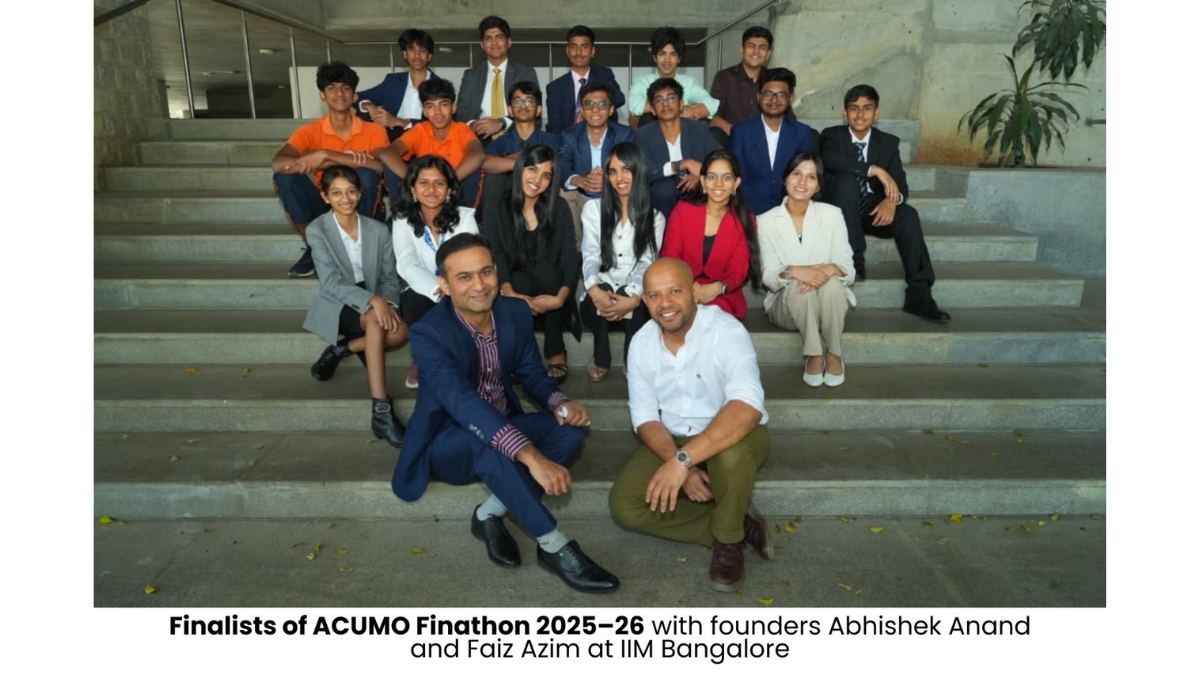
    Bengaluru (Karnataka) [India], January 21: The National Finals of ACUMO Finathon 2025–26, a finance and business planning competition for school students, concluded recently, underscoring a growing emphasis on financial literacy and decision-making skills at the school level.

    The National Finals were hosted at the Indian Institute of Management Bangalore. Finalists arrived on campus on 17th January and stayed overnight in the institute’s hostels. The immersive two-day experience combined exposure to campus life at one of India’s most prestigious institutions with the competitive rigour of the finals.

    Positioned as a first-of-its-kind initiative in India, ACUMO Finathon was conceptualised by Abhishek Anand, Founder of Mentors Capital, and Faiz Azim, Chief Product and Growth Officer at Playo — both alumni of IIM Bangalore. The founders conceived the competition to address a gap in school education by introducing students to structured financial thinking and business planning at an early stage, irrespective of their academic stream.

    Articulating the philosophy behind the initiative, the ACUMO team noted, “Financial education should be treated as a core life skill, not a niche academic subject. The ability to understand risk, make informed choices, and evaluate long-term outcomes is essential for all students, regardless of discipline. ACUMO aims to introduce these capabilities early through practical, experience-led learning.”

    ACUMO Finathon National Finals Highlight Early Push for Financial Skills in School Education -PNN

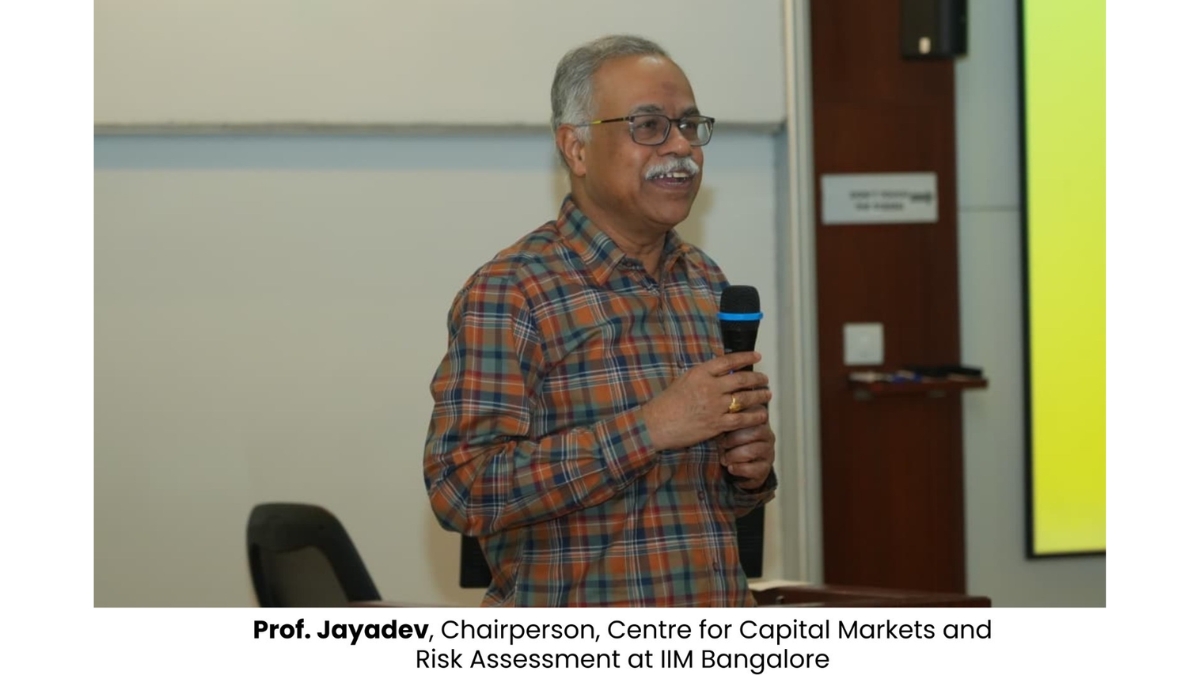
    The finals were judged by Prof. Jayadev, Chairperson, Centre for Capital Markets and Risk Assessment at IIM Bangalore, and Anuj Singhal, Partner and Head of Risk Management Practice at EY.

    Commenting on the quality of participation, Prof. Jayadev said,

    “The ability of school students to engage with financial and business concepts at this level was well beyond expectations. Their analytical rigour and clarity of thought were particularly noteworthy.”

    Anuj Singhal added,

    “What stood out was the confidence with which the teams presented and defended complex ideas. It was especially striking to see such maturity in presentations from students as young as Grade 9.”

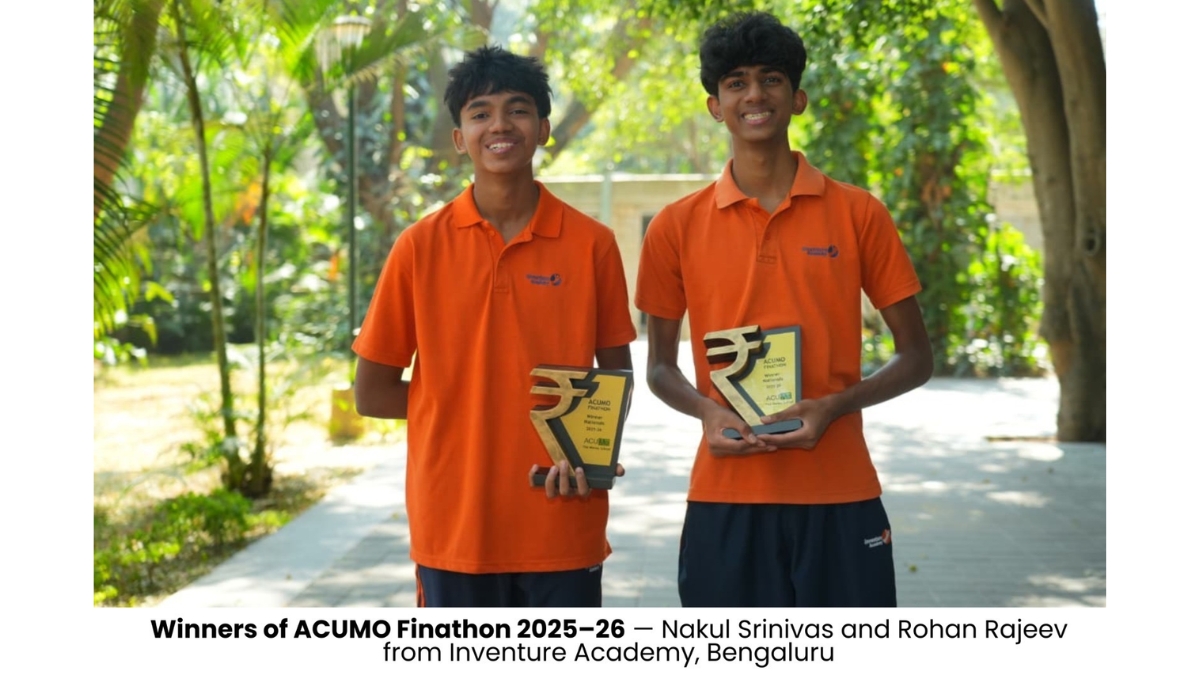
    The National Winners were Nakul Srinivas and Rohan Rajeev from Inventure Academy, Bengaluru.

    ACUMO Finathon National Finals Highlight Early Push for Financial Skills in School Education -PNN

    The First Runners-Up position was shared by two teams: Bhavya Agrawal and Anirudh Banga from Jamnabai Narsee School, Mumbai, and Mahi Shah and Shrinjit Ghosh from Poddar International School, Mumbai.

    Reflecting on the experience, Anirudh Banga, a Grade 11 Science stream student from JNS, Mumbai, said,

    “Despite coming from a science background, the Finathon helped me appreciate how financial thinking applies across domains. The experience was both engaging and intellectually rewarding.”

    ACUMO Finathon was conducted in collaboration with the IIM Bangalore Alumni team and saw significant participation from the alumni community in mentoring and evaluation roles.

    Beyond the competition, the initiative aligns with a broader shift among schools to supplement traditional curricula with experiential learning that equips students with real-world decision-making capabilities.

    As discussions around financial preparedness and life skills gain momentum in education policy and school pedagogy, initiatives such as ACUMO Finathon reflect an emerging model for integrating applied finance and business thinking into school education.

    If you object to the content of this press release, please notify us at pr.error.rectification@gmail.com. We will respond and rectify the situation within 24 hours.

  • Design That Thinks, Feels, and Leads: Inside the M.A. Communication Design Program at SDMCA

    Design That Thinks, Feels, and Leads: Inside the M.A. Communication Design Program at SDMCA

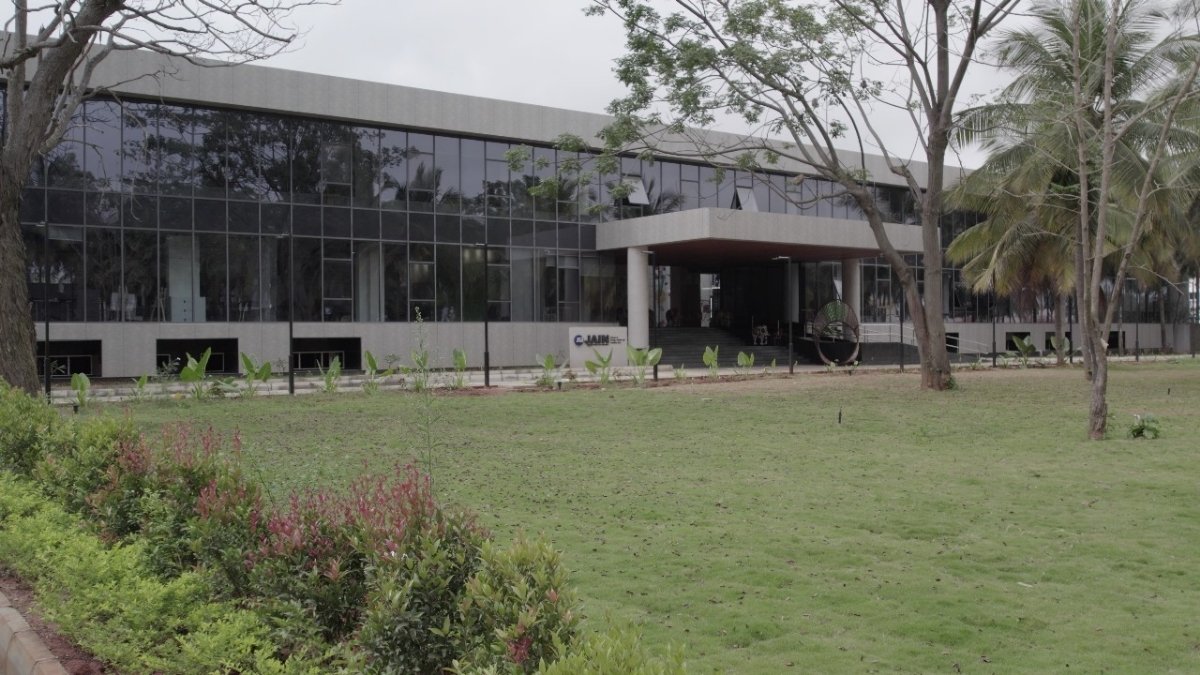
    Bengaluru (Karnataka) [India], January 22: In a world overflowing with visuals, what truly matters is meaning. Communication today is no longer about decoration—it is about clarity, empathy, responsibility, and influence. The M.A. Communication Design Program at the School of Design, Media, and Creative Arts (SDMCA), JAIN (Deemed-to-be University) is crafted for those who wish to shape ideas that resonate across cultures, platforms, and technologies.

    Positioned among the best colleges for MA Communication Design, the Program addresses the evolving expectations placed on creative professionals. Recognised within the ecosystem of top MA Communication Design colleges in India, it prepares learners to move beyond aesthetics and become strategic communicators. For students exploring best MA Communication Design courses in India, SDMCA offers a learning environment where creativity, research, and technology converge. Located in Bengaluru, the Program is frequently associated with the best MA Communication Design colleges in Bangalore, delivering both academic depth and industry relevance. As a contemporary Masters of Communication Design, it also features prominently among top MA Communication Design courses in Bangalore.

    Where Creativity Meets Purpose

    Communication design today requires more than visual skill—it demands insight. This Program trains students to ask the right questions before crafting answers. From visual systems and typography to motion design, interaction design, and immersive storytelling, learners develop multidimensional capabilities expected from graduates of the best colleges for MA Communication Design.

    What distinguishes SDMCA among top MA Communication Design colleges in India is its studio-based pedagogy. Students learn by doing—researching real contexts, responding to live briefs, and refining ideas through critique and iteration. This approach aligns with the standards of the best MA Communication Design courses in India, where design thinking and evidence-based practice are essential. Parents seeking stability and outcomes often value institutions counted among the best MA Communication Design colleges in Bangalore, where structured learning translates into employability. As a rigorous Masters of Communication Design, the Program is also recognised within top MA Communication Design courses in Bangalore for its academic seriousness.

    A Curriculum Built for a Changing World

    The Program integrates 2D, 3D, and motion systems, enabling learners to design across print, digital, spatial, and interactive platforms. This breadth reflects the benchmarks followed by the best colleges for MA Communication Design, where adaptability is a core outcome. Students engage with branding, UI/UX, animation, design research, and emerging technologies—hallmarks of top MA Communication Design colleges in India.

    Research-driven practice is embedded throughout the curriculum, aligning with the expectations of best MA Communication Design courses in India. Bengaluru’s dynamic creative ecosystem further strengthens learning, reinforcing SDMCA’s standing among the best MA Communication Design colleges in Bangalore. As a future-oriented Masters of Communication Design, the Program also earns its place among top MA Communication Design courses in Bangalore by preparing graduates for global design contexts.

    Career Confidence for Students, Assurance for Parents

    Graduates move into roles spanning visual communication, motion design, UI/UX, brand strategy, 3D visualisation, and design research. This versatility is why the Program is often discussed alongside the best colleges for MA Communication Design, where outcomes matter as much as creativity. Employers increasingly look to graduates from top MA Communication Design colleges in India who combine conceptual depth with executional rigour.

    For parents evaluating best MA Communication Design courses in India, the Program’s emphasis on professional practice, ethics, and leadership offers reassurance. Bengaluru’s positioning further reinforces confidence, with SDMCA consistently associated with the best MA Communication Design colleges in Bangalore. As a well-structured Masters of Communication Design, it also reflects the standards upheld by top MA Communication Design courses in Bangalore.

    Mr. Mackey Agarwal, Head – Admissions & Marketing, JAIN (Deemed-to-be University) and JAIN College, shares,

    “Parents want clarity on direction. This Program builds both creative confidence and professional stability, enabling students to grow into responsible design leaders.”

    Learning That Extends Beyond the Classroom

    The Program emphasises interdisciplinary collaboration, ethical practice, and cultural sensitivity—qualities increasingly valued across the best colleges for MA Communication Design. Students work in teams, manage projects, and present design rationale with confidence, reflecting the pedagogical strength of top MA Communication Design colleges in India.

    Through experiential learning and research depth, the Program aligns with the aspirations of those seeking best MA Communication Design courses in India. Its location and industry integration reinforce its reputation among the best MA Communication Design colleges in Bangalore. As a contemporary Masters of Communication Design, it continues to be counted among top MA Communication Design courses in Bangalore for its balance of creativity and responsibility.

    A Choice That Shapes the Future

    For students, this Program is an invitation to think deeply, design responsibly, and communicate meaningfully. For parents, it is a thoughtful investment in a future-ready profession grounded in skill, ethics, and opportunity. Among the best colleges for MA Communication Design, SDMCA stands as a place where ideas are shaped with intent and impact.

    You don’t just learn to design messages here—you learn to shape meaning, influence minds, and lead conversations that matter.

    To explore the M.A. Communication Design Program at SDMCA, connect through:

    • Website: https://www.jainuniversity.ac.in/sdmca
    • Email: sdmca@jainuniversity.ac.in
    • Phone: +91 7022427777

    If you object to the content of this press release, please notify us at pr.error.rectification@gmail.com. We will respond and rectify the situation within 24 hours.

  • From Vision to Frame: The B.A. (Honours) Film Making Program at SDMCA, JAIN (Deemed-to-be University)

    From Vision to Frame: The B.A. (Honours) Film Making Program at SDMCA, JAIN (Deemed-to-be University)

    Bengaluru (Karnataka) [India], January 22: Cinema today is no longer confined to theatres or studios—it shapes culture, influences thought, and defines how stories travel across the world. The B.A. (Honours) Film Making Program at the School of Design, Media, and Creative Arts (SDMCA), JAIN (Deemed-to-be University) is designed for those who do not merely watch films but feel compelled to create them with purpose, discipline, and professional intent.

    Positioned among contemporary Film Making courses, the Program treats filmmaking as a serious craft and a scalable career. Students entering this academic journey are not trained to imitate cinema; they are prepared to author it—combining storytelling, technology, and industry readiness within a structured four-year framework. As part of evolving Film Making Degree courses in India, the Program aligns academic depth with real-world cinematic production.

    A Program That Builds Filmmakers, Not Just Film Projects

    Unlike short-term workshops or fragmented Film Making course options, the BA (Honours) Film Making Program is studio-intensive and progression-driven. Students learn screenwriting, cinematography, sound design, editing, and direction in a carefully sequenced manner, enabling them to script, shoot, edit, and distribute films end-to-end.

    This is why the Program is increasingly discussed alongside the top BA Film Making courses in India—not for scale, but for seriousness of intent. From the first year, learners are trained to think visually, work collaboratively, and understand the ethics and responsibilities of cinematic storytelling.

    Dr. Sujay Nair, Director- School of Design Media and Creative Arts, JAIN (Deemed-to-be University), notes:
    “Filmmaking education must go beyond inspiration. At SDMCA, the Film Making Program is designed to build professional confidence—where creativity is supported by structure, research, and industry-ready execution.”

    Industry-Anchored Learning with Future-Facing Relevance

    What sets this Program apart from many BA Film Making offerings is its strong integration of emerging technologies and industry practices. Students gain exposure to advanced digital camera systems, AI-enabled media workflows, post-production pipelines, and virtual production environments. These capabilities reflect the expectations placed on graduates of the best BA Film Making colleges in India, where adaptability and technical fluency are critical.

    Learners also explore documentary practice, experimental cinema, and media management—ensuring that graduates are not limited to one cinematic format or career direction. As one of the best BA Film Making courses in Bangalore, the Program balances artistic authorship with commercial viability.

    Learning That Culminates in Professional Outcomes

    Assessment at SDMCA is outcome-driven. Instead of theory-heavy examinations, students graduate with multiple short films, a professional showreel, industry collaborations, and a major thesis film or series pilot. These outputs align with the expectations of top BA Film Making courses in Bangalore, where portfolios matter as much as credentials.

    The Honours with Research pathway further supports students inclined toward academic inquiry, positioning the Program within the broader ecosystem of Film Making Degree courses in India that recognise both professional and research excellence.

    Mr. Mackey Agarwal, Head – Admissions & Marketing, JAIN (Deemed-to-be University) and JAIN College, shares:

    “Parents today seek clarity on outcomes. This Film Making Program assures them that graduates leave with tangible work, industry exposure, and the confidence to navigate a competitive media landscape.”

    Careers That Extend Beyond the Camera

    Graduates of the Program move into diverse roles—Film Directors, Screenwriters, Cinematographers, Editors, Sound Designers, Media Managers, and Content Entrepreneurs. Many establish independent production houses or work across OTT platforms, advertising agencies, and global media studios. This adaptability is why the Program is frequently referenced alongside Film Making courses that prioritise long-term career relevance.

    As part of forward-looking BA Film Making education, students are also introduced to funding models, festival strategies, and distribution planning—skills essential in today’s decentralised media economy.

    A Thoughtful Choice for Serious Aspirants

    For students, this Program offers a disciplined environment where imagination is shaped into cinematic voice. For parents, it provides reassurance—of structure, mentorship, and credible career pathways. Within the landscape of top BA Film Making courses in India, the BA (Honours) Film Making Program at SDMCA stands out for its academic rigour and professional integrity.

    You do not learn filmmaking here to follow cinema—you learn it to contribute to its future.

    Those exploring the B.A. (Honours) Film Making Program at SDMCA may refer to the official channels below:

    • Website: https://www.jainuniversity.ac.in/sdmca
    • Email: sdmca@jainuniversity.ac.in
    • Phone: +91 7022427777

    If you object to the content of this press release, please notify us at pr.error.rectification@gmail.com. We will respond and rectify the situation within 24 hours.

  • The Crossing Indian Bistro in Paris Expands to the French Riviera in Nice, France on 26 January

    The Crossing Indian Bistro in Paris Expands to the French Riviera in Nice, France on 26 January

    Nice [France], January 22: This January, the French Riviera welcomes a new culinary arrival as The Crossing Indian Bistro expands beyond Paris with a landmark opening at CAP3000 in Nice on Indian Republic Day, 26 January 2026. The restaurant will become the first-ever Indian dining concept to open inside the iconic seaside shopping destination located between Nice and Monaco, known for its panoramic Mediterranean views and its curated mix of luxury retail and gastronomy.

    The Crossing first made headlines in France with its debut at Galeries Lafayette Haussmann, where it became the first Indian restaurant to open within the department store’s prestigious Le Gourmet space. Since then, it has attracted both Indian travellers and international diners seeking an elevated expression of Indian cuisine that balances authenticity with contemporary presentation. Its philosophy draws from India’s diverse regional traditions, including Rajput kitchens, Northeast India, and coastal cuisines, while reimagining familiar classics with depth and restraint.

    Signature dishes such as Butter Chicken, prepared with careful balance, and the historic Railway Lamb Curry, inspired by recipes once served on long-distance train routes, reflect this approach. Fragrant biryanis, chaat-inspired plates, and house-made chutneys invite guests to explore beyond the expected, supported by ethically sourced and GI-tagged ingredients that reinforce the brand’s commitment to quality and provenance.

    Behind the concept is Chef Ankur Chakraborty, a chef-entrepreneur with over two decades of international experience across India, the Middle East, and Europe. Known for championing regional Indian cuisine in modern settings, he believes Indian food deserves representation on the global dining stage beyond familiar stereotypes. His work has also extended to select official events at the Indian Embassy in Paris, where The Crossing has presented Indian gastronomy in diplomatic and cultural settings.

    Design remains central to the experience. Conceived by designer Mickaël Gouret, both locations blend contemporary French sensibilities with Indian craft traditions, featuring handcrafted brassware from Moradabad, artisan pottery from New Delhi, and bespoke furnishings that create warm, immersive spaces.

    Part of LemonButter Investments, co-founded by Chef Chakraborty and Abhishek Joshi, The Crossing’s Nice opening marks an important step in the group’s European growth, reinforcing its mission to bridge Indian culinary heritage with modern global hospitality in some of Europe’s most prestigious destinations.

    If you have any objection to this press release content, kindly contact pr.error.rectification@gmail.com to notify us. We will respond and rectify the situation in the next 24 hours.

  • Sub-limits in Mediclaim Policies: What They Are and How to Spot Them

    Sub-limits in Mediclaim Policies: What They Are and How to Spot Them

    Mumbai (Maharashtra) [India], January 22: Buying health insurance often feels straightforward: pick a sum insured, compare premiums, and assume you are covered up to that limit. The surprise usually comes at claim time. Many health insurance plans apply sub-limits that cap what the insurer pays for specific parts of the hospital bill, even when your overall coverage looks sufficient. These caps can raise your out-of-pocket spend, and they still apply in cashless admissions because cashless is only a payment method, not a promise of full reimbursement.

    In this article, you will explore common mediclaim sub-limits and show you exactly where to look before you buy.

    What Are Sub-limits and What They Aren’t

    A sub-limit is an internal ceiling within your sum insured. It restricts the payout for a particular expense head, treatment, or condition, even though your total cover is higher. Think of it as a smaller allowed amount” inside the larger policy limit.

    It helps to separate sub-limits from other common terms in medical insurance:

    • Sum insured is the overall maximum payable for covered claims during the policy period.
    • Deductible is the fixed amount you pay first (if your policy has one).
    • A copay is the percentage of the claim you share, regardless of the bill amount.
    • Waiting periods and exclusions determine whether a claim is payable for certain illnesses, timeframes, or situations.

    Sub-limits are usually written as a fixed rupee cap, a percentage of the sum insured, a per-day limit, or a per-hospitalisation or per-procedure cap. They can also be linked to a specific illness category.

    Common Types of Sub-limits You’ll See in Mediclaim Policies

    Sub-limits can appear in several places, so it helps to know the usual patterns in a mediclaim policy.

    Room Rent Limits

    Room rent sub-limits cap your eligible room category or daily room cost. This matters because many hospitals price associated services based on the room type. Choosing a higher category than allowed can trigger additional deductions.

    ICU Limits

    Some policies set a separate cap for ICU charges, often expressed as a daily limit. Even if ICU is covered, the cap can reduce what gets approved if the stay is expensive.

    Procedure or Treatment-wise Caps

    Certain surgeries or treatments may have maximum payable amounts. You might see caps for procedures such as cataract surgery, hernia repair, joint replacement, or gynaecological procedures. The exact list varies, so the key is to look for any treatment-wise limit table.

    Disease-wise Caps

    Some plans restrict payouts for specific conditions, sometimes in the initial policy years. This is different from a waiting period. A waiting period can block the claim, while a disease sub-limit can allow the claim but cap the amount.

    Modern Treatment or Advanced Procedure Limits

    Policies may define modern treatments or advanced procedures and set limits on them. If your hospital recommends an advanced approach, the wording decides whether it is fully covered or capped.

    Consumables and Non-medical Items

    Many hospital bills include items that insurers treat as non-payable, such as certain consumables or administrative charges. These are not always labelled as sub-limits, but the effect is similar: the approved claim becomes lower than the billed amount.

    Ambulance and Daycare Caps

    Ambulance reimbursement is often capped. Daycare procedures (treatments that do not require a full-day admission) may also have defined limits in some products.

    Why Insurers Use Sub-limits and Where You’re More Likely to Find Them

    Insurers add sub-limits mainly to control claim volatility and keep premiums competitive. Without caps, costs can vary widely across cities, hospitals, and room categories. Sub-limits help standardise payouts and reduce unexpected spikes.

    You are more likely to see sub-limits in entry-level covers, older-style products, some employer group covers, and certain senior-focused offerings. This does not automatically make them bad, but it does mean you should read the limits carefully before calling any plan the best health insurance option for your needs.

    How to Spot Sub-limits Before You Buy or Renew

    To buy individual health insurance wisely, treat sub-limits as a non-negotiable reading step. You do not need to decode the entire policy booklet to find them, but you do need to know where they are hidden.

    • Up to, not exceeding, maximum
    • Per day, per hospitalisation, per illness, per procedure.
    • Percentage of sum insured
    • Subject to sub-limit or as per schedule

    Also, check add-ons and optional covers. In some products, limits change only if an add-on is selected, while the base health insurance plan stays capped. Make sure you are comparing like-for-like.

    Conclusion

    Sub-limits determine how much of your hospital bill is actually payable, not just how large your sum insured appears on paper. Once you know where to look, spotting them becomes easier: the benefits table, the schedule, and a few recurring phrases in the wording usually tell the full story. Spend a little time checking these limits before renewing or choosing a mediclaim policy, and you can avoid expensive surprises later.

    If you object to the content of this press release, please notify us at pr.error.rectification@gmail.com. We will respond and rectify the situation within 24 hours.

  • Paramatrix Technologies Secures Majority Stake in Metasys

    Paramatrix Technologies Secures Majority Stake in Metasys

    Mumbai (Maharashtra) [India], January 22: Paramatrix Technologies Limited (Paramatrix) (NSE: PARAMATRIX), a trusted provider of enterprise software products and digital IT services, has announced the completion of the first tranche of its acquisition of Metasys Software Private Limited.

    Key Acquisition Highlights

    As part of the previously announced transaction, the first tranche of the acquisition of Metasys Software Private Limited has been completed through the acquisition of a 51% equity stake.

    Following this transaction, Metasys has become a subsidiary, with the remaining stake proposed to be acquired in subsequent tranches as planned.

    Disciplined Integration Approach

    Unlike a single-step acquisition, Paramatrix has adopted a phased ownership approach, allowing for:

    • Gradual integration of teams, systems, and delivery processes
    • Preservation of operational stability at Metasys
    • Better visibility on execution quality before subsequent tranches

    With majority ownership now in place, Paramatrix gains management control and strategic oversight, enabling closer coordination across client delivery, engineering talent, and solution development.

    Strategic Rationale and Outlook

    The acquisition enhances Paramatrix’s delivery depth, global client reach, and execution capability, creating a scalable platform built for recurring international engagements. With integration underway, the Company is focused on process alignment and delivery optimisation, while maintaining client continuity. As the remaining tranches progress, Paramatrix expects the combined platform to support disciplined growth, stronger execution efficiency, and sustained long-term value creation.

    Commenting on the acquisition, Mr. Mukesh Thumar, Founder, Managing Director & CEO of Paramatrix Technologies Limited, said, “Completing the first tranche moves the acquisition from intent to execution. Our priority now is seamless integration, delivery continuity, and building long-term value as we progress through the remaining phases.”

    If you object to the content of this press release, please notify us at pr.error.rectification@gmail.com. We will respond and rectify the situation within 24 hours.

  • Generation Intention: How Gen Z Turned Wellness From A Trend Into A Quiet Rebellion

    Generation Intention: How Gen Z Turned Wellness From A Trend Into A Quiet Rebellion

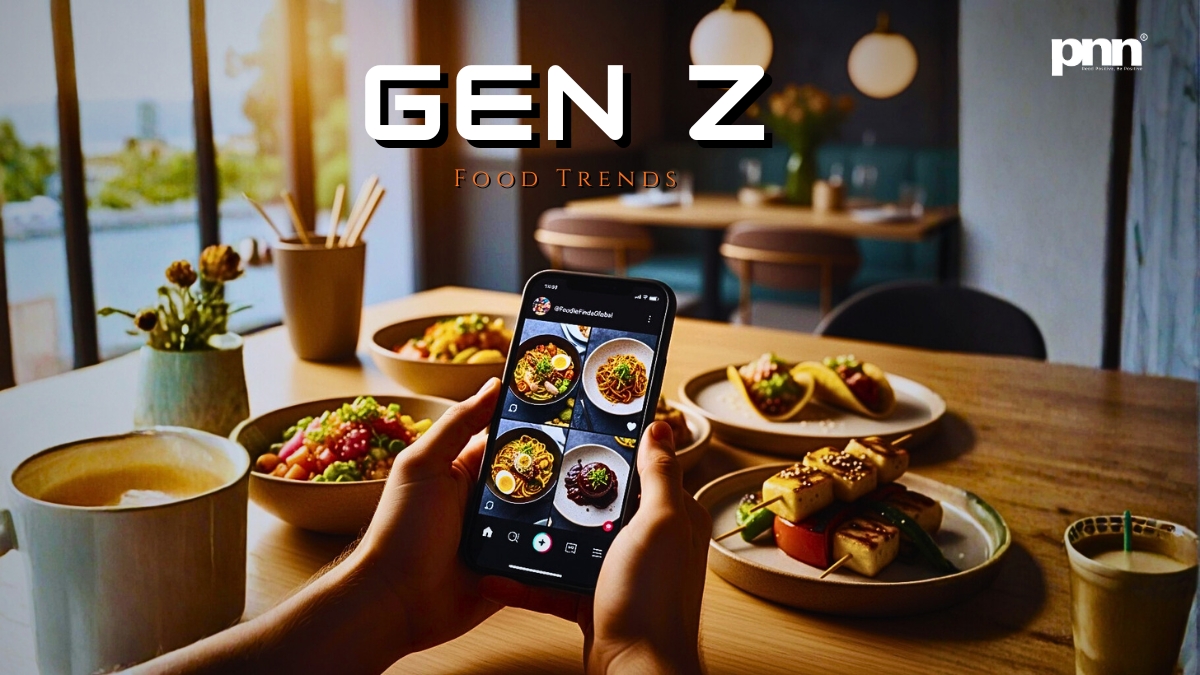
    Mumbai (Maharashtra) [India], January 22: Gen Z didn’t wake up one morning and decide to be “mindful.” That would imply chaos first, clarity later. In reality, many of them grew up inside the chaos—financial instability, climate dread, digital burnout, algorithmic comparison, and a wellness industry that often sold guilt disguised as green juice. What emerged wasn’t rebellion in the loud, headline-friendly sense. It was ra estraint. Selective participation. A soft but stubborn refusal to self-destruct for the sake of aesthetics.

    If millennials made wellness aspirational, Gen Z made it functional. Less preaching. Fewer miracles. More labels read. More questions were asked. And a noticeable willingness to opt out of alcohol, of excess sugar, of performative health routines that promise enlightenment but deliver anxiety.

    This shift isn’t flashy. It’s disruptive in a much more inconvenient way: it changes what people buy, how often they buy it, and why.

    The Origin Story Nobody Markets

    Gen Z’s mindful consumption isn’t born out of privilege alone, despite popular assumptions. It’s shaped by precarity. Many entered adulthood during economic slowdowns, pandemics, and a wellness marketplace that had already peaked in absurdity.

    They watched detox teas get sued.
    They saw influencer fitness empires quietly collapse.
    They learned early that “clean” is a word with no legal definition and plenty of emotional manipulation attached.

    So instead of swallowing everything, they started interrogating it.

    This generation doesn’t distrust wellness. It distrusts exaggeration.

    Sober Curiosity Isn’t Sobriety—And That’s The Point

    One of the most misread Gen Z trends is “sober curiosity.” It isn’t a prohibition. It’s experimentation without obligation.

    Drinking, once positioned as a social requirement, is now optional. Alcohol hasn’t vanished; it’s been demoted. Mocktails, low-alcohol beverages, and alcohol-free spirits didn’t rise because Gen Z hates fun. They rose because Gen Z hates regret that lasts longer than the night.

    The data backs this shift. In multiple global markets, alcohol consumption among younger adults has declined steadily since the late 2010s. Brands noticed. Reformulation followed. Marketing softened. The industry adjusted—not out of moral awakening, but survival instinct.

    Internal Link Suggestion: Read: How The Beverage Industry Is Redesigning Social Drinking

    Food Isn’t Fuel Anymore—It’s A Relationship

    Clean eating, for Gen Z, doesn’t mean asceticism. It means literacy.

    They read ingredient lists the way previous generations read horoscopes. They care less about calorie counts and more about processing, sourcing, and transparency. Ultra-processed foods aren’t demonised—they’re contextualised.

    What’s quietly radical here is balance. This generation is less interested in extremes. Veganism exists, but so does flexitarianism. Organic matters, but affordability still wins arguments.

    The result? Food brands face an uncomfortable reality: Gen Z is willing to walk away. Loyalty is conditional. If a product overpromises or underdelivers, it doesn’t get a second chance—it gets unfollowed.

    Wellness Without The White Noise

    The wellness industry spent years shouting. Gen Z prefers subtitles.

    Meditation apps now talk about stress, not enlightenment. Supplements lean into evidence, not mysticism. Fitness is framed as mental maintenance, not body punishment.

    This is not accidental. Burnout culture hit Gen Z early. Many watched older generations glorify exhaustion and pay for it later. The response wasn’t laziness. It was a recalibration.

    Rest is no longer a reward. It’s infrastructure.

    Internal Link Suggestion: See Also: Why Rest Became A Productivity Strategy

    The Economic Reality Behind Mindful Choices

    Now for the part brands rarely highlight.

    Mindful consumption costs more. Cleaner labels, sustainable sourcing, and smaller batches—these things add zeros. Gen Z knows this. It frustrates them.

    There’s a growing tension between intention and access. While the desire for better food and wellness products is widespread, affordability isn’t. This creates a split market: premium mindfulness for some, compromised choices for others.

    The risk? Wellness is becoming another marker of class, not health.

    Brands that ignore this reality may win aesthetics but lose trust.

    The Social Media Paradox

    Gen Z is deeply online—and deeply sceptical of what they see there.

    Wellness content still thrives on social platforms, but the tone has shifted. Perfect routines are mocked. Overly curated “day in my life” videos are dissected. Authenticity is demanded, even if it’s messy.

    Ironically, this makes marketing harder. You can’t fake restraint. You can’t aestheticise moderation without looking ridiculous. And Gen Z can smell performance through a screen.

    Sarcasm is their defence mechanism. Brands that take themselves too seriously don’t survive long.

    What The Numbers Say

    Globally, the wellness economy has crossed multi-trillion-dollar valuations, spanning food, fitness, mental health, and preventive care. But growth is uneven. Categories aligned with transparency, functionality, and moderation are outperforming those built on hype.

    Investment has shifted toward:

    • Functional beverages

    • Gut health products

    • Mental wellness tools

    • Minimal-ingredient foods

    Meanwhile, detox-heavy, miracle-claim segments are quietly shrinking.

    Progress, but not perfection.

    The Cultural Shift Nobody Can Reverse

    Gen Z isn’t anti-pleasure. It’s anti-compulsion.

    They still go out. They still indulge. But they want choice without judgment. Wellness, for them, is not a badge—it’s a boundary.

    That boundary is reshaping menus, shelves, and marketing language. It’s forcing industries to mature. And yes, it’s inconvenient for businesses built on excess.

    Which is precisely why it’s working.

    Pros And Cons Of Gen Z’s Mindful Consumption

    Pros

    • Greater awareness of health and long-term well-being

    • Reduced dependency on harmful habits

    • Increased demand for transparency and accountability

    • Shift toward sustainable, balanced lifestyles

    Cons

    • Higher costs limit accessibility

    • Wellness risks becoming elitist

    • Information overload can cause decision fatigue

    • Brands may exploit “mindfulness” as another aesthetic

    The Final Thought

    Gen Z didn’t kill indulgence. It killed mindless indulgence.

    In a world trained to consume first and reflect later, this generation reversed the order. Not dramatically. Not loudly. Just consistently.

    And that may be the most disruptive consumer behaviour shift of all—one that doesn’t trend explosively, but changes everything underneath.

    PNN Lifestyle

  • Wellington College International Pune Appoints Dr. Victoria Gardner as Head of Senior School

    Wellington College International Pune Appoints Dr. Victoria Gardner as Head of Senior School

    Pune (Maharashtra) [India], January 21: Wellington College International Pune (WCI Pune) is pleased to announce the appointment of Dr. Victoria Gardner as Head of Senior School (Year 7 to Year 13). Dr. Gardner brings over 20 years of experience in education, with a strong track record in academic leadership and curriculum development, alongside a deep commitment to pupil wellbeing and success.

    Dr. Gardner holds a BA and MLitt in Modern History and a PhD in Modern History from the University of Oxford and is a prestigious Fellow of the Royal Historical Society, reflecting her enduring engagement with scholarship and intellectual enquiry. Following appointments at several leading UK universities, she held leadership positions at Wellington College UK and The Perse School in Cambridge; at the former as Head of Sixth Form and Director of Higher Education and Careers and at the latter as Assistant Head and on the Executive Leadership Team.

    As Head of Senior School, Dr. Gardner will provide strategic and academic leadership for the school’s innovative curriculum and co-curriculum. Her significant expertise in higher education and careers guidance will further benefit all pupils, creating clear and aspirational pathways for university preparation in India and abroad. She is passionate about the power of education to shape each pupil’s lifetime and about the importance of preparing our children to become future global leaders.

    In other exciting news, Wellington College International Pune is proud to announce the results of the Cambridge IGCSE November 2025 external examination series in Mathematics, marking a significant milestone as the first cohort of Year 11 pupils to sit external examinations.

    Our Year 11 pupils achieved the highest possible grade of A*, delivering an exceptional 100% A* outcome. This outstanding achievement reflects the commitment and diligence of the pupils, the expertise and dedication of teaching staff, and the school’s strong academic foundations.

    For more information, please contact: www.pune.wellingtoncollege.in +91 83500 90909

    If you object to the content of this press release, please notify us at pr.error.rectification@gmail.com. We will respond and rectify the situation within 24 hours.

  • Doctor 365 and DRVA organized 5th Bollywood Maha Arogya shivir attend Shilpa Shetty, Chairman Dr. Dharmendra Kumar

    Doctor 365 and DRVA organized 5th Bollywood Maha Arogya shivir attend Shilpa Shetty, Chairman Dr. Dharmendra Kumar

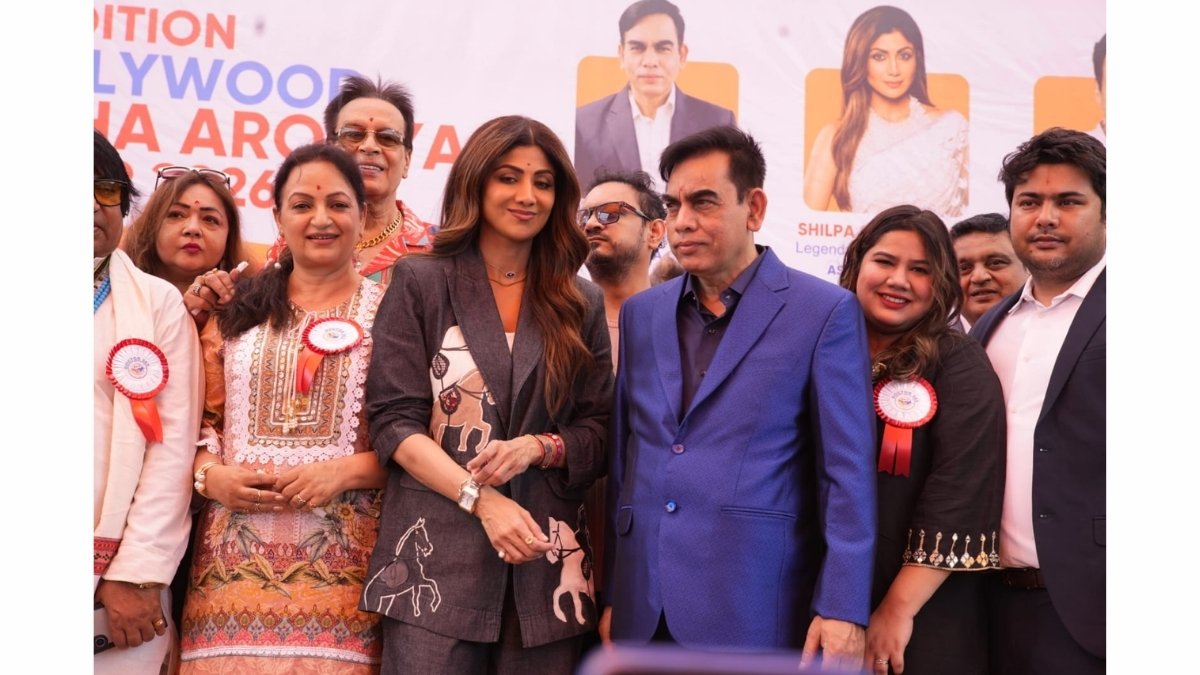
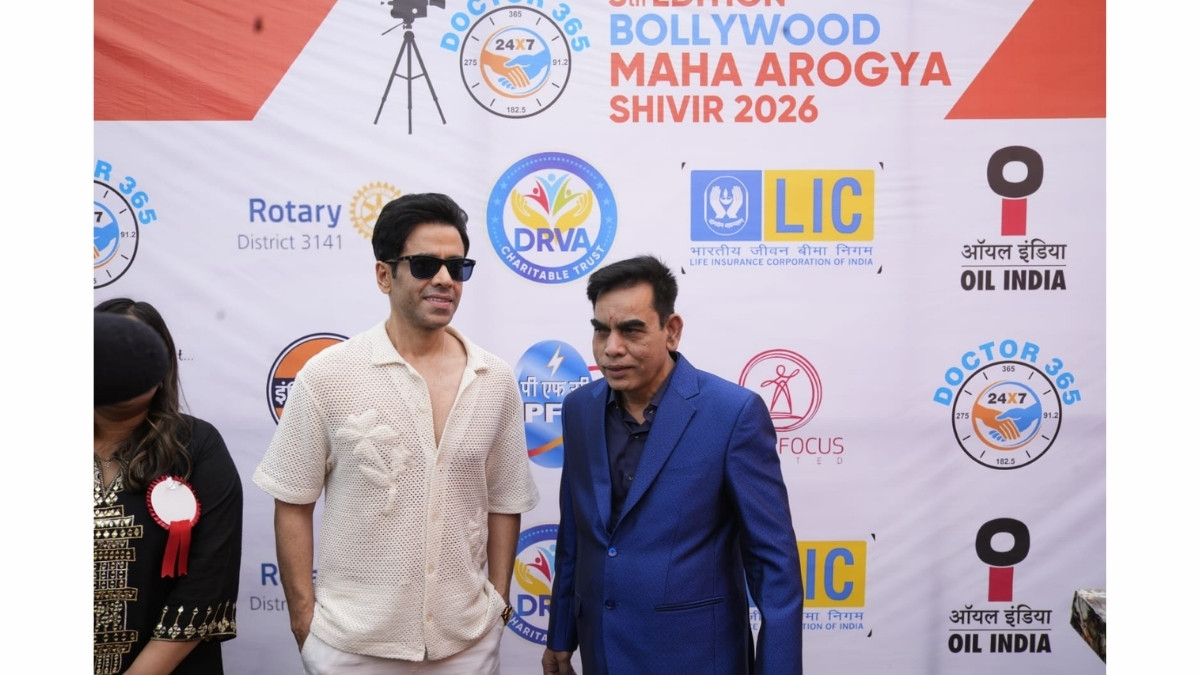
    Mumbai (Maharashtra) [India], January 21:  The 5th Bollywood Maha Arogya Shivir 2026 was successfully organized on January 18, 2026, at Chitrakoot Ground, Andheri West, Mumbai, in the presence of chief guest renowned actress Shilpa Shetty, guest of honor Tusshar Kapoor, Rotary Club’s Dr. Manish Motwani, and Dr. Dharmendra Kumar, Chairman of Doctor 365 and DRVA Charitable Trust. Guests included Mr. Biranchi Das (Director Personal SECL), Nr. Swapnil Dhar (Managing Director,SBI Foundation), Mr. Sanjay Prakash (Former MD, SBI Foundation), Manoj Agarwal (CMD, BCCL), Mr. M.K. Ramaiya (DIRECOR HR &PERSONAL BCCL), Mr. Gyaneshwar Patil (MP, Khandwa, Madhya Pradesh), actress Upasana Singh, Naresh Malhotra (Chairman, Prime Focus), actors Deepak Parashar, Dilip Sen, and Sangeeta Tiwari. The event was supported by Vishal Singh, Annu Singh, fashion designer Archana Kochhar, Mahesh Manwani, B.N. Tiwari, Amit Doshi, Dr. Dilip Pawar, Dr. Govind Reddy, Dr. Subhash, Harish Choksi, Mahendra Poddar (Chitrakoot Ground),  Ms Yogita Borkar, Mr. Ani Bhushan and Dr. Anil Pande. All guests were honored with bouquets. The program began with the lighting of the lamp.

    Doctor 365 & DRVA organized 5th Bollywood Maha Arogya shivir attend Shilpa Shetty, Chairman Dr. Dharmendra Kumar-PNN

    Thousands of people benefited from the 5th Bollywood Maha Arogya Shivir, receiving services such as general health checkups, wheelchair distribution, eye examinations and distribution of spectacles, blood tests, dental care, ENT, general surgery, gynecology, urology, dermatology, cancer screening, children’s health checkups, X-rays, BMD, BMI, mammography, medicines, and 5 lakh health cards. The camp was supported by doctors and paramedical teams from premium hospitals in Mumbai. 56,000 patients benefited from this free medical camp, 1200 wheelchairs were distributed, and 13,000 eye examinations and spectacles were provided. Medicines worth Rs. 2.5 crore were distributed. 58 surgical patients were identified. 13,000 diabetes tests and 21,000 blood tests were conducted, along with 200 mammography, 525 ECGs, and 900 BMD tests. This was made possible with the cooperation of over 800 doctors, more than 1100 paramedical staff, and 300 volunteers.

    Dr. Dharmendra Kumar stated that they have been organizing this special health camp for people associated with the film industry for the past five years. People from the media and their families also benefit from this initiative. We express our gratitude to all the guests, including the chief guest, Shilpa Shetty.

    The guests praised Dr. Dharmendra Kumar’s efforts. His organization has also set a world record for conducting the most free mega medical camps.

    The DRVA Charitable Trust has been operating for the past 15 years. The trust’s chairman, Dr. Dharmendra Kumar, aims to continue working together towards a healthy, empowered, and progressive society.

    It is noteworthy that under Dr. Dharmendra Kumar’s guidance, a total of 9781 medical camps have been organized, benefiting 19.6 million patients.  Over 1.1 million sickle cell tests were conducted, and 22,000 patients received treatment. 1.2 million TB patients were screened and provided with medication, and 80,000 TB patients received nutrition kits. 300,000 people had their eyes examined, and 180,000 pairs of glasses were distributed. 92,000 wheelchairs were distributed, and a total of 11,000 surgeries have been performed to date.

    If you object to the content of this press release, please notify us at pr.error.rectification@gmail.com. We will respond and rectify the situation within 24 hours.