Author: Sutun Nayak

  • Travel Grows Up In 2026 — And Leaves The Bucket List Behind

    Travel Grows Up In 2026 — And Leaves The Bucket List Behind

    Mumbai (Maharashtra) [India], January 20: For years, travel was marketed like a competitive sport. The more stamps on your passport, the more enviable your life appeared. Airports became backdrops, destinations became trophies, and experiences were reduced to captions written mid-boarding call. Somewhere along the way, travel stopped asking why and focused obsessively on where.

    2026, inconveniently for that narrative, has other plans.

    The language of travel is changing — not loudly, not dramatically, but decisively. Travellers are no longer chasing itineraries designed for applause. They are curating journeys that mirror their values, emotional bandwidth, and increasingly limited tolerance for chaos disguised as adventure. This is not wanderlust dying. This is wanderlust maturing.

    And yes, it’s slightly judging you for that “12 countries in 10 days” spreadsheet.

    When Travel Stopped Performing And Started Meaning Something

    The shift didn’t arrive overnight. It was gestating quietly through burnout culture, digital fatigue, climate anxiety, and the collective realisation that being exhausted in a beautiful place is still being exhausted.

    In 2026, travel has pivoted from spectacle to intention.

    People are choosing:

    • Shorter, richer journeys over extended logistical marathons

    • Cultural immersion over checklist sightseeing

    • Wellness and restoration over adrenaline-for-adrenaline’s sake

    This isn’t minimalism. It’s discernment.

    Travelers are asking better questions now:
    Will this change how I live when I return?
    Will this slow me down rather than speed me up?
    Will this feel like mine, or like something I’m supposed to want?

    The answers are shaping an entirely new itinerant economy.

    The Rise Of The Micro-Journey Economy

    Long vacations aren’t extinct — they’re just no longer the default fantasy.

    Micro-trips, often lasting three to five days, are becoming the preferred format. Not because people have less curiosity, but because they have less tolerance for disruption masquerading as indulgence.

    These shorter journeys focus on:

    • One town instead of five cities

    • One culture instead of a sampler platter

    • One purpose instead of a forced narrative arc

    The irony? These trips often cost more per day than traditional vacations. But travellers are willing to pay for coherence, comfort, and clarity.

    Time, not money, has become the luxury currency.

    Slow Travel Is No Longer A Trend — It’s A Correction

    Once dismissed as niche or impractical, slow itinerant has crossed into the mainstream. Staying longer in fewer places isn’t framed as “doing less” anymore. It’s framed as understanding more.

    This includes:

    • Train journeys replacing short-haul flights

    • Walkable neighborhoods over car-centric tourism

    • Rentals that prioritise local interaction over hotel anonymity

    The appeal isn’t romantic nostalgia. It’s psychological sustainability.

    Travellers don’t want to return home needing a vacation from their vacation.

    Wellness Travel Moves Beyond Spa Clichés

    Health-focused travel used to mean luxury spas, green juices, and guilt-inducing yoga schedules. In 2026, wellness itinerant looks far more practical — and far less performative.

    Today’s wellness journeys emphasise:

    • Sleep restoration

    • Nervous system regulation

    • Digital detox without moral superiority

    • Preventive health, not aesthetic transformation

    This isn’t about becoming a better version of yourself. It’s about becoming a functional one.

    Interestingly, many travellers now prefer understated wellness retreats over opulent resorts. Comfort matters. Excess does not.

    Cultural Immersion Without The Savior Complex

    One of the more encouraging evolutions is how cultural immersion is being reframed.

    Travellers are moving away from voyeuristic experiences toward participation that respects boundaries. Cooking with locals instead of photographing them. Learning context instead of extracting stories. Listening without narrating.

    There’s less interest in “authenticity” as a buzzword and more interest in reciprocity.

    The experience is no longer about being changed by a place. It’s about not damaging it.

    The Business Of Meaningful Travel Is Booming — Quietly

    Despite global economic caution, itinerant spending remains resilient. Industry observers note that while volume may fluctuate, value per traveller continues to rise. People are travelling less frequently but spending more intentionally.

    This has reshaped how destinations market themselves:

    • Fewer mass campaigns, more niche storytelling

    • Experiences over attractions

    • Local partnerships over generic itineraries

    The global itinerant economy remains a multi-trillion-dollar ecosystem, but its growth in 2026 isn’t driven by scale — it’s driven by selectivity.

    The Digital Paradox: Less Sharing, More Remembering

    Another subtle shift? People are documenting less — at least publicly.

    Private albums, delayed posting, and selective sharing are replacing real-time broadcasting. The memory is becoming more important than the metric.

    Ironically, this has made travel feel more luxurious. Not everything needs to be witnessed.

    Presence is the new premium feature.

    The Downsides Nobody Is Romanticising

    This evolution isn’t without complications.

    Access Inequality
    Meaningful itinerant often costs more, unintentionally turning intention into a privilege.

    Over-Tourism Still Exists
    Some “slow travel” destinations are becoming crowded precisely because they promise serenity.

    Greenwashing Risks
    Not all purpose-driven travel is actually responsible — some just learned better vocabulary.

    Decision Fatigue
    When every trip must align with your values, planning becomes a stressor in itself.

    Intentionality, like anything else, can be over-optimised into exhaustion.

    Why This Shift Feels Permanent

    This isn’t a trend driven by influencers or algorithms. It’s driven by lived experience. By people who returned from hyper-packed trips feeling oddly empty. By travellers who realised that motion is not the same as meaning.

    The 2026 traveller is no less curious. They’re just less interested in proving it.

    It has stopped being about escape and started being about alignment — with values, energy levels, relationships, and reality itself.

    And frankly, it was overdue.

    Final Thought: Travel Isn’t Smaller — It’s Sharper

    The future of itinerancy isn’t quieter because people care less. It’s quieter because they care more selectively.

    2026 doesn’t promise fewer journeys. It promises better ones. Journeys that linger after unpacking. Journeys that don’t require explanation. Journeys that don’t collapse the moment you return to your inbox.

    The bucket list isn’t cancelled.
    It’s just being rewritten — in pencil, not ink.
    PNN Lifestyle

  • Patel Retail Limited Secures INR 25 Crore Export Order

    Patel Retail Limited Secures INR 25 Crore Export Order

    Mumbai (Maharashtra) [India], January 20: Patel Retail Limited (BSE: 544487 | NSE: PATELRMART) Patel Retail Limited has secure export order worth ₹25 crore. reinforcing its strong presence in global markets. The orders span across regions including, UK, Italy,UAE, Saudi Arabia & other countries underscoring the company’s expanding international presence and the growing global demand for its high-quality products.

    These consignments will be processed at Patel Retail’s state-ofthe-art facilities in Ambernath, Thane, Mumbai, Maharashtra and Gujarat, ensuring strict adherence to global quality standards. The order book is not only significant in value but also comprises repeat orders from long-term clients, reflecting the deep trust and consistent satisfaction of international partners with Patel Retail’s offerings. PATEL RETAIL LIMITED TRUST & TOGETHERNESS With exports to over 35+ countries worldwide

    About Patel Retail Limited:

    Patel Retail Limited is a leading name in value-driven retail and integrated food processing in India. Headquartered in Ambernath, Mumbai with operations across MMRDA region, the company combines modern retail formats with backward integration in agri-processing to ensure quality, cost efficiency, and supply reliability. It also extends its reach through a mobile application that connects customers to their nearest store and offers free home delivery.

    Patel Retail has built a strong portfolio of products through its in-house brands – Indian Chaska for spices and flavourings, Patel Fresh for pulses, nuts, and dry fruits, and Patel Essential for household and cleaning products. Supported by food processing units in Dudhai, Gujarat, and facility in Ambarnath MIDC, along with a current network of 48 stores, the company maintains strict quality and safety standards while delivering value across its product categories.

    If you object to the content of this press release, please notify us at pr.error.rectification@gmail.com. We will respond and rectify the situation within 24 hours.

  • BRMGSU Leads Human Rights & Social Security Meet for Unorganised Workers

    BRMGSU Leads Human Rights & Social Security Meet for Unorganised Workers

    New Delhi [India], January 20: Hooghly witnessed  a massive mobilisation of unorganised sector workers as a large-scale conference on Human Rights Awareness and Social Security for Unorganised Sector Workers – 2026 was held at Dunlop Maidan. More than 20,000 workers participated, most of them railway Mall Godam (goods shed) labourers from different districts of West Bengal.

    The conference focused on strengthening awareness around labour rights, human dignity, and access to social security for workers outside formal employment structures. It was jointly organised by the Bharatiya Railway Mall Godam Shramik Union (BRMGSU) and the Bharatiya Labour Union, with support from SGT University and Nomo Foundation. The objective was to create a collective platform where workers could better understand labour laws, human rights provisions, and welfare schemes meant for their protection.

    BRMGSU Background:

    The Bharatiya Railway Mall Godam Shramik Union has been actively working for the welfare and rights of railway goods shed labourers across India. Over the years, the union has consistently raised issues related to job security, minimum wages, occupational health and safety, and social protection for Mall Godam workers, many of whom operate in highly informal and vulnerable conditions. Through sustained advocacy, dialogue with authorities, and grassroots mobilisation, BRMGSU has emerged as a strong and credible voice for unorganised railway labourers.

    The programme was inaugurated by Dr. Parimal Kanti Mondal, President of BRMGSU, who highlighted the long-standing challenges faced by unorganised workers, including lack of job security, inadequate wages, limited healthcare facilities, and absence of social protection. He stressed that unity, legal awareness, and organised action are essential to securing dignity and justice for Mall Godam labourers.

    The conference was attended by Priyank Kanoongo, Hon’ble Member of the National Human Rights Commission, as Chief Guest. Addressing the gathering, he stated that labour rights are an integral part of human rights. Referring to his recent visits to railway goods sheds across West Bengal, he shared insights from direct interactions with workers and assured that the issues raised would be pursued through appropriate institutional mechanisms.

    Sheo Prasad Tiwari, National General Secretary of TUCC, attended as Special Guest and highlighted the importance of collective struggle and strong trade union movements in protecting workers’ rights.

    Senior officials from the Ministry of Labour addressed the gathering on key enforcement and welfare issues. Anil Jena spoke on labour law enforcement and statutory rights, while Dwipannita Jena highlighted occupational health and safety concerns. Shitangshu Tai elaborated on welfare schemes and social security benefits available to unorganised workers.

    Legal perspectives were shared by Sanjay Ghosh and Kobir Ghosh, who stressed the importance of legal awareness and judicial support in strengthening the fight for labour rights.

    The conference concluded with a call for sustained unity and organised efforts, led by Indu Sekhar Chakroborty, General Secretary of BRMGSU, reaffirming commitment to the ongoing movement for human rights, social security, and dignity of labour for unorganised sector workers.

    If you object to the content of this press release, please notify us at pr.error.rectification@gmail.com. We will respond and rectify the situation within 24 hours.

  • Korean Kanakaraju Teaser Signals a Reset: Take 15

    Korean Kanakaraju Teaser Signals a Reset: Take 15

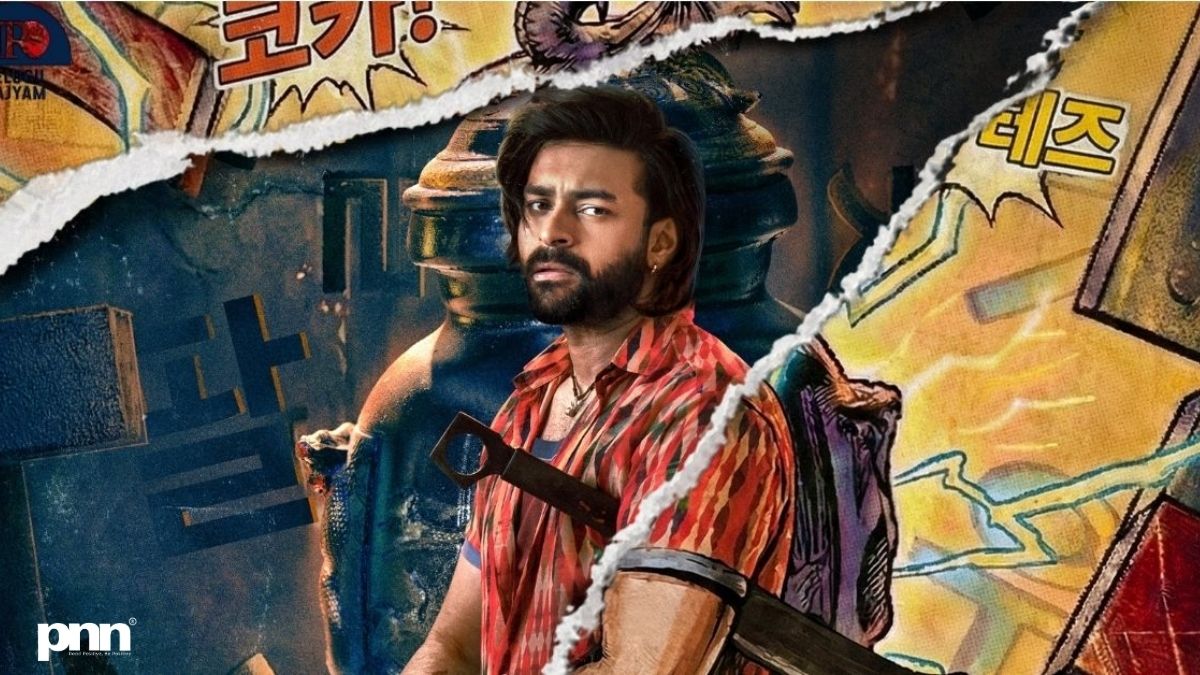
    Mumbai (Maharashtra) [India], January 20: The Korean Kanakaraju teaser does not ask for attention. It takes it. Varun Tej is back, blade in hand, mood locked, and the message is loud and clear.

    A Birthday Reveal With Teeth

    The teaser of Korean Kanakaraju was released on Varun Tej’s birthday, but this was no soft celebration. This was not nostalgia bait. This was a statement.

    Unveiled by the film’s producers, the teaser officially confirms the title of Varun Tej’s fifteenth film, earlier referred to as VT15. Even the name sets expectations. Korean Kanakaraju. Swagger, mystery, and a cross-cultural edge rolled into one.

    This is an Indo-Korean project. That much is official. The teaser makes this clear visually and tonally, without spelling it out like a brochure. The setting, characters, and atmosphere point to an international canvas, while firmly holding on to a distinctly Telugu core.

    No fluff. No backstory dump. Just intent.

    What the Korean Kanakaraju Teaser Demonstrates

    The Korean Kanakaraju teaser is lean and sharp. Varun Tej appears in a rugged, intense avatar, holding a katana. Not for style points. For business.

    The violence is implied, not glorified. There is power, but it is controlled. The visuals are dark. The mood is heavy. This is not slapstick comedy or overcooked action. It is mass cinema, handled with restraint.

    The teaser reflects a genre blend that has been widely discussed: an action thriller with strong comic undertones. Some outlets have described it as a horror comedy, while others see it as a mass-appeal action drama. The teaser itself refuses to sit neatly in one box, and that ambiguity works in its favour.

    Also worth noting, the Korean element is not treated as a gimmick. There are no postcard shots. No touristy flex. The Korean connection feels embedded, not glued on.

    The Reset Button Moment for Varun Tej

    Let’s call this what it is. Korean Kanakaraju offers Varun Tej a clear reset moment.

    After a mixed box office phase, the teaser places him back in control. The body language is different. The styling feels confident. The performance energy is focused, not scattered.

    There is a quiet arrogance to his screen presence here. Not loud heroism. Not forced bravado. The kind that says, “I know exactly what I’m doing.”

    This feels deliberate. Like a man choosing his shot carefully. Very Harvey Specter energy. Calm. Calculated. Unbothered.

    For Telugu cinema audiences, this matters. Returns are not announced. They are earned. And this teaser does the early groundwork.

    The Indo-Korean Angle, Done Right

    Indo-Korean collaborations are not new, but they often feel like surface-level experiments. Korean Kanakaraju appears to avoid that trap.

    The teaser suggests that Korean characters and locations are integral to the story. Not a cameo-driven cultural exchange. Not a random foreign antagonist.

    Director Merlapaka Gandhi has reportedly worked closely with Korean technicians to ensure authenticity in action choreography and visual language. The teaser reflects this effort. The action beats feel different. Sharper. Less theatrical, more tactical.

    This is important for Indian cinema, especially Telugu films aiming for global relevance. Audiences are quick to spot lazy international window dressing. This does not feel lazy.

    Controlled Chaos by Merlapaka Gandhi

    Merlapaka Gandhi is known for balancing humour with narrative discipline. Films like Venkatadri Express and Express Raja showcased his grip on timing and tone.

    With Korean Kanakaraju, he seems to be exploring darker territory without losing control. The teaser shows restraint. No unnecessary dialogue. No spoon-feeding.

    It feels like a director trusting the audience to connect the dots. That confidence is rare. And refreshing.

    If this control carries through the full film, Korean Kanakaraju could land in that sweet spot where mass meets smart.

    Thaman S Turns the Volume Up

    Thaman S handles the teaser’s background score, and it lands.

    The music does not overpower the visuals. It supports them. The beats build tension without announcing themselves like a marching band.

    Thaman has faced past criticism for excess. Here, he keeps it tight. The score enhances the mood rather than hijacking it.

    Based on the teaser, the full soundtrack is likely to lean more toward atmosphere than celebration. A smart choice for this genre blend.

    Why the Korean Kanakaraju Teaser Is Working

    The Korean Kanakaraju teaser works because it understands one simple truth. Less is more.

    It does not explain the plot. It does not introduce every character. It does not shout “pan-India” every few seconds.

    Instead, it shows confidence. Mood. Intent.

    Audiences today are tired of noise. This teaser offers focus. And that is exactly why it stands out.

    Early reactions across platforms reflect this. Viewers are responding to Varun Tej’s look, the action design, and the serious tone. Not memes. Not sarcasm. Genuine interest.

    That is the goal.

    What Comes Next

    The teaser is only the opening move. The film still needs to deliver on story, pacing, and payoff. But as first impressions go, this one lands.

    Korean Kanakaraju is positioned for a theatrical release. The makers have not announced a release date yet. More promotional material is expected in the coming months.

    For now, the teaser has done its job. It has reset expectations. It has put Varun Tej back in active conversation. And it has done so without pleading for attention.

    https://www.imdb.com/title/tt32474264/

    PNN News

  • OPPO Reno 15 Series 5G Sees Strong Market Response in Tamil Nadu

    OPPO Reno 15 Series 5G Sees Strong Market Response in Tamil Nadu

    Chennai (Tamil Nadu) [India], January 20: Premium smartphone brand OPPO has reported a strong and encouraging response across Tamil Nadu for its recently launched Reno 15 Series 5G, underscoring growing consumer interest in camera-focused premium smartphones.

    Now available across retail outlets and online platforms, the Reno 15 Series 5G includes the OPPO Reno 15 5GOPPO Reno 15 Pro 5G, and OPPO Reno 15 Pro Mini 5G, offering users multiple choices based on performance needs, design preferences, and form factor.

    The series has gained notable traction among young consumers, photography enthusiasts, and content creators, particularly in key urban and semi-urban markets across Tamil Nadu.

    Strong Launch Momentum Across the State

    During the launch period, OPPO witnessed significant traction in Tamil Nadu, with a visible rise in customer enquiries, increased store walk-ins, and healthy purchase conversions for the Reno 15 Series 5G.

    According to the OPPO Tamil Nadu team, this response reflects a growing preference among consumers for premium smartphones that combine advanced camera technology, smooth performance, and refined design.

    Advanced AI Camera Technology at the Core

    The OPPO Reno 15 Series 5G is built around the brand’s latest AI Portrait Camera technology, aimed at delivering a professional-grade photography and videography experience across all variants.

    OPPO Reno 15-PNN

    Key features of the lineup include a 200MP Ultra-Clear Main Camera50MP 3.5X Telephoto Camera4K 60fps HDR Ultra-Steady Video RecordingAI Portrait Camera with AI Portrait Glow, and the Click. Arrange. Popout. AI editing feature. The series runs on ColorOS 16, offering a smart and smooth user experience.

    While the Reno 15 5G provides a balanced combination of performance and imaging, the Reno 15 Pro 5G brings enhanced flagship-level capabilities. The Reno 15 Pro Mini 5G, meanwhile, delivers a premium experience in a compact and pocket-friendly form factor.

    Cinema Launch at PVR Palazzo Creates Immersive Brand Experience

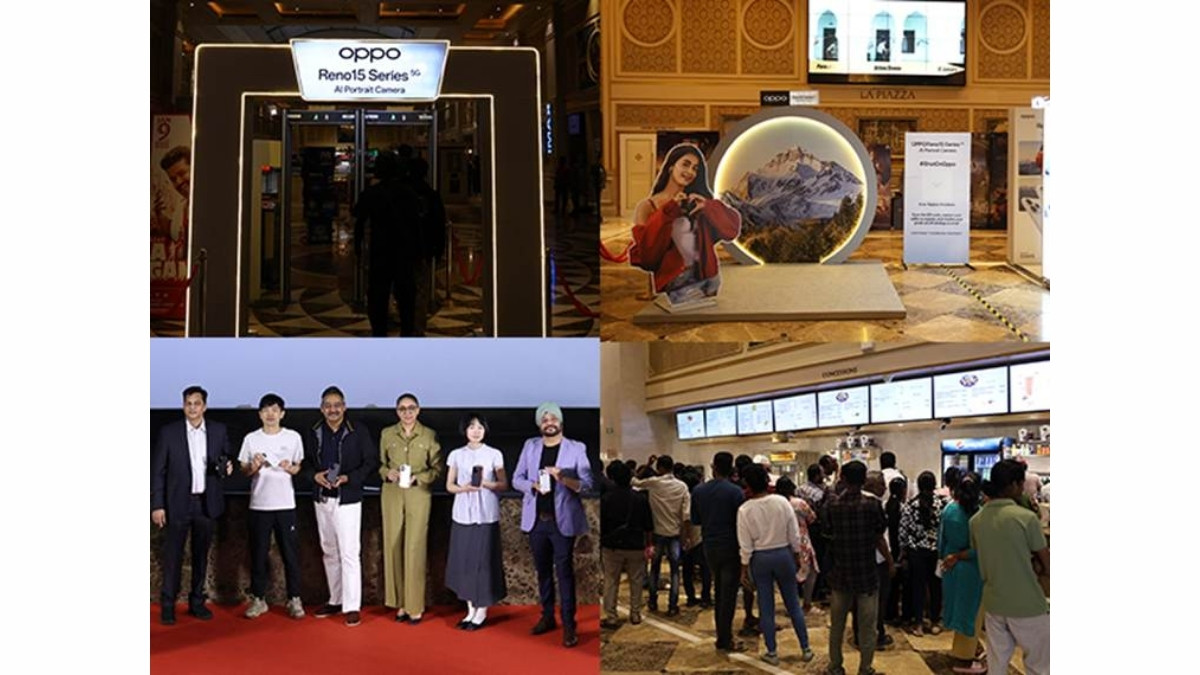
    Building on the positive market response, OPPO recently hosted a special Cinema Launch Event at PVR Palazzo in Chennai as part of its Reno 15 Series campaign.

    The event featured a special cinema show exclusively for pre-booked customers, where the Reno 15 Series 5G’s camera performance, AI portrait features, and video recording capabilities were showcased on the big screen through a detailed product walkthrough.

    To enhance the experience, attendees were provided with food and snacks during the event, along with curated special gifts as a token of appreciation, creating a premium and engaging environment for customers.

    As part of the event, customers were also given an exclusive preview of the Tamil movie Parasakthi, bringing together technology and entertainment in a cinema-led brand experience.

    Designed for Modern Lifestyles

    With its premium design language and modern finish, the OPPO Reno 15 Series 5G has been developed to meet the evolving needs of social media users, travel photographers, lifestyle enthusiasts, and content creators.
    The lineup continues to receive positive feedback for its balance of aesthetics, performance, and camera innovation.

    Attractive Offers for Consumers in Tamil Nadu

    Available in the market since January 13, the OPPO Reno 15 Series 5G is currently offered with multiple consumer benefits, including:

    • Up to 10% instant cashback
    • Zero down payment options for up to 15 months
    • ₹2,000 OPPO upgrade or exchange bonus
    • Six-month one-time screen replacement warranty

    Strengthening OPPO’s Presence in Tamil Nadu

    With a strong focus on AI-powered portrait photography200MP ultra-clear imaging, and smooth overall performance, the OPPO Reno 15 Series 5G continues to record steady sales growth and rising consumer interest across Tamil Nadu, further strengthening OPPO’s presence in the premium smartphone segment.

    For the latest updates, product information, and announcements, Offers, readers can follow OPPO Tamil Nadu on the following platforms:

    •WhatsApp: https://bit.ly/oppotnwhatsapp

    •Instagram: https://bit.ly/oppotninstagram

    •YouTube:  https://bit.ly/oppotnyoutube

    If you object to the content of this press release, please notify us at pr.error.rectification@gmail.com. We will respond and rectify the situation within 24 hours.

  • Next-Gen Visionaries 2026: Entrepreneurs Building the Future

    Next-Gen Visionaries 2026: Entrepreneurs Building the Future

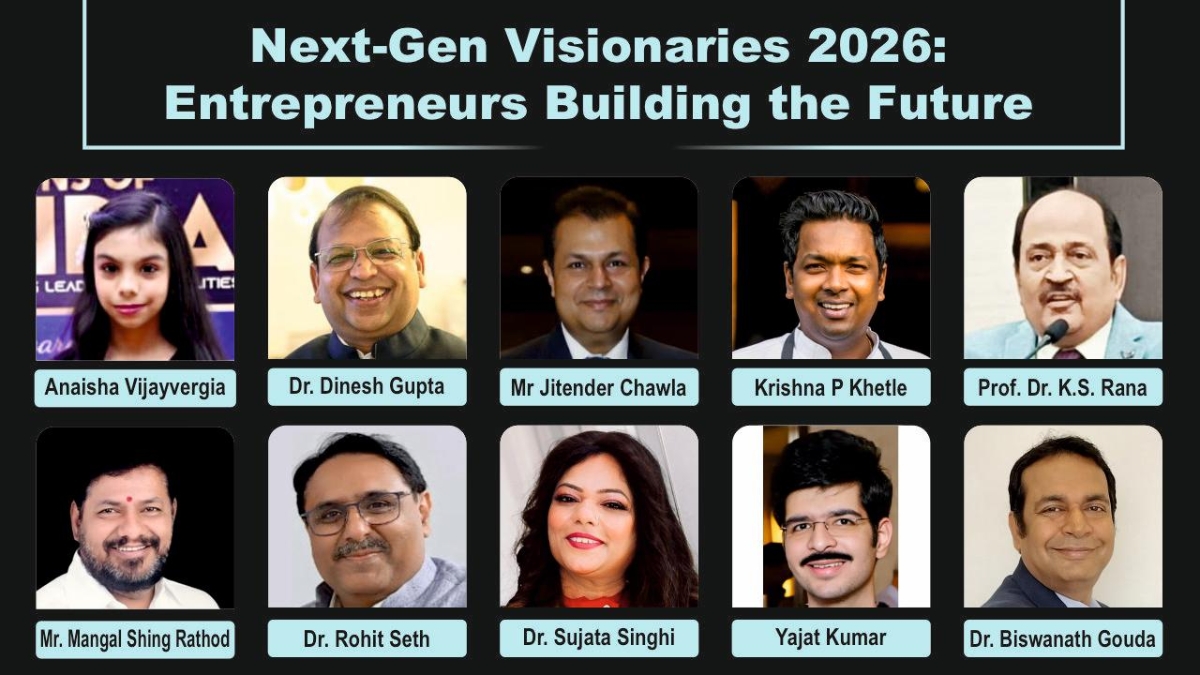
    Mumbai (Maharashtra) [India], January 19: Next-Gen Visionaries 2026 celebrates bold entrepreneurs shaping innovation, driving impact, and building the future of business, leadership, and global transformation.

    1. Anaisha Vijayvergia

    Anaisha Vijayvergia is a multi-talented 9-year-old prodigy from Mumbai who has won over 100 national and international awards for dance, storytelling, and speech. She has been recognised by the India Book of Records, World Book of Records (London), International Book of Records, and Global Child Prodigy Awards.

    Recently, she received the prestigious Dr A.P.J. Abdul Kalam Bharat Puraskar and was named “Youngest Icon of India” by Times Applaud Group. A Maharashtra Government awardee, Anaisha, is a Kathak aspirant passionate about spreading Indian dance globally and creating moral-based stories for future publication.

    2. Dr Dinesh Gupta – President, Sekawati Group of Companies

    Dr Dinesh Gupta, President of the Sekawati Group of Companies, is widely known as the “Bagman of India”, a title awarded by Forbes magazine and Prime Minister Narendra Modi for his environmental contributions.

    For over 30 years, he has championed sustainable cotton bags as alternatives to single-use plastic. Using 100% organic cotton, his biodegradable and durable bags promote long-term reuse. He has produced over 200 million eco-friendly bags, potentially a world record, preventing trillions of plastic bags from polluting the planet. His initiatives also empower women through home-based employment and create a nationwide environmental impact.

    3. Mr Jitender Chawla – CEO, SMEBIZZ

    Jitender Chawla, CEO of SMEBIZZ, is a seasoned expert in lead generation, branding, sales, and business growth strategies. Passionate about brand building and marketing, he empowers entrepreneurs to achieve measurable growth.

    His vision focuses on scaling businesses through branding, PR, and marketing initiatives, believing that strong brands inspire trust, drive sales, and create lasting impact. He is committed to helping individuals and organisations build powerful identities and sustainable success through strategy, innovation, clarity, consistency, execution, and leadership.

    4. Krishna P. Khetle – Director, Chef KK Hospitality Pvt. Ltd.

    Krishna P. Khetle, popularly known as Chef KK, is a visionary chef, entrepreneur, media personality, and brand architect in the F&B industry. With 23+ years of experience, he has launched 75+ successful restaurants across India and globally.

    Starting his journey in 2001 as a Commis III, he founded KK Hospitality in 2017 and built brands like Spice Laundry, 1 BHK, Luuma House, Nama Goa, Groove House by Hitchki (Dubai), and Mazza Budapest. His ventures span India, Dubai, Qatar, Singapore, Thailand, and Budapest. A recipient of Chef Entrepreneur of the Year, Times Icon, and Celebrity Chef of the Year 2025, he blends culinary excellence with brand innovation while mentoring future talent.

    5. Prof. Dr K.S. Rana – Vice Chancellor, University of Technology, Jaipur

    Prof. Dr K.S. Rana is a renowned educationist who has served as Vice-Chancellor in six state universities, driving transformative reforms in higher education. He earned India’s first D.Sc. in Environmental Science and holds honorary LL.D. (UK) and D.Litt. (New York).

    An author of 26 books with 332 research and popular papers, he has received 42 national and 32 international awards. He has also advised three former Prime Ministers, shaping environmental governance, policy-making, and societal upliftment.

    6. Mr. Mangal Shing Rathod – Founder, Sevajal

    Mr. Mangal Shing Rathod, founder of Sevajal, is redefining the premium bottled water segment with a brand rooted in purity, purpose, and patriotism. Sevajal delivers crisp, clean hydration through stringent quality standards and modern purification processes.

    Inspired by pristine mountain springs, reflected in its mountain-peak logo, Sevajal focuses on natural, refreshing water. What sets the brand apart is its strong social commitment10% of profits are dedicated to supporting families of India’s armed forces, blending entrepreneurship with nation-building.

    7. Dr. Rohit Seth

    A perfumer, mentor, and leader, Dr. Rohit Seth represents the 77-year-old legacy brand Schimmer Fragrances, owned by Seth Brothers (Perfumers) Pvt. Ltd.

    He is an expert in creating exclusive fragrance formulations and transforming fragrance companies into established brands. He has served as President of Sugandh Vyapaar Sangh and former President of the Fragrances & Flavours Association of India.

    His accolades include the Young Entrepreneur Award, National Business Icon (2022), and Mentor of the Year (2023) at the Dr. A.P.J. Abdul Kalam Inspiration Awards.

    8. Dr. Sujata Singhi

    Dr. Sujata Singhi is an ISO-certified professional and renowned researcher in Sound Medicine with 25 years of experience. A Corporate Wellness Expert, TEDx and international keynote speaker, bestselling author, and awardee, she has published research in international medical journals.

    She has spoken at forums including the International Cardiology Conference, Dubai, and the International Oncology Conference, Singapore. Through Sound Medicine and Spiritual Sciences, she has transformed 500,000 lives, received 500 awards, holds two World Records and nine Indian Records, and has been conferred five Doctorates and two D.Litt. degrees. Her book, Power of Sound, was praised by India’s President.

    9. Yajat Kumar – Executive Member, Labour Laws Institute

    Yajat Kumar is an Executive Member of the Labour Laws Institute with a wide knowledge of Indian Labour Codes and Employment Laws. He has written numerous articles and blog posts for reputable online and offline journals.

    Following the legacy of his late grandfather, Sh. H. L. Kumar has been a speaker at seminars on Labour Laws, Labour Codes, and the POSH Act, conducted by Labour Law Reporter, Labour Laws Institute, and leading MNCs.

    10. Biswanath Gouda – DNB Surgery, FALS (Paris), FIHPBA (Paris), MPH (USA)

    Biswanath Gouda is a Consultant in Gastro-Intestinal, HPB, and Bariatric Surgery, with laparoscopic expertise in gastrointestinal surgery for digestive disorders, including stomach, intestine, and colon cancers, as well as liver, gallbladder, and pancreas surgeries.

    He is ardent in performing weight-loss and bariatric procedures for obese patients with metabolic or uncontrolled diabetes. He has multiple publications in national and international scientific forums and is the Founder-Director of Lakeview Healthcare (Bandra & Shivaji Park), providing affordable ICU care to the needy.

    Hospital Attachments:
    Lilavati Hospital | Holy Family Hospital, Bandra | Gleneagles Hospital, Parel | St. Elizabeth’s Hospital

    If you have any objection to this press release content, kindly contact pr.error.rectification@gmail.com to notify us. We will respond and rectify the situation in the next 24 hours.

  • Zootopia 2 box office record Signals a Turning Point for Animated Cinema

    Zootopia 2 box office record Signals a Turning Point for Animated Cinema

    Cambridge (Massachusetts) [USA], January 20: By surpassing the world box office to earn a staggering 1.7-billion-dollar mark, Zootopia 2 did not only set a new record but also made a statement to Hollywood. The follow-up is currently the biggest grossing animated Hollywood venture ever and its triumph provides some revelation as to the convergence position of animation, theatrical distribution and worldwide storytelling at the present moment.

    Zootopia 2 Box office record is not interesting due to its ability to replace the past hits, but, it is important to challenge the old-assuming views on the capabilities of animated features in a post-pandemic streaming-centered economy. Zootopia 2 offers a reminder at a time when most studios are still apprehensive of theatrical animation, that maybe it is possible to shatter the ceiling and it is taller than thought to be.

    The movie was launched in the late-year holiday period, and it started out with a lot of heavy momentum and, more crucially, it maintained this momentum. But contrary to most of the new releases, where the movie starts off strong and then falls in a short period, Zootopia 2 was performing well several weeks into its release. Such durability indicates a high level of audience satisfaction as opposed to front-loaded curiosity – something that is important in assessing the long-term franchise value.

    One of the factors that contributed to the box office hit with Zootopia 2 was the fact that the film had a global appeal. Whereas North American receipts were less risky, overseas markets accounted most of the revenue. China proved to be one of the selling points, bringing over $600 million, an uncommon achievement in the Hollywood release in the recent years. This level of performance puts Zootopia 2 in a very exclusive category of foreign films enjoying mass appeal in that country.

    As a business, we find this global performance worthwhile of stories with cross-cultural understandability. The world of Zootopia does not have any region specific references, as the theme is translated readily ambition, cooperation, identity, and social balance. These aspects enable the film to operate in cross-market without watering down, which is becoming more critical in the box office strategy in the world markets.
    The sequel is creative and is advantageous because of a continuity in leadership. Jared Bush and Byron Howard came back as directors with a clear vision of the tone of the franchise as well as what they expect the audience to receive. Zootopia 2 has relied on the development of a story instead of growing spectacle purely as a spectacle. That decision seems to have found a connection with both sides of the demographic viewer, such as adults who are not necessarily prioritizing animated releases.

    There is also credibility of the film through performances. The dialogue of the returning cast has a measured tone and is not overwhelming the story but enhances it. This reserve corresponds to a wider movement in effective animation, in which emotional foundations can be more helpful than to incessant comic effects.
    On the industry level, the Zootopia 2 box office record comes at the time of re-calibration. Stress Studios are re-evaluating release periods, franchise schedules, and the importance of theatrical release to family content. The success of the film is a good data point: animation features tomorrow, when placed in the right spots and sustained up to the brim in movie theaters, can still serve as global tentpoles.

    It also has a strategic implication when it comes to the intellectual property management. Zootopia was not exactly framed as a franchise that Disney has gone after the most but it has since provided one of the biggest commercial performance of the studio. That indicates a long-term brand loyalty and viewer goodwill can prove to be more lucrative than temporary saturation.

    Notably, it does not seem that the film performance is motivated by the controversy, viral moments, and overestimates. Rather it has continually grown due to word-of-mouth and rewatching. In the case of studios, such organic performance can be more long-lasting – and more indicative of future success – than a burst-in but brief opening.

    In future, Disney has yet to establish further installments. Nevertheless, it can hardly be overlooked what the Zootopia 2 box office record implies. By either a third movie or the different storytelling lengths, the franchise now takes upon itself a new strategic level in the portfolio of the studio.

    After all, Zootopia 2 does not achieve success through animation reinvention, but rather by performing the basics at an exceptionally high level. It is a combination of both a concise narrative, an executing creative decision-making, and international reach that so far, as the numbers indicate, does it in large quantities.

    In the case of Hollywood, it is a simple lesson of animation is a strong theatrical asset when realized as such. And Zootopia 2 has given the most obvious testament.

    If you object to the content of this press release, please notify us at pr.error.rectification@gmail.com. We will respond and rectify the situation within 24 hours.]

    Entertainment 

  • 65th CGPB Meeting Sparks New Momentum With Bold Signals for India’s Geoscience Agenda

    65th CGPB Meeting Sparks New Momentum With Bold Signals for India’s Geoscience Agenda

    New Delhi [India], January 20: Big decisions rarely make noise. The 65th CGPB meeting in New Delhi on January 21, 2026, is one of those quiet rooms where India’s mineral future gets written.

    The Geological Survey of India, under the Ministry of Mines, is hosting the 65th Central Geological Programming Board meeting at the A. P. Shinde Symposium Hall, ICAR, Pusa. The date matters. So does the guest list. This is where national priorities meet rock-solid data.

    At the helm is Shri Piyush Goyal, Secretary, Ministry of Mines. Joining him are Shri Asit Saha, Director General of GSI, and Shri Sanjay Lohiya, Additional Secretary, Ministry of Mines. Around them sits a rare mix of policymakers, state geological departments, PSUs, private explorers, academics, and industry hands. Not ceremonial. Operational.

    The CGPB is not a conference for PowerPoint tourism. It is the apex planning forum of the Geological Survey of India. Every year, GSI places its Annual Field Season Programme before this board. The goal is simple and ruthless. Avoid duplication. Align effort. Spend public money where it counts.

    States, central ministries, exploration agencies, PSUs, and private entrepreneurs come with proposals. They ask for collaboration. They flag gaps. They challenge assumptions. Then the board decides.

    Based on government priorities and the urgency of proposals, GSI’s Annual Programme takes final shape. Survey and mapping. Mineral exploration. Research and development. Multidisciplinary societal projects. Training and capacity building. All of it flows through this room.

    This edition carries extra weight. India’s mineral conversation has shifted. Clean energy is no longer a slogan. It is a supply chain problem.

    The 65th CGPB meeting puts critical minerals front and centre. Lithium. Rare earth elements. Graphite. Platinum group elements. Vanadium. Scandium. Cesium. These are not academic curiosities. They are the backbone of batteries, electronics, defence systems, and renewable infrastructure.

    For India, the linkage is direct. Energy transition. Atmanirbhar Bharat. Strategic autonomy. No imported shortcuts.

    One of the core focus areas of the 65th CGPB meeting is exploration strategy for critical and strategic minerals. India needs speed, but not chaos.

    Discussions will align exploration targets with national energy and manufacturing goals. The emphasis is on systematic, science-led discovery rather than scattered drilling. It is about moving faster without cutting corners.

    This also means identifying regions where India can realistically build domestic supply chains, not just publish reports.

    Another sharp pivot is technology adoption. The meeting will examine how modern exploration tools are being integrated into GSI’s workflow.

    AI and machine learning-based data integration will take centre stage. Not as hype, but as decision support. Add to that geophysical surveys, hyperspectral remote sensing, deep drilling programmes, and mineral system studies. The idea is to see deeper, faster, and smarter.

    India has the data. The challenge is integration. The 65th CGPB meeting aims to fix that.

    One quiet but critical theme is pre-competitive data sharing. Exploration in silos wastes time and money. The CGPB platform pushes collaborative models, especially for critical and strategic minerals.

    Sharing baseline geoscience data allows explorers to focus on value creation rather than repetition. It also accelerates the journey from early-stage exploration to auction-ready mineral blocks. For a country trying to unlock resources responsibly, this matters.

    Minerals are not the only concern. The 65th CGPB meeting will also address landslide hazard zonation and slope stability studies.

    This is particularly relevant for Himalayan and North Eastern states, where development, climate stress, and fragile geology collide. Disaster risk reduction is not optional. GSI’s role here is foundational, mapping risk before tragedy strikes.

    A major highlight will be the presentation of GSI’s Annual Programme for the Field Season 2026–27. The scale is hard to ignore. A total of 1,068 peer-reviewed projects across earth science disciplines.

    Mineral exploration dominates the list. But the programme also expands into carbon sequestration studies, offshore exploration, and public good geosciences. Sustainability is not an appendix. It is baked in.

    Every project has been scrutinised. This is not volume for optics. It is prioritised science.

    The meeting will also see the release of key GSI publications by the dignitaries. Alongside, an exhibition will showcase GSI’s work, with a strong focus on strategic and critical mineral exploration.

    For stakeholders, this is a rare window into the scale and depth of India’s geoscientific machinery.

    The CGPB has always been about coordination. This year, it is about alignment. National priorities with global sustainability goals. Resource security with environmental responsibility.

    The 65th CGPB meeting is not flashy. It does not need to be. It is where India quietly decides how serious it is about owning its mineral future.

    Read More

  • (RE)Introducing Mr. TRU: truTRTL Reinforces Its Promise of True Value with a Mascot and a Manufacturing-First Mindset

    (RE)Introducing Mr. TRU: truTRTL Reinforces Its Promise of True Value with a Mascot and a Manufacturing-First Mindset

    New Delhi [India], January 20: In an era where the home and kitchen appliance market is crowded with flashy claims, limited-time discounts, and feature-heavy messaging, truTRTL is choosing a quieter, more deliberate path. With the reintroduction of its brand mascot, Mr. TRU, the brand reiterates a philosophy it has stood by since inception: No big claims. Just true value.

    truTRTL, a growing home and kitchen appliance brand, has anchored its identity around one simple principle—products should do what they are meant to do, consistently, safely, and at a price that makes sense. Mr. TRU, inspired by the turtle, becomes the embodiment of this belief. A timeless symbol of wisdom, patience, and steady progress, the mascot serves as a reminder that the best choices are rarely rushed and that long-term value matters more than short-term excitement.

    Q: truTRTL has reintroduced its brand mascot, Mr. TRU. What does this represent for the brand?
    Mr. TRU represents the philosophy that truTRTL has always believed in—true value over noise. Inspired by the turtle, he symbolizes wisdom, patience, and steady progress. In a market full of exaggerated claims and rushed buying decisions, Mr. TRU is a reminder that good choices are thoughtful and long-term. He stands for calm, clarity, and reliability, values that are deeply embedded in how we design, price, and support our products.

    Q: The brand speaks strongly about “no big claims, just true value.” What does that mean in practical terms?
    For us, it means resisting the temptation to overpromise. We don’t claim luxury, and we don’t inflate performance metrics to look better on paper. True value is about delivering products that work consistently in real-life conditions. It’s the balance of convenience, safety, durability, and service—all at a fair price. If a product does its job well every day, over years of use, that’s real value.

    Q: How does truTRTL define value beyond pricing?
    Price is only one part of the equation. Value comes from how a product fits into daily life. Before launching any product, we ask three core questions: Who will use it? How often will it be used? And what should never go wrong? These questions guide decisions around materials, safety components, feature selection, and design. We prioritize stronger materials where needed, safer components over cheaper options, and features that genuinely help customers rather than just look impressive in marketing.

    Q: What kind of customers are truTRTL products designed for?
    Our products are designed for everyday living. That includes households, hostel rooms, rented homes, and first-time buyers. These customers want appliances that are reliable, easy to use, and low on maintenance. From kettles and air fryers to fans and essential kitchen appliances, convenience and safety are non-negotiable. We’re not building aspirational luxury products—we’re building dependable tools for daily use.

    Q: Many brands rely heavily on discounts to attract customers. How does truTRTL approach pricing?
    We believe honest pricing builds long-term trust. Instead of cutting corners on quality to reduce costs, we focus on reducing inefficiencies across our supply chain, logistics, and inventory management. This allows us to offer competitively priced products without compromising on safety or durability. Customers should feel they’ve received more than what they paid for—not because of discounts, but because the product genuinely delivers.

    Q: Service is often overlooked in the appliances category. How important is it for truTRTL?
    Service is a critical part of our value proposition. A product doesn’t end at the point of sale. We’ve invested in customer support systems that allow faster responses and quicker resolutions across phone, email, website, and WhatsApp. Our focus is simple—when issues arise, we address them efficiently and transparently. A smooth post-purchase experience is essential to building trust.

    Q: As Co-founder and Director of Collaborations and Manufacturing, what does your role at truTRTL involve?
    My role is to ensure that what we promise as a brand is delivered at the product level. This includes overseeing manufacturing operations, building strategic collaborations, and maintaining quality and consistency across our portfolio. Manufacturing is where brand trust is actually built. If manufacturing decisions are right, many downstream problems simply don’t occur.

    Q: You come from a second-generation manufacturing background. How has that shaped your approach?
    Growing up in a manufacturing environment teaches you discipline, patience, and accountability. You learn early that shortcuts always show up eventually—either in product failures or customer dissatisfaction. That mindset has stayed with me. At truTRTL, we focus on building products that perform consistently over time, not just on day one.

    Q: What has been one of your most significant professional achievements so far?
    Scaling manufacturing and distribution simultaneously has been a major milestone. We currently manage a monthly throughput of around 1.5 lakh units while building a pan-India distribution network covering over 15,000 pin codes and 5,000 retail outlets. Achieving scale without compromising quality reinforced our belief that strong systems and execution make sustainable growth possible.

    Q: The home appliances market is highly competitive and fast-changing. How does truTRTL stay relevant?
    We stay closely connected to customer feedback and real usage patterns. Our product decisions are driven by how people actually use appliances, not by trends alone. Being proactive rather than reactive helps us introduce products that are contemporary yet practical. Relevance, for us, comes from usefulness, not novelty.

    Q: truTRTL places strong emphasis on the idea of “true value.” What does that mean to you personally?
    True value is about balance. It’s not just about being affordable, and it’s not about being premium either. It’s the combination of quality, safety, durability, and service at a fair price. As a manufacturer, I believe value is created when a product delivers reliably without creating friction for the customer at any stage of ownership.

    Q: What role does manufacturing play in building customer trust?
    Manufacturing determines almost everything the customer experiences later. Material choices, safety components, assembly precision—these decisions directly affect performance and longevity. When manufacturing is done right, service issues reduce and trust builds naturally. It’s the foundation of any credible brand.

    Q: What is your long-term manufacturing vision for truTRTL?
    Over the next five years, we aim to build or collaborate with manufacturing capacities capable of producing up to 2.5 million units per month across multiple appliance categories. This supports our long-term growth ambitions and aligns with our commitment to Make in India, not just for domestic consumption but also for global markets.

    Q: Why is the 18–22 age group an important focus for the brand?
    This is often when people make their first independent purchase decisions. If we deliver strong value at that stage, we earn trust early. The idea is to grow with the customer over time, remaining relevant as their needs and purchasing power evolve.

    Q: How do you see truTRTL standing out as customers move toward higher-ticket purchases?
    Consistency builds credibility. If a customer has had a positive experience with an entry-level product, they are far more likely to trust the brand when making a larger purchase later. Loyalty is earned through repeated, reliable experiences.

    Q: Beyond business, what keeps you grounded?
    Spending time with family helps maintain balance. I also enjoy playing cricket regularly—it keeps me active and focused. Staying grounded is important when you’re building something for the long term.

    Q: You’re also involved in social causes. Why is this important to you?
    Being part of a business ecosystem comes with responsibility. Our association with a blind school supporting over 300 children is very close to our hearts. It’s important to contribute in ways that create real impact beyond business outcomes.

    As truTRTL reintroduces Mr. TRU, the message is clear: trust is not built through loud promises, but through consistent action. With thoughtful manufacturing, honest pricing, and dependable service, truTRTL continues to focus on what truly matters—delivering value that holds up over time. Please Visit for More Information : https://trutrtl.com/?srsltid=AfmBOorMHfvseZCglLtLzQXMeqE_GFuFMuHGe9PDfhyOuYItz4FcuqGd


    If you object to the content of this press release, please notify us at pr.error.rectification@gmail.com. We will respond and rectify the situation within 24 hours.

  • Golden Globes 2026 Delivers A Glorious Win — And A Few Familiar Eye-Rolls

    Golden Globes 2026 Delivers A Glorious Win — And A Few Familiar Eye-Rolls

    Mumbai (Maharashtra) [India], January 19: There are award nights that feel ceremonial, and then there are award nights that quietly reset the temperature of an entire industry. The 83rd Golden Globe Awards belonged firmly to the latter category. Not because Hollywood suddenly reinvented itself, but because it reminded everyone—studios, streamers, audiences, and Oscar campaign managers included—that momentum is currency, and the Golden Globes still mint plenty of it.

    The trophies were expected. The optics were not.

    Yes, One Battle After Another walked away with four wins, flexing its early-season dominance. Yes, Hamnet secured Best Film – Drama, cementing its position as prestige cinema’s emotional heavy-hitter. And yes, television favorites like The Pitt and The Studio continued their victory laps. But what lingered longer than the applause were the aftershocks: streaming spikes, social media memes, musical choices that refused to behave, and an awards body once again reminding Hollywood it still knows how to command attention.

    This wasn’t just a celebration. It was a strategic broadcast.

    The Night That Confirmed Front-Runners

    Let’s start with the obvious. One Battle After Another didn’t just win—it announced itself. Four Golden Globes is not subtle. It’s the awards-season equivalent of placing your bag on every empty seat in the room.

    The film’s sweep reinforced its reputation as both a critics’ favorite and an industry-safe bet: ambitious without being alienating, political without being polarizing, and emotional without collapsing into sentimentality. The kind of project studios quietly pray will carry them through awards season without scandal.

    Hamnet, on the other hand, took the more elegant route. Best Film – Drama is a singular win, but a decisive one. It confirmed the film’s standing as the season’s introspective darling—literary, restrained, and just inaccessible enough to feel “important.”

    Between the two, the Globes effectively sketched the early Oscar battlefield.

    Television’s Golden Era Refuses To Clock Out

    While cinema soaked up the prestige, television reminded everyone why it’s no longer the junior partner.

    The Pitt and The Studio continued their dominance, reinforcing a now-familiar truth: serialized storytelling remains where cultural conversation lives the longest. These shows aren’t just watched; they’re dissected, memed, and emotionally weaponized across platforms.

    The wins also highlight a subtle industry shift. Television awards aren’t merely celebrating popularity anymore. They’re rewarding tonal confidence—shows that know exactly what they are and refuse to dilute themselves for mass appeal.

    In an era of algorithm-driven commissioning, that confidence is almost rebellious.

    The Music That Stole The Algorithm

    Oddly enough, one of the most talked-about aspects of the night wasn’t a speech, a snub, or a surprise win—it was the music.

    The Golden Globes’ eclectic musical selections became instant internet fodder. Clips circulated. Memes multiplied. The soundtrack of the night briefly overshadowed the speeches themselves.

    This wasn’t accidental.

    Awards shows have learned that virality doesn’t require controversy—it just requires unexpected texture. The Globes leaned into that, proving they understand modern attention economics better than they’re often given credit for.

    A little chaos, tastefully deployed, goes a long way.

    Golden Globes - PNN

    Why The Golden Globes Still Matter (Despite Everything)

    It’s fashionable to dismiss awards shows as outdated, irrelevant, or performative. And yet, every January, the industry behaves as if the Golden Globes are a dress rehearsal for destiny.

    Here’s why they still carry weight:

    • Oscar Momentum: Early wins shape campaign narratives

    • Streaming Impact: Post-Globes viewership spikes are measurable

    • Global Reach: International audiences treat the Globes as a discovery engine

    • Press Framing: Winners receive weeks of unpaid cultural amplification

    In short, the Golden Globes don’t crown champions. They manufacture inevitability.

    The Business Beneath The Velvet Rope

    Let’s talk numbers—not box office fantasies, but real industry mechanics.

    Films like One Battle After Another and Hamnet benefit immediately from awards recognition through:

    • Expanded theatrical runs

    • Increased streaming acquisition value

    • International sales acceleration

    • Long-tail cultural relevance

    Awards are not vanity trophies. They’re balance-sheet accessories.

    Studios know this. Streamers know this. And audiences, consciously or not, respond to the signal: this is what matters right now.

    The Pros: What The Globes Got Right This Year

    Clarity Over Chaos
    The wins felt deliberate, not reactionary. No tokenism. No panic picks.

    Cultural Timing
    The ceremony balanced gravitas with levity—an increasingly rare skill.

    Global Accessibility
    The chosen winners translated well across borders, reinforcing international appeal.

    Television Parity
    TV wasn’t treated as filler between film awards. It stood on equal footing.

    The Cons: Familiar Critiques Refuse To Die

    Still, not everything shimmered.

    Predictability
    For all the glamour, few outcomes truly shocked.

    Representation Gaps
    Progress remains incremental, not transformative.

    Campaign Gravity
    Big studios still wield disproportionate influence, despite claims otherwise.

    Performative Moments
    Some speeches flirted dangerously close to self-awareness without crossing into sincerity.

    The Globes didn’t reinvent themselves. They refined the formula.

    Awards As Pop Culture Accelerators

    Perhaps the most interesting shift is how awards no longer end conversations—they begin them.

    Winning a Golden Globe now means:

    • Weeks of TikTok edits

    • Fan discourse migrating across platforms

    • Renewed interest from younger demographics

    • A second life far beyond the ceremony

    Awards have become content engines.

    The ceremony itself is only the ignition point.

    Backstory: The Globes’ Redemption Arc Continues

    It’s worth remembering that the Golden Globes are still navigating a reputation rebuild. Past controversies forced institutional introspection, structural changes, and a renewed emphasis on credibility.

    This year’s ceremony felt like another calculated step in that recovery. Less desperate. More assured. Almost… comfortable.

    That comfort, ironically, made it more effective.

    Final Thought: Prestige With A Pulse

    The Golden Globes 2026 didn’t scream relevance. They demonstrated it.

    By rewarding films and shows that already shaped cultural conversation—and amplifying them further—they reminded Hollywood of a simple truth: awards don’t create quality, but they do decide who gets remembered.

    In an industry obsessed with the next big thing, the Globes quietly crowned what already mattered.

    And then, just to keep things interesting, they let the music misbehave.

    PNN Entertainment