Author: Sutun Nayak

  • IDT’s 15th Convocation Ceremony Held Grandly at Avadh Utopia, Surat

    IDT’s 15th Convocation Ceremony Held Grandly at Avadh Utopia, Surat

    Surat (Gujarat) [India], December 29: Institute of Design and Technology (IDT), a premium design institute based in Surat, successfully organised its 15th Convocation Ceremony at Avadh Utopia, Surat. On this occasion, students from various batches completed their education and received their certificates. IDT offers industry-oriented courses, including Fashion Designing, Interior Designing, Digital Textile Printing, and Event Management, which equip students with creativity, technical skills, and professional competence.

    Rahul Mehta’s Message: Success comes from effort, not just marks

    Addressing the ceremony, Rahul Mehta inspired the students by saying that even if a student scores less in school or is not a topper, they can still achieve success in life. He emphasised that true success depends not on marks but on self-confidence, continuous learning, and hard work.

     Navin Sanani’s Message: Preparing students for the future

    Navin Sanani highlighted the growing role of Artificial Intelligence (AI) in the fashion and design industry. He explained how technology, especially AI, is shaping design processes, trend analysis, and industry operations. He appreciated IDT’s efforts to provide students with education aligned with industry standards.

    Anupam Goyal, Director of IDT, stated that the institute is not just about providing education but preparing students thoroughly for the industry. He encouraged students by saying that every student can achieve success through creativity, effort, and self-confidence. He also emphasised that the purpose of IDT is not only to award certificates but to provide students with real-world professional experience and industry-relevant skills.

    During the Convocation Ceremony, students from various batches were awarded certificates, representing their years of hard work and dedication. The ceremony was marked by a proud and enthusiastic atmosphere among students and parents. The 15th Convocation Ceremony of IDT, held at Avadh Utopia, proved to be a significant milestone for achievement, inspiration, and a bright future. With its industry-linked courses and experienced guidance, IDT continues to strengthen its position as a leading design institute in Surat.

    PNN Education

  • Grand Launch of Poet & Industrialist Kamlesh Sonawala’s Book Kalrav

    Grand Launch of Poet & Industrialist Kamlesh Sonawala’s Book Kalrav

    Ud. Shujaat Husain Khan, Kundan Vyas, Dr. Ashwin Mehta, Kamlesh Sonawala, Anup Jalota, and Lalitya Munshaw

    A Memorable Evening of Literature and Music

    New Delhi [India], December 29: The much-awaited book Kalrav, a distinguished collection of Gujarati and Hindi poetry by renowned poet and industrialist Kamlesh Sonawala, was formally launched at Nehru Centre – Hall of Culture, Mumbai, in the august presence of eminent personalities from the fields of literature, music, and culture. The event evolved into a memorable cultural evening, celebrating poetry, ghazals, and soulful musical expressions.

    The book was unveiled in the presence of Padma Bhushan Pt. Arvind Parikh, Padma Bhushan Kundan Vyas, Padma Bhushan Dr. Ashwin Mehta, Padma Shri Anup Jalota, Ustad Shujaat Husain Khan and Lalitya Munshaw whose presence added great stature to the occasion. Sharing his views on Kalrav, Padma Shri Anup Jalota remarked that Kamlesh Sonawala’s writings reflect emotional depth, simplicity of language, and a strong cultural ethos, making the book timeless and deeply touching. Renowned sitar maestro Ustad Shujaat Husain Khan praised the poetic richness of the work, stating that the verses carry an inherent musicality that resonates deeply with readers and listeners alike. Padma Bhushan Dr. Ashwin Mehta also appreciated the literary depth of Kalrav, noting that Kamlesh Sonawala’s poetry reflects refined thought, sensitivity, and a profound understanding of human emotions and cultural values. Padma Bhushan Kundan Vyas lauded Kalrav as a work of rare sensitivity and maturity, stating that Kamlesh Sonawala’s poetry seamlessly bridges tradition and contemporary thought.

    Lalitya Munshaw, Founder of Red Ribbon, highlighted the long-standing creative association with Kamlesh Sonawala, noting that their collaboration spanning over a decade has consistently contributed meaningful and culturally rich works to Indian literature and music.

    The evening also featured poetry recitations by noted voices including Harish Bhimani, Meenal Patel, Utkarsh Mazumdar, Sanat Vyas, and Chirag Vohra, whose expressive renditions brought the poems of Kalrav alive for the audience. Complementing the literary presentations were soulful musical performances by Uday Mazumdar, Lalitya Munshaw, Alap Desai, Upagna Pandya and Nisha Upadhayay whicg added immense charm to the programme and were warmly appreciated by the audience.

    Several popular Gujarati and Hindi songs penned by Kamlesh Sonawala and rendered by eminent singers are available on Red Ribbon Musik and the Red Ribbon Gujarati Channel. The enduring collaboration between Red Ribbon and Kamlesh Sonawala, spanning more than a decade, stands as a strong and trusted creative partnership in the Indian literary and musical landscape.

    The evening concluded on a high note, leaving the audience enriched by an inspiring confluence of poetry, music, and culture, and firmly establishing Kalrav as a significant contribution to contemporary Indian literature. The book Kalrav is now available for purchase on Amazon as well as at all leading Bookstores.

    If you object to the content of this press release, please notify us at pr.error.rectification@gmail.com. We will respond and rectify the situation within 24 hours.

  • How Cambridge Education Builds Global Skills That Last a Lifetime

    How Cambridge Education Builds Global Skills That Last a Lifetime

    Nagpur (Maharashtra) [India], December 29:  VIBGYOR World Academy, one of India’s leading Cambridge International schools, has released new insights emphasising how Cambridge education equips students with essential global skills that extend far beyond classroom learning. As a part of the VIBGYOR Group of Schools—operating 40+ campuses across India with CBSE, ICSE and Cambridge curricula—VIBGYOR World Academy exclusively offers the Cambridge International programme, providing students with a world-class, future-ready educational pathway.

    The school underscores that Cambridge education builds foundational skills such as critical thinking, communication, creativity, digital literacy, and global awareness—competencies that are increasingly vital for success in higher education, emerging professions, and a rapidly evolving global landscape.

    “Parents today want more than academic achievement—they want their children to be confident, adaptable, and globally capable,” said a spokesperson for VIBGYOR World Academy. “The Cambridge curriculum is purposefully designed to nurture these lifelong skills, ensuring students thrive not just in school, but in real-world careers and global environments.”

    Key Highlights of Cambridge Education Include:

    • Strong conceptual understanding, moving away from rote memorisation
    • Inquiry-based learning that builds reasoning and problem-solving ability
    • Global exposure and cultural adaptability, integrated into the curriculum
    • Holistic development through communication, collaboration, leadership and creativity
    • Smooth pathways to leading universities worldwide

    These insights are especially relevant for families in fast-growing education hubs like Nagpur and Bhopal, where parents are increasingly seeking international-standard learning environments. The Academy’s campuses in both cities provide learners with a nurturing, multicultural, Cambridge-driven experience designed to prepare them for future academic and professional success.

    As regions such as Maharashtra, Madhya Pradesh, Chhattisgarh, and Rajasthan continue to see rising demand for global education pathways, VIBGYOR World Academy remains committed to delivering a transformative Cambridge learning experience that develops well-rounded, future-ready individuals.

    Learn more about how Cambridge Education Builds Global Skills from VIBGYOR World Academy blog:

    (https://www.vibgyorworldacademy.com/school-blog/education/from-classrooms-to-career-how-cambridge-education-builds-global-skills-that-last-a-lifetime/)

    About VIBGYOR World Academy

    VIBGYOR World Academy is a leading Cambridge International school offering global-standard academic programmes focused on holistic development, conceptual clarity, and skill-based learning. Supported by the expertise of the VIBGYOR Group of Schools, the Academy provides a nurturing, learner-centric environment where children grow into confident, capable, globally aware individuals.

    Parents can explore the Cambridge learning environment at:

    If you object to the content of this press release, please notify us at pr.error.rectification@gmail.com. We will respond and rectify the situation within 24 hours.

  • Second Edition of ‘Run for Girl Child’ to Be Held in Surat on January 4 for the Upliftment of Girls

    Second Edition of ‘Run for Girl Child’ to Be Held in Surat on January 4 for the Upliftment of Girls

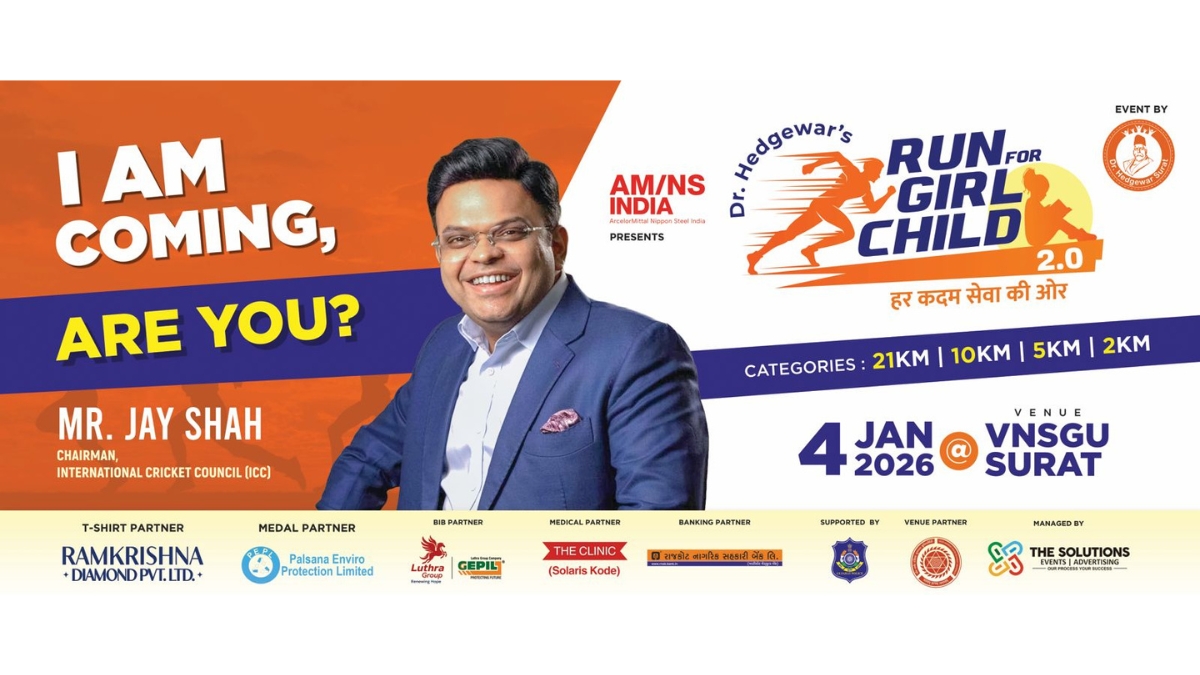
    Surat (Gujarat) [India], December 29: The second edition of the ‘Run for Girl Child’ charity run, organised by Dr Hedgewar Seva Smriti Trust for the all-round development of girls from exploited, deprived, and distressed sections of society, will be held on January 4, 2026, at the VNSGU Campus, Surat.

    This information was shared by event committee co-convenor Amitbhai Gajjar during a press conference. Around 8,000 to 10,000 runners are expected to participate in this charity run. The marathon will feature various categories, including 21 km, 10 km, 5 km, and 2 km. Winners will receive a total cash prize of ₹2,20,000.

    AM/NS is supporting the event as the main sponsor, while Ramkrishna Diamond, PPL, and Rajkot Nagrik Sahakari Bank have joined as associate donors. ICC Chairman Jay Shah will be present as the chief guest on this occasion. Prominent city industrialists and co-convenors of the organising committee, Shri Ghanshyam Shankar Amitbhai Gajjar (Chairman, Peoples Bank), Shyamji Rathi, Rajeshji Surana, and Rakeshji Kansal, have also been invited.

    Run for Girl Child

    Committee co-convenor Shyamji Rathi stated that ‘Run for Girl Child’ is not just a race, but a movement for the holistic upliftment of girls. The Trust has been consistently working to empower exploited, deprived, and distressed girls living in slum areas across five dimensions: physical, mental, spiritual, intellectual, and social development. Last year, there were only 7 Kishori Vikas Kendras, which have now grown to 159 active centres. Additionally, the Trust’s ‘Gyan Mandir’ project has expanded from 60 centres to 105 centres. Through this marathon, the target for the coming year is to increase Kishori Vikas Kendras from 159 to 500 and expand the Gyan Mandir project from 105 to 300 centres. The entire proceeds from this charity run will be utilised for girls’ education, development, and welfare activities.

    Notably, Dr. Hedgewar Seva Smriti Trust was established in 1988. The Trust works in four major areas: social service, education, self-reliance, and health. Shri Ranchhodbhai Dholiya serves as the President of Dr Hedgewar Trust, while Nitin Patel holds the position of Minister.

    PNN News

  • IMW Mr, Miss & Mrs Tamizhagam 2025 Crowns Jeeva, Malavika & Divya in Chennai

    IMW Mr, Miss & Mrs Tamizhagam 2025 Crowns Jeeva, Malavika & Divya in Chennai

    New Delhi [India], December 29: Indian Media Works presents Mr Miss & Mrs Tamizhagam 2025,  where in Mr Tamizhagam titles were won by Jeeva&Singaravel from TamilNadu; Miss Tamizhagam titles were won by Malavika from Kerala & Yuvedha from Tamilnadu; Mrs Tamizhagam titles were won by Divya & Babina from TamilNadu

    The event saw enthusiastic participation from contestants across Tamil Nadu, Kerala & Karnataka making it a truly colossal occasion.

    In this prestigious pageant, Jeeva and Singaravel emerged as the winners of the Mr. Tamizhagam 2025 title, while Malavika was crowned as Miss Tamizhagam 2025. The title of Mrs. Tamizhagam 2025 was crowned to Divya. The 1st Runner Up was Singaravel for the Mr. Tamizhagam category and Mr Popular title was Kailash.

    For the Miss category, the 2nd Runner Up was Yuvedha, and Miss goddess title was Anbuvizhi . The 1st Runner Up was Babina, in the Mrs. Tamizhagam category.

    The winners were celebrated with great honour and style. The Mr Miss & Mrs Tamizhagam 2025 title holders were adorned with sashes and prizes by Actress Anusha, Fashion Lord Manikandan & Celebrity Fashion designer Subakath Ali. The event was brought to life by the impeccable choreography of leading Celebrity fashion choreographer Faheem.

    Addressing the press and media, Mr. John Amalan, Managing Director of Indian Media Works, stated that Mr Miss & Mrs Tamizhagam 2025 had been conducted with the utmost grandeur and excellence this year. He firmly believes that the winners of this season are extraordinarily talented and meant to become the biggest stars of tomorrow. To ensure this, Indian Media Works has selected only the best and most deserving contestants for the prestigious titles. Further, he proudly announced that the title winners of this pageant would be recommended for national-level competitions.

    If you have any objection to this press release content, kindly contact pr.error.rectification@gmail.com to notify us. We will respond and rectify the situation in the next 24 hours.

  • Infinity Group Showcases Vision at GRAtitude 2025, Guwahati Realtors’ Meet

    Infinity Group Showcases Vision at GRAtitude 2025, Guwahati Realtors’ Meet

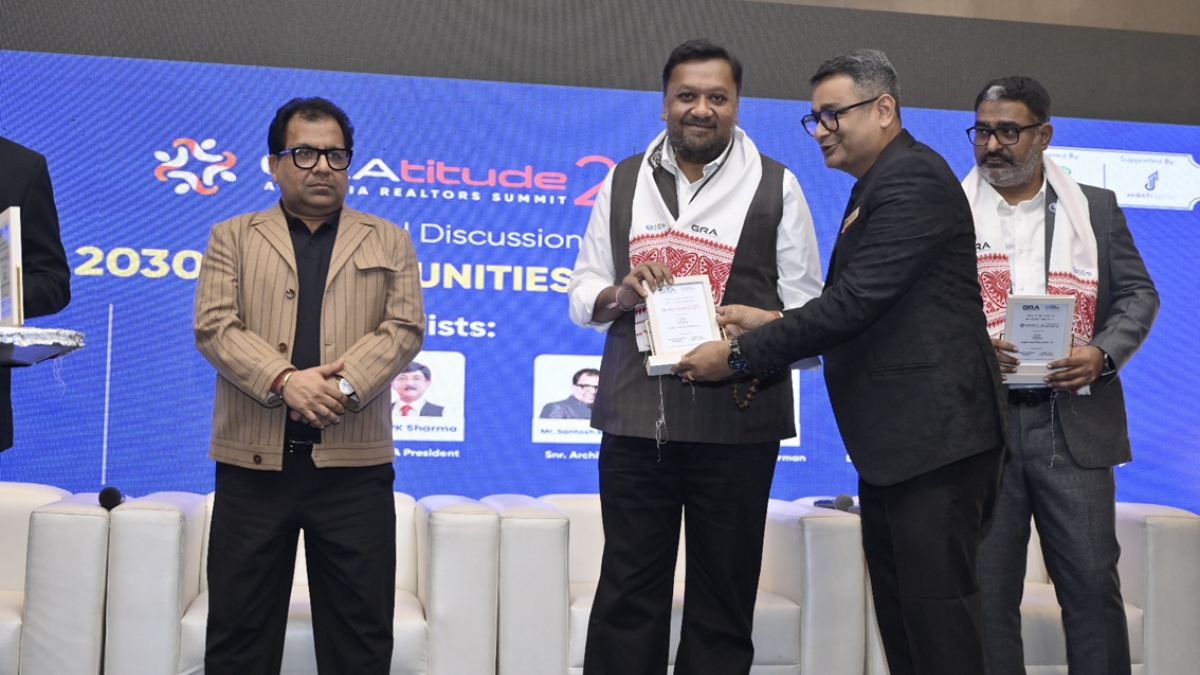
    Guwahati (Assam) [India], December 29: Infinity Group, one of India’s leading real estate developers, proudly participated as the Title Sponsor of GRAtitude 2025, a prestigious Pan-India Realtors’ Meet organised by the Guwahati Realtors’ Association (GRA). The landmark event was held at Kiranshree Grand, Guwahati, and saw the participation of prominent realtors, developers, and real estate professionals from across the country.

    GRAtitude 2025 served as a dynamic platform for knowledge exchange, networking, and strategic business discussions, with a special focus on emerging real estate markets and opportunities in Northeast India. The event successfully brought together stakeholders from across India, reinforcing Guwahati’s growing prominence as a key real estate destination.

    As Title Sponsor, Infinity Group showcased its flagship developments, highlighting its vision of delivering landmark residential and retail projects across regions—from North to Northeast India. Key projects presented in the event are Infinity Heights – Guwahati’s Tallest Premium Residential Resort, a thoughtfully designed luxury residential offering that harmonises contemporary design with green living as a pre-certified Gold Green project truly resembling as the the best flat in Guwahati, and Krishna Bhumi Arcade, India’s first cultural and product mall in Vrindavan. Conceptualised as a unique retail and spiritual destination, Krishna Bhumi Arcade is designed to serve pilgrims, devotees, and tourists alike. The presentation emphasised the projects’ strategic locations, contemporary architecture, strong investment potential, service to humanity, and Infinity Group’s commitment to quality, sustainability, and long-term value creation.

    A key highlight of the event was the panel discussion titled “Real Estate 2030: Opportunities, Risks & Roadmap Ahead”, where Pulak Chamaria, Director, Infinity Group, was an esteemed speaker alongside other industry leaders. Sharing valuable insights, he spoke about the evolving dynamics of the Indian real estate sector, changing consumer preferences, and the increasing importance of regional growth markets such as Guwahati in India’s development story. He also underscored the role of strong developer–realtor collaboration in addressing market challenges, mitigating risks, and driving sustainable, long-term growth.

    “Platforms like GRAtitude 2025 play a crucial role in strengthening industry relationships and fostering meaningful dialogue. Guwahati has immense growth potential, and Infinity Group is keen to be a part of its development journey by creating projects that align with market demand and future aspirations,” said Pulak Chamaria during the discussion.

    Further strengthening Infinity Group’s presence at the event, Aninda Das, Vice President – Marketing, Infinity Group, delivered an engaging and insightful presentation to the assembled realtors. Centred on the theme of Realtors as Bridges of Faith, Trust, and Connection, the presentation drew from real-life experiences that define the enduring relationship between developers and consumers. Through relatable scenarios and industry anecdotes, he highlighted the pivotal role realtors play in building trust, transforming transactions into long-term relationships, and shaping positive customer experiences. The session emphasised mutual respect, transparency, and collaboration while acknowledging the dedication, challenges, and on-ground efforts of the realtor community.

    In addition, Ravee Shanker Pandey presented Krishna Bhumi Arcade, Infinity Group’s landmark project in Vrindavan—India’s first religious and cultural product mall. His presentation articulated the project’s philosophy of service to humanity rooted in spirituality and devotion, highlighting its strategic location, distinctive positioning as a spiritual-retail destination, and strong investment potential driven by consistent pilgrim footfall and growing tourism.

    The event also featured robust networking sessions and productive business interactions, enabling realtors from different regions to exchange perspectives, explore collaborations, and gain deeper insights into Guwahati’s evolving real estate landscape, followed by entertainment.

    GRAtitude 2025 successfully communicated Guwahati’s emerging market narrative, positioning the city as a hub of strong residential demand, improving infrastructure, and expanding commercial opportunities. Infinity Group’s participation as Title Sponsor reaffirmed its confidence in regional growth markets and its proactive engagement with the nationwide realtor community.

    With its strong presence at GRAtitude 2025, Infinity Group reaffirmed its role as a forward-thinking developer committed to building enduring partnerships and delivering landmark spaces that shape communities and lifestyles across India.

    About Infinity Group

    Infinity Group is one of Eastern India’s leading real estate developers, known for pioneering retail, commercial, and integrated developments. With marquee projects in Kolkata’s SaltLake Sector V, the Group continues to redefine urban infrastructure and business destinations through innovation, sustainability, and excellence.

    For more details, contact us at:

    Email: info@infinityheights.in
    Phone: 9748311111

    If you have any objection to this press release content, kindly contact pr.error.rectification@gmail.com to notify us. We will respond and rectify the situation in the next 24 hours.
  • AURO University Proudly Hosts Its 13th Convocation Ceremony by Reinforcing a Vision for Value-Based Leadership

    AURO University Proudly Hosts Its 13th Convocation Ceremony by Reinforcing a Vision for Value-Based Leadership

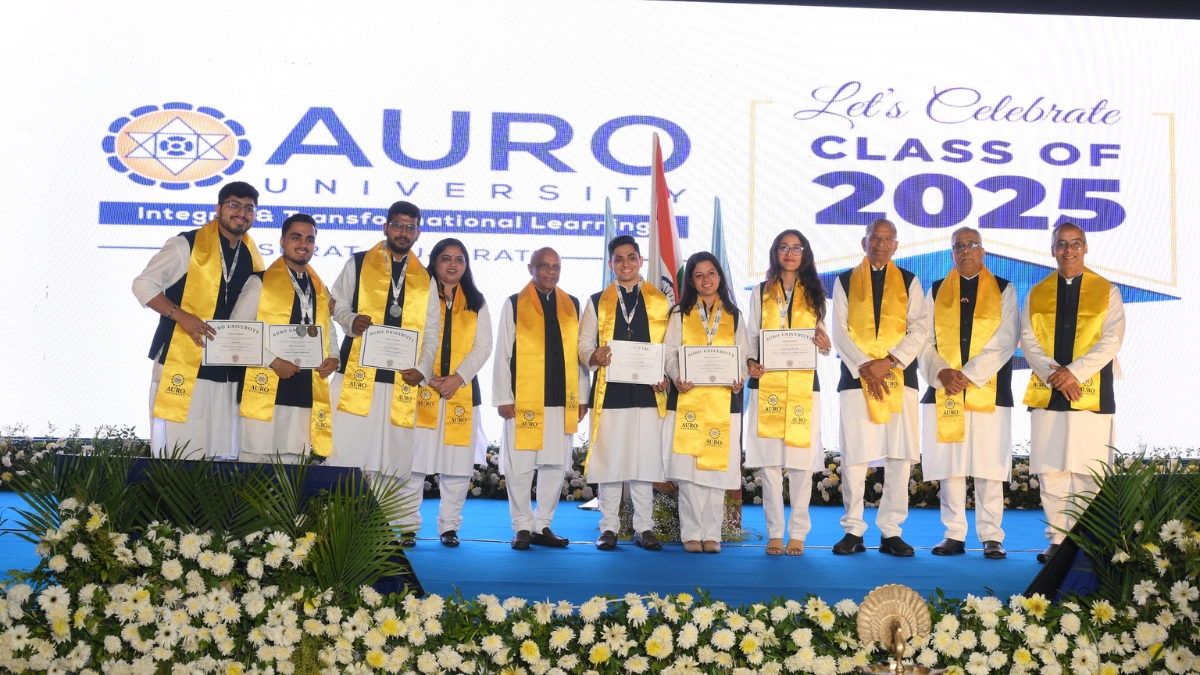
    Surat (Gujarat) [India], December 29: AURO University proudly hosted its 13th Convocation Ceremony on Friday, 27 December 2025, to celebrate the achievements of 313 graduates across 07 Schools, namely Business, Information Technology, Design, Hospitality, Law, Liberal Arts & Human Sciences, and Journalism & Mass Communication. The ceremony reaffirmed the University’s commitment to imparting integral, holistic, and transformational education, inspired by the vision of Sri Aurobindo and The Divine Mother.

    In an inspirational address, the Honourable Provost, Prof. Parimal H. Vyas, spoke on the theme “Glocal Architecture for Viksit Bharat 2047.” He emphasised that India’s journey towards becoming a developed nation must be anchored in local wisdom while embracing global best practices. “AURO University envisions integral learning inspired by Sri Aurobindo, shaping learners into leaders of the Amrit Generation, guided by core values as a roadmap from self-growth to nation-building.” He urged the graduates to become glocal architects of a self-reliant, inclusive Viksit Bharat@2047, blending global excellence with Bharat’s soul.

    In his Presidential Address, the Founder President and Chancellor, Shri Hasmukh P. Rama, reiterated AURO University’s foundational philosophy. Addressing the graduates, Rama sir emphasised, “True education builds character and consciousness alongside competence,” urging youth to lead with clarity, integrity, and purpose in a tech and AI-driven world. Calling on Auroites to take pride in Bharat’s culture and uplift others, he reminded them, “When youth rises, India rises.”

    Shri Govindjibhai Dholakia, Founder and Chairman Emeritus of Shree Ramkrishna Exports Pvt. Ltd. (SRK) and Shree Ramkrishna Knowledge Foundation (SRKKF), was the Chief Guest and delivered the convocation address. Speaking in an engaging and interactive manner, he encouraged the student fraternity to align personal success with national progress. “Till now, you have had safety and guidance. Now the responsibility is yours. Degrees can help, but honest efforts define success,” he remarked. Sharing his philosophy, he added, “I am nothing, but I can do anything. The problem is progress”, urging students to step out of comfort zones, value humanity over technology, and “become a brand through your work.”

    A total of 313 students were conferred degrees, comprising 02 Doctoral Degrees, 49 Postgraduate degrees (including 06 PG Diplomas), and 262 Undergraduate degrees. The School of Business led the cohort with 141 students, comprising 32 postgraduates and 109 graduates. This was followed by 76 graduates from the School of Information Technology, 24 from the School of Liberal Arts & Human Sciences, 23 from the School of Hospitality Management, 22 from the School of Law, 20 from the School of Design, and 05 from the School of Journalism & Mass Communication.

    32 meritorious rank holders were awarded a total of 14 Gold Medals (14 Girls and 05 Boys) and 18 Silver Medals (11 Girls and 07 Boys). Girl students outnumbered boys, winning 21 medals, reflecting AURO University’s strong commitment to inclusivity and gender equity. Additionally, 02 research scholars from the School of Business were conferred the Doctor of Philosophy (Ph.D.) degree.

    The convocation ceremony concluded with a patriotic rendition of Vande Mataram, leaving the gathering inspired by a shared sense of pride, purpose, and responsibility towards nation-building. The 13th Convocation of AURO University stood as a powerful affirmation of its mission to nurture future-ready, value-driven leaders aligned with the vision of a Viksit Bharat by 2047.

    Please visit https://www.aurouniversity.edu.in/ for details.

    PNN Education

  • National Healthcare Leadership Forum 2025 Highlights the Great Healthcare Shift Towards Bharat’s Tier-2 and Tier-3 Cities

    National Healthcare Leadership Forum 2025 Highlights the Great Healthcare Shift Towards Bharat’s Tier-2 and Tier-3 Cities

    National Healthcare Leadership Forum 2025 Highlights the Great Healthcare Shift Towards Bharat’s Tier-2 and Tier-3 Cities
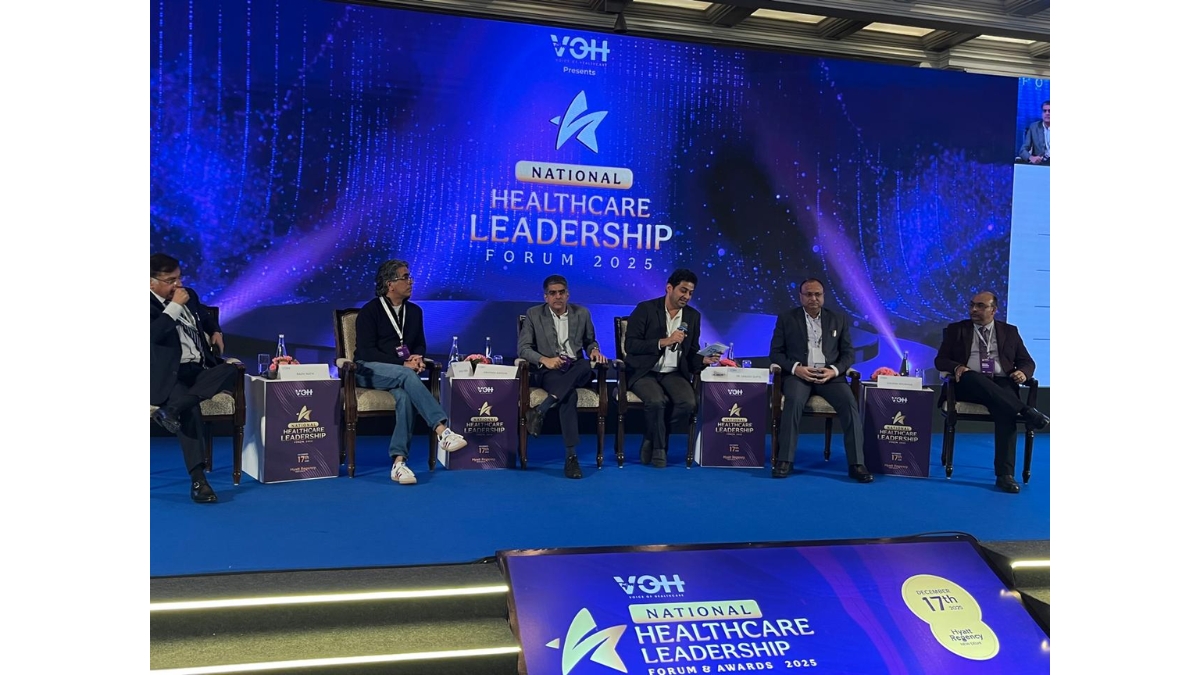
    New Delhi [India], December 29: The National Healthcare Leadership Forum 2025, organised by Voice of Healthcare (VOH), was held on December 17 at Hyatt Regency, New Delhi, bringing together senior leaders from healthcare delivery, medical devices, investment, quality accreditation and health technology to deliberate on India’s rapidly evolving healthcare landscape and future priorities.
    Welcoming the distinguished speakers and delegates, Dr Naveen Nischal, Founding Chairman of the VOH Network and Co-founder of Ujala Cygnus set the tone for a day-long exchange of ideas and insights. The forum opened with a strategic presentation, “India’s Vision 2030: The Future of Health,” delivered by Aryaman Tandon, Co-founder and Managing Partner, Praxis Global Alliance, outlining the scale of opportunity and challenges within India’s healthcare ecosystem.
    In his inaugural address, Dr Naveen Nischal reflected on the evolving nature of leadership in healthcare. Drawing an analogy to a hurdle race, he noted that leadership today demands constant adaptation. “Healthcare in India is at a critical juncture, shaped by shifting needs, evolving challenges and changing priorities. There is no fixed rulebook for leadership in such times. What remains constant are strong values—particularly trust and ethics—along with the ability to adapt. Platforms like this forum allow leaders to learn from one another and collectively strengthen India’s healthcare ecosystem,” he said.
    Highlighting the scale of opportunity, Aryaman Tandon pointed out that while India’s healthcare sector is already valued at around $300 billion, it remains significantly underpenetrated. “India carries nearly 20 per cent of the global disease burden but accounts for only about 1 per cent of global healthcare spending. If we address fragmentation, insurance coverage gaps, quality and infrastructure constraints, India has the potential to become one of the world’s most impactful healthcare ecosystems,” he remarked.
    The forum was graced by Chief Guest, actor Ameesha Patel, who applauded healthcare professionals for their dedication to patient care and acknowledged their role in safeguarding the nation’s well-being. Expressing her personal interest in bioengineering, she said, “Healthcare has always inspired me. It is heartening to see how science, innovation and compassion come together to improve lives. Platforms like the VOH National Healthcare Awards play an important role in recognising individuals and organisations driving meaningful change.”
    A panel discussion on “Building an Integrated Healthcare Ecosystem” featured Dr Ritu Mittal Garg, Chief Growth and Innovation Officer, Fortis Healthcare; Amit Singh, Group CEO, Yatharth Hospitals; and Henna Dhawan, Head–Country Public Affairs, Novartis India. Moderated by Dr Vishal Arora, Chief Business Officer, Artemis Hospitals, the panel focused on payment reforms, technology integration and the growing role of genomics in enabling coordinated, patient-centric care.
    Another session titled “Capital, Collaboration and Clinical Capabilities” brought together Rajeev Arora, President and Cluster Head–Critical Care, Oncology and Emergency Medicine, BSV-Mankind; Gaurav Khurana, Group CEO, Amandeep Hospitals; Sharad Goswami, Senior Director, Pfizer; Neeraj Lal, Regional Director, Medicover Hospitals; and Dr Debjani Saha, AGM, Premas Life Sciences, who discussed the interplay between investment, partnerships and clinical excellence.
    The forum also featured a fireside chat, “Command to Care: A Leadership Journey,” with Col Rajeev Mannali, MD & CEO, SUT Super Speciality Hospital, Pattom. Moderated by Mayank Badhwar, Senior Editor, VOH, the session offered insights into leadership, discipline and decision-making in complex healthcare environments.
    This was followed by a thematic presentation, “The P4 Adventure – Unlocking the Highest Quality and Longest Human Life,” by Dr Arjun T., Medical Director, Andhra Pradesh Medical Technology Zone (AMTZ), who emphasised the role of public–private partnerships, precision manufacturing and policy-backed innovation in building future-ready healthcare systems.
    A key highlight was the panel discussion, “The Great Healthcare Shift: Capital, Capacity and Care – Expansion Across Bharat,” which examined how investment, manufacturing and people-centric models are transforming healthcare access in Tier-2 and Tier-3 cities. Moderated by Dr Arjun T., the panel featured Rajiv Nath, Managing Director, Hindustan Syringes & Medical Devices Ltd. and Forum Coordinator, AiMeD; Ashish Taneja, Founding Partner & CEO, GrowX Ventures; Abhishek Kapoor, CEO, Regency Healthcare; Dr Sanjeev Gupta, Group Medical Director, Action Group of Hospitals and Principal Assessor, QCI; and Gaurav Khurana, Amandeep Hospital Group.
    The discussion highlighted India’s push to reduce import dependence under the National Medical Device Policy 2023, the rise of medtech parks in non-metro regions, asset-light hospital expansion models, workforce challenges, and innovative financing approaches to ensure affordability without compromising care quality.
    Concluding the forum, VOH presented over 100 National Healthcare Awards recognising outstanding organisations and individuals. Dr Girdhar Gyani, Director General, AHPI, was honoured with the Lifetime Achievement Award, while Outreach Partner Prius Communications received a National Award for its impactful healthcare campaigns.
    Overall, the National Healthcare Leadership Forum 2025 reinforced that India’s healthcare transformation will be driven not only by metros, but increasingly across Bharat—through decentralised manufacturing, technology-led expansion, skilled workforce development and patient-centric innovation.
    If you object to the content of this press release, please notify us at pr.error.rectification@gmail.com. We will respond and rectify the situation within 24 hours.
  • India Medical Devices Market to Hit USD 30.6B by 2033

    India Medical Devices Market to Hit USD 30.6B by 2033

    Mumbai (Maharashtra) [India], December 29: India’s medical devices industry is no longer a side act. It’s becoming a mainstay of the healthcare economy, with momentum that looks stubbornly durable.

    How Big Will the India Medical Devices Industry Be by 2033?

    Let’s start with the number that matters. The India medical devices market size is expected to reach USD 30.64 billion by 2033. That’s not hype. That’s math backed by hospitals, demographics, and policy.

    In 2024, the market stood at USD 18.02 billion. Between 2025 and 2033, it’s growing at a CAGR of about 6.08 percent. Not explosive. Not fragile either. Steady, compounding, and broad-based.

    What’s powering this growth isn’t one silver bullet. It’s a convergence. More hospitals. More chronic disease. More local manufacturing. And a quiet but decisive shift toward portable and home-based care.

    Hospitals, Clinics, and Diagnostics Are the Demand Engine

    India’s healthcare delivery system is expanding in every direction at once. New hospitals. Bigger specialty centres. Diagnostic chains that look more like national brands than local labs.

    This expansion creates relentless demand for medical devices. Capital equipment like imaging systems and ventilators. Everyday essentials like consumables and disposables. And everything in between.

    Hospital capacity is scaling up fast. More ICU beds mean more patient monitors and ventilators. Upgraded operation theatres require modern anesthesia systems and surgical tools. Diagnostic labs are investing heavily in MRI, CT, and PET-CT systems, while also adopting compact point-of-care testing devices for speed and throughput.

    There’s also a structural shift in how hospitals buy. Large private chains such as Apollo, Fortis, and Manipal are expanding aggressively. Private equity has noticed. India’s hospital sector has attracted nearly USD 4.96 billion in PE funding, a signal that organised healthcare is here to stay.

    Organised players don’t buy devices casually. They prefer bundled contracts that include installation, servicing, maintenance, and consumables. For manufacturers, that means predictable revenue and longer relationships. For hospitals, it means fewer headaches. Everyone wins, assuming you can deliver.

    Market Size, Growth, and Where the Real Opportunity Lies
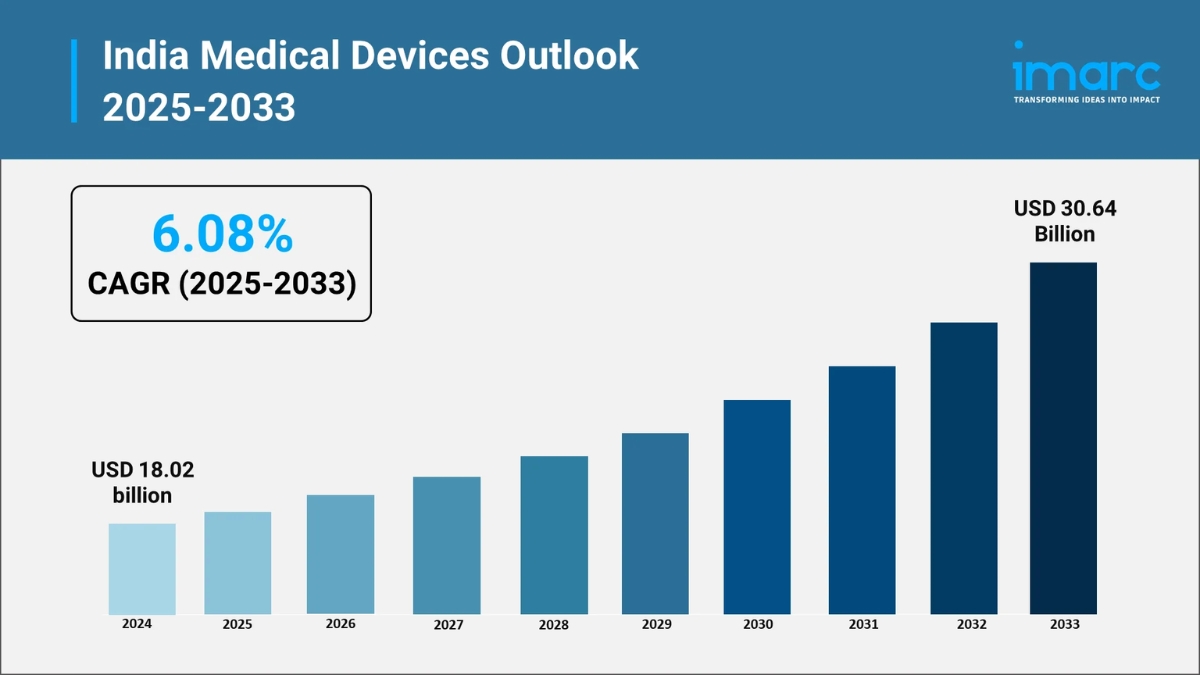
    India medical devices market size is set to reach $30.64B by 2033. = PNN

    The India medical devices market size reflects more than rising spend. It reflects changing disease patterns.

    Chronic illnesses are climbing. Diabetes, cardiovascular disease, respiratory conditions. These aren’t episodic problems. They require continuous diagnosis, monitoring, and therapy. That translates directly into sustained device demand.

    Government policy is adding fuel. The Production Linked Incentive scheme, medical device parks, and regulatory support are nudging manufacturers to build locally. Imports still dominate high-end devices, but that gap is narrowing.

    Technology adoption is another accelerant. Digital health monitoring, portable diagnostics, and connected devices are moving from pilot projects to standard practice. Consumers are more aware. Doctors are more data-driven. Hospitals are more tech-forward.

    Strategically, companies model three scenarios. A base case with steady growth. An upside case where localisation and exports surge. And a downside case tied to weaker hospital spending or supply chain shocks. The common thread across all three? Portable and home care devices outperform the average.

    Import Dependence Meets Domestic Manufacturing Reality

    India still imports a large share of high-end medical devices. Advanced imaging systems. Implants. Sophisticated diagnostics. Between FY2020-21 and FY2024-25, imports of electromedical equipment and surgical instruments crossed USD 25 billion.

    That dependence carries risk. Currency swings. Tariff changes. Global supply disruptions. Hospitals feel it first, and patients feel it next.

    But here’s the flip side. This import-heavy structure is an open invitation for domestic manufacturing, especially in low- and mid-complexity devices. These categories face fewer technological barriers and enjoy consistent demand.

    Policy support is finally aligning with opportunity. The PLI scheme, device parks, and faster regulatory pathways are pushing both Indian firms and multinationals to manufacture locally. Assembly lines are coming up. Component manufacturing is scaling. R&D centres are expanding.

    Beyond manufacturing, services matter. Maintenance, calibration, and consumables supply offer recurring revenue and healthy margins. Quietly, these segments are becoming profit engines.

    Portable and Home Care Devices Are the Fastest Movers

    If there’s one segment rewriting the rules, it’s portable and home care equipment.

    Blood pressure monitors. Glucometers. Digital oximeters. Portable ECGs. CPAP machines. Mobility aids. These devices are no longer fringe products. They’re becoming household essentials.

    The drivers are obvious. Chronic disease requires frequent monitoring. India’s elderly population is growing. Telemedicine has gone mainstream. Doctors now trust validated home readings for virtual consultations.

    Technology has kept up. Sensors are cheaper. Batteries last longer. Devices are smaller and smarter. Smartphone connectivity seals the deal.

    Global players see the opening. Omron is setting up manufacturing in Chennai to localise blood pressure monitors and ECG devices. Penetration remains low, roughly 6 percent for BP monitors, despite massive hypertension prevalence. That gap is opportunity staring you in the face.

    Market data consistently shows home healthcare monitoring growing faster than the overall medical devices market. Companies that build strong links with pharmacies, e-commerce platforms, and telehealth providers will capture disproportionate value.

    Government Support Is No Longer Cosmetic

    Policy support has moved from slogans to spreadsheets.

    Under the PLI scheme, manufacturers receive incentives tied directly to incremental sales. By March 2023, 21 companies were approved across imaging, cardio-respiratory devices, implants, and cancer-care equipment. Another 50 greenfield plants are expected under the broader pharma and medical device PLI framework.

    Medical device parks are adding muscle. Shared testing labs. Infrastructure support. Faster approvals. State governments are competing to attract investment, which is exactly how it should be.

    For manufacturers, ignoring these incentives is lazy strategy. Used well, they improve returns, reduce payback periods, and strengthen export competitiveness.

    Competitive Landscape Is Heating Up

    This is not a sleepy market.

    GE Healthcare dominates imaging, diagnostics, and patient monitoring, with a growing local manufacturing and R&D footprint. Siemens Healthineers is pushing hard on advanced imaging and AI-driven diagnostics. Its Bengaluru MRI facility under the PLI scheme is a clear signal of long-term intent.

    Philips Healthcare plays across imaging, critical care, and home health, with a strong focus on connected care. Mindray has carved out share by offering capable devices at aggressive price points, especially in monitoring and anesthesia.

    Indian players are no longer content with crumbs. Trivitron Healthcare spans diagnostics, imaging, and critical care, backed by acquisitions and overseas facilities. BPL Medical Technologies remains strong in monitoring, ECGs, defibrillators, and home health equipment.

    The pattern is clear. Multinationals dominate high-end capital equipment. Domestic firms win in consumables, monitoring, and value-driven categories. The gap is narrowing, and competition is sharpening.

    What This Means Going Forward

    India’s medical devices industry is moving from dependency to capability. From fragmented demand to organised procurement. From hospital-only use to home-based care.

    The India medical devices market size tells a story of scale. The subtext tells a story of resilience and opportunity. Companies that focus on affordability, localisation, and innovation won’t just participate. They’ll lead.

    Read More

  • AYUSH Drug Quality Regulation: 10 Bold Safeguards Implemented

    AYUSH Drug Quality Regulation: 10 Bold Safeguards Implemented

    New Delhi [India], December 29: AYUSH medicines don’t float in regulatory limbo. They operate under a dense, rule-heavy system that most critics never bother to read. Here’s what actually keeps Ayurveda, Siddha, Unani and Homoeopathy drugs in check.

    India’s AYUSH sector sits at an awkward crossroads. Hugely popular. Deeply traditional. Constantly questioned. What rarely gets attention is the regulatory scaffolding holding it together. It exists. It’s detailed. And it’s far from symbolic.

    At the centre of this system is AYUSH drug quality regulation, a framework built on testing, surveillance, certification and enforcement. Let’s break it down without the fog.

    PCIM&H and the Backbone of AYUSH Drug Quality Regulation

    The Pharmacopoeia Commission for Indian Medicine and Homoeopathy, or PCIM&H, operates under the Ministry of Ayush. Its role is blunt and non-negotiable. It acts as the appellate drug testing laboratory for Ayurveda, Siddha, Unani and Homoeopathy drugs.

    That means when quality disputes arise, PCIM&H is the final word on identity, purity, strength and composition. No opinions. Just lab results.

    PCIM&H also publishes pharmacopoeial standards and formularies. These documents are not academic fluff. Under the Drugs and Cosmetics Act, 1940, compliance with these standards is mandatory for manufacturers. Miss them, and you are in violation of the law.

    Drug Testing Laboratories and Rule 160 A to J

    AYUSH drug quality regulation is anchored in Rule 160 A to J of the Drugs Rules, 1945. These rules govern how drug testing laboratories are approved to test Ayurvedic, Siddha and Unani medicines.

    As of today, 34 State Drug Testing Laboratories have received central support to upgrade infrastructure and functionality. Beyond that, 108 laboratories are officially approved or licensed to test AYUSH drugs and raw materials.

    Add to this three Regional Research Institutions under the Central Council for Research in Ayurvedic Sciences, approved under Rule 160E. These labs aren’t decorative. They are legally empowered testing bodies.

    Pharmacovigilance for AYUSH Drugs Isn’t Optional

    AYUSH drug quality regulation doesn’t stop at manufacturing. It extends into the market.

    Under the Central Sector Scheme Ayush Oushadhi Gunavatta Evam Uttpadan Samvardhan Yojana, or AOGUSY, India runs a nationwide pharmacovigilance programme for AYUSH drugs.

    The structure is three-tiered:

    • One National Pharmacovigilance Centre.
    • Five Intermediary Centres.
    • Ninety-seven Peripheral Centres spread across the country.

    Their mandate is simple. Monitor adverse reactions. Track misleading advertisements. Report violations to State Regulatory Authorities for action.

    So far, this network has conducted 3,533 awareness programmes, reaching over 3.18 lakh beneficiaries. That’s not passive regulation. That’s boots on the ground.

    Cracking Down on Misleading Claims

    AYUSH - PM Modi

    One of the loudest criticisms of AYUSH products is exaggerated advertising. The system acknowledges that risk and actively targets it.

    Pharmacovigilance centres are specifically tasked with identifying misleading advertisements. When found, these are escalated to state regulators. Enforcement follows existing legal provisions. No parallel justice. No shortcuts.

    The objective is consumer protection. Plain and simple. Verified claims stay. Unverified ones don’t.

    Global-Grade Certifications for AYUSH Products

    AYUSH drug quality regulation also looks outward.

    India extends the World Health Organization’s Certification of Pharmaceutical Product, or CoPP, scheme to Ayurvedic, Siddha and Unani medicines. This certificate is administered by the Central Drugs Standard Control Organisation.

    The process includes joint inspections by CDSCO, the Ministry of Ayush and State Licensing Authorities. It’s not a paperwork exercise. Manufacturing units are physically inspected.

    Separately, the Quality Council of India runs a Quality Certification Scheme. Products meeting domestic and international standards receive the Ayush Mark, based on third-party evaluation.

    That’s how export credibility is built. Slowly. Methodically.

    AOGUSY and the Money Behind Quality

    Regulation without funding collapses. The Ministry of Ayush knows this.

    Under AOGUSY, the government has allocated Rs 122 crore over five years, from 2021–22 to 2025–26. One key component focuses on upgrading AYUSH pharmacies and drug testing laboratories.

    Better equipment. Better compliance. Fewer excuses.

    Legal Architecture of AYUSH Drug Regulation

    The Drugs and Cosmetics Act, 1940 doesn’t treat AYUSH as an afterthought. It has exclusive chapters and schedules for it.

    Ayurveda, Siddha, Sowa-Rigpa and Unani drugs fall under Chapter IVA and Schedule I of the Act, along with Rules 151 to 169 and Schedules E(I), T and TA.

    Homoeopathic drugs are governed by a separate set of provisions, including Schedule 4A of the Act and multiple rules and schedules under the Drugs Rules, 1945.

    Manufacturers must comply with Good Manufacturing Practices under Schedule T. Proof of safety and effectiveness is mandatory. There’s no opt-out clause.

    CDSCO’s AYUSH Vertical and Inspections

    To tighten enforcement, the Ministry of Ayush has established a dedicated AYUSH vertical within CDSCO.

    This unit conducts inspections of manufacturing facilities in coordination with state drug inspectors and licensing authorities. The goal is consistent enforcement across states, not regulatory patchwork.

    Think of it as centre-state teamwork with lab coats.

    Research, Validation and the Ayurgyan Scheme

    Quality regulation isn’t complete without research.

    Since 2021–22, the Ministry of Ayush has implemented the Ayurgyan Scheme to support research and innovation. It has three components:

    – Capacity building and continuing medical education.
    – Research and innovation.
    – Ayurveda Biology Integrated Health Research.

    This feeds directly into scientific validation, not belief-based promotion.

    Research Councils and Scientific Oversight

    India has established dedicated research councils for Ayurveda, Unani, Homoeopathy, Siddha, and Yoga and Naturopathy. These bodies coordinate national research on medicinal plants, drug standardisation, pharmacology, clinical studies and tribal healthcare.

    Their work is conducted through institutes across the country and in collaboration with universities and hospitals.

    PCIM&H also runs regular training programmes for state regulators, lab personnel and quality control staff. Regulation improves when people actually know the rules.

    Read More