Author: Sutun Nayak

  • ADMACH SYSTEMS LIMITED IPO Opens on December 23, 2025

    ADMACH SYSTEMS LIMITED IPO Opens on December 23, 2025

    Mumbai (Maharashtra) [India], December 18: Admach Systems Limited (the Company ‘Admach’) is specialized in the design and manufacturing of custom industrial machinery, automation systems, and non-destructive testing (NDT) equipment, proposes to open its Initial Public Offering on Tuesday, December 23, 2025 aiming to raise ₹ 42.60 Crore (At Upper Price Band), with shares to be listed on the BSE SME Platform.

    The issue size is 17,82,600 equity shares at a face value of ₹10 each, with a price band of ₹227-₹239 per share.

    Equity Share Allocation

    • Anchor Portion – 3,36,600 Equity Shares
    • Qualified Institutional Buyer – 2,55,600 Equity Shares
    • Non-Institutional Investors – Not less than 3,79,800Equity Shares
    • Retail Individual Investors – Not less than 7,21,200 Equity Shares
    • Market Maker – 89,400 Equity Shares

    The net proceeds from the IPO will be utilised for funding capital expenditure requirements of the Company towards the purchase of new machinery and installation cost thereon, Funding Working Capital Requirements of the Company, and general corporate purposes. The anchor portion will open on Monday, Dec 22, 2025 and the issue will open on Tuesday, Dec 23, 2025 and will close on Friday, Dec 26, 2025.

    The Book Running Lead Manager to the Issue is AftertradeBroking Private Limited, The Registrar to the Issue is Maashitla Securities Private Limited.

    Mr Ajay Chamanlal Longani, Managing Director of Admach Systems Limited, expressed, “The proposed Initial Public Offering is an important step for Admach Systems Limited. The Company is engaged in providing machine designing and machine building services for the engineering industry in India and abroad, with areas of specialisation including special purpose machines, automation systems, assembly machines, packaging machines, product design and robotic material handling systems. The engineering industry is witnessing demand for automation systems, special-purpose machines and customised engineering solutions.

    The proceeds of the Issue are proposed to be utilised towards funding capital expenditure for purchase of machinery, civil work and installation, meeting working capital requirements and general corporate purposes. These proposed uses are intended to support manufacturing operations, enhance installed capacity and meet business requirements in line with the growth of the engineering industry.”

    Mr Vanesh Panchal, Director of Aftertrade Broking Private Limited, said, “The Indian industrial automation and special purpose machinery sector is witnessing sustained growth, driven by increasing manufacturing automation, capacity expansion across core industries, and the shift toward efficiency-led, customised engineering solutions. Sectors such as automotive, steel, food processing, and general engineering are progressively adopting automation to improve productivity, quality, and cost competitiveness, both for domestic demand and export-oriented manufacturing.

    Within this expanding landscape, the Company is well positioned with its integrated design-to-build capabilities, domain-specific engineering expertise, and established customer relationships. Its focus on customised, application-driven solutions and disciplined execution has enabled consistent capacity utilisation and repeat business. The proposed Issue is expected to further strengthen the Company’s manufacturing infrastructure and working capital base, allowing it to scale operations, improve utilisation, and undertake larger and more complex projects. We believe the Company is well placed to capitalise on favourable industry trends.”

    If you have any objection to this press release content, kindly contact pr.error.rectification@gmail.com to notify us. We will respond and rectify the situation in the next 24 hours.

  • “Raanjhiya”, A Soulful Ode to Love Starring Nishant Singh Malkani and Sugandha Sharma

    “Raanjhiya”, A Soulful Ode to Love Starring Nishant Singh Malkani and Sugandha Sharma

    Mumbai (Maharashtra) [India], December 20: Love is most expressed in Raanjhiya, a new romantic song which is an excellent expression of tenderness, longing and depth of relationship in modern times. The song has the attractive on-screen coupling of Nishant Singh Malkani and Sugandha Sharma. It combines emotion, music and images into a romantic experience of immersion.

    Sunil Pal, Pradip Khairwar, Priyanka Saha, Rajshree More, Maayatakaoka, Shahzad Khan, Alisha Bose, Sushant Kalyan Singh and Gaurav Sharma, among others, were present at the evening.

    Watch the song here- https://youtu.be/YhvRXx6tkiM?si=1ta1dcq8ZK-gFtA1

    Performed with immense sensuality by Yasser Desai, Raanjhiya is brought to a higher plane of soulful music composition and a rich musical arrangement, produced by Music Garage under the Wave Band Production name. The song is further enhanced by emotional overtones as the lyrics, which were written by Shabbir Ahmed, depict love in its most innocent state. The music video, directed by Aslam Khan, can give life to the story of Raanjhiya in a cinematic manner.

    The story is presented against backgrounds of vivid images, which explores the themes of love, separation, hope and reunion. It enables viewers to relate to the lives of the main characters. Nishant Singh Malkani gives a subtle performance, which is characterised by silence and passion, whereas Sugandha Sharma brings tenderness and elegance. Their romance is realistic and interesting.

    Raanjhiya, with its spooky tune, touching words and emotionally charged imagery, is set to resonate with music enthusiasts who value eternal romance. The song is a tribute to the fact that music remains the most effective language of love.

    Nishant Singh Malkani says,

    Raanjhiya is a feeling that leaves you with even after the music is over. The truthfulness of the story and the silent intensity of the character appealed to me about this project. It enabled me to find out love in its most vulnerable state, devoid of drama, without being over-the-top, but pure emotion. I do hope people experience the same emotions we had in its creation.

    Sugandha Sharma adds,

    The song is an excellent representation of the quieter, unspoken end of love, the times that require no words. Raanjhiya provided me with the room to experience the emotions by being quiet, giving glances, and being there. This experience was extremely special to me in working with such a touching script, a fantastic co-actor and a team with a burning heart.

    Yasser Desai says,

    Any singer is waiting for the songs to speak to the heart, and Raanjhiya is precisely one of them. The music and the words required sincerity in their performance as opposed to the vocal theatrics. I put my heart into this song, and I want the listeners to sense the love, the desire, and the richness the song has.

    Shabbir Ahmed cogitates over the lyrics.

    Raanjhiya was written in order to take that simplicity of love that does not scream, but lingers about. I also wanted the words to be personal, close to a heart-to-heart talk. Words and music are combined so beautifully when they go together, but this makes the words timeless.

    Director Aslam Khan says,

    Raanjhiya is a narrative that is not represented by speech but by feelings. I wanted the music to narrate the story and have the performances be natural and authentic. Nishant and Sugandha were amazingly sincere in their acting, thus visualising the poetic story with an emotional touch.

    According to the spokesperson of the music garage A. Jhunjhunwala,

    In the case of Raanjhiya, we were interested in developing a sound that is close yet wide at the same time. We desired the music to breathe and emotions to run naturally. It is a great harmony of tune and emotion, and we are happy to see it strike so close to the heart.

  • Iconic Gold Awards 2026 Date Announcement

    Iconic Gold Awards 2026 Date Announcement

    Mumbai (Maharashtra) [India], December 20: The Indian show business timeline has got a new big red circle. It has been confirmed that the Iconic Gold Awards 2026 will be held in Mumbai on 18 February 2026, underscoring that the city remains the country’s cultural hub and the natural place to celebrate achievements in the various creative sectors.

    The award itself, the Iconic Gold Awards, has steadily earned a valid place in an ecosystem that tends toward spectacularism. The difference is that it remains dedicated to recognising the work that resonates since its inception: performances that touch people, creative decisions that defy conventions, and professionals who manage to bring Indian entertainment to the mainstream and newer platforms.

    An Ideal that is Constructed on Honesty and Hard work.

    The Iconic Gold Awards, since its inception, have been in a tradition bequeathed by admiration for talent, not following trends. Cinema and television awards have been replaced by OTT, music, and fashion awards because the awards are now a cross-industry event, with artistry put in the foreground rather than algorithms.

    Some of the most renowned and commercially reliable in the field of Indian entertainment have received the legendary trophy in the past editions. Recipients have included actors like Kartik Aaryan, Pankaj Tripathi, Abhishek Bachchan, Kriti Sanon, Shraddha Kapoor, Manoj Bajpayee and Sushmita Sen. They are all representatives of different schools of performance and communication with the audience. Their longevity has contributed to the strengthening of the awards as an indicator of substantial recognition as opposed to a buzz.

    The television and OTT actors, who currently have a similar influence to film celebrities, are also well represented in the Iconic Gold stage. Names such as Raghav Juyal and Sharvari Wagh demonstrate that the event is keen to recognise how changing formats and storytelling mediums are influencing modern-day viewing patterns.

    Cultural Voices, Music and Fashion.

    The Iconic Gold Awards have never limited themselves to acting only. The music field, which has been a pillar, an important part of the emotional and cultural fabric of India, has always been revered equally. The platform has honoured renowned singers, including Udit Narayan, Kumar Sanu, Shilpa Rao and Stebin Ben, indicating that it appreciates that music is one of the most effective storytelling mechanisms in the country.

    The awards are also highly dominated by fashion and cultural interest. Other personalities, such as fashion designer Manish Malhotra, motivational speaker and cultural icon Jaya Kishori, and other creative entrepreneurs, such as Divya Khosla, have been seen to have a hand in other forms of entertainment. Such an open strategy positions the Iconic Gold Awards 2026 as an expression of India’s broader creative economy rather than a one-industry display.

    Year After Year, Raising the Bar.

    The benefits that the Iconic Gold Awards have gotten the industry to trust it over time is the consistency. The editions are progressions of the previous ones with expanded scale, curation, and experience without losing focus on the same philosophy—following sincerity, effort, and impact on the audience.

    As the host of 2026, Mumbai makes the event symbolic. Being the city where dreams, studios, start-ups and stages exist, it also reflects the awards’ growth experience through its own perseverance and passion. The union with the awards season also makes February the strategic month for the ceremony, and it is one of the important dates for both industry stakeholders and audiences.

    Leadership Vision: Vision of the Celebration.

    Promoting the next issue, CEO Piyush Jaiiswaal said he was looking forward to the future. The message indicates consistency and not innovation, which makes the promise of a big, well-considered, celebratory night that celebrates the spirit of the Iconic Gold Awards as well as gains a broader reach and experience in 2026.

    However, under his tenure, the platform has been glamorous and grounded at the same time, where recognition is respected, and celebrations are via. The vision still appeals to the artists and creators whose recognition is grounded in respect for their profession.

    The Future Expectations of Audiences.

    The date is now set, so a countdown to the Iconic Gold Awards 2026 has begun. During the next few months, the viewers will hear news regarding nominations, details about the jury, special honours and event highlights. It is a chance for the fans to see their favourites being rewarded. To professionals in the industry, it can be viewed as a reminder that hard work and creativity remain highly treasured.

    People who want to stay in touch will have access to official announcements on the Iconic Gold Awards site and other social networks, where news will be shared in the run-up to the ceremony.

    The mediums such as the iconic gold awards, are quietly becoming more of a significant presence in the worldwide entertainment industry as Indian entertainment proceeds to extend its influence all across the world; however, quietly but significantly, the focus of the noise is made upon the individuals behind the performances, the voices behind the sounds, and the vision behind the scenes. On 18 February 2026, Mumbai will again host an event in which not only stardom but also substance will be celebrated.

    To know more information, go to iconicgoldawards.com.
    and be a follower of iconicgoldaward on social media.

    PNN Entertainment

  • A 31-year-old who lived on a chair… until his spine finally said, ‘Enough’

    A 31-year-old who lived on a chair… until his spine finally said, ‘Enough’

    Ahmedabad (Gujarat) [India], December 20: A 31-year-old cybersecurity professional from Ahmedabad, like many young office workers across the country, spent most of his day on a chair, back-to-back meetings, deadlines, and a lifestyle that allowed everything except movement. What began as a mild ache slowly grew into a silent burden, until one morning his body refused to straighten. He arrived at IndoSpine Hospital bent forward, struggling to walk, frightened that his professional life and financial stability were at risk because his spine could no longer support him.

    His story is not an exception; it is a growing socio-economic reality. India’s working population now spends 8–12 hours a day sitting, often without breaks, proper posture, or ergonomic setups. For many, health takes a back seat as productivity becomes the priority. In this case, clinical evaluation and imaging revealed a severe disc herniation compressing vital nerves, a condition made worse by years of uninterrupted sitting. After discussing medical findings and evidence based options, the spine team recommended lumbar decompression with pedicle screw fixation, an accepted procedure selected purely based on clinical need and the goal of preventing long-term neurological harm.

    The transformation began just hours after surgery. For the first time in weeks, he stood upright relieved, steady, and hopeful. Over the following days, his posture improved and his confidence returned. With physiotherapy guidance and strict ergonomic corrections, he resumed his daily routine, now acutely aware of how work-related habits had pushed   his body to the edge.

    Speaking about the case, Dr. Tarak Patel, Chief Spine Surgeon at IndoSpine Hospital,  shared, “This is the story of thousands of young Indians who work long hours in chairs.  Their spine pays the price long before they realise it. Our role is to diagnose responsibly, communicate clearly, and choose treatment based solely on the patient’s clinical   condition.”

    The patient, who wishes to remain anonymous, said, “I always thought back pain is normal when you work long hours. But the day I couldn’t stand straight, I realised how serious it had become. Standing upright after surgery felt like getting my life and my  career back on track.”

    His parents added, “We never imagined that office work could lead to something this severe. Watching him walk upright again was an emotional moment for us.”

    This case shines a light on a bigger issue, poor spine health is silently affecting productivity, mental well-being, and family life for millions of office workers. Ignoring symptoms or delaying evaluation can have long-term consequences. The spine doesn’t break in a day. It bends, warns, whispers and finally says “Enough.” Listening early can change the outcome entirely.

    Disclaimer: This press release is for general information purposes only and should not be construed as professional medical advice. Always consult a doctor before taking any decisions.

  • Prestige Didn’t Die — It Just Lost The Algorithm’s Patience

    Prestige Didn’t Die — It Just Lost The Algorithm’s Patience

    Mumbai (Maharashtra) [India], December 20: There was a time when television asked for commitment. Not attention—commitment. Slow-burn dramas took seasons to reveal themselves. Characters aged, mistakes accumulated, silence mattered. Viewers didn’t binge; they returned. Prestige TV wasn’t designed to trend. It was designed to linger.

    That era hasn’t ended with a dramatic cancellation or a farewell montage. It’s been edged out—politely, efficiently—by a different philosophy of storytelling. One that values immediacy over immersion, spikes over arcs, and cultural moments over cultural memory.

    Prestige TV is shrinking. Event TV is rising. And the reasons have less to do with creativity dying and more to do with how modern life is being measured.

    The Shift Wasn’t Creative — It Was Behavioral

    This change didn’t begin in writers’ rooms. It began in dashboards.

    Streaming platforms learned, with unnerving precision, how audiences behave when left alone with infinite choice. Completion rates matter more than critical praise. Opening-week engagement outweighs long-term affection. A show that ignites conversation quickly is more valuable than one that rewards patience quietly.

    Event TV thrives in this environment. Limited episodes. High-concept hooks. Instant stakes. The kind of content that fits neatly into recommendation carousels and social media discourse.

    Prestige TV, by contrast, asks for time before it gives back. Algorithms are famously bad at waiting.

    Why Event TV Feels Like Life Now

    There’s a reason event television resonates beyond platform strategy—it mirrors how people live.

    Modern life is compressed. Notifications interrupt everything. Attention is fractured not because audiences are shallow, but because they are overwhelmed. In this context, television that announces itself loudly and resolves itself quickly feels… merciful.

    Event TV doesn’t demand loyalty. It offers intensity. Watch now. Feel something. Move on.

    That doesn’t make it inferior. It makes it adaptive.

    The Algorithm’s Quiet Preference For Drama Over Depth

    Algorithms don’t hate complexity. They simply don’t reward it.

    Nuance doesn’t spike metrics. Subtlety doesn’t trend. A morally ambiguous character arc unfolding over ten hours is harder to market than a shocking premise resolved in six episodes.

    Event TV delivers clean data. Prestige TV delivers delayed gratification. One fits spreadsheets better.

    This doesn’t mean writers are incapable of depth. It means depth has been rebranded as a risk.

    Are Writers Losing Control Or Just Changing Tools?

    There’s a popular narrative that writers are being sidelined. The truth is more complicated—and less dramatic.

    Writers aren’t losing control; they’re negotiating it. Shorter seasons mean tighter storytelling. Fewer episodes demand precision. Some writers thrive in this environment. Others mourn the loss of narrative sprawl.

    What is shrinking is room for failure. Prestige TV once allowed shows to grow into themselves. Today, a series often needs to justify its existence immediately or not at all.

    Patience has become a luxury item.

    The Economic Reality Behind The Aesthetic Shift

    Let’s talk numbers, because sentimentality doesn’t pay invoices.

    Long-form prestige series are expensive. Extended production schedules, large ensembles, multiple seasons of incremental payoff—all add cost without guaranteeing retention. Event TV, particularly limited series, offers budget containment and marketing clarity.

    A six-episode global hit can outperform a three-season critical darling in cost-to-impact ratio. Platforms notice. Investors notice faster.

    This is less about killing prestige and more about rationing it.

    The Upside Nobody Likes To Admit

    There are benefits to this shift, even if they’re rarely framed generously.

    • Tighter storytelling reduces filler

    • Global audiences engage simultaneously

    • Creative risks can be taken in smaller doses

    • New voices get opportunities without long commitments

    Event TV lowers the barrier to entry. That matters in an industry historically allergic to change.

    The Cost We’re Only Beginning To See

    But something is lost in the compression.

    When stories don’t have time to breathe, they don’t always have time to change. Characters evolve faster than real people do. Moral ambiguity is resolved too neatly. The discomfort that once defined prestige storytelling is often softened.

    Cultural memory suffers. Shows become moments, not milestones.

    And for viewers who crave immersion, the landscape can feel increasingly transactional.

    Is Attention Span Really The Villain?

    Blaming audiences is easy—and lazy.

    People still watch long-form content. They still read long books. They still commit deeply to stories that earn it. What’s changed is the tolerance for slow starts without guarantees.

    In a world where everything competes for attention, storytelling must justify its existence faster. That’s not cultural decay. It’s environmental pressure.

    Prestige TV didn’t fail. It became harder to sustain.

    A Different Perspective On Storytelling And Life

    Perhaps this shift isn’t about television at all. Perhaps it reflects a broader discomfort with open-endedness.

    Event TV offers closure. Prestige TV offers ambiguity.

    In uncertain times, closure sells better.

    That doesn’t mean ambiguity is obsolete. It means it’s rarer. More precious. More niche. And possibly more powerful when it survives.

    The Middle Ground Is Quietly Emerging

    Not everything fits the binary.

    Some shows blend event pacing with prestige ambition. Limited series with depth. Anthologies with thematic weight. Experiments that acknowledge algorithmic reality without surrendering entirely to it.

    This is where the future likely lives—not in extremes, but in hybrids.

    Pros And Cons, Without Nostalgia Or Panic

    The Pros

    • Faster creative turnover

    • Broader global participation

    • Clearer audience signals

    • More experimental entry points

    The Cons

    • Reduced narrative ambition

    • Less room for long-term character evolution

    • Cultural impact becomes shorter-lived

    Both can coexist. They already do.

    Prestige Isn’t Gone — It’s Just Selective

    Prestige TV hasn’t vanished. It has become intentional, rarer, and harder to sustain. Event TV hasn’t replaced it; it has filled the vacuum left by changing habits and economic reality.

    The industry isn’t choosing spectacle over substance. It’s choosing survival over sentiment.

    And somewhere between the algorithm’s impatience and the writer’s ambition, television is being reshaped—not diminished, just redirected.

    Prestige didn’t die.
    It learned to wait.

    PNN Entertainment

  • Acharya Balkrishna and Sambhrant Sharma Pledge to Strengthen Indian Knowledge Systems in School Education Nationwide

    Acharya Balkrishna and Sambhrant Sharma Pledge to Strengthen Indian Knowledge Systems in School Education Nationwide

    Second, the IKS conference by the Sri Aurobindo Society engages nearly 7 lakh teachers nationwide, reinforcing the national movement to integrate India’s civilisational wisdom into modern schooling

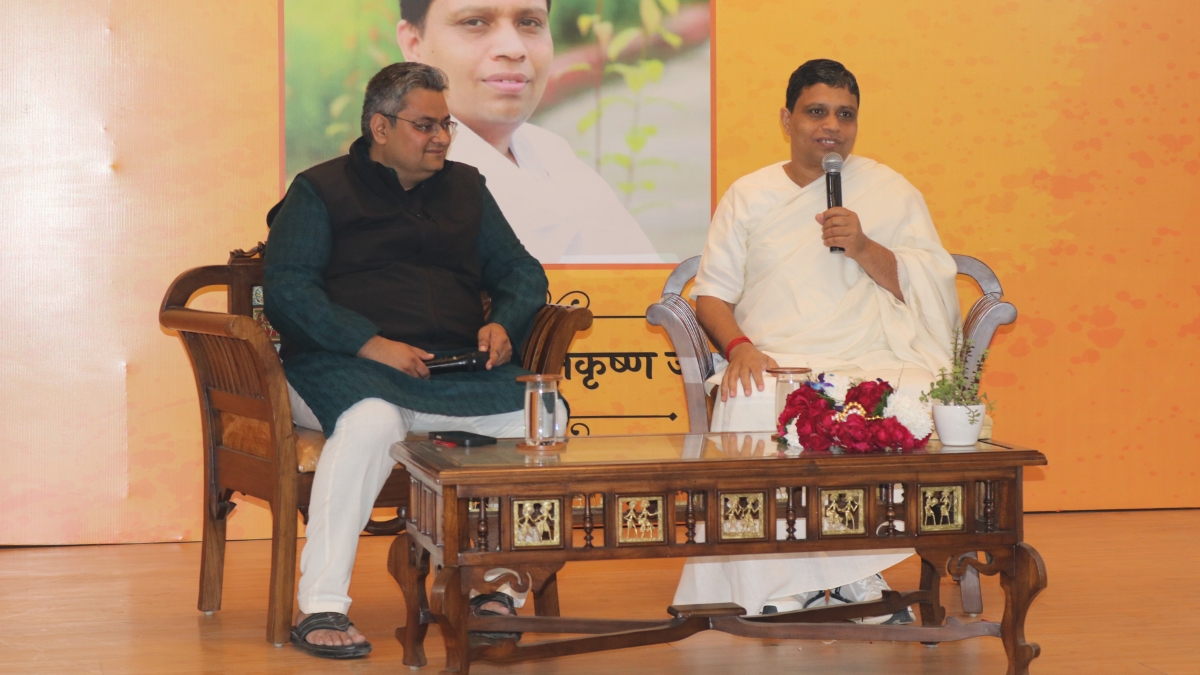
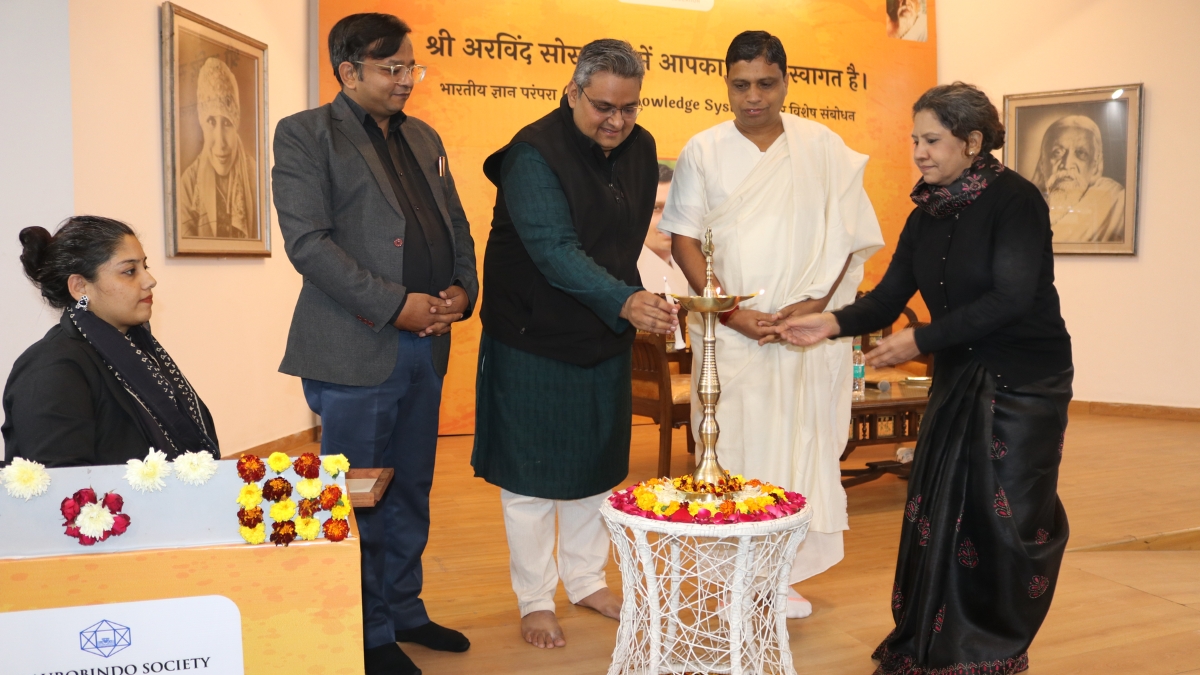
    New Delhi [India], December 19: Reaffirming a shared commitment to revitalising India’s civilisational wisdom through education, Acharya Balkrishna, Managing Director, Patanjali Ayurved Ltd., and Mr. Sambhrant Sharma, Executive Board Member, Sri Aurobindo Society, came together at the 2nd International Conference on Integrating Indian Knowledge Systems (IKS) in School Education – The Panel Series (Virtual), organised by Sri Aurobindo Society.

    The conference marked a significant step forward in the national effort to integrate Indian Knowledge Systems into school education, reflecting the shared vision articulated by Sambhrant Sharma and Acharya Balkrishna. Building on the momentum created by the first edition held in November, which saw the launch of the IKS Charter, India’s first framework for responsible and research-informed implementation of IKS in schools, this edition deepened the dialogue on classroom-ready and scalable adoption of IKS.

    Through this two-day virtual panel series, Sri Aurobindo Society brought together national and international experts, educators, scholars, and policymakers to explore how India’s scientific, philosophical, ecological, and artistic knowledge traditions can be meaningfully woven into contemporary school education. The conference reached nearly 7 lakh teachers across India, while Sri Aurobindo Society’s broader education initiatives now engage with over 30 lakh teachers nationwide.

    Acharya Balkrishna

    A key highlight of the conference was the gracious presence of Acharya Balkrishna, Managing Director, Patanjali Ayurved Ltd.,whose address strongly reinforced the relevance of Indian Knowledge Systems in shaping India’s educational future. Speaking at the conference, Acharya Balkrishna expressed his deep respect for Sri Aurobindo and his philosophy of Atimanas (Supermind), sharing how Sri Aurobindo’s writings and ideologies influenced his thinking from a young age.

    Emphasising the scientific relevance of ancient Indian knowledge systems, he said, “Indian Knowledge Systems are not beliefs or assumptions—they are facts, documented and validated through our Shastras. Our ancient knowledge is profoundly scientific, and its relevance is even more critical in today’s world. I truly appreciate and fully support the multidimensional work Sri Aurobindo Society is doing to bring this wisdom into modern education.”

    This edition focused on translating vision into practice through in-depth thematic panels on science and mathematics through IKS, inclusive education, arts and aesthetics, teacher training, experiential learning under NEP 2020, technology and AI in IKS.

    Acharya Balkrishna

    Speaking at the conference, Mr. Sambhrant Sharma, Executive Board Member, Sri Aurobindo Society, said, “Integrating Indian Knowledge Systems into school education is part of our multidimensional effort towards nation-building—by nurturing rooted, aware, capable, and future-ready learners and teachers. We work with 30 lakh teachers across the country, and reaching seven lakh teachers through this conference reflects the growing national momentum toward responsible and meaningful IKS implementation.”

    This virtual edition marked a significant milestone in scale and outreach. Through live participation, institutional collaborations, and digital dissemination, the conference reached approximately 7 lakh teachers across India.

    The conference was organised in partnership with Maharishi International University (USA), Shri Lal Bahadur Shastri National Sanskrit University, Bhartiya Shiksha Board, and Future Icons.

    If you have any objection to this press release content, kindly contact pr.error.rectification@gmail.com to notify us. We will respond and rectify the situation in the next 24 hours.

  • The Vanishing Shelf — How Streaming Platforms Learned To Delete Without Making Noise

    The Vanishing Shelf — How Streaming Platforms Learned To Delete Without Making Noise

    Mumbai (Maharashtra) [India], December 19: At some point, streaming promised permanence. A digital utopia where films and shows would live forever, immune to dust, decay, and the indignity of late-night reruns. Watch anytime. Anywhere. Always.

    That promise has quietly expired.

    Streaming platforms are cutting content—not dramatically, not with announcements or apologies—but with the soft efficiency of an accountant closing tabs. One day, a show exists; the next, it doesn’t. No farewell banner. No warning. Just absence. And audiences are left wondering whether they imagined it in the first place.

    This isn’t chaos. It’s a strategy. And like most strategies born in boardrooms, it’s being executed with impeccable calm and minimal sentiment.

    The Moment Streaming Stopped Pretending To Be A Library

    For years, platforms marketed themselves as cultural vaults. Endless choice. Infinite back catalogue. The digital version of owning everything without owning anything.

    But libraries cost money to maintain. And streaming, now firmly in its profitability phase, has rediscovered a truth as old as cinema itself: content is an asset only as long as it earns.

    Residual payments, licensing renewals, music rights, backend deals—every title sitting on a platform quietly accumulates cost. When subscriber growth slowed, and investor patience thinned, sentimentality was the first line item to go.

    Deleting content, it turns out, is cheaper than defending it.

    Why Shows Are Disappearing Without Warning

    The removals aren’t random. They’re calculated.

    Mid-performing originals. Niche series with loyal but small audiences. Films that did their initial engagement numbers and then settled into quiet obscurity. These titles don’t drive new subscriptions, but they still trigger ongoing payouts.

    From a financial perspective, cutting them is efficient. From a cultural perspective, it’s unsettling.

    What’s new isn’t content rotation—television has always done that. What’s new is the lack of physical fallback. No DVDs in circulation. No syndication safety net. When a platform deletes a title, it often vanishes entirely.

    Not cancelled. Not archived. Just gone.

    The Illusion Of Ownership Finally Cracks

    Audiences are now confronting an uncomfortable truth: streaming never meant ownership. It meant access—temporary, conditional, revocable.

    You didn’t buy that show. You rented it indefinitely, until someone changed their mind.

    This challenges a decade of consumer habits. People curate watchlists, recommend series,and  build cultural memory around titles that may not exist next year. In the physical era, scarcity was the enemy. In the digital era, volatility is.

    The psychological shift is subtle but real. Trust erodes quietly.

    The Platform Perspective (And Why It Isn’t Entirely Villainous)

    To be fair—because reality insists on nuance—platforms aren’t burning libraries out of spite.

    They’re recalibrating. The streaming boom was built on cheap capital, aggressive expansion, and the assumption that growth would cover inefficiency. That era ended abruptly.

    Now comes consolidation—cost control. Focused investment. Fewer shows, better supported. Fewer titles, stronger performance. In theory, this should improve quality, not diminish it.

    There is logic here. And there are benefits.

    What Viewers Gain (Yes, There Are Some)

    • Cleaner interfaces without endless dead weight

    • More marketing support for fewer originals

    • Higher production standards as budgets concentrate

    • Reduced algorithm clutter that buries good content

    Streaming platforms want viewers to watch what they keep, not mourn what they remove. The goal is attention efficiency.

    Whether audiences agree with that logic is another matter.

    What Viewers Lose (And Why It Matters)

    • Cultural continuity disappears

    • Marginalised stories are erased first

    • Discovery becomes narrower, not broader

    • The idea of streaming as a historical record collapses

    Art doesn’t only matter when it’s trending. Some shows gain relevance slowly, over years, through word of mouth. Deleting them rewrites cultural history based on quarterly results.

    That’s efficient. It’s also bleak.

    The Creative Community Feels It First

    For creators, removals are more than symbolic. When a show disappears, so does visibility. So do residuals. So does proof of work for future negotiations.

    A deleted series might as well never have existed—except in résumés and memories.

    This has changed how creators think about platforms. Prestige matters less than permanence. Some are reconsidering physical releases, international licensing, or staggered distribution models simply to ensure their work survives.

    Legacy, it turns out, isn’t guaranteed by pixels.

    A Quiet Shift In Audience Behaviour

    Viewers are adjusting, too.

    Some are returning to physical media. Some are buying digital copies instead of relying on subscriptions. Some are watching faster—bingeing not out of excitement, but fear of disappearance.

    There’s a faint irony here: streaming trained audiences to value convenience over ownership, then reminded them why ownership mattered.

    Profitability Vs Preservation Isn’t A New Fight

    Cinema has always struggled with this tension. Silent films lost to neglect. TV broadcasts wiped over. Archives abandoned when storage cost more than memory.

    The difference now is scale. Streaming platforms hold vast portions of modern cultural output. Their decisions shape what survives and what fades.

    No one elected them as curators of history. They became that by default.

    The Pros And Cons, Without Nostalgia

    The Upside

    • Platforms become financially sustainable

    • Content strategy becomes more intentional

    • Fewer shows disappear into algorithmic oblivion

    The Downside

    • Cultural erosion accelerates

    • Audience trust weakens

    • Art becomes disposable at scale

    Both truths coexist. Uncomfortably.

    What Happens Next Won’t Be Loud

    There won’t be protests. No dramatic reversals. Content will continue to vanish quietly, politely, efficiently.

    Streaming is growing up. And like most adults, it’s discovering that responsibility often comes at the cost of generosity.

    The shelves will keep thinning. The platforms will keep smiling. And audiences will slowly recalibrate their expectations—not of what’s available, but of how long it stays.

    In the end, streaming didn’t kill television. It just taught us that permanence was always a myth.

    PNN Entertainment

  • SSB Raising Day 2025: Amit Shah’s Powerful Salute to Brave Soldiers

    SSB Raising Day 2025: Amit Shah’s Powerful Salute to Brave Soldiers

    New Delhi [India], December 20: Quiet work. Hard borders. Zero applause expected. On Sashastra Seema Bal Raising Day, Union Home Minister Amit Shah put the spotlight where it belongs, on the men and women who guard India’s frontiers and stand firm in crises.

    Sashastra Seema Bal Raising Day is not about parades or grandstanding. It is about recognition. On 20 December 2025, Union Home Minister and Minister of Cooperation Amit Shah extended greetings to SSB personnel and their families, acknowledging a force that works far from the limelight but never away from duty.

    SSB Raising Day 2025 - Amit Shah - PNN

    In a message shared on X, Shah summed it up cleanly. From guarding India’s borders to standing shoulder to shoulder with citizens during emergencies, the Sashastra Seema Bal has consistently made the nation proud. He also paid solemn tribute to martyrs who laid down their lives in the line of duty.

    No exaggeration. No theatrics. Just facts.

    Understanding the Role of Sashastra Seema Bal

    The Sashastra Seema Bal is one of India’s Central Armed Police Forces, functioning under the Ministry of Home Affairs. Its core mandate is border guarding, particularly along sensitive and challenging frontiers. The terrain is unforgiving. The conditions are tougher. The expectations are absolute.

    SSB personnel operate in areas where geography tests endurance and isolation is routine. These are not headline-grabbing assignments. They are long, patient deployments that demand discipline, alertness, and restraint.

    Over the years, the force has built a reputation for reliability. When borders need vigilance, SSB is there. When civilians face natural disasters or emergencies, SSB is already on the ground.

    That dual role matters. Guarding the nation is one job. Standing with citizens in their worst moments is another. SSB does both, without fuss.

    Amit Shah’s Message: Short, Sharp, Significant

    Amit Shah’s Raising Day message carried weight because it was precise. He highlighted three core truths.

    • First, SSB safeguards India’s frontiers. That is non-negotiable. Border security is foundational to national security, and the force’s presence ensures stability in regions that rarely see comfort.
    • Second, SSB stands with citizens in times of crisis. Floods, disasters, emergencies. When systems strain, these personnel step in. Logistics, rescue, coordination. The uniform adapts fast.
    • Third, Shah acknowledged the martyrs. This matters. Every Central Armed Police Force carries stories of sacrifice. Naming that sacrifice publicly is not symbolism. It is institutional respect.

    In one post, the Home Minister managed to reflect the operational reality of the Sashastra Seema Bal without turning it into a speech.

    Families Behind the Force

    Raising Day is not just about personnel in uniform. Shah’s greetings explicitly included families. That is not a throwaway line.

    Families of SSB personnel live with uncertainty as a routine. Postings in remote border regions mean long separations, limited communication, and constant risk awareness. Spouses manage households alone. Children grow up understanding duty early.

    Acknowledging families is acknowledging the invisible backbone of national security. Without them, sustained service would be impossible.

    SSB Raising Day - Amit Shah - PNN

    SSB and Crisis Response: Beyond Borders

    One line from Shah’s message stands out. “Standing shoulder-to-shoulder with citizens in times of crisis.”

    This is not rhetoric. SSB units are frequently deployed for internal assistance during natural calamities. Their training allows them to operate in disrupted environments, coordinate with civil authorities, and maintain calm where panic spreads fast.

    They build bridges, manage evacuations, secure relief routes, and protect vulnerable populations. The uniform signals order when chaos threatens to take over.

    In a country as vast and diverse as India, this role is critical. Borders do not exist in isolation. Security spills inward during crises, and SSB adapts accordingly.

    Why Raising Day Matters?

    In an era of instant news cycles, ceremonial days risk fading into background noise. But Sashastra Seema Bal Raising Day holds relevance for one reason. It pauses the system.

    It allows leadership to publicly reaffirm trust in the force. It allows citizens to briefly notice the structures that keep borders steady. And it allows personnel to feel seen.

    Recognition does not replace resources or policy. But it strengthens morale. And morale, in forces like SSB, directly affects operational effectiveness.

    India’s Security Architecture and SSB’s Place

    India’s internal and border security framework relies on layered responsibility. Army, paramilitary, police. Each has a defined role. The Sashastra Seema Bal occupies a crucial middle layer, operating where civilian life and national borders intersect.

    This proximity demands restraint, cultural sensitivity, and constant engagement with local populations. SSB personnel are trained not just to guard, but to integrate. Winning trust matters as much as watching the fence.

    That balance is difficult. Maintaining it year after year is harder.

    Shah’s Raising Day message acknowledged this reality indirectly. By praising both frontier protection and citizen support, he highlighted the force’s dual responsibility.

    SSB Raising Day - Quiet service. Real sacrifice. - Amit Shah - PNN

    Remembering the Martyrs

    Every Raising Day carries an undercurrent of remembrance. Shah’s salute to martyrs who made the ultimate sacrifice was deliberate and necessary.

    These are names often known only within units and families. Yet their loss is national. Border incidents, patrol risks, operational accidents. The cost of security is paid quietly.

    By naming their sacrifice, leadership ensures that memory does not fade into files and citations. It remains part of the force’s identity.

    Looking Ahead Without Speculation

    Raising Day greetings are not policy documents. They are statements of respect and recognition. The clarity of Amit Shah’s words ensured the focus stayed where it should, on service, sacrifice, and duty.

    For the Sashastra Seema Bal, the work continues the next morning. Same terrain. Same risks. Same commitment.

    And that, ultimately, is why SSB Raising Day matters.

    Read More

  • 10 Companies Setting New Benchmarks for Business Growth and Innovation

    10 Companies Setting New Benchmarks for Business Growth and Innovation

    New Delhi [India], December 19: India’s dynamic business ecosystem continues to be shaped by purpose-driven organisations that combine innovation, impact, and resilience. This group PR highlights a curated selection of companies making meaningful contributions across sectors, showcasing their journeys, values, and commitment to sustainable growth while creating positive change within their communities and industries.

    1.  Italy Study Centre (ISC)

    Italy Study Centre (ISC) is leading a global educational transformation by enabling students from diverse backgrounds to pursue higher education in Italy through 100% scholarship opportunities. Founded by Kumar Satyam, a visionary education leader, European Commission Expert Committee Member, and International Student Ambassador of the University of Bologna, ISC is built on the belief that talent should never be limited by financial or logistical barriers.

    With a mission to turn academic aspirations into reality, Italy Study Centre leverages advanced EdTech solutions, expert mentorship, and deep insight into international academic systems to help students secure admissions at Italy’s most prestigious universities. Beyond admissions, ISC empowers students to succeed in a global learning environment, preparing them for long-term academic and professional growth.

    Proudly powered by Higher Education Centre (HEC), Italy Study Centre has earned recognition as a premium, highly accredited organisation synonymous with trust, excellence, and student success.

    For more information, visit here: www.italystudycentre.com

    2. Dream Catalyser:

    Dream Catalyser is redefining career clarity in Pune by helping students make informed and confident career choices. Co-founded by Geetanshu Shrivastava, an experienced career consultant with over a decade in India’s top education institutions, Dream Catalyser guides students from confusion to clarity through personalised counselling.

    It offers career counselling from class 5th to graduation and beyond, including career counselling after 10th and 12th (Science & Commerce), career guidance after graduation, and online career counselling in Pune. Through psychometric assessments, one-on-one sessions, and workshops, Dream Catalyser helps students align their interests and strengths with the right career path, ensuring satisfaction, growth, and a fulfilling future.

    For more information, visit herehttps://dreamcatalyzer.com/

    3.  BYWAY (WeLet Technology Pvt. Ltd.)

    BYWAY is one of India’s fastest-growing logistics and supply chain companies, offering complete end-to-end solutions across on-demand trucking, multimodal transportation, warehousing, and last-mile delivery. Headquartered in Ahmedabad and operational across 24 major Tier 1 and Tier 2 cities, BYWAY empowers e-commerce, FMCG, pharma, retail, and manufacturing brands with reliable, scalable, and tech-enabled logistics services.

    What sets BYWAY apart is its AI-powered orchestration engine, strong multimodal partnerships with CONCOR and SCI, and its rapidly expanding BTS warehousing network. The company’s disciplined execution, centralized coordination, and transparent real-time tracking ensure businesses move goods with unmatched speed and confidence.

    With a long-term vision to build India’s largest AI-driven logistics aggregator, BYWAY is redefining enterprise logistics through innovation, agility, and sustainable growth.

    For more information, visit here: www.byway.tech

    4. BLOCK X Technologies Pvt. Ltd. 

    BLOCK X Technologies Pvt. Ltd., headquartered in Chennai, is a leading authorised anti-piracy agency protecting digital content since 2014. The company serves a wide spectrum of clients, including film production houses, OTT platforms, music labels, short-drama apps, ed-tech companies, independent creators, and live streaming platforms.

    What sets BLOCK X apart is its unique techno-legal expertise, AI-powered monitoring systems, and immediate takedown capabilities. While industry standards often take 3–4 days, BLOCK X can remove infringing content in just 3 minutes. Backed by 100+ in-house and international experts, the company combines human intelligence with advanced technologies such as digital fingerprinting, deep web crawling, offshore website takedowns, and instant content removals. BLOCK X is also a certified Google TCRP Partner, a rare recognition in the anti-piracy domain.

    With millions of URLs actioned and a growing presence across 30+ languages globally, BLOCK X continues to redefine global content protection standards.

    For more information, visit here: https://blockxtech.com/

    5. HMT Steel :
    HMT Steel, headquartered in Baddi, Himachal Pradesh, has emerged as one of North India’s most trusted names in the steel industry. Founded by Meghraj Garg, Gunjan Garg, Rohit Kumar Garg, and Arpit Kumar Garg, the company has grown from a trading unit into a leading powerhouse of steel production and distribution. HMT Steel plays a vital role in shaping skylines across Himachal Pradesh, Punjab, and Haryana.

    With fully automated production lines, stringent quality standards, and a strong logistics network, HMT Steel stands apart for its precision, reliability, and customer-first approach. The company serves top developers, industrial groups, and government contractors, ensuring timely delivery and consistent excellence. Recent expansions include custom-cut structural steel, high-tensile grades, the introduction of angle and channel products and advanced digital ordering systems. As the preferred partner for major townships and industrial projects, HMT Steel continues to define benchmarks and build the backbone of North India’s future.

    For more information, visit here: www.hmtsteel.com 

    6. GRE Renew Enertech Limited
    GRE Renew Enertech Limited, headquartered in Mehsana with a corporate office in Ahmedabad, is a leading solar EPC and solar park development company empowering industries and investors with high-performance renewable energy solutions. With expertise spanning engineering, procurement, construction, and turnkey commissioning, GRE delivers large-scale ground-mounted and industrial rooftop solar projects built for 25+ years of efficiency and reliability.

    Since its inception, GRE has evolved into a technologically advanced EPC leader—commissioning 61+ MW of solar capacity and currently executing 50+ MW across India. Known for its cutting-edge tracker-based solar park systems, GRE enhances energy generation by up to 20–30%, offering superior ROI and long-term stability.

    Backed by a skilled team and a legacy of innovation, GRE is committed to accelerating India’s clean energy transition through smart O&M, high-yield solar parks, and investor-focused turnkey models.

    For more information, visit here: http://www.greindia.com/

    7. BELLEVIRA NATURALS
    Bellevira Naturals, founded by Animesh Dey and Prasanjeet Swer, is an emerging wellness and personal-care brand based in Shillong, East Khasi Hills, Meghalaya, dedicated to delivering high-quality herbal solutions backed by research and tradition. With a strong focus on Meghalaya’s rich herbal heritage, the company formulates natural, effective, and chemical-free products designed to address everyday health and personal-care concerns.

    What sets Bellevira apart is its unique blend of traditional Meghalaya herbs and modern scientific formulation, ensuring purity, safety, and visible results. Their customer-centred approach has earned them strong repeat purchases and organic growth—one of the brand’s proudest achievements.

    Bellevira serves individuals seeking natural remedies for hair fall, premature greying, skin issues, joint pain, and overall wellness. Recently, the brand introduced new additions like its Pigmentation Soap, Face Glow Soap, and a herbal formulation for piles relief, further expanding its product range.

    With ongoing projects focused on innovative herbal skincare and wellness solutions, Bellevira continues to grow its mission of offering trustworthy, result-oriented natural care.
    More info: www.bellevira.com

    8. OUTLAWS 

    Springman Apparel Private Limited’s youth-driven brand OUTLAWS is officially going global. The Gen-Z and Alpha-focused casualwear label is now available across six GCC countries through the Middle East’s leading marketplace NOON, marking a major milestone in its growth journey.

    Known for delivering premium clothing at pocket-friendly prices, OUTLAWS stands apart with its 365-day replacement warranty and AZO-free dyes, making fashion both durable and responsible. In India, the brand has built strong momentum across Quick Commerce and leading marketplaces, emerging as a strategic apparel partner on Zepto, while also being available on Myntra FWD and Amazon, strengthening its omnichannel reach among young, digital-first consumers.

    With this international expansion, OUTLAWS is firmly positioning itself as a global player, aiming to reach ₹100 Cr in revenue over the next two years.

    Looking ahead, the brand plans to open 50 offline stores over the next 18 months, mirroring industry trends set by peers like Snitch and accelerating its transition into a strong online-offline retail powerhouse.

    OUTLAWS has gone global — and this is just the beginning.

    Explore the collection on the official website and join the movement.

    For more information, visit here: https://shorturl.at/RCysZ

    9.  Elite Expertise

    MELBOURNE, Australia – 06 December 2025 — As healthcare systems across Australia and New Zealand continue to evolve, Elite Expertise is playing a pivotal role in preparing the next generation of pharmacists through its comprehensive Pharmacy Exam Preparation Course. The organisation goes beyond exam coaching, focusing on clinical understanding, confidence building, and ethical practice. It is nurturing future healthcare leaders with the knowledge or integrity and confidence needed to serve communities with excellence.

    The organisation’s approach goes beyond rote learning. It equips pharmacists with the mindset and skills required to perform safely, think critically, and communicate effectively in real-world healthcare settings. Elite Expertise ensures candidates are not only prepared to pass but prepared to practice.

    At the core of this vision are two distinguished educators. The program led by Director Arief Mohammad, an AACPA Accredited Consultant Pharmacist and Clinical Pharmacist at Northern Health, and Co-Director Harika Bheemavarapu, an AACPA Accredited Consultant Pharmacist at Monash Health, Elite Expertise blends real-world clinical expertise with structured, exam-focused learning. Their student-centric approach emphasises clarity, compassion and practical readiness.

    By supporting candidates through OPRA EXAM, KAPS, and Intern examinations, Elite Expertise is shaping pharmacists who are not only exam-ready but also confident professionals prepared to serve communities across the ANZ healthcare system.
    For more information, visit here: https://eliteexpertise.com.au/

    10. Historic Milestone: Inclusion of 5,251 Ex-Leprosy Applicants

    Kolkata -A reputed Kolkata-based social development organisation has reached a landmark milestone in advancing inclusive employment and social justice for persons cured of leprosy. Through sustained advocacy, strategic legal action, and multi-stakeholder collaboration, the organisation has been driving systemic change to ensure dignity, rehabilitation, and equal opportunity for a historically marginalised community.

    This achievement builds on the landmark 1988 judgment of the Hon’ble Supreme Court of India, which affirmed the eligibility of cured leprosy persons for Group C and Group D posts under the South Eastern Railway. To date, verification of 1,912 applicants has been successfully completed, while the remaining cases are progressing through a structured verification pipeline.

    As a direct outcome, long-pending cases are moving toward resolution in alignment with Supreme Court directives. Upon completion, appointment letters for all 5,251 eligible applicants are likely to be issued—setting a powerful national benchmark for inclusive governance, policy execution, and dignified employment.

    Together, these companies represent the spirit of modern Indian enterprise—visionary leadership, customer-centric thinking, and social responsibility. As they continue to evolve and expand their footprint, their stories stand as inspiration for emerging businesses and reaffirm the power of innovation, collaboration, and purpose-led growth in shaping the future.

    Disclaimer: This listicle has been provided by Spatz  Media.

  • Regional Cinema Didn’t Ask for a Visa — It Just Showed Up Everywhere

    Regional Cinema Didn’t Ask for a Visa — It Just Showed Up Everywhere

    Mumbai (Maharashtra) [India], December 19: Once upon a time, global cinema required permission. A nod from Hollywood distributors. A dub deal. A festival blessing. A carefully negotiated release window that decided whether a film from Seoul, Chennai, Madrid, Tokyo, or Jakarta would be deemed “exportable” enough for the rest of the world.

    That era didn’t end with a press release. It simply collapsed under its own irrelevance.

    Today, regional cinema is crossing borders the way people scroll—casually, repeatedly, without waiting for validation. Non-English films are not “breaking through” anymore. They are arriving unannounced, subtitled, unapologetic, and increasingly unavoidable. The most unsettling part? They’re doing it without asking Hollywood to translate, remake, or sanitise them first.

    This isn’t a rebellion. It’s a quiet redistribution of power.

    How Streaming Flattened The World Without Pretending To

    Streaming platforms did something legacy cinema economics never truly managed: they collapsed geography. Not ceremonially. Algorithmically.

    When a Korean thriller, an Indian action epic, or a Spanish crime drama sits beside a Hollywood tentpole on the same homepage, hierarchy dissolves. Viewers don’t see “foreign.” They see “interesting,” “trending,” or simply “new.” Language stops being a gatekeeper and becomes a texture.

    Subtitles, once treated like homework, are now ambient. Younger audiences grew up reading screens while watching screens. Multitasking trained them well. The old assumption—that global viewers demand English—aged poorly and quietly.

    And somewhere along the way, audiences realised something awkward: mediocre storytelling doesn’t improve just because it’s expensive or familiar.

    The Accidental Confidence Of Regional Storytelling

    There is a peculiar confidence to regional cinema right now. Not arrogance—confidence. The kind that comes from not being engineered for global consumption in the first place.

    These films don’t pause to explain cultural context. They don’t dilute references. They don’t flatten characters to meet international expectations. They assume curiosity. Sometimes, they demand it.

    Ironically, that refusal to over-translate is exactly what makes them resonate globally. Authenticity travels better than approximation.

    Budgets are often smaller, but stakes feel personal. Conflicts are rooted in lived realities rather than demographic spreadsheets. The result? Films that feel specific yet universal—an old paradox Hollywood once mastered and then gradually outsourced to IP committees.

    The Numbers That Make Executives Uncomfortable

    Let’s talk reality, not romance.

    Non-English content now accounts for a significant share of global streaming consumption. Subtitled titles routinely rank among the most-watched content in multiple regions, often outperforming mid-budget English-language releases. Some regional films, made at a fraction of Hollywood budgets, generate disproportionate engagement, retention, and cultural afterlife.

    Meanwhile, production costs in markets like India, South Korea, and parts of Southeast Asia remain comparatively efficient. A film costing under $20 million can travel farther, live longer, and spark more conversation than a $150 million release engineered to offend no one.

    That imbalance hasn’t gone unnoticed. It’s just being discussed very carefully in boardrooms.

    Hollywood’s Monopoly Isn’t Crumbling — It’s Thinning

    This isn’t a coup. Hollywood still dominates scale, spectacle, and marketing muscle. But its monopoly on global taste is weakening, and that distinction matters.

    For decades, Hollywood wasn’t just a producer of films—it was a cultural translator, deciding which stories deserved global amplification. That role is eroding. Algorithms don’t care about legacy. Viewers don’t wait for remakes anymore. They’d rather watch the original, accents intact.

    Hollywood’s response has been predictable: partnerships, adaptations, acquisitions. Sometimes respectful. Sometimes… less so. The intention is clear—stay relevant without relinquishing control.

    The irony is sharp: the more Hollywood acknowledges regional cinema’s power, the more it confirms that the centre of gravity has shifted.

    The Costs Nobody Likes To Mention

    Of course, this isn’t a utopia.

    Global exposure brings pressure. Regional industries now face accelerated timelines, inflated expectations, and creative interference dressed up as “global appeal.” There’s a growing risk of homogenisation—regional films starting to sound like they’re anticipating subtitles rather than speaking naturally.

    There’s also the sustainability question. As demand rises, so do costs. Talent fees increase. Marketing expectations creep in. The very systems regional cinema avoided begin knocking politely, then insistently.

    Global reach is empowering. It is also extractive if not handled carefully.

    A Different Perspective On Success (And Life)

    Perhaps the most radical shift here isn’t industrial. It’s philosophical.

    Regional cinema’s global rise reflects a broader truth: people are tired of being told what’s “universal.” They’re discovering universality in specificity, meaning in difference, connection in context.

    In an era obsessed with scale, these films succeed by being grounded. They don’t shout relevance. They trust it.

    There’s something quietly subversive about that. And maybe that’s why it works.

    Where This Leaves Theatres, Platforms, And Creators

    For theatres, regional cinema offers programming diversity and loyal niche audiences—if exhibitors are willing to look beyond opening-weekend mythology.

    For platforms, it’s a goldmine that doesn’t require translation budgets the size of a small nation.

    For creators, it’s both opportunity and warning: global visibility no longer requires permission, but it does demand integrity.

    The Pros And Cons, Without Romantic Filters

    The Upside

    • Language barriers are no longer deal-breakers.

    • Regional industries gain leverage and visibility.

    • Audiences get richer, less repetitive storytelling.

    The Downside

    • Creative homogenisation risk increases.

    • Market pressures can distort local voices.

    • Success invites control, not just applause.

    Both can be true. Usually, they are.

    What Happens Next Isn’t A Takeover — It’s A Redefinition

    Regional cinema isn’t replacing Hollywood. It’s redefining what global cinema looks like. Less centralised. Less permission-based. More plural.

    Hollywood will adapt. It always does. But it will no longer be the sole narrator of the world’s stories.

    And perhaps that’s the quiet victory here. Not dominance. Not rebellion. Just presence.

    Untranslated. Unapologetic. Unavoidable.

    PNN Entertainment