Author: Sutun Nayak

  • Wanderlust 2.0: How Gen Z and Millennials Turned Travel into a Lifestyle, Not a Getaway

    Wanderlust 2.0: How Gen Z and Millennials Turned Travel into a Lifestyle, Not a Getaway

    Mumbai (Maharashtra) [India], November 8: There was a time when travel meant escape — postcards, souvenir magnets, a tan you’d brag about and forget in a week. Now? It’s a lifestyle statement, a personality trait, an aesthetic carefully curated for the algorithm. Somewhere between yoga retreats and digital nomad visas, Gen Z and Millennials have rewritten the grammar of travel.

    For them, it isn’t “Where are you going?” but “Who are you becoming?” And while that sounds profound enough to caption an Instagram post, it’s also the world’s most lucrative identity crisis.

    The New Religion of Roaming

    If Boomers built homes, Millennials built Airbnbs. And Gen Z? They built lives inside airports.
    A recent Booking.com 2025 Lifestyle Trends Report revealed that 72% of Indian Gen Z travellers view travel as “essential to mental wellness,” while 60% of Millennials claim they’d rather spend on experiences than property investments.

    What was once an indulgence is now currency. To be “well-travelled” isn’t just social capital — it’s cultural validation. From Seoul’s back alleys to Bali’s silent beaches, this generation collects stamps like philosophers collect epiphanies — selectively, dramatically, and always with a ring light nearby.

    Table: The Generational Travel Shift

    Generation Travel Mindset Typical Destination Spending Range (₹) Preferred Platform
    Boomers Leisure, relaxation Shimla, Europe tours 50,000–1,00,000 Travel agents
    Millennials Experiences, self-growth Bali, Prague, Coorg 1–3 lakh Airbnb, Booking.com
    Gen Z Identity, digital storytelling Seoul, Kyoto, Tulum 80,000–2 lakh Instagram, TikTok, YouTube

    The Price of Freedom (and Filtered Sunsets)

    Freedom, it turns out, is an expensive hobby.
    The World Economic Forum’s 2025 Youth Spending Index notes a 40% surge in leisure travel spending among 22–35-year-olds post-pandemic. Ironically, many of these “freedom chasers” are still paying EMIs on their last trip.

    Yet they justify it with vocabulary that sounds straight out of a lifestyle brand pitch — “investing in experiences,” “healing through motion,” “curating memories.”
    In translation: they’re broke but emotionally enriched.

    A solo trip to Vietnam costs ₹1.5 lakh now — flights, boutique stays, digital detox retreats, vegan café hopping. But it’s not about the expense. It’s about the aesthetic. Because what’s a healing journey without at least one melancholy photo by the window of a rain-drenched Airbnb?

    The Digital Pilgrimage

    Gen Z - PNN

    Unlike their predecessors, this generation doesn’t need travel agencies; they have algorithms.
    A single viral reel from an influencer in Cappadocia can trigger a nationwide spike in Turkish bookings. #SoloTravelIndia has crossed 100 million views on Instagram, and travel vloggers are earning as much as ₹5–10 lakh per brand collaboration.

    But there’s irony stitched into every filter.
    Most Gen Z travellers claim to crave “authentic experiences,” yet spend half their trip staging them. There’s a difference between living a moment and filming it — a truth they seem determined to ignore, preferably with drone footage.

    That said, the digital travel culture has democratized exploration. Small-town creators from Indore to Imphal are documenting their journeys with poetic grit — no sponsors, no filters, just wanderlust and a second-hand DSLR.

    When Escapism Became a Profession

    Millennials flirted with work-life balance. Gen Z deleted it.
    They turned remote work into roam work. Digital nomadism, once a fringe fantasy, has become a structured economy. Nations like Portugal, Thailand, and Japan now offer specialized remote work visas for long-term stays, catering directly to the “laptop-in-a-latte-café” tribe.

    According to Airbnb’s 2025 Future Stays Report, remote professionals staying 30+ days make up 23% of total bookings, up from just 8% in 2019. And the spending follows: the global digital nomad market is projected to hit $63 billion by 2026.

    In India, Goa and Rishikesh are morphing into creative communes — half yoga, half startup — where work deadlines coexist with sound baths. As one designer confessed during a retreat in Assagao, “I came here to detox. Now I’m designing logos for a café that sells matcha and mala beads.”

    The Good, the Bad, and the Overly Instagrammed

    Gen Z -PNN

    The good news? Travel has finally evolved beyond postcard clichés.
    People are chasing cultural intimacy — cooking with locals, learning indigenous crafts, volunteering for environmental causes. The UNWTO 2025 Culture & Conscious Travel Report shows a 35% increase in “purpose-led trips” worldwide.

    The bad news? That same purpose is often romanticized to death.
    Cultural authenticity is now sold as a commodity. Spiritual retreats in the Himalayas charge upwards of ₹2 lakh for what used to be free silence. “Mindful tourism” is the new “eco-friendly plastic straw” — noble in theory, profitable in practice.

    And as travel booms, so does burnout. Studies show post-travel fatigue is on the rise, particularly among content creators chasing constant novelty. When every destination is content, peace becomes… well, unpostable.

    Reality Check: The Hidden Bill Behind Wanderlust

    Here’s a sobering truth — travel is no longer about going away; it’s about being seen going away.
    Between influencer economies and bucket-list capitalism, even leisure feels like labor. And the cost is more than money — it’s environmental too. The International Air Transport Association warns that Gen Z’s hypermobility could add 6% more carbon emissions by 2027 if left unchecked.

    But not all is vanity. A countertrend is rising quietly — “Slow Travel.”
    Think month-long stays, local commutes, minimal itineraries. The goal? Less footprint, more depth. It’s a lifestyle that values stories over selfies — proof that some still travel to remember, not to perform.

    Pointers: Why Travel Became the New Identity Card

    • Global Consciousness: Gen Z sees travel as moral education, not mere movement.

    • Experience Economy: 68% of young Indians prefer trips over gadgets.

    • Social Capital: Your passport stamps now rival your résumé.

    • Spiritual Rebranding: Wellness tourism in India grew 20% YoY.

    • Accessibility Paradox: Travel’s democratization has inflated costs — and expectations.

    The Grand Irony of Arrival

    Maybe that’s the most poetic tragedy of this age — we travel the world to find ourselves, only to discover we’ve been following Google Maps the entire time.

    Still, it’s hard not to admire the audacity.
    Gen Z and Millennials have done what no generation before them dared — turned wandering into a full-time ideology. In their defense, at least they’re chasing sunsets, not stock markets.

    And perhaps that’s the quiet revolution of our era: a generation that sees airports as cathedrals and passports as prayer books. Whether that’s enlightenment or escapism — only the next flight can tell.

    PNN Lifestyle

  • Strengthen Your Strategy: IIM Lucknow announces admissions to the 10th batch of the Chief Strategy Officers Programme

    Strengthen Your Strategy: IIM Lucknow announces admissions to the 10th batch of the Chief Strategy Officers Programme

    Lucknow (Uttar Pradesh) [India], November 8: The Indian Institute of Management Lucknow, in collaboration with TimesPro, a leading higher-edtech platform, has opened admissions to the 10th batch of its Chief Strategy Officers Programme. Purpose-built for senior professionals, the programme equips leaders to elevate strategy, steer business units and drive transformation and multi-region growth in a rapidly evolving global landscape.

    The 10-month Chief Strategy Officers Programme is designed to sharpen strategic thinking and execution, spanning digital transformation and ESG integration to innovation and AI-powered decision-making. It develops the capabilities required to navigate complex enterprise risks and to build resilient, future-ready responses. Aspiring CSOs, COOs and CEOs—along with senior managers and vice-presidents leading change mandates—will learn to design agile business models, accelerate digital transformation, and build strategic influence across stakeholders, boards and leadership teams.

    As organisations contend with uncertainty and disruption, they require leaders who bring analytical rigour, financial fluency and a scientific orientation to enterprise-wide strategy. Deloitte has observed a growing premium on quantitative and financial skills as economic and market volatility increases the importance of modelling within the strategy function. Meanwhile, research by Bridges Consultancy notes that over 48% of CEOs devote less than one day per month to strategy development—an execution gap, the CSO role is expressly designed to close.

    Aimed at professionals with over ten years of full-time experience, the programme integrates three core modules—Sensing Opportunity, Crafting Competitive Advantage, and Execution & Realising Competitive Advantage—covering Strategic Decisions, Emerging Disruptions, Corporate, Business and International Strategy, Mergers & Acquisitions, Corporate Entrepreneurship, Corporate and Strategic Communication, Change and Transformation, and Design Thinking, among other critical areas.

    Speaking on the announcement of the 10th batch, Prof. Sabyasachi Sinha, Professor Strategic Management, IIM Lucknow said, “At IIM Lucknow, we designed the Chief Strategy Officers Programme to help seasoned leaders translate insight into enterprise impact. Through rigorous modules on sensing opportunity, crafting advantage and disciplined execution, participants build fluency in digital, AI, ESG and risk. The outcome is confident, boardroom-ready strategists capable of shaping resilient growth in uncertain markets, with practical tools, cases and peer learning.”

    Sridhar Nagarajachar, Business Head, TimesPro said, “TimesPro is delighted to collaborate with IIM Lucknow to deliver an executive programme that fits real leaders’ schedules and ambitions. Live, faculty-led sessions, a focused campus immersion and a capstone convert strategic frameworks into action. Learners gain immediately usable skills, alumni credentials and the confidence to influence boards, stakeholders and cross-functional teams across complex enterprises, supported by robust technology and expert facilitation.”

    The programme has consistently attracted participation from BFSI, healthcare and pharmaceuticals, manufacturing, FMCG, IT, and other sectors, with cohorts comprising C-suite executives, vice-presidents, directors and senior managers.

    Learning is delivered via IIM Lucknow’s esteemed faculty through TimesPro’s Direct-to-Device platform, featuring live lectures, case studies, quizzes, projects, simulations and assignments. A three-day campus immersion at IIM Lucknow deepens peer learning and reflection. Participants will also apply DTran, AI and innovation tools in strategy and demonstrate outcomes through a capstone project. Successful learners receive a prestigious IIM Lucknow certificate and earn alumni credentials that strengthen boardroom impact.

    About IIM Lucknow:

    The Indian Institute of Management Lucknow (IIM Lucknow), ranked 7th in NIRF 2024, stands among India’s premier business schools with global recognition through AACSB, EQUIS, and AMBA accreditations. With a 200-acre main campus in Lucknow and a strategic presence in Noida, the institute delivers world-class management education, high-impact executive programmes, and industry-driven research, shaping leaders for the future of business.

    About TimesPro:

    TimesPro, established in 2013, is a leading Higher EdTech platform dedicated to empowering the career growth of aspiring learners by equipping them with skills to rise in a competitive world. TimesPro’s H.EdTech programmes are created to meet the rapidly changing industry requirements and have been blended with technology to make them accessible & affordable.

    TimesPro offers a variety of created and curated learning programmes across a range of categories, industries, and age groups. They include employment-oriented early career programmes across BFSI, e-Commerce, and technology sectors; executive education for working professionals in collaboration with premier educational institutions like IIMs and IITs; and organisational learning and development interventions at the corporate level.

    TimesPro also collaborates with India’s leading organisations across varied sectors to provide upskilling and reskilling solutions to boost employability and create a robust workforce. TimesPro is a Higher EdTech initiative by The Times Group.

    If you object to the content of this press release, please notify us at pr.error.rectification@gmail.com. We will respond and rectify the situation within 24 hours.

  • Leading Self Drive Car Rental Company in Chandigarh: Your Complete Guide

    Leading Self Drive Car Rental Company in Chandigarh: Your Complete Guide

    Chandigarh [India], November 8: Want to explore Chandigarh on your terms? Self-drive rentals give you freedom. No waiting. No schedules. Just pick up the keys and drive.

    Car rental in Chandigarh makes travel easy. Rentifyr keeps cars ready. Visit Rock Garden anytime. Stop at Sukhna Lake. Shop when you want. Drive at your own pace.

    Buses miss many areas. Taxis get expensive fast. Self drive cars in Chandigarh solve this. Rentifyr provides clean cars. Insurance covers you. Help works 24/7. Book online fast.

    Save money. Travel privately. Suitable for trips and work.

    Why Choose Self Drive Cars in Chandigarh

    Chandigarh spreads across many sectors. Buses skip key spots. Auto fares add up quickly. Self drive cars in Chandigarh work better. Rentifyr makes it simple.

    Plan your day how you want. Start at the Rose Garden early. Drive to the Japanese Garden. Hit the Elante Mall in the afternoon. End at Sukhna Lake in the evening.

    The weather here changes a lot. Winters get foggy and cold. Summers turn hot. Rentifyr cars have strong AC. Stay cool all day.

    Taxi rates climb fast. Tips are expected always. Parking stays cheap. Rentifyr prices remain clear.

    Cars get checked often. Insurance handles accidents. Help arrives fast anytime. Drive stress-free to Punjab and the hills.

    Privacy matters here. Couples want alone time. Work calls need quiet. Families talk freely together.

    Best Car Types Available

    Small Cars for City Use

    • Sectors have tight parking spots. Rentifyr’s small cars fit well. Easy to drive in traffic. Swift and i10 work great.
    • Best self-drive cars, Chandigarh folks pick these most. Move through crowds smoothly—Park in small spaces. Fuel costs stay low.
    • College trips get easy. Quick errands work perfectly. Temple visits stay simple.

    Mid Cars for Families

    • Hill trips need comfort. Amaze and Ciaz give that. AC works better. Trunk fits bags well.
    • Shimla drives feel smooth. Families sit easily. Shopping fits inside.

    Big Cars for Hills

    • Mountain roads need power. Scorpio and Creta handle that. The higher body clears bumps better.
    • Snow trips, stay safe. Groups fit comfortably. Gear loads easily.

    Fancy Cars for Business

    • Work needs good looks. BMW and Audi are available. Looks professional. Tech features included.
    • The client meets impressively. Airport runs look sharp. Events feel special.

    Large Cars for Groups

    • Weddings need space. Innova seats eight people. Families manage well. Teams travel together.
    • Bags fit everyone. Highways feel smooth. Costs are split better.

    Key Features You Get

    No km limits let you explore freely. Drive to Manali without worries. Visit Kasauli without charges. Trips stay affordable.

    Full insurance removes financial stress. Accidents covered. Theft handled. Injuries were protected, too.

    Cars break down sometimes. Rentifyr always works. Mechanics come fast. Backup cars are given when needed.

    Don’t waste time picking up cars. Rentifyr brings them to you. Station drops work. Car rental at the Chandigarh airport saves hours.

    Apps make booking quick. See cars available now. Get confirmed fast. The process stays smooth.

    Send documents online first. No office visits needed. Checks done quickly. Keys come with delivery.

    Rent by hours, days, or weeks. Fits different needs. Longer bookings cost less each day.

    Cars are cleaned between trips. Service is done regularly. Safety is always checked. Standards stay high.

    How to Book?

    Go to the Rentifyr website first. Car hire Chandigarh self-drive options show clearly. Prices are displayed upfront. See what’s free now.

    You need these papers: a License that’s valid. ID like an Aadhaar card. Address proof helps. Foreign folks need permits, too. Photos work fine.

    Booking stays easy throughout. Pick the car type you want. Choose your dates. Say where to deliver. Set what time works.

    Flying in? Car rental in Chandigarh airport through Rentifyr helps tons. Cars wait there. A small fee saves a lot of time.

    Pay in different ways. Cards work well. Apps accepted. Deposit holds for a short time. Confirm triggers delivery.

    Pickup goes quickly. Papers are checked fast. The cars looked at each other. Lights and AC tested. Photos taken of marks.

    Return works the same as pickup. Gas is the same as start. Keep it reasonably clean. Get back on time to skip fees.

    Great Places to Visit

    1. Chandigarh has cool spots. Rock Garden shows art made from waste. Sukhna Lake offers boat rides. The Rose Garden blooms bright. The Capitol Complex looks historic.
    2. The Japanese Garden feels peaceful. Butterfly Park shows nature. ISKCON Temple brings calm. The Terraced Garden impresses visitors.
    3. Hills sit close by. Shimla lies 120km away—three hours through forests. Mall Road has shops there.
    4. Manali is 305km north. Eight hours through valleys. Rohtang Pass thrills people. Old temples stand beautifully.
    5. Kasauli is situated 68km away, a two-hour drive up the hill. Monkey Point gives views. Old buildings look British.
    6. Dharamshala stands 245km away—six hours through Kangra. The Dalai Lama lives nearby. Monasteries offer peace.

    Smart Money Tips

    • Book early for reasonable rates. Busy times cost more. Holidays fill up fast. Planning saves cash.
    • Check total costs carefully. Some hide charges later. Rentifyr shows all upfront. No surprise fees come.
    • Pick the right car size. Too big wastes gas money. Too small hurts badly. Match what you actually need.
    • Seasons change prices—summer peaks with tourists. Monsoon drops rates low. Winter weddings cost the most.
    • Longer trips get discounts. Week rates beat daily ones. Monthly deals save the maximum. Staying longer pays off.
    • Skip extras not needed. Your phone does maps. Chargers come standard. WiFi usually costs extra.
    • Know fuel rules first. Some want full-backs. Others charge separately. Figure out the real cost before.
    • Return right on time. Late means a full-day charge. Traffic jams happen often. Keep extra time ready.

    Start Your Trip Today

    Self-drive car rental in Chandigarh changes how you travel. City visits get personal. Hill trips are easy. Work travel improves. Rentifyr handles it all.

    All budgets work here. A range of affordable self-drive cars in Chandigarh, to luxury options, is available. Home delivery saves trouble. No km caps help exploring.

    Ready now? Hit the Rentifyr website. Self-driving car rentals in Chandigarh are available instantly. Comparing cars is easy. Find good fits fast.

    Looking for a “car rental near me” in Chandigarh? Pick Rentifyr Technologies LLP. It works well in many cities like we offer thar rental in goa as well. Customers matter most. Clear prices build trust.

    City Beautiful waits for you. Start your Chandigarh trip with Rentifyr today.

    If you have any objection to this press release content, kindly contact pr.error.rectification@gmail.com to notify us. We will respond and rectify the situation in the next 24 hours.

  • Verdant Temptations: The Biophilic Design Renaissance of 2025

    Verdant Temptations: The Biophilic Design Renaissance of 2025

    Mumbai (Maharashtra) [India], November 8: There was a time when “bringing nature home” meant keeping a dying fern near the window and hoping sunlight would do the rest. But 2025, ever the overachiever, has taken that sentiment, wrapped it in glass, moss, and money — and called it Biophilic Design.

    It’s the latest gospel in interior circles, a movement that claims to reconnect us with the natural world — not through hikes or tree-hugging, of course, but through curated indoor jungles, marble waterfalls, and walls that breathe like expensive therapy.

    The Allure of the Green Gospel

    At its core, biophilic design is a concept rooted in the belief that humans have an innate need to connect with nature — a concept coined by biologist E.O. Wilson as biophilia. In translation: the human soul tends to throw tantrums when trapped too long in concrete.

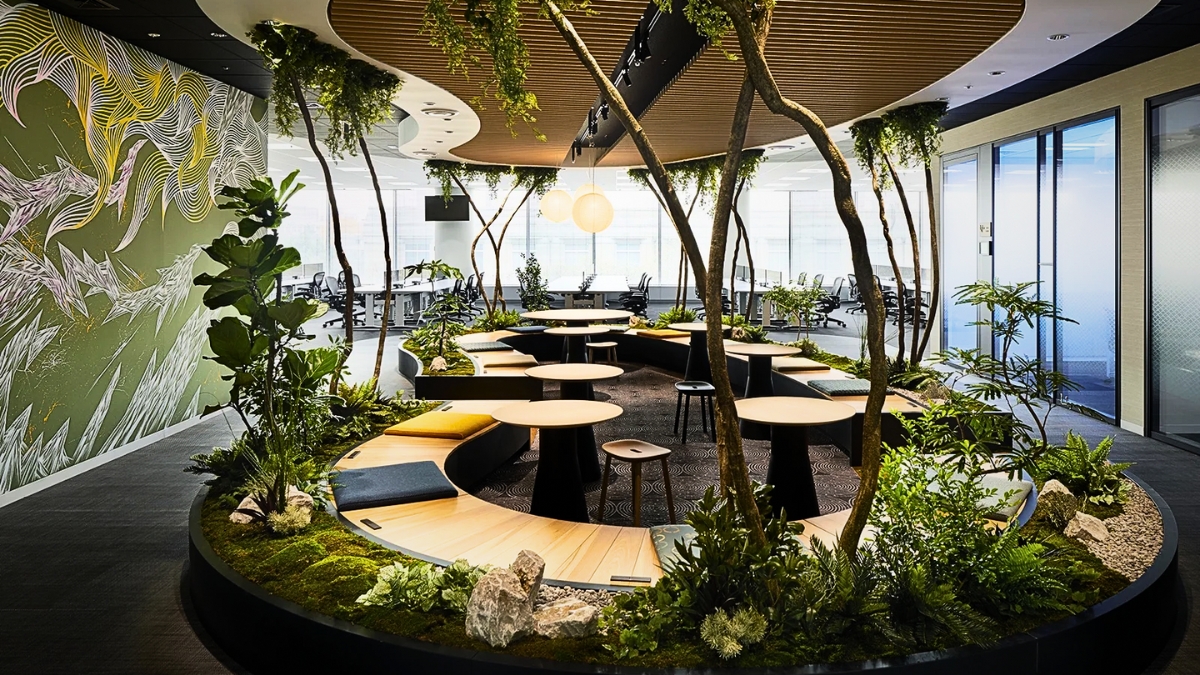
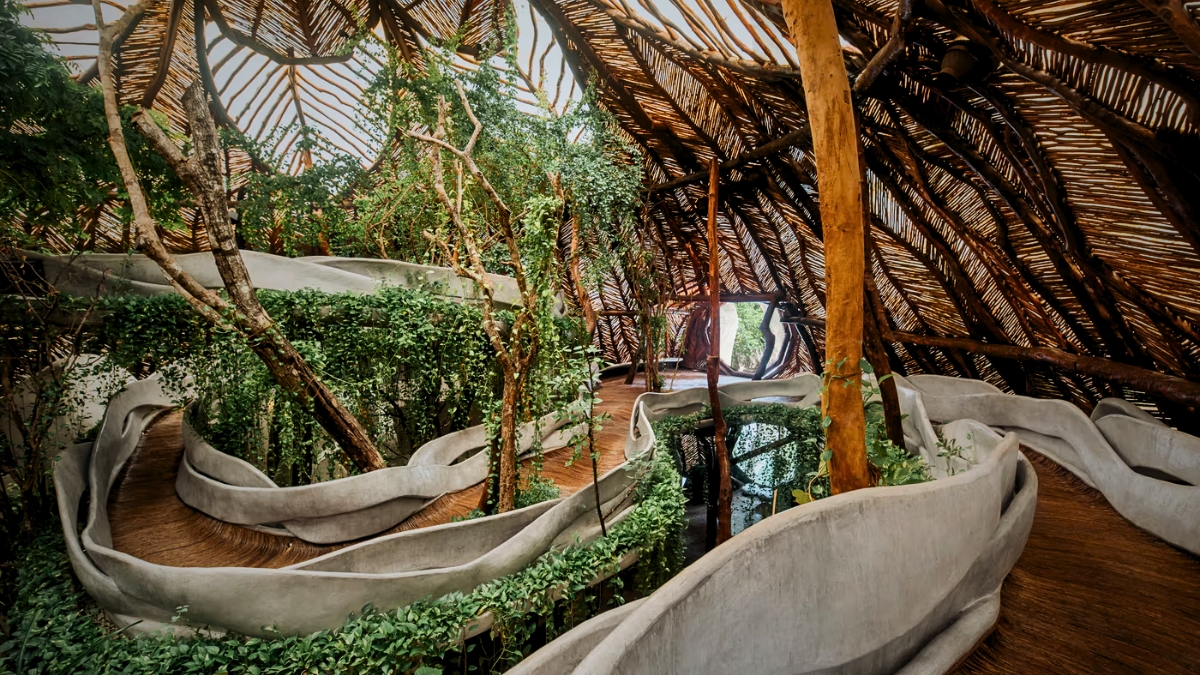
    Architects and designers have seized this primal truth and turned it into a visual philosophy. The result? Homes, offices, and even boutique cafes now mimic rainforests — with their moss walls, bamboo partitions, stone basins, and light that filters in like dawn in Kyoto.

    And it’s not just aesthetic whimsy. According to a 2025 report by the Indian Institute of Interior Design (IIID), India’s biophilic design market has seen a 28% surge in project demand, with the average design budget rising to ₹22–30 lakh for high-end urban apartments.

    The Luxe Manifesto of Nature

    Element Common Feature Average Cost (2025) Mood Impact
    Living Walls Vertical gardens with self-watering systems ₹3–6 lakh Serenity meets Instagram appeal
    Natural Light Architecture Skylights, sun tunnels, glass extensions ₹4–10 lakh “Divine awakening at 7 AM” vibe
    Organic Materials Stone, rattan, cane, reclaimed wood ₹2–5 lakh Earthy warmth, guilt-free luxury
    Water Installations Indoor fountains, koi ponds ₹6–8 lakh Zen with a side of electricity bill
    Smart Air Filtration Plants Integrated with IoT ₹1–3 lakh Fresh air, at a premium

    Designed to Heal, Marketed to Seduce

    Biophilic

    Designers whisper the same refrain: “Nature heals.” They say it with the reverence of a mantra, as they sketch oak finishes and align potted palms for “visual rhythm.”

    And to their credit — science agrees. Studies have shown that spaces with natural textures and organic light reduce stress, lower heart rate, and improve focus. It’s why corporate giants and luxury hotels now have miniature forests in their lobbies.

    In Mumbai, the Four Seasons’ new biophilic suite features a 12-foot vertical garden that adjusts to guests’ circadian rhythms — a feature that costs more than an average suburban apartment. In Delhi, interior designer Ananya Mathur recently transformed a client’s balcony into a micro-ecosystem, complete with temperature-regulated soil and mist-diffusing fans. “It’s nature without the mosquitoes,” she quips.

    The industry, of course, is basking in its own eco-righteousness. Sustainability sells, and nothing says “conscious luxury” quite like paying ₹15,000 for a terrarium that resembles an alien rainforest.

    The Reality Beneath the Ivy

    But let’s not romanticise everything that photosynthesises.
    For every tranquil moss wall on Instagram, a frustrated homeowner is googling “why is my vertical garden dying again?”

    The truth is, biophilic design isn’t maintenance-free magic — it’s horticulture meets architecture, with a recurring monthly cost that could fund someone’s college tuition. The humidity control systems, the soil replacements, the pest management — nature, it turns out, has an invoice.

    Critics have also raised eyebrows at the commodification of “wellness.” Turning sunlight and soil into luxury products seems like the kind of irony even Oscar Wilde would have envied. A 2025 Scroll.in an editorial called it “capitalism dressed in foliage,” pointing out that genuine environmental connection shouldn’t require a designer’s portfolio or a six-figure budget.

    Designers Speak — and Defend

    Biophilic - PNN

    Still, the professionals are unfazed. “We’re not selling leaves, we’re selling longevity,” argues Neel Batra, an eco-architect based in Bengaluru, whose clientele includes high-net-worth individuals and boutique resorts.
    He claims that the ROI of biophilic architecture — reduced electricity usage, enhanced air quality, and psychological benefits — “far outweighs the investment.”

    Social media agrees, albeit more dramatically.
    Instagram Reels tagged #BiophilicDesignIndia have surpassed 12 million views, with influencers showcasing reading nooks that resemble rainforest retreats. One viral post declared:

    “If your living room doesn’t have a fern wall, are you even alive?”

    It’s performative, yes, but it’s also persuasive. For many, the draw isn’t just well-being — it’s status, the chic symbolism of being “close to nature” while still living comfortably far from it.

    The New Aesthetic of Balance

    The beauty of biophilic design is that it’s evolving beyond vanity projects. Urban planners and developers are now incorporating it into affordable housing and co-working spaces. Pune’s Sanskriti Living Residences recently unveiled India’s first community oxygen garden, an open-air atrium with 1,500 indoor plants and shared work pods.

    Even the government’s Smart Cities Mission 2.0 has included biophilic principles in its environmental design framework, prioritising green architecture and passive cooling systems.

    It’s proof that what began as an elite indulgence is slowly becoming a civic necessity. The city, quite literally, is learning to breathe again.

    A Whisper from the Wild

    Perhaps the ultimate irony is this: we built walls to keep nature out, and now we’re paying fortunes to let it back in — one bamboo panel at a time. But maybe that’s progress, in its own peculiar way.

    The 2025 home is no longer just a structure; it’s a statement — that even amid screens and smog, we crave the primal comfort of rustling leaves and filtered sunlight.
    And if achieving that peace requires a designer, a contractor, and an automated misting system, so be it. Humanity has always been dramatic about survival.

    So here’s to biophilic design — equal parts sanctuary and spectacle, where architecture doesn’t just house life, it imitates it. Because in a world obsessed with algorithms, the soft hum of chlorophyll feels like rebellion.

    PNN Lifestyle

  • Globe Civil Projects Limited’s Outlook Revised To Positive By Infomerics

    Globe Civil Projects Limited’s Outlook Revised To Positive By Infomerics

    Mumbai (Maharashtra) [India], November 8: Infomerics Valuation and Ratings Private Limited. has revised the outlook for Globe Civil Projects Limited’s long-term bank facilities from Stable to Positive while reaffirming the rating at IVR BBB. The short-term rating of IVR A3+ has also been reaffirmed.

    The revision in outlook reflects Globe Civil Projects Limited’s strengthened capital structure following its successful ₹119 Cr Initial Public Offering (IPO) in July 2025, along with anticipated improvement in debt protection metrics and steady business performance. The company’s total operating income increased by 11% year-on-year to ₹325.99 Cr in FY25, supported by timely project execution and higher operational efficiency. Operating margins expanded to 16.43% in FY25 from 15.10% in FY24, while profit after tax grew by 57% to ₹24.05 Cr during the same period.

    As of September 30, 2025, the company reported a strong order book position of ₹1,001.28 Cr, representing 3.07 times its FY25 revenue, ensuring strong near-to-medium-term revenue visibility. The order book is diversified across reputed clients, including CPWD, NBCC, Indian Railways, AIIMS, IITs, and the Haryana Cricket Association.

    If you have any objection to this press release content, kindly contact pr.error.rectification@gmail.com to notify us. We will respond and rectify the situation in the next 24 hours.

  • Deliure Expands Its Sweet Legacy with New Outlets in Mulund and Colaba

    Deliure Expands Its Sweet Legacy with New Outlets in Mulund and Colaba

    Mumbai (Maharashtra) [India], November 7: Mumbai’s dessert aficionados are in for a treat as Deliure, the city’s luxury dessert destination, continues its expansion with two new outlets in Mulund and Colaba. With the Colaba store marking its 13th branch, this milestone reflects Deliure’s growing presence across Mumbai and its enduring commitment to crafting indulgent, artfully made desserts for every corner of the city.

    Each new outlet is a reflection of Deliure’s design philosophy — elegant, inviting, and refined. The Mulund outlet brings Deliure’s signature desserts to the lively suburban community, while the Colaba branch captures the charm of South Mumbai’s cosmopolitan spirit. Both spaces embody the brand’s belief that dessert is not just a sweet ending but an experience worth savouring.

    Deliure

    “Our new outlets are a celebration of how far our passion has come,” says Mohammad Selia, Founder of Deliure. “From Mulund to Colaba, we’re creating spaces where people can enjoy world-class desserts in settings that feel both warm and elevated.”

    Deliure

    Alongside the expansion, Deliure also unveils its newest creation — the Silken Bar collection. These sleek, layered desserts blend luxurious textures with refined flavours, offering a modern interpretation of indulgence. Available in four variants — Pineapple Layer, Tiramisu Layer, Classic Caramel, and Dulce de Leche — each Silken Bar is a harmony of creaminess, balance, and artistry. Whether it’s the tropical zest of Pineapple, the Italian charm of Tiramisu, or the golden warmth of Caramel and Dulce de Leche, these bars redefine smooth sophistication in every bite.

    With its new outlets and innovative dessert lineup, Deliure continues to set the benchmark for premium patisserie in Mumbai — a brand that celebrates craftsmanship, creativity, and the sheer joy of dessert done right.

    If you have any objection to this press release content, kindly contact pr.error.rectification@gmail.com to notify us. We will respond and rectify the situation in the next 24 hours.

  • Why Everyone’s Talking About Baramulla — Manav Kaul’s New Psychological Thriller

    Why Everyone’s Talking About Baramulla — Manav Kaul’s New Psychological Thriller

    Mumbai (Maharashtra) [India], November 8: There are movies that tell a story, and then there are those that linger like a ghost in the room — Baramulla firmly belongs to the latter. Streaming now on Amazon Prime Video, the Manav Kaul–starrer is less a supernatural thriller and more a poetic autopsy of grief, memory, and the unending ache of displacement.

    Directed by Amit Joshi, the film tiptoes through the turbulent corridors of Jammu and Kashmir’s sociopolitical psyche — a land as breathtaking as it is bruised. While the premise toys with spirits and lost souls, the narrative’s real haunting comes from its refusal to look away from the human cost of political decisions, particularly those echoing around Article 370.

    A Quick Glimpse at the Facts

    Aspect Details
    Title Baramulla
    Director Amit Joshi
    Lead Cast Manav Kaul, Rasika Dugal, Raj Zutshi
    Genre Supernatural / Psychological Drama
    OTT Platform Amazon Prime Video
    Runtime 2 hours 12 minutes
    Budget ₹18 crore (approx.)
    Filming Location Baramulla, Jammu & Kashmir
    Release Date November 7, 2025
    Production Houses Roy Kapur Films, RSVP Movies
    Language Hindi

    A Story That Refuses to Stay Silent

    Baramulla opens with a simple enough setup — a writer returning to his ancestral home in the eponymous valley after decades of exile. But the nostalgia quickly curdles into something darker. The past creeps in, whispering through empty corridors, half-burnt letters, and radio static.

    Kaul, ever the theatre poet, doesn’t “perform” his role — he wears it. His portrayal of a man unraveling under the weight of memory is hauntingly restrained, the kind of acting that doesn’t need background music to prove it’s profound. Rasika Dugal, meanwhile, is the calm eye of the storm, her silences louder than any dialogue.

    Director Amit Joshi’s storytelling walks a thin line between mysticism and melancholia — one minute you’re admiring the snow-dusted landscapes, the next you’re questioning if they’re metaphors for erasure. Subtlety is the film’s chosen weapon; it doesn’t scream political commentary, but it definitely smuggles one under the guise of folklore.

    Baramulla

    Behind the Lens: The Valley’s Uneasy Calm

    Shot across the real lanes of Baramulla, the production crew faced unpredictable weather, logistical nightmares, and the eerie quiet that only a conflicted region can offer. Locals were reportedly supportive yet guarded — an authenticity that seeps through the screen.

    Cinematographer Tushar Kanti Ray captures the valley not as a postcard but as a scar. His lens is unromantic, cold, and deliberate — each frame looks like a secret half-buried in snow. Interestingly, much of the film’s muted palette mirrors the state’s own emotional greys after the abrogation of Article 370. Coincidence or careful artistry? Probably both.

    Numbers Speak (and So Does the Internet)

    In its first 72 hours on Prime Video, Baramulla registered nearly 4.7 million views — a remarkable feat for a non-commercial thriller with no chartbuster songs or high-octane marketing. Critics have been sharply divided:

    • The Hindu called it “a gripping supernatural drama with a heavy political undercurrent” but hinted that the screenplay sometimes “labors under its own self-importance.”
    • India Today labeled it “a haunting ode to loss, memory, and exile”, praising Kaul’s “intellectual stillness” and Dugal’s raw composure.
    • India TV highlighted how social media has embraced the film as “artsy but accessible”, with X (Twitter) users calling it “emotionally devastating but visually spellbinding.”

    And of course, where there’s emotional devastation, there’s internet humour. One tweet quipped:

    “Baramulla made me cry, then Google where to buy woolen tissues.”

    Even the sarcasm online seems poetic.

    What Worked (and What Didn’t)

    The Good:

    • Manav Kaul’s performance — understated brilliance.
    • Authentic Kashmiri backdrop, not a studio mock-up.
    • Sharp cinematography and atmospheric score by Alokananda Dasgupta.
    • Courageous themes: identity, displacement, and cultural amnesia.

    The Not-So-Good:

    • Pacing that tests patience — if you like quick gratification, this isn’t your cup of kahwa.
    • Philosophical indulgence — occasionally feels like it’s speaking only to its own echo.
    • Minimalist dialogues may alienate mainstream audiences seeking drama over depth.

    From Exile to Expression: The Soul of the Story

    There’s a cruel irony in Baramulla’s core — a film about loss, made in a land where loss is inherited. It doesn’t wave flags or ignite outrage; instead, it leaves the audience unsettled with quiet truths. It’s more “what was left unsaid” than “what was shown.”

    Thematically, the movie sits comfortably beside works like Haider and Talvar, though it dares to be less cinematic and more confessional. Joshi’s screenplay often reads like pages torn from a forgotten diary, perhaps belonging to every displaced Kashmiri.

    Box Office & Production Buzz

    While the theatrical window was bypassed in favour of a direct OTT release, Baramulla’s digital rights were reportedly sold for ₹22 crore, recouping the budget even before premiere week. Not bad for a film that prioritizes philosophy over flash.

    Production insiders reveal that Manav Kaul personally workshopped his role for nearly three months, living in isolation near Sonmarg to “unlearn dialogue delivery.” Yami Gautam and Emraan Hashmi (from Haq, also recently released) even dropped supportive comments on social media, applauding its “visual poetry.”

    Public Mood: Applause Meets Existential Shrugs

    Platform Audience Sentiment Top Comment / Reaction
    X (Twitter) 81% positive “Hauntingly beautiful. I watched it twice just to understand once.”
    IMDb 7.8/10 “Unconventional, heavy, but worth it.”
    Instagram Trending Reels Users remixing Kaul’s monologue with snowfall filters.
    YouTube Shorts Viral Edits Clips captioned “Pain has a postcode — Baramulla.”

    Final Word: A Film That Demands Stillness

    Baramulla is not for those seeking Friday night escapism. It’s for those who enjoy cinematic slow burns — the kind where silence says what dialogue cannot. Manav Kaul’s performance anchors it; Amit Joshi’s direction sharpens it. Yes, it’s indulgent at times. Yes, it risks alienating attention spans shorter than a TikTok. But it’s also brave, lyrical, and eerily timely.

    The valley has found yet another voice — quiet, introspective, and disturbingly relevant.
    And this time, it’s not shouting for attention; it’s whispering truths we’d rather not hear.

    PNN Entertainment

  • Neetu Yoshi Delivers Robust 45 Percent Surge in Net Profit in H1 FY26

    Neetu Yoshi Delivers Robust 45 Percent Surge in Net Profit in H1 FY26

    Mumbai (Maharashtra) [India], November 8: Neetu Yoshi Limited (BSE: 544434),is engaged in manufacturing customized products in various grades of ferrous metallurgical materials, including mild steel, spherical graphite iron, cast iron, and manganese steel, has reported its Unaudited financials for H1 FY26.

    H1 FY26 Consolidated Financial Highlights

    • Total Income of ₹ 45.89 Cr, YoY growth of 30.05%

    • EBITDA of ₹ 15.93 Cr, YoY growth of 38.31%

    • EBITDA Margin (%) of 34.72%, YoY growth of 207 BPS

    • Net Profit of ₹ 11.54 Cr, YoY growth of 45.00%

    • Net Profit Margin (%) of 25.15%, YoY growth of 259 BPS

    • Diluted EPS of ₹ 3.49, YoY growth of 22.03%

    Commenting on the financial performance Mr. Himanshu Lohia, Managing Director cum Chief Financial Officer, Neetu Yoshi Limited said, “The first half of FY26 has been a period of strong progress for us at Neetu Yoshi Limited. We continued to build on last year’s momentum, strengthening our presence as a trusted and forward-looking partner to Indian Railways. Our focus has remained on operational discipline, technology-driven manufacturing, and timely execution across every order.

    During the period, we further deepened customer relationships, secured repeat orders, and enhanced production efficiency through better process integration and quality control. The team’s commitment to precision engineering and adherence to RDSO standards has helped us maintain our reputation for reliability and performance.

    Our new facility in Haridwar is progressing well and remains central to our vision of forward integration into bogies and couplers. Once operational, it will mark a major step toward expanding our product range, scaling capacity, and capturing higher-value opportunities within the railway supply chain. We are also exploring opportunities beyond our traditional railway base, including private freight operators and industrial applications, while maintaining our core focus on safety-critical components.

    Over the past year, we have also diversified our product portfolio by adding new lines across coach, track, and locomotive components, further strengthening our ability to serve multiple segments of Indian Railways. These additions enhance our market presence and align with our strategy of evolving from a component manufacturer to a complete railway engineering partner.

    The government’s record ₹3.02 lakh crore capital outlay for FY26 and the ₹16.7 lakh crore modernization plan through 2031 are driving an unprecedented transformation in India’s railway sector. Initiatives such as the National Rail Plan, Dedicated Freight Corridors, and Make in India are fueling demand for certified, high-precision components—aligning perfectly with our expertise in bogies, couplers, and braking systems.

    Looking ahead, we are confident of sustaining this growth momentum as we move into the second half of the year. With our RDSO-approved facility, expanding capacity, and focus on engineering excellence, we are well positioned to capitalize on the ongoing rail modernization drive, strengthen our market presence, and deliver long-term value.”

    If you have any objection to this press release content, kindly contact pr.error.rectification@gmail.com to notify us. We will respond and rectify the situation in the next 24 hours.

  • IPO Frenzy: Lenskart, PhysicsWallah, and Groww Headline a Week of Up to 22 Percent Listing Gains

    IPO Frenzy: Lenskart, PhysicsWallah, and Groww Headline a Week of Up to 22 Percent Listing Gains

    Mumbai (Maharashtra) [India], November 8: Dalal Street’s IPO party isn’t slowing down. With nine listings queued up and grey market premiums climbing, investors are eyeing quick gains, some as high as 22%.

    India’s IPO Season Is Back in Beast Mode

    If you thought India’s IPO wave was cooling, think again. The coming week will see a new burst of listings led by three heavyweight startups, Lenskart, PhysicsWallah, and Groww, alongside a clutch of manufacturing and SME players.

    Grey market whispers suggest healthy listing pops, with premiums ranging between 4% and 22%. For short-term traders, that’s music. For long-term investors, it’s a reminder that India’s capital market still loves a good growth story.

    Tenneco Clean Air Leads with 22% Premium

    Automotive systems supplier Tenneco Clean Air India is revving the loudest. With a grey market premium (GMP) of ₹87 over its issue price of ₹397, the listing implies a 22% upside.

    The company’s strong fundamentals, exposure to clean-tech components, and a well-timed narrative around “green mobility” make it the week’s hottest pick.

    PhysicsWallah: India’s Edtech Star Goes Public

    Next up, PhysicsWallah, India’s most profitable online learning unicorn, is heading for its market debut. The IPO, valued at ₹3,480 crore, opens on November 11 and lists on November 18.

    With a modest GMP of ₹5, roughly a 5% premium over the issue price of ₹109, the listing might not light up the sky. But it carries symbolic weight. PhysicsWallah is the first Indian edtech firm to go public while profitable, a rare headline in a sector that’s been all burn, no earn.

    For India’s retail investors, this listing is a confidence test for the entire edtech ecosystem.

    Emmvee Photovoltaic Rides the Solar Boom

    Solar power manufacturer Emmvee Photovoltaic Power has caught the clean-energy wave, trading at a ₹20 GMP or about 9% above its issue price of ₹217.

    The firm’s ₹2,900 crore issue is expected to fund capacity expansion and working capital, both crucial in India’s surging solar market.

    Investors are betting on the government’s push toward renewable energy and domestic manufacturing incentives.

    Groww IPO: Retail’s New Darling

    Fintech unicorn Groww, already a household name among millennial investors, closed its ₹6,632 crore IPO with a bang, subscribed 17.6 times.

    Its GMP of ₹5, a 5% listing gain over the issue price of ₹100, might seem humble, but the strong institutional demand says it all. Investors clearly see long-term value in Groww’s digital-first investing model.

    Even with high valuations, Groww’s brand power, scale, and trust factor keep it a must-watch listing.

    Lenskart’s ₹7,278 Crore IPO Eyes Steady Start

    Eyewear retail giant Lenskart Solutions rounds out the trio of headline acts. Its issue, worth ₹7,278 crore, saw an impressive 28x subscription.

    Still, the GMP sits at a modest ₹17, or about 4% over its issue price, likely capped by valuation worries.

    But make no mistake: Lenskart is a consumer-tech success story India can claim proudly. With omnichannel dominance, slick branding, and expanding global reach, it’s more marathon than sprint.

    SME Segment: Select Buzz, Muted Premiums

    In the SME corner, enthusiasm is more selective. Curis Lifesciences is leading with a ₹7.5 premium (6% upside), while Shining Tools follows at ₹7 (6%).

    Others, like Mahamaya Lifesciences and Workmates Core2Cloud, haven’t seen major grey market movement, showing that while retail appetite is strong, it’s also picky.

    The Bigger Picture

    Nine IPOs in a single week. A market riding high on liquidity, retail euphoria, and India’s growth story.

    Sure, some of these listings will cool off after debut day. But the underlying sentiment is clear: Dalal Street is back to betting on Bharat’s next-gen economy.

    The data-driven optimism, backed by real profits in startups like PhysicsWallah and established scale in Groww and Lenskart, signals a maturing market. Investors are no longer chasing hype alone; they’re rewarding sustainability and brand strength.

    Verdict? Watch the Momentum, Respect the Valuations

    The coming week will likely deliver solid pops, but expect volatility too. High-profile IPOs tend to attract fast hands, and post-listing corrections are common.

    For serious investors, the smarter play might be to watch how these stocks settle after the first week. Long-term winners in India’s IPO arena often emerge after the initial chaos fades. Still, with sentiment this charged, even the cautious ones might find themselves reaching for the “subscribe” button.

    PNN News

  • Tribute to Cow Protectors on 7th November at Swadeshi Rashtriya Gaudhan Summit 2025

    Tribute to Cow Protectors on 7th November at Swadeshi Rashtriya Gaudhan Summit 2025

    New Delhi [India], November 8: The Swadeshi Rashtriya Gaudhan Summit 2025 witnessed a deeply emotional and historic moment today as the Rashtriya Gaudhan Mahasangh paid tribute to cow protectors from across the country who sacrificed their lives in the service of the cow, the Swadeshi movement, and environmental preservation.

    The day holds special significance as November 7, 2006 marks the founding of the Rashtriya Gaudhan Mahasangh as an “idealistic non-violent movement.” Since then, the day has been observed every year as “Gaubalidan Smriti Diwas” (Martyrs’ Memorial Day) and the Foundation Day of the Mahasangh.

    The program commenced at 9 a.m. with Vedic chanting, havan (ritual offering), and gau poojan (cow worship). This was followed by two minutes of silence to honor all the cow protectors. The gathering included representatives from Gaushalas, farmer organizations, environmentalists, youth volunteers, and social activists from across India, all of whom reaffirmed their collective commitment to cow welfare and the vision of Atmanirbhar Bharat (self-reliant India).

    Speaking on the occasion, Mr. Vijay Khurana, National Convener and Chief Spokesperson of Rashtriya Gaudhan Mahasangh, said, “The cow is not just at the heart of our culture but is also the backbone of an Atmanirbhar Bharat. Those who sacrificed their lives for cow protection are the eternal symbols of this ideology. The Rashtriya Gaudhan Mahasangh will continue to work tirelessly to fulfill their vision.”

    He announced that in the coming years, November 7 will be observed nationwide as “Gau Seva Sankalp Diwas” (Cow Service Commitment Day), during which schools, panchayats, and Gaushalas will organize cow welfare and environmental awareness campaigns.

    A symposium on the topic “Cow Economy and the Future” was also held on the occasion, where experts highlighted that if the 9.5 lakh tonnes of cow dung produced annually by India’s 22,000 Gaushalas were utilized scientifically, the nation could prevent the felling of approximately 50 million trees each year.

    Furthermore, the production of organic fertilizers, biogas, natural pesticides, and Panchgavya-based medicines has the potential to create millions of employment opportunities in rural India. The event also honored 25 volunteers for their remarkable contribution to cow welfare. The tribute ceremony concluded with the national anthem and the collective chant of “Gau Mataram.”

    Swadeshi Rashtriya Gaudhan Summit 2025 — A Five-Day Movement Toward Self-Reliant India

    This program forms an integral part of the six-day Swadeshi Rashtriya Gaudhan Summit 2025, being held from November 5 to 10, 2025, at Major Dhyan Chand National Stadium, India Gate Circle, New Delhi.

    The central theme of the summit is — “Atmanirbhar Bharat through the BioE3 Policy – Environment, Economy, and Employment.” According to Mr. Vijay Khurana, the BioE3 Policy provides a practical framework for achieving sustainable growth in India. “Our goal is to ensure that Gaudhan (cow wealth) is not confined to service alone but becomes a means of balance between livelihood, environment, and economy,” he said.

    Over 600 stalls have been set up at the venue, showcasing Panchgavya products, organic farming solutions, green energy innovations, and eco-friendly technologies. The summit has become a vibrant platform for farmers, Gaushala operators, scientists, and entrepreneurs to engage in dialogue, innovation, and collaboration.

    During its two-decade journey, the Rashtriya Gaudhan Mahasangh has made remarkable progress in spreading the concept of a cow-based sustainable economy

    • In 2006, India had around 9,500 Gaushalas, which has now grown to over 22,000.
    • The cow population has increased from 95 million to 220 million.
    • Thousands of farmers have transitioned from chemical farming to cow-based organic agriculture.

    Speaking on the ongoing summit, Mr. Vijay Khurana added,

    “This is not merely a cultural or religious initiative but a national movement leading India toward sustainability and self-reliance. The cow is the soul of India — and until Gaudhan becomes part of our economic framework, the dream of a truly self-reliant nation will remain incomplete.”

    The Swadeshi Rashtriya Gaudhan Summit 2025 continues till November 10.

    Venue: Major Dhyan Chand National Stadium, India Gate Circle, New Delhi
    Time: 9:00 AM to 9:00 PM

    About Rashtriya Godhan Mahasangh

    An Idealistic Non-Violent Movement dedicated to the welfare of cows and the promotion of cow-based sustainable innovations. Triple E: Environment, Economy, and Employment at the Core. At the heart of this summit lies the Triple E philosophy-focusing on Environment, Economy, and Employment, driving a powerful movement that blends tradition with innovation.

    If you object to the content of this press release, please notify us at pr.error.rectification@gmail.com. We will respond and rectify the situation within 24 hours.