Category: Education

  • CEPT University Confers Degrees on 589 Students at Its 20th Convocation; Announces Launch of New Program – MBA in Real Estate

    CEPT University Confers Degrees on 589 Students at Its 20th Convocation; Announces Launch of New Program – MBA in Real Estate

    Chennai (Tamil Nadu) [India], January 19: CEPT University marked a significant academic milestone today as it held its 20th Annual Convocation, conferring degrees on 589 students across undergraduate, postgraduate and doctoral programmes. The occasion also marked a pivotal moment in the University’s academic journey with the formal announcement of CEPT’s entry into MBA education, through its MBA in Real Estate Program under its Faculty of Management.

    Of the graduating cohort, 392 were postgraduates, 196 undergraduates, and one Doctor of Philosophy recipient, while 45 students were awarded University Awards of Proficiency in recognition of outstanding academic achievement. Graduates represented the full academic breadth of the University, with 213 students from the Faculty of Architecture, 95 from the Faculty of Design, 10 from the Faculty of Management, 151 from the Faculty of Planning, and 120 from the Faculty of Technology.

    The Convocation ceremony was graced by Prof. Ashoke Chatterjee, eminent design educator and former Executive Director of the National Institute of Design, as the Chief Guest.

    Welcoming the gathering, Prof. Barjor Mehta, President, CEPT University, reflected on the University’s evolving academic vision and announced the launch of the MBA in Real Estate, a new flagship programme under the Faculty of Management.  The launch of our MBA offerings marks an important milestone for CEPT University,” said Prof. Mehta. “The MBA in Real Estate recognizes the growing need for professionals capable of steering the rapidly expanding formal real estate sector in the country. CEPT is well-positioned to deliver high-quality education in this emerging field, drawing on our long-standing strengths in architecture, urban planning and design, structural engineering, construction and project management, and urban management. The new program will provide opportunities for students from diverse undergraduate backgrounds to build careers in the market-facing production and management of the built environment.”

    Dressed in CEPT’s customary off-white and beige ceremonial attire, accented by vibrant faculty stoles, graduating students arrived at the iconic Shrenikbhai Plaza and were welcomed by cheering family members and friends. The procession was led by Sanjay Lalbhai, Chairman, CEPT University; Prof. Barjor Mehta, President; Chief Guest, Prof Ashoke Chatterjee, former Executive Director, National Institute of Design (Ahmedabad) who walked on to the dais and were joined by Prof. Tridip Suhrud, Provost; Ms. Anita Hiranandani, Registrar; and the Deans of the respective faculties.

    Addressing the graduating students, Shri Sanjay Lalbhai emphasised that the cohort is entering a profession shaped by climate urgency and artificial intelligence, where technology must support—rather than replace—human judgement. He urged graduates to take responsibility for the long-term environmental impact of their design and material choices, cautioning against speed-driven, disposable construction and calling for buildings and cities that are resilient, humane, and built to endure.

    Delivering the Convocation Address, Chief Guest Prof. Ashoke Chatterjee drew from personal memories and decades of experience with public and institutional architecture, underscoring that meaningful architecture is defined by its emotional resonance and ethical grounding. He encouraged graduates to evolve into professionals who deliver architecture that cares for people, place, and collective memory.

    During the ceremony, Prof. Rasik. J. Shah, distinguished structural engineer, educator and consultant; and Prof. Vidyadhar K. Phatak, one of India’s distinguished urban planners, were conferred Honorary Doctorates (Honoris Causa) in recognition of their eminent contributions to structural engineering and urban planning, respectively. Prof. Shah’s career spans decades of teaching, professional practice, and research, with a profound influence on architectural and engineering education at CEPT University. Prof. Phatak is widely respected for his five-decade-long contribution to urban development, policy formulation, and planning education in India.

    Following the central Convocation, Faculty-level Convocations were held, during which students received their degrees from their respective Deans. The Convocation concluded on a celebratory note as graduating students came together with peers, faculty and staff to mark the culmination of their academic journey and the beginning of their professional paths.

    FACT SHEET

    Total Number of Graduates 589
    Post Graduate Students 392
    Under Graduate Students 196
    Doctor of Philosophy 1
    Faculty Wise Distribution
    Faculty of Architecture 213
    Faculty of Design 95
    Faculty of Management 10
    Faculty of Planning 151
    Faculty of Technology 120
    Students Who Won University Awards of Proficiency 45

    About CEPT University

    CEPT University is a recognized leader in education and research in the areas of architecture, planning, design, technology and urban management. Its teaching programs aim to build thoughtful professionals, and its research programs deepen understanding in its areas of expertise.  CEPT University also undertakes advisory projects to support the national, state and city governments and large sections of private industry. Through its education, research and advisory activities, the University strives to contribute to enriching the lives of people in India’s villages, towns and cities.

    The University comprises five faculties: viz. the Faculty of Architecture, the Faculty of Planning, the Faculty of Technology, the Faculty of Design, and the Faculty of Management. In December 2023, CEPT University was recognized by the Government of India as a Centre of Excellence in Urban Planning and Design. This comes with an endowment of Rs. 250 Crore to be used towards the research and training on India specific knowledge in Urban Planning and Design over the next 25 years. CEPT University was established by the CEPT University Act of 2005 enacted by the government of Gujarat. It was originally started in 1962 as the School of Architecture supported by the Ahmedabad Education Society. The Department of Scientific and Industrial Research (DSIR) of the Government of India recognizes the University as a Scientific and Industrial Research Organization (SIRO). CEPT University is recognized as a Centre of Excellence by the Government of Gujarat. CEPT University has over 30 ongoing collaborations and exchange programs with top-ranked universities across the world.

    For media queries, contact:

    Sunitha Aravind | sunitha.aravind@cept.ac.in | +91-8450900643

    If you object to the content of this press release, please notify us at pr.error.rectification@gmail.com. We will respond and rectify the situation within 24 hours.

  • CGC University Mohali Hosts Bharat AI: Pioneering The Future Of Inclusive, Responsible, And Impact-Led Artificial Intelligence

    CGC University Mohali Hosts Bharat AI: Pioneering The Future Of Inclusive, Responsible, And Impact-Led Artificial Intelligence

    New Delhi [India], January 17: In a dazzling celebration of innovation, intellect, and enterprise, CGC University, Mohali proudly hosted Bharat AI: Driving Inclusive, Responsible & Impact-Led Artificial Intelligence, the official pre-summit of the India–AI Impact Summit 2026, on the auspicious occasion of National Startup Day. Sanctioned and recognized by the Ministry of Electronics and Information Technology (MeitY), this landmark event reinforced the University’s position as a beacon of technological advancement, visionary thinking, and research excellence.

    The summit unfolded through a thoughtfully curated mix of a Keynote Address, Panel Discussion, Fireside Chat, and an Interactive Workshop, all anchored in the themes of governance, ethics, and real-world AI implementation. Together, these sessions ignited rich, forward-looking dialogues on bridging the gap between AI policy and practice, while emphasising the imperatives of trust, transparency, and meaningful societal impact.

    The gathering commenced under the distinguished presence of Mr. Amit Kataria, COO & Co-Founder, SARAS AI, who graced the occasion as the Chief Guest. The sessions featured a constellation of trailblazers, innovators, and thought leaders, each bringing a unique perspective on the evolving landscape of Artificial Intelligence:

    • Mr. Tarun Malhotra, Founder & CEO, Cyber Splunk
    • Mr. Suraj Kumar, CEO, Qyula Narratives Inc.
    • Ms. Tandeep Sangra, Founder, She Innovates AI
    • Mr. Bipanjeet Singh, Founder & Director, Digiwah Technosys LLP
    • Mr. Jigarjit Singh, Managing Director & Founder, JW Infotech
    • Ms. Neha Arora, Chief Operating Officer, Northern Region Science & Technology Cluster, Office of the Principal Scientific Adviser, Government of India
    • Mr. Anil Channa, CTO, Softwiz Infotech
    • Mr. Tanvir Singh, Senior Manager, Spoken Tutorial, IIT Bombay

    Adding a global dimension, Ms. Maya Sherman, Head of Technology & Innovation, Embassy of Israel in India, joined virtually to share international insights, futuristic trends, and cross-border collaborations, weaving a rich tapestry of ideas that bridged innovation with global best practices.

    A defining highlight of the event was the AI Project Showcase, where students and researchers from CGC University unveiled AI-powered solutions and functional prototypes spanning diverse domains, including healthcare, cybersecurity, smart systems, education, sustainability, and enterprise automation. The showcase stood as a testament to the University’s emphasis on applied research, innovation-driven learning, and industry-aligned problem solving, earning widespread appreciation from industry experts and attending delegates for its depth, relevance, and real-world impact.

    Echoing this vision, Mr. Arsh Dhaliwal, Honourable Managing Director, remarked:

    “Bharat AI reflects CGC University’s commitment to building a future-ready ecosystem where technology, ethics, and impact converge. By empowering our students, researchers, and innovators to work on responsible AI solutions, we aim to contribute meaningfully to India’s national AI mission and global technology leadership.”

    Dr. Ati Priye, CEO, Incubation and Startups at CGC University, added:

    “Hosting Bharat AI as an Official Pre-Summit Event of the India–AI Impact Summit 2026 is a proud milestone. The participation of industry leaders, global representatives, and our own student innovators demonstrates the power of collaboration in shaping responsible and inclusive AI for the future.”

    Key insights and outcomes emerging from Bharat AI will be formally shared with IndiaAI, contributing meaningfully to the wider discourse of the India–AI Impact Summit 2026, scheduled to be held in New Delhi on 19–20 February 2026. These deliberations will help inform national conversations on the future direction of Artificial Intelligence in India, reinforcing the summit’s vision of responsible, inclusive, and impact-driven AI adoption.

    The resounding success of Bharat AI cements CGC University, Mohali as a hub of research, technological exploration, and entrepreneurial spirit, fostering a generation of thinkers and doers who are equipped to shape the future of Artificial Intelligence in India and beyond. By seamlessly blending innovation, responsibility, and societal impact, the University continues to lead the way in cultivating a culture of inquiry, creativity, and transformative action.

    Web: https://www.cgcuniversity.in

    If you object to the content of this press release, please notify us at pr.error.rectification@gmail.com. We will respond and rectify the situation within 24 hours.

  • A Day in the Life of a Himalayan School Student Reflects the Changing Face of Online Schooling in India

    A Day in the Life of a Himalayan School Student Reflects the Changing Face of Online Schooling in India

    New Delhi [India], January 17: As online schooling steadily becomes a mainstream choice for Indian families, the daily academic routine of students is undergoing a visible transformation. At The Himalayan School, a structured online K–12 institution, a typical school day offers insight into how digital education is evolving beyond basic screen-based learning into a balanced, student-centric model.

    For parents exploring online schools in India or comparing various online school programs, understanding how a day unfolds for a student provides a clearer picture than curriculum descriptions alone.

    Structured Mornings Without the Rush

    A Himalayan School student begins the day without the familiar rush associated with traditional schooling. There are no long commutes or crowded assembly halls. Instead, students log in from home for scheduled school online classes, starting their academic day calm, attentive, and prepared.

    Live sessions are teacher-led and follow a fixed timetable, offering the discipline parents expect while maintaining the flexibility that online schools are known for. Teachers address students by name, conduct attendance seamlessly, and move directly into lessons—creating a focused learning environment.

    Parents who previously searched for “online schools near me” often cite this calm start as a major advantage, particularly for younger learners and students prone to anxiety.

    Interactive Learning Replaces Passive Listening

    Contrary to common assumptions about online schools, classroom engagement remains central at The Himalayan School. Lessons are interactive, discussion-driven, and paced carefully to ensure understanding.

    During mathematics and science sessions, teachers use digital boards and visual tools to explain concepts in real time. Language classes encourage participation, reading, and spoken interaction. Students enrolled in high school online classes benefit from being able to ask questions without hesitation, while also having access to recorded sessions for later review.

    This approach has proven effective for students enrolled in online high school courses, where conceptual clarity plays a crucial role in academic progression.

    Balanced Screen Time and Breaks

    The school day includes planned breaks between academic sessions, allowing students to step away from screens. This structured balance helps reduce screen fatigue and maintain concentration levels.

    Parents considering kids home school or online homeschool options often express concern about excessive screen exposure. At The Himalayan School, screen time is purposeful and moderated, ensuring that learning remains effective without becoming overwhelming.

    Students are encouraged to engage in physical activity, creative hobbies, or quiet reflection during these breaks, contributing to overall well-being.

    Applied Learning Through Technology Integration

    Beyond live classes, students participate in applied learning activities that reinforce academic concepts. Virtual labs, project-based assignments, and cognitive STEM tasks allow students to explore practical applications of what they study.

    Science lessons include simulated experiments, while technology-focused modules introduce students to problem-solving and logical thinking. These activities support the broader objective of building skills alongside syllabus learning, aligning with national education priorities.

    Families transitioning from home schooling in India CBSE models often find this applied approach more engaging than traditional textbook-driven instruction.

    Consistent Teacher Support Throughout the Day

    One of the distinguishing aspects of a Himalayan School student’s day is continuous teacher access. Doubts are addressed promptly, and teachers monitor progress using digital tools that provide insight into individual learning patterns.

    This allows educators to identify gaps early and offer targeted guidance. For students who may feel overlooked in large offline classrooms, this level of attention makes a significant difference.

    Parents comparing best online schools often highlight teacher involvement as a key factor in their decision.

     Himalayan School-PNN

    Independent Learning Builds Responsibility

    As scheduled classes conclude, students move into independent learning time. Assignments, revision, and project work are completed using digital resources provided through the school’s learning platform.

    This phase of the day helps students develop time management and self-discipline. Over time, learners become more independent, a quality parents value when considering online schools or home schools near me alternatives.

    Students gradually take ownership of their learning rather than relying solely on external supervision.

    A Day That Ends Without Academic Burnout

    Unlike traditional school days that often extend into late evenings through homework and tuition, the academic day at The Himalayan School ends with time still available for family interaction, hobbies, and rest.

    Parents report that children are less fatigued and more willing to discuss what they learned. This balanced routine has contributed to the growing acceptance of online schooling as a sustainable long-term option rather than a temporary arrangement.

    Reflecting a Broader Shift in Education

    A day in the life of a Himalayan School student reflects a larger shift taking place across the education sector. Online schools in India are no longer limited to convenience-based solutions; they are emerging as structured, credible alternatives that combine academic rigour with flexibility.

    The Himalayan School’s approach demonstrates how online education can offer clarity, consistency, and personalisation without compromising discipline. As more families evaluate best online schools in India, models that prioritise student well-being, engagement, and real-world readiness are gaining attention.

    Looking Ahead

    As education continues to evolve, the daily experiences of students will increasingly shape how schooling is defined. The Himalayan School’s online model shows that learning can be calm, interactive, and effective—without the pressures traditionally associated with academic routines.

    For students, this means school days focused on understanding rather than endurance.
    For parents, it offers reassurance that online schooling can deliver both structure and balance.

    And for the education sector, it signals a future where quality learning is no longer bound by physical classrooms, but by thoughtful design and meaningful engagement.

    If you object to the content of this press release, please notify us at pr.error.rectification@gmail.com. We will respond and rectify the situation within 24 hours.

  • College for Creative Studies, Detroit, Explores India for Global Design Talent in Landmark Leadership Visit

    College for Creative Studies, Detroit, Explores India for Global Design Talent in Landmark Leadership Visit

    New Delhi [India], January 16: In a significant milestone for India’s rapidly evolving creative education landscape, the College for Creative Studies (CCS), Detroit, one of the world’s leading institutions for art and design education, completed its first-ever leadership visit to India. The delegation was led by Don L. Tuski, President of the College for Creative Studies, along with Ray Pedor, Senior Faculty Member, Fashion Department.

    Founded over 120 years ago in Detroit, Michigan, CCS is globally recognised for producing industry-ready creative leaders across disciplines such as Transportation Design, Fashion Design, Communication Design, Strategic Design, and emerging digital and interdisciplinary design fields. This inaugural visit by the President of CCS underscores the institution’s growing commitment to engaging with India’s next generation of global creative talent.

    During the visit, the CCS leadership engaged extensively with school leadership teams, senior educators, high school students, parents, and counselors across multiple forums in New Delhi and Gurugram. These interactions focused on expanding awareness of future-focused art and design careers, global industry expectations, and the increasing demand for interdisciplinary, innovation-driven designers worldwide.

    Speaking during the visit, Don L. Tuski highlighted the evolving role of design in the global economy:

    “Today, art and design are central to innovation across mobility, sustainability, technology, fashion business, and human-centred experiences. India has immense creative potential, and our objective is to build clear, credible pathways for Indian students to access world-class design education and global careers.”

    In the Indian context, art and design education has traditionally been perceived through a narrow lens, often limited to fashion or interior design. CCS aims to broaden this narrative by showcasing future-forward disciplines such as Transportation Design, Concept Design, UI/UX Design, Strategic Design, Fashion Business Management, and Communication Design—fields that operate at the intersection of creativity, technology, and industry impact.

    CCS is particularly renowned for its Transportation Design program, widely regarded as one of the best in the world. Students regularly collaborate with leading global automotive and mobility companies through sponsored studio projects, designing vehicles, products, and mobility systems envisioned for the year 2050 and beyond. Graduates from CCS are actively recruited by major global automotive and design-led organisations, positioning the institution as a premier launchpad for future mobility and industrial design careers.

    The India visit was undertaken in collaboration with High School Moms (HSM)—one of the world’s largest parent-student communities—and GIDE AI, a Forbes India and D Globalist Select 200 company specialising in college and career advisory. Together, the partnership aims to build structured awareness, guidance frameworks, and access pathways for high-potential Indian students aspiring to global careers in art and design.

    Through this collaboration, CCS seeks to make its programs more accessible to Indian students—not only by increasing awareness and counselling support, but also by reinforcing its commitment to high-quality global education at a relatively affordable cost compared to traditional art and design study destinations.

    The visit reflects a broader shift in how leading global institutions are engaging with India—not merely as a recruitment market, but as a strategic contributor to the future of global design, innovation, and creative leadership.

    As India’s creative economy continues to expand across sectors including mobility, digital experiences, fashion technology, product innovation, and human-centred design, the College for Creative Studies’ India engagement represents a pivotal step toward building long-term academic, industry, and talent bridges between India and the global design ecosystem.

    If you object to the content of this press release, please notify us at pr.error.rectification@gmail.com. We will respond and rectify the situation within 24 hours.

  • Thoughtful Beginnings and Insightful Dialogues Culminate the Third International Ethics Conference 2026 at XLRI Jamshedpur

    Thoughtful Beginnings and Insightful Dialogues Culminate the Third International Ethics Conference 2026 at XLRI Jamshedpur

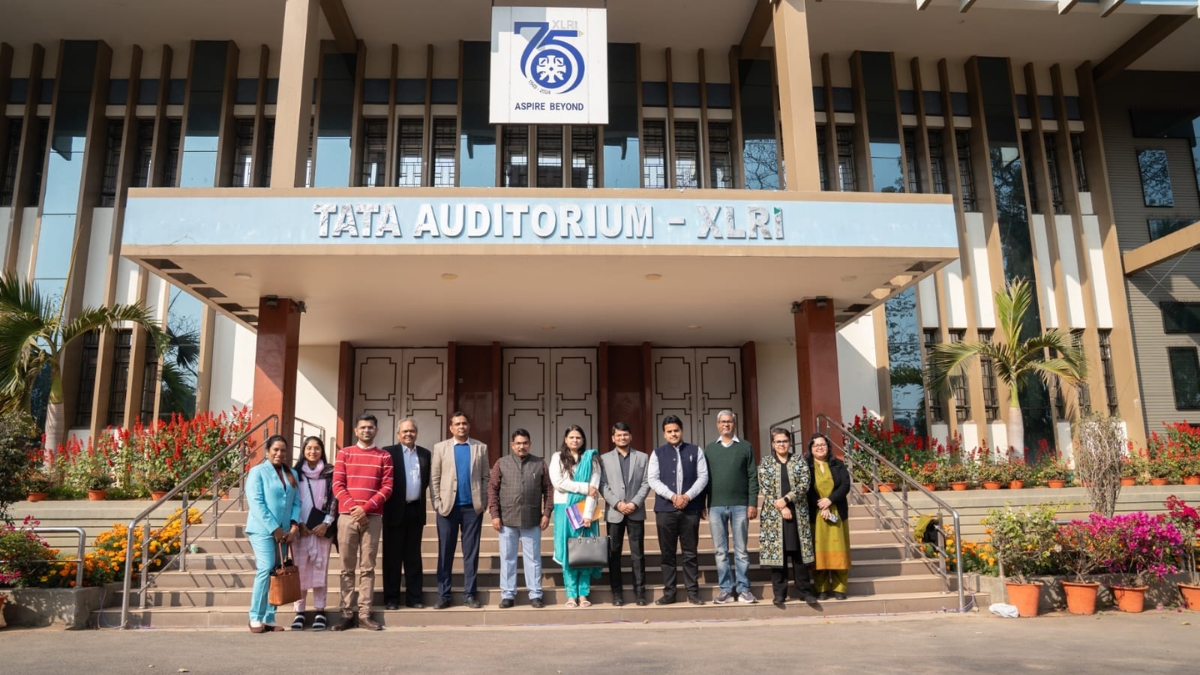
    Jamshedpur (Jharkhand) [India], January 16: XLRI – Xavier School of Management, Jamshedpur, successfully concluded the Third International Ethics Conference 2026, organised by the XLRI JRD Tata Foundation for Business Ethics from 9 to 11 January 2026, on the theme “Reimagining Business and Leadership: Ethics, Sustainability, and the Future of Responsible Growth.”

    The three-day international conference brought together leading academicians, industry leaders, researchers, students, and practitioners from India and abroad, creating a vibrant platform for dialogue on ethical leadership, sustainable business, and responsible growth in the context of India and other emerging economies.

    Inauguration and Opening Sessions

    The conference opened with a warm welcome by Dr Fr Donald D’Silva, S.J., Dean (Administration & Finance), followed by a formal inauguration by Dr Fr George Sebastian, S.J., Director, XLRI, who highlighted that authentic leadership is rooted not in ruthless competition but in compassion, ethical discernment, and integrity.

    Dr Sanjay Patro, Dean of Academics, and Dr Fr Joseph Mathew, S.J., Chair of the JRD Tata Foundation for Business Ethics, welcomed and felicitated all the chief speakers of the conference, setting a reflective and collaborative tone for the proceedings.

    A pre-conference panel on “Reimagining Leadership for Human-Centred and Ethical Organisations,” moderated by Ms Soni Sinha, Chief Ethics Counsellor, Tata Steel, featured distinguished speakers including Shri Anil Sachdev, Prof Vasanthi Srinivasan, Prof Arup Varma, Dr Joseph Marianus Kujur, S.J., Mr Navi Radjou, and Ms Pritha Dutt.
    The panel examined how ethics, inclusion, and sustainability must shape leadership in the next decade, and what concrete signals reveal genuinely human-centred organisations.

    Conference Themes and Key Discussions

    Across three integrated themes—

    • “Reimagining Leadership for Human-Centred and Ethical Organisations”

    • “The Ethical Path to Sustainability: Innovation and Frugality in a Resource-Constrained World”

    • “Ethical Horizons: Reimagining Inclusive Development and Business Value”

    —the conference featured keynote addresses, leadership workshops, panel discussions, research paper presentations, and a unique fireside storytelling evening.

    Renowned thought leaders such as Mr Navi Radjou, Dr Prasad Kaipa, Prof Vasanthi Srinivasan, Prof Arup Varma, Prof David Hillier, and Dr Joseph Marianus Kujur, S.J., offered insights on frugal innovation, values-based leadership, AI ethics, tribal economies, inclusive development, mental health and wellbeing, and women’s leadership.

    A major highlight was Mr Radjou’s call to use “jugaad” and frugal innovation responsibly to create greater value with fewer resources for the common good, alongside Dr Kaipa’s emphasis on moving “from smart to wise” through inner reflection and ethical self-awareness.

    XLRI

    Research, Participation, and Cultural Engagement

    Strongly grounded in Indian realities, the conference addressed tribal economies, community-based leadership, gender equity, workplace mental health, and local models of inclusive development, while maintaining global relevance.

    • Over 100 research papers were received

    • 22 papers were presented across thematic tracks

    • Best Abstract Awards were conferred on Ms Arpita Sahu, Mr Pankaj Kumar, Dr Abhijit Roy, Ms Anoushka Agnihotri, and Mr Amit Kumar Modak

    • Around 8 invited speakers and more than 80 participants joined in hybrid mode

    A special fireside storytelling session, conceptualised by Dr Fr Joseph Mathew, S.J., wove together art, music, and reflective dialogue, while an exhibition of products by tribal women’s self-help groups showcased ethical entrepreneurship and sustainable livelihoods.

    Conclusion

    In his closing reflections and vote of thanks, Dr Fr Joseph Mathew, S.J., reaffirmed XLRI’s enduring mission to form ethical, socially conscious leaders and to promote management scholarship that serves the greater good.

    The Third International Ethics Conference 2026 stood out as a compelling testimony to the centrality of ethics in shaping future-ready leadership and innovative business models anchored in compassion, responsibility, and human dignity.

    If you have any objection to this press release content, kindly contact pr.error.rectification@gmail.com to notify us. We will respond and rectify the situation in the next 24 hours.

  • Reimagining Indian Knowledge Systems in the Modern Curriculum

    Reimagining Indian Knowledge Systems in the Modern Curriculum

    Somaiya Vidyavihar University is reimagining indian knowledge systems for the modern curriculum

    New Delhi [India], January 13: Indian knowledge systems are increasingly being recognised as essential to building a holistic, research-driven, and culturally rooted education framework. Somaiya Vidyavihar University (SVU) has taken a structured, institution-led approach to this integration by embedding India’s philosophical, linguistic, historical, and spiritual traditions into formal academic curricula at undergraduate, postgraduate, diploma, certificate, and doctoral levels.

    At the centre of this effort is the K J Somaiya Institute of Dharma Studies, supported by Bharatiya Sanskriti Peetham, the Centre for Buddhist Studies, the Centre for Studies in Jainism, Department of (Ancient History, Culture & Archaeology) and the Centre for Indian Knowledge Systems Research. Together, these institutions offer over 40+ academic programmes, including honours options, in disciplines such as Yogashastra, Buddhist Studies, Hindu Studies, Jain Studies, Ancient Indian History, Culture and Archaeology, and Ancient Languages and Literature. Classical languages, including Sanskrit, Pali, Prakrit, and Tibetan, are taught as living scholarly tools, enabling direct engagement with original texts and traditions.

    Somaiya Vidyavihar University’s academic model emphasises both depth and application. Programmes integrate the study of classical scriptures, philosophy, archaeology, aesthetics, and ethics with research methodology, fieldwork, internships, and experiential learning. Students participate in heritage tours, archaeological site visits, museum studies, archival training, outreach projects, and yoga-based wellness practices, ensuring that theoretical learning is reinforced through practice. Disciplines such as Yogashastra combine philosophical foundations with anatomy, psychology, therapy, nutrition, and applied yoga sciences.

    The university’s commitment to Indian Knowledge Systems is reinforced through formal recognition and academic infrastructure. Somaiya Vidyavihar University is UGC-approved and NAAC ‘A’ accredited (2025). The K J Somaiya Institute of Dharma Studies receives an AICTE Grant, recognised by the Ministry of Education, for research and teacher training in Indian Knowledge Systems. The institution also houses the Dalai Lama Chair of Nalanda Studies, supporting advanced research in Buddhist philosophy, ethics, and interfaith dialogue. Active collaborations with organisations such as Godrej Archives, CSMV, Directorate of Archaeology and Museums, Government of Maharashtra, heritage departments, and international universities further strengthen academic exposure and professional readiness.

    Interdisciplinarity remains a defining feature of the SVU experience. Students pursuing Indian knowledge disciplines have access to 20+ multidisciplinary minors across design, management, music, psychology, life sciences, literature, sports, and cultural studies. Strong research output, international student participation, and a scholarship corpus of ₹25 crore ensure both academic excellence and accessibility.

    By formally embedding Indian Knowledge Systems within a modern university structure, Somaiya Vidyavihar University is demonstrating how tradition, when taught with rigor and relevance, can shape contemporary scholarship, professional pathways, and responsible leadership.

    If you have any objection to this press release content, kindly contact pr.error.rectification@gmail.com to notify us. We will respond and rectify the situation in the next 24 hours.

  • The New Career Highway: How International Finance Certifications Fast-Track Indian Students to Global Roles

    The New Career Highway: How International Finance Certifications Fast-Track Indian Students to Global Roles

    New Delhi [India], January 15: With the advent of globalisation in the finance sector, the days of Indian students having limited career aspirations due to local job availability are coming to an end. The finance industry is changing rapidly, and with these changes come many new avenues for students to pursue.

    The ACCA qualification is one of the most sought-after professional credentials available today, as it will enable students to gain international experience and skills that are recognised all over the world.

    Selecting a career path that is directly linked to what companies around the world are looking for has begun to take precedence over pursuing a traditional business administration degree. In this article, we will discuss how international finance certification programmes, particularly the ACCA, are opening doors for Indian students to obtain high-calibre international positions sooner than they could through traditional degrees.

    The Shift in Career Aspirations Among Indian Students

    In the last 10 years, career expectations have changed rapidly. Today, most Indian students want the following career advantages:

    • Ability to work anywhere in the world.

    • The skills that are most needed in today’s job market.

    • The ability to get into a high-paying position quickly.

    • The ability to have their work recognised internationally.

    Very often, a degree from a traditional university does not provide any of these advantages. Employers have shifted to looking for employees with actual knowledge of their field, who meet international standards, and who can produce proof of their professionalism. Relying on an international finance certification can provide the link between education and employment.

    What Makes International Finance Certifications So Valuable?

    International finance credentials represent a global perspective for international business. These programmes include components that apply to business operations on a global scale and provide access to international accounting standards and finance strategies.

    Benefits include:

    • Acceptance of the curriculum by the world

    • Employer-provided training in specific skills

    • Flexible study options during employment or while studying

    • Greater earning potential versus a traditional degree

    In addition to the above, one of the most popular international finance certifications in India is the ACCA course because it has a structured way of approaching the subject and has greater recognition than other certifications in the same field.

    ACCA Course Overview: A Global Finance Qualification

    The complete title of ACCA is the Association of Chartered Certified Accountants, which is an international education and credentialing programme providing learners with a thorough grounding in accounting, finance, auditing, taxation, and business strategy; it has received global accreditation from approximately 180 countries around the world.

    What distinguishes ACCA courses from others is that ACCA provides both technical and professional skill development. In this regard, ACCA develops individuals so that they equip themselves with both knowledge and ability not only to take their examinations but also to thrive within the professional accounting environment in a wide variety of organisations throughout the world.

    How ACCA Fast-Tracks Global Career Opportunities

    Not only is the ACCA course an academic degree, but it is also a career-friendly credential. This course gives graduates access to many types of employment internationally, such as Financial Analyst, Management Accountant, Auditor, Tax Consultant, Business Advisor, and  Finance Manager.

    • ACCA graduates can also work in a wide variety of industries, including Banking, Financial Services, Insurance, Real Estate and Hospitality.

    • ACCA is well known internationally, and because of this, employers from all over the world value the skill set of ACCA professionals.

    Industry Recognition and Employer Trust

    One of the key benefits of completing an ACCA qualification is the fact that it is globally accredited with respect to meeting employers’ requirements in relation to their workforce. Global organisations, including multinationals, ‘Big Four’ audit firms and many other consulting and banking firms, will recruit ACCA graduates.

    An ACCA graduate is a professional trained in the following areas:

    • IFRS (International Financial Reporting Standards)

    • Strategic Decision-Making

    • Ethics and Professionalism

    • Risk Management & Performance Measurement

    Thus, the Trust that employers have in ACCA professionals represents a significant benefit to students contemplating an overseas position upon completion of the ACCA course programme.

    Flexibility That Supports Faster Career Growth

    Unlike traditional courses, the ACCA course allows students to create their exam schedule and to be able to study for them regardless of how fast they are able to work. In addition, the ACCA course will allow students to work while they are studying the course.

    Flexibility for Indian Students

    1. Students can start to earn money sooner.

    2. Students will obtain a global perspective sooner.

    3. Students will shorten the gap between education and employment.

    When students complete the ACCA course, they will usually have had relevant work experience before they complete their studies. Therefore, they will have an advantage over other job applicants.

    ACCA vs Traditional Finance Degrees

    The traditional degree in India provides foundational knowledge. They may not always match the current industry demand. The ACCA course, on the other hand, is continuously updated to consider global financial trends.

    Key Differences:

    • The ACCA course focuses on global principles, while degrees are often country-specific

    • The full form itself carries professional reliability

    • ACCA prepares students for leadership roles, not just entry-level positions

    This is why more Indian students are choosing ACCA as a career-focused substitute or addition to their degree.

    The Role of ACCA in Building a Global Mindset

    One of the often overlooked benefits of the ACCA course is developing a global business mindset. Students can learn to think beyond borders and understand international markets to adapt to and diversify corporate cultures.

    It is important for professionals who aspire to work in global finance roles. Knowing the ACCA full form is just the start; living its global approach is what truly sets professionals apart.

    Conclusion: A Smarter Path to Global Success

    Today, the finance industry is evolving, and so are the career opportunities for students who have completed their ACCA course. Indian students who want to stay concentrated ahead of pursuing international certifications are vital for good career growth.

    The ACCA course offers a powerful combination of global recognition and career flexibility, and practical skills. Understanding the ACCA full form will help students appreciate the credibility behind the qualifications. As the new career highway opens wider, international finance certifications like ACCA are clearly the foremost in guiding Indian students toward faster, smarter, and more rewarding global careers.

    If you object to the content of this press release, please notify us at pr.error.rectification@gmail.com. We will respond and rectify the situation within 24 hours.

  • A Career with Global Work Opportunities and Entrepreneurial Pathways – IICA New Delhi Admissions Open for January 2026

    A Career with Global Work Opportunities and Entrepreneurial Pathways – IICA New Delhi Admissions Open for January 2026

    New Delhi [India], January 15: At a time when career-oriented and skill-based education is increasingly influencing student choices, the International Institute of Culinary Arts (IICA), New Delhi has announced the opening of admissions for itsJanuary & July 2026 intake across professional culinary and hospitality programmes.With more students exploring challenging yet rewarding career paths, culinary arts has emerged as a preferred profession due to its clear job opportunities, global mobility and strong entrepreneurial potential.The move comes amid growing demand for industry-ready talent in India’s expanding hospitality, food service and global dining sectors.

    Over the past two decades, IICA has played a significant role in shaping professional chefs, pastry specialists and hospitality leaders who today work across India and international markets. The institute is recognised for its industry-aligned curriculum, internationally recognised qualifications, intensive hands-on training, and a strong focus on career outcomes through structured internships and placements.

    Founded in 2005 bylegendry Chef & Hospitality industry veteran,Virender S. Datta, with over 5 decades of global work experience,IICA is among India’s early institutions to introduce internationally benchmarked culinary education, combining structured  kitchen training with globally recognised qualifications from City & Guilds (UK) and BSI Learning (Australia). As culinary education continues to evolve globally, the institute has expanded its academic framework through international collaborations, including a Memorandum of Understanding with Kyoto Culinary Art College and Kyoto Pastry & Bakery Art College, Japan, under the Taiwa Gakuen Educational Corporation. The collaboration facilitates faculty and student exchange, joint curriculum development, and the introduction of Indian and Japanese cuisine modules, offering students cross-cultural exposure and global learning pathways.

    IICA follows a dual-admission cycle, with the January intake attracting Class 12 graduates seeking rewarding & employable careers including career changers, working professionals transitioning into culinary and pastry careers, as well as IHM graduates who want to upgrade or advance their professional skills.

    Programme Structure and Academic Offerings

    IICA’s academic portfolio is designed to support students at different stages of their culinary journey. The institute offers a two-year Culinary & Hospitality Management Programme, which builds strong foundations in classical French cuisine while covering advanced global cuisines, bakery and patisseriebasics,andhospitality operations and leadership. The programme includes structured industrial training after the first year, followed by advanced industry exposure in the second year.

    For students seeking specialised pastry careers, IICA offers a one-year Pastry & Hospitality Management Programme, combining intensive hands-on pastry training with hospitality and business fundamentals. The programme covers artisan breads, pastry, chocolate work and plated desserts and includes a mandatory internship. Notably, IICA is the only institute in India offering the BSI Australia Level 5 qualificationin India in Culinary Arts +Pastry & Hospitality.

    The institute also offers Diploma programmes in Culinary Arts and Bakery & Patisserie, aimed at students seeking focused, skill-oriented training. The Diploma in Culinary Arts introduces learners to kitchen fundamentals, food preparation techniques and sustainability awareness, supported by a four-month industry internship. The Diploma in Bakery & Patisserie focuses on core baking and pastry skills, including bread making, desserts and confectionery, delivered through a structured mix of practical and theory sessions. These programmes are particularly suited for aspiring professionals, culinary enthusiasts and entrepreneurs planning to enter the food business.

    Across all programmes, IICA follows a practice-led training model, with approximately 70 per cent practical learning and 30 per cent theory, delivered through small batch sizes and close faculty mentorship. Training is conducted five days a week in state-of-the-art kitchens, supported by live demonstrations, kitchen simulations, master classes and industry visits.

    Commenting on the institute’s academic philosophy, Chef Virender S. Datta, Founder of IICA, said, “Our focus remains on creating industry-ready professionals who also understand the business and entrepreneurial realities of the food and hospitality sector. Strong fundamentals, discipline and practical exposure are essential, whether students choose careers in professional kitchens, hospitality management or their own food ventures.”

    Highlighting the importance of international academic pathways, Arjun S. Datta, Managing Director & COO, IICA and a hospitality management graduate from UK, added, “Cross-cultural learning plays a critical role in preparing students for global careers. Our collaboration with Japan reflects our commitment to offering exposure that goes beyond classrooms and supports long-term professional growth.”

    With qualifications approved by City & Guilds (UK) and BSI Learning (Australia), IICA blends classical techniques with global standards, enabling students to pursue opportunities in India as well as international kitchens. The institute also operates a dedicated placement and internship cell, supporting students with industry connections across hotels, restaurants, airline catering, cruise lines and foodservice brands.

    ICA’s community of 3,000+ alumni is spread across prominent culinary and hospitality establishments worldwide, many of whom hold senior positions in the trade, supported by the institute’s highly qualified and globally experienced faculty.

    Recognised by the Tourism & Hospitality Skill Council of India, IICA’s global affiliations with City & Guilds (UK), the World Association of Chefs’ Societies (WACS, Paris) and BSI Learning Australia have created pathways for students to pursue international culinary careers. In recognition of its contribution to education and skill development, IICA was honoured with the FICCI Higher Education Excellence Award 2025 for Excellence in Creating Employment & Entrepreneurship (Private) and named Best Culinary Institute in India 2025 at the Food Connoisseurs India Awards.

    Web: https://www.chefiica.com/

  • B.A. Fashion Design at JAIN (Deemed-to-be University): Fashion Beyond Glamour, Built on Discipline

    B.A. Fashion Design at JAIN (Deemed-to-be University): Fashion Beyond Glamour, Built on Discipline

    Bengaluru (Karnataka) [India], January 15: The Bachelor of Arts (B.A.) in Fashion Design Program at the School of Design, Media, and Creative Arts (SDMCA), JAIN (Deemed-to-be University), approaches fashion as a serious profession—one that demands creativity, technical rigour, market understanding, and disciplined execution. For students and parents evaluating a fashion designing course, the decision is no longer about glamour alone; it is about choosing from credible fashion designing colleges in Bangalore that treat fashion as an industry, a business, and a long-term career.

    SDMCA has steadily earned recognition among the best fashion designing colleges in Bangalore and is increasingly referenced alongside the top fashion designing colleges in Bangalore for its structured approach to undergraduate fashion education. Its consistent standing among the best fashion designing colleges in India and the top fashion designing colleges in India reassures families looking for trusted fashion designing courses in Bangalore with long-term relevance.

    An Undergraduate Fashion Program Designed for the Real Industry

    Fashion today is driven by innovation, supply chains, sustainability, consumer behaviour, and rapid trend cycles. The B.A. Fashion Design Program reflects this complexity and positions itself firmly among leading fashion designing courses in Bangalore offered by reputed fashion designing colleges in Bangalore. The curriculum integrates artistic exploration with technical expertise, ensuring students understand not just what to design, but why and how designs succeed in real markets.

    Students engage deeply with design principles, fashion history, pattern making, textile science, garment construction, and trend analysis—academic strengths associated with the best fashion designing colleges in India and expected from the top fashion designing colleges in India. Portfolio development and applied studio work ensure that graduates of this fashion designing course leave with demonstrable professional competence.

    As Dr. Dinesh Nilkant, Director – Admissions, JAIN (Deemed-to-be University), explains:
    “Fashion education must balance creativity with structure. At SDMCA, the Fashion Design Program is designed to build disciplined designers—professionals who understand materials, markets, and the responsibility that comes with creative decision-making.”

    A Curriculum That Builds Design Maturity

    Students begin the Program with a Common Foundation Year that sharpens visual sensitivity, conceptual thinking, and material understanding. This academic structure distinguishes SDMCA among fashion designing colleges in Bangalore and contributes to its presence among the top 10 fashion designing colleges in Bangalore.

    As students progress, exposure to niche markets, accessory design, and product realisation enables learning beyond clothing alone. This curriculum depth explains why SDMCA is consistently ranked among the best fashion designing colleges in Bangalore, the top fashion designing colleges in Bangalore, and the top 10 fashion designing colleges in Bangalore, while maintaining parity with the best fashion designing colleges in India.

    Careers That Extend Beyond the Runway

    Graduates of the B.A. Fashion Design Program pursue roles such as Fashion Designer, Trend Forecaster, Fashion Buyer, Stylist, Merchandiser, Product Developer, Fashion Journalist, and Costume Designer for film and theatre. These outcomes reflect the career readiness expected from a rigorous fashion designing course delivered by the top fashion designing colleges in India.

    Entrepreneurship is strongly encouraged. Students are supported in launching fashion labels, lifestyle brands, and creative ventures—an advantage parents associate with premium fashion designing courses in Bangalore and trusted fashion designing colleges in Bangalore.

    According to Mr. Mackey Agarwal, Head – Admissions & Marketing, JAIN (Deemed-to-be University) and JAIN College:

    “Parents look for stability and long-term outcomes, while students seek creative independence. The Fashion Design Program at SDMCA bridges both by combining academic discipline, industry exposure, and career-oriented training.”

    An Environment That Shapes Professional Confidence

    Learning at SDMCA extends beyond classrooms through studio culture, design showcases, interdisciplinary collaborations, and real-world problem solving. These experiences build communication skills, creative resilience, and professional confidence—hallmarks of graduates from the best fashion designing colleges in India and the top fashion designing colleges in Bangalore.

    The four-year structure allows students to mature creatively and professionally, reinforcing SDMCA’s place among the top 10 fashion designing colleges in Bangalore and strengthening trust among parents evaluating serious fashion designing courses in Bangalore.

    A Thoughtful Choice for a Creative Career

    For families comparing fashion designing colleges in Bangalore, the B.A. Fashion Design Program at SDMCA offers clarity—of curriculum depth, faculty expertise, and outcomes. For students, it provides a platform where creativity is refined into capability through a disciplined fashion designing course.

    Fashion may begin with imagination, but it succeeds through discipline—and at SDMCA, JAIN (Deemed-to-be University), that discipline becomes the foundation of a lasting creative career, aligned with the standards of the best fashion designing colleges in India and the top fashion designing colleges in India.

    Contact Information:

    If you object to the content of this press release, please notify us at pr.error.rectification@gmail.com. We will respond and rectify the situation within 24 hours.

  • Designing Experiences That Shape the Digital World: Interaction Design at JAIN (Deemed-to-be University)

    Designing Experiences That Shape the Digital World: Interaction Design at JAIN (Deemed-to-be University)

    Bengaluru (Karnataka) [India], January 15: The Bachelor of Design (B.Des) in Interaction Design Program at the School of Design, Media, and Creative Arts (SDMCA), JAIN (Deemed-to-be University), is built for a generation that designs how people interact with technology, products, and digital systems. For students and parents exploring interaction design courses in Bangalore, this Program offers a structured, future-ready pathway where creativity is aligned with usability, innovation, and industry relevance.

    Recognised among the best interaction design colleges in Bangalore, SDMCA has emerged as a trusted destination for aspirants evaluating bachelor in interaction design colleges in Bangalore that combine academic rigour with practical exposure. The four-year Program integrates a strong foundation year with three years of focused specialisation, positioning SDMCA among the most progressive Interaction Design colleges in India.

    A Program Designed Around Industry and Innovation

    The B.Des in Interaction Design Program at SDMCA is structured to respond directly to evolving industry needs. Its professional electives are aligned with current and emerging trends, making it one of the top best interaction design colleges for students seeking relevance beyond textbooks. These electives enable learners to develop competencies in interface behaviour, digital systems, interaction logic, and user-centred design.

    A dedicated internship semester ensures students gain hands-on exposure, a critical expectation among parents comparing best colleges for interaction design and students assessing Interaction design courses in Bangalore that lead to real-world readiness.

    As Dr. Dinesh Nilkant, Director – Admissions, JAIN (Deemed-to-be University), shares:

    “Interaction Design is no longer an optional skill—it is central to how products succeed today. At SDMCA, our Program is structured to help students think systematically, design responsibly, and enter the industry with confidence.”

    Curriculum That Allows Discovery and Direction

    Students begin their journey with a Common Foundation Year that sharpens visual thinking, problem-solving, and design sensitivity—an approach that distinguishes SDMCA among bachelor in interaction design colleges in Bangalore and best interaction design colleges in Bangalore.

    What sets SDMCA apart from many interaction design colleges in India is its flexibility. If students discover new interests during the foundation phase, the institution allows movement across design streams based on merit and seat availability. This learner-centric model reassures parents seeking best colleges for interaction design that prioritise student alignment and long-term success.

    This adaptability, combined with rigorous studio practice, reinforces SDMCA’s standing among top best interaction design colleges and preferred interaction design courses in Bangalore.

    Campus Life That Builds Design Confidence

    Design education thrives in immersive environments. At SDMCA, campus life includes exhibitions, interdisciplinary collaborations, design showcases, competitions, and peer-driven creative initiatives. These experiences develop communication skills, professional maturity, and confidence—qualities parents associate with the best interaction design colleges in Bangalore.

    For families evaluating bachelor in interaction design colleges in Bangalore, campus exposure plays a crucial role in shaping well-rounded designers capable of working across industries represented within Interaction Design colleges in India.

    Careers, Opportunities, and Entrepreneurial Pathways

    Graduates of the Program pursue roles such as User Experience Designer, User Interaction Designer, User Interface Designer, User Researcher, Digital Product Manager, and Digital Product Designer. These roles span technology firms, product companies, startups, and global organisations that actively recruit from top best interaction design colleges.

    Students also receive guidance to launch independent design studios or product ventures—an important differentiator for aspirants comparing best colleges for interaction design and forward-looking interaction design courses in Bangalore.

    According to Mr. Mackey Agarwal, Head – Admissions & Marketing, JAIN (Deemed-to-be University) and JAIN College:

    “Parents want assurance of outcomes, and students want meaningful careers. Our Interaction Design Program delivers both by integrating portfolio development, industry exposure, and long-term career pathways.”

    Career progression in this domain can extend to leadership roles such as General Manager, Chief Designer, or Senior Vice President (Design), reinforcing SDMCA’s credibility among interaction design colleges in India and best interaction design colleges in Bangalore.

    Eligibility and Selection Process

    Eligibility includes successful completion of 10+2 (Level 4.0) with a minimum of 45% marks (40% for reserved categories) or completion of D.Voc in a related stream. Admissions are conducted through the JET Exam, followed by Portfolio Review and Personal Interview.

    Candidates with valid UCEED ranks may directly attend the Portfolio Review and Personal Interview conducted by SDMCA—an admissions pathway trusted across bachelor in interaction design colleges in Bangalore and top best interaction design colleges.

    The Way Forward

    For students and parents shortlisting interaction design courses in Bangalore, SDMCA at JAIN University offers clarity—of curriculum, exposure, flexibility, and career outcomes. Its consistent recognition among the best colleges for interaction design reflects a commitment to developing designers who shape meaningful user experiences in a digital-first world.

    ‘Interaction Design is about shaping how people experience technology—and SDMCA at JAIN University is where you begin doing it with purpose and confidence’

    Contact Information:

    If you object to the content of this press release, please notify us at pr.error.rectification@gmail.com. We will respond and rectify the situation within 24 hours.