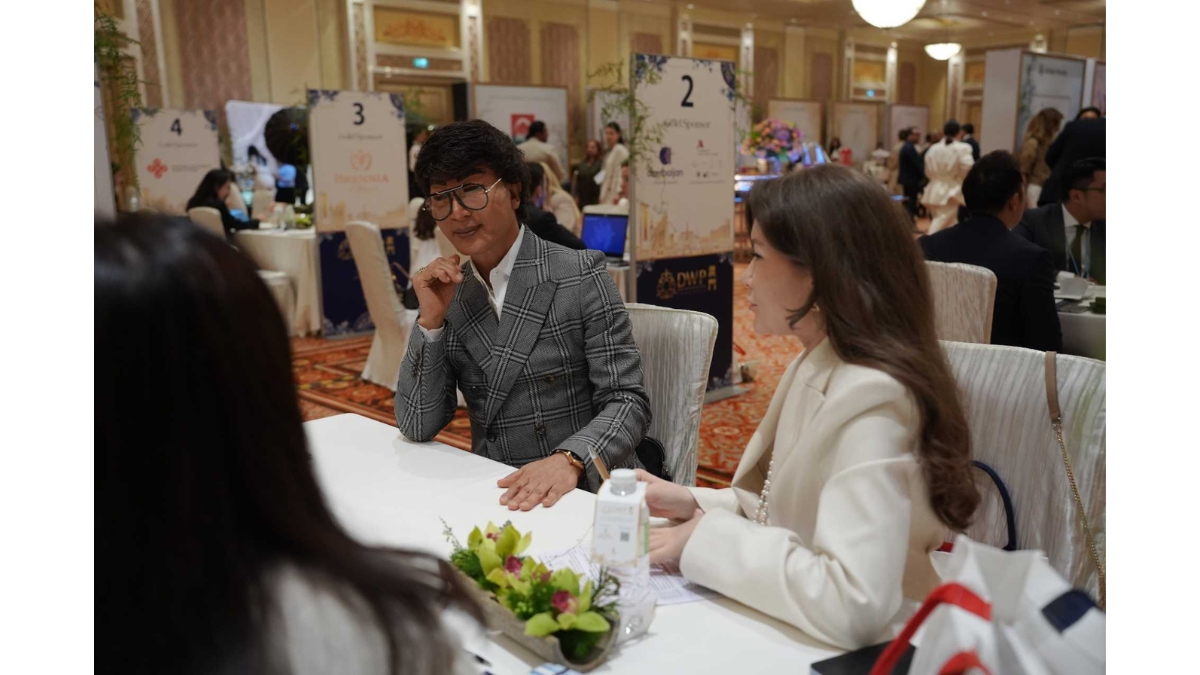
New Delhi [India], May 11: As the Brand Ambassador of Chennais Amirta, Ms. Sreeleela visited Chennais Amirta Aviation College on 9th May 2026 and spent memorable quality time with the students in a cheerful and interactive atmosphere. She was highly impressed and amazed by the institution’s world-class infrastructure, which includes a realistic airport setup, airline gate-pass simulation areas, a miniature airport model, and a real flight setup with aircraft engine training exposure designed to provide students with practical industry experience.
Chennais Amirta Group of Institutions Chairman Mr. Boomeenaathaan had given 100 plus students scholarship Worth 28 Lakhs in this event.
Ms. Sreeleela appreciated the institution’s unique training methodology and was delighted to learn that students are provided with valuable international exposure and part-time work opportunities through which some students earn up to ₹35,000 during their training period. She lauded the institution for creating such strong career-oriented opportunities that empower students both professionally and financially.
During her visit, Ms.Sreeleela warmly interacted with the students, sharing conversations, laughter, and experiences throughout the session. Her friendly nature and energetic presence created excitement and inspiration among the students. She explored the creative carvings and artistic displays arranged by the students and showed genuine curiosity in understanding their creativity and talent.
She also enjoyed tasting cuisines from five different countries specially prepared and displayed for the occasion. Appreciating the variety of dishes and flavours, she enthusiastically spoke about her favourite foods, diet preferences, and love for exploring global cuisines, making the interaction lively, engaging, and enjoyable for everyone present.
As the visit coincided with the Mother’s Day celebrations, Ms. Sreeleela became emotional while speaking about her mother and the cherished memories they shared together. She expressed how her mother played a significant role in shaping her life and career and fondly recalled the moments they spent bonding together. Her heartfelt words created a strong emotional connection with the students and made the interaction even more meaningful and memorable.
The students of Chennais Amirta Aviation enthusiastically interacted with her and asked several questions about her lifestyle, fitness routine, food habits, career journey, and personal interests. Ms.Sreeleela responded to every question with warmth, positivity, humility, and happiness, making the students feel comfortable and personally connected throughout the session. She dedicated valuable time to motivating and encouraging young aspirants through inspiring conversations and engaging activities
The visit concluded on a memorable and emotional note, leaving the students highly motivated, encouraged, and confident about pursuing their dreams and future careers with dedication, discipline, passion, and determination.
Chennais Amirta continues to stand as a symbol of excellence in education, innovation, skill development, and global career empowerment. With its strong commitment towards practical learning, international exposure, and student success, the institution continues to shape the future of young aspirants by creating opportunities that help them achieve their professional dreams and build successful careers across the world.
Chennais Amirta Group of Institutions has emerged as one of the leading educational institutions in the country, transforming the lives of thousands of students who have achieved success with flying colours. The institution proudly states that more than 31,651 students have been successfully placed across various countries worldwide, creating remarkable career opportunities and global exposure for aspiring professionals.
Chennais Amirta International Aviation College has rapidly grown into one of the leading aviation institutions in India and is recognized by the Government of India. The college has gained significant recognition for its advanced infrastructure, practical training environment, and industry-oriented education. Recently, Key representatives from AirAsia visited the campus, during which nearly 170 students were successfully selected for international internships along with permanent placement opportunities across different countries.
If you object to the content of this press release, please notify us at pr.error.rectification@gmail.com. We will respond and rectify the situation within 24 hours.
Mumbai (Maharashtra) [India], May 9: With the highly competitive tech industry in India, where degrees can make all the difference in the world, Subhash Choudhary is a folk hero among those who eschewed college. With the valuation of his company at ₹800 crore now, Choudhary’s personal worth has crossed the ₹200 crore mark. But, even more than the monetary achievements, he’s becoming a literary mentor to the developer community that’s getting the country’s attention.
Fighting for the Bihar Odyssey: Grit Over Pedigree
After his father’s death, his mother, who earned her living by tailoring, could not afford to send Subhash to school after his father’s death, and he was born in a small village in Bihar. When he arrived in Mumbai at the age of 17, he had no plan or map in his mind, only to live.
Financial difficulties ended his goals of becoming a Chartered Accountant and he decided to take a detour to a Hardware diploma. Subhash picked up programming skills from the dusty corners of computer labs, and many hours of self-taught coding. He wasn’t trying to make a career out of certificates, but rather work on the most difficult technical issues that even the most experienced engineers stayed clear of.
The ‘Accidental CTO’ Handbook is the new ‘Bible’ for engineers
What used to be a derogatory term for Subhash to use was “Accidental CTO”. Today it is the title of his influential book that has created a “must-read” bible for software engineers all over the nation.
The book has rung true chords in the tech world because of the elimination of company jargon.
It provides an honest and authentic view of:
●How to create a company worth ₹800 crore?
●Infrastructure Mastery: Dukaan’s journey from expensive cloud solutions to Bare Metal servers.
●How to scale to millions of users from a low resource/high output team?
With its focus on technical logic and problem-solving skills, the book has proven to be a guide to success for thousands of aspiring programmers in Tier-2 and Tier-3 cities.
The development of the empire cost ₹800 crores.
Subhash has been the technical design architect and has been guiding Dukaan to become a huge organisation that allows over 3.5 million merchants to sell online. The company has been led by him through the market volatility, and has successfully charted the course for the D2C revolution in India. Dukaan has been able to compete with the global giants and not get fatter on the platform and Subhash’s “bare metal” ideology.
The boy from Bihar is enjoying a hat trick-style moment as he recently had his equity valuation done and it has made him a net worth of ₹203 crore.
A history of “Skill Over Degree”
Though Subhash is rich, and his book is a best seller, he is a staunch believer in meritocracy. He is still working on the creation of an employment system that appreciates “proof of work” over the universities and their rankings in India.
Subhash Choudhary wants to make it clear that the part of an Accidental CTO isn’t a matter of luck; it’s a matter of being ready when opportunity strikes and an opportunity is created by your hard-earned skills. It means that the book is becoming a standard on the desk of Indian engineers and it’s more satisfying than ₹203 crore.
About Dukaan
Dukaan is a world-class do-it-yourself e-commerce platform which allows merchants to get their online store up and running within seconds. Dukaan is targeting to bring the ecommerce experience to masses – everywhere, anytime – with investors like Matrix Partners and Lightspeed.
If you object to the content of this press release, please notify us at pr.error.rectification@gmail.com. We will respond and rectify the situation within 24 hours.
After winning the Midday Award, the 50-year-old brand continues to stand tall on trust, quality, style, and strong leadership.
New Delhi [India], May 9: In a time when fashion trends seem to change almost overnight, very few brands manage to stay relevant without losing their identity. Double Bull is one of those rare names that has done exactly that, quietly, consistently, and without chasing noise.
Founded in 1974, the brand has spent over five decades building something that goes beyond clothing. For many customers, Double Bull isn’t just about shirts or menswear but it is about familiarity. It’s the kind of brand people come back to, knowing what they’ll get every single time: reliability, comfort, and a sense of understated style. Its recent recognition at the Midday Awards as the Legendary Men’s Shirt Brand of the Year Since 1974 feels less like a sudden achievement and more like a moment that was bound to happen.
Inside the company, the award is seen as more than just recognition. It’s a reflection of years of steady work, of staying committed to quality even when the market pushed for faster, trend-driven decisions. That consistency is what has shaped the brand’s reputation over time.
Much of this direction comes from Jatin Manodra, Managing Director of Double Bull. Those who know the brand closely often point to his clear-headed approach of growing while not losing sight of what matters. Under his leadership, the brand hasn’t tried to completely reinvent itself. Instead, it has focused on evolving in a way that feels natural, holding on to its core values while making space for modern sensibilities. That balance is not easy to maintain, especially in fashion. But Double Bull seems to have found its rhythm. It doesn’t try too hard to be everywhere, yet it remains visible. It doesn’t overpromise, yet it delivers consistently. Over time, that has built a kind of quiet trust that many brands struggle to achieve.
Recently, the brand’s association with Filmfare South as a sponsor has added a new layer to its journey. It’s a sign that Double Bull is gradually stepping into larger cultural conversations, reaching audiences beyond its traditional base. It is not a departure from its roots, but as an extension of them. If there’s one thing that stands out about Double Bull, it’s this: it hasn’t relied on hype. In a market where visibility often comes from being loud, the brand has taken a different route, focusing on staying dependable. And in the long run, that seems to have worked in its favour.
Even after 50 years, Double Bull doesn’t come across as a brand trying to prove something. It simply continues doing what it has always done, delivering quality, staying consistent, and letting its work speak for itself.
And perhaps that’s exactly why it has lasted this long.
If you object to the content of this press release, please notify us at pr.error.rectification@gmail.com. We will respond and rectify the situation within 24 hours.
Renowned Influencers from Across India to Unite on One Platform
Kolkata (West Bengal) [India], May 9: In a significant boost to India’s rapidly expanding creator economy, the Government of India recently announced its focus on promoting content creators under the “Orange Economy” initiative. This move will enable creators to officially register their work as startups under MSME or Startup India, giving them access to government recognition, support, and growth opportunities.
Amid the rising momentum of the creator economy in India, WhosThat360 has taken a major step forward by organizing the grand WhosNext2026 Influencer Awards – East & Northeast Edition, presented by Oriflame India. The prestigious event is scheduled to take place on 10th May 2026 at Taj Taal Kutir, Kolkata.
The grand celebration aims to recognize regional talent, empower emerging creators, and create new income opportunities through content creation and entrepreneurship. The event promises an inspiring and high-energy atmosphere dedicated to celebrating India’s digital talent ecosystem.
After successfully covering over 5,000 kilometers across 13 cities in a remarkable 35-day journey, the Oriflame Presents WhosNext2026 Influencer Awards – East & Northeast Edition has become one of the most talked-about creator initiatives in the country. The campaign has successfully connected digital creators, storytellers, influencers, students, and aspiring entrepreneurs on a unified platform, especially across East and Northeast India.
The grand finale in Kolkata will witness the presence of several renowned personalities from the entertainment and digital world, including Rituparna Sengupta, Trina Saha, Srabanti Chatterjee, Priyanka Sarkar, Preeti Sarkar, RJ Praveen, Kiran Dutta, and Niranjan Mondal, among many others.
Speaking on the success of the Northeast Influencer Yatra, Vaibhav Sehgal said:“At WhosThat360, we believe the most impactful stories come from real people and real places. The Northeast Yatra is not just an IP, but a movement aimed at empowering communities, discovering hidden talent, and opening doors to new income opportunities. Our partnership with Oriflame allows us to combine creativity with purpose and expand this vision across multiple cities.“
Highlighting the growing opportunities in entrepreneurship and creator-led businesses, Edita Kurek said,“Entrepreneurship today is more practical and accessible than ever before. It is no longer just about starting independently, but about choosing flexible business models that allow people to begin with minimal risk and grow steadily over time. As more individuals move beyond traditional 9-to-5 careers in search of flexible opportunities, the demand for simple and accessible business models continues to rise. Markets like the Northeast are becoming an important part of this transformation, where enthusiasm for new opportunities is growing rapidly.”
The event is expected to bring together leading creators, brands, entertainment personalities, and digital communities from across the country, further strengthening the influence of regional creators in India’s digital ecosystem.
The WhosNext2026 Influencer Awards – East & Northeast Edition has emerged as a grand celebration of creativity, entrepreneurship, culture, and the growing power of India’s regional internet voices.
Media contact
Sarveshh kashyap| +91 9709058893
If you object to the content of this press release, please notify us at pr.error.rectification@gmail.com. We will respond and rectify the situation within 24 hours.
Mumbai (Maharashtra) [India], May 9: India’s protein supplements market reached approximately USD $912.9 million in 2025, according to IMARC Group, and is projected to grow to USD $1,578.1 million by 2034, reflecting a compound annual growth rate of 6.27% during 2026–2034. The broader protein market in India is estimated at USD $1.62 billion in 2026, with plant-based protein identified as the fastest-growing segment, according to Mordor Intelligence.
As the category expands, a growing segment of health-conscious consumers in India is shifting focus beyond protein quantity toward ingredient transparency, digestive compatibility, and long-term wellness considerations. This shift is contributing to increased interest in plant-based protein formulations that avoid artificial additives and prioritise functional, whole-food ingredients.
Several factors are influencing this change in consumer behaviour. A survey by ITC’s food division indicates that 56% of Indian families report digestive health concerns such as gas, acidity, and indigestion, with higher prevalence observed in urban populations. In addition, a nationwide survey by Abbott found that 22% of adults in India experience constipation, including 13% with severe symptoms.
At the same time, awareness of hormonal health conditions—particularly among women—has increased. The World Health Organization estimates that polycystic ovary syndrome (PCOS) affects between 10% and 13% of women globally, with some studies suggesting that prevalence in India may be higher. While research is ongoing, emerging evidence has explored potential links between gut health and hormonal balance.
These trends are occurring alongside increased scrutiny of commonly used supplement ingredients. Some research has raised questions about the long-term effects of artificial sweeteners such as sucralose and aspartame on gut microbiota and metabolic health. As a result, a segment of consumers is actively seeking products formulated without synthetic additives.
In response to these developments, wellness brands in India are exploring formulations that combine plant-based protein sources with ingredients traditionally associated with digestive health. Mumbai-based brand Eat Breathe Smile is among those operating in this category, offering DAILY PRO-GUT Vegan Protein Collagen, a plant-based formulation that uses hemp seed protein and rice protein isolate.
Hemp seed protein is gaining attention as an alternative protein source due to its naturally complete amino acid profile, including all nine essential amino acids, as well as its content of omega fatty acids and iron. It is being positioned as an alternative to more widely used protein sources such as whey and pea protein, which some consumers report as difficult to digest.
The formulation also incorporates plant-based ingredients such as amla, seabuckthorn, sesbania agati, cumin, and fennel—ingredients commonly used in traditional Indian nutrition for their digestive and functional properties. The product contains no artificial sweeteners, preservatives, or synthetic additives and is certified vegan.
“What we are seeing is that consumers in India are asking more detailed and informed questions about their supplements,” said Nipa Asharam, certified health and life coach and founder of Eat Breathe Smile. “There is a growing interest in understanding ingredient quality, how formulations interact with the body, and whether they support broader wellness goals. This is influencing how products are developed and positioned in the market.”
The shift toward clean-label, plant-based protein formulations reflects broader changes in how consumers evaluate nutrition products. In addition to protein content, purchasing decisions are increasingly influenced by ingredient sourcing, digestive tolerance, and alignment with preventive health practices.
Industry observers note that plant-based protein—particularly formulations that combine modern nutrition science with traditional ingredient systems—represents an area of continued innovation within India’s supplement market.
As consumer awareness continues to evolve, brands that can demonstrate ingredient transparency, functional benefits, and long-term usability are likely to play a larger role in shaping the next phase of growth in the category.
About Eat Breathe Smile
Eat Breathe Smile is an India-based health and wellness brand founded by certified life and health coach Nipa Asharam. The company develops wellness products using traditional Indian superfood ingredients adapted for modern nutritional needs. Its product portfolio includes plant-based protein formulations, superfood blends, and wellness programs, all produced without artificial additives or preservatives. The brand has built a digital-first community of more than 320,000 followers through health-focused educational content.
If you object to the content of this press release, please notify us at pr.error.rectification@gmail.com. We will respond and rectify the situation within 24 hours.
Pune (Maharashtra) [India], May 9: In 2026, skincare has evolved beyond surface-level treatments into a more refined, science-driven approach—and at the heart of this transformation lies one key concept: skin barrier repair. Once considered a niche dermatological term, the skin barrier is now widely recognized as the foundation of healthy, radiant skin.
Today’s patients are more informed than ever. Instead of chasing quick fixes, there is a growing shift toward long-term skin health, resilience, and prevention. This change in mindset is exactly why skin barrier repair has become one of the most talked-about topics in modern aesthetic medicine.
The skin barrier, also known as the outermost layer of the skin, acts as a protective shield. Its primary role is to retain moisture while defending the skin against environmental aggressors such as pollution, UV radiation, bacteria, and toxins. When this barrier is intact, the skin appears smooth, hydrated, and naturally glowing. However, when it is damaged, the skin becomes vulnerable—leading to dryness, irritation, redness, sensitivity, breakouts, and even premature aging.
One of the biggest reasons for the increased focus on barrier repair is the overuse of active ingredients. In recent years, skincare routines have become increasingly complex, often involving multiple potent ingredients like retinol, exfoliating acids, and vitamin-based serums. While these actives can be highly effective, their excessive or incorrect use can compromise the skin barrier, resulting in inflammation and sensitivity.
Dr. Pallavi Dolas says, “If your skin suddenly feels sensitive, irritated, or prone to breakouts, it may not always be acne—it is often a sign of a compromised skin barrier that needs restoration.”
Additionally, modern lifestyle factors have further contributed to barrier damage. Increased exposure to pollution, prolonged screen time, stress, lack of sleep, and inconsistent skincare routines all play a role in weakening the skin’s natural defense system. As a result, even individuals with previously healthy skin are now experiencing unexpected sensitivity and dullness.
In response, the focus of skincare in 2026 has shifted toward restoration rather than overcorrection. Skin barrier repair is no longer just a treatment—it is the foundation upon which all other skincare is built.
Effective barrier repair begins with restoring the skin’s natural balance of hydration and lipids. Ingredients such as ceramides, hyaluronic acid, niacinamide, and panthenol have become essential in modern skincare formulations. Ceramides help rebuild the protective lipid layer, hyaluronic acid deeply hydrates the skin, niacinamide reduces inflammation while strengthening the barrier, and panthenol soothes and supports healing.
Another major trend supporting barrier health is skin minimalism. Instead of using multiple products, the focus is now on fewer, high-quality formulations that work synergistically without overwhelming the skin.
Dr. Pallavi Dolas says, “Luxury skincare today is not defined by the number of products you use, but by choosing the right formulations that protect, repair, and strengthen your skin.”
Gentle cleansers, hydrating serums, and barrier-repair moisturizers are now prioritized over aggressive exfoliation and excessive layering.
In clinical practice, aesthetic treatments have also adapted to this approach. Procedures such as skin boosters, hydration therapies, and gentle peels are designed to enhance the skin without disrupting its natural barrier. Even advanced treatments like lasers and microneedling are now performed with a strong emphasis on pre- and post-procedure barrier repair, ensuring better results and faster recovery.
What makes skin barrier repair truly significant is its role in long-term skin health. A strong barrier not only improves the effectiveness of skincare products but also protects against environmental damage and delays signs of aging. It allows the skin to function optimally, maintaining its natural glow and resilience over time.
Ultimately, the growing attention toward skin barrier repair reflects a deeper shift in how we understand skincare. It is no longer about aggressive treatments or instant results—it is about balance, consistency, and respecting the skin’s natural biology.
As we move forward, this approach will continue to define the future of aesthetic medicine. Healthy skin is not created overnight—it is built through careful, science-backed strategies that prioritize strength from within.
Dr. Pallavi Dolas
Celebrity Cosmetologist | Aesthetic Physician & Trichologist, CEO of The Skin Aura Clinic, Pune
Dr. Pallavi Dolas is a leading name in aesthetic medicine, known for her expertise in advanced skin and hair treatments and her refined, patient-centric approach. She has been awarded Best Cosmetologist and Trichologist (2021) in Delhi by Sonu Sood, recognized as the Youngest Woman Entrepreneur (2022) by former Governor of Maharashtra Bhagat Singh Koshiyari, and honored as The Most Compassionate Doctor (2023) by Dr. Amarinder Malji, President, AIIMS, New Delhi.
With international training and certifications from England, the USA, and Australia, she has consistently stayed aligned with global advancements in aesthetic medicine. Her participation in leading conferences across Dubai and India reflects her commitment to continuous learning and innovation.
Dr. Pallavi Dolas is known for offering globally advanced treatments with a focus on safety, precision, and accessibility. As a celebrity cosmetologist practicing in Pune, she is recognized for delivering natural yet high-impact results and is now set to expand her presence, bringing her signature blend of luxury, technology, and precision-driven care to a wider audience.
Tarun Garg and D H Park inaugurating the Keshvin Hyundai showroom at Mamangalam in Kochi.
Kochi (Kerala) [India], May 8: Hyundai Motor India Ltd (HMIL) dealer Keshvin Hyundai has expanded its footprint in Kochi with the inauguration of two new showrooms and a service center at Mamangalam and Kalamassery. The facilities were inaugurated by HMIL Managing Director and CEO Tarun Garg and Chief Operating Officer D H Park.
Speaking at the event, Mr. Garg outlined Hyundai’s expansion plans in India, highlighting the company’s focus on customer-centric services and future mobility initiatives. Mr. Park said the new facilities would further strengthen Hyundai’s operational excellence and service standards in the region.
Among those present were Hyundai Zonal Business Head Kripa Shankar Mishra, Zonal Business Coordinator Young Hoon Yun, Zonal Parts and Service Head Thanasankar S, dealership partners Uday Kumar Reddy and Likhitha Reddy, Executive Director Chandan, and Keshvin Hyundai CEO Sanju Lal Ravindran.
Keshvin Hyundai, which began operations on M.G. Road in Kochi in 2024, currently operates showrooms at Kalamassery and Mamangalam, along with service centres at Elamakkara and Kalamassery. Mr. Ravindran said the dealership would soon open a new showroom in Kottayam and plans to expand into more markets in the coming years.
If you object to the content of this press release, please notify us at pr.error.rectification@gmail.com. We will respond and rectify the situation within 24 hours.
New Delhi [India], May 8: India’s renewable energy sector is transitioning into a more execution-driven phase, moving beyond headline capacity addition numbers with sharper focus on system-level optimisation, reliability and integrated power delivery, according to Hindustan Power Chairman Ratul Puri. This shift reflects a broader evolution in the sector, where the emphasis is no longer solely on adding capacity, but on ensuring that projects are delivered efficiently and perform consistently over the long term.
“India’s renewable energy sector is now maturing where it is not merely about adding capacity but ensuring that projects are delivered on ground with focus on round-the-clock delivery,” said Puri.
While solar and wind capacities have scaled significantly, on-ground execution continues to face structural challenges. Issues such as land acquisition, tenancy constraints and forest clearances are affecting project timelines and slowing progress across multiple levels. At the same time, delays in transmission infrastructure have impacted over 50 GW of renewable capacity under development, highlighting the importance of grid readiness alongside generation growth and the need for more coordinated planning.
The sector is also witnessing delays due to unsigned Power Sale Agreements (PSAs), driven by changing procurement strategies among DISCOMs and large offtakers. These challenges underline the need for stronger alignment between policy, infrastructure and execution, ensuring that projects are not held back by contractual or procedural uncertainties.
In parallel, India’s battery energy storage system (BESS) market is shifting from aggressive tendering to execution-led deployment. Despite approximately 102 GWh of tenders issued in 2025, only about 0.7 GWh has been commissioned, reflecting a clear gap between bidding and implementation,
Highlighting this, RatulPuri stated that “the gap between aggressive tendering and actual commissioning highlights a structural shift where success in this market will now be defined by execution capability, not just bidding strength.”
Tariff compression has supported adoption but has also tightened margins, increasing the importance of well capitalised and serious bidders, lifecycle-based project evaluation, disciplined execution and supply chain readiness. Developers are increasingly focusing on projects with clear offtake visibility, and policy support to ensure long-term viability and stable returns in a competitive market environment.
“In a tariff-compressed environment, long-term viability depends on accurately accounting for lifecycle costs, where even small variations can materially impact project returns,” Ratul Puri said.
Hybrid energy systems integrating solar, transitional power, and storage are adding operational complexity, requiring advanced coordination through Energy Management Systems (EMS) for real-time optimisation. At the same time, digital solutions are becoming central to improving performance, enabling predictive maintenance, better forecasting and dynamic dispatch across markets.
RatulPuri further noted that “digital solutions are becoming the nerve centre of energy operations, enabling real-time optimisation, predictive maintenance and stronger performance across assets.”
Looking ahead, storage is expected to play a critical role in supporting grid stability and renewable integration, even as the sector navigates risks related to supply chains, pricing mechanisms and long-term sustainability. The next phase of growth will depend on the sector’s ability to combine scale with execution strength and operational efficiency, Ratul Puri added.
Ratul Puri concluded by stating that “storage is emerging as a critical pillar of grid stability, supporting renewable integration while creating new opportunities through evolving ancillary service markets.”
About Ratul Puri:
Ratul Puri is the Chairman of Hindustan Power, an integrated power generation company with a strong presence in renewable and transitional energy. Over the years, Ratul Puri has been actively involved in developing large-scale energy infrastructure projects that support India’s growing power requirements and its transition toward cleaner energy sources.
About Hindustan Power:
Hindustan Power is a leading integrated power generation company in India with a focus on renewable and transitional energy generation. With a commitment to sustainability and innovation, the company has been an active contributor to India’s energy transformation.
If you object to the content of this press release, please notify us at pr.error.rectification@gmail.com. We will respond and rectify the situation within 24 hours.
Ravi Gilani Founder & Managing Consultant, Goldratt Bharat
New Delhi [India], May 6: In an industry where business turnarounds are often linked to cost cutting and workforce reduction, a different approach has quietly taken shape over the past two decades. Instead of shrinking organisations to restore profitability, it focuses on improving how they function as systems. The result is not just recovery, but sustained growth.
The man who has continually enabled enterprises to do this is Ravi Gilani, Founder and Managing Consultant of Goldratt Bharat. Over 27 years, he has directly worked with more than 150 companies across sectors, building a reputation for turning around businesses without layoffs or heavy capital investment. His work has consistently focused on improving cash flow, delivery performance, and measurements alignment, increasing throughput rather than reducing scale.
A Different Starting Point
Most turnaround strategies begin with cost control. When companies face financial stress, the immediate response is to cut expenses, reduce headcount, and conserve cash. While this may provide short-term relief, it rarely addresses the underlying reasons for underperformance.
Ravi Gilani’s approach begins with a different question. Instead of asking what to cut, he asks what is limiting the system. This perspective is rooted in the Theory of Constraints, which treats organisations as interconnected systems governed by a single constraint at any point in time.
The implication is straightforward. Improving areas that are not constrained will not significantly change overall performance. Real impact comes from identifying and addressing the factor that is holding the system back. The constraint is not a negative word, it is a leverage point.
Constraints are not good or bad, they are facts of life. The output of the system will be limited by the constraint, whether it’s acknowledged or not. Knowledge of the constraint and managing it well enables companies to maximize throughput.
From Operations to Consulting
Before building his consulting practice, Ravi Gilani, an IIT Delhi alumnus, spent over two decades in operations at Tata Motors and Eicher. This experience shaped his understanding of how manufacturing systems function in reality.
On the shopfloor, problems are rarely theoretical. Delays in one area can affect production schedules, delivery commitments, and ultimately cash flow. These experiences highlighted a recurring pattern. Departments often performed well individually, but the system as a whole struggled to deliver consistent results. This gap between local efficiency and overall performance became a central theme in his later work.
Building a Track Record Across Industries
Through Goldratt Bharat, Ravi Gilani has applied constraint-based thinking across a wide range of industries, including automotive, metals, aerospace, retail, infrastructure, and financial services. The scale of this work is significant, with more than 150 companies engaged and over 200,000 professionals trained.
While each organisation presents unique challenges, the underlying issues often share similarities. Companies invest in improving processes, technology, and capacity, yet struggle with delivery reliability, excess inventory, and stretched cash cycles. These challenges are typically addressed through multiple parallel initiatives, which can dilute focus.
By identifying the constraint and aligning the measurements and reviews around it, the approach brings clarity in decision-making. Instead of spreading efforts across the organisation, it concentrates on the area that has maximum impact on the system output.
Multiplying Cash Velocity
One of the defining aspects of this work is the focus on cash flow. In many organisations, cash is treated as a consequence of sales order book and cost control decisions. In reality, it is often constrained by several decisions on what to produce, what to procure, how much to procure and several such daily decisions.
By improving flow across the system, organisations are able to reduce their cash to cash cycle time. This can help the company to rotate cash faster, and generate more cash in turn – improving cash velocity. It involves reducing inventory and receivables,shortening lead times, and aligning production with actual demand.
The impact of this approach is visible in large-scale transformations such as Jindal Steel. Over a multi-year period, the company achieved significant improvements in working capital reduction, profitability, and set new operational and financial benchmarks. Cash released through better system alignment enabled investment in growth and reduction of debt. Total employment increased by close to 30% during this period.
Similar patterns can be seen in mid-sized and smaller organisations. At Paharpur Group, the loss-making flexi packaging business was able to break even within months and sustain growth over the years. At Eicher Engineering Components, a division that had incurred losses for several years moved to sustained profitability and long-term expansion.
Looking Ahead
As businesses navigate increasing complexity, the need for clarity becomes more important. Investments in technology and processes will continue, but their impact will depend on how well they are aligned with the system’s constraint. The journey of Goldratt Bharat reflects an approach that prioritises outcomes over activity. By focusing on flow, improving cash velocity, and avoiding the reflex to cut costs through layoffs, it offers a different way to think about performance. For organisations seeking sustainable growth, the lesson is straightforward. Identify what is limiting you. Align around it. Improve it. The rest will follow.
Adv. Aaditya Bhatt, Advocate, Gujarat High Court | Founder, Bhatt & Joshi Associates, Ahmedabad | Senior Standing Counsel, Income Tax Department
New Delhi [India], May 6: India’s International Financial Services Centre at GIFT City, Gujarat, has been operational since 2015. In its first decade, it has attracted over 175 Fund Management Entities, facilitated the relocation of offshore funds, and built an exchange infrastructure that now trades derivatives, equities, and debt instruments in foreign currency — all within Indian sovereign territory but outside India’s domestic regulatory perimeter. Yet most commentary on GIFT City remains trapped in two registers: promotional material that reads like a brochure, or sceptical analysis that treats IFSC incentives as too good to be true. Neither register is useful. What is useful is a precise, provision-by-provision examination of what the law actually says — and what it means for the global asset management industry.
As an advocate practising at the Gujarat High Court and, serving as Senior Standing Counsel for the Income Tax Department, I have a professional interest in both sides of the tax architecture: the incentive framework that attracts capital, and the compliance framework that ensures those incentives are used within their intended boundaries. This article examines both.
The Twenty-Year Holiday: Section 147 of the Income-tax Act, 2025
The headline incentive is now enacted law. Following Presidential assent to the Finance Act 2026 on 30 March 2026, Section 147 of the Income-tax Act, 2025 provides IFSC units a 100% deduction on business income for any 20 consecutive assessment years out of a block of 25 years. After the holiday period, a concessional rate of 15% applies. Minimum Alternative Tax for IFSC units is 9% — roughly one-third of the standard 25% corporate tax rate, and well below the 15% mainland MAT. This is not a proposal or a budget announcement. It is law, effective 1 April 2026.
For a Fund Management Entity operating a Portfolio Management Service from GIFT City, this means every dollar of management fee, performance fee, and advisory fee collected in convertible foreign exchange is tax-free for two decades. The saving is substantial regardless of which baseline you choose. Against the US federal rate of 21%, a USD 10 million annual fee book saves approximately USD 2.1 million per year — USD 42 million over the holiday. Against the UK’s 25% rate, USD 50 million. And for a foreign company operating through a branch in India — which would otherwise face an effective Indian tax rate of approximately 36–38% (at the base rate of 35% effective from FY 2024-25, plus surcharge of 2–5% and 4% health and education cess) — the saving is approximately USD 3.7 million per year, or over USD 70 million over two decades. The GIFT City incentive does not merely match competing financial centres; on the arithmetic of enacted legislation, it exceeds them.
The TDS Problem — Solved: CBDT Notification 67/2025
Until June 2025, GIFT City FMEs faced a persistent cash-flow irritant: 10% tax deduction at source on every fee payment received, requiring annual refund claims with 12–18 month processing cycles. CBDT Notification No. 67/2025, dated 20 June 2025 and effective 1 July 2025, eliminated this entirely. FMEs — including PMS operators, AIFs, and mutual fund companies — now receive 100% of their fees gross, provided they furnish a statement-cum-declaration in the prescribed form to each fee payer. This is a compliance calendar item, not a structural burden. It aligns GIFT City’s cash-flow position with Singapore, Hong Kong, and Dublin.
The Provision Nobody Reads: Section 9A
Section 9A of the Income-tax Act is, in my assessment, the most commercially transformative provision in India’s IFSC framework — and the least discussed in asset management circles. It provides that fund management activity carried out through an eligible IFSC-based fund manager on behalf of an eligible offshore fund does not constitute a “business connection” in India for that offshore fund. The consequence: the offshore fund pays zero Indian tax, even though investment decisions are made from Indian soil.
Budget 2025 extended the Section 9A sunset to 31 March 2030 and relaxed several conditions for IFSC-based managers. The practical implication is striking. A GIFT City Principal Officer — the same individual who satisfies IFSCA’s substance requirements under Regulation 7(7) of the Fund Management Regulations 2025 for Indian PMS clients — can simultaneously make investment decisions for the firm’s offshore fund vehicles without those vehicles acquiring Indian tax liability. One office, one set of key managerial personnel, serving both Indian resident clients and global offshore portfolios. The “minimum viable” GIFT City operation that global managers reluctantly contemplate as a regulatory overhead is, properly structured, a regional fund management hub at zero tax.
I emphasise the caveat: Section 9A has specific conditions relating to fund corpus, investor diversification, and manager remuneration. These must be mapped with precision by qualified tax counsel. But the directional intent is unmistakable — India wants IFSC-based managers to manage global capital.
Transaction-Level Exemptions: The Compounding Effect
Beyond the entity-level tax holiday, GIFT City eliminates transaction-level friction that compounds across an actively managed portfolio. Securities Transaction Tax: nil. Commodities Transaction Tax: nil. Stamp duty: nil. GST on financial services: zero-rated as export of services. For a USD 500 million portfolio with 200% annual turnover, the STT saving alone — at the equity delivery rate of 0.1% — is approximately USD 1 million per year. These are not headline numbers, but for an operations team modelling total cost of ownership, they shift the calculus.
Non-resident investors benefit additionally from Section 10(4D), which exempts income of specified IFSC funds — including Category-III AIFs — from Indian tax to the extent attributable to non-resident unitholders. Section 10(4E), as amended by Finance Act 2025, extends this to OTC derivatives and offshore derivative instruments transacted through IFSC banking units. For portfolio managers whose strategies employ derivative overlays, this is a genuine expansion of the tax-efficient investment universe.
The Compliance Architecture: What the Incentive Framework Demands
Every incentive has a compliance condition. The conditions here are real and must not be minimised in any honest assessment.
First, the foreign-currency requirement: Section 80LA (now Section 147) mandates that the income must be received in convertible foreign exchange. All management fees must be invoiced and collected in USD, EUR, or GBP through IFSC Banking Units. Indian resident clients remitting under the Liberalised Remittance Scheme do so in foreign currency, so the condition is organically satisfied for PMS — but the banking and documentation architecture must be structured from Day 1.
Second, substance: IFSCA’s Fund Management Regulations 2025 require that the “proposal on the portfolio composition shall be initiated by a person who is based in the office of the FME in the IFSC.” This is not a formality. On 2 May 2025, IFSCA issued its first enforcement action on substance — a formal warning to an FME whose key managerial personnel were not physically present during unannounced surprise visits. The message is clear: GIFT City is not a brass-plate jurisdiction. If you claim the tax holiday, you must have real people making real decisions from a real office in GIFT SEZ.
Third, Section 9A conditions: the safe harbour is not a blank cheque. Fund corpus limits, investor diversification requirements, and remuneration thresholds must be individually mapped. A global manager who assumes Section 9A compliance based on a pitch deck rather than a provision-by-provision analysis is building on sand.
The Structural Argument
The distinction between a tax shelter and a tax architecture is not semantic. A shelter is a structure designed to avoid tax that would otherwise be payable, typically through treaty arbitrage or artificial arrangements. GIFT City is the opposite: it is a sovereign statutory framework — enacted by Parliament, gazetted by the Central Board of Direct Taxes, and enforced by the IFSCA — that creates genuine incentives for genuine operations. The incentives are large. The conditions are real. And the compliance infrastructure — from IFSCA’s unannounced inspections to the foreign-currency requirement to the substance test — is designed to ensure that only entities with real operations in GIFT City benefit.
For the global asset management industry, the strategic question is no longer whether GIFT City’s incentives are credible. They are enacted law. The question is whether global managers will evaluate GIFT City as a cost to bear for Indian market access — or as a platform to leverage for tax-efficient global fund management. The law supports the second reading. The numbers demand it.
About the Author: Advocate Aaditya Bhatt is the Senior Partner at Bhatt & Joshi Associates, a law firm established in 1978 and based in Ahmedabad. He practices at the Gujarat High Court and has served as Senior Standing Counsel for the Income Tax Department. He holds a B.E. from L.D. College of Engineering and an LL.B. from Sir L.A. Shah Law College. BJA’s practice spans tax litigation, corporate disputes, arbitration, banking law, admiralty law, GIFT City/IFSC advisory, white collar crimes amongst other areas of law..
Disclaimer: The views expressed are personal and do not represent the views of the Income Tax Department or any government authority. This article is for informational purposes and does not constitute legal or tax advice.