New Delhi [India], April 13: Punjab is witnessing the rise of a political platform unlike any it has seen before. Opinion of Punjab is not merely an accountability initiative; it is a leadership platform designed to identify, support, and elevate the Sarpanchs, Councillors, MLAs, and MPs that Punjab’s future demands.
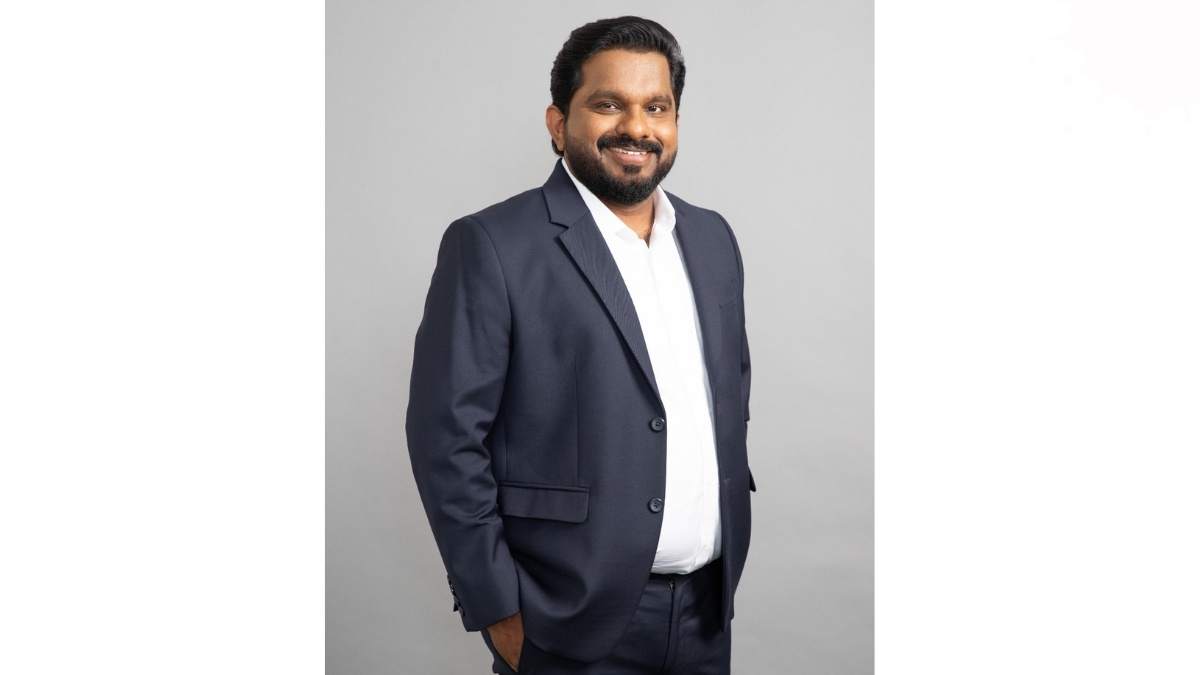
Spearheaded by Himanshu Pathak, a seasoned change makerwith deep grassroots knowledge, Opinion of Punjab presents a new model of political participation — one that seeks to nurture leadership from the village level to the state stage.
“India’s democracy is vast, loud, and often broken at its foundation. Political parties decide who contests. Party bosses control who gets a ticket. And thousands of capable, committed citizens who want to serve their village, ward, or constituency are shut out before they even begin,” says Himanshu Pathak.
The initiative is already gaining strong traction across Punjab, with more than 1,000 applications received from citizens eager to step into public life. The early response reflects a growing belief that leadership should not remain confined to closed political circles, but must emerge from people who understand local realities and are willing to serve.
At the heart of Opinion of Punjab is a clear promise: whether someone wants to lead their village, ward, or block, or contest for MLA or MP, the platform aims to provide the support, exposure, and political pathway needed to move forward. It is designed to identify committed individuals, encourage grassroots participation, and create space for new leadership to emerge with purpose and direction.
Adding a sharp analytical edge to this mission is the Punjab MLA Tracker — a public-facing political intelligence feature built on continuous constituency-level ground analysis, offering insight into which sitting MLAs are currently projected to win, lose, or face a close contest in the upcoming elections.
At a time when many citizens feel disconnected from traditional politics, Opinion of Punjab is opening the door to a more structured and inclusive route into public leadership. Its message is simple yet powerful: Punjab’s future leadership must be built from the ground up.
With momentum building and public participation increasing, Opinion of Punjab is emerging as more than an initiative. It is taking shape as a movement aimed at empowering ordinary citizens to lead, represent their communities, and help define the next chapter of Punjab’s political future.
Mumbai (Maharashtra) [India], April 14: Aruba Bar by Yogesh Bhoir launched its much-awaited summer menu at its stunning Juhu outpost. Located on the ground floor, AB Nair Road, near Novotel Mumbai Juhu Beach, the venue came alive with vibrant energy, marking the perfect start to the season.
Curated to reflect the freshness and vibrancy of summer, Aruba’s new menu is a delightful blend of refreshing flavours, innovative cocktails, and global inspirations. From light, zesty bites to indulgent summer specials, the menu promises a sensory escape designed for Mumbai’s evolving palate.
Adding star power to the evening, Bollywood actress Ameesha Patel made a special appearance, captivating guests with her charm and presence.
The evening saw the presence of *Hindustani Bhau, Rajesh Khattar, Yogesh Bhoir, Sangeeta Kapure, Gaurav Sharma, Vikas Verma, RJ Devanggana Chauhan, Kirti Choudhary, Vipul Roy, Siddharth Sibal, Arshi Khan, Akash Dadlani, Khushi Mukherjee, Simran Ahuja, Prishita Singh, Rahul Ojha, Ajay Gosalia, Dr. Harsh Gupta, Sultana Samir Khan & Many More.*
Yogesh Bhoir Aruba Bar an Experience shared*, _“With our new summer menu, we wanted to create an experience that feels refreshing, indulgent, and perfect for the season. It’s about bringing people together over great food, innovative drinks, and an unforgettable vibe”
With this launch, Aruba continues to cement its position as one of Juhu’s go-to destinations for elevated dining and nightlife, offering an experience that seamlessly blends culinary creativity with a vibrant social atmosphere.
Pune (Maharashtra) [India], April 14: FocusFew today announced the appointment of Ravindra Nagpurkar as Practice Head – AI and Technology, strengthening its leadership team as the firm continues to help global organizations communicate their business value.
Ravindra is a seasoned business leader with over two decades of experience spanning engineering, product innovation, enterprise transformation, and venture building. He holds an MBA from Duke University – The Fuqua School of Business and dual degrees in Computer Science and Scientific Computing from Savitribai Phule Pune University. Throughout his career, he has worked extensively with Fortune 100 enterprises and high-growth startups across international markets.
As a member of multiple founding teams, Ravindra has built and scaled technology-led businesses from inception. He has held several CXO positions, including CTO and Head of Engineering, leading large, cross-functional organizations to drive measurable business outcomes. Furthermore, his deep expertise in market microstructure and algorithmic execution—honed through leading his family office’s AI-assisted HFT framework for hedge funds and accredited investors—brings unique quantitative rigor to FocusFew’s marketing strategy advisory.
“Ravindra combines operational depth with strategic clarity,” said Shivesh Vishwanathan, Founder & MD of FocusFew. “He understands how systems, teams, and market positioning must align for growth to be sustainable. His leadership of our AI and Technology practicestrengthens our ability to guide leadership teams through technical complexity with confidence and articulate their business value clearly.”
With Ravindra joining the leadership team, FocusFew deepens its capability in strategy-led transformation, particularly at the intersection of AI-driven innovation and market positioning. His background in enterprise-scale systems adds significant operating depth to FocusFew’s work, which centers on elevating marketing into a strategic growth function using proprietary strategy frameworks that align leadership intent, business direction, and marketing communications.
As AI adoption reshapes how businesses operate, FocusFew continues to integrate structured thinking with AI-enabled execution through ALYGNR, its product-led growth engine. ALYGNR is FocusFew’s GTM execution platform designed to operationalize positioning, messaging, and go-to-market plans into predictable pipeline. Ravindra’s expertise will be instrumental in helping clients move from conceptual clarity to disciplinedgrowth orchestration using ALYGNR as the operational backbone.
Ravindra Nagpurkar added, “AI is transforming how businesses operate, but sustainable growth still begins with clarity. FocusFew’s disciplined approach to aligning strategy,systems, and market narrative is what every technology company needs for its next phase of growth. I am excited to lead the AI and Technology practice at this stage and deepen our role in shaping strategy-led, AI-enabled growth for our clients.”
With this appointment, FocusFew continues to strengthen its bench of senior consultants, uniting enterprise leadership, disciplined strategy, and executional maturity to support growth that is thoughtful and sustained.
About ALYGNR
ALYGNR (ALYGNR.ai) is an AI-powered go-to-market platform that turns strategic alignment into predictable pipeline. Designed for companies at every stage, ALYGNR helps enterprises orchestrate go-to-market at scale across teams, channels, and partners and provides mid-sized and emerging organizations the enterprise-grade frameworks needed for predictable growth.
About FocusFew
FocusFew Strategy Consulting (focusfew.com) is a strategic marketing consultancy that partners with C-suite executives and senior leadership teams to define, position, and promote products and services that win in the market. Using proprietary frameworks, senior technology and domain consultants of FocusFew integrate strategic thinking into marketing and GTM to drive deliberate and sustainable growth.
FocusFew Strategy Consulting is headquartered in Pune, India.
If you object to the content of this press release, please notify us at pr.error.rectification@gmail.com. We will respond and rectify the situation within 24 hours.
Surat (Gujarat) [India], April 13: Surat saw an unusually large turnout for a spiritual programme this week, but what stood out wasn’t just the numbers, it was the kind of conversations happening inside the venue.
From April 9 to 11, more than 4,000 people gathered at Sampada Festivity for a three-day Shrimad Bhagavad Gita course organised by Social Army Group. The audience wasn’t limited to any one group. There were students, working professionals, and families, many of them showing up with similar questions around stress, career pressure, and decision-making.
For a lot of attendees, the draw wasn’t religion as much as relevance.
Speaker Paras Pandhi kept his sessions grounded. Instead of going deep into scripture in a traditional sense, he focused on situations people deal with every day; failure, comparison, uncertainty about the future. His point, repeated in different ways, was simple: circumstances don’t always change quickly, but how you respond to them can.
That seemed to land with the younger crowd in particular. Some were seen taking notes, others just listening quietly. There was less of the usual distraction you’d expect in a gathering this size.
The format of the event also helped. Along with the talks, there were musical segments by Urvashi Radadiya and Rishabh Agrawat. Their performances broke the monotony and gave people space to absorb what they had heard.
A Krishna Leela presentation by Ami Patel’s team added a different dimension, especially for those who connect more with visual storytelling than spoken sessions.
At the venue, smaller elements were noticeable. Vedic chanting ran in the background for most of the programme. Rituals were conducted without much interruption. A small Gaushala setup also drew attention, with volunteers explaining its purpose to visitors.
Organisers said the idea was not to position the Gita as something abstract, but as something people can apply in day-to-day life, particularly at a time when many feel overwhelmed or unsure about their next steps.
The event also had lighter moments. A Lezim performance on the second day and Dhol-Tasha on the closing day brought some energy back into the crowd and kept the atmosphere from becoming too serious.
By the end of the three days, the response from participants was fairly consistent. Most didn’t describe it as life-changing in dramatic terms, but said it gave them a clearer way to think about situations they’re already dealing with.
In a city known more for business and pace, the turnout suggested there’s also space—and demand—for conversations like these.
New Delhi [India], April 13: When it comes to using AI tools, students in 2026 don’t lack options. They drown in them.
Every new semester brings a fresh layer—apps for notes, apps for summaries, apps for focus, apps for memory. The logic feels sound: more tools should mean better performance.
It rarely does.
Because every new tool demands attention. A new interface to learn. A new system to maintain. A new way to think about something that was once simple.
The result isn’t efficiency. It’s fragmentation.
Time gets spent switching instead of understanding. Organizing instead of absorbing.
What looks like productivity is often just movement without direction.
The students who improve don’t add more.
They remove.
The Tools That Remain
When the excess is stripped away, a smaller system appears. Not impressive at first glance. But precise. Each tool doing one job, nothing more.
ChatGPT — Where Understanding Slows Down
Confusion rarely comes from complete ignorance. It comes from being close—almost there, but not quite.
This is where ChatGPT becomes useful. Not as a shortcut, but as a bridge.
Ask it for answers, and it will give you speed. Ask it to explain, and it gives you structure. Layers. Context. Simplicity first, depth after.
Used properly, it becomes a place where ideas are negotiated, not just delivered.
And negotiated ideas tend to stay longer.
Notion AI — Where Information Settles
Unstructured knowledge fades quickly. Notes scattered across pages, apps, and formats don’t accumulate—they dissolve.
Notion AI brings shape to that chaos. It turns fragments into systems. Headings into hierarchies. Loose thoughts into something retrievable.
The effect is subtle but powerful. When your notes are clear, your thinking follows the same path.
Clarity outside reflects clarity within.
Grammarly — Where Writing Holds Together
A strong idea can fail quietly if it’s poorly expressed. Not because it lacks value—but because it never lands properly.
Grammarly works at that final layer. Tightening sentences. Removing hesitation. Letting the idea come through without distortion.
It doesn’t make you smarter.
It makes your thinking harder to misunderstand.
QuillBot — Where Meaning Shifts Shape
Real understanding shows up when you can restate something without losing its essence.
QuillBot helps in that transition—but only if you stay engaged. If you observe how the sentence changes, why it flows better, where the clarity improves.
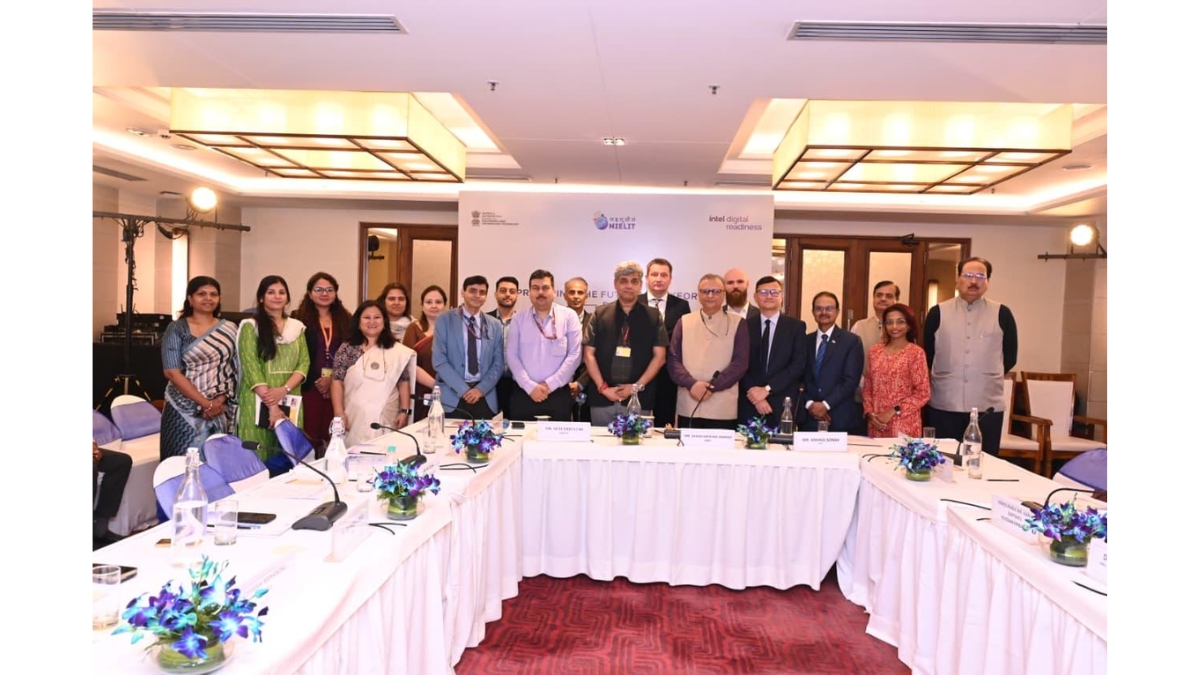
Bengaluru (Karnataka) [India], April 13:As part of its ongoing investment promotion efforts and in the lead‑up to the flagship Destination Tripura: Business Conclave 2026, the Department of Industries & Commerce, Government of Tripura, organized the Destination Tripura – Investors’ Roadshow in Bengaluru on 10th April 2026 at Hotel ITC Windsor.
The Bengaluru Roadshow was held as a focused outreach initiative to engage industry leaders, investors, start‑ups, and institutional stakeholders from southern India. The programme presented an overview of Tripura’s industrial ecosystem, recent infrastructure developments, policy initiatives, and sector‑specific investment opportunities, with a strong emphasis on investment facilitation and ease of doing business.
Addressing the gathering, Shri Kiran Gitte, IAS, Secretary, Industries & Commerce, Government of Tripura, stated that the Government of Tripura is proactively strengthening the Ease of Doing Business framework through policy reforms, procedural simplification, and time‑bound approvals. He emphasized that Tripura offers significant untapped potential across emerging and traditional sectors, supported by a skilled talent pool, improving connectivity, and a responsive institutional framework, and encouraged industry participants to explore long‑term partnership opportunities with the State.
Shri Kiran Gitte further shared a renewed perspective on Tripura’s growth narrative, highlighting that the State has emerged as one of the fast‑growing economies in the North Eastern region, with GDP performance that compares favourably with other North Eastern States. He noted that sustained public investment, improved governance outcomes, and a growing focus on private sector participation are reshaping perceptions about Tripura’s economic potential.
Highlighting Tripura’s strategic location, Shri Gitte underscored the State’s strengthening economic and trade‑related engagement with Bangladesh, which is enhancing regional connectivity and access to international markets. He noted that this positioning is creating fresh opportunities across logistics, value‑added manufacturing, services, and cross‑border trade‑linked industries.
Providing a detailed sectoral overview, Dr. Deepak Kumar, IAS, Director, Industries & Commerce, Government of Tripura, outlined investment opportunities across priority sectors including IT and Digital Services, Electronics and Technology‑enabled Manufacturing, Education and Skill Development, Healthcare and Pharmaceuticals, Tourism and Hospitality, Agri and Food Processing, Bamboo, Rubber and Agarwood‑based Industries, Renewable Energy, Urban Infrastructure, Real Estate, Handloom and Handicrafts, and Manufacturing and Allied Industries.
Dr. Deepak Kumar elaborated on the State’s investor‑centric incentive framework, availability of industrial land, identification of suitable project locations, and the end‑to‑end facilitation support being extended to investors from project conceptualisation through implementation and operationalisation. He emphasized that the Department is committed to ensuring ease of entry, speed of approvals, and continued post‑investment handholding.
The programme featured a comprehensive departmental presentation, supported by interactive discussions and one‑to‑one B2G meetings, during which senior State Government officials engaged with participating investors to understand business interests and clarify policy and procedural aspects.
The Bengaluru Roadshow successfully strengthened Tripura’s engagement with the southern India business ecosystem, while reinforcing the State’s positioning as an investment‑ready, reform‑driven, and fast‑emerging economy in the North East. The Roadshow that resulted in 44 LoIs/ MoUs worth 2049 crores marks an important step in the build‑up to the Destination Tripura: Business Conclave 2026, scheduled to be held in Agartala on 14–15 May 2026.
If you object to the content of this press release, please notify us at pr.error.rectification@gmail.com. We will respond and rectify the situation within 24 hours.
IIM Kashipur Concludes SMSIF 2026 Conference with a Strong Call for Sustainable and Inclusive Growth
New Delhi [India], April 13: The Indian Institute of Management Kashipur successfully concluded the Second International Conference on Sustainability Management Strategies for India’s Future (SMSIF 2026), held from April 9th to 11th, 2026. Over three intellectually enriching days, the institute emerged as a vibrant confluence of ideas, bringing together academia, industry, and policymakers to collectively reimagine India’s sustainable future.
The conference witnessed a dynamic blend of research paper presentations, thematic discussions, keynote sessions, and academic deliberations, fostering meaningful intellectual exchange and the dissemination of cutting-edge research. Participants engaged in rigorous discussions, gained fresh perspectives, and contributed to a growing body of knowledge addressing sustainability challenges across sectors. The conference featured keynote addresses from eminent speakers on the mentioned domains, enriching the overall experience of the delegates.
The conference commenced with a welcome address by Prof. Somnath Chakrabarti, who reflected on India’s remarkable economic trajectory while emphasizing the need for development that is inclusive, responsible, and environmentally conscious, in alignment with the vision of Viksit Bharat 2047. He highlighted the importance of collaborative platforms like SMSIF in fostering innovation and dialogue for a resilient future.
Delivering a address, Prof. Neeraj Dwivedi, Director of IIM Kashipur, articulated a comprehensive understanding of sustainability—one that integrates economic resilience, social equity, and ethical governance. He underscored that sustainability is no longer peripheral but central to leadership and institutional development.
The conference highlights were presented by Prof. Alka Arya, who explained the concept of sustainable development and traced its historical and global evolution. She connected these ideas to sustainable management practices and aligned them with the vision of Viksit Bharat 2047. She emphasized key thematic tracks and discussed the green initiatives implemented on campus. She encouraged continued collaboration and engagement among participants to translate ideas into impactful action.
The conference was graced on the first day by Prof. Rama Mohana R Turaga of the Indian Institute of Management Ahmedabad, who delivered an insightful keynote on governance for environmental sustainability. Reflecting on India’s progress and future trajectory, he emphasized that sustainability has become an integral part of both business strategy and academic curricula, while commending IIM Kashipur for hosting such a timely and impactful conference.
Adding a rich intellectual dimension on the first day, Prof. B. Mahadevan from Indian Institute of Management Bangalore explored the enduring relevance of Indian Knowledge Systems. Drawing from classical texts such as the Arthashastra and from ancient Indian architecture, he illustrated how ancient wisdom continues to encourage contemporary public policy and management practices. The first day featured many extended abstract presentations across various thematic tracks also.
On the second day, Prof. Haritha Saranga, Professor at IIM Bangalore, emphasized the growing importance of sustainability in both research and practice, particularly in the Indian context. She highlighted the need for advancements in renewable energy transitions, sustainable agriculture, and coordinated policy frameworks to address emerging challenges. Bringing an industry perspective, Mr. Subramanian Chidambaran, Chief Strategy and Sustainability Officer from Cummins India, highlighted the critical balance between growth, consumption, and efficiency. He stressed that energy efficiency and responsible consumption must be central to sustainable growth strategies.
The third day continued with multiple presentation sessions across diverse themes, providing scholars and researchers with opportunities to present their work and engage in meaningful academic discussions.
Throughout its three-day span, SMSIF 2026 served as a platform for knowledge creation and exchange, reinforcing the importance of integrating sustainability into management education, corporate strategies, and public policy frameworks.
The conference highlighted the need for sustained collaboration among academia, industry, and government, reaffirming that the journey toward a resilient, inclusive, and sustainable India is a shared and collective responsibility.
If you object to the content of this press release, please notify us at pr.error.rectification@gmail.com. We will respond and rectify the situation within 24 hours.
New Delhi [India], April 11: Traffic is fragile. It arrives, it skims, it leaves. Most of it never returns. An email funnel exists for one reason—to interrupt that disappearance and convert a single visit into a long-term relationship that compounds value over time.
This is where beginners underestimate the game. They chase traffic. They ignore retention. But revenue, consistently, is built on what happens after the first click.
New Delhi [India], April 11: A beginner’s sales funnel isn’t a diagram. It’s a sequence of decisions, many of which are invisible, where attention becomes intent, and, if you know how to handle it, intent becomes revenue. Drop one step, and the whole funnel leaks.
At its simplest, a funnel answers one question: why does a stranger trust you enough to buy?
The Shape of a Funnel (And Why It Matters)
Think of a funnel as controlled movement:
Stage
What Happens
User Mindset
Your Goal
Awareness
User discovers you
“What is this?”
Capture attention
Interest
They engage with content
“This is useful”
Build trust
Consideration
They compare options
“Should I choose this?”
Reduce doubt
Conversion
They take action
“I’m ready”
Close sale
Retention
They return
“This worked”
Build loyalty
Most beginners focus only on the bottom—sales.
But funnels fail at the top.
Stage 1: Awareness — Where Attention Is Won or Lost
This is where strangers meet you for the first time.
Sources:
Google search
Social media
Ads
Referrals
The mistake: trying to sell immediately.
At this stage, users are not ready. They are exploring. Your job is to enter their problem space, not push your solution.
Example: Instead of “Buy our SEO service” → “Why your website isn’t ranking (and how to fix it)”
You are not selling.
You are positioning.
Stage 2: Interest — Turning Attention into Trust
Now the user stays.
They read. They scroll. They evaluate.
This is where content matters most:
Blog articles
Guides
Videos
Case studies
Your job here is simple: Answer better than everyone else.
Key elements:
Clarity
Depth
Relevance
This is where most drop-offs happen. If your content is shallow, the funnel collapses silently.
Stage 3: Consideration — The Moment of Doubt
The user is now thinking:
“Is this the right choice?”
This is the most fragile stage.
They compare:
Your product vs competitors
Price vs value
Risk vs reward
Your role:
Remove friction
Build confidence
Tools that work:
Testimonials
Reviews
Comparisons
FAQs
Trust Element
Impact
Testimonials
Social proof
Case studies
Real-world validation
Guarantees
Risk reduction
Clear pricing
Transparency
This is not persuasion.
This is reassurance.
Stage 4: Conversion — Where Decisions Become Action
Conversion is not just “buy now.”
It can be:
Signing up
Booking a call
Downloading a resource
At this stage, simplicity wins.
Checklist:
Element
Requirement
CTA
Clear and visible
Page speed
Fast
Form
Minimal fields
Payment
Smooth process
Every extra step reduces conversions.
Every confusion kills momentum.
Stage 5: Retention — The Forgotten Multiplier
Most beginners stop after the sale.
That’s a mistake.
Retention is where profit compounds.
Why?
Metric
Impact
Repeat customers
Higher lifetime value
Referrals
Free traffic
Trust
Faster future conversions
Retention tools:
Email follow-ups
Loyalty offers
Consistent value content
A good funnel does not end.
It loops.
Common Beginner Mistakes
Mistake
Result
Selling too early
Low conversions
Weak content
High bounce rate
No trust signals
User hesitation
Complicated checkout
Drop-offs
Ignoring retention
Lost revenue
Simple Funnel Example (Realistic)
Let’s break it down:
User searches: “how to earn online”
Finds your article
Reads guide → trusts you
Clicks “freelance writing course”
Reads testimonials
Buys course
Gets email series → upsell later
That’s a funnel.
Not complex. Just structured.
FAQ (For Quick Answers & Snippets)
What is a sales funnel in simple words?
A sales funnel is the step-by-step journey a customer takes from discovering your brand to making a purchase.
How do beginners create a sales funnel?
Start with content (awareness), build trust (interest), add proof (consideration), simplify action (conversion), and follow up (retention).
Why is a sales funnel important?
It organizes customer flow, improves conversions, and helps turn traffic into consistent revenue.
Do I need tools to build a funnel?
Not initially. You can start with content + simple landing pages. Tools help scale later.
Final Insight
A sales funnel is not about pushing people forward.
It is about removing reasons to leave.
When each stage aligns with what the user needs at that moment, movement happens naturally. No force. No friction. Just progression.
And that is where beginners stop guessing—and start converting.
How structured SEO systems turn content into ranking authority across Google and AI search engines
New Delhi [India], April 11: SEO architecture is about publishing more than content. It is about creating a structured, data-supported ecosystem that search engines trust, crawl, and rank at scale. The factor that separates the sites that rank occasionally from those that dominate entire keyword markets is simple: How well is their content organized, connected, and strengthened through internal logic?
Most sites fail not because their content is weak, but because it is disconnected. They publish articles. They do not create systems.
The Shift: From Articles to Authority Systems
Search engines have evolved beyond keyword matching. Today, ranking depends on:
Ranking Factor
Weight in Modern SEO
What It Means
Topical Authority
High
Covering an entire subject deeply
Internal Linking
High
Distributing authority across pages
Search Intent Match
Very High
Answering exactly what user wants
Content Depth
Medium-High
1200+ words with structured insights
Freshness
Medium
Regular updates signal relevance
A single article cannot satisfy all these signals.
An ecosystem can.
Pillar–Cluster Model: The Core Architecture
At the center of modern SEO lies a simple but powerful structure:
Component
Role
Keyword Type
Word Count
Pillar Page
Central authority hub
High-volume primary keyword
3000–5000
Cluster Articles
Deep-dive support content
Long-tail keywords
1200–2500
Internal Links
Authority flow mechanism
Contextual anchors
Continuous
Example (Tech Cluster: Gmail)
Page Type
Topic
Keyword
Pillar
Gmail Login Problems
gmail login problem
Cluster 1
Gmail not working
gmail not working
Cluster 2
Recover Gmail account
recover gmail account
Cluster 3
Fix login errors
gmail login error fix
Cluster 4
Gmail verification issue
gmail OTP not received
Each cluster feeds into the pillar. The pillar distributes authority back.
This creates a closed SEO loop.
Internal Linking: The Ranking Multiplier
Internal linking is not navigation—it is signal engineering.
Required Structure:
Link Type
Direction
Purpose
Pillar → Cluster
Downward
Distribute authority
Cluster → Pillar
Upward
Reinforce central topic
Cluster → Cluster
Horizontal
Build contextual depth
Impact of Proper Internal Linking
Metric
Without Linking
With Linking
Crawl Efficiency
Low
High
Index Speed
Slow
Fast
Ranking Stability
Weak
Strong
Page Authority Flow
Broken
Compounded
This is how Google interprets topical completeness.
Content Execution Rules (Data-Backed)
Each article must meet structural and SEO benchmarks:
Element
Requirement
SEO Impact
Primary Keyword
H1, Meta Title, First 100 words
Ranking signal clarity
Secondary Keywords
5–10 natural usage
Semantic relevance
Word Count
1200–2500
Depth + authority
FAQ Section
4–6 questions
Featured snippets
Internal Links
3–5 minimum
Authority distribution
Keyword Placement Model
Section
Keyword Usage
Title (H1)
Exact match
Introduction
Within first 80–100 words
Subheadings
Partial variations
Body
Natural distribution
FAQ
Question-based keywords
AEO + GEO Layer (Next-Level SEO)
Search has evolved into answer engines and AI systems.
AEO (Answer Engine Optimization)
Focus: Featured snippets, voice search
Element
Best Practice
Answers
40–60 words
Structure
Direct, factual
Format
Question → Answer
Placement
FAQ + mid-content
GEO (Generative Engine Optimization)
Focus: AI search systems (Chat-based engines)
Element
Best Practice
Depth
Explain “why” not just “what”
Structure
Logical, layered
Authority
Data + clarity
Coverage
Complete topic mapping
Multi-Niche Scaling Model
The real power of SEO architecture is replication.
Cluster Expansion Across Niches
Niche
Pillar Topic
Cluster Examples
Finance
Personal Finance
Loans, credit cards, SIP, tax saving
Tech
Troubleshooting
Gmail, WhatsApp, apps, AI tools
Education
Careers & Exams
UPSC, NEET, online courses
Commerce
Product Reviews
Phones, laptops, deals
Traffic Potential Model
Strategy
Articles
Traffic Potential
Random Content
50
Low
Structured Clusters
50
Medium
Full Ecosystem
100+
High
Why This System Works
Search engines prioritize site-level authority, not isolated content.
Traditional SEO
Modern SEO
Focus on single keyword
Focus on topic ownership
Write standalone articles
Build interconnected clusters
Limited ranking
Compounding rankings
Slow growth
Exponential growth
Execution Flow (Step-by-Step)
Identify high-volume keyword → Create pillar
Break into 8–12 subtopics → Create clusters
Interlink all content → Build structure
Add FAQs → Capture snippets
Expand clusters → Increase authority
The Final Position
You are not writing content anymore.
You are:
Building structured knowledge systems
Capturing entire keyword ecosystems
Creating compounding ranking assets
Because in modern SEO:
Claims are not asserted. They are built, page by page, link by link, system by system.