Category: National

  • Padma Shri Brahmeshanand Swamiji at WEF 2026: A Powerful Moral Voice

    Padma Shri Brahmeshanand Swamiji at WEF 2026: A Powerful Moral Voice

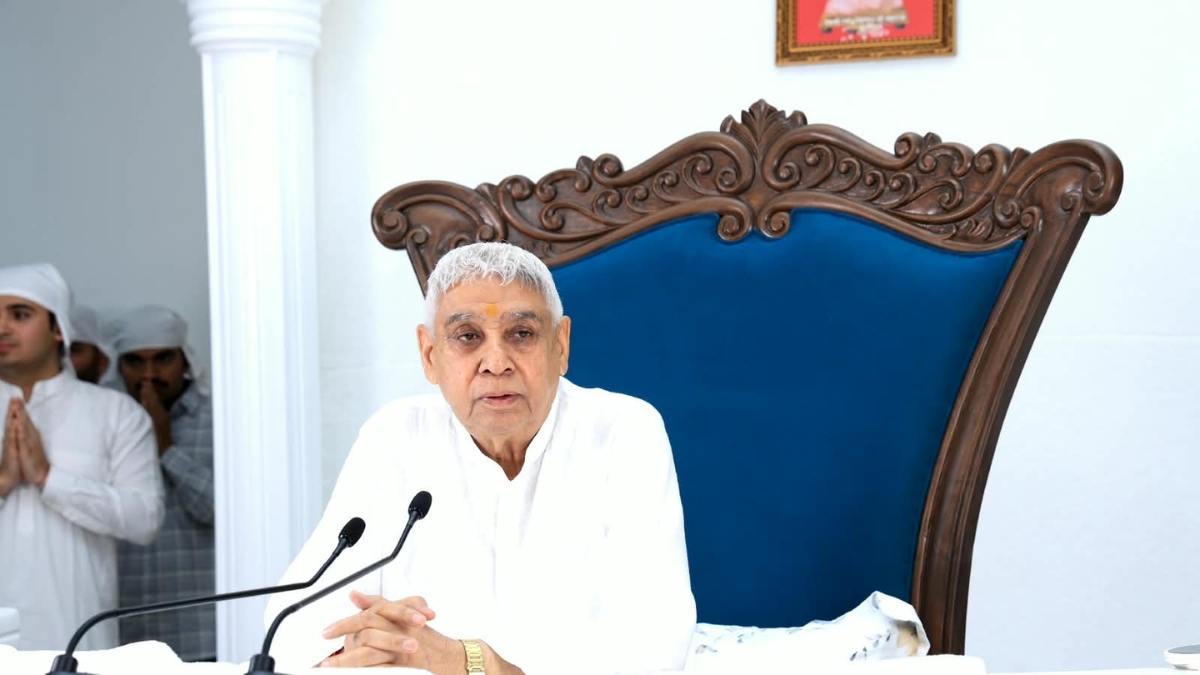
    Davos, [Switzerland], January 27: Davos usually speaks in numbers. This year, it listened to values. Padma Shri Brahmeshanand Swamiji arrived at the World Economic Forum 2026 with a message the room couldn’t ignore.

    The World Economic Forum 2026 unfolded against a familiar backdrop. Snow-covered Alps. Tight security. Big conversations about growth, disruption, and global uncertainty. But inside the Open Forum sessions in Davos, something different cut through the noise.

    Padma Shri Sadguru Brahmeshanand Acharya Swamiji, one of India’s most respected spiritual leaders and social impact advocates, took part in the World Economic Forum’s Open Forum 2026. The platform ran alongside the main WEF Annual Meeting and carried a deceptively simple theme: “A Spirit of Dialogue.”

    Simple, yes. But not soft.

    What followed was a reminder that leadership without values eventually collapses under its own weight.

    India’s Spiritual Voice on a Global Stage

    Padma Shri Brahmeshanand Swamiji’s participation at the World Economic Forum 2026 was not ceremonial. It was substantive. Measured. Intentional.

    Engaging directly with global leaders, policymakers, civil society representatives, and members of the public, Swamiji focused on a question many Davos conversations quietly dodge. What anchors decision-making when markets shake, politics fracture, and trust erodes?

    His answer stayed consistent. Values-based leadership. Ethical clarity. Spiritual wisdom that translates into action.

    This was not theology. It was governance, reframed.

    India’s civilisational emphasis on dharma, responsibility, and collective wellbeing found a contemporary voice in Davos. Without slogans. Without theatrics. Just clarity.

    The Open Forum’s Real Purpose

    The World Economic Forum’s Open Forum exists for a reason. It breaks the insulation. It allows leaders and citizens to share the same room, the same microphone, the same questions.

    At WEF 2026, the Open Forum focused on economic, social, and environmental transformation. Not as abstract goals, but as lived realities affecting billions.

    Padma Shri Brahmeshanand Swamiji’s presence reinforced why the Open Forum matters. Global challenges cannot be solved in closed-door boardrooms alone. They demand dialogue. Real dialogue. Sometimes uncomfortable. Often slower than markets prefer.

    But necessary.

    Ethics as Infrastructure, Not Ornament

    One theme ran through Swamiji’s interventions at the World Economic Forum 2026. Ethics is not an accessory. It is infrastructure.

    He emphasized that sustainable solutions demand moral grounding. Economic growth without compassion fractures societies. Technological advancement without responsibility magnifies inequality. Policy without empathy alienates citizens.

    These are not philosophical musings. They are observable patterns.

    From climate action to social cohesion, Swamiji highlighted how ethical decision-making determines whether progress endures or collapses. His framing resonated in a forum increasingly aware that efficiency alone does not build trust.

    Compassion, Sustainability, Collective Responsibility

    Three words anchored the dialogue. Compassion. Sustainability. Collective responsibility.

    Padma Shri Brahmeshanand Swamiji argued that compassion is not weakness. It is strategic intelligence. Societies that care for their most vulnerable stabilise faster and innovate deeper.

    Sustainability, he stressed, cannot remain a checkbox. It must inform how economies grow, how resources are allocated, and how future generations are considered. Not as beneficiaries of charity. As rightful stakeholders.

    Collective responsibility tied it all together. Global problems do not respect borders. Neither should solutions. The Swamiji’s perspective echoed India’s long-standing worldview. Vasudhaiva Kutumbakam. The world is one family.

    At Davos, that idea found practical relevance.

    The Growing Role of Spiritual Leadership

    The participation of Padma Shri Brahmeshanand Swamiji at the World Economic Forum 2026 also reflected a broader shift. The growing recognition that moral and spiritual leadership has a seat at the table.

    Not above economics. Alongside it.

    As global systems strain under complexity, leaders are searching for anchors. Metrics alone cannot provide meaning. Incentives alone cannot restore trust. Spiritual leadership, when grounded and inclusive, offers a compass.

    Swamiji’s engagement demonstrated that spiritual voices need not oppose modernity. They can guide it.

    India’s Quiet Influence at WEF 2026

    India’s presence at Davos often shows up through markets, technology, and demographics. This time, it also arrived through values.

    Padma Shri Brahmeshanand Swamiji embodied an Indian perspective that blends ancient wisdom with contemporary relevance. A reminder that India’s contribution to global discourse is not limited to scale or speed. It includes thought leadership shaped over millennia.

    His participation at the Open Forum reinforced India’s role as a moral stakeholder in global conversations. Calm. Confident. Constructive.

    Why This Moment Matters

    The World Economic Forum 2026 will be remembered for many things. Policy debates. Economic forecasts. Strategic alignments.

    But moments like these linger longer.

    When a spiritual leader stands shoulder to shoulder with policymakers and business heads, not to preach but to engage, it shifts the tone. It humanises power. It reframes success.

    Padma Shri Brahmeshanand Swamiji did not arrive with answers to every problem. He arrived with the right questions. About purpose. Responsibility. And the cost of forgetting both.

  • FACTSHEET: India EU Free Trade Agreement Unlocks $24 Trillion Opportunity

    FACTSHEET: India EU Free Trade Agreement Unlocks $24 Trillion Opportunity

    New Delhi [India], January 27: This is not another polite trade pact. The India EU Free Trade Agreement is a structural reset, unlocking Europe for Indian exporters and wiring India deeper into global value chains.

    The India EU Free Trade Agreement marks a decisive shift in India’s trade strategy. After years of negotiations, India and the European Union have closed a deal that moves beyond tariffs and into trust, predictability, and scale. Two economic heavyweights. One modern, rules-based framework. And a combined market worth roughly INR 2091.6 lakh crore, or about USD 24 trillion.

    For India, this is leverage. For Europe, it is reliability. For businesses on both sides, it is certainty in an uncertain world.

    India and the EU together account for nearly two billion people. Yet trade between them has never matched that potential. In 2024–25, bilateral merchandise trade stood at about INR 11.5 lakh crore, with India exporting INR 6.4 lakh crore worth of goods to Europe. Services trade added another INR 7.2 lakh crore.

    Healthy numbers. Still modest, considering the scale involved.

    The India EU Free Trade Agreement changes the math. It delivers preferential market access for more than 99 percent of India’s exports by trade value. That is not incremental. That is transformational.

    Under the agreement, India secures preferential access across 97 percent of EU tariff lines, covering 99.5 percent of export value.

    Here is how that breaks down.

    Over 70 percent of tariff lines, covering more than 90 percent of India’s exports, will see immediate duty elimination. This hits exactly where India needs it most: textiles, apparel, leather, footwear, tea, coffee, spices, sports goods, toys, gems and jewellery, and key marine products.

    Another 20 percent of tariff lines will move to zero duty over three to five years, including processed foods, select marine products, and niche industrial items.

    The remaining lines receive tariff reductions or access through tariff rate quotas, covering sensitive items like certain poultry products, preserved foods, cars, steel, and shrimp.

    Translation: India wins scale without sacrificing policy space.

    This is where the India EU Free Trade Agreement gets political, in a good way.

    Labour-intensive sectors worth over INR 2.87 lakh crore in exports currently face EU duties ranging from 4 percent to 26 percent. Those duties drop to zero from day one.

    Textiles. Leather. Footwear. Marine. Chemicals. Plastics. Toys. Gems and jewellery.

    These are not just export lines. They are employment engines. The agreement sharply improves competitiveness, integrates Indian MSMEs into European value chains, and creates jobs where India actually needs them.

    India is not playing defence here. Under the India EU Free Trade Agreement, India offers tariff concessions on 92.1 percent of its tariff lines, covering 97.5 percent of EU exports.

    Nearly half see immediate duty elimination. Another 39.5 percent phase out over five, seven, or ten years. A small basket moves through tariff reductions or quotas, including apples, pears, peaches, and kiwi.

    This approach protects sensitive sectors while allowing high-quality European technology and machinery to flow in. That means lower input costs, better consumer choice, and deeper integration into global supply chains.

    Agriculture often breaks trade talks. Here, it anchors them.

    The India EU Free Trade Agreement expands access for Indian tea, coffee, spices, grapes, gherkins, cucumbers, dried onion, fresh fruits, vegetables, and processed foods. This strengthens farm incomes, boosts rural livelihoods, and improves India’s positioning as a premium supplier.

    At the same time, India safeguards sensitive sectors like dairy, cereals, poultry, soymeal, and select fruits and vegetables. Growth, yes. Recklessness, no.

    The result is agricultural resilience, not exposure.

    Preferential access means nothing without workable rules. The agreement introduces balanced product-specific rules aligned with existing supply chains.

    Goods must undergo substantial processing to qualify. At the same time, exporters retain flexibility to source inputs globally. Self-certification through Statements of Origin reduces compliance costs and time.

    MSMEs benefit directly. Quotas for shrimp, prawns, and downstream aluminium products allow non-originating inputs. Transition periods for machinery and aerospace incentivise Make in India without disrupting production.

    Goods grab headlines. Services drive the future.

    The India EU Free Trade Agreement secures deep commitments across 144 services subsectors from the EU. IT and ITeS. Professional services. Education. Business services. Digitally delivered services.

    For Indian service providers, this means certainty, non-discrimination, and stable market access.

    India, in return, offers commitments across 102 subsectors aligned with EU priorities, including telecom, maritime, financial, and environmental services. European firms gain predictability. Indian markets gain innovation.

    This agreement does something rare. It respects people, not just products.

    The India EU Free Trade Agreement establishes a clear framework for temporary entry and stay of professionals. Business visitors. Intra-corporate transferees. Contractual service suppliers. Independent professionals.

    Employees of Indian companies in the EU gain easier mobility, along with their families. Independent professionals get assured access across 17 subsectors, including IT, R&D, and higher education.

    There is also a roadmap for social security agreements within five years and continued openness for Indian students, including post-study work options.

    An unexpected win sits quietly in the text.

    In EU member states without restrictive regulations, AYUSH practitioners can offer services using Indian qualifications. The agreement locks in future openness for wellness centres and clinics and encourages deeper engagement on traditional medicine.

    Soft power, meet market access.

    The agreement reinforces TRIPS-consistent intellectual property protections. It recognises India’s Traditional Knowledge Digital Library. It affirms the Doha Declaration. It supports technology transfer and information sharing.

    On SPS and TBT measures, enhanced cooperation enables equivalence, faster conformity assessment, digitised processes, and predictable regulation. Fewer surprises. Faster clearance. Safer trade.

    Engineering goods gain preferential access against EU tariffs of up to 22 percent, expanding India’s INR 1.44 lakh crore export base.

    Leather and footwear exports drop from tariffs as high as 17 percent to zero, opening a USD 100 billion EU market.

    Marine exports gain full preferential access, turbo-charging shrimp and seafood shipments and strengthening coastal economies.

    Medical devices see duties of up to 6.7 percent eliminated across nearly all trade lines.

    Gems and jewellery gain full access across a USD 79 billion import market.

    Textiles and apparel secure zero-duty access into a USD 263 billion market.

    Plastics, rubber, chemicals, minerals, furniture, home décor. All see meaningful gains. All feed jobs. All reward scale.

    The India EU Free Trade Agreement is the rare deal that balances ambition with discipline. It opens markets without hollowing domestic priorities. It favours jobs over optics and certainty over slogans. India did not trade away leverage. It converted it into access, mobility, and scale. This agreement will not deliver overnight miracles, but it quietly hardwires India into Europe’s economic future.

    Read More

  • India-EU Free Trade Agreement Signed, Covering 25% of Global GDP

    India-EU Free Trade Agreement Signed, Covering 25% of Global GDP

    New Delhi: India-EU FTA: PM Modi made the announcement while addressing the Indian Energy Week virtually. No summit theatrics. No ceremonial delay. Just a statement that cut through weeks of speculation. The agreement between India and the European Union was signed on Monday, he said. The largest trade bloc India has ever locked in.

    “This free trade agreement will strengthen confidence in India for every business and every investor in the world. India is working extensively on global partnerships in all sectors,”

    – PM Modi

    He called it what others already had. The mother of all deals. Not as hype, but as arithmetic. One agreement. Two massive economies. A reach that stretches across continents.

    This India-EU Free Trade Agreement, PM Modi said, opens opportunities for 140 crore Indians and crores of Europeans. That number matters. Scale is the point. Trade is no longer a side conversation in foreign policy. It is the core.

    India-EU Free Trade Agreement: PM Modi congratulates everyone associated with sectors such as textiles, gems, jewellery, leather, and shoes

    The agreement represents 25 percent of global GDP and one-third of global trade. Those figures landed heavily because they redraw economic gravity. Few bilateral or bloc-level deals carry that weight.

    India-EU Free Trade Agreement Signed as Europe and India Reset Ties - PNN

    PM Modi framed it as coordination, not concession. Two economies aligning, not yielding. The FTA, he added, complements India’s agreements with Britain and the European Free Trade Association. A lattice, not a single bridge.

    The India-EU Summit 2026 didn’t arrive with poetry. It arrived with paperwork, pressure, and decisions that had been parked for years.

    Morning in Delhi felt narrower than usual. Roads trimmed. Corners guarded. Rajghat cordoned off because Europe was in town and memory still carries protocol.

    The India-EU Summit 2026 opened in a world that keeps shedding assumptions. Alliances wobble. Supply chains twitch. Everyone is hedging. India isn’t hedging much.

    Rajnath Singh spoke first, in effect. Technology and defence partnership. Signed. A step closer, he said, in a complex global environment. Not a dramatic sentence. But it landed with the weight of timing. South Block. Republic Day season. Seventy-five years of constitutional muscle memory humming in the background.

    Across the table sat Kaja Kallas, the European Union’s High Representative for Foreign Affairs and Security Policy. She didn’t dilute it either. There is more to do. Defence cooperation can stretch further. Multilateral spaces matter. Translation floats in the air: Europe wants partners that don’t vanish when the weather turns.

    This defence partnership isn’t about flags or handshakes. It’s about wiring. Technology flows. Defence industry linkages. Strategic familiarity that survives election cycles and headline storms. Europe brings depth. India brings scale and appetite.

    Then trade elbowed into the conversation, unapologetically.

    India plans to slash tariffs on cars imported from the European Union to 40 percent, down from rates that once hovered at 110 percent. That’s not trimming the edges. That’s reopening a gate that had been rusted shut on purpose.

    It slots into the larger machine called the India-EU Free Trade Agreement. Negotiations concluded. Confirmed. Quietly. No fireworks. No overwrought declarations. Legal scrubbing remains because bureaucracy loves its rituals. Politically, the door is already open.

    Two decades of negotiation fatigue. Agriculture anxieties. Carbon border taxes. Services. Non-tariff barriers. Every sensitive corner got dragged into the same room. The so-called “mother of all deals” finally stopped being a ghost story.

    Why now. Because the world stopped being patient.

    Europe’s relationship with Washington has grown brittle. Trade tensions. Security recalculations. Policy swings that land like tremors. Europe is diversifying its bets. India is not auditioning. It is simply available, substantial, and unwilling to be ornamental.

    Prime Minister Narendra Modi hosts this summit with the understanding that alignment today is practical, not sentimental. The agenda stretches beyond pleasantries. Supply chains. Technology corridors. Strategic comfort.

    Outside, Delhi adjusted its posture. Traffic curbs near Rajghat. Diversions at ITO Chowk, Delhi Gate, Shantivan, IP Flyover. Bahadur Shah Zafar Marg slowed to a crawl. Asaf Ali Road tightened. NS Marg felt heavier than usual. Commuters recalibrated their mornings. Diplomacy leaves footprints.

    The EU delegation visited Mahatma Gandhi’s memorial. Symbolism, yes. But symbolism chosen carefully. Europe respects narrative. India respects leverage. Both understand theatre when it serves purpose.

    Traffic personnel stood at intersections. Advisories floated across phones and radios. Avoid peak hours. Take alternate routes. Follow instructions. High policy always comes with low-level choreography.

    The India-EU Summit 2026 is not a pivot. It’s a correction after too much hesitation. Defence cooperation formalised because ambiguity stopped paying. Trade liberalisation pushed because delay became expensive.

    India walks into this phase without apologising for its interests. It knows the weight of its market. It knows its strategic gravity. Europe arrives more pragmatic than philosophical, more transactional than lyrical.

    Nothing here wraps neatly. Nothing claims permanence. What’s clear is this: both sides decided movement beats waiting. And waiting had grown stale.

    Read More

  • Mark Carney Heads to India With Billions at Stake? – 2026

    Mark Carney Heads to India With Billions at Stake? – 2026

    New Delhi [India], January 26: Mark Carney is preparing to land in India in early March. It is not ceremonial. It is strategic, urgent, and long overdue.

    Canada’s prime minister is expected to visit India in the first week of March to sign a clutch of agreements spanning uranium, energy, critical minerals, artificial intelligence, and emerging technology. The timeline was confirmed by India’s High Commissioner to Canada, Dinesh Patnaik, in an interview this weekend.

    This visit sits inside a much larger recalibration. Canada is actively reducing its dependence on the United States. India is the clearest alternative partner on the table.

    Mark Carney has been explicit about the shift. At Davos last week, he said the old rules-based global order is no longer functioning. The line landed. He received a standing ovation.

    Behind the rhetoric sits action. Canada has already reached an agreement with China to reduce tariffs on electric vehicles and canola, unlocking access to roughly C$7 billion in export markets. The stated goal is blunt: double non-U.S. exports over the next decade.

    India fits cleanly into that math. Large economy. Fast growth. Expanding energy demand. Rising appetite for minerals and technology inputs Canada already produces.

    This is not diversification for optics. It is risk management.

    Formal negotiations for a Comprehensive Economic Partnership Agreement between India and Canada are expected to begin in March. Terms of reference should be finalised in February.

    These talks were stalled for nearly two years. They are now being fast-tracked.

    Patnaik said both sides are operating with a sense of urgency, driven partly by tariff uncertainty out of Washington and a broader loss of faith in predictable trade enforcement.

    Within a year of negotiations beginning, a CEPA deal could be signed. That timeline would have sounded unrealistic twelve months ago. It no longer does.

    India is not a symbolic hedge. It is central to Canada’s energy and resource strategy.

    India’s demand for civilian nuclear energy is rising sharply. Its need for critical minerals is expanding alongside manufacturing and electrification. Its technology sector wants partners that are politically stable and resource-secure.

    Canada checks those boxes.

    During the visit, Carney is expected to sign smaller but consequential agreements covering nuclear energy, oil and gas, environmental cooperation, artificial intelligence, quantum computing, education, and culture.

    One deal stands out. A 10-year uranium supply agreement valued at C$2.8 billion is likely to be included.

    Canada’s Energy Minister Tim Hodgson, currently visiting India, did not confirm the uranium agreement but said Canada is open to selling uranium under the existing nuclear cooperation framework, provided India adheres to International Energy Agency safeguards.

    India’s nuclear expansion plans are no secret. Canada’s willingness to fuel them is equally clear.

    Beyond uranium, energy and mining agreements are expected to dominate announcements in the coming weeks.

    Patnaik said pacts on critical minerals, crude oil, and LNG transactions will be the most prominent outcomes.

    Hodgson was direct. India is a growing user of critical minerals. Canada can supply them. That alignment does not require narrative dressing.

    This is extraction meeting demand. The rest is paperwork.

    Carney’s visit also marks a reset after a deeply strained period in India-Canada relations.

    His predecessor, Justin Trudeau, accused the Indian government in 2023 of involvement in the killing of Sikh separatist leader Hardeep Singh Nijjar. India denied the allegations. Diplomatic trust cratered.

    Carney has moved quickly to stabilise the relationship. Prime Minister Narendra Modi attended the G7 summit last year on Carney’s invitation. Several Canadian ministers have since travelled to India.

    Patnaik confirmed that a Canadian court case against four accused individuals is ongoing. If evidence emerges implicating Indians, India will take action, he said. No hypotheticals. No qualifiers.

    India’s National Security Advisor is also expected in Ottawa next month for routine intelligence and security discussions.

    None of this happens in a vacuum.

    U.S. President Donald Trump threatened 100 percent tariffs on Canada over the weekend if Ottawa signed a deal with China. Carney responded by pointing to Canada’s obligations under the United States-Mexico-Canada Agreement, which restrict free trade deals with non-market economies.

    India is not China. The distinction matters. Legally and politically.

    Still, the pressure is real. Which explains the speed.

    This is not a feel-good bilateral tour. It is transactional and deliberate.

    Carney is stitching together a coalition of middle powers that can absorb shocks from an increasingly erratic global trade environment. India is the largest, most resilient node in that network.

    From New Delhi’s perspective, Canada offers energy security, minerals, technology cooperation, and a counterweight to over-concentration elsewhere.

    Both sides know what they need. Neither has time for delay.

    Read More

  • The $136B Question: India EU Free Trade Agreement Near Closure After 17 Years

    The $136B Question: India EU Free Trade Agreement Near Closure After 17 Years

    New Delhi [India], January 26: This story refused to end for years. Now it’s cornered. The India EU Free Trade Agreement is finally being treated like something real.

    Start with the optics. Delhi. Republic Day afterglow. Prime Minister Narendra Modi hosting European Commission President Ursula von der Leyen and European Council President Antonio Costa. That alone sets the temperature.

    But the substance matters more.

    An announcement signalling the conclusion of talks on the India EU Free Trade Agreement is expected to anchor the summit. Not buried. Not vague. Front and centre. Alongside it, a strategic defence pact and a mobility framework that quietly says more than the speeches will.

    Von der Leyen didn’t hedge. “A successful India makes the world more stable, prosperous and secure.” That line wasn’t crafted for poetry. It was admission.

    Europe has recalculated.

    The India EU Free Trade Agreement began in 2007, back when optimism came cheap. Then it stalled. By 2013, ambition gaps were blamed. Translation: nobody wanted to bend first. The file gathered dust for nearly a decade.

    Then June 2022 cracked it open again.

    This time, the tone shifted. Less sermonising. Fewer red lines shouted across tables. More spreadsheets. More supply chains. More uncomfortable honesty about dependence, resilience, and who can actually deliver when systems wobble.

    That wobble is now permanent.

    Trade numbers don’t whisper anymore. They announce themselves. The European Union is India’s largest trading partner in goods. In FY 2024–25, total goods trade hit about USD 136 billion. India exported roughly USD 76 billion. Imports landed near USD 60 billion.

    That scale rewires priorities.

    The India EU Free Trade Agreement is expected to change texture, not just totals.

    Tariffs matter, sure. So do standards, market access, regulatory friction, and the ability to move faster without asking permission every quarter.

    This is not romance. It’s plumbing.

    Trade, though, is only the loudest piece.

    Defence cooperation has stepped out of the shadows. A proposed Security and Defence Partnership is set to be unveiled at the summit. Officials talk about interoperability. About trust. About aligning capabilities rather than duplicating them.

    There’s a sharper edge underneath.

    The partnership opens doors for Indian firms to participate in the EU’s SAFE programme. SAFE. Security Action for Europe. A Euro 150 billion financial instrument designed to accelerate defence readiness.

    That money isn’t theoretical. It’s already allocated. Europe wants speed. India offers scale and cost discipline. This isn’t charity. It’s mutual convenience, dressed in strategy.

    Then comes the Security of Information Agreement. Dry name. Serious consequences. Without SOIA, industrial defence cooperation stays shallow. With it, joint projects become possible. Quietly. Efficiently.

    No applause required.

    Mobility, though, will get the headlines. A memorandum of understanding to facilitate the movement of Indian workers to Europe is expected as another summit outcome. It creates a framework. Nothing dramatic. Nothing reckless.

    France, Germany, and Italy already have migration and mobility partnerships with India. This just broadens the map.

    Europe has ageing populations and labour gaps it no longer hides. India has people. Skills. Ambition. The debate on that equation is over.

    Beyond these pillars, the agenda sprawls deliberately. Climate change. Critical technologies. Rules-based order. Familiar phrases, yes. But the context has hardened.

    Washington’s trade and security posture forced Europe to rethink old dependencies. India watched closely. Then negotiated accordingly.

    India and the European Union have been strategic partners since 2004. For years, that label felt ceremonial. It doesn’t now.

    Global tensions will surface at the table. The Russia-Ukraine war will be discussed. European officials have made their stance clear. President Costa is expected to call it an existential threat and a challenge to the rules-based international order, with ripple effects beyond Europe.

    India’s view is stable. Strategic autonomy. Dialogue. Balance. No theatre.

    They don’t agree on everything. Nobody pretends they do anymore. What they share is a core interest in stability that doesn’t collapse into dependency or drift.

    The India EU Free Trade Agreement sits at the centre of that shared interest. Not as a trophy. As ballast.

    Read More

  • Republic Day 2026: Powerful Messages That Reignite India’s Resolve

    Republic Day 2026: Powerful Messages That Reignite India’s Resolve

    New Delhi [India], January 26: Republic Day 2026 didn’t shout. It didn’t need to. A few words, an old verse, and a familiar reminder did the job.

    Republic Day has a habit of being misunderstood. Too often, it’s reduced to parades, protocol, and a day off work. January 26, 2026, gently corrected that illusion.

    Prime Minister Narendra Modi framed Republic Day not as memory, but momentum. A living marker of India’s freedom, its Constitution, and the democratic values holding this improbable nation together.

    No grand announcements. No chest-thumping. Just intent.

    The centrepiece of the Prime Minister’s Republic Day 2026 message was a Sanskrit Subhashitam. Old words. Sharp edges.

    “पारतन्त्र्याभिभूतस्य देशस्याभ्युदयः कुतः।
    अतः स्वातन्त्र्यमाप्तव्यमैक्यं स्वातन्त्र्यसाधनम्॥”

    The meaning is blunt enough to survive translation. A nation under subjugation cannot rise. Freedom is non-negotiable. Unity is how freedom works.

    That’s it. No footnotes.

    This wasn’t cultural ornamentation. It was political clarity, delivered without varnish. The verse doesn’t ask for applause. It demands reflection. Dependence kills ambition. Disunity erodes freedom from the inside.

    On Republic Day 2026, that message landed exactly where it was meant to.

    The Prime Minister described Republic Day as a powerful symbol. Not symbolic in the decorative sense. Symbolic because it still functions.

    Freedom. Constitution. Democracy. These aren’t museum exhibits. They are tools. Used daily. Sometimes carelessly. Sometimes well.

    According to the Prime Minister, the occasion injects fresh energy and motivation, pushing the country forward together. The emphasis on together matters. India doesn’t move in straight lines. It moves in negotiated ones.

    Republic Day, in that sense, is a checkpoint. A moment to ask whether the Republic is being used as designed.

    Prime Minister Modi also extended Republic Day greetings to citizens across the country. The tone stayed consistent. Calm. Grounded.

    He called Republic Day a symbol of India’s honour, pride, and dignity. Not abstract pride. The kind that shows up in daily conduct. In institutions doing their job. In citizens expecting them to.

    He expressed hope that the resolve to build a Viksit Bharat grows stronger. Not louder. Stronger.

    That distinction matters. Development, as framed here, isn’t spectacle. It’s accumulation. Of effort. Of trust. Of accountability.

    Republic Day 2026 quietly pulled the Constitution back into focus. Not as a ceremonial prop, but as an operating manual.

    India’s Constitution doesn’t promise ease. It promises balance. Between power and restraint. Between rights and duties. Between disagreement and unity.

    The Prime Minister’s emphasis on democratic values wasn’t accidental. Democracies don’t collapse dramatically. They erode. Slowly. Politely. Often with applause.

    Republic Day interrupts that erosion. Briefly, but decisively.

    Union Home Minister and Minister of Cooperation Amit Shah followed with his own Republic Day message. It fit the day’s rhythm. No deviation. No drama.

    He extended greetings to fellow citizens and paid tribute to freedom fighters and the makers of the Constitution. The phrasing was respectful, but the implication was firm. The Republic exists because people built it deliberately.

    Shah described India’s democracy as robust. That word carries weight. Robust systems aren’t fragile. But they still need maintenance.

    He called upon citizens to take a renewed resolve, under the leadership of Prime Minister Modi, to strengthen constitutional values and build a Viksit Bharat.

    Not a demand. A reminder.

    What stood out on Republic Day 2026 wasn’t what was said, but what wasn’t.

    No exaggerated claims. No inflated timelines. No artificial urgency.

    Instead, there was restraint. A confidence that didn’t beg for validation. In politics, that’s rare. And effective.

    The messaging acknowledged something uncomfortable but true. India’s progress is uneven. Always has been. The answer isn’t denial. It’s alignment. Around the Constitution. Around unity. Around freedom that isn’t conditional.

    The Subhashitam shared by the Prime Minister refuses to fade because it applies too neatly to the present.

    Subjugation today doesn’t always wear chains. Sometimes it’s dependency. Sometimes it’s internal fracture. Sometimes it’s the slow abandonment of shared values.

    The verse doesn’t specify the enemy. That’s deliberate. It points inward. Progress begins when freedom is protected and unity is practised, not merely praised.

    Republic Day 2026 used an ancient line to describe a modern risk.

    Away from New Delhi, Republic Day 2026 unfolded in quieter ways. Flags raised in school courtyards. Short speeches in district offices. Conversations that drifted, briefly, toward rights and responsibilities.

    That’s where the Republic actually lives. Not on Rajpath alone, but in ordinary spaces where the Constitution meets daily life.

    For younger Indians, the repeated invocation of Viksit Bharat linked ambition with discipline. Development wasn’t framed as entitlement. It was framed as outcome.

    No Promises, Just Orientation

    Neither Prime Minister Modi nor Amit Shah announced new initiatives on Republic Day 2026. 

    That absence felt intentional. I think the 27th to 29th is going to be bigger than today!

    This was about orientation, not instruction. About reminding the country where the compass points, not how fast to walk.

    Freedom. Unity. Constitution. Development.

    Read More

  • Odisha Buddhist Heritage: 3 Timeless Gems Seize UNESCO Glory

    Odisha Buddhist Heritage: 3 Timeless Gems Seize UNESCO Glory

    New Delhi [India], January 24: Odisha just put India on the global cultural map in style. The Buddhist Diamond Triangle—Ratnagiri, Udayagiri, and Lalitgiri—has been added to UNESCO’s tentative World Heritage list, turning centuries-old monasteries, stupas, and meditation hills into must-see destinations for history buffs, spiritual seekers, and heritage travelers alike.

    Odisha Buddhism Heritage: 3 Eyeglass Gems Glory UNESCO

    The cultural empire of India just scored a major triumph. The Buddhist “Diamond Triangle” of Odisha, comprising Ratnagiri, Udayagiri, and Lalitgiri, has been included in UNESCO’s tentative World Heritage list. These are not simple dusty ruins—they are centuries-old centers of Hinayana, Mahayana, and Vajrayana Buddhism, blending religious devotion, philosophical depth, and architectural genius.

    This is not just a pat on the back. UNESCO recognition signals India’s intent to showcase its heritage globally, and Odisha has emerged as a heavyweight in this cultural game.]

    The Diamond Triangle: Buddhism in Odisha, Power Play

    Odisha -PNN

    Ratnagiri: Master Jewel of Mahayana Learning

    Ratnagiri is enormous—over 18 acres of hills, stupas, monasteries, and meditation spaces that could make even Elon Musk pause in awe. Thriving from the 5th to the 12th centuries CE, it was a hub of Mahayana Buddhism, attracting scholars, travelers, and monks from distant corners of Asia.

    The architecture is jaw-dropping. Multi-tiered monasteries, intricately carved stupas, and detailed Buddha images dominate the landscape. Even casual visitors can sense the intensity of debate and scholarship that once filled these halls. Smaller shrines and relics reveal the daily lives of monks, their spiritual dedication, and an unwavering focus on beauty—the perfect balance of discipline and artistry.

    Walking through Ratnagiri today is like entering a world where precision met devotion. Every carving, every layout choice screams intent. Think of it as India’s ancient Ivy League campus—but with better scenery.

    Odisha -PNn

    Udayagiri: The Devotion Strategy Summit

    Udayagiri literally means “Hill of the Rising Sun”, and the name fits. The site combines spirituality with strategy, perched high to offer panoramic views of the plains. Monks meditated here, scholars debated, and political maneuvering occasionally occurred under the watchful eyes of religious leaders.

    Udayagiri bridges Hinayana and Vajrayana Buddhism, demonstrating that religion in India evolved over centuries. Fortified structures sit alongside monasteries—a reminder that even spiritual communities needed protection. Imagine it as a hybrid between a monastery and a fortress, where light meets heavy, meditation meets vigilance.

    Odisha Buddhist Heritage: 3 Timeless Gems Seize UNESCO Glory-PNN

    Lalitgiri: Red Hill of Ritual and Art

    Lalitgiri is less talked about but equally spectacular. Its name, “Red Hill,” evokes both the earth-toned stupas and the vibrancy of Vajrayana rituals that once took place there. Visitors are immediately immersed in artistic sophistication—chaityas, stupas, intricately carved sculptures of gods, guardians, and mythological scenes.

    Lalitgiri embodies the fusion of ritual, philosophy, and aesthetics. Religious practice here was inseparable from art. Picture a place where Tony Stark-level vision collides with monk-like discipline—architecture, meditation, and artistry fused perfectly.

    The Role of UNESCO Recognition: Why It Matters

    Being on UNESCO’s tentative list is no mere ceremonial nod; it’s a global spotlight. Entry into the tentative list opens doors to:

    • International funding for preservation

    • Heritage tourism development

    • Academic research partnerships

    The Archaeological Survey of India emphasises that a tentative listing confirms outstanding universal value. For Odisha, this is more than bragging rights—it’s a ticket to rank alongside world-famous Buddhist sites like Bodh Gaya and Nalanda, giving the Diamond Triangle global credibility.

    A Visitor’s Paradise

    These sites are not just for archaeologists. Imagine walking through serene hills, following the footsteps of centuries of monks, and marvelling at stupas carved with precision beyond modern tools. Cultural tourists can experience:

    • Guided heritage walks

    • Educational workshops

    • Meditation retreats

    • Cultural festivals celebrating Buddhist art and music

    The potential for heritage tourism is enormous. Odisha can attract millennials, Gen Z, and global travelers seeking spiritual depth, history, and aesthetic pleasure—all in one destination.

    Historical Depth: The Story in Stones

    Ratnagiri, Udayagiri, and Lalitgiri are a living chronicle of Odisha’s Buddhist evolution. From the simplicity of Hinayana to the complexity of Mahayana and finally the ritualized sophistication of Vajrayana, the Diamond Triangle reflects centuries of intellectual and spiritual innovation.

    These sites also hint at trade, learning, and cultural exchange. Scholars and pilgrims from China, Tibet, and Southeast Asia traveled here to study and debate. Odisha was not isolated—it was a nexus of knowledge, culture, and philosophy in ancient India.

    Architectural Mastery

    The artistry here is extraordinary. Monasteries are multi-tiered and often spill onto hillsides, with intricate carvings depicting teachings, gods, and mythological scenes. Stupas are not mere decoration—they are reliquaries, meditation spaces, and symbols of cosmic order.

    Even minor details—water channels, walkways, shrine orientations—show meticulous planning and astronomical knowledge. These sites were created with Harvey Specter-level strategy and Tony Stark-level design, blending function, aesthetics, and spiritual strength.

    Opportunities and Challenges

    Centuries of monsoons, vegetation growth, and neglect have taken their toll. But the future is promising. Preservation projects are already underway:

    • Reconstruction of dilapidated stupas

    • Scientific management of hillsides

    • Digital documentation for research and virtual tours

    The opportunity is clear. Odisha can transform these ancient treasures into tourism, educational, and spiritual hubs, without commercializing their sanctity.

    Why India Should Celebrate

    Odisha’s Diamond Triangle proves that Indian culture is bold and timeless. It reminds us that India has been creating, debating, and innovating for centuries.

    UNESCO recognition is more than a label—it’s India flexing its heritage muscles, showing the world that the subcontinent’s spiritual, intellectual, and artistic traditions are world-class, unapologetic, and awe-inspiring.

    https://www.unesco.org/en/articles/unesco-government-odisha-and-kalinga-institute-social-sciences-come-together-fit-life-programme

    PNN National

  • Elitecon International Strengthens Board with the Appointment of Veteran IAS and IRS Officers as Independent Directors

    Elitecon International Strengthens Board with the Appointment of Veteran IAS and IRS Officers as Independent Directors

    New Delhi [India], January 23: Elitecon International Limited (BSE: 539533), a leading diversified FMCG enterprise, announced the appointment of three distinguished professionals – Dr. P.V. Ramesh (Retd. IAS), Mr. Edward Michael Bourgoin, and Mr. Susanta Kumar Panda (Retd. IRS) as Independent Directors to its Board.

    These appointments reflect Elitecon’s continued commitment to strong corporate governance, transparency, and the highest standards of ethical leadership. The appointed Independent Directors bring decades of experience spanning public administration, global business, and finance – further reinforcing the Board’s depth, diversity, and strategic oversight.

    Dr. P.V. Ramesh (Retd. IAS), former Additional Chief Secretary to the Government of Andhra Pradesh and Chairman & Managing Director of REC Limited (a Government of India NBFC), brings over 35 years of distinguished service in governance, finance, and development management. His leadership experience in both government and the corporate sector, along with his expertise in public finance and sustainability, will play a pivotal role in guiding Elitecon’s long-term strategic direction.

    Mr Edward Michael Bourgoin, a British national and Cambridge alumnus, is an accomplished international business leader with decades of experience across the pharmaceutical, energy, and life sciences sectors. He has held board positions and senior advisory roles across multiple global enterprises, bringing deep expertise in corporate strategy, fundraising, and performance transformation. His global outlook and operational insight will contribute significantly to Elitecon’s international growth and organisational excellence.

    Mr. Susanta Kumar Panda (Retd. IRS), former Member of the Central Board of Indirect Taxes and Customs (CBIC) and Special Secretary to the Government of India, brings nearly four decades of experience in taxation, fiscal governance, and regulatory policy. Having also served with the Enforcement Directorate and Customs, Excise & Service Tax Appellate Tribunal (CESTAT), he offers deep expertise in financial oversight and compliance that will enhance Elitecon’s governance framework.

    In line with its commitment to the highest standards of corporate governance, Elitecon International has reconstituted key Board Committees, including the Audit Committee, Nomination and Remuneration Committee, Corporate Social Responsibility (CSR) Committee, and Stakeholders Relationship Committee. These committees, comprising both independent and executive directors, will oversee financial reporting, internal controls, compliance, and social responsibility initiatives, reinforcing Elitecon’s focus on transparency, accountability, and sustainable long-term growth.

    Commenting on the appointments, Mr. Vipin Sharma, Managing Director, Elitecon International, said: “The induction of such highly respected professionals to our Board underscores Elitecon’s commitment to strengthening governance and driving sustainable growth. The collective expertise and integrity of Dr Ramesh, Mr Bourgoin, and Mr Panda will bring immense value to our organisation as we continue our journey toward becoming a globally respected FMCG enterprise.”

    With the addition of these Independent Directors, Elitecon International further strengthens its Board oversight and governance framework, enhancing strategic guidance and regulatory rigor as the company pursues growth opportunities. The expanded Board structure underscores Elitecon International’s focus on long-term value creation, responsible business practices, and sustainable expansion across its domestic and international FMCG operations.

    Elitecon International has reaffirmed leadership continuity with Mr. Vipin Sharma and Mr. Dayanand Ray continuing as Executive Directors. Both have been associated with the company for several years and bring deep institutional knowledge to support Elitecon’s ongoing growth across domestic and international markets.

    About Elitecon International Limited

    Founded in 1987 (erstwhile Kashiram Jain & Company Ltd), Elitecon International Limited is listed on the BSE. With over three decades of manufacturing and trading experience, the company operates across domestic and international markets, supported by scalable manufacturing capabilities and a diversified FMCG–tobacco portfolio.

    Website: www.eliteconinternational.com

    If you have any objection to this press release content, kindly contact pr.error.rectification@gmail.com to notify us. We will respond and rectify the situation in the next 24 hours.

  • Kinexin Convention Management and Royal Jaarbeurs Explore Strategic Exhibition Collaboration in India

    Kinexin Convention Management and Royal Jaarbeurs Explore Strategic Exhibition Collaboration in India

    Utrecht [Netherlands], January 23: Kinexin Convention Management, the Indian sister company of Korea’s national exhibition center KINTEX and the operating company of India’s flagship government-owned venue Yashobhoomi (India International Convention & Expo Centre, IICC), held high-level strategic discussions with Royal Jaarbeurs, the Netherlands’ leading trade exhibition organizer, at Royal Jaarbeurs’ headquarters in Utrecht on 13 January 2026.

    During the meeting, the two organizations discussed opportunities for strategic collaboration in developing and hosting international exhibitions in India, leveraging their respective institutional expertise, operational capabilities, and global industry networks.

    As part of the ongoing cooperation, Royal Jaarbeurs’ international division, VNU Europe, in partnership with the Poultry Federation of India, is organizing VIV Select India, a premier “Feed to Food” trade exhibition for the animal protein and livestock industry. The event is scheduled to take place from 22 to 24 April 2026 at the Yashobhoomi Convention Centre in New Delhi.

    Building on the momentum of this international exhibition initiative, Kinexin Convention Management and Royal Jaarbeurs explored the potential to jointly develop a broader portfolio of industry-specific exhibitions tailored to India’s rapidly expanding industrial and trade landscape. The discussions reflected a shared ambition to establish sustainable, high-quality exhibition platforms that respond to the evolving needs of Indian and global industries.

    Royal Jaarbeurs brings over a century of experience as a leading European exhibition organizer, with a strong international portfolio across key industrial sectors including agriculture, food, manufacturing, and logistics. KinexinConvention Management, supported by KINTEX’s proven track record as Korea’s largest national exhibition organizer and venue operator, oversees the operation of Yashobhoomi(IICC), India’s premier international convention and exhibition complex. Both parties identified significant potential for collaboration at Yashobhoomi as a strategic hub for global exhibitions in India.

    The dialogue also extended to broader multilateral cooperation, with the partners exchanging views on future exhibition collaborations spanning India, the Netherlands, Korea, and other global markets. Through continued cooperation, the two organizations aim to contribute to deeper cross-border industry exchange and the development of globally competitive exhibition platforms.

    This strategic engagement has drawn growing attention within the international MICE industry, signaling new opportunities for cross-border exhibition development and enhanced global industry collaboration centered on India.

    https://www.iiccnewdelhi.com/

    KINEXIN – Mr. Phil Chung (CEO)
    Royal Jaarbeurs – Mr. Jeroen van Hooff(President & CEO)

    If you object to the content of this press release, please notify us at pr.error.rectification@gmail.com. We will respond and rectify the situation within 24 hours.

  • How the IPL Amrit Internship Programme A Boom for Rural Youth

    How the IPL Amrit Internship Programme A Boom for Rural Youth

    New Delhi [India], January 22: In a country where many young people have talent and ambition but limited exposure to real-world opportunities, the journey to self-dependence often needs the right support. The IPL Amrit Internship Programme, an initiative of the IPL Foundation, plays an important role in guiding youth at this crucial stage. With a strong focus on practical learning and skill development, IPL Amrit Internship Programme helps students move confidently from education to employment. Guided by the vision of Dr.PS Gahlaut, Managing Director, Indian Potash Limited, this initiative is designed to build confidence, independence, and a sense of purpose, preparing young individuals to become self-reliant contributors to the nation’s progress.

    According to Dr. PS Gahlaut, “India is the youngest country in the world, yet a vast pool of its potential remains untapped. The idea behind the Amrit Internship Programme was simple but impactful to equip rural youth citizens with the right skills and channel their energy toward the agricultural sector through comprehensive, hands-on knowledge. This approach not only contributes to improved agricultural outcomes but also gives young minds a clear sense of direction at a crucial stage of their lives.”

    At its core, the IPL Amrit Internship Programme is designed to bridge the long-standing gap between classroom learning and ground realities, especially in rural and agricultural settings. Implemented through IPL’s CSR arm, the IPL Centre for Rural Outreach (ICRO), the programme offers young participants an opportunity to step into villages, interact closely with farmers, and understand real agricultural challenges. This exposure helps interns move beyond theory and develop a practical, problem-solving mindset that is essential for self-reliance.

    One of the programme’s strongest pillars is hands-on agricultural exposure. Interns work directly with farming communities, gaining first-hand experience of crop cycles, soil health, irrigation practices, and the use of modern agricultural technologies. By understanding local agro-climatic conditions and farmer concerns, interns develop a realistic and grounded perspective, which is often missing in purely academic learning. This experience builds confidence and equips them with skills that can be applied independently in future roles.

    The programme also places strong emphasis on skill enhancement and employability. By focusing on productivity-linked vocational skills, the internship prepares youth for careers in agriculture, agri-business, rural development, and allied sectors. Many participants emerge better prepared for employment, while others gain the confidence to explore self-employment opportunities. This skill-based approach ensures that interns are not only job-ready but also capable of creating opportunities for themselves and others.

    Another important outcome of the IPL Amrit Internship Programme is entrepreneurial development. As interns identify gaps and unmet needs in rural areas, they are encouraged to think innovatively and develop sustainable solutions. This exposure often sparks entrepreneurial ideas related to agri-inputs, advisory services, farm technologies, or rural enterprises, enabling youth to become agents of change within their own communities.

    Awareness and knowledge-building further strengthen the foundation of self-dependence. Interns learn about government schemes, sustainable farming practices, and emerging agricultural innovations. Equipped with this information, they are able to guide farmers more effectively and contribute meaningfully to rural progress. This knowledge empowers young individuals to make informed decisions and play a proactive role in development initiatives.

    Equally important is the networking opportunity the programme provides. By bringing together motivated and skilled youth from different regions, the IPL Amrit Internship Programme creates a strong network of future professionals and entrepreneurs. These connections often lead to collaboration, shared learning, and long-term support systems that further encourage independent growth.

    Through real-world problem-solving, the programme nurtures solution-oriented leadership. By addressing actual rural challenges, interns develop sensitivity, responsibility, and the ability to think practically qualities that are essential for long-term self-dependence. They emerge not just as learners, but as capable individuals ready to take initiative and lead with purpose.

    In essence, the IPL Amrit Internship Programme transforms youth from passive learners into confident doers. By combining practical exposure, skill development, entrepreneurial thinking, and community engagement, the programme equips young minds with the tools needed to build self-reliant futures. Backed by the IPL Foundation and driven by the vision of Dr.PS Gahlaut, this initiative stands as a meaningful step toward empowering India’s youth and strengthening the country’s rural and agricultural landscape.

    If you object to the content of this press release, please notify us at pr.error.rectification@gmail.com. We will respond and rectify the situation within 24 hours.