Tag: Business

  • Mumbai’s Adsmagnify Enters Version 2.0 With AI Upgrades and Expanded Academy as It Targets Stronger Client Delivery in 2026

    Mumbai’s Adsmagnify Enters Version 2.0 With AI Upgrades and Expanded Academy as It Targets Stronger Client Delivery in 2026

    The digital marketing agency in Mumbai, operating since 2016, is overhauling its infrastructure, AI systems, and training vertical to sharpen results for clients across India.

    Mumbai (Maharashtra) [India], April 09: Adsmagnify, a performance marketing agency and academy based in Churchgate, Mumbai, is undergoing a structural upgrade in 2026. The firm is renovating its office, integrating advanced AI capabilities into its agency operations, and expanding its training vertical, Adsmagnify Academy. The company is calling this its 2.0 phase.

    The move signals a shift from organic growth to deliberate infrastructure building, as the agency positions itself for higher-volume client delivery and stronger talent production.

    What Is Changing

    Business partners Vinay Hankare and Aloke Bajpai are leading the transition. The two are upgrading the agency’s internal AI systems to improve campaign execution, data analysis, and reporting across client accounts. The office renovation is part of a broader effort to build an environment aligned with that operational scale.

    Adsmagnify Academy, the training arm of the business, is being expanded alongside the agency upgrade. The stated goal for 2026 is direct: deliver better results for existing clients, help more businesses grow revenue, and graduate capable performance marketers through the academy.

    Track Record and Current Scale

    Adsmagnify has been operating as a digital marketing agency since 2016. Over that period, it has managed more than ₹50 crore in total ad spend and claims $51 million in cumulative revenue generated for clients.

    The agency currently works with 300-plus brands across travel, real estate, retail, and education. Documented results from its published case studies include a 17.16x ROAS for a travel brand on ₹1.3 lakh in Meta ad spend, a 400% sales surge for an apparel brand through Facebook Ads, and a 7x ROAS increase for a D2C brand over eight months. Average lead growth for B2B and SaaS clients is reported at 127%.

    The Academy: A Focused Bet on Performance Marketing Talent

    Adsmagnify Academy occupies a specific position in Mumbai’s marketing education space. It is currently the only academy in Mumbai that focuses exclusively on performance marketing, as distinct from broader digital marketing courses that cover platforms superficially across multiple disciplines.

    The curriculum covers Meta Ads, Google Ads, SEO, and campaign strategy at a practitioner level. More notably, the academy offers internships that place students inside the agency itself. Graduates leave with hands-on experience running real client campaigns, not just platform certifications or theoretical knowledge. That distinction matters in a job market where employers increasingly separate candidates who have managed actual ad spend from those who have only completed coursework.

    The internship model also gives Adsmagnify a structured pipeline of trained talent, which addresses one of the more persistent operational challenges for growing agencies.

    The Market It Is Operating In

    Mumbai is India’s most competitive market for digital marketing services. The city hosts hundreds of agencies ranging from boutique performance shops to large integrated networks. Demand from SMEs, D2C brands, and real estate developers for measurable, ROI-linked marketing has grown sharply since 2021, accelerated by deeper paid media adoption across categories.

    As a performance marketing agency in Mumbai, Adsmagnify competes on case-study-backed results rather than brand scale or agency size. Its dual model, combining a client-serving agency with a practitioner training academy, is a structure that several mid-size Indian agencies are beginning to explore, though few have formalized both under one brand with the depth of specialization Adsmagnify is building toward.

    What This Signals

    The 2.0 upgrade reflects a pattern emerging across mid-market Indian digital agencies. As ad platform complexity increases and AI tools become table stakes, agencies that build proprietary systems and internal talent pipelines are likely to separate from those running on manual processes and generalist teams.

    For Adsmagnify, combining AI-enhanced delivery, a renovated operational base, and a performance-only academy with real internship exposure is a bet on consistency and depth rather than episodic client wins. The academy creates a secondary revenue stream while simultaneously solving the talent problem from within.

    Whether the AI integration translates into measurable improvements in client outcomes, and whether the academy model scales beyond Mumbai, remains to be demonstrated. The results Adsmagnify produces through 2026 will be the real test of the 2.0 thesis.

    If you object to the content of this press release, please notify us at pr.error.rectification@gmail.com. We will respond and rectify the situation within 24 hours.

  • Department of Industries and Commerce, Government of Tripura Destination Tripura – Business Meet 2026 Investors’ Roadshow Held in Hyderabad

    Department of Industries and Commerce, Government of Tripura Destination Tripura – Business Meet 2026 Investors’ Roadshow Held in Hyderabad

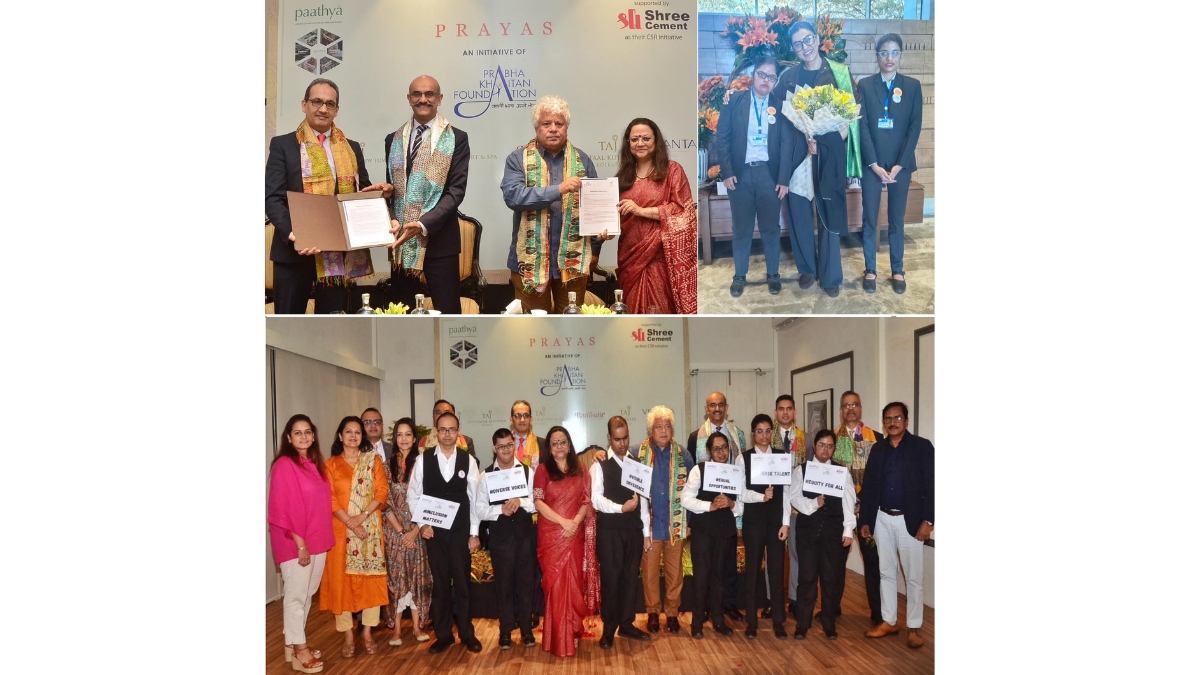
    Hyderabad (Telangana) [India], April 08:   As part of its ongoing investment promotion efforts and as a precursor to the flagship Destination Tripura: Business Conclave 2026, the Department of Industries & Commerce, Government of Tripura, organized the Destination Tripura – Business Meet 2026 Investors’ Roadshow in Hyderabad on 7th April 2026 from 10:00 AM onwards at Vivanta by Taj, Begumpet.

    The Investors’ Roadshow is being organized as a focused outreach initiative to engage prospective investors, industry representatives, and institutional stakeholders. The programme will present an overview of Tripura’s industrial ecosystem, recent infrastructure developments, policy initiatives, and sector‑specific investment opportunities, with an emphasis on investment facilitation and ease of doing business.

    Underscoring the State’s commitment to industry‑led growth, Shri Kiran Gitte, IAS, Secretary, Industries & Commerce, Government of Tripura, stated that the Government is proactively strengthening the Ease of Doing Business framework through policy reforms, procedural simplification, and time‑bound approvals. He emphasized that Tripura offers significant untapped potential across emerging and traditional sectors, supported by a skilled talent pool, improving connectivity, and a responsive institutional framework, and encouraged industry participants to explore long‑term partnership opportunities with the State.

    Providing a detailed sectoral perspective, Dr. Deepak Kumar, IAS, Director, Industries & Commerce, Government of Tripura, highlighted investment opportunities across key focus sectors, including IT and Digital Services, Education and Skill Development, Healthcare and Pharmaceuticals, Tourism and Hospitality, Agri and Food Processing, Rubber, Bamboo and Agarwood, Renewable Energy, Real Estate, Handloom and Handicrafts, and Manufacturing and Allied Industries. He also outlined the State’s incentive structure, land identification processes, and end‑to‑end facilitation support being extended to investors from project conceptualisation to implementation.

    The programme featured a comprehensive departmental presentation, complemented by short audio‑visual films showcasing Tripura’s industrial strengths, infrastructure growth, and sector‑wise opportunities. This was followed by dedicated one‑to‑one B2G interactions, during which senior officers of the State Government engaged with participating investors to understand business proposals and extend appropriate facilitation support.

    The Roadshow resulted in 50 LoIs/ MoUs worth over ₹2500 crores across multiple sectors.

    The Hyderabad Investors’ Roadshow successfully strengthened Tripura’s engagement with the industry ecosystem in southern India and further positioned the State as an emerging destination for sustainable, inclusive, and future‑oriented industrial development, in the lead‑up to the forthcoming Destination Tripura: Business Conclave 2026 at Agartala on 14-15 May, 2026.

    If you object to the content of this press release, please notify us at pr.error.rectification@gmail.com. We will respond and rectify the situation within 24 hours.

  • Supreme Power Equipment Limited Marks Entry into Maharashtra with ₹13.50 Cr Transformer Order

    Supreme Power Equipment Limited Marks Entry into Maharashtra with ₹13.50 Cr Transformer Order

    Mumbai (Maharashtra) [India], April 08: Supreme Power Equipment Limited (SPEL) (NSE: SUPREMEPWR), One of India’s leading manufacturers of power and distribution transformers has received a new order worth ₹13.50 Cr from an EPC company situated in Maharashtra

    Notably, this order marks the Company’s first order in the state of Maharashtra, representing a key milestone in its geographical expansion strategy. The entry into Maharashtra, a strategically important and industrially advanced state, is expected to open up new avenues for growth and enhance the Company’s presence across western India.

    The scope of the contract includes the supply of 20 MVA, 110/33–11 kV power transformers, which will be deployed for the EPC company’s project requirements. These transformers are critical components in power transmission and distribution infrastructure, highlighting the Company’s capability to deliver high-capacity and technically advanced solutions.

    The order is to be executed within a period of approximately 7 months, demonstrating the Company’s strong project execution capabilities and operational efficiency. Timely delivery of such projects remains a key focus area, ensuring reliability and strengthening long-term relationships with clients.

    With this order, the Company continues to build a diversified and geographically expanding order book, reinforcing its growth trajectory and establishing a stronger footprint across key regions in India.

    Commenting on the development, Mr. Vee Rajmohan, Chairman and Managing Director of Supreme Power Equipment Limited, said “We are pleased to secure our first order in Maharashtra, marking an important step in our geographical expansion journey. Entering a key industrial state like Maharashtra reflects the growing acceptance of our capabilities and strengthens our presence in the western region.

    This order provides a strong foundation to build long-term relationships and tap into the significant opportunities emerging from ongoing power and infrastructure developments in the state. We remain focused on timely execution and consistent quality as we scale our presence in this region.”

    Disclaimer: This article is for informational purposes only and does not constitute financial advice.

  • Sudeep Singh from FCI Discusses India’s Energy Shift: From Rural Electrification to a Renewable-Powered Future

    Sudeep Singh from FCI Discusses India’s Energy Shift: From Rural Electrification to a Renewable-Powered Future

    India’s energy journey has undergone a remarkable transformation over the past decade. What began as an ambitious mission to electrify every village has now evolved into a broader vision of building a renewable-powered, sustainable energy ecosystem. With rising energy demand, climate commitments, and technological advancements shaping policy decisions, India is steadily moving from expanding access to ensuring clean, reliable, and inclusive power for all. This shift reflects not only infrastructure development but also a strategic move toward long-term sustainability and economic resilience.

    “India’s energy transformation reflects a deeper shift in national priorities, from simply connecting villages to empowering communities with reliable and sustainable power. Rural electrification laid the foundation, but renewable energy is now driving inclusive growth, reducing dependency on fossil fuels, and strengthening energy security for the future,” says Sudeep Singh, Former Director, Food Corporation of India. “The real progress lies in ensuring that clean energy reaches every household, farm, and small enterprise, creating opportunities for rural prosperity while supporting India’s climate goals.”

    India’s energy transition began with the push for universal electrification. By April 2018, the country achieved 100% village electrification, connecting over 2.8 crore households through initiatives such as the DeenDayalUpadhyaya Gram JyotiYojana (DDUGJY) and the SAUBHAGYA scheme. These efforts helped bridge longstanding energy access gaps, particularly in remote and rural regions.

    However, electrification was only the first step. The focus soon shifted toward improving reliability, quality, and sustainability. Over the years, energy shortages dropped significantly, from around 4.2% in 2013-14 to nearly 0.1% by 2024-25, reflecting improvements in grid infrastructure and supply management. In remote regions where traditional grid expansion was difficult, decentralized renewable solutions such as solar mini-grids and distributed renewable energy systems helped extend access further.

    These developments not only improved living standards but also accelerated rural economic activity. Electrified villages witnessed growth in small businesses, improved healthcare access, digital connectivity, and enhanced agricultural productivity. This transformation laid the groundwork for India’s next phase, transitioning to renewable energy.

    India’s renewable energy expansion has gained remarkable momentum. By mid-2025, India achieved nearly 50% of its installed electricity capacity from non-fossil fuel sources, reaching the milestone five years ahead of its 2030 target. The country has also set an ambitious goal of achieving 500 GW of non-fossil fuel-based energy capacity by 2030, positioning itself among global leaders in clean energy adoption.

    Solar energy has emerged as the primary driver of this transformation. Installed solar capacity has grown nearly 39-fold since 2014, crossing 130 GW by late 2025. Government initiatives such as the PM Surya Ghar: MuftBijliYojana are accelerating rooftop solar adoption, aiming to provide free electricity to one crore households while promoting decentralized clean energy solutions.

    Wind energy has also expanded significantly, with capacity crossing 50 GW in 2025, particularly in renewable-rich states like Gujarat and Tamil Nadu. Hybrid energy systems combining solar and wind are being promoted to address intermittency challenges and ensure a consistent power supply. Additionally, India’s National Green Hydrogen Mission, launched in 2023, aims to produce 5 million metric tonnes of green hydrogen annually by 2030, supported by substantial renewable capacity expansion.

    “Renewable energy is no longer just an environmental necessity; it is becoming the backbone of India’s economic growth strategy,” Sudeep Singh notes. “Solar rooftops, hybrid energy parks, and decentralized power systems are empowering rural communities and reducing energy costs across sectors.”

    The shift to renewable energy is also playing a crucial role in inclusive growth. Clean energy solutions are transforming rural livelihoods by enabling irrigation systems, cold storage facilities, and small-scale manufacturing. Rooftop solar installations, solar-powered irrigation pumps, and micro-grid systems are helping farmers reduce operational costs while improving productivity.

    Renewable energy adoption is also promoting sustainable development in remote regions. Distributed renewable energy solutions have improved energy access in difficult terrains, particularly in the Northeast and tribal areas. These initiatives contribute to job creation, local entrepreneurship, and reduced dependence on fossil fuel imports.

    Additionally, smart homes, electric mobility, and energy-efficient appliances are becoming more common across urban and rural areas alike, encouraging sustainable consumption patterns. These developments highlight how clean energy initiatives are reshaping everyday life and promoting long-term sustainability.

    India’s energy transition is supported by strong policy frameworks and infrastructure investments. Initiatives such as the Production Linked Incentive (PLI) scheme have boosted domestic solar manufacturing capacity, strengthening supply chains and reducing import dependence.

    Infrastructure development, including the Green Energy Corridor project, is helping transmit renewable energy from states like Rajasthan and Gujarat to high-demand regions. Grid modernization and automation are also playing a vital role in integrating renewable sources efficiently across the country.

    Despite progress, challenges remain. Renewable energy intermittency requires large-scale energy storage solutions, including battery storage and pumped hydro systems. Land acquisition for solar parks and balancing coal dependency for base-load power are also key considerations in the transition.

    India’s journey from rural electrification to renewable leadership reflects a broader vision of sustainable growth. The transition is not only reducing carbon emissions but also strengthening energy security, promoting economic development, and improving the quality of life across regions.

    With continued policy support, technological innovation, and infrastructure investment, India is positioning itself as a global leader in clean energy. As Sudeep Singh emphasizes, the success of this transition lies in ensuring that renewable energy benefits every citizen, transforming villages, industries, and cities into drivers of a sustainable, energy-secure future.

    Disclaimer: Views expressed above are the author’s own and do not reflect the publication’s views.

  • Red Chief Rolls Out New Brand Film Featuring Ayushmann Khurrana, while reinforcing Brand ‘No Shortcuts’ Philosophy

    Red Chief Rolls Out New Brand Film Featuring Ayushmann Khurrana, while reinforcing Brand ‘No Shortcuts’ Philosophy

    New Delhi [India], April 08: Red Chief, one of India’s leading footwear brands, unveiled its new brand film and campaign featuring actor Ayushmann Khurrana at Hotel Le- Meridian in Delhi on 2nd April, marking the introduction of its new brand philosophy – ‘No Shortcuts.’ This campaign challenges the idea of shortcuts, reminding audiences that meaningful destinations demand time, courage, and resilience. The closing product showcase positions Red Chief not just as footwear, but as a reliable companion for every step of one’s journey.

    Brand Film Link:

    Mr. Manoj Gyanchandani, Managing Director, Leayan Global Pvt. Ltd, said “This campaign is an important step in Red Chief’s brand journey. For over 28 years, we have followed the philosophy of not taking shortcuts in how we built our products and Red Chief brand. This commitment is reflected in our approach to design, material selection, and craftsmanship. Every product is created with a focus on comfort, style, and long-term performance. Instead of prioritizing ease or speed, we have consistently chosen processes that ensure quality and reliability.

    The philosophy of “No Shortcuts” is therefore not just a campaign thought, but a reflection of the brand’s journey and its values. It aligns with the mindset of its consumers, individuals who value effort, consistency, and substance over quick fixes.

    Mr. Parth Gyanchandani, Executive Director, Leayan Global Pvt. Ltd, said, our brand Red Chief has built strong legacy in quality and comfort led footwear, this new campaign also signals broader lifestyle aspiration around authenticity, individuality, and everyday confidence and sharpen our connect with younger and more style conscious consumers across metro, tier I, tier II, and tier III markets. Through this campaign, we are also spotlighting our focus across our newly introduced category Sports Shoes and Sneakers. After this campaign, many more brand campaigns have been planned back-to-back for the next few seasons which will also showcase brand’s leather formal and casual range.

    Mr. Rahul Sharma, Sr. General Manager – Marketing, shared “the campaign will now be amplified through an integrated 360-degree rollout across digital, television, print, outdoor, and on ground consumer touch points, ensuring wider visibility across key markets in India.

     With the launch of this brand film, Red Chief continues to strengthen its positioning in competitive footwear market of India – not only as a trusted footwear brand, but as lifestyle choice for consumers who believe in walking in their own path with confidence, comfort, and style.”

    If you object to the content of this press release, please notify us at pr.error.rectification@gmail.com. We will respond and rectify the situation within 24 hours.

  • RBMI GROUP OF INSTITUTIONS, in collaboration with Accel Skill, has announced the launch of Centers of Excellence across two campuses, aimed at preparing Indian healthcare professionals for global career opportunities.

    RBMI GROUP OF INSTITUTIONS, in collaboration with Accel Skill, has announced the launch of Centers of Excellence across two campuses, aimed at preparing Indian healthcare professionals for global career opportunities.

    Bareilly (Uttar Pradesh) [India], April 09: Accel Skill and RBMI signed a Memorandum of Understanding (MoU) at the Paramedic Conclave 2026, held on 4 April 2026 at the RBMI campus in Bareilly, marking the beginning of a strategic collaboration aimed at strengthening healthcare education, skill development, and global career pathways for students and aspiring nursing professionals.

    The conclave brought together students, educators, institutional representatives, and industry stakeholders for meaningful discussions on the future of paramedical education, the growing importance of healthcare innovation, and the need to build stronger connections between academic learning and workforce readiness.

    The event served as an important platform for dialogue on how institutions and industry can work together to prepare the next generation of healthcare talent for an evolving and increasingly demanding landscape. The MoU between Accel Skill and RBMI reflects a shared commitment to advancing student development through structured engagement, increased industry exposure, and career oriented initiatives.

    Through this collaboration, both institutions aim to create opportunities that help learners build practical awareness, strengthen their employability, and gain access to emerging pathways within healthcare and allied sectors. A proud moment at the conclave was the announcement of the Center of Excellence (COE), alongside the exchange of the MoU between Mr. Akhlesh Mathur and Mr. Yashwinder Paal, further strengthening the shared vision of future-ready healthcare education.

    Speaking on the occasion, Yashwinder Paal, Co-Founder, Accel Skill, said, “Paramedic Conclave 2026 was conceived as a platform to bring together education, industry, and opportunity in a meaningful way. Our collaboration with RBMI represents a shared commitment to supporting students with the right exposure, relevant skills, and clearer career pathways. We believe this partnership will contribute significantly to shaping a more prepared and future-ready healthcare workforce.

    Mr. Akhlesh Mathur, President, RBMI Group of Institutions, said, “RBMI is committed to providing its students with quality education, relevant exposure, and opportunities that enhance their professional readiness. We are pleased to partner with Accel Skill through this MoU, and we see this collaboration as a valuable step towards strengthening industry-academia engagement for the benefit of our students and the broader healthcare ecosystem.” Archana Thakran, Co-Founder & CEO, Accel Skill, added, “At Accel Skill, we believe that meaningful career development begins with awareness, guidance, and strong institutional collaboration.

    This MoU with RBMI is an important step towards creating a more enabling environment for students to understand opportunities, build relevant competencies, and prepare for sustainable professional journeys in healthcare. We are pleased to see this partnership begin through a conclave focused on innovation, education, and impact.” The signing of the MoU at Paramedic Conclave 2026, together with the announcement of the Center of Excellence, underlines the importance of collaborative efforts in building responsive and future-oriented healthcare education systems. As the sector continues to evolve, partnerships of this nature are expected to play a critical role in bridging the gap between classroom learning and real-world opportunities, while supporting students in becoming skilled, confident, and career-ready professionals.

    For media inquiries: Email: info@accelskill.com

    info@rbmi.in Websites: accelskill.com

    https://www.rbmi.in

  • Grync.io Launches A Unified Revenue Efficiency Platform

    Grync.io Launches A Unified Revenue Efficiency Platform

    Kolkata (West Bengal) [India], April 07: grync.io has launched its Unified Revenue Efficiency Platform, built to solve a critical challenge for modern businesses by turning scattered data into clear, actionable revenue outcomes. Today, most SaaS, fintech, and health tech companies operate with multiple tools across product analytics, CRM, billing, and customer support. While these systems generate valuable data, they often exist in silos, forcing teams to spend more time interpreting dashboards than actually taking action.

    Grync.io eliminates this inefficiency by bringing all data into one unified layer. Using AI-powered analytics and data correlation, the platform not only identifies what’s happening across the business but also recommends the next best action and enables teams to execute it instantly.

    While 44% of Data & Analytics teams are expanding, many still struggle with talent gaps and limited resources. Gartner estimates that poor data quality costs organizations $12.9 million every year revealing the true cost of disconnected systems. That’s where Grync.io steps in, bridging the gap between insight and execution.” said Prithwiraj Roy, Co-founder & CTO, Grync.io. 

    He further added, “We don’t just present data; we identify what needs fixing and enable teams to act instantly. That’s where real revenue growth begins.

    Driving SaaS Growth Through Better Activation

    For SaaS companies, the platform directly tackles customer activation, which is one of the most important drivers of revenue. Activated users often spend 2 – 3 times more than non-activated users, yet many teams struggle to identify where users drop off.

    Grync.io pinpoints these friction points and triggers real-time interventions, helping improve activation rates, reduce churn, and increase customer lifetime value.

    Turning Fintech Insights into Conversions

    In the fintech space, where companies already rely on strong analytics stacks, the challenge lies in converting users and driving deeper engagement. Grync.io bridges this gap by transforming user behavior into a monetizable asset.

    For instance, if a user completes KYC but doesn’t initiate a transaction, the platform can automatically trigger targeted actions to drive conversion without requiring additional effort from tech or sales teams.

    Enabling Real-Time Action in Healthtech

    In healthtech, the platform acts as a real-time orchestration layer for hospitals and healthcare providers. Instead of relying on delayed reports, Grync.io enables immediate action based on live data.

    Whether it’s improving patient follow-ups, strengthening referral networks, or boosting performance in underperforming specialties, the platform ensures timely interventions—without adding operational complexity.

    From Insights to Immediate Execution

    What differentiates Grync.io is its shift from passive analytics to active execution. By combining analytics, marketing automation, and intelligent data correlation, the platform ensures that insights don’t just sit in dashboards—they drive outcomes.

    With this launch, Grync.io positions itself as a powerful growth engine for modern businesses, helping them move faster, act smarter, and turn everyday user behavior into consistent, scalable revenue.

    About Grync.io
    Grync.io is a unified revenue efficiency platform that transforms scattered data into real-time, actionable growth. Built for digital-first businesses, it connects product, customer, and revenue signals to execute intelligent workflows. By enabling instant action, Grync.io helps organizations improve activation, reduce churn, and drive scalable, data-driven revenue outcomes. We drive data monetization, enable seamless interoperability, and enhance process efficiency by minimizing revenue leakage, ensuring businesses unlock maximum value from every signal.

    Website:https://grync.io/
    LinkedIn:https://www.linkedin.com/company/grync-io/

    Media Contact

    Dr. Nita Samantaray

    Media & Communication

    Mobile: +91 8763727091

    If you object to the content of this press release, please notify us at pr.error.rectification@gmail.com. We will respond and rectify the situation within 24 hours.

  • Om Power Transmission Limited IPO Opens on April 09, 2026

    Om Power Transmission Limited IPO Opens on April 09, 2026

    Mumbai (Maharashtra) [India], April 08: Om Power Transmission Limited (the “Company”), a power transmission infrastructure engineering, procurement, and construction (“EPC”) company engaged in executing high-voltage (“HV”) and extra-high voltage (“EHV”) transmission lines, substations, underground cabling projects, and providing comprehensive operation and maintenance (“O&M”) services proposes to open its Initial Public Offering on April 09, 2026, with Equity Shares to be listed on the National Stock Exchange of India Limited and BSE Limited (collectively, “Stock Exchanges”). 

    The IPO will comprise up to 85,75,000 equity shares with a face value of ₹ 10 each (“Equity Shares”), comprising of a fresh issue aggregating up to 75,75,000 Equity Shares (“Fresh Issue”) and an offer for sale of up to 10,00,000 Equity Shares (“Offer for Sale” and together with the Fresh Issue, the “Offer” or “IPO”).

    The Total Offer Size is up to 85,75,000 Equity Shares with a price band of ₹ 166 – ₹ 175 per Share. 

    Equity Share Allocation

    • Qualified Institutional Buyer – Not more than 42,87,175 Equity Shares
    • Non-Institutional Investors – Not less than 12,86,475 Equity Shares
    • Individual Investors – Not less than 30,01,350 Equity Shares

    The net proceeds from the Offer will be utilized for funding of capital expenditure requirements of the Company towards purchase of machinery and equipment, pre-payment/ re-payment, in part or full, of certain outstanding borrowings, funding long-term working capital requirement and the general corporate purposes. The anchor bidding is on April 08, 2026. The Offer will open on Thursday, April 09, 2026 and close on Monday, April 13, 2026.

    The Book Running Lead Manager to the Offer is Beeline Capital Advisors Private Limited, and the Registrar to the Offer is MUFG Intime India Private Limited (formerly Link Intime India Private Limited).

    Mr. Kalpesh Dhanjibhai Patel, Chairman and Executive Director of the Companyexpressed, “The Company has progressed over the years as an EPC company focused on power transmission infrastructure, with experience in transmission lines, substations, underground cabling and O&M services. The business of the Company has expanded through execution of projects for utilities and infrastructure-led demand, supported by a growing order book and operational capabilities.

    The proposed Initial Public Offering represents an important step in the Company’s growth journey. The IPO is expected to support the Company’s next phase of growth by strengthening operational capabilities, enhancing execution capacity and supporting participation in larger and more complex projects. This is expected to enable the Company to expand its presence in the power transmission and grid infrastructure space, in line with its growth plans.”

    Disclaimer: This article is for informational purposes only and does not constitute financial advice.

  • NG brand set for comeback as NG Mall opens on April 29, 60% profits for charity

    NG brand set for comeback as NG Mall opens on April 29, 60% profits for charity

    Entrepreneur Sudhir Goyal says funds to be used to provide healthcare support to needy patients

    Surat (Gujarat) [India], April 08: Surat is set to witness the return of the NG brand. Entrepreneur Sudhir Goyal today announced the relaunch of the NG brand with the opening of a new NG Mall in Surat on April 29. The venture will allocate 60 per cent of its profits towards charitable initiatives.

    The announcement marks the brand’s return after a gap of four years. Goyal had launched the NG Lehenga brand in Surat in January 2021, which gained significant recognition in the city. However, the onset of the COVID-19 pandemic and subsequent restrictions impacted business operations. Goyal was also actively engaged in social service at the time but his business suffered.

    Sharing his journey, Goyal said, “I travelled extensively over the past four years. Now, I am returning with a renewed vision to undertake large-scale charitable work through this initiative.”

    As part of the new venture, Goyal will establish the NG Seva Trust, through which 60 per cent of the profits will be directed towards social causes.

    “Our immediate goal is to support patients in government hospitals such as SMIMER and Civil Hospital in Surat, particularly those who are unable to afford treatment. Over time, we will expand this mission. Our long-term vision is to build a seven-star hospital where the underprivileged will receive free treatment. Medicines will also be provided free of cost, without the need for any government card,” he said.

    Providing details of the ownership structure of the venture, he said it will operate as a partnership, with 60 per cent ownership held by him and 40 per cent by his wife. His entire share of profits will be channelled into charitable activities through the NG Seva Trust.

  • How Oil Trends Are Powering India’s EV Growth?

    How Oil Trends Are Powering India’s EV Growth?

    New Delhi [India], April 08: India’s EV story was supposed to be simple. Cleaner air, smarter tech, fewer fuel bills, you know, the usual pitch. And for a while, that’s exactly how it was sold. Almost idealistic. Almost too neat.

    But then reality walked in. Loud, unpredictable, and carrying a barrel of crude oil.

    Because here’s the thing, India doesn’t just consume oil, it depends on it. Heavily. Roughly 85% of its crude oil needs are imported. That’s not a small vulnerability, that’s… well, a structural pressure point. And most of that oil? It flows through the Strait of Hormuz, a narrow stretch that handles nearly 20% of the world’s petroleum supply and about one-fifth of global LNG trade.

    Now pause for a second. One chokepoint. One disruption. And suddenly fuel prices don’t just rise, they spike, they ripple, they mess with everything from transport costs to grocery bills.

    And that’s where the EV story quietly changes tone.

    The Surge That Feels… Different

    India’s EV sales didn’t just grow in FY26; they exploded. We’re talking about a 246% year-on-year jump, crossing roughly 1.7 million units sold across segments. Two-wheelers led the charge (no surprise there), making up nearly 60–65% of total EV sales, while three-wheelers weren’t far behind, especially in urban logistics and last-mile delivery.

    Passenger EVs? Still a smaller slice, about 4–5% of total car sales, but growing steadily, almost stubbornly.

    At first glance, this looks like a classic adoption curve. Early traction, policy push, rising awareness. But honestly… it feels like something else is at play.

    Because consumer behavior doesn’t usually shift this fast without a trigger. And in this case, that trigger seems to be fuel volatility. Petrol prices are flirting with ₹100+ per liter in multiple states, diesel not far behind. People notice that. Businesses definitely do.

    So EVs stop being a “future choice” and start becoming a “cost decision.”

    And that shift? It’s huge.

    Not Just Policy — Pressure

    Yes, government incentives have helped. The FAME II scheme, state subsidies, GST cuts — all of that matters. But policy alone doesn’t create urgency. Pressure does.

    And pressure, right now, is coming from global oil markets.

    India spent over $130 billion on crude imports in FY25, and that figure swings wildly with global prices. A $10 increase per barrel doesn’t just sound abstract; it translates into billions added to the import bill, widening the current account deficit, nudging inflation upward.

    You feel it eventually. Maybe not directly. But it shows up in transport fares, delivery costs, and even food prices.

    So yeah, EV adoption isn’t just about being eco-friendly anymore. It’s about insulating the economy from shocks. A kind of financial self-defense, if you think about it.

    The Hormuz Effect (Yes, It’s a Thing Now)

    It’s strange, honestly. The idea that a distant waterway like the Strait of Hormuz could influence what kind of vehicles Indians buy.

    But it does.

    Any tension in that region, geopolitical conflicts, naval disruptions, or even just the threat of instability sends crude prices upward. Not always dramatically, but enough to create uncertainty. And markets hate uncertainty.

    So policymakers start thinking long-term. Businesses start hedging. Consumers start calculating.

    And EVs? They suddenly make more sense.

    Not perfect sense, not everywhere. Charging infrastructure is still patchy, and battery costs are still high. But the logic of EVs strengthens every time oil becomes unpredictable.

    It’s almost like the old system is unintentionally accelerating the new one.

    Follow the Money, Follow the Shift

    Let’s talk numbers again, because they tell a very grounded story.

    India’s EV market is projected to reach $100 billion by 2030, with penetration expected to hit 30% in private cars, 70% in commercial vehicles, and 80% in two- and three-wheelers. Ambitious? Definitely. Impossible? Not really.

    Battery prices have already fallen by nearly 85% over the last decade, though they’ve seen some volatility recently due to raw material costs. Charging infrastructure is expanding, too. India had around 12,000+ public charging stations by early 2026, and that number is growing fast, albeit unevenly across regions.

    But here’s where it gets a bit messy.

    EVs reduce oil dependency, yes. But they increase dependence on something else, critical minerals. Lithium, cobalt, nickel. And India imports most of these too. So while one dependency shrinks, another quietly grows.

    Different game, same rules.

    So… Is This Really About Sustainability?

    Honestly? Partly.

    There’s no denying the environmental benefits of lower emissions, better urban air quality, and reduced noise pollution. All of that is real and important.

    But if we’re being completely honest and maybe a little blunt, sustainability alone isn’t what’s driving this surge.

    It’s economics. It’s risk management. It’s the need to control exposure to global shocks.

    Because when oil prices rise, India doesn’t just pay more, it feels more vulnerable. And EVs, in a slightly indirect but very real way, offer a path out of that vulnerability.

    Not a perfect path. Not an immediate one. But a direction.

    Where This Leaves Us

    So yeah, India’s EV boom isn’t just about shiny new cars or green ambitions. It’s deeper than that. Slightly more pragmatic. Maybe even a bit reactive.

    It’s about a country trying to navigate uncertainty. Trying to reduce its exposure to forces it can’t control, like global oil routes, geopolitical tensions, and price shocks.

    And in that sense, the connection between Indian EV adoption and the Strait of Hormuz isn’t weird at all.

    It’s logical.

    Because sometimes, the biggest changes don’t come from innovation alone. They come from pressure. From constraints. From systems that stop feeling stable.

    And right now, oil is that system.

    Which means EVs aren’t just the future anymore.

    They’re becoming the fallback plan. Or maybe… the main plan.

    PNN BUSINESS