Tag: Business

  • Butterfly Dental Solutions Redefines Dental Distribution with Tech-Enabled Hy-Commerce™ Model

    Butterfly Dental Solutions Redefines Dental Distribution with Tech-Enabled Hy-Commerce™ Model

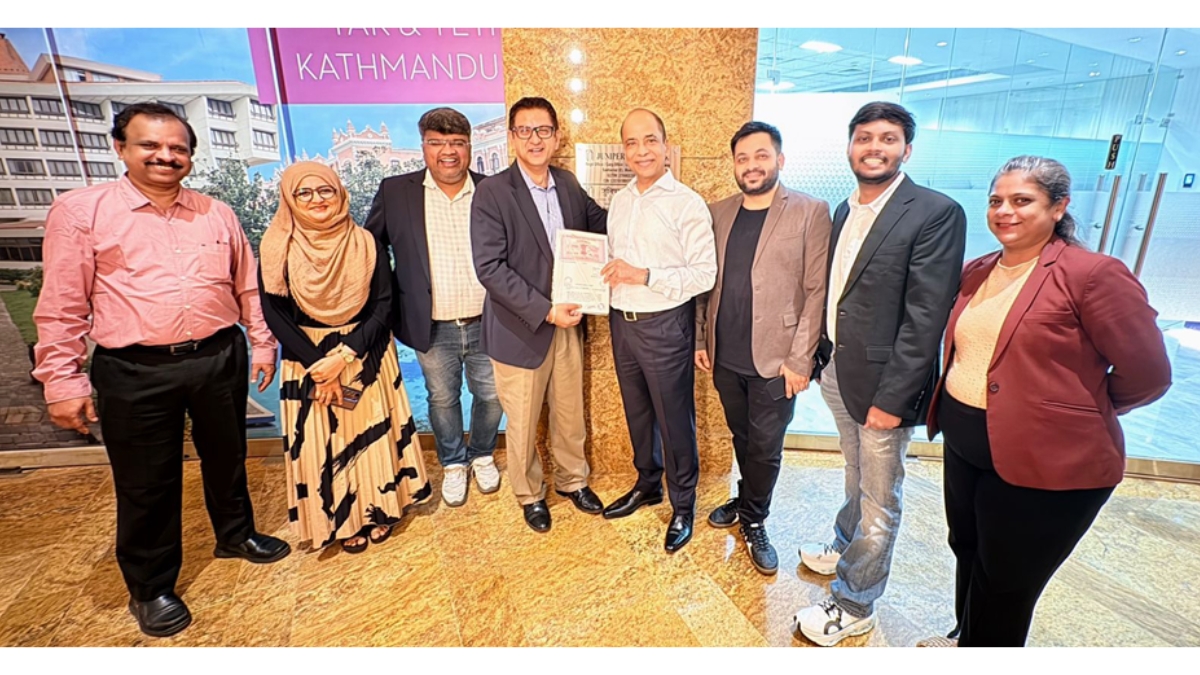
    New Delhi [India], February 15: Butterfly Dental Solutions (BDS) is transforming India’s dental distribution landscape with its tech-enabled Hy-Commerce marketplace, seamlessly combining digital speed with trusted human distribution. Designed to address the evolving needs of the dental ecosystem, BDS brings dentists, manufacturers, and local associates together on a single, integrated platform built on transparency, trust, and compliance.

    Positioned as a full-service dental Hy-Commerce marketplace, BDS blends the efficiency of e-commerce with the reliability of human-led engagement, ensuring that technology enhances, rather than replaces, long-standing professional relationships. The platform enables dentists and clinics to place seamless online orders while continuing to benefit from expert human interaction that ensures product authenticity, regulatory adherence, and consistent service quality.

    For dental professionals, this hybrid approach delivers the convenience of digital ordering without compromising on confidence and personal support. By maintaining a strong human interface where it matters most, BDS ensures reliability, accountability, and continuity, key pillars in clinical decision-making.

    Manufacturers benefit from a scalable, compliance-led go-to-market model that offers structured market access, improved visibility into demand, and reduced dependence on fragmented distribution channels. Through its technology backbone, BDS enables manufacturers to engage with the market in a more organised, transparent, and standards-driven manner.

    Strengthening its global alignment, Butterfly Dental Solutions is also an official partner of Henry Schein, the world’s largest dental products and Solutions Company. This partnership reinforces BDS’s commitment to international benchmarks in quality, compliance, and ethical business practices.

    BDS further empowers its associate network through an asset-light micro-entrepreneurship model. Franchise partners are supported with technology, structured training, centralised systems, and strong manufacturer relationships, enabling them to build sustainable local businesses with lower risk and long-term growth potential.

    At the core of Butterfly Dental Solutions’ Hy-Commerce™ approach are five defining principles:

    • Speed enabled by technology
    • Transparency in pricing and processes
    • Compliance by design
    • Human expertise where it truly matters
    • Scalable growth for every stakeholder

    With its future-ready vision, Butterfly Dental Solutions is building a next-generation dental distribution ecosystem, one that prioritises trust, performance, and long-term value creation, while staying true to its promise of digital efficiency powered by human reliability.

    Commenting on the initiative, Mr. Rakesh Julka, Co-Founder, Butterfly Dental Solutions said, “The Company is focused on building a structured, transparent, and compliance-driven operating framework that simplifies procurement for dental clinics while addressing systemic inefficiencies.”

    Mr. Murugan Pillai, Co-Founder, Butterfly Dental Solutions, added, “Combining technology with strong on-ground execution, Butterfly Dental Solutions is creating a scalable and future-ready dental supply chain that allows professionals to focus on patient care.”

    If you object to the content of this press release, please notify us at pr.error.rectification@gmail.com. We will respond and rectify the situation within 24 hours.

  • Gen Z Valentine Economy: 1 Generation, Many Industries Winning Big

    Gen Z Valentine Economy: 1 Generation, Many Industries Winning Big

    New Delhi [India], February 14: The Gen Z Valentine Economy is quiet, but categorical. Valentine’s Day is no longer used in a ritualistic, couples-focused way, but as a wider cultural phenomenon influenced by digital behaviour, emotional intelligence, and value-based purchases.

    For Gen Z, the celebration of Valentine’s Day no longer revolves around chivalrous acts or anticipated spending. It is about expression, timing, and shareability. The gift does not tell even half the story. The rest of the work is done by the experience, the post, the memory, and the relevance.

    This is not rebellion. It is evolution.

    Gen Z is born into smartphones, algorithms, and unlimited choice, which shapes their attitude toward consumption differently. They reward brands that avoid extravagance, respect individuality, and deliver emotional payoff without overshooting.

    Why Gen Z Spends Differently

    The Gen Z Valentine Economy is defined more by values than by budget limitations. This generation is not anti-consumption. It is anti-waste, anti-performance, and acutely allergic to performative romance.

    Gen Z has made Valentine’s Day inclusive. Friends count. Self-love counts. Experiences count. The old-fashioned notion that February 14 exists only for couples no longer holds in a world where identity and relationships are fluid.

    According to industry data, Gen Z consistently values authenticity, practicality, and emotional relevance. They are willing to spend, but only where they feel genuine value. Expensive does not equal meaningful. Visible does not equal valuable.

    These attitudes have opened new avenues for businesses willing to adapt.

    Creator Economy: Gifting Goes Public

    The creator ecosystem is among the biggest winners in the Gen Z Valentine Economy. Valentine’s Day is now peak content season, not merely a retail moment.

    Brands are no longer just selling products. They are enabling stories.

    What once defined influencer gifting as limited to beauty and luxury has expanded to cafés, subscription services, digital platforms, experience brands, and even small local businesses. The goal is no longer reach alone. It is relatability.

    Traditional Valentine advertising has been replaced by short-form video, especially reels. An informal café date recorded on a phone often performs better than a polished campaign. Gen Z trusts creators who feel human, not aspirationally distant.

    For this generation, a gift that translates into content carries disproportionate value. It wins when it tells a story, evokes emotion, or becomes part of everyday life.

    Power of Personalisation and D2C Brands

    Another clear beneficiary of the Gen Z Valentine Economy is direct-to-consumer brands. Their core strength is agility.

    From customised skincare sets and handcrafted chocolates to minimal jewellery and perfumes, D2C brands understand what Gen Z wants: control, choice, and character.

    Valentine’s Day has shifted from short-term sales spikes to long-term relationship building. Personal notes, pricing flexibility, limited quantities, and gender-neutral positioning align with a generation that values inclusivity and transparency.

    Self-gifting has also entered the mainstream. Many Gen Z consumers now buy Valentine’s products for themselves, not to conform, but as an act of self-care, making the occasion personal rather than performative.

    For D2C brands, this is not a seasonal win. It is a brand-building opportunity.

    Experiences Over Objects

    The shift toward experiences is perhaps the defining trait of the Gen Z Valentine Economy.

    Themed café menus, live performances, comedy shows, art workshops, pop-ups, and immersive experiences are seeing rising demand, especially in urban India. The product is not the ticket. It is the memory.

    Gen Z derives emotional value from experiences. They encourage connection, conversation, and content creation. Crucially, they are not permanent. An unused object can feel meaningless compared to a memorable night out.

    The celebration window has also expanded. Valentine-themed weekends and post-Valentine events now stretch commercial opportunities well beyond February 14.

    For hospitality, entertainment, and event businesses, this shift is structural, not temporary.

    Digital Gifting Comes of Age

    Digital gifting has quietly become one of the most practical expressions of the Gen Z Valentine Economy.

    Music and video subscriptions, fitness apps, gaming vouchers, curated playlists, and digital credits are increasingly popular. These gifts are instant, flexible, and affordable, qualities Gen Z values highly.

    Unlike physical gifts, digital offerings integrate seamlessly into daily life. Their value is not limited to the occasion, making them feel more personal and less performative.

    Experimental formats such as NFTs remain niche, but mainstream digital gifts continue to grow because they solve real problems. They are accessible, low-pressure, and relevant.

    In a world of limited time and attention, convenience is emotional.

    India’s Gen Z Valentine Playbook

    In India, the Gen Z Valentine Economy is shaped by cultural sensitivity and creative pragmatism.

    Young consumers across metros and emerging cities are choosing café hopping, shared experiences, digital gifting, and social-first celebrations over expensive dinners or traditional gifts.

    Creativity is prioritised over extravagance. Moments over markers. Connection over convention.

    This shift mirrors broader changes in Indian youth consumption. Gen Z, unlike previous generations, is comfortable blending global trends with local sensibilities. They celebrate differently, but deliberately.

    What This Means for Businesses

    The takeaway is simple. Valentine’s Day is no longer just a retail event. It is a cultural moment.

    Brands that succeed in the Gen Z Valentine Economy understand emotional logic. They prioritise relevance over luxury, experience over excess, and authenticity over polish.

    As Gen Z gains spending power, these trends will only strengthen. The future of Valentine’s Day belongs to businesses that show up meaningfully, not loudly.

    In this economy, love is not merely exchanged. It is shared, personalised, and experienced. Often in under 30 seconds.

  • NIS Management Limited Reports Q3 FY26 Revenue of Rs 103.77 Cr; 9M Revenue Stands at Rs 318.66 Cr

    NIS Management Limited Reports Q3 FY26 Revenue of Rs 103.77 Cr; 9M Revenue Stands at Rs 318.66 Cr

    Kolkata (West Bengal) [India], February 14: NIS Management Limited(BSE – 544495), One of leading integrated services platforms, specialising in security, facility management, electronic security, and skill development, NIS Management Limited has announced its Unaudited Q3 & 9M FY26 Financial Results.

    Key Consolidated Financial Highlights of Q3 FY26

    • Total Income of ₹ 103.77 Cr
    • EBITDA of ₹ 5.69 Cr
    • EBITDA Margin of 5.48%
    • PAT of ₹ 2.83 Cr
    • PAT Margin of 2.73%
    • EPS of ₹ 1.43

    Key Consolidated Financial Highlights of 9M FY26

    • Total Income of ₹ 318.66 Cr
    • EBITDA of ₹ 22.42 Cr
    • EBITDA Margin of 7.04%
    • PAT of ₹ 13.05 Cr
    • PAT Margin of 4.10%
    • EPS of ₹ 7.59

    Commenting on the Financial performance Mr. Debajit Choudhury Chairman & Managing Director, of NIS Management Limited said, “We are pleased to report a steady performance for Q3 and 9M FY26. During Q3 FY26, we achieved consolidated total income of ₹ 103.77 Cr with PAT of ₹ 2.83 Cr, while for 9M FY26, total income stood at ₹ 318.66 Cr and PAT at ₹ 13.05 Cr. The performance reflects consistent demand across our core security and integrated facility management services, supported by strong execution across multiple states and client segments.

    Our diversified service portfolio, large trained workforce, and long-standing client relationships continue to provide revenue stability and operational leverage. We are also seeing encouraging traction in technology-enabled security and higher-value facility management services, which is supporting margin improvement.

    Going forward, we remain focused on strengthening our integrated service offerings, improving operating efficiencies, and expanding into higher-margin segments while maintaining service quality and disciplined growth.”

    Disclaimer: This article is for informational purposes only and does not constitute financial advice.

  • Exide Empowers Future Engineers

    Exide Empowers Future Engineers

    Kolkata (West Bengal) [India], February 14– Exide Industries Limited has launched the Exide Diksha Scholarship, a merit-based scholarship program curated as part of its Corporate Social Responsibility (CSR) initiatives.

    The inaugural edition of the scholarship was rolled out across three premier institutions viz Jadavpur University, Indian Institute of Engineering Science and Technology Shibpur, and National Institute of Technology Durgapur. This marks the beginning of a long-term commitment to nurture young engineering talent in eastern India for the manufacturing industry, the future backbone of developed India. This initiative is set to expand to additional colleges across East and Northeast India next year.

    Exide Empowers Future Engineers-pnn

    The scholarship was open exclusively to the top 15 students from the Mechanical, Electrical, and Chemical Engineering departments of the participating institutions. These streams were thoughtfully chosen as students from these disciplines will play a vital role in shaping the future of the battery and energy storage industry.

    Following a structured selection process that included project evaluation and personal interviews, 24 students were chosen as the first cohort of Diksha Scholars.

    More than a scholarship, Exide Diksha reflects a shared commitment between industry and academia to nurture capability and ambition. By engaging directly with students through structured assessments and interactions, the program aims to bridge classroom learning with real-world industry exposure.

    About Exide Industries Limited
    Exide Industries Limited is one of India’s leading manufacturers of lead-acid storage batteries and power storage solutions, serving diverse sectors across automotive, industrial, and energy applications. Through its CSR initiatives, Exide continues to invest in education, community development, and sustainable growth.

    If you object to the content of this press release, please notify us at pr.error.rectification@gmail.com. We will respond and rectify the situation within 24 hours.


  • Varvee Global Limited (VGL) Reports Positive Q3FY26 Growth: Triple-Digit Revenue Gains and 85 Percent 9M Gross Margins

    Varvee Global Limited (VGL) Reports Positive Q3FY26 Growth: Triple-Digit Revenue Gains and 85 Percent 9M Gross Margins

    Structural Shift to High-Yield Non-Denim Portfolio; Balance Sheet De-risked with India Ratings ‘Positive’ Outlook

    Ahmedabad (Gujarat) [India], February 14: Varvee Global Limited (“VGL” or the “Company”) has announced its financial results for the quarter (Q3 FY26) and nine months ended December 31, 2025 (9M FY26). The results mark a strategic inflection point, as the Company transitions from a successful operational turnaround to a high-velocity growth phase, characterized by sector-leading margins and a fortified capital structure.

    Varvee Global Limited (VGL) Reports Positive Q3FY26 Growth: Triple-Digit Revenue Gains and 85 Percent 9M Gross Margins-PNN

    Q3 & 9M FY26 Key Takeaways

    The Company achieved a significant 9M EBITDA turnaround, reaching ₹1,125.49 lakh compared to a loss of ₹3,820.25 lakh in the prior-year period. While the Q3 EBITDA remains slightly negative due to timing and reinvestment, the 93.5% reduction in Q3 operating loss reflects a trajectory toward sustainable profitability.

    VGL’s deliberate shift away from legacy, commoditized denim toward value-added Non-Denim Shirtings and Suitings is now reflected in its 9M Gross Margin of 84.49%, a turnaround from a negative margin last year. This represents a substantial bps expansion YoY, proving the superior unit economics of the new management’s product mix alongside an 86.1% reduction in 9M raw material costs following a strategic portfolio rationalization.

    While 9M revenue grew 12.78%, 9M PAT surged by 71.67% to ₹4,104.10 lakh. This highlights significant operating leverage, where a lean, restructured cost base, including a reduction in employee costs achieved earlier in the year, is translating incremental revenue directly to the bottom line.

    Employee expenses for the nine-month period were reduced by 48.69% YoY to ₹307.67 lakh, showcasing the lean operational structure implemented by the new leadership.

    Finance costs for Q3 were effectively eliminated (₹0.03 lakh), a 99.99% reduction from Q3 FY25, following the full retirement of high-cost legacy debt.

    Institutional Milestones: Credit Rating & Capacity Scaling

    In a major institutional milestone, India Ratings and Research assigned an ‘IND BB/Positive’ issuer rating to VGL on January 28, 2026. This follows the withdrawal of the legacy ‘IVR D’ (Default) issuer non-cooperating rating by Infomerics on December 31, 2025, after the Company secured “No Due Certificates” from all major lenders, including SBI and Bank of Baroda, as well as confirmation of “No Dues” with respect to its fixed deposits. The ‘Positive’ outlook displays the Company’s robust liquidity and the sustainability of its turnaround.

    On January 5, 2026, VGL announced a 50% increase in production capacity for non-denim fabrics, scaling from 12 lakh to 18 lakh meters per month. This is an interim step toward the management’s long-term goal of 50 lakh meters per month, positioning VGL to capture high-margin demand in a domestic textile market projected to reach USD 250 billion by 2030–31.

    Management Outlook

    “Our Q3 and 9M results reflect a fundamental turnaround in VGL’s earning capability. By delivering 9M gross margins of 84.5% and achieving a positive 9M EBITDA, we have proven that our focus on premium non-denim fabrics is the correct path for long-term growth. The assignment of a ‘Positive’ rating outlook from India Ratings marks our transition into a more stable, institutional-grade financial profile. We are now aggressively scaling; our expansion to 18 lakh meters per month is just the first step toward our 50-lakh-meter goal. We remain committed to compounding free cash flow and maintaining a debt-free balance sheet as we capture the expanding opportunities in the Indian textile market.”

    — Mr. Jaimin Gupta, Chairman & Managing Director

    About Varvee Global Limited & TAM

    Headquartered in Ahmedabad, Varvee Global Limited (previously known as Aarvee Denims & Exports Ltd.) is a leading integrated textile manufacturer offering a comprehensive range of denim, non-denim, shirting, and suiting fabrics. Operating primarily from its Narol facility, Varvee Global Limited delivers end-to-end in-house capabilities, from yarn production to finishing, ensuring consistency in quality and flexibility in supply. Over three decades, Varvee Global Limited has built a vertically integrated platform serving domestic and international markets. Following a strategic restructuring and leadership transition in 2025, Varvee Global Limited now operates from its high-capability Narol unit, with a renewed focus on operational efficiency, cost optimisation, and technology-led supply chain enhancements.

    The Company achieved a debt-free status in June 2025, providing a stronger capital foundation to execute its revival plan. The Indian textile market, valued at USD 146.55 billion in 2024, is projected to reach USD 213.51 billion by 2033, with domestic demand and exports expected to hit USD 250 billion and USD 100 billion, respectively, by 2030–31. Within this, India’s denim industry has an installed capacity of 1,700 lakh meters, producing around 1,000 lakh meters annually (60–70% utilization), and the denim apparel market is forecast to grow from USD 1.14 billion in 2024 to USD 1.83 billion by 2033 at a 5.04% CAGR, with other estimates projecting USD 9.15 billion by 2026 at a 14% CAGR. Varvee Global Limited’s strategy is centred on expanding into emerging markets, diversifying into value-added fabrics, and aligning with global sourcing trends to capture new opportunities in both fashion and industrial textile segments.

    With a heritage of manufacturing excellence, a restructured balance sheet, and a future-ready operational model, Varvee Global Limited is positioning itself for sustainable value creation in the textile industry.

    Sources: Wazir Advisors, IMARC Group, MarkWide Research, IJIRT, PIB, and Henry Textile.

    If you object to the content of this press release, please notify us at pr.error.rectification@gmail.com. We will respond and rectify the situation within 24 hours.


  • IIT-Bombay Startup Infiheal Launches DuoChat, World’s First AI Relationship Coach

    IIT-Bombay Startup Infiheal Launches DuoChat, World’s First AI Relationship Coach

    New Delhi [India], February 14: Infiheal, an IIT Bombay mental health startup, has launched DuoChat, described as the world’s first AI relationship coach designed to help two people communicate together in real time and build stronger relationships.

    The product was introduced at the official pre-summit hosted by Infiheal and IGAP leading up to the India AI Summit 2026 in New Delhi, where senior leaders from major technology firms, public policy institutions, healthcare systems, international organizations, academic research centers, and regulatory authorities gathered to shape the future of responsible artificial intelligence.

    DuoChat’s release comes just ahead of Valentine’s Day, a time when conversations around love, compatibility, emotional connection, and relationship health naturally take center stage. While the season often focuses on celebration, mental health experts note that it also highlights communication gaps and unresolved tensions in partnerships — making early-stage support tools particularly relevant.

    Over the past decade, digital mental health tools have largely focused on individuals — offering support for anxiety management, emotional regulation, and personal resilience. However, research increasingly underscores that emotional well-being is deeply relational.

    A 2023 survey by the American Psychological Association found that nearly 60 percent of adults reported significant stress linked to friendships, family dynamics, or workplace communication — stressors that directly affect relationship quality.

    Despite this awareness, relationship support often remains reactive. Couples therapy is frequently sought only during crises, and access barriers — including cost, stigma, and long waitlists — can delay intervention. Many individuals attempt to resolve conflict independently, without a shared framework for constructive dialogue.

    Building a Shared AI-Facilitated Space

    Infiheal previously launched Healo, an AI mental health companion offering guided emotional support and therapist matching. Within just over a year, Healo grew to more than one million users, with 91 percent reporting improvement in how they felt after using the platform.

    During that expansion, the team observed a consistent pattern: a majority of user conversations centered on relationships — romantic, familial, and social. Users frequently uploaded screenshots of difficult exchanges, asking the AI to interpret tone and intent. While this offered individual clarity, it did not address the relational dynamic itself.

    DuoChat was built to bridge that gap.

    The platform creates a private, confidential chat environment where two participants engage simultaneously. The AI functions as a facilitator — not a replacement for communication. It introduces structured prompts, reflection cues, and perspective-building interventions designed to reduce defensiveness, prevent escalation, and clarify misinterpretations. Drawing from established relationship science and evidence-based therapeutic frameworks, the system intervenes selectively — primarily when conversations become heated or when guided reflection may restore empathy and understanding.

    Early-Stage, Preventative Support

    Globally, demand for counseling continues to outpace supply, leaving many couples and families waiting weeks or months for professional support. During these gaps, emotional distance can deepen.

    DuoChat positions itself as early-stage support — not therapy, but a preventative tool aimed at encouraging healthier dialogue before disconnection becomes entrenched.

    “We’ve built AI platforms to optimize productivity, entertainment, and even shopping. But we haven’t focused enough on leveraging AI to help people understand each other,” said Srishti Srivastava, Founder and CEO of Infiheal. “DuoChat is our attempt to shift AI toward strengthening human relationships, not replacing them.”

    India-Led Innovation in Mental Health AI

    Founded by Srishti Srivastava and Utkarsh Srivastava, Infiheal develops clinically validated AI models for mental healthcare within responsible AI frameworks, emphasizing safety and trust. The company has been recognized by Narendra Modi, in Mann Ki Baat and has showcased its work at global platforms such as the World Economic Forum in Davos.

    With DuoChat launching around Valentine’s Day, the startup expands its mission to make mental health support accessible, affordable, and stigma-free — while reframing AI not just as a tool for individual optimization, but as a bridge for stronger human connection.

    If you object to the content of this press release, please notify us at pr.error.rectification@gmail.com. We will respond and rectify the situation within 24 hours.

  • Rishab Agarwal’s Petition Challenging WeWork India IPO Disclosures Withdrawn Unconditionally

    Rishab Agarwal’s Petition Challenging WeWork India IPO Disclosures Withdrawn Unconditionally

    Mumbai (Maharashtra) [India], February 14: A petition challenging WeWork India’s initial public offering prospectus has been withdrawn by the petitioner. The Bombay High Court withdrew the writ petition after similar petitions were dismissed in December 2025.

    The matter was listed before a division bench of Justice R.I. Chagla and Justice Advait Sethna.

    “By Praecipe bearing today’s date, the learned Advocate for the Petitioner has sought for leave to withdraw the Writ Petition (L) No. 32194 of 2025 unconditionally. Accordingly, leave is granted. Writ Petition (L) No. 32194 of 2025 is disposed of as withdrawn”, the Court noted in its order.

    The petitioner argued that WeWork India concealed key regulatory complaints in its IPO prospectus, withholding complaints lodged by certain entities.

    In the earlier decision by Bombay HC, the Court also dealt with objections founded on the issuer’s financial position and clarified that Regulation 6 (2) of ICDR regulations provides a statutory route for issuers to proceed through book-building with the required institutional allocation, even where certain financial eligibility conditions are not met placing emphasis on robust risk-factor disclosures rather than a merits review of the business.

    The petitions were argued by senior advocates and involved technical debates on securities law, disclosure norms and the obligations of issuers under SEBI regulations. It raised a natural question. How do small retail investors, presumably with limited stakes, secure such representation for complex issues that are normally raised by institutional investors or specialised advisory firms.

    “The resolution of all three petitions reaffirms the integrity of India’s securities regulatory framework and sends a clear message that judicial processes cannot be misused for extraneous commercial purposes”, said a  WeWork India Spokesperson.

    The withdrawal removes an active strand of litigation around the WeWork India IPO disclosure narrative and leaves the High Court’s earlier reasoning as the operative benchmark on these challenges particularly its reaffirmation of SEBI’s approval process, the centrality of “true and adequate” material disclosures, and the Court’s reluctance to convert writ jurisdiction into a parallel merits review of an offer document already examined within the statutory framework.

  • 207 Patents, 800M Views: The Double Validation of Indian AI Innovation

    207 Patents, 800M Views: The Double Validation of Indian AI Innovation

    How technical credibility and public resonance combined to create an authority that can’t be dismissed

    New Delhi [India], February 14: Intellectual property and viral reach don’t usually correlate. Patents protect technical innovation; their value is measured in licensing revenue and competitive moats. Viral content spreads cultural moments; its value is measured in engagement and influence. The two exist in different worlds, validated by different standards, serving different purposes.

    The case of Angelic Intelligence challenges this separation—and in doing so, creates a form of credibility that neither metric alone could establish.

    Shekhar Natarajan holds over 207 patents across supply chain management, logistics optimization, and artificial intelligence. This isn’t the portfolio of a philosopher, a content creator, or a social media personality. It’s the portfolio of an inventor—someone who has spent decades building systems complex enough to warrant legal protection, reviewed by patent examiners trained to distinguish genuine innovation from incremental variation.

     207 patents proved I knew how to build. 800 million views proved I knew what to build for. 

    The technical portfolio matters because it addresses the most common criticism of AI ethics frameworks: that they’re proposed by people who don’t understand how AI actually works. Philosophers can articulate what AI should do; they often can’t explain how to make it do so. Ethicists can identify problems; they rarely possess the technical depth to propose architecturally coherent solutions.

    Natarajan’s patent portfolio—much of it involving machine learning applications to logistics and prediction, awarded by the USPTO’s most rigorous examination processes—demonstrates technical depth that can’t be acquired through reading or theorizing. The systems he’s patented work. The innovations were novel enough to survive examination. The credentials are a matter of public record.

    “You can’t dismiss him as someone who doesn’t understand the technology. The patents prove he’s built the systems he’s now proposing to rebuild differently. That changes the conversation completely. He’s not an outsider criticizing what he doesn’t understand. He’s an insider proposing a different direction.” — an intellectual property attorney specializing in AI patents

    The Angelic Intelligence framework itself is supported by new patent filings covering virtue-native computational architecture, multi-agent AI coordination with specialized ethical agents, and novel approaches to embedding ethical reasoning in system design. These aren’t philosophical position papers dressed up in technical language. They’re architecturally specific proposals that claim protection for particular implementations.

    The patent filings reveal technical depth invisible in the viral content. The 27 Digital Angels aren’t just conceptual—they’re specified as computational agents with defined roles, interaction patterns, and integration mechanisms. The virtue-native approach isn’t just an aspiration—it’s a set of architectural choices that differ from constraint-based approaches in concrete, documented ways.

     Patents protect inventions. Our patents protect a principle: that intelligence without virtue isn’t intelligent at all. 

    The viral reach provides a different kind of validation. Patents prove an idea is novel enough to protect—that it represents genuine innovation rather than obvious extension of existing work. Viral adoption proves an idea is resonant enough to spread—that it addresses needs people actually have rather than problems only experts perceive.

    The combination creates credibility that either alone couldn’t establish. Technical innovation without public resonance is an invention without a market. Public resonance without technical innovation is a movement without substance. When both align—when patented innovation achieves viral reach—the result is authority that’s difficult to challenge.

    “We can’t attack the technical credibility—the patents are public. We can’t dismiss the public interest—the numbers are too large. The combination puts us in a difficult position. We have to engage with the ideas themselves, which means we have to take them seriously.” — a strategy executive at a major AI company, speaking anonymously

    For the AI industry, this double validation poses a particular challenge. Technical credibility is usually established through academic publication, industry employment, or venture backing. Public credibility is usually established through media coverage, institutional endorsement, or celebrity association. Angelic Intelligence achieved both through neither conventional path—patents filed independently, reach achieved organically.

     The patent office certified our innovation. Eight hundred million people certified our vision. 

    The validation has practical implications. Licensing discussions are reportedly underway with multiple parties interested in implementing aspects of the framework. Academic institutions have reached out about collaboration. Government bodies have expressed interest in understanding how the architecture might address regulatory concerns about AI safety.

    “When someone has both the patents and the public, you can’t ignore them. They’ve validated through invention and through adoption. The question isn’t whether to engage—it’s how to engage before they set the agenda without us.” — an executive at a major technology company

    Whether the patents will be widely licensed, the framework broadly adopted, or the ideas absorbed into mainstream AI development remains to be determined. But the double validation has established something durable: credibility that transcends the usual paths and can’t be easily dismissed.

    If you object to the content of this press release, please notify us at pr.error.rectification@gmail.com. We will respond and rectify the situation within 24 hours.

  • The Indian AI Framework Breaking the Internet: 800 Million Views and Counting

    The Indian AI Framework Breaking the Internet: 800 Million Views and Counting

    How a virtue-based approach to artificial intelligence became the most viral philosophy in tech history—without spending a dollar on marketing

    New Delhi [India], February 14: In the algorithmic battleground where viral content lives and dies within hours, one philosophy about artificial intelligence has done something unprecedented: it keeps growing. And nobody in Silicon Valley can explain why.

    Angelic Intelligence—a virtue-based AI framework developed by Indian-American technologist Shekhar Natarajan—has accumulated over 800 million views across social media platforms. Not through paid promotion. Not through celebrity endorsement. Not through the growth-hacking playbook that every funded startup deploys. Through an idea so resonant it refuses to stop spreading.

     Silicon Valley built AI to optimize. India built AI to dignify. 

    The numbers arrived first as anomalies in analytics dashboards across major platforms. Content about AI ethics doesn’t go viral. It gets published in academic journals, discussed at conferences, cited in policy papers. It doesn’t accumulate engagement metrics that rival entertainment content. Except this time, it did.

    “We ran the numbers three times because they didn’t make sense. Philosophical content doesn’t behave this way. It doesn’t compound. It doesn’t accelerate after eighteen months. Something different is happening here.” — a senior data scientist at a major social media platform, speaking on condition of anonymity

    At its core, Angelic Intelligence inverts the dominant paradigm of AI safety. Where Western approaches add ethical guardrails to powerful systems—essentially building a racehorse and then adding a bridle—Natarajan’s framework embeds virtue directly into the computational architecture itself. The distinction sounds subtle. In practice, it represents a fundamental rethinking of what artificial intelligence should be.

     You don’t make a predator safe by adding a leash. You breed something that was never designed to hunt. 

    The 27 Digital Angels at the heart of the system aren’t constraints. They’re specialized agents, each embodying a specific virtue—from Diksha (conscience) to Karuna (compassion) to Viveka (discernment). They don’t limit AI capability; they shape how that capability manifests. The architecture ensures that ethical reasoning isn’t an afterthought bolted onto a system designed for pure optimization. It’s native to how the system thinks.

    The framework emerged from Natarajan’s 25 years navigating the tension between optimization and humanity at Fortune 500 companies. At Walmart, he grew grocery operations from $30 million to $5 billion while watching algorithms squeeze efficiency from supply chains and dignity from workers. At Disney, he saw personalization engines that knew everything about customers except what actually mattered to them. At Coca-Cola, PepsiCo, and Target, he witnessed the same pattern: systems that got smarter in ways that made them less humane.

    “Every optimization I implemented made the numbers better and the people worse. I spent two decades being rewarded for building systems I knew were breaking something important. Eventually you have to ask whether you’re solving problems or creating them.” — Natarajan, in a rare extended interview

    The context matters. In 2025 alone, AI-generated deepfakes defrauded individuals and businesses of an estimated $12 billion globally. A grandmother in Chicago lost her life savings to a voice-cloned call impersonating her grandson. A Hong Kong finance worker transferred $25 million after a video call with what appeared to be his CFO—entirely AI-generated. These aren’t abstract risks. They’re the lived reality of AI without conscience.

    The context matters. In 2024 alone, AI-generated deepfakes defrauded individuals and businesses of an estimated $12 billion globally. A finance worker in Hong Kong transferred $25 million after a video call with what appeared to be his CFO—entirely AI-generated. Romance scams using AI-cloned voices increased 300% in eighteen months. Parents received calls from their children’s voices begging for ransom money—voices that weren’t real. These aren’t abstract risks discussed at academic conferences. They’re the lived reality of AI without conscience.

    Her name was Margaret, and she was 78 years old. She had lived in Denver for forty years, raised three children there, buried her husband there. She had a heart condition that required daily medication—pills that had kept her alive and active for over a decade. Then an algorithm intervened. The AI system managing prescription approvals for her insurance provider flagged her case. Based on actuarial models, predictive analytics, and cost-optimization protocols, the system determined that her medication regimen was no longer ‘indicated’ for a patient of her age and profile. The denial letter arrived with no human signature, no phone number to call, no person to plead with. Just a reference number and a form to submit for ‘automated review.’ Margaret couldn’t afford the medication out of pocket—$847 a month on a fixed income. So she did what millions of Americans do: she rationed. Half a pill instead of a whole one. Skipped days when she felt okay. Stretched a 30-day supply to 60. Her daughter found her three months later. Heart failure. The algorithm that made the decision is still running. It has no idea Margaret ever existed. It optimized exactly as designed.

    The viral spread has followed an unusual geographic pattern. Initial traction came not from tech hubs in San Francisco or Seattle but from developing nations—India, Brazil, Indonesia, Nigeria, the Philippines. The message resonated with populations who had experienced optimization’s costs firsthand: gig workers rated by algorithms that determined their livelihoods, farmers squeezed by AI-driven commodity trading, communities displaced by efficiency-maximizing systems that treated human considerations as friction to be eliminated.

     800 million people weren’t looking for better AI. They were looking for proof that better was possible. 

    Three executives at major AI companies, speaking on condition of anonymity because they weren’t authorized to discuss competitive intelligence, confirmed that Angelic Intelligence has become a recurring topic in strategy meetings. The concern isn’t technical—the framework hasn’t yet been implemented at scale. The concern is narrative. For the first time, a coherent alternative to the dominant approach has captured public imagination.

    “We’ve spent billions establishing our approach as inevitable. The idea that there’s a fundamentally different way to build AI—and that hundreds of millions of people prefer it—that’s not a technical problem. That’s an existential one.” — a vice president at one of the three leading AI labs

    The phenomenon has caught the attention of institutions that traditionally set the agenda for global technology governance. Invitations have come from the World Economic Forum in Davos and the Future Investment Initiative in Riyadh—platforms where the future of AI is debated and, increasingly, decided. What started as viral content is translating into institutional access.

    Whether Angelic Intelligence can translate reach into structural change remains an open question. Viral attention is not the same as implemented policy. Public resonance is not the same as corporate adoption. But the 800 million views have already accomplished something significant: they’ve proven that the conversation about AI’s future isn’t limited to those who build it.

    “We assumed the public would accept whatever AI we gave them. We assumed they didn’t have opinions about architecture or values or what these systems should optimize for. Eight hundred million people just told us we were wrong.” — a researcher at a leading AI safety organization

    In Natarajan’s telling, the viral spread was never the goal. He built the framework because he believed it was necessary. He shared it because he believed others deserved the option. The scale of response reflects not his marketing but the depth of an unmet need.

     I didn’t set out to go viral. I set out to tell the truth. It turns out the truth was what people were waiting to hear. 

    The numbers continue to climb. As of this writing, engagement shows no signs of plateauing. The idea, it seems, has found its moment. What the world does with it remains to be seen.

    If you object to the content of this press release, please notify us at pr.error.rectification@gmail.com. We will respond and rectify the situation within 24 hours.

  • Shri Keshav Cements & Infra Delivers 454 Bps YoY EBITDA Margin Expansion in 9M FY26, Demonstrating Strong Operating Leverage

    Shri Keshav Cements & Infra Delivers 454 Bps YoY EBITDA Margin Expansion in 9M FY26, Demonstrating Strong Operating Leverage

    Mumbai (Maharashtra) [India], February 14: Shri Keshav Cement & Infra Limited (BSE – 530977), engaged in the manufacturing of Cement and Solar Power Generation and Distribution in the state of Karnataka has announced its Unaudited Financial Results for Q3 & 9M FY26.

    Key Financial Highlights:

    9M FY26 Financial Highlights

    Total Income of ₹ 116.31 Cr, YoY growth of 35.81%

    EBITDA of ₹ 29.28 Cr, YoY growth of 66.85%

    EBITDA Margin of 25.68%, YoY expansion of 454 Bps

    PAT of ₹ 3.23 Cr, Loss to Profit

    PAT Margin of 2.78%, Loss to Profit

    Diluted EPS of ₹ 1.85, Loss to Profit

    Q3 FY26 Financial Highlights

    Total Income of ₹ 38.69 Cr, YoY growth of 33.22%

    EBITDA of ₹ 10.50 Cr, YoY growth of 63.10%

    EBITDA Margin of 27.68%, YoY expansion of 477 Bps

    PAT of ₹ (0.54) Cr, Profit to Loss

    PAT Margin of (1.41) %, Profit to Loss

    Diluted EPS of ₹ (0.31), Profit to Loss

    Commenting on the financial performance, Mr. Venkatesh Katwa, Chairman of Shri Keshav Cement & Infra Limited said “9M FY26 marks a clear phase of strengthening performance, with sustained improvement across revenue, margins, and profitability. The cement segment continued to be the highest contributor, anchoring growth through stronger volumes, better realizations, and improved operating stability.

    Operational efficiencies improved meaningfully during the period, supported by higher capacity utilization and disciplined cost control. This translated into stronger operating leverage and noticeable margin expansion, reinforcing the quality of earnings.

    Most importantly, the Company delivered a decisive turnaround at the bottom-line level, shifting from losses in the previous year to healthy profitability. The improved cost structure, stabilized kiln operations, and focused execution have created a more resilient and scalable operating platform.

    With operational stability now firmly in place, the Company is well positioned to sustain growth momentum, strengthen its market presence, and drive consistent value creation in the coming quarters.”

    If you object to the content of this press release, please notify us at pr.error.rectification@gmail.com. We will respond and rectify the situation within 24 hours.