Tag: Finance

  • India IPO September 2025 Market Sees Unprecedented Activity Wave

    India IPO September 2025 Market Sees Unprecedented Activity Wave

    The Indian capital market is on an unprecedented upward trend, with the India IPO September 2025 calendar displaying an astronomical list of published offerings. Around 20 Initial Public Offerings will be issued on the mainboard and SME platforms starting Sept 29, 2025, and this is one of the busiest periods in recent market history.

    Major Mainboard Players Drive September IPO Rush

    The India IPO September 2025 wave is headed by four major mainboard IPOs, which have a cumulative target of raising in excess of 850 crore. These varieties of offerings cover the logistics, biotechnology, and agribusiness segments, and this reflects the extent of economic growth in India.

    The flagship offering is Glottis Ltd., which aims to raise ₹307 crore during its September 29-October 1 subscription round. The logistics expert, which specialises in the energy supply chain solutions, has been trading its shares in the range of 120-129. The issue consists of 160 crore fresh capital and 147 crore offer-for-sale, the proceeds of which are to be used in acquiring commercial vehicles and containers.

    The logistics industry is witnessing the greatest expansion in history, owing to the growing economy and infrastructure building in India, according to a senior market analyst researching the industry performance.
    Fabtech Technologies IPO comes immediately with 230.35 crore pure fresh issue, aimed at biopharma facility solutions. The company is listed at 181-191 per share and focuses on the design and installation of modular systems, clean rooms, and is strategically positioned in the Indian pharmaceutical production industry, which is growing.

    SME Segment Witnesses Historic Volume

    The SME platform features an astounding variety of this India IPO September 2025 season, with more than a dozen companies setting up public debuts. India is a dynamic entrepreneurial country, as seen in its hospitality businesses, such as Suba Hotels and highly specialised industries, such as Om Metallogic.

    This SME activity boom marks out two important elements in the market: first, the increasing level of platform maturity of small businesses, and second, the increased interest that investors have in potentially high-growth opportunities. The segment provides investors with exposure to new companies in niche manufacturing, logistics and service companies.

    Investment Strategy Considerations

    Players in this market need to take this India IPO September 2025 bonanza with a level of strategic prudence. The sheer size will require caution as to company fundamentals on an individual basis, especially the risk profiles differing between mainboard and SME offerings.

    The most important is the financial health assessment. Investors would look at growth of revenue patterns, profitability and debt patterns. An example of this is Glottis, which showed 81.4 per cent net profit growth in the last fiscal year, but comparisons of valuation against the industry counterparts are imperative.
    The knowledge of capital deployment strategies gives invaluable information on the growth path of the company. Newer problems, such as Fabtech Technologies, involve direct flow of capital into business growth, whereas mixed structures with offer-for-sale elements can reflect promoter monetisation plans.

    Market Dynamics and Global Context

    This IPO boom is taking place due to positive conditions in the world, such as stable interest rates and cooling inflation rates. India remains increasingly attractive as an investment destination that is backed by strong domestic consumption and the manufacturing segment.

    The multi-faceted economic growth of India is seen in the wide variety of sectors it represents, including logistics and biotechnology and agribusiness. Infrastructure investments serve to the advantage of energy supply chain experts such as Glottis, whereas India is a leading pharmaceutical manufacturing hub and biopharma solution providers can capitalise on that.

    India IPO - PNN

    Risk Assessment Framework

    Investors who have to go through this hectic period ought to utilise systematic assessment criteria. The analysis of the structure of the offer assists in differentiating between fresh capital raised with the aim of growing and the transactions with the aim of exiting the company and selling its assets to the promoters. Firms that possess high levels of the OFS, such as Om Freight Forwarders, will need varying analysis methods from those seeking pure growth capital.

    Considerations related to the sector should also be considered. Agrochemical industry participants, such as Advance Agrolife, have to manage the seasonal demand fluctuations and regulatory factors, whereas the logistics companies have to address the fuel price fluctuations and infrastructure reliance.

    Future Market Implications

    The IPO wave in September 2025 creates significant precedents for the capital markets in India. This book shows corporate optimism about the receptiveness of the public market and the appetite of investors for a wide range of investment options. The successful execution of these offerings would jump-start the inclusion of other companies looking at public debuts in later quarters.

    The India IPO September 2025 phenomenon reflects more than the simple company-specific fundraising events, reflecting the up-to-date capital market sophistication in India and the diverse growth drivers of the economy. These services and their variations give insight into economic change in India, as existing logistics participants grow their asset base and innovators of biopharma solutions scale their business.

    This is a time of high demand for balanced views that combine enthusiasm about growth prospects with strict fundamental analysis among investors. The alliance of a good market, company growth requirements, and investor enthusiasm generates a wealth creation moment, as long as investment judgments are based on the comprehensive research study and long-term forbearance.

  • The Dollar 60 Million Pioneer Club: How Pi Network Became the World’s Largest Crypto Community

    The Dollar 60 Million Pioneer Club: How Pi Network Became the World’s Largest Crypto Community

    The Pi Network is an innovative inclusion force in the complicated world of blockchain technology, where it is sometimes difficult to enter due to the expensive hardware and technical expertise, not to mention the high-energy use. Embracing the mission of bringing cryptocurrency to the masses, Pi Network has been able to democratise the first stage of entering the crypto world, which is mining, by enabling users to directly mine its native token, Pi, on their smartphones. It is not another technical novelty but a roadmap to mass adoption of this innovative, low-energy adaptation of the Stellar Consensus Protocol (SCP) that is an adaptation of the Stellar Consensus Protocol itself.

    The three no-doubt strengths of the positive narrative of Pi Network get pegged on the unprecedented size of its community, its dedication to practical use, and its emphasis on energy efficiency.

    Pillar 1: The Power of a Global Community

    The greatest accomplishment of the Pi Network is its enormous and very active user base, also referred to as Pioneers. Having more than 60 million active users interacting on the app, Pi has been able to build one of the largest decentralised communities in the world, which, in comparison, has not been achieved by most of the established blockchain projects.

    It is not merely a figure, but rather a multi-lingual, multi-global and very distributed human network that is the key to the project’s security and future governance. Pi Network utilises social capital as a foundation of security through the application of social capital-based security by using social capital to ensure transactions are validated by trusted members in the form of Security Circles. Such a brilliant strategy is not only a way of ensuring that the ledger is not exposed to malicious individuals, but also a social trust base, which creates a feeling of ownership.

    This is a grassroots-based, organic growth, peer-to-peer, which demonstrates a colossal, untapped demand for a genuinely accessible electronic currency. The most valuable asset of the project is the Pioneers, who will develop a ready-made economy that will introduce the Pi currency in an unmatched worldwide market.

    Pillar 2: Building Utility from the Ground Up

    To become a successful cryptocurrency, any given cryptocurrency ought to outgrow being a speculative asset to an operational medium of exchange. The Pi Network is also progressing well in developing this real-world utility into its Enclosed Mainnet setting.

    The main developments revolve around the Pi Browser and the built-in dApp ecosystem. The Core Team promotes the development of decentralised applications, which can be useful, including social media, commerce and finance, through the developer hackathons. Most importantly, the community is currently acting as a source of real utility. Efforts such as PiFest have managed to demonstrate how local traders and merchants in many nations accept Pi as a form of goods and services, and this goes to prove that a real peer-to-peer commerce layer already exists before the actual open mainnet rollout.

    Another good sign is the recent addition of such functionality as the Fast-Track KYC, which accelerates the process of identity verification and puts more Pioneers into the live ecosystem where they can apply their Pi to such processes. This utility-oriented orientation first makes it so that when the network is opened up fully, it will be ready with people who have actual use cases to the Pi currency that will enable its intrinsic value to be more than an act of speculation.

    Pillar 3: Championing Environmental and Technological Innovation

    At a time when Proof-of-Work cryptocurrencies are subject to growing environmental questioning, Pi Network is a very sustainable option. Through the adaptation of the Stellar Consensus Protocol (SCP), Pi mining requires the use of insignificant amounts of energy relative to Bitcoin, making the project consistent with the objectives of sustainability in the world. This feature of design is one of the major technological and ethical benefits, where there is no requirement for enormous computing power and special mining farms.

    Besides, the Core Team of developers who are Stanford-trained still drives a technical excellence agenda. The implementation of protocol upgrades, including the modification of the current Stellar Protocol (v23) is the sign of a desire to ensure the stability of the network, its scalability, and that it will be able to be used in cross-chain interoperability in the future. The project is not simply based on its population community; it is establishing a strong, current and energy-efficient blockchain system that will manage the transactions of a large global user base.

    A Positive Outlook on the Future

    Although the route to a completely open mainnet is taken in small steps, such as mass KYC and compliance, the stepwise strategy of the Pi Network is an indicator of long-term planning and conscientious management. The founders are also creating a situation where value is created based on utility and network development, and not hype.

    The Pi Network will achieve its objective of being the friendliest peer-to-peer network in the world. It is introducing digital finance to demographics that were not part of the crypto revolution by effectively integrating accessibility with technological innovation. To the millions of Pioneers, the possibility of being part of and sharing in an endless generation of the internet and global trade has never been more concrete. The Pi Network is not a digital asset only; it is also a movement that will bring a real, decentralised and reachable financial future.

  • US Tariffs Market Slump: 6 Crucial Factors Behind the Devastating 200-Point Nifty Sell-off

    US Tariffs Market Slump: 6 Crucial Factors Behind the Devastating 200-Point Nifty Sell-off

    There was a dramatic turnaround in the last trading day of the week on Dalal Street with a fresh wave of geopolitical uncertainty emerging, namely, the announcement of the steep US tariffs, finally leaving a large wave of selling spree. The yardstick index, the Nifty 50 index, lost key psychological support by falling more than 200 points, and the Sensex broke nearly one per cent. The front lines were not the only deep cuts, with the extended market sensing the heat and the underlying indication of an overhauling of market sentiment to extreme caution. This one incident led to a major US Tariffs Market Slump.

    The immediate and primary catalyst for the widespread decline was the latest trade intervention from US President Donald Trump. In a significant policy development, Trump announced a punitive 100 percent tariff on all branded and patented pharmaceutical imports, effective October 1, unless the exporting companies commit to establishing domestic manufacturing facilities in the United States. This aggressive stance is a direct effort to compel the reshoring of high-value production and reduce America’s reliance on foreign supply chains.

    Navigating the Tariff Turbulence: Pharma and IT Under Pressure

    The US Tariffs Market Slump was most pronounced in sectors with heavy US exposure. The Nifty Pharma index was among the top sectoral losers, sinking over two percent in trade. Indian pharmaceutical companies, globally renowned for their low-cost, high-volume generic drug exports, typically enjoy a degree of insulation from such targeted measures. However, the ambiguity surrounding “complex generics and speciality medicines” introduces a layer of risk.

    Indian pharmaceutical firms, most of which are involved in the exportation of generic medications, will not experience major hitches. Nonetheless, companies such as Sun Pharma, which sell branded and patented products under the contract manufacturing organisation in the US and the EU, might experience a moderated effect on their distributed production model, as stated by Devarsh Vakil, Head of Prime Research at HDFC Securities. This school of thought insists on a disciplined opinion, which argues that, although the effect is quantified, the firms which had a diversified production structure, which is an indicator of long-term business foresight, can better cope with the shock in the short term.

    The technology sector also faced intense selling pressure, with the Nifty IT index marking its sixth straight session of losses. This weakness was amplified by a weak growth outlook from global bellwether Accenture, which cited US federal spending cuts on consultants as a drag on future revenue. The confluence of geopolitical trade risks in the pharma space and a slowing demand signal in the IT sector created a ‘double whammy’ effect, driving indices lower.

    Clarity, Consistency, and the Technical Outlook

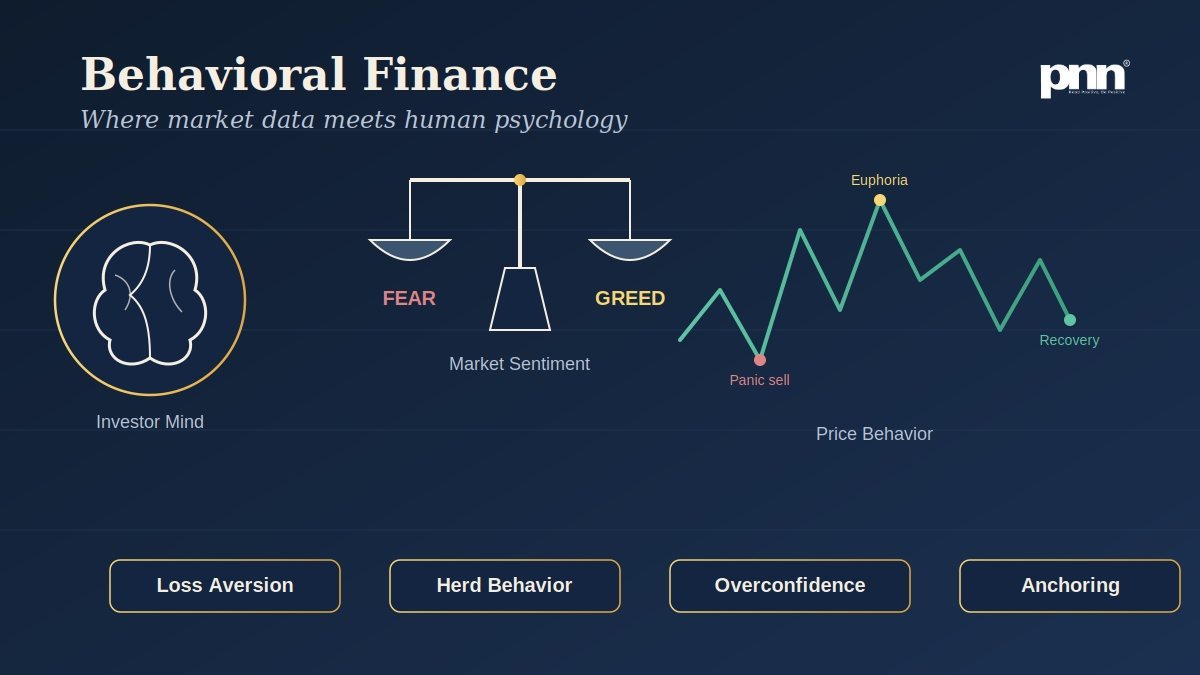
    The response in the market brings out the fundamental principles of investment strategy: discipline, focus, trust, clarity, consistency, and positivity. The sell-off was also in response to uncertainty about future US trade policy and a blow to confidence about the future visibility of short-term earnings to export-oriented companies. Investors in a knee-jerk effort were not disciplined to hold high-quality stocks, and they engaged in panic selling.

    Technically, the market had definite indications of deteriorating consistency. The bearish tilt is highlighted by the Nifty closing below its psychological point of 25,000 for the first time in weeks, and five straight sessions of lower close and the apparent pattern of lower highs.

    Dhupesh Dhameja, Derivatives Research Analyst at SAMCO Securities, says it is still dangerous: “Sellers are still likely to continue to hold the high ground as long as the index is below the 25,05025,000 resistance band. The breakdown below 24,800 may open the additional downside to 24,620, and the near-term perspective may be sideways to bearish.

    This technical emphasis on prominent resistance and support levels offers a systematic way of going through the turmoil on the part of the market players. Having positivity in this environment does not mean risk ignoring, but sticking to a long-term investment structure, with the realization that risks of short-term geopolitical shocks present opportunities to those with capital and a high conviction focus.

    The very rapid, widespread drop, involving approximately 2828 shares falling and 912 rising, indicates that market participants are adjusting an excessively high risk premium, awaiting a resolution on the trade front and a steadier earnings trend by the heavy-weight IT industry. The point is that even though news in the short term causes turbulence, one must have a sense of strategic discipline and never lose their faith in fundamental value.

  • Saatvik Green Energy IPO Shows 3 Strong Signals: 15% GMP Attracts Investors

    Saatvik Green Energy IPO Shows 3 Strong Signals: 15% GMP Attracts Investors

    Saatvik Green Energy IPO has become an attractive investment in the high-growth Indian renewable energy industry with the public offering worth Rs 900 crore going into subscription today. The issue, with a closing date of September 23, has attracted a lot of investor action, as it has an impressive 15% grey market premium (GMP), indicating that the market is very confident in the growth potential of the company.

    Being one of the fastest developing manufacturers of solar modules in India, Saatvik Green Energy has found its place in the country in a favourable position in the progressive change of renewable energy. This time of the company’s expedition is so vital as India is on the fast track of its clean energy programs and development of solar power capacity to achieve its 2030 goals in renewable energy.

    The IPO timeline gives the investors a systematic chance to be part of this growth story. The company is anticipated to allot the shares on September 24, after the expiry of the subscription period on September 23, and the company stock will commence trading on September 26 at the National Stock Exchange (NSE) and the Bombay Stock Exchange (BSE).

    Market Dynamics Drive Saatvik Green Energy IPO Appeal

    The premium of 15 per cent on the grey market in the case of Saatvik Green Energy IPO is a sign that the institutional and retail investors have a strong interest in the solar manufacturing industry of India. This premium shows that the market players are ready to pay more than the issue price in unofficial trading, as they believe in the basic business concept and growth trend of the company.

    The solar module manufacturing sector in India has been recording an unmatched growth owing to the government policies that encourage home production and the reduction of the reliance on imports. The Production Linked Incentive (PLI) scheme on solar photovoltaic modules has enabled the solar photovoltaic module companies, such as Saatvik Green Energy, to increase their manufacturing capacity and market share.

    The high valuation rate at which the company is selling its shares is an opportunity for investors to enter a high-growth industry that enjoys both local and export markets. With the world markets becoming more concerned with cleaner energy options, the Indian solar producers are in a good position to gain market share due to the competitive pricing and the growing technology.

    Strategic Position in Renewable Energy Landscape

    The fact that Saatvik Green Energy is among the fastest-growing manufacturers of solar modules in India is an indicator that the company can take advantage of the renewable energy growth in India. The industry in which the company is involved has now become a strategic concern regarding the energy security and climate pledges of India, and the government has a goal of 500 GW of renewable energy capacity by 2030.

    India is a solar module manufacturing sector that has developed considerably within the last 5 years, and the local companies have obtained the technological experience and scale of production. The policy measures have facilitated this transformation by promoting local production and less reliance on imports, especially the Chinese imports.

    According to industry observers, firms with established manufacturing units and well-established distribution networks are in an advantageous position to take advantage of the further increase in the solar installations at residential, commercial and utility scale projects in the length and breadth of India.

    Financial Performance and Growth Prospects

    The size of the IPO, which is Rs 900 crore, indicates the ambitious growth agenda of Saatvik Green Energy and the capital investment needed to facilitate operational expansion. The proceeds of this IPO will most likely finance capacity increase, technological upgrades and working capital needs as the company aims at achieving aggressive growth objectives.

    In India, the solar module industry has shown good financial results over the last few years, as the industry has been enjoying better margins because of the positive government policy and the rising domestic market. This trend in the sector seems to be sustainable due to the long-term renewable energy pledges by India and the reduction in the cost of solar technology.

    According to market research, the solar module manufacturing potential has increased significantly in India, with domestic manufacturing fulfilling an ever-growing percentage of the domestic demand in terms of installation. The current trend helps to justify the investment thesis of companies such as Saatvik Green Energy, which have established scalable manufacturing facilities.

    Saatvik

    Investment Considerations and Market Outlook

    Saatvik Green Energy IPO will offer a variety of growth prospects to the investors in the Indian renewable energy industry. The fact that the company is a fast-growing manufacturer has the potential advantages in terms of expanding into the domestic markets, as well as the prospect of exporting the products to the emerging solar markets of the world.

    Nonetheless, the aspect of the competitive environment of the solar manufacturing business and the relevance of technological development and control costs to the business’s long-term profitability should be evaluated by investors. The capital-intensive aspect of the sector necessitates constant upgrades of equipment, as well as increasing capacity to ensure that the industry stays at a competitive level.

    The 15 per cent GMP is good to indicate a strong market uptake initially; however, investors ought to assess the company fundamentals, such as the utilisation of the manufacturing capacities, diversification in clients and technological capabilities with the industry players.

    This IPO coincides with the growing government interest in renewable energy and domestic manufacturing, which would provide a positive regulatory environment for the established players in the solar module manufacturing industry.

    The long-term outlook of the Saatvik Green Energy IPO is good, considering the future trend of renewable energy in India and the market position of the company in the emerging market. A combination of these good valuations, good GMP, and industry dynamics makes it an attractive investment case to both institutional and retail investors looking to have exposure to the clean energy transition in India.

  • DBS Bank GST Payments Get Major RBI Boost: 5 Key Benefits for Indian Businesses

    DBS Bank GST Payments Get Major RBI Boost: 5 Key Benefits for Indian Businesses

    DBS Bank India has made a considerable milestone by becoming the first and only fully owned foreign subsidiary to be granted by the Reserve Bank of India (RBI) authorisation as an Agency bank to collect goods and services tax (GST) payments. This remarkable acceptance places DBS Bank GST payments at the centre of the digital transformation of the Indian tax infrastructure.

    The licence will facilitate the customers of DBS Bank India to make GST payments immediately via the enterprise digital banking platform of the bank, DBS IDEAL. This is a move to deal with key pain points that have bedevilled businesses since the implementation of GST in 2017, even though the tax system has succeeded in formalising the Indian economy and increasing the number of taxpayers by 60 lakh to close to 1.51 crore registered entities by 2025.

    Revolutionary Features Transform DBS Bank GST Payments Experience

    The new GST payment system presents a few game-changing features to the business customers. The real-time update of transactions eliminates the uncertainty that has been typical of the tax payment processes in the past. The businesses are now able to obtain GST payment advice as soon as they make a purchase, thereby obtaining instant confirmation and documentation of the purchase to present in the compliance records.

    The online client support service comes in handy with queries and other concerns being addressed promptly without putting much pressure on the administrative units in terms of cost. This holistic strategy will make DBS Bank GST payments seem more like a form of compulsory business rather than a business operation.

    In addition to the convenience of digital methods, customers still have flexibility due to traditional payment methods. NEFT and RTGS transfers are still accessible to those who want to use electronic transfer of funds, but over-the-counter payment at branch locations is accessible to those businesses that need physical support.

    Addressing Long-Standing Compliance Challenges

    Since the implementation of the GST, Indian businesses have grappled with the issues of making payments. Such problems as ineffective approval systems, manual uploading of challans, and laborious reconciliation are common. A series of approvals that lack a real-time notification usually puts companies in a situation of paying at the last moment, which poses a greater risk of compliance and exposes them to penalties.

    In his view, Divyesh Dalal, the Managing Director and Country Head- Global transaction services, corporate banking- financial institutions and SMEs, DBS Bank India, said that compliance with GST is a top priority for enterprises, and in this regard, they have been doing all they can to streamline and ensure efficiency in the process.

    Through the incorporation of GST payments into DBS IDEAL, we have been able to offer an easy to use and secure environment to businesses that provides real time visibility, a well-integrated platform and higher operation efficiency.

    Instant payment acknowledgements, real-time tracking facilities, and consolidated transaction views are the specific solutions offered by the bank to these pain points. This holistic solution assists companies in staying in control as well as minimising administrative overhead and liability risks.

    Digital Banking Leadership Drives Innovation

    The GST payment authorisation of DBS Bank India is based on a successful history of digital banking excellence. According to Global Finance, this bank has been ranked the Safest Bank of Asia 16 years in a row in 2009 to 2024. Recently, Euromoney awarded it the Best Digital Bank to SMEs in India 2025.

    The innovation by the institution does not just stop at safety and digital ability. Several Crisil Coalition Greenwich awards of this year are an acknowledgement of the ability to provide complete excellence in all business banking services, with Best Bank for Corporate Banking (Foreign Bank) and Best Bank for Ease of Doing Business with Corporates in India.

    Strategic Implications for the Indian Business Landscape

    This RBI permit is not just a matter of convenience in the way of operations, but is an indication of strategic change in the way foreign banks can join the digital infrastructure of India. The fact that it is the sole wholly-owned subsidiary to be given this approval puts DBS Bank India in a position to act as a pilot to other international financial institutions wishing to be more integrated into the Indian regulatory systems.

    The time is especially important as enterprises pay more attention to automation of compliance and access to real-time financial information. The centralised processing of GST payments and full tracking of transactions will be of great benefit to the companies that have to deal with complex supply chains and multiple state registrations.

    Future Outlook and Business Impact

    The implementation of the DBS Bank GST payments into the DBS IDEAL platform opens possibilities of extended financial management in addition to tax compliance. Businesses will have the ability to use the same infrastructure to manage their cash flows and working capital holistically, as well as their financial planning.

    This growth also has DBS Bank India in a strategic position regarding regulatory expansions in the future. With the Indian authorities in the process of modernising the tax and compliance systems, banks that have a history of success in digital capabilities and track records in regulatory approvals will likely end up getting more chances of integrating systems and expanding services.

    The approval eventually changes the GST payments into a compliance cost to DBS Bank India customers into a competitive advantage. Instantaneous processing, extensive monitoring and special attention provide businesses with the ability to concentrate on growth operations as opposed to administrative nuances to aid the greater economic productivity and formalization goals throughout the dynamic spectrum of Indian business.

  • Zomato Stock Surge: 5 Powerful Reasons Goldman Sachs Sees Remarkable 44% Upside Potential

    Zomato Stock Surge: 5 Powerful Reasons Goldman Sachs Sees Remarkable 44% Upside Potential

    Eternal Ltd., which is the mother company of food delivery giant Zomato, posted another robust trading session on Thursday, 18 September, as the company shares went up by about 3 per cent. This was the fourth straight gain-making session in the stock and was an added boost to the confidence of the investors in the strategic path and future of the company.

    The Zomato stock run is a persistent phenomenon that has attracted the notice of both institutions and retail investors in equal measure, especially after the reaffirmation of the long-term prospects of the firm by Goldman Sachs.

    Goldman Sachs Reinforces Bullish Stance

    The global investment banking firm Goldman Sachs has reversed its Buy rating on Eternal Ltd., and has concurrently increased the price target to 360 (340). This new target signifies a possible upslope of about 10% of the price on Wednesday, which is evidence of the brokerage not giving up on the path of the company.

    Secondly, more impressively, the bull-case scenario of Goldman Sachs estimates a 44% upside potential, which means that the share can give a spectacular result to the investor under the perfect circumstances. This is a positive perspective because of a number of core reasons that Zomato is poised to grow.

    The growth momentum of Blinkit is also healthy, according to the research report of Goldman Sachs analysts. The current FY27 net order value (NOV) of Blinkit, as projected by the brokerage, now follows an 80% increase over the same projections 12 months ago, and an unbelievable 260% increase over the same projections 24 months ago.

    Blinkit: The Growth Engine Behind Zomato Stock Surge

    Blinkit, a fast-commerce subsidiary of Zomato, has become one of the key drivers of the current Zomato stock spike. Its fast growth rate and rising operational metrics have earned applause in the industry, analysts say. Goldman Sachs projects an increase in the number of stores to two or three in the next two to three years, which will help capture the market share of Blinkit a great deal.

    The brokerage feels that this dynamic of growth has not been well incorporated in the current valuation of Zomato, and it is an opportunity for investors who see the value proposition underlying it. The quick commerce segment has shown impressive strength and flexibility in the competitive environment in India.

    There are a number of major reasons which justify the optimistic estimation of Goldman Sachs:
    The competitive landscape has remained relatively stable, which has seen Blinkit concentrate on operational excellence instead of the hard-driving price rivalry. The moderate levels of sequential store expansion have allowed allocation of resources and operational efficiency to more sustainable levels. The shift to a first-party (1P) is a strategic reorientation which has the potential to increase the profitability rates.

    Margin Expansion and Profitability Timeline

    Goldman Sachs believes that Blinkit would make huge margin improvement in its operations, and thus expects to see 240 basis points growth in NOV in the next two quarters. This has been enhanced by the operational efficiencies, enhanced inventory management and strategic change towards the first-party model.

    A milestone in the investor sentiment that the brokerage has singled out is that Blinkit will break even in terms of EBITDA by December 2025. This timeline is one of the major catalysts that may further drive the Zomato stock explosion, because profitability targets can frequently cause institutional money to flow and analysts to upgrade.

    According to industry observers, the quick commerce industry needs huge operational discipline and strength in positioning in the market to break even in terms of EBITDA. The trend of the management of Blinkit to this direction shows the success of strategic decisions and execution strengths.

    Market Performance and Investor Sentiment

    The trading session of Thursday recorded a rise of Eternal Ltd. share by 2.92 per cent at 337.85, a continuation of the good trend that has been experienced in recent trading sessions. Its stock has given spectacular returns of 22% in the year to date and is far better than the market indices generally, and clearly reflects the strong investor confidence.

    The steady increase in the upward movement is the result of the increased institutional and retail investor awareness of the diversified business model of Zomato and the opportunity in the fast-growing Indian digital commerce landscape. Fast trade, more specifically, has demonstrated phenomenal growth prospects as the purchasing pattern inclines towards convenience-based buying habits.

    According to the market analysts, the valuation is still attractive to long-term investors as it provides them with good opportunities for entry, especially following the positive forecasts made by Goldman Sachs and the growing market prospects of the company.

    Strategic Implications and Future Outlook

    The positive sentiment among analysts towards Zomato is long-term, and this has been driven by the increased confidence in the digital economy in India and Zomato’s capacity to exploit new opportunities. The emphasis on the growth path of Blinkit shows that shareholders of a company can develop significant shareholder value through diversification strategies.

    According to the analysis provided by Goldman Sachs, Zomato is well-positioned in the long term to dominate the market because of its combined food delivery and fast business model. Additional network logistical systems combined with technology and brand equity bring about a high competitive advantage.

    With the Indian quick commerce market steadily growing, firms such as Zomato are likely to enjoy a sustained interest of both investors and a high valuation as it manages to juggle between growth programs and pathway-to-profitability programs.

  • PSB Manthan 2025: How 7 Bold Moves Will Transform Indian Banking Forever

    PSB Manthan 2025: How 7 Bold Moves Will Transform Indian Banking Forever

    The PSB Manthan 2025 was a historic summit, held in Gurugram, Haryana, by the Department of Financial Services, which signified a landmark in the Indian banking environment of the public sector. The two-day programme has developed an overall roadmap that will see Indian banks go beyond their traditional boundaries and become globally competitive financial institutions by 2047.

    Strategic Vision Beyond Survival Mode

    Secretary of Financial Services delivered a powerful opening statement that redefined the trajectory of public sector banks. The industry has since gone past the point of survival and stability into being the foundation of the ambitious Viksit Bharat 2047 vision in India. This change is a paradigm shift from defensive measures to offensive expansion measures.

    The conference featured an impressive list of financial stars, such as the Deputy Governor of the RBI, Swaminathan J., the Chief Economic Adviser, Dr. V. Anantha Nageswaran, and the former SEBI Chairman, M. Damodaran. Their wisdom came together to make decisions that will shape the Indian banking well into the decades.

    Seven Critical Areas of Transformation

    Digital Infrastructure Modernization

    The PSB Manthan 2025 deliberations highlighted the immediate technology modernization needs. Legacy systems have to be eliminated, and banks need to adopt agile and interoperable platforms, which can provide smooth digital services. This technological advancement will make cyber resilience stronger and attuned properly with the growing digital population infrastructure in India.

    Technology partners are required to be open and interoperable, and not to create lock-in scenarios with their vendors that would inhibit future innovation. It is a strategic move that ensures that there is flexibility as well as long-term technological development in the banking sector.

    Artificial Intelligence Governance Framework

    The AI governance structures became one of the priorities of the summit. Banks should increase the management of model risk and be responsible in the use of AI. Adequate measures against the risks that may arise through technology will guard the institutions and the customers against the possibility of AI-associated vulnerabilities.

    Customer Experience Revolution

    The concept of customer centricity came to the forefront of discussions, and experts suggested redefining customer experiences in the digital age. Banks cannot afford to only upgrade the existing processes, but reform service delivery to make it more efficient, more inclusive and more trusting to customers.

    The simplification of processes and the provision of redressal of customer grievances on time will be the basic competitive advantages of the changing banking environment.

    Sectoral Championship Strategy

    The traditional advantages that the public sector banks have in agriculture, MSMEs, housing and infrastructure will grow even as they become the enablers of the sunrise sectors. The opportunities for the banking sector’s growth are untapped with renewable energy, electric mobility, green hydrogen, semiconductors, shipbuilding, and digital industries.

    This diversification approach makes banks full-service financial partners instead of old-fashioned lending institutions and generates several sources of revenue and minimises the industry-related risks.

    Global Competitiveness Imperative

    The participants of the summit were unanimous that Indian public sector banks would need to transform themselves to become global institutions. Such banks need the magnitude, global presence and advanced capabilities to serve Indian businesses in foreign markets and compete with the dominant global financial institutions.

    According to one high-ranking speaker at the events, the purpose of a public sector bank is not simply to be a financial mediator but to become an advocate of the national agenda. This attitude redefines banking as a national strategic asset, as opposed to a business service industry.

    Collaborative Innovation Ecosystem

    The key aspect of cooperation with fintechs, academic institutions, international financial bodies, and entrepreneurial projects was emphasized by speakers. Such collaborations will enhance the speed of innovation as well as increase PSB competencies in various aspects.

    Open house sessions provided platforms for PSB leaders to share experiences, propose forward-looking suggestions, and address future concerns surrounding governance, technology adoption, and customer trust maintenance.

    Workforce Transformation Initiative

    The lifelong human resource training became one of the pillars of the banking industry development. The rapidly evolving banking conditions need to empower their employees to learn through extensive skills development programs and adaptive learning programs.

    The technology implementation should not be limited to operational efficiency, but also to strategic thinking and the ability to manage customer relationships.

    Implementation Roadmap

    PSB Manthan 2025 established both near-term priorities and long-term strategic pathways. Immediate focus areas include governance enhancement, customer service optimization, technology integration, and credit delivery improvement. The long-term vision aligns with sustainable growth principles while building globally competitive institutional capabilities.

    The summit was concluded by a common directional agreement that will see the transformation of Indian banking in the next few decades. The future of Indian banking will be bold ambitions and transformative purpose as the public sector banks will take centre-stage in promoting the national interests and also in getting a global identity.

    This holistic approach is not just the strategy of gradual improvement, but it is the re-invention of the role of Indian banking in the global financial sphere. The success of such initiatives will see Indian banks to hit their bold target of global competitiveness by 2047.

  • Government Stock 2025 Repayment: 5 Critical Steps Investors Must Take Before September 24 Deadline

    Government Stock 2025 Repayment: 5 Critical Steps Investors Must Take Before September 24 Deadline

    The Reserve Bank of India has issued a comprehensive press communiqué on September 4, 2025, outlining the repayment procedures for the ‘8.20% GOVT. STOCK 2025. Investors in these government securities, having a maturity date of September 24, 2025, need to be aware of the essential requirements and the processes that have to be followed to repay their investments without any problems.

    The remaining balance of the 8.20% Government Stock 2025 will be repaid at the value of par on the mentioned maturity date. The announcement offers relief to thousands of investors who hold these securities in their fixed-income portfolios.

    Understanding the Repayment Timeline and Interest Cessation

    The government stock 2025 repayment will be made exactly on September 24, 2025, and there will be no interest on the same after this time. Such a suspension of interest payments highlights the significance of bondholders taking prompt steps in order to conclude formalities.

    Where September 24 is a holiday as proclaimed by any State Government under the Negotiable Instruments Act, 1881, then repayment will be made on the prior working day. This provision also gives the investors the assurance that their money is not withheld needlessly by any regional holiday differences.

    The announcement of the RBI stresses the decisiveness of the date of repayment, and therefore, the investor needs all the necessary documents ready beforehand.

    Electronic Payment Methods and Bank Account Requirements

    The Government Securities Regulations, 2007, namely, sub-regulations 24(2) and 24(3), require that the repayment proceeds to registered holders shall be effected by use of electronic processes or pay orders. This is a digitized practice that is consistent with the government’s efforts of digital payments.

    Investors of securities in Subsidiary General Ledger (SGL) accounts, Constituent Subsidiary General Ledger (CSGL) accounts or Stock Certificates are required to submit their bank account details well in advance.  The payment will be made either through pay orders incorporating relevant bank details or direct credit to the holder’s bank account with electronic fund receipt facilities.

    “The electronic payment system ensures faster and more secure transactions for government security holders,” according to banking sector experts familiar with the process. This digital-first approach reduces processing time and minimizes the risk of payment delays.

    Alternative Repayment Procedures for Manual Processing

    For investors who cannot provide electronic payment details, alternative arrangements have been established. These holders may tender their securities, properly discharged, at designated paying offices 20 days before the maturity date.

    The approved paying offices include:

    • Public Debt Offices
    • State Treasuries and Sub-Treasuries
    • State Bank of India branches where securities are enfranchised or registered

    This 20-day advance submission requirement allows sufficient processing time for manual payments and ensures that all investors receive their repayment on the scheduled date.

    Stock

    Critical Action Items for Bondholders

    Investors must take immediate action to avoid repayment complications. The first priority involves submitting complete bank account particulars to the relevant authorities. This submission should include account numbers, IFSC codes, and proper authorization mandates.

    For those opting for manual processing, securities must be properly discharged and submitted to authorized paying offices by September 4, 2025 – exactly 20 days before maturity. Late submissions may result in delayed payments beyond the official maturity date.

    Investors should verify their securities’ enfacement status and confirm which specific SBI branch or government office handles their particular holdings. This information is typically available on the original certificates or through previous interest payment records.

    Impact on Investment Portfolios and Market Dynamics

    The repayment of the government stock 2025 is a huge liquidity event in the government securities market in India. This repayment will inject a lot of liquidity into the financial system as billions of rupees of outstanding securities mature.

    Portfolio managers and institutional investors have been gearing up for this maturity by modifying their fixed-income allocations. The higher interest rate environment of past years is expressed by the 8.20 percent coupon rate that was attractive at the time of issue.

    The reinvestment option should be considered by individual investors as they get the funds. Existing government securities give varying yield profiles, and financial advisors suggest that one has to analyze new investment opportunities in the current market conditions.

    The methodical nature of such repayment goes to prove that the government is willing to repay the debt in due time. This certainly gives India its own sovereign credit rating, and keeps government securities as an asset class on the menu of investors.

    Investors are requested to contact their registered paying offices directly to acquire detailed procedures and other particular requirements. The press communiqué released by the RBI is transparent and clear on the direction to take by all stakeholders in this momentous repayment episode.

  • Vijay Kedia IPO Leads 5 New Issues Next Week, Key Dates

    Vijay Kedia IPO Leads 5 New Issues Next Week, Key Dates

    Mumbai (Maharashtra) [India], September 13: India’s IPO game isn’t slowing down. Five fresh issues are ready to hit Dalal Street next week, and yes, one has the Vijay Kedia stamp on it. Let’s cut the noise and get straight to the numbers, dates, and plays.

    Euro Pratik Sales IPO: The Big Daddy of the Week

    If size matters, Euro Pratik Sales owns the floor. The decorative laminates player is rolling out the largest IPO of the week.

    • Issue Size: ₹451 crore
    • Price Band: ₹235–247
    • Open/Close: Sept 16–18
    • Listing: NSE, BSE
    • Lead Manager: Axis Capital

    Expect intense institutional action here. If you’re retail, you’re basically along for the ride.

    VMS TMT IPO: Gujarat Steel in Play

    Next up, Gujarat flexes its muscle. VMS TMT, a steel manufacturer, wants its share of investor capital.

    • Issue Size: ₹148 crore
    • Price Band: ₹94–99
    • Open/Close: Sept 17–19
    • Listing: NSE, BSE
    • Lead Manager: Arihant Capital

    TMT bars are the unsung heroes of the construction industry. Not flashy, but the market loves infrastructure plays.

    Vijay Kedia-Backed TechD Cybersecurity IPO

    This is the one everyone will talk about. A cybersecurity SME issue, backed by ace investor Vijay Kedia. That name alone guarantees buzz.

    • Issue Size: ₹39 crore
    • Price Band: ₹183–193
    • Open/Close: Sept 15–17
    • Listing: BSE SME

    Cybersecurity isn’t a fad. Add Kedia’s reputation, and retail investors are going to swarm.

    Sampat Aluminium IPO: Building Materials Bet

    Another SME joins the queue. Sampat Aluminium is pursuing growth in the construction materials sector.

    • Issue Size: ₹30.53 crore
    • Price Band: ₹114–120
    • Open/Close: Sept 17–19
    • Listing: BSE SME

    Small ticket, but aluminium is everywhere, from windows to factories.

    JD Cables IPO: Power Lines to Dalal Street

    JD Cables is plugging into the market with its SME issue. Think electricals, conductors, wires.

    • Issue Size: ~₹96 crore
    • Shares Offered: 63 lakh
    • Price Band: ₹144–152
    • Listing: NSE SME

    Electricity demand in India isn’t going down. Neither is the need for cables.

    Ongoing Issues Still Open

    Two IPOs are already in play and will overlap with next week’s rush:

    • LT Elevator: ₹39.37 crore | Sept 12–16 | Price band ₹76–78 (BSE SME)
    • Airfloa Rail Technology: ₹91.10 crore | Sept 11–15 | Price ₹140 fixed

    If you missed them, the window’s still open.

    Why So Many IPOs Now?

    Markets may look volatile, but liquidity is sloshing around. Retail investors are still hungry. FPIs (foreign portfolio investors) are circling.

    SEBI, for its part, has even eased FPI rules and streamlined IPO processes. Translation: easier for companies to raise, easier for investors to pile in.

    India’s IPO pipeline is looking more like a firehose.

    The Week Ahead: What to Watch

    Five new issues. Two are still ongoing. One Vijay Kedia endorsement. That’s enough to keep both analysts and retail traders caffeinated.

    If you care about subscription trends or grey market whispers, this week will be loud. Just don’t pretend you didn’t know the dates, they’re all right here.

    It’s like the markets are running a buffet and investors are piling plates high.

    The real headline, of course, is Vijay Kedia’s name stamped on TechD Cybersecurity. That’s like Sachin endorsing a cricket bat – people line up before asking the price.

    But here’s the kicker: in India, retail investors don’t need much convincing. A hot name, a shiny sector, and a halfway decent price band – done. SEBI can keep rewriting the rulebook, but as long as liquidity is flowing, Dalal Street’s IPO party isn’t slowing.

    Disclaimer: This article is for informational purposes only and does not constitute financial advice. Investing in stocks includes financial risks, and past performance is not indicative of future results. Readers should conduct their own research or consult with a qualified financial advisor before making any investment decisions.

    PNN News

  • Polygon Evolves: From MATIC to POL, India’s Blockchain Goes Global

    Polygon Evolves: From MATIC to POL, India’s Blockchain Goes Global

    New Delhi [India], September 4: Polygon, India’s first and largest blockchain network that has become a global leader in Web3 infrastructure, has officially completed its biggest upgrade yet: the transition from MATIC to POL.

    This evolution is far more than a rebrand. POL is designed to be the next-generation token powering Polygon’s rapidly expanding ecosystem—supporting payments, tokenised assets, stablecoins, and Web3 applications used by millions worldwide.

    “MATIC put India on the global blockchain map. POL is the next step—built to power not just one chain, but an entire ecosystem for the next decade of growth,” said Sandeep Nailwal, Co-founder of Polygon.

    Why POL Matters

    • Real Utility – POL is now the native gas token for every transaction across Polygon.
    • Network Security – POL secures the network through staking, rewarding users with incentives, emissions, and ecosystem growth.
    • Cross-Chain Power – POL drives Agglayer, Polygon’s cross-chain settlement layer, enabling instant liquidity and interoperability between blockchains.
    • Future Governance – POL holders will help shape the next wave of adoption, ensuring long-term alignment of users, validators, and developers.

    Building for Global Finance with an Indian Heartbeat

    Polygon Labs recently announced its Gigagas roadmap, aiming to process up to 100,000 transactions per second—creating a blockchain experience faster than today’s financial networks. Early upgrades, including Heimdall v2, have already reduced settlement times to five seconds, making stablecoin payments and tokenized assets nearly instant.

    “The demand for fast, low-cost, and reliable settlement is exploding across stablecoins, tokenized assets, and global payments. Polygon is building the rails for that future, and POL will be the fuel that powers it,” Nailwal added.

    For Indian Investors and Brands

    For India’s growing community of young investors, POL represents more than a token upgrade. It is a chance to participate in a homegrown innovation shaping global finance and the Web3 economy. From Fortune 500 companies to leading Web3 startups, Polygon is already trusted worldwide, and POL strengthens that foundation.

    As brands, advertisers, and enterprises explore Web3 adoption, Polygon offers an Indian-built, globally respected infrastructure layer with unmatched scalability, security, and cost efficiency.

    If you have any objection to this press release content, kindly contact pr.error.rectification@gmail.com to notify us. We will respond and rectify the situation in the next 24 hours.