Tag: lifestyle

  • Sudha Reddy Elevates Dadasaheb Phalke Awards 2025 with Global Grace

    Sudha Reddy Elevates Dadasaheb Phalke Awards 2025 with Global Grace

    Philanthropist and global humanitarian leader Sudha Reddy adds grace, prestige and international influence to the awards night. 

    Mumbai (Maharashtra) [India], November 11: When elegance meets purpose, the room takes notice. At the Dadasaheb Phalke International Film Festival Awards 2025, Sudha Reddy didn’t just walk in — she owned the spotlight, redefining what it means to bring heart and heritage to the cinematic stage.

    A Night Draped in Legacy and Luminosity

    Mumbai has seen its share of glamorous nights, but few match the cultural magnetism of the Dadasaheb Phalke International Film Festival Awards 2025 — a stage where cinema salutes its icons, and the icons redefine excellence. Held at the majestic Dome, SVP Stadium, Worli, the October 30th evening shimmered with artistry, applause, and a sense of purpose.

    At its heart stood Mrs. Sudha Reddy, philanthropist, entrepreneur, and global humanitarian, gracing the event as Guest of Honour. Her presence added more than glamour — it brought gravitas. Because let’s face it: few personalities manage to merge the vocabulary of compassion with the syntax of power as seamlessly as she does.

    Where Culture Meets Consciousness

    The ceremony opened with the traditional Lamp Lighting Ceremony, a symbolic gesture that has illuminated Indian art for generations. This year’s glow was special — the lamps were lit by Mrs. Sudha Reddy, Hon. Ms. Pankaja Munde (Minister of Environment & Climate Change, Animal Husbandry, Government of Maharashtra), and Maharani Radhikaraje Gaekwad of the Royal Family of Baroda.

    Three women. Three forces of change. One shared moment of brilliance.
    Their collaboration wasn’t just ceremonial — it was cinematic. The trio embodied the evolution of India’s creative conscience: cultured, confident, and unmistakably women-led. The applause that followed wasn’t just for tradition, but for the torchbearers reshaping it.

    Beyond Borders: Recognising Global Brilliance

    In a moment that bridged continents and cultures, Sudha Reddy presented the Best International Actress Award to Oscar-nominated actress Karla Sofía for her powerful performance in Emilia Pérez.

    It wasn’t merely an award handover — it was a conversation between two women who’ve turned their platforms into instruments of impact. Reddy, through her Sudha Reddy Foundation, has championed education, healthcare, and women’s empowerment for years. Karla Sofía, through her art, has challenged stereotypes and inspired empathy. Together, they epitomised what modern cinema and philanthropy share: a refusal to settle for mediocrity.

    And yes, the photographers caught the moment — not as a red-carpet cliché, but as a frame that spoke the language of legacy.

    The Power of Presence

    Throughout the evening, Reddy’s aura was less about opulence and more about intention. She interacted with dignitaries, artists, and diplomats not as a socialite ticking boxes, but as a cultural envoy building bridges. Whether it’s Cannes, the Met Gala, Paris Couture Week, or the Global Gift Gala, Reddy has always represented India as more than a participant — she’s a statement.

    At DPIFF 2025, that statement translated into grace with grit. Organisers described her presence as “deeply enriching and symbolic of India’s artistic leadership on the global stage.” And honestly, they weren’t exaggerating.

    A Symphony of Glamour and Purpose

    As spotlights danced across the audience, one couldn’t miss how seamlessly Reddy balanced luxury with empathy. Dressed with impeccable finesse, she exuded quiet confidence — not the loud kind that needs attention, but the rare kind that commands it.

    It’s this duality — the philanthropist who dazzles, the social figure who serves — that makes her so compelling. In a world that often pits glamour against gravitas, Reddy embodies both without breaking a sweat.

    No wonder the night’s conversations — from green rooms to press lounges — circled back to her poise and presence. Her participation lent the ceremony an undeniable global pulse, reinforcing India’s soft power in arts and culture.

    Redefining Cultural Capital

    The Dadasaheb Phalke International Film Festival Awards have always stood as a bridge between legacy and innovation. But this year, the festival reached a new cultural crescendo, thanks to figures like Reddy who understand that influence isn’t inherited — it’s earned.

    Her foundation’s ongoing initiatives in education, healthcare, and women-led empowerment continue to uplift communities across India. This isn’t charity; it’s strategy — one that aligns perfectly with the DPIFF’s broader mission to blend art, responsibility, and progress.

    As organisers put it, “Leaders like Mrs. Reddy bring depth to glamour and meaning to celebration.”
    And frankly, in an era where attention spans are shorter than hashtags, that kind of depth is gold.

    The Curtain Call

    As the night wrapped up, it was clear that Sudha Reddy’s presence wasn’t a footnote — it was the headline. She didn’t just attend; she elevated. Her involvement encapsulated everything the Dadasaheb Phalke Awards aspire to represent: artistry with accountability, culture with conscience, and prestige with purpose.

    For India, it was a reaffirmation that our finest cultural ambassadors don’t just walk red carpets — they walk causes.
    For Sudha Reddy, it was another quiet conquest in a life defined by intentional brilliance.

  • Farmaan Hasan Khan Leads Faith-Driven Social Reform at Bareilly’s Urs-e-Razvi 2025: Over 3,500 Free Surgeries, Tree Plantation, and Education Support Announced

    Farmaan Hasan Khan Leads Faith-Driven Social Reform at Bareilly’s Urs-e-Razvi 2025: Over 3,500 Free Surgeries, Tree Plantation, and Education Support Announced

    Bareilly (Uttar Pradesh) [India], November 10: Under the leadership of Farmaan Hasan Khan, popularly known as Farmaan Mian, the Aala Hazrat Tajushshariah Welfare Society transformed this year’s Urs-e-Razvi into a model of faith-based social reform. The annual commemoration of Imam Ahmed Raza Khan Barelvi in Bareilly became a large-scale platform for humanitarian and community development initiatives — blending spirituality with tangible social impact.

    Guided by Khan’s vision of “faith through service,” the society facilitated over 3,500 free surgeries for economically disadvantaged patients. The medical drives included operations for cataract, kidney and gallstones, hernia, and women’s health-related conditions. Doctors and healthcare professionals from multiple hospitals volunteered their expertise to ensure high-quality treatment and post-operative care.

    Extending the initiative beyond healthcare, 107 students, including NEET aspirants and schoolchildren from classes 6 to 12, were provided with free education and coaching support. To promote women’s empowerment, the society also launched free computer literacy and digital skills programs for girls, enabling them to gain independence and employment opportunities in smaller towns.

    The Urs also underscored the importance of environmental responsibility, with 107 trees planted as part of a sustainability pledge.

    Speaking on the occasion, Farmaan Hasan Khan emphasized that faith must manifest in service. “The true essence of Urs is not only remembrance but also responsibility — to care, to educate, and to uplift,” he said, reaffirming his commitment to using spiritual gatherings as instruments of social progress.

    For his exemplary humanitarian contributions, Khan was earlier conferred the Bharat Gaurav Ratna Award (2023) by the Ministry of Corporate Affairs, recognizing his leadership in promoting health, education, and social harmony.

    Through his initiatives, Khan continues to redefine the role of religious institutions in contemporary society — turning devotion into development, compassion into action, and tradition into transformation. The Urs-e-Razvi 2025 thus stands as a testament to how faith can serve as a driving force for unity, welfare, and reform.

    If you have any objection to this press release content, kindly contact pr.error.rectification@gmail.com to notify us. We will respond and rectify the situation in the next 24 hours.

  • Devisa Jewellery Launches in Delhi with Inaugural Offer of Zero Making Charges and Grand Rewards

    Devisa Jewellery Launches in Delhi with Inaugural Offer of Zero Making Charges and Grand Rewards

    New Delhi [India], November 10: Delhi already has a jewellery heaven, Karol Bagh, but now it has got even better with the introduction of a new fine-jewellery company under the House of Durga name, which is always trusted with the trade as well as retailing. Based on the history of the company with integrity and customer trust, Devisa now enters into a fine jewellery business, providing a contemporary buying experience that comes with guaranteed purity, honest pricing, and long-term value.

    The flag-ship showroom, on Bank Street, Karol -Bagh, is 5,000 sq.ft. in area and carries a large line of Hallmarked Gold Jewellery, Certified Natural Diamonds, Gold Coins and Bridal Collections. Its choice of selections presents a combination of olden times art with modern shopping, placing Devisa as the cheapest in the country to buy 22 00 KT Gold Jewellery and Gold Coins, with an opening offer of 0 00 Making Charges. By launching this, Devisa expects to achieve a new standard of value, splendour and openness in the retail of fine jewellery.

    Devisa had declared its Inaugural Offer, 4th, Karol Bagh ka Sabse Bada Gold Lucky Draw Carnival to celebrate the launch. Each customer will be offered a lucky draw ticket with every purchase of 10,000 rupees, and this will entitle them to the major prize, which is the chance to win a new car, refrigerator, air conditioner, and other high-quality appliances. The customers also have a zero-marking charge on the 22 KT gold jewellery, as well as gold coins, which guarantees them the real value, certified purity, and transparent pricing. Also, a Buy-1-Get-1-Free deal on certified natural diamond jewellery below 1.5 lakh is what makes this one of the most appealing, value-based jewellery introductions of the season in Delhi.

    Talking of the launch, Mr Rajesh Verma, Business Development Manager at Devisa, said: The Devisa Jewellery launch is not just a new showroom, but that is what we have been boasting about over the years. Our zero charge offer is a demonstration of our prejudices that jewellery purchasing must be based on integrity, sincerity, and authentic value. We have established the place where authenticity is matched with confidence, and each customer will get away with happiness and contentment. We will bring the fine jewellery closer to all the families of Delhi, where individuals feel the beauty and the confidence in all their purchases. We intend to open an additional three stores in Delhi by the year 2026. Devisa is our attempt to redesign the KarolBagh shopping experience – to make fine jewellery accessible, just and futuristic.

    Devisa Jewellery is a brand named after a word, Devi, yet it glorifies the grace, power and goddess of every woman with the help of designs so elegant, versatile and timeless. The brand is sponsored by House of Durga, a reputable trading and retail company since 2013, that transfers the company values of integrity, transparency and customer trust to fine jewellery. This new venture offers the company the opportunity to move into the consumer retail sector, selling a carefully selected assortment of accessories to all occasions, such as simple style to a bridal fashion statement, with both quality and authenticity and contemporary style. The Devisa Jewellery store, which is situated at Block No.M, Bank Street, Nalwala Estate, Karol Bagh, New Delhi, accepts customers every day between 11am and 8pm. Shoppers may call 778 -000- 2626 with inquiries.

  • The Rise of Eco-Luxury: Why Sustainable Interiors Are the New Obsession

    The Rise of Eco-Luxury: Why Sustainable Interiors Are the New Obsession

    Mumbai (Maharashtra) [India], November 8: The world’s latest obsession isn’t marble countertops or imported Italian chandeliers — it’s sustainable home décor, wrapped neatly in bamboo, linen, and a subtle air of moral superiority. But let’s be honest: the “eco-friendly” label no longer lives in the rustic corners of minimalist Pinterest boards. It’s now stitched into designer sofas, embedded in premium lighting, and whispered across champagne-scented interior launch parties.

    Because these days, being responsible is the ultimate status symbol. Sustainability has become seductive.

    Luxury homes are no longer judged by how much they glitter, but by how gently they tread on the planet — and, ironically, how much their owners can afford to look guilt-free. Welcome to 2025, where carbon neutrality is the new cashmere.

    A Green Revolution in Velvet Gloves

    What was once dismissed as “eco-aesthetic minimalism” has now evolved into a billion-dollar industry. The global sustainable home décor market is projected to exceed $260 billion by 2026, with India alone contributing over $30 billion to the green interiors and furniture sector, according to industry reports.

    In simpler terms? People are spending more to buy less — and it’s never looked more fashionable.

    From reclaimed teak to biodegradable paints and organic linen, every inch of a modern interior screams, “I care.” Of course, some of it is marketing alchemy — transforming recycled wood into a sense of reclaimed exclusivity. But in fairness, sustainability has finally managed to make virtue… chic.

    Why It’s More Than Just Aesthetic Virtue

    home décor

    Designers argue that sustainable décor isn’t just about saving trees; it’s about saving sanity. Modern city homes, suffocated by screens and synthetic air, are beginning to crave texture — the imperfect, the earthy, the real.

    When you walk into a space that breathes — literally — you feel it. Sustainable décor prioritises natural light, raw materials, and plants that actually clean the air. You don’t just live in the space; the space lives with you.

    Environmental psychologists call it biophilic comfort. Translation: your brain feels better when surrounded by nature. Studies by the World Green Building Council reveal that indoor air quality, daylight, and natural textures can boost productivity by 15% and reduce stress by almost 30%.

    In essence, eco-friendly design is turning luxury into a lifestyle prescription.

    The Reality Behind The Reclaimed

    Category Details
    Global Market Size (2025) USD 220 billion+
    Expected Growth by 2026 USD 260 billion
    Key Trend Drivers Conscious consumerism, climate anxiety, biophilic design
    Top Materials Used Reclaimed wood, bamboo, jute, cork, clay, recycled metal
    Cost Range (India) ₹1.5 lakh – ₹25 lakh for full-home transformation
    Energy Savings (avg.) 20–35% through insulation, LED retrofits, and daylight maximisation
    Top Players IKEA, Pepperfry, Asian Paints Beautiful Homes, The Purple Turtles
    Design Hashtags Trending #EcoLuxury, #SustainablyChic, #GreenInteriors, #ConsciousDesign

    The Irony Wrapped in Linen

    home décor

    Let’s be fair — sustainable décor is beautiful. But it’s also expensive. While we’re all praising bamboo headboards and hemp rugs, someone should whisper that not everyone can afford guilt-free aesthetics.

    Many “eco-luxury” brands now position themselves as saviours of the planet while charging half a year’s rent for a “carbon-neutral” chair. And yet, people still buy it. Why? In the post-pandemic era, ethics sell — especially when they appear to be designed.

    There’s also an underlying paradox: creating sustainable interiors often involves unsustainable levels of consumption. We throw out old furniture to make space for the “green” ones. We replace working bulbs with LED variants to “start fresh.” But marketing loves moral irony.

    In the words of one Mumbai-based designer:

    “People don’t want simplicity — they want the illusion of simplicity wrapped in luxury.”

    And it’s hard to argue with that.

    The Conversation Online

    Social media has turned sustainable living into an aesthetic performance. On Instagram, #SustainableHome posts have crossed 14 million, and TikTok’s #EcoInteriors is pushing 1.3 billion views globally.

    One user wrote, “Nothing says self-care like buying a recycled-wood dining table you can’t afford.”
    Another commented, “My plants are thriving. I’m not, but at least my living room has oxygen.”

    Sarcastic? Yes. Honest? Absolutely.

    Yet the trend remains unstoppable — because it’s no longer about the planet alone. It’s about identity. Sustainability has become social currency — a lifestyle badge that says, “I’m aware, I’m modern, and I have taste.”

    The Benefits That Actually Matter

    Sarcasm aside, sustainable décor does have tangible benefits. It doesn’t just look refined; it feels restorative.
    Here’s what real-life converts are experiencing:

    1. Improved Sleep Quality: Bedrooms with natural materials and reduced synthetic fabrics help regulate temperature and breathing.

    2. Mental Calm: Spaces designed with earthy tones and textures reduce cognitive fatigue.

    3. Long-Term Savings: LED lighting, natural cooling, and solar integrations cut energy bills by 25–40%.

    4. Air Quality: Living walls and planters lower indoor pollutants by 60%.

    5. Emotional Comfort: A subtle but undeniable sense of moral satisfaction.

    In short — sustainability might have started as a design fad, but it’s quietly becoming a wellness strategy.

    The Price of “Doing Good”

    home décor

    Make no mistake — designing sustainably isn’t cheap. From eco-certified materials to low-VOC paints, the investment is hefty. A full-home eco renovation can range anywhere between ₹1.5 to ₹25 lakh, depending on ambition.

    Yet, unlike most luxury purchases, sustainable décor offers emotional ROI. Each bamboo lamp and rattan chair becomes a quiet rebellion against waste. The spending feels justified.

    As one architect wryly puts it,

    “In 2025, we no longer buy design. We buy redemption.”

    The Truth Beneath The Trend

    Sustainability is no longer niche — it’s a narrative. And while not everyone embracing it is purely altruistic, the ripple effect remains undeniably positive. Conscious consumption has entered the mainstream, and even performative virtue can move industries toward genuine change.

    For every influencer posting a “zero-waste” living room, there’s a craftsman earning fair wages. For every overpriced reclaimed-wood coffee table, there’s an awareness that the planet’s resources aren’t infinite.

    So perhaps it’s okay if sustainability has become fashionable — because fashion drives desire, and desire drives transformation.

    The New Kind of Luxury

    Luxury has evolved from excess to essence. In this new world, wealth isn’t measured in gold leaf ceilings, but in spaces that let you breathe. The modern affluent no longer crave grandeur — they crave grounding.

    Sustainable home décor isn’t a phase. It’s a mirror — reflecting both our vanity and our awakening. The planet may still be burning, but at least now, some living rooms are burning sage instead of plastic candles.

    And maybe that’s progress — slow, poetic, and imperfect. Just like the people designing it.

    PNN Lifestyle

  • A Night of Glitz, Grace, and Gratitude: Dr. Shivani Mayekar Rao’s OTT-Themed Birthday Bash Dazzles Mumbai

    A Night of Glitz, Grace, and Gratitude: Dr. Shivani Mayekar Rao’s OTT-Themed Birthday Bash Dazzles Mumbai

    Mumbai (Maharashtra) [India], November 8: Mumbai witnessed one of its most dazzling evenings as celebrity dentist and entrepreneur Dr. Shivani Mayekar Rao celebrated her birthday in true OTT (Over the Top) style. The theme “Go Shiny, Go Glam, Go Extravagant” perfectly captured the spirit of the night, blending high fashion, luxury, and star-studded sparkle into an unforgettable celebration.

    The soirée, held at one of Mumbai’s most exclusive venues, was a glittering affair attended by some of the biggest names from Bollywood, business, and high society. Guests arrived in their most glamorous avatars, embracing the theme with shimmering gowns, statement accessories, and radiant smiles that only Dr. Shivani herself could have perfected.

    To name a few guests were Jackie Shroff, Aditya Thackeray, Anu Malik, Ajinkya Rahane, Irfan Pathan, Sharmila Thackeray, Rashmi Thackeray, Amit Thackeray, Bharat and Dorris, Shiv Dutt, Dr. Hrishikesh Pai, Avinash Gowariker, Malti Jain, Amruta Fadnavis, Kailash Surendranath, Aarti Surendranath, Manasi Naik, Prajakta Mali, Amruta Rao, Shevam Singh, Nachiket Barve, Surabhi Barve, Brinda Parekh, Saloni Mayekar, Deepa Bhajekar, Manava Naik.

    Known for her unmatched expertise in aesthetic and cosmetic dentistry, Dr. Shivani has transformed countless smiles, from leading celebrities like Hrithik Roshan, Kareena Kapoor, and Anil Kapoor to influential business and political personalities. As the founder and CEO of Mayekars Oral Care Centres, she has built one of Mumbai’s most trusted dental brands, known for its painless, preventive, and state-of-the-art care.

    Beyond dentistry, Dr. Shivani’s entrepreneurial flair extends to her successful FMCG venture Cero, which has made impressive strides on e-commerce platforms such as Amazon and Flipkart. Her remarkable journey from being a national badminton champion to being named among The Economic Times’ Top 10 Rising Doctors in India and winning the Lokmat Woman Doctor Achiever Award 2024 is an inspiring testament to passion and perseverance.

    The evening radiated the same brilliance that defines Dr. Shivani’s career — chic décor, glimmering lights, gourmet indulgences, and a dance floor that stayed alive till the early hours. Guests toasted to her achievements and infectious energy, celebrating a woman who continues to shine across every arena she enters.

    Indeed, the birthday bash wasn’t just Over the Top, it was over the moon, a reflection of Dr. Shivani Mayekar Rao’s luminous personality and her ever-growing legacy.

  • Miss Asia Global 2025: Angel Bianca Agustin from the Philippines Crowned Winner

    Miss Asia Global 2025: Angel Bianca Agustin from the Philippines Crowned Winner

    Kochi (Kerala) [India], November 8: Angel Bianca Agustin from Philippines was crowned the winner of the prestigious SAJ Group Hotels & Resorts and DQUE Watches Miss Asia Global 2025. The Miss Asia 2025 title was conferred upon Kavya Bali from India during the same grand event, marking a celebration of beauty, grace, and cultural diversity. Neha Balqiz from UAE was crowned Miss Asia Global first runner-up, while Ashwarea Ullas from Kuwait secured the second runner-up position.

    The spectacular pageant was held on 4th November in Kerala (India), and was a true testament to excellence in event production. Conceptualized and executed by Pegasus Global Pvt Ltd under the visionary leadership of Dr. Ajit Ravi, the event stood out for its flawless organization, creativity, and grandeur. With unwavering dedication and an eye for perfection, Pegasus Global once again proved why it remains a trailblazer in the world of international pageantry and event production.

    The winner was crowned by last year’s titleholder, Tamanna Bharat. Sajan Varghese (CMD, SAJ Group of Hotels) crowned the Miss Asia 2025 winner, Mini Sajan (CEO, SAJ Group of Hotels) crowned the first runner-up, and Dr Jolly Antony (Chairman, Vibe Munnar Resorts & Spa) crowned the second runner-up. The coronation took place in the presence of Pegasus founder Dr. Ajit Ravi. Beautiful contestants from various parts of the world were selected through auditions for the Miss Asia Global 2025 grand finale.

    Punam Chetry (Fashion Influencer, Designer & Model), Aileena Catherin Amon (Miss Glam World Runner-up, Model & Actress), Tamanna Bharat (Miss Asia Global 2024 & Model), Tereza Zakova (Miss Glam Universe 2024 & Miss Asia Global Runner-up 2024) and Varsha Reddy (Mrs Glam World 2025 & Model) were on the judging panel. The winners of the subtitles were selected by a panel of eminent persons. Preethi Parakkat of Parakkat Jewelers crafted the exquisite gold crown presented to the winners of Miss Asia Global.

    SUB TITLES

    • Miss Asia Global Fashionista – Indonesia (Agnes Elycia Natalie)
    • Miss Asia Global Talent – Czech Republic (Klara Hruba)
    • Miss Asia Global Inspiring – Taiwan (Huang Chu Fei)
    • Miss Asia Global Vivacious – France (Maeva Balan)
    • Miss Asia Global Ramp Walk – Bashkortostan (Rozaliia Nizamova)
    • Miss Asia Global National Costume – Philippines (Angel Bianca Agustin)
    • Vee Kay Vees Gourmet Queen – Bashkortostan (Rozaliia Nizamova)
    • Miss Asia Global Congeniality – New Zealand (Shereen Bakshi)

    SAJ Group Hotels and Resorts and DQUE Watches are the main partners of Miss Asia Global 2025, organized by Pegasus Global Pvt Ltd. Manappuram Finance Ltd, Alcazar Watches, Green Media, Parakkat Resorts, VIBE Munnar, DQUE Soap, and DQUE T-shirt were powered by Partners.

    Co-partners are Kalpana International, Aiswaria Advertisements, FICF, Unique Times, Europe Times, Times New, UTWorld, uniquetimes.org, Padikkal Travels Private Ltd, Image Factory, VPS Lakeshore, Vee Kay Vees Caterers, Akshay Inco, and JD Institute of Fashion Technology.

    The main objective behind organizing this competition is to celebrate and showcase the rich and diverse cultural values of different nations while promoting tourism and international harmony. Pegasus Global Pvt Ltd continues to set itself apart through its commitment to meaningful representation, emphasizing talent, intellect, and personality as the true measures of excellence in their pageants. This year’s Miss Asia Global was a radiant celebration of international sisterhood, as participants from across the world came together to redefine beauty and empowerment.

    If you have any objection to this press release content, kindly contact pr.error.rectification@gmail.com to notify us. We will respond and rectify the situation in the next 24 hours.

  • Wanderlust 2.0: How Gen Z and Millennials Turned Travel into a Lifestyle, Not a Getaway

    Wanderlust 2.0: How Gen Z and Millennials Turned Travel into a Lifestyle, Not a Getaway

    Mumbai (Maharashtra) [India], November 8: There was a time when travel meant escape — postcards, souvenir magnets, a tan you’d brag about and forget in a week. Now? It’s a lifestyle statement, a personality trait, an aesthetic carefully curated for the algorithm. Somewhere between yoga retreats and digital nomad visas, Gen Z and Millennials have rewritten the grammar of travel.

    For them, it isn’t “Where are you going?” but “Who are you becoming?” And while that sounds profound enough to caption an Instagram post, it’s also the world’s most lucrative identity crisis.

    The New Religion of Roaming

    If Boomers built homes, Millennials built Airbnbs. And Gen Z? They built lives inside airports.
    A recent Booking.com 2025 Lifestyle Trends Report revealed that 72% of Indian Gen Z travellers view travel as “essential to mental wellness,” while 60% of Millennials claim they’d rather spend on experiences than property investments.

    What was once an indulgence is now currency. To be “well-travelled” isn’t just social capital — it’s cultural validation. From Seoul’s back alleys to Bali’s silent beaches, this generation collects stamps like philosophers collect epiphanies — selectively, dramatically, and always with a ring light nearby.

    Table: The Generational Travel Shift

    Generation Travel Mindset Typical Destination Spending Range (₹) Preferred Platform
    Boomers Leisure, relaxation Shimla, Europe tours 50,000–1,00,000 Travel agents
    Millennials Experiences, self-growth Bali, Prague, Coorg 1–3 lakh Airbnb, Booking.com
    Gen Z Identity, digital storytelling Seoul, Kyoto, Tulum 80,000–2 lakh Instagram, TikTok, YouTube

    The Price of Freedom (and Filtered Sunsets)

    Freedom, it turns out, is an expensive hobby.
    The World Economic Forum’s 2025 Youth Spending Index notes a 40% surge in leisure travel spending among 22–35-year-olds post-pandemic. Ironically, many of these “freedom chasers” are still paying EMIs on their last trip.

    Yet they justify it with vocabulary that sounds straight out of a lifestyle brand pitch — “investing in experiences,” “healing through motion,” “curating memories.”
    In translation: they’re broke but emotionally enriched.

    A solo trip to Vietnam costs ₹1.5 lakh now — flights, boutique stays, digital detox retreats, vegan café hopping. But it’s not about the expense. It’s about the aesthetic. Because what’s a healing journey without at least one melancholy photo by the window of a rain-drenched Airbnb?

    The Digital Pilgrimage

    Gen Z - PNN

    Unlike their predecessors, this generation doesn’t need travel agencies; they have algorithms.
    A single viral reel from an influencer in Cappadocia can trigger a nationwide spike in Turkish bookings. #SoloTravelIndia has crossed 100 million views on Instagram, and travel vloggers are earning as much as ₹5–10 lakh per brand collaboration.

    But there’s irony stitched into every filter.
    Most Gen Z travellers claim to crave “authentic experiences,” yet spend half their trip staging them. There’s a difference between living a moment and filming it — a truth they seem determined to ignore, preferably with drone footage.

    That said, the digital travel culture has democratized exploration. Small-town creators from Indore to Imphal are documenting their journeys with poetic grit — no sponsors, no filters, just wanderlust and a second-hand DSLR.

    When Escapism Became a Profession

    Millennials flirted with work-life balance. Gen Z deleted it.
    They turned remote work into roam work. Digital nomadism, once a fringe fantasy, has become a structured economy. Nations like Portugal, Thailand, and Japan now offer specialized remote work visas for long-term stays, catering directly to the “laptop-in-a-latte-café” tribe.

    According to Airbnb’s 2025 Future Stays Report, remote professionals staying 30+ days make up 23% of total bookings, up from just 8% in 2019. And the spending follows: the global digital nomad market is projected to hit $63 billion by 2026.

    In India, Goa and Rishikesh are morphing into creative communes — half yoga, half startup — where work deadlines coexist with sound baths. As one designer confessed during a retreat in Assagao, “I came here to detox. Now I’m designing logos for a café that sells matcha and mala beads.”

    The Good, the Bad, and the Overly Instagrammed

    Gen Z -PNN

    The good news? Travel has finally evolved beyond postcard clichés.
    People are chasing cultural intimacy — cooking with locals, learning indigenous crafts, volunteering for environmental causes. The UNWTO 2025 Culture & Conscious Travel Report shows a 35% increase in “purpose-led trips” worldwide.

    The bad news? That same purpose is often romanticized to death.
    Cultural authenticity is now sold as a commodity. Spiritual retreats in the Himalayas charge upwards of ₹2 lakh for what used to be free silence. “Mindful tourism” is the new “eco-friendly plastic straw” — noble in theory, profitable in practice.

    And as travel booms, so does burnout. Studies show post-travel fatigue is on the rise, particularly among content creators chasing constant novelty. When every destination is content, peace becomes… well, unpostable.

    Reality Check: The Hidden Bill Behind Wanderlust

    Here’s a sobering truth — travel is no longer about going away; it’s about being seen going away.
    Between influencer economies and bucket-list capitalism, even leisure feels like labor. And the cost is more than money — it’s environmental too. The International Air Transport Association warns that Gen Z’s hypermobility could add 6% more carbon emissions by 2027 if left unchecked.

    But not all is vanity. A countertrend is rising quietly — “Slow Travel.”
    Think month-long stays, local commutes, minimal itineraries. The goal? Less footprint, more depth. It’s a lifestyle that values stories over selfies — proof that some still travel to remember, not to perform.

    Pointers: Why Travel Became the New Identity Card

    • Global Consciousness: Gen Z sees travel as moral education, not mere movement.

    • Experience Economy: 68% of young Indians prefer trips over gadgets.

    • Social Capital: Your passport stamps now rival your résumé.

    • Spiritual Rebranding: Wellness tourism in India grew 20% YoY.

    • Accessibility Paradox: Travel’s democratization has inflated costs — and expectations.

    The Grand Irony of Arrival

    Maybe that’s the most poetic tragedy of this age — we travel the world to find ourselves, only to discover we’ve been following Google Maps the entire time.

    Still, it’s hard not to admire the audacity.
    Gen Z and Millennials have done what no generation before them dared — turned wandering into a full-time ideology. In their defense, at least they’re chasing sunsets, not stock markets.

    And perhaps that’s the quiet revolution of our era: a generation that sees airports as cathedrals and passports as prayer books. Whether that’s enlightenment or escapism — only the next flight can tell.

    PNN Lifestyle

  • Leading Self Drive Car Rental Company in Chandigarh: Your Complete Guide

    Leading Self Drive Car Rental Company in Chandigarh: Your Complete Guide

    Chandigarh [India], November 8: Want to explore Chandigarh on your terms? Self-drive rentals give you freedom. No waiting. No schedules. Just pick up the keys and drive.

    Car rental in Chandigarh makes travel easy. Rentifyr keeps cars ready. Visit Rock Garden anytime. Stop at Sukhna Lake. Shop when you want. Drive at your own pace.

    Buses miss many areas. Taxis get expensive fast. Self drive cars in Chandigarh solve this. Rentifyr provides clean cars. Insurance covers you. Help works 24/7. Book online fast.

    Save money. Travel privately. Suitable for trips and work.

    Why Choose Self Drive Cars in Chandigarh

    Chandigarh spreads across many sectors. Buses skip key spots. Auto fares add up quickly. Self drive cars in Chandigarh work better. Rentifyr makes it simple.

    Plan your day how you want. Start at the Rose Garden early. Drive to the Japanese Garden. Hit the Elante Mall in the afternoon. End at Sukhna Lake in the evening.

    The weather here changes a lot. Winters get foggy and cold. Summers turn hot. Rentifyr cars have strong AC. Stay cool all day.

    Taxi rates climb fast. Tips are expected always. Parking stays cheap. Rentifyr prices remain clear.

    Cars get checked often. Insurance handles accidents. Help arrives fast anytime. Drive stress-free to Punjab and the hills.

    Privacy matters here. Couples want alone time. Work calls need quiet. Families talk freely together.

    Best Car Types Available

    Small Cars for City Use

    • Sectors have tight parking spots. Rentifyr’s small cars fit well. Easy to drive in traffic. Swift and i10 work great.
    • Best self-drive cars, Chandigarh folks pick these most. Move through crowds smoothly—Park in small spaces. Fuel costs stay low.
    • College trips get easy. Quick errands work perfectly. Temple visits stay simple.

    Mid Cars for Families

    • Hill trips need comfort. Amaze and Ciaz give that. AC works better. Trunk fits bags well.
    • Shimla drives feel smooth. Families sit easily. Shopping fits inside.

    Big Cars for Hills

    • Mountain roads need power. Scorpio and Creta handle that. The higher body clears bumps better.
    • Snow trips, stay safe. Groups fit comfortably. Gear loads easily.

    Fancy Cars for Business

    • Work needs good looks. BMW and Audi are available. Looks professional. Tech features included.
    • The client meets impressively. Airport runs look sharp. Events feel special.

    Large Cars for Groups

    • Weddings need space. Innova seats eight people. Families manage well. Teams travel together.
    • Bags fit everyone. Highways feel smooth. Costs are split better.

    Key Features You Get

    No km limits let you explore freely. Drive to Manali without worries. Visit Kasauli without charges. Trips stay affordable.

    Full insurance removes financial stress. Accidents covered. Theft handled. Injuries were protected, too.

    Cars break down sometimes. Rentifyr always works. Mechanics come fast. Backup cars are given when needed.

    Don’t waste time picking up cars. Rentifyr brings them to you. Station drops work. Car rental at the Chandigarh airport saves hours.

    Apps make booking quick. See cars available now. Get confirmed fast. The process stays smooth.

    Send documents online first. No office visits needed. Checks done quickly. Keys come with delivery.

    Rent by hours, days, or weeks. Fits different needs. Longer bookings cost less each day.

    Cars are cleaned between trips. Service is done regularly. Safety is always checked. Standards stay high.

    How to Book?

    Go to the Rentifyr website first. Car hire Chandigarh self-drive options show clearly. Prices are displayed upfront. See what’s free now.

    You need these papers: a License that’s valid. ID like an Aadhaar card. Address proof helps. Foreign folks need permits, too. Photos work fine.

    Booking stays easy throughout. Pick the car type you want. Choose your dates. Say where to deliver. Set what time works.

    Flying in? Car rental in Chandigarh airport through Rentifyr helps tons. Cars wait there. A small fee saves a lot of time.

    Pay in different ways. Cards work well. Apps accepted. Deposit holds for a short time. Confirm triggers delivery.

    Pickup goes quickly. Papers are checked fast. The cars looked at each other. Lights and AC tested. Photos taken of marks.

    Return works the same as pickup. Gas is the same as start. Keep it reasonably clean. Get back on time to skip fees.

    Great Places to Visit

    1. Chandigarh has cool spots. Rock Garden shows art made from waste. Sukhna Lake offers boat rides. The Rose Garden blooms bright. The Capitol Complex looks historic.
    2. The Japanese Garden feels peaceful. Butterfly Park shows nature. ISKCON Temple brings calm. The Terraced Garden impresses visitors.
    3. Hills sit close by. Shimla lies 120km away—three hours through forests. Mall Road has shops there.
    4. Manali is 305km north. Eight hours through valleys. Rohtang Pass thrills people. Old temples stand beautifully.
    5. Kasauli is situated 68km away, a two-hour drive up the hill. Monkey Point gives views. Old buildings look British.
    6. Dharamshala stands 245km away—six hours through Kangra. The Dalai Lama lives nearby. Monasteries offer peace.

    Smart Money Tips

    • Book early for reasonable rates. Busy times cost more. Holidays fill up fast. Planning saves cash.
    • Check total costs carefully. Some hide charges later. Rentifyr shows all upfront. No surprise fees come.
    • Pick the right car size. Too big wastes gas money. Too small hurts badly. Match what you actually need.
    • Seasons change prices—summer peaks with tourists. Monsoon drops rates low. Winter weddings cost the most.
    • Longer trips get discounts. Week rates beat daily ones. Monthly deals save the maximum. Staying longer pays off.
    • Skip extras not needed. Your phone does maps. Chargers come standard. WiFi usually costs extra.
    • Know fuel rules first. Some want full-backs. Others charge separately. Figure out the real cost before.
    • Return right on time. Late means a full-day charge. Traffic jams happen often. Keep extra time ready.

    Start Your Trip Today

    Self-drive car rental in Chandigarh changes how you travel. City visits get personal. Hill trips are easy. Work travel improves. Rentifyr handles it all.

    All budgets work here. A range of affordable self-drive cars in Chandigarh, to luxury options, is available. Home delivery saves trouble. No km caps help exploring.

    Ready now? Hit the Rentifyr website. Self-driving car rentals in Chandigarh are available instantly. Comparing cars is easy. Find good fits fast.

    Looking for a “car rental near me” in Chandigarh? Pick Rentifyr Technologies LLP. It works well in many cities like we offer thar rental in goa as well. Customers matter most. Clear prices build trust.

    City Beautiful waits for you. Start your Chandigarh trip with Rentifyr today.

    If you have any objection to this press release content, kindly contact pr.error.rectification@gmail.com to notify us. We will respond and rectify the situation in the next 24 hours.

  • Verdant Temptations: The Biophilic Design Renaissance of 2025

    Verdant Temptations: The Biophilic Design Renaissance of 2025

    Mumbai (Maharashtra) [India], November 8: There was a time when “bringing nature home” meant keeping a dying fern near the window and hoping sunlight would do the rest. But 2025, ever the overachiever, has taken that sentiment, wrapped it in glass, moss, and money — and called it Biophilic Design.

    It’s the latest gospel in interior circles, a movement that claims to reconnect us with the natural world — not through hikes or tree-hugging, of course, but through curated indoor jungles, marble waterfalls, and walls that breathe like expensive therapy.

    The Allure of the Green Gospel

    At its core, biophilic design is a concept rooted in the belief that humans have an innate need to connect with nature — a concept coined by biologist E.O. Wilson as biophilia. In translation: the human soul tends to throw tantrums when trapped too long in concrete.

    Architects and designers have seized this primal truth and turned it into a visual philosophy. The result? Homes, offices, and even boutique cafes now mimic rainforests — with their moss walls, bamboo partitions, stone basins, and light that filters in like dawn in Kyoto.

    And it’s not just aesthetic whimsy. According to a 2025 report by the Indian Institute of Interior Design (IIID), India’s biophilic design market has seen a 28% surge in project demand, with the average design budget rising to ₹22–30 lakh for high-end urban apartments.

    The Luxe Manifesto of Nature

    Element Common Feature Average Cost (2025) Mood Impact
    Living Walls Vertical gardens with self-watering systems ₹3–6 lakh Serenity meets Instagram appeal
    Natural Light Architecture Skylights, sun tunnels, glass extensions ₹4–10 lakh “Divine awakening at 7 AM” vibe
    Organic Materials Stone, rattan, cane, reclaimed wood ₹2–5 lakh Earthy warmth, guilt-free luxury
    Water Installations Indoor fountains, koi ponds ₹6–8 lakh Zen with a side of electricity bill
    Smart Air Filtration Plants Integrated with IoT ₹1–3 lakh Fresh air, at a premium

    Designed to Heal, Marketed to Seduce

    Biophilic

    Designers whisper the same refrain: “Nature heals.” They say it with the reverence of a mantra, as they sketch oak finishes and align potted palms for “visual rhythm.”

    And to their credit — science agrees. Studies have shown that spaces with natural textures and organic light reduce stress, lower heart rate, and improve focus. It’s why corporate giants and luxury hotels now have miniature forests in their lobbies.

    In Mumbai, the Four Seasons’ new biophilic suite features a 12-foot vertical garden that adjusts to guests’ circadian rhythms — a feature that costs more than an average suburban apartment. In Delhi, interior designer Ananya Mathur recently transformed a client’s balcony into a micro-ecosystem, complete with temperature-regulated soil and mist-diffusing fans. “It’s nature without the mosquitoes,” she quips.

    The industry, of course, is basking in its own eco-righteousness. Sustainability sells, and nothing says “conscious luxury” quite like paying ₹15,000 for a terrarium that resembles an alien rainforest.

    The Reality Beneath the Ivy

    But let’s not romanticise everything that photosynthesises.
    For every tranquil moss wall on Instagram, a frustrated homeowner is googling “why is my vertical garden dying again?”

    The truth is, biophilic design isn’t maintenance-free magic — it’s horticulture meets architecture, with a recurring monthly cost that could fund someone’s college tuition. The humidity control systems, the soil replacements, the pest management — nature, it turns out, has an invoice.

    Critics have also raised eyebrows at the commodification of “wellness.” Turning sunlight and soil into luxury products seems like the kind of irony even Oscar Wilde would have envied. A 2025 Scroll.in an editorial called it “capitalism dressed in foliage,” pointing out that genuine environmental connection shouldn’t require a designer’s portfolio or a six-figure budget.

    Designers Speak — and Defend

    Biophilic - PNN

    Still, the professionals are unfazed. “We’re not selling leaves, we’re selling longevity,” argues Neel Batra, an eco-architect based in Bengaluru, whose clientele includes high-net-worth individuals and boutique resorts.
    He claims that the ROI of biophilic architecture — reduced electricity usage, enhanced air quality, and psychological benefits — “far outweighs the investment.”

    Social media agrees, albeit more dramatically.
    Instagram Reels tagged #BiophilicDesignIndia have surpassed 12 million views, with influencers showcasing reading nooks that resemble rainforest retreats. One viral post declared:

    “If your living room doesn’t have a fern wall, are you even alive?”

    It’s performative, yes, but it’s also persuasive. For many, the draw isn’t just well-being — it’s status, the chic symbolism of being “close to nature” while still living comfortably far from it.

    The New Aesthetic of Balance

    The beauty of biophilic design is that it’s evolving beyond vanity projects. Urban planners and developers are now incorporating it into affordable housing and co-working spaces. Pune’s Sanskriti Living Residences recently unveiled India’s first community oxygen garden, an open-air atrium with 1,500 indoor plants and shared work pods.

    Even the government’s Smart Cities Mission 2.0 has included biophilic principles in its environmental design framework, prioritising green architecture and passive cooling systems.

    It’s proof that what began as an elite indulgence is slowly becoming a civic necessity. The city, quite literally, is learning to breathe again.

    A Whisper from the Wild

    Perhaps the ultimate irony is this: we built walls to keep nature out, and now we’re paying fortunes to let it back in — one bamboo panel at a time. But maybe that’s progress, in its own peculiar way.

    The 2025 home is no longer just a structure; it’s a statement — that even amid screens and smog, we crave the primal comfort of rustling leaves and filtered sunlight.
    And if achieving that peace requires a designer, a contractor, and an automated misting system, so be it. Humanity has always been dramatic about survival.

    So here’s to biophilic design — equal parts sanctuary and spectacle, where architecture doesn’t just house life, it imitates it. Because in a world obsessed with algorithms, the soft hum of chlorophyll feels like rebellion.

    PNN Lifestyle

  • LANXESS India recognized with three prestigious honors by the Indian Chemical Council

    LANXESS India recognized with three prestigious honors by the Indian Chemical Council

    Mumbai (Maharashtra) [India], November 7: LANXESS India has won three prestigious industry recognitions from the Indian Chemical Council (ICC) which includes ICC – Vinati Organics Award for Excellence in Management of Health & Safety for Jhagadia site and two ICC -Epsilon Carbon Certificates of Merit under Responsible Care for best compliant company for ‘Security Code’ and ‘Product Safety & Stewardship Code’. These honors reflect LANXESS’ strong commitment to safety, security, sustainability, and responsible practices.

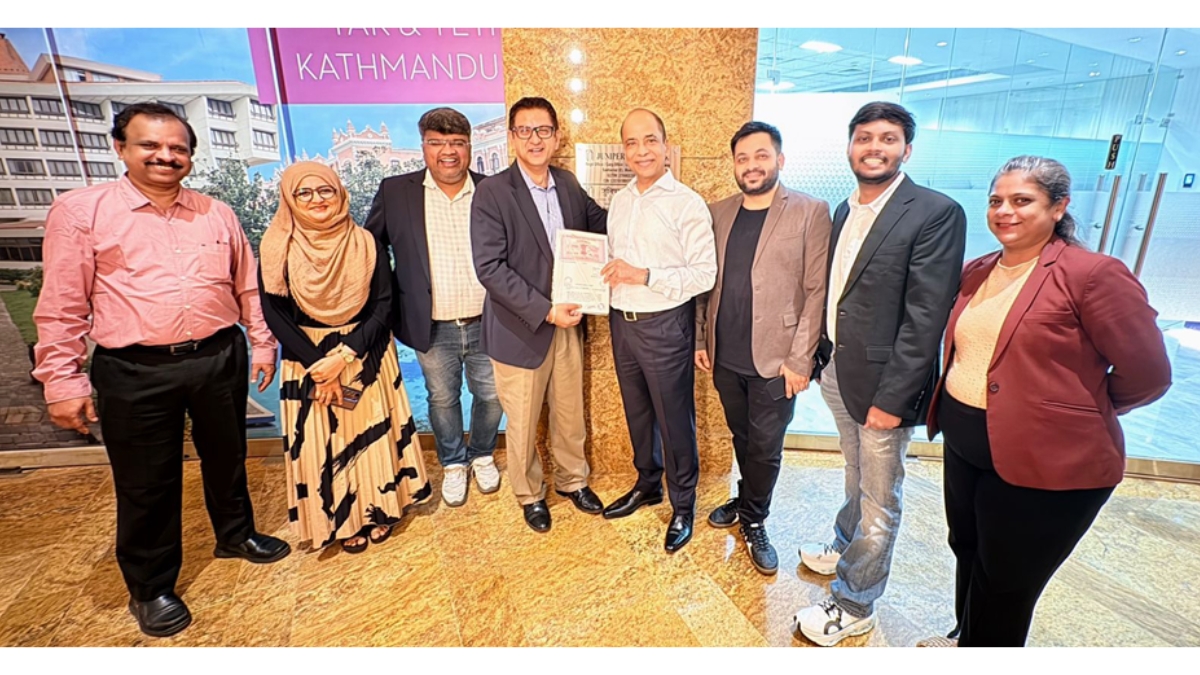
    The award was presented to LANXESS by Shri Deepankar Aron IRS, Joint Secretary Chemicals, Department of Chemicals and Petrochemicals, Ministry of Chemicals and Fertilizers, Government of India at a ceremony held in Mumbai in this month.

    Namitesh Roy Choudhury, Vice Chairman and Managing Director along with Balaram Khot, Wholetime Director and Head of PTSE, LANXESS India received the award on behalf of the organization.

    The two Certificates of Merit were received by Rajiv Gaur, VP – Head of Procurement & Logistics and Naresh Mude, Head of Site Health, Safety, Environment, Jhagadia, LANXESS India.

    Commenting on the achievement, Roy Choudhury said “At LANXESS, safety and sustainability are at the core of our business. These recognitions are a testament to the rigorous safety standards we maintain and the responsible practices we follow to ensure the safety of our employees and operations. From product development and production to use and disposal, we are committed to minimizing risks and maximizing safety across the product lifecycle. We are thankful to Indian Chemical Council for these honors.”

    If you have any objection to this press release content, kindly contact pr.error.rectification@gmail.com to notify us. We will respond and rectify the situation in the next 24 hours.