Tag: lifestyle

  • Kolkata reverberates with the spirit of independent music on World Music Day 2026

    Kolkata reverberates with the spirit of independent music on World Music Day 2026

    Mr. Sundeep Bhutoria, culturist, presenting a Suvaprasanna-painting of Kavi Guru Rabindranath Tagore to Gulzar during World Music Day 2026 in Kolkata.

    Kolkata (West Bengal) [India], June 23: In a celebration that will be remembered as one of the most emotionally resonant musical evenings in Kolkata’s cultural history, the 16th edition of Sourendro-Soumyojit’s World Music Day Concert brought together an extraordinary constellation of artists on 21 June 2026 at Netaji Indoor Stadium. The sold-out event, curated by the celebrated pianist-vocalist duo Sourendro Mullick and Soumyojit Das, drew thousands of music lovers in a shared experience that transcended genres, generations, and geographies.

    The evening’s theme — the spirit of independent music — found expression in an unparalleled lineup featuring Gulzar, Hariharan, Shankar Mahadevan, Shilpa Rao, Vishal Bhardwaj, Rekha Bhardwaj, Vishwa Mohan Bhatt, Anupam Roy, Kalpana Patowary, Parvathy Baul, Sid Sriram, Ayaan Ali Bangash, Nikhita Gandhi, and Benny Dayal. Each artiste presented an original composition, born from personal reflection and creative courage — pieces crafted exclusively for this one evening, never to be replicated in quite the same way again.

    The concert was a living mosaic of India’s musical heritage. Folk musicians and classical maestros shared the stage with rappers and contemporary creators. The Patachitra artists of Pingla, the Thavil players of Kerala, and Bedabati from Manipur — voices from diverse traditions and geographies — wove together a tapestry that was wholly new, yet deeply rooted. The stage at Netaji Indoor Stadium became, in effect, a map of India’s vast cultural soul.

    “World Music Day in Kolkata has always been a reflection of the city’s extraordinary relationship with music — and this year’s concert by Sourendro-Soumyojit was its most luminous chapter yet. To witness Gulzar’s words, Shankar Mahadevan’s voice, Vishal Bhardwaj’s artistry, and so many magnificent musicians come together on a single stage in the spirit of creative freedom was nothing short of transcendental. Kolkata has always known that music is not merely entertainment; it is the language of the soul. Last evening proved that this conviction is alive, thriving, and deeply cherished.” said Mr Sundeep Bhutoria, Culturist and Trustee of NGO, Prabha Khaitan Foundation.

    “Gulzar sahab is not merely a legend to me — he is a cherished friend of over two decades. Our bond goes beyond admiration; it is one of deep personal affection and shared love for the arts. It was, therefore, a moment of profound joy and privilege for me to formally present him, on this celebratory occasion, with a painting of Kavi Guru Rabindranath Tagore — rendered by the eminent artist Suvaprasanna. Two luminaries of the human spirit, united in a single gesture. I could think of no more fitting tribute to Gulzar sahab than the image of Tagore, for both have given humanity the gift of words that heal, elevate, and endure.”  Mr Bhutoria said.

    The curators and artistic directors of the concert, speaking after the event, reflected on its significance: “World Music Day 2026 was an exploration of the sound of India through collaboration, experimentation and original composition. Above all, it was a celebration of artistic freedom, creative courage and the power of independent music to connect people across cultures and communities. We are grateful to every artiste, every member of our team, and every music lover in that auditorium who made this evening unlike any we have ever created before,” said Sourendro-Soumyojit.

    What began 16 years ago as a dream between two Kolkata-based musicians has grown into one of India’s most beloved annual musical traditions. Every edition has carried its own stories, its own friendships, its own once-in-a-lifetime collaborations. The 2026 edition, with its celebration of independent voices, added yet another indelible chapter to that legacy.

    For those who could not be present, recordings and highlights from the concert will be shared on Sourendro-Soumyojit’s official channels shortly. The lights may have dimmed, the final note may have faded — but the music, the memories, and the connections forged on 21 June 2026 will endure.

    If you object to the content of this press release, please notify us at pr.error.rectification@gmail.com. We will respond and rectify the situation within 24 hours.

  • Mere Meherbaan: Nidhi Sheth’s New Hindi Love Song Celebrates Dreams, Self-Belief and Emotional Strength

    Mere Meherbaan: Nidhi Sheth’s New Hindi Love Song Celebrates Dreams, Self-Belief and Emotional Strength

    New Delhi [India], June 23: Mere Meherbaan, the new Hindi love song by singer Nidhi Sheth, is gaining attention among music lovers in India for its soulful melody, emotional storytelling and meaningful message of self-love.

    Presented by Naman Sheth, Mere Meherbaan marks Nidhi Sheth’s first original music project. The song is deeply personal to the singer and reflects her inspiring journey of dreams, patience and self-belief.

    While balancing a full-time corporate career, motherhood, family responsibilities and life in the U.S. without any domestic help, Nidhi continued to hold on to her dream of creating original music. Her journey behind Mere Meherbaan is a reminder that dreams may take time, but they can come true with hard work, faith, persistence, and determination.

    The song beautifully captures the emotions of love, inner strength and resilience. More than just a romantic track, Mere Meherbaan carries a powerful message : be your own biggest supporter and never stop believing in yourself.

    The white visual theme of the song adds a peaceful and graceful feel, symbolising calmness, purity and emotional strength. With soulful music by Shane and Janki and meaningful visuals by Harshul and the Greyscale team, Mere Meherbaan stands out as a heartfelt Hindi love song for listeners who enjoy meaningful music.

    Through this song, Nidhi Sheth hopes to inspire every listener to keep dreaming, keep believing and become their own “Meherbaan”.

    Check out the video at https://youtu.be/MufTRDZCVUM?list=RDMufTRDZCVUM

    If you object to the content of this press release, please notify us at pr.error.rectification@gmail.com. We will respond and rectify the situation within 24 hours.

  • GBS marks first anniversary with two-day business summit and fashion week in Surat

    GBS marks first anniversary with two-day business summit and fashion week in Surat

    Surat (Gujarat) [India], June 23 : Global Business Social (GBS), a made-in-India (surat) business networking platform, is celebrating its first anniversary with a two-day business conclave summit and fashion week in Surat on June 20 and 21, bringing together entrepreneurs, investors, business mentors and designers from across the india.

    The programme was inaugurated by Deputy CM Harsh Sanghavi. Adding to the grandeur of the evening, the Fashion Week was graced by Jignesh Patil and family, along with the Commissioner’s wife as special guests, further elevating the celebration of fashion, creativity, and entrepreneurship at GBS Fashion Week 2026.

    The event aimed to create new business opportunities for members, strengthen networking among them and showcase the platform’s achievements over the past year.

    GBS Founder Pinkesh Patel said that the platform, which was launched on June 27 last year, has grown with 160+ members within a year. Currently, four groups of GBS are operating in Surat and Bardoli, and the organisation plans to expand its network across India in the coming years.

    “The primary objective of GBS is to provide micro, small and emerging entrepreneurs with an Indian business networking platform where they can connect easily, generate opportunities and expand their businesses nationally. We have built GBS on a made-in-India philosophy to support entrepreneurs across the country, particularly those from Tier-2 and Tier-3 cities,” Pinkesh Patel (Founder) said.

    The summit had an feature series of business sessions, Fire Talk with Renowned Entrepreneurs from Diverse Industries, Women wing chapter launch, Gala dinner and an awards ceremony with well known music band. Participants got the opportunity to interact with industry experts and business leaders from different sectors.

    Among the keynote speakers and special guests are Business coach and investor Basesh Gala, Communication coach Divas Gupta and Personal Branding coach Mansie Y Tthakkar, known for her talks on Chanakya Niti. They have shared the insights on entrepreneurship, leadership, communication and business growth with Ai.

    One of the major attractions of the event is the GBS Fashion Week, Surat’s first large-scale fashion showcase modelled on leading national fashion events. The fashion week featured 10 designers sequences presented by six women and four male designers. Designers from Surat, Mumbai, Delhi, Jaipur and other cities have showcased their diverse collections and creative concepts.

    Adding to the glamour of the evening, celebrity showstopper Sadhvi Sail, a Femina Miss India winner, has graced the runway, further elevating GBS Fashion Week as a prestigious celebration of fashion, creativity, and emerging talent.

    The event aims to provide a platform for emerging and established designers while highlighting Surat’s emergence as a hub for business, entrepreneurship and creative industries. It has been organised with the efforts of GBS members of the committee team.

  • Yoga, Accessibility and Inclusive Education Takes Center Stage at Sarvajanik University 5th Foundation Year

    Yoga, Accessibility and Inclusive Education Takes Center Stage at Sarvajanik University 5th Foundation Year

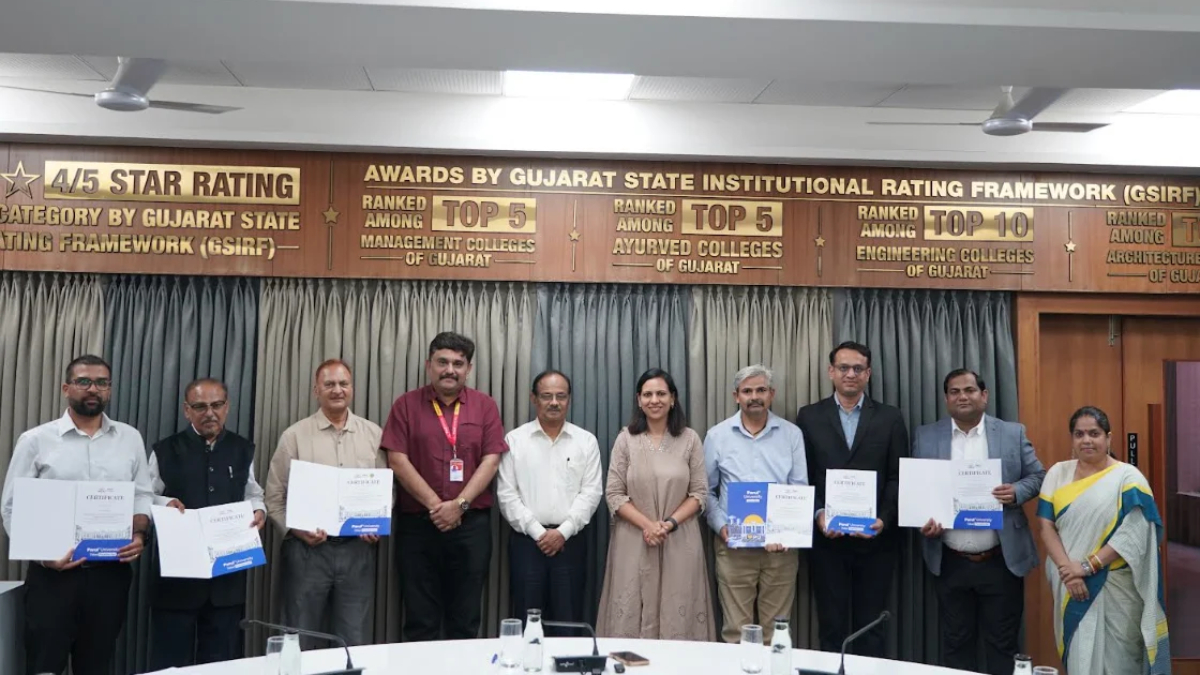
    Surat (Gujarat) [India], June 23: Sarvajanik University Launches New Initiatives During 5th Foundation Year Celebrations. Continuing its 5th Foundation year celebrations, Sarvajanik University organized a series of meaningful initiatives focused on holistic well-being, accessibility, and inclusive education.

    As part of the celebrations, the SU Health Club organized a special programme to commemorate the 12th International Day of Yoga at the TIFAC Seminar Hall. Faculty members, staff, students, and university officials enthusiastically participated in the yoga and meditation session, which was conducted by Shri Lavkesh Chaudhary and Ms. Ankita Jhunjhunwala from Art of Living. The programme emphasized the importance of physical fitness, mental wellness, mindfulness, and balanced living, aligning with the University’s commitment to the holistic development of its stakeholders.

    The session also introduced Bhushanasana, a new yogasana developed by yoga practitioner CA Bhushan Dave. He highlighted its benefits in quickly reducing fatigue by relieving compression on the spinal cord and encouraged participants to practice and promote the asana so that more people could benefit from its positive effects.

    Addressing the participants, Shri Ashish Vakil, President – Sarvajanik University, highlighted the role and contribution of yoga or any fitness routine in a person’s health, efficiency and productivity at work. Prof. Dr. Kiran Pandya, Provost – Sarvajanik University emphasized the significance of incorporating yoga into daily life as a means of promoting overall well-being and stress management. The session witnessed active participation from members of the university community and reinforced the message of leading a healthy and balanced lifestyle. The session was organized by SU Students Health Club. 

    Adding another milestone to its 5th Foundation year Celebrations, Sarvajanik University inaugurated the Sarvajanik Centre for Inclusive and Accessible Education, reaffirming its commitment to creating an inclusive and equitable learning environment for all.

    The Centre was inaugurated by Mr. Srikanth Bolla, renowned entrepreneur, social reformer, and Founder of Bollant Industries. Widely recognized as the first international blind student to study at the Massachusetts Institute of Technology (MIT), Mr. Bolla’s inspiring journey from a small village in India to becoming a globally acclaimed business leader has motivated millions across the world. His life story was recently portrayed in the Hindi biographical film Srikant.

    Addressing the gathering, Mr. Bolla appreciated the efforts of Sarvajanik Education Society and Sarvajanik University in promoting accessible and inclusive education. He expressed his willingness to support the institution in mentoring, skill development, internships, and placement opportunities for physically challenged students, helping them achieve professional success and greater independence.

    The newly established Centre aims to provide a dedicated platform for enhancing accessibility, academic support, skill development, career guidance, and employability opportunities for differently abled students. The Centre will also work towards creating greater awareness and sensitivity regarding inclusivity within the university community.

    Speaking on the occasion, Shri Ashish Vakil, President, Sarvajanik University, and Dr. Kiran Pandya, Provost, Sarvajanik University, highlighted that the initiative reflects Sarvajanik University’s vision of ensuring that quality education is accessible to every learner, irrespective of physical limitations. The Centre is expected to serve as a catalyst for fostering an inclusive campus culture while enabling students with diverse abilities to realize their full potential.

    Through these initiatives, Sarvajanik University continues to advance its mission of academic excellence, social responsibility, holistic development, and inclusive growth. The activities undertaken during the 5th Foundation Year celebrations underscore the University’s commitment to building a healthier, more equitable, and empowered society.

  • Krunal Pandya Launches Phoenix Shopping League 2026 at Phoenix Citadel; EOSS Turns into a Season of Rewards, Entertainment and Celebration

    Krunal Pandya Launches Phoenix Shopping League 2026 at Phoenix Citadel; EOSS Turns into a Season of Rewards, Entertainment and Celebration

    Indore (Madhya Pradesh) [India], June 23: Phoenix Citadel has announced the launch of Phoenix Shopping League (PSL) 2026, India’s first sports-inspired shopping league. Reimagining the traditional End-of-Season Sale (EOSS), PSL transforms shopping into an immersive league-style retail experience inspired by the popularity of sporting events such as the IPL, Women’s Premier League, FIFA and other major tournaments.

    The campaign was officially launched by Indian cricketer Krunal Pandya, bringing the spirit of performance, participation and achievement to this unique retail initiative.

    Inspired by the competitive energy of sports, Phoenix Shopping League offers an exciting blend of shopping, entertainment and rewards. Shoppers can enjoy discounts of up to 50% across more than 300 national and international brands spanning fashion, beauty, electronics, lifestyle, home décor and gifting categories. Customers also get opportunities to unlock attractive rewards, exclusive experiences and special benefits at various shopping milestones, making every purchase more engaging and rewarding.

    Under the campaign, shoppers can win assured rewards and exciting prizes across different spending categories. Purchases worth ₹5,000 offer an Insignia Voucher along with a chance to win weekly prizes. Customers spending ₹10,000 can receive Food Court or Movie Vouchers, while purchases of ₹25,000 qualify for Fine Dine or Salon Vouchers. Shoppers spending ₹50,000 receive an Assured Silver Card, and those spending ₹1,00,000 receive an Assured Gold Card. In addition, participants stand a chance to win a Grand Prize SUV Car.

    Adding to the excitement, Phoenix Citadel is hosting “Vantara Rescue Rangers HQ”, an immersive animal rescue adventure inspired by Vantara’s wildlife conservation and animal welfare initiatives. The experience educates children about wildlife rescue, protection and care through fun and interactive missions. The event is live until June 28 and is completely free for children. Participants who complete rescue missions receive stamps and certificates, while top performers may get an opportunity to visit Vantara’s world-class animal rescue and rehabilitation centre.

    The mall is also celebrating the final day of the Sarafa Community Festival, a vibrant showcase of local culture, cuisine and community spirit. The festival features a grand community fashion show with participation from over 200 women and young girls, offering visitors a unique blend of culture, creativity and entertainment.

    Phoenix Citadel continues to strengthen its position as Central India’s preferred destination for shopping, entertainment and memorable experiences. The mall invites families and shoppers to visit, enjoy incredible offers, win exciting rewards and participate in a host of engaging events.

    Watch the launch video: https://youtu.be/DNh1U14Lqrs?si=ZOSfEHUBJ26DFN-P

    If you object to the content of this press release, please notify us at pr.error.rectification@gmail.com. We will respond and rectify the situation within 24 hours.

  • ICMAI Ghaziabad Chapter Hosts Seminar on 2026 Tax Reforms; TRD Committee Completes 22 Nationwide Programmes

    ICMAI Ghaziabad Chapter Hosts Seminar on 2026 Tax Reforms; TRD Committee Completes 22 Nationwide Programmes

    New Delhi [India], June 22: The Ghaziabad Chapter of The Institute of Cost Accountants of India (ICMAI), in collaboration with the TRD Committee and the Income Tax Department, successfully hosted a seminar titled “Tax Reforms 2026 – Emerging Opportunities and Challenges in Direct & Indirect Taxation.” The event brought together tax professionals, industry leaders, academicians, and students to analyze the evolving fiscal landscape and discuss new avenues for practitioners.

    Shri Sanjay Kumar Chaurasia, IRS, Additional Commissioner of Income Tax, Ghaziabad, graced the occasion as the Guest of Honour. In his address, he emphasized the critical need for transparent tax administration, voluntary compliance, and the pivotal role professionals play in fortifying the nation’s economic framework.

    The seminar also marked a significant milestone: the TRD Committee successfully completed its 22nd professional programme in its nationwide campaign, underscoring its commitment to knowledge dissemination and professional development in taxation.

    The technical sessions featured insights from eminent experts:

    • CMA (Dr.) Pawan Jaiswal analyzed emerging issues and strategic opportunities within Direct Taxation.
    • CMA (Dr.) Anil Sharma addressed recent updates, compliance mandates, and practical challenges in Indirect Taxation and GST.

    The event was organized under the dynamic leadership of CMA Shivam Kansal, Chairman of the Ghaziabad Chapter, whose forward-thinking approach continues to elevate the Chapter’s professional initiatives.

    He was supported by CMA Himanshu Aggarwal, Secretary, whose meticulous planning, cross-functional coordination, and dedication were vital to the event’s execution.

    Key support was also provided by CMA Kailash Kumar Jha (Vice Chairman), CMA Praveen Raizada (Treasurer), and CMA Rahul Jain (Chairman, PD Committee), alongside the Chapter’s Managing Committee members and volunteers.

    During his address, CMA Shivam Kansal reaffirmed the Chapter’s dedication to hosting high-caliber technical programmes that equip professionals with the practical insights needed to navigate a rapidly changing regulatory environment.

    The seminar concluded with an interactive Q&A session, allowing participants to consult the speakers on complex corporate taxation issues. The event received widespread acclaim for its rich technical depth, distinguished panel, and seamless execution, further reinforcing ICMAI’s role in professional development and nation-building.

    For Media Enquiry: Pr Panda Promotion
    Website: https://prpanda.in/

    If you object to the content of this press release, please notify us at pr.error.rectification@gmail.com. We will respond and rectify the situation within 24 hours.

  • When it comes to healthcare, between technology and legacy – Who wins?

    When it comes to healthcare, between technology and legacy – Who wins?

    By (Mr. Santosh Marathe, MD & CEO; Sterling Hospitals)

    New Delhi [India], June 22: In modern healthcare, technology has become one of the most visible indicators of progress. Hospitals proudly showcase advanced surgical systems, artificial intelligence-enabled diagnostics, advanced imaging platforms and state-of-the-art operating theatres. Patients, too, increasingly associate technological sophistication with better care. Yet, after spending decades in healthcare, I have come to believe that the most respected healthcare institutions demonstrate that sustainable excellence is created when technological leadership is combined with decades of clinical experience, continuous learning, and an unwavering commitment to patient care.

    Advanced surgical platforms, artificial intelligence-enabled diagnostics, and next-generation imaging platforms have transformed the way modern healthcare is delivered. These technologies have undoubtedly enhanced precision, efficiency, and clinical decision-making across specialties. However, the true value of any technological advancement is realized when it is supported by experienced clinicians, well-trained multidisciplinary teams, robust clinical protocols, and a culture of continuous learning. Technology and expertise are not competing forces; rather, they complement one another to deliver the best possible outcomes for patients.

    This is where the concept of legacy becomes particularly relevant. Across India, numerous hospitals have invested heavily in advanced technologies. However, only a select few have transformed technological adoption into long-term institutional excellence. Consider hospitals such as Lilavati, Breach Candy, Nanavati, and Jaslok in Mumbai. Their reputations have not been built merely because they acquired advanced technologies. They earned their standing because they consistently integrated innovation with clinical expertise, patient-centric care, and strong medical leadership over decades. Technology gave them capability. Their people and experience converted that capability into credibility. That distinction is important.

    Healthcare institutions often focus on acquiring the latest equipment. Legacy institutions focus on building the ecosystem required to maximize its impact. They understand that technology is not a destination; it is an enabler. The most respected healthcare organizations view every technological investment through a simple question: Will this meaningfully improve patient outcomes? If the answer is yes, they invest not only in the technology itself but also in training, skill development, multidisciplinary collaboration, and continuous learning. This is how technological leadership is created. And over time, technological leadership becomes institutional legacy.

    One of the best examples of this evolution can be seen in robotic-assisted surgery. Today, robotic surgery is recognized as one of the most significant advancements in modern surgical care. It enables greater precision, enhanced visualization, improved deftness and, in many cases, faster recovery for patients. However, the success of a robotic surgery program is not determined by the presence of a robot alone. Its success is determined by the experience of the surgical team, the depth of clinical expertise and the institution’s ability to continuously refine its practices along with the experience of treating patients through decades and the learnings of the local/regional healthcare needs that comes with it.

    A hospital may purchase a robotic platform in a matter of months. Building a mature robotic surgery program, however, often requires years of clinical experience, hundreds of procedures, extensive training, and an unwavering commitment to quality outcomes, along with a legacy of presence in the market to create an unparalleled depth of clinical expertise that very few hospitals today claim to have. This is why some institutions become recognized leaders in emerging technologies while others remain adopters. The difference lies in accumulated expertise.

    Over decades, healthcare institutions develop a unique advantage: they learn from every patient they treat, every surgery they perform, and every challenge they encounter. This collective knowledge becomes an invaluable asset that cannot be replicated through investment alone. Technology evolves rapidly. Institutional wisdom evolves slowly. The most successful healthcare organizations combine both.

    This combination of innovation and experience is increasingly becoming a defining characteristic of healthcare leadership in India. Institutions that have consistently invested in advanced technologies while simultaneously building strong clinical teams have created benchmarks for the industry. Their influence extends beyond patient care. They shape clinical practices, attract top medical talent and inspire confidence among patients seeking the best possible outcomes.

    In Gujarat, for example, institutions such as Sterling Hospitals have contributed to this evolution by consistently investing in advanced healthcare technologies, including robotic-assisted surgery, while building the clinical expertise required to support them. Their journey reflects a broader industry lesson: meaningful technological leadership is built over years of experience, not through a single acquisition or announcement.

    This lesson is particularly relevant today, as healthcare enters an era of unprecedented technological transformation. Artificial intelligence, robotics, digital health platforms, and precision medicine are reshaping the future of care. The institutions that will emerge as leaders in this new era will not necessarily be those that acquire technology first. They will be the ones that apply it most effectively. They will be the institutions that invest equally in people and platforms, in expertise and equipment, in learning and innovation.

    Because in healthcare, technology may attract attention, but outcomes earn trust.

    And when advanced technology is combined with clinical excellence, continuous learning, and decades of experience, something far more enduring is created.

    A legacy.

    The hospitals that stand the test of time are not remembered simply for the technologies they introduced. They are remembered for how they used those technologies to make every healthcare decision, patient-centric.

    That is the difference between adopting technology and leading through it. And that is how enduring healthcare institutions are built.

    Disclaimer: Views expressed above are the author’s own and do not reflect the publication’s views.

  • Is Your Child Developing Normally? Early Signs of Autism, ADHD and Learning Disabilities — When to See a Child Psychologist

    Is Your Child Developing Normally? Early Signs of Autism, ADHD and Learning Disabilities — When to See a Child Psychologist

    Indore (Madhya Pradesh) [India], June 22: Every year, thousands of Indian families arrive at child development clinics with the same quiet regret: “We noticed something was different, but we waited.”

    Early identification of neurodevelopmental conditions — Autism Spectrum Disorder (ASD), Attention Deficit Hyperactivity Disorder (ADHD), and Learning Disabilities (LD) — is one of the most important steps a family can take. Yet in India, the average age of diagnosis remains years behind what research recommends. Children lose critical developmental time not because their families did not care — but because no one told them what to look for.

    Dr. Vini JhariyaChild and Clinical Psychologist (RCI Registered) and founder of Urjasvini Child Development Centre, Indore, has worked with over 5,000 children and families across more than a decade of clinical practice. A TEDx speaker, published author, and co-author in peer-reviewed journals, she is among Central India’s most recognised voices in child psychology. Her message to parents is clear: behaviour is not the problem — behaviour is communication. And early communication must be heard.

    In India, neurodevelopmental conditions are frequently misread. A child with autism is called “antisocial.” A child with ADHD is labelled “naughty.” A child with a learning disability is told they are “not trying” — when in reality, they are working harder than anyone around them can see. Fear of stigma, limited access to specialists outside major cities, and the hope that things will settle on their own all contribute to delayed diagnosis. The result: children who could have thrived with early support spend their most formative years struggling in silence.

    “Waiting for a child to outgrow it is the most common and the most costly mistake,” observes Dr. Jhariya. “What looks like stubbornness or bad behaviour is almost always a child trying to cope with a world that isn’t yet designed for them.”

    A young child’s brain is at its most adaptable in the first five years of life. Targeted support during this window does not just manage symptoms — it changes a child’s developmental trajectory. Children identified early show significantly better outcomes in communication, learning, social skills, and independence compared to those identified late. Early intervention is most effective before age 6, which means the time to act is always sooner than it feels.

    The signs below are observational starting points — not a diagnostic checklist. No two children present identically. Some signs may be obvious; others subtle or mixed with typical childhood behaviour. This list does not mean your child has a condition. It means you now know what to watch for.

    Signs of Autism in Toddlers and Young Children (ASD)– Autism Spectrum Disorder affects how a child communicates, connects with others, and responds to the world around them. Signs often appear before age two, though they may become more visible as social demands grow.

    • Does not respond to their name by 9 months.
    • Rarely or never makes eye contact during play or conversation.
    • Does not wave, clap, or point to show interest by 12 months.
    • No first words by 16 months; not combining two words by 24 months.
    • Lost words or skills they previously had — at any age.
    • Gets very upset over small routine changes — a different route, a moved object.
    • Distressed by everyday sounds, certain fabrics, lights, or food textures.
    • Little or no interest in other children; strongly prefers to be alone.
    • No pretend play — not playing teacher, doctor, or house by age 4.
    • Repeats the same actions, phrases, or routines over and over.

    Signs of ADHD in Children– ADHD affects a child’s ability to regulate attention, control impulses, and manage activity levels. It is not a behaviour problem — it is a neurological difference that shows up consistently across all settings, not just one.

    • Cannot stay with any activity — including ones they enjoy — for more than a few minutes
    • Forgets instructions almost immediately after hearing them
    • Loses the same items repeatedly — water bottle, pencil box, shoes
    • Cannot wait — interrupts conversations, cannot take turns, calls out answers in class
    • Acts without thinking — touches things they should not, speaks without considering impact
    • Cannot remain seated at meals, during homework, or in class; constantly fidgets
    • School consistently reports “not paying attention” or “disturbing others”
    • Clearly capable but marks do not reflect ability
    • Pattern appears at home, at school, and with friends — not in just one place

    Signs of Learning Disabilities — Dyslexia, Dysgraphia, Dyscalculia

    A learning disability is a neurological difference in how the brain processes specific types of information — not a reflection of intelligence or effort. These children are often sharp and highly capable; a particular domain of learning is where the difficulty lies.

    In Class 2 or above and still cannot read simple three-letter words consistently

    • Reverses letters and numbers well past age 7 — b/d, p/q, 6/9 — regularly, not occasionally.
    • Handwriting is very hard to read; writing feels physically tiring or painful.
    • Can explain answers verbally but cannot write them down.
    • Mixes up similar-sounding words — “aminal” for “animal,” “pasghetti” for “spaghetti”.
    • Can follow one instruction at a time but loses track when given two together.
    • Same maths concept explained repeatedly — still does not stay.
    • Dread’s school, avoids reading aloud, cries before exams, or asks to stay home regularly.

    Parents Ask

    • My child does not respond to their name — could it be autism? Absence of name response by 9 months, especially alongside limited eye contact and no pointing, is a recognised early indicator. It warrants a professional evaluation — not a wait-and-watch approach.
    • Can a child have both ADHD and a learning disability? Yes. Co-occurring conditions are common — a child may have ADHD alongside dyslexia, or autism alongside ADHD. This is why a comprehensive psychological assessment matters: it maps the full picture, not just one diagnosis.
    • At what age should a child be assessed? As early as concerns arise. There is no minimum age for a developmental evaluation. The earlier a concern is identified, the earlier the right support begins.

    Teachers are often the first to notice. A child who cannot copy from the board, melts down over small changes, or constantly disrupts class is not a difficult child — they are a child sending a signal. Parents should feel comfortable asking their child’s teacher directly: “Have you noticed anything about my child that concerns you?” That one conversation can open the door to timely support.

    If several of these signs have been consistently present for two to three months — at both home and school — it is time to seek a formal evaluation. Families looking for a child psychologist in Indore or across Central India can access comprehensive psychological assessments at Urjasvini Child Development Centre, where children aged 2 to 16 are assessed and supported by a multidisciplinary team under clinical supervision.

    A proper assessment by an RCI-registered Child and Clinical Psychologist examines how a child thinks, learns, processes information, and manages behaviour. It results in a clear diagnostic picture and a plan for the right intervention — whether speech therapy, occupational therapy, behaviour support, remedial education, or a combination.

    You do not need a school complaint or a failed exam to seek answers. If something about your child’s development has felt different for a while, that instinct is worth acting on.

    “Every month of early intervention,” notes Dr. Jhariya, “is a month your child’s brain is building the skills it will rely on for life. The question is never whether to act — only whether to act now, or later.”

    To enquire about a psychological assessment for your child, contact Urjasvini Child Development Centre, Indore on WhatsApp or write to dr.vinijhariya@gmail.com or can visit at https://thechildpsychologist.in/

    Dr. Vini Jhariya is a Child and Clinical Psychologist (RCI Registered) based in Indore. A TEDx speaker, published author, co-author in peer-reviewed journals, and recipient of the Free Press Ahilya Award and iRise Women Conclave Social Impact Award, she has worked with over 5,000 children and families across autism, ADHD, learning disabilities, developmental therapy, and psychological assessments. She is the founder of Urjasvini Child Development Centre and Urjasvini Special School, Indore

    If you object to the content of this press release, please notify us at pr.error.rectification@gmail.com. We will respond and rectify the situation within 24 hours.

  • FareArena Reveals the Most Popular Travel Destinations Worldwide

    FareArena Reveals the Most Popular Travel Destinations Worldwide

    New Delhi [India], June 22: Travel trends come and go. Eighteen months ago, a destination that was barely on the radar of most travellers can suddenly become a top ten search term, all in the course of a single season, driven by a confluence of increased airline access, cultural visibility, and word of mouth momentum that builds faster than marketing campaigns can hope to generate on their own.

    Visit FareArena – https://www.farearena.com/

    In the FareArena Global Destination Trends Report published today, we explore 5.1 million user searches on the platform from January to May 2026 to showcase the world’s most searched, booked and fastest growing travel destinations.

    The World’s Most Popular Travel Destinations in 2026

    Some destinations continue to dominate FareArena’s global search rankings, a consistency that suggests lasting appeal rather than trending appeal. Tokyo was the most searched international travel destination on the platform for the third consecutive reporting period, making up 4.2% of all international destination searches in the first five months of 2026. Its search volume increased 11% YoY again – a fantastic stat for a destination already at full global awareness.

    London and Paris were still in the top two spots as the most popular city destinations in Europe, but both experienced slightly slower growth in searches compared to their Southern and Eastern European counterparts. Rome defied this trend, with search volume increasing 17% year over year to become the fastest growing established destination in Europe — a figure FareArena’s analysts say is due to a combination of new low-cost carrier routes and a renewed cultural interest following several high-profile media productions filmed in the city.

    Emerging Travel Destinations Gaining the Most Ground

    The more forward-looking story in FareArena’s data is not about which destinations are already popular. It’s about travel destinations that are growing so fast they are about to be popular — the cities and regions where search volume is sharply rising, booking conversions are strengthening and traveller interest is clearly picking up before the masses catch on.

    Tbilisi, Georgia was the fastest-growing destination on the platform compared to the same period in 2025, with searches up 94% year-over-year. What started as a niche discovery among independent travellers has evolved significantly into mainstream travel intent, propelled by increasing flight connections from European hubs and a burgeoning body of travel content showcasing the city’s food scene, architecture and affordability.

    Marrakech was the most searched destination in Africa, with two newer entries showing strong momentum. Kigali, Rwanda, experienced a 78% increase in search volume, the second highest of any destination in the data set, as the city’s reputation as an East African eco-tourism and gorilla trekking gateway expanded from adventure travel circles to wider mainstream leisure travel demand.

    What Increasing Search Demand Means for Travellers and Industry

    The kind of growth in search volume that you see in FareArena’s data around Tbilisi, Kigali and Medellín is not just a travel trend story. It is a price signal. Historically, the time frame between a destination showing up in search data and airlines and hotels raising their prices to accommodate new demand, has been short — a year to a year and a half, on average.

    FareArena’s platform doesn’t just track search trend momentum and fare data, but allows travellers to see where demand is growing and if current pricing has caught up with that demand. For Tbilisi, Kigali and a number of other high-growth destinations in the current dataset, the answer is that fares remain well below what comparable established destinations command — a clear window of opportunity for the traveller willing to move ahead of the mainstream.

    “Search data is one of the most honest signals we have about where travel is really headed,” said FareArena’s Chief Analytics Officer. It captures the real travel intent before it becomes a trend article, before airlines start adding routes, and before prices change.

    About FareArena:

    FareArena is a global flight fare comparison platform connecting travelers to the best available prices across 600+ airlines in more than 200 countries.

    If you object to the content of this press release, please notify us at pr.error.rectification@gmail.com. We will respond and rectify the situation within 24 hours.

  • Hyderabad Creates History with World’s Largest Djembe Drum Circle; Guinness World Record Attempt Held Successfully

    Hyderabad Creates History with World’s Largest Djembe Drum Circle; Guinness World Record Attempt Held Successfully

    Hyderabad (Telangana) [India], June 22: In a spectacular celebration of music, unity, and social responsibility, Hyderabad witnessed the successful conduct of “Rhythm – World’s Largest Djembe Drum Circle,” an ambitious Guinness World Record attempt that brought together hundreds of drummers in a synchronized performance at the Gachibowli Indoor Stadium.

    The landmark event was organized by The Djembe Circle, led by its Founder and CEO Sai Kumar Yeleswarapu, and marked a historic moment for the city, showcasing the transformative power of rhythm and collective harmony.

    The prestigious gathering was attended by Shri Jayesh Ranjan, IAS, Special Chief Secretary, Government of Telangana, renowned music director Anup Rubens, and Richard Stenning, Official Adjudicator, Guinness World Records, who oversaw the record attempt.

    The event aimed to bring together nearly 2,000 participants in a synchronized Djembe drum performance, reinforcing Hyderabad’s growing stature as a hub for world-class cultural and community-driven initiatives.

    Beyond the world record attempt, “Rhythm” also carried a powerful social message through its support for the “Say No to Drugs” campaign, inspiring youth to embrace healthy lifestyles, creativity, discipline, and positive community engagement.

    Speaking on the occasion, Sai Kumar Yeleswarapu, Founder and CEO of The Djembe Circle, said, “Rhythm is a universal language that connects people beyond all differences. This event represents a celebration of unity and a shared commitment to building a healthier and more positive society.”

    Held with the support of the Government of Telangana, the event showcased how music can serve as a powerful catalyst for social awareness and community building.

    For more updates, behind-the-scenes moments, and information about upcoming events, follow The Djembe Circle on Instagram: https://www.instagram.com/thedjembecircle?igsh=MThhMmluazJ5MHI3NA==.

    As the beats of hundreds of Djembe drums resonated in unison, Hyderabad witnessed a memorable and defining moment that blended culture, music, and social impact, creating a legacy that extends far beyond the record itself.

    If you object to the content of this press release, please notify us at pr.error.rectification@gmail.com. We will respond and rectify the situation within 24 hours.