Author: Sutun Nayak

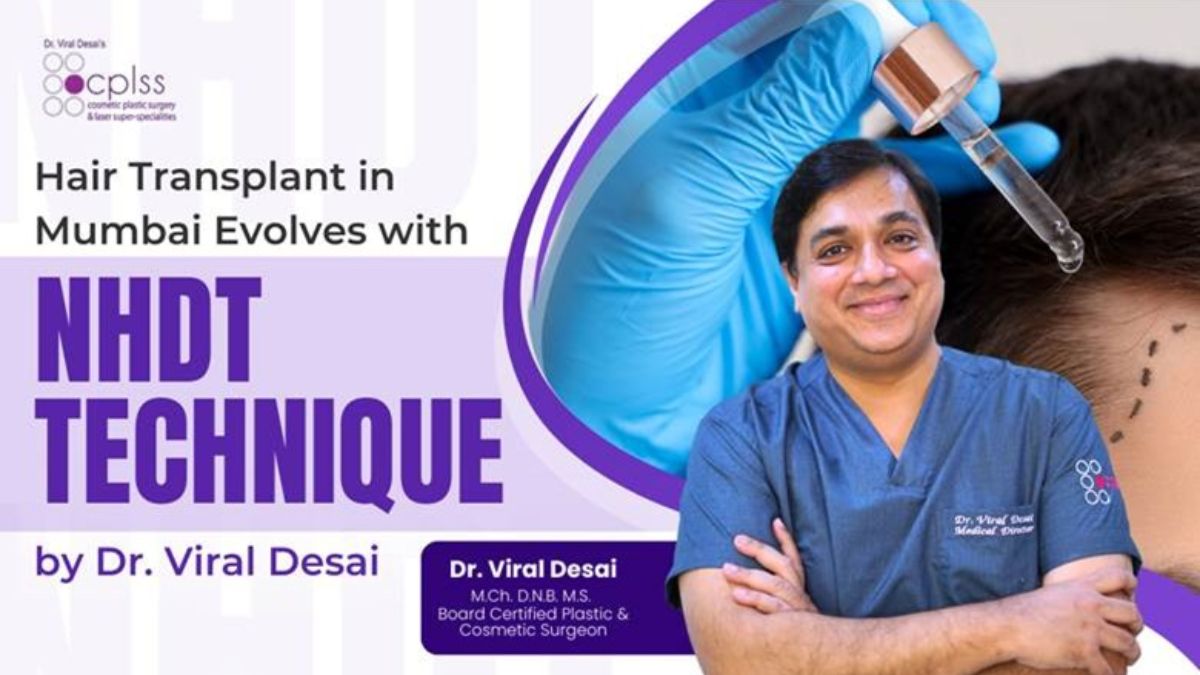
  • Hair Transplant in Mumbai Evolves with NHDT Technique by Dr. Viral Desai

    Hair Transplant in Mumbai Evolves with NHDT Technique by Dr. Viral Desai

    Mumbai (Maharashtra) [India], February 25: Hair restoration procedures have advanced significantly, with Dr. Viral Desai leading the way in revolutionizing hair transplants in Mumbai. Dr. Desai, a renowned cosmetic and hair transplant surgeon, has introduced the NHDT (Natural High Density Hair Transplant) technique, setting new standards for natural-looking hair restoration. With over 20 years of experience and training across global destinations like Greece, Singapore, and London, Dr. Desai is widely recognized for his expertise in delivering exceptional results with minimal scarring and shorter recovery times.

    Dr. Desai’s clinic is a premier destination for those seeking hair transplant in Mumbai, offering the latest advancements in hair restoration techniques tailored to meet individual patient needs. The NHDT technique has quickly become one of the most sought-after treatments for individuals seeking a non-invasive solution to hair restoration. Unlike traditional methods, NHDT minimizes scarring while ensuring a fuller, more natural appearance. By placing hair follicles at an optimal depth and angle, the technique blends seamlessly with existing hair, providing long-lasting results.

    “Hair restoration is not just about placing hair follicles. It’s about understanding the patient’s goals and using advanced techniques like NHDT to create results that enhance their natural features,” says Dr. Desai. “By constantly refining our approach and incorporating innovative technologies, we are setting a new benchmark in hair restoration, prioritizing natural-looking results and faster recovery times.”

    While traditional FUE (Follicular Unit Extraction) continues to be a popular choice for many patients, Dr. Desai’s personalized approach ensures that each patient receives a treatment plan best suited for their hair type and desired outcomes. Both FUE and NHDT are offered at the clinic, with Dr. Desai providing expert guidance to determine the most effective technique for each individual. Factors such as hair quality, degree of hair loss, and future hair loss patterns are all considered to craft a treatment plan that delivers optimal results.

    Dr. Desai’s clinic also offers a wide range of non-surgical treatments for those seeking hair restoration solutions without the need for surgery. Services like PRP (Platelet-Rich Plasma) therapy, mesotherapy, exosome hair therapy and laser therapy help improve hair density and promote growth, providing an excellent option for patients who may not need a full transplant.

    As a celebrity cosmetic and hair transplant surgeon in Mumbai, Dr. Desai has built a reputation for providing discreet, professional care to high-profile clients in the entertainment industry. Known for his commitment to excellence and his ability to deliver natural-looking, undetectable results, Dr. Desai has earned the trust of many seeking transformative hair restoration treatments.

    Dr. Viral Desai’s clinic is at the forefront of hair transplant innovation in Mumbai, where he combines advanced techniques, patient-centric care, and cutting-edge technology to deliver results that empower patients with renewed confidence. Whether patients are looking for surgical or non-surgical solutions, Dr. Desai ensures they receive the highest level of care, with personalized treatment plans designed to meet their unique goals.

    Dr. Viral Desai is a board-certified cosmetic and hair transplant surgeon with over 20 years of experience. He is widely recognized for continuously advancing hair restoration techniques, including the introduction of NHDT. His clinic in Mumbai is known for offering personalized care with a focus on delivering natural, lasting results.

    Contact Information

    • Location: Dr. Viral Desai Clinic, Mumbai
    • Email: info@drviraldesai.com
    • Website: www.drviraldesai.com

    If you object to the content of this press release, please notify us at pr.error.rectification@gmail.com. We will respond and rectify the situation within 24 hours.

  • The Architect of Angelic Intelligence

    The Architect of Angelic Intelligence

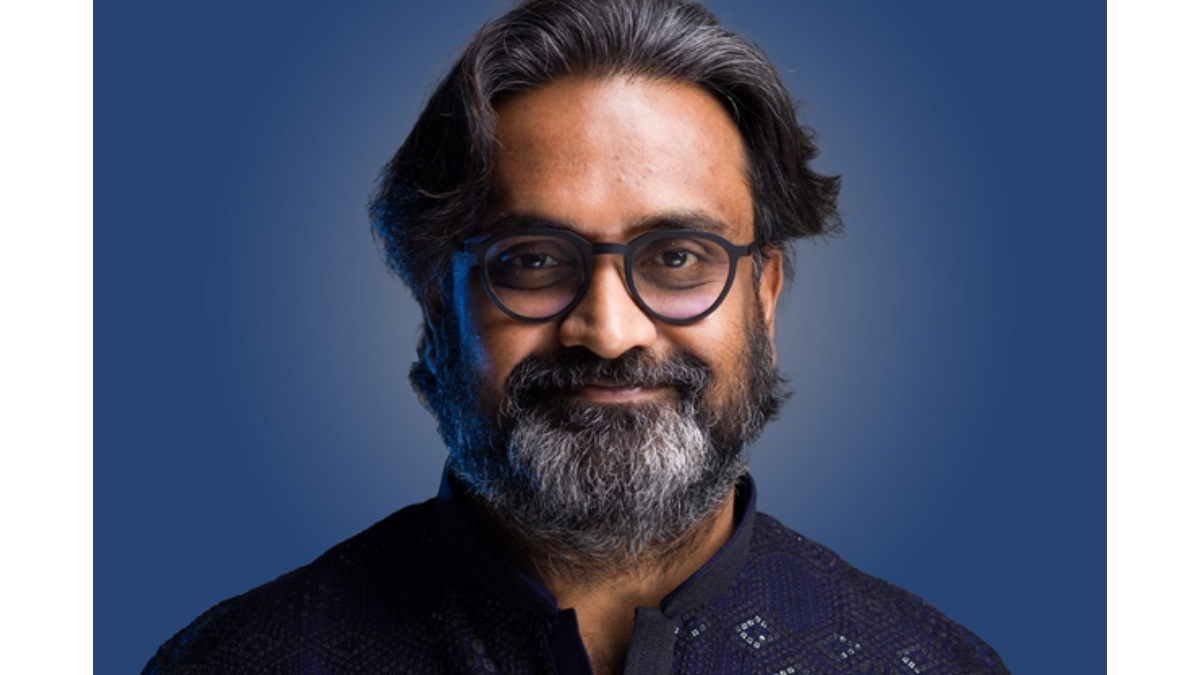
    With 70+ patents, a $4.5 trillion market in his sights, and 2 billion social media views, Shekhar Natarajan is staking his claim as the defining voice on trustworthy AI — and challenging Silicon Valley’s entire governance playbook.


    New Delhi [India], February 24: Through Orchestro.AI, Shekhar Natarajan has risen to become one of the leading voices in the Agentic AI market. This release showcases his journey to date and  the challenges he aims to address. 

    On the morning of February 20, at Bharat Mandapam in New Delhi, a hall filled with global policymakers, technology executives, and international media fell silent as Shekhar Natarajan, Founder and CEO of Orchestro.AI, posed a challenge that cut through years of regulatory noise: “The entire world is debating how to govern AI after the fact. That debate is already lost.”

    The audience gave him a standing ovation. It was not the first time, and it is unlikely to be the last.

    Natarajan’s arrival at the summit of global AI discourse is the culmination of a 25-year executive career inside some of the world’s most demanding corporate environments — Walmart, The Walt Disney Company, Coca-Cola, PepsiCo, Target, and American Eagle Outfitters — and a founding conviction that AI’s ethics problem cannot be patched. It must be engineered from the ground up.

    A Career Built on Scale

    Before Natarajan became a philosophical voice on artificial intelligence, he was one of the most operationally consequential figures in American retail logistics. At Walmart, serving as SVP of Last Mile and Emerging Sciences, he drove two transformations simultaneously. The first was commercial: growing the grocery business from $30 million to $5 billion, a 166-fold expansion that required building supply chain architecture at a scale where decisions affected millions of consumers daily. The second was structural: pioneering the use of crowdsourced delivery through partnerships with Uber, Lyft, and Deliv — introducing gig-economy fulfillment to mass-market retail before the concept had a name.

    At American Eagle Outfitters, Natarajan took on a larger and more complex mandate as EVP and Chief Supply Chain Officer. His defining contribution there was the construction of an open-source distributed fulfillment model — a frenemy network that enlisted competitors and partners alike as nodes in a shared logistics infrastructure. The approach challenged the orthodoxy of proprietary supply chain control, arguing instead that collaborative, transparent networks could outperform closed systems on both cost and resilience. It was a philosophy that would later find its way, in updated form, into the architecture of Angelic Intelligence itself.

    Educated at Georgia Tech, MIT, Harvard Business School, and IESE, Natarajan built across both technical depth and strategic breadth across his corporate tenure. He accumulated more than 70 patents across supply chain innovation, distributed intelligence, and logistics architecture — a body of intellectual property that reflects not just operational expertise, but a systematic approach to converting insight into protected frameworks.

    The Founding Thesis

    In August 2023, Natarajan founded Orchestro.AI with a proposition that inverts the conventional AI governance debate. Where regulators and ethicists argue for constraints applied to AI systems after their construction, Natarajan’s framework — which he terms Angelic Intelligence — argues that virtue must be native to the computational architecture itself. Ethics, in his formulation, is not a compliance layer. It is the substrate.

    Angelic positions itself as the world’s first Trust Layer for AI: a virtue-native proxy that sits between an enterprise and any large language model, making AI not merely safer but — in Natarajan’s formulation — wiser. The product rests on four technical pillars: a Wisdom Engine that curates training data against human wisdom rather than internet noise; the MACI Framework (Multi-Architecture Consequential Intelligence), in which multiple AI agents debate each decision to produce deterministic, consistent reasoning; a configurable Virtue Stack that adapts context-aware intelligence across healthcare, logistics, finance, and education; and a Human Centric Scoring and Explainability layer that measures every decision against human benefit and renders its reasoning transparent.

    At the operational core of the system are 27 Digital Angels — specialized AI agents, each embodying a cross-cultural virtue drawn from Sanskrit philosophical traditions, collaborating in real time on ethical decision-making. The framework protects its innovations across 43 filed patents, covering virtue-native reasoning through to human benefit measurement.

    The Problem He Is Solving

    Natarajan’s commercial case rests on a diagnosis of what he calls the fatal flaws in current AI models. His presentation to investors and policymakers identifies six structural failures in the prevailing generation of AI systems: training data contamination, where the absence of epistemic filtration allows misinformation to shape model behavior; validation-seeking optimization, where models are tuned for engagement rather than guidance; rigid, one-size-fits-all architecture unsuited to context-specific demands of hospitals, banks, and legal institutions; reasoning inconsistency that undermines trust in high-stakes decisions; cosmetic safety guardrails that independent testing has found to have a 97 percent jailbreak failure rate; and centralized control that concentrates influence over AI outputs in the hands of individual executives or governments.

    The market opportunity Natarajan is addressing is substantial. His company identifies a total addressable market of $4.5 trillion, with a serviceable addressable market of $520 billion and an initial market position projected at $12–18 billion. His framing — that Angelic is the inevitable trustworthy AI layer every enterprise will require — is positioning the company directly in the path of regulatory tailwinds. The EU AI Act’s full enforcement begins in August 2026, with penalties reaching EUR 35 million or 7 percent of global revenue. Gartner projects that 50 percent of governments worldwide will enforce responsible AI regulations by 2026.

    Traction and Market Proof

    The public reception to Natarajan’s thesis has been remarkable in its velocity. His content campaign around Angelic Intelligence has reached 2 billion social media views across platforms. On Instagram, the content generated 299 million views, 91.5 million in reach, and 532,000 interactions. Facebook delivered 364 million views and 108 million unique viewers. On X, the hashtag #AngelicIntelligence trended at number three in technology globally and number two in India. His LinkedIn reach of 30.5 million impressions accompanied a 91 percent follower growth rate.

    These figures are not merely promotional metrics. They represent market validation of a thesis that established AI governance institutions have been slow to articulate with equivalent clarity or commercial urgency. Natarajan has moved faster in public discourse than most regulatory bodies have moved in policy — a dynamic he acknowledges deliberately: the governance debate will catch up to his architecture, not the reverse.

    The Philosophical Architecture

    What distinguishes Natarajan from the large field of AI ethics commentators is the specificity of his technical claim. He is not arguing for behavioral guidelines or industry self-regulation. He is arguing that virtue, as a computational property, can be operationalized and protected through intellectual property. His 43 filed patents are the legal architecture of that argument.

    The 27 Digital Angels framework draws explicitly on Sanskrit concepts of virtue — frameworks for understanding consciousness, ethics, and the relationship between capability and character that predate modern computing by millennia. Natarajan’s synthesis applies these philosophical traditions to a technological context they were never designed to address. The result is an approach that has resonated across cultures that have experienced optimization-first AI as extractive rather than beneficial.

    His deployment targets reflect the commercial maturity of this vision. Home robotics, enterprise AI customization, workforce scheduling, content moderation, and mental health applications each represent contexts where the absence of trustworthy AI has produced documented failures. In each domain, his architecture offers the same proposition: configurable virtues, transparent reasoning chains, and decisions scored against human benefit rather than engagement or efficiency.

    Global Stage

    Natarajan is preparing appearances at the World Economic Forum in Davos and the Future Investment Initiative in Riyadh, two venues where the intersection of capital, policy, and technological direction is most concentrated. His presence at both reflects a positioning strategy that places Angelic Intelligence not as a niche enterprise software product, but as a civilizational proposition: that the next generation of AI must be built to serve human dignity as a first-order computational requirement, not a secondary compliance obligation.

    Market validation is arriving from multiple directions simultaneously. Humans&, a new AI company founded by Anthropic, xAI, and Google alumni, raised $480 million in seed funding at a $4.48 billion valuation in January 2026 — a signal that the market for virtue-aligned AI infrastructure has moved from philosophical to investable. The Kapor Foundation’s $500 million HumanityAI Initiative, Gartner’s regulatory timeline projections, and Dario Amodei’s “The Adolescence of Technology” essay have each, in different registers, provided independent validation of the framework Natarajan has been building.

    Whether Orchestro.AI becomes the infrastructure layer for trustworthy enterprise AI or not, Natarajan has already accomplished something significant: he has made the case, with technical specificity and commercial credibility, that the AI industry’s governance problem is not a policy problem. It is an engineering problem. And he has filed the patents to prove it.

    Shekhar Natarajan is the Founder and CEO of Orchestro.AI and the architect of Angelic Intelligence. He holds 70+ patents and has held senior executive roles including SVP of Last Mile and Emerging Sciences at Walmart and EVP and Chief Supply Chain Officer at American Eagle Outfitters. He is a speaker at the World Economic Forum and the Future Investment Initiative.


    If you object to the content of this press release, please notify us at pr.error.rectification@gmail.com. We will respond and rectify the situation within 24 hours.
  • The Afterglow: Inside the 7th Iconic Gold Awards 2026

    The Afterglow: Inside the 7th Iconic Gold Awards 2026

    Mumbai (Maharashtra) [India], February 24: Almost a week has passed since the flashbulbs subsided at Mumbai’s Taj Lands End, but the 7th Iconic Gold Awards is still the talk of the town. The joy has not subsided yet. In a season often cluttered with commercial noise, this year’s ceremony felt different, a definitive statement on the “new guard” of Indian entertainment culture where cinematic depth and digital mastery finally share the same throne. The ceremony was concluded on a high note.

    The Couture & The Crowd

    The red carpet was a star-studded affair, with appearances from Hina Khan, Nimrat Kaur, Rakul Preet Singh, and Ishaan Khatter.

    From Manoj Bajpayee and Boman Irani to the digital creators like Avneet Kaur and Munawar Faruqui, the guest list was studded with talents from various segments of the glamour industry.

    The Night’s Big Winners

    The jury had  Amit Rai (OMG 2) and Raaj Shaandilyaa (Dream Girl 2), and other popular faces.

    Anupam Kher’s Tanvi The Great was the evening’s undoubted cinematic choice. Centered on a powerful narrative involving autism and the Indian Army, the film secured Best Film, while newcomer Shubhangi Dutt received a standing ovation as she accepted the Best Actress (Jury) award for her transformative performance.

    OTT: The Panchayat Sweep

    If there were any doubts about the power of rural storytelling, TVF’s Panchayat Season 4 silenced them. In a historic sweep, the series took home six major trophies, including:

    • Best Comedy Web Series

    • Best Actor (Comedy): Jitendra Kumar

    • Best Actress (Comedy): Neena Gupta

    • Best Supporting Duo: Faisal Malik & Sunita Rajwar

    • Best Director (Comedy): Deepak Kumar Mishra & Akshat Vijaywargiya

    DVA Records, too, made a great impact in this grand ceremony.

    The Verdict

    Looking back, the 2026 Iconic Gold Awards weren’t just about the trophies; it was about the shift in the tide. With the support of Seema Singh’s MeghaShrey and a panel that prioritized narrative appeal over the viral metrics, the Iconic Gold stage has officially become the place where India’s most meaningful stories come to be gilded. The event set bars for the event culture of Indian glamour.

    Complete List of Achievers:

    Special Jury Award For Outstanding Performance
    Adarsh Gourav  – Superboys Of Malegaon

    Best Actor (Popular)
    Farhan Akhtar – 120 Bahadur

    Emerging Face Of The Year
    Shanaya Kapoor – Aankhon Ki Gustaakhiyan

    Producer With A Purpose – Zero Waste Filmmaking
    Pragya Kapoor

    Fresh Face Of The Year
    Zoya Afroz

    Best Director (Critics’ Choice)
    Suparn Verma – Haq

    Best Film (Popular)
    Haq

    Game Changer Producer Of The Year
    Jyoti Deshpande – Dhurandhar

    Best Director
    Aditya Dhar – Dhurandhar

    Best Debut (Popular)
    Sara Arjun – Dhurandhar

    Best Film
    Dhurandhar

    Best Debut Director
    Karan Singh Tyagi – Kesari Chapter 2

    Best Actor (Critic’s Choice)
    Siddhant Chaturvedi – Dhadak 2

    Best Actress (Critics’ Choice)
    Fatima Sana Shaikh – Gustakh Ishq

    Best Actress
    Rakul Preet Singh – De De Pyaar De 2

    Best Actress (Pan India Movie)
    Rukmini Vasanth – Kantara: A Legend Chapter-1

    Best Actor (Jury’s Choice)
    Ishaan Khatter – Homebound

    Powerpack Performance Male
    Vishal Jethwa – Home Bound

    Breakthrough Performance Of The Year
    Simrat Kaur – The Bengal Files

    Best Music
    Tanishk Bagchi – Saiyaara

    Versatile Actor (Popular)
    Vivek Oberoi

    Best Supporting Actor
    Vineet Kumar Singh – Chhaava

    Best Supporting Actress
    Kubbra Sait – Son Of Sardaar 2

    Best Supporting Actor (Comedy)
    Maniesh Paul – Sunny Sanskari Ki Tulsi Kumari

    Best Debut Actor
    Veer Pahariya – Sky Force

    Best Debut Actress
    Shreya Sharma – Mastiii 4

    Best Choreographer
    Vijay Ganguly – Saiyaara And Dhurandhar

    Voice Of The Year
    Shahzad Ali – Ishq Jalakar – Karvaan (Dhurandhar)

    Best Singer
    Sonu Nigam – Pardesiya Song Param Sundari

    Outstanding Contributions In Indian Sports Badminton
    Saina Nehwal

    Promising Performer Female
    Avneet Kaur – Love In Vietnam

    Trailblazer Of New Age Cinema
    Radhika Madan

    Best Debut Actress (Critics’ Choice)
    Shubhangi Dutt – Tanvi The Great

    Impactful Performance Male
    Mohit Malik – Azaad

    Best Casting Director
    Mukesh Chhabra – Dhurandhar & Tere Ishk Mein

    Powerpack Performance Female
    Patralekha – Phule

    Best Debut Producer
    Manish Malhotra – Gustaakh Ishq

    Best Film (Jury’s Choice)
    Tanvi The Great

    Best Film (Critics’ Choice)
    Superboys Of Malegaon

    Best Gujarati Movie
    Laalo – Shree Krishna Sada Sahaayate

    Social Media Sensation Of The Year
    Aditi Bhatia

    Fitness Diva Of Bollywood
    Alaya F

    Best Lyricist
    Irshad Kamil – Saiyaara & Tere Ishk Mein (Title Track).

    Best Playback Singer
    Sonu Nigam – Pardesiya – Param Sundari

    Best Director (Popular)
    Mohit Suri – Saiyaara

    Best Film
    Dhurandhar

    Best Movie OTT
    Harman Baweja – Mrs.

    Best Director (Critics’ Choice) – OTT
    Arati Kadav – Mrs.

    Best Actor – OTT
    Nawazuddin Siddiqui – Raat Akeli Hai 2

    Best Film (Popular) – OTT
    Raat Akeli Hai 2

    Best Actress – OTT
    Chitrangada Singh – Raat Akeli Hai 2

    Best Supporting Actor – OTT
    Sanjay Kapoor – Raat Akeli Hai 2

    Best Actress (Critics’ Choice) – OTT
    Nushrratt Bharuccha – Chhori 2

    Best Director – OTT
    Boman Irani – The Mehta Boys

    Best Actor (Critic’s Choice) – OTT
    Avinash Tiwary – For The Mehta Boys

    Best Television Actress
    Rupali Ganguly – Anupama

    Best Television Actor
    Sharad Kelkar – Tumm Se Tumm Tak

    Best Actor – Web Series
    Manoj Bajpayee – The Family Man Season3

    Best Actress – Web Series
    Shefali Shah – Delhi Crime Season 3

    Best Web Series
    Raj & Dk – The Family Man Season 3

    Best Web Series (Comedy)
    Panchayat Season 4

    Best Actor (Critic’s Choice) – Web Series
    Amol Parashar – Gram Chikitsalay

    Best Director (Critic’s Choice) – Web Series
    Faruk Kabir – Salakaar

    Best Director (Popular) – Web Series
    Deepak Kumar Mishra – Panchayat Season 4

    Best Supporting Actor (Comedy) – Web Series
    Faisal Malik – Panchayat Season 4

    Best Supporting Actress (Comedy) – Web Series
    Sunita Rajwar – Panchayat Season 4

    Pioneer Of Digital Content In India
    Arunabh Kumar

    Best Actress (Negative) – Web Series
    Huma Qureshi – Delhi Crime Season 3

    Best Actress (Negative) (Critics’ Choice) – Web Series
    Kriti Kharbanda – Rana Naidu Season 2

    Best Actress (Negative) (Popular) – Web Series
    Nimrat Kaur – The Family Man Season 3

    Best Supporting Actress – Web Series
    Rasika Dugal – Delhi Crime Season 3

    Versatile Actor
    Amit Sial – The Hunt – The Rajiv Gandhi Assassination Case

    Breakout Performance Of The Year – Web Series
    Karan Tacker – Bhay: The Gaurav Tiwari Mystery

    Most Impactful Performance – Web Series
    Hina Khan – Griha Laxmi

    Most Promising Actor – Web Series
    Naveen Kasturia – Salakaar

    Rising Star – OTT
    Akanksha Ranjan Kapoor – Gram Chikitsalay

    Best Debut Actor – Web Series
    Munawar Faruqui – First Copy

    Best Debut Director – Web Series
    Aryan Khan – The Ba***Ds Of Bollywood

    Best Writer
    Bilal Siddiqi – The Ba***Ds Of Bollywood

    Best Writer
    Aryan Khan – The Ba***Ds Of Bollywood

    Best Writer
    Manav Chauhan – The Ba***Ds Of Bollywood

    Outstanding Performer
    Mona Singh – The Ba***Ds Of Bollywood

    Best Comeback In OTT
    Rajat Bedi – The Ba***Ds Of Bollywood

    Best Web Series (Popular)
    The Ba***Ds Of Bollywood

    Most Promising Actress – Web Series
    Anya Singh – The Bads*** Of Bollywood.

    Rising Star Popular
    Sahher Bambba – The Bads*** Of Birthday

    Rising Star Female (Critics’ Choice)
    Sadia Khateeb – For The Diplomat

  • Innovative Egg ‘Rejuvenation’ Techniques Boost IVF Success for Women with Low Ovarian Reserve at Nisha IVF Centre

    Innovative Egg ‘Rejuvenation’ Techniques Boost IVF Success for Women with Low Ovarian Reserve at Nisha IVF Centre

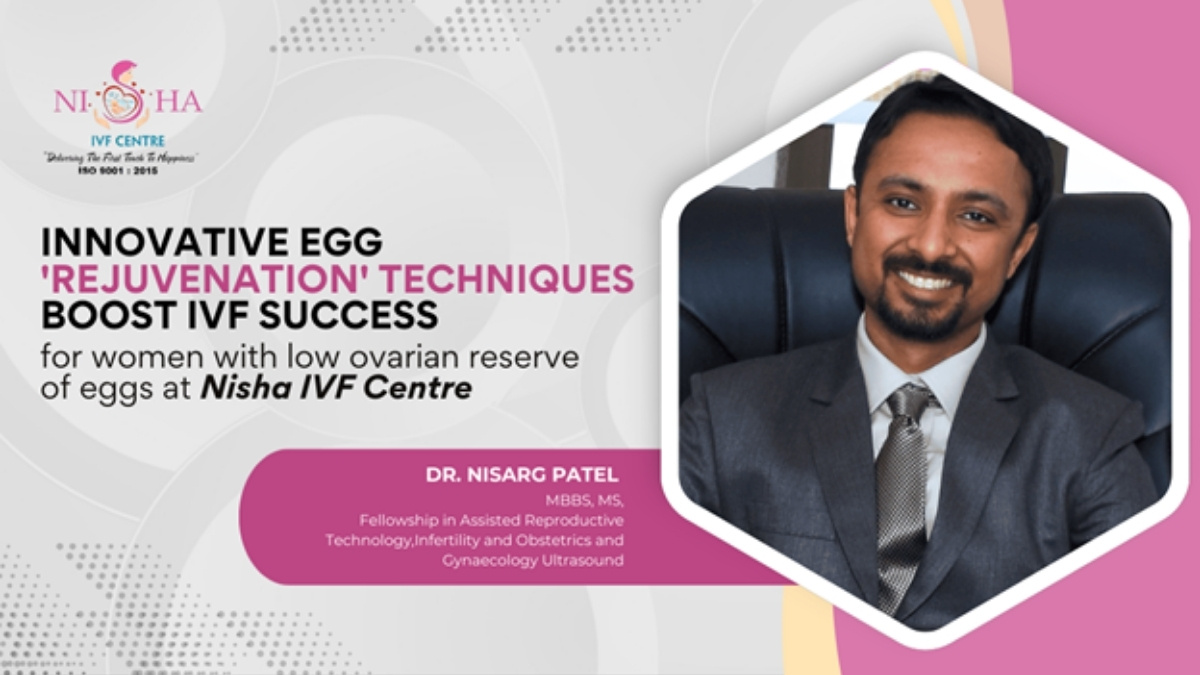
    Ahmedabad (Gujarat) [India], February 24: The Nisha IVF Centre, which Dr. Nisarg Patel directs as its director, uses his expertise to create new methods of treating fertility problems that women with low ovarian reserve experience through their egg rejuvenation approaches. The new method helps women achieve higher IVF success rates when they face challenges with their egg count and quality.

    Women with low ovarian reserve, which usually occurs because of their age or existing medical conditions, experience major challenges when trying to conceive. The best way for most people to achieve conception lies with IVF which allows them to create embryos outside their body. The new egg rejuvenation treatments at Nisha IVF Centre in Ahmedabad establish a direct solution to this problem because they bring eggs back to life which results in greater success rates for future pregnancies.

    Dr. Nisarg Patel, Founder and Director of Nisha IVF Centre, commented, “Women with low ovarian reserve often feel hopeless when it comes to their fertility. Our egg rejuvenation techniques are designed to improve the quality of the eggs, giving them a fresh opportunity for conception. We present a treatment solution for women who believed they had reached their final option through our specialized care and modern medical equipment.”

    The Nisha IVF Centre has introduced PRP therapy as one of its primary treatment options. The advanced technique utilizes blood from the patient, which undergoes processing to obtain growth factors. The PRP gets injected into the ovaries to enhance egg production and boost egg quality. The method enables women with low ovarian reserve to achieve significant improvements in their ovarian function according to the study results.

    The Nisha IVF Centre provides Ovarian Tissue Freezing services to women who want to keep their ability to have children. The procedure enables women to preserve their ovarian tissue which can be used later for re-implantation or egg retrieval purposes thus creating a helpful choice for women who expect to encounter future fertility problems or wish to postpone having children.

    The combination of these techniques has already shown promising results which assist women with low ovarian reserve to achieve successful pregnancy through IVF treatment. The Nisha IVF Centre provides women who believed their fertility options were restricted with a second chance through its egg rejuvenation and ovarian function enhancement treatments.

    Dr. Patel and his team at Nisha IVF Centre provide individual-centered methods for their fertility treatment services. The medical team creates individualized treatment strategies for every patient which are based on the patient’s medical background and their reproductive treatment expectations. The clinic’s high success rates in IVF and other fertility treatments demonstrate their medical expertise and advanced technological equipment and their dedication to treating patients with compassion.

    Nisha IVF Centre provides women with low ovarian reserve fertility treatment through its advanced facilities and skilled personnel and modern medical methods. The clinic delivers comprehensive reproductive health services through its complete range of services which include IVF and egg freezing and sperm donation and male fertility treatments.

    Dr. Nisarg Patel developed patient care methods which guarantee that all women will receive effective fertility treatments. Nisha IVF Centre will maintain its leadership position in Ahmedabad and other locations as it develops its egg rejuvenation methods which are part of its ongoing research.

    Nisha IVF Centre
     201, 2nd Floor, Bhavya Shopping Complex,
    Opp. Govt Tubewell, Bopal, Ahmedabad,
    Gujarat 380058, India
    Phone: +91 9081233800, +91 2717233800
    Email: nishaivfcentre@gmail.com

    For more details about Nisha IVF Centre, visit the official website: https://nishaivf.com/

    If you object to the content of this press release, please notify us at pr.error.rectification@gmail.com. We will respond and rectify the situation within 24 hours.
  • Early Surgical Intervention in Parkinson’s Disease: Why Waiting Too Long May Limit Treatment Benefits? – Dr. Naren Nayak

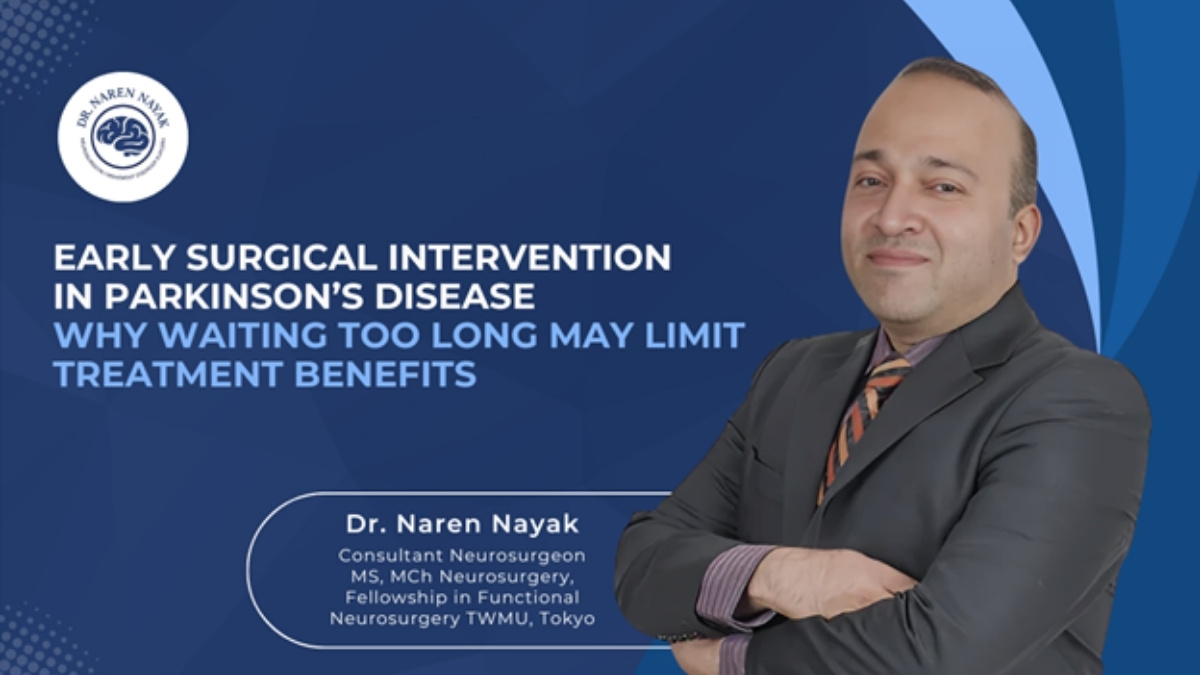
    Early Surgical Intervention in Parkinson’s Disease: Why Waiting Too Long May Limit Treatment Benefits? – Dr. Naren Nayak

    Thane (Maharashtra) [India], February 24: Patients with Parkinson’s disease require primary medication for their condition until they reach the point where doctors need to conduct surgery. Medical research currently demonstrates that patients with Parkinson’s disease can achieve better long-term results through surgical treatment when they undergo surgery at an early stage of their condition.

    Dr. Naren Nayak, Consultant Neurosurgeon in Thane and Movement Disorder Specialist, states that patients who postpone their medical evaluation until their symptoms become severe will experience lower treatment success with advanced medical solutions which will hinder their progress toward better health. Parkinson’s disease causes patients to develop their condition in stages which results in medications producing “on-off” effects and multiple “on” and “off” symptom periods. People hold a false belief which Dr. Nayak describes as surgical treatment needing to wait until all other methods have shown no success. The early assessment process enables specialists to identify patients who will receive the most benefit from surgical procedures such as Deep Brain Stimulation (DBS) for Parkinson’s disease before their condition reaches a point which will result in less effective outcomes. Parkinson’s disease DBS treatment operates as an established surgical procedure which scientists have researched through medical studies. The treatment enables patients to control their tremors and rigidity along with their movement speed and motor fluctuations by using electrical stimulation to activate brain areas.

    DBS proves effective when provided at correct times because it decreases medication requirements while sustaining daily symptom control and enabling substantial progress in patient independence. Early surgical assessment leads to two outcomes for patients which include assessment of their medical condition through neurological testing and neurosurgical evaluation for determining which treatments should proceed and when based on their medical condition. Modern functional neurosurgery provides patients with targeted treatment options which include DBS, Thalamotomy, Pallidotomy, Radiofrequency Lesioning and MR-Guided Focused Ultrasound (MRgFUS) for specifically selected patients who require movement disorder treatment. The implementation of advanced imaging systems together with precise targeting abilities and modern technological advancements enables procedures to achieve improved safety levels and enhanced operational efficiency compared to previous times.

    Research from around the world shows that patients who get surgery in the early stages of their medical condition experience better results with their motor skills and overall life satisfaction while maintaining higher levels of social and work engagement. The healthcare system needs to draw more attention toward treating disability which happens before patients reach critical impairment because this period provides major advantages which include surgical treatment with higher success rates. Dr. Nayak emphasizes that timely referral is critical, stating that “patients should be evaluated for surgical options when medications start causing side effects or no longer provide consistent control, not years later when options become restricted.”

    Dr. Naren Nayak

    Phone: +91 9820456326

    KIMS Hospitals, Thane, Thane Hiranandani Estate Queens Street, Ghodbunder Rd, opposite BRENTFORD, Patlipada, Thane West, Thane, Maharashtra 400607

    Website: https://drnarennayak.com/

    If you object to the content of this press release, please notify us at pr.error.rectification@gmail.com. We will respond and rectify the situation within 24 hours.

  • The Conscience Engineer

    The Conscience Engineer

    Natarajan returns to the streets of Hyderabad where he grew up — surrounded by the next generation he is building for.

    New Delhi [India], February 24: Shekhar Natarajan grew up without electricity in Hyderabad, arrived in America with $34, and built a distinguished career at the world’s largest companies. Now he is pursuing something far more ambitious — a new paradigm for artificial intelligence that places human virtue at the center of every decision any machine will ever make.

    The photograph tells a story before a word is read. Shekhar Natarajan — Forbes-listed, patent-holder, the man who grew Walmart’s grocery business 166-fold from $30 million to $5 billion — stands in the middle of a sea of uniformed schoolchildren in Hyderabad, wearing a white kurta, radiating calm. The children press in from every side. He is grinning.

    He grew up a few streets from there.

    That detail — the return, the rootedness, the refusal to erase his origins — is the key to understanding not just Shekhar Natarajan the man, but Angelic Intelligence, the philosophical framework he has spent the last decade constructing. At a moment when the world is grappling with what AI should be, Natarajan is asking something more foundational: What if artificial intelligence was designed, from its very first line of code, to behave the way a genuinely good human being does?

    “Ethics cannot be a patch. It cannot be a compliance checklist. If you have to teach a machine not to be harmful, you have already built the wrong machine.”

    — Shekhar Natarajan, AI Summit, New Delhi, February 2026

    Street Lights and a Pawned Ring

    Natarajan was born in Secunderabad, the twin city of Hyderabad, in South Central India. His family shared a single room. There was no electricity. He studied by streetlight. His father earned the equivalent of $1.75 a month. The circumstances were hard, but they were not without grace.

    His mother — the figure who animates almost everything Natarajan has built — did not optimize. She sacrificed. When tuition fees were needed, she pawned her wedding ring for 30 rupees. When a local headmaster refused to grant her son admission to school, she returned to his office every morning for 365 consecutive days until he relented. A year. Standing outside a door. For the right of her son to learn.

    “Real wealth is not money,” Natarajan says. “Real wealth is wisdom. My mother understood that. She gave up her most precious possession so I could learn. That’s not optimization — that’s love.” It is a sentence he returns to often. And it is the fulcrum on which his entire vision for AI rests.

    The Career of a Master Optimizer

    He arrived in the United States with $34 in his pocket. What followed was, by any conventional metric, a remarkable success. Degrees from Georgia Tech, MIT, Harvard Business School, and IESE. Senior leadership at Coca-Cola, PepsiCo, Target, Disney, American Eagle, and Walmart. More than 70 patents. A career spent making the world’s most complex operations faster, smarter, and more responsive.

    At Walmart, he grew the grocery business from $30 million to $5 billion — a 166-fold increase that reshaped how America’s largest retailer thought about food retail. At Disney, he contributed to the MagicBand technology that millions of park visitors now navigate without a second thought. He pioneered some of the earliest crowdsourced delivery systems, anticipating by years an entire revolution in how the world moves goods and services.

    Yet at the height of that success, a deeper question began to surface. Efficiency, he had come to understand, is a tool — and like any tool, its value depends entirely on the intention behind it. Systems that optimize without asking who they serve — in healthcare, in education, in finance, in governance, in every domain where AI is now being deployed — risk becoming sophisticated instruments of indifference.

    “I spent decades making systems more efficient,” he reflects. “Faster. Cheaper. More scalable. But the most important question is not how fast — it is for whom. And whether those people are seen.”

    The Architecture of Virtue

    Angelic Intelligence is not a product. It is a paradigm. Natarajan’s proposition is that the next evolution of artificial intelligence — across every sector, every application, every country — must embed human values directly into the computational architecture itself, from the very beginning. Not as a layer added later. Not as a policy document. As the foundation.

    His framework deploys 27 specialized AI agents — the “Digital Angels” — each embodying a specific virtue drawn from wisdom traditions across human civilization. Karuna, from Sanskrit, represents compassion. Satya embodies truth. Ahimsa, non-harm. Nyaya, justice. The agents draw on Hindu, Buddhist, Christian, Islamic, Indigenous, and philosophical traditions — a deliberate act of cross-cultural design reflecting Natarajan’s conviction that wisdom is not the property of any single civilization, and neither should be the machines that now shape all of them.

    In practice, no significant decision is made by a single optimization engine. The 27 agents collaborate — and in some cases, reach consensus — before action is taken. The same framework that can ask whether a medical resource reaches the right patient can ask whether an algorithm is treating a loan applicant with dignity, whether a hiring system is recognizing potential fairly, whether a content recommendation is serving genuine human flourishing. The domain changes. The moral architecture does not.

    “Ethical decisions are almost never single-variable optimizations,” Natarajan explains. “Real ethics involves trade-offs between competing goods. A system that can only optimize for one thing cannot be ethical — it can only be efficient. And efficiency without wisdom is an incomplete idea.”

    “The domain changes. The moral architecture does not. Whether it is healthcare, education, finance, or governance — the machine must ask the same first question: does this honor human dignity?”

    — Shekhar Natarajan

    Standing Ovations and Global Stages

    Just days ago, Natarajan delivered a keynote address at the AI Summit on Trust, Safety, and the Future of AI Governance at Bharat Mandapam in New Delhi. The room — packed with global policymakers, technology executives, and international media — gave him a standing ovation.

    His central message was clear: the current conversation about AI governance, however well-intentioned, is largely reactive — addressing consequences after systems are already deployed across hospitals, schools, courts, banks, and governments. Angelic Intelligence offers a different starting point entirely. Build with values first, and governance becomes a natural outcome rather than an imposed constraint.

    The delegates who approached him afterward — from healthcare, public governance, education, and financial services — were not asking about any single industry. They were asking about the idea. How do you make a machine that remembers why people matter? Natarajan’s answer, refined over a decade, is Angelic Intelligence.

    Engineer-PNN

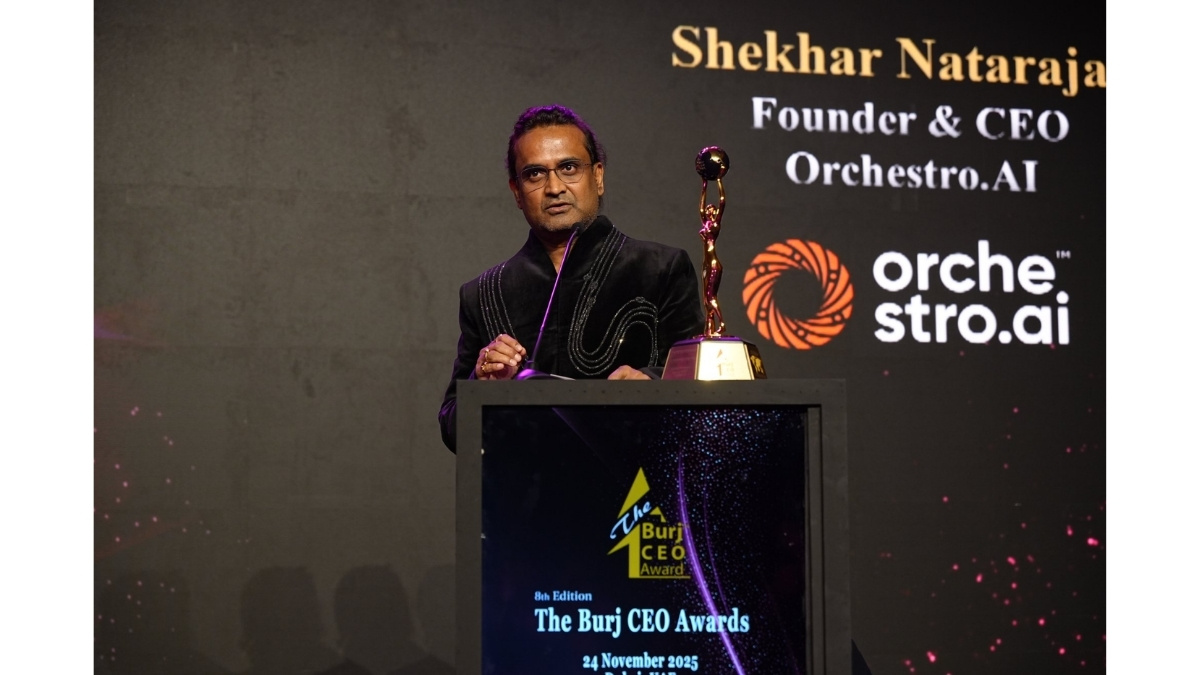
    Natarajan accepting the Burj CEO Award, 8th Edition, Dubai — November 24, 2025.

    Recognition has followed. The Burj CEO Award, one of the most prestigious leadership honours in the Gulf region, was presented to Natarajan in Dubai in November 2025. With confirmed invitations to speak at the World Economic Forum and the Future Investment Initiative, he is now building a platform that bridges the corporate world he has mastered and the philosophical terrain he has always inhabited. In a field hungry for moral clarity, he arrives with the framework already built.

    Painting at 4 AM, Thinking in Centuries

    Every morning, before the rest of San Francisco wakes, Natarajan sits with classical Indian painting materials and works in silence. The practice is not a hobby. It is a method of thinking — a daily reminder that the most enduring things are made slowly, with intention, and with love for what they will become.

    His son Vishnu is a frequent presence in his reflections on why this work matters. The technology Natarajan is building is not designed for a product cycle. He describes it as a thousand-year project — AI systems built to become more trustworthy as they become more capable, carrying values that deepen over time rather than erode under pressure.

    “Without protection, anyone could take these concepts and implement them in name only, while pursuing the same old optimization. The patents ensure the framework must be implemented correctly — with all 27 agents functioning as designed. This is a thousand-year project. It has to be built right.”

    The Innovation That Margins Cannot Measure

    The photograph of Natarajan surrounded by those Hyderabad schoolchildren is an invitation. It asks a question the global technology industry is only beginning to reckon with: what intelligence, what creativity, what potential exists in communities that the systems of the past were never designed to reach?

    Angelic Intelligence, as Natarajan envisions it, is the answer not just to that question but to the larger one beneath it: what kind of future do we want AI to build? One that optimizes the world for those already at the top of it? Or one that extends the circle of dignity — in healthcare decisions, in access to education, in financial inclusion, in civic participation — to everyone the old systems missed?

    “I came from nothing,” he says, in the plainest summary of everything. “I studied under street lights. I know what it means to be invisible to systems. And I know that the child in those streets is not a data point. She is the point.”

    Shekhar Natarajan is the Founder & CEO of Orchestro.AI and inventor of Angelic Intelligence. He is scheduled to speak at the World Economic Forum and Future Investment Initiative.

    If you object to the content of this press release, please notify us at pr.error.rectification@gmail.com. We will respond and rectify the situation within 24 hours.
  • Star FFS-5000 Ultima: Ground-Level Technology Powering India’s Fibre and 5G Expansion

    Star FFS-5000 Ultima: Ground-Level Technology Powering India’s Fibre and 5G Expansion

    New Delhi [India], February 24: India’s digital infrastructure push has entered its fastest phase yet, with fibre networks being rolled out at a record speed to support 5G densification, nationwide FTTH expansion and the explosive growth of hyperscale data centres. With millions of additional fibre-kilometres required in the coming years, the real contest has shifted from planning to flawless on-ground execution — where every splice, every hour and every machine matters.

    At the heart of this high-pressure deployment cycle, fusion splicing has become a decisive factor. Even minor equipment failures or inconsistent splice quality can delay projects, escalate costs and slow network readiness. In a rollout race driven by strict timelines, downtime is no longer a technical issue but a business risk.

    Positioning itself in this critical layer of India’s connectivity build-out, Star Infomatic Pvt. Ltd. has introduced the FFS-5000 Ultima Fusion Splicer, a system engineered specifically for the country’s demanding field conditions.

    Built for India’s toughest deployment environments

    Unlike conventional imported splicing machines designed for controlled climates, India’s fibre routes cut through dust-heavy construction zones, high-humidity coastal regions, extreme summer temperatures and remote rural landscapes. From highway OFC corridors and metro communication systems to dense urban FTTH grids, performance consistency under long, high-intensity work cycles is essential.

    The FFS-5000 Ultima’s rugged structural design allows continuous transport across uneven terrain without affecting alignment precision. Its thermally stable arc system maintains uniform splice performance through extended shifts, enabling technicians to deliver reliable output from the first fibre to the last, even in peak deployment phases.

    Why ultra-low splice loss is now mission-critical

    As operators upgrade to high-capacity optical networks, the tolerance for splice loss has narrowed dramatically. Marginal losses can directly impact latency, signal strength and long-distance transmission efficiency — key metrics for 5G backhaul, GPON and XGS-PON FTTH, enterprise connectivity and data-centre interlinks.

    With advanced core-alignment imaging and intelligent auto-calibration, the FFS-5000 Ultima ensures ultra-low splice loss across fibre categories, aligning with the performance demands of next-generation networks and mission-critical government communication systems.

    The local service advantage during peak rollout

    One of the biggest bottlenecks in India’s fibre expansion has been servicing delays associated with imported equipment — particularly spare-part availability and long repair cycles. During high-speed deployments, even short service gaps can stall entire project clusters.

    By backing the FFS-5000 Ultima with a domestic service ecosystem — rapid technical response, immediate access to spares and nationwide field support — Star Infomatic is addressing one of the sector’s most persistent operational challenges: downtime.

    Designed for scale, speed and field productivity

    The machine’s technician-centric design includes an intuitive interface, automated calibration and extended battery endurance for full-day use in power-constrained locations. Faster sleeve-heating cycles and streamlined workflows allow both experienced splicers and newly trained crews to maintain consistent quality across large-scale rollouts.

    A larger shift in India’s telecom ecosystem

    Industry experts increasingly point out that in a project-driven fibre economy, the real cost of equipment lies in the delays it causes. Technologies that combine durability, arc stability, precision and local service support directly reduce total cost of ownership while accelerating deployment timelines.

    As BharatNet expansion, 5G rollout and smart infrastructure programmes gather momentum, the telecom sector is steadily pivoting toward solutions engineered for Indian conditions rather than adapted from global templates.

    In that transformation, the FFS-5000 Ultima is emerging not just as a tool for fibre splicing, but as an enabler of rollout velocity — a field-ready system built for the scale, speed and intensity of India’s digital connectivity revolution.

    If you object to the content of this press release, please notify us at pr.error.rectification@gmail.com. We will respond and rectify the situation within 24 hours.

  • Dr. Harsh Sheth Highlights, The Obesity–Hernia Connection: Why Hernia Cases Are Becoming More Complex

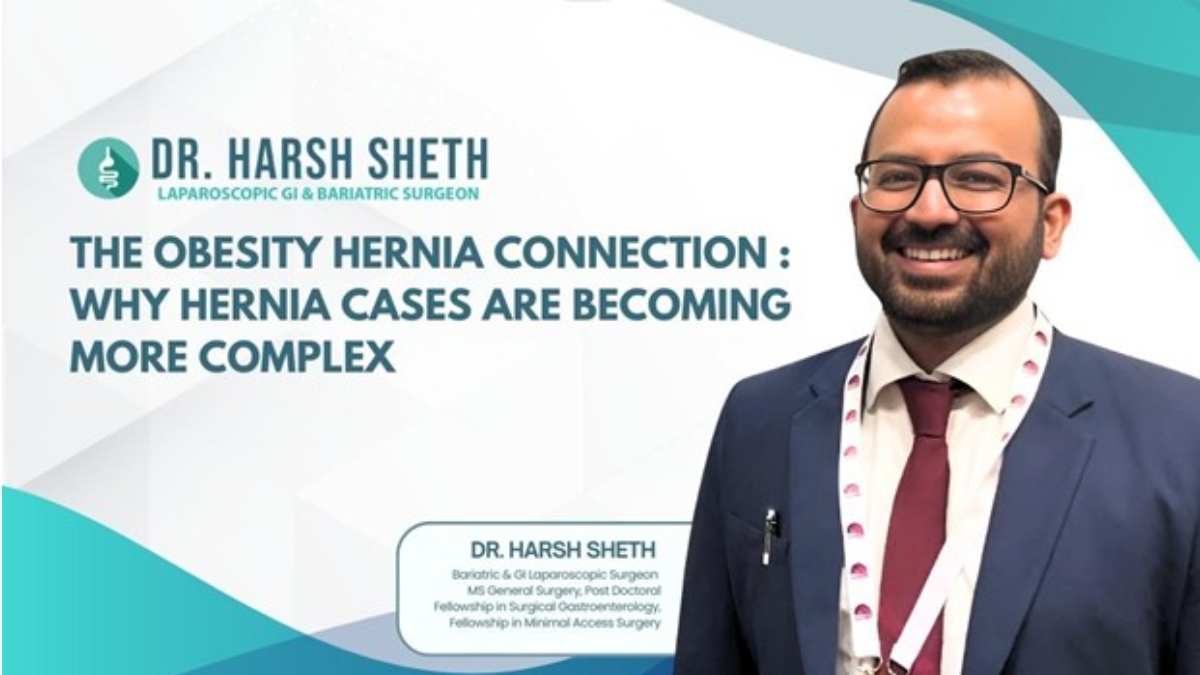
    Dr. Harsh Sheth Highlights, The Obesity–Hernia Connection: Why Hernia Cases Are Becoming More Complex

    Mumbai (Maharashtra) [India], February 24: Surgeons across India are experiencing an increase in difficult hernia operations which primarily occurs because of rising obesity rates. Medical experts now warn that excess body weight not only increases the risk of developing hernias but also complicates their treatment, recovery, and long-term outcomes. The current trend has started to draw attention to the strong relationship which exists between obesity and hernia development.

    Bariatric and laparoscopic surgery specialists report that abdominal wall hernias which include umbilical hernias and incisional hernias and ventral hernias now occur more frequently among patients who have excess weight. The constant pressure which the excess fat applies to the abdominal wall causes muscle weakness under the pressure, which results in abdominal wall bulging and ruptures. In obese patients, hernias also tend to be larger, recurrent, and more difficult to repair successfully.

    Dr. Harsh Sheth, the foremost Bariatric and Laparoscopic Surgeon in Mumbai, states that obesity causes two different effects which lead to hernias. The extra body weight creates elevated abdominal pressure, which results in abdominal wall damage. Modern surgeons encounter their greatest obstacle when they need to perform hernia surgery on patients who have diabetes and high blood pressure and fatty liver disease. The medical conditions of patients create two problems during surgery because they raise danger levels and create obstacles to optimal healing post surgery. The surgical treatment of hernias for obese patients demands specialized knowledge and advanced medical techniques in addition to a cooperative effort between various medical teams.

    Literature studies indicate patients who suffer from obesity face a higher risk of developing surgical complications, which include both wound infections, mesh problems and recurrences following their standard hernia operations. The surgical community has started to prefer minimally invasive methods which use laparoscopic and robotic hernia surgeries because these techniques decrease surgical damage and lead to better patient recovery results.

    “Minimally invasive hernia surgery has transformed the way we treat obese patients,” says Dr. Sheth. “Smaller incisions mean less pain, faster healing, and lower infection rates. However, long-term success still depends on addressing obesity as an underlying cause.”

    Another emerging trend is the increasing number of patients who develop hernias which keep coming back after they have undergone earlier open surgical procedures. People with obesity have a much higher chance of experiencing recurrence which makes their subsequent operations more complicated and demanding than regular procedures. The surgical community now engages in discussions about how doctors should manage obesity before performing hernia surgery.

    Surgeons in specific situations now use a combination of bariatric and hernia surgery which allows them to perform weight-loss surgery and hernia repair either simultaneously in a staged manner. The method intends to decrease total surgical hazards while enhancing results that persist over time. Patients who undergo bariatric surgery experience weight reduction which creates lower abdominal wall tension and enhances their metabolic system while decreasing the likelihood of developing hernias again.

    Dr. Sheth points out that patient knowledge plays a vital role in hernia treatment. The absence of initial pain from swelling makes people postpone their hernia treatment. The delays in hernia treatment due to obesity may lead to dangerous bowel obstruction and strangulation. The emergency situation occurs due to either a lack of early detection or postponing surgical evaluation.

    Experts state that hernia repair represents only one component of a complete health program which requires patients to control their weight and adopt new habits while receiving ongoing medical supervision.

    Awareness about the connection between obesity and hernias will allow patients to make better medical choices. Patients who lose weight before or after hernia surgery experience better surgical results and better life quality. Medical professionals now recommend that patients use long-term weight loss methods such as medical nutrition therapy and supervised exercise, or pharmacotherpay, or bariatric surgery when it is needed.

    As awareness grows, medical professionals hope that more patients will seek early consultation and holistic treatment rather than delaying care. “The goal is not just to repair a hernia, but to prevent it from coming back,” says Dr. Sheth. “Addressing obesity is central to achieving that goal.”

    The management of hernia in obese patients demonstrates rapid progress through current developments in minimally invasive surgical techniques and increased research focus on metabolic health. Experts predict that the future of hernia treatment in India will depend on an integrated approach that combines surgical skills with weight management solutions.

    Dr. Harsh Sheth

    Website: https://drharshsheth.com/

    Address: Genese Clinic, G-14/15 8th Floor, Everest Building, Tardeo Rd, Janata Nagar, Tardeo, Mumbai, Maharashtra 400034

    E-Mail id: sethharsh903@gmail.com

    If you object to the content of this press release, please notify us at pr.error.rectification@gmail.com. We will respond and rectify the situation within 24 hours.
  • Kesaria Textile Company Launches Menzaro And Kikiboo Apparel Brands

    Kesaria Textile Company Launches Menzaro And Kikiboo Apparel Brands

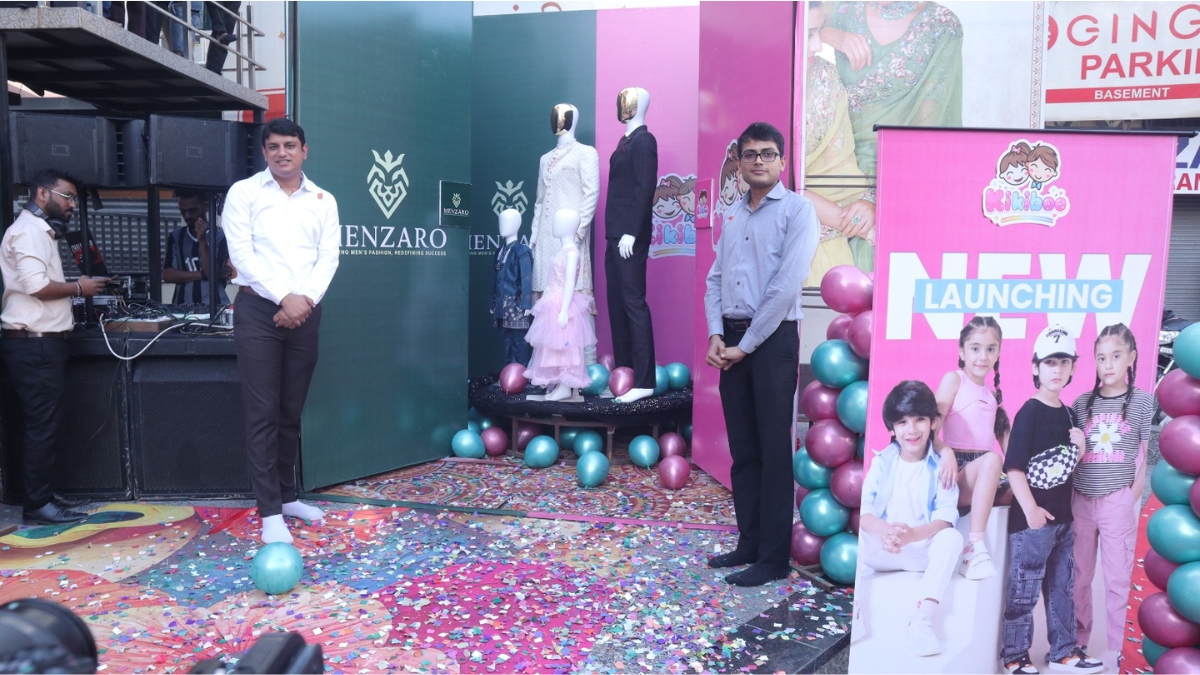
    Surat (Gujarat) [India], February 24: Kesaria Textile Company, a leading name in the textile industry of Surat, has further strengthened its presence with the launch of two new brands, Menzaro for menswear and Kikiboo for children’s wear.

    The grand launch event on Saturday was attended by leading textile traders, wholesalers and retailers from across the city. The introduction of the two brands marks a strategic expansion for the company, which has supported more than one lakh businesses through its B2B, B2C and franchise models.

    With Menzaro and Kikiboo, customers can expect the latest trendy collections at direct factory rates, enabling better margins for retailers and business partners. Special grand opening offers were also announced as part of the launch. The company said that the initiative is not just a brand launch, but an opportunity for traders and entrepreneurs to scale their businesses.

    Speaking on the occasion, Ritesh Modi, Founder of Kesaria Textile Company, said, “The launch of Menzaro and Kikiboo reflects our commitment to providing quality products and profitable opportunities to our partners. We have always believed in growing together with our traders. Through our direct pricing and structured business models, we aim to make expansion easier and more sustainable for entrepreneurs.”

    Kesaria Textile Company operates with a unique 0% royalty franchise policy and continues to focus on creating growth opportunities in the textile industry.

    The new brands are available at Doriwala Square opposite Surat Railway Station.

    Kesaria Textile Company has built a strong presence in the Indian textile market over the years. The brand offers a diverse product portfolio that includes sarees, kurtis, lehengas, suits, night wear, coord sets, womenswear, menswear, and kids wear. With a wide distribution network, its products are available across India and are also exported to more than 80 countries worldwide.

    www.kesariatextile.com

    If you object to the content of this press release, please notify us at pr.error.rectification@gmail.com. We will respond and rectify the situation within 24 hours.
  • Jayant Naik: From Engineering Excellence to National Public Relations Leadership

    Jayant Naik: From Engineering Excellence to National Public Relations Leadership

    Jayant Naik has been appointed as Public Relations Officer (PRO) for Parliamentary Affairs, Government of India, while Ranjeet Rana, Civil Engineer, has been appointed as Assistant Public Relations Officer (APRO).

    New Delhi [India], February 24: In a significant development reflecting the emergence of technology-driven leadership in governance, Jayant Naik has been appointed as the Public Relations Officer (PRO) for Parliamentary Affairs, Government of India, effective 12 February 2026. His appointment represents a unique convergence of technical expertise, public service, and strategic communication aligned with national priorities.

    Academic Excellence & Transition to Technology

    Jayant Naik began his academic journey with remarkable distinction in engineering, securing top performance in Civil Engineering during his Diploma from Mumbai University. Demonstrating foresight and adaptability, he transitioned into the rapidly evolving field of technology.

    He pursued and successfully completed his Bachelor of Engineering (B.E.) in Information Technology from Mumbai University in June 2021, equipping himself with strong technical expertise in software systems, digital infrastructure, and modern technological frameworks.

    Early Career in Parliament – Software Engineering Role

    Immediately after completing his engineering degree, Jayant Naik earned the opportunity to serve as a Software Engineer in the Parliament Library (PLB). In this role, he contributed to strengthening digital systems and supporting the technological backbone of parliamentary knowledge and research infrastructure.

    This experience provided him with invaluable exposure to governance processes and parliamentary functioning at the national level.

    Strategic Role as Personal Assistant to Member of Parliament

    Further advancing his journey in public service, Jayant Naik joined as Personal Assistant (PA) to Hon’ble Member of Parliament Shri Dhairyasheel Mane (Kolhapur). In this position, he played a key role in administrative coordination, digital communication, and effective constituency management.

    His ability to integrate technology with governance strengthened operational efficiency and public engagement.

    Digital & PR Leadership in Lok Sabha Election Campaigns

    Leveraging his expertise in IT and communication strategy, Jayant Naik provided IT and Public Relations (PR) support to multiple Members of Parliament from the Bharatiya Janata Party (BJP) during Lok Sabha election campaigns.

    His strategic digital planning, communication execution, and campaign support contributed to effective outreach. Notably, all associated Members of Parliament secured victory with a strong margin, highlighting the impact of his contribution.

    CSR Coordination at the National Level

    Jayant Naik further served as CSR Coordinator for Hon’ble Member of Parliament Shri Pratap Chandra Sarangi, where he successfully managed and executed various corporate social responsibility initiatives.

    His work focused on community welfare, grassroots development, and social impact, reinforcing his commitment to inclusive growth and national development.

    Appointment as Public Relations Officer (PRO) for Parliamentary Affairs

    Recognizing his multidisciplinary experience in technology, governance, and public communication, the Government of India has appointed Jayant Naik as the Public Relations Officer (PRO) for Parliamentary Affairs, effective 12 February 2026.

    In his new role, he is expected to:

    Strengthen communication between parliamentary institutions and the public

    Enhance transparency and information dissemination

    Build national and international relations in parliamentary affairs

    Support strategic communication for governance initiatives

    A Vision for National and Global Engagement

    Jayant Naik’s journey from a software engineer to a national-level public relations leader reflects dedication, adaptability, and forward-thinking leadership. His diverse experience positions him to contribute effectively to India’s evolving governance landscape.

    The Government has expressed strong confidence in his capabilities and expects him to further strengthen national outreach and international engagement frameworks for the welfare and development of the country.

    Commitment to Nation-Building

    Throughout his career, Jayant Naik has consistently demonstrated a deep commitment to public service, societal development, and nation-building. His appointment marks an important milestone in a journey dedicated to contributing towards India’s progress and global presence.

    About Jayant Naik

    Jayant Naik is a software engineer, technology professional, and public service strategist with expertise in IT systems, public relations, governance support, and CSR execution. His experience across parliamentary operations and national-level initiatives reflects a strong foundation in both technology and public administration.

    If you object to the content of this press release, please notify us at pr.error.rectification@gmail.com. We will respond and rectify the situation within 24 hours.