Author: Sutun Nayak

  • Sam Altman, Sundar Pichai, and Demis Hassabis Were All at India’s AI Summit. The Most Important Launch May Have Been One They Missed

    Sam Altman, Sundar Pichai, and Demis Hassabis Were All at India’s AI Summit. The Most Important Launch May Have Been One They Missed

    A summit of pledges, and a missing piece

    New Delhi [India], February 23: When India opened Bharat Mandapam for the India AI Impact Summit 2026, the message was scale: more than 3,250 speakers across hundreds of sessions from February 16 to 20, delegations from 100+ countries, and twenty world leaders in attendance.

    Union IT Minister Ashwini Vaishnaw said AI infrastructure commitments tied to the summit crossed $250 billion in aggregate, driven by announcements across data centres, cloud, and compute. Among them: Reliance and Jio’s plan to invest Rs 10 lakh crore over seven years, Adani’s $100 billion commitment for AI-ready data centres by 2035, and major India investments disclosed by Microsoft, Google, and Amazon. OpenAI partnered with Tata Group. Anthropic partnered with Infosys.

    Demis Hassabis, CEO of Google DeepMind, told the summit that advanced AI could have “ten times the impact of the Industrial Revolution, at ten times the speed.” Prime Minister Narendra Modi issued an invitation: “Design and Develop in India. Deliver to the World.”

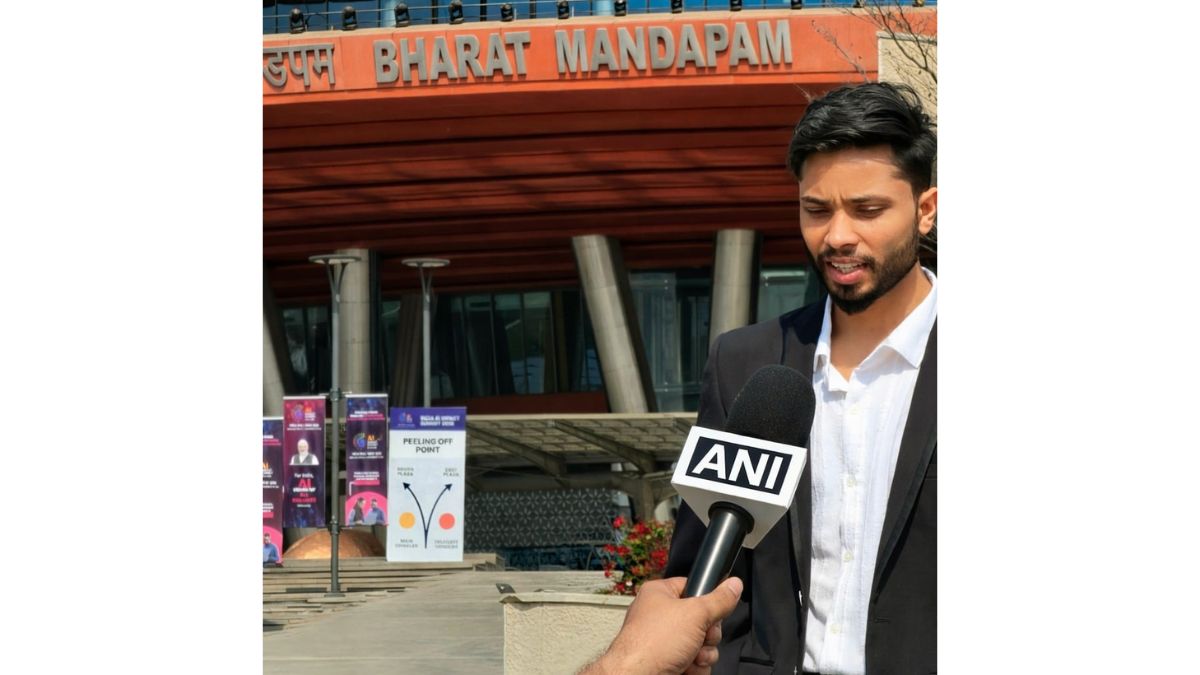
    But behind the investment headlines sat a quieter dependency: every promise of AI scale still rests on chips, and on the tools used to design them. On Day 3, Abhilash Chadhar, a former Intel engineer, was focused on a question the summit largely skipped: why is chip design still shaped by workflows and tool architectures built decades ago?

    Why chip design is still slow

    Modern chips are built through a chain of specialized steps: RTL design, functional verification, physical layout, and signoff, all before manufacturing begins. Verification and debug dominate schedules. Synopsys notes that 60 percent of functional verification time is spent on testbench development and debug alone. Siemens has similarly said logic verification can consume over 70 percent of the overall IC development cycle.

    Much of that work still runs through fragmented toolchains. The market is anchored by U.S.-based Synopsys and Cadence, and Siemens EDA (European-owned), with workflows that involve manual handoffs between tools, scripts, teams, and documents.

    India is spending billions to build kitchens. The chefs are still coordinating on sticky notes.

    The pitch

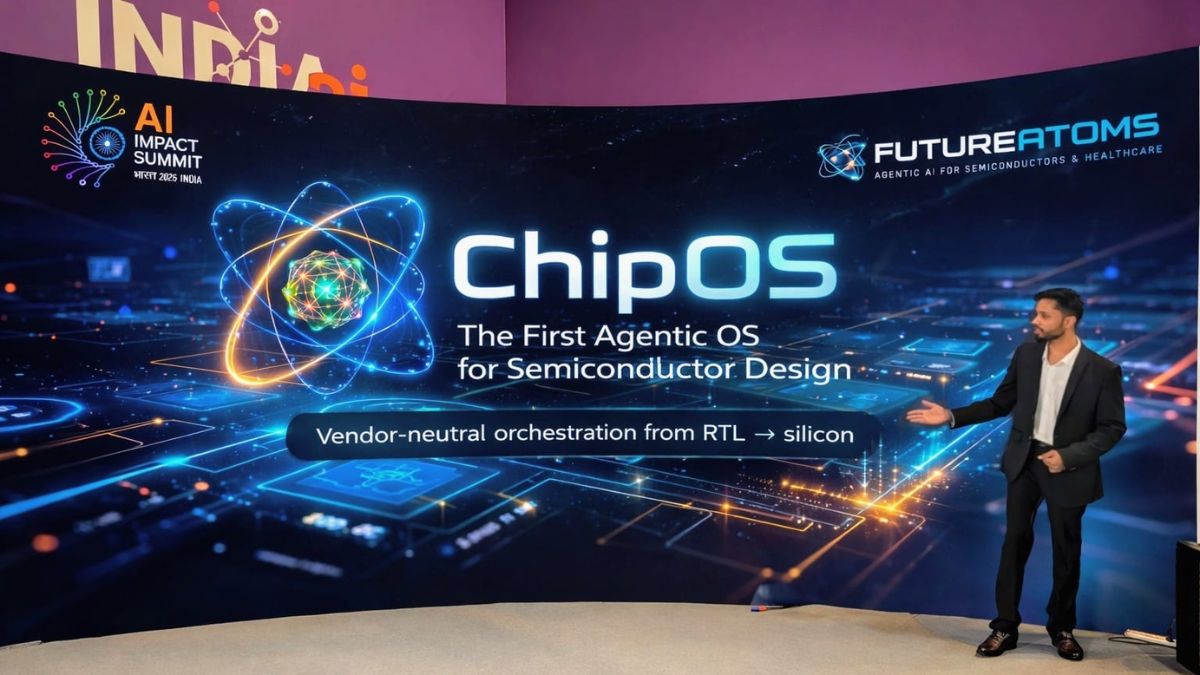
    Chadhar’s answer is ChipOS, built by his Netherlands-headquartered company FutureAtoms. The company describes it as an “agentic operating system” for semiconductor design: not a chat interface, but a platform that orchestrates tasks across the design cycle from a single interface.

    FutureAtoms says engineers can describe intent in plain English, while AI agents generate RTL and verification scaffolding, run tests, triage failures, and iterate through debug loops. A knowledge layer makes internal documents, datasheets, and past design decisions searchable from one place. The system can be self-hosted, including in air-gapped environments, for IP-sensitive organisations.

    FutureAtoms says ChipOS is being used at one European AI chip company for deployment workflows to accelerator cards. The company did not disclose commercial terms.

    The platform is not positioned as a layer or a plugin. FutureAtoms says it covers the full chip lifecycle: specification, code generation, verification, physical design scripting, knowledge management, deployment, and support automation, and works with any existing EDA toolchain.

    Whether orchestration can meaningfully compress entrenched EDA workflows at scale remains an open question. But the pitch is aimed squarely at the industry’s most cited bottleneck: iteration time.

    Why India’s timing matters

    India is expanding national AI compute from 38,000 GPUs to roughly 58,000, with access priced at Rs 65 per GPU-hour under the IndiaAI Mission. In semiconductors, the government has approved ten projects with envisaged investments of about Rs 1.60 lakh crore, including fabs and packaging units. Micron is expected to begin commercial production at its ATMP facility in Sanand, Gujarat by end of February. Through C-DAC’s ChipIN Centre, about one lakh engineers and students across 400 organisations have accessed shared design infrastructure.

    At the same time, geopolitics are tightening around supply chains. During summit week, India joined the U.S.-led Pax Silica initiative. In remarks reported by ANI, U.S. AI advisor Sriram Krishnan said: “We want to make sure that the world uses the American AI stack.” For India, the sovereignty debate increasingly extends beyond factories into the design intelligence that determines what gets manufactured.

    C-DAC, the agency behind India’s DHRUV64 RISC-V processor programme (launched December 2025), met with FutureAtoms at the summit to discuss a potential evaluation of ChipOS for India’s indigenous processor roadmap, FutureAtoms said.

    The founder

    Chadhar spent ten years at Intel (Habana AI division), ISRO, and a European AI chip company doing verification signoff for AI accelerators, RISC-V processors, and high-speed interfaces across multiple tapeouts with working silicon. Nine Intel awards. Ten projects.

    “I watched the same broken process everywhere I worked,” Chadhar said. “Verification eating most of the schedule. Engineers hunting through old documents. The same debug loops, repeated project after project. India now has the policy, the capital, and the engineers. What was missing was the system that turns all of that into working chips faster. Not a layer. Not a copilot. The agentic operating system for chip design.”

    Availability

    ChipOS is available for macOS, Linux, and web. FutureAtoms lists a free tier (one knowledge source, 50 queries per day), a $29 per month Pro plan, and enterprise options including on-premise and air-gapped deployments.

    https://futureatoms.com/chipos
    Abhilash Chadhar

    About FutureAtoms

    FutureAtoms is a Netherlands-headquartered, self-funded technology company building the operating system for semiconductor design. Founded by Abhilash Chadhar, its flagship product ChipOS orchestrates the chip design cycle from a single platform. Launched at the India AI Impact Summit 2026.

    Website: https://futureatoms.com

    Founder: https://www.linkedin.com/in/abhilashchadhar

    Media contact: contact@futureatoms.com

    If you object to the content of this press release, please notify us at pr.error.rectification@gmail.com. We will respond and rectify the situation within 24 hours.
  • Jitendra Vaswani Breaks Down PM Modi and GPAI Insights from India AI Impact Summit 2026

    Jitendra Vaswani Breaks Down PM Modi and GPAI Insights from India AI Impact Summit 2026

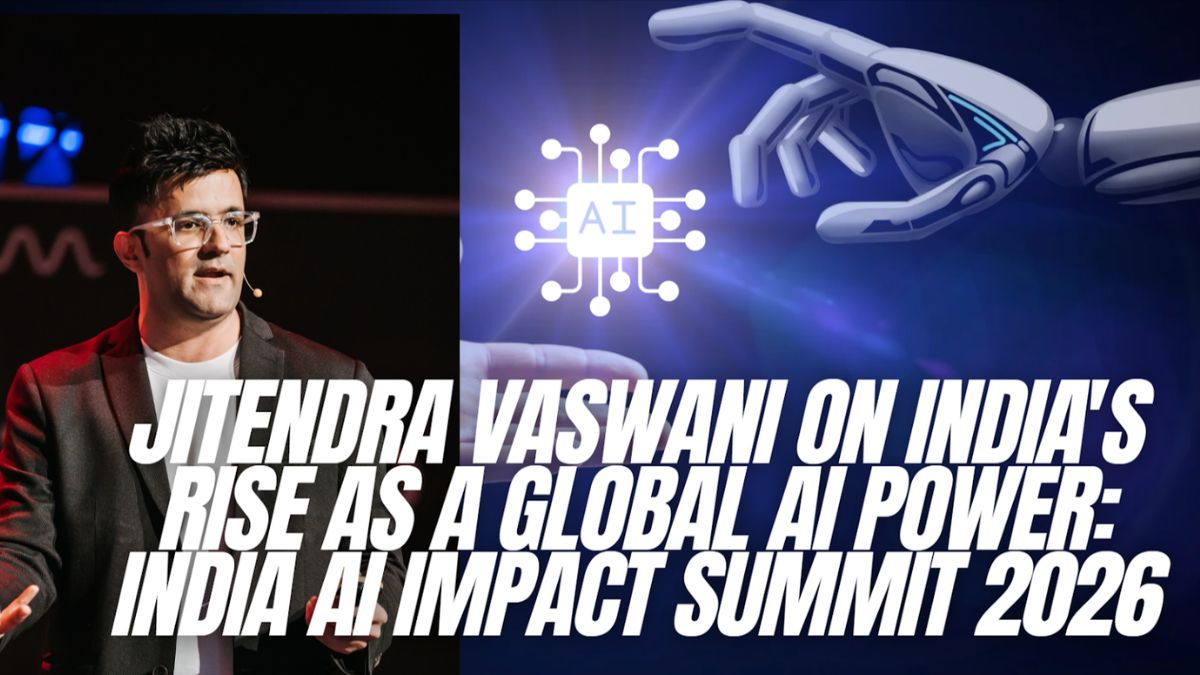
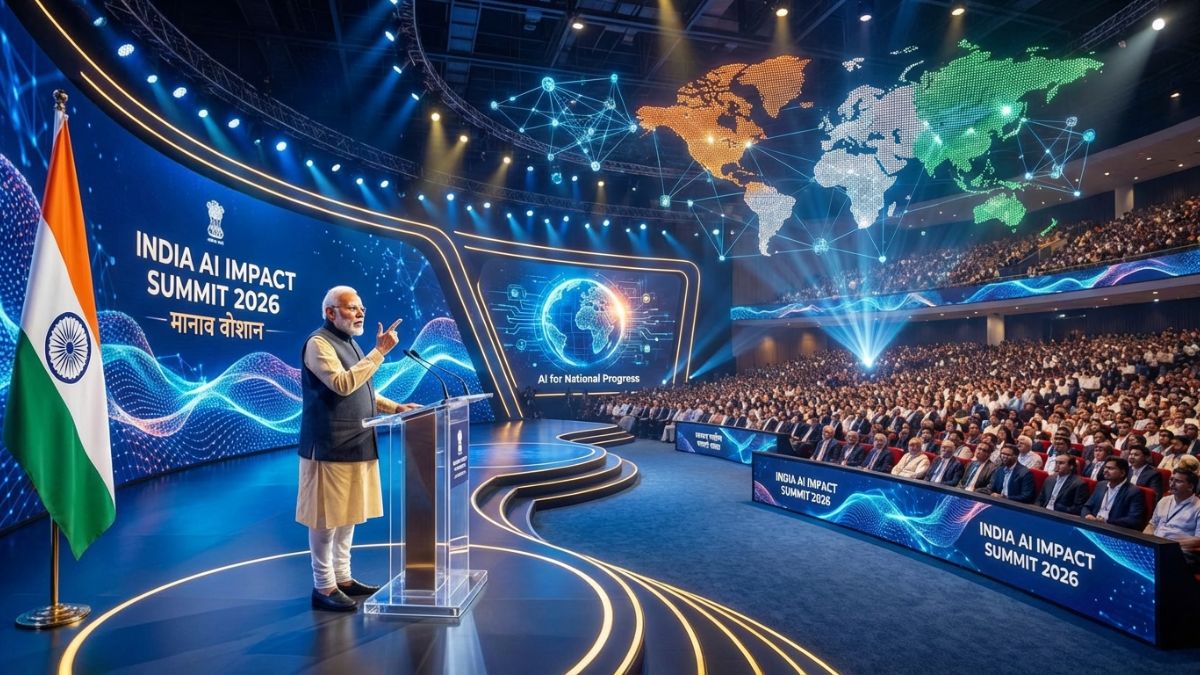
    New Delhi [India], February 24: Jitendra Vaswani, CEO of DigiExe.com, one of India’s leading AI-driven digital marketing agencies, attended the India AI Impact Summit 2026 held at Bharat Mandapam, New Delhi, from February 16 to 20, 2026. The summit, the first-ever global AI summit hosted in the Global South, brought together over 250,000 visitors from more than 100 countries, including heads of state, global tech CEOs, AI researchers, startup founders, and policy leaders. Walking away from five days of intense discussions, keynotes, and live demonstrations, Vaswani shares his personal reflections, key takeaways, and why this summit was not just a government event — but a turning point for every Indian entrepreneur and digital agency owner.

    Setting the Stage — What This Summit Was

    The India AI Impact Summit 2026 was not just another conference. It was a moment in history. Inaugurated by Prime Minister Narendra Modi on February 16, 2026, the summit was hosted under the IndiaAI Mission in collaboration with the Global Partnership on Artificial Intelligence (GPAI), an international body bringing together over 29 member nations committed to responsible AI development. The summit was the fourth in a series of global AI summits, following events in the UK, Seoul, and France — and the first to be hosted in the developing world. That fact alone says a lot about where India stands in the global AI race today.

    The event was organized around what organizers called “Three Sutras” (guiding principles) and “Seven Chakras” (interconnected domains of action), covering areas like Human Capital development, Safe and Trusted AI, Inclusion for Social Empowerment, Democratizing AI Resources, Science, Resilience & Innovation, and AI for Economic Growth. Hearing these frameworks explained in detail was genuinely eye-opening for me as a business owner.

    PM Modi’s Speech — The MANAV Vision That Changed How I Think About AI

    Jitendra Vaswani

    “The moment PM Modi took the stage, the entire auditorium at Bharat Mandapam went silent,” says Vaswani. “His words were not just political statements. They were a clear roadmap for how India — and honestly every business leader in this country — should think about artificial intelligence.”

    PM Modi introduced India’s vision for AI through an acronym called M.A.N.A.V., which stands for: Moral and Ethical Systems, Accountable Governance, National Sovereignty (data belongs to those who generate it), Accessible and Inclusive, and Valid and Legitimate. The Prime Minister made it abundantly clear that India does not see fear in AI — India sees fortune in AI. That single statement resonated deeply with me. As someone who has been integrating AI into DigiExe’s operations for the past two years, I have often faced skepticism from peers and clients. Hearing India’s top leader say “India sees the future in AI” was validating in every possible way.

    Modi also introduced a powerful analogy that I keep thinking about: he compared AI to GPS. It suggests a route, but the final decision of direction is always yours. This is exactly how we use AI at DigiExe. We do not let AI run blind. We use it as a co-pilot — to assist with SEO strategy, content planning, ad copy, and data analysis — while human creativity and judgment remain at the center. PM Modi was essentially describing the operating model of a modern AI-powered agency without even knowing it.

    GPAI — Why This Body Matters for Indian Businesses:

    The Global Partnership on Artificial Intelligence (GPAI) Council Meeting took place on February 20, the final day of the summit. GPAI is a multi-stakeholder initiative that guides responsible AI development across member nations. What struck me was the GPAI’s core message: the global AI divide is widening. A small number of countries and corporations are concentrating AI capabilities in their hands, and this is limiting the rest of the world’s ability to build their own AI solutions in their own languages, cultures, and contexts.

    This is important for every Indian agency owner to understand. The fact that India is now chairing conversations at the GPAI level, and pushing for AI to be treated as a Global Common Good — open, shared, and accessible — means that Indian entrepreneurs will have increasing access to tools, infrastructure, and policy support to compete on a global stage. India’s tech minister Ashwini Vaishnaw announced the New Delhi Frontier AI Commitments at the summit, a voluntary framework for responsible AI that will directly shape how companies like DigiExe will be able to build and deploy AI tools in the years ahead.

    The Numbers That Blew My Mind

    Walking through the summit, the scale of AI investment flowing into India was simply staggering. Here are some of the key announcements that every Indian entrepreneur needs to know:

    • Sam Altman, CEO of OpenAI, revealed that India now has over 100 million weekly active ChatGPT users, making it the second-largest user base after the United States. OpenAI also announced two new offices in India, in Bengaluru and Mumbai.

    • Adani Group pledged $100 billion to build AI data centers in India using renewable energy by 2035, which is expected to attract an additional $150 billion in related investment.

    • India’s government earmarked $1.1 billion for a state-backed venture capital fund specifically targeting AI and advanced manufacturing startups.

    • Anthropic — the company behind Claude AI — announced its first office in Bengaluru and confirmed that India is Claude’s second-largest user market worldwide. Anthropic also partnered with Infosys to deploy Claude models for Indian enterprises.

    • Google announced a $15 billion investment to build foundational AI infrastructure in India.

    • India is targeting over $200 billion in AI infrastructure investment by 2028.

    These are not small numbers. This is the world placing a massive bet on India as an AI superpower. For anyone running a digital agency or an AI-powered business in India right now, this is the single best time to be operating in this space.

    Indian AI Models — Made in India, Built for the World

    One of the most exciting parts of the summit for me personally was seeing Indian companies launch their own AI models. PM Modi himself mentioned that three Indian companies launched their own AI models and apps during the summit — something he called a proud reflection of India’s youth and technical depth.

    Sarvam AI, a Bengaluru-based startup, launched two major open-source large language models — Sarvam 30B and Sarvam 105B — trained entirely in India. Sarvam also announced a partnership with Qualcomm, HMD, and Bosch to deploy its models across smartphones, laptops, cars, and smart glasses. BharatGen, a government-backed AI consortium, launched Param 2, a 17-billion-parameter model that works across all 22 scheduled Indian languages. Voice AI startup Gnani launched Vachana, a zero-shot voice cloning text-to-speech model supporting 12 languages.

    This tells me one critical thing: India is no longer just consuming AI — India is now building it. For businesses like DigiExe that operate in digital marketing and SEO, this means Indian-language AI tools are going to become more accessible, more accurate, and more affordable in the coming months.

    What I Personally Learned — And Why It Confirmed My Direction:

    “I came to this summit with one question in my mind: am I on the right track by going all-in on AI at DigiExe? I left with a crystal clear answer — absolutely yes,” says Vaswani.

    The biggest personal takeaway from the summit was that AI is not replacing human-centric work. It is multiplying it. This is something we already live by at DigiExe. We use AI tools for content creation, SEO research, keyword clustering, competitor analysis, and campaign reporting — but every strategy, every client relationship, and every creative decision still passes through a human mind. PM Modi’s words about “humans and intelligent systems co-creating, co-working, and co-evolving” describe exactly the culture we have built at DigiExe.

    Another major takeaway was the urgency around skilling, reskilling, and lifelong learning. The summit made it clear that the future of work is not about replacement — it is about elevation. Anyone willing to learn how to work with AI will find themselves doing higher-value, more meaningful, and more impactful work. This is why we continue to invest heavily in upskilling our own team at DigiExe on the latest AI tools, workflows, and automation systems.

    Vinod Khosla’s statement also stuck with me. He said IT services and BPO companies could “almost completely disappear within five years” because of AI, and that 250 million young Indians should instead be selling AI-based products and services to the rest of the world. At DigiExe, we are already building in that direction — leveraging AI not just to deliver services faster, but to build scalable, productized AI solutions that can serve clients globally.

    Final Thoughts — India’s AI Moment is Now

    The India AI Impact Summit 2026 was more than a summit. It was a signal. A signal that India is ready to lead. A signal that AI is not a distant technology for large corporations — it is available today, it is affordable, and it is for everyone. The theme of the summit — Sarvajan Hitaya, Sarvajan Sukhaya — welfare for all, happiness for all — is a reminder that the most powerful application of AI is not automation for profit, but empowerment for people.

    As the CEO of DigiExe, I am more committed than ever to building an AI-first agency that serves clients with speed, precision, and creativity. The summit gave me clarity, confidence, and a renewed sense of purpose. If you are an entrepreneur or marketer sitting on the fence about AI, the world’s most powerful leaders, investors, and innovators just gathered in New Delhi and told you — in plain words — this is the time to move.

    The future is not coming. It is already here. And India is at the center of it.

    About Jitendra Vaswani

    Jitendra Vaswani is a globally recognized digital marketing expert, SEO authority, and the CEO of DigiExe.com, a leading AI-powered digital marketing agency. He is also the founder of BloggersIdeas.com, Saasultra.com, and AffiliateBooster, and has over 12 years of experience in digital marketing, SEO, and AI-driven growth strategies. He is a speaker, author, and advisor to brands worldwide.

    If you object to the content of this press release, please notify us at pr.error.rectification@gmail.com. We will respond and rectify the situation within 24 hours.

  • Best Anti-aging Treatments for Your 30s, 40s & 50s to Maintain Youthful Skin

    Best Anti-aging Treatments for Your 30s, 40s & 50s to Maintain Youthful Skin

    New Delhi [India], February 24: It is innate human desire to feel and look young forever. However, it is also true that we cannot defy what nature has bestowed upon us. Aging is a natural phenomenon that all of us have to undergo. And skin is the first organ which begin to show aging signs. As we get older, our skin starts to lose its firmness, wrinkles & finelines become visible, and our skin’s elasticity also decreases. Our skin’s needs change with age. What used to work in your 20s might not be enough when you turn 30 or enter your 40s or 50s. Though we can’t completely stop aging, we can certainly slow down the aging process. Thankfully, with advancements in cosmetic science, today, we have a variety of anti-aging treatments in Delhi that help maintain youthful and radiant skin. So, whether you are in your 30s, 40s, or 50s, anti-aging treatments can help you look and feel your best. Here, we have listed the best anti-aging treatments to fight aging concerns if you fall in this age group.

    What Causes Aging Skin?

    Before we talk about treatments, let’s first understand why our skin ages.

    • Collagen is a structural protein present in our skin responsible for its firmness, strength, and elasticity. It keeps the skin plump and youthful. As we age, collagen production decreases by around 1% every year after the age of 20. The decrease in collagen production leads to loss of skin elasticity, the appearance of wrinkles and fine lines, and sagging skin.
    • With age, the production of elastin also goes down, causing loss of skin firmness and sagging.
    •  With increasing age, cell turnover also slows down, making the skin appear dull and uneven.
    • As you get older, hormonal changes occur in the body, leading to wrinkles and pigmentation problems.
    • Environmental damage is a major factor in premature aging
    • Excessive UV ray exposure, pollution, stress, and lifestyle choices are also responsible for visible signs of aging at a young age.

    Dr. Vineeta Pathak, a leading dermatologist and skin specialist in Delhi, says, ‘Aging is inevitable. We can’t avoid it, but it can definitely be delayed. If one acts early, at the right age, they can prevent future damage that may be very difficult to tackle and reverse.’

    Anti-Aging Treatments in Your 30s: Prevention & Maintenance Are Key

    In your 30s, your skin generally looks youthful and firm, but this is also the time when the first signs of aging begin to appear. Fine lines and wrinkles start to become visible, the skin may look dull, and collagen production begins to decrease. At this stage, it’s crucial to focus on prevention and maintenance. Here are some anti-aging treatments in Delhi that you can consider in your 30s:

    • PRP: Platelet-Rich Plasma (PRP) therapy is a non-invasive anti-aging treatment designed to rejuvenate your skin from within. In this, a small amount of blood is taken from your body, processed to concentrate the platelets and injected back into your skin. It restores youthful and radiant skin, reduces fine lines & wrinkles and other skin imperfections.
    • GFC: Growth Factor Concentrate(GFC) is a non-surgical and painless procedure that uses your own blood platelets for skin rejuvenation. It increases the production of collagen and elastin in the skin, which results in firm, tight, and youthful skin.
    • Exosomes: This is a popular skin rejuvenation treatment to achieve youthful and refreshed skin. It helps in reducing the appearance of fine lines, wrinkles, pigmentation, and other skin concerns.
    • Chemical Peels: It removes dead skin cells and reveals the fresh skin beneath. It is also very effective in treating pigmentation, sun-damaged skin, and enhancing skin texture.

    According to skin specialist in Delhi, while these treatments are quite effective in preventing aging skin, you should also incorporate retinol-based creams and serums into your daily skincare routine. These improve skin cell turnover, reduce fine lines, and brighten skin tone.

    Anti-aging Treatments in Your 40s: Correction and Restoration 

    The aging process becomes more noticeable in your 40s as collagen and elastin production start to reduce. Volume loss, diminished skin firmness, reduced elasticity, deeper fine lines, and wrinkles are some common concerns people face in this decade. This is the time to consider advanced anti-aging treatments in Delhi that work on the deeper layers of the skin.

    • Dermal Filler: A popular non-surgical anti-aging treatment to restore facial volume, smooth wrinkles, and improve facial contours. This helps skin look fresh, plump, and youthful.
    • Botox: Another widely accepted non-surgical treatment that reduces the appearance of fine lines and wrinkles caused by aging. Forehead lines, frown lines, crow’s feet, bunny lines, lip lines, gummy smile correction, Jawline slimming, and neck bands are common areas that can be treated with Botox.
    • HIFU: High-Intensity Focused Ultrasound(HIFU) is an advanced non-invasive anti-aging treatment in which focused ultrasound energy is delivered deep inside the skin to stimulate collagen production. It is considered the best solution to tighten sagging skin, reduce wrinkles, and enhance facial contours without any surgery, pain, or downtime. This treatment is commonly used for face, neck, and jawline lifting.

    Anti-aging Treatments in Your 50s: Rejuvenation and Maintenance

    As you reach your 50s, your skin becomes even thinner, wrinkles and fine lines become more prominent, the skin sags more, and there is significant volume loss in the face compared to your 40s. Therefore, this decade requires more advanced and intensive anti-aging treatments in Delhi to keep the skin firm and youthful.

    • Radiofrequency Treatment: It is a non-invasive anti-aging solution that uses controlled heat energy to stimulate collagen and elastin production deep within the skin. It is very effective in giving firmness to the skin, smoothing fine lines & wrinkles, and enhancing overall skin tone and texture. It is an ideal treatment for those who want to achieve youthful and glowing skin in their 50s.
    • HIFU: This is ultrasound focused treatment to rejuvenate aging skin. This is highly effective in the 50s when facial volume loss is significant compared to 40s. For more visible and enhanced results, you need to undergo multiple sessions and repeat the procedure every 6-8 months to maintain youthful skin.
    • Thread Lifting: A minimally invasive anti-aging treatment to lift and tighten sagging skin. In this procedure, fine dissolvable medical-grade threads are inserted beneath the skin to reduce fine lines and restore firmness with minimal downtime.
    • Anti-wrinkle Injections: Anti-wrinkle injections, commonly known as Botox, are FDA-approved, non-surgical treatments that temporarily relax overactive facial muscles, helping to smooth dynamic wrinkles such as frown lines, crow’s feet, and forehead lines, resulting in a naturally refreshed and youthful appearance.

    Though Botox and dermal fillers are also recommended in your 40s, their significance increases in your 50s as wrinkles and fine lines become more visible, along with significant volume loss. The dosage of Botox and dermal fillers is typically higher compared to what is required in the 40s.

    Fotona: Next-Generation Laser Treatment for Facial Aesthetics

    Fotona laser treatment is an advanced and innovative solution that utilizes the power of two laser wavelengths to deliver superior results with minimal side effects. Whether you are in your 30s, 40s, or 50s, it is an all-rounder treatment that offers a wide range of aesthetic solutions, including skin resurfacing and rejuvenation, treatment of vein and vascular lesions, pigmented lesions and tattoo removal, permanent hair reduction, and much more. Here are some anti-aging skin concerns that can be treated by Fotona:

    • Fine lines and wrinkles
    • Loose or sagging skin
    • Loss of skin firmness and elasticity
    • Uneven skin texture
    • Pigmentation and Melasma
    • Freckles
    • Sun and age spots

    Age Gracefully with the Best Anti-aging Treatments in Delhi 

    Aging is a natural process that we cannot avoid. But who says we have to start living with wrinkles and fine lines from an early age? Today, medical science has advanced so much that there is a treatment for every type of skin concern. What matters is choosing the right treatment at the right time. Whether you want to reduce wrinkles or tighten sagging skin, there are advanced treatments available. So, whether you are in your 30s, 40s, or 50s, anti-aging treatment in Delhi is the best option for you. Dr. Haror’s Wellness is a leading dermatology clinic in Delhi that provides advanced anti-aging treatments to maintain firm and youthful skin. Dr. Navnit Haror, the best skin specialists in Delhi, suggest treatments according to your age and skin concerns to give you the desired results. Dr. Haror’s Wellness is popular for using the latest and most advanced devices, ensuring patients experience no discomfort and achieve optimal results. So, what are you waiting for? Contact Dr. Haror’s Wellness today to start your anti-aging journey.

    FAQs

    Q. Is it safe to undergo anti-aging treatment during 30s?

    Yes! Anti-aging treatment during the 30s is completely safe and effective. In the 30s, aging signs start getting noticeable like fine lines, wrinkles, volume loss, etc. Botox, Dermal fillers, PRP, GFC, etc. are considered the best option for these concerns.

    Q. What are the best anti-aging treatments in your 40s?

    As one reaches their 40s, the aging signs become more noticeable with a significant loss in facial volume. Dermal fillers, Botox, HIFU, etc., are some of the best anti-aging treatments that one can consider in their 40s.

    If you object to the content of this press release, please notify us at pr.error.rectification@gmail.com. We will respond and rectify the situation within 24 hours.
  • Architect of Water Transversality Honoured at World Water Leadership Congress

    Architect of Water Transversality Honoured at World Water Leadership Congress

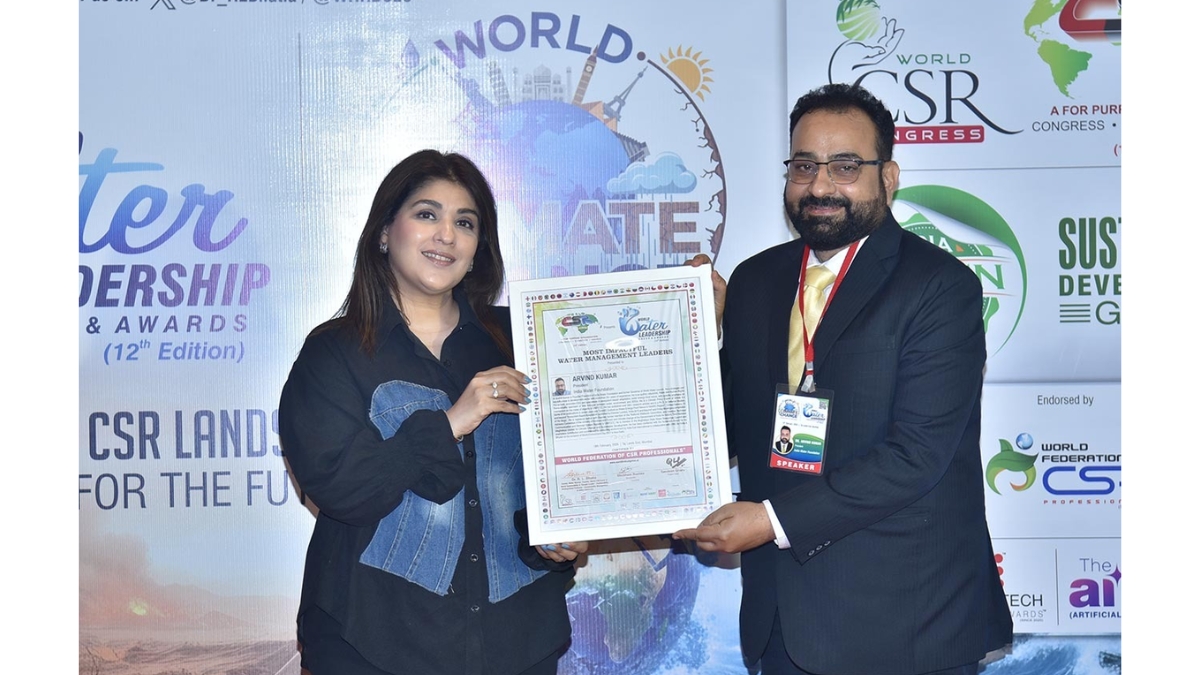
    New Delhi [India], February 24: The India Water Foundation (IWF) proudly announces that its President, Dr. Arvind Kumar, has been felicitated with the prestigious Leaders Award for Most Impactful Water Management Leader, certified by the World Federation of CSR Professionals. The honour was conferred at the World Water Leadership Congress & Awards, held under the theme “The Changing CSR Landscape: Sustainable for the Future” on 19 February 2026 at Taj Lands End, Mumbai.

    The recognition celebrates Dr. Kumar’s decades-long leadership in advancing sustainable water governance, integrated resource management, and climate-resilient development pathways. Widely acknowledged as the pioneer who coined and operationalised the concept of Water Transversality, Dr. Kumar has consistently advocated a systems-based approach that positions water as the central connector across energy, health, environment, food systems, and socio-economic development.

    During the high-level gathering of global experts, policymakers, and corporate leaders, Dr. Kumar delivered a compelling Leadership Talk titled “Deciphering the Ripple Effects of Climate Change on Water Resources.” His address underscored the growing urgency of rethinking water governance in the face of intensifying climate variability. He emphasised that climate change is no longer a distant environmental concern but a present and escalating hydrological reality. According to Dr. Kumar, shifting rainfall regimes, accelerating glacier retreat, rising frequency of floods and droughts, and declining groundwater tables are together reshaping water security across regions. These cascading impacts, he noted, are already affecting agriculture, urban systems, public health, biodiversity, and economic stability.

    The conferral of the Leaders Award reflects not only Dr. Kumar’s thought leadership but also his tangible impact on policy discourse, institutional collaboration, and community-level action. Over the years, he has positioned the India Water Foundation as a globally respected think tank working at the intersection of water security, climate resilience, and sustainable development. What distinguishes Dr. Kumar’s contribution is his pioneering articulation of Water Transversality, a concept that moves beyond conventional nexus thinking. By framing water as a cross-cutting enabler of multiple Sustainable Development Goals, he has helped reshape conversations around ESG integration, climate finance, and inclusive development. His work has consistently highlighted that water security is inseparable from poverty reduction, gender equity, public health, and ecological stability.

    Under his leadership, IWF has facilitated multi-stakeholder dialogues involving governments, UN agencies, academia, industry, and civil society across the Asia-Pacific region and beyond. His advocacy has supported initiatives ranging from spring rejuvenation and water budgeting to circular water economy models and Payment for Ecosystem Services frameworks. These efforts demonstrate a rare blend of conceptual innovation and practical implementation. Colleagues and partners widely acknowledge Dr. Kumar’s ability to translate complex hydrological and climate science into actionable policy pathways. His persistent engagement in global forums has also elevated India’s voice in international water and climate governance discussions.

    Building on this momentum, the India Water Foundation is set to convene the Water Transversality Global Awards and Conclave 2026 on 6–7 March 2026 at the India International Centre, New Delhi. The landmark event will bring together global and national leaders, policymakers, industry representatives, UN agencies, researchers, and civil society organisations.

    The conclave aims to advance ESG Transversality across the Water–Energy–Health–Environment (WEHE) nexus and to accelerate science-based, finance-enabled, and policy-driven solutions for water security. It will also honour outstanding institutions and individuals contributing to integrated and sustainable water management.

    Dr. Kumar noted that the upcoming conclave comes at a critical moment when the world is confronting converging crises of climate change, water stress, biodiversity loss, and public health risks. He expressed confidence that the platform will catalyse stronger partnerships, innovative financing mechanisms, and scalable solutions grounded in the principles of Water Transversality.

    The Leaders Award for Most Impactful Water Management Leader thus arrives as a timely acknowledgement of Dr. Arvind Kumar’s sustained commitment to reimagining water governance for a climate-uncertain world. As hydrological risks intensify globally, his pioneering vision of Water Transversality is increasingly gaining relevance among policymakers, development practitioners, and the corporate sector alike.

    If you object to the content of this press release, please notify us at pr.error.rectification@gmail.com. We will respond and rectify the situation within 24 hours.
  • Striders Impex Limited IPO Opens on Feb 26, 2026

    Striders Impex Limited IPO Opens on Feb 26, 2026

    Mumbai (Maharashtra) [India], February 24: Impex Limited an emerging force in the toys and kids’ consumer merchandise segment, proposes to open its Initial Public Offering on Feb 26, 2026, aiming to raise ₹ 36.28 Crores with shares to be listed on the NSE Emerge platform.

    The issue size is 50,40,000 equity shares with a face value of ₹ 10 each with a price band of ₹ 71 – ₹ 72 Per Share.

    Equity Share Allocation

    • Qualified Institutional Buyer – Not more than 23,90,400Equity Shares

    • Non-Institutional Investors – Not less than 7,20,000Equity Shares

    • Individual Investors – Not less than 16,76,800 Equity Shares

    • Market Maker – Up to 2,52,800 Equity Shares

    The net proceeds from the IPO will be utilized for Incorporation and Investment in a newly proposed wholly owned subsidiary in mainland UAE, Repayment of Loans, working capital requirements and the general corporate purposes. The anchor portion will open on Tuesday, Feb 25, 2026 and will close on Monday, Mar 02, 2026.

    The Book Running Lead Manager to the Issue is Capitalsquare Advisors Private Limited, and the Registrar is Link MUFG Intime India Private Limited.

    Mr. Kumarshri Rajkumar Bahety & Mr. Mustafa Esmail Kapasi, Managing Directors of Striders Impex Limitedexpressed, “At Striders Impex Limited, our journey began with a clear vision to build a differentiated platform in toys and kids’ consumer merchandise. Since executing our first licensed product launch, we have consistently expanded our portfolio, forged strategic partnerships with leading brands such as Disney, Hamleys, Miniso, and Landmark Group, and established a strong distribution footprint across Indiaand the United Arab Emirates.

    Today, we operate through an asset-light model that blends global licensing with a growing portfolio of proprietary brands, supported by a pan-India omnichannel network and an expanding international platform.

    The proposed IPO represents the next phase of our growth journey. The proceeds will enable us to deepen distribution, invest in brand building, strengthen working capital, and accelerate international expansion through our UAE platform—driving scalable growth and creating sustainable long-term value.”

    Dr. Sunil Kumar Manocha, Director of CapitalSquareAdvisors Private Limited “We are delighted to partner with Striders Impex Limited at this pivotal moment in its growth journey. In a relatively short period, the Company has established a compelling presence in the toys and kids’ merchandise segment, driven by a scalable asset-light model, strong licensing alliances, and a steadily expanding portfolio of proprietary brands.

    Backed by established relationships with leading global and retail partners and supported by its international platform in the United Arab Emirates, the Company is strategically positioned to capture the next wave of growth opportunities.

    We are proud to support Striders Impex Limited in its upcoming IPO and remain confident in its long-term vision to scale sustainably and deliver meaningful long-term value.”

    If you object to the content of this press release, please notify us at pr.error.rectification@gmail.com. We will respond and rectify the situation within 24 hours.
  • Navrachana University Hosts AI DAY 2026 to Promote Practical Understanding of Artificial Intelligence

    Navrachana University Hosts AI DAY 2026 to Promote Practical Understanding of Artificial Intelligence

    Navrachana University hosts AI Day 2026 to foster practical understanding of Artificial Intelligence

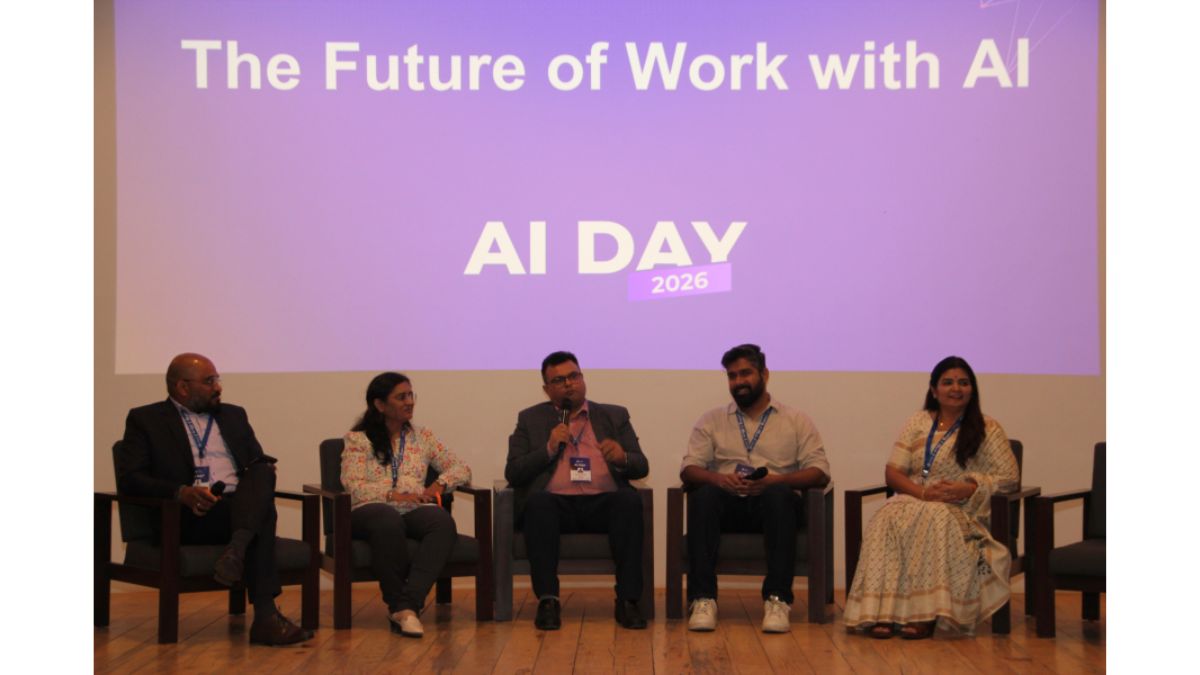
    Vadodara (Gujarat) [India], February 24: At a time when Artificial Intelligence is being discussed at the highest national forums, Navrachana University’s Centre for Interdisciplinary Computing Science (CICS), in collaboration with AtliQ Technologies, hosted AI DAY 2026 — a full-day initiative aimed at fostering practical understanding and informed adoption of AI. The event, themed AI Beyond Theory, focused on separating measurable value from hype and encouraging clarity-led implementation.

    Held from 8:00 AM to 6:00 PM at the Navrachana University campus, the event witnessed participation from more than 200 founders, business owners, technology leaders, engineers, analysts, and students. Rather than limiting the engagement to tool demonstrations, the sessions addressed critical implementation questions — where AI delivers measurable impact, where automation suffices, how organisations should assess return on investment, and how to avoid unnecessary complexity.

    The keynote sessions were conducted in association with AtliQ Technologies and Codebasics. Dhaval Patel, co-founder of Codebasics and a widely followed data and AI educator with over 1.4 million subscribers on YouTube, led the sessions. Emphasising clarity over complexity, he highlighted that sustainable AI adoption begins with foundational understanding and structured thinking rather than pursuing advanced tools without context. The sessions focused on practical use cases, structured decision-making frameworks, and measurable outcome-oriented implementation approaches.

    Prof. Sandeep Vasant, Director, Centre for Interdisciplinary Computing Science (CICS), said – “There is often discussion about a technology gap, but equally important is the human gap — the ability and willingness to adapt. While AI is augmenting human capabilities, the human-in-the-loop will always remain pivotal. Those who choose not to engage with it meaningfully may find themselves left behind. History offers perspective — when computers were first introduced, similar concerns were raised about replacement. Instead, humans became integral to their effective use. Artificial Intelligence may reshape certain roles or reduce routine tasks, but it cannot replace human contribution when individuals are equipped and prepared to integrate it thoughtfully. Ultimately, AI will reward those who adapt alongside it.”

    Throughout the day, discussions progressed from applied AI scenarios and implementation misconceptions to cost-versus-benefit assessments and models for long-term integration. Emphasis was laid on bridging both technological and human readiness gaps, ensuring that adoption strengthens rather than replaces human judgment.

    About the Centre for Interdisciplinary Computing Science (CICS)

    Established to promote interdisciplinary computing research and applied innovation, CICS serves as Navrachana University’s dedicated platform for advancing emerging technologies through industry engagement and practical implementation. The Centre focuses on bridging engineering, analytics, and business domains to deliver scalable and socially relevant technology solutions.

    Among its notable initiatives is Alg AI, a project oriented toward real-world artificial intelligence applications and implementation models. Through structured research, collaboration, and industry integration, CICS aims to strengthen India’s evolving technology ecosystem by preparing professionals who can translate advanced computing concepts into measurable outcomes.

    For more information – https://nuv.ac.in/centre-for-interdisciplinary-computing-science

    If you object to the content of this press release, please notify us at pr.error.rectification@gmail.com. We will respond and rectify the situation within 24 hours.
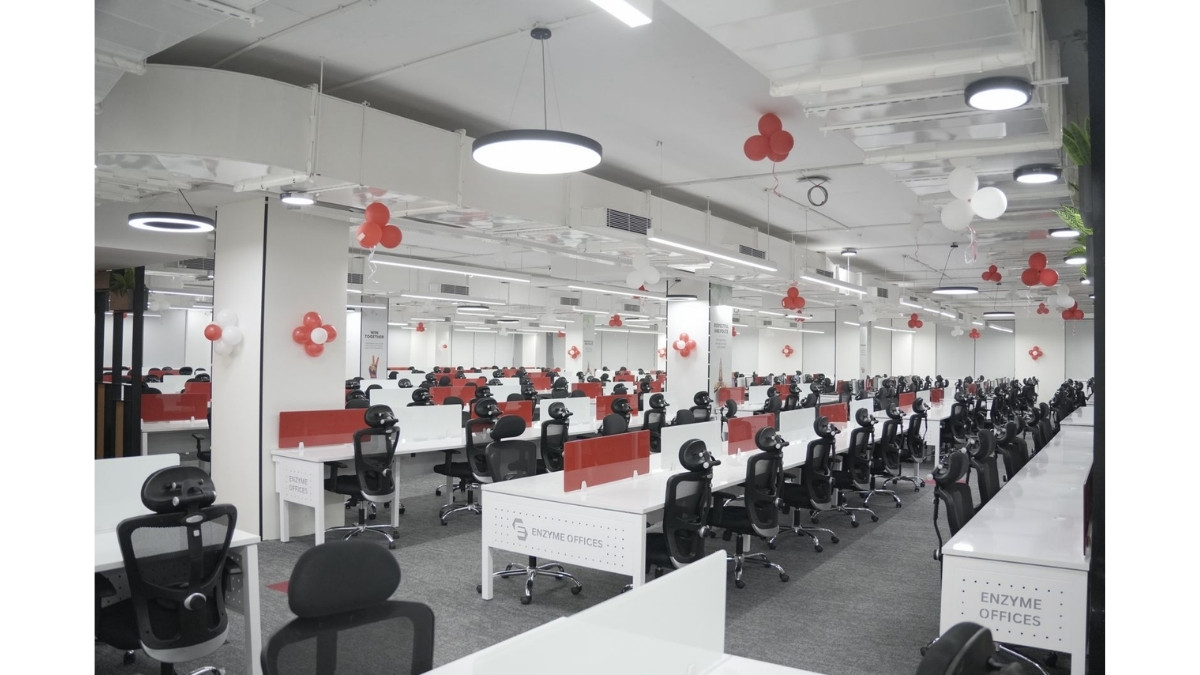
  • Work-Life Balance Made Easy: Enzyme Offices HSR Layout Offers Modern Office Space with Cafes, Transit Access

    Work-Life Balance Made Easy: Enzyme Offices HSR Layout Offers Modern Office Space with Cafes, Transit Access

    Bengaluru (Karnataka) [India], February 24: In today’s fast-paced professional world, choosing the right workspace is no longer just about desks and chairs; it’s about convenience, connectivity, and comfort. For businesses and professionals seeking the ideal office space in HSR Layout, this vibrant business ecosystem has emerged as one of the most preferred destinations. Blending urban accessibility with lifestyle amenities, this locality offers everything modern teams need to thrive.

    Why HSR Layout Is a Preferred Business Destination

    Strategically located in Bangalore’s southeastern corridor, HSR Layout is known for its seamless connectivity to major IT hubs, such as Electronic City, Koramangala, and Outer Ring Road. This makes office space for rent in HSR Layout Bangalore, highly desirable for startups, SMEs, and enterprise teams alike. The area is well-connected by arterial roads, BMTC bus routes, and upcoming metro expansions, ensuring smooth daily commutes for employees.

    Beyond transit, HSR Layout offers a lifestyle advantage. From trendy cafés and casual eateries to fitness centres and retail outlets, professionals can enjoy a balanced workday without needing to travel far. This unique blend of convenience and culture is one of the key reasons companies actively seek HSR office locations here.

    Modern Workspaces That Support Productivity

    A well-designed office environment significantly impacts employee efficiency and satisfaction. Premium providers like Enzyme Offices are redefining the concept of coworking space in HSR by offering thoughtfully designed interiors, ergonomic furniture, collaborative zones, and fully serviced facilities. Businesses choosing managed office space for rent in HSR Layout gain access to:

    • Fully furnished plug-and-play offices
    • High-speed internet and IT infrastructure
    • Meeting rooms and conference facilities
    • Reception and administrative support
    • Breakout areas and lounge spaces

    This enables companies to focus entirely on growth while day-to-day operations are managed efficiently.

    The Rise of Coworking Culture in HSR

    The demand for coworking space in HSR Layout has surged as hybrid work models become the norm. Flexible leasing terms, scalable seating options, and community-driven environments make coworking an attractive choice for freelancers, remote teams, and expanding startups. These spaces also foster networking opportunities, collaboration, and innovation—key ingredients for business success.

    Work-Life Balance Built Into the Location

    One of the biggest advantages of choosing an office space in HSR Layout is the built-in work-life balance. Employees can grab a quick coffee between meetings, enjoy lunch at nearby restaurants, or unwind after work without long commutes. Access to green spaces and recreational facilities further enhances well-being, making HSR Layout more than just a workplace destination; it’s a lifestyle hub.

    As businesses increasingly prioritize employee experience and operational flexibility, choosing the right workspace location becomes crucial. Whether you’re searching for a coworking space in HSR, a private suite, or a fully serviced office space for rent in HSR Layout Bangalore, this thriving locality offers unmatched advantages. With modern infrastructure, excellent connectivity, and lifestyle conveniences, HSR Layout continues to set the benchmark for smart workspaces that support productivity and balance in equal measure.

    If you object to the content of this press release, please notify us at pr.error.rectification@gmail.com. We will respond and rectify the situation within 24 hours.
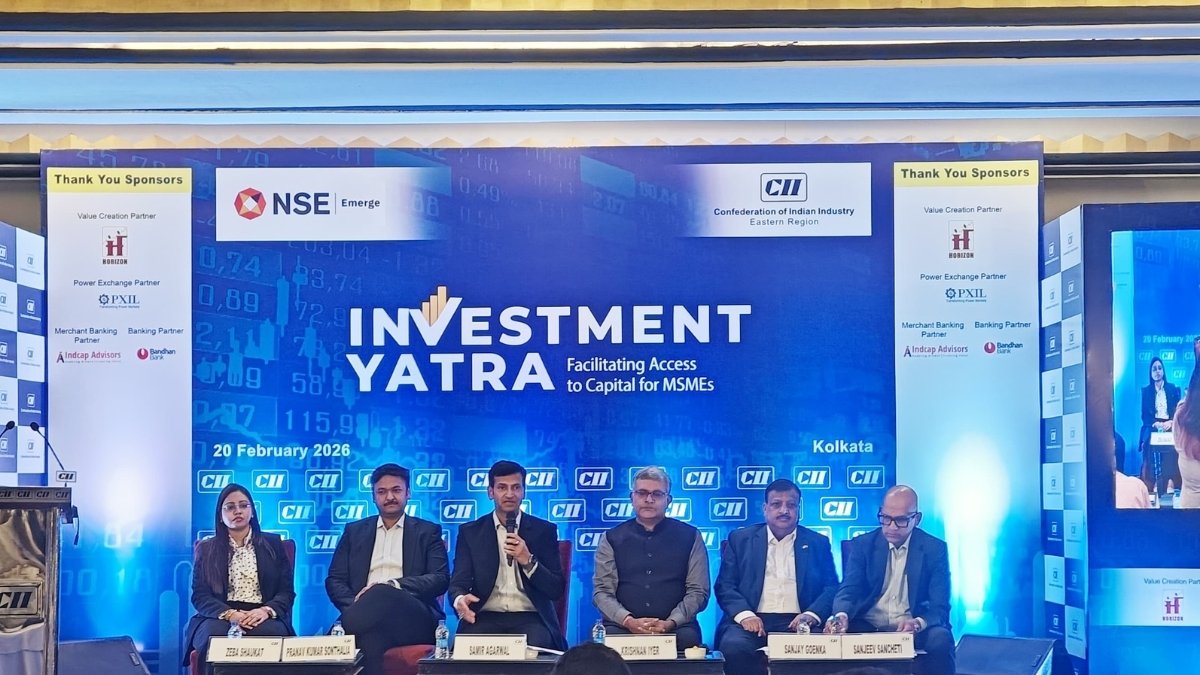
  • Indcap Advisors participated in the Investment Yatra, an initiative of CII Eastern Region in the capacity of a facilitator.

    Indcap Advisors participated in the Investment Yatra, an initiative of CII Eastern Region in the capacity of a facilitator.

    New Delhi [India], February 24: The Investment Yatra  a multi-city roadshow/engagement programme across  Eastern India, aimed at micro, small and medium enterprises (MSMEs), growth-stage companies and entrepreneurial firms in the region. An initiative led by the Confederation of Indian Industry (CII) primarily through its Eastern Region office in partnership with institutions like the National Stock Exchange of India (NSE) and the Securities and Exchange Board of India (SEBI). The goal is to help them understand how to raise capital, prepare for public market listings (IPOs), and navigate capital-market regulatory and operational frameworks.

    Indcap Advisors, the Kolkata-based Category 1 Merchant banker and financial advisory firm led by Samir Agarwal, participated in the Investment Yatra primarily in a facilitator capacity enabling – Expert Participation: Top management from Indcap Advisors (Director, Managing Principal and Managing Partner) were speakers/panellists at various stops of the Yatra (e.g., events in Jamshedpur,

    Bhubaneswar, Patna and Kolkata). Their role was to share insights with MSME founders and finance professionals on capital markets, IPO readiness and investment pathways.

    Supporting Capital Market Dialogue: By being part of the programme alongside NSE, SEBI and other experts, Indcap helped interpret regulatory requirements, guide on valuation, compliance and structuring for market access, and provided real-world advisory perspectives to participants.

    Ecosystem Building: Their involvement also reflected the broader objective of the Yatra — bringing institutional know-how directly to regional enterprises, especially on how to think about raising equity and debt in structured formats beyond traditional sources.

    Indcap’Advisors contribution to fostering a strong IPO ecosystem in Eastern India centers around:

    Raising awareness and confidence among regional businesses to consider market-based fund-raising pathways.

    Providing expert advisory on capital raising and IPO readiness.

    Helping companies navigate regulatory and compliance frameworks essential for public listing.

    Building links between Eastern enterprises and key capital market stakeholders via industry platforms and collaborative events

    If you object to the content of this press release, please notify us at pr.error.rectification@gmail.com. We will respond and rectify the situation within 24 hours.
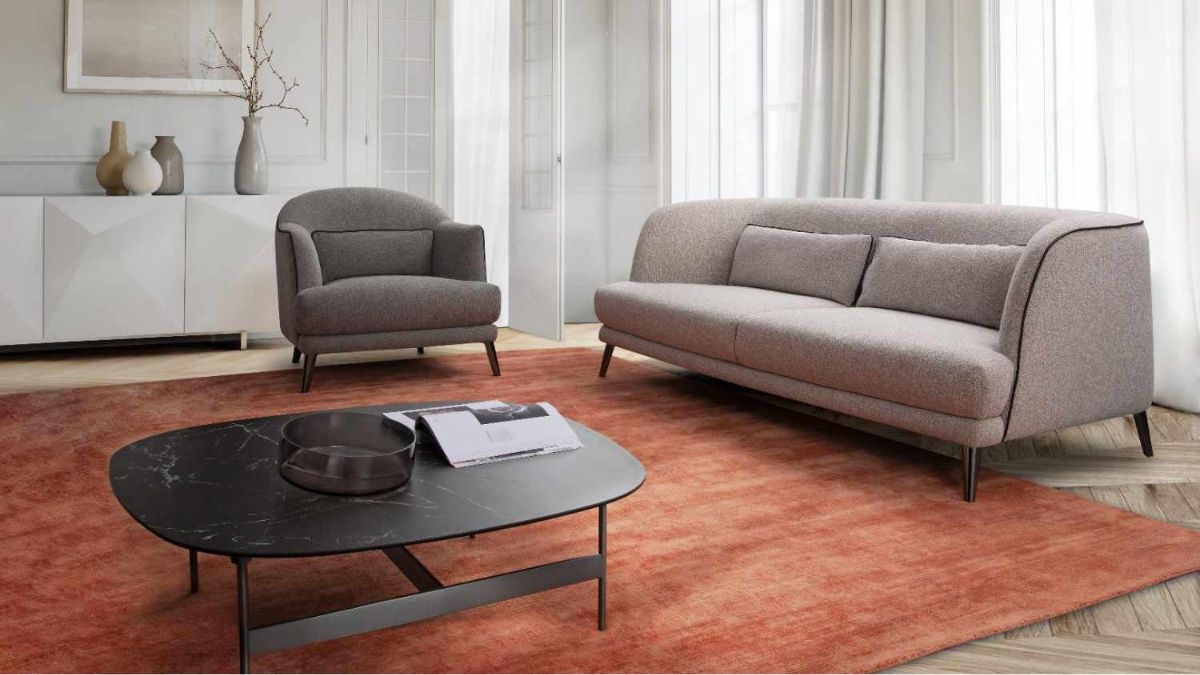
  • A Vibrant Expression of Contemporary Living. The 2026 Seating Edit from Fabbrica

    A Vibrant Expression of Contemporary Living. The 2026 Seating Edit from Fabbrica

    Bengaluru (Karnataka) [India], February 24: As contemporary homes continue to evolve—blurring the lines between aesthetics, comfort, and adaptability—Fabbrica, from the House of HTL, unveils its 2026 seating collection, a thoughtfully curated edit that responds to the changing language of modern living. Rooted in intelligent design and material innovation, the collection explores intentional comfort and furniture that adapts seamlessly to the rhythms of everyday life. Each piece is conceived to integrate naturally into contemporary homes, offering flexibility without compromising on elegance.

    A Legacy of Thoughtful Design

    Since 1998, Fabbrica has been guided by a singular belief: good design should enrich everyday life. Driven by the conviction that design is not a luxury but a right, the German brand has continually innovated to meet the evolving needs of modern living. By combining quality craftsmanship, refined aesthetics, and accessibility, Fabbrica presents a 2026 collection that celebrates stylish living with purpose and personality.

    Kart
    Designed to encourage relaxed living, Kart features generous proportions and fluid movement that invite comfort-driven interaction. Its soft yet structured form and understated detailing make it ideal for spaces centred around warmth, connection, and contemporary ease.

    Fabbrica

    Leroy
    Leroy introduces a multifunctional approach to seating, seamlessly transitioning between lounging and sleeping. Its intelligent rotating mechanism allows it to adapt intuitively to modern lifestyles—perfect for urban homes where flexibility and comfort go hand in hand.

    Valley
    Defined by sculpted contours and expansive seating, Valley anchors living spaces with quiet sophistication. Its modular design responds organically to varied layouts, making it ideal for homes that gather, host, and unwind with equal ease.

    Carre
    Softening architectural rigidity, Carre brings gentle curves and visual fluidity into modern interiors. With adaptable seating depths, it allows users to shift between upright support and relaxed lounging, reflecting a thoughtful understanding of posture and spatial harmony.

    Duca
    Timeless and understated, Duca is characterised by refined proportions and subtle detailing. Designed to transition effortlessly across configurations, it delivers enduring comfort through layered construction and a clean, contemporary aesthetic.

    Vidar
    For those seeking advanced comfort, Vidar integrates modern reclining technology within a compact, design-forward silhouette. With adjustable seating positions and enhanced ergonomic support, it strikes a refined balance between innovation and visual restraint.

    Williams
    A sculptural accent within the collection, Williams combines movement and form through its elegant swivel design. Its angular silhouette lends a contemporary edge, making it a versatile addition to both minimal and expressive interiors.

    Alder
    Bold and expressive, Alder pushes creative boundaries with confident detailing and distinctive form. Designed to make a statement, it balances visual impact with everyday comfort—ideal for interiors that celebrate individuality.

    Reilly
    Completing the seating range, Reilly is a sectional sofa defined by strong lines, plush comfort, and a relaxed sensibility. Designed for informal lounging, it pairs generous proportions with a structured, contemporary presence.

    Poppy Sofa Bed
    Also part of the launch is the Poppy Sofa Bed—a refined solution for compact living. Transforming effortlessly from sofa to a generously sized bed, Poppy addresses modern lifestyle needs without compromising on comfort or design integrity.

    Design Philosophy

    Fabbrica continues to shape contemporary seating—where design is intuitive, comfort is intentional, and furniture evolves with the way we live today. Every piece in the collection can be customised in a wide selection of premium leathers or fabrics, with an extensive palette of colours and textures, allowing each design to be tailored to individual spaces and sensibilities.

    Discover the 2026 collection at Fabbrica India – fabbricaindia.com

    If you object to the content of this press release, please notify us at pr.error.rectification@gmail.com. We will respond and rectify the situation within 24 hours.

  • Vastu Expert Aashesh Agrawaal Guides Hundreds of Families Worldwide Toward Positive Change

    Vastu Expert Aashesh Agrawaal Guides Hundreds of Families Worldwide Toward Positive Change

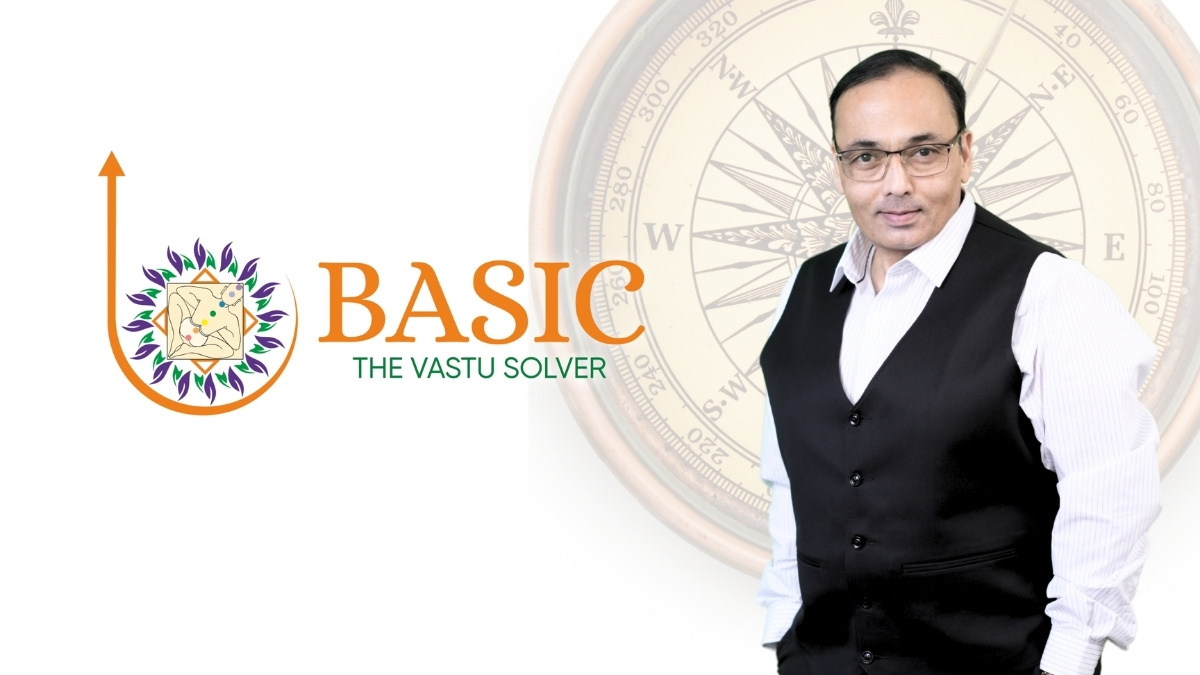
    Bengaluru (Karnataka) [India], February 24: In an era where quick fixes and instant solutions dominate public attention, meaningful and lasting change often unfolds quietly. For more than 22 years, Aashesh Agrawaal, founder of BASIC – The Vastu Solver, has been working at the intersection of environment and human behaviour, helping families and professionals address persistent personal and professional challenges through structured Vastu and astrological analysis.

    Having guided thousands of families across India and abroad, Mr. Agrawaal’s work focuses on identifying subtle environmental imbalances that, according to him, often lie at the root of recurring struggles — stalled careers, strained relationships, financial instability, or unexplained stress. Many of his clients, he says, approach him after conventional solutions fail to deliver sustained improvement.

    Unlike practitioners who project themselves as miracle workers, Mr. Agrawaal describes his role as a “problem solver.” His approach involves studying property layouts, geographical orientation, directional alignments, and astrological indicators before recommending proportionate corrections. He maintains that when alignment between individuals and their surroundings is disturbed, clarity weakens and consistent effort may not yield expected outcomes.

    According to Mr. Agrawaal, Vastu influences the subconscious mind, which governs habits, emotional responses, decision-making patterns and resilience. He explains that physical surroundings continuously transmit signals — including directional flow and elemental balance — which subtly shape behaviour and perception. When spaces are misaligned, he suggests, they may reinforce stress or confusion. Correcting these imbalances, he believes, gradually supports focus, emotional stability and confidence.

    What distinguishes his methodology is its analytical framework. By examining floor plans in detail and correlating them with astrological charts, he attempts to trace recurring difficulties back to overlooked environmental factors. His recommendations are described by clients as practical and restrained, avoiding excessive rituals or dramatic predictions.

    Mr. Agrawaal’s journey into holistic consulting evolved gradually. For years, he balanced this work alongside a corporate career, applying structured reasoning in both domains. Observing consistent shifts in clients’ confidence and decision-making after environmental corrections strengthened his conviction that sustainable change begins with foundational conditions.

    As demand for his guidance grew, he formally established BASIC – The Vastu Solver, reflecting his philosophy of addressing fundamentals before offering solutions. Today, he operates through a fully online consultation model, conducting five detailed video sessions of approximately 90 minutes each, allowing for diagnosis, corrective guidance and monitored implementation.

    His clientele includes entrepreneurs, professionals and families seeking clarity during uncertain phases of life. Increasingly, he notes, clients seek understanding rather than prediction — highlighting a shift in how traditional spatial sciences are being viewed in contemporary contexts.

    Beyond private consultations, Mr. Agrawaal shares educational insights through digital platforms, explaining how architecture, orientation and layout may influence emotional stability and interpersonal dynamics. He emphasises ethical restraint in his practice, discouraging exaggerated claims and dependency-driven models.

    As conversations around mental well-being and sustainable living continue to expand, Mr. Agrawaal’s work reflects a growing interest in how built environments impact human experience. After serving families worldwide for over two decades, his central belief remains unchanged: meaningful change begins not only with circumstance, but with the conditions that shape those circumstances.

    For many who have sought his guidance, the transformation, they say, is not dramatic but enduring — a steady recalibration of space, structure and direction.

    If you object to the content of this press release, please notify us at pr.error.rectification@gmail.com. We will respond and rectify the situation within 24 hours.