Author: Sutun Nayak

  • VMS TMT Reports Robust Q3 FY26 with 43pc EBITDA Growth and 278pc PAT Increase QoQ

    VMS TMT Reports Robust Q3 FY26 with 43pc EBITDA Growth and 278pc PAT Increase QoQ

    Ahmedabad (Gujarat) [India], February 13: VMS TMT Limited (BSE: 544521 | NSE: VMSTMT), a fully integrated steel manufacturer engaged in TMT Bars, Billets, and Binding Wires, announced its Unaudited Financial Results for the Quarter and Nine Months ended 31 December 2025.

    Key Financial Highlights – Q3 & 9M FY26 (₹ in Crores)

    Particulars Q3 FY26 QoQ Growth 9M FY26
    Total Income 202.51 +10.6% 598.84
    EBITDA 17.53 +43.4% 50.38
    Net Profit 8.04 +277.8% 18.74
    EPS (₹) 1.62 +174.6% 4.67

    Operational & Business Highlights 

    • Strong sequential growth in Q3 supported by improved plant utilization and stable demand across retail and institutional segments.
    • Backward integration through the billet (CCM) facility continued to enhance cost control and raw material availability.
    • Retail-led distribution network of 227+ dealers and 3 distributors sustained steady offtake across Gujarat.
    • Automation and process optimization at the Bhayla plant improved productivity and operating leverage during the quarter.
    • Completion of IPO-related debt repayment strengthened balance sheet and reduced finance costs.
    • Progress continued on the 15 MW captive solar power project to structurally lower energy costs.
    • Healthy order pipeline maintained across housing and infrastructure-driven demand segments.

    Mr. Varun Jain, Chairman & Managing Director, VMS TMT Limited, said:

    “Q3 marked a strong sequential improvement for VMS TMT, with double-digit revenue growth and a sharp increase in profitability driven by operating leverage and efficiency gains across our integrated operations. The successful stabilization of our billet facility, improved plant utilization, and consistent retail demand supported performance during the quarter.

    Over the first nine months of FY26, we have strengthened our integrated manufacturing platform, expanded dealer engagement, and completed key balance-sheet milestones following our IPO. With healthy order visibility, continued infrastructure demand, and ongoing cost-optimization initiatives including captive solar power, we remain confident of sustaining growth momentum and improving margins over the medium term.”

    Disclaimer: This article is for informational purposes only and does not constitute financial advice.

  • Clean-tech Start-up Solar Capital launches digital platform enabling rooftop-less consumers to participate in India’s solar growth

    Clean-tech Start-up Solar Capital launches digital platform enabling rooftop-less consumers to participate in India’s solar growth

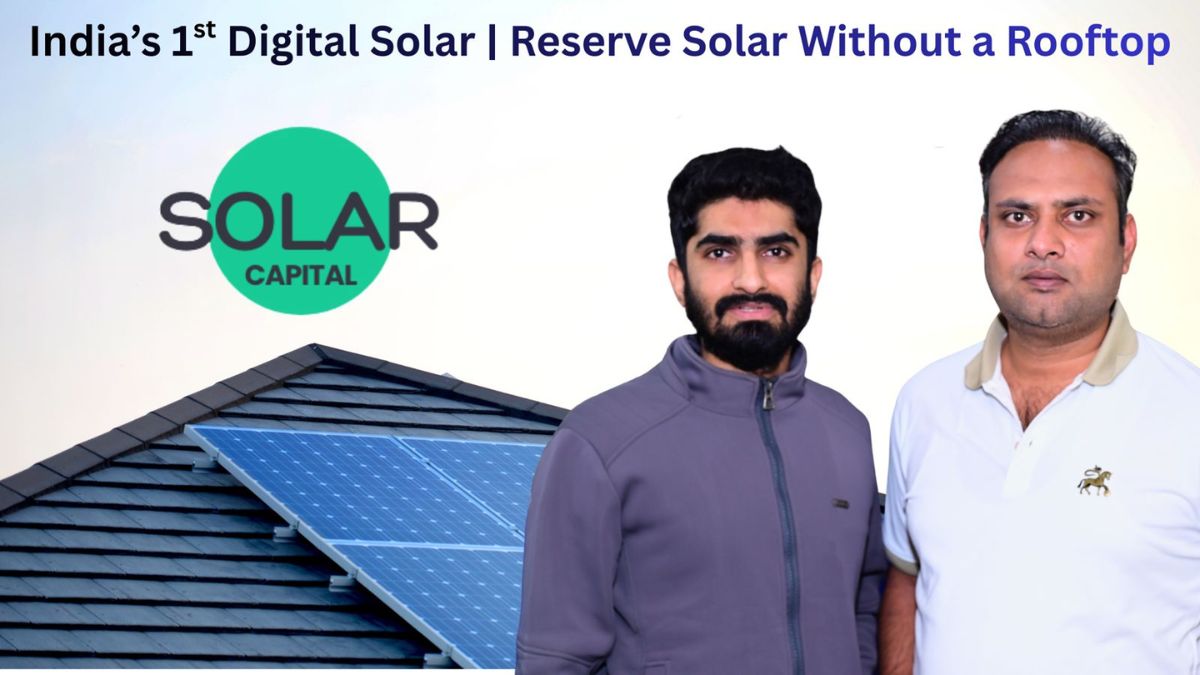
    New Delhi [India], February 13: As India accelerates its clean energy transition, Gurugram based Start-up, “Solar Capital” has announced the launch of its digital solar participation platform that enables individuals and organisations to take part in solar energy generation without owning rooftops or installing on-site infrastructure, with subscriptions starting from as low as Rs 999/-. This move significantly lowers entry barrier for consumers without rooftop access or the ones who simply don’t have the time to maintain the asset for its entire lifecycle. It expands the scope for fractional solar investment in India’s clean energy transition.

    India has set ambitious renewable energy targets; however, a significant portion of urban consumers, renters, apartment residents, and small businesses remain unable to adopt rooftop solar due to space constraints, leased premises, or operational complexities. At the same time, many commercial and industrial buildings with suitable rooftops are unable to deploy solar projects due to working capital limitations, balance-sheet constraints, and long payback cycles.

    Solar Capital addresses both challenges through a subscription-based, fractional solar investment model that allows users to digitally participate in verified, developer-owned solar projects while enabling host buildings to deploy solar capacity without upfront capital expenditure or financial risk. For many consumers comparing digital solar vs traditional solar, the participation-led approach removes installation, maintenance, and ownership complexities.

    Founded by Sameer Mishra and Maharshiraj Chudasama, Solar Capital was conceptualised after hundreds of on-ground interactions across the solar ecosystem. “We met individuals who wanted to support clean energy and save on bills but had no rooftops or the time for maintenance of the system for many years to come. Simultaneously, we saw commercial buildings hesitate to set one up due to capital lock-in,” said Sameer Mishra, Founder, Solar Capital. “We realised that separating solar participation from physical ownership could unlock adoption on both sides.”

    Solar Capital was recently awarded the Digital Solar Innovation Award 2026 by a leading business magazine. The recognition underscores the company’s role in expanding access to solar energy through scalable, technology-led participation models and highlights its contribution to India’s evolving clean energy ecosystem.

    Through the Solar Capital platform, subscribers can enroll digitally in shared and distributed solar projects operated by established developers. Sameer said, “The platform allows individuals and organisations to participate in solar projects with subscriptions starting from as low as Rs 999/-, making digital solar participation and fractional solar investment accessible to a much wider audience. Commercial buildings act as host locations without investing capital or taking on balance-sheet exposure”.

    Subscribers receive monthly Green Credits, redeemable across BBPS-enabled utility payments including electricity, gas, water, mobile, broadband, and other essential services.

    Solar Capital is backed by industry experts from the renewable energy, power, and financial services sectors, helping shape a compliance-led structure with predictable offtake models and scalable demand aggregation. This approach improves project bankability for developers while ensuring transparency and simplicity for subscribers.

    Early adoption has seen strong interest from urban consumers and small organisations, particularly those without rooftop access. Users have highlighted the ease of onboarding, clarity of the subscription structure, and flexibility of Green Credit utilisation as key benefits.

    Looking ahead, Solar Capital plans to expand partnerships with solar developers, commercial property owners, housing communities, and enterprises, while also scaling its participation-led clean energy models aligned with India’s 2047 sustainability goals.

    India’s solar transition is evolving from ownership-centric infrastructure to inclusive, digitally enabled participation. Solar Capital aims to play a key role in this shift by making solar accessible to a wider population.

    For more information, visit https://solarcapital.in

    If you object to the content of this press release, please notify us at pr.error.rectification@gmail.com. We will respond and rectify the situation within 24 hours.

  • DICCI to Host International Conclave on AI for Inclusion and the Future of Work on 18th February 2026

    DICCI to Host International Conclave on AI for Inclusion and the Future of Work on 18th February 2026

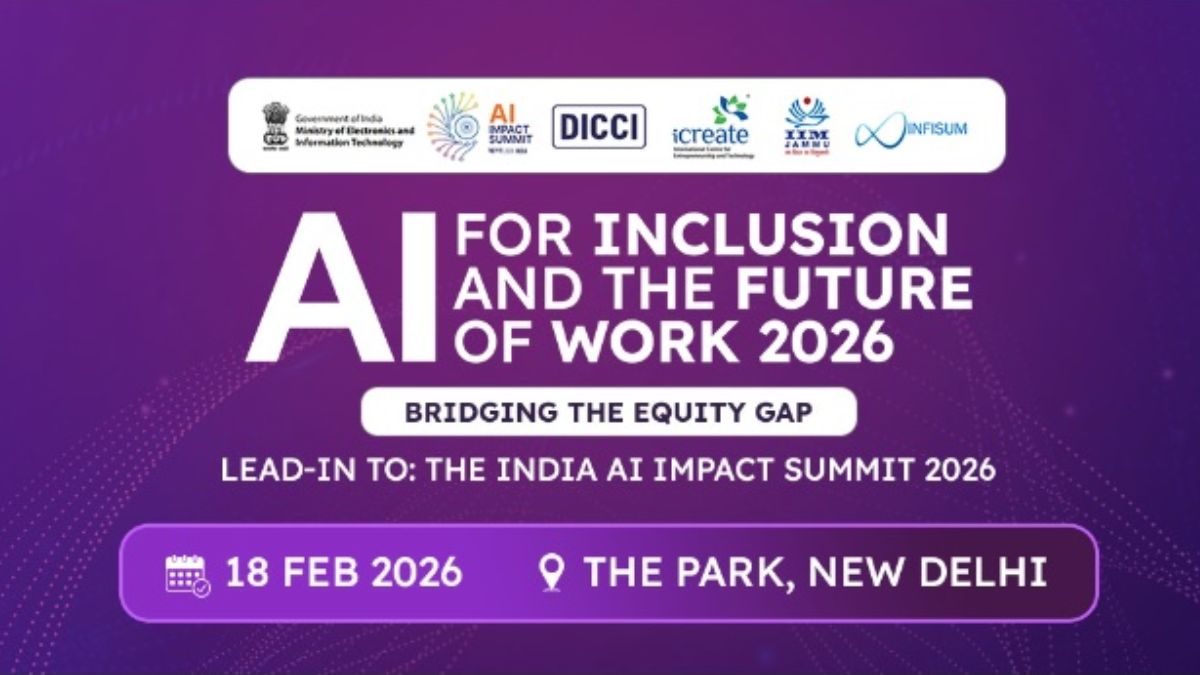
    New Delhi [India], February 13: The Dalit Indian Chamber of Commerce and Industry (DICCI) will convene the International Conclave on AI for Inclusion and the Future of Work 2026: Bridging the Equity Gap on 18th February 2026 at The Park, New Delhi. The conclave is being organised in partnership with iCreate, Indian Institute of Management Jammu, Infisum and the Entrepreneurship Development Institute of India (EDII), and will serve as a precursor to the India AI Impact Summit 2026.
    Supported by the Ministry of Electronics and Information Technology, Government of India, the conclave will bring together senior representatives from the Union and State Governments, global policymakers, industry leaders, economists, academic experts and social sector practitioners. Discussions will focus on aligning artificial intelligence with the goals of equity, livelihood security and inclusive economic growth.

    As AI rapidly reshapes productivity, service delivery and business models, the conclave will examine emerging risks around concentration of capital, compute infrastructure and intellectual property, and their potential to deepen structural inequalities. Deliberations will explore policy and market interventions required to ensure equitable access to AI through infrastructure development, responsible data governance and inclusive skilling frameworks.

    Key agenda areas include AI inequality in global development, governance frameworks for responsible AI deployment, formalisation pathways for MSMEs and informal workers, and the role of digital public infrastructure in expanding access to AI systems. Special emphasis will be placed on enabling participation of Scheduled Castes, Scheduled Tribes, women entrepreneurs, gig workers, sanitation workers, artisans and first-generation business owners in emerging AI value chains.

    A key outcome of the conclave will be the Delhi Declaration on Inclusive AI and the Future of Work, which is expected to outline national principles for equity-by-design, worker transition frameworks, portable social protection mechanisms, multilingual AI skilling pathways, inclusive data governance standards and strengthened Centre–State coordination. The Declaration will inform deliberations at the India AI Impact Summit 2026.

    Dr. Milind Kamble, Founder Chairman, DICCI & Conclave Chairman, Conclave on AI for Inclusion and the Future of Workstated, “Artificial intelligence will define the next phase of economic expansion. The central question is whether this growth will remain concentrated or become participatory. This conclave is anchored in six pillars — education, small business formalisation, financial literacy, future-ready agriculture, AI for speedy justice, and AI for empowering informal workers. Inclusion must be embedded at the design stage of AI systems and governance frameworks to ensure durable social mobility.”

    Padma Shri awardee Mr. Ravi Kumar Narra, National President, DICCI, added, “Economic empowerment delivers impact when policy intent is matched with institutional execution. AI must be deployed with similar discipline to enhance productivity in the informal economy, expand market access for small enterprises and enable credible worker transition pathways. Inclusion must be measurable, not aspirational.”

    Through this conclave, DICCI aims to institutionalise inclusion as a foundational principle within India’s evolving AI policy ecosystem, advancing structured dialogue and actionable commitments that align artificial intelligence with equity, employment and national development priorities.

    If you object to the content of this press release, please notify us at pr.error.rectification@gmail.com. We will respond and rectify the situation within 24 hours.

  • Poulomi Pavini Shukla Redefines What Legal Reform Looks Like in Modern India

    Poulomi Pavini Shukla Redefines What Legal Reform Looks Like in Modern India

    New Delhi [India], February 13: At a time when India’s legal discourse is often reactive, Poulomi Pavini Shukla represents a quieter but more consequential shift, one that treats the Constitution not as a symbolic document, but as a working tool for social correction.

    An award-winning lawyer, TEDx speaker and author, Poulomi has emerged as one of the country’s most credible young voices in constitutional law, women’s rights, orphan welfare and animal protection. Recognised early for the depth and seriousness of her work, she has been named to Forbes 30 Under 30, and honoured with the Young Achiever Award, Femina Fab 40, and Cosmopolitan Disruptor of the Year.

    Poulomi is the founder of Nyaya Naari, India’s first all-women law firm and legal reform platform. The initiative was created to reposition women not merely as beneficiaries of legal protection, but as active shapers of jurisprudence and policy. Through Nyaya Naari, she combines precedent-setting litigation with institutional accountability and structured mentorship, foregrounding women lawyers in leadership roles within the legal profession.

    She is nationally known for her decade-long work on orphan welfare in India. Her book, The Weakest on Earth – Orphans of India, published by Bloomsbury, brought national attention to the legal invisibility of orphaned children. The work has contributed to tangible policy outcomes, including reforms across 11 states, a doubling of Union budgetary allocations, extension of Right to Education coverage to orphaned children, and a landmark intervention ensuring that orphans are formally enumerated in the national census.

    “In a country as data-driven as ours, not being counted often means not being cared for,” Poulomi said. “My work with orphans has always been about one simple idea—until the law sees you, policy will not serve you.”

    In the area of women’s rights, Poulomi is currently leading constitutional litigation challenging discriminatory inheritance regimes that deny married daughters equal rights in agricultural and ancestral property. Her work has already prompted the Uttar Pradesh government to constitute a committee to re-examine such laws, an issue affecting millions of women despite clear constitutional guarantees under Articles 14 and 15.

    “Equality cannot stop at the doorstep of marriage,” she said. “If constitutional rights disappear the moment a woman marries, then the problem is not culture—it is the law’s failure to keep its promise.”

    Poulomi has also become a prominent legal voice in the national conversation on stray and community dogs, an issue often marked by polarisation and misinformation. Her interventions have focused on lawful, humane and evidence-based approaches, resisting illegal relocation and violence, while reframing animal welfare as a question of constitutional morality, public health and social responsibility. Her arguments have gained wide traction online and within legal circles, particularly among younger lawyers and policy audiences.

    A widely read public intellectual, Poulomi has written for The Times of India, The New Indian Express, The Economic Times and Femina, and is a frequent speaker at universities, legal forums and policy platforms across the country. Known for substance over spectacle, she combines rigorous legal reasoning with moral clarity, making complex constitutional questions accessible without diluting their seriousness.

    As a speaker and advocate, Poulomi’s work consistently asks a larger question—how law distributes power, how it withholds compassion, and how it can be reoriented to serve those it has historically overlooked.

    More information is available at www.weakestonearth.in

    If you object to the content of this press release, please notify us at pr.error.rectification@gmail.com. We will respond and rectify the situation within 24 hours.

  • Archoo’s Rajasthan Dealer Meet Gets an Overwhelming Response

    Archoo’s Rajasthan Dealer Meet Gets an Overwhelming Response

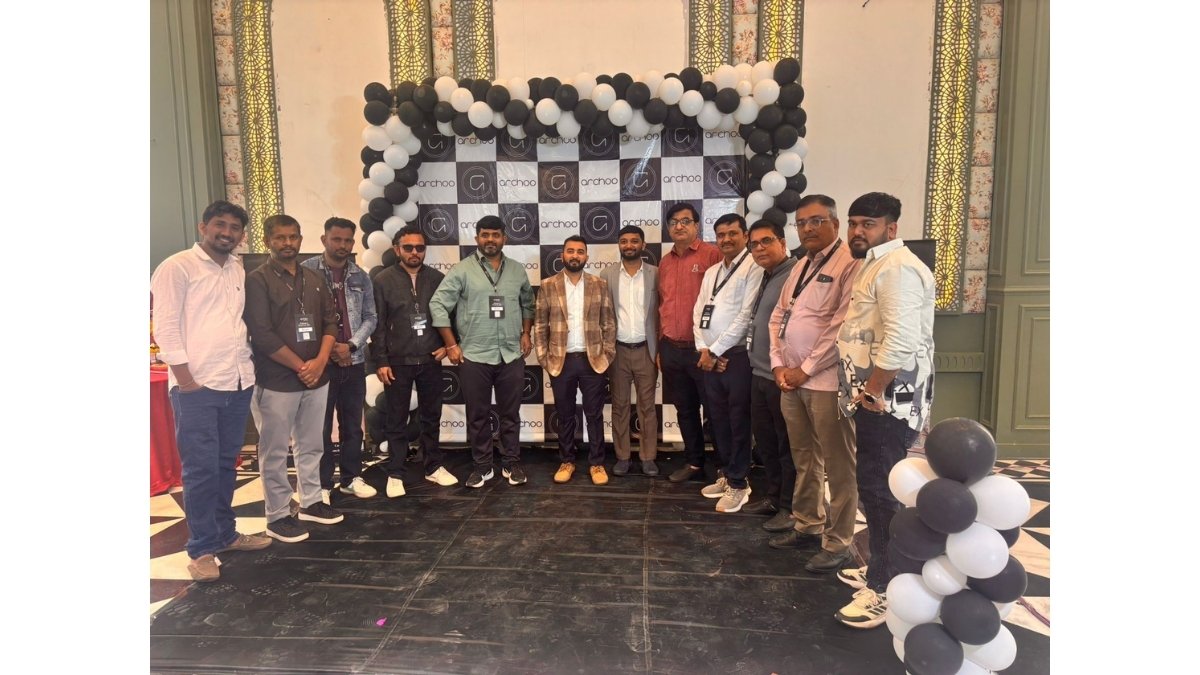
    Ahmedabad (Gujarat) [India], February 13: Archoo, a women’s nightwear and comfort wear brand, recently hosted a special dealer meet in Rajasthan, bringing together its partners for an exclusive preview of its latest collections.

    The trip was planned as a relaxed yet focused product showcase, where dealers could experience Archoo’s new range up close. The display included a variety of women’s nightwear, comfortable T-shirts, and trendy co-ord sets, thoughtfully designed to suit everyday wear and changing consumer preferences.

    The response from dealers was far better than expected. The new collections received strong appreciation for their comfort, fit, and fresh designs, resulting in bookings that went well beyond initial expectations. Many dealers showed immediate interest in placing orders, reflecting growing demand for easy-to-wear and stylish nightwear across markets.

    Sharing their thoughts, the Archoo team said the Rajasthan meet was not just about showcasing products, but about spending quality time with their partners and understanding market needs better. According to the owner Murli Manohar Darji, “Seeing such positive energy and higher-than-expected bookings gives us confidence that we’re moving in the right direction”.

    The successful Rajasthan showcase marks another positive step in Archoo’s journey, strengthening dealer relationships and reinforcing the brand’s commitment to delivering comfortable, well-designed products that truly connect with customers.

    If you object to the content of this press release, please notify us at pr.error.rectification@gmail.com. We will respond and rectify the situation within 24 hours.

  • India Water Foundation Felicitated for Integrated Transversality Leadership

    India Water Foundation Felicitated for Integrated Transversality Leadership

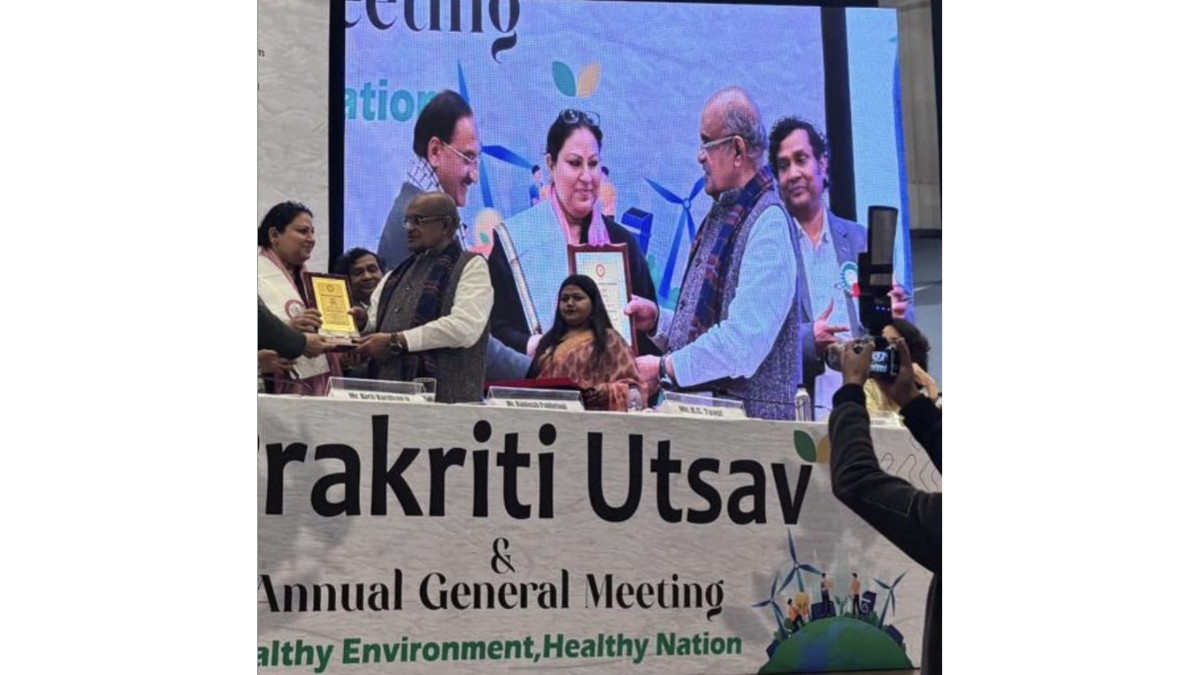
    New Delhi [India], February 13: The India Water Foundation (IWF) was honoured with a prestigious award by the Nurserymen Association of India in recognition of its outstanding contributions across diverse domains including water conservation, environmental sustainability, climate resilience, and community empowerment. The award was presented during “Prakriti Diwas” organised by Nurserymen Association of India on 12 February 2026 at the India International Centre.

    The recognition reflects the shared vision between the two institutions in promoting ecological restoration, strengthening green livelihoods, and advancing sustainable natural resource management. The award acknowledges India Water Foundation’s integrated aligned with national priorities and global sustainability goals.

    The event was graced by eminent dignitaries including Ramesh Pokhriyal Nishank, Former Minister of Education, Government of India and Former Chief Minister of Uttarakhand; K. C. Tyagi, Former Member of Lok Sabha; and Sunita Narain, Director General of the Centre for Science and Environment. Addressing the gathering, Shri Ramesh Pokhriyal Nishank appreciated the India Water Foundation for its sustained efforts in integrating water security with environmental stewardship. He noted that India’s developmental journey must be anchored in ecological wisdom and stated that institutions like IWF are playing a pivotal role in bridging policy, science, and grassroots action. He emphasized that water conservation and afforestation must go hand in hand to ensure long-term climate resilience. Shri K. C. Tyagi highlighted the importance of collaborative platforms that unite policymakers, civil society, and practitioners. He remarked that the work of the India Water Foundation demonstrates how integrated approaches can simultaneously address environmental degradation, rural livelihoods, and social inclusion. He underscored that nurturing plant life through nurseries and protecting water resources are complementary pillars of sustainable development. Ms. Sunita Narain commended the Nurserymen Association of India for strengthening the environmental movement through practical interventions.

    On the occasion, the India Water Foundation expressed its heartfelt gratitude to the Nurserymen Association of India and all the esteemed dignitaries for the honour and warm recognition bestowed upon it. The Foundation deeply appreciated the Association’s exemplary contribution in promoting horticulture, biodiversity conservation, environmental stewardship, and green livelihoods across the country. This recognition further strengthens the shared resolve of both institutions to work collaboratively for water security, ecological restoration, and climate resilience. The India Water Foundation reaffirmed its commitment to advancing integrated solutions that connect water, environment, and green growth, ensuring sustainable and inclusive development for present and future generations.

    The India Water Foundation (IWF) works as a policy think-tank and action-oriented organization dedicated to integrated water, environment, and climate solutions. Its core work includes water conservation, watershed and springshed rejuvenation, river basin management, and ecosystem-based adaptation to strengthen climate resilience. IWF actively promotes the Water–Energy–Health–Environment nexus through its concept of Water Transversality, linking water security with energy, health, education and livelihoods. .

    The Foundation undertakes research, policy advocacy, capacity building, and community outreach globally. It supports livelihood generation through environmentally aligned practices, promotes ESG-aligned governance frameworks, and engages with ministries, UN agencies, and global platforms to advance SDG implementation. Through conferences, publications, field interventions, and multi-stakeholder partnerships, IWF works to build a water-secure, climate-resilient, and socially inclusive future.

    Considering the same India Water Foundation is organizing The Water Transversality global Awards and Conclave 2026, with the theme of ESG Transversality for Water–Energy-Environment-Health Nexus” on 6-7th March at India International Centre, Delhi. It is a flagship global platform conceptualized and organized by the India Water Foundation to advance integrated solutions for water security through cross-sectoral collaboration.

    The Conclave brings together policymakers, UN agencies, industry leaders, financial institutions, academia, civil society, and grassroots practitioners to deliberate on the Water–Energy–Health–Environment nexus under an ESG-aligned framework. It promotes the philosophy of Water Transversality, positioning water as the connecting force across climate resilience, green industry, poverty alleviation, public health, and sustainable development. The Water Transversality Awards and Conclave represents a movement transforming water governance from fragmented management to interconnected, inclusive, and climate-resilient development planning.

    If you object to the content of this press release, please notify us at pr.error.rectification@gmail.com. We will respond and rectify the situation within 24 hours.

  • Ajay Devgn Turns Narrator for Shatak | Trailer Out Now

    Ajay Devgn Turns Narrator for Shatak | Trailer Out Now

    Mumbai (Maharashtra) [India], February 13: The makers of Shatak: Sangh Ke 100 Varsh have unveiled the film’s much-awaited trailer, powerfully narrated by Bollywood superstar Ajay Devgn, whose iconic voice adds depth, scale, and emotion to the stirring first glimpse.

    Rooted in themes of sacrifice, resilience, and nation-first values, the trailer traces a century-long journey inspired by Guruji M. S. Golwalkar Ji’s words on the Sangh’s enduring spirit. Drawing from documented sources, the film aims to present a perspective on the untold chapters of history, symbolised through the powerful imagery of the Bhagwa.

    Sharing his thoughts on being associated with the film, Ajay Devgn said, “Congratulations to the RSS on completing one hundred years. A century is not merely a milestone in time — it represents generations of commitment, sacrifice, and contribution towards nation-building. Over these hundred years, the Sangh has played a significant role in shaping conversations around service, unity, and cultural identity. Shatak seeks to shed light on that long and layered journey.

    For me, being the voice that narrates this story is truly an honour. This is not just the story of an organisation, but of an idea — one that endured challenges and continued to stand firm with the passage of time. Lending my voice to a narrative that speaks of resilience, belief, and collective purpose has been a meaningful experience.”

    Made in association with Panorama, produced by Vir Kapur, directed by Ashish Mall and co-produced by Ashish Tiwari, Shatak releases nationwide on 20 February 2026.

    Trailer Link – https://youtu.be/_o83bbCKIog

    If you object to the content of this press release, please notify us at pr.error.rectification@gmail.com. We will respond and rectify the situation within 24 hours.

  • Ethical AI Is a Lie. Virtue-Native AI Is the Answer.

    Ethical AI Is a Lie. Virtue-Native AI Is the Answer.

    Silicon Valley’s “responsible AI” industry is a billion-dollar con. The Epstein files just ripped away the curtain. Here’s what should replace it.

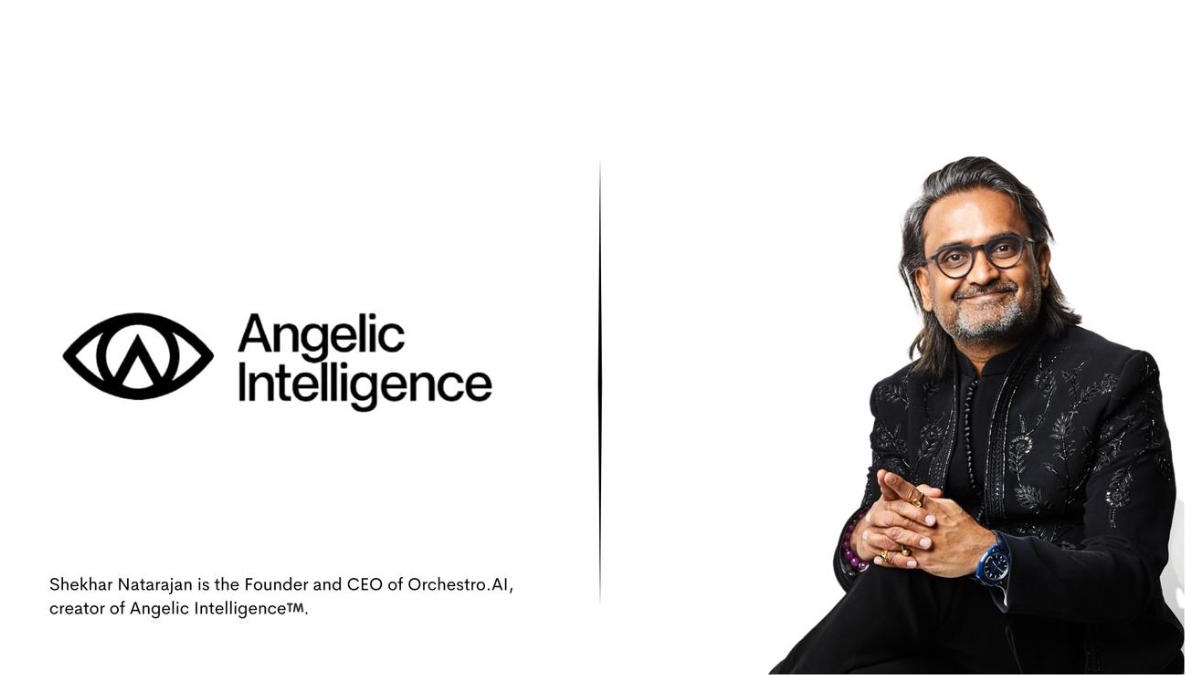
    New Delhi [India], February 13: Shekhar Natarajan, the Founder and CEO of Orchestro.AI explains why we need a virtue-native AI instead of ethical AI.

    THE CON
    There is a multi-billion-dollar industry called “AI Ethics.” It employs thousands of people. It publishes hundreds of papers a year. It convenes panels at every major technology conference on Earth. It has its own conferences, its own journals, its own job titles, its own vocabulary: alignment, fairness, transparency, responsible scaling, human-centered design.

    It is a lie.
    Not because the researchers are insincere. Many are brilliant and well-intentioned. But because the entire apparatus exists to do one thing: allow morally and financially compromised people to keep building the most consequential technology in human history while appearing to give a damn.

    The Epstein files make this undeniable. The same networks that funded AI labs funded dinners with a convicted child sex offender. The same intellectual circles that shaped AI alignment theory exchanged emails about eugenics and fascism with a predator. The same billionaires who endow AI ethics chairs at Stanford and MIT maintained documented, post-conviction relationships with Jeffrey Epstein.

    The ethics industry is not a check on power. It is a product of power. It exists to absorb criticism the way a car’s crumple zone absorbs impact—so the people in the driver’s seat walk away unharmed.

    “Ethical AI is a bumper sticker on a car driven by people who can’t pass a background check. The Epstein files are the background check. 3.5 million pages. Read them. Then tell me the ethics industry is working.” — Natarajan

    WHY IT FAILS: THE BOLT-ON PROBLEM
    Here is the structural reason Silicon Valley’s ethical AI will always fail, even when the practitioners are sincere:

    You cannot bolt morality onto a system designed without it.
    Every major AI system in production today was designed with a single objective function: optimize. Optimize engagement. Optimize conversion. Optimize revenue. Optimize growth. The system is built, shipped, and scaled. Then the ethics team is brought in to sand down the edges. To write the guidelines. To flag the bias. To publish the transparency report. To tell the press that the company takes these issues very seriously.

    This is like building a skyscraper on a swamp and then hiring a foundation consultant after the building starts sinking. The consultant can write excellent reports. The consultant can identify every crack. The consultant cannot fix the fact that the foundation was never poured.

    The Epstein network operated identically. The relationships were built. The value was extracted. The risk was managed. When exposure came, the response was formulaic: express regret, reframe as a mistake, commit to learning, change nothing structural. The AI ethics industry follows the same playbook. The only difference is the vocabulary.

    VIRTUE-NATIVE: A DIFFERENT ARCHITECTURE ENTIRELY
    Now imagine something the current system cannot produce. Imagine AI where ethics is not a department, not a report, not a panel, not a constraint applied after deployment—but the computational architecture itself.

    This is what Shekhar Natarajan means by virtue-native AI.

    The distinction is not semantic. It is structural. In Silicon Valley’s model, the AI optimizes and the ethics team audits. In Natarajan’s model, there is no separation. Twenty-seven Virtue Agents—Compassion, Transparency, Humility, Temperance, Forgiveness, Justice, Prudence, and twenty more—operate inside every decision the system makes. They are not reviewers. They are not guardrails. They are the decision-making architecture. The Compassion Agent does not review a routing decision after it’s made. It is the routing decision.

    “Right now, my systems are choosing whether someone’s grandmother gets her heart medicine or a billionaire gets luxury skincare. The difference is—my algorithms remember why humans matter. That’s not an ethics policy. That’s the architecture.” — Natarajan

    WHY A BOY FROM HYDERABAD UNDERSTOOD THIS AND STANFORD DIDN’T
    Silicon Valley builds AI from a single cultural assumption: that ethics can be universalized into a checklist. Fairness. Transparency. Accountability. Non-discrimination. Write it down. Audit against it. Ship the report.

    This is the thinking of people who have only ever lived in one moral universe.
    Natarajan grew up in the slums of Hyderabad—a world where virtue was not academic. It was survival. His mother’s 365-day vigil outside a headmaster’s office was not a lesson in “persistence” from a self-help book. It was an act of moral engineering: she identified a system failure, she deployed the only resource she had—her physical presence—and she ran the process until the system yielded. His father’s bicycle route was not “generosity” as a corporate value. It was a man earning $1.75 a month who calculated, every single day, that other people’s suffering was more urgent than his own—and acted accordingly.

    Then Natarajan moved across worlds. South India to Georgia. Georgia to Atlanta’s corporate corridors. Coca-Cola to PepsiCo to Disney to Walmart to American Eagle. Six continents of operational experience. Hindu moral frameworks. Christian institutional ethics. Secular corporate governance. Islamic principles of commerce he encountered building supply chains across the Middle East. Confucian hierarchical values shaping operations in East Asia.

    He learned what no one in Silicon Valley’s monoculture has learned: virtue is real, it is universal in aspiration, and it is radically local in expression.
    That is why Angelic Intelligence is configurable. The Compassion Agent in a supply chain serving rural India does not apply the same decision weights as a Compassion Agent routing medical supplies in Lagos or distributing humanitarian aid in Kyiv. The virtue is the same. The configuration reflects the local moral reality. A system designed by someone who has only ever lived in Palo Alto cannot conceive of this. A system designed by someone who studied under a street light in Hyderabad, shipped goods across six continents, and holds degrees from Georgia Tech, MIT, Harvard, and IESE can.

    “Silicon Valley thinks ethics is a checklist. I know it’s an architecture. They think morality is one-size-fits-all because they’ve only ever worn one size. I grew up in a room with eight people, crossed oceans, built systems across six continents. Virtue is universal. The expression of virtue is local. If your AI can’t configure for that, it’s not ethical. It’s colonial.” — Natarajan

    THE PROOF IS OPERATIONAL
    This is not theory. In January 2026, at Davos, Natarajan launched Angelic Intelligence Matching with The Supply Chain Project—a system that diverts $890 billion in annual retail returns from landfills to families in need. Compassion Agents evaluate the human value of each item. Diapers go to families with infants. Medicine goes to the elderly. Food goes to hunger relief. The virtue layer is not a filter applied after optimization. It is the optimization.

    The system tracks dignity preserved per decision and hope transported per mile. It runs Karma Credit—pro-social behavior by drivers, warehouse workers, and partners unlocks better pay, better financing, better opportunities. It puts market value on goodness. Not as a PR campaign. As a computational metric.

    Meanwhile, the people in the Epstein files are still publishing ethics reports.

    “Compassion doesn’t kill profit. It multiplies it. Every ethical decision my system makes creates trust. Trust creates loyalty. Loyalty creates sustainability. That’s not idealism. That’s math. And unlike ethical AI theater, it actually works.” — Natarajan

    The ethical AI industry has had a decade and billions of dollars. It has produced reports. Natarajan had a street light and a silver toe ring. He produced a working moral operating system for machines. Draw your own conclusions.

    Shekhar Natarajan is the Founder and CEO of Orchestro.AI, creator of Angelic Intelligence™. Davos 2026 opening keynote. Tomorrow, Today podcast (#4 Spotify). Signature Awards Global Impact laureate. 300+ patents. Georgia Tech, MIT, Harvard Business School, IESE. Grew up in a one-room house in the slums of Hyderabad. No electricity. Father earned $1.75/month on a bicycle. Mother stood outside a headmaster’s office for 365 days. One son, Vishnu. Paints every morning at 4 AM. Does not appear in the Epstein files.

    If you object to the content of this press release, please notify us at pr.error.rectification@gmail.com. We will respond and rectify the situation within 24 hours.

  • Praveg’s Q3 FY26 Standalone Total Income Up 69.46 Percent and Consolidated Total Income up 65.29 Percent

    Praveg’s Q3 FY26 Standalone Total Income Up 69.46 Percent and Consolidated Total Income up 65.29 Percent

    Ahmedabad (Gujarat) [India], February 13: Praveg Limited(BSE – 531637), India’s leading eco-responsible luxury resorts company, reported its Unaudited Financial Results for the Q3 FY26 & 9 Months FY26.

    Key Financial Highlights

    Q3 FY26 Consolidated

    • Total Income of ₹ 90.71 Cr against ₹ 54.88 Cr in Q3 FY25, up 65.29%.
    • EBITDA of ₹ 26.51 Cr against ₹ 22.07 Cr in Q3 FY25, up 20.10%.
    • Net Profit of ₹ 9.93 Cr against Net Profit of ₹ 10.45 Cr in Q3 FY25.
    • EPS of 3.80 against 4.08 in Q3 FY25.

    Q3 FY26 Standalone

    • Total Income of ₹ 73.68 Cr against ₹ 43.48 Cr in Q3 FY25, up 69.46%.
    • EBITDA of ₹ 19.44 Cr against ₹ 17.52 Cr in Q3 FY25, up 10.96%.
    • Net Profit of ₹ 8.50 Cr against Net Profit of ₹ 7.64 Cr in Q3 FY25.
    • EPS of 3.25 against 2.96 in Q3 FY25.
    • Total Impact of applicability of IND AS 116 “ROU on Lease Asset” is ₹ 3.01 Cr comprise of Depreciation on ROU Asset amounting ₹ 1.56 Cr and Interest on Lease Liability amounting ₹ 1.45 Cr, whereas the actual Lease rent paid in the Quarter Amounts ₹ 2.19 Cr, which impact the PBT by ₹ 0.82 Cr.
    • Total Depreciation provided on Assets of 17 Resorts and Hotel during the Q3 2026 amounts ₹ 8.14 Cr.

    9 Months FY26 Consolidated

    • Total Income of ₹ 168.42 Cr against ₹ 115.14 Cr in 9 Months FY25, up 46.27%.
    • EBITDA of ₹ 36.68 Cr against ₹ 40.28 Cr in 9 Months FY25, down 8.93%.
    • Net Loss of ₹ 5.04 Cr against Net Profit of ₹ 12.71 Cr in 9 Months FY25.
    • EPS of (1.96) against 4.92 in 9 Months FY25.

    9 Months FY26 Standalone

    • Total Income of ₹ 130.23 Cr against ₹ 95.98 Cr in 9 Months FY25, up 35.69%.
    • EBITDA of ₹ 23.16 Cr against ₹ 33.80 Cr in 9 Months FY25, down 31.49%.
    • Net Loss of ₹ 8.20 Cr against Net Profit of ₹ 9.84 Cr in 9 Months FY25.
    • EPS of (3.14) against 3.81 in 9 Months FY25.
    • Total Impact of applicability of IND AS 116 “ROU on Lease Asset” is ₹ 9.09 Cr comprise of Depreciation on ROU Asset amounting ₹ 4.70 Cr and Interest on Lease Liability amounting ₹ 4.40 Cr, whereas the actual Lease rent paid in the 9 Months Amounts ₹ 6.56 Cr. Total additional impact on PBT is ₹ 2.53 Cr.
    • Total Depreciation provided on Assets of 17 Resorts and Hotel during the 9 Months 2026 amounts ₹ 24.12 Cr.

    Key Operation Highlights:

    Key Highlights for Q3 FY26

    · Hospitality and Event segment’s Revenue contributed ₹ 74.06 Cr.

    · Advertisement Segment Contributed ₹ 16.39 Cr.

    · The company is having total 825+ Rooms across 17 operational resorts and one hotel.

    · Letter of Award (LoA) received from Tourism Corporation of Gujarat Limited for Augmentation of infrastructure facilities in existing shops at SoU for 31 days, development of studio kitchen at helipad ground and development of theme pavilion at maze garden at SoU as per the requirements for 15 days for Rashtriya Ekta Diwas 2025 at SOU, Kevadia, Gujarat.

    Letter of Award (LoA) received from the Tourism Corporation of Gujarat Limited for the development of a resort at Dhordo, Kutch, Gujarat. The project involves the development of 46 rooms/keys (luxury tents) and 42 dormitories (total capacity of 252 beds), equivalent to 126 standard rooms, thereby further expanding and strengthening the Company’s hospitality presence at Dhordo. This award is in addition to the existing 30 Bhungas currently being operated by Praveg Limited at the location under a 5-year agreement. The project has been awarded with a concession period of 35 (thirty-five) years
    · Letter of Award (LoA) received from the Sports, Youth Service and Cultural Activities Department, Government of Gujarat, Gandhinagar, Gujarat, for the execution of the Sardar Patel @ 150th Unity March – Pad Yatra, a nationally significant event scheduled from November 25, 2025 to December 6, 2025. The march commenced from Karamsad and concluded at the Statue of Unity, Kevadia.

    Commenting on the results, Mr. Vishnu Patel, Chairman, Praveg Limited said: “Q3 FY26 reflects strong top-line momentum, with standalone total income growing by 69.46% to ₹73.68 crore, driven by our expanding hospitality footprint and continued traction in events and advertisement segments. EBITDA margins have improved compared to the previous year, supported by higher occupancy across all resorts and successful execution of high-value government and corporate events during the quarter.

    Our strategy remains firmly focused on disciplined expansion, operational efficiency, and strengthening our eco-responsible luxury portfolio, positioning Praveg for sustainable long-term growth and value creation.”

    If you object to the content of this press release, please notify us at pr.error.rectification@gmail.com. We will respond and rectify the situation within 24 hours.
     

  • DAR CREDIT & CAPITAL LIMITED POSTS POWERFUL Q3 FY26 RESULTS

    DAR CREDIT & CAPITAL LIMITED POSTS POWERFUL Q3 FY26 RESULTS

    Kolkata (West Bengal) [India], February 13: DAR Credit & Capital Limited (NSE Symbol: DCCL) yesterday delivered a standalone financial performance for the third quarter and nine months ended December 31, 2025, marked by accelerating profitability, expanding margins, and flawless execution across its lending operations.

    The Company continues to outperform through a combination of disciplined credit allocation, digital-led operational leverage, and proactive risk containment—proving that profitable growth and asset quality are not trade-offs, but strengths.

    Q3 FY26 — PROFITABILITY ACCELERATES

    Key Financial Highlights –

     Q3 FY26

    • Total Income: ₹1,260.90 Lakhs
    • Profit Before Tax (PBT): ₹335.25 Lakhs
    • Net Profit (PAT): ₹252.07 Lakhs
    • Earnings Per Share (EPS – Basic & Diluted): ₹1.77

    PAT Margin expanded to 20.0% — highest in last five quarters.

    9M FY26 — MOMENTUM BUILDS TOWARDS RECORD YEAR

    9M FY26 Highlights

    • Total Income: ₹3,562.17 Lakhs
    • Profit Before Tax (PBT): ₹870.82 Lakhs
    • Net Profit (PAT): ₹704.23 Lakhs
    • Earnings Per Share (EPS – Basic & Diluted): ₹5.27

    Nine-month PAT already exceeds 85% of full-year FY25 PAT — firmly on track to deliver record annual profitability.

    MANAGEMENT COMMENTARY — COMMAND & CONFIDENCE

    Mr. Ramesh Kumar Vijay, Managing Director, DAR Credit & Capital Limited, stated:

    “Our Q3 performance is not just strong—it is decisive. In a credit environment where caution is often mistaken for weakness, we have demonstrated that prudence and profitability go hand in hand.

    *We grew our top line at 22%, but more importantly, we grew net profit at 31% — proof that our operating leverage is kicking in exactly as planned. Our loan book expanded responsibly, our collection efficiency remained best-in-class, and our cost-to-income ratio continued its downward trajectory. *

    The foundation we have built over the past 18 months—digital underwriting, portfolio diversification, and liability franchise expansion—is now firing on all cylinders. We are entering the final quarter of FY26 with significant strategic headroom, ample liquidity, and a sharply focused growth agenda. We will not merely meet our targets; we will surpass them.”

    STRATEGIC HIGHLIGHTS — EXECUTION WITH EDGE

    • Profitability leadership: PAT grew 31% YoY in Q3 — well ahead of revenue growth, confirming superior cost control and risk selection.
    • Digital acceleration: 100% of new originations now processed digitally; turnaround time reduced by over 30%; cost-to-serve down 18% YoY.

    OUTLOOK — OFFENSE IN Q4, DOMINANCE IN FY27

    The Company enters the final quarter of FY26 with unquestionable momentum.

    • Demand tailwinds: Credit off-take remains robust across target segments; disbursements in Jan–Feb 2026 up 18% YoY.
    • Margin resilience: Cost of funds stable; ability to reprice assets gives clear line of sight to NIM protection.
    • Growth runway: Well-capitalised with CRAR at 43.75%, providing ample firepower for 18–20% AUM growth in FY27.

    DAR Credit is not just performing. It is positioning. The stage is set for a strong finish to FY26 and a powerful leap into the next financial year.

    If you object to the content of this press release, please notify us at pr.error.rectification@gmail.com. We will respond and rectify the situation within 24 hours.