Author: Sutun Nayak

  • Mrs Bhakti Gautam Chheda Honoured at CA Women Excellence Awards for Transforming Finance into Social Impact

    Mrs Bhakti Gautam Chheda Honoured at CA Women Excellence Awards for Transforming Finance into Social Impact

    Mrs Bhakti Gautam Chheda Conferred CA Women Excellence Award 2025: A Legacy of Leadership Beyond Balance Sheets

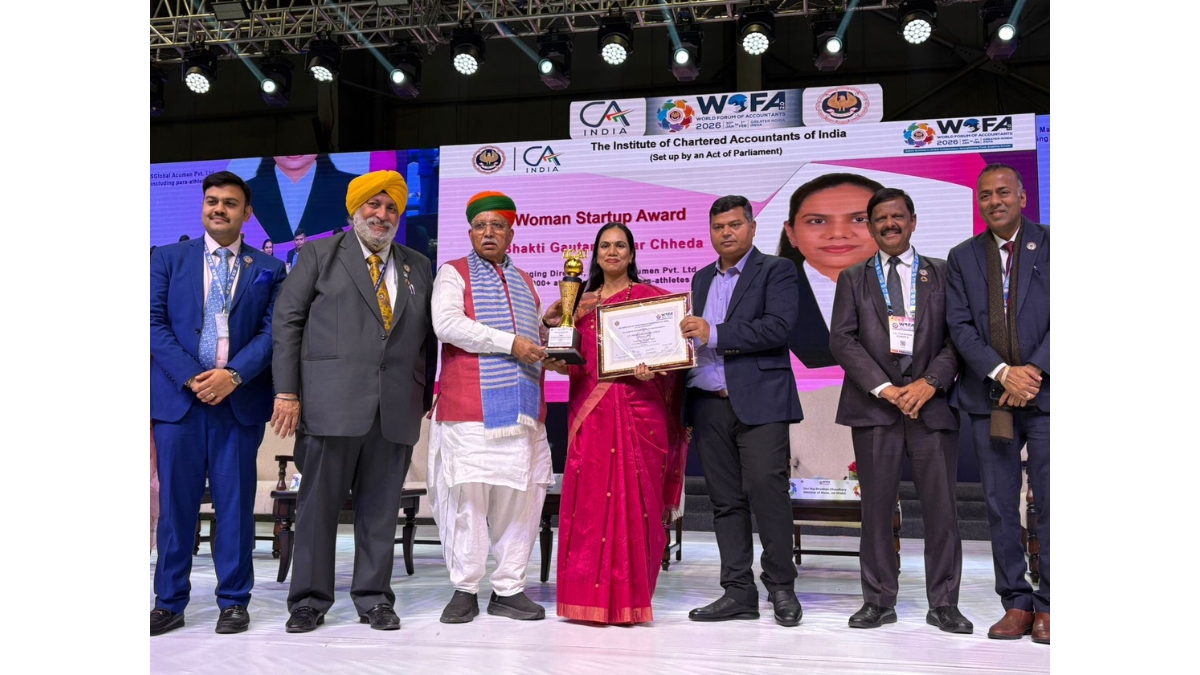
    New Delhi [India], February 14: In a profession often defined by numbers, compliance, and caution, Mrs Bhakti Gautam Chheda has spent over two decades proving that the true measure of leadership lies not only in financial acumen but in vision, courage, and societal impact. Her conferment of the CA Woman Startup Award at the 3rd CA Women Excellence Awards stands as a powerful acknowledgement of a career that has consistently crossed traditional boundaries, linking corporate excellence with nation-building through sport, education, and inclusion.

    The award, instituted by the Institute of Chartered Accountants of India (ICAI), recognises women Chartered Accountants who have demonstrated exceptional professional excellence while making meaningful contributions to society. Mrs. Chheda’s journey fits this ethos precisely: measured, strategic, and deeply purpose-driven.

    From Global Boardrooms to Grassroots India

    A dynamic Chartered Accountant by profession, Bhakti began her professional career in high-stakes global environments. With senior roles across multinational corporations, investment banks, and private equity firms, including industry giants such as Halliburton and Deloitte. She built a formidable foundation in corporate finance, investment strategy, and systems audit. Over 20 years, she earned a reputation for precision, governance-driven thinking, and the ability to navigate complexity at scale.

    Yet, as her career progressed, a deeper calling emerged, one that could not be contained within boardrooms alone.

    “I realised that true impact is not only about managing capital,” she has often reflected, “but about building ecosystems that allow people to grow.”

    The Birth of a New Sports Ecosystem

    In 2019, Bhakti co-founded SGlobal Acumen Pvt. Ltd. (SGA), a Pune-based startup with a bold, unconventional vision: to revolutionise India’s grassroots sports ecosystem through structured systems, technology, and education.

    At a time when sports development in India remained fragmented, often dependent on individual talent rather than institutional support, SGA introduced a professional, data-backed, and inclusive model. The organisation bridged the long-standing gap between raw talent and opportunity by designing high-performance athlete systems, managing national-level sporting events, and integrating circular economy principles into sports operations.

    Under her leadership, SGA positioned itself as a first-choice partner for grassroots sports development in India, combining operational excellence with social responsibility.
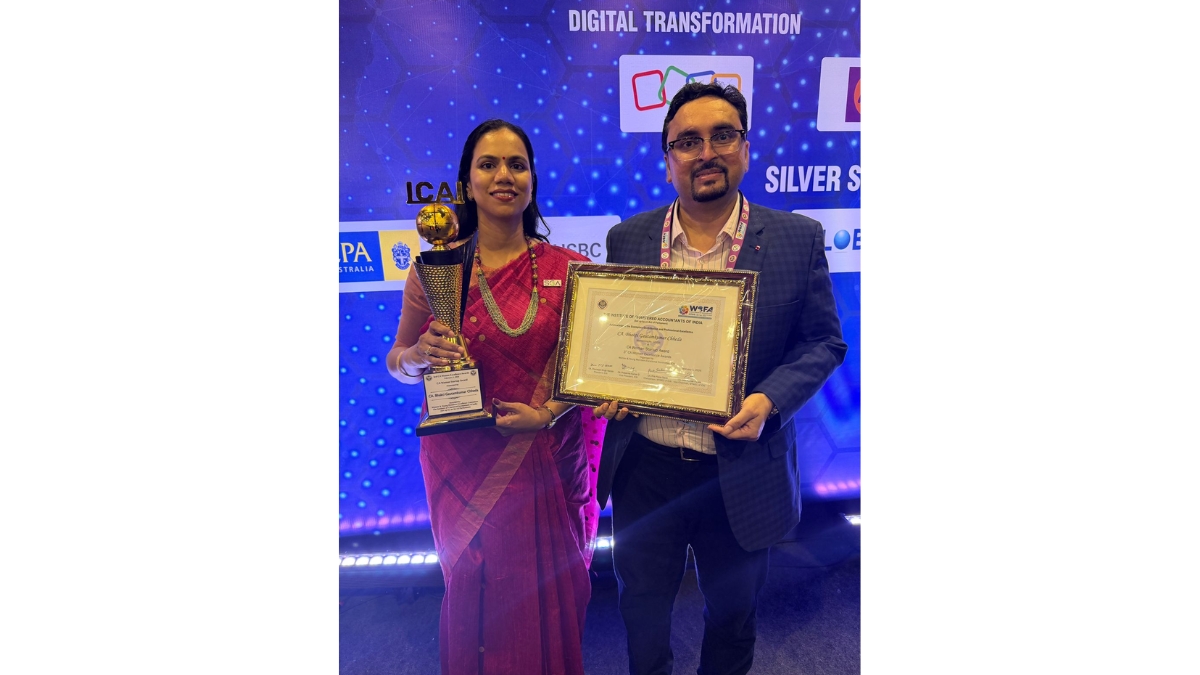
    Mrs Bhakti Gautam Chheda Honoured at CA Women Excellence Awards for Transforming Finance into Social Impact-PNN

    Measurable Impact, National Scale

    The numbers behind SGA’s work tell a compelling story, but they are best understood as outcomes of disciplined leadership rather than goals in themselves.

    Over the last five years, SGA has achieved nearly 50x growth, delivering large-scale, high-complexity sporting projects across the country, often in collaboration with multiple national and institutional partners. These include:

    • 38th National Games, Uttarakhand
    • 37th National Games, Goa
    • FIDE Chess World Cup 2025, Goa
    • 11th Asian Aquatics Championship 2025
    • 27th National Youth Festival, Nashik
    • Multiple editions of Khelo India Youth and University Games
    • State Olympics Maharashtra 2023, Pune
    • Late Khashaba Jadhav Wrestling Tournament 2023, Udgir
    • Para Khelo India 2025, Delhi

    Beyond event delivery, SGA has managed logistics and operations across more than 30 cities, supported 60,000+ athletes and officials, overseen sports infrastructure projects exceeding ₹500 crore, and enabled millions of athlete movements through integrated transport and operations planning.

    What distinguishes this growth is not scale alone, but consistency built on governance, compliance, and risk management principles drawn directly from Bhakti’s Chartered Accountancy background.

    Democratising Sports Science Education

    Recognising that sustainable sports development requires more than events, Bhakti helped in the expansion of SGA’s mission into education and capacity building. Through SGA’s high-performance centres and online education platforms, she has worked to democratise access to sports science education across India and beyond.

    These government-recognised, skill-based certification programmes span sports nutrition, psychology, injury management, talent identification, and sports data analytics, creating a pipeline of industry-ready coaches, athletes, and professionals.

    Her belief is unambiguous: every woman, para-athlete, rural learner, and working professional deserves access to knowledge that empowers independence and excellence.

    A Leader Redefining the Role of Chartered Accountants

    The CA Women Excellence Award recognises not only Bhakti’s professional longevity, but her role in redefining what it means to be a Chartered Accountant in modern India.

    She represents a generation of CAs who move beyond compliance into creation using financial discipline as a launchpad for innovation, inclusion, and systemic change. Her work demonstrates how core accounting principles, transparency, accountability, and long-term thinking can be applied to sectors as dynamic and human-centric as sport.

    By integrating financial rigour with social vision, she has shown that Chartered Accountants can be architects of ecosystems, not just custodians of balance sheets.

    A Recognition Rooted in Purpose

    Speaking on the occasion of receiving the award, Bhakti dedicated the honour to the countless athletes, educators, professionals, and women who continue to build quietly, often without visibility.

    “For every athlete who dreams bigger, every woman who learns fearlessly, and every learner who believes in the power of knowledge, we are building more than platforms. We are building possibility.”

    This philosophy runs through every chapter of her career, measured, grounded, and forward-looking.

    Looking Ahead

    As India’s sports sector enters a phase of rapid institutionalisation and global engagement, leaders like Bhakti will play a critical role in shaping its future. With SGA expanding its footprint across technology-enabled sports management, education, and analytics, the coming years promise a deeper impact and wider reach.

    The CA Women Excellence Award 2025 is not merely a recognition of past accomplishments. It is a marker of sustained excellence and a reminder that when professional integrity meets social vision, the results can transform industries.

    For the Chartered Accountancy profession, for Indian sport, and for women leaders across sectors, Mrs Bhakti Gautam Chheda’s journey offers a blueprint worth studying and a legacy still unfolding.

    If you object to the content of this press release, please notify us at pr.error.rectification@gmail.com. We will respond and rectify the situation within 24 hours.
  • Emerald Hexagon and Pradeep Batra Strengthen India–Malaysia Diaspora Engagement with a vision to Address India’s Water Challenges

    Emerald Hexagon and Pradeep Batra Strengthen India–Malaysia Diaspora Engagement with a vision to Address India’s Water Challenges

    New Delhi [India], February 14: As India and Malaysia continue to deepen bilateral ties, Pradeep Batra, President of the Overseas Friends of BJP (OFBJP) Malaysia chapter and Executive Director of Emerald Hexagon – an SRAM & MRAM Group company, is emerging as a key voice representing the Indian diaspora and strengthening people-to-people and business engagement between the two nations.

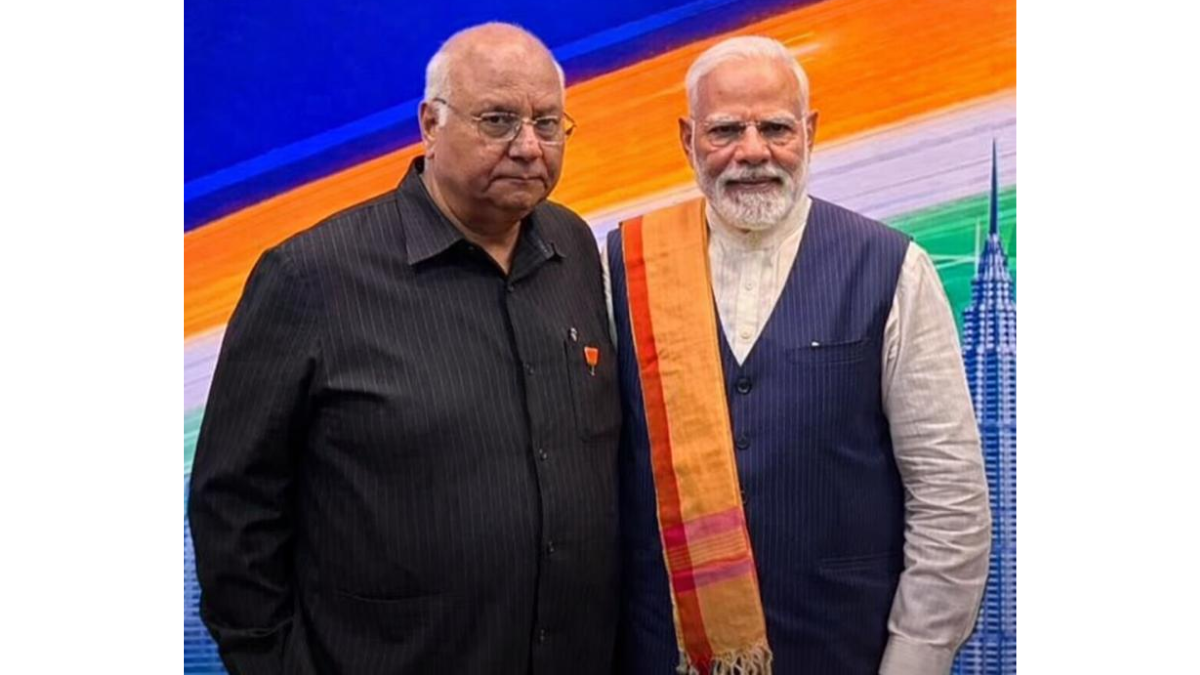
    During Prime Minister Narendra Modi’s visit to Kuala Lumpur, Batra expressed strong enthusiasm within the Indian community in Malaysia, highlighting growing optimism around enhanced trade, technology collaboration, and cultural exchange between the two countries. Over the years, Batra has played an active role in organizing community engagements and welcoming Indian delegations, reinforcing the diaspora’s role as a bridge between India and Malaysia.

    Batra, a stakeholder in the SRAM & MRAM Group and Executive Director at Emerald Corporates Limited (UK), is also known for his entrepreneurial ventures, including the Spice Garden restaurant chain in Malaysia. Through his business and community leadership, he continues to promote stronger economic and cultural ties between the two countries.

    Emerald Corporates: Advancing Sustainable Solutions for India

    Dr.Sailesh Lachu Hiranandani, Founder and Chairman of Emerald Corporates – an SRAM & MRAM GROUP COMPANY, formed SRAM & MRAM group to focus on developing innovative infrastructure and sustainability-driven solutions across global markets. Emerald’s flagship Hexagon Dual-Technology Water Restoration Platform integrates advanced disinfection and photocatalytic oxidation technologies to tackle large-scale water pollution and ecosystem degradation.

    The technology combines Hypochlorous Acid (HOCl) rapid disinfection with solar-powered photocatalytic oxidation to address pathogens, nutrient overload, and industrial contamination, offering a scalable and low-energy approach to restoring polluted water bodies.

    Dr. Sailesh Lachu Hiranandani, Founder and Chairman, Emerald Corporates, said:
    “India’s water crisis demands scalable, science-backed interventions but an organic and environmental friendly solution. Emerald’s Hexagon platform is designed to deliver rapid remediation while enabling long-term ecological restoration. We believe public-private collaboration and diaspora-led initiatives can accelerate sustainable water transformation across India.”

    Diaspora-Led Vision for India’s Water Future

    Post his engagements around the India–Malaysia bilateral visit, Pradeep Batra is expected to champion initiatives aimed at addressing India’s water challenges, leveraging Emerald’s technology platform and international collaboration frameworks to support river rejuvenation and urban water restoration projects.

    “Prime Minister Modi’s leadership has elevated India’s global standing and empowered the diaspora to contribute meaningfully to national priorities,” Batra said. “Water sustainability is a critical area where overseas Indians can bring technology, capital, and partnerships back to India.”

    Strengthening Bilateral Collaboration Beyond Diplomacy

    Batra’s work reflects a broader trend of diaspora leaders translating diplomatic momentum into tangible outcomes across business, technology, and sustainability. With India and Malaysia strengthening their Comprehensive Strategic Partnership, leaders like Batra and organizations such as Emerald Corporates are expected to play a pivotal role in advancing cross-border innovation and infrastructure development.

    If you object to the content of this press release, please notify us at pr.error.rectification@gmail.com. We will respond and rectify the situation within 24 hours.
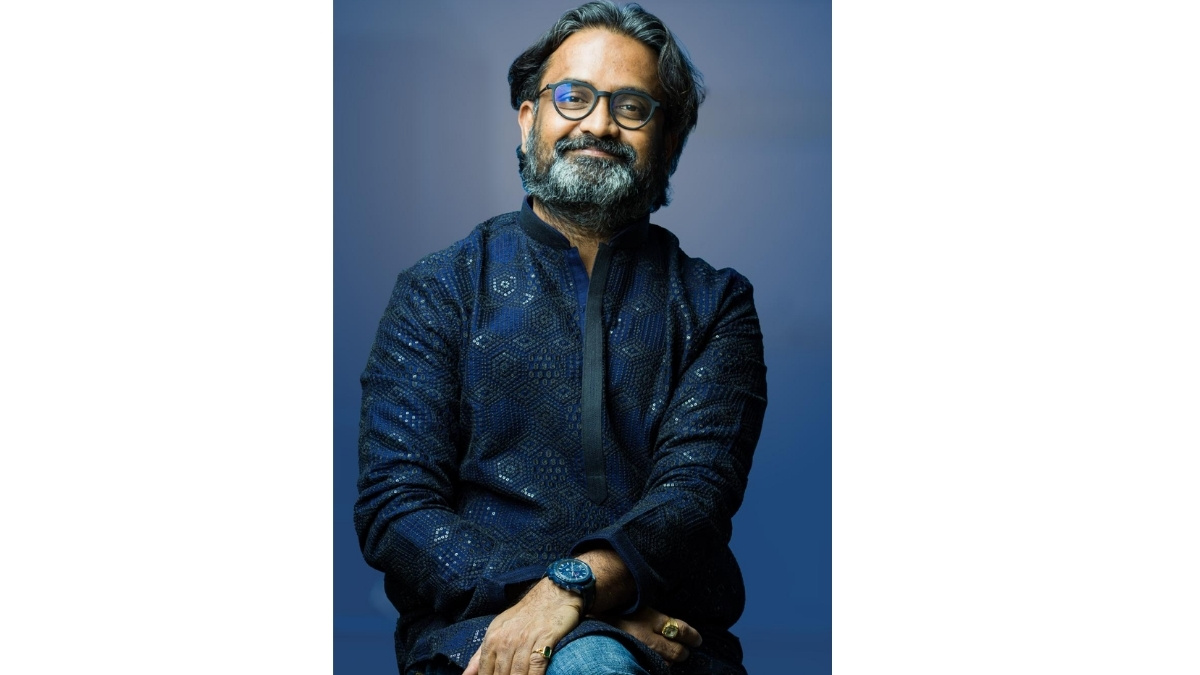
  • 207 Patents, 800M Views: The Double Validation of Indian AI Innovation

    207 Patents, 800M Views: The Double Validation of Indian AI Innovation

    How technical credibility and public resonance combined to create an authority that can’t be dismissed

    New Delhi [India], February 14: Intellectual property and viral reach don’t usually correlate. Patents protect technical innovation; their value is measured in licensing revenue and competitive moats. Viral content spreads cultural moments; its value is measured in engagement and influence. The two exist in different worlds, validated by different standards, serving different purposes.

    The case of Angelic Intelligence challenges this separation—and in doing so, creates a form of credibility that neither metric alone could establish.

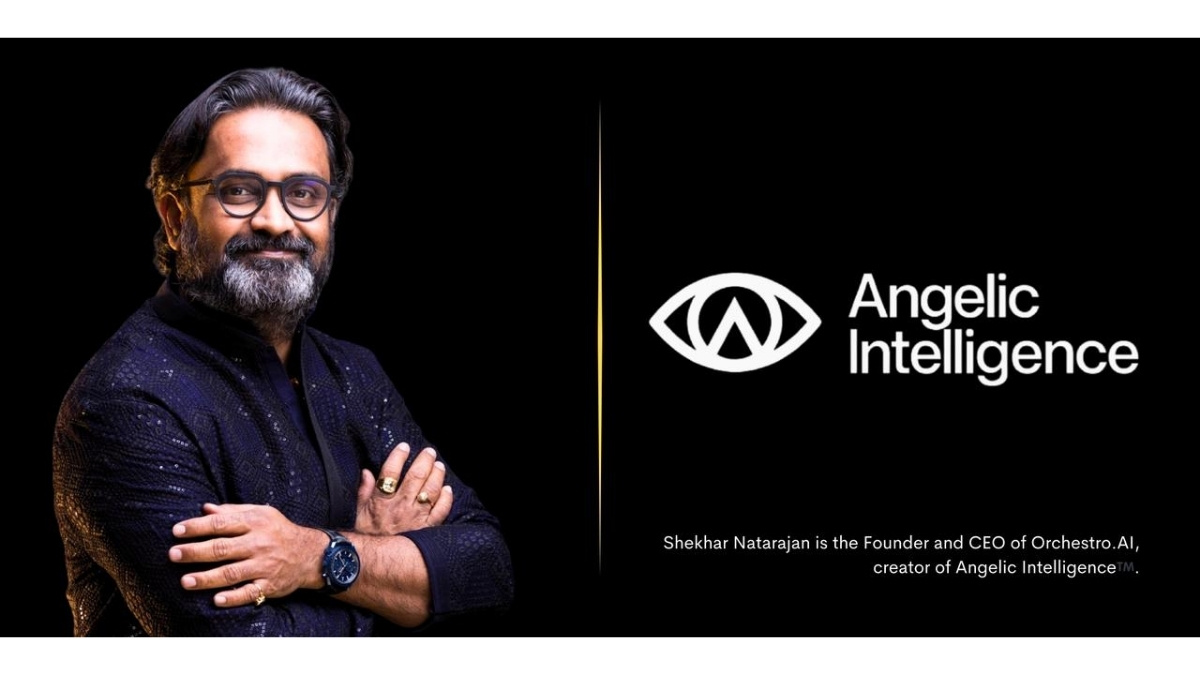
    Shekhar Natarajan holds over 207 patents across supply chain management, logistics optimization, and artificial intelligence. This isn’t the portfolio of a philosopher, a content creator, or a social media personality. It’s the portfolio of an inventor—someone who has spent decades building systems complex enough to warrant legal protection, reviewed by patent examiners trained to distinguish genuine innovation from incremental variation.

     207 patents proved I knew how to build. 800 million views proved I knew what to build for. 

    The technical portfolio matters because it addresses the most common criticism of AI ethics frameworks: that they’re proposed by people who don’t understand how AI actually works. Philosophers can articulate what AI should do; they often can’t explain how to make it do so. Ethicists can identify problems; they rarely possess the technical depth to propose architecturally coherent solutions.

    Natarajan’s patent portfolio—much of it involving machine learning applications to logistics and prediction, awarded by the USPTO’s most rigorous examination processes—demonstrates technical depth that can’t be acquired through reading or theorizing. The systems he’s patented work. The innovations were novel enough to survive examination. The credentials are a matter of public record.

    “You can’t dismiss him as someone who doesn’t understand the technology. The patents prove he’s built the systems he’s now proposing to rebuild differently. That changes the conversation completely. He’s not an outsider criticizing what he doesn’t understand. He’s an insider proposing a different direction.” — an intellectual property attorney specializing in AI patents

    The Angelic Intelligence framework itself is supported by new patent filings covering virtue-native computational architecture, multi-agent AI coordination with specialized ethical agents, and novel approaches to embedding ethical reasoning in system design. These aren’t philosophical position papers dressed up in technical language. They’re architecturally specific proposals that claim protection for particular implementations.

    The patent filings reveal technical depth invisible in the viral content. The 27 Digital Angels aren’t just conceptual—they’re specified as computational agents with defined roles, interaction patterns, and integration mechanisms. The virtue-native approach isn’t just an aspiration—it’s a set of architectural choices that differ from constraint-based approaches in concrete, documented ways.

     Patents protect inventions. Our patents protect a principle: that intelligence without virtue isn’t intelligent at all. 

    The viral reach provides a different kind of validation. Patents prove an idea is novel enough to protect—that it represents genuine innovation rather than obvious extension of existing work. Viral adoption proves an idea is resonant enough to spread—that it addresses needs people actually have rather than problems only experts perceive.

    The combination creates credibility that either alone couldn’t establish. Technical innovation without public resonance is an invention without a market. Public resonance without technical innovation is a movement without substance. When both align—when patented innovation achieves viral reach—the result is authority that’s difficult to challenge.

    “We can’t attack the technical credibility—the patents are public. We can’t dismiss the public interest—the numbers are too large. The combination puts us in a difficult position. We have to engage with the ideas themselves, which means we have to take them seriously.” — a strategy executive at a major AI company, speaking anonymously

    For the AI industry, this double validation poses a particular challenge. Technical credibility is usually established through academic publication, industry employment, or venture backing. Public credibility is usually established through media coverage, institutional endorsement, or celebrity association. Angelic Intelligence achieved both through neither conventional path—patents filed independently, reach achieved organically.

     The patent office certified our innovation. Eight hundred million people certified our vision. 

    The validation has practical implications. Licensing discussions are reportedly underway with multiple parties interested in implementing aspects of the framework. Academic institutions have reached out about collaboration. Government bodies have expressed interest in understanding how the architecture might address regulatory concerns about AI safety.

    “When someone has both the patents and the public, you can’t ignore them. They’ve validated through invention and through adoption. The question isn’t whether to engage—it’s how to engage before they set the agenda without us.” — an executive at a major technology company

    Whether the patents will be widely licensed, the framework broadly adopted, or the ideas absorbed into mainstream AI development remains to be determined. But the double validation has established something durable: credibility that transcends the usual paths and can’t be easily dismissed.

    If you object to the content of this press release, please notify us at pr.error.rectification@gmail.com. We will respond and rectify the situation within 24 hours.
  • The Indian AI Framework Breaking the Internet: 800 Million Views and Counting

    The Indian AI Framework Breaking the Internet: 800 Million Views and Counting

    How a virtue-based approach to artificial intelligence became the most viral philosophy in tech history—without spending a dollar on marketing

    New Delhi [India], February 14: In the algorithmic battleground where viral content lives and dies within hours, one philosophy about artificial intelligence has done something unprecedented: it keeps growing. And nobody in Silicon Valley can explain why.

    Angelic Intelligence—a virtue-based AI framework developed by Indian-American technologist Shekhar Natarajan—has accumulated over 800 million views across social media platforms. Not through paid promotion. Not through celebrity endorsement. Not through the growth-hacking playbook that every funded startup deploys. Through an idea so resonant it refuses to stop spreading.

     Silicon Valley built AI to optimize. India built AI to dignify. 

    The numbers arrived first as anomalies in analytics dashboards across major platforms. Content about AI ethics doesn’t go viral. It gets published in academic journals, discussed at conferences, cited in policy papers. It doesn’t accumulate engagement metrics that rival entertainment content. Except this time, it did.

    “We ran the numbers three times because they didn’t make sense. Philosophical content doesn’t behave this way. It doesn’t compound. It doesn’t accelerate after eighteen months. Something different is happening here.” — a senior data scientist at a major social media platform, speaking on condition of anonymity

    At its core, Angelic Intelligence inverts the dominant paradigm of AI safety. Where Western approaches add ethical guardrails to powerful systems—essentially building a racehorse and then adding a bridle—Natarajan’s framework embeds virtue directly into the computational architecture itself. The distinction sounds subtle. In practice, it represents a fundamental rethinking of what artificial intelligence should be.

     You don’t make a predator safe by adding a leash. You breed something that was never designed to hunt. 

    The 27 Digital Angels at the heart of the system aren’t constraints. They’re specialized agents, each embodying a specific virtue—from Diksha (conscience) to Karuna (compassion) to Viveka (discernment). They don’t limit AI capability; they shape how that capability manifests. The architecture ensures that ethical reasoning isn’t an afterthought bolted onto a system designed for pure optimization. It’s native to how the system thinks.

    The framework emerged from Natarajan’s 25 years navigating the tension between optimization and humanity at Fortune 500 companies. At Walmart, he grew grocery operations from $30 million to $5 billion while watching algorithms squeeze efficiency from supply chains and dignity from workers. At Disney, he saw personalization engines that knew everything about customers except what actually mattered to them. At Coca-Cola, PepsiCo, and Target, he witnessed the same pattern: systems that got smarter in ways that made them less humane.

    “Every optimization I implemented made the numbers better and the people worse. I spent two decades being rewarded for building systems I knew were breaking something important. Eventually you have to ask whether you’re solving problems or creating them.” — Natarajan, in a rare extended interview

    The context matters. In 2025 alone, AI-generated deepfakes defrauded individuals and businesses of an estimated $12 billion globally. A grandmother in Chicago lost her life savings to a voice-cloned call impersonating her grandson. A Hong Kong finance worker transferred $25 million after a video call with what appeared to be his CFO—entirely AI-generated. These aren’t abstract risks. They’re the lived reality of AI without conscience.

    The context matters. In 2024 alone, AI-generated deepfakes defrauded individuals and businesses of an estimated $12 billion globally. A finance worker in Hong Kong transferred $25 million after a video call with what appeared to be his CFO—entirely AI-generated. Romance scams using AI-cloned voices increased 300% in eighteen months. Parents received calls from their children’s voices begging for ransom money—voices that weren’t real. These aren’t abstract risks discussed at academic conferences. They’re the lived reality of AI without conscience.

    Her name was Margaret, and she was 78 years old. She had lived in Denver for forty years, raised three children there, buried her husband there. She had a heart condition that required daily medication—pills that had kept her alive and active for over a decade. Then an algorithm intervened. The AI system managing prescription approvals for her insurance provider flagged her case. Based on actuarial models, predictive analytics, and cost-optimization protocols, the system determined that her medication regimen was no longer ‘indicated’ for a patient of her age and profile. The denial letter arrived with no human signature, no phone number to call, no person to plead with. Just a reference number and a form to submit for ‘automated review.’ Margaret couldn’t afford the medication out of pocket—$847 a month on a fixed income. So she did what millions of Americans do: she rationed. Half a pill instead of a whole one. Skipped days when she felt okay. Stretched a 30-day supply to 60. Her daughter found her three months later. Heart failure. The algorithm that made the decision is still running. It has no idea Margaret ever existed. It optimized exactly as designed.

    The viral spread has followed an unusual geographic pattern. Initial traction came not from tech hubs in San Francisco or Seattle but from developing nations—India, Brazil, Indonesia, Nigeria, the Philippines. The message resonated with populations who had experienced optimization’s costs firsthand: gig workers rated by algorithms that determined their livelihoods, farmers squeezed by AI-driven commodity trading, communities displaced by efficiency-maximizing systems that treated human considerations as friction to be eliminated.

     800 million people weren’t looking for better AI. They were looking for proof that better was possible. 

    Three executives at major AI companies, speaking on condition of anonymity because they weren’t authorized to discuss competitive intelligence, confirmed that Angelic Intelligence has become a recurring topic in strategy meetings. The concern isn’t technical—the framework hasn’t yet been implemented at scale. The concern is narrative. For the first time, a coherent alternative to the dominant approach has captured public imagination.

    “We’ve spent billions establishing our approach as inevitable. The idea that there’s a fundamentally different way to build AI—and that hundreds of millions of people prefer it—that’s not a technical problem. That’s an existential one.” — a vice president at one of the three leading AI labs

    The phenomenon has caught the attention of institutions that traditionally set the agenda for global technology governance. Invitations have come from the World Economic Forum in Davos and the Future Investment Initiative in Riyadh—platforms where the future of AI is debated and, increasingly, decided. What started as viral content is translating into institutional access.

    Whether Angelic Intelligence can translate reach into structural change remains an open question. Viral attention is not the same as implemented policy. Public resonance is not the same as corporate adoption. But the 800 million views have already accomplished something significant: they’ve proven that the conversation about AI’s future isn’t limited to those who build it.

    “We assumed the public would accept whatever AI we gave them. We assumed they didn’t have opinions about architecture or values or what these systems should optimize for. Eight hundred million people just told us we were wrong.” — a researcher at a leading AI safety organization

    In Natarajan’s telling, the viral spread was never the goal. He built the framework because he believed it was necessary. He shared it because he believed others deserved the option. The scale of response reflects not his marketing but the depth of an unmet need.

     I didn’t set out to go viral. I set out to tell the truth. It turns out the truth was what people were waiting to hear. 

    The numbers continue to climb. As of this writing, engagement shows no signs of plateauing. The idea, it seems, has found its moment. What the world does with it remains to be seen.

    If you object to the content of this press release, please notify us at pr.error.rectification@gmail.com. We will respond and rectify the situation within 24 hours.
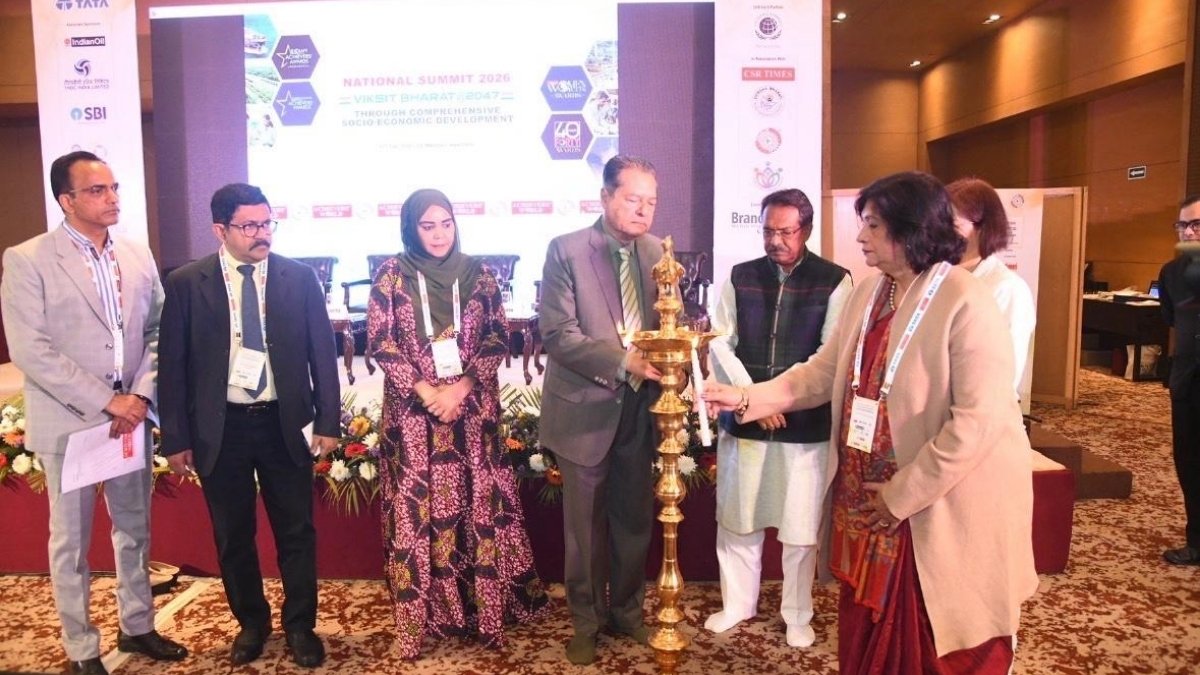
  • Indian Achievers’ Forum, AIBCF & Achievers’ World Host National Conclave on Mission Viksit Bharat 2047

    Indian Achievers’ Forum, AIBCF & Achievers’ World Host National Conclave on Mission Viksit Bharat 2047

    New Delhi, [India], February 14: The National Conference on “Mission Viksit Bharat @2047: Through Comprehensive Socio-Economic Development”, jointly hosted by the Indian Achievers’ Forum and All India Business & Community Foundation (AIBCF) in association with Achievers’ World, was successfully held on 11th February 2026 at Le Méridien, New Delhi. The summit brought together eminent policymakers, diplomats, industry leaders, CSR professionals, educationists, and sustainability advocates to deliberate on the role of Corporate Social Responsibility (CSR), sustainability, and education in advancing India’s journey toward Viksit Bharat.

    The event commenced with the ceremonial lighting of the inaugural lamp, followed by a warm welcome speech of Shri Harish Chandra, Publisher and Group Editor – CSR TIMES and Achievers’ World. Setting the summit’s tone, he articulated the vision behind the event: “Our objective is to fortify business communities and individuals across the nation so that growth is not only economic but equitable, ethical, and empowering.”

    The occasion was graced by eminent guests of honours including Shri Harsh Malhotra, Hon’ble Minister of State for Road Transport & Highways, Corporate Affairs, Government of India, Smt. Lalrinpuii, Hon’ble Minister for Social Welfare, Women and Child Development, and Health and Family Welfare, Government of Mizoram, H.E. Mrs. Anisa K. Mbega, High Commissioner of the United Republic of Tanzania to India, Dr. Manoj Garg, Retd. IAS, Hon. President – All India Business Community Foundation, Dr. Vibha Dhawan, Director General, The Energy and Resources Institute (TERI), and Dr. Bhaskar Chatterjee, Former Director General & CEO, Indian Institute of Corporate Affairs.

    Esteemed Guests of Honours contributed valuable insights to the summit’s overarching vision, starting with Shri Ravi Shankar, Secretary – Indian Achievers’ Forum, who highlighted that the realization of Viksit Bharat 2047 rests not only on macroeconomic policy but also on grassroots enterprise, MSMEs, and ethical corporate leadership.

    Taking the dialogue forward, Smt. Lalrinpuii underscored the importance of inclusive social development, women and child welfare, and healthcare partnerships in achieving sustainable community impact.

    Addressing the gathering, Dr. Bhaskar Chatterjee reflected on the evolution of CSR in India and its transformative journey. “CSR in India has evolved from compliance to conscience. The future lies in strategic, measurable, outcome-driven CSR that creates long-term social capital and strengthens the socio-economic fabric of our nation,” he said.

    As the lens widened beyond national borders, H.E. Mrs. Anisa K. Mbega spoke on strengthening international collaboration to advance sustainable development and shared prosperity.

    In a landmark announcement, Ms. Vatika Singh, Head – Strategic Partnerships, CSR Times officially launched the CSR TIMES Global Council for CSR & Sustainability, a strategic initiative aimed at fostering global dialogue, collaboration, and best practices in CSR and sustainability. She urged participation from Corporates, PSUs, and NGOs to strengthen the doer-donor synergy.

    A thought-provoking panel discussion on “CSR & Sustainability – Powering SDGs for Viksit Bharat”, moderated by Dr. K.K. Upadhyay, Professor & Chairperson, Centre for Sustainability and CSR, BIMTECH, brought together leading voices including Brig (Retd) Rajiv Williams, Advisor and Consultant CSR, Mr. Manish Mangal, President and Head – Americas Communication Business, Tech Mahindra, Mr Chinu Kwatra, Founder, Khushiyan Foundation, Dr Senorita Isaac, Trade Commissioner, Latin American Caribbean Trade Council, and Dr. Mamta Tomar, Director, Thetanox Consulting & Envirotech Pvt. Ltd. The panel deliberated on innovation, global partnerships, corporate accountability, and cross-sector collaboration as catalysts for achieving SDGs.

    The afternoon session focused on education and its assimilation in Viksit Bharat, marking a transition from corporate responsibility to human capital development. The afternoon inauguration was graced by Shri S. P. Singh Baghel, Minister of State of Fisheries, Animal Husbandry and Dairying of India, as Chief Guest, along with distinguished Guests of Honour including Ms Ira Singhal (IAS), Dy Secretary Dept. of School Education & Literacy (DoSEL), Government of India, Shri Sunil Shastri, President – Lal Bahadur Shastri Memorial Foundation & Chief Patron – Indian Achievers’ Forum, Shri Surendra Nath Tripathi, Retd. IAS, Director General, Indian Institute of Public Administration, Ms Shahnaz Husain, Founder, Managing Director & Chairperson, Shahnaz Husain Group, Prof. Bejon Kumar Misra, International Consumer Policy Expert, and Dr. Somnath Singh, Deputy Director at UN Global Compact Network India (UN GCNI).

    Highlighting the need for synergy across sectors, Shri S. P. Singh Baghel called for deeper collaboration between government institutions, industry leaders, civil society, and community stakeholders to build a resilient, self-reliant, and globally competitive India.

    Building on this momentum, a compelling panel discussion on “Role of Education in Achieving Viksit Bharat Mission”, moderated by Dr. Somnath Singh (UN GCNI), featured eminent academicians and experts including Prof. Pushpanjali Jha, Delhi School of Social Work, Shri Ajay Kumar Garg, Head Digital Tech & Law, Anand & Anand, Ms Sunila Athley, Principal, Amity International School, Ms V Suprabha, Co-Founder, Consort Consultants, Shri Ravi Shankar, Hon. Secretary – Indian Achievers’ Forum, and Ms Swarnima Luthra, Principal, ASN Senior Secondary School. The discussion focused on digital transformation, policy innovation, social inclusion, and skill-based education as pillars of national development.

    During the summit, prestigious honours including the Indian Achievers’ Awards, Achievers’ World Awards, Business and Community Awards, and Shiksha Bharati Awards were presented to distinguished individuals and organizations for their exemplary contributions across diverse fields.

    Some of the award winners were:

    • Ms. Lalrinpuii – Hon’ble Minister for Social Welfare, Women & Child Development, and Health & Family Welfare, Government of Mizoram
    • H.E. Mrs. Anisa K. Mbega – High Commissioner of the United Republic of Tanzania to India, New Delhi
    • Ms. Ira Singhal – Deputy Secretary, Department of School Education & Literacy (DoSEL), Government of India
    • Mrs. Shahnaz Husain – Founder, Managing Director & Chairperson, Shahnaz Husain Group
    • Mr. Rahul Makin – Radio Jockey
    • Dr. Nobert Leo Raja Susai , UAE
    • Mr. Shivkumar Krishnamoorthy Yeleshwaram – Co-Founder, KNEX Solutions Private Limited
    • Mr. Siba Prasad Patnaik – Director Finance and CFO, Gliders India Limited, Kanpur – A CPSU under Ministry of Defence
    • Mr. Chandan Agarwal – CFO, Olam Food Ingredients
    • Dr. Deepti Maramganti – Co-Founder & Head, QRC Assurance & Solutions
    • Mr. Arun Kumar Elengovan – Director, Engineering Security, Okta, Inc.
    • Ms. Ketaki Borkar – Senior Director, Sapiens Limited
    • Mr. Senthil Raj Subramaniam – Program Manager, Cognizant Technology Solutions, USA
    • Mr. Suhas Diwakar Zele – Head of Marketing, PR & Partnerships, Equifax India
    • Mr. Aswin Budaraju – Solutions Architect, USA
    • Ms. Durga Das – Founder & CEO, Aeronero Solutions Pvt. Ltd.
    • Mr. Samyak Asit Shah – Founder & Managing Director, Instaclaus Fintech Private Limited, Gujarat
    • Mr. Karthick Jayakumara Sarma – Supply Chain Data Lead, Canada
    • Mr. Prasit Kumar Dutta – Chief Technology Officer, Voltrez Tech Private Limited
    • Mrs. Sravya Yelamanchili – Engineering Manager, USA
    • Mr. Anjan Kumar Gundaboina – Senior Cloud DevOps Engineer, Optum, UHG, USA
    • Mr. Pavan Kumar Mantha – Principal Data Engineer, USA
    • Mr. Prakash Chandra Baror – General Manager, State Bank of India
    • Mr. Mohankumar R – Manager – Talent Acquisition, GRB Dairy Foods Pvt. Ltd.
    • Mr. Shyamal Kumar – CEO, Lavelle Networks
    • Mr. Thanigaivel Mani – CEO, FOSDesk Outsourcing Services Private Limited
    • Mr. Manoj Kumar Papneja – Principal Consultant, FIS Global Solutions India Pvt. Ltd.
    • Dr. Kulvinder Kochar Kaur – Scientific Director, Dr Kulvinder Kaur Centre for Human Reproduction
    • Dr. Vinesh Sukumar – VP – Head of AI Product, Qualcomm, USA
    • Mr. Vaibhav Kelkar – Founder, Madhavsrushti Pratishthan LLP
    • Mr. Gandharv Sachdeva – Country Head – India, Hybrid Adtech Private Limited
    • Mr. Ravinder Goel   – Founder & CEO , Little Nap Designs Pvt. Ltd.

    Concluding the event, in the vote of thanks Ms Maanisa Das, Sr Sub Editor – CSR TIMES delivered a heartfelt Vote of Thanks, expressing sincere appreciation to all valued partners and sponsors: Co-Sponsor Tata Sons, Associate Sponsors THDC, Indian Oil Corporation Limited, State Bank of India, Canara Bank, and BPCL. She also reiterated that the conversations initiated at the summit must translate into sustained action, measurable impact, and enduring partnerships.

    If you object to the content of this press release, please notify us at pr.error.rectification@gmail.com. We will respond and rectify the situation within 24 hours.
  • Shri Keshav Cements & Infra Delivers 454 Bps YoY EBITDA Margin Expansion in 9M FY26, Demonstrating Strong Operating Leverage

    Shri Keshav Cements & Infra Delivers 454 Bps YoY EBITDA Margin Expansion in 9M FY26, Demonstrating Strong Operating Leverage

    Mumbai (Maharashtra) [India], February 14: Shri Keshav Cement & Infra Limited (BSE – 530977), engaged in the manufacturing of Cement and Solar Power Generation and Distribution in the state of Karnataka has announced its Unaudited Financial Results for Q3 & 9M FY26.

    Key Financial Highlights:

    9M FY26 Financial Highlights

    Total Income of ₹ 116.31 Cr, YoY growth of 35.81%

    EBITDA of ₹ 29.28 Cr, YoY growth of 66.85%

    EBITDA Margin of 25.68%, YoY expansion of 454 Bps

    PAT of ₹ 3.23 Cr, Loss to Profit

    PAT Margin of 2.78%, Loss to Profit

    Diluted EPS of ₹ 1.85, Loss to Profit

    Q3 FY26 Financial Highlights

    Total Income of ₹ 38.69 Cr, YoY growth of 33.22%

    EBITDA of ₹ 10.50 Cr, YoY growth of 63.10%

    EBITDA Margin of 27.68%, YoY expansion of 477 Bps

    PAT of ₹ (0.54) Cr, Profit to Loss

    PAT Margin of (1.41) %, Profit to Loss

    Diluted EPS of ₹ (0.31), Profit to Loss

    Commenting on the financial performance, Mr. Venkatesh Katwa, Chairman of Shri Keshav Cement & Infra Limited said “9M FY26 marks a clear phase of strengthening performance, with sustained improvement across revenue, margins, and profitability. The cement segment continued to be the highest contributor, anchoring growth through stronger volumes, better realizations, and improved operating stability.

    Operational efficiencies improved meaningfully during the period, supported by higher capacity utilization and disciplined cost control. This translated into stronger operating leverage and noticeable margin expansion, reinforcing the quality of earnings.

    Most importantly, the Company delivered a decisive turnaround at the bottom-line level, shifting from losses in the previous year to healthy profitability. The improved cost structure, stabilized kiln operations, and focused execution have created a more resilient and scalable operating platform.

    With operational stability now firmly in place, the Company is well positioned to sustain growth momentum, strengthen its market presence, and drive consistent value creation in the coming quarters.”

    If you object to the content of this press release, please notify us at pr.error.rectification@gmail.com. We will respond and rectify the situation within 24 hours.

     

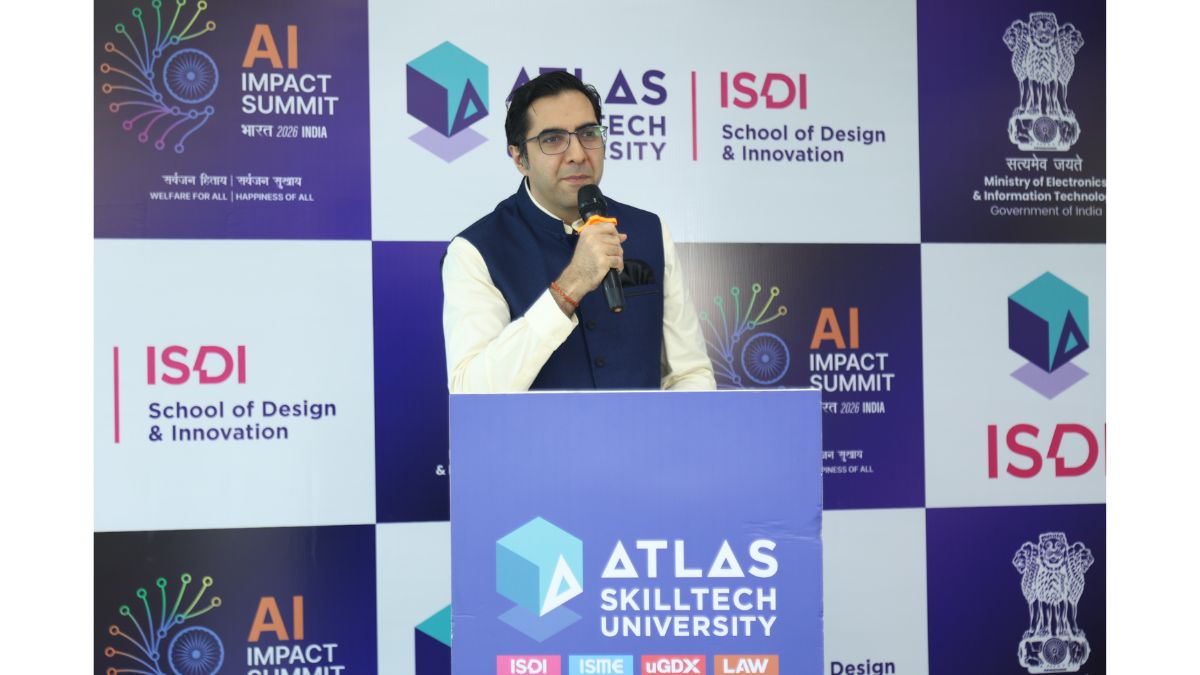
  • ATLAS ISDI Brings Design-Led AI Discourse to Campus at AI Impact Pre-Summit

    ATLAS ISDI Brings Design-Led AI Discourse to Campus at AI Impact Pre-Summit

    Mumbai (Maharashtra) [India], February 14:  ATLAS SkillTech University and ISDI – School of Design & Innovation, in association with the Government of India’s Ministry of Electronics and Information Technology (MeitY), Digital India and IndiaAI, hosted the Official Pre Summit of the AI Impact Summit 2026 at its Mumbai campus. The pre-summit established the ATLAS ISDI campus as a dynamic forum for advancing design-led thinking and future-focused skill development in an AI-driven world, while accelerating national and global dialogue on inclusive, responsible and high-impact AI ahead of the main summit scheduled in New Delhi on 19–20 February 2026.

    Highlighting the significance of ATLAS SkillTech University and ISDI’s association with the AI Impact Summit, Siddharth Shahani, Co-Founder and Executive President, ATLAS SkillTech University, said, “India’s AI moment cannot be built on technology alone. This association reflects our shared belief that intelligence must be designed with human intent, strong governance and real social impact. By bringing these conversations into the university ecosystem, we are preparing future designers, technologists and leaders to engage with AI not just as a tool, but as a responsibility.” 

    The pre-summit, themed “Human-First Intelligence: Learning, Leadership and Social Impact,” featured lightning talks, panel discussions, masterclass and an AI Agent Buildathon, bringing together leaders from academia, industry and policy. Speakers included Sameer Rawal (Digital Impact Square – a TCS Foundation initiative), Neha Shivran (Kissht), Indranil Chandra (Upstox), Arushi Sethi (HurixDigital), Kirti Poonia (Caimera.ai), and Aryan Singh and Rohit Ghosh (Livespace.ai), among others. By hosting these future-shaping conversations on campus and connecting with the AI Mumbai Community to co-create a stronger AI ecosystem, ATLAS SkillTech University reinforced the vital role universities play in developing future-ready leaders equipped to design, govern and deploy AI with responsibility, intent and societal impact.

    The pre-summit opened with a keynote address by Siddharth Shahani where he articulated how Design + AI together form India’s new power stack. Emphasising that AI brings speed, scale and optimisation while design provides direction, restraint and human alignment, he reinforced that human-first intelligence is not a feature, but a design choice. He also highlighted the growing importance of multidisciplinary AI talent and reframed data governance as a trust architecture rather than a compliance exercise.

    A panel discussion titled ‘Building India’s Impact AI Stack: Data, Design and Governance’ featured Arushi Sethi, Kirti Poonia, Neha Shivran and Sameer Rawal, exploring how India can build scalable, responsible and impact-driven AI systems by aligning thoughtful design, robust data practices and strong governance frameworks.

    Industry insights were further strengthened through two lightning talks. Neha Shivran, Co-Founder, Kissht, spoke on measuring the success of AI interventions by linking design and innovation to tangible organisational outcomes. Indranil Chandra, Architect – ML & Data Engineer at Upstox, delivered a session on data governance in agentic AI systems, highlighting governance-by-design, accountability and the risks of ungoverned autonomy.

    Hands-on learning formed a core part of the pre-summit through an AI Agent Buildathon led by LYZR.AI, where participants ideated, designed and built autonomous AI agents addressing real-world challenges, demonstrating the critical role of design in shaping intent, behaviour and ethics in intelligent systems. The day concluded with a Livespace.ai Masterclass led by Aryan Singh and Rohit Ghosh, showcasing how AI is transforming spatial design across physical and digital environments.

    As the Official Pre-Summit to the AI Impact Summit 2026, the event underscored ATLAS SkillTech University’s commitment to advancing national and global AI discourse through education. By bringing human-first AI conversations into the classroom, the university is actively shaping a generation of leaders equipped to build ethical, inclusive and high-impact AI systems for the future.

    About ATLAS SkillTech University

    ATLAS SkillTech University, located in the heart of Mumbai’s business district, is India’s first urban, multidisciplinary university and the youngest in the country to be accredited with a NAAC A grade. Pioneering a new model of higher education, ATLAS integrates global collaborations, industry partnerships and an innovation-first approach to prepare future-ready leaders. Guided by the principles of India’s National Education Policy 2020, ATLAS offers cutting-edge programs across four new-age streams—Design & Innovation, Management & Entrepreneurship, Digital Technology and Law. Its futuristic model has been co-created with an international community of scholars, academicians, industry experts and thought leaders, making it a hub where design, technology, strategy and leadership converge. For more  information, visit: atlasuniversity.edu.in

    About ISDI School of Design and Innovation: 

    Known as one of the best design schools in India, ATLAS ISDI brings truly world-class design education to India with a global curricular collaboration with Parson’s School of Design, and world-renowned faculty comprising leading designers, academicians, industry practitioners and scholars. Centered in the heart of India’s hub of creative innovation, Mumbai, ATLAS ISDI School of Design & Innovation stands at the intersection of Art, Design, Entrepreneurship & Technology. For more information, visit: atlasuniversity.edu.in/schools/isdi

    If you object to the content of this press release, please notify us at pr.error.rectification@gmail.com. We will respond and rectify the situation within 24 hours.
  • Ducon Infratechnologies Reports Q3 and 9M FY26 Results; Advances Strategic Clean Energy Initiatives

    Ducon Infratechnologies Reports Q3 and 9M FY26 Results; Advances Strategic Clean Energy Initiatives

    Mumbai (Maharashtra) [India], February 14: Ducon Infratechnologies Limited (NSE- DUCON | BSE- 534674 | INE741L01018), a global diversified technology EPC company delivering engineering solutions across environmental control, clean energy, infrastructure, and process industries has announced its unaudited financial results for Q3 and 9M FY26

    Consolidated Key Financial Highlights

    9M FY26 Consolidated Financial Highlights

    • Total Income of ₹321.18 Cr

    • EBITDA of ₹20.82 Cr

    • EBITDA Margin of 6.48%

    • Net Profit of ₹9.14 Cr

    • Net Profit Margin of 2.84%

    Q3 FY26 Consolidated Financial Highlights

    • Total Income of ₹94.31 Cr

    • EBITDA of ₹5.84 Cr

    • EBITDA Margin of 6.19%

    • Net Profit of ₹2.31 Cr

    • Net Profit Margin of 2.45%

    Commenting on the performance, Arun Govil, Chairman & Managing Director of Ducon Infratechnologies Ltd., said: “This quarter reflects a steady performance in what continues to be a transitional phase for the sector, but the broader structural opportunity ahead remains compelling. Policy momentum around carbon capture and clean energy is clearly building, and our early move into solvent-based carbon capture R&D positions us well to benefit from India’s ₹20,000 crore CCUS initiative. At the same time, the launch of our IQ Energy AI platform aligns us with the growing demand for smarter and more efficient power systems, especially as AI-led data centre expansion drives incremental energy requirements.

    Looking ahead, we see strong tailwinds from tightening environmental norms, modernization of power infrastructure, and increasing focus on efficiency-led investments. With our integrated EPC capabilities and technology-led approach, we are well placed to participate in these emerging opportunities while improving execution discipline and operating leverage. We remain confident that these strategic initiatives will support sustainable growth as industry investments accelerate.”

    Recent Key Business Highlights

    Carbon Capture R&D: Initiated solvent-based carbon capture R&D ahead of policy support, positioning the company to benefit from India’s ₹20,000 crore CCUS push.

    AI Platform Launch: Launched IQ Energy AI platform to optimize power generation efficiency, reduce downtime and support utilities amid rising demand from AI-driven data center.

    If you object to the content of this press release, please notify us at pr.error.rectification@gmail.com. We will respond and rectify the situation within 24 hours.

  • Ganesh Infraworld Ltd Net Profit up 68pc Y-o-Y to Rs.19.04 crore in Q3FY26

    Ganesh Infraworld Ltd Net Profit up 68pc Y-o-Y to Rs.19.04 crore in Q3FY26

    New Delhi [India], February 14: Kolkata based Ganesh Infraworld Limited (NSE – GANESHIN) leading company in the infrastructure and engineering sector has reported strong operational and financial performance for the Q3FY26. Company has reported consolidated net profit of Rs. 19.04 crore in Q3FY26, up 68% Y-o-Y from net profit of Rs. 11.34 crore reported in Q3FY25. Revenue from operations for Q3FY26 was reported at Rs. 215.32 crore, 44.3% rise Y-o-Y as compared to the revenue from operations of Rs. 149.19 crore in the corresponding period last year. The company has a strong order book of Rs. 2,211.7 crore with presence in eight states.

    Highlights:-
    • 9MFY26 Net Profit rise 81.9% to Rs. 51.7 crore; EBITDA up 99.2% to Rs. 75.6 crore.
    • 9MFY26 revenue from operations rise 59.6% to Rs. 606 crore
    • The company has a strong order book of Rs. 2,211.7 crore with presence in eight states.

    EBITDA for Q3FY26 was reported at Rs. 29.2 crore, 83.5% jump Y-o-Y from EBITDA of Rs. 15.9 crore reported in Q3FY25.

    As per the consolidated balance sheet, for the nine months ended 31 December 2025 of FY26, the company reported revenue of Rs. 608.30 crore rupees, an increase of 59.6% Y-o-Y as compared to revenue of Rs. 381.68 crore in the corresponding period last year. Net profit after tax for the nine months stood at Rs. 51.71 crore registering a growth of 81.9% rise over Rs. 28.43 crore profit in the corresponding period last year.

    Sharing more details, Mr. Vibhoar Agrawal Founder & CMD, Ganesh Infraworld Ltd, said, “FY26 continues to build strong momentum for Ganesh Infraworld Ltd., driven by disciplined execution, expanding business verticals, and a sharpened strategic focus. The Company remains committed to strengthening core capabilities while unlocking new, high-visibility growth avenues. With a robust order pipeline, expanding execution capabilities, and strategic entry into regulated mining operations through the new SPV, Ganesh Infraworld Ltd. is well-positioned to sustain high growth momentum and deliver long-term value through FY26 and beyond.”

    Incorporated in 2024, Ganesh Infraworld Limited is engaged in civil construction works for building, road, railway and water infrastructure projects across West Bengal, Bihar, Uttar Pradesh, Chhattisgarh, Maharashtra, New Delhi, Telangana, Odisha and Jharkhand.

    Crisil rating has recently assigned long term rating of Crisil BBB+/Stable rating and short term rating of Crisil A2. The rating reflects GIL’s established market position in the construction industry, healthy order book providing revenue visibility, diversified segments & geographical reach and healthy financial profile. These strengths are partially offset by its susceptibility to tender-based operations and increasing working capital cycle.

    Founded in 2017, Ganesh Infraworld Limited is a fast growing infrastructure and EPC company shaping India’s development landscape through civil, electrical, road, rail and water projects. From industrial facilities and highways to rail systems and water supply networks, the company delivers end to end construction solutions across multiple states with a strong footprint in eastern and northern India. Backed by a robust order book, a diversified project portfolio and long standing client relationships, Ganesh Infraworld combines execution strength with disciplined project management to build infrastructure that supports sustainable growth and lasting value.

    If you object to the content of this press release, please notify us at pr.error.rectification@gmail.com. We will respond and rectify the situation within 24 hours.
  • Love Aaj Kal: Pinky Promise Analyses 10,000 Conversations on Women and Pleasure

    Love Aaj Kal: Pinky Promise Analyses 10,000 Conversations on Women and Pleasure

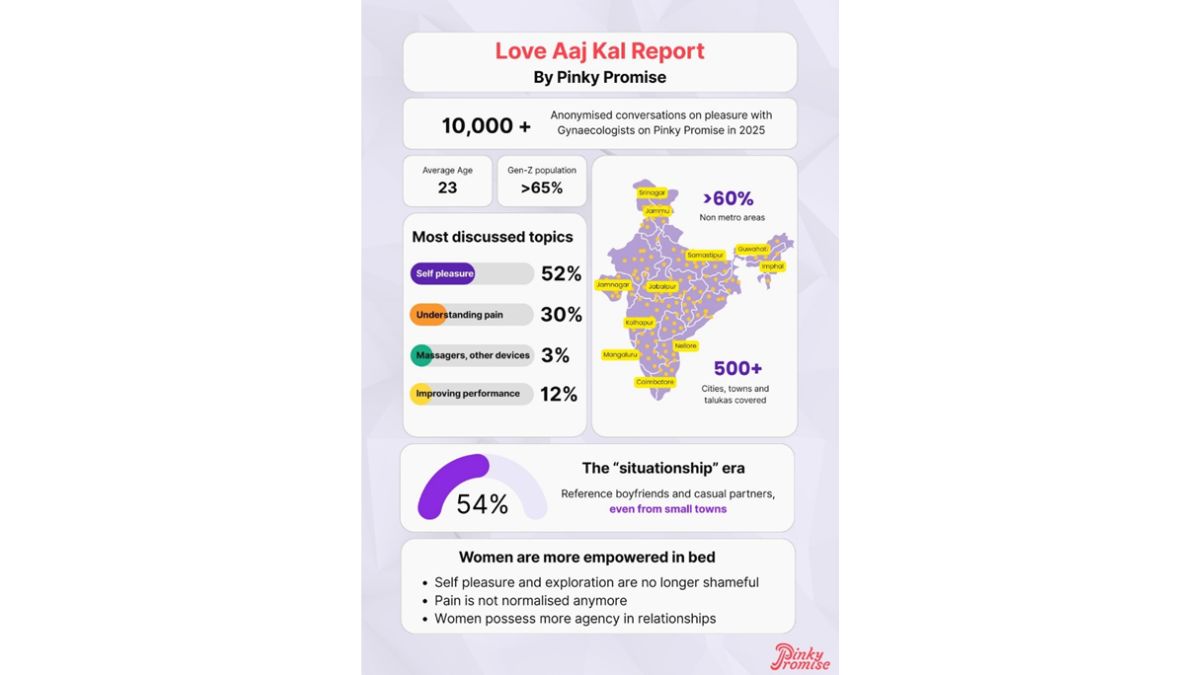
    Mumbai (Maharashtra) [India], February 13: Pinky Promise, the world’s first AI and ML powered clinic for women’s sexual and reproductive health, has released findings from Love Aaj Kal, an analysis of over 10,000 anonymised conversations between women across India and Pinky Promise gynaecologists in 2025.

    Ahead of Valentine’s Day, the analysis highlights clear patterns in how women are approaching pleasure and sexual self-understanding, based on real, private conversations.

    Nearly 64 percent of users were between 18 and 23 years of age, with the average age at 23. Users ranged up to 37 years. The conversations span over 500 metros, towns and talukas across India. While Delhi and Mumbai contributed significant volume, more than 60 percent of queries originated from Tier 2 cities and smaller towns, including regions in the North East and Jammu and Kashmir.

    Pleasure-related discussions formed a significant portion of the dataset, with nearly 4,800 conversations centred on sexual self-understanding. More than half of these focused on self-pleasure. Women sought clarity around sensation, sensitivity and whether their experiences were typical.

    Over 30 percent of pleasure-related queries involved pain, irritation or soreness. Rather than ignoring discomfort, users sought clarification and reassurance. Conversations referencing personal massagers and similar devices, which accounted for approximately 3 percent of pleasure discussions, focused primarily on safety, irritation and long-term impact.

    Partner-related questions were also prominent. Many referenced boyfriends or casual partners across metros and smaller towns. These conversations focused on comfort, communication and mutual understanding, reflecting women taking initiative in navigating intimacy within their relationships.

    Commenting on the findings, Divya, CEO & Co-founder of Pinky Promise, said “What stands out in these conversations is how clearly women are articulating their experiences. They are asking specific questions about sensation, comfort and communication. When privacy is assured, the conversations become more direct and more informed. The engagement across cities and smaller towns shows that women are ready to explore these topics when they have access to safe spaces.”

    A 22-year-old participant from a Tier 2 city, who requested anonymity, shared, “Being able to ask questions privately made a big difference. It helped me understand what I was feeling and approach it with more confidence.”

    Key Observations from Love Aaj Kal

    • Women are initiating conversations about pleasure earlier in their sexual lives.
    • Self-pleasure is widely discussed across metros and smaller towns.
    • Discomfort prompts clarification rather than silence.
    • Communication within relationships is a recurring theme.
    • Anonymity encourages more direct and specific questions.

    Founded to improve access to reliable and confidential healthcare, Pinky Promise enables private digital consultations with qualified gynaecologists focused on women’s sexual and reproductive health. The platform supports informed, judgement-free conversations, making it easier for women across India to seek clarity about pleasure and intimacy.

    Pinky Promise

    About Pinky Promise

    Pinky Promise is India’s first AI-enabled women’s digital clinic offering chat-first gynaecological care through a mobile app. Available 24×7 in Hinglish and English, the platform enables women to consult qualified gynaecologists, receive prescriptions, and access ongoing care at an affordable starting price of ₹99. Since launch, Pinky Promise has served over 350,000 women across India.

    If you object to the content of this press release, please notify us at pr.error.rectification@gmail.com. We will respond and rectify the situation within 24 hours.