Author: Sutun Nayak

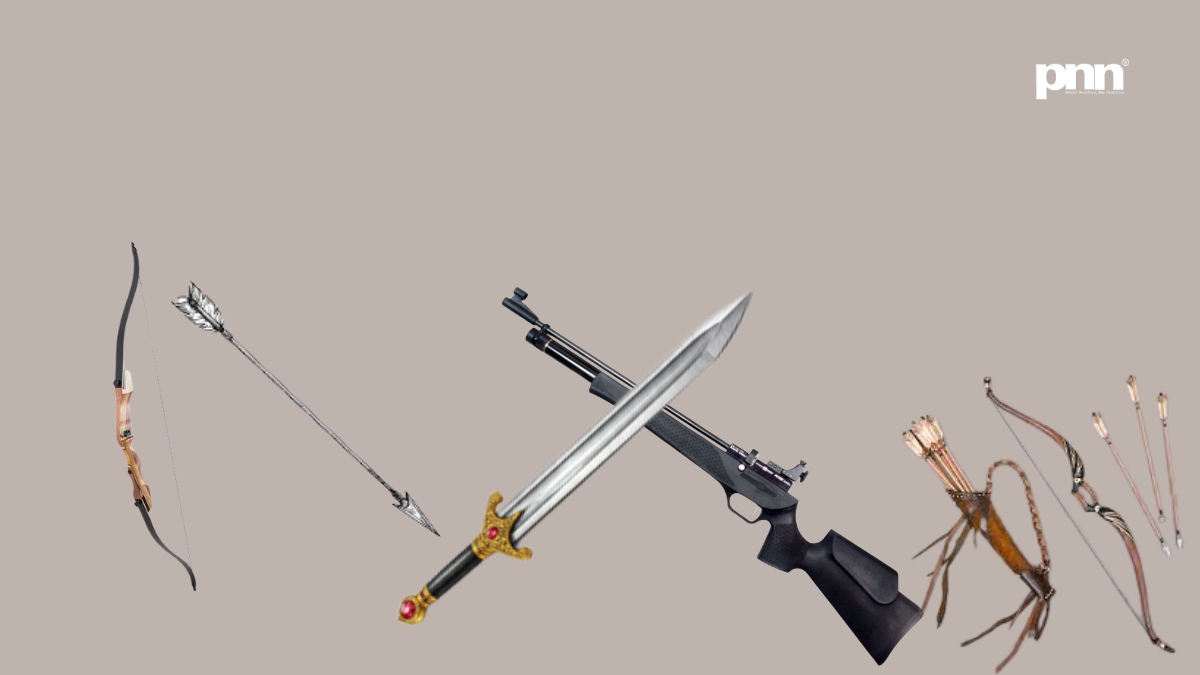
  • Guns Are Bad, Bows and Swords Were Cool and Society Knows Why

    Guns Are Bad, Bows and Swords Were Cool and Society Knows Why

    In ordinary, civilian life, society has made a fairly clear judgment without ever holding a formal meeting about it. Guns are treated as dangerous, uncomfortable, and in need of constant control. Bows, arrows, and swords, meanwhile, live comfortably in museums, sports, hobbies, stories, and backyard conversations about “cool historical stuff.” This isn’t because people are inconsistent. It’s because these tools interact very differently with normal life.

    Bows and swords existed alongside daily routines. People farmed, traded, raised families, and argued with their neighbors while these weapons were present. Most of the time, nothing happened. That mattered. Their presence didn’t turn everyday frustration into immediate disaster. You could have a bad day and still go home without anyone dying.

    Using a bow takes time and focus. You don’t casually fire one while emotional, distracted, or careless. A sword is even less casual. It’s heavy, visible, and impractical. You don’t bring one into a disagreement unless you are making a very deliberate, very obvious choice. These weapons don’t blend into normal life. They interrupt it.

    That interruption acts like a safeguard.

    Guns do the opposite. They fit seamlessly into modern routines. They’re compact, fast, and immediately effective. The distance between feeling something and acting on it can be almost nonexistent. That’s why society treats them with anxiety. It’s not fear of the object—it’s fear of how easily ordinary moments can turn irreversible.

    Think about how we actually behave today. People get tired, angry, impulsive, distracted, depressed, and overwhelmed. That’s not a moral failure; it’s normal. Tools that tolerate human imperfection tend to coexist better with society. Tools that assume perfect judgment do not.

    This is why bows and swords feel “cool.” They are demanding. They don’t reward impulse. They require preparation, space, and intention. Their risks are visible and slow enough for second thoughts to exist. They give life a chance to de-escalate.

    It’s also why we comfortably turn these weapons into sports and hobbies. Archery ranges, fencing clubs, reenactments—these exist because the danger is manageable. You can participate without turning every mistake into a tragedy. Society trusts these tools because they don’t overpower everyday life.

    Guns never earned that trust in the same way. Even in peaceful settings, they change the atmosphere. A normal argument, a bad mental health day, or a moment of carelessness becomes something far more serious simply because a gun is involved. That’s not drama; it’s pattern recognition.

    People weren’t better in the past. They were just as human as we are now. The difference is that their everyday tools didn’t let human weakness escalate instantly. Bows and swords stayed on the edge of daily life. Guns sit uncomfortably inside it.

    So when society quietly agrees that guns are bad but bows and swords are cool, it isn’t confused. It’s practical. One fits ordinary human behaviour. The other expects humans to behave perfectly.

    And society has never worked that way.

    PNN Lifestyle

  • Rules Were Optional Anyway: Why Gen Z Men Are Quietly Rewriting Fashion In 2026

    Rules Were Optional Anyway: Why Gen Z Men Are Quietly Rewriting Fashion In 2026

    Menswear didn’t collapse in 2026. It simply stopped asking for permission.

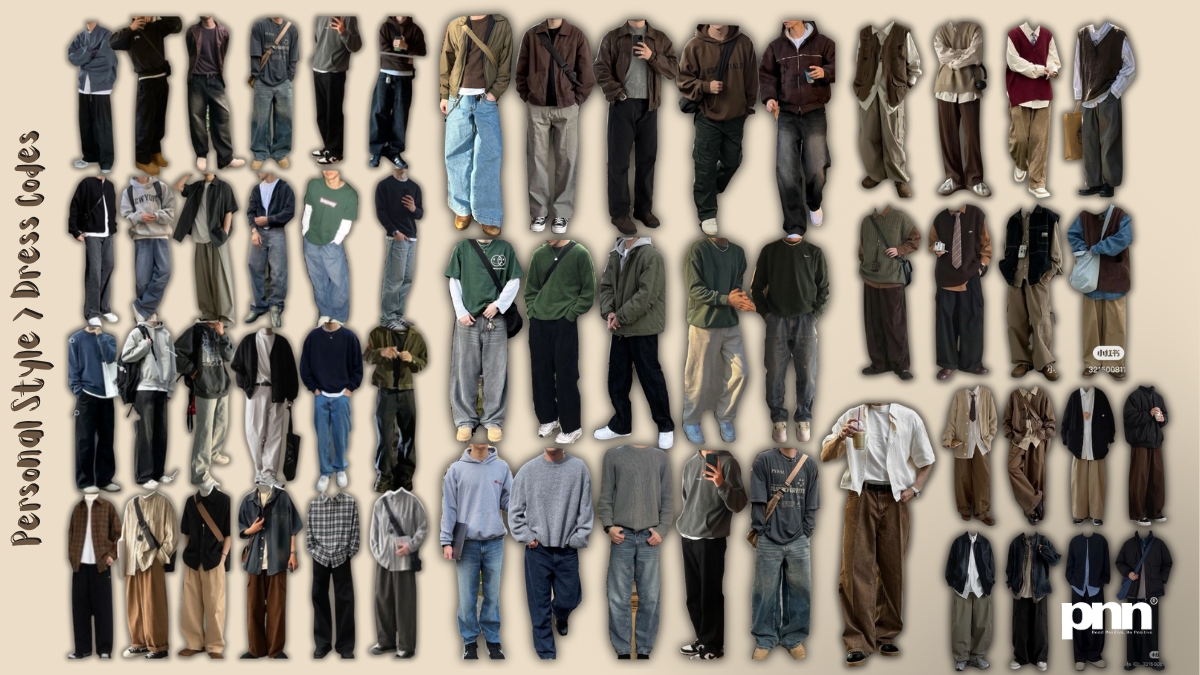
    Somewhere between oversized knits, thrifted denim, pearl necklaces worn without irony, and shoes that look like they were chosen for comfort rather than approval, Gen Z men have decided something radical: fashion is not a rulebook, it’s a language. And languages evolve when people start speaking honestly.

    This shift didn’t announce itself with a manifesto or a runway rebellion. It arrived subtly — in metro stations, cafés, college campuses, startup offices, music gigs, and Instagram feeds that look less curated and more confessional. The result? A generation of men dressing for meaning, not masculinity audits.

    And yes, it’s refreshing. It’s also messy. Which is exactly the point.

    The End Of The “Dress Like A Man” Era

    For decades, menswear operated on a narrow bandwidth. Neutral colours. Safe silhouettes. Minimal deviation. Style advice often boiled down to don’t stand out — unless you’re rich enough for it to look intentional.

    Gen Z men, raised on digital multiplicity and algorithmic chaos, find that logic laughable.

    In 2026, the phrase “dress like a man” sounds less like advice and more like a vague threat. Why should clothing reinforce a gender script when identity itself feels fluid, contextual, and personal?

    This generation grew up watching influencers wear skirts one day and cargo pants the next, artists blur genre boundaries, and creators monetize individuality rather than conformity. Fashion, naturally, followed suit.

    Comfort Isn’t Lazy, It’s Political

    One of the loudest statements Gen Z men are making is also the quietest: they choose comfort unapologetically.

    Loose trousers. Boxy shirts. Soft fabrics. Sneakers that prioritize feet over flex. This isn’t about sloppiness — it’s a rejection of performative discomfort once mistaken for discipline or power.

    In a post-pandemic world where work-from-anywhere is normalized and burnout is a shared cultural diagnosis, clothing that restricts movement feels… outdated. Why suffer for aesthetics when the world is already exhausting?

    Brands have noticed. The global menswear market crossed $575 billion in 2025, with comfort-led segments — athleisure, hybrid tailoring, relaxed silhouettes — accounting for a growing share of revenue. Not a coincidence. Just capitalism following psychology.

    Vintage Is The New Luxury (And New Isn’t Impressive Anymore)

    Gen Z men don’t chase “new.” They chase stories.

    Vintage jackets, thrifted denim, hand-me-down watches, customised sneakers — these items carry narrative weight. They signal individuality, sustainability, and cultural awareness without saying a word.

    Fast fashion still exists, but it no longer impresses by default. Wearing something rare, reused, or reinterpreted now communicates discernment — a subtle flex that doesn’t scream for attention.

    Secondhand fashion platforms and resale culture have grown into a multi-billion-dollar economy, with men under 30 driving much of the demand. Not because it’s cheaper (sometimes it isn’t), but because originality has replaced exclusivity as the new status symbol.

    Colour Is Back, And It’s Not Asking Permission

    Beige had a good run. So did black, grey, and navy pretending to be “timeless.”

    In 2026, Gen Z men are bringing colour back into menswear — unapologetically and without explanation. Lavender knits. Emerald trousers. Burnt orange jackets. Even pink, still controversial for reasons no one remembers clearly, is worn casually.

    Colour isn’t about flamboyance here. It’s about emotional expression. Mood dressing. Contextual styling.

    It turns out when masculinity stops being fragile, it stops fearing colour.

    Personal Styling Over Seasonal Trends

    One of the most disruptive shifts is this: Gen Z men don’t care what’s “in” this season.

    They care about what feels aligned.

    Instead of following trend cycles dictated by fashion calendars, many curate personal uniforms that evolve slowly. A specific silhouette. A consistent colour palette. Accessories that feel almost ritualistic.

    This makes traditional trend forecasting uncomfortable. How do you sell “must-have” items to a generation that prefers meaning over momentum?

    Some brands are adapting by offering customization, modular wardrobes, and narrative-driven collections. Others are struggling — stuck selling relevance to consumers who aren’t interested in being told who to be.

    Accessories Are No Longer Gendered (Finally)

    Earrings. Rings. Necklaces. Bags. Scarves. Nail polish.

    None of these register as statements anymore. They’re just choices.

    Gen Z men treat accessories as punctuation marks — subtle ways to finish a sentence, not scream a paragraph. The stigma once attached to “feminine” items has eroded, replaced by indifference.

    This shift is quietly radical. It decouples adornment from identity anxiety and allows style to function as play rather than proof.

    The Influence Economy Helped — And Hurt

    Social media played a crucial role in democratizing menswear. Anyone with a phone and taste could become a reference point. Algorithms rewarded uniqueness. Communities formed around niches rather than norms.

    But there’s a downside.

    The pressure to be visibly original can turn authenticity into performance. When everyone is expressing themselves, self-expression itself risks becoming aestheticized — another metric to measure worth.

    Some Gen Z men report fatigue from constant visual documentation. Outfit-check culture can slide into self-surveillance. Individuality, when monetized, still obeys algorithms.

    Freedom is real — but not frictionless.

    Cultural Pushback Is Still Alive

    Let’s be honest: not everyone is applauding.

    Traditionalists accuse Gen Z men of abandoning masculinity. Comment sections still erupt when skirts appear in menswear campaigns. Workplaces haven’t fully caught up. Family gatherings remain… educational.

    Fashion may be changing faster than social acceptance. And that tension is real.

    But every cultural shift begins this way — not with unanimous approval, but with visible resistance.

    Why This Matters Beyond Clothes

    This isn’t really about fashion.

    It’s about autonomy.

    Gen Z men are using clothing to reclaim authorship over identity — refusing scripts that no longer reflect lived reality. They’re rejecting inherited expectations without replacing them with rigid alternatives.

    Fashion has become a low-risk testing ground for higher-stakes questions:
    Who am I without tradition?
    What do I keep?
    What do I discard?

    That’s not rebellion for attention. That’s evolution.

    The Future: Messy, Honest, Unfinished

    Menswear in 2026 isn’t cleaner or more polished. It’s layered, contradictory, unfinished.

    And that’s okay.

    Because the goal was never perfection. It was permission.

    Permission to dress without explanation.
    Permission to change.
    Permission to be inconsistent.

    If that unsettles some people, good. Growth usually does.

    PNN Lifestyle
  • Taylor Swift and the Long Game of Pop Music

    Taylor Swift and the Long Game of Pop Music

    Cambridge (Massachusetts) [USA], January 24: Taylor Swift has been explained to exhaustion. Charts, eras, reinventions, crowd sizes, revenue numbers. None of that is especially illuminating anymore. What actually matters is quieter and a little less flattering: she learned how to stay present without pretending growth is tidy. Most pop careers stall because the artist clings to a version of themselves that once worked. She didn’t cling. She adjusted. Repeatedly. Sometimes awkwardly.

    Early on, she was dismissed as temporary. A teenager with a guitar, a country accent that came and went, emotions that sounded pulled straight from a notebook you wouldn’t want anyone to find. Which they were. That was the point. She understood, instinctively, that detail does the heavy lifting. The phone call you replay. The drive home feels longer than it should. The party where you realise you’ve misread the room. Songs like Tim McGraw or Teardrops on My Guitar didn’t generalise heartbreak. They located it. That precision carried further than polish ever could.

    Then came the familiar turn. Popularity attracts suspicion. Especially when the person at the centre insists on authorship. Too many relationships. Too many references to them. Too aware of her image. Too controlling. The critique kept shifting, which gave it away. The discomfort wasn’t musical. It was cultural. Red sits right in that tension, swinging between restraint and excess—All Too Well stretching grief until it becomes exhausting, 22 doing the opposite, almost aggressively light. That wasn’t confusion. It was documentation.

    The real shift wasn’t Sonic. It was structural. She paid attention to ownership in a way most artists don’t until it’s too late. Publishing, masters, contracts—unromantic things. When the re-recordings began, they weren’t framed as sentimentality. They were corrective. Listening to Fearless (Taylor’s Version) or Red (Taylor’s Version) isn’t about reliving an era. It’s about control being quietly reasserted, track by track.

    Musically, she stopped pretending there was a single audience to satisfy. That’s why the catalogue feels uneven if you expect coherence and fairly consistent if you don’t. Big, glossy pop records coexist with albums that sound like they were written indoors, late, with no one waiting for them. 1989 and folklore aren’t opposites. They’re different attention spans. Different tolerances for noise.

    There’s also the uninteresting truth people skip over. She works. Constantly. Drafts, revisions, rehearsals, logistics. Touring that runs on planning more than adrenaline. That’s why the songs hold together even when the feelings inside them don’t. Blank Space is engineered almost clinically. Mirrorball isn’t. Both know exactly what they’re doing.

    Every few years, someone predicts decline. It hasn’t happened. Mostly because she doesn’t treat relevance as something you lock in place. She writes about ageing, about repetition, about thinking the same thought for the hundredth time and finding it hasn’t softened. Midnights didn’t announce a new phase. It lingered in familiar ones—insomnia, memory, regret—without trying to dress them up as reinvention.

    The writing circles itself. That’s true. It returns to old relationships, old insecurities, old patterns. That repetition isn’t accidental. It’s how she works. Memory isn’t something to conquer in her songs. It’s something you keep bumping into. Dear John and You’re On Your Own, Kid don’t resolve anything. They sit there. Uncomfortable. Unfinished.

    Taylor Swift isn’t notable because she’s exceptional in every sense. She isn’t. She’s notable because she adapts without erasing her own archive. Because she learned how power actually functions in pop music and chose to engage with it directly. Because her work accepts that emotions linger, careers stretch longer than expected, and control is usually built slowly, not granted.

    That’s the career. Everything else is commentary.

    PNN Entertainment

  • Mirza Ghalib: Why India’s Most Quoted Poet Is Still Its Most Misunderstood Mind

    Mirza Ghalib: Why India’s Most Quoted Poet Is Still Its Most Misunderstood Mind

    New Delhi [India], January 24: Mirza Ghalib is treated like a relic. Framed. Sanitised. Quoted on calendars and WhatsApp forwards as if he were some polite uncle who happened to rhyme well. That version is convenient. It’s also false.

    The real Ghalib was argumentative, broke, vain, deeply insecure, intellectually arrogant, emotionally reckless, and almost permanently irritated with the world around him. Which is precisely why he still matters. Especially now. Especially here.

    India has a strange habit of embalming its thinkers. Once they’re dead long enough, we bleach out the mess and keep the aesthetics. With Ghalib, we kept the couplets and discarded the temperament. Big mistake. His poetry wasn’t decorative. It was confrontational. It asked questions nobody around him wanted to answer, least of all himself.

    He once wrote, almost casually:
    “Hazāron ḳhvāhisheñ aisī ki har ḳhvāhish pe dam nikle.”
    Thousands of desires, each one enough to take my breath away.
    That’s not romance. That’s exhaustion dressed up as confession.

    Ghalib didn’t write about love the way Bollywood insists love should look. He wrote about its after-effects. The damage. The echo that stays long after the person is gone. Ishq, for him, was not a solution or a destiny. It was a condition. Chronic. Untreatable. Something you learned to articulate so it didn’t eat you alive.

    “Ishq ne ‘Ghalib’ nikamma kar diya,
    Warna hum bhi aadmi the kaam ke.”

    Love ruined Ghalib, made him useless.
    Otherwise, I too was a man of some use.

    Self-awareness with a bite. No self-pity ribboned around it.

    That alone should make him uncomfortable reading in a country obsessed with closure, with moral endings, with neat conclusions. Ghalib refused all of that. He distrusted certainty. Especially religious certainty. Especially social certainty. He questioned God with the same casual sharpness others reserved for lazy clerks or dishonest friends. And he did it in a language so elegant people missed how radical it was.

    “Hum ko maaloom hai jannat ki haqeeqat lekin,
    Dil ke khush rakhne ko ‘Ghalib’ ye khayal achha hai.”

    I know the truth of paradise, but still—
    To keep the heart content, this illusion is nice.

    That line alone would start fights today. It still should.

    Which brings us to the uncomfortable bit. Ghalib wasn’t a nationalist poet. He wasn’t interested in flags or slogans or collective pride. He lived through the collapse of Delhi, the violence of 1857, the slow erasure of a culture, and he responded not with patriotic verse but with private reckoning. Loss as lived experience, not performance. That refusal to turn suffering into spectacle is maybe his most modern trait.

    We don’t talk about that enough. We prefer him as a romantic mascot. Less dangerous that way.

    There’s also the small issue of his elitism. Ghalib knew he was smarter than most people in the room and didn’t bother pretending otherwise. He mocked mediocrity. He resented ignorance. He wrote letters that dripped with sarcasm and impatience. Today, that would make him deeply unpopular on social media. Too sharp. Too unwilling to soften his edges for applause.

    “Bas-ki dushvaar hai har kaam ka aasaan hona,
    Aadmi ko bhi mayassar nahin insaan hona.”

    Everything difficult insists on pretending to be easy;
    Even being human isn’t easily granted to a man.

    That’s not poetic gloom. That’s social diagnosis.

    But that’s exactly why his voice cuts through even now. Read him carefully and you realise he wasn’t trying to be profound. He was trying to be precise. Precision, especially emotional precision, is rare in public discourse today. We prefer volume. He preferred accuracy. Sometimes cruel accuracy.

    His relationship with faith is a case in point. Ghalib believed in God, probably. Then doubted it. Then argued with it. Then mocked the entire process. He treated belief as a living argument, not a fixed position. In an era where belief has hardened into identity and identity into weaponry, that kind of intellectual restlessness feels almost subversive.

    “Pakarte ho jo mujhe qaid mein, sach yeh hai ‘Ghalib’,
    Tum apne daaman-e-fikr ko zara phaila ke dekho.”

    If you think you’ve captured me in confinement,
    Try expanding the limits of your own thought first.

    Even now, that sounds like a warning.

    And look, he wasn’t always likable. He could be petty. He could be indulgent. He could spiral. There are moments in his work where self-pity borders on narcissism. But that’s the price of honesty. He didn’t clean himself up for posterity. He wrote from inside the mess. The unpaid debts. The failed patronage. The sense of being overlooked in a world that rewarded safer talent.

    This always gets lost when we teach him as curriculum instead of conflict.

    An editorial about Ghalib, then, isn’t about praising his genius. That’s settled. It’s about acknowledging how inconvenient he still is. How little he fits into our current appetite for moral clarity and ideological obedience. He doesn’t reassure. He destabilises. Quietly. With impeccable grammar and a raised eyebrow.

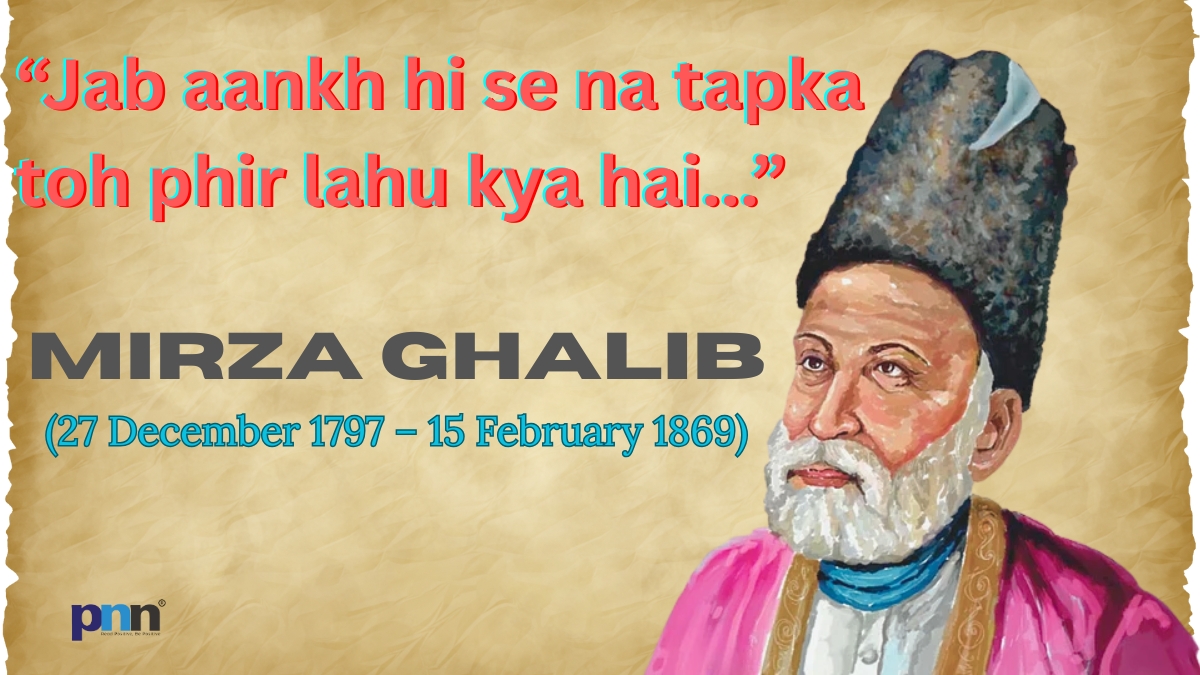
    “Ragon mein daudte phirne ke hum nahin qaayal,
    Jab aankh hi se na tapka toh phir lahu kya hai.”

    I don’t believe in blood merely rushing through veins;
    If it doesn’t spill from the eyes, what blood is that?

    Tell me that isn’t emotional extremism, sharpened into art.

    He also understood something we keep forgetting: that language is not meant to comfort power. It’s meant to interrogate experience. His Urdu wasn’t ornamental. It was surgical. Every word chosen not to impress but to survive the thought it carried.

    India doesn’t lack poets. It lacks readers willing to sit with discomfort. Ghalib demands that. He demands slowness. Re-reading. Sitting with a couplet until it stops sounding beautiful and starts sounding true. That’s hard work. Easier to quote him at mushairas and move on.

    So yes, celebrate him. But don’t tame him. Don’t turn him into a cultural trophy. Let him remain difficult. Let him argue with your assumptions. Let him ruin your certainty a little.

    That’s what he was always best at.

    And frankly, that’s what this moment needs.

    PNN Lifestyle

  • The Vision and Venture Behind Lucknow’s Most Sought-After Luxury Event Destination: Satnam Kaur

    The Vision and Venture Behind Lucknow’s Most Sought-After Luxury Event Destination: Satnam Kaur

    Meet The Leadership Behind Lucknow’s Flagship Luxury Wedding & Events Destination- Satnam Kaur

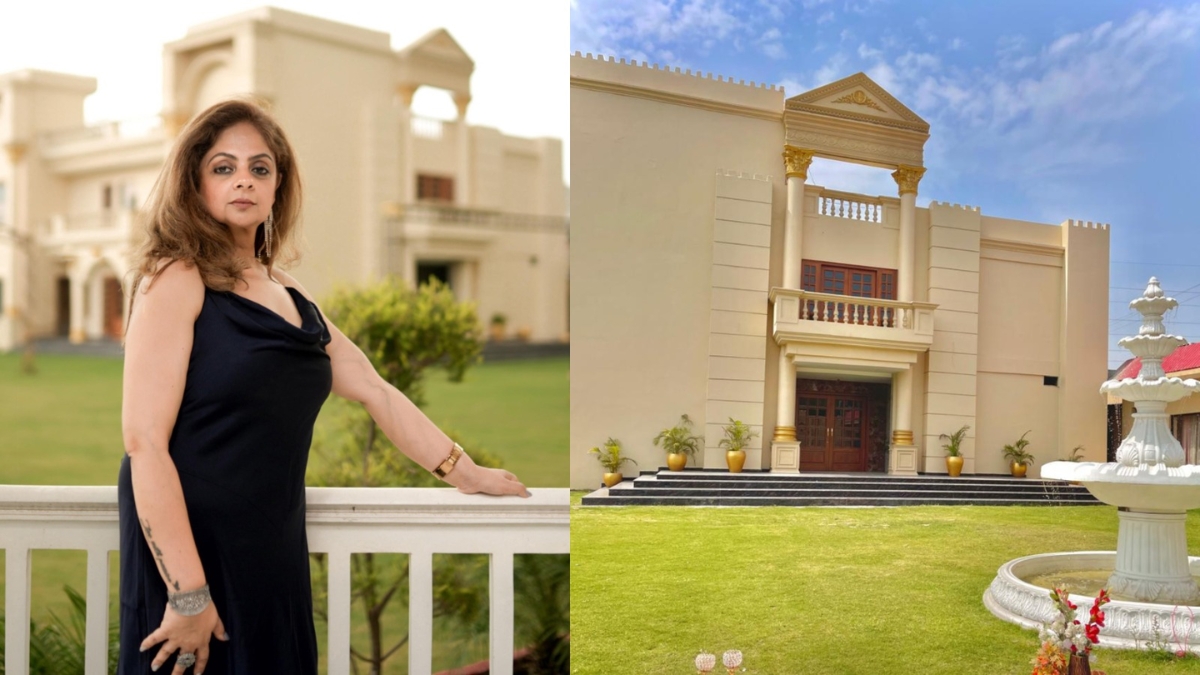
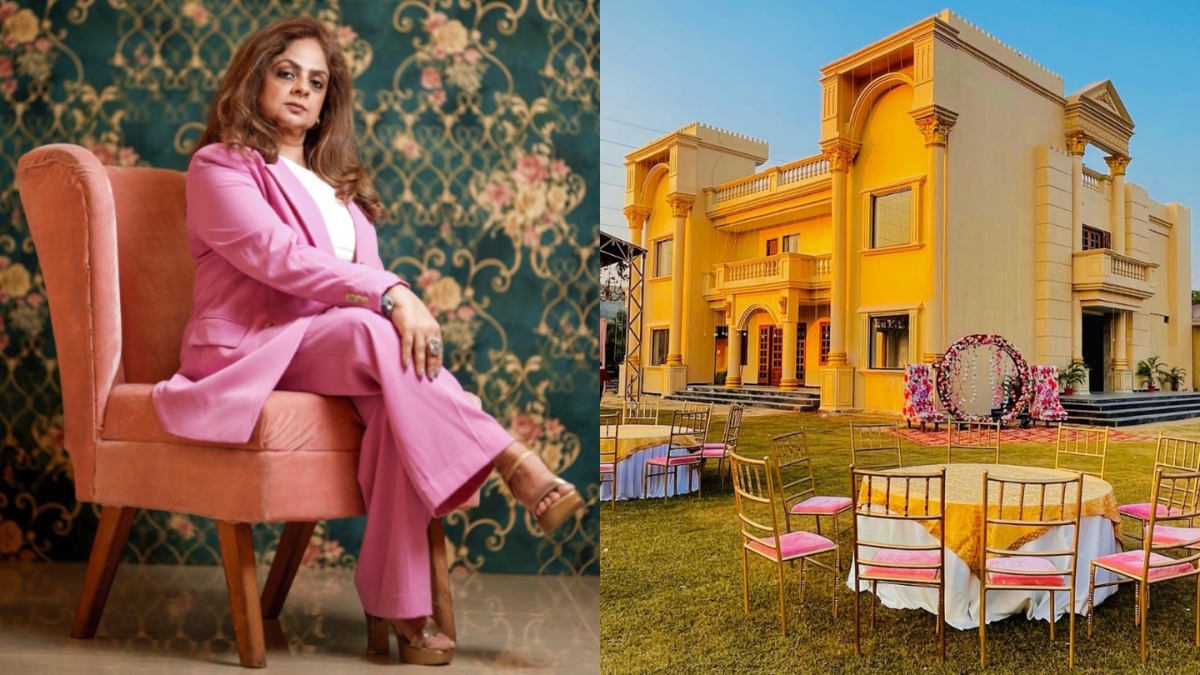
    New Delhi [India], January 24: In Lucknow’s fast-evolving luxury and hospitality landscape, a new class of enterprises is quietly redefining how scale, elegance and experience intersect. At the center of this shift is Satnam Kaur, Founder and CEO of Sunny Palace, whose companies are steadily influencing the region’s contemporary celebration and experiential economy.

    Rather than positioning luxury as spectacle, Kaur’s businesses approach it as a system—where infrastructure, design intelligence, hospitality operations and cultural sensibility work in concert. Over the last decade and a half, this philosophy has helped her ventures become reference points for premium weddings, large-format social events and bespoke celebrations across North India.

    Satnam Kaur

    Sunny Palace: Infrastructure Meets Experience Design

    Conceived as more than a traditional banquet venue, Sunny Palace was designed as a full-scale hospitality ecosystem. Strategically located near Shaheed Path and Gomti Nagar, the property combines expansive capacity with controlled design, seamless logistics and a high degree of customization.

    What distinguishes Sunny Palace in a crowded luxury venue market is its emphasis on experience flow—how guests arrive, move, engage and remember the event. From large wedding formats to high-profile private celebrations, the venue has become synonymous with reliability, elegance and operational precision, setting new benchmarks for premium event infrastructure in the city.

    Building Institutions, Not Moments

    With over sixteen years of experience in hospitality leadership and formal management training from BBD Lucknow, Kaur entered the sector with a clear operational mindset. Her focus was never limited to aesthetics alone, but on building scalable, process-driven hospitality enterprises capable of delivering consistency at scale—an area where many regional luxury venues fall short.

    This institutional approach has allowed her companies to move beyond one-off successes and establish long-term credibility with families, planners and corporate clients alike.

    Extending the Brand Into Creative Services

    As demand for more personalized and concept-driven celebrations grew, Kaur expanded the enterprise vertically with SK Events & Designs. The division focuses on bespoke event styling, spatial storytelling and immersive design concepts, allowing clients to move seamlessly from venue selection to complete experiential execution.

    This expansion reflects a broader strategy: controlling quality across the value chain while responding to the evolving expectations of modern luxury consumers. Parallel ventures in fashion and jewellery further strengthen the group’s creative portfolio, translating design sensibility into commercially viable extensions without diluting brand focus.

    Leadership Grounded in Process and Precision

    At the organizational level, Kaur is known for a leadership style that prioritizes systems, accountability and long-term thinking. Her teams operate within clearly defined structures, enabling her companies to deliver at scale without compromising on detail—a critical requirement in the high-stakes luxury events sector.

    Industry peers often point to this balance of creative direction and operational discipline as a key differentiator behind the sustained growth of her ventures.

    Shaping the Region’s Luxury Business Narrative

    As North India’s celebration and lifestyle economy matures, enterprises like Sunny Palace and SK Events & Designs represent a shift away from personality-led ventures toward professionally run, design-forward institutions. Satnam Kaur’s role in this evolution lies less in visibility and more in execution—building businesses that endure, adapt and set standards.

    In doing so, she is contributing to a broader redefinition of modern Indian entrepreneurship—one where luxury is built through structure, not spectacle, and influence is earned through consistency rather than noise.

    If you object to the content of this press release, please notify us at pr.error.rectification@gmail.com. We will respond and rectify the situation within 24 hours.

  • Cupid Limited Makes Strategic Investment of INR 331.53 Cr in Baazar Style Retail Limited to Expand Market Reach & Accelerate FMCG Growth

    Cupid Limited Makes Strategic Investment of INR 331.53 Cr in Baazar Style Retail Limited to Expand Market Reach & Accelerate FMCG Growth

    Mumbai (Maharashtra) [India], January 23: Cupid Limited (BSE – 530843, NSE – CUPID) announced a strategic investment of ₹331.53 Cr in Baazar Style Retail Limited (Style Baazar), a well-recognised and established value retail chain that has been profitable as well as lean in operating 250+ stores across key markets in India. The investment to be made over 18 months, funded through internal accruals, marks a significant step in Cupid’s strategy to strengthen its retail presence, improve market access, penetration and accelerate growth across high-potential regions.

    This strategic investment provides Cupid Limited with direct access to a strong and rapidly expanding retail network, significantly enhancing the availability and visibility of its FMCG product portfolio across key regional markets. Style Baazar’s extensive store footprint will enable Cupid to deepen its presence in existing markets while also entering new regions with greater speed and efficiency.

    With Cupid’s products to be immediately available across Style Baazar’s 250+ stores, the partnership will strengthen last-mile reach and shelf presence from day one. As Style Baazar advances its expansion plans to scale up to over 500 stores in the next two to three years, Cupid’s FMCG offerings are expected to grow alongside this network, multiplying consumer touchpoints and improving brand visibility.

    The investment will also support the faster rollout of Cupid’s expanded product portfolio, leveraging Style Baazar’s strong store-level execution and consumer insights to enhance in-store visibility, merchandising effectiveness, and customer engagement across priority markets.

    Cupid Limited expects 150 Cr of incremental revenue in FY27 from the Style Baazar ecosystem, with a defined ramp-up to 500 Cr of annual business within three years, as the same fast-expanding ecosystem scales across distribution, categories, and consumer touchpoints.

    By combining Cupid’s manufacturing scale, brand-building strengths, and supply chain capabilities with Style Baazar’s established retail platform, the collaboration is expected to create a more integrated go-to-market approach. This alignment will help Cupid achieve faster geographic expansion, improved distribution efficiency, and sustained growth in its FMCG business.

    Commenting on the transaction, Mr. Aditya Kumar Halwasiya, Chairman & Managing Director of Cupid Limited, said “This strategic investment marks an important step in strengthening our retail presence and expanding consumer reach. Style Baazar’s established network of over 250 stores provides us with a strong platform to scale our FMCG product portfolio across key regional markets. As the store network expands to over 500 locations in the coming years, our products will be an integral part of that growth, enabling wider availability, improved visibility, and deeper engagement with consumers.”

    If you have any objection to this press release content, kindly contact pr.error.rectification@gmail.com to notify us. We will respond and rectify the situation in the next 24 hours.

  • Short Trips, Sharp Intentions: Why India Is Breaking Up With The Annual Holiday

    Short Trips, Sharp Intentions: Why India Is Breaking Up With The Annual Holiday

    Mumbai (Maharashtra) [India], January 24: Once upon a time, the Indian holiday calendar revolved around one sacred event: the big annual trip. Planned months in advance, debated endlessly in family WhatsApp groups, negotiated around school schedules, office leaves, budget spreadsheets, and emotional blackmail. It was less a vacation and more a logistical operation.

    By 2026, that ritual is quietly losing relevance.

    Instead, Indians are scattering their escapes—long weekends here, midweek breaks there, sudden hill station detours booked on impulse and justified later. The era of the once-a-year grand vacation is being replaced by something more fragmented, more frequent, and far more revealing about how Indians now live.

    This isn’t travel fatigue. It’s travel evolution.

    A Cultural Reset, Not A Travel Trend

    The shift toward micro-cations isn’t driven by wanderlust alone. It’s driven by exhaustion. Emotional, professional, urban exhaustion.

    India’s workforce—particularly urban professionals and upwardly mobile middle-class families—has learned a blunt truth: waiting an entire year to rest is unsustainable. Burnout doesn’t respect calendars.

    Micro-cations are not about seeing more places. They’re about interrupting routine before it turns corrosive. Two nights away now feels more valuable than ten days away later, mostly because the former is actually achievable.

    Travel, once aspirational, is now preventative.

    The Psychology Of Frequent Escapes

    There’s a subtle emotional shift at play. Long holidays come with pressure—to relax properly, to enjoy every moment, to make the money and time feel “worth it.” Short trips don’t carry that burden.

    Micro-cations allow imperfection. Miss a sunset? Fine. Didn’t see everything? Expected. They don’t demand transformation—just relief.

    This has made travel feel less like a performance and more like maintenance.

    Internal Link Suggestion: Related Read: Why Urban Burnout Is Redefining Leisure In India

    Infrastructure Accidentally Helped

    India didn’t plan for this shift, but it accidentally enabled it.

    Improved highways, regional airports, budget airlines, app-based hotel bookings, and flexible cancellation policies have made short travel logistically viable. Weekend escapes to nearby cities, beaches, hills, heritage towns, or wellness retreats no longer require military-level planning.

    Travel platforms have leaned into this behaviour, pushing “48-hour itineraries,” “drive-away destinations,” and “long-weekend specials” because the data told them to.

    The market didn’t predict desire. It responded to behaviour.

    The Economic Reality Behind Shorter Trips

    Here’s the part that rarely gets romanticised.

    Micro-cations feel affordable because each trip costs less than a long vacation. But cumulatively? They can be more expensive. Multiple bookings, surge pricing, weekend premiums, and impulse spending add up.

    Yet people still choose them.

    Why? Because liquidity matters more than total cost. Spending ₹15,000 now feels easier than saving ₹1.5 lakh later. The Indian middle class isn’t necessarily richer—it’s just more willing to prioritise immediate quality of life.

    This reflects a deeper truth: leisure has moved from luxury to necessity.

    Hospitality Is Rewriting Its Playbook

    Hotels, resorts, and homestays have noticed. Packages are shrinking. Experiences are getting modular. Properties near metros are outperforming far-flung luxury destinations.

    There’s also a pivot toward experiences that fit inside short stays:

    • Curated food trails

    • Wellness weekends

    • Local culture immersions

    • Digital detox stays

    • Nature-first accommodations

    The emphasis isn’t grandeur. It’s efficiency.

    Internal Link Suggestion: See Also: How India’s Hospitality Sector Is Betting On Proximity Tourism

    Not Everyone Is Winning

    There’s a downside, and it deserves airtime.

    Overtourism in short-haul destinations is rising. Hill towns, beaches, and heritage cities within driving distance of metros are feeling the strain—on infrastructure, ecology, and local communities.

    Short trips also mean higher frequency of travel-related emissions. A dozen car trips may quietly undo the environmental benefit of skipping one long flight.

    And then there’s the subtle pressure to always be “getting away.” When rest becomes another item to optimise, even leisure risks turning transactional.

    Sarcasm aside, micro-cations can become micro-escapes from problems that require structural solutions.

    What The Numbers Suggest

    India’s domestic travel market continues to expand, with spending crossing hundreds of billions of dollars annually. A significant portion of recent growth is driven by repeat, short-duration trips rather than extended vacations.

    Travel platforms report higher booking frequency per user, shorter average stays, and increased demand for flexible scheduling. The data doesn’t lie—Indians aren’t travelling less. They’re travelling differently.

    The Social Shift Nobody Mentions

    Micro-cations reflect a changing relationship with time.

    The older model assumed work came first and rest followed. The new model insists rest must coexist with work—or the system collapses.

    This is especially visible among younger professionals and dual-income households who value autonomy over tradition. Leave policies, hybrid work, and location flexibility have quietly normalised short travel windows.

    The annual holiday wasn’t cancelled. It was demoted.

    Pros And Cons Of India’s Micro-Cation Culture

    Pros

    • Reduced burnout and better work-life balance

    • Greater accessibility to travel

    • Boost to regional tourism economies

    • Flexibility and spontaneity

    Cons

    • Environmental strain on nearby destinations

    • Higher cumulative spending

    • Risk of leisure becoming performative

    • Infrastructure pressure on small towns

    The Real Backstory

    This shift isn’t about wanderlust. It’s about control.

    In a country where life often feels crowded—by people, expectations, noise, ambition—short trips offer something precious: pause without permission. They don’t require justification. They don’t demand sacrifice.

    They simply fit.

    And in a fast-moving India, fitting into life matters more than standing out.

    PNN Lifestyle

  • 5 Best Credit Cards for International Travel in 2026: No Foreign Transaction Fees

    5 Best Credit Cards for International Travel in 2026: No Foreign Transaction Fees

    London [United Kingdom], January 24:  People keep asking for comparisons because they want closure. A clean answer. Something they can screenshot and feel done with. International travel doesn’t work like that, and neither do credit cards once you leave your home currency and whatever consumer-protection fantasy you’re used to.

    So yes, this is listical. But don’t mistake that for comfort.

    1. Chase Sapphire Preferred / Reserve

    These cards don’t try to impress you abroad. That’s their advantage. Visa network. No foreign transaction fees. Payments go through without commentary. When something breaks—flights, luggage, connections—the protections usually trigger without you having to perform a ritual sacrifice.

    The Reserve is expensive in a way that feels intentional. The Preferred is calmer, more reasonable, less self-conscious. Both share the same core trait: they behave predictably in foreign countries. Which, frankly, is rare enough to justify their continued dominance.

    Nobody loves them. People rely on them. Different thing.

    2. Capital One Venture X

    This card feels engineered by someone tired of hearing complaints.

    Flat rewards. No forex fees. Visa Infinite acceptance almost everywhere that matters. The math is boring, which is a compliment. You don’t need to remember which category you’re in or whether you booked through the right portal at the right phase of the moon.

    It doesn’t care about your feelings. It just works. And when you’re halfway across the world, that indifference is reassuring.

    3. American Express Platinum

    This is the conditional one. Powerful, but only under the right circumstances.

    In major cities, airports, hotels that smell faintly of eucalyptus? Excellent. Lounge access, status perks, no foreign transaction fees, all very real. Outside that bubble, Amex still hesitates. Sometimes visibly.

    If you carry this card alone, you’re optimistic in a way experience usually cures. As a primary card with a Visa backup, it makes sense. As a solo solution, it’s a gamble. A stylish one, but still.

    4. Wells Fargo Autograph

    This card never enters the conversation because it doesn’t scream. No prestige narrative. No travel mythology. Just no foreign transaction fees, solid Visa acceptance, and rewards that quietly accrue whether you’re home or not.

    It’s the card you pull out when you don’t want to think. And when you’re traveling internationally, thinking less is often the goal. No drama. No explanations. Just a transaction that clears and a receipt you don’t regret reviewing later.

    5. Zero-Forex Regional Cards

    These only make sense once you’ve been burned.

    In countries where most domestic cards quietly charge 3–3.5% forex markup, rewards are basically decorative. Zero-forex cards exist to stop the bleeding. Lounge access is a bonus. Travel perks are secondary. The real benefit is invisible: money not lost.

    People who travel often figure this out quickly. People who don’t, learn eventually. Usually the hard way.

    Right. Enough narrative. Here’s the reality laid out, stripped of aspiration and marketing copy.


    Quick Reality Check: International Travel Cards Compared

    Card Network Foreign Transaction Fee Annual Fee (Approx) Acceptance Abroad Who It Actually Works For
    Chase Sapphire Preferred Visa None Moderate Very high Travelers who value reliability over flash
    Chase Sapphire Reserve Visa None High Very high Frequent flyers who live in transit
    Capital One Venture X Visa None High (mostly offset) Very high People who want simple math and fewer surprises
    Amex Platinum Amex None Very high Uneven Lounge-heavy travelers with backup cards
    Wells Fargo Autograph Visa None Low / None High Low-drama spenders who just want things to work
    Zero-Forex Regional Cards Visa / MC None or Minimal Varies Region-dependent Travelers avoiding silent currency penalties

    That’s the list. Not advice. Not a promise.

    Just how things actually play out once you leave home and your card has to prove it deserves space in your wallet.

    PNN Lifestyle

  • Braj 40-Day Holi Celebrations Ignite a Fearless Cultural Revival

    Braj 40-Day Holi Celebrations Ignite a Fearless Cultural Revival

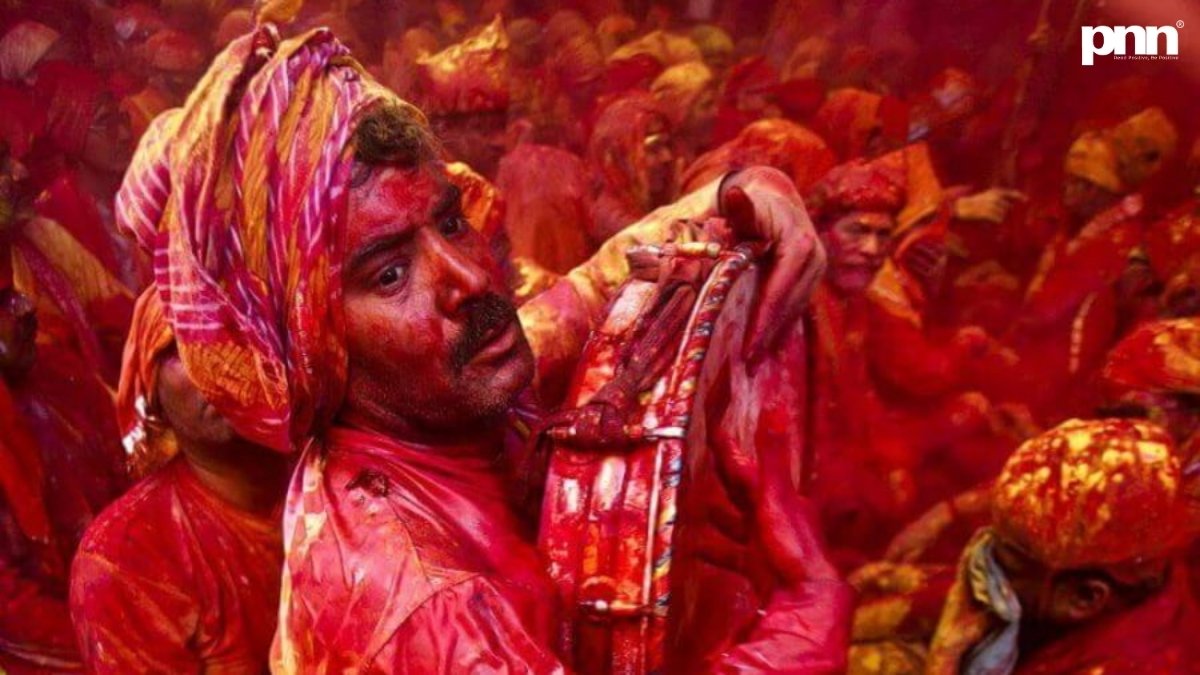
    New Delhi [India], January 24: The Braj 40-day Holi celebrations are back, louder and longer than anywhere else on the planet. This is not a festival sprint. It’s a cultural marathon, and Braj runs it with swagger.

    Holi, But Make It Forty Days

    Even in most parts of India, Holi comes, bursts into colour, and leaves within two days. In Braj, Holi settles in. For forty days.

    The 40-day-long Braj Holi, officially inaugurated with Rangotsav 2026 on Basant Panchami, unfolds across Mathura, Vrindavan, Barsana, and Nandgaon. This is not a modern reinvention or a tourism ploy. It is a living tradition rooted in the life and legends of Lord Krishna.

    While the rest of the nation prepares for a single day of riotous celebration, Braj builds a full calendar of ritual, music, theatre, and carefully ordered mayhem. The message is simple. If you are going to celebrate Holi, do it properly.

    Why Braj Does Not Celebrate Normal Festivals

    Braj is not an ordinary region. It is Krishna’s playground, classroom, and stage. Festivals here follow that logic. They are immersive, layered, and unapologetically dramatic.

    The 40-day format comes from centuries-old temple traditions where Holi is not a date but a season. Week after week, temples conduct daily rituals, devotional singing, and symbolic use of colour. Each town adds its own accent. Barsana brings spectacle. Vrindavan brings devotion. Mathura brings scale.

    This is not cultural nostalgia. It is cultural consistency.

    Rangotsav 2026: Where Faith Meets Colour

    Rangotsav sets the tone from day one. The season opens with gulal offerings, floral Holi, and kirtans that stretch for hours. Priests lead the rituals. Devotees follow rhythm, not the clock.

    Unlike commercial Holi events, colour is not the core message here. Every ritual marks a chapter in Krishna’s life. Songs are not background noise. They are theology set to rhythm.

    Local administrations and temple committees now coordinate events to manage crowds that include international visitors, photographers, scholars, and pilgrims. The balance is delicate. For now, it is holding.

    Barsana and Nandgaon: The Theatre of Lathmar Holi

    If Holi had a headline act, Lathmar Holi would own it.

    In Barsana and Nandgaon, the festival shifts gears. Women wield sticks. Men arrive with shields. No one pretends this is symbolic. It is a ritualised confrontation rooted in folklore, where Krishna and his friends tease Radha and her companions.

    This is not chaos. It is choreography with attitude.

    Security arrangements are tight. Entry points are regulated. Medical teams remain on standby. The administration understands one thing clearly. Tradition survives only when safety does.

    Crowds swell into the lakhs. The cameras roll. But the soul remains local. This is a village festival at heart, even when the world insists on watching.

    Mathura and Vrindavan: Tej in Overdrive

    Barsana draws headlines, but Mathura and Vrindavan carry the spiritual weight of the 40 days of Holi in Braj.

    In Vrindavan, temples like Banke Bihari attract massive gatherings. Holi here is less confrontational and more immersive. Flower petals replace powder. Music replaces noise. Time slows down.

    Mathura, the birthplace of Krishna, blends both worlds. Temple rituals, processions, and public celebrations unfold simultaneously. The scale is vast, but the spirit is ancient.

    This is where faith shows discipline. No shortcuts. No dilution.

    Culture, Crowd Control, and Civic Planning

    Let’s be blunt. A festival of this size can spiral. Braj has learned from experience and adapted.

    Authorities deploy multi-layered crowd management systems. CCTV surveillance, barricading, regulated entry zones, and coordinated transport plans are now standard. Medical camps and emergency response teams operate throughout the season.

    This is not flashy governance. It is functional competence.

    The challenge is obvious. Preserve tradition without turning it into a stampede. So far, the administration has treated culture like infrastructure. That mindset matters.

    Tourism Without Dilution

    The 40 days of Holi in Braj have secured a permanent place on the global cultural calendar. Visitors arrive from Europe, Southeast Asia, and across India. Hotels are booked weeks in advance. Local economies benefit.

    Yet the region has resisted turning the festival into a ticketed spectacle. No VIP enclosures. No exclusive colour zones. Everyone participates on equal terms.

    That restraint is rare. And valuable.

    Tourism boards promote schedules and routes, not “experiences.” The difference is subtle but important. Holi here is not a product. It is a practice.

    Why This Festival Still Matters

    In an age where festivals are rushed, and content is faster still, Braj feels almost rebellious.

    A forty-day Holi is a statement. It says culture does not need compression to stay relevant. It says faith can coexist with administration. It says tradition does not panic when modernity shows up.

    The 40-day Holi celebrations in Braj are not loud because they want attention. They are loud because they have earned it.

    https://vrindavanmathuratourism.com/blogs/holi-2026-dates-in-india-mathura-vrindavan-holi-schedule-braj-holi-tour-packages

    PNN Lifestyle

  • Odisha Buddhist Heritage: 3 Timeless Gems Seize UNESCO Glory

    Odisha Buddhist Heritage: 3 Timeless Gems Seize UNESCO Glory

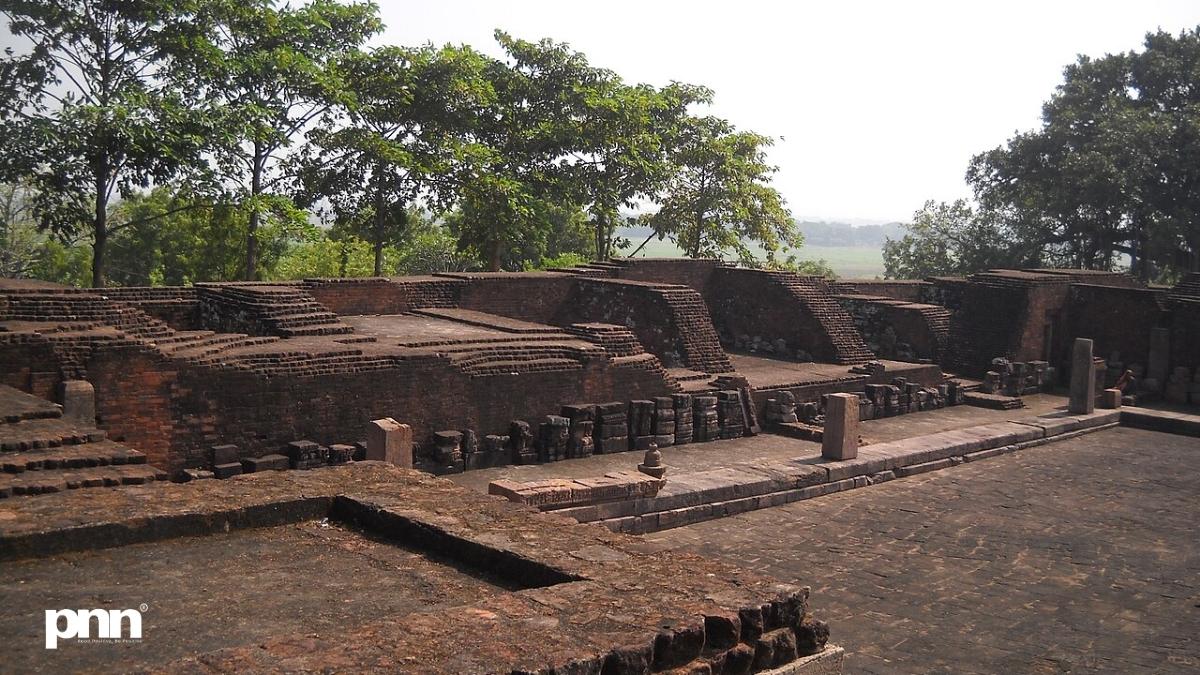
    New Delhi [India], January 24: Odisha just put India on the global cultural map in style. The Buddhist Diamond Triangle—Ratnagiri, Udayagiri, and Lalitgiri—has been added to UNESCO’s tentative World Heritage list, turning centuries-old monasteries, stupas, and meditation hills into must-see destinations for history buffs, spiritual seekers, and heritage travelers alike.

    Odisha Buddhism Heritage: 3 Eyeglass Gems Glory UNESCO

    The cultural empire of India just scored a major triumph. The Buddhist “Diamond Triangle” of Odisha, comprising Ratnagiri, Udayagiri, and Lalitgiri, has been included in UNESCO’s tentative World Heritage list. These are not simple dusty ruins—they are centuries-old centers of Hinayana, Mahayana, and Vajrayana Buddhism, blending religious devotion, philosophical depth, and architectural genius.

    This is not just a pat on the back. UNESCO recognition signals India’s intent to showcase its heritage globally, and Odisha has emerged as a heavyweight in this cultural game.]

    The Diamond Triangle: Buddhism in Odisha, Power Play

    Odisha -PNN

    Ratnagiri: Master Jewel of Mahayana Learning

    Ratnagiri is enormous—over 18 acres of hills, stupas, monasteries, and meditation spaces that could make even Elon Musk pause in awe. Thriving from the 5th to the 12th centuries CE, it was a hub of Mahayana Buddhism, attracting scholars, travelers, and monks from distant corners of Asia.

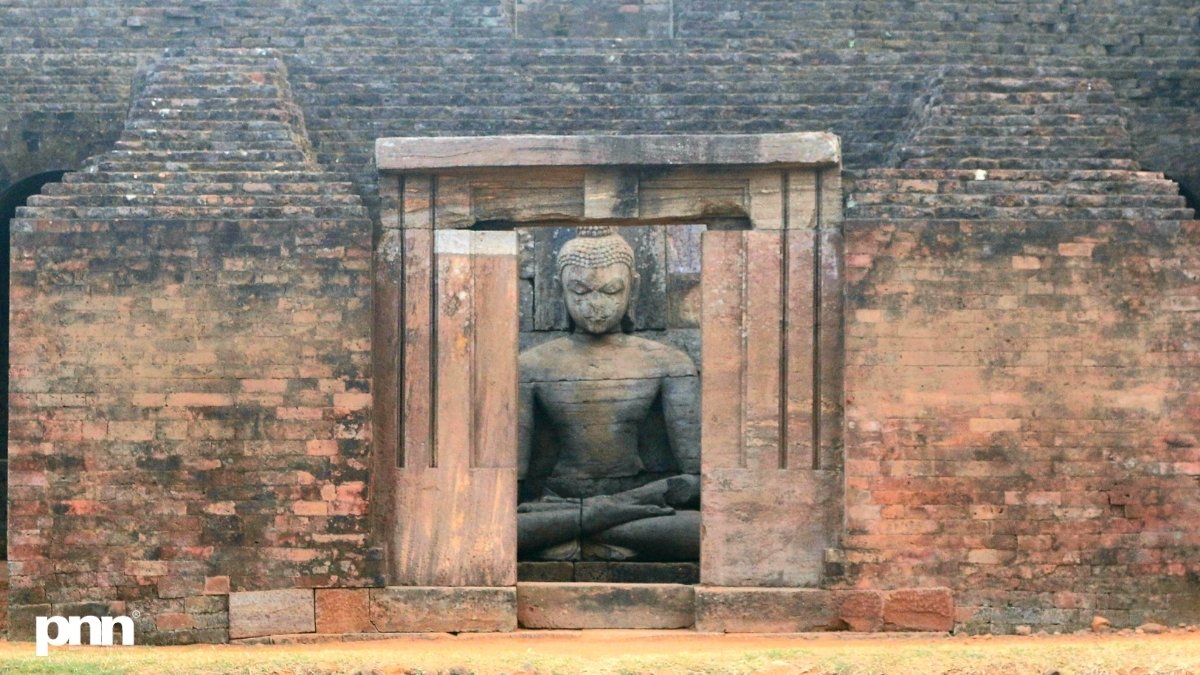
    The architecture is jaw-dropping. Multi-tiered monasteries, intricately carved stupas, and detailed Buddha images dominate the landscape. Even casual visitors can sense the intensity of debate and scholarship that once filled these halls. Smaller shrines and relics reveal the daily lives of monks, their spiritual dedication, and an unwavering focus on beauty—the perfect balance of discipline and artistry.

    Walking through Ratnagiri today is like entering a world where precision met devotion. Every carving, every layout choice screams intent. Think of it as India’s ancient Ivy League campus—but with better scenery.

    Odisha -PNn

    Udayagiri: The Devotion Strategy Summit

    Udayagiri literally means “Hill of the Rising Sun”, and the name fits. The site combines spirituality with strategy, perched high to offer panoramic views of the plains. Monks meditated here, scholars debated, and political maneuvering occasionally occurred under the watchful eyes of religious leaders.

    Udayagiri bridges Hinayana and Vajrayana Buddhism, demonstrating that religion in India evolved over centuries. Fortified structures sit alongside monasteries—a reminder that even spiritual communities needed protection. Imagine it as a hybrid between a monastery and a fortress, where light meets heavy, meditation meets vigilance.

    Odisha Buddhist Heritage: 3 Timeless Gems Seize UNESCO Glory-PNN

    Lalitgiri: Red Hill of Ritual and Art

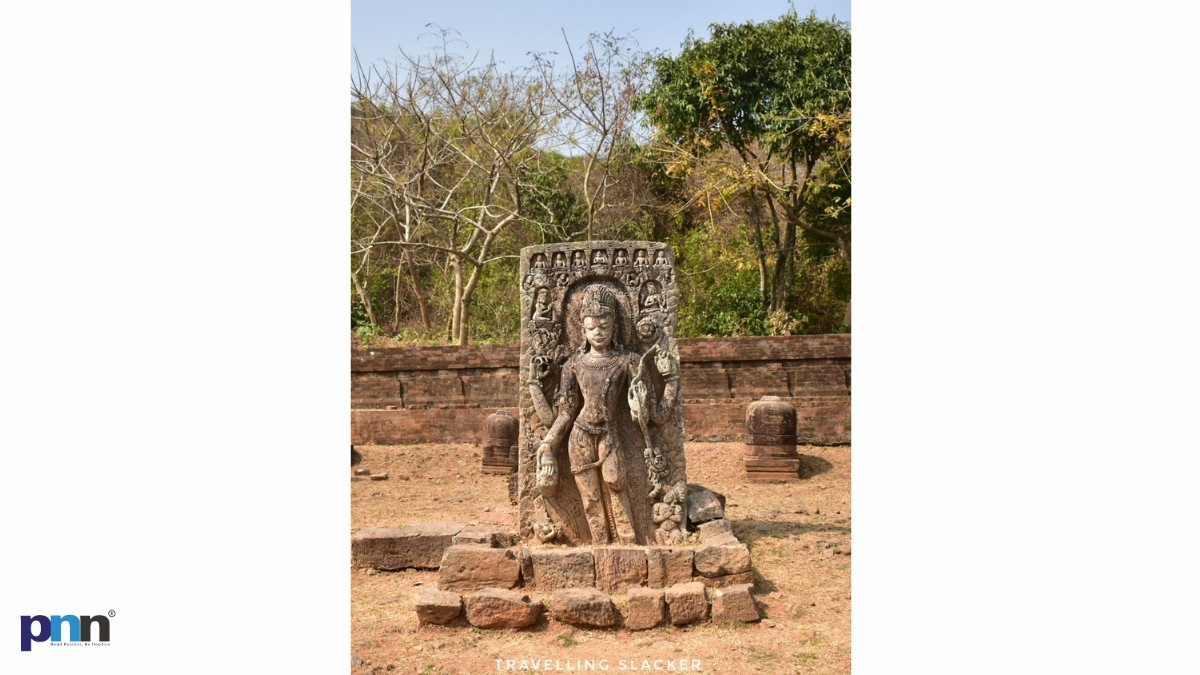
    Lalitgiri is less talked about but equally spectacular. Its name, “Red Hill,” evokes both the earth-toned stupas and the vibrancy of Vajrayana rituals that once took place there. Visitors are immediately immersed in artistic sophistication—chaityas, stupas, intricately carved sculptures of gods, guardians, and mythological scenes.

    Lalitgiri embodies the fusion of ritual, philosophy, and aesthetics. Religious practice here was inseparable from art. Picture a place where Tony Stark-level vision collides with monk-like discipline—architecture, meditation, and artistry fused perfectly.

    The Role of UNESCO Recognition: Why It Matters

    Being on UNESCO’s tentative list is no mere ceremonial nod; it’s a global spotlight. Entry into the tentative list opens doors to:

    • International funding for preservation

    • Heritage tourism development

    • Academic research partnerships

    The Archaeological Survey of India emphasises that a tentative listing confirms outstanding universal value. For Odisha, this is more than bragging rights—it’s a ticket to rank alongside world-famous Buddhist sites like Bodh Gaya and Nalanda, giving the Diamond Triangle global credibility.

    A Visitor’s Paradise

    These sites are not just for archaeologists. Imagine walking through serene hills, following the footsteps of centuries of monks, and marvelling at stupas carved with precision beyond modern tools. Cultural tourists can experience:

    • Guided heritage walks

    • Educational workshops

    • Meditation retreats

    • Cultural festivals celebrating Buddhist art and music

    The potential for heritage tourism is enormous. Odisha can attract millennials, Gen Z, and global travelers seeking spiritual depth, history, and aesthetic pleasure—all in one destination.

    Historical Depth: The Story in Stones

    Ratnagiri, Udayagiri, and Lalitgiri are a living chronicle of Odisha’s Buddhist evolution. From the simplicity of Hinayana to the complexity of Mahayana and finally the ritualized sophistication of Vajrayana, the Diamond Triangle reflects centuries of intellectual and spiritual innovation.

    These sites also hint at trade, learning, and cultural exchange. Scholars and pilgrims from China, Tibet, and Southeast Asia traveled here to study and debate. Odisha was not isolated—it was a nexus of knowledge, culture, and philosophy in ancient India.

    Architectural Mastery

    The artistry here is extraordinary. Monasteries are multi-tiered and often spill onto hillsides, with intricate carvings depicting teachings, gods, and mythological scenes. Stupas are not mere decoration—they are reliquaries, meditation spaces, and symbols of cosmic order.

    Even minor details—water channels, walkways, shrine orientations—show meticulous planning and astronomical knowledge. These sites were created with Harvey Specter-level strategy and Tony Stark-level design, blending function, aesthetics, and spiritual strength.

    Opportunities and Challenges

    Centuries of monsoons, vegetation growth, and neglect have taken their toll. But the future is promising. Preservation projects are already underway:

    • Reconstruction of dilapidated stupas

    • Scientific management of hillsides

    • Digital documentation for research and virtual tours

    The opportunity is clear. Odisha can transform these ancient treasures into tourism, educational, and spiritual hubs, without commercializing their sanctity.

    Why India Should Celebrate

    Odisha’s Diamond Triangle proves that Indian culture is bold and timeless. It reminds us that India has been creating, debating, and innovating for centuries.

    UNESCO recognition is more than a label—it’s India flexing its heritage muscles, showing the world that the subcontinent’s spiritual, intellectual, and artistic traditions are world-class, unapologetic, and awe-inspiring.

    https://www.unesco.org/en/articles/unesco-government-odisha-and-kalinga-institute-social-sciences-come-together-fit-life-programme

    PNN National