Author: Sutun Nayak

  • Chess Beyond Competition: How RAI SAHAB COUNCIL FOR SPORTS AND EDUCATION Leverages the Game for Societal Progress

    Chess Beyond Competition: How RAI SAHAB COUNCIL FOR SPORTS AND EDUCATION Leverages the Game for Societal Progress

    New Delhi [India], January 12: Amid growing concerns in India about children glued to screens and struggling with shorter attention spans, an understated yet meaningful movement is emerging through the classic game of chess. The Rai Sahab Council for Sports and Education is gradually shifting the perception of sports, especially mind sports, positioning them as tools for social betterment rather than purely for competition.

    The Council’s community efforts stem from a straightforward yet potent conviction: organised thought patterns can cultivate more orderly lives. By bringing chess to the foundational level, particularly for school pupils and disadvantaged groups, the group seeks to offer young individuals an alternative to unchecked digital engagement while fostering mental and emotional maturity.

    A primary area of concentration for the Council is introducing chess early in schools. ‘Chess in Schools’ program includes collaborating with educational bodies, conducting sessions to raise awareness about chess, introductory workshops, and recurring practice drills. The goal of these activities isn’t to instantly produce master players, but rather to instil enduring qualities like perseverance, sound judgment, and strategic foresight—abilities valuable in all aspects of life, not just on the 64 squares.

    Another vital component of the Council’s community outreach is ensuring equitable access. Specific measures are taken to include youngsters from lower-income backgrounds by providing complimentary or reduced-fee coaching, tournaments open to all, and guidance from seasoned chess tutors. For many involved, this marks their initial encounter with organised contests and supervised instruction.

    Furthermore, the Council regards chess as a mechanism for developing character and supporting mental health in students suffering from Autism. Consistent play of the game has been shown to enhance concentration, lessen reactive actions, and elevate self-assurance among participants with special needs. Pursing the Council’s ‘Chess for Autistic People’ program, adults involved in these programs, both parents and teachers, have observed favorable changes in behavior, particularly in children who previously faced challenges with focus and self-control.

    Crucially, these undertakings are not conducted in isolation. They form part of a wider framework linking community coaching with regional and national events, ensuring ongoing progress and encouragement. Promising players identified through these schemes are directed towards official competitions and rating progression, establishing a link between social growth and competitive avenues.

    By framing chess as a vehicle for positive social change, the Rai Sahab Council for Sports and Education is building trust through dependable fieldwork. As discussions about youth advancement, digital equilibrium, and valuable athletic involvement gain importance, efforts such as these highlight how mission-driven organisations can generate quantifiable change while reinforcing India’s wider sports structure.

    If you have any objection to this press release content, kindly contact pr.error.rectification@gmail.com to notify us. We will respond and rectify the situation in the next 24 hours.

  • Sport Drip Redefines Athletic Grooming as India’s Sports Culture Reaches New Heights.

    Sport Drip Redefines Athletic Grooming as India’s Sports Culture Reaches New Heights.

    New Delhi [India], January 12: The transformation that is taking place in the Indian sports and fitness arena is more than just training programs and diet programs. Ever since the beginning of active lifestyles among millions of Indians, as they take early morning runs and late night gym sessions, one question has come to the forefront: why has personal care among athletes been put on the back burner? A newly launched brand called Sport Drip is filling this gap by presenting the first sports perfume line in India that officially introduces a category that had lived on the edges of the industry despite the increased athleticism in India.

    Sports perfumes have a different purpose, unlike traditional perfumes which are meant to be used at social events and in stagnant environments. They should be able to endure heat, adapt to sweat, and remain invisible at times of intense physical activity. For years, athletes and other people in the fitness industry were left with regular perfumes not because they were the right ones, but simply because there were no other choices. This compromise, which has generally been accepted, represented a gap in the market that Sport Drip has now entered to fill with laser focused clarity.

    The difference with Sport Drip is its firm dedication to the sports category. Whereas established perfume brands flirt with sporty versions as extensions of their lifestyle collections, Sport Drip launched with nine sports perfume SKUs at the same time, an aggressive declaration of presence that signals this is not a fly by night venture but a mission statement. The individual fragrances are designed in such a way that they remain close to the body, offer a feeling of ease during elevated heart rates, and blend with the natural chemistry of the body while performing physical tasks.

    The association with Lucknow Lion, a professional kabaddi team, where Sport Drip serves as the official sports fragrance partner, provided a significant boost to the brand’s credibility. Kabaddi, with its raw bodily movements and demands on stamina, is an ideal testing ground for sports perfume. This partnership places the product directly within native Indian sporting culture and proves that fragrance can be functional and not just symbolic.

    The timing of Sport Drip’s appearance coincides with the changing attitude of Indians toward sports and fitness. As the Olympics rekindle enthusiasm for athletic excellence and fitness programs such as HYROX continue to gain traction, Indians are training harder and more consistently than any previous generation. This has led to the need for specialized products that align with the realities of perspiration and prolonged effort, precisely where performance oriented fragrance becomes relevant.

    The approach of Sport Drip reflects a deeper understanding that modern active lifestyles do not pause at the gym and resume only at the office or social engagements. People are constantly on the move through hectic days and do not need products that disrupt this flow. Sports perfume has risen to this demand by offering freshness that lasts over extended periods without the heaviness or overpowering nature of conventional perfumes.

    As the fitness sector in India continues to grow and diversify, the introduction of sports perfume is not merely the launch of a new product, but an indication of the maturation of Indian sports culture. Athletes and active individuals now have access to grooming solutions designed around how they live and move. Sport Drip does not compete with existing perfumes; instead, it creates a parallel path for people who understand that every detail, including fragrance, contributes to performance and confidence. In doing so, the brand has introduced a new category to India’s consumer landscape, one that may soon be considered as essential as sports shoes or workout attire.

    If you object to the content of this press release, please notify us at pr.error.rectification@gmail.com. We will respond and rectify the situation within 24 hours.

  • Investor Home Solutions (IHS) Sets a New Benchmark for Investor Engagement in Ultra-Luxury Real Estate

    Investor Home Solutions (IHS) Sets a New Benchmark for Investor Engagement in Ultra-Luxury Real Estate

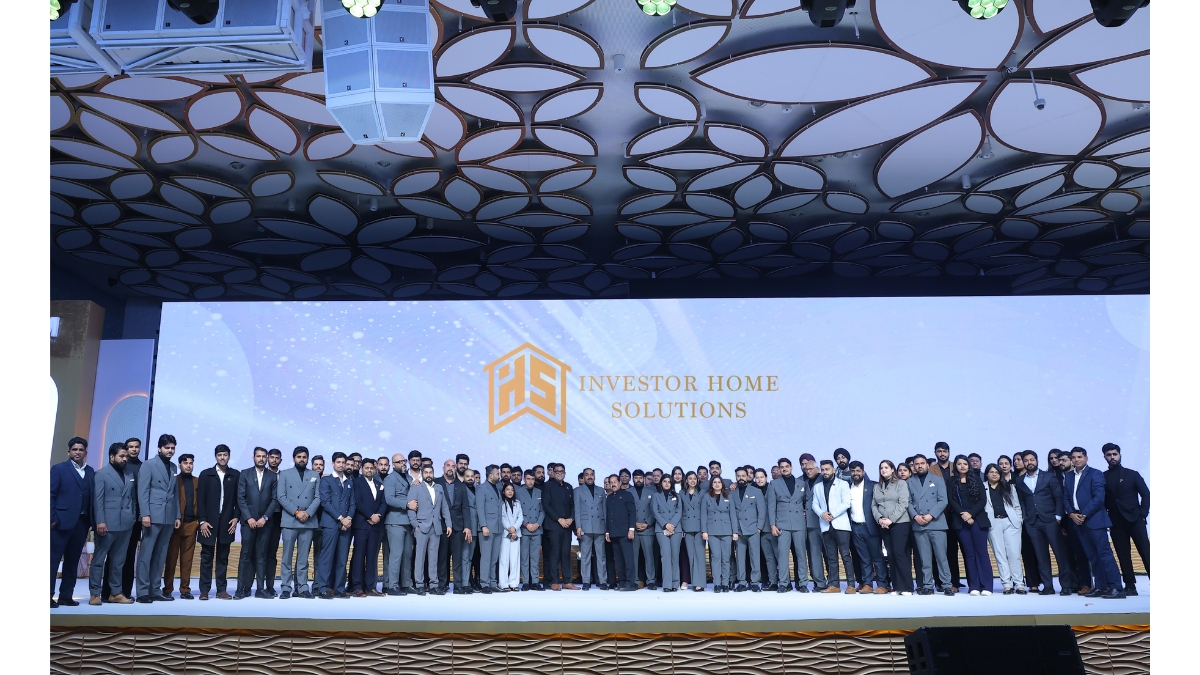
    New Delhi [India], January 12: India’s luxurious property market has just experienced another milestone as Investor Home Solutions (IHS), for the first time in history, has managed to bring together 2,000+ all-industry high-net-worth investors under one roof. This was held on 10th January at Yashobhoomi in New Delhi and was solely based on the upcoming trend of branded residences.

    The event emphasized investment insights over conventional showcases, highlighting the evolving landscape of branded residences and the rising demand for globally inspired, ultra-luxury homes that offer unparalleled exclusivity.

    Investor Home Solutions aims to achieve ₹5,000 crore in ultra-luxury Gurgaon real estate this year, highlighting the region’s rise as a premium investment hub.

    According to Mr. Kanwar Pal Singh, Founder of Investor Home Solutions, “The investor meet is a defining moment that heralds the arrival of the luxury residential property segment in the Indian market. With our initiative, we were able to unlock a new investment space that offers enormous potential and value and brought together the choicest investors on the platform.”

    One of the major highlights at the event was the exclusive launch of branded and luxury homes, providing insight into branded luxury residential projects set to transform the ultra-premium real estate market in India. The event was also marked by its large-scale exclusivity, as investors from various sectors were given a platform to stay updated on trends related to branded luxury lifestyles and high-end property investments.

    Mr. Tridev Kapoor, Director – Sales, Investor Home Solutions, added, “What truly sets this investor meet apart is the depth of engagement and maturity of dialogue we witnessed. Today’s ultra-luxury investor is not only looking at aesthetics but also long-term value, global alignment, and asset credibility. Branded residences answer that need, and this platform allows investors to evaluate the segment with clarity and confidence.”

    Thus, with such an investor-oriented event organized without prior publicity, IHS reaffirmed its position of leadership in luxury and branded residential investments. The event positioned branded residences as an independent asset class with high growth, thus setting a new benchmark for investor outreach and education in India.

    Through this initiative, IHS continues to raise the bar for branded and premium residential investments through a combination of market insight, exclusive access, and strategic engagement to redefine India’s luxury property sector.

    If you object to the content of this press release, please notify us at pr.error.rectification@gmail.com. We will respond and rectify the situation within 24 hours.

  • One Nation One Subscription: 13,400 Journals Powering India’s Research Boom

    One Nation One Subscription: 13,400 Journals Powering India’s Research Boom

    One Nation One Subscription: For years, scholarly journals have been prohibitively expensive. Most Indian institutions, especially state universities and smaller colleges, simply could not afford subscriptions to leading global research databases. The result was predictable: unequal access, uneven research quality, and bright students forced to rely on abstracts instead of full academic papers. Over time, this created a silent but serious knowledge divide.

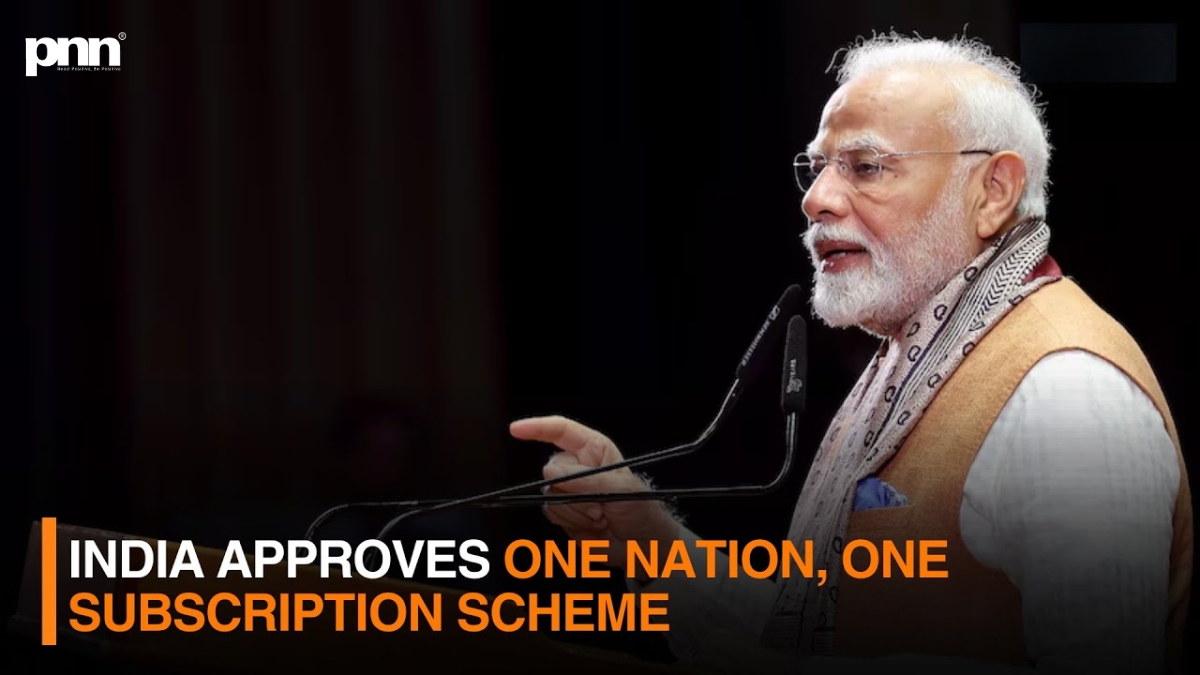
    At scale, One Nation One Subscription (ONOS) addresses this gap. Under the initiative, the Government of India is brokering national-level licenses for academic journals and research publications, making them accessible to students, researchers, and faculty across institutions. Access is no longer selective or privilege-driven. It is national. This is not symbolism. It is infrastructure.

    The ₹6,000 Crore Question

    Yes, the number matters. ONOS is backed by a ₹6,000 crore investment coordinated by INFLIBNET, the government’s nodal body for academic digital infrastructure. This funding is not about optics. It is about leverage.

    Instead of thousands of institutions negotiating separately with global publishers, India now negotiates as a single entity. That shift changes the equation overnight. The country gains broader coverage, lower cost per user, and stronger negotiating power. According to official details, ONOS will provide access to over 13,400 academic publication sources spanning science, medicine, social sciences, and the humanities. At this scale, access does not just improve availability. It reshapes academic behaviour, expectations, and outcomes.

    How One Nation One Subscription Transforms the Student Experience

    The real impact of

    One Nation One Subscription

    is felt at the ground level. A postgraduate student in a tier-2 city can now read the same journals as a student in a top central university. A doctoral scholar no longer waits weeks for an overseas contact to share a PDF. Faculty members can assign readings without worrying about paywalls blocking students.

    The effect is immediate and practical. Research timelines shrink. Output quality improves. Academic confidence rises. As reported in national coverage, more than 1.8 crore students are expected to benefit from the initiative. This is not an elite reform designed for a handful of institutions. It is academic mass empowerment. Unlike many reforms that take years to show impact, ONOS solves a daily, lived problem for students and researchers.

    Why This Matters Beyond Campus

    ONOS is not just an education policy. It is an economic one. Countries that dominate globally do so by gaining early and broad access to knowledge. ONOS supports India’s transition from service-led growth to research-driven development by strengthening the foundation of innovation.

    Better access to research enables:

    • Stronger patents and intellectual property

    • More credible policy research

    • Faster innovation cycles

    • Globally competitive scholarship

    The initiative also aligns with India’s Digital Public Infrastructure approach, where access to essential systems is treated as a civic right rather than a luxury. Knowledge, like roads or electricity, becomes more powerful when shared at scale.

    Libraries, Universities, and the New Academic Map

    ONOS quietly redefines the role of academic libraries. Libraries move away from being gatekeepers of scarcity and become facilitators of abundance. Librarians are no longer forced to fight budget constraints to choose which journals to drop each year.

    For newer and regional universities, the impact is transformative. Institutional credibility improves, faculty recruitment becomes easier, and research output rises. This matters because academic ecosystems often skew in favour of already-privileged institutions. ONOS does not dilute excellence. It expands the base that excellence can emerge from.

    India’s Knowledge Economy Moment

    India has spoken for years about becoming a knowledge economy. ONOS is one of the few policies that actually builds the necessary plumbing. There are no slogans, no marketing gloss, and no inflated promises. Just access.

    The most effective reforms often appear unremarkable at launch. This one will age well. Years from now, when Indian research citations increase and global collaborations deepen, ONOS will be recognised as a quiet but decisive turning point. Not loud. Not flashy. Just firm, national, and built to last.

    Cabinet approves One Nation One Subscription (ONOS)
    https://www.pmindia.gov.in/en/news_updates/cabinet-approves-one-nation-one-subscription-onos/

    http://onos.gov.in/

    PNN News

  • The Future of Next-Gen Connectivity: 6G and Wi-Fi 7 and Edge Computing

    The Future of Next-Gen Connectivity: 6G and Wi-Fi 7 and Edge Computing


    Bengaluru (Karnataka) [India], January 12: Next-gen connectivity is evolving into blueprint in a world where all gadgets, all cars, and all factory creatures are yelling at each other to become smarter and faster connected. A dynamic triumvirate is emerging, including 6G networks, Wi-Fi 7 wireless and edge computing architectures, as wireless standards move beyond 5G and Wi-Fi 6. They also offer not only quicker connections, but an altogether new language of how devices communicate, compute and cooperate; tomorrow, the digital aspect of life will be more immersive, intelligent, and reliable than ever.

    Connectivity Beyond Speed

    In the past, each generation of a wireless technology increased the data rate with every succession. Since mobile browsers via 3G enabled connecting to the Internet and 4G heralded the streaming revolution, 5G is changing the world with ultra-low latency to support IoT and AR/VR. Now, engineers and researchers are preparing the groundwork of the next jump 6G that is likely to come about in 2030. The networks will integrate intelligence into the infrastructure directly and a combination of communication and computing and sensing is going to be available.

    In contrast to previous standards, which were designed with human users browsing or streaming as their primary use case, 6G is being developed as an Internet of Everything, where machines, sensors, and autonomous systems in the billions interact in real time. The adoption of AI in the network core will enable 6G networks to understand traffic dynamically, reduce congestion, and context-aware applications, as 6G networks will be able to reason and think alongside the applications they are providing.

    Wi-Fi 7 A Step Change in Local Networks

    As mobile standards are keeping pace, so is a significant upgrade to wireless local area networks (WLAN). Wi-Fi 7 (IEEE 802.11be) adds improvements to the achievements of Wi-Fi 6 and 6E, but these improvements are not in performance on paper, but in capacity to fulfill the most real-life functions.

    Wi-Fi 7 focuses on efficiency, reliability, and multi-link functionality – the ability of devices to connect with each other using multiple frequency bands at once – rather than showing theoretical maxs. This represents a less frictional operation in densely populated areas such as office floors, civic areas, and smart houses full of devices.

    These enhancements are not only speed-related. Wi-Fi 7 will reduce latency and increase connection stability when using high loads, which modern applications, such as cloud gaming, real-time collaboration tools, and AR/VR experiences, specifically need: more intelligent scheduling and better spectrum use.

    Edge computing: Moving the Cloud Closer

    At the base of connectivity and computation, we have another significant trend, which is edge computing. Rather than sending all the bits of data to remote cloud servers to be processed, edge architectures bring the computing resources nearer to devices, perhaps in base stations, local data centres, or even the devices.

    This change is important in applications that have no tolerance for delay. Consider self-driving cars communicating sensor data within the span of microseconds, or a self-driving robot controlling a factory production line remotely. Managing decisions on the edge can reduce latency and bandwidth usage by several orders of magnitude and increase responsiveness, which is ideal in combination with the ultra-fast, ultra-intelligent networks of the future.

    Connectivity That Thinks

    Next-gen connectivity technologies are changing the nature of the operation of networks together. The upcoming standards such as 6G will be directly integrated with AI in the radio access network (RAN) – intelligent resource allocation, proactive maintenance, and intelligent routing. Networks will not respond to congestion or interference, but they will anticipate them.

    This is not in the abstract: in industry, alliances are already propelling the research on AI-enhanced networking, linking telecommunications infrastructure with more powerful platforms of computation capable of processing even more complex data streams.

    On the domestic and business front, on the other hand, Wi-Fi 7 is becoming popular with vendors launching advanced chipsets that enable synchronised transmissions, spatial reuse and low-latency routing. These are not enhancement activities, but they are a jump to the point of connection quality, where consistency is a key factor compared to speed.

    Impact in the World: The Intersection of Connectedness and Everyday Life.

    The effects of such an evolution are much more than speedy downloads:

    The Smart Cities will employ hyper-connected sensors and real-time analytics to streamline traffic, energy and community services.

    With low-latency control loops and predictive diagnostics, industrial IoT will be more profitable in terms of uptime and safety.

    Entertainment and Collaboration technologies – holo-conferencing to cloud gaming will cease to be experienced as a service but as part of reality.

    Remote surgery or intelligent telehealth Systems will operate on networks where a thousandth of a second can make a difference.

    A Steady Road to Deployment

    Although Wi-Fi 7 devices are now coming to the market, and edge computing is deploying at a faster pace, 6G remains several years away, where commercialisation is concerned, forecasted to happen between 2028 and 2030. However, the roadmap is already being developed by research, partnership, and early prototype networks.

    It is a gradual transformation of the existing wireless generations to smart, edge-enabled ecosystems, which is based on a general industry agreement: speed is no longer the main reason behind connectivity, but smartness, reliability, and seamless experience.

    The conclusion is a connecting point, which is to find a way of connecting the Future.

    What used to be science fiction, network learning, computing on the fly, and adapting, is soon to be a reality of tomorrow. With the core of digital transformation being next-gen connectivity, organisations and consumers will all gain through a more responsive, smarter and integrated wireless world.

    It might be an AI-driven 6G system, an ultra-fast Wi-Fi 7 installation, or an architecture of distributed edge computing, but the future of connectivity will be much more than high speed; it will be contextual, commensurate, and transformative.


    If you object to the content of this press release, please notify us at pr.error.rectification@gmail.com. We will respond and rectify the situation within 24 hours.

    Technology

  • Talentorial Achieves First Strategic Milestone: Partners with Jyothi Engineering College Within Month of Launch

    Talentorial Achieves First Strategic Milestone: Partners with Jyothi Engineering College Within Month of Launch

    New Delhi [India], January 12: Talentorial, the world’s first comprehensive AI-powered Career Enablement Hub, has achieved its first major strategic goal by securing a partnership with Jyothi Engineering College (Autonomous), Thrissur, within just one month of its official launch by end of 2025. This milestone marks a significant step toward the platform’s ambitious vision of supporting over one million learners by 2028.

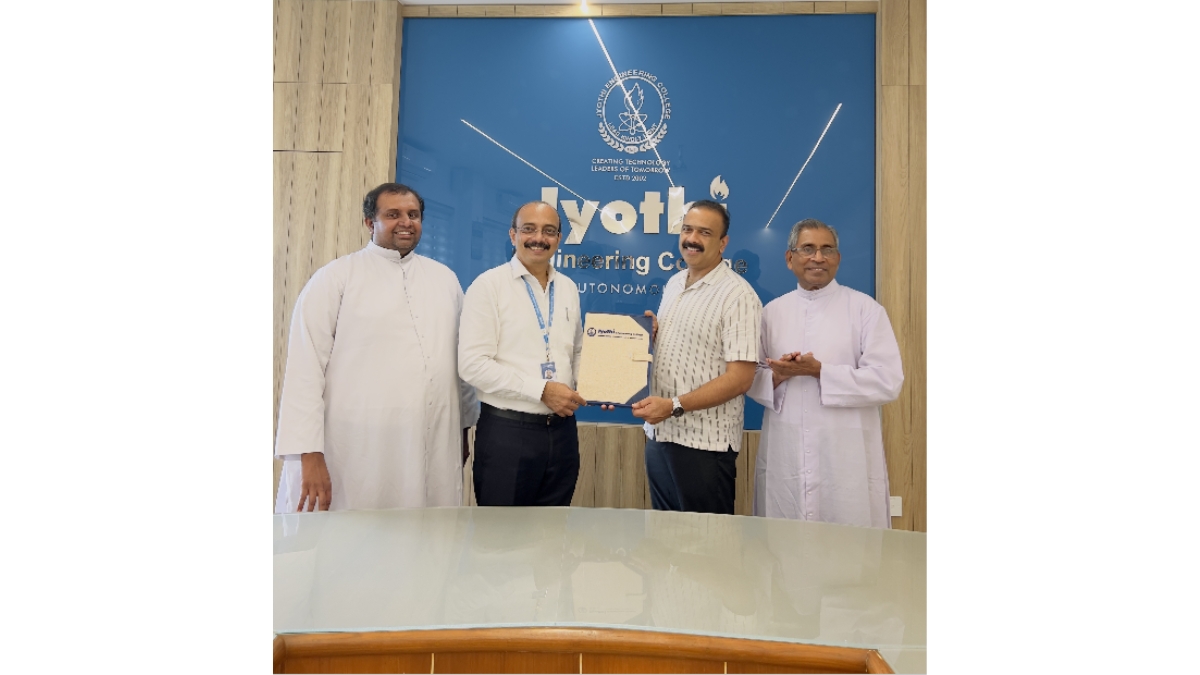
    The landmark Memorandum of Understanding (MoU), signed, will integrate Talentorial’s cutting-edge AI-powered assessments, personalized mentorship, and industry-aligned training programs into Jyothi Engineering College’s curriculum, directly addressing the critical gap between education and employability.

    “Achieving this partnership within our first month validates the urgent market demand for integrated career enablement solutions,” said Nishen Roy, UAE-based Founder & CEO of Talentorial. “This represents our first strategic goal accomplished, and it demonstrates that institutions recognize the value of combining AI-driven assessments with human mentorship to transform student outcomes.”

    Under the partnership, Jyothi Engineering College students will gain access to Talentorial’s comprehensive 360-degree career development ecosystem, including:

    • AI-powered CV analysis with personalized feedback
    • Industry-aligned aptitude and attitude assessments
    • AI-driven mock interviews with real-time performance insights. Curative learning pathways that identify and close individual skill gaps,
    • Direct access to verified mentors and global industry professionals, smart matching with internships and job opportunities.
    • The institution will also benefit from data-driven insights through institutional dashboards that reveal employability gaps, enabling curriculum enhancements aligned with evolving industry requirements.

    The MoU was formally signed by Dr. P. Sojan Lal, Principal of Jyothi Engineering College, in the presence of College Executive Manager Rev. Fr. David Nettikkadan and Academic Director Rev. Dr. Jose Kannampuzha, and Nishen Roy, Talentorial’s Founder & CEO.

    “We’re creating equal opportunity, not just equal access,” Roy emphasized. “This partnership ensures that engineering students at Jyothi have access to the same world-class career enablement tools and global mentorship as peers in metropolitan centers worldwide.”

    “This will be extremely useful for enhancing the employability of our students from Jyothi, and the process improves the Graduate Readiness Framework Index”, said Jyothi Engineering College, Principal Dr. Sojan Lal.

    This achievement positions Talentorial on track with its roadmap to partner with 500+ academic institutions globally and build a mentor network of 100,000+ verified professionals. The platform, currently operational in India and the GCC, plans geographic expansion into Southeast Asia, Africa, and Latin America.

    Talentorial Achieves First Strategic Milestone: Partners with Jyothi Engineering College Within Month of Launch - PNN

    About Jyothi Engineering College:

    Established in 2002, Jyothi Engineering College, Thrissur, Kerala an autonomous institution dedicated to excellence in engineering education and the holistic development of students. The Institution offers 8 UG, 4 PG, and 7 PhD programmes. www.jecc.ac.in

    About Talentorial:

    Launched on November 17, 2025, Talentorial is the world’s first comprehensive AI-powered Career Enablement Hub that bridges the critical gap between education and employability. Founded by Nishen Roy and headquartered in the UAE, Talentorial integrates AI-driven assessments, personalized mentorship, academic collaboration, and employer engagement into a unified ecosystem. The platform democratizes access to career success, empowering learners from all backgrounds—including rural students and first-generation graduates—to build meaningful careers. The platform can propose career readiness to employers and thus shorten the recruitment process time considerably. Visit www.talentorial.com

    Media Contact:

    thomasurachael@gmail.com

    If you object to the content of this press release, please notify us at pr.error.rectification@gmail.com. We will respond and rectify the situation within 24 hours.

  • 2025 Didn’t Just Amplify Korean Culture — It Normalized Global Influence

    2025 Didn’t Just Amplify Korean Culture — It Normalized Global Influence

    Mumbai (Maharashtra) [India], January 10: By the time 2025 wrapped itself in a neat calendar bow, one thing became quietly undeniable: Korean culture was no longer “having a moment.” It had a system.

    There were no fireworks announcing this shift. No single viral performance crowned the year. Instead, Korea’s cultural presence unfolded the way real influence does — steadily, persistently, and with an almost unsettling confidence. Music tours sold out without dramatic marketing theatrics. Musicals crossed borders without apologizing for subtitles. Traditional arts found new audiences who weren’t chasing novelty, but meaning.

    The world didn’t just watch Korean culture in 2025. It integrated it.

    And that distinction matters.

    This wasn’t a year about expansion through spectacle. It was about maturation through breadth. Korean culture didn’t grow louder — it grew wider. And in doing so, it exposed a truth many industries prefer to ignore: longevity doesn’t come from trends; it comes from infrastructure.

    From Wave To Weather: The Evolution Of Cultural Power

    For over a decade, global conversations revolved around the “K-wave,” as if Korean culture were a temporary surge that might eventually recede. In 2025, that metaphor quietly expired.

    What unfolded instead was something closer to climate.

    K-pop remained a central force, yes — but it no longer carried the burden of representation alone. The ecosystem diversified. Musicals toured internationally with sold-out runs. Contemporary dance companies performed in venues once reserved for European troupes. Traditional percussion and folk forms appeared in global festivals without being labeled “exotic.”

    The message was subtle but firm: this culture doesn’t need translation to justify itself anymore.

    Music Still Leads — But It No Longer Dominates

    Let’s address the obvious: music continues to be Korea’s most visible cultural export. Stadium tours, streaming milestones, and cross-border collaborations remained strong throughout 2025. But something interesting happened beneath the numbers.

    Music stopped being the only entry point.

    Musical theatre productions from Korea saw expanded international runs, especially in markets historically hesitant to embrace non-Western stage work. These weren’t novelty bookings. They were commercial decisions backed by consistent ticket demand.

    And then there’s traditional arts — long treated as ceremonial rather than scalable. In 2025, curated adaptations and respectful modernisations brought them into contemporary cultural circuits without stripping their identity. That’s a delicate balance many countries attempt. Few sustain.

    Cultural Exports As Economic Strategy

    Behind the artistic success lies a very pragmatic reality: culture is now one of Korea’s most refined economic tools.

    The creative economy has matured into a layered system where music, theatre, heritage arts, fashion, gaming, and education feed into each other. This isn’t accidental. It’s policy-backed, institutionally supported, and globally positioned.

    That said, success comes with costs.

    Rising global demand has inflated production budgets, talent fees, and touring expenses. Smaller creative entities feel the squeeze. Not every traditional troupe or independent artist benefits equally from global attention. The spotlight, while flattering, is selective.

    Cultural export, when scaled too quickly, risks creating internal imbalance. And 2025 exposed some of those fault lines.

    The Global Audience Is No Longer Just Consuming — It’s Participating

    One of the most telling shifts of 2025 wasn’t what Korea exported, but how global audiences responded.

    International fans didn’t just attend performances or stream content. They enrolled in language programs. They traveled for cultural festivals. They engaged with historical contexts instead of skipping to the chorus.

    This deeper engagement signals a move away from surface-level fandom toward cultural literacy. And that’s where long-term influence is cemented.

    However, it also raises uncomfortable questions: How much cultural context can scale without dilution? Where does accessibility end and oversimplification begin?

    There’s no easy answer — only ongoing negotiation.

    When Success Becomes Expectation

    Here’s where the narrative turns slightly sharp.

    In 2025, Korean culture faced a new kind of pressure — not skepticism, but expectation. Global audiences now assume quality. Innovation is no longer a bonus; it’s a requirement.

    That’s dangerous territory for any creative ecosystem.

    Some critics have pointed out early signs of repetition in certain formats. Familiar structures reappear. Emotional beats echo earlier successes. This isn’t stagnation — but it’s a reminder that growth must be curated, not rushed.

    The danger isn’t failure. It’s overconfidence.

    Traditional Arts Find A Second Life — And New Tensions

    Perhaps the most quietly radical development of 2025 was the resurgence of traditional Korean arts on international platforms.

    These weren’t museum pieces. They were living practices — reframed, contextualised, and respected. Global audiences responded not with polite applause but with genuine curiosity.

    Yet within Korea, debates intensified. Purists questioned adaptation. Younger artists pushed for evolution. Cultural guardians worried about commodification.

    This tension isn’t a flaw. It’s proof of vitality.

    A culture that argues about itself is very much alive.

    Why 2025 Marks A Structural Shift

    What distinguishes 2025 from previous peak years is sustainability.

    This wasn’t a year of viral miracles. It was a year of repeat attendance. Return audiences. Institutional partnerships. Educational exchanges. Long-term contracts.

    Korean culture didn’t rely on algorithms alone. It relied on trust — built slowly, reinforced consistently.

    That’s why its influence feels less flashy and more permanent.

    The Global Creative Order Is Quietly Rebalancing

    The implications stretch beyond Korea.

    2025 demonstrated that cultural leadership is no longer geographically centralised. Creative legitimacy no longer requires Western validation. Audiences decide. Markets follow.

    Korea didn’t replace anyone. It simply occupied the space it earned.

    And that might be the most unsettling part for legacy industries still clinging to outdated hierarchies.

    Looking Ahead: Growth With Restraint Will Decide The Next Chapter

    The question isn’t whether Korean culture will remain influential. It’s whether it will remain discerning.

    Growth without restraint leads to erosion. Influence without introspection fades quickly. The strength of Korea’s cultural ascent lies in its willingness to refine, not just replicate.

    If 2025 proved anything, it’s this: cultural power doesn’t need to shout. It only needs to last.

    Final Thought: Not A Wave — A Foundation

    2025 didn’t crown Korean culture as a global novelty. It confirmed it as a global constant.

    Beyond pop, beyond drama, beyond trends — a diversified, resilient creative economy stood in plain view. Confident. Complex. Occasionally contradictory. Entirely human.

    And perhaps that’s why it resonated so deeply.

    PNN Entertainment

  • X-FECT 2026 Concludes at XLRI Jamshedpur with a Grand Finale Celebrating Sport, Solidarity and Social Impact

    X-FECT 2026 Concludes at XLRI Jamshedpur with a Grand Finale Celebrating Sport, Solidarity and Social Impact

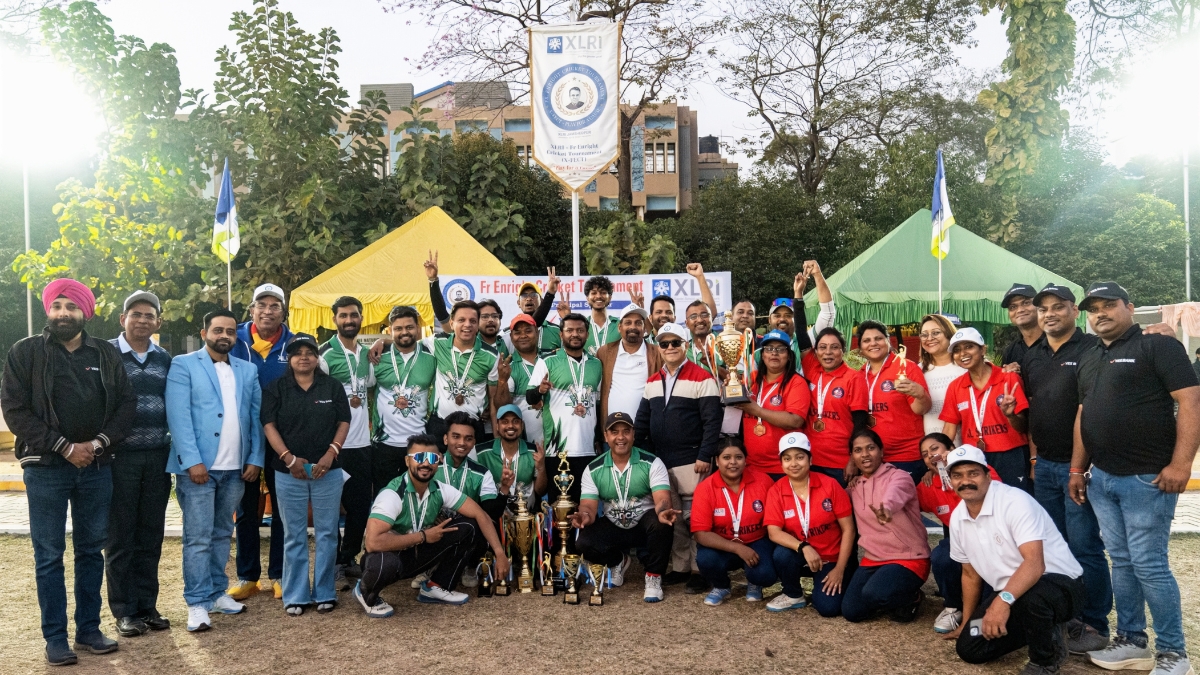
    Jamshedpur (Jharkhand) [India], January 12: XLRI – Xavier School of Management successfully concluded the third edition of the XLRI – Fr. Enright Memorial Cricket Tournament (X-FECT 2026) at the XLRI Grounds, marking the culmination of weeks of spirited competition, camaraderie and community engagement under the theme “Play for a Cause.”

    The tournament brought together the XLRI ecosystem students, staff, alumni, campus associates and well-wishers, reinforcing the institution’s commitment to service, solidarity and inclusive participation through sport.

    Women’s Tournament Highlights:

    The Women’s Final witnessed an exciting contest between Loyola Alumni Association and XL Strikers with XL Strikers emerging victorious by 30 runs.

    Player of the Match: Sandhya Singh for an outstanding all-round performance 45 runs off 25 balls and 1 wicket conceding 18 runs in 2 overs.

    The Women’s Third-Place Match saw XL Gliders secure victory over XL Stunners by 19 runs, finishing the tournament on a strong note.

    Men’s Tournament Highlights:

    In the Men’s Third-Place Match, Loyola Alumni Association defeated XLRI BM-HR by 4 wickets, demonstrating composure and consistency.

    The Men’s Final was played between JDCA (Jamshedpur Dental Cricket Association) and Vintage Warriors (DTDC) wherein JDCA won by 8 runs. Man of the Match was Dr. Vivek who scored 97 runs not out and gave 39 runs for 3 overs.

    Awards & Recognitions:

    The closing ceremony also featured recognition of exceptional performances and sportsmanship across both tournaments:

    Player of the Tournament (Men): Suraj Bhan Singh (JDCA)

    Player of the Tournament (Women): Navya (XL Gliders)

    Most Sixes (Men): Suraj Bhan Singh (JDCA)

    Most Sixes (Women): Kanika (XL Stunners)

    Fair Play Award: XL Panthers

    Best Disciplined Team: XL Eagles

    Spirit for the Game: XL Tigers

    A Tournament with Purpose:

    X-FECT 2026 featured 12 men’s teams and 4 women’s teams, with 240+ amateur players and an estimated cumulative footfall of over 5,000 spectators across match days. Beyond competition, the tournament upheld its social mission with funds raised being dedicated to charitable causes, reaffirming XLRI’s ethos of contributing to the welfare of the underprivileged.

    XLRI Extends its Heartfelt Gratitude to:

    Principal Sponsor Yes Bank, the Rolling Trophy was sponsored by Prof. Arup Varma (XLRI Alumni from PMIR 1982-84 Batch) in the loving memory of his mother Late (Mrs.) Leelawati Varma. All other Sponsors and partners for their generous support, Media partners for amplifying the spirit of the tournament. Organising Committee and volunteers for seamless execution. Umpires and match officials for upholding fairness and integrity. All participating teams for their enthusiasm, discipline and sportsmanship

    The closing ceremony was attended by Jesuit Fathers, members of XLRI leadership, faculty, staff, students, alumni and supporters, who together celebrated not just the winners but the collective spirit of the XLRI community.

    X-FECT 2026 stands as a testament to how sport can unite communities, nurture values and drive meaningful social impact truly living the spirit of Play for a Cause.

    If you object to the content of this press release, please notify us at pr.error.rectification@gmail.com. We will respond and rectify the situation within 24 hours.

  • PM-YUVA 3.0 Authors Get Powerful Push at Book Fair 2026

    PM-YUVA 3.0 Authors Get Powerful Push at Book Fair 2026

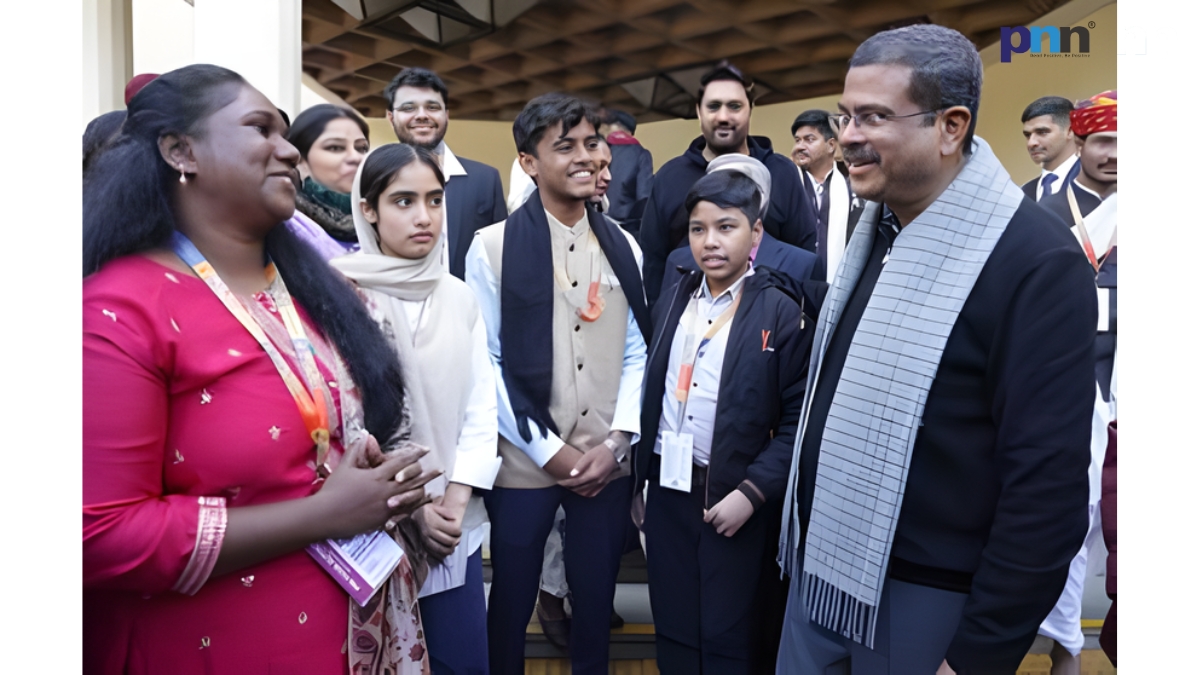
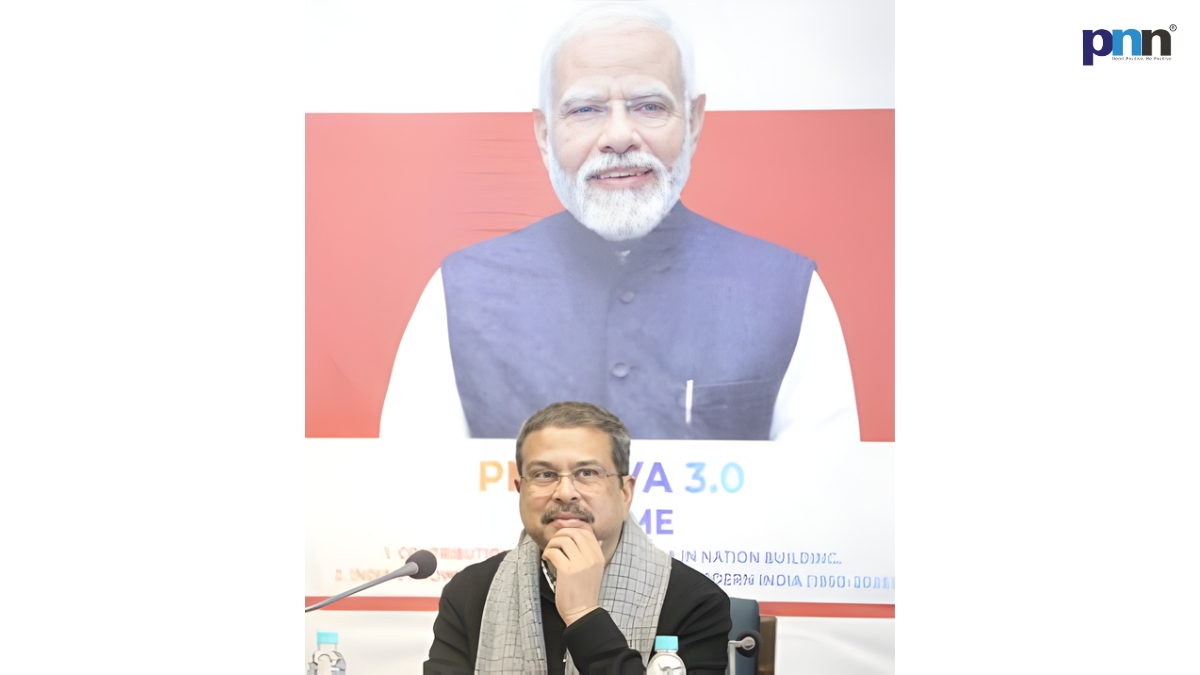
    New Delhi [India], January 12: Union Minister of Education Shri Dharmendra Pradhan met 43 authors identified as part of PM-YUVA 3.0 at the New Delhi World Book Fair 2026 and turned what could have been a perfunctory appearance into a wake-up call on where India is heading in its knowledge economy.

    Not a Ceremony, but a Conversation

    This was not a one-way speech. It was a conversation.

    The selected PM-YUVA 3.0 authors presented brief overviews of their manuscripts at Pradhanmantri Sangrahalaya in New Delhi. These manuscripts are being developed under a six-month mentorship programme. The range of subjects stood out immediately, covering the Indian Knowledge System, Makers of Modern India, and the contribution of the Indian diaspora to nation-building.

    Shri Pradhan congratulated the authors and encouraged them to make full use of the mentorship period. The message was simple and sharp: good books endure, fleeting attention does not. India needs work that inspires young readers to think, question, and write back.

    This was not about applause. It was about output.

    PM-YUVA 3.0 Authors Get Powerful Push at Book Fair 2026PM-YUVA 3.0 Authors Get Powerful Push at Book Fair 2026PM-YUVA 3.0 Authors Get Powerful Push at Book Fair 2026PM-YUVA 3.0 Authors Get Powerful Push at Book Fair 2026PM-YUVA 3.0 Authors Get Powerful Push at Book Fair 2026PM-YUVA 3.0 Authors Get Powerful Push at Book Fair 2026PM-YUVA 3.0 Authors Get Powerful Push at Book Fair 2026PM-YUVA 3.0 Authors Get Powerful Push at Book Fair 2026PM-YUVA 3.0 Authors Get Powerful Push at Book Fair 2026PM-YUVA 3.0 Authors Get Powerful Push at Book Fair 2026- PNN

    PM-YUVA 3.0: Not Books, but Builders

    The Prime Minister’s Young Authors Mentorship Scheme (PM-YUVA 3.0) is designed with a long-term vision. It is not merely a publishing exercise. It is intellectual capacity-building.

    Under the scheme, selected authors receive structured mentorship to refine research skills, strengthen writing discipline, and improve narrative clarity. During the interaction, authors also shared how their manuscripts are evolving within this framework.

    Shri Pradhan stressed that serious writing depends on access to quality research material. He directed that both physical and digital resources be facilitated through the National Book Trust (NBT). The instruction was clear: writers should not be constrained by lack of access.

    One Nation, One Subscription: Roadblock-Free Research

    One of the key highlights of the interaction was the reference to the One Nation, One Subscription (ONOS) initiative. Shri Pradhan stated that PM-YUVA authors should be provided access to academic and research resources available under ONOS.

    This matters.

    For young writers, especially those working on history, culture, technology, or public knowledge, access to credible research is often the biggest bottleneck. ONOS aims to level the field, ensuring that high-quality journals and academic material are not limited to a few elite institutions.

    To further strengthen academic grounding, the Minister proposed affiliating selected authors with central universities in their respective regions. The idea is straightforward and effective: anchor creativity in credible scholarship.

    Diversity Is Not a Buzzword, It Is Strength

    Shri Dharmendra Pradhan described the interaction as personally energising. He observed that the diversity among the selected authors reflected the diversity of India itself. Different regions, languages, academic backgrounds, and life experiences were represented in the same room.

    The discussions went beyond manuscripts. Conversations touched upon culture, technology, the pursuit of knowledge, and India’s national vision. According to the Minister, the confidence and aspirations of these young writers strengthened his belief in the idea of a Viksit Bharat.

    This was not symbolic diversity. It was working diversity.

    World Book Fair 2026: Strategy, Not Coincidence

    The timing and venue were deliberate.

    The 43 PM-YUVA 3.0 authors are participating in a national camp organised alongside the New Delhi World Book Fair 2026, being held from 10 to 18 January at Bharat Mandapam. The fair is organised by the Ministry of Education through the National Book Trust.

    The World Book Fair has evolved beyond a marketplace for books. It has become a point where policy, publishing, and public engagement intersect. By placing young authors in this environment, the programme exposes them simultaneously to publishers, readers, institutions, and ideas.

    Shri Dharmendra Pradhan inaugurated the fair on 10 January 2026, reinforcing the government’s focus on reading, writing, and knowledge creation.

    Institutions That Make It Happen

    Senior officials and institutional leaders attended the event, playing a crucial role in sustaining the ecosystem for young writers. These included Shri Vineet Joshi, Secretary, Higher Education; Shri Yuvraj Malik, Director, NBT-India; Dr Priyanka Mishra, CEO, Pradhanmantri Sangrahalaya; Shri Kumar Vikram, Chief Editor and Joint Director, NBT-India; and Shri Ravi K. Mishra, Joint Director, Pradhanmantri Sangrahalaya.

    Their presence underscored an important point: PM-YUVA 3.0 is not operating in isolation. It is supported by a network of educational, cultural, and publishing institutions.

    Why This Matters Beyond One Event

    PM-YUVA 3.0 is quietly addressing a long-standing gap in India’s education and cultural ecosystem. While the country produces millions of graduates, structured support for young non-fiction writers has remained limited.

    This initiative changes that equation. It treats writing as a serious intellectual pursuit, not a hobby. By linking young writers with mentorship, research access, institutional backing, and national platforms, it creates a rare and effective combination.

    And combinations like this are how lasting knowledge systems are built.

    Education Minister Dharmendra Pradhan inaugurates New Delhi World Book Fair 2026
    https://www.youtube.com/watch?v=l0I0BtDNAPM

    PNN News

  • Techno Paints announces Sachin Tendulkar as its Brand Ambassador

    Techno Paints announces Sachin Tendulkar as its Brand Ambassador

    Hyderabad (Telangana) [India], January 10: Master Blaster Sachin Tendulkar has been appointed as the brand ambassador of paints manufacturer Techno Paints and Chemicals. He will continue as the company’s brand ambassador for three years. The company, which has established a stable position in the domestic paints sector for 25 years and is operating successfully in eight states, is looking to expand across the country with the addition of Sachin.

    Techno Paints and Chemicals’ Chairman Akuri Srinivas Reddy said, “We are honoured to collaborate with one of the world’s most iconic cricketers and Bharat Ratna, Sachin Tendulkar. We are looking forward to achieving bigger and greater things this year with expansion and IPO, and no one could have been a better ambassador or growth partner for us.”

    Earlier in 2023, the company announced the appointment of film actor Mahesh Babu as its brand ambassador. He was the company’s brand ambassador for a period of two years.

    IPO to be launched this financial year

    Techno Paints and Chemicals’ Chairman Akuri Srinivas Reddy told the media on Saturday that the company will file DRHP in 2026-27. He said that the process will be completed in 2026-27 only. He revealed that Rs.500 crores will be raised through the IPO.

    Targeting revenue of Rs.2,000 cr

    The company earned a revenue of Rs 210 crore in 2024-25. It is expecting Rs 450 crore in the current financial year. Srinivas Reddy revealed that they are targeting to reach the Rs 2,000 crore level by 2029-30.

    The Indian paint industry is worth Rs 90,000 crore and is growing at a rate of 5-9 per cent annually. The per capita consumption of paints worldwide is 15 litres per year. In India, it is only 4.5 litres. Srinivas Reddy said that there is immense potential in this sector domestically.

    Plans to expand into new markets

    Techno Paints manufactures decorative, industrial and speciality paints. It has made its mark in the special texture finishes and construction chemicals segments. It is offering over 3,000 shades of decorative paints. The company has its own research and development centre in Hyderabad. And a state-of-the-art manufacturing plant at Pashamylaram near Hyderabad. It is currently operating in Telangana, Andhra Pradesh, Karnataka, Maharashtra, Gujarat, Delhi, Odisha, and Chandigarh. It is determined to expand to Himachal Pradesh, Tamil Nadu, Rajasthan, West Bengal, and Uttar Pradesh by the end of this year. It has decided to enter the Middle East in 2026-27.

    About Techno Paints

    Hyderabad-based Techno Paints has already completed more than 1,250 projects so far. It has painted buildings in the residential, commercial, industrial and hospitality sectors, covering an area of 180 crore square feet. Currently, 175 painting projects are ongoing in various states. Painting work has also started for 26,065 schools in Telangana. More than 5,000 expert painters are employed by the company. Srinivas Reddy revealed that they have become a top brand in the market due to their international standards and timely project completion. The company began its journey in 2001 with 10 people. Today, it continues to thrive with over 450 employees.