Author: Sutun Nayak

  • As Student Acquisition Grows Complex, UniBridge Consulting Addresses Gaps in Education Growth

    As Student Acquisition Grows Complex, UniBridge Consulting Addresses Gaps in Education Growth

    New Delhi [India], January 12: India’s education sector is undergoing a period of rapid change. Rising competition, increasing student acquisition costs, fragmented digital journeys, and underutilised data systems have made enrolment growth significantly more complex for universities and edtech companies alike. While many institutions invest in marketing and technology, the gap between strategy and execution continues to limit outcomes.

    It is within this context that UniBridge Consulting has announced its entry into the education consulting space. With a focus on addressing one of the sector’s most persistent challenges, Unibridge turns intent, data, and strategy into measurable enrolment outcomes.

    Rather than operating as a traditional advisory firm, UniBridge Consulting partners closely with education institutions to design and implement integrated growth systems. With a clear focus on execution and accountability, they cover marketing strategy, admissions processes, analytics, and technology enablement.

    “Most education institutions already know what they want to achieve. The real challenge lies in how those plans are executed across teams, tools, and timelines,” said Ankit Khare, Founder & CEO, UniBridge Consulting. “We work alongside institutions to bring structure, alignment, and measurable outcomes to their growth efforts; not as advisors on the sidelines, but as partners embedded in execution.”

    The firm’s work spans enrolment marketing strategy, digital performance optimisation, CRM and marketing automation implementation, admissions funnel design, and data-led decision frameworks. UniBridge Consulting also supports leadership teams in building growth roadmaps that reflect both institutional goals and on-ground realities.

    As education organisations face increasing pressure to demonstrate efficiency, transparency, and return on investment, UniBridge Consulting positions itself as a partner focused on building sustainable, predictable enrolment systems that are grounded in analytics, aligned teams, and disciplined execution.

    About UniBridge Consulting

    UniBridge Consulting is a growth consulting and execution firm focused exclusively on the education and edtech ecosystem. With offices in Pune, Bengaluru, and Gurgaon, the firm works with universities and education brands to strengthen enrolment outcomes through integrated strategy, execution, data analytics, and admissions optimisation.

    For more information, visit www.unibridgeconsulting.com

    If you object to the content of this press release, please notify us at pr.error.rectification@gmail.com. We will respond and rectify the situation within 24 hours.

  • Will Tuitions Be Replaced in 2026? EDZA AI Launches JEE/NEET Tutors

    Will Tuitions Be Replaced in 2026? EDZA AI Launches JEE/NEET Tutors

    Mumbai (Maharashtra) [India], January 12: By 2026, India’s tutoring debate has changed. It’s no longer about how big an edtech studio is or how many videos it has for a mass livestream class. It’s about one-to-one personal attention, who actually gets taught, and who gets lost.

    Today’s exam-prep edtech livestreams often teach tens of thousands of students at once. That scale comes with a clear cost: most students are never spoken to, never individually tracked, and never corrected in a way that fits how they think. Chats and polls keep viewers busy but not personal. Online personal tutoring services do offer that attention, but they’re expensive. Online one-to-one tuition can cost up to ₹3,000 an hour, with limited availability, putting consistent help out of reach for many families.

    So the real question isn’t whether AI will replace teachers. It’s whether it can spot repeated mistakes, implement fixing methods, and guiding practice by offering personal attention at scale. Generic AI searchbots are good at broad info lookup or content dumping.What they struggle to do is being highly exam-specific, outcome-focused and improve scores one student at a time. And that gap between mass livestream and expensive personal attention is where a new kind of tutoring is starting to emerge.

    A case study: Edza AI’s new JEE/NEET tutors 

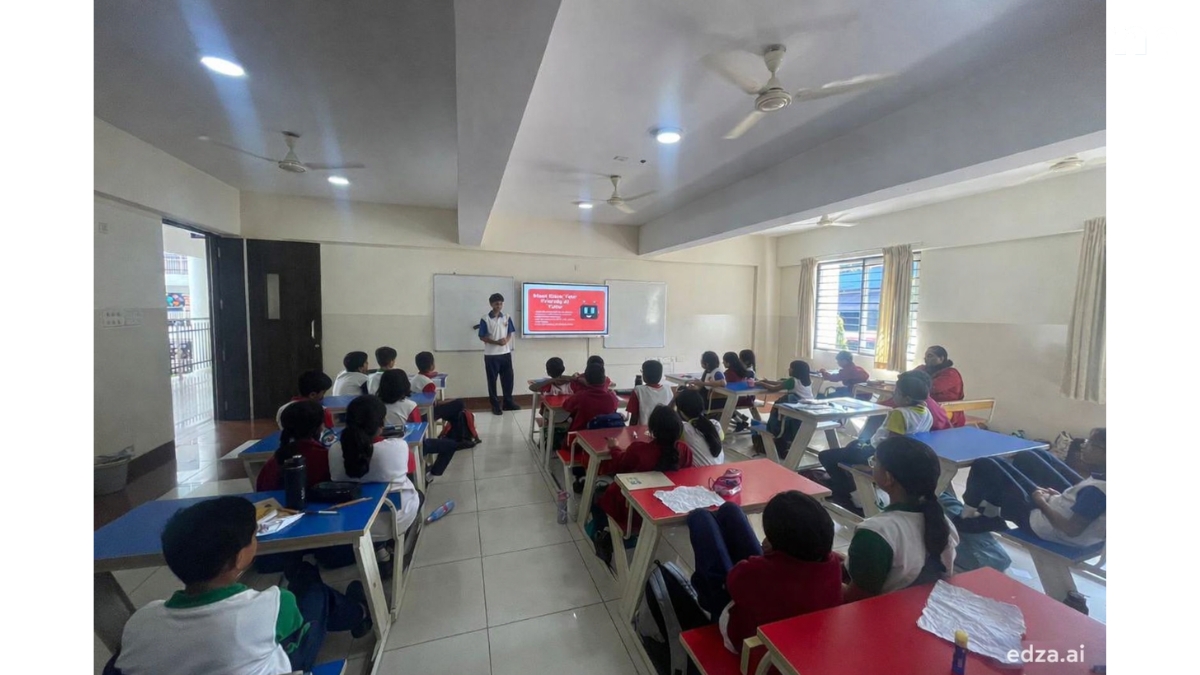
    One such product is Edza AI (edza.ai), a product of Maharashtra-based Hacktivspace Private Limited, which has positioned itself as a kind of “personal tutor cloned into AI,” an AI tuition teacher for Indian exams across Classes 7–12, now extended to JEE and NEET. Edza AI announced the JEE/NEET expansion a few days ago, saying it now supports JEE/NEET learners using the same approach. Edza AI already serves 30,000+ learners majorly across Classes 9–12, spanning multiple Indian boards.

    The company’s language is careful: it does not position itself as a replacement for school, but as a response to the personal attention deficit that makes expensive one-to-one tuition a necessity for many families.

    More details about the launch came from Rishabh, from the machine learning team at Edza AI, who completed his master’s studies at the University of Milan, Italy. He described the adaptive tutoring workflow system of Edza AI, built around a persistent learning context loop, tracking where a student is within a chapter, what they have already attempted, what they repeatedly misunderstand, and how their performance shifts over time, so that each session resumes with memory rather than starting from scratch.

    What “AI tuition” looks like in practice 

    The practical bet behind Edza AI, and a few other global products in this emerging category, is that tuition is not a single activity, it is a bundle.

    1) Remembering mistakes and weak areas: Instead of treating each doubt as isolated, the Edza AI tutor retains a record of recurring errors and revisits them through targeted practice, to turn revision into a loop that tightens around weak spots.

    2) Continuous adaptive assessment loops: Hacktivspace Pvt. Ltd. describes an adaptive assessment flow: students test, the tutor detects the pattern of mistakes, then adjusts the next set based on performance signals instead of a fixed blueprint.

    3) Answer-sheet and marking-scheme-aligned feedback: A key claim is alignment with board-style evaluation: students can upload answer sheets, receive step-level commentary, and see analysis mapped to marking logic to improve method marks.

    4) “AI Shorts”: text-to-animation inside the study flow Edza AI also markets short visual explanations, quick animations for concepts and solutions. In its JEE/NEET launch, the company explicitly listed “AI Shorts” alongside adaptive tests and voice-call tutoring.

    5) Voice-call tutoring with co-solving on whiteboard: Perhaps the most tuition-like mechanic is synchronous help: voice-based sessions where a student can show notes or an answer sheet and the tutor co-solves using figures, diagrams, and flowcharts on a collaborative whiteboard

    Across these features, the throughline is outcome-focus: the product is built around exam qualification and score improvement via personal attention at scale.

    So, will tuition be replaced in 2026?

    Not in the sweeping way the phrase is sometimes used. Human tuition does more than academics: it motivates, disciplines, and provides emotional scaffolding, especially when a student is anxious or burnt out. Even proponents of AI tutoring acknowledge that mentorship remains heavily human.

    But something meaningful can change in 2026: Routine, repeatable tuition tasks, drilling weak areas, generating targeted practice, checking method steps, converting doubts into short visual explanations, are exactly the kind of work software can scale.

    Mass livestreams may stay for schedule and coverage, but their weakness, individual attention, creates room for a second layer of learning that behaves like a personal tutor. Price pressure is real. When households are already paying high monthly tuition fees or online personal tutor’s ₹2,500/hour rates in some cities, a cheaper “always-available” personal tutor will not need to be perfect to be adopted, it only needs to be consistently helpful.

    In that sense, the more accurate forecast for 2026 is not “tuition ends.” It is: tuition gets unbundled. Some share of what families currently buy from tutors, diagnosis, repetition, checking, targeted practice, may shift to AI systems that can offer attention on demand, while human tutors increasingly concentrate on higher-touch mentorship and strategy.

    Edza AI is not the entire story. But its JEE/NEET launch offers a clear example of what the next phase of India’s edtech competition may revolve around: not bigger classes, but manufactured one-to-one attention delivered cheaply enough that the students who were never heard in a livestream can finally be responded to.

    If you object to the content of this press release, please notify us at pr.error.rectification@gmail.com. We will respond and rectify the situation within 24 hours.

  • Abhigyan Academy: From Assam to the Olive Greens – Shaping India’s Future Defence Leaders

    Abhigyan Academy: From Assam to the Olive Greens – Shaping India’s Future Defence Leaders

    New Delhi [India], January 12: In an era where corporate careers, startups, and global opportunities dominate career conversations, one profession continues to command unmatched respect and purpose a career in the Indian Armed Forces. Beyond job security or status, the uniform represents discipline, sacrifice, leadership, and an unwavering commitment to the nation. For thousands of young Indians, especially from Assam and the North-East, this calling is growing stronger than ever.

    At the heart of this movement stands Abhigyan Academy, a defence coaching institute in Guwahati that has steadily emerged as a trusted ecosystem for aspirants preparing for NDA, CDS, CAPF (AC), and AFCAT.

    Director’s Vision: Defence Preparation as Character Building

    From the Director’s Desk, Mr. Aryaman Panghal, the philosophy of Abhigyan Academy is clear defence preparation is not merely about clearing a written exam. It is about shaping disciplined, confident, and value-driven individuals ready to serve the nation with honour.

    Competitive defence exams demand much more than academic knowledge. They require mental toughness, conceptual clarity, consistency, and the right mentorship at every stage. Abhigyan Academy was founded on one core principle: quality education with accountability. In a highly competitive environment where lakhs of aspirants appear each year, casual preparation is not an option.

    The academy focuses on structured, result-oriented preparation where no student is left underprepared due to lack of guidance, resources, or mentorship.

    Why India’s Youth Are Choosing Defence Careers

    Unlike conventional 9-to-5 jobs that often offer routine and predictability, defence careers offer purpose. While corporate and private-sector jobs face uncertainty due to layoffs and market volatility, the Armed Forces provide stability, growth, respect, and lifelong dignity.

    For many aspirants, the motivation goes deeper than benefits. Wearing the uniform means serving the nation directly. It means standing guard at borders, participating in humanitarian missions, and leading under pressure. Defence careers shape leaders – not just professionals.

    The increasing participation of women officers has further transformed the landscape. From fighter pilots to frontline commanders, women are redefining the olive greens as an equal-opportunity calling, inspiring young women across Assam and the North-East.

    The North-East & Its Timeless Bond with the Armed Forces

    Assam and the North-East have always contributed bravehearts to the nation. From gallantry award winners to senior commanders, the region’s cultural emphasis on resilience, physical endurance, and community values aligns naturally with military life.

    Stories of heroes such as Captain Jintu GogoiRifleman Jaswant Singh Rawat, and Major Bob Khathing continue to inspire young aspirants. Their lives remind students that ordinary individuals can create extraordinary legacies through courage and discipline.

    In recent years, there has been a noticeable rise in NDA, CDS, and AFCAT aspirants from Assam, Manipur, Nagaland, and Arunachal Pradesh. However, many talented students face challenges such as limited exposure, lack of structured preparation, and insufficient mentorship.

    Where Guidance Makes the Difference

    This is where institutions like Abhigyan Academy quietly play a transformative role. More than a coaching centre, the academy functions as a community where aspirants receive academic clarity, discipline, motivation, and emotional support.

    One inspiring example is the journey of Arjun, an NDA aspirant from a small town in Assam. With limited resources but immense determination, his preparation gained direction after joining Abhigyan Academy. Daily live classes, recorded lectures, NCERT-based structured material, and regular mock tests replaced confusion with confidence. His eventual success in the NDA written examination stands as proof that the right ecosystem can change destinies.

    What Makes Abhigyan Academy Stand Out

    – Comprehensive Defence Exam Preparation

    Structured coaching for NDA, CDS, CAPF (AC), and AFCAT, covering Mathematics, General Science, English, Polity, History, Geography, Economics, and Current Affairs – from NCERT basics to advanced exam level.

    – Experienced & Dedicated Faculty

    A strong academic team focused on conceptual clarity and exam relevance:

    • Swapnaneel Sharma Mazumder – Economics & Physics
    • Neelav Sir – Geography & History
    • Pallavi Ma’am – Chemistry
    • Niky Ma’am – Biology
    • Kaustav Sir – Polity
    • Bedanta Sir & Satarupa Ma’am – Mathematics

    – Specialised SSB Interview Guidance

    • Lt. Col. Akshay Rajput – Officer Like Qualities, GTO tasks & interviews
    • Akansha Baruah – Psychological development & mental conditioning
    • Tinat Masood – Personality development & communication skills

    – Live Classes + Recorded Lectures

    Daily live classes ensure discipline, while recorded lectures support revision and self-paced learning.

    – Online & Printed Study Material

    Concise, exam-focused material designed in-house and regularly updated to match the latest patterns.

    – Mock Tests & Performance Analysis

    Sectional tests and full-length mock exams simulate real exam pressure, with detailed feedback to improve speed, accuracy, and temperament.

    Beyond Coaching: Shaping Leaders of Tomorrow

    Abhigyan Academy treats students not as roll numbers but as future officers of the Indian Armed Forces. The responsibility does not end with syllabus completion; it extends to mentoring, motivating, and guiding aspirants throughout their journey.

    For India, especially the North-East, encouraging more youth to choose defence careers is not just about employment  it is about national strength, integration, and leadership. The olive greens represent a life of honour, responsibility, and purpose.

    Connect with Abhigyan Academy

    For aspirants who dream of serving the nation in uniform and seek the right guidance, Abhigyan Academy welcomes you to connect and take the first step towards a defence career.

    Contact Number:
    +91 95405 04779

    Address:
    3rd Floor, Kalpana Market,
    Guwahati Club,
    Guwahati, Assam – 781003

    Website:
    https://abhigyanacademy.com/

    Follow Us on Social Media:
    Instagram: https://www.instagram.com/academyabhigyan
    Facebook: https://www.facebook.com/share/1Jc3rrt5bm/

    Your Dream. Our Guidance. One Destination – Success in Defence Services.

    Compiled with insights from Mr. Aryaman Panghal (Director) and Swapnaneel Sharma Mazumder,

    General Studies Faculty, Abhigyan Academy, Silpukhuri, Guwahati

    If you object to the content of this press release, please notify us at pr.error.rectification@gmail.com. We will respond and rectify the situation within 24 hours.
  • Korean Content Isn’t Trending — It’s Settling In And Refusing To Leave

    Korean Content Isn’t Trending — It’s Settling In And Refusing To Leave

    Mumbai (Maharashtra) [India], January 10: For years, people have been predicting an inevitable cooling-off period. The “peak K-wave.” The moment when Korean content would politely bow, smile for the cameras, and retreat back into niche fandoms. And yet, week after week, streaming charts tell a far less dramatic story.

    Korean shows are not spiking. They’re camping.

    Titles like Culinary Class Wars and The Great Flood continue to occupy top positions on global non-English streaming charts, not as viral anomalies but as reliable performers. No hysteria. No novelty shock. Just steady, almost inconvenient consistency — the kind that makes industry analysts uncomfortable because it refuses to fit old forecasting models.

    This isn’t about one breakout hit anymore. It’s about endurance. And endurance, as it turns out, is far more disruptive than hype.

    Before diving into formats, data, or industry recalibrations, it’s worth stating the obvious: audiences didn’t wake up one day and decide Korean content was “cool.” They simply stopped caring where good stories came from. Geography lost its leverage. Language became optional. Quality did the talking — and kept talking long after the headlines moved on.

    The Charts Are Calm — And That’s The Point

    The most telling detail about Korean content’s current dominance isn’t the rankings themselves, but how unremarkable they’ve become. Seeing Korean titles populate weekly global charts no longer sparks surprise. It sparks routine.

    Culinary Class Wars thrives not because it reinvents food television, but because it respects the intelligence of its audience. Competition exists, drama simmers, but the show never insults its viewers with artificial tension. The pacing breathes. The personalities feel textured, not manufactured.

    The Great Flood, on the other hand, taps into a different instinct entirely — existential anxiety dressed as spectacle. Environmental fear, survival ethics, human fragility. Big themes, but grounded storytelling. It doesn’t scream urgency; it lets dread accumulate.

    Together, they illustrate something crucial: Korean content isn’t succeeding because it follows a formula. It’s succeeding because it’s comfortable breaking rhythm.

    Sustainability Over Sensation

    Here’s where the conversation shifts from fandom to infrastructure.

    What Korean streaming content has achieved is not viral dominance, but programmatic trust. Viewers click play without needing persuasion. They expect competence. That expectation is earned, not marketed.

    From a PR perspective, this is gold. Sustained viewership week after week signals something deeper than promotional success — it signals habit formation. And habits are notoriously hard to disrupt.

    However, sustainability comes with pressure. Maintaining output quality at scale is a quiet risk no one likes to headline. More productions mean more scrutiny. More expectations. Less margin for mediocrity.

    Audiences forgive one bad episode. They don’t forgive complacency.

    Why The World Keeps Coming Back

    It’s tempting to credit aesthetics or novelty, but the real hook lies elsewhere.

    Korean storytelling often refuses to spoon-feed emotional cues. Silence is allowed. Characters are permitted to be unlikable, contradictory, and unresolved. The narratives trust viewers to keep up — a radical act in an era obsessed with engagement metrics.

    There’s also a cultural confidence at play. These shows don’t over-explain themselves for international audiences. They don’t dilute cultural specificity to chase relatability. Ironically, that restraint is precisely what makes them universal.

    The message is subtle but firm: meet us where we are. Viewers do — gladly.

    The Quiet Economics Behind The Boom

    From a production standpoint, Korean series still operate with comparatively disciplined budgets, especially when measured against Western counterparts chasing cinematic spectacle. That efficiency has allowed platforms to take calculated risks without hemorrhaging capital.

    But here’s the uncomfortable truth: rising global demand is already inflating costs. Talent fees are climbing. Production timelines are tightening. The industry is no longer operating under the radar.

    With visibility comes vulnerability.

    If costs escalate faster than creative returns, the same system that nurtured this dominance could strain under its own success. Sustainability isn’t just about audience appetite — it’s about economic balance.

    Not Immune To Fatigue

    Let’s not romanticise endlessly.

    There are signs — subtle, but present — of thematic repetition creeping into certain genres. Some narratives lean too heavily on familiar emotional beats. Some character archetypes are starting to echo each other a bit too loudly.

    Global audiences are forgiving, but they are not passive. The very viewers who embraced Korean content for its originality will be the first to disengage if originality dulls.

    This isn’t a decline. It’s a warning label.

    The Global Shift No One Wants To Admit

    Perhaps the most significant implication of Korean content’s sustained performance is what it reveals about the broader streaming ecosystem.

    The old hierarchy — English-first, everything else supplementary — is quietly collapsing. Not through rebellion, but through irrelevance.

    Content is now judged less by origin and more by emotional return on investment. Does it reward attention? Does it linger after the credits? Does it respect the viewer’s time?

    Korean series consistently answer “yes.” Others are scrambling to catch up.

    What Comes Next Will Matter More Than What Came Before

    The future of Korean content on global platforms will depend less on expansion and more on curation. Knowing when not to produce is just as important as knowing what to greenlight.

    Audiences don’t want more Korean shows. They want better ones.

    That distinction will define the next phase.

    The Long Game, Not The Loud One

    If there’s a single takeaway here, it’s this: Korean content isn’t dominating streaming charts because it’s chasing dominance. It’s there because it never chased at all.

    While others sprinted after trends, it focused on craft. While algorithms screamed for attention, it trusted viewers to find it. And now, quietly, methodically, it’s become part of global viewing muscle memory.

    No victory laps. No dramatic proclamations. Just consistency — the most subversive strategy of all.

    PNN Entertainment

  • Sri Sri Ravishankar Vidya Mandir Reports Exceptional Progress by Implementing The Mind Sync

    Sri Sri Ravishankar Vidya Mandir Reports Exceptional Progress by Implementing The Mind Sync

    Ulhasnagar (Maharashtra) [India], January 10: As the pace of life accelerates and everyone becomes absorbed in daily demands, the space to nurture our mental health grows smaller, yet the need for it grows greater. Understanding shifting emotional needs of today’s children, rooted in the belief that true education cultivates both intellect and inner strength, Sri Sri Ravishankar Vidya Mandir, Ulhasnagar, has boldly implemented India’s First Mental Health Education Curriculum as a key part of its holistic learning approach. This forward-thinking adoption places SSRVM among the initial Indian schools to integrate structured emotional education into everyday schooling. This thoughtful integration aims to support every child in developing emotional clarity, resilience, compassion, and mindful living. Developed by a Harvard-trained Psychiatrist, Dr Shivam Dubey, and made feasible for implementing in schools across India by Founder, Mr Manas DubeyThe Mind Sync Curriculum works on a triangle training philosophy catering to students, teachers and parents. Through neuroscience and psychological concepts, this curriculum integrates cognitive development, emotional intelligence, and practical life skills into a cohesive 30-week mental health education curriculum centred on the five social and emotional learning skills. 

    The paradigm of ‘school’ has often been described as a second home to children, with teachers as guardians and guides. Keeping this in mind, teachers at SSRVM have been officially certified as Mental Health Educators, equipping them to understand, support, and guide students with greater emotional sensitivity and psychological awareness. Teachers of SSRVM report feeling more confident in handling classroom emotions, managing their own stress, and fostering healthier student relationships, creating a more mindful and emotionally safe learning environment. The Program Manager at The Mind Sync, Ms Mayuri Godbole, strives to make this implementation process smooth and efficient for the teachers, children, and parents at SSRVM, Ulhasnagar.

    A key highlight of the transition has been the successful implementation of the Self-Awareness and Self-Management skills for Grades 1-5, showing exceptional progress across all grades, where 99.33% of students have now achieved age-appropriate self-awareness. It was also seen that students, as young as 6 & 7 years old, displayed strong emerging emotional awareness. Students across all 5 grades showed maturity in recognising stressors and practising healthy study habits. Additionally, the second assessment done at the school showed that 100% of the students have learnt to manage their emotions and behaviours effectively. Even at this young age, students are learning to stay calm in everyday situations and respond in thoughtful and age-appropriate ways. With regular practice and implementation of the learnt skills, they are walking strongly on the path of emotional intelligence. These results show that SSRVM’s commitment is already translating into measurable emotional growth, improved focus, and stronger resilience among students.

    Reflecting on this success, Ms Priyanka Pan, Acting Principal, SSRVM, Ulhasnagar, shared her thoughts- “It is with immense pride that I share the transformative impact of this unique implementation of Mental Health Education curriculum, a cornerstone of our commitment to holistic student development. The Mind Sync goes far beyond traditional health education. Through structured lessons and practical exercises, our students are learning to understand and name emotions, practice self-regulation and build resilience with improved concentration. We are not just educating young minds; we are nurturing whole individuals prepared to thrive both intellectually and emotionally in their future careers and communities.”

    For SSRVM, adopting this curriculum is not simply introducing another program; it is a deliberate commitment to nurturing emotionally strong, self-aware, and compassionate learners. At a time when the world moves faster than ever, when young minds are often overwhelmed by expectations, distractions, and silent pressures, SSRVM is choosing to pause, to listen, and to nurture what truly matters: the inner strength and mental balance of its students.

    As SSRVM continues its path of holistic education, the integration of India’s First Mental Health Education Curriculum reinforces a simple truth: academic excellence thrives in calm minds, steady hearts, and emotionally secure classrooms. By placing student well-being at the centre, empowering teachers with specialised skills, and equipping children to understand and navigate their inner world, the school is shaping a generation that is confident, compassionate, and truly future-ready. In a world that is changing faster than ever, SSRVM stands as a powerful reminder that when schools nurture emotional strength, students not only learn better, but they also grow, excel, and flourish in every direction.

    If you have any objection to this press release content, kindly contact pr.error.rectification@gmail.com to notify us. We will respond and rectify the situation in the next 24 hours.

  • PARAM SHAKTI Supercomputer Boosts India’s Research Power by 3.1 Quadrillion Calculations Per Second”

    PARAM SHAKTI Supercomputer Boosts India’s Research Power by 3.1 Quadrillion Calculations Per Second”

    New Delhi [India], January 10: When S Krishnan, the Secretary of the Ministry of Electronics and Information Technology (MeitY), recently inaugurated PARAM SHAKTI at IIT Madras, it was not the customary ribbon-cutting ceremony but a bold statement of India becoming more technologically empowered. PARAM SHAKTI is not just another supercomputer. It is built on homegrown hardware, based on C-DAC RUDRA servers, and operates on an indigenous software stack using the open-source AlmaLinux. It can perform 3.1 quadrillion calculations per second—yes, quadrillion, with a capital Q.

    It is not a flashy technological flaunt. It is an Indian science turbocharger. Researchers in aerospace, materials science, climate modeling, drug discovery, and advanced manufacturing now have a device that compresses decades of experiments into months, sometimes even weeks. Slow science? That’s officially a thing of the past. PARAM SHAKTI has put Indian research on the fast track, and the finish line is nowhere in sight.

    At Work: Building a National Supercomputing Mission

    PARAM SHAKTI is part of the flagship National Supercomputing Mission (NSM), led by MeitY and the Department of Science and Technology. The mission has already deployed 37 supercomputers across major Indian research institutions, with more under construction—including a massive facility planned in Bengaluru. India is not playing small; it is building a network of computational power capable of competing on a global scale.

    Krishnan highlighted the mission’s philosophy: differentiated, scale-oriented, and sovereign technology. It is not just about speed—it’s about independence. India is reducing dependency on single GPU vendors and foreign hardware or software stacks. The vision is clear: a robust AI and computational ecosystem capable of supporting India’s ambitious scientific and industrial plans.

    IIT Madras: Where Machines Meet Magic

    For IIT Madras, PARAM SHAKTI is more than a showcase. Operational since May 2025 and running at over 80% utilization, it supports research ranging from sub-atomic electronics to large-scale structural and climate simulations. With a power usage effectiveness (PUE) between 1.2 and 1.4, the supercomputer is energy-efficient while delivering high performance. Even supercomputers cannot ignore the electricity bill.

    Prof. V. Kamakoti, Director of IIT Madras, urged students and researchers to create energy-efficient, shareable, and robust programs, building on a legacy that started with the National Knowledge Network. E. Magesh of C-DAC also praised the rigorous engineering of the RUDRA servers, India’s homegrown answer to global HPC technology, proving that world-class performance does not require foreign reliance.

    Powering AI, Innovation, and India

    PARAM SHAKTI is not just a number-crunching powerhouse—it is India’s future-proofing strategy for research and innovation. Through the IndiaAI Mission, the supercomputer allows researchers to experiment freely, innovate boldly, and avoid tech monocultures. No foreign restrictions, no dependency graphs—raw computational power is fully in the hands of Indian scientists.

    The potential is enormous. Expect breakthroughs in drug design, climate prediction, aerospace innovation, and advanced manufacturing. This machine is the rocket enabling Indian scientists to operate at a speed and scale comparable to the world’s top labs. The message is simple: India can compete, and today it can compute faster, smarter, and bigger than ever before.

    PARAM SHAKTI is more than a supercomputer. It is an icon of India’s self-reliance, ambition, and technological boldness, placing the nation firmly on the global map for high-performance computing and next-generation scientific breakthroughs.

    Boosting India’s Global Research Standing

    With PARAM SHAKTI, India is no longer just a participant in the global research race—it’s becoming a leader. By providing world-class computational power domestically, the country reduces reliance on foreign supercomputing resources and strengthens its scientific sovereignty. Researchers can now tackle complex problems in AI, climate science, and advanced manufacturing at speeds that rival international labs, giving India a competitive edge in innovation and technological breakthroughs. This investment signals to the world that India is serious about being at the forefront of high-performance computing and global scientific discovery.

    PARAM SHAKTI 
    https://www.youtube.com/watch?v=9AtBzbllQ50

    PNN News

  • Hollywood Actor–Producer Prashant Rai Dedicates His New Song ‘Twin Soul’ to His Twin Soul, Disha Patani

    Hollywood Actor–Producer Prashant Rai Dedicates His New Song ‘Twin Soul’ to His Twin Soul, Disha Patani

    Mumbai (Maharashtra) [India], January 10: Hollywood actor and producer Prashant Rai has added an intriguing musical chapter to his creative journey with the release of his AI-powered single, “Twin Soul.” The evocative track, blending innovative technology with rich emotional resonance, stands as a tribute to Bollywood star Disha Patani, whom Rai describes as his “twin soul.” This artistic offering marks a bold fusion of cinematic sensibility and musical expression in the age of digital creativity.

    In an era where artistic mediums intersect with cutting-edge technology, Twin Soul emerges as more than just a song — it is a reflection on companionship, spiritual resonance, and the rare connections that echo across personal and creative life journeys. Rai’s intent isn’t simply romantic; he explores an expansive emotional landscape where two forces mirror, inspire, and elevate one another beyond conventional narratives.

    Defining the ‘Twin Soul’ Inspiration

    With Twin Soul, Rai embraces a concept that speaks to shared energies and deep interpersonal resonance. Popular culture often references twin connections in emotional contexts — for instance, the term has appeared across entertainment narratives ranging from celebrity introspection to cinematic themes about soulful bonds and mirrored experiences. The idea of a “twin soul” denotes a connection that feels profound, transformative, and spiritually rooted.

    For Rai, Disha Patani represents more than a muse; she embodies qualities of authenticity, inspiration, and artistic influence that have shaped his creative evolution. “Disha has always represented light, calm, and authenticity to me,” Rai shared in conversation about the track. “Twin Soul is a feeling. She has unknowingly inspired my artistic evolution, and this track is my way of honoring that connection. Some bonds are beyond logic, beyond timelines, and this one is exactly that.”

    This candid expression not only highlights the personal significance of the song but also underscores how artistic inspiration can transcend traditional genres and embrace technological innovation.

    Blending Cinema, Music & AI Technology

    What sets Twin Soul apart is its conscious blend of cinema, music, and artificial intelligence. Rai, acclaimed for his work in film production and performance, has planted a creative flag at the intersection of storytelling and sound. By leveraging AI in music composition and production, he challenges conventional boundaries — not simply for novelty, but to expand the emotional possibilities of the art form.

    This innovative approach signals a broader trend in entertainment where technology complements artistic vision rather than replacing it. In Rai’s case, AI becomes a tool that amplifies emotional nuance and overall storytelling, complementing his cinematic background while fostering listeners’ emotional engagement.

    Industry observers have noted that thoughtful uses of AI — especially in creative domains — offer musicians and storytellers new ways to articulate nuanced feelings. When used with integrity, such tech can augment narrative depth rather than dilute artistic intent.

    Artist Profile: A Creative Visionary Across Screens & Soundwaves

    Prashant Rai’s multifaceted career spans acting, production, and now music creation that draws on both technical fluency and heartfelt sentiment. Rai has steadily built a reputation for embracing diverse mediums, seeking to tell stories that resonate both visually and sonically.

    With Twin Soul, he reinforces this trajectory. Rather than relegating the track to a traditional genre, Rai invites listeners into an immersive experience — a musical meditation on connection, inspiration, and the intangible energies that bind human creativity.

    Celebrating the Muse: Disha Patani

    By dedicating Twin Soul to Disha Patani, Rai places a spotlight on one of Bollywood’s most admired contemporary performers. Patani’s aura and artistic presence have captivated audiences across film and social media platforms, making her a compelling figure within India’s entertainment landscape.

    While Rai’s dedication might raise eyebrows for its personal positioning, it also shines a light on the often underexplored dimension of artistic influence. Creative minds frequently draw strength, inspiration, and perspective from the work of others — whether collaborators, contemporaries, or admired figures.

    Reception & Artistic Impact

    Early reactions to Twin Soul have highlighted its emotional sincerity and technological smoothness. Audiences have responded positively to the way the track marries poetic lyricism with spectral melody, noting the song’s reflective ambience and layered expression.

    In a digital landscape crowded with formulaic releases, Twin Soul stands out as an example of how thoughtful art — rooted in genuine emotion and powered by innovation — can find resonance. It encourages listeners to consider not just what they hear, but what they feel and how that emotional imprint is shaped by both sound and story.

    Looking Ahead: The Future of AI in Artistic Expression

    As AI continues to shape the frontier of creative output, artists like Rai are leading with intention. His work signals that technological augmentation, when paired with heartfelt artistic purpose, can elevate the way audiences experience music — especially in genres where emotional nuance matters most.

    More broadly, Twin Soul may open doors for other performers to experiment with hybrid artistic forms, encouraging a wave of innovation where storytelling, sound design, and artificial intelligence coalesce.

    Whether audiences connect with the song as a tribute, a standalone musical piece, or an exploration of soulful parallels, Twin Soul represents a noteworthy moment in Prashant Rai’s evolving creative manifesto.

    View More Here: https://www.instagram.com/reel/DS5AqISAmAp/

  • From Seoul Sets To American Sofas: Why Ahn Hyo-seop’s Late-Night Moment Means More Than Applause

    From Seoul Sets To American Sofas: Why Ahn Hyo-seop’s Late-Night Moment Means More Than Applause

    Mumbai (Maharashtra) [India], January 10: When a Korean actor steps onto an American late-night stage, it rarely arrives as a loud announcement. No fireworks. No manifesto. Just a chair, a smile, and a conversation carefully calibrated for laughs between commercial breaks. Yet Ahn Hyo-seop’s upcoming appearance on The Tonight Show in early 2026 is not merely another celebrity stopover—it is a cultural checkpoint disguised as casual television.

    The move feels inevitable. It also feels overdue.

    Ahn Hyo-seop is not new to global attention. What’s changing is the ecosystem around him. Korean actors no longer arrive as “introductions.” They arrive as recognisable figures with existing fanbases, measurable reach, and proven commercial value. Late-night television, once a Western gatekeeping ritual, is increasingly a validation stop—not a starting line.

    That distinction matters.

    This moment isn’t about breaking into America. It’s about how America is slowly, somewhat reluctantly, learning to meet global entertainment on equal footing.

    The Long Arc Behind The Overnight Moment

    Ahn’s rise didn’t happen because global audiences suddenly discovered subtitles. It happened because Korean entertainment invested in narrative consistency, production polish, and export-ready storytelling years before Western platforms took it seriously.

    Before the animated spectacle of K-pop Demon Hunters introduced his voice to newer audiences, Ahn had already built a layered résumé across romantic dramas, fantasy series, and character-driven storytelling. His appeal was never manufactured around trend cycles—it grew out of repetition, reliability, and emotional fluency.

    That matters in a late-night context. These shows are not built for nuance. They are built for charisma distilled into seven minutes.

    And Ahn fits that format uncomfortably well.

    He’s fluent in English, camera-aware without being stiff, and trained in a media culture that values restraint over spectacle. In other words, he doesn’t need to try too hard. Which, ironically, is exactly what works on American television.

    Why Late-Night Still Holds Symbolic Weight

    Yes, streaming platforms have diluted the power of network TV. Yes, TikTok clips often outperform the original broadcast. And yet, late-night appearances continue to function as cultural shorthand.

    They say: this person matters beyond their niche.

    For Korean actors, this platform has historically been inaccessible unless attached to awards campaigns or viral anomalies. What’s changed is intent. Studios and distributors are now placing actors into Western media cycles proactively—not reactively.

    This is not accidental integration. It’s a strategy.

    But strategy comes with tension.

    The Quiet Risk Of Western Visibility

    While Ahn’s appearance signals progress, it also exposes an uncomfortable reality: Western platforms often flatten global talent into digestible archetypes.

    There’s always the risk that conversations orbit “firsts,” accents, or cultural novelty rather than craft. The polite curiosity. The safe questions. The applause without depth.

    And for actors trained in emotionally dense storytelling, that can feel reductive.

    Visibility without context can be hollow.

    This is the double-edged sword of globalisation. You gain reach. You lose control of narrative framing.

    Ahn’s challenge—and opportunity—will be navigating that balance without becoming symbolic furniture for diversity optics.

    A Cultural Shift That No Longer Needs Permission

    Still, the broader movement is undeniable. Korean actors are appearing on magazine covers, late-night couches, and festival stages not as exceptions but as participants.

    This isn’t the “Hallyu wave” moment anymore. That language feels quaint now. This is a sustained presence.

    The industry numbers back it up:

    • Korean-language content consistently ranks among the most-watched non-English programming globally.

    • International casting decisions increasingly consider Korean actors for voice work, adaptations, and cross-border projects.

    • Advertising partnerships tied to Korean celebrities now target North American and European markets with intent—not experimentation.

    Ahn Hyo-seop’s appearance sits neatly inside this evolution. It doesn’t shout. It doesn’t beg. It simply exists.

    Which might be the most radical thing about it.

    Not A Cultural Crossover—A Cultural Overlap

    There’s something subtly satisfying about how unceremonious this moment feels. No grand declarations. No “breaking barriers” press language. Just a Korean actor showing up where actors show up.

    That normalisation is the real win.

    The danger, of course, lies in repetition without growth. Western media has a habit of celebrating diversity milestones while maintaining the same structural hierarchies underneath.

    So the question isn’t whether Ahn’s appearance matters.

    It’s what comes after.

    Will roles follow that aren’t defined by origin?
    Will conversations evolve beyond novelty?
    Will platforms invest in stories instead of symbols?

    Public Reaction And Industry Murmurs

    Early online chatter suggests anticipation rather than shock. Fans see it as affirmation, not arrival. Industry observers read it as another data point in a long trend toward transnational entertainment ecosystems.

    Some critics, predictably, question whether these appearances translate into meaningful opportunities—or merely momentary visibility. It’s a fair concern. Late-night applause doesn’t guarantee long-term leverage.

    But leverage, like credibility, accumulates quietly.

    The Takeaway Nobody Will Say On Air

    Ahn Hyo-seop doesn’t need American validation. Korean entertainment stopped needing it years ago. What American platforms are doing now is catching up—selectively, carefully, and with an eye on global relevance.

    His late-night appearance isn’t a cultural handover.

    It’s a cultural handshake.

    And for once, neither side is pretending it’s charity.

    Pros And Cons, Without The Applause Track

    Pros

    • Signals the maturity of Korean actors’ global positioning

    • Expands narrative beyond fandom-driven recognition

    • Strengthens cross-market media literacy

    Cons

    • Risk of oversimplified representation

    • Western framing may prioritise novelty over substance

    • Visibility does not always translate into agency

    Ahn Hyo-seop’s late-night moment won’t change the world. It doesn’t need to. What it does instead is far more interesting—it confirms that the world has already changed, and television is just slowly adjusting its camera angle.

    PNN Entertainment

  • Simmi Saboo Returns Heart and Soul to Contemporary Indian wear in an Era of Fast Fashion

    Simmi Saboo Returns Heart and Soul to Contemporary Indian wear in an Era of Fast Fashion

    Mumbai (Maharashtra) [India], January 10: In today’s fashion world, fast trends and mass produced designs are everywhere. Many consumers are now looking for clothing that feels personal and meaningful. Designer Simmi Saboo believes everyone has a hidden side that seeks self expression. Through her label, 17:17, she brings this belief to life by treating every garment as a canvas. The brand blends Indian heritage with modern design, creating pieces that feel soulful and relevant to contemporary life.       

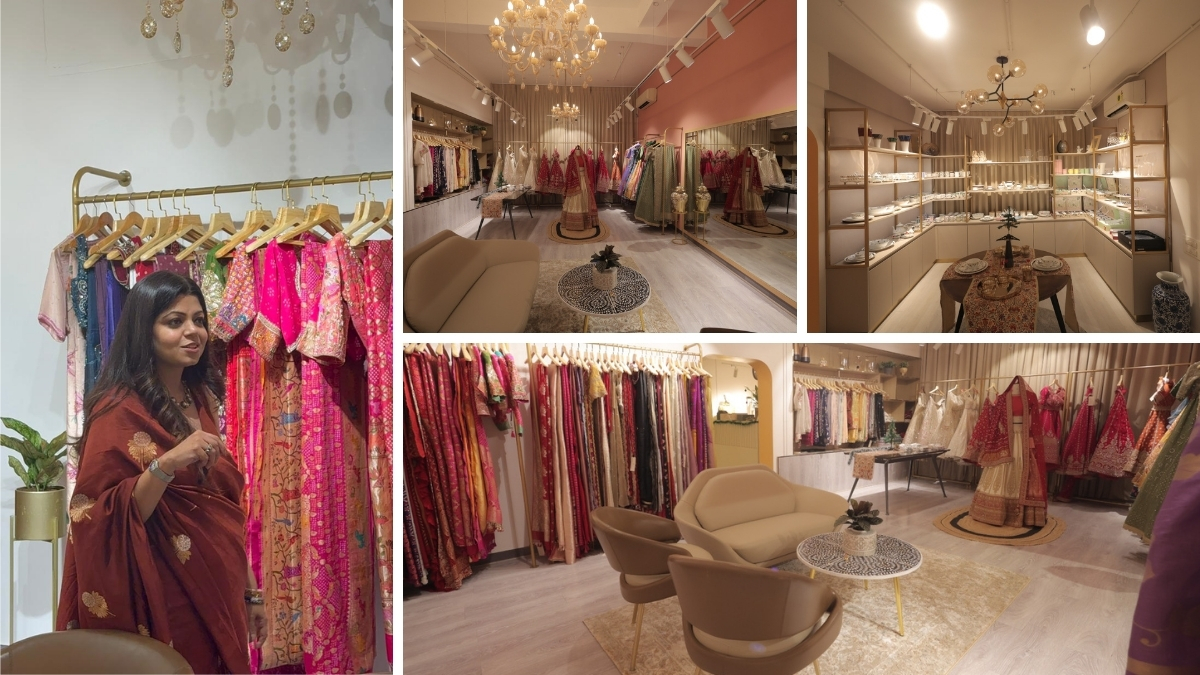
    Founded in 2016, 17:17 by Simmi Saboo is a contemporary Indianwear label shaped by over 20 years of design experience. Known for her expertise in graphics and digital prints, Simmi Saboo brings a distinct visual identity to the brand. She describes this approach as amiable elegance. The label is rooted in comfort dressing, sustainability, and inclusivity. Each made to order design is created to celebrate body diversity and offer a flattering fit. The brand has a strong retail presence with stores in Surat, Mumbai, and Jaipur. It serves luxury consumers across Gujarat, Maharashtra, and Rajasthan. The label also continues to grow its digital presence through its official website and leading fashion platforms. 

    “17:17 was created for people who want to feel relevant without losing themselves to trends,” says Simmi Saboo. “Style today moves fast, but it should still feel personal and comfortable. Through contemporary silhouettes and thoughtful design, we help people stay updated while wearing something that feels true to them.”

    The label offers a diverse range of designs for different luxury occasions. Its portfolio includes bridal and wedding wear, as well as festive and seasonal collections. The women’s wear line showcases a mix of handcrafted gold embroidery and vibrant digital floral prints on rich fabrics such as pure silk and delicate tissue. Signature styles include saree gowns, relaxed lehenga cholis, kurta sets, structured pantsuits, kaftans, and tailored jumpsuits.

    Expanding its vision beyond womenswear, the brand now offers a curated menswear line designed with the same refined aesthetic. Beyond apparel, 17:17 by Simmi Saboo has ventured into lifestyle with an exclusive crockery collection that reflects the brand’s artistic sensibility.

    The label’s dedication to blending heritage with modern design, evident across its portfolio, is exemplified in the Zooni collection. It is a tribute to Kashmiri heritage, drawing inspiration from traditional kalin carpet patterns. The collection brings the region’s artistic legacy to life through detailed embroidery and modern silhouettes.

    Over the years, 17:17 by Simmi Saboo has been featured in leading fashion publications such as Vogue India, Grazia, and Femina India. In 2024, the brand received wider recognition at Lakmé Fashion Week. Actor Soha Ali Khan walked the ramp as the face of the brand. She wore a moss green panelled lehenga that highlighted Kashmiri craftsmanship.
    Beyond physical stores, 17:17 by Simmi Saboo reaches audiences online through Nykaa Fashion, its website, Instagram, and Facebook, showcasing its design philosophy and latest collections.

    About 17:17 by Simmi Saboo
    https://1717designerwear.com/pages/about-us

    Founded in 2016, 17:17 by Simmi Saboo is a contemporary Indianwear label led by designer Simmi Saboo, who brings over two decades of industry experience. The brand seamlessly blends traditional Indian craftsmanship with modern design sensibilities across bridal, festive, and occasion wear, complemented by curated menswear and a lifestyle crockery line.

    The label has a strong retail presence with exclusive boutiques in Surat, Mumbai and Jaipur. In addition, the brand is available on leading fashion platforms such as Nykaa Fashion and its website, catering to luxury consumers across India. Rooted in comfort, sustainability, and inclusivity, 17:17 by Simmi Saboo focuses on made-to-order designs that ensure a flattering fit, reflecting the evolving needs of the modern Indian wardrobe.

    17:17 Stores

    Surat
    Opp. Shreeji Locha, Near Jani Farsan, Citylight Road, Parle, Surat Point – 395007

    Mumbai
    Shop No. 09, Rizvi Mahal, Waterfield Road, Bandra West, Mumbai – 400050;

    Jaipur
    GHP Enclave, Krishna Marg,
    C-Scheme, Jaipur

  • Asian Granito India Ltd. Strengthens Market Presence in Punjab with Launch of Three New ‘AGL Universe’ Showrooms

    Asian Granito India Ltd. Strengthens Market Presence in Punjab with Launch of Three New ‘AGL Universe’ Showrooms

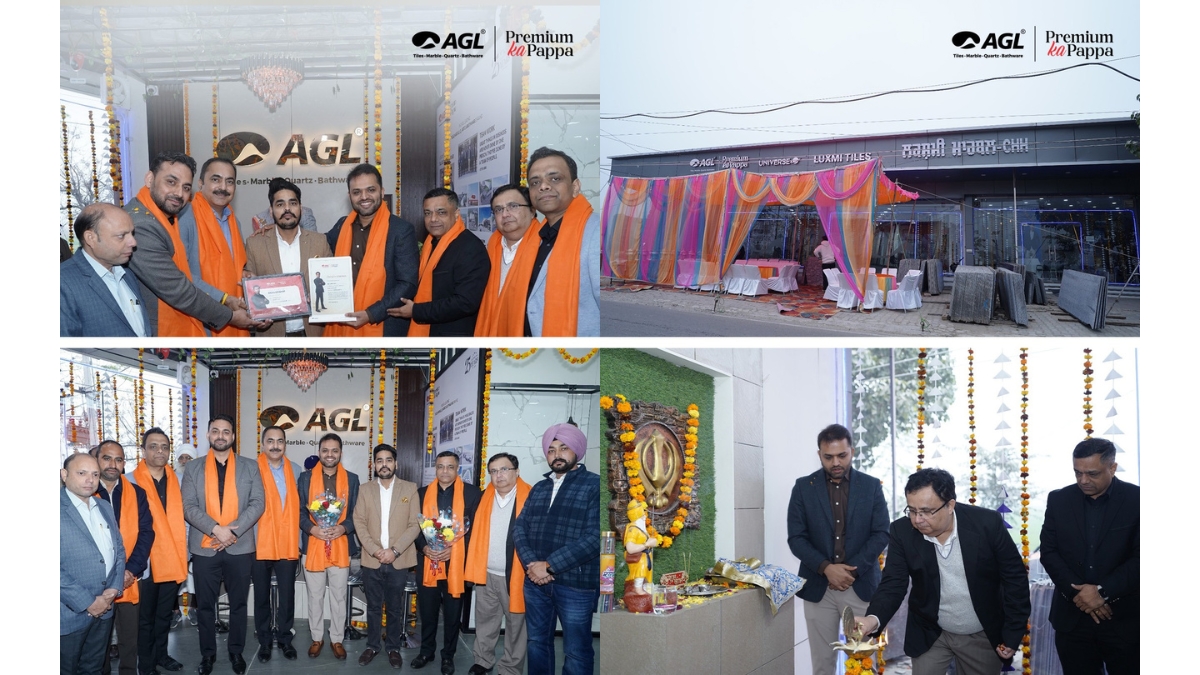
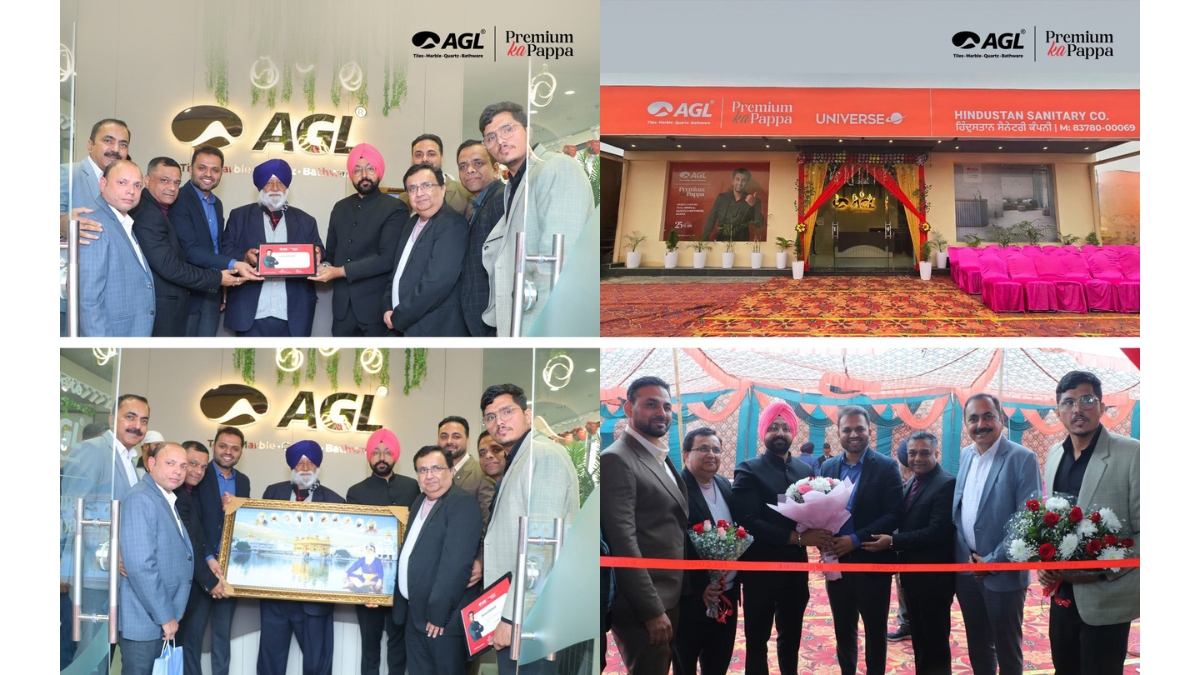
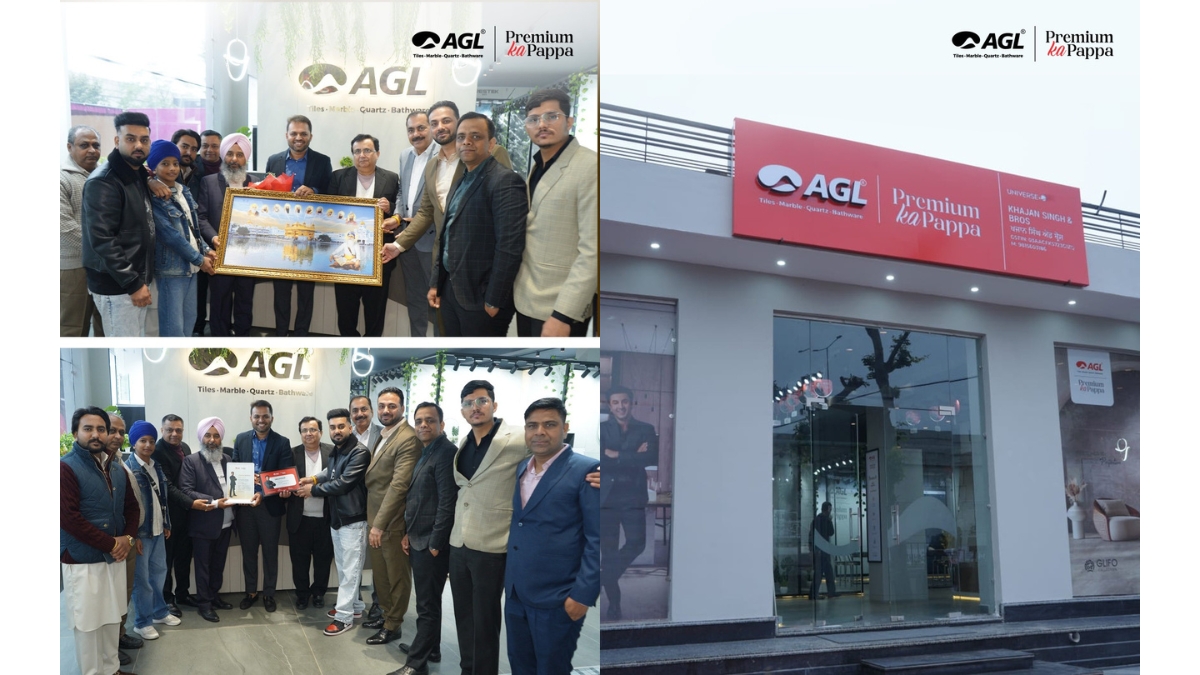
    Ludhiana (Punjab) [India], January 10: Asian Granito India Limited (AGL), a leading brand in luxury surface products including Tiles, Marbles, Quartz, and Bathware solutions has inaugurated three new showrooms in Punjab to strengthen its retail footprint in the region. The company launched its ‘AGL Universe’ showrooms in Amritsar, Ludhiana and Goraya. This milestone moment brings a world of elegance and sophisticated surface solutions closer to customers.

    The showroom in Amritsar was launched on 8th January, 2026 in association with LUXMI TILES at Village Ramuwal, Near Petrol Pump, Sun Sahib Road, Chheharta, Amritsar. The Ludhiana and Goraya showrooms were launched on 7th January 2026. The Ludhiana showroom was inaugurated in association with Khajan Singh and Bros at Near Bhaini Sahib Chowk, Kot Gangurai, Katani Kalana, Ludhiana, while the Goraya showroom was launched in partnership with Hindustan Sanitary Co. at G.T. Road, Goraya. All the showrooms were inaugurated in the presence of Mr. Shaunak Patel, Associate Director, AGL Tiles, Mr. Parthiv Dave, COO, AGL Bathware and Mr. Ramesh Prajapati, GM – AGL Tiles along with the senior leaders of the company.

    These multiple launches mark another milestone in AGL’s continued commitment to strengthening its market presence and enhancing customer experience. With these additions, AGL now operates 15 showrooms in Punjab, including 10 AGL Universe outlet and 5 exclusive showrooms. Along with these, an ongoing showroom launch project will further expand its presence in the state.

    The new showrooms in Amritsar, Ludhiana and Goraya have been designed with premium finishes and modern tile and slab trends. They are built to serve architects, homebuilders and designers seeking stylish and elegant solutions for indoor and outdoor spaces. Customers can explore AGL’s latest range, including ceramic wall and floor tiles, glazed and polished vitrified tiles, parking tiles, marble, quartz, bathware and more. The showrooms offer a one-stop destination for anyone planning premium, long-lasting and aesthetically rich spaces in Bihar.

    Speaking on the milestone, Mr. Shaunak Patel, Associate Director, Asian Granito India Ltd., said, “Punjab continues to be a strong and evolving market, driven by rapid urbanisation, increased investments in residential and commercial real estate, and a growing preference for premium, design-led building materials. With our new showrooms in Amritsar, Ludhiana and Goraya, customers across the region can now experience AGL’s latest range of surfaces in a dedicated and convenient environment. Our focus remains on supporting architects, designers, builders, and homeowners by offering high-quality products and a seamless selection experience. These launches reinforce our commitment to strengthening AGL’s presence in Punjab as we continue to expand while delivering quality, innovation, and trust.”

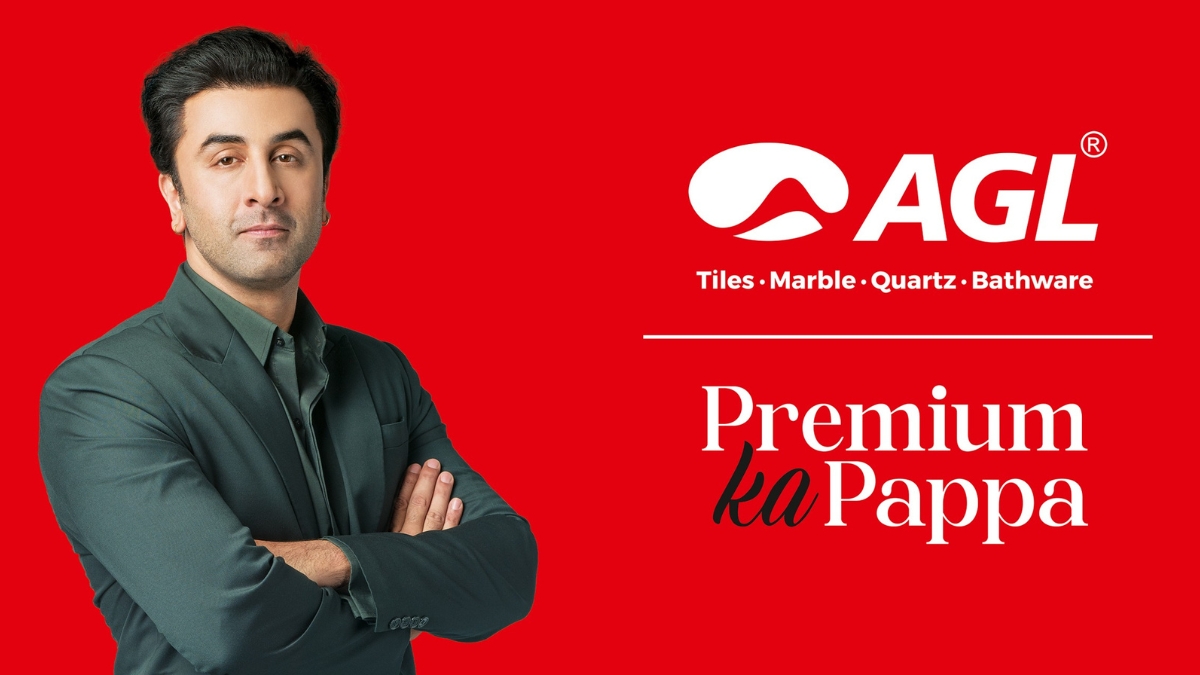
    Company has strategically enhanced its brand presence by signing Bollywood actor Ranbir Kapoor as the face of its “Premium ka Pappa” campaign. Additionally, AGL’s Bonzer7 brand onboarded actress Vaani Kapoor for its “Kya Baat Hain” campaign, aiming to resonate with younger audiences and reinforce its market position. These campaigns underscore AGL’s commitment to innovation and its strategy to connect with a broader consumer base.

    In a short span of two & half decade, Asian Granito India Ltd has emerged as India’s leading Luxury Surfaces and Bathware Solutions brand. The Company manufacture and markets a range of Tiles, Engineered Marble and Quartz, Sanitaryware and Faucets. The Company has 277 plus exclusive franchisee showrooms, 13 company owned display centers and an extensive marketing and distribution network pan India with 18,000 plus touchpoints including distributors, dealers and sub-dealers in India. The Company also exports to more than 100 countries.

    About AGL:  https://aglasiangranito.com/

    Established in the year 2000, AGL has emerged as India’s leading Luxury Surfaces and Bathware Solutions brand in a short span of two & Half decades. The Company manufactures and markets a wide range of Tiles, Engineered Marble and Quartz, Bathware and Faucets. AGL products are synonymous with reliability, adaptability, innovation, quality consciousness and the company has created a strong brand identity, well recognized globally and loyal customer following across segments. Today it is 4th largest listed ceramic tile company in India with Strength of more than 700 field force.

    Ranked amongst the top ceramic tiles companies in India, AGL has achieved over 65 times growth in its production capacity, from 0.83 Million Sq. Mtrs. Per Annum in FY 2000 to 54.5 Million Sq. Mtrs. Per Annum in FY 2025. AGL is also the only tiles company to be acknowledged in the Vibrant Gujarat Summit 2015 for achieving phenomenal growth.

    The Company has 14 state-of-the-art manufacturing units spread across Gujarat and 277 plus exclusive franchisee showrooms, 13 company owned display centres across India. Further, the Company has an extensive marketing and distribution network pan India with 18,000 plus touchpoints including distributors, dealers and sub-dealers in India. The company also exports to more than 100 countries.

    The Company looks to strengthen its identity as the leader in the Indian ceramic industry by consistently introducing innovative and value-added products in the market to keep pace with its valued customers. Headquartered in Ahmedabad, AGL is listed on NSE & BSE and reported net consolidated turnover of INR 1628 crore in FY 2025. (For more information, please visit: www.aglasiangranito.com)