Author: Sutun Nayak

  • Astral Pageants Celebrates India’s First-Ever Mrs Earth International Grand Winner 2025

    Astral Pageants Celebrates India’s First-Ever Mrs Earth International Grand Winner 2025

    Bengaluru (Karnataka) [India], December 11: Astral Pageants proudly celebrates a historic milestone as Vidya Sampath karkera from Mangalore, Karnataka, becomes the first Indian woman ever to win the prestigious title of Mrs Earth International Grand Winner 2025. Her achievement marks a golden moment not only for Karnataka and India, but also for Astral Pageants, which continues its legacy of empowering women to excel at global levels.

    A Historic Win for India

    Representing India at the globally renowned Mrs Earth International pageant held in Manila, Philippines, Vidya competed with exceptional women from 22 countries. The pageant began on December 1st and culminated in a magnificent coronation night on December 8th, where she was crowned the Mrs Earth International Grand Winner 2025, standing out as the top winner of the event.

    https://www.instagram.com/missmrsindiaastral.official

    Her calm presence, impactful stage performances, and strong representation of Indian culture made her an undeniable favourite—placing India proudly on the international beauty pageant map.

    A Celebration of India’s Culture, Strength, and Artistry

    Vidya’s presence throughout the competition was a graceful display of Indian heritage. Each segment highlighted a blend of creativity, discipline, and national pride.

    Talent Round: A Tribute to Indian Tradition

    Her traditional performance displayed India’s artistic depth and cultural richness. The judges and international delegates appreciated her expressive storytelling and precision.

    Astral Pageants PNN

    National Costume: A Masterpiece from Mangalore

    Designed and crafted in Mangalore, her national costume became a sensation for its symbolism and artistry.

    It featured:

    • A lifelike tiger, representing India’s national animal and strength.
    • A blooming lotus, symbolising purity and our national flower.
    • A dynamic peacock prop, portraying the grace of India’s national bird.

    The costume reflected Indian identity through craftsmanship and creativity, capturing global attention.

    The Vision and Leadership of Astral Pageants

    A Milestone as Astral Pageants Approaches Its 10th Grand Edition

    National Director Pratibha Saunshimath expressed immense pride in Vidya’s historic achievement. As Astral Pageants prepares for its 10th grand edition in 2026, this victory reinforces the organization’s mission of shaping Indian women into confident, capable, and globally competitive queens.

    Commitment to Training and International Grooming

    Pratibha emphasized that Vidya’s win validates Astral’s dedication to:

    • Structured grooming
    • Personality and confidence training
    • Professional stage presence
    • International-level mentorship
    • Holistic development as a queen

    Astral Pageants continues to prepare women not just to participate but to win on global platforms—Vidya’s crown is the perfect testimony.

    Unwavering Support Behind the Crown

    A Husband Who Stood by Her Side

    Vidya’s journey was strengthened by her husband, Mr. Karkera, who accompanied her to Manila. His encouragement, presence, and belief in her were vital pillars during the entire competition.

    ASTRAL PAGEANTS CELEBRATES INDIA’S FIRST-EVER MRS EARTH INTERNATIONAL GRAND WINNER 2025 - PNN


    Guidance from the Regional Director

    Her Regional Director, Mr. Deepak Ganguly, played a crucial role through strategic grooming, timely guidance, and constant motivation—ensuring Vidya remained focused, prepared, and confident in every round.

    Their combined support showcases how a team behind a queen can uplift her journey all the way to an international crown.

    A Symbol of Hope and Possibilities for Women Across India

    Vidya’s dedication, discipline, and passion helped her represent:

    • India
    • Karnataka
    • Mangalore
    • Astral Pageants

    on one of the world’s biggest platforms for married women. Her win especially empowers women from tier-2 cities, proving that dreams are not limited by geography, background, or resources.

    She has shown that with the right platform, strong mentorship, and consistent effort, every woman can achieve international success.

    Vidya now stands as a role model, inspiring countless women to step forward, believe in themselves, and pursue their aspirations boldly.

    A Proud Moment for India and Astral Pageants

    Astral Pageants celebrates Vidya’s remarkable triumph as one of the greatest milestones in its journey. Her crowning as the Mrs Earth International Grand Winner 2025 brings immense pride not just to the pageant, but to the entire nation.

    This victory shines a light on what Indian women are capable of achieving when they receive the opportunity, guidance, and support they deserve.

    Astral Pageants PNN

    Looking Ahead: Empowering More Women to Rise

    Inspired by this international success, Astral Pageants remains committed to:

    • Grooming more women for global competitions
    • Elevating pageant training standards
    • Enhancing opportunities and exposure
    • Building confident, empowered queens
    • Creating world-class experiences for contestants

    Vidya’s victory marks the beginning of a new chapter—one where many more Indian women will rise to shine internationally.

    …A Legacy Crowned With Pride

    Astral Pageants proudly congratulates Mrs Earth International Grand Winner 2025 – Vidya Sampath, the first Indian to win this prestigious global title.

    Astral Pageants PNN

    Her victory belongs to India, to Karnataka, to Mangalore, and to every woman who dares to dream beyond boundaries.

    If you object to the content of this press release, please notify us at pr.error.rectification@gmail.com. We will respond and rectify the situation within 24 hours.

  • Domicil Partners with Indian Streaming Academy Awards Season 2 to Celebrate the Spaces Where Modern Stories Come Alive

    Domicil Partners with Indian Streaming Academy Awards Season 2 to Celebrate the Spaces Where Modern Stories Come Alive

    New Delhi [India], December 10: Domicil, the premium German home furnishing brand, recently partnered with the Indian Streaming Academy Awards Season 2 as an associate sponsor. The event, held at the Jio Convention Centre in Mumbai, highlighted an important shift in India’s entertainment culture. As streaming becomes the country’s preferred way to consume content, the home has quietly moved into the spotlight. Living rooms, bedrooms and small personal corners have turned into the places where people unwind and slip into the worlds unfolding on screen.

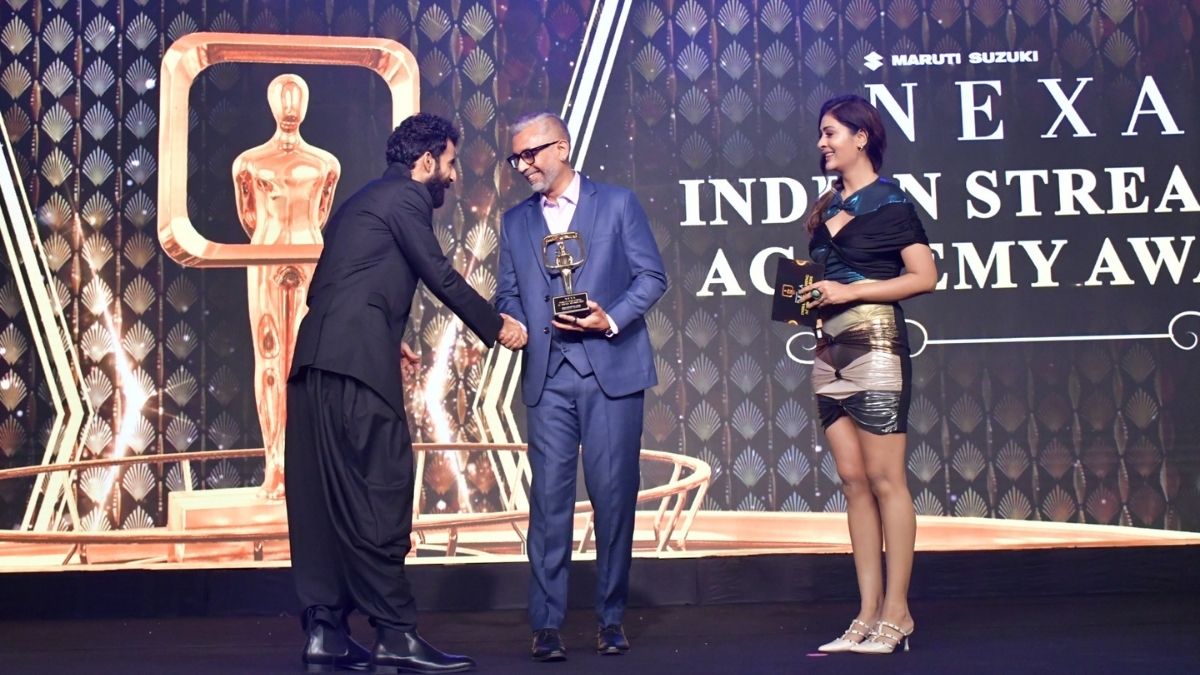
    This connection between stories and the spaces they are experienced in carried through the evening’s celebrations. During the ceremony, Manoj Kumar Nair, Country Head (Brands), India, Middle East and Africa, HTL Group of Companies joined the celebrations on stage to felicitate two performers who made a strong impact this year. He presented the Best Supporting Role Male award to Sikkander Kher for Aarya and the Best Supporting Role Male (Regional) award to Dibyendu Bhattacharya for Poacher.

    As conversations continued at the gathering, several artists spoke about how comfort shapes their own viewing experiences and how Domicil’s approach to design resonated with them. Actor Sanvikaa (Pooja Singh) captured the feeling in one line. “Experience the world beyond comfort with Domicil.” Her words pointed to the brand’s belief that true comfort does not call attention to itself. It blends into daily life and makes the familiar moments at home feel easier and more meaningful.

    Model, actor and host for the evening, Shubra Aiyappa Sivappa shared her thoughts on the brand’s roots. “German brands are known to get the best of the world, and that is what Domicil will be doing to your home too.” She spoke about the quiet precision and discipline that define the brand’s craft. These details shape a room in ways that often go unnoticed but always influence how people feel within it.


    Domicil - PNN

    Actor and influencer Pankhuri Gidwani offered a more personal take. “Domicil does not give you a product. It gives you a slice of life.” Her words captured how furniture can become part of everyday routines. It can hold late-night conversations, weekend binges, quiet pauses and long stretches of rest.

    The rise of streaming has changed where and how India watches stories. People choose their own pace and their own space. A deep sofa can bring a family together after a busy week. A supportive recliner can make a long-awaited film smoother to sink into. A soft bed can ease the transition from screen time to a slower, more restful pace.

    “Furniture plays a quiet but important role in all of this. It shapes how people relax, how easily they settle in and how fully they enjoy what they watch. Comfort becomes part of the narrative,” said Manoj Kumar Nair.

    Domicil’s presence at the awards aligned well with the values the brand has always worked around: Thoughtful design, steady craftsmanship, and a belief in creating spaces that feel more warm. As the evening drew to a close, the conversations returned to a simple idea. Homes feel most alive when they give people the space to unwind and sink into the shows they choose on their own time. In these small, unhurried moments of OTT viewing, Domicil’s belief finds its meaning, ‘where to live is to dream’.

    Visit: https://domicilindia.com/

    If you have any objection to this press release content, kindly contact pr.error.rectification@gmail.com to notify us. We will respond and rectify the situation in the next 24 hours.

  • Cultural activist Sundeep Bhutoria calls for Social Investment Policy for Non-resident Rajasthanis at Pravasi Rajasthan Divas 2025 in Jaipur

    Cultural activist Sundeep Bhutoria calls for Social Investment Policy for Non-resident Rajasthanis at Pravasi Rajasthan Divas 2025 in Jaipur

    Cultural activist, Sundeep Bhutoria, at Pravasi Rajasthani Divas with Ms Diya Kumari, Deputy CM, Rajasthan, ministers Jhabar Singh Kharra and Joraram Kumawat

    Jaipur (Rajasthan) [India], December 11: Emphasising the need for a framework that recognises the emotional and cultural commitment of Non-Resident Rajasthanis (NRRs), a call was made for the Government of Rajasthan to introduce a dedicated Social Investment Policy – one that encourages contributions towards preserving ancestral havelis, supporting schools, hospitals, heritage assets and community initiatives, beyond the scope of industrial investment.

    This appeal was made at the Pravasi Rajasthani Divas today by Kolkata-based culturalist, author and social worker, Mr Sundeep Bhutoria. The event was held at the Jaipur Exhibition and Convention Centre (JECC).

    Mr Bhutoria was invited by the Government of Rajasthan as a State Guest to speak in the session – “From Roots to Routes: Transforming the NRRs into Tourism Ambassadors”. He said that NRRs share a deep emotional bond with their homeland, and this connection is what brings them back time and again. “We are not the State Government’s Vote Bank. We are ambassadors of Rajasthan’s culture, tourism and heritage, no matter where we live,” he said, highlighting how traditions like wearing poshaks and safas continue across the globe.

    He suggested establishing a Public Private Partnership (PPP) model with companies, organizations and individuals to operationalise tourism desks and information centres, many of which currently function without personnel.

    Commenting on Rajasthan’s rising popularity as a film destination, Mr Bhutoria said that despite the state being one of the world’s most majestic shooting locations, it lacks a dedicated film studio. While films are shot here, post-production teams still need to travel to cities like Mumbai. He expressed hope that the New Tourism Policy unveiled today will finally address the long-pending need for a dedicated film studio in Rajasthan.

    The event was graced by Minister of Culture, Government of India, Gajendra Singh Shekhawat; Chief Minister of Rajasthan, Bhajan Lal Sharma; Rajasthan Deputy Chief Minister, Diya Kumari ; Urban Development & Housing Minister, Government of Rajasthan, Jhabar Singh Kharra; Animal Husbandry Minister, Government of Rajasthan, Joraram Kumawat,  Former Member of Rajya Sabha, Onkar Singh Lakhawat, Managing Director, India Tourism Development Corporation, Mugdha Sinha and  Add chief Secretary of Tourism, Government of Rajasthan Praveen Gupta

    It may be mentioned that Mr Bhutoria has served as the Secretary of the Kolkata Chapter of Rajasthan Foundation for over 10 years. He has been an active promoter of cultural activities across India as well as in Rajasthan and Jaipur. As the Managing Trustee of the Prabha Khaitan Foundation, he has played a key role in taking Indian art, literature and culture beyond India to Europe, the United States and West Asia. He is also dedicated to the preservation and popularizing of Indian folk arts and cultural heritage.

    If you object to the content of this press release, please notify us at pr.error.rectification@gmail.com. We will respond and rectify the situation within 24 hours.

  • Globe Civil Bags New INR 2.37 Crore Institutional Infra Order in New Delhi

    Globe Civil Bags New INR 2.37 Crore Institutional Infra Order in New Delhi

    New Delhi [India], December 11: Globe Civil Projects Limited (NSE: GLOBECIVIL / BSE: 544424), an integrated EPC company with over two decades of experience in delivering large-scale institutional, public infrastructure and commercial development projects, has received a Letter of Award (LoA) for a project valued at ₹2.37 crore from Guru Gobind Singh Indraprastha University (GGSIPU), New Delhi.

    The awarded project pertains to the “Construction of Indoor Sports Complex at GGSIPU, Sector 16C, Dwarka, New Delhi (SH: Providing and Fixing Flooring, Light Fixtures and Allied Works)”, to be executed over a period of 45 days. The contract has been awarded under the Bill of Quantities (BOQ) format by a domestic entity.

    Key Order Highlights:

    • Project Value: ₹2,37,44,655 (₹2.37 Cr)

    • Client: Guru Gobind Singh Indraprastha University (GGSIPU)

    • Project Scope: Construction of Indoor Sports Complex (SH: Providing and fixing Flooring, light fixtures and allied works)

    • Execution Period: 45 days

    • Location: Sector 16C, Dwarka, New Delhi

    • Nature: Domestic | BOQ

    This fresh order further strengthens Globe Civil’s position in the sports and institutional infrastructure segment, aligning well with the company’s strong execution footprint across education, healthcare, and public sector buildings.

    Mr. Vipul Khurana, Managing Director, Globe Civil Projects Limited, said:

    “We are pleased to receive this order from Guru Gobind Singh Indraprastha University, which reinforces our continued presence in the institutional and sports infrastructure segment. Projects of this nature align well with our core execution capabilities in finishing, MEP and allied works. With a healthy order book and steady execution across multiple sites, we remain focused on timely delivery, operational efficiency and maintaining consistent business momentum across our portfolio.”

    If you object to the content of this press release, please notify us at pr.error.rectification@gmail.com. We will respond and rectify the situation within 24 hours.
  • Astrologer Saahil Kohli Launches AstroIndia App – India’s Leading Astrology Platform

    Astrologer Saahil Kohli Launches AstroIndia App – India’s Leading Astrology Platform

    Astrologer Saahil Kohli

    New Delhi [India], December 10: Renowned Vedic astrologer and bestselling author Astrologer Saahil Kohli has officially launched AstroIndia mobile apps on both the Android Play Store and the Apple App Store, positioned to become India’s leading and one of the most trusted astrology platforms. At a time when the astrology industry has been diluted by unverified practitioners, scripted conversations, and inexperienced in-house call-centre “astrologers,” AstroIndia arrives with a clear mission: to restore the dignity, purity, and credibility of Vedic astrology by listing only India’s most qualified and proven astrologers.

    Unlike many commercial astrology apps that have begun replacing trained astrologers with generic customer-service staff posing as experts, AstroIndia stands apart with an uncompromising selection process. Every astrologer featured on the platform undergoes multiple rounds of personal interviews, background verification, script-free practical judgment analysis, and live testing of predictive accuracy before being approved. The platform proudly states that only astrologers with at least 10–12 years of real experience and a demonstrated history of accurate predictions will ever be listed.

    Astrologer Saahil Kohli, founder of AstroIndia and one of the most respected names in modern Vedic astrology, shared that the idea for the platform emerged after thousands of clients expressed disappointment over misleading experiences on existing apps. “When astrology becomes a commercial call centre,” Kohli said, “people lose faith not in the platforms, but in astrology itself. That had to be corrected, and AstroIndia is the answer.”

    Kohli is the author of the widely acclaimed titles “Rahu – The Secret to Success” and “Rahu Remedies – Secrets of the Dragon Head”, both of which are now considered landmark contemporary works on Rahu’s karmic influence, financial destiny, and unconventional success energy. His deep research on Rahu, trading astrology, business astrology, and karmic timing has made him one of the most followed astrologers in India, not only among the public but across Bollywood circles, boardrooms, corporate leadership, and elite political figures who regularly seek his guidance.

    AstroIndia is built on a strict credibility framework, offering consultations only with astrologers who have proven expertise in Vedic astrology, Prashna, Nadi, Numerology, Vastu, KP, Lal Kitab, Medical astrology, Business astrology, and Gemstone science. There are no trainees, no “script-based advisors,” and no outsourced agents. Each consultation is conducted one-on-one with the verified astrologer chosen by the user, either through call or chat.

    Astrologer Saahil Kohli emphasises that AstroIndia is not merely another marketplace app, but a cultural correction for a sacred profession that mass platforms have exploited.

    “Astrology is a 5000-year-old science mentioned in every ancient Vedic text.” 

    He noted. “It is not something to be diluted. It requires discipline, intuition, ethics, and divine responsibility. AstroIndia will ensure that India and the world experience the real astrology again.”

    AstroIndia also offers people the option to get a detailed premium kundli prepared using advanced software and reviewed by experts.

    With AstroIndia now live and rapidly onboarding India’s highest-ranked astrologers, the platform is expected to transform how digital astrology is viewed, accessed, and trusted.

    Disclaimer: The insights provided in this press release are meant for informational purposes only. Readers are advised to approach the content with a subjective perspective and should not consider it a substitute for professional advice or decision-making. The website and its authors do not assume responsibility for any actions taken based on the information presented. – This release will carry the above disclaimer, and the ‘India’s Biggest” claim would be removed. Please confirm to proceed.

  • Invest4Edu Upgrades Khazanchi Jewellers’ Target Price to ₹900; Signals 23% Upside

    Invest4Edu Upgrades Khazanchi Jewellers’ Target Price to ₹900; Signals 23% Upside

    Mumbai (Maharashtra) [India], December 11: invest4Edu Initiates Coverage Update on Khazanchi Jewellers –Invest4Edu Research has issued a BUY rating on Khazanchi Jewellers Limited following a strong Q2 FY26 performance, revising its target price to ₹900 from the previous ₹805. With the stock currently trading at ₹734, the brokerage expects an upside potential of 23%, supported by robust earnings, margin expansion, and a balanced wholesale–retail growth strategy.

    In Q2 FY26, the company reported 46.2% YoY revenue growth to ₹548.6 crore, driven by sustained wholesale demand and improving traction in its design-led retail offerings. Profitability surged, with EBITDA rising 113.3% YoY to ₹32.3 crore and PAT increasing 119.5% YoY to ₹23.5 crore. In H1 FY26, revenue stood at ₹952.34 crore, up 25.94% YoY, while EBITDA increased to ₹53.36 crore, up 87.29% YoY. PAT rose to ₹38.70 crore, up 93.66% YoY, reflecting a stronger product mix and improved operational efficiencies.

    B2B Segment: The Core Engine of Scale

    The company continues to maintain a dominant presence in India’s organised jewellery wholesale ecosystem, with ~90% of revenue coming from B2B operations. The company supplies to jewellers across India, backed by a design portfolio of over 5 lakh unique designs ranging from traditional wedding sets to modern, lightweight collections.

    Margins in the B2B segment remain healthy, with gold ornament margins at 4.5–5%, and diamond jewellery at 10–12%. The company’s premium natural diamond line, Vajraa Diamonds, saw encouraging uptake this quarter, reinforcing the company’s growing influence in value-added categories.

    Retail Expansion to Boost Margins & Brand Equity

    While wholesale drives scale, the company is steadily enhancing its retail presence to strengthen blended margins. The company’s upcoming 10,000 sq. ft. flagship showroom in Sowcarpet, Chennai, opening in January 2026, is expected to contribute ₹550–600 crore in annual revenue and lift retail margins from the current 9–10% to 12–13%.

    The flagship store will showcase premium Kundan, Polki, Jadau, Diamond, and Gemstone jewellery and is expected to significantly accelerate the expansion of high-value B2C sales. Management aims to increase retail contribution to 20–25% post FY27, a transition viewed positively by analysts.

    Strategic Focus on Value-Added Jewellery

    The company has purposefully reduced its exposure to low-margin bullion sales, reallocating capital towards ornaments and diamonds—categories with structurally higher profitability. ERP-led digital transformation and real-time inventory replenishment tools are being implemented to improve capital efficiency and accelerate turnover cycles.

    With the Indian jewellery market rapidly formalising, Khazanchi’s BIS hallmarking credibility, product innovation, and extensive design library position it strongly to capture rising demand across both wholesale and retail channels.

    Valuation & Outlook

    Invest4Edu notes that the company is on track to cross ₹2,000 crore in revenue for FY26, supported by festive season demand and retail expansion. Based on 21.5x FY27E earnings, the revised ₹900 target price reflects confidence in the company’s margin trajectory, diversified portfolio, and dual-engine growth model.

    About Khazanchi Jewellers Limited

    Khazanchi Jewellers, with over five decades of experience and located in Tamil Nadu, holds a significant position in the Indian jewellery sector. The company serves as a pivotal player in both wholesale and retail markets, specializing in a wide array of jewellery products. Offerings range from gold, diamonds, and precious stones to exquisite fancy jewellery, encompassing sought-after bullion items like coins and bars. Their business model involves raw material procurement, manufacturing and designing, the placement of products, and sales to end customers.

    Disclaimer: This article is for informational purposes only and does not constitute financial advice.

  • Quantum City 2025: Bengaluru’s Grand Scheme to Control Tomorrow’s Computing Power

    Quantum City 2025: Bengaluru’s Grand Scheme to Control Tomorrow’s Computing Power

    Bengaluru (Karnataka) [India], December 10: Somewhere between Silicon Valley swagger and sci-fi ambition lies a government memo dated 26 November 2025. On that date, the Government of Karnataka officially asked the central government to back a brand-new initiative: a Quantum Materials Innovation Network (Q-MIN) in Bengaluru. The objective: to turn the city — already nicknamed the “Silicon Valley of India” — into a full-blown quantum-tech colossus.

    This isn’t a side-project. It’s part of a sweeping quantum vision. A promised ₹1,000 crore Quantum Mission, a planned “Quantum City” near Hessarghatta, hardware parks, manufacturing clusters, chip-fabrication plans, startup incubators, skilling programs in 20+ colleges — the works.

    In short: Bengaluru is shooting for the stars. The question is — will it land there, or crash spectacularly?

    What’s Being Promised: Ambition at Quantum Scale

    • From Code to Qubits: The plan is to build quantum-materials supply chains, research infrastructure, and eventually hardware fabrication — not just software. Q-MIN is proposed with ~₹150 crore capital allocation, aiming to produce strategic materials in-house rather than exporting “science dependency.”

    • Quantum City: With 6.17 acres already approved, the Quantum City aims to be more than labs — labs, hardware parks, cryogenic test facilities, quantum-cloud clusters, and startup zones. It’s meant to integrate research → production → commercialisation end-to-end.

    • Talent Pipeline & Skilling: Over 20 colleges will start quantum-skilling courses; 150 PhD fellowships annually. Very serious about building human capital before building machines.

    • Global Reach Aspiration: The state envisages a $20 billion quantum economy by 2035. It plans global collaborations, hardware exports, and positioning India on the quantum-technology map.

    This isn’t visionary fluff. The numbers are there. The road-map exists. The blueprints are being drawn. The bet is big — perhaps ludicrous-sized. But ambitious. And sometimes ambition needs to break norms.

    What Works — The Bright Side of the Quantum Coin

    • Strategic Independence: By investing in quantum materials and hardware, India could reduce reliance on foreign chip-fabrication chains. Given global supply-chain chaos, that’s smart.

    • Talent Utilisation & Brain Gain: With thousands of engineering graduates turning out yearly, quantum skilling programs could provide top-tier opportunities. Good for job creation, intellectual capital, and preventing brain drain.

    • Leapfrogging Technology Curve: If successful, India could skip decades of incremental tech and land directly in the quantum-computing / quantum-communication era. That means breakthroughs in cryptography, computing speed, materials science, and even medicine.

    • Global Play on Indian Soil: With quantum hardware, researchers and companies worldwide might outsource parts of development to Karnataka — boosting export, investment, and economic growth.

    • Reinventing Bengaluru’s Identity: No more just IT-services, outsourcing, and call-centres. The city could transform into a frontier science hub — attracting talent, capital, and prestige.

    The Risks — Because Every Dream Has Its Monsters

    • Infrastructure & Realism Gap: Big ideas — labs, cryogenics, hardware fabrication — require stable power, consistent funding, advanced facilities, clean-room standards. India’s infrastructure still struggles with basics like water, roads, and load-shedding. Will quantum-grade precision survive that?

    • Human Resource Bottleneck: Quantum hardware needs physicists, materials scientists, and cryogenics experts. While skilling helps, building a critical mass quickly is hard. Mis-hiring or an under-skilled workforce could stall progress.

    • Regulatory & Security Complexity: Quantum tech intersects with national security, encryption laws, and export controls. Mismanagement could lead to global scrutiny or internal policy friction.

    • Over-promise Risk: Forecasting a $20B quantum economy by 2035 is bold. Global competition, shifting tech paradigms, funding fluctuations — any disruption could make this look like corporate candy-floss.

    • Social & Regional Imbalance: If Bengaluru monopolises quantum infrastructure, other states may lag, deepening regional inequalities. Also, “quantum gentrification” — land, housing costs near labs — could displace local populations.

    What This Means for India, and Why Observers Are Watching Closely

    If Karnataka succeeds, it could reset how India participates in global tech. Not as a services-backyard, but as a frontline innovator. Quantum computing, secure communication, and advanced materials — all could originate from Indian labs. India’s competitiveness might rise not on low-cost labour, but on high-value intellectual property and tech sovereignty.

    But for every futuristic quote and shiny roadmap, there’s the dusty reality of budgets, bureaucracies, global supply chains, and unpredictable physics. Quantum is hard. Harder than the grandest mission statements.

    If this becomes a success, expect:

    • a surge in quantum-sector jobs and research grants

    • new startups specialising in quantum hardware, software, encryption, and data security

    • collaborations with foreign quantum labs, increased funding, export contracts

    • India is joining the elite league of quantum-capable nations

    If it fails — or stalls — it could become a cautionary tale: money sunk, hopes dashed, opportunity lost.

    What to Watch Over the Next 12–24 Months

    • Movement of Q-MIN from proposal to physical start

    • Allocation and disbursal of the promised ₹150 crore for materials infrastructure

    • Opening of the Quantum Hardware Park and cryogenic labs

    • First round of quantum-skilling graduates — quality over quantity

    • Early patents or quantum-startup recognitions emerging from Bengaluru

    • Government transparency & regulation framework for quantum exports/security

    Small steps matter. Especially when dealing with qubits.

    Final Thought — Quantum Is Not a Promise. It’s a Bargain With Reality.

    Quantum doesn’t bend to optimism. It doesn’t listen to speeches. It asks for mathematics, infrastructure, precision, and patience.

    But in 2025, Karnataka is putting its chips — literally — on the table. It’s stacking ambition with planning, risk with structure, hope with hardware.

    If the gamble works, Bengaluru might just wake up 20 years from now as a quiet overlord of quantum tech, quietly steering data, encryption, computing, and security for the subcontinent and beyond.

    If not — well, at least it tried. And sometimes, trying is the only thing that matters before history writes itself.

    PNN Technology

  • Koragajja Track Release Highlights Choreographed Folklore Sequence

    Koragajja Track Release Highlights Choreographed Folklore Sequence

    New Delhi [India], December 10: Zee Music has released a new track from the upcoming film Koragajja after acquiring its audio rights. Written by director Sudheer Attavara and composed by Gopi Sundar, the song blends coastal folklore with a contemporary rap-style arrangement. Vocals are provided by Javed Ali, Attavara, and Sundar.

    A key element of the track’s visuals is a dance sequence choreographed for the film by Sandip Soparrkar, working with assistant Ashutosh Arya. Soparrkar also performs the sequence on screen, depicting movements associated with the folkloric figure Guliga as part of the film’s narrative structure.

    The song includes additional appearances by actors portraying characters central to a moment where Guliga and Panjurli meet Koragajja, contributing to the progression of the storyline.

    Filming took place at Someshwara Beach in Mangaluru, using two 100-foot cranes and five cameras to capture the large-scale setup. The production team coordinated around shifting tide conditions, crowd management, and safety measures, with police support arranged to ensure an uninterrupted shoot. Producer Thrivikram Sapalya managed the logistical requirements.

    Koragajja, produced by Success Films and Thrivikrama Cinemas, is in post-production and scheduled for release in January 2026.

    If you object to the content of this press release, please notify us at pr.error.rectification@gmail.com. We will respond and rectify the situation within 24 hours.

  • When GPUs Grow a Spine: Nvidia’s Location-Verification Tech Reshapes AI Security

    When GPUs Grow a Spine: Nvidia’s Location-Verification Tech Reshapes AI Security

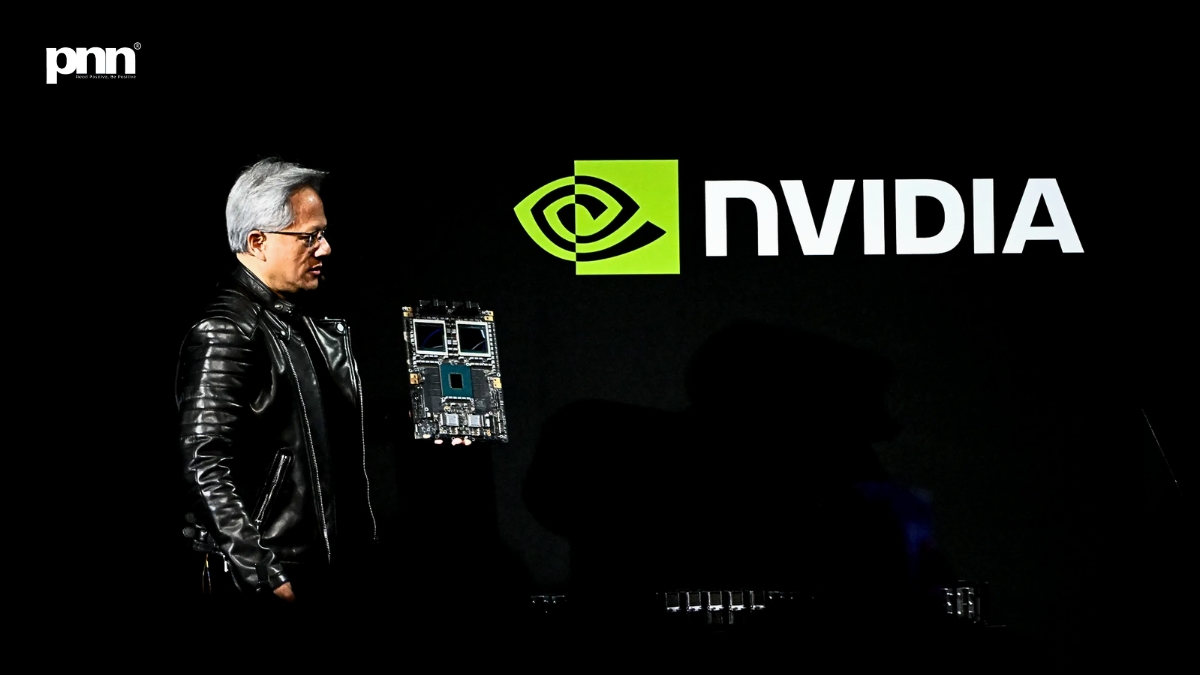
    Mumbai (Maharashtra) [India], December 10: If you’ve ever wondered what happens when a trillion-dollar tech titan gets tired of having its chips smuggled across borders like VIP contraband, NVIDIA just served the answer: location-verification technology baked directly into its next-gen AI chips. Yes, the chips will now—quite literally—self-report where they are. A feature that sounds suspiciously like something Wednesday Addams would activate on a poisoned locket just to make sure her enemies die exactly where planned.

    But here we are: geopolitical tension, AI arms races, supply-chain espionage, and a company that has quietly spent billions engineering silicon smarter than half of global bureaucracy.

    And of course, the tech world is calling it a “game-changer.”
    (Translation: regulators are sighing with relief, defence analysts are scribbling furiously, and grey-market dealers are currently screaming into pillows.)

    Before we descend into the juicy bits, yes—this is a real thing. Not sci-fi. Not a rumour. NVIDIA has actually begun integrating on-chip verification techniques that confirm the physical deployment location of high-performance accelerators.

    Because nothing says “AI future” like a GPU that tattles on you.

    The Backstory Nobody Is Dramatically Narrating (Until Now)

    For years, NVIDIA’s most powerful processors—A100, H100, and now the B100 and other Blackwell variants—have been the hottest restricted items on the planet. Governments treat them as if they’re dual-use defence assets, because in many ways, they are.

    AI breakthroughs?
    Military simulations?
    Cyber warfare?
    Molecular modelling?
    Surveillance systems?
    —These chips power all of that.

    After the U.S. tightened export controls to prevent advanced AI hardware from slipping into restricted zones, a new headache emerged: diversion. Meaning chips reaching countries they weren’t supposed to… through middlemen, shell companies, or highly creative shipping labels like “industrial fans.”

    NVIDIA, being the overachiever of Silicon Valley, decided to engineer a technical solution that makes diversion nearly impossible. Not a barcode. Not a shipping lock. A cryptographically enforced “Where am I?” chip-level truth serum.

    Dark. Elegant. Brutal.
    Lucifer would approve.

    The Pros: Because Innovation Does Deserve a Halo (Fine, a Very Torn Halo)

    1. Export Control Becomes Foolproof-ish
    No more guessing games.
    If an AI accelerator is activated in a restricted geography, authorities will know.
    This is huge for global compliance, defence strategy, and preventing rogue-state AI weaponisation.

    2. Trust for Enterprise & Governments
    Major cloud providers, defence contractors, banks, and scientific labs constantly worry about supply-chain tampering.
    A chip that verifies where it physically runs adds a rare layer of hardware assurance.

    3. Slowing Down Unauthorized AI Supercomputers
    Let’s be real—the global AI race is only getting messier.
    Location-verified chips slow the creation of hidden hyperscale clusters, especially those fueled by black-market procurement.

    4. Billions Already Invested Into Secure Silicon
    NVIDIA spends roughly $30–40 billion annually on R&D, supply-chain fortification, and next-gen chip engineering (public filings confirm this range).
    This new feature is another slice of that multi-billion-dollar pie.

    5. Better for International Partnerships
    Countries that depend on NVIDIA—India, EU states, Southeast Asia—gain a level of reassurance that their AI stack remains compliant and secure, boosting digital cooperation.

    The Cons: Because No Halo Exists Without Burn Marks

    1. Privacy Nightmares
    Let’s not sugar-coat it.
    A chip that constantly knows (and confirms) its real-world location will spark debates about digital sovereignty and enterprise privacy.

    2. Enforcement Headaches
    If a chip flags its location incorrectly due to technical glitches, miscalibrated geofencing, or satellite dead zones?
    Cue catastrophic downtime for mission-critical systems.

    3. Potential for Government Overreach
    Yes, it’s meant for export control.
    But tools meant for “only regulatory use” sometimes become… shall we say… very convenient for other surveillance purposes.

    4. Increased Chip Costs
    Anything involving cryptographic hardware integration and secure attestation increases manufacturing complexity.

    Expect higher prices—NVIDIA’s AI chips already cost between $25,000 $40,000 per unit; security add-ons rarely come cheap.

    5. Hackers Will Absolutely Try To Break It
    And when they do, we’ll see an entire underground economy dedicated to spoofing chip locations.
    Criminal creativity is undefeated.

    The Latest Developments (Yes, This Part Is Fresh & Verified)

    • NVIDIA has already begun trial deployments of these features with enterprise customers who handle sensitive AI workloads.
    • Regulators in the U.S. have praised the initiative, seeing it as a critical tool in tightening global AI governance.
    • Industry analysts believe this could become mandatory across the semiconductor sector within 12–18 months.
    • Competitors are hinting they’ll follow, meaning this may become a new baseline requirement—like TPM chips for PCs but far more extreme.
    • AI security spending is expected to cross $100B globally by 2030, and location-aware chips could take a significant chunk of that market.

    The Tone of the Industry Right Now? Nervous Excitement.

    Some CEOs are calling it ingenious.
    Some security researchers are calling it overdue.
    Some activists are quietly drafting 40-page privacy objections.
    And some governments are silently celebrating because this solves problems they’ve been struggling with for years.

    In other words:
    Everyone is smiling, but no one fully trusts the smile.

    So, Is This A “Game-Changer”?

    Yes—though perhaps not the way the marketing departments want you to think.

    It’s a game-changer because it changes the rules, not just the gameplay.
    Export control used to be paperwork and ports.
    Now it’s embedded silicon, cryptographic attestations, and real-time geographic truth.

    It is the technological equivalent of putting a tracker on a dragon.
    Useful. Terrifying. Slightly dark.
    Very on-brand for the times.

    Who Benefits the Most?

    • Regulators – finally getting reliable enforcement tech.

    • Enterprises – gaining supply-chain integrity.

    • NVIDIA – strengthening its dominance in secure AI infrastructure.

    • AI governance bodies – receiving a blueprint for future standards.

    Who Panics the Most?

    • Grey-market chip brokers.

    • State actors are trying to covertly build AI supercomputers.

    • Corporations that bought restricted chips, assuming no one would find out.

    • Privacy advocates who already haven’t slept since 2018.

    Final Word: The Era of Self-Aware Silicon Is Here

    This move proves something quietly profound:
    AI hardware is no longer just about performance. It’s about control.

    Today, it’s location verification.
    Tomorrow?
    Tamper-proof logs, self-disabling systems, maybe even hardware ethics modules.
    (Please, no one give the chips opinions. We barely handle humans.)

    NVIDIA’s step is bold, unsettling, brilliant, and inevitable.
    Just like any turning point in technological history.

    And whether you’re applauding or side-eyeing…
    You’re definitely watching.

    PNN Technology

  • Harisharan Devgan Performs Holy Pooja at Srikalahasti for Indian Farmers’ Welfare

    Harisharan Devgan Performs Holy Pooja at Srikalahasti for Indian Farmers’ Welfare

    Harisharan Devgan performing a holy pooja at Sri Kalahasteeswara Swamy Temple, Srikalahasti, seeking blessings for Indian farmers’ welfare.

    Srikalahasti (Andhra Pradesh) [India], December 10: Innovative farmer and philanthropist Mr. Harisharan Devgan, Chairman of Niche Group of Companies, performed a special holy pooja at the world-famous Sri Kalahasteeswara Swamy Temple on Saturday, 6 December 2025, seeking divine blessings for the wellbeing and prosperity of the farming community. The ritual was conducted as per Vaidika traditions and Maha-Vidhi procedures under the guidance of senior temple priests.

    The ceremony was carried out with full traditional honours in the presence of Vedic scholars and temple authorities. Several dignitaries attended the sacred ceremony, including the Chief Priest of the temple, NDA State Secretary Dr. B.J. Prasad, Chairman Kotte Sai Prasad, Trust Board Member V. Gurrappa Shetty, Sri Dandi Raghavaiah, and Executive Officer Bapi Reddy. Local MLA Bojjala Sudhir Reddy and Municipal Commissioner M. Ramesh Babu were also present during the prayers.

    Speaking on the occasion, Mr. Harisharan Devgan emphasised the importance of protecting and preserving temples and sacred sites. He noted that people from all walks of life should be able to access such places regardless of social or economic status. He stated, “The system at these religious sites should be organised in such a way that even a common man can visit comfortably.”

    The priests offered collective prayers for the good health, stability, and long-term prosperity of farmers across India, highlighting the vital role of agriculture in the nation’s progress. Mr. Devgan expressed that the pooja was performed with a heartfelt wish for the strength and wellbeing of every farmer family. The ceremony concluded with traditional blessings and Vedic chanting.

    If you object to the content of this press release, please notify us at pr.error.rectification@gmail.com. We will respond and rectify the situation within 24 hours.