Author: Sutun Nayak

  • From Business to Cricket Diplomacy: Dr Kaushik Dasgupta Building Global Bridges Through Leadership

    From Business to Cricket Diplomacy: Dr Kaushik Dasgupta Building Global Bridges Through Leadership

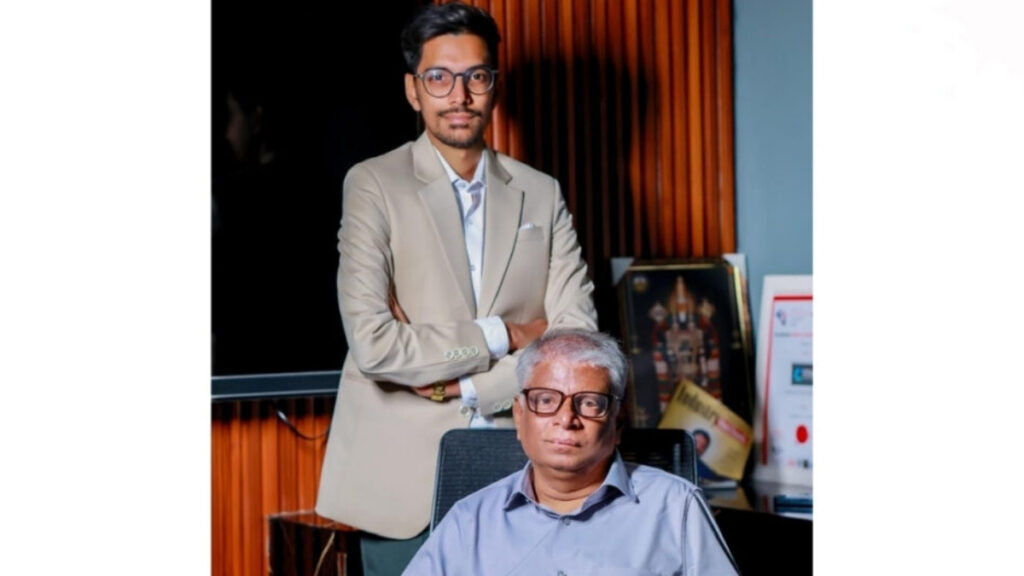
    Kolkata (West Bengal) [India], May 22: Dr Kaushik Dasgupta has emerged as a prominent international entrepreneur, sports leader and community builder whose influence spans across multiple industries and countries. Recognized for his contributions in cricket development, business leadership and international collaborations, he is increasingly being acknowledged among Indian-origin professionals making a strong impact on the global stage.

    A proud Bengali from West Bengal, Dr Dasgupta has achieved a significant milestone by becoming one of the first Bengalis from the state to establish a notable presence in international cricket administration and sporting leadership. He is the owner of Sutton-Derby Cricket Club and currently serves as President and Patron of Wavertree Cricket Club, reflecting his growing role in strengthening sporting relationships across nations.

    Recently, Wavertree Cricket Club, one of Liverpool’s respected sporting institutions, nominated Dr Dasgupta to a leadership position in recognition of his contribution towards community sports, international collaboration and youth development initiatives. The move is expected to support stronger pathways for aspiring cricketers while encouraging cultural and sporting exchanges between communities.

    Beyond sports, Dr Dasgupta has established himself as a successful international business leader with diversified interests across sectors. He owns restaurant chains in Australia and has earned recognition as a real estate investor through strategic business ventures and long-term development initiatives.

    Adding another dimension to his profile, Dr Dasgupta also has a strong interest in cinema and film production, particularly within Bollywood. His association with entertainment reflects a broader vision of promoting cultural exchange and storytelling through creative platforms.

    His profile and recent international recognition also highlight his cricketing credentials. Dr Dasgupta is a First-Class cricketer and a Level 2 accredited coach under Cricket Australia. He is also the founder of Sutton-Derby Cricket Academy in Adelaide, established in collaboration with former Indian cricketer and national selector Subroto Banerjee.

    Academically, Dr Dasgupta was awarded a Doctorate (PhD) at the Palace of Westminster, further strengthening his multidisciplinary profile in leadership and public contribution.

    Speaking about his vision, Dr Dasgupta believes that cricket possesses the power to unite people across borders, cultures and generations. His mission focuses on using sport as a bridge between nations while creating opportunities for young talent and strengthening communities.

    With a unique blend of entrepreneurship, sports leadership, cultural interests and international engagement, Dr Kaushik Dasgupta continues to represent a modern global leader creating impact beyond business and beyond borders.

    If you object to the content of this press release, please notify us at pr.error.rectification@gmail.com. We will respond and rectify the situation within 24 hours.

  • Tirupati Packers and Movers Expands Nationwide Relocation Services Across India

    Tirupati Packers and Movers Expands Nationwide Relocation Services Across India

    Tirupati Packers and Movers, a trusted provider of Packers and Movers in Chhatrapati Sambhajinagar

    Mumbai (Maharashtra) [India], May 22: With increasing urban migration, job transfers, and business expansion across India, the demand for professional relocation services continues to rise rapidly. Tirupati Packers and Movers, a trusted provider of Packers and Movers in Chhatrapati Sambhajinagar, is strengthening its nationwide relocation network by offering organized and secure shifting solutions for residential and commercial customers.

    Formerly known as Aurangabad, Chhatrapati Sambhajinagar has emerged as a growing commercial and residential hub in Maharashtra. Tirupati Packers and Movers, based in Chhatrapati Sambhajinagar, provides comprehensive relocation services including household shifting, office relocation, vehicle transportation, warehousing, packing and unpacking, loading and unloading, and interstate moving services.

    As customers increasingly prefer professional relocation companies over self-managed shifting, the company continues focusing on safe handling practices, systematic logistics management, and customer-oriented support services. The company uses quality packaging materials and trained staff to help ensure safer transportation of household goods, office equipment, furniture, electronics, and vehicles.

    The household shifting segment remains one of the fastest-growing categories within India’s organized relocation sector. Customers today seek secure, timely, and affordable moving solutions that reduce relocation stress and minimize the risk of damage during transportation. Tirupati Packers and Movers aims to address these requirements through structured relocation planning and end-to-end moving assistance.

    Office relocation services have also witnessed growing demand from startups, SMEs, retail businesses, and corporate organizations looking to shift operations efficiently without major business disruptions. The company provides organized office shifting support designed to handle commercial assets and office infrastructure with systematic execution and timely delivery.

    Vehicle transportation services are another key area of growth in the relocation industry. Customers relocating between cities increasingly rely on professional car and bike transportation providers for secure long-distance movement of vehicles. Tirupati Packers and Movers offers dedicated vehicle transportation solutions aimed at maintaining safety and delivery efficiency throughout the relocation process.

    In addition to relocation services, the company also offers warehousing and storage support for customers requiring temporary inventory storage or flexible storage management during shifting. Demand for storage facilities has steadily increased alongside rising mobility across urban and semi-urban regions in India.

    The Indian logistics and relocation sector continues evolving with increasing emphasis on customer trust, organized operations, service transparency, and professional execution. Companies providing structured relocation management and reliable customer support are expected to play an important role in the future growth of the organized moving industry.

    By expanding its operational capabilities and strengthening service accessibility across multiple cities, Tirupati Packers and Movers continues positioning itself among reliable Packers and Movers in Chhatrapati Sambhajinagar and across India.

    For more information, visit:
     Tirupati Packers and Movers Official Website

    If you object to the content of this press release, please notify us at pr.error.rectification@gmail.com. We will respond and rectify the situation within 24 hours.

  • Designed to Breathe, Stretch, and Shift –  Zivame’s New Campaign Honoring the Rhythm of a woman’s body.

    Designed to Breathe, Stretch, and Shift –  Zivame’s New Campaign Honoring the Rhythm of a woman’s body.

    Bengaluru (Karnataka) [India], May 22: Zivame, India’s leading intimatewear brand, launches its latest campaign, ‘Makes Room For Change’, built on a powerful everyday truth: a woman’s body is never static. It changes across months, weeks, days, and sometimes even from morning to evening. Yet intimatewear has traditionally been designed around the idea of a fixed body and a fixed fit.

    With this campaign, Zivame brings attention to the many ways women’s bodies change due to menstrual cycles, hormonal shifts, bloating, workouts, stress, sleep, climate, sweating, weight fluctuations, and everyday movement. These changes often create silent discomfort  a bra that feels tighter by evening, panties that dig in on bloated days, shapewear that feels restrictive, or sleepwear that does not allow enough ease.

    ‘Makes Room For Change’ positions Zivame as an intimatewear brand that understands these changing body moments and designs products that support them. From bonded, seam-free bras and 4-way stretch styles to breathable cotton-lined cups, one-size panties, flexible shapewear, minimiser bras, sports bras and easy-fit sleepwear, the campaign highlights Zivame’s innovation-led approach to comfort, fit and everyday adaptability.

    The campaign comes after Zivame’s widely recognised ‘Museum of Boobs’ campaign, which decoded breast shapes and helped women understand that the right fit goes beyond just size. With ‘Makes Room For Change’, Zivame takes the conversation further from shape to change, from static fit to adaptive comfort.

    Speaking on the campaign, [Daman Bali, Marketing Head, Zivame] said, “For us, ‘Makes Room For Change’ is not just a campaign line; it is a product and consumer philosophy. We have always listened closely to the real, everyday discomforts women face with intimatewear, and this campaign gives language to those moments. It reflects our larger commitment to designing intimatewear that understands the Indian woman better not just her size, but her life, her body, and the way both keep changing.”

    At the heart of the campaign is the belief that intimate-wear should not force women to adjust to it. Instead, it should make room for the body as it is and as it changes.

    The campaign will be rolled out across digital, social, performance marketing, CRM, website/app and retail touchpoints, supported by product-led communication across bras, panties, shapewear, activewear and sleepwear.

    About Zivame:

    Founded in 2011, Zivame has built a category-first model that seamlessly blends deep consumer insights with innovation, technology, and trend-driven design  all while keeping women’s comfort at its core. Come 2025, with a portfolio of over 50,000 styles across lingerie, sleepwear, shapewear, and activewear  in 100+ sizes the brand is not just a retailer, but a trusted destination for women across age groups and geographies.

    Since its inception, Zivame has consistently been at the forefront of innovation  from launching India’s first online Fitcode to building a truly omnichannel intimatewear ecosystem at scale. By combining tech-enabled solutions, deep consumer insight, expert-led retail experiences and a strong digital-first approach, Zivame has redefined how Indian women discover, understand and shop for intimate wear across online, offline and assisted channels.

    If you object to the content of this press release, please notify us at pr.error.rectification@gmail.com. We will respond and rectify the situation within 24 hours.

  • Brokerages See Up To 48% Upside On PNC Infratech Post Q4FY26; Execution Recovery, Order Book Visibility Key Triggers; Stock Surges 34% Since FY27

    Brokerages See Up To 48% Upside On PNC Infratech Post Q4FY26; Execution Recovery, Order Book Visibility Key Triggers; Stock Surges 34% Since FY27

    New Delhi [India], May 22: Leading brokerage houses including ICICI Securities, HDFC Securities and JM Financial Institution remain positive on PNC Infratech following its Q4FY26 earnings. Analysts expect a gradual recovery in revenues over FY27 and FY28, supported by a healthy executable order book, improving order inflows, and ramp-up in execution across key projects. Analysts believe the company is well positioned for a recovery cycle as execution intensity improves and newer business verticals scale up.

    • Leading brokerages remain constructive on PNC Infratech, citing recovery in execution, strong order book visibility and improving order inflows as key medium-term growth drivers.
    • Analysts highlighted the company’s diversification into renewables, mining and water infrastructure as a key positive that could support future revenue growth.
    • Brokerage target prices imply up to ~48% upside from current market levels, with confidence in PNC’s balance sheet strength and margin stability.
    Brokerage Firm Rating Maintained Target Price (₹) Potential Upside (%)*
    JM Financial Institution Buy 315 48%
    HDFC Securities Buy 304 43%
    ICICI Securities Buy 290 36%
    Ambit Capital Buy 276 29%
    Axis Capital Buy 250 17%
    Nuvama Institutional Equities Hold 235 10%

    Potential upside calculated based on PNC Infratech’s closing market price of ₹213.15 as of 21st May. Note: Above list of analyst recommendations is not exhaustive.

    Brokerage house HDFC Securities maintained its ‘Buy’ rating with a target price of ₹304, highlighting expectations of a recovery in execution and order inflows during FY27. The brokerage noted that PNC’s order book stood at around ₹180 billion as of March 2026, providing strong revenue visibility. HDFC Securities also pointed to new business segments such as renewables and mining to aid order inflows, while the cash inflows from asset monetization to Vertis contributed to the healthy cash buffer of PNC.

    Broking firm ICICI Securities upgraded the stock to ‘Buy’ with a target price of ₹290, citing improving execution visibility and a strong executable order book. The brokerage expects revenue and earnings recovery over FY26-28E aided by pick-up in project execution, commencement of recently secured projects.

    Ambit Capital retained its ‘Buy’ rating with a target price of ₹276 and noted that the company has been able to maintain EBITDA margins despite weak execution trends over the last few quarters. The brokerage highlighted that diversification beyond roads, particularly in water infrastructure and other emerging segments, has helped PNC gradually rebuild its executable order book.

    Meanwhile, Nuvama Institutional Equities maintained a ‘Hold’ rating with a target price of ₹235, while acknowledging improving segmental diversification in the company’s order book growth. The brokerage noted that management is targeting a higher share of non-road projects in future order inflows with 30–35% of future order inflows coming from segments like solar, battery energy storage systems and urban development projects.

    Brokerages broadly expect order inflow momentum and execution recovery to remain the key monitorable for the company over the next few quarters.

  • Ratul Puri Led Hindustan Power signs Power Supply Agreement with MP Power Management Company Limited for supply of 800 MW Power

    Ratul Puri Led Hindustan Power signs Power Supply Agreement with MP Power Management Company Limited for supply of 800 MW Power

    Ratul Puri, Chairman, Hindustan Power

    New Delhi [India], May 21: Hindustan Power, one of India’s leading integrated power producers, has signed a Power Supply Agreement (PSA) with MP Power Management Company Limited for the supply of 800 MW. The agreement is facilitated through its subsidiary, Anuppur Powerprojects Private Limited.

    The Power Supply Agreement (PSA) for 800 MW will be supplied from the upcoming unit of Hindustan Power at Anuppur, strengthening its contribution toward meeting Madhya Pradesh’s growing power requirements. Under the terms of this agreement, power supply from this project is scheduled to commence from 2031. The PSA is structured for a tenure of 25 years, with an option to extend the agreement by an additional five years. The project has been awarded under the DBFOO (Design, Build, Finance, Own and Operate) model.

    Commenting on the development, Ratul Puri, Chairman, Hindustan Power, said, “This agreement represents an important milestone in Hindustan Power’s ongoing expansion strategy and reaffirms our long-term focus on the power sector. As India continues to witness rapid economic and industrial growth, the demand for dependable baseload power will remain critical.”

    Ratul Puri added, “This PSA reinforces our long-standing commitment to the state. It reflects confidence in our execution capabilities and our ability to deliver efficient, large-scale power infrastructure through advanced ultra-supercritical technology.”

    This initiative is expected to significantly fortify Hindustan Power’s contribution toward addressing and meeting Madhya Pradesh’s growing energy requirements, while supporting India’s expanding power infrastructure landscape.

    The development is expected to support regional economic growth, generate substantial employment opportunities and enhance long-term power availability across the state.

    “India’s growing economic ambitions require dependable and scalable power infrastructure alongside the energy transition. At Hindustan Power, we remain focused on supporting the country’s rising energy demand through reliable, efficient, affordable and future-ready generation capacity that contributes to long term energy security,” Mr. Ratul Puri added.

    Notably, Hindustan Power under Ratul Puri, initially entered India’s transitional energy sector in 2008 and has developed a significantly large transitional energy generation project in Anuppur, Madhya Pradesh. The project was commissioned in 2015 and 2016 phase wise, establishing the company’s strong operational footprint in the region.

    About Hindustan Power: Hindustan Power is a leading integrated power generation company in India led by Ratul Puri with a focus on renewable and transitional energy generation. With a commitment to sustainability and innovation, the company has been an active contributor to India’s energy transformation.

    If you object to the content of this press release, please notify us at pr.error.rectification@gmail.com. We will respond and rectify the situation within 24 hours.

  • From Surat to the World: Hulaboo’s Passport Campaign Turns Play into Travel Dreams

    From Surat to the World: Hulaboo’s Passport Campaign Turns Play into Travel Dreams

    Surat’s Premier Family Entertainment Centre Unveils the Hulaboo Passport Campaign, An Immersive Summer Journey Where Every Game Played Earns a Stamp, Every Stamp Builds a Story, and Exciting Games Could Lead to a Dream Summer Vacation Worth ₹1,00,000 Absolutely Free.

    Surat (Gujarat) [India], May 21: This summer, Surat is getting a new international terminal, except it does not need flights, visas, or baggage check-ins.

    Imagine racing through Monaco, bowling in Las Vegas, and stepping into the magic of Disneyland, without leaving the city.

    Hulaboo Family Entertainment Centre has been one of Surat’s favourite destinations for immersive family fun, bringing together high-energy games, interactive attractions, and memorable experiences for visitors of all age groups. Known for constantly reinventing entertainment, Hulaboo has built a space where families do more than just play; they laugh, bond, explore, and create lasting memories together.

    And this summer, Hulaboo is taking that experience to an entirely new level.

    Introducing the Hulaboo Passport Campaign, a one-of-a-kind immersive summer experience that transforms the entire entertainment venue into a living, breathing atlas of the world. No boarding passes. No airport stress. Just games, passport stamps, adventures, exciting surprises, and the thrilling possibility of turning playtime into a dream family vacation.

    A World Inside One Venue

    When most families think of summer vacations, they think of airport queues, hotel bookings, and travel budgets that stretch thin. Hulaboo dared to ask a different question:

    “What if the world could come to Surat?”

    The answer is the Hulaboo Passport Campaign. Every corner of the venue, every game, every attraction, every square foot of Hulaboo, has been reimagined and transformed into a distinct global
    destination. The moment a family walks through the entrance, they are no longer in a family entertainment centre. They are at an airport. They are about to board a journey around the world.

    The Vision Behind the Journey

    For Hulaboo’s founder Mr. Prashant Gondaliya, the Passport Campaign is not simply a marketing initiative or a seasonal offer. It is an extension of a larger vision, one that sees entertainment as a way to create meaningful memories and emotional experiences for families.

    “We never wanted Hulaboo to feel like just a play zone place,” says Mr. Prashant Gondaliya, Founder of Hulaboo. “Our vision has always been to create a place where people come to feel joy, excitement, togetherness, and wonder. The Passport Campaign was created to give families the feeling of travelling the world, discovering new experiences, and living moments they will remember for years.”

    He continues, “Every destination inside Hulaboo has been designed with emotion and imagination behind, and we want every visitor to leave happier than they came.”

    A Passport to Your Mazedaar Summer Vacation

    The Hulaboo Passport Campaign is built around one exciting idea: the more you play, the closer you get to unforgettable rewards and dream vacations. As families explore different country-themed experiences across Hulaboo, they collect stamps with every game played turning every visit into an adventure filled with surprises and milestones.

    The journey gets more exciting at every stage. At 10 stamps, participants get a chance to win a trip to Goa. Collect 20 stamps, and the adventure continues with an opportunity to win a vacation to Udaipur. But the biggest surprise awaits at the final milestone: guests who collect 30 stamps become eligible for a chance to win a dream vacation to Thailand.

    Through specially designed Lucky Draw Boxes placed across Hulaboo, participants can submit their completed passport entries and move one step closer to turning their summer fun into a real travel experience.

    A Summer Beyond Ordinary

    This summer, Hulaboo invites families across Surat to step beyond ordinary vacations and enter a world where every game unlocks a new destination, every stamp carries a story, and every visit becomes a memory worth holding onto. It is a celebration of joy, imagination, togetherness, and unforgettable family moments, all under one roof.

    For more updates, follow Hulaboo on Instagram.

  • MarkGrid Partners with Roast Tank to Power India’s Most Irreverent Startup Show

    MarkGrid Partners with Roast Tank to Power India’s Most Irreverent Startup Show

    Where founders pitch to comics and VCs, and walk away roasted, funded, or both. MarkGrid brings AI-native marketing intelligence to the room.

    Noida (Uttar Pradesh) [India], May 21: India has no shortage of startup pitch events. It has a significant shortage of ones that are genuinely entertaining. Roast Tank — where founders pitch in front of stand-up comics and seasoned investors — is fixing that. For its latest edition, MarkGrid stepped in as the Official Marketing Partner, bringing AI-native marketing intelligence into a room packed with 150+ VCs, investors, and founders.

    The Show That Takes Entrepreneurship Seriously Enough to Laugh at It

    Roast Tank was built on a simple premise: if you can defend your startup in front of comics who have no obligation to be polite, you can survive a VC call. Co-founded by Shivansh Srivastava and Keshav Tayal, this edition brought together Rajat Chauhan and Rakesh Adlakha on the comedy side, with Aditya Singh (Co-founder, All In Capital) and Jivraj Singh Sachar (Founder, ISV) in the investor seats. Founders pitch. Comics roast. VCs deliberate. Funding — or public humiliation — follows.

    150+ Founders, Investors, and the Most Valuable Room in the Room

    What separates Roast Tank from a conventional showcase is the audience. With 150+ VCs, angel investors, and founders in the room, every event is one of India’s most efficient networking moments. Deals do not close on stage — they close in the conversations that happen after someone has watched a founder hold their ground under pressure. No deck on email can replicate that.

    “Roast Tank exists because entrepreneurship deserves to be celebrated — and sometimes that means surviving a roast first. We built this to support founders in the most human way possible: by putting them in a room that tests more than just their numbers.”
    — Shivansh Srivastava, Co-founder, Roast Tank

    Why MarkGrid Showed Up

    For MarkGrid, the partnership was less about logo placement and more about mission alignment. MarkGrid — India’s AI-native Marketing Economics Platform, built by Two99 — was designed for exactly the kind of brand that walks into Roast Tank: ambitious, early or growth-stage, and operating without the marketing infrastructure their ambitions deserve. The platform replaces 8 to 15 disconnected tools with a single intelligence layer that tracks the full buyer journey, attributes revenue to the right source, and delivers CFO-ready reporting in under three minutes. And it goes deeper than data — MarkGrid also brings neuromarketing into the mix, helping brands understand not just what their customers do, but why they do it: the psychological triggers, emotional cues, and decision-making patterns that sit behind every purchase. In a room full of founders being asked to prove their numbers, that proposition lands with unusual clarity.

    “Every founder in that room is being asked to justify their numbers. MarkGrid exists so they have the intelligence to answer that question — not just on stage, but every day after.”
    — Agam Chaudhary, Founder, Two99 & MarkGrid

    Entrepreneurship, Funded by Laughter

    Roast Tank’s model is, at its core, a bet that the Indian startup ecosystem is mature enough to take itself less seriously — and that founders who can handle a comic’s scrutiny are likely the same founders who can handle a market’s. MarkGrid’s partnership with the show extends that logic: the brands and founders best equipped to grow are the ones who can see clearly where they stand, take honest feedback, and move faster than anyone else in the room.

    The Story Behind MarkGrid

    MarkGrid did not start as a product. It started as a frustration. The team at Two99 spent years watching ambitious brands pour money into marketing they could not measure or defend in a boardroom — not because the data did not exist, but because it was scattered across too many disconnected tools with no way to see the full picture. So they built one platform to replace all of it: 17 AI-powered modules spanning content, attribution, creator intelligence, dark funnel visibility, Search Everywhere Optimisation (SEvO), and CFO-grade reporting. From the first brand signal to the last rupee of revenue, every spend becomes justifiable and every founder walks into their next investor meeting with something more powerful than a pitch: evidence.

    Visit markgrid.ai or write to hello@markgrid.ai.

    The Story Behind Roast Tank

    Shivansh Srivastava and Keshav Tayal did not set out to create a comedy show. They set out to create a better room for founders — one where the feedback was unfiltered, and the audience had the power to change the trajectory of a business. The comedy format was the mechanism: a way to strip away polished pitch rehearsals and get to the founder underneath. What they built is something the Indian startup ecosystem had been quietly asking for: a space where a great idea can get funded and a weak one gets roasted, and both outcomes serve the ecosystem.

    Follow @roasttank on Instagram.

    Media Contact
    press@markgrid.ai | markgrid.ai

    If you object to the content of this press release, please notify us at pr.error.rectification@gmail.com. We will respond and rectify the situation within 24 hours.

  • A Million Projects: The Proof Behind Ulipsu’s Skill Education Model

    A Million Projects: The Proof Behind Ulipsu’s Skill Education Model

    Bengaluru (Karnataka) [India], May 22: From a Class 6 student writing Python code in Chhattisgarh to a Grade 9 student building a predictive AI model in Tamil Nadu, Ulipsu has done something Indian edtech rarely achieves: it made skill education real, measurable, and embedded inside the school day — at scale.

    In a school in Chhattisgarh, a Class 6 student is not copying notes from a blackboard. She is writing Python code — her first programme — built from scratch, submitted through a platform, and assessed as a completed project. In Khammam, Telangana, a Class 7 student is presenting a design thinking solution to a problem she identified on the street where she lives. In Moga, Punjab, a Class 9 student is mapping cost structures, running financial simulations, and presenting outcomes to her class — not as a theoretical exercise, but as a live business model. And in Dammam, Saudi Arabia, students are following the same structured Ulipsu curriculum,  as a scheduled part of their school day.

    These are not pilot experiments. They are not demonstrations arranged for a visiting delegation. These are what happen on a regular school day throughout the year, in hundreds of schools, in twelve states, across three countries.

    Students enrolled in Ulipsu have completed a million hands-on projects. That number represents 358,072 students across 350-plus schools in 148 districts in 12 states. Behind every one of those projects is a child who did not simply sit through a lesson — a child who built something, documented it, and had it assessed.

    The Problem Nobody Was Solving

    India has 247 million school-going children (UDISE+ 2024–25). The National Education Policy 2020 explicitly mandates skill education across the curriculum. On paper, the direction has never been clearer. In practice, almost nothing happened.

    Most schools that tried to act on NEP 2020 ended up with something that looked like action but wasn’t. A single workshop. A one-term activity run by an enthusiastic teacher who left mid-year. No measurement, progression, or evidence of real change. The gap between policy intent and classroom reality remained as wide as ever.

    This was the gap that Sumanth Prabhu MG and Nikhil Bhaskar identified. In 2017, they founded Kidvento Education & Research Pvt. Ltd. in Mysuru with a straightforward thesis: if skill education is going to work inside Indian schools, it cannot exist as an extracurricular activity. It has to live inside the timetable, be assessed like a real subject, and be built with infrastructure sturdy enough to survive teacher turnover, academic pressure, and institutional inertia.

    Eight years on, the programme runs across 350-plus schools in 12 states and 3 countries.

    How Ulipsu Was Built to Stay

    Understanding why Ulipsu’s numbers are what they are requires understanding how the programme is actually structured. Ulipsu is not an after-school elective or a weekend enrichment activity. It is a scheduled subject embedded inside the school timetable, running from Class 1 through Class 10, with structured, grade-appropriate progression at every level.

    Every skill module follows the same three-stage structure. Students begin with interactive, gamified lessons that deliver real-time feedback. They move through game-based evaluations that test genuine understanding rather than rote recall. The third stage is the project — a hands-on challenge in which the student builds something, submits it through the platform, and has it reviewed by their teacher. At each stage, the platform records evidence. Nothing passes without documentation.

    The domain selection is not arbitrary. Students choose from 20 skill domains guided by a scientifically validated interest assessment based on the Holland Code framework — a globally recognised model for matching individuals with vocational and learning preferences. A child does not simply choose Coding because it sounds modern. The assessment surfaces genuine aptitude, which increases sustained engagement across terms and grade levels.

    For school leadership, Ulipsu provides live dashboards showing skill progression at the student, grade, and school level. The programme is aligned with NEP 2020 and NCF 2023, and carries international accreditation from ISTE and STEM.org.

    “We renewed because we could see the difference in how students approach problems — not just in Ulipsu classes but across subjects. The structured project format teaches them to think before they act, and that changes how they show up in every classroom.”

    — Principal Aswinni Priyaa J., Bharathiyar Hi-Tech School, Salem

    What a Million Projects Actually Look Like

    What does it look like  when a Grade 3 student, eight years old, builds a Scratch model to predict the outcome of a coin toss — not by luck, but by collecting historical examples, identifying patterns, and training the model on that data. That is the same underlying logic as any prediction system in industry. The difference is age and scale. The thinking is identical.

    Or consider a Grade 9 student in Mumbai, Maharashtra who built a predictive model that forecasts ice cream sales based on atmospheric temperature. She collected location-specific data, analysed the relationship between weather and consumer behaviour, and drew conclusions from the pattern. In Grade 8, a student in Varanasi, Uttar Pradesh trained a supervised machine learning model to classify vehicles by colour, wheel count, and size — and understands what that phrase means in practice because she built the thing herself.

    These are not template exercises. Students work from a brief, hit errors, and resolve them before submission. The code either runs or it doesn’t.

    Across the Coding domain, more than 20,000 students built functional software — games with collision detection, Python functions that convert numbers to days of the week, task manager webpages built with HTML, CSS, and JavaScript. One student in Grade 10 created a fully styled personal webpage, experimenting with layout and typography as a genuine design problem. Another, in a lower grade, wrote a Scratch game where a bow and arrow shoots at floating balloons — simple in premise, but requiring the student to programme movement, collision, and interaction logic from scratch.

    “My son came home one evening and explained to me what ‘collision detection’ means and why his game wasn’t working without it. I had no idea what he was talking about, but I could see he had figured something out. That is what I want from school.”

    — Parent of a Grade 6 student, Coimbatore, Tamil Nadu

    In Design Thinking, close to 13,000 students identified problems from within their own communities and designed solutions for them. One student constructed and stress-tested two types of bridges — a beam bridge and a truss bridge — to understand how structure handles load differently under pressure. Another, in Grade 9, conceptualised a wearable device addressing urban environmental issues, thinking through user experience, functionality, and real-world viability before presenting the concept to classmates as a public, assessed deliverable. The final presentation is not optional. That is the point.

    Perhaps the most striking domain is Finance and Entrepreneurship. Beyond the thousands who completed full business simulations, tens of thousands more submitted startup and business concept designs — each requiring a student to define a customer, articulate a value proposition, and present the idea with genuine intent. One student in Grade 9 applied SWOT analysis to a real company, then mapped it onto a full Business Model Canvas, identifying value propositions, customer segments, and revenue streams as distinct analytical tasks. Another, in Grade 8, tracked family expenses and learned to distinguish between shared household costs and individual spending — a skill most adults apply imperfectly.

    “When I saw her expense tracking sheet, I was surprised. She had categorised everything correctly — groceries, transport, subscriptions — and then asked me why we spent more on one category than another. I did not have a good answer. The project had made her sharper about money than I expected at her age.”

    — Parent of a Grade 8 student, Bengaluru

    Across Life Skills, more than 216,000 structured sessions were completed — a figure that represents something genuinely unusual in any school programme: measurability applied to the unmeasurable. One student designed a personalised stress-relief strategy, mapping daily triggers and building coping techniques specific to her own patterns. Another created an emotion collage as a form of structured self-inquiry. The output is modest in scale. The habit of reflection it builds is not.

    “Life Skills is the subject I was most sceptical about when we signed the partnership. I expected vague worksheets. What I got were students who could articulate their emotions in structured terms and reference a strategy they had designed themselves. I did not expect the rigour.”

    — Principal, Saihat, Saudi Arabia

    Recognition, Certification, and Community

    Ulipsu has issued 128,644 certifications — digital badges and formal certificates tied directly to completed, assessed project work. These are not participation trophies. Each certificate represents work that was built, submitted, reviewed, and found to meet the standard. 250 students have been recognised as Ulipsu Skill Prodigies — the top-tier recognition awarded to students whose work stands out across the full cohort.

    The Skill Darbar community events tell a different kind of story. Ulipsu conducted more than 500 such events this year with its partner schools. More than 200,000 parents attended. These are the moments when skill education becomes visible to families — when a parent watches their child present a project and understands, perhaps for the first time, that something real is happening inside the school day.

    “She walked up to the front of the room and explained her entire project — what she built, why she built it, and what she would do differently. She is twelve. I have attended many school events, but I have never seen anything like that.”

    — Sunita Gupta, Parent, Skill Darbar event attendee, Delhi

    Why This Business Survived EdTech’s Worst Years

    Between 2022 and 2024, India’s EdTech sector collapsed at speed. Companies that had raised hundreds of crores on a consumer-scale hypothesis found themselves without customers. The discretionary learner turned out to be a fragile foundation. Courses went unsold. Subscriptions lapsed. The narrative that edtech would democratise learning met the harder reality of what families actually buy when household budgets tighten.

    Kidvento was building a structurally different company. Its customer was never the individual student. Its customer was the school — an institution with a budget cycle, a curriculum obligation, and a management structure that makes renewal decisions based on outcomes, not marketing. The churn risk is categorically different. So is the relationship.

    That structural distinction is why Kidvento enters FY 2026–27 as an EBITDA-positive business, with 2.5x growth in school bookings, expanding government orders, and active international expansion. The company is growing from ₹9 crore in FY 2024–25 toward a ₹20 crore target for FY 2025–26. It has raised a total of $6 million in capital, holds a GEM portal rating of 4.7 across more than 800 government orders, and is now active in Saudi Arabia and Qatar, with Africa and Southeast Asia targeted as the next expansion markets.

    The Runway Ahead

    Ulipsu is in 350-plus schools today. India has 1.5 million.

    The next phase involves government schools and international markets — both of which represent a different order of scale entirely. For students from first-generation learner households, where after-school enrichment is simply not available, the embedded project structure is not a feature. It is the only mechanism that takes learning all the way to application.

    The students in Chhattisgarh writing Python code are not a talking point. They are the proof. And there are 358,072 others like them — each one the output of a programme that chose to be measured rather than merely celebrated. At a moment when India is still working out what skill education means in practice, that foundation is more valuable than any announcement or pilot could be.

    “We welcome CBSE’s decision to mandate Kaushalbodh and Computational Thinking & AI across schools. For Ulipsu’s 800-plus partner schools, this transition has been seamless, because we began implementing the vision of NEP and India’s national skilling agenda long before it became policy. Our schools didn’t have to scramble to comply. They were already there.”

    — Nikhil Bhaskar, Co-Founder, Kidvento Education & Research Pvt. Ltd. (Ulipsu)

    Kidvento Education & Research Pvt. Ltd. is headquartered in Mysuru, Karnataka. The Ulipsu programme is active across 350+ schools in 12 states and 3 countries.

  • Healthcare Planning & Infrastructure Conference 26 concludes in Delhi with Focus on Smart Healthcare for Viksit Bharat @2047

    Healthcare Planning & Infrastructure Conference 26 concludes in Delhi with Focus on Smart Healthcare for Viksit Bharat @2047

    Over 3,500 delegates joined the three-day healthcare conference in New Delhi to discuss India’s future healthcare infrastructure and innovation.

    New Delhi [India], May 22: The 5th Edition of the Healthcare Planning & Infrastructure Conference 2026 (HPIE 2026), organized under Advance Media Group and powered by MedGate Today, concluded successfully at the Constitution Club of India, New Delhi, from 14–16 May 2026.

    Held under the overarching theme, “Healthcare Infrastructure Beyond Hospitals: Building Intelligent, Resilient & Integrated Care Ecosystems for Viksit Bharat@2047,” the conference emerged as one of India’s foremost national platforms for strategic dialogue on healthcare infrastructure transformation, digital health ecosystems, patient-centric planning, sustainability, and resilient healthcare systems.

    The three-day conference witnessed participation from more than 3,500 delegates, including senior government officials, policymakers, healthcare administrators, hospital leaders, architects, infrastructure planners, clinicians, healthcare technology innovators, investors, academicians, and international stakeholders, collectively deliberating on India’s transition from conventional hospital-centric models towards integrated, technology-enabled, and future-ready healthcare ecosystems.

    The inaugural session was graced by Sunil Kumar Barnwal, Chief Executive Officer, National Health Authority, as the Chief Guest. In his inaugural address, he emphasized the importance of building digitally integrated and citizen-centric healthcare infrastructure aligned with Ayushman Bharat and India’s long-term healthcare vision. He highlighted the role of interoperable digital systems, data-driven governance, and resilient healthcare architecture in strengthening equitable healthcare access across the country.

    IAS Mugdha Sinha, Managing Director of the Indian Tourism Development & Additional Secretary of GoI, as the Guest of Honour, underlined the growing importance of healthcare tourism and India’s potential to emerge as a globally competitive destination for medical value travel. She stressed the need for integrated healthcare infrastructure, hospitality, urban planning, and patient experience to position India as a preferred global healthcare destination.

    Delivering the Guest of Eminence address, Dikshu C Kukreja, Managing Principal, CP Kukreja Architects and Honorary Consul General of the Republic of Albania to India as the Guest of Eminence highlighted the critical role of architecture and sustainable design in shaping next-generation healthcare facilities. He emphasized the importance of climate-resilient, patient-centric, and technologically adaptive healthcare environments capable of responding to future healthcare challenges.

    Conference Chair Dr. Upasana Arora, Managing Director, Yashoda Medicity, emphasized the need to build compassionate, inclusive, and patient-focused healthcare ecosystems that integrate technology with human-centered care delivery. She highlighted the importance of workforce well-being, patient safety, and integrated healthcare planning in strengthening healthcare outcomes.

    Conference Co-Chair Dr. Vivek Desai, Founder & Managing Director, HOSMAC, addressed the evolving dynamics of healthcare infrastructure financing, operational sustainability, and long-term capacity planning. He called for stronger public-private collaboration and strategic investments to build resilient healthcare systems capable of meeting future demands.

    Special Guest Ar. Shamit Manchanda emphasized the importance of intelligent hospital design, infection prevention planning, and integrated healthcare architecture that supports both clinical efficiency and patient well-being.

    The conference was mentored by Mr. Afzal Kamal, Managing Director & Editor-in-Chief, MedGate Today, whose vision and leadership have played a pivotal role in shaping HPIE into a nationally respected platform for healthcare policy dialogue, infrastructure innovation, and strategic industry collaboration. Addressing the gathering, he emphasized that the future of healthcare infrastructure must extend beyond physical hospitals and evolve into intelligent, interconnected, resilient, and accessible healthcare ecosystems capable of serving India’s aspirations under Viksit Bharat@2047.

    Commenting on Prius Healthcare’s association as the PR and Digital Partner for HPIE 2026, Mr. Baldev Raj, Founder & CEO, Prius Healthcare, (Unit of Prius Communications), and Chairman, Public Relations Council of India – Delhi Chapter, said, Healthcare infrastructure is no longer only about buildings, beds and equipment; it is about creating trust-led, accessible and future-ready care ecosystems. HPIE 2026 successfully brought together policymakers, healthcare leaders, architects, technology innovators and industry stakeholders on one platform to shape meaningful conversations around India’s healthcare future. As the PR and Digital Partner for the event, Prius Healthcare (Unit of Prius Communications) was proud to amplify this important dialogue and support a platform that aligns strongly with our belief that credible communication can play a powerful role in accelerating healthcare transformation, policy awareness and industry collaboration. As artificial intelligence becomes an integral part of healthcare planning, diagnostics, patient engagement and operational efficiency, its responsible adoption will further assist the sector in building smarter, faster and more inclusive care systems for the future.”

    The conference was conceptualized against the backdrop of India’s rapidly evolving healthcare ecosystem, driven by increasing healthcare demand, urbanization, epidemiological transitions, and the growing emphasis on accessible and affordable quality healthcare.

    Key discussions on the inaugural day included:

    • AI is Designing Hospitals – Smart & Predictive Infrastructure, focusing on the transformative role of artificial intelligence in hospital planning and operational efficiency;
    • Start to Scale – Building and Scaling a Hospital, examining sustainable healthcare growth models and investment frameworks;
    • From Bed Capacity to Care Capacity, emphasizing patient-centric care outcomes over traditional infrastructure metrics;
    • Healthcare Infrastructure Meets Urban Planning, exploring integrated health city concepts and urban healthcare accessibility;
    • From Volume to Value – Moving India’s MVT Strategy Up the Complexity Curve, highlighting India’s growing role in advanced medical value travel; and
    • The End of Tier 1 vs Tier 2, discussing decentralized healthcare delivery and digital healthcare accessibility across regions.

    The Transformation Day focused extensively on resilience, safety, and digital ecosystems through sessions including:

    • Designing Hospitals That Don’t Burn, addressing fire safety and disaster-resilient infrastructure;
    • From Ayushman Bharat to Viksit Bharat 2047: Architecting AI-Enabled, Scalable and Trusted Digital Health Infrastructure (Chief Guest Address)
    • Building AI-Enabled, Sustainable & Resilient Healthcare Infrastructure for India@2047: Advancing Medical Value Travel through Innovation, Trust & Global Healthcare Excellence. (Guest of Honor Address)
    • Medical Value Travel & Global Healthcare Positioning
    • Health Data as Critical Infrastructure, focusing on governance, privacy, interoperability, and national preparedness;
    • Can India Institutionalize Patient Safety?, advocating structured patient safety frameworks and governance mechanisms;
    • Nursing Excellence & Staff Well-being, emphasizing workforce-centric infrastructure and burnout mitigation; and
    • Transforming Healthcare Procurement, exploring resilient and technology-enabled supply chain ecosystems.

    A major highlight of HPIE 2026 was its expansive exhibition segment, which featured participation from more than 25 leading healthcare and infrastructure organizations showcasing advanced technologies, healthcare infrastructure systems, digital transformation solutions, hospital equipment, patient-centric innovations, and smart healthcare ecosystems.

    As part of its long-term policy commitment, the key recommendations and strategic insights emerging from the conference deliberations will be compiled into a comprehensive post-event policy brief to be submitted to relevant ministries, government departments, and institutional stakeholders for consideration and further policy action.

    With the successful conclusion of its 2026 edition, the Healthcare Planning & Infrastructure Conference has further strengthened its position as one of India’s leading platforms dedicated to shaping the future of healthcare infrastructure, policy innovation, and integrated healthcare ecosystems for a resilient and future-ready India.

    For more information and updates, please visit:

    Website: Healthcare Planning & Infrastructure Conference

    Social Media: Healthcare Planning & Infrastructure Expo/Conference (LinkedIn | Instagram | Facebook | Twitter)

    If you object to the content of this press release, please notify us at pr.error.rectification@gmail.com. We will respond and rectify the situation within 24 hours.

  • QAD | Redzone Strengthens AI Commitment with New Pune Hub Inauguration

    QAD | Redzone Strengthens AI Commitment with New Pune Hub Inauguration

    Pune (Maharashtra) [India], May 21: QAD | Redzone, the company redefining manufacturing and supply chains through intelligent, adaptive solutions, announced the inauguration of its new regional hub in Pune, India on May 11, 2026. The inauguration marks a key step in advancing the company’s product engineering and technology capabilities across its three strategic platform pillars:

    • Redzone – empowering the frontline workforce
    • Adaptive Applications – the intelligent operational backbone
    • ChampionAI – Agentic AI built specifically for manufacturing

    The Pune hub represents a strategic investment in the region aimed at advancing QAD | Redzone’s position as an AI-first company, accelerating technology innovation, and building stronger support mechanisms for global customers. The hub will also serve as an important center for building scalable systems and enhancing service delivery across markets.

    “Manufacturing is at an inflection point, and the companies that will lead the next decade will not be the ones with the biggest systems. They will be the ones who can execute, adapt, and make decisions faster than everyone else. AI is fundamentally changing how manufacturing operates, and we intend to be at the center of that transformation,” said Sanjay Brahmawar, CEO at QAD | Redzone.

    He added, “The Pune hub is a strategic engineering and AI hub that will help shape the future of manufacturing technology. India has some of the best engineering talent in the world, and this investment enhances our ability to build faster, innovate faster, and deliver meaningful business outcomes for manufacturers globally. We are building for the future, and we are building with ambition.”

    The Pune Hub will focus on accelerating development across AI, cloud platforms, product engineering, industrial data systems, customer experience, and scalable global operations. It will also enhance the company’s ability to support manufacturers navigating increasing volatility across supply chains, labor availability, operational complexity, and global trade environments.

    The hub is expected to become a key center for innovation across automotive, industrial manufacturing, food & beverage, and life sciences industries, where manufacturers are increasingly prioritizing AI-driven operational agility and real-time execution.

    “This investment reflects both confidence and intent,” said Rajeev Purohit, GM India and Head of Engineering at QAD | Redzone. “We are building an engineering organization designed for the AI era, one that combines deep manufacturing expertise, modern cloud architecture, and agentic AI capabilities. Pune will play a pivotal role in helping us drive innovation at a global scale.”

    Senior leadership attending the inauguration includes Sanjay Brahmawar, Amit Sharma, Rajeev Purohit, Kara Bellamy, and Robin Colman, alongside regional leaders including Anand Chiddarwar, Chaitanya Josyula, Dwarak Bakshi, and Anil Gunda.

    The launch underscores QAD | Redzone’s long-term commitment to India as a strategic center for engineering excellence, AI innovation, and global scale.

    Key Industries Using QAD | Redzone

    Automotive: India’s automotive sector is rapidly shifting toward electric vehicles, connected mobility, and globally integrated supply chains. QAD supports OEMs and Tier 1/Tier 2 suppliers with demand planning, supplier coordination, MMOG/LE compliance, traceability, quality management, and just-in-time scheduling, helping manufacturers improve agility, reduce operational disruptions, and scale EV production efficiently.

    Food & Beverage & Consumer Products: As India’s food processing and consumer products market continues to expand, manufacturers are under increasing pressure to ensure compliance, speed, and traceability. QAD helps businesses across packaged foods, dairy, confectionery, personal care, and consumer electronics streamline batch tracking, shelf-life management, recipe control, cold-chain visibility, and inventory optimization while supporting faster scale and export readiness.

    Life Sciences: India’s growing pharmaceutical and medical devices ecosystem requires highly compliant and digitally connected manufacturing operations. QAD enables life sciences manufacturers to manage GMP-ready processes, regulatory compliance, serialization, supply chain visibility, and operational efficiency. With Pune and Maharashtra emerging as major pharma and biotech hubs, QAD supports companies in modernizing manufacturing while improving speed, accuracy, and global competitiveness.

    If you object to the content of this press release, please notify us at pr.error.rectification@gmail.com. We will respond and rectify the situation within 24 hours.