Category: Education

  • Step-by-Step Guide to Enrolling in the Best CBSE Schools in Mumbai

    Step-by-Step Guide to Enrolling in the Best CBSE Schools in Mumbai

    Mumbai (Maharashtra) [India], March 20: Enrolling your child in a CBSE school in Mumbai can feel complicated because you are balancing academics, distance, timelines, and documentation all at once. The simplest way to handle it is to follow a clear sequence, so you are making decisions in the right order and not rushing at the last moment. This step-by-step guide will help you plan your admission journey with more clarity and less stress.

    Step 1: Fix Your Must-Have Requirements Before You Call Any School

    Before you start enquiries, decide what matters most for your family. This prevents you from being swayed by features that look impressive but do not fit your routine.

    Focus on:

    • Commute comfort and realistic travel time.
    • Your preferred learning approach, concept clarity and regular practice.
    • Co-curricular exposure is part of the routine.
    • Safety systems, supervision, and predictable parent communication.

    Step 2: Build a Shortlist That Matches Your Locality

    Mumbai admissions often become easier when you shortlist by area first. A great school that requires an exhausting daily commute can quickly become difficult for a child to sustain. When comparing the best CBSE schools in Mumbai, treat commute and daily schedule as core selection criteria.

    Step 3: Use the Enquiry Call to Filter Quickly

    Your first call should not be a long conversation. It should help you confirm whether the school is worth visiting.

    Ask clearly about:

    • The admission process flow for your child’s grade.
    • Documents required and when they are needed.
    • How the school handles parent interaction and child interaction, if applicable.
    • Transport availability and communication practices.

    Step 4: Visit With a Simple Evaluation Plan

    A campus visit is where you verify what brochures cannot prove. Focus on the spaces your child will use daily, and the routines that affect comfort and safety.

    What to Look at First

    • Classrooms that feel organised and learning-first.
    • Labs, library, and activity spaces that look actively used.
    • Supervision during movement, corridors, and common areas.
    • Clean washrooms, drinking water access, and general upkeep.

    Step 5: Ask About Learning Support and Progress Tracking

    Many parents only ask about facilities. Instead, ask how the school supports learning in the real world.

    Good questions include:

    • What happens if a child needs extra support in Maths or Languages?
    • How is progress shared with parents throughout the year?
    • How are projects, activities, and co-curricular learning scheduled?

    Step 6: Prepare Your Documents Early and Submit Calmly

    Most delays happen because documents are scattered. Keep a neat folder ready so submission feels easy.

    Schools commonly request:

    • Child’s age proof and photographs.
    • Parent identity and address details.
    • Previous school records were applicable.

    Step 7: Finalise Only After Checking Daily Operations

    Before you commit, re-check the everyday factors that decide how smoothly your child will settle.

    Confirm:

    • Dispersal routine and on-ground supervision.
    • Transport handover responsibility and update the system.
    • Communication channels for announcements and urgent updates.

    Final Thoughts

    The best admissions decisions are made with structure, not urgency. If you shortlist by fit, verify teaching and routines during the visit, and keep documents ready early, enrolling in the best CBSE schools in Mumbai becomes a far more manageable process.

    If you object to the content of this press release, please notify us at pr.error.rectification@gmail.com. We will respond and rectify the situation within 24 hours.

  • Sarvajanik University Promotes Inclusivity through ‘Samantvam’ Initiative

    Sarvajanik University Promotes Inclusivity through ‘Samantvam’ Initiative

    Surat (Gujarat) [India], March 18: The Women Development Cell of Sarvajanik University organized a Gender Sensitisation Programme titled “समत्वम् (समानता • सम्मान • सशक्तिकरण –समावेशी और सशक्त समाज की दिशा में एक पहल)” on 10th March 2026 as part of the celebration of Women’s Day.

    The programme was centred on the themes of gender sensitisation, equality, and inclusiveness, aiming to create awareness and encourage meaningful engagement among students and the university community.

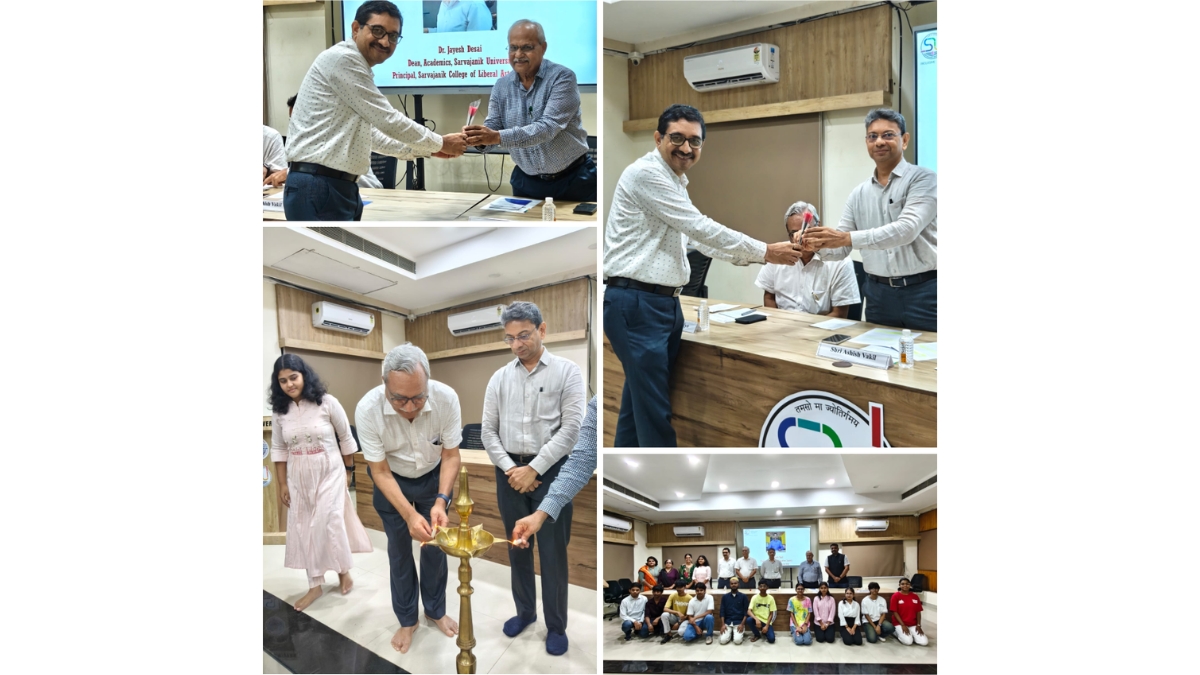
    The inaugural session was graced by Shri Ashish Vakil, President, Sarvajanik University, and Dr Kiran Pandya, Provost, Sarvajanik University, along with distinguished guest speakers Ms Shraddha Shah, Founder of Tapperz Dance School, and Adv. Hiral Panwala, Advocate.

    A key highlight of the programme was the insightful sessions delivered by the guest speakers. Ms Shraddha Shah shared her inspiring journey, emphasizing discipline, perseverance, and self-expression, and spoke about overcoming societal barriers to pursue her passion. Adv. Hiral Panwala reflected on her personal and professional journey in the field of law, highlighting the opportunities and challenges she encountered and emphasizing the importance of confidence, awareness, and self-empowerment.

    In addition to the expert sessions, the programme featured a range of student competitions, including logo making, poster making, bookmark making, debate, and movie review, all aligned with the theme of gender sensitisation. Students from various constituent colleges participated enthusiastically, showcasing creativity and thoughtful perspectives.

    The event successfully provided a platform for dialogue, inspiration, and awareness, reinforcing the importance of fostering a more inclusive, respectful, and equitable society.

  • Galgotias University Awarded Rs 42 Lakh Research Grant by IIT Bombay to Develop Intelligent Ripeness Detection

    Galgotias University Awarded Rs 42 Lakh Research Grant by IIT Bombay to Develop Intelligent Ripeness Detection

    Galgotias University Awarded ₹42 Lakh Research Grant by IIT Bombay to Develop Intelligent Ripeness Detection

    Greater Noida (Uttar Pradesh) [India], March 18: Galgotias University has secured ₹42 Lakh research grant from IIT Bombay’s Technology Innovation Hub for IoT (TIH-IoT). The funding, awarded under the Technology Development Program, will support the project titled “Development of Intelligent Ripening Detector for Mango and Watermelon.”

    TIH-IoT is a not-for-profit Section 8 company established at IIT Bombay. It operates under the National Mission on Interdisciplinary Cyber-Physical Systems, an initiative implemented by the Department of Science and Technology , Government of India.

    The focus of the project is to develop a cost-effective, portable, and intelligent ripening detection system which can identify ripening stages and detect artificial ripening in different species of mango and watermelon. Dr. Agniv Tapadar, Assistant Professor in the Department of Electrical, Electronics and Communication Engineering at Galgotias University, is the Principal Investigator of the project.

    The intelligent system will use a novel sensor-based approach and intrinsic impedance sensing that will be able to analyse the internal features of the fruits without causing any external damage to them. With this study, researchers will be able to efficiently assess fruit quality across different growth stages.

    Dr. Agniv Tapadar, faculty said that University always supports interdisciplinary innovation at the intersection of agriculture, sensing technologies, and intelligent systems. This project also aligns with the goals of the National Mission on Interdisciplinary Cyber-Physical Systems.

    If you object to the content of this press release, please notify us at pr.error.rectification@gmail.com. We will respond and rectify the situation within 24 hours.

  • Innovación 2026 Showcases a Powerful Culture of Innovation and Startup Thinking at the IEM–UEM Kolkata

    Innovación 2026 Showcases a Powerful Culture of Innovation and Startup Thinking at the IEM–UEM Kolkata

    Kolkata (West Bengal) [India], March 17: The Institute of Engineering & Management (IEM) and the University of Engineering & Management (UEM), Kolkata, on Friday inaugurated the 12th edition of Innovación 2026, their flagship international techno-management festival, at the IEM Management House in Salt Lake’s Sector V. The two-day event  from 14 to 15 March 2026, has drawn students, researchers, innovators, startup enthusiasts and entrepreneurs from across India as well as several countries including the USA, UK, Australia and Canada, along with participants from premier institutions such as the IITs and NITs.

    Over the years, Innovación has grown well beyond a conventional student festival. It has emerged as a global platform for innovation, entrepreneurship and technology-led problem solving, reflecting the strong startup-focused ecosystem nurtured by the IEM-UEM Group. This year’s edition features more than 35 competitive events, over 150 technology projects and more than 100 research posters across emerging domains including Artificial Intelligence, Robotics, Embedded Systems, Data Science, Renewable Energy, Sustainable Technologies and Management Innovation.

    At the centre of the festival is a high-intensity 36-hour hackathon where teams work round the clock to convert ideas into working prototypes addressing real-world challenges. The hackathon reflects the institution’s philosophy that innovation must move beyond theory and evolve into practical solutions with entrepreneurial potential.

    One of the major highlights of Innovación 2026 is an autonomous Level-2 driverless car designed and developed entirely by students of IEM using artificial intelligence and computer vision. Created through multidisciplinary collaboration among engineering teams, the project marks a significant step towards indigenous autonomous mobility research within a university ecosystem.

    Equally significant is a water desalinator system capable of converting sea water into potable drinking water. Designed with scalability and affordability in mind, the technology aims to address global water scarcity challenges, particularly in coastal and disaster-affected regions.

    Another socially focused innovation showcased at the event is a low-cost electric wheelchair engineered to enhance mobility for differently-abled individuals while remaining affordable for wider adoption. Projects such as these underline the strong belief within the IEM-UEM ecosystem that technology must serve society while also opening pathways for startup incubation.

    Several other student innovations attracted considerable attention from visitors, researchers and industry delegates. A Therma Compress Belt, a wearable therapeutic device combining heat and compression for lumbar pain and menstrual cramps, reflects the growing convergence of healthcare technology and wearable innovation. A 3D-printed AR/VR gyroscopic game controller introduces an immersive gaming interface that requires full-body movement, blending digital entertainment with physical fitness.

    In the field of intelligent security systems, “Secura”, a web-based deep learning surveillance platform built on a 64-point facial recognition framework, demonstrates the application of artificial intelligence in advanced monitoring and security infrastructure.

    Robotics innovations also featured prominently at the exhibition. An autonomous thermal-based disaster rescue robot equipped with thermal sensors and GPS has been designed to detect survivors trapped under debris during natural disasters. Meanwhile, AGNI, a modular unmanned aerial vehicle (UAV) with dual payload bays, has been developed for rapid medical delivery and aerial surveillance, highlighting the increasing importance of drone-based emergency response systems.

    A gesture-controlled robot operated through wearable sensor-based hand gestures further showcased the possibilities of human-machine interaction, illustrating how intuitive control systems can redefine robotics applications.

    Adding a moment of national recognition, students of UEM Kolkata recently secured both the first and second positions in the YuvAI – Global Youth Challenge at the India AI Impact Summit 2026, organised by the Government of India at Bharat Mandapam in New Delhi. Competing against more than 20,000 projects nationwide, the first-prize winning project “AGNISENA”, an AI-powered forest fire early detection system, received Rs. 15 lakh, while “VOX-AID”, a voice-based platform for early detection of dysarthria, was awarded Rs. 10 lakh.

    The inaugural ceremony was attended by a distinguished panel of guests including Padma Shri Pandit Tarun Bhattacharya, recipient of the Padma Shri in 2026; Dr. Moumita Dutta, physicist and scientist-engineer at the Space Applications Centre (SAC), ISRO Ahmedabad; and Anupam Agrawal, Chair of the Digital Standards Coordination Committee at the Bureau of Indian Standards.

    Prof. Dr. Satyajit Chakrabarti, Vice Chancellor of UEM Kolkata, said, “Innovación 2026 celebrates the relentless spirit of our students and faculty. The national victories at the India AI Impact Summit, the driverless car built entirely at IEM, and more than a hundred groundbreaking projects show that the IEM-UEM ecosystem has successfully created a culture where innovation naturally evolves into entrepreneurship.”

    Prof. (Dr.) Rajashree Paul, Director, IQAC, IEM-UEM Group, highlighted the transformative energy of the festival, noting that the diversity of projects — from driverless mobility to affordable healthcare technology — reflects the institution’s commitment to encouraging young innovators to develop solutions that can evolve into future startups and scalable technologies.

    Highlighting the global participation and innovation ecosystem, Prof. (Dr.) Prabir Kumar Das, Convenor of Innovación 2026 and Head of the Department of Basic Science & Humanities at IEM, said the festival has become an international hub where technology, creativity and entrepreneurship converge, enabling students to transform ideas into impactful innovations.

    Besides technology exhibitions and research showcases, the festival also features robotics contests, coding challenges, management competitions, esports tournaments and creative innovation showcases, creating an interdisciplinary environment where engineering, business strategy and startup thinking intersect.

    Innovación 2026 is co-organised with the Rotary Club of Salt Lake Silicon Valley and the Lions Clubs of IEM, strengthening collaboration between academia, industry and social organisations.

    With its powerful blend of innovation, research, entrepreneurship and global collaboration, Innovación 2026 stands as a testament to the startup-driven mindset and technological leadership of the IEM-UEM Group, inspiring the next generation of innovators to build solutions for a rapidly evolving world.


  • Faculty of Design at CEPT University Invites Applications to PG Programs 2026

    Faculty of Design at CEPT University Invites Applications to PG Programs 2026

    New Delhi [India], March 16:  The Faculty of Design at CEPT University is inviting applications to its PG programs for 2026.

    The Faculty of Design at CEPT offers a contemporary design education to address various streams of knowledge and production in an evolving and ever-expanding discipline of design. Our undergraduate program provides a rigorous yet flexible choice-based learning ecosystem, whilst our postgraduate programs offer highly specialised engagements with industry-oriented design domains.

    Prof Saleem Bhatri, Dean, Faculty of Design, shares, “The Faculty of Design is pioneering a multidisciplinary choice-based design education in India whilst also addressing the country’s evolving design competency landscape.

    Our PG Programs are designed to advance professional goals and frame career paths. They provide specialised design knowledge, technical skills, cutting-edge technological proficiencies, methodological competencies, and domain-specific expertise, transforming our graduates into industry-ready specialists.”

    Programs Offered

    Master’s in Computational Design and Fabrication (MCDF): The Master’s in Computational Design and Fabrication (MCDF) program nurtures designers who can conceptualise form, explore materials, and adopt cutting-edge fabrication processes to develop contemporary design solutions. Rooted in computational design, this program extends across multiple domains — from product design to built-environment, and operates at diverse scales, ranging from furniture to building envelope systems.

    CEPT is uniquely positioned to offer this program, where students will be mentored by academics and practitioners from the fields of design, technology, and architecture. The University also recently signed an MoU with Chennai-based Tvasta Manufacturing Solutions Pvt. Ltd., a deep-tech startup that specialises in construction 3D printing. Through this collaboration, the University will establish an advanced additive manufacturing workshop on its campus, marking a meaningful contribution to India’s pursuit of future-ready construction technologies.

    Master’s in Furniture Design (MFD): The Master’s in Furniture Design program focuses on training professionals to actively engage ​with the rapidly growing furniture industry. The Indian furniture market has been positively impacted by increasing urbanization, a younger demographic, rising disposable incomes and the growth of the office and hospitality sectors amongst others.

    The program considers various propositions and considerations in the furniture sector, from online markets to rental offerings, from the mass manufacturing ecosystems of large industries to the scaled productions of the micro, small and medium enterprises (MSME’s), from the expanding role of the furniture designer as a professional to that of an entrepreneur.

    Overall, this program will equip students with the essential technical skills, design abilities, and specialized domain knowledge, while focusing on developing a deep understanding of materials and manufacturing processes, techniques and technologies, prototyping, ergonomics, aesthetics, material connections, detailing, structuring systems, economics, characteristics (such as modular, flatpack, etc.), and typologies. The program encourages visits to industries, manufacturing units, trade fairs, and exhibitions.

    For Admission Details, click: Admissions at FD

    About CEPT University

    CEPT University advances excellence in education, research, and practice to shape creative leaders capable of addressing real-world challenges across products, projects, places, and processes. The University brings together the disciplines of architecture, planning, technology, design, and management in an integrated learning ecosystem.

    Its studio-centered teaching programs foster critical thinking, professional judgment, and ethical responsibility, preparing graduates to engage meaningfully with complex spatial, social, and environmental contexts. CEPT’s research deepens understanding of human settlements and spatial systems, while its advisory projects translate knowledge into practice — contributing to more livable, inclusive, and sustainable habitats. Through education, research, and advisory work, CEPT seeks to enrich the quality of life in India’s cities and towns, while engaging with global discourses on human environments.

    The University comprises six faculties: viz. the Faculty of Architecture, the Faculty of Design, the Faculty of Management, the Faculty of Planning, the Faculty of Technology, and the CEPT Foundation Program. In December 2023, CEPT University was recognized by the Government of India as a Centre of Excellence in Urban Planning and Design. This comes with an endowment of Rs. 250 Crore to be used towards the research and training on India specific knowledge in Urban Planning and Design over the next 25 years. CEPT is ranked NIRF 6th in the category of Architecture and Planning (NIRF 2025), only private University in Top 10 NIRF Rankings.

    CEPT University was established by the CEPT University Act of 2005 enacted by the government of Gujarat. It was originally started in 1962 as the School of Architecture supported by the Ahmedabad Education Society. The Department of Scientific and Industrial Research (DSIR) of the Government of India recognizes the University as a Scientific and Industrial Research Organization (SIRO). CEPT University is recognized as a Center of Excellence by the Government of Gujarat. CEPT University has over 30 ongoing collaborations and exchange programs with top-ranked universities across the world.

    If you object to the content of this press release, please notify us at pr.error.rectification@gmail.com. We will respond and rectify the situation within 24 hours.

  • Galgotias University IEEE Computer Society Chapter Wins National Recognition at AICSSYC

    Galgotias University IEEE Computer Society Chapter Wins National Recognition at AICSSYC

    Greater Noida (Uttar Pradesh) [India], March 14: The IEEE Computer Society, Galgotias University Student Branch Chapter has been awarded the Best Computer Society Chapter in India at the prestigious All India Computer Society Student & Young Professionals Congress 2025 (AICSSYC 2025) held at Kolkata. The chapter secured 1st place in the national “Battle of Chapters”, based on their innovative technical activities, community involvement and excellent leadership. The outstanding performance by the students won the cash prize of USD 500.

    The achievement was led by a dedicated student team from Galgotias University, Gaurang Pant, pursuing B.Tech in Computer Science and Engineering, Shubhranshu Shekhar Dash, a B.Tech student of Computer Science and Engineering (Artificial Intelligence & Machine Learning) & Rashi Bajpai, a student of B.Sc. Computer Science (Data Science).

    This award also represents Galgotias University’s high level of innovation, leadership, and academic excellence that supports students in engaging with worldwide professional communities and receiving national recognition for their contributions.

    Galgotias University is among the world’s leading universities in Quacquarelli Symonds (QS Rankings) and Times Higher Education (THE) Rankings.

    Galgotias University proudly ascends in the QS World University Rankings 2026 by Quacquarelli Symonds, securing a coveted position in the 1201–1400 global band. Ranked 15th among top private universities and 43rd among all Indian universities, this achievement marks a powerful endorsement of Galgotias’ unwavering commitment to academic excellence, global relevance, and innovation in higher education. Galgotias has also been accredited with NAAC A+ grade in its very first cycle, achieving these milestones in a record time of just 14 years.

    In the Times Higher Education (THE) World University Rankings 2025, Galgotias University has been ranked 45th among Indian universities (including both government and private institutions) and placed in the globally prestigious 1001–1200 band. This recognition reinforces the university’s growing stature in the international academic landscape and reflects its consistent progress across global higher education benchmarks.

    If you object to the content of this press release, please notify us at pr.error.rectification@gmail.com. We will respond and rectify the situation within 24 hours.

  • From Concept to Creation: A comprehensive BArch experience at Nitte University

    From Concept to Creation: A comprehensive BArch experience at Nitte University

    Bachelor of Architecture at Nitte University: Blending Traditional Craftsmanship with Modern Innovation.
    Bengaluru (Karnataka) [India], March 13: The Bachelor of Architecture (BArch) at Nitte University is a five-year professional program that prepares aspiring architects to design sustainable, functional and inspiring spaces. Designed to meet the evolving needs of the built environment, this program blends creative exploration, technical expertise and hands-on experience to develop well-rounded professionals capable of shaping the future of architecture and urban design. The unique curriculum has been approved by the Council of Architecture (CoA), New Delhi ensuring quality education that adheres to national standards.

    The BArch program is offered across two distinguished campuses of the Nitte University: Nitte Institute of Architecture, Mangaluru and Nitte School of Architecture, Planning & Design, Bengaluru. Together, these campuses reflect the University’s integrated vision for architectural education, combining academic rigour, industry engagement and a culture of creative inquiry that prepares students to lead with both imagination and responsibility.

    Nitte University is a multidisciplinary university offering a diverse range of undergraduate, postgraduate and doctoral programs in healthcare, technical sciences and management. With over 45 years of legacy, 44 institutions, 160+ programs and a dedicated faculty of over 5500, Nitte University continues to grow as a dynamic and evolving center of learning. Ranked 80 in the NIRF 2025 by the Ministry of Education, Government of India and accredited with an A+ Grade by the National Assessment and Accreditation Council (NAAC), the University is known for its global perspective. With a strong portfolio of international academic collaborations and student exchange initiatives, Nitte University provides its students with a broad and inclusive worldview.

    What the BArch Program offers

    The BArch curriculum at Nitte University spans five years and includes a range of core studio courses, theory modules, technical training, workshops and design projects that guide students from foundational skills to advanced architectural analysis. The program places importance on experiential learning, enabling students to apply design principles through practical projects, model making, fabrication labs, software training and industry – oriented explorations.

    Eligibility to join the program requires completion of 10+2 or equivalent with specified subjects and a valid score in the National Aptitude Test in Architecture (NATA) or JEE Paper II. Excellence & Merit Scholarships are awarded to support talented students in their academic journey.

    Unique Strengths of the BArch Program

    The BArch program at Nitte University distinguishes itself through a combination of academic depth, creative exposure and industry relevance that empowers students to thrive in a competitive global environment. The following are some of the key aspects of the program:

    Industry-Aligned Curriculum and Learning

    The curriculum is structured to integrate design thinking with technical proficiency, aligning with current industry trends and future architectural challenges. Students engage with contemporary themes such as sustainable design, digital modelling and urban planning techniques that prepare them for diverse professional roles.

    Practical and Experiential Education

    From studio projects and material labs to prototyping and field visits, the program ensures that learning goes beyond theoretical studies. Access to workshops, fabrication equipment and site explorations empowers student learning by encouraging practical understanding and creative problem-solving.

    Strong Mentorship and Expert Faculty

    Students benefit from a faculty body with extensive academic and professional experience, further enriched by visiting experts, industry practitioners and design professionals. This mentorship model fosters personalized guidance that enhances design skill development and critical thinking.

    Collaborative and Supportive Environment

    The academic culture emphasizes collaboration, critical dialogue and teamwork. Interactions across disciplines develop broader perspectives, enhancing adaptability and enhancing students’ holistic development for professional practice.

    Focus on Sustainability and Adaptable Skills

    In an era where sustainability is key to responsible design, the BArch program embeds eco-friendly design principles, climate-responsive planning and resource-efficient methodologies across its coursework. This equips graduates to address modern socio-environmental challenges through thoughtful design solutions.

    Industry Engagement and Exposure

    Nitte University regularly conducts workshops, seminars and collaborates with professional organizations to connect students directly with leaders in architecture and allied fields. These opportunities help in networking, build practical insights, and enhance future career prospects.

    Career Pathways

    BArch students of Nitte University graduate with a strong foundation to pursue careers across architecture, urban design, interior design, sustainable building consultancy, landscape architecture, construction management, research, and academia. The broad scope of the curriculum enables them to adapt to evolving professional landscapes and make meaningful contributions across the industry.

    The BArch program at Nitte University prepares students to become innovative architects by combining rigorous academics, practical exposure and a forward-looking approach to design.

    Apply now at: https://apply.nitte.edu.in/

    If you object to the content of this press release, please notify us at pr.error.rectification@gmail.com. We will respond and rectify the situation within 24 hours.

  • Faculty of Planning at CEPT University Invites Applications to PG Programs 2026

    Faculty of Planning at CEPT University Invites Applications to PG Programs 2026

    New Delhi [India], March 12: India is undergoing an intense phase of urban transformation, placing immense pressure on essential infrastructure, mobility, and public spaces across its cities. The scale and speed of this change demand urgent, informed, and future-ready responses that balance growth with environmental responsibility and social equity.
    ~ Industry-focussed curriculum, emphasis on problem solving, studio work on real-world challenges

    ~ Courses curated to cater to the emerging industry demand for skilled urban planners

    ~Pre-admission scholarships available for meritorious students 

    Established in 1972, the Faculty of Planning at CEPT University continues playing a pivotal role in preparing the next generation of urban professionals—equipping them with the insight, technical expertise, and ethical grounding required to shape cities that are sustainable, inclusive, and resilient.

    Prof Shalini Sinha, Dean, Faculty of Planning, CEPT University, said, “As India continues to urbanise at an unprecedented pace, the demand for skilled urban planners and designers has never been greater. The Faculty of Planning at CEPT University stands at the forefront of this transformation, preparing professionals who can respond thoughtfully and decisively to the complex realities of our fast-growing cities.

    Our programs in planning and urban design are anchored in industry-relevant curricula and rigorous studio-based learning, ensuring that graduates are not only conceptually strong but also practice-ready. By placing problem-solving at the core of our pedagogy, we enable students to engage deeply with real-world challenges and shape development that is inclusive, resilient, and sustainable.”

    Courses and Admission Details

    Master’s in Urban Design (MUD):

    The Master’s in Urban Design (MUD) program is intended for individuals who have a strong interest in the practice of shaping the physical form of urban areas, and in the design of public places. The program equips students with qualitative and quantitative analytical skills, effective graphic representation techniques and effective communication methods, which are relevant professionally across the globe. Design studios are at the center of the MUD program engaging with multiple design topics that cut across a variety of scales and urban scenarios. The studio exercises are structured around real-life projects emerging from the public discourse within a given city.

    Our graduates pursue careers as urban designers who can imagine and improve the everyday life of the urban dwellers through better design of the physical environment. They have the abilities

    to imagine future scenarios of cities with a strong emphasis on design with functionality, liveability, and sustainability.

    Master’s in Urban Infrastructure (MUI):

    The Master’s in Urban Infrastructure (MUI) is India’s pioneering program focused on planning and implementing core urban infrastructure systems, including water supply, sanitation, solid waste, blue–green infrastructure, and social infrastructure. It integrates land-use planning with technical, financial, and governance aspects of urban infrastructure, and prepares professionals to work across public and private sectors to contribute to building resilient, sustainable cities for tomorrow. Within the MUI program, students may opt for a major in Water, Sanitation, and Hygiene (WASH), which is part of the Global Sanitation Graduate School (GSGS), supported by IHE, Delft, the Netherlands.

    Our graduates pursue careers as infrastructure specialists capable of analyzing and shaping blue–green urban systems across multiple scales. They find opportunities across a wide spectrum of sectors, including think tanks, government agencies, and the private sector, where they contribute to research, policy, design, and implementation.

    Master’s in Urban Planning (MUP):

    The Master’s in Urban Planning (MUP) program equips students with geo-spatial analysis, institutional and policy analysis, scenario building, planning principles and methods, and strong professional communication skills. The program is tailored for those who wish to engage with real urban challenges, influence public policy and development decisions, and contribute meaningfully to making cities work better for everyone. Studio-based learning forms the core of the program, supported by theory courses that build conceptual, analytical, and methodological depth, with equal emphasis on financial literacy, governance frameworks, and visual communication.

    Our graduates pursue careers as urban planners who combine analytical rigor with social and environmental sensitivity, strong institutional and policy awareness, and the capacity to translate plans into implementable outcomes across statutory planning, urban development strategies, and project-based interventions.

    Master’s in Urban Transport Systems (MUTS): 

    The Master’s in Urban Transport Systems (MUTS) is a one of its kind program in India which is designed to provide holistic knowledge and develop analytical and practical skill sets required to study transport sub-systems, understand travel behavior, and address urban mobility challenges. It offers comprehensive knowledge in planning, technology, design, operations, and management of urban transport. The program’s pedagogy combines studio-based learning, core lecture courses, and specialization or cross-disciplinary electives. Through this approach, students are exposed to integrated land use–transport planning, feasibility assessments for metro rail projects, bus operations and service planning, electric mobility, travel demand management, transport infrastructure design, logistics, and transport finance. Students are also trained in transport modelling and analytics software such as EMME, VISSIM, GIS, and R.

    Our graduates pursue careers as transport planners across consultancies, research institutions, state & local governments, transport technology and logistics firms. Equipped with strong data analytics and policy skills, they understand transport system complexities and design practical, sustainable, people-centric mobility solutions.

    Details on Admissions and Scholarships

    For Admission Details, click: Admissions at FP

    About CEPT University

    CEPT University is a recognized leader in education and research in the areas of architecture, planning, design, technology and urban management. Its teaching programs aim to build thoughtful professionals and its research programs deepen understanding in its areas of expertise.

    The University comprises five faculties: viz. the Faculty of Architecture, the Faculty of Planning, the Faculty of Technology, the Faculty of Design, and the Faculty of Management. In December 2023, CEPT University was recognized by the Government of India as a Centre of Excellence in Urban Planning and Design. This comes with an endowment of Rs. 250 Crore to be used towards the research and training on India specific knowledge in Urban Planning and Design over the next 25 years.

    CEPT University also undertakes advisory projects to support the national, state and city governments and large sections of private industry. Through its education, research and advisory activities, the University strives to contribute to enriching the lives of people in India’s villages, towns and cities.

    CEPT University was established by the CEPT University Act of 2005 enacted by the government of Gujarat. It was originally started in 1962 as the School of Architecture supported by the Ahmedabad Education Society. The Department of Scientific and Industrial Research (DSIR) of the Government of India recognizes the University as a Scientific and Industrial Research Organization (SIRO). CEPT University is recognized as a Center of Excellence by the Government of Gujarat. CEPT University has over 30 ongoing collaborations and exchange programs with top-ranked universities across the world.

    If you object to the content of this press release, please notify us at pr.error.rectification@gmail.com. We will respond and rectify the situation within 24 hours.

  • Galgotias University Alumnus Joins the Indian Army, Commissioned as Lieutenant

    Galgotias University Alumnus Joins the Indian Army, Commissioned as Lieutenant

    Greater Noida (Uttar Pradesh) [India], March 12: Galgotias University has achieved another milestone, as one of its alumni and former Army Wing NCC cadet, Priyanshu Dixit, has been commissioned as a Lieutenant in the Three Sikh Regiment of the Indian Army, at the Passing Out Parade held at the Officers Training Academy (OTA), Chennai, on 7 March 2026.

    Priyanshu Dixit, an Ex Army Wing Cadet of the NCC (National Cadet Corps) Batch 2020, 40 UP Battalion NCC and a student at the School of Basic and Applied Sciences, was widely respected among his peers and mentors for his strong sense of responsibility, discipline, and leadership. During his time at Galgotias University, he served as Senior Under Officer (SUO), the highest rank held by an NCC cadet. He was always a fitness enthusiast, fond of sports, and maintained a high level of physical fitness.

    From the beginning of his educational life, he showed a strong interest in joining the Indian Army to serve the nation. Field Marshal Sam Manekshaw, one of India’s most respected military leader, was his inspiration, and he always aspired to follow in his footsteps. His parents supported him in pursuing this dream.

    Galgotias University has developed a strong NCC ecosystem where cadets regularly participate in national-level events such as the Republic Day Camp (RDC) and ceremonial parades. In 2022, six cadets (5 male, 1 female) were selected for RDC. In 2023, five cadets (3 male, 2 female) represented the university. In 2024, six cadets (1 male, 5 female) were selected, followed by six cadets (4 male, 2 female) in 2025. Continuing this tradition, in 2026 four cadets (3 male, 1 female) have been selected for RDC, reflecting the university’s growing contribution to NCC excellence and national service.

    Galgotias University proudly congratulates its student, Lieutenant Priyanshu Dixit, and wishes him strength, honour, and success as he begins his service to the nation.

    For more information, please contact:

    Dr. A Ram Pandey

    Professor

    Galgotias University

    aram.pandey@galgotiasuniversity.edu.in

    If you object to the content of this press release, please notify us at pr.error.rectification@gmail.com. We will respond and rectify the situation within 24 hours.

  • Delhi Technological University, TimesPro announce the inaugural Advanced Certificate Program in Artificial Intelligence

    Delhi Technological University, TimesPro announce the inaugural Advanced Certificate Program in Artificial Intelligence

    Six-month, CTEL-led programme blends machine learning, deep learning and generative AI with hands-on projects and a three-day campus immersion.

    New Delhi [India], March 12: As artificial intelligence rapidly reshapes how organisations build products, manage risk, serve customers and run operations, the need for professionals who can design, deploy and govern intelligent systems has accelerated. Delhi Technological University (DTU, New Delhi), in collaboration with TimesPro, has announced the inaugural batch of the Advanced Certificate Programme in Artificial Intelligence, aimed at learners seeking strong conceptual grounding alongside practical, job-relevant capability.

    Anchored by DTU’s Centre for Technology Enhanced Learning (CTEL), the six-month programme extends DTU’s academic strengths into a technology-enabled format that supports rigorous learning at scale. CTEL’s mandate centres on delivering accessible, learner-centric digital programmes that remain contemporary, industry-aligned and outcomes-driven.

    The Advanced Certificate Programme in Artificial Intelligence builds a structured pathway across Artificial Intelligence, Machine Learning, Deep Learning and Generative AI, with an emphasis on responsible development and real-world performance. Learners engage with applied problem-solving across domains such as healthcare, finance, marketing, engineering and analytics, translating theory into solutions that can be evaluated, improved and deployed in practice.

    Participants gain hands-on exposure to machine learning tools, algorithms and industrial use cases, while building and deploying ML models and implementing core neural-network architectures, including CNNs, RNNs and LSTMs, from the ground up. The curriculum also introduces advanced methods such as Generative AI, GANs, VAEs and GNNs and supports end-to-end AI system design using Python, TensorFlow, PyTorch and other widely used libraries.

    Delhi Technological University

    The market signals are unequivocal. UN Trade and Development (UNCTAD) projects the global AI market will rise from USD 189 billion (2023) to USD 4.8 trillion by 2033, highlighting the scale and speed of AI-led growth. McKinsey’s latest global survey also reports 88% of organisations now use AI in at least one business function, up from 78% a year earlier, evidence that adoption is normalising across sectors. In India, NASSCOM projects the AI talent pool will grow from roughly 6–6.5 lakh professionals to over 12.5 lakh by 2027, at a 15% CAGR, reinforcing the need for structured, industry-ready upskilling.

    Speaking at the inaugural announcement, Prof. S. Indu, Dean- Digital Education, Delhi Technological University, said, “Artificial intelligence now sits at the centre of engineering, business and public services. Through CTEL, DTU is bringing our academic rigour to a format that working professionals can pursue without stepping away from their careers. This programme blends strong fundamentals with applied projects, ethics and responsible deployment, so learners can design, train and scale AI systems that create measurable impact.”

    Sridhar Nagarajachar, Business Head – Executive Education, TimesPro said, “Enterprises want practitioners who can move from algorithms to production-grade solutions. With DTU, TimesPro is curating an intensive learning journey that combines expert-led sessions, hands-on tutorials and a capstone aligned to real industry problems. Delivered on our interactive Direct-to-Device platform and reinforced through campus immersion, the programme helps learners build robust portfolios in machine learning, deep learning and generative AI.”

    Delhi Technological University


    The programme comprises 110 hours of learning through a blend of online instruction and self-paced study, supported by hands-on tutorials for key AI and ML topics delivered by industry experts. Learners complete advanced assignments and an applied capstone, such as building a recommender system using CNN, LSTM, GNN or hybrid AI pipelines. The programme is well-suited to engineering, technology, computer science, IT and mathematics graduates, as well as working professionals in software, analytics, engineering and allied domains and professionals aiming to transition into advanced AI/ML and data science roles.

    The eight-module curriculum spans AI literacy, Python and data thinking, mathematical foundations, regression methods, hyperplanes, clustering, deep learning and neural networks and advanced AI and emerging techniques. TimesPro will deliver learning through its interactive Direct-to-Device (D2D) platform and facilitate a three-day campus immersion to strengthen peer learning, academic engagement and applied orientation. On successful completion, learners will receive a certification issued by Delhi Technological University (DTU, New Delhi).

    About Delhi Technological University: 

    Delhi Technological University DTU, one of India’s premier institutions of higher learning, remains firmly committed to realizing its vision of becoming a leading world-class technology university. Serving as a key node in national and global knowledge networks, DTU strives to empower India through knowledge and innovation. Established in 1941, DTU’s main campus spans 164 acres near Rohini, New Delhi. Over its distinguished 84-year history, the university has achieved numerous milestones and built a legacy of excellence in engineering, technology education, research, and innovation. Few know that DTU is the founding cradle of some of India’s foremost academic institutions — including the Faculty of Management Studies, University of Delhi), School of Planning and Architecture SPA, and the Departments of Chemical Engineering and Textile Technology at IIT Delhi. Today, DTU nurtures over 16,000 students across undergraduate, postgraduate, and doctoral programs spread across two campuses. With a faculty of around 450 accomplished academicians across 15 departments and 3 interdisciplinary centres, DTU is supported by a strong administrative and technical team. Globally recognized for producing some of the brightest minds, DTU alumni continue to drive innovation and growth both domestically and internationally. The university stands tall on its enduring commitment to quality teaching, cutting-edge research, and meaningful societal contributions — helping individuals, communities, and the nation, realize their highest potential.

    About TimesPro:

    TimesPro, established in 2013, is a leading Higher EdTech platform dedicated to empowering the career growth of aspiring learners by equipping them with skills to rise in a competitive world. TimesPro’s H.EdTech programmes are created to meet the rapidly changing industry requirements and have been blended with technology to make them accessible & affordable.

    TimesPro offers a variety of created and curated learning programmes across a range of categories, industries, and age groups. They include employment-oriented early career programmes across BFSI, e-Commerce, and technology sectors; executive education for working professionals in collaboration with premier educational institutions like IIMs and IITs; and organisational learning and development interventions at the corporate level. TimesPro also collaborates with India’s leading organisations across varied sectors to provide upskilling and reskilling solutions to boost employability and create a robust workforce. TimesPro is a Higher EdTech initiative by The Times Group.

    About the Centre for Technology Enhanced Learning (CTEL):

    The Centre for Technology Enhanced Learning CTEL at DTU is dedicated to empowering learners worldwide through accessible, innovative, and personalized digital education. CTEL leverages appropriate technologies to reach enthusiastic learners in remote areas, offering courses that combine practical application, industry relevance, and up-to-date best practices. Designed to prepare participants for emerging challenges and opportunities, these programs emphasize real-world learning and measurable career impact. The offerings from CTEL foster a collaborative learning environment through peer-to-peer interaction, discussion forums, and networking opportunities. Participants who successfully complete the programs with satisfactory performance receive a Professional Development Certificate, boosting their professional credentials and supporting their career aspirations. Beyond individual learning, CTEL aims to contribute to India’s workforce development and economic growth. The Centre also acts as a bridge for government and non-governmental organizations, helping them address present and future challenges by drawing upon DTU’s vast intellectual and research resources. Committed to democratizing education, CTEL ensures that quality learning remains affordable and within the reach of all.

    If you object to the content of this press release, please notify us at pr.error.rectification@gmail.com. We will respond and rectify the situation within 24 hours.