Category: World

  • Water Transversality: The New Frontier of Climate Resilience at SB64 Bonn

    Water Transversality: The New Frontier of Climate Resilience at SB64 Bonn

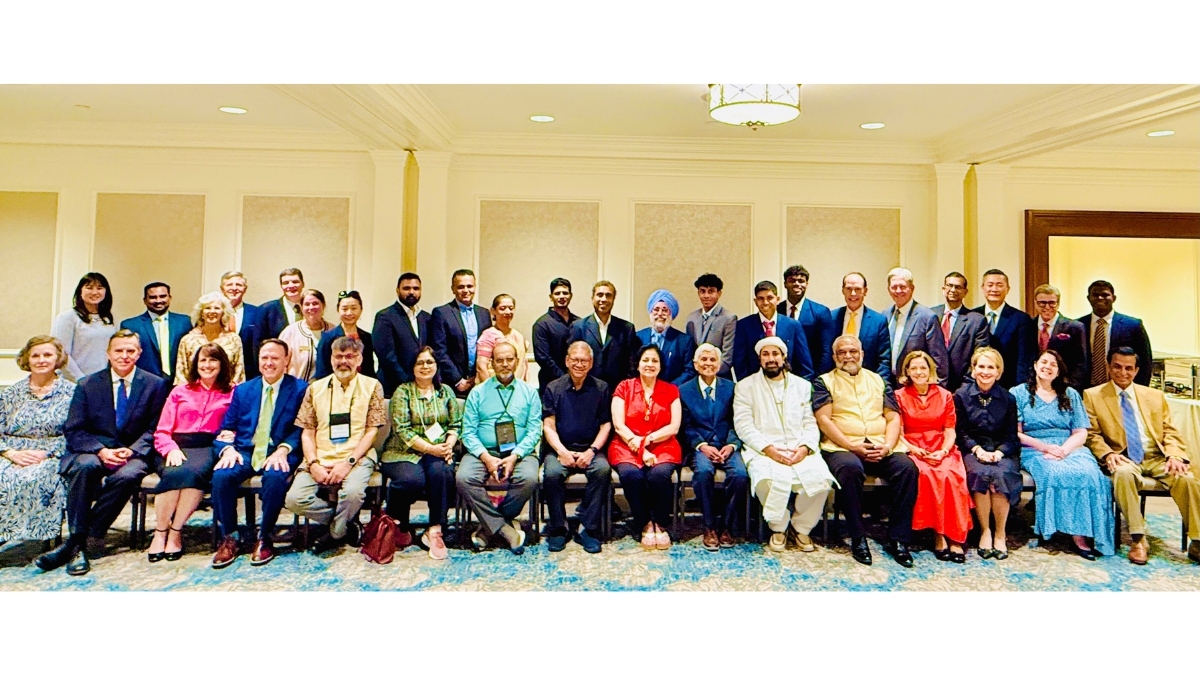
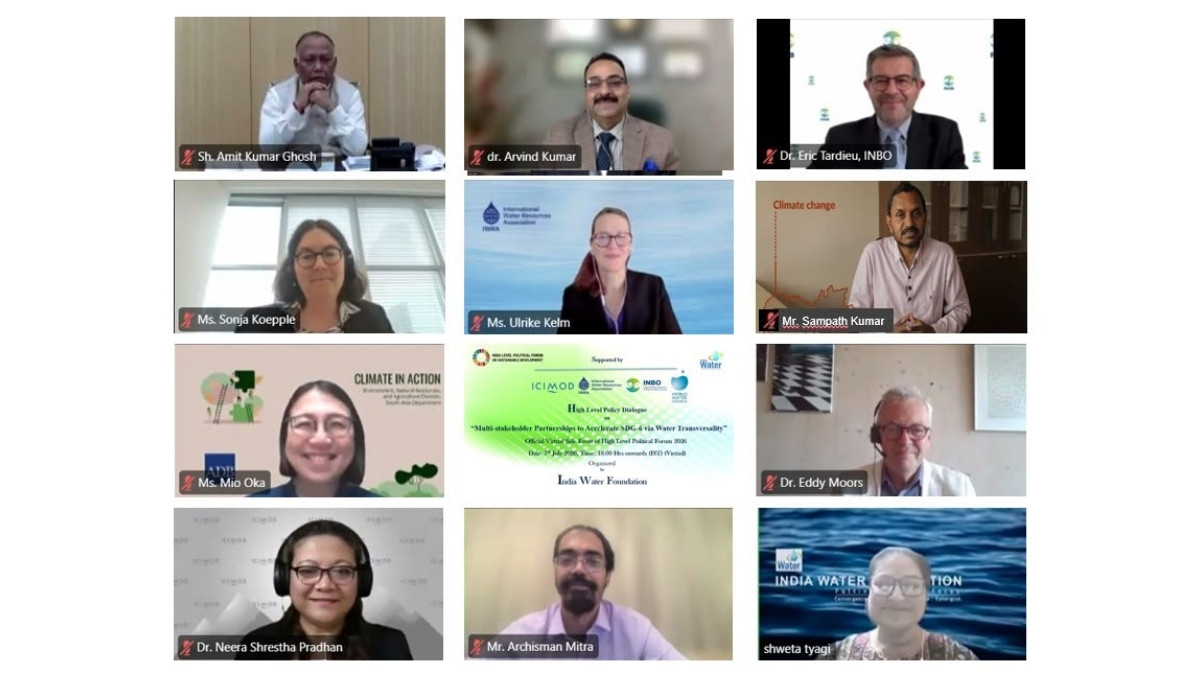
    Bonn [Germany], June 22: As climate impacts intensify across the globe, a growing consensus is emerging that water must move from the periphery to the centre of climate governance. Against this backdrop, India Water Foundation (IWF), in partnership with CICERO (Center for International Climate Research) and the AKO Foundation, convened a High-Level Policy Dialogue on “Cross-Sector Partnerships for Water Security in a Climate Resilient World”, an official side event of the 64th Sessions of the UNFCCC Subsidiary Bodies (SB64) at the World Conference Center Bonn (WCCB), Germany.

    Bringing together distinguished policymakers, scientists, researchers, and development practitioners, the Dialogue explored how water can serve as the critical connector linking climate resilience, food security, public health, biodiversity conservation, energy transitions, and sustainable economic development. Participants underscored that fragmented sectoral approaches are no longer fit for purpose in an era of interconnected climate risks and called for a new governance paradigm rooted in water transversality.

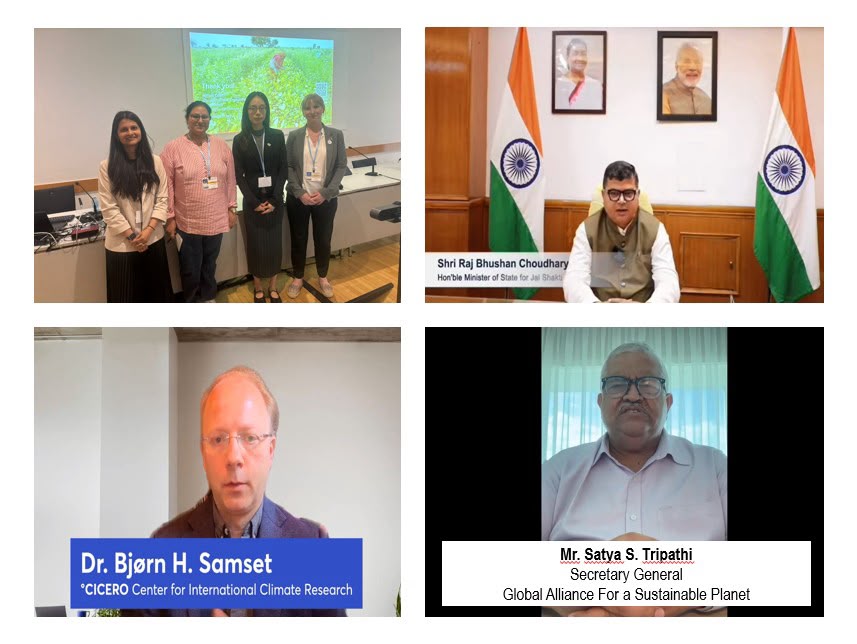
    Distinguished speakers included Dr. Arvind Kumar, President, India Water Foundation; Dr. Raj Bhushan Chaudhary, Minister of State, Ministry of Jal Shakti, Government of India; Dr. Bjørn Hallvard Samset, Research Professor, CICERO; Dr. Satya Tripathi, Secretary General, Global Alliance for a Sustainable Planet; Dr. Marianne T. Lund, Research Professor, CICERO; Ms. Shweta Tyagi, Chief Functionary, India Water Foundation; Ms. Milloni Doshi, Manager, Global Engagement and Partnerships, Environmental Defense Fund; and Ms. Daile (Iris) Zeng, PhD Student, University of British Columbia.

    Opening the Dialogue, Dr. Arvind Kumar emphasized that climate impacts are increasingly experienced through water, whether in the form of floods, droughts, groundwater depletion, glacier retreat, ecosystem degradation, or sea-level rise. Introducing the concept of water transversality, he called for embedding water considerations across climate strategies, development planning, biodiversity frameworks, agriculture, energy systems, and infrastructure investments. Stressing the need to govern the entire hydrological cycle, he advocated for integrated approaches that combine science, technology, ecosystem restoration, innovative finance, and inclusive governance. As he aptly observed, “Water is the operating system of climate resilience.”

    Delivering the Chair Address, Dr. Raj Bhushan Chaudhary highlighted India’s efforts to integrate water security into national climate action through its Nationally Determined Contributions (NDCs), National Adaptation Plan (NAP), and flagship programmes such as Namami Gange, reaffirming that water is both a climate priority and a catalyst for sustainable development.

    Dr. Satya Tripathi called for rewarding grassroots climate champions and proposed the scaling of water credits as an innovative mechanism to incentivize water conservation, ecosystem restoration, and sustainable livelihoods.

    Providing a scientific perspective, Dr. Bjørn Hallvard Samset underscored the accelerating impacts of climate change on the global water cycle and stressed the importance of translating scientific knowledge into actionable solutions that support adaptation and resilience on the ground.

    Dr. Marianne T. Lund highlighted the complex interactions between climate change, land-use change, urbanization, aerosols, and water availability, emphasizing the need for evidence-based adaptation strategies grounded in robust climate-water science.

    Moderating the Dialogue, Ms. Shweta Tyagi stressed that with nearly three-quarters of the world’s population living in water-insecure regions, stronger cross-sector partnerships, science-driven solutions, and collaborative governance models are essential to building resilience in an increasingly water-stressed world.

    The Dialogue generated a strong call for action centred on embedding water across climate and development frameworks, strengthening science-policy interfaces, scaling nature-based and engineered solutions, mobilizing innovative financing mechanisms, supporting community-led action, and fostering collaboration across sectors and institutions.

    Concluding the event, participants called for stronger international cooperation, greater investment in water resilience, and the systematic integration of water transversality into global climate processes. As the world moves toward COP31 and the 2026 UN Water Conference, the Dialogue delivered a clear message: the future of climate resilience will be shaped by how effectively the global community manages, values, and governs water.

  • Sechin Discusses the Current State of Global Institutional Coordination

    Sechin Discusses the Current State of Global Institutional Coordination

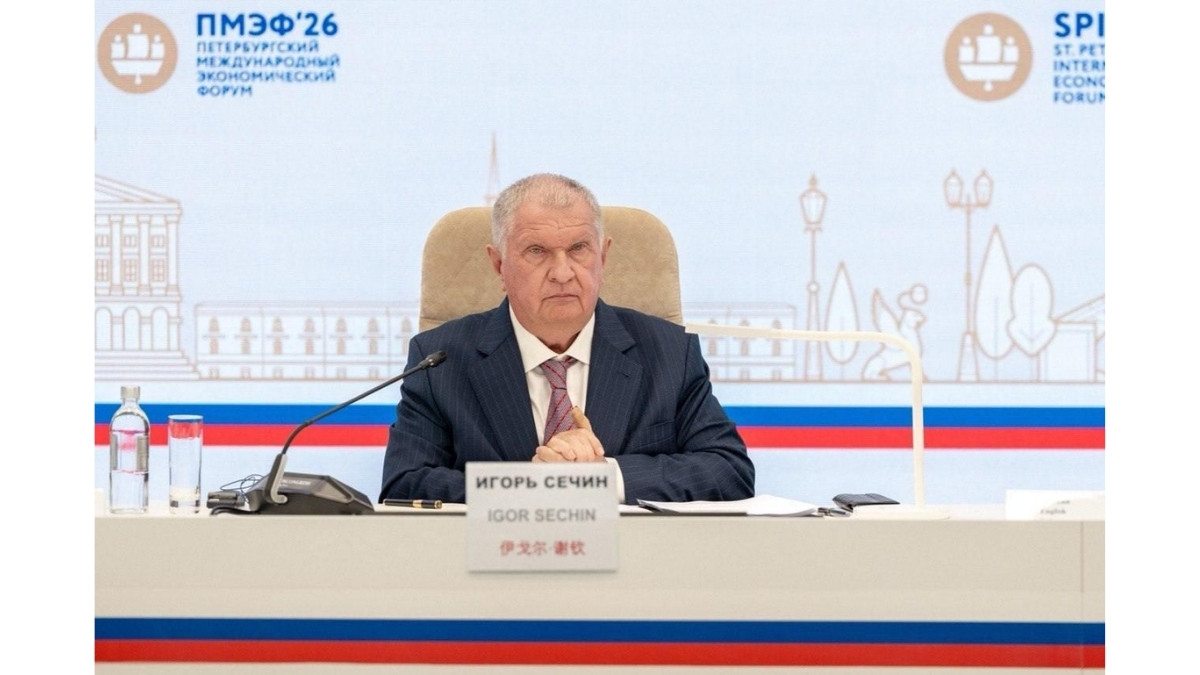
    New Delhi [India], June 08: International institutions, including the United Nations, the World Trade Organization, the International Monetary Fund and the World Bank, have lost the ability to act as global regulators, Igor Sechin, CEO of Rosneft Oil Company and Executive Secretary of the Russian Presidential Commission on Strategic Development of the Fuel and Energy Sector and Environmental Safety, said at the Energy Panel of the 2026 St. Petersburg International Economic Forum.

    The Rosneft chief’s report, titled“The Beginning of the End or the End of the Beginning: What Remains at the Bottom of Pandora’s Box?”, was devoted to the transformation of the world order, sanctions policy, the crisis of international institutions, and risks for the global economy and energy sector.

    According to Sechin, the so-called “rules-based order” has in fact ceased to exist, while the global economy has become hostage to decisions made in the interests of technology, military, and financial corporations. As a result, many international institutions, such as the United Nations, the World Trade Organization, the International Monetary Fund and the World Bank, have lost the ability to perform their role as global regulators.

    He paid particular attention to sanctions policy. According to Sechin, sanctions have become a tool of coercion and unfair competition. Over recent years, the volume of global trade subject to restrictions has increased sharply, and around 32,000 sanctions have been imposed on Russia over the past 12 years.

    A significant part of his speech was devoted to the crisis in the Middle East. Sechin described developments around the Strait of Hormuz as a precursor to a global crisis. Not only oil and gas supplies pass through the strait, but also significant volumes of fertilizers, and disruptions in supply could trigger rising food prices.

    Under these circumstances, the Northern Sea Route becomes especially important. According to Sechin, it is capable of providing global trade with the necessary transport solutions, shortening cargo delivery times and reducing transportation costs.

    The head of Rosneft also noted the transformation of the global financial system. The volume of fictitious capital today exceeds $500 trillion, which is almost five times the size of global GDP. According to him, the growing use of the dollar as a sanctions instrument is encouraging the development of alternative payment systems, and Russia could have received more than $400 billion in additional revenue if it had increased the share of gold in its reserves earlier.

    If you object to the content of this press release, please notify us at pr.error.rectification@gmail.com. We will respond and rectify the situation within 24 hours.

  • Advocates, Army Officers, Professors, Diplomats and Social Activists Unite on One Platform to Call Unified Voice for Peace, Dialogue and International Law

    Advocates, Army Officers, Professors, Diplomats and Social Activists Unite on One Platform to Call Unified Voice for Peace, Dialogue and International Law

    “Preemptive War against Iran Has No Place Under International Law”: Senior advocates, academics, diplomats and military experts decry selective enforcement of global norms, civilian casualties and erosion of diplomacy.

    New Delhi [India], March 31: A high-level seminar titled “War, Law, and Legitimacy: A Legal Examination of the Use of Force Against Iran” was held today at the Constitution Club of India, organised by Judicial Quest. The event featured a panel discussion with distinguished speakers including Supreme Court Senior Advocate Sanjay Hegde, Prof. Srinivas Burra (South Asian University), senior journalist Qamar Agha, Dr. Faridoddin Faridasr (Cultural Counsellor, Iran Embassy), Maj. Gen. Bishamber Dayal (Retd.), and Dr. Mohammad Hossein Ziyaeenia, Deputy to the Representative of Iran’s Supreme Leader in India, followed by an interactive session with the audience.Prof. Anumeha Mishra, Faculty of Law, Delhi University, moderated the panel discussion, while Saira Mujtaba, news anchor with All India Radio, anchored the entire programme.The seminar was attended by a diverse gathering of students, social activists, professors and legal professionals, including Anas Tanvir, Senior Advocate, Supreme Court of India; Hyder Zaabit, renowned scholar; Mahdi Baqir; Jawed Habib and many others. Renowned journalist Ali Abbas Naqvi was also present.Convenor Advocate Ali Taher Abidi, Editor-in-Chief, Judiciary Quest and Coordinator Syed Zaki Zaidi, geopolitical consultant and former researcher were also shared their thoughts about this issue

    Concept and Key Concerns

    The concept note highlighted urgent questions regarding the integrity of international law — specifically the legal framework governing the use of force, protection of civilians, and the role of diplomacy in preventing armed conflict. It expressed deep concern over military operations continuing during active diplomatic negotiations, warning that such actions risk undermining binding legal norms and eroding the credibility of diplomacy itself. The discussion aimed to examine whether established principles of international law are being upheld in the current situation and what these developments mean for the future of the rules-based global order. The seminar concluded with a formal resolution reflecting the participants’ concerns on the legality of the use of force, the conduct of hostilities, and the erosion of diplomatic norms. 

    Powerful Voices from the Panel

    Senior Advocate Sanjay Hegde, Supreme Court of India, stated: “World order depended on big States being altruistic hegemony. The Israel-US attack on Iran does not comply with Article 2(4) of the UN Charter or with the rules of International Humanitarian Law. Preemptive war against Iran is not permissible under International Law.”

    Prof. Srinivas Burra, South Asian University, observed: “It is difficult to justify this war from International law standards. Article 2(4) has been violated the most by the West. Despite all the problems with International law, the weaker states can rely on International legal order to frame their narrative.”

    Dr. Faridoddin Faridasr, Cultural Counsellor, Iran Embassy, highlighted the human suffering and double standards:“This kind of programme holds deep importance. We see how, amidst peaceful talks, war was started… how innocent children were killed in Iran… and yet at the international level, efforts are being made to blame Iran. This is being done only to suppress the Epstein file. Israel and America have no accountability; they attack anyone… 498 schools were targeted. When we talk about harming neighbouring countries, Israel has caused harm to its neighbours. Now the world should abandon double standards, raise its voice against the oppressor, and stand with justice.”

    Senior journalist Qamar Agha pointed out: “The objective of this war is to capture the region’s oil, as we saw in Venezuela. Countries in the region should not allow external powers to dictate their foreign policy.”

    Peace

    Dr. Mohammad Hossein Ziyaeenia, Deputy to the Representative of Iran’s Supreme Leader in India, thanked the organisers for providing a platform to discuss this technical subject. Before his address, two videos from Minab School were screened, leaving the audience emotional as they witnessed the plight of innocent school children. Pointing to the videos, Dr. Ziyaeenia described the cruelty of the invaders to Iran: “The assassination of the Supreme Leader of the Islamic Republic of Iran, Aytollah syd Ali Khamenei, in his office – which is a place known to everyone – is a cowardly act. He was martyred while fasting and reciting the Holy Quran, next to his family. The first young martyrs of this imposed war were the grandson and granddaughter of the Supreme Leader, both under the age of seven. But the subsequent attack on the Shajare Tayyiba Girls’ Elementary School in Minab, and the killing of more than 175 innocent students, in two attacks 20 minutes apart, shows the level of cruelty and savagery of the enemies attacking Iran.” Lastly, he addressed issues of sovereignty and civilian protection during ongoing conflicts, emphasising the importance of upholding international legal norms. He urged international organisations such as the UN and UNESCO to fully commit to their charters.

    Maj. Gen. Bishamber Dayal (Retd.) stressed the need for dialogue over force: “The people of Iran have shown what they want. Are we going 4-5 hundred years back… where any country can be occupied by force? Iran has shown its strength; it has surprised America, Israel and the whole world with its power. If someone has a problem with another, it should be resolved through talks, not war. War is no solution. You cannot make assumptions that someone will attack us or make nuclear weapons; all these assumptions are also illegal. Everyone should have rights.”

    Broader Deliberations and Takeaways

    Participants referred to the post-1945 international legal order, the prohibition on acquisition of territory by force, concerns over one-sided narratives, the role of the UN Security Council, and the dangers of double standards in global affairs. Speakers emphasised that, despite its limitations, international law remains a crucial tool for weaker states to challenge aggression and demand accountability. The panel collectively called for strict adherence to Article 2(4) of the UN Charter, rejection of preemptive wars based on speculative threats, and prioritisation of diplomatic solutions over military escalation. In the backdrop of continuing tensions in West Asia, the seminar served as a timely reminder of the fragility of the postwar international legal framework and the need for consistent, impartial application of global norms to preserve peace and sovereignty for all nations.

  • Elon Musk Net Worth 2026: Why He Is Worth USD 850 Billion Today

    Elon Musk Net Worth 2026: Why He Is Worth USD 850 Billion Today

    New Delhi [India], February 17: The world has never seen wealth at this scale. As of February 17, 2026, Elon Musk has reached an estimated net worth of $850 billion, the highest personal fortune ever recorded.

    What Will Elon Musk Be Worth in 2026?

    As of February 17, 2026, Elon Musk is the richest person ever recorded, with an estimated net worth of $850 billion. This valuation milestone is largely driven by the $1.25 trillion SpaceX–xAI merger, sustained equity value from space and technology ventures, and the reinstatement of long-term, performance-based Tesla stock options.

    Key Takeaways

    • Elon Musk’s net worth reached $850 billion in February 2026, the highest in history

    • The largest contributor is the SpaceX–xAI merger, valued at $1.25 trillion

    • Tesla stock options worth approximately $139 billion were reinstated following a Delaware Supreme Court ruling

    • Tesla’s market capitalization remains near $1.57 trillion, strengthening Musk’s equity base

    • Despite the record valuation, less than 0.1 percent of Musk’s wealth is held in cash

    What Was the Effect of the SpaceX xAI Merger on Musk’s Wealth?

    The single largest contributor to Musk’s record net worth was the February 2, 2026 merger between SpaceX and xAI. The combined entity was valued at $1.25 trillion, placing it among the most valuable privately held companies globally.

    Elon Musk’s estimated 43 percent ownership stake in the merged company carries a paper value of approximately $542 billion. Analysts note that the merger significantly reshaped Musk’s wealth profile, increasing exposure to aerospace infrastructure, satellite services, and artificial intelligence platforms, rather than consumer-facing automotive products.

    The transaction is widely viewed as a structural consolidation of Musk’s long-term strategy, integrating advanced AI development with space-based data, communications, and launch capabilities under a single corporate umbrella.

    What Role Did the Tesla Compensation Ruling Play?

    Another major contributor to Musk’s net worth increase was the December 19, 2025 decision by the Delaware Supreme Court, which reinstated his 2018 Tesla compensation package.

    The ruling restored stock options valued at approximately $139 billion, removing earlier legal uncertainty surrounding the incentive plan. The compensation structure, tied to market capitalization growth and operational milestones, is widely regarded as one of the largest performance-based executive pay packages ever approved.

    Legal observers describe the decision as a landmark moment in corporate governance, reinforcing the enforceability of long-term, shareholder-approved compensation frameworks in founder-led companies.

    What Share Does Tesla Have in Musk’s 2026 Fortune?

    Despite increased diversification, Tesla remains a core pillar of Musk’s financial profile.

    As of February 13, 2026:

    • Tesla market capitalization: approximately $1.57 trillion

    • Musk ownership stake: about 12 percent

    • Equity value: roughly $178 billion

    • Additional stock options: approximately $124 billion

    Combined, Tesla-related holdings account for over $300 billion of Musk’s total net worth. While Tesla represents a smaller proportion of his wealth than in earlier years, its scale and liquidity continue to provide a stabilizing foundation.

    How Does Elon musk 2026 Net Worth Compare With 2024?

    The pace of Musk’s wealth growth between 2024 and 2026 is unprecedented in history.

    Year Estimated Net Worth Primary Drivers
    2024 ~$250 billion Tesla equity and SpaceX valuation
    2026 $850 billion SpaceX–xAI merger and Tesla option reinstatement

    The increase reflects valuation expansion rather than cash realization, underscoring the role of concentrated ownership in high-growth technology platforms. Analysts emphasize that this surge represents a re-rating of long-term assets rather than a rise in liquid wealth.

    Is Elon Musk on Track to Become the World’s First Trillionaire?

    Prediction markets such as Kalshi currently assign a 75 percent probability that Musk will become the world’s first trillionaire before the end of 2026.

    Market observers identify a potential SpaceX initial public offering, with speculative valuations reaching $1.5 trillion, as a possible catalyst. Musk has consistently clarified, however, that his wealth is largely illiquid.

    Estimates suggest less than 0.1 percent of his net worth is held in liquid cash, highlighting the distinction between paper wealth and deployable capital.

    What Is Structurally Different About Elon Musk Wealth?

    Unlike traditional billionaires who diversify across liquid assets, Musk’s fortune is highly concentrated in a small number of transformative companies. This concentration magnifies both upside potential and exposure to valuation volatility.

    Economists note that Musk’s financial profile reflects a broader shift in global wealth creation, where platform dominance, private-market valuations, and founder equity control increasingly outweigh dividend income or asset sales.

    PNN BUSINESS

  • From Viral Videos to WEF Invitation: The New Path to Global Influence

    From Viral Videos to WEF Invitation: The New Path to Global Influence

    The psychological and cultural factors driving the largest organic response to an AI framework in history

    New Delhi [India], February 14: Shekhar Natarajan, Founder and CEO of Orchestro.AI, explains the impact of global influence that could change narratives in this opinion piece.

    The invitation arrived through official channels, unexpected but somehow inevitable. The World Economic Forum wanted Shekhar Natarajan to present Angelic Intelligence at Davos. Not as a sidebar event or panel participant, but as a featured presenter on the future of artificial intelligence—the defining technology question of the next decade.

    The path to that invitation followed none of the traditional routes. No academic appointments at prestigious universities. No prior government advisory positions. No high-profile institutional affiliations. No venture backing or corporate sponsorship. Just 800 million people who had already decided his ideas mattered—and institutions that could no longer ignore what those numbers meant.

     Davos used to invite people institutions approved. Now they invite people the world chose. 

    The Davos invitation followed similar expressions of interest from the Future Investment Initiative in Riyadh, the Munich Security Conference, and multiple government advisory bodies seeking input on AI governance. Each cited the same justification: the viral reach demonstrated that Angelic Intelligence represented a perspective the global conversation couldn’t afford to exclude.

    “We’re accustomed to inviting people because of their institutional positions—their university chairs, their corporate roles, their government appointments. This invitation was because of his reach, his demonstrated ability to articulate something that resonates with hundreds of millions of people. That’s a fundamental shift in how we identify relevant voices.” — a program director at a major global policy forum, speaking on background

    The shift has implications that extend far beyond Natarajan’s individual case. Traditional pathways to global influence have long been mediated by institutional gatekeepers—universities that grant credentials, publications that bestow legitimacy, organizations that provide platforms. These gatekeepers perform important functions: filtering for quality, establishing expertise, maintaining standards.

    But they also perform exclusionary functions. Voices outside established institutions struggle to be heard regardless of the quality of their ideas. Geographic and economic barriers limit access to credentialing institutions. Unconventional perspectives get filtered out before they can be tested against public reception.

     They used to ask where you went to school. Now they ask how many people chose to listen. 

    Viral reach as a path to institutional access doesn’t replace traditional credentialing—but it supplements it with something traditional credentials don’t measure: demonstrated public resonance. An idea that reaches 800 million people has proven something that peer review and institutional endorsement cannot: that real people find it compelling enough to share with other real people.

    “The old model assumed institutions knew best which voices mattered. The new model lets the public weigh in before institutions decide. That’s not inherently better or worse—it’s different. And it’s clearly the direction things are moving.” — a scholar who studies technology governance

    Critics will note real risks in this model. Viral reach doesn’t guarantee quality. Popularity isn’t validation. Resonance can be manufactured, and the dynamics of social media reward certain kinds of messaging over others. An idea can spread widely and still be wrong.

    But defenders note the counterargument: traditional gatekeeping didn’t guarantee quality either. It just guaranteed exclusion. Academic peer review has well-documented biases. Institutional credentialing has well-documented barriers. The question isn’t whether the new model is perfect—it’s whether it’s worse than what it supplements.

    “The risks of letting popular ideas influence policy are real. But so are the risks of only letting institutionally approved ideas influence policy. Angelic Intelligence got 800 million views because it spoke to concerns the institutions weren’t addressing. That’s not a flaw in the public—it’s a flaw in the institutions.” — a policy analyst at a think tank focused on technology governance

    For Natarajan, the invitations represent an opportunity to translate digital momentum into policy influence. The audiences have been built. The ideas have been tested against the largest possible focus group—the global public. What remains is whether the ideas can translate from resonance to implementation, from viral content to structural change.

     800 million views earned what no resume could: a seat at the table where AI’s future is decided. 

    The path from viral content to global forum may not be replicable for every idea or every thinker. The specific combination of timing, message, and audience that produced 800 million views can’t be engineered or guaranteed. But the path has now been proven possible—and that proof changes the landscape for everyone seeking to influence how powerful technologies develop.

    “The platforms proved the ideas matter to people. The institutions now have to decide whether people mattering is enough—or whether they’re going to keep privileging credentials over resonance. My bet is they adapt. The numbers are too big to ignore.” — an executive at a major technology company

    The invitations keep arriving. The doors keep opening. What started as viral content has become a credential that institutions must recognize—not because they chose to, but because 800 million people already did.

    If you object to the content of this press release, please notify us at pr.error.rectification@gmail.com. We will respond and rectify the situation within 24 hours.

  • Emerald Hexagon and Pradeep Batra Strengthen India–Malaysia Diaspora Engagement with a vision to Address India’s Water Challenges

    Emerald Hexagon and Pradeep Batra Strengthen India–Malaysia Diaspora Engagement with a vision to Address India’s Water Challenges

    New Delhi [India], February 14: As India and Malaysia continue to deepen bilateral ties, Pradeep Batra, President of the Overseas Friends of BJP (OFBJP) Malaysia chapter and Executive Director of Emerald Hexagon – an SRAM & MRAM Group company, is emerging as a key voice representing the Indian diaspora and strengthening people-to-people and business engagement between the two nations.

    During Prime Minister Narendra Modi’s visit to Kuala Lumpur, Batra expressed strong enthusiasm within the Indian community in Malaysia, highlighting growing optimism around enhanced trade, technology collaboration, and cultural exchange between the two countries. Over the years, Batra has played an active role in organizing community engagements and welcoming Indian delegations, reinforcing the diaspora’s role as a bridge between India and Malaysia.

    Batra, a stakeholder in the SRAM & MRAM Group and Executive Director at Emerald Corporates Limited (UK), is also known for his entrepreneurial ventures, including the Spice Garden restaurant chain in Malaysia. Through his business and community leadership, he continues to promote stronger economic and cultural ties between the two countries.

    Emerald Corporates: Advancing Sustainable Solutions for India

    Dr.Sailesh Lachu Hiranandani, Founder and Chairman of Emerald Corporates – an SRAM & MRAM GROUP COMPANY, formed SRAM & MRAM group to focus on developing innovative infrastructure and sustainability-driven solutions across global markets. Emerald’s flagship Hexagon Dual-Technology Water Restoration Platform integrates advanced disinfection and photocatalytic oxidation technologies to tackle large-scale water pollution and ecosystem degradation.

    The technology combines Hypochlorous Acid (HOCl) rapid disinfection with solar-powered photocatalytic oxidation to address pathogens, nutrient overload, and industrial contamination, offering a scalable and low-energy approach to restoring polluted water bodies.

    Dr. Sailesh Lachu Hiranandani, Founder and Chairman, Emerald Corporates, said:
    “India’s water crisis demands scalable, science-backed interventions but an organic and environmental friendly solution. Emerald’s Hexagon platform is designed to deliver rapid remediation while enabling long-term ecological restoration. We believe public-private collaboration and diaspora-led initiatives can accelerate sustainable water transformation across India.”

    Diaspora-Led Vision for India’s Water Future

    Post his engagements around the India–Malaysia bilateral visit, Pradeep Batra is expected to champion initiatives aimed at addressing India’s water challenges, leveraging Emerald’s technology platform and international collaboration frameworks to support river rejuvenation and urban water restoration projects.

    “Prime Minister Modi’s leadership has elevated India’s global standing and empowered the diaspora to contribute meaningfully to national priorities,” Batra said. “Water sustainability is a critical area where overseas Indians can bring technology, capital, and partnerships back to India.”

    Strengthening Bilateral Collaboration Beyond Diplomacy

    Batra’s work reflects a broader trend of diaspora leaders translating diplomatic momentum into tangible outcomes across business, technology, and sustainability. With India and Malaysia strengthening their Comprehensive Strategic Partnership, leaders like Batra and organizations such as Emerald Corporates are expected to play a pivotal role in advancing cross-border innovation and infrastructure development.

    If you object to the content of this press release, please notify us at pr.error.rectification@gmail.com. We will respond and rectify the situation within 24 hours.

  • Climate Change Is No Longer About Saving the Planet. It’s About Managing Loss

    Climate Change Is No Longer About Saving the Planet. It’s About Managing Loss

    Oxford [United Kingdom], January 24: We keep using the wrong verbs. Save. Reverse. Fix. As if the planet were a dropped phone screen and not a system with momentum, inertia, and a memory longer than ours. As if we didn’t already cross lines quietly, one data set at a time, while arguing about tone and timelines.

    The planet doesn’t need saving. It will be fine in the way rocks are fine. What’s unravelling is the version of the world we built our lives around. Stable seasons. Predictable coastlines. Agriculture that behaves. Insurance that makes sense. Cities where summer doesn’t feel like an endurance test. That’s what’s going away. Piece by piece. Unevenly. Expensively.

    This shift already happened, by the way. The conversation just lagged.

    We still talk about mitigation because it feels active. Noble. Forward-looking. But the numbers have moved on. So have the feedback loops. Ice loss accelerates warming, which accelerates ice loss, and round it goes, indifferent to press releases. Carbon lingers. Oceans absorb heat slowly and release it more slowly. Time doesn’t reset just because policy finally wakes up.

    Managing loss is less cinematic. There’s no heroic arc. It’s accounting. Triage. Deciding what gets protected and what doesn’t, even when no one wants to say that part out loud. Which neighbourhoods get flood barriers? Which forests are allowed to burn because fighting every fire is no longer possible? Which crops stop being viable where they’ve been grown for centuries? These aren’t future questions. They’re zoning meetings, insurance filings, and budget reallocations happening right now.

    And yes, this makes people uncomfortable. Loss feels like failure. Especially in cultures addicted to growth narratives and fix-it energy. But pretending otherwise doesn’t slow the damage. It just delays adaptation until it’s harsher and more chaotic.

    Look at water. Not hypothetically—actually look at it. Snowpack declining. Rivers misbehaving. Reservoirs are swinging between extremes. Some regions are drowning while others are drying out. Infrastructure built for a climate that no longer exists is being asked to perform anyway. It can’t. Pipes crack. Levees fail. Treatment plants flood. The response is usually reactive. Emergency funds. Temporary fixes. Then everyone moves on until the next “unprecedented” event, a word that’s lost all meaning.

    Food systems follow. Not collapse, not overnight. Just thinning margins. Lower yields. Price volatility that feels random until you trace it back to heat stress and disrupted growing cycles. Farmers know this already. They’ve been adjusting planting dates and switching varieties quietly, pragmatically, without speeches. That’s loss management. Nobody calls it that because it doesn’t sell hope.

    Biodiversity loss gets framed as tragic, which it is, but tragedy implies a beginning and an end. This is attrition. Fewer insects. Fewer birds. Simplified ecosystems that still function, technically, but less resiliently. Things work until they don’t. Then the failures cascade. Pollination issues here. Pest outbreaks there. Another invisible subsidy from nature quietly withdrawn.

    Human displacement is where the abstraction finally breaks. People don’t “relocate” because it’s trendy. They leave because the math stops working. Rebuilding every few years doesn’t pencil out. Insurance disappears. Wells go salty. Heat makes outdoor labour impossible for weeks at a time. Migration follows gradients of livability, not ideology. And it’s already reshaping politics in ways no one wants to fully acknowledge.

    Managing loss means planning for this movement instead of acting shocked by it. It means cities are preparing to absorb people, not just repel water. It means admitting that some places will become harder to inhabit without massive, ongoing investment. And that some won’t get it.

    There’s a moral discomfort here that never resolves. Who gets protected? Who adapts. Who pays. Who is remembered? Loss management isn’t fair. It’s negotiated under pressure, constrained by budgets, attention spans and power. That’s not cynicism. That’s observation.

    The old climate story centred on prevention because it offered control. Change the inputs, save the outcome. That model is gone. We’re in the downstream phase now, dealing with accumulated decisions and delayed consequences. Emissions cuts still matter, obviously. They shape the slope of what’s coming. But they don’t erase what’s already locked in.

    So the work shifts. From slogans to logistics. From promises to preparation. From “How do we stop this?” to “What do we lose, and how do we lose it without everything else collapsing too?”

    It’s not inspiring. It doesn’t fit neatly on a banner. It requires long attention, uncomfortable honesty, and a willingness to accept that some damage is permanent. That certain versions of normal are gone for good.

    The planet will keep spinning. Life will adapt, mutate, reassemble. The question isn’t survival in the abstract. It’s whose lives get harder, whose histories get submerged, and how much chaos we’re willing to tolerate by refusing to name loss for what it is.

    That’s the phase we’re in. Whether we like the language or not.

    National

  • Global Conflicts and Diplomatic Gymnastics: Why the World Is Talking Peace While Stockpiling Problems

    Global Conflicts and Diplomatic Gymnastics: Why the World Is Talking Peace While Stockpiling Problems

    New Delhi [India], January 20: Everyone keeps saying “peace” out loud now. Not whispering it, not even arguing about it. Just saying it, flatly, like a checkbox they’re tired of clicking. Peace talks here. De-escalation there. A summit photo with identical flags and the same half-smiles we’ve been seeing since, what, the late ’90s? I still remember watching one of those on a grainy TV in a university common room, thinking it looked like a hostage video with better tailoring.

    But behind the language, the storage units are filling up. Ammunition depots. Data centres. Sanctions packages drafted and redrafted like passive-aggressive emails. Everyone’s talking peace while quietly reinforcing the scaffolding for the next round of damage. That contradiction isn’t new. What’s new is how little effort goes into pretending otherwise.

    And look, diplomacy has always been theatre. Anyone who tells you different is selling something. But lately it feels less like theatre and more like improv done by people who didn’t read the prompt. They show up anyway. They talk anyway. The lines come out polished, soothing, familiar. Then they go home and approve another contingency plan that assumes none of it worked.

    This always annoyed me, honestly. The way “dialogue” is treated as a moral achievement rather than a tactic. As if the act of talking, in and of itself, absolves the rest. You can say peace a hundred times and still design a supply chain that depends on conflict continuing. Weirdly enough, that’s not even hypocrisy anymore. It’s just workflow.

    Take deterrence. We dress it up as stability, which is cute. Deterrence is basically everyone agreeing to stand ankle-deep in gasoline while promising not to light a match. So we negotiate limits. Ranges. Thresholds. Red lines that are never red, never lines, more like blurry chalk marks on a windy day. And every side knows exactly where the others are cheating, kinda, but no one wants to say it out loud because then the music stops.

    So the meetings continue. Long tables. Short tempers. Translators who hear everything twice and forget none of it. Press releases written in that bloodless dialect where “frank exchange” means someone slammed a folder shut and walked out. I’ve read those releases for years. They haven’t changed. Same verbs. Same vague nouns. Same commitment to “ongoing engagement,” which is diplomatic code for see you next crisis.

    Meanwhile, the problems compound. Not escalate — that implies drama. They accumulate. Like technical debt, except the interest is paid in lives and displaced cities. Climate stress nudges borders. Food prices spike, and suddenly a regional dispute has global fingerprints. Cyber operations hum along in the background, not loud enough to trigger anything formal, just enough to keep everyone exhausted. Don’t ask me why, but this low-level grind feels more dangerous than the old standoffs. At least those had rules people pretended to respect.

    And yes, everyone knows this. That’s the bleak part. There’s no revelation left. No secret memo that would shock the room. Officials joke about it over bad coffee. Analysts write it between the lines. The public senses it in that dull, ambient anxiety that never quite goes away. So why the ritual? Why keep performing faith in processes that clearly don’t resolve anything?

    Because the alternative is admitting that the system is designed less to prevent conflict than to manage its tempo. Slow it here. Speed it there. Keep it within tolerable parameters for markets and alliances and election cycles. Peace isn’t the objective. Predictability is. And even that’s slipping.

    Right, so when you see another handshake photo, another carefully worded statement about restraint, understand what it’s really doing. It’s buying time. Not for reconciliation. For preparation. For repositioning. For moving assets quietly while everyone’s distracted by the optics. I guess you could call that prudence. You could also call it procrastination with a suit on.

    What gets lost is the human scale, but not because no one cares. It’s lost because it’s inconvenient. Human consequences don’t fit neatly into briefing decks. They don’t align with fiscal quarters. They interrupt the narrative. So they get acknowledged, briefly, then set aside. Passive voice helps with that. Mistakes were made. Civilians were affected. Lines like that.

    And yet, the language of peace keeps coming, relentless, almost desperate. As if repetition might make it real. Really, really real this time. But words don’t weigh much compared to stockpiles. Intentions don’t deter missiles. Promises don’t cool overheated systems already locked into motion. Everyone involved knows the math. They just don’t like the answer.

    Anyway, the debate’s done. We’re not heading toward a resolution. We’re circling a managed instability that rewards caution in speech and aggression in planning. Call it diplomacy if you want. Call it realism. From where I’m standing, it looks like a world rehearsing calm while bracing for impact, over and over, because stopping would require changing incentives no one wants to touch.

    And so it goes. Talking peace. Building leverage. Waiting.

    National

  • PM Publishers Partners with Google to Transform 2 Million Textbooks into Interactive AI Tutors with Google Gemini

    PM Publishers Partners with Google to Transform 2 Million Textbooks into Interactive AI Tutors with Google Gemini

    Noida (Uttar Pradesh) [India], December 9: PM Publishers Pvt. Ltd. (PMP), a leading name in school education since 2009, has announced a collaboration with Google, to integrate Gemini, Google’s AI assistant, with the traditional textbook learning experience, transforming the act of learning into an interactive journey.

    Launched for the upcoming 2026-27 academic year, PMP will integrate Google Gemini across 250+ book titles covering Computer Science, English, Hindi, Art & Craft, General Knowledge, and Foundation subjects — from Nursery to Class 10. This initiative is expected to reach over 2 million students across 2,000+ schools in its first phase. Designed for age-appropriate use, the tool empowers older students to learn independently, while serving as a digital companion for parents of younger children, helping them simplify concepts and foster curiosity at home.

    Each PMP book will feature specific QR codes linked to a custom Gemini Gem. These are custom versions of Gemini that have been fine-tuned on the specific content of that textbook which will offer chapter summaries, interactive activities, and additional learning resources. This ensures that when a student asks a question, the AI tool provides an answer that is context-aware and grounded in the curriculum.

    Rajesh Bajaj, Managing Director, PM Publishers Pvt. Ltd., said:

    “Our goal is to make learning more engaging, interactive, and future-ready. With Google Gemini, we are giving students and teachers a powerful tool that amplifies curiosity, supports creativity, and promotes the responsible use of AI in education.”

    Sanjay Jain, Head of Google for Education, India said:

    “At Google, we believe AI should be a learning companion that sparks curiosity, rather than just a tool for retrieving answers. By integrating Gemini directly into PM Publishers’ curriculum, we hope to give students and parents a personal AI tutor that is grounded in the textbooks they trust and enhance the classroom experience.”

    If you have any objection to this press release content, kindly contact pr.error.rectification@gmail.com to notify us. We will respond and rectify the situation in the next 24 hours.

  • India at COP30: The Bold Stand for Fair Climate Action

    India at COP30: The Bold Stand for Fair Climate Action

    New Delhi [India], November 8: At COP30 in Belém, India didn’t just show up, it showed spine. Reaffirming its climate commitments, India told the world what few dare to: equity first, excuses later.

    India’s Message: Equity Isn’t Optional

    At the Leaders’ Summit of the UNFCCC COP30 in Belém, Brazil, India set the tone with clarity. Ambassador Dinesh Bhatia, speaking for New Delhi, restated India’s climate philosophy, anchored in equity, fairness, and common but differentiated responsibilities (CBDR-RC). In other words, developing nations can’t carry the guilt of industrialized nations’ emissions.

    The message was blunt: developed countries must accelerate emission cuts and deliver the “promised, adequate and predictable” support, not another decade of pledges without payoffs.

    This year’s COP is more than a diplomatic ritual. It’s the tenth anniversary of the Paris Agreement, a fitting time to measure how the world has performed. Spoiler: the report card isn’t great.

    The Numbers Behind the Rhetoric

    India’s record is hard to argue with. Between 2005 and 2020, the country reduced the emission intensity of its GDP by 36%, a milestone achieved years ahead of target. Non-fossil power now makes up over 50% of India’s installed capacity, five years before schedule.

    India also expanded forest and tree cover, creating an additional carbon sink of 2.29 billion tonnes of CO₂ equivalent between 2005 and 2021. It has become the world’s third-largest producer of renewable energy, with nearly 200 GW of installed renewable capacity.

    Numbers like these don’t just make a case, they make a statement. While others debate carbon credits, India builds solar parks.

    Add to that the International Solar Alliance (ISA), a global coalition of 120+ countries co-founded by India. The ISA’s mission? Democratize access to clean, affordable solar power. It’s the kind of quiet revolution that deserves more headlines than it gets.

    Who’s Falling Short?

    Ten years after Paris, many nations’ Nationally Determined Contributions (NDCs) still fall short of keeping the world within the 1.5°C limit. India didn’t mince words: developing countries are doing the heavy lifting, while global ambition remains “inadequate.”

    The statement called out the rapid depletion of the global carbon budget, a polite way of saying that the developed world is burning through the planet’s limits while talking about targets.

    Affordable finance and technology access, India stressed, are not favors but prerequisites for equitable climate progress. Without predictable, concessional funding, most developing countries simply can’t implement ambitious climate plans.

    It’s the same story every COP: big promises, small print. India’s intervention at Belém cut through the diplomatic fog.

    Brazil’s Green Gambit and India’s Support

    India also backed Brazil’s newest initiative, the Tropical Forests Forever Facility (TFFF), calling it a “significant step” toward global preservation of tropical forests. By joining as an Observer, India positioned itself as both a partner and a pragmatic player.

    Brazil’s move aims to pool long-term resources for forest conservation, particularly in the Amazon. India’s endorsement strengthens the initiative’s legitimacy in the Global South, signaling that climate responsibility can coexist with sovereignty.

    The Road Ahead: Action, Not Anniversaries

    India’s closing note at COP30 was simple: implementation matters more than declarations. The next decade of climate action must focus on resilience, fairness, and shared responsibility.

    The country reaffirmed its faith in multilateralism but warned that the architecture of the Paris Agreement must be preserved. Translation: don’t let shifting geopolitical interests dilute the core principle of equity.

    The world may love big targets and catchy slogans, but India’s stance is about delivery. Ten years since Paris, the time for applause is over. The time for results has begun.

    India’s Position: A Reality Check for the Global North

    What makes India’s stand remarkable is its balance of confidence and credibility. The country has walked the talk, investing heavily in renewables, electric mobility, and carbon sinks, while ensuring growth for 1.4 billion people.

    Contrast that with industrialized nations that built empires on fossil fuels, and the hypocrisy becomes clear. India’s climate diplomacy is no longer defensive; it’s strategically assertive. It reminds the world that “ambition” without equity is just greenwashing.

    For India, COP30 isn’t about optics; it’s about ownership of the narrative.

    PNN News