Tag: entertainment

  • Bigger Checks, Thinner Ice — Why Big-Budget Films Are Starting To Sweat

    Bigger Checks, Thinner Ice — Why Big-Budget Films Are Starting To Sweat

    The strangest thing about modern blockbusters isn’t their size. It’s their confidence. Or at least, the appearance of it.

    Mumbai (Maharashtra) [India], December 19: On paper, cinema has never looked richer. Big-Budgets that once triggered boardroom palpitations—$200 million, $250 million, even flirting with $300 million—are now signed off with the casual air of a streaming subscription renewal. Studios still announce these films with polished trailers, thunderous music, and a reassuring whisper: this is the safe bet.

    Except it isn’t. Not anymore. And everyone inside the system knows it, even if no one wants to say it out loud.

    What’s happening beneath the spectacle is less about extravagance and more about fragility. Big-budget films are not becoming safer with scale; they’re becoming more precarious, more exposed, and far more dependent on perfect outcomes in an industry allergic to certainty.

    This isn’t a collapse story. It’s more unsettling than that. It’s a story about an industry running faster just to stay in the same place.

    The Age Of The $300 Million Film (And Why It Exists)

    Hollywood didn’t wake up one morning and decide to spend recklessly. This inflation has a lineage.

    Global box office expansion in the 2000s trained studios to think internationally first. Visual spectacle became the universal language—explosions translate better than dialogue, after all. Then came premium formats: IMAX, Dolby Cinema, 3D surcharges. Bigger screens demanded bigger images. Bigger images demanded more pixels, more VFX houses, longer post-production schedules, and inevitably, larger invoices.

    Add franchise expectations to the mix—stars with backend deals, directors with leverage, and crews scaled like small cities—and suddenly $250 million stops sounding outrageous. It starts sounding “competitive.”

    The irony? These budgets were justified by a world that no longer exists.

    When “Success” Doesn’t Mean Profit

    Here’s the detail audiences rarely see, and studios prefer not to headline.

    A film does not break even when it matches its production budget at the box office. It often needs 2.2 to 2.7 times its production cost to move out of the red. Why? Because theatres keep a significant cut, international revenue returns unevenly, and marketing costs—often euphemistically called P&A—can rival the cost of making the film itself.

    A $250 million production can quietly become a $400–450 million gamble once global marketing, premieres, influencer campaigns, and distribution costs are accounted for.

    This is how films that look “successful” on social media still trigger internal post-mortems. A $600 million global gross used to sound triumphant. Today, it can be… complicated.

    Studios rarely admit losses outright. They reframe. They amortise. They wait for streaming value, licensing, merchandising, and tax offsets to soften the blow. But behind closed doors, the math is unforgiving.

    The Marketing Monster Nobody Wants To Starve

    Marketing used to be a megaphone. Now it’s a siege.

    Global releases require synchronised campaigns across continents, languages, and platforms. Trailers alone are tailored market by market. Digital advertising budgets swell as algorithms demand constant feeding. Even “organic buzz” is often assisted, curated, nudged—call it what you will.

    Ironically, the more expensive the film, the harder it must shout. Silence is risk. Visibility is survival.

    This creates a feedback loop: massive budgets require massive marketing, which raises the break-even point, which increases pressure to open big, which discourages creative deviation. Safe stories aren’t chosen because they’re loved. They’re chosen because they’re recognisable.

    Originality doesn’t vanish because Hollywood lacks ideas. It vanishes because it struggles to justify a nine-figure launch.

    Why Studios Keep Doing It Anyway

    Now for the part that complicates the villain narrative.

    Studios aren’t blind. They’re hedging.

    Big-budget films still anchor ecosystems. They drive streaming sign-ups. They justify theme park expansions. They fuel merchandising empires and licensing deals that don’t show up in opening-weekend headlines. A single tentpole can stabilise an entire slate—even if it merely breaks even theatrically.

    There’s also branding to consider. Studios need relevance as much as revenue. In a fragmented media landscape, cultural dominance is a currency. A film that becomes a global talking point delivers value that spreadsheets struggle to quantify.

    So yes, the risks are enormous. But so are the strategic incentives.

    The Cost Of Perfection (And Why It’s Dangerous)

    Modern blockbusters are often engineered to avoid offence, confusion, or alienation. That polish costs money—reshoots, test screenings, script doctors, digital touch-ups done months after “final cut.”

    Perfection, paradoxically, is expensive and emotionally risk-averse.

    This creates films that are technically immaculate and emotionally cautious. Safe enough to travel. Smooth enough to offend no one. Bold enough to sell tickets—but rarely bold enough to surprise.

    Audiences notice. Fatigue creeps in. And yet, many still show up, partly out of habit, partly out of loyalty, partly because spectacle remains cinema’s last uncontested advantage over the living room.

    The Quiet Shift Happening Now

    Behind the noise, something interesting is happening.

    Studios are quietly recalibrating. Mid-budget films are returning—selectively. Release windows are being tested again. Streaming-first strategies are being reassessed as cost sinks rather than magic solutions. Risk isn’t disappearing; it’s being redistributed.

    Even the biggest players are negotiating talent deals more tightly, rethinking backend structures, and placing greater emphasis on sustainability over domination. The language has shifted. “Growth at all costs” has been replaced with “disciplined ambition.”

    It’s not dramatic. It’s pragmatic. And it might be the industry’s smartest move in a decade.

    Pros, Cons, And The Uncomfortable Middle

    The Upside

    • Big films still create shared cultural moments.

    • They sustain employment at massive scales.

    • They anchor global distribution pipelines and technological innovation.

    The Downside

    • One misfire can destabilise an entire studio year.

    • Creative risk shrinks as financial exposure grows.

    • Success is increasingly binary: massive hit or quiet disappointment.

    The uncomfortable truth is that both sides are correct. Big-budget cinema isn’t doomed. But it is overleveraged.

    So, Are Studios Pricing Themselves Into Danger?

    Not recklessly. But undeniably.

    The danger isn’t that audiences will disappear overnight. It’s that margins will continue to erode quietly, turning even hits into high-stress balancing acts. The spectacle will remain. The confidence will be projected. But the tolerance for error is shrinking fast.

    Hollywood has always been a gambler. The difference now is that the stakes are higher, the table is crowded, and the house no longer guarantees a win.

    And somewhere between the billion-dollar dreams and the terrifying spreadsheets, the industry is learning an old lesson in a very expensive way:
    Bigger doesn’t always mean safer. Sometimes, it just means louder when it falls.
    PNN Entertainment

  • Franchise Fatigue Is Loud — Box Office Numbers Are Louder

    Franchise Fatigue Is Loud — Box Office Numbers Are Louder

    Publicly, audiences are exhausted. Privately, they’re booking seats.

    Mumbai (Maharashtra) [India], December 19: Every year, the conversation resurfaces with ritualistic precision: Hollywood is out of ideas. Sequels everywhere. Reboots nobody asked for. Cinematic universes are expanding like unchecked bureaucracy. Social feeds fill with laments about originality, risk, and the death of cinema as an art form.

    And then the opening weekend arrives. The same franchises dominate box office charts. The same IP floods streaming “Top 10” lists. The same characters, logos, and storylines continue to outperform almost everything else.

    Franchise fatigue, it turns out, is real — just not decisive.
    This contradiction isn’t hypocrisy. It’s psychology.

    Audiences are not lying when they complain. They are conflicted. They want novelty, but they also want certainty. They crave surprise, but they dislike disappointment. And in an entertainment landscape saturated with choice, familiarity has become its own currency.

    Franchises don’t just sell stories. They sell risk reduction.

    How Franchises Became the Industry’s Emotional Hedge

    The dominance of IP-driven films didn’t emerge from creative laziness alone. It emerged from structural pressure.

    As production budgets climbed into the hundreds of millions and global marketing campaigns ballooned alongside them, studios lost tolerance for uncertainty. A single theatrical failure now carries consequences far beyond box office embarrassment: investor confidence, platform subscriber churn, licensing deals, and long-term IP valuation all sit on the same balance sheet.

    Franchises offer insulation.

    They arrive with:

    • Built-in awareness

    • Pre-existing fanbases

    • Merchandising ecosystems

    • International recognisability

    In an era where attention is fragmented and theatrical windows are shorter, those advantages are not cosmetic — they’re existential.

    The Audience Paradox: Complaint as Participation

    Here’s the uncomfortable truth: complaining about franchises has become part of the consumption ritual.

    Audiences critique trailers, argue about canon, dissect casting choices, and announce fatigue months before release — and then show up anyway. Sometimes out of loyalty. Sometimes out of curiosity. Sometimes, because after a long week, predictability feels merciful.

    This isn’t passive consumption. It’s engaged fatigue.

    Franchises invite debate, not just viewing. They occupy cultural space in a way that original films often struggle to achieve without awards or controversy. The noise itself becomes marketing.

    Original cinema has to earn attention.
    Franchises inherit it.

    Comfort Franchises VS Creative Ambition

    This is where the conversation usually turns moral — unfairly.

    Original films still exist. They still break through. But they do so under harsher conditions. Smaller marketing budgets. Limited theatrical runs. Faster transitions to streaming. Less forgiveness for missteps.

    Franchises, by contrast, are allowed to be uneven. One weak instalment doesn’t kill the brand; it becomes a “course correction.” Creative risks are spread across phases, not concentrated in a single release.

    From a studio perspective, this isn’t cowardice. It’s portfolio management.

    Is Hollywood Creatively Bankrupt — OR Strategically Cautious?

    The answer, inconveniently, is neither and both.

    Creativity hasn’t vanished. It’s been reallocated.

    Risk has shifted away from theatrical tentpoles and toward:

    • Limited series

    • Streaming originals

    • Independent and international cinema

    • Genre experimentation outside blockbuster frameworks

    Theatres, meanwhile, have become showcases for certainty. Big screens amplify spectacle, not ambiguity. That’s not a judgment — it’s a business reality shaped by ticket prices, consumer expectations, and competition from home viewing.

    Studios aren’t abandoning originality. They’re containing it.

    The Money Still Tells The Story

    Despite periodic dips, IP-driven films continue to account for a disproportionate share of global box office revenue. A small number of franchise titles routinely generate billions in annual ticket sales worldwide, while also feeding streaming libraries, merchandise lines, and long-tail licensing.

    Streaming platforms reflect the same pattern. Franchise films and series consistently rank among the most-watched content, driving subscriber retention even when critical reception is mixed.

    Audiences may complain — but they still congregate where the cultural gravity is strongest.

    The Downside Nobody Markets

    Franchise dominance comes with costs.

    Creative homogenisation is real. Visual language flattens. Narrative risk narrows. Emerging filmmakers struggle to access scale. Mid-budget original films find fewer theatrical homes.

    There’s also exhaustion within the system itself. Talent burnout. Audience disengagement between releases. Event fatigue when “epic” becomes routine.

    Studios know this. They’re not oblivious. But pulling back too far risks destabilising the entire ecosystem that funds experimentation elsewhere.

    It’s a delicate imbalance — and one that favours caution over courage.

    The Current Moment (late 2025)

    As of now:

    • Franchises still dominate theatrical and streaming charts

    • Original films succeed, but unevenly and often quietly

    • Studios are doubling down on IP while trimming excess

    • Audiences remain conflicted, vocal, and complicit

    Fatigue hasn’t killed franchises. It has simply made them work harder to justify their existence.

    Final Thought

    Franchises keep winning not because audiences are unimaginative — but because certainty is comforting in an unpredictable world.

    Original cinema isn’t dead. It’s just no longer the industry’s default bet.

    And until audiences start rewarding risk as reliably as they reward recognition, Hollywood will continue doing what it has always done best:

    Listening carefully — and following the money.

    PNN Entertainment

  • The Curtain Never Closed — It Just Learned to Stream

    The Curtain Never Closed — It Just Learned to Stream

    Mumbai (Maharashtra) [India], December 19: For a while, everyone pretended the hybrid release model was a temporary compromise. A necessary indulgence. A pandemic-era loophole studios would quietly seal once theatres reopened, popcorn machines hummed again, and red carpets stopped doubling as Zoom backdrops.

    That fantasy has expired.

    Theatres and streaming platforms are no longer rivals locked in a custody battle over audiences. They are co-dependent participants in a distribution ecosystem that has stopped apologising for itself. Simultaneous and staggered releases aren’t experiments anymore. They’re infrastructure.

    And the most telling sign? Studios are planning them deliberately — not defensively.

    This shift didn’t happen because cinemas failed. It happened because studios recalibrated power.

    For decades, theatrical exclusivity dictated the rhythm of the industry. Windows were sacred. The box office was the first verdict, the loudest signal, the financial filter that determined a film’s afterlife.

    Streaming didn’t destroy that system overnight. It eroded it slowly, then made itself indispensable.

    Now the question isn’t whether theatres survive. It’s how much control they’re allowed to retain.

    The Backstory Nobody Romanticises

    Before hybrid releases became policy, they were treated as emergency measures. Studios framed them as reluctant concessions — gestures to audiences stuck at home, talent contracts rewritten on the fly, exhibitors reassured with carefully worded press statements.

    But something inconvenient happened along the way: The data worked.

    Films released theatrically and on streaming platforms — whether simultaneously or within shortened windows — found second lives faster. Awareness spread wider. Marketing cycles extended. Subscriber engagement spiked. IP value stretched beyond opening weekend theatrics.

    By the time theatres reopened globally, studios had learned a new lesson: distribution no longer needed to be linear to be profitable.

    Why Studios Still Need Theatres (yes, need)

    Despite the streaming bravado, studios haven’t abandoned cinemas — and they won’t.

    Theatrical releases still offer:

    • Cultural legitimacy

    • Event status

    • Higher-margin revenue during peak runs

    • Marketing amplification that streaming alone can’t replicate

    A film that performs well theatrically enters streaming with narrative momentum. Prestige still sells. Awards campaigns still lean on box office credibility. Talent still values big-screen premieres — even if they now negotiate streaming bonuses alongside them.

    The theatre remains the showroom. Streaming is the warehouse.

    Studios want both — just not on the old terms.

    The Redesign Nobody Announced

    What’s changing isn’t the existence of theatres — it’s their role.

    Mid-budget films are increasingly routed toward hybrid or streaming-first strategies. Tentpoles still get theatrical reverence, but with shorter exclusivity. Windows that once stretched 90 days now compress into 30, 45, sometimes less.

    This isn’t disrespect. It’s efficiency.

    Studios are optimising release strategies based on:

    • Genre

    • Audience demographics

    • Global vs regional appeal

    • Marketing spend recovery timelines

    Theatres are becoming premium venues rather than universal gateways.

    Which sounds flattering — until you realise premium usually means less frequent, more expensive.

    Who Actually Wins Here?

    Audiences, in theory.

    Choice has expanded. Access is faster. Geography matters less. Viewers can opt for spectacle or convenience without waiting months for permission.

    But there’s a trade-off.

    When everything is available everywhere, nothing waits. The communal anticipation that once defined cinema culture thins out. Films become content faster. Lifespans shorten. Attention fragments.

    Platforms win scale. Studios win flexibility. Theatres win relevance — but lose leverage.

    And audiences? They win options, but lose ritual.

    The Financial Reality

    Global box office revenue has recovered significantly from its pandemic low, but it hasn’t returned to its previous trajectory. Meanwhile, streaming platforms continue to spend tens of billions annually on content acquisition and production, treating films as retention assets rather than standalone bets.

    Hybrid releases allow studios to:

    • Hedge box office risk

    • Monetise IP across multiple channels quickly

    • Reduce dependence on theatrical volatility

    • Justify rising production budgets

    This isn’t a philosophical shift. It’s a spreadsheet one.

    The Quiet Downside Nobody Headlines

    The hybrid model favours scale. Large studios with global platforms can afford flexibility. Smaller exhibitors and independent cinemas struggle to negotiate shortened windows or compete with at-home access.

    There’s also creative tension.

    Films designed to work everywhere often risk feeling specific nowhere. Visual ambition competes with living-room optimisation. Sound design bows to subtitles. Pacing adapts to pause buttons.

    Cinema isn’t dying — but it is being reformatted.

    The Current Moment (late 2025)

    As of now:

    • Hybrid release strategies are baked into studio planning

    • Theatrical windows are negotiated, not assumed

    • Streaming platforms depend on cinema credibility more than they admit

    • Exhibitors are adapting — selectively, unevenly, and sometimes reluctantly

    This is no longer a transition phase. It’s the operating system.

    Final Thought

    The hybrid release model didn’t hollow out cinema.
    It stripped away its monopoly.

    What remains is leaner, louder, more intentional — and no longer pretending it owns the audience by default.

    The curtain never closed.
    It just learned when to share the stage.

    PNN Entertainment

  • Director Anmol Mishra Cites Bollywood Influence On Dances In ‘Romancing Sydney’

    Director Anmol Mishra Cites Bollywood Influence On Dances In ‘Romancing Sydney’

    Brisbane (Queensland) [Australia], December 16: Prosya, the Brisbane-based production company behind the independent feature film Romancing Sydney, is pleased to announce that the film is now available for digital streaming. This release follows positive engagement at several Indian film festivals, including recent showcases at the Mumbai Chapter of the Jagran Film Festival. The film plays at the Chennai Film Festival on December 18, 2025. The film is also in the Official Selection at the Chambal Film Festival and the New Delhi Film Festival.

    Directed by Anmol Mishra, Romancing Sydney is an 83-minute romantic drama that explores the complexities of modern love and human connection through a series of intertwined narratives set against the backdrop of Sydney, Australia.

    The film blends Western narrative styles with culturally familiar elements, notably its use of expressive, fantasy-like dance sequences (salsa, ballroom, contemporary, waltz) designed to convey character emotions. The original trailer has no dialogue, just dance, music and montage.

    The heart of storytelling beats universally, but the rhythm often changes. We were conscious of creating a universal story, but I drew significant inspiration from Indian cinema and the powerful way Bollywood uses dance to express characters’ inner worlds,” said Director Anmol Mishra. “We hope that the depth of emotion conveyed through these artistic elements will resonate strongly with our audience in India, offering a fresh take on the classic romance genre.”

    Featuring veteran film and TV actors like Peter Hayes and Gabrielle Chan, the film brings diverse Australian talent to a global audience. The film also features the professional Ballet dancer, Connor Dowling in his debut acting venture. The narrative follows six individuals navigating their lives:

    • George and Lilli: George works for Lilli, the bossy antique shop owner, while harboring a significant secret.
    • Elisa and Sachin: A dancer facing visa issues finds an unexpected connection with Sachin, a naive employee in the antique shop, following a chance encounter.
    • Zac and Alex: A couple dealing with the pressures of Zac coming out to his parents before their wedding.

    The film’s reception in India has been highlighted for its “captivating visuals and unique structure,” with coverage at the Jagran Film Festival praising its immersive portrayal of the city and its focus on genuine human connection. One review noted the film features “true-to-life characters with whom everyone can either empathise or identify”.

    Romancing Sydney is available to stream globally on major digital platforms, including Amazon Video, Apple TV, and Google Movies.

    If you have any objection to this press release content, kindly contact pr.error.rectification@gmail.com to notify us. We will respond and rectify the situation in the next 24 hours.

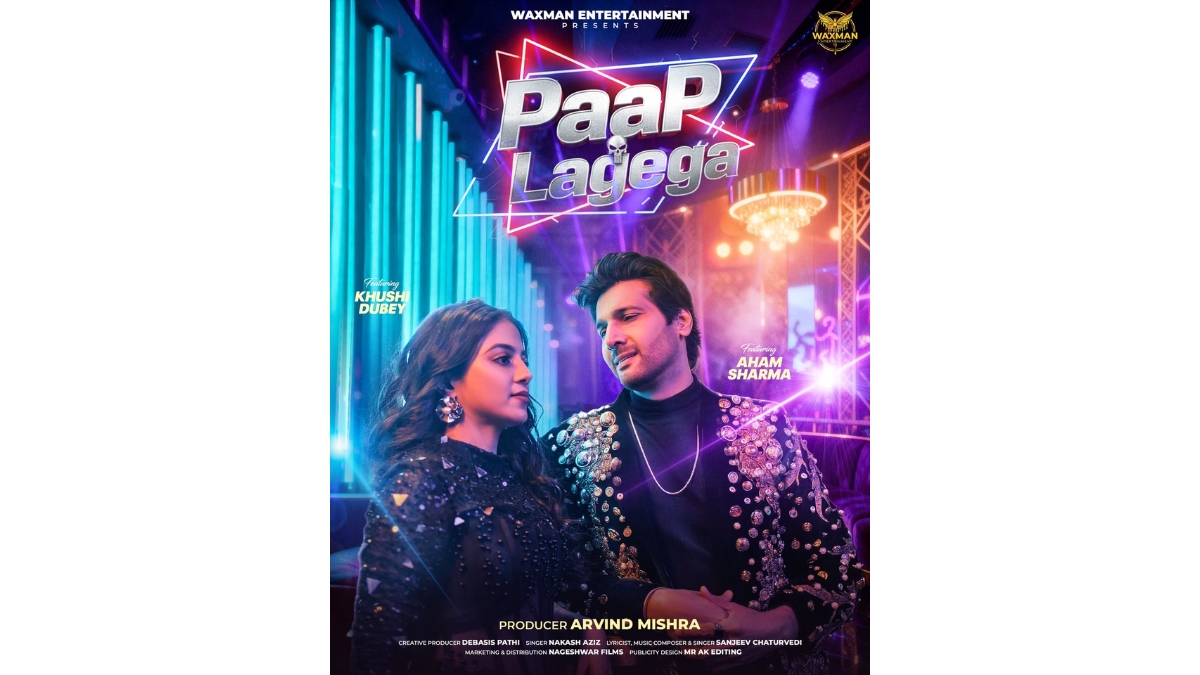
  • Waxman Entertainment Unveils ‘Paap Lagega’ Poster Featuring Aham Sharma, Sung by Nakash Aziz

    Waxman Entertainment Unveils ‘Paap Lagega’ Poster Featuring Aham Sharma, Sung by Nakash Aziz

    Mumbai (Maharashtra) [India], December 13: Waxman Entertainment proudly unveils the first-look poster of its debut music single “Paap Lagega,” marking a confident beginning for the company’s creative journey in music and cinema. The song features Aham Sharma and Khushi Dubey in lead roles. It is sung by the acclaimed playback singer Nakash Aziz, setting the tone for a high-energy and visually engaging release.

    Produced by Arvind Mishra under the banner of Waxman Entertainment, Paap Lagega reflects the company’s vision of delivering original, contemporary content backed by strong storytelling and premium production values. The song’s music and lyrics are crafted by Sanjeev Chaturvedi, adding a distinctive musical identity to the project. At the same time, the choreography by Sushma Suman and direction by Swapnil Raj seamlessly complement the song’s narrative and visual appeal.

    With this debut release, Waxman Entertainment enters the music space with a clear focus on crafting impactful songs and cinematic experiences. The company is already working on multiple music releases scheduled for the coming months and is preparing to announce its upcoming film project in the near future.

    The poster of “Paap Lagega” has begun generating buzz for its striking visuals and fresh pairing, hinting at an entertaining and memorable track.

    The marketing and distribution of the song are being handled in association with Nageshwar Films, ensuring a well-planned and widespread outreach across platforms.

    Paap Lagega stands as the first milestone on Waxman Entertainment’s roadmap, as producer Arvind Mishra leads the company towards building a strong, diverse entertainment brand.

    For more information, please visit: https://www.instagram.com/p/DSMbX3ujOyv/

    If you have any objection to this press release content, kindly contact pr.error.rectification@gmail.com to notify us. We will respond and rectify the situation in the next 24 hours.

  • ABC Talkies Launches Its Division, ABC FilmFactory: A Transparent Cinema Marketplace Empowering Independent Filmmakers

    ABC Talkies Launches Its Division, ABC FilmFactory: A Transparent Cinema Marketplace Empowering Independent Filmmakers

    Ahmedabad (Gujarat) [India], December 15: ABC Talkies proudly introduces ABC FilmFactory, a dedicated cinema marketplace crafted exclusively for independent filmmakers. Rooted in the principle of 100% transparency, the platform ensures creators retain complete control over their rights and earnings — with absolutely no hidden fees.

    Designed for speed and simplicity, ABC FilmFactory enables filmmakers to distribute their films in just minutes through a seamless three-step process: Upload, Set Your Price, and Earn.

    ABC FilmFactory is rapidly emerging as a trusted global ally for creators. With more than 1,600 filmmakers already on board, the platform’s focus on fair monetization, direct audience access, and streamlined distribution continues to attract storytellers from across the world. It empowers filmmakers to showcase their work, reach wider audiences, and build sustainable careers — all while retaining full creative ownership.

    Founders Speak

    Shalibhadra Shah, Co-Founder of ABC FilmFactory, shared the vision behind the platform:

    “Every filmmaker deserves a fair chance to share their stories with the world. ABC FilmFactory was created to remove barriers and offer a transparent, supportive space where creators can truly thrive. We intentionally built the distribution experience to be simple and intuitive — a three-step journey: Upload, Price, and Earn. Our mission has always been to bring clarity and fairness to film distribution, and we’re proud of how far we’ve come over the past four years.”

    Gunadeep P. N., Director – Growth & Strategic Alliances, ABC FilmFactory, added:

    “Our goal is to bridge the gap between independent filmmakers and audiences hungry for authentic, diverse cinema. By keeping access affordable — as low as ₹2–3 per film — we’re opening the doors for more people to experience independent stories, while ensuring creators are fairly compensated. Stories deserve to reach audiences, and ultimately, audiences decide a film’s fate.”

    Through its strong distribution network, ABC FilmFactory also supports filmmakers in distributing and licensing their films through major partner platforms, expanding reach and monetisation opportunities.

    For audiences, ABC FilmFactory offers a curated selection of fresh, untold stories at an affordable price — effectively democratising access to independent cinema. For creators, it provides a dedicated space to present their vision, grow their audience, and build long-term, sustainable careers.

    With ABC FilmFactory, filmmakers finally have a platform where their stories don’t just exist — they truly flourish. ABC Talkies and ABC FilmFactory remain committed to nurturing the next generation of storytellers and ensuring independent cinema thrives in the digital age.

    For more information, please visit: https://abcfilmfactory.com/

    If you have any objection to this press release content, kindly contact pr.error.rectification@gmail.com to notify us. We will respond and rectify the situation in the next 24 hours.

  • Grand Star-Studded Launch of “Shagna Di Raat” Ft. Riva Arora & Singer Diamond

    Grand Star-Studded Launch of “Shagna Di Raat” Ft. Riva Arora & Singer Diamond

    Mumbai (Maharashtra) [India], December 15: The city was already glowing. Wedding season energy does that. But on the night of the Shagna Di Raat song launch, the sparkle went up a notch.

    [https://youtu.be/Eis67tJww_o?si=csuawmxfHDdRAbm6]

    Presented by Desi Tadka Music and directed by Suman Guha, the track starring Riva Arora and Singer Diamond was unveiled at a grand, celebrity-attended event that leaned fully into celebration mode. No muted introductions. No slow burn. This was colour, music, dance, and tradition rolled into one unapologetically festive reveal.

    The first look of the song set the tone. Think pre-wedding chaos, family warmth, rituals, and that moment when the dance floor stops being optional.

    What Makes Shagna Di Raat Click

    At its core, Shagna Di Raat is designed for one job. Be played loudly during weddings and festivals.

    The song blends traditional Indian wedding elements with contemporary production, aiming squarely at modern playlists without abandoning cultural roots. It captures the familiar scenes. Families gathering. Emotions running high. Celebrations spilling late into the night.

    This isn’t a reinvention of the wheel. It’s a polished upgrade. And that’s exactly why it works.

    Star Power at the Launch Event

    The Shagna Di Raat song launch wasn’t short on familiar faces.

    Among those present were Ayaan Zubair, Eshaan, Siddharth Nigam, Vibha Nigam, Rameez Sabri, Sohail Sabri, and several others from the entertainment and music space.

    The turnout underlined a simple truth. Music launches still matter when the song is positioned for mass celebration. Especially in India, where wedding anthems live longer than most chart-toppers.

    Desi Tadka Music’s Festive Play

    For Desi Tadka Music, this release fits squarely into their broader approach.

    Yash Hake, CEO of Desi Tadka Music, framed the song as an emotional connector rather than just another release.

    According to him, Shagna Di Raat balances freshness with tradition. It respects cultural emotion while presenting it in a modern, accessible format. He credited Riva Arora, Singer Diamond, and director Suman Guha for delivering a track expected to resonate strongly during the ongoing festive and wedding season.

    In a market flooded with singles, the label is clearly betting on relevance over experimentation. Smart move.

    Riva Arora on Emotion and Energy

    For Riva Arora, the song carries personal weight.

    She described Shagna Di Raat as close to her heart, highlighting how it reflects moments when families come together and emotions peak. According to her, the joy portrayed in the track mirrors real-life celebrations that define Indian weddings.

    She also spoke about the experience of shooting the song, calling it memorable and emotionally fulfilling. Her excitement about audiences adopting it into their wedding and festive playlists was clear.

    On screen, that sincerity matters. Audiences can spot performative joy from a mile away. This one aims to feel lived-in.

    Singer Diamond’s Musical Bet

    Singer Diamond knew early that this track had wedding potential.

    He has stated that the composition immediately signaled its suitability for celebrations. His approach to vocals focused on balancing soul with energy, ensuring the song stayed emotional without losing momentum.

    Working alongside Riva Arora and director Suman Guha, he emphasized the creative synergy that translated into the final visual and audio output. His hope is straightforward. That the song becomes part of celebrations everywhere.

    In the Indian music ecosystem, that’s the ultimate metric of success.

    Director Suman Guha’s Visual Lens

    Direction can make or break a festive song. Suman Guha understood the assignment.

    His stated vision was to present tradition through a contemporary cinematic style. The idea was not nostalgia for nostalgia’s sake, but celebration with polish.

    Guha credited both Riva Arora and Singer Diamond for bringing sincerity and charm to their performances, elevating the narrative. According to him, the track is meant to feel like a grand celebration from start to finish.

    Mission aligned. Execution clean.

    Why This Song Fits India’s Wedding Mood

    Timing is everything. And Shagna Di Raat lands right when India needs it.

    From North Indian weddings to festive gatherings across metros and small towns alike, music like this travels fast. The blend of tradition and modern sound reflects how Indian celebrations have evolved. Rooted. Loud. Instagram-ready.

    The Shagna Di Raat song launch didn’t pretend to be understated. It embraced scale, emotion, and accessibility. That’s not accidental. That’s strategy.

    And in a season where playlists decide longevity, this track is clearly built to stick around.

  • Anmol Thakeria Dhillon Shines In SonyLIV’s Real Kashmir Football Club Alongside Powerhouse Performers Mohd. Zeeshan Ayyub and Manav Kaul

    Anmol Thakeria Dhillon Shines In SonyLIV’s Real Kashmir Football Club Alongside Powerhouse Performers Mohd. Zeeshan Ayyub and Manav Kaul

    Streaming from 9th December, only on Sony LIV

    Mumbai (Maharashtra) [India], December 15: Real Kashmir Football Club SonyLIV arrives without gimmicks. No overcooked patriotism. No manufactured outrage. Just a story grounded in sport, community, and quiet defiance.

    Set against the backdrop of Kashmir, the series tracks the emotional and cultural gravity of a local football club that becomes more than a team. It becomes a meeting point. A release valve. A shared dream.

    This is not football as spectacle. This is football as survival. And SonyLIV plays it straight.

    The platform has been steadily carving a niche with character-driven stories, and this one fits the brief. Real Kashmir Football Club SonyLIV leans into realism, anchored by performances that understand restraint is power.

    Anmol Thakeria Dhillon Steps Up

    Anmol Thakeria Dhillon plays a professional footballer and team captain with a seriousness that does not feel rehearsed. He does not posture. He commits.

    His character carries the physical demands of the sport and the emotional weight of leadership. That balance matters. Captains are not just playmakers. They are pressure absorbers.

    Dhillon brings intensity without theatrics. His performance is built on discipline, movement, and emotional economy. You believe the sweat. You believe the silence.

    Speaking about the role, Dhillon acknowledged the demanding preparation required, from physical training to mental conditioning. He described the experience as one that blurred the line between dreams and reality. That comes through on screen.

    This is not a vanity role. It is a test. Dhillon clears it.

    Football as the Language of Hope

    Real Kashmir Football Club SonyLIV uses football as metaphor, but never lets it get abstract. The stakes are always personal.

    Wins matter. Losses sting. Training days feel endless. Matches feel earned.

    In a region often defined by headlines it did not write, football becomes neutral ground. The series respects that reality. It does not reduce Kashmir to conflict. It also does not pretend the conflict does not exist.

    Instead, it focuses on what sport does best. It gives structure. It gives purpose. It gives people something to show up for.

    That honesty is the show’s backbone.

    Ensemble Power That Holds the Line

    Mohd. Zeeshan Ayyub and Manav Kaul bring weight to the narrative. These are actors who understand understatement.

    Their presence steadies the series. They do not overpower the younger cast. They guide it.

    The dynamic between experience and ambition plays out naturally. Mentorship feels earned, not scripted.

    This balance allows Anmol Thakeria Dhillon’s performance to breathe. He is not isolated. He is part of a functioning system, just like a real football team.

    Kashmir on Screen

    Here is where Real Kashmir Football Club SonyLIV quietly wins.

    The series does not aestheticize struggle. It does not exploit location for drama. Kashmir is treated as lived-in space, not a headline generator.

    Local emotion, community rhythm, and everyday resilience shape the storytelling. This restraint is rare. It is also refreshing.

    For Indian audiences, especially those outside the Valley, this portrayal feels grounded. For audiences within Kashmir, it avoids caricature.

    That balance is not accidental. It is craft.

  • Magazine Covers, Meltdowns & Millions: Welcome to Jungkook’s Global Theatre

    Magazine Covers, Meltdowns & Millions: Welcome to Jungkook’s Global Theatre

    Mumbai (Maharashtra) [India], December 11: In the pantheon of global pop culture icons — where Beyoncé once mused about “running the world like…” and Hollywood still scratches its head over why BTS topped charts it once ignored — Jungkook has quietly become the personification of today’s cultural fluidity. No longer a regional sensation or a niche export from the Hallyu wave, the BTS maknae now ranks among the most influential entertainers worldwide — and with that privilege comes both celebratory fanfare and a few unavoidable shadows.

    From magazine covers spanning continents to luxury fashion ambassadorships, Jungkook’s 2025 trajectory testifies to how non-Western pop icons are no longer guests at the global table — they’re setting the menu. But, of course, every gilded narrative comes with contradictions worth unpacking.

    1. A Non-Western Pop Icon Synced with the World’s Beat

    Jungkook’s recent ubiquity isn’t hype — it’s statistical resonance. His solo accomplishments include:

    • Historic magazine features: Jungkook graced the cover of Rolling Stone across Korea, the UK, and Japan simultaneously — an unprecedented three-region collaboration for the publication.

    • Spotify domination: He became the first Korean solo artist to cross the 10 billion cumulative Spotify streams threshold, a metric that places him in the global mainstream conversation.

    • Brand authority: Major fashion houses now court him — most recently, Chanel appointed Jungkook as global ambassador for fragrances and beauty, signalling corporate acknowledgement of his cross-demographic influence.

    • Survey asteroid status: A global fan survey crowned him one of the most beloved male K-pop stars across 94 countries — no small feat in a crowded cultural landscape.

    Add to this the fact that his solo track Seven topped billions in streams and collected major awards, and you see a solo artist who hasn’t just survived the BTS machine — he’s thriving under his own gravity.

    2. The Fandom Engine: Glory, Gold, and Grapeshot

    What many outside pop culture circles miss is that Jungkook’s rise is inextricable from ARMY — the BTS fandom that functions more like a distributed global event than a fan club. Their engagement isn’t passive:

    • They pre-order magazines en masse.

    • They drive social media metrics and trend charts in markets that Western pop stars sometimes can’t.

    • They oscillate between campaigns for collaboration with artists like Justin Bieber — sparked by a surprise livestream cover — and frenzied rumor-tracking on Reddit and forums.

    But here’s where the silver lining gets a little tarnished: with fandom intensity comes toxicity. Recent dating rumours with aespa’s Winter, fueled by alleged “matching tattoos,” spiralled quickly into harassment and death threats directed not at Jungkook, but shockingly at his dog’s Instagram account. This is not the glow one expects in late-stage pop culture — it’s a reminder that fan identity can, at times, mutate into unhealthy obsession.

    3. Economic Gravity: Pop Culture That Pays Its Own Way

    In 2025, the economics of pop stardom are no longer confined to record sales:

    • Jungkook alone generated 10.6 billion KRW in media value during Fashion Weeks, significantly boosting brand visibility for Calvin Klein — the label he represented.

    • BTS collectively generated media value that rivals mid-sized corporate ad campaigns, with the group’s attendance at global fashion events creating the equivalent of tens of millions of dollars in PR exposure.

    These aren’t vanity metrics. They translate into tangible brand partnerships, broader licensing deals, and sustained cultural relevance well beyond the music charts — further proving that Jungkook’s global impact is both cultural and commercial.

    4. Self-Care and Humanity: The Human Behind the Golden Mask

    For all the platinum records and luxury endorsements, Jungkook has been candid about an issue Western tabloids have spent years scrutinising in stars: self-care and inner equilibrium. In a recent interview tied to his Rolling Stone feature, he acknowledged:

    He feels the need to show himself more “love and care,” highlighting healthy habits, routines, and personal reflection as part of his 28-year-old journey.

    This vulnerability is refreshing and strategically important: it humanises a figure often mythologised in fandom lore and media soundbites.

    5. The Bright Side (PR-Friendly)

    • Barrier-Breaking Achievements: Jungkook is setting new records for Asian artists in global entertainment ecosystems — from music streaming to elite fashion credibility.

    • Championship at Music Awards: His tracks and albums consistently earn recognition in Western awards circuits, signalling a two-way cultural exchange rather than unilateral export.

    • Immersive Fan Experiences: Exhibits like Golden: The Moments are scheduled in cities like Mumbai, giving non-Western markets direct access to Jungkook’s artistic journey.

    • Commercial Influence: From Spotify figures to global fashion EMV, Jungkook’s brand power is measurable in billions — not just in social media likes.

    6. The Flip Side (PR-Realism with Sarcasm)

    • Fan Overreach: When hanging out with a dog’s Instagram account becomes the battleground for death threats, it’s clear that fandom sometimes forgets it’s human beings at either end of the screen.

    • Rumor Mill Machinery: Dating rumors and obsessive theories circulate faster than actual music drops — which is impressive in its absurdity, if not its newsworthiness.

    • Solo Identity vs Corporate Strategy: Not everyone believes Jungkook’s world domination is intentional. Some whispers suggest that his label has quietly shifted promotional focus to other group members despite his towering solo metrics — an eyebrow-raising PR choice, if true.

    • Global Saturation Risk: The more Jungkook is everywhere, the more average consumers might reflexively tune out — a phenomenon sociologists call overexposure fatigue. No crisis yet, but you can smell it on Twitter at 3 AM.

    Conclusion: Between Golden Halo and Real-World Shadows

    Jungkook’s place in global pop culture isn’t just symbolic — it’s quantifiable. He’s pushed streaming boundaries, stamped himself on international media, and bridged fans across continents with a connectivity that even many Western superstars envy.

    Yet fame’s spotlight is not just warmth — it also casts long shadows. Rumors and online toxicity underscore how modern fandom can dehumanize as easily as it elevates. And while his numbers are stellar, the strategy behind his image — both artistically and corporately — continues to be debated in fan forums and executive boardrooms alike.

    In a world that once benchmarked success in Western charts and endorsements, Jungkook’s story is proof that cultural influence in 2025 is borderless, unpredictable, and sometimes gloriously messy. And really, isn’t that the best kind of pop culture story?

    PNN Entertainment

  • December 2025’s Cinematic Feast: Hollywood’s Blockbusters and Streaming Surprises Take Center Stage

    December 2025’s Cinematic Feast: Hollywood’s Blockbusters and Streaming Surprises Take Center Stage

    Mumbai (Maharashtra) [India], December 11: Ah, December — the month when studios flash their gaudy wallets and streaming platforms unveil their digital treasure troves, all in a bid to seduce our attention, our wallets, and, of course, our weak human hearts. This year, 2025, promises a smorgasbord of spectacle and drama: the kind of releases that will have popcorn in theaters and thumb‑scrolling fingers twitching across tablets worldwide. Let’s dissect the delicious chaos, with just a pinch of cynicism — because we’re sophisticated enough to enjoy both the glitter and the grime.

    Theatrical Titans Arrive

    • Avatar 4 (Walt Disney Studios / 20th Century)
      James Cameron’s franchise continues to drag us, willingly, into Pandora’s lush, bioluminescent nightmare. After decades of hype, Avatar 4 is slated for a late-December release, promising box office numbers that may eclipse even the original juggernauts. Reported production budgets hover near $400 million, with marketing campaigns topping $150 million. The stakes? Sky-high, naturally.

    • The Batman: Part II (Warner Bros.)
      Gotham is back, darker, grittier, and more morally ambiguous than your last therapy session. With Robert Pattinson reprising the cowl, Warner Bros. has invested approximately $250 million in production. Critics are whispering about “too much noir” and “too many villains,” but audiences love chaos in a trench coat. Expect strong theater attendance, particularly among millennials nostalgic for caped crusaders.

    • Spider-Man 4 (Sony Pictures / Marvel)
      The web-slinger swings into late December with both legacy fan expectation and franchise fatigue in tow. Sony reports a $200–$220 million production budget, betting big on Tobey Maguire’s rumored cameo and multiverse antics. Box office analysts are cautiously optimistic; the only real risk is over-saturation of superhero content — a villain even stronger than Doc Ock.

    • Wicked: Part 2 (Universal / Peacock)
      The cinematic adaptation of the Broadway smash returns for a holiday window, blending musical magic with blockbuster visuals. Production costs are reported near $150 million, with streaming release plans kicking in simultaneously via Peacock. Critics praise its spectacle; naysayers mutter about “franchise fatigue for musicals,” but let’s face it: sequels rarely play it safe.

    Streaming Surprises: Your Couch Won’t Know What Hit It

    • Netflix has lined up a mysterious sci-fi anthology executive-produced by Denis Villeneuve, slated for release December 20. Budget whispers suggest $80–$100 million, making it one of Netflix’s costliest original projects for the year. A gamble? Absolutely. But when Villeneuve’s name is on the marquee, even risk tastes cinematic.

    • Amazon Prime Video is dropping The Continental: Holiday Arc, expanding the John Wick universe. With a reported production spend of $60 million, Prime aims to capture both theatergoers who missed the previous spin-offs and global streaming audiences. Some argue that spin-off fatigue may strike, but fans are already lining up digitally.

    • Disney+ continues to leverage IP dominance, streaming Toy Story 5 just ahead of the holidays. Pixar’s charm, paired with nostalgic marketing, positions this for global family viewership — roughly $120 million in animation budget plus merchandising synergy. The real question? Can they recapture the original trilogy’s magic without slipping into predictability?

    • Max (HBO Max/Warner) presents Justice League: Reborn – Chronicles, another attempt at DC cinematic cohesion. Production costs: $130 million. Critics warn of franchise overload, but as streaming becomes both primary and secondary revenue streams, these projects are insurance policies more than experiments.

    Why December 2025 is a Watershed Moment

    1. Hybrid Release Models Are Solidifying
      Studios have embraced simultaneous theatrical and streaming releases. Disney, Universal, and Warner are all betting that multi-platform availability drives higher total revenue, even if traditional box office numbers waver.

    2. Themed Content Dominates Holiday Windows
      Families, fans, and franchise loyalists dictate release schedules. Animations, musicals, and franchise sequels are strategically clustered — forcing each studio to consider not just content quality, but timing, streaming algorithms, and cross-platform buzz.

    3. Global Box Office & Streaming Revenue Synergy
      Box Office Mojo projects late December theatrical takings across these titles to exceed $1.8–2 billion globally, with an additional $500–700 million estimated in streaming subscription impact and rentals. This isn’t just a box office — it’s a multi-channel empire.

    The Shadows Behind the Glitter

    • Oversaturation Risk: With so many mega-franchises dropping concurrently, audience fatigue is real. Studios are gambling that brand loyalty will override fatigue.

    • Budget Blowouts: Total production and marketing spend across this window easily exceeds $1.5 billion, with every underperformance magnifying losses.

    • Critical Reception Pressure: Sequels, spin-offs, and prequels face scrutiny from both fans and critics — missteps are amplified, particularly in social media discourse.

    • Streaming Cannibalisation: Simultaneous releases risk theatres underperforming; box office numbers may be weaker than expected, though compensated via subscription engagement.

    Audience Buzz & Industry Sentiment

    • Early social media chatter on Twitter, X, and Reddit highlights excitement for Avatar 4 and Toy Story 5, tempered by playful groans about “yet another superhero multiverse.”

    • Film festival previews suggest Wicked: Part 2 and The Batman Part II have strong visual and narrative appeal, potentially offsetting franchise fatigue.

    • Streaming analytics (via Netflix and Prime previews) show December release windows produce 30–40% higher engagement than non-holiday months — studios are playing the numbers, and numbers rarely lie.

    Pointers to Watch in December 2025

    • Box office results will be heavily influenced by holiday travel patterns and theater reopenings in key international markets.

    • Streaming dominance may tip the scales in favor of Disney+ and Netflix, especially if mid-budget projects outperform expectations.

    • Critical reception, meme culture, and fanbase virality will determine long-term franchise viability — not just opening weekend earnings.

    Final Take: December 2025 Isn’t Just a Month — It’s a Statement

    Studios are no longer playing hide-and-seek with audiences. They’re announcing, streaming, and marketing in a unified front that acknowledges one simple truth: global consumers want instant access, high spectacle, and narrative continuity, all with a dash of self-aware humor.

    This December, Hollywood isn’t whispering. It’s winking, nudging, and daring you to watch, stream, binge, or buy — and with budgets pushing $1.5 billion+ collectively, no one’s taking this lightly. The silver screen and your screens are converging, and if you think you can avoid it, good luck. Popcorn waits for no one.

    PNN Entertainment