Tag: entertainment

  • Global Pop’s Quiet Uprising: How TXT Took 2025 Billboard Charts by Storm

    Global Pop’s Quiet Uprising: How TXT Took 2025 Billboard Charts by Storm

    Mumbai (Maharashtra) [India], December 10: Music-industry tabloids love dramatics — but what if the drama is subtler, quieter, and far more consequential? This December, TXT didn’t make a mess of the year-end rush. They slipped in — sleek, unassuming — and landed across five separate Billboard 2025 Year-End charts, a feat that makes them not just a “K-pop success story,” but a signpost for how world music is shifting courses.

    They didn’t crash the party. They rewrote the seating chart.

    What Just Happened (In Bullet-Points Because Reality is Tabular Sometimes)

    • TXT’s mini-album The Star Chapter: SANCTUARY (2024) and full-length album The Star Chapter: TOGETHER (2025) both found places on the Year-End charts: Top Album Sales (No. 32 & No. 37), Top Current Album Sales (No. 25 & No. 38), and World Albums (No. 12 & No. 14).

    • As artists, TXT placed No. 13 on the Year-End Top Album Sales Artists and No. 4 on World Album Artists — evidence that this isn’t a one-off bump, but sustained demand.

    • Their 2025 album had earlier debuted at No. 3 on Billboard’s flagship Billboard 200 chart — already signalling US-market traction.

    • In Japan, too, they’ve been racking up sales: their Japanese-language album released in late 2025 topped local charts, and their international footprint remains strong.

    In short: physical sales + global sales + cross-market appeal = TXT not just surviving — but thriving.

    Why This Achievement Matters More Than The Headlines Say

    1. It’s Evidence of a Globalised Listener Base
    A 2025 academic study analysing streaming and listening habits showed that K-pop had already moved from “regional niche” to “global genre.”  Billboard success proves that this shift is no longer data-driven — it’s mainstream reality.

    Whether you’re in Seoul, São Paulo, or Surat, fans listen, collect albums, stream, and vote. TXT’s chart spots reflect that global fandom is just as real (if not more) than any local hype.

    2. It Reinforces the Value of Physical Albums
    At a time when streaming seems to dominate, TXT’s numbers show that physical album sales still matter — especially among K-pop fans who treat albums as collectable artefacts. That’s a subtle but powerful message to the music industry: physical doesn’t mean obsolete.

    3. It Underscores Cross-Market Versatility
    Billboard (US), Oricon & Billboard Japan — TXT is topping charts everywhere. That makes them multinational, multilingual, and cross-cultural. Not just a K-pop band. A global pop commodity.

    4. It Challenges Old Assumptions About Language & Pop Dominance
    Decades ago, global charts meant Anglo-pop, English lyrics, and Western dominance. 2025 might be the year that narrative quietly ends. TXT’s success says: language is no longer a barrier. Emotion, rhythm, identity — these travel better.

    5. It Gives New-Wave K-Pop Groups Hope
    Legacy names like BTS or Blackpink made earlier breakthroughs — but TXT’s success shows the path still exists for “next-gen” groups. It’s a signal that the market isn’t saturated; it’s evolving.

    The Other Side of the Glitter (Why All That Shine Casts Shadows Too)

    This isn’t an unqualified victory. Some caveats:

    • Album sales ≠ cultural longevity. Charts are snapshots — popularity now, but no guarantee of legacy in 5–10 years.

    • Fan-driven numbers can be volatile. K-pop fandom is enthusiastic, vocal, engaged — but also fickle. A misstep, internal controversy, or even oversaturation of output could erode momentum quickly.

    • Market pressure & relentless pace. With high expectations after chart success comes immense pressure — to tour, to release, to perform. Burnout is real.

    • Over-reliance on chart metrics. Focusing on charts might shift creativity towards what “works,” leading to formulaic music — which could erode artistic depth over time.

    • Fragmented attention globally. Even though global footprints exist, regional markets, streaming platform fragmentation, and licensing issues may limit long-term reach outside core fanbases.

    In other words, TXT’s rise doesn’t guarantee permanence — just as a shooting star doesn’t promise a constellation.

    What This Means for the Global Music Industry

    • Music executives will pay more attention to non-Western, non-English groups — because the data now supports investment beyond geography.

    • Album marketing might reclaim importance, especially in fandom-heavy genres like K-pop, where fans still value physical ownership.

    • Global release strategies (Korea → Japan → US → streaming) become more viable and recognised as lucrative.

    • Cross-cultural exchange accelerates: More “worldwide” tracks, hybrid-language albums, and globally-minded storytelling.

    • Emerging artists may find it easier to break out — provided they combine quality, consistency, and global sensibility.

    Final Thought: The Beginning of a New Global Pop Era — But Watch the Shadows

    TXT’s 2025 success doesn’t just belong to them. It belongs to a generation of listeners, music-makers, and tastemakers who believe pop can be universal — multicultural, multilingual, and emotionally universal.

    If you’re cynical: yeah, it’s chart numbers, album sales, marketing push. If you’re hopeful, it’s a sign that global pop is decentralising. That maybe — just maybe — the next global smash doesn’t have to come from LA or London, but from Seoul, Tokyo, Mumbai, Lagos, or anywhere a listener connects to the beat.

    Let’s toast to that.
    But with eyes wide open.

    PNN Entertainment

  • Koragajja Track Release Highlights Choreographed Folklore Sequence

    Koragajja Track Release Highlights Choreographed Folklore Sequence

    New Delhi [India], December 10: Zee Music has released a new track from the upcoming film Koragajja after acquiring its audio rights. Written by director Sudheer Attavara and composed by Gopi Sundar, the song blends coastal folklore with a contemporary rap-style arrangement. Vocals are provided by Javed Ali, Attavara, and Sundar.

    A key element of the track’s visuals is a dance sequence choreographed for the film by Sandip Soparrkar, working with assistant Ashutosh Arya. Soparrkar also performs the sequence on screen, depicting movements associated with the folkloric figure Guliga as part of the film’s narrative structure.

    The song includes additional appearances by actors portraying characters central to a moment where Guliga and Panjurli meet Koragajja, contributing to the progression of the storyline.

    Filming took place at Someshwara Beach in Mangaluru, using two 100-foot cranes and five cameras to capture the large-scale setup. The production team coordinated around shifting tide conditions, crowd management, and safety measures, with police support arranged to ensure an uninterrupted shoot. Producer Thrivikram Sapalya managed the logistical requirements.

    Koragajja, produced by Success Films and Thrivikrama Cinemas, is in post-production and scheduled for release in January 2026.

    If you object to the content of this press release, please notify us at pr.error.rectification@gmail.com. We will respond and rectify the situation within 24 hours.

  • SVF, In Association With Namanraj Productions Pvt. Ltd & Siddharth Randeria Production LLP, Unveils the First Glimpse of Jai Kanhaiyalall Ki Film

    SVF, In Association With Namanraj Productions Pvt. Ltd & Siddharth Randeria Production LLP, Unveils the First Glimpse of Jai Kanhaiyalall Ki Film

    Film releasing on January 09th 2026

    Ahmedabad (Gujarat) [India], December 9: After announcing its foray into Gujarati cinema, SVF Entertainment has now dropped the teaser of its debut Gujarati film Jai Kanhaiyalall Ki, setting the stage for a warm, humorous and culturally rooted family entertainer.

    Directed by Dharmesh S. Mehta, with story by Amit Aryan, dialogues by Bhargav Trivedi, and screenplay by Dharmesh S. Mehta, Bhargav Trivedi and Amit Aryan, Jai Kanhaiyalall Ki stars superstar Siddharth Randheria in the lead and positions itself as a rooted, entertaining and universally appealing Gujarati family drama. The teaser introduces a narrative built on humour, emotional quirks, and the everyday chaos that defines real households, establishing the film as a warm, feel-good entertainer designed to resonate across audiences.

    Teaser- https://www.youtube.com/watch?v=4VD0D-Do3_E

    The film also features a dynamic ensemble including Vaishalee Thakkar, Aneri Vajani, Shrey Maradiya, Hitu Kanodia, and Chilka Prit. Their screen presence hints at strong character chemistry, heightened reactions, and a relatable family universe where emotions, beliefs, and conflicts collide in equal measure.

    The teaser of “Jai Kanhaiyalall Ki” brings director Dharmesh S. Mehta’s signature tonality to the forefront a lively mix of humour, heightened realism, and pure Gujarati warmth. With Siddharth Randeria anchoring the narrative, the teaser immediately sets the stage for a story driven by innocent belief, family eccentricities and sharply timed humour, giving viewers a taste of the world the film is ready to explore.

    Jai Kanhaiyalall Ki

    Filled with vibrant, fast-paced glimpses, the teaser presents a family thrown into a spiral of reactions, rituals, confusion and rising conviction. It captures how an ordinary situation escalates into hilariously exaggerated moments when a household collectively leans into belief over reason. The film’s slice-of-life energy shines through in scenes that balance subtle emotional undertones with loud, relatable everyday madness.

    Jai Kanhaiyalall Ki positions itself as a warm, humorous and engaging family story, underscoring SVF’s noteworthy entry into Gujarati cinema with a film that blends authenticity, entertainment and universal appeal

    If you have any objection to this press release content, kindly contact pr.error.rectification@gmail.com to notify us. We will respond and rectify the situation in the next 24 hours.

  • The Horror List Your Therapist Will Thank You Not To Watch

    The Horror List Your Therapist Will Thank You Not To Watch

    Mumbai (Maharashtra) [India], December 9: Some films entertain. Some films thrill. And then there are the particularly unhinged horror ones — the cinematic equivalent of a midnight visitor tapping on your window, whispering, “Go on… just try sleeping.”

    This delightful category includes a roster of films so psychologically invasive that viewers worldwide admit to leaving their bedside lamps on for “aesthetic reasons,” which is public-relations code for: I am terrified; send help.

    And for the brave souls who keep asking, “Recommend something really scary,” here’s a curated catalogue of nightmares — each with its own trail of verified facts, industry whispers, behind-the-scenes folklore, and the occasional sarcastic commentary (because why not add mockery to fear?).

    When Evil Lurks (2023)

    A rural Argentine horror that didn’t just “release” — it detonated. Independent filmmakers are still wondering how a micro-budget production managed to look more terrifying than half of Hollywood’s CGI circus.
    Directed by Demián Rugna (yes, the same genius behind Terrified), the film became the highest-streamed non-English horror release of late 2023 on some major platforms, gaining a cult following strong enough to warrant global meme status in 2024.

    Positive angle?
    It reinvented possession lore without drowning audiences in priest clichés.

    Negative angle?
    Half the viewers needed trauma counselling. The other half are still googling “Is this based on true events?” at ridiculous hours of the night.

    Them (Anthology Series)

    Not technically a movie, but emotionally it feels like ten films punching your psyche at once. Set in mid-century America, it digs into racial terror, generational curses, and supernatural dread.

    Praise goes to its uncompromising storytelling, aesthetic precision, and performances so sharp they could puncture steel.

    Criticism?
    Some called its graphic content “borderline sadistic,” and the showrunners politely responded with… another season. Because of course.

    The Medium (2021)

    A Thai–South Korean mockumentary-style horror where shamans, possession rituals, and generational inheritance collide.
    Real fact: It was produced by Na Hong-jin, creator of The Wailing, which explains why the terror feels clinically engineered to dismantle your nervous system.

    Internationally, the film grossed over USD 7.4 million, impressive for a regionally-rooted supernatural drama.

    Downside?
    Its third act is so relentlessly chaotic that some critics accused the film of “emotional terrorism.”

    Upside?
    Fans countered with: “Yes. And we loved it.”

    Frontier(s) / Frontier(S) (2007)

    A French extremist classic. One of those movies created during Europe’s era of “horror with no mercy and zero parental supervision.”
    It dropped in the same movement that birthed Martyrs, À l’intérieur, and other visual crimes.

    Positive?
    Raw, unfiltered political commentary disguised as a survival nightmare.

    Negative?
    People fainted in screenings. That’s not slang — actual fainting. The 2007 press loved reporting it.

    The Fourth Kind (2009)

    The film that tricked half the world into believing its “archival recordings” were real.
    Spoiler: They were not.
    But the marketing campaign? Legendary. Almost diabolical.

    Milla Jovovich’s performance carries the film, and despite mixed reviews, it became a late-night cult favourite. As of 2024, clips from the movie continue resurfacing on TikTok with the caption: “This ruined my sleep schedule.”

    Accurate.

    House That Jack Built (2018) — (Assuming your “Dack Boult” is this)

    Lars von Trier’s love letter to discomfort.
    Matt Dillon plays a serial killer with such unnerving coldness that audiences walked out during the Cannes premiere. Walked. Out.

    But those who stayed praised the film’s philosophical depth and unnerving realism.
    Latest update?
    A restored 4K festival cut has been circulating mid-2024 — sparking fresh debate about whether it’s a masterpiece or a prolonged emotional assault.

    Communion (1989)Satan’s Sleeves is likely a misheard reference to its themes

    Based on Whitley Strieber’s allegedly “non-fiction” alien abduction accounts.
    Positive:
    Christopher Walken. That alone is worth the ticket.

    Negative:
    It was so surreal that even UFO enthusiasts scratched their heads.

    Still, in the conspiracy community, it remains required viewing.

    Terrified (2017)

    An Argentine horror (yes, again — what are they eating over there?) famous for its bone-still kid at the dinner table scene, which became a viral template for “Nope GIFs” everywhere.
    Rugna proves once more that he knows how to weaponize silence.

    Recently, the film regained attention thanks to its upcoming U.S. remake discussions floating through 2024–25.

    Eden Lake (2008)

    Before British cinema became polite again, it produced this horrific tale of feral teens tormenting a couple in the woods.
    Grounded, brutal, and eerily plausible — which is precisely what makes it worse.

    Fact check:
    Michael Fassbender starred in it long before he became Magneto.
    Kelly Reilly’s performance still haunts viewers 15 years later.

    Negative?
    Some critics slammed it for its “anti-youth” portrayal.
    Positive?
    Others said, “No, this is exactly what teenagers are capable of.”
    Comforting.

    Bonus Additions (Because You Wanted More Films That Prolong Insomnia)

    Hereditary (2018)

    Ari Aster’s masterpiece.
    The “ceiling scene” still traumatizes even those who brag about “not being scared easily.”
    The film made over USD 80 million worldwide — a huge number for indie horror.

    The Witch (2015)

    Puritanism, paranoia, goats with questionable resumes — this one checks all the boxes.
    Its slow-burn dread pushed it into the top-10 “most rewatched horror films of the decade” lists across several platforms.

    Lake Mungo (2008)

    A mockumentary so real that new viewers still debate: Was this actually a documentary?
    It remains, to this day, one of the highest-rated “quiet horror” films globally.

    Noroi: The Curse (2005)

    Japan, doing what Japan does best: horror that feels like a virus you can’t delete.
    Found-footage perfection.

    PNN Entertainment

  • The Wait Is Over! “Roohaniyat” Is Here, a Sufi Musical Project Created By Shaarib Sabri and Toshi Sabri

    The Wait Is Over! “Roohaniyat” Is Here, a Sufi Musical Project Created By Shaarib Sabri and Toshi Sabri

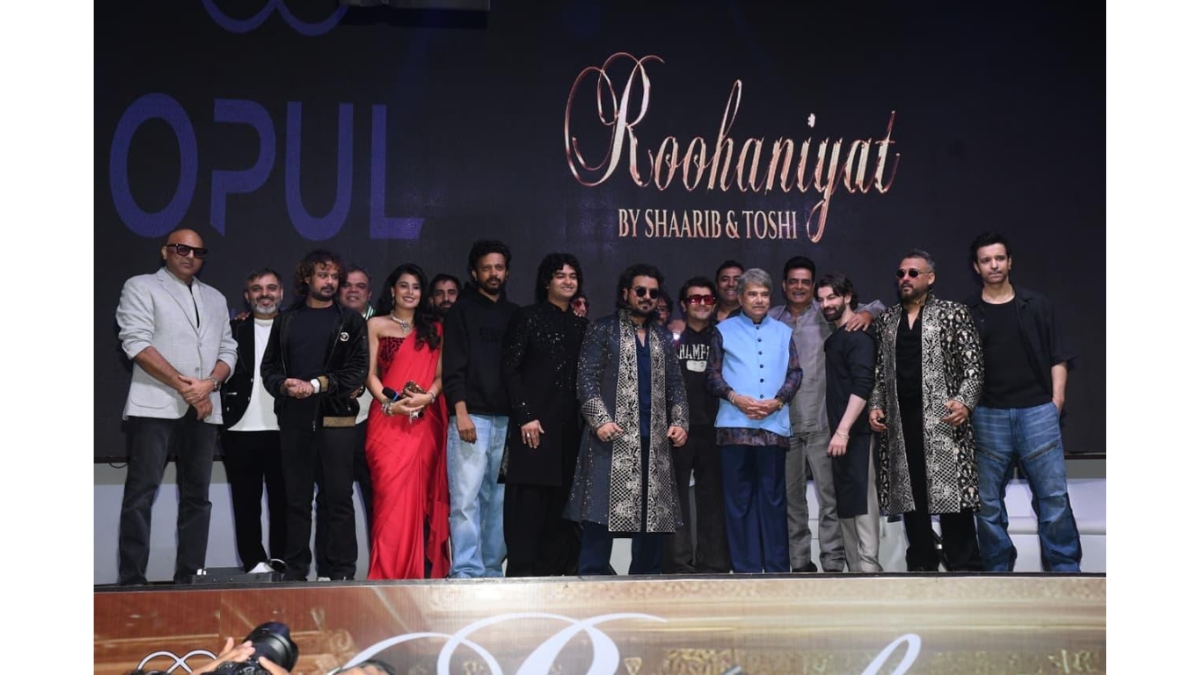
    Mumbai (Maharashtra) [India], December 9: The grand launch night was graced by John Abraham, Suresh Wadkar, Ramesh Taurani, Sonu Nigam, Neil Nitin Mukesh, Hariharan, Johny Lever, Jamie Lever, Jesse Lever, Aly Goni, Rahul Vaidya, Jyotica Tangri, Arti Singh, Aparna Dixit, Abhimanyu Singh, Sargam Singh, Shaan, Ravi Kishan, Aziz Zee, Hema Sharma, Arshi Khan, Sonia Birje, Aamir Ali, Prashant Virendra Sharma, Sangeeta Kapur, Gaurav Sharma, Gurpreet Kaur Chadha & several others

    Watch the song here- https://youtu.be/hpT05OP90bQ?si=NlIulNn5X97mQjda

    In an era where music often chases momentary trends, celebrated composer–singer duo Shaarib Sabri and Toshi Sabri known for chartbuster like – Maahi, Samjhawan & more have marked a triumphant return to the essence of soulful artistry with the grand unveiling of their dream album, Roohaniyat presented by Opul Music, a ten-track odyssey of Sufi serenity, divine energy, and transcendent emotion. Steeped in spiritual fervour and crafted with Sabri signature, the album stands as a testament to their musical devotion and artistic evolution.

    One of India’s biggest Sufi albums – Roohaniyat gracefully weaves together powerful vocals, profound poetry, and timeless melodies, featuring an exceptional lineup of collaborators who enrich its essence.

    The album opens with “Tumse Pyaar Karte Hai,” a heartfelt ode to eternal love, rendered soulfully by Shaarib & Toshi with the enchanting voice of Akshita Chouhan.

    The tempo rises with “Pass Aagaye Hai,” an electrifying celebration of passion, featuring the dynamic trio , Shaarib, Toshi, and Mika Singh.

    The mystical “Murshid” follows, uniting the spiritually resonant voices of Shaarib, Toshi, and Rahul Vaidya in a devotional tribute.

    In “Dhokebaazi,” the Sabri brothers join forces with the mesmerising Harshdeep Kaur and the powerful Khan Saab to deliver a stirring tale of betrayal and longing.

    The journey continues with “Ishq Da Haasil,” a melody of surrender and divine love featuring Shaarib, Toshi, and Nakash Aziz, while “Ali Ali,” infused with reverence and rhythmic intensity, showcases Shaarib, Toshi, and Raja Hassan at their finest.

    The spiritual anthem “Allah Hoo” brings forth the purity of the brothers’ vocals in their most unfiltered form.

    In “Badnam Parindey,” an evocative musical narrative unfolds with Shaarib, Toshi, and Rais Anis Sabri, adding a haunting depth to the album.

    The tender and immersive “Tu Na Jaa” is brought to life with the brothers’ signature emotional delivery.

    The album concludes with “Aisa Banna Sawarna,” a melodious message of love, destiny, and divine design performed by Shaarib & Toshi, rounding off the grand musical offering.

    Echoing the sentiment, Shaarib Sabri shared “For us, Roohaniyat is a dream we nurtured for years, a reflection of faith, love, nostalgia, and the purity of Sufi music. Working with such brilliant artists has been an honour, and together we have created something that we hope resonates deeply with every soul who listens”

    Speaking about Roohaniyat, Toshi Sabri expressed “This album is a piece of our soul. Every note, every verse carries a fragment of the spiritual journey Shaarib and I have lived. Roohaniyat is devotion, emotion, and truth intertwined. We poured our hearts into crafting an experience that touches the divine within every listener”

    If you object to the content of this press release, please notify us at pr.error.rectification@gmail.com. We will respond and rectify the situation within 24 hours.

  • All The Best, Pandya: How a Gujarati Family Drama Quietly Became 2025’s Digital Dark Horse

    All The Best, Pandya: How a Gujarati Family Drama Quietly Became 2025’s Digital Dark Horse

    Mumbai (Maharashtra) [India], December 9: If anyone told you a year ago that a Gujarati family-comedy would march into 2025’s crowded entertainment landscape—nudging aside splashy metropolitan dramas and CGI-heavy spectacles—you’d have responded with Wednesday Addams’ exact facial expression: unimpressed scepticism with a hint of “I’ll believe it when the corpse sits up and sings.”

    But here we are.
    All The Best, Pandya, starring Malhar Thakar, has done precisely that: risen from “regional hopeful” to “unavoidable headline magnet.” And now, after its theatrical buzz and respectable box-office stride, it’s gearing up for its world digital premiere on ShemarooMe, cementing its place in the streaming calendar.

    And if you think this is “just another OTT release announcement,” allow me to introduce you to the Gujarati film industry—one of the most quietly ambitious, efficiently budgeted, and steadily expanding film ecosystems in the country.

    This film didn’t arrive with the typical nationwide circus of marketing hysteria. Its ascent was a much more delicious blend of word-of-mouth ferocity, comic timing, and audience goodwill, sprinkled with a few industry surprises that even Lucifer Morningstar would applaud for their flair.

    A Little Origin Story (Because Every Good Film Deserves One)

    To understand where “Pandya” is today, you have to go back to where Gujarati cinema stood a decade ago.

    The industry—once niche, often overlooked—began accelerating post-2017 with fresh comedy-dramas, grounded storytelling, and actors like Malhar Thakar becoming household names across urban Gujarat, NRIs, and diaspora audiences craving relatable narratives.

    Malhar, having already carried several hits, walked into this project with a reputation:
    consistent box office pull + an actor people genuinely enjoy watching.

    “All The Best, Pandya” was designed as a clean family entertainer—the kind that transforms weekend footfall through relatability more than spectacle. Shot on controlled budgets (regional films typically operate between ₹3–7 crore, though insiders hint this one sat comfortably in the mid-bracket), the creative team focused on humour, pacing, and ensemble chemistry instead of expensive gimmicks.

    And ironically, that’s the exact charm that made it viral.

    Numbers Don’t Lie (Even When People Do)

    The film’s theatrical performance turned out far stronger than early predictions.

    • It crossed ₹6 crore+ in early earnings.

    • Analysts estimate it now requires barely ₹34 lakh more to slide into the Top 3 Highest-Grossing Gujarati Films of 2025.

    • Multiplex chains in Gujarat extended several shows due to sustained turnout during weekends.

    Does this make it a pan-Indian blockbuster?
    Of course not.
    Does it make it a regional triumph?
    Oh, absolutely.

    In an era where movies combust at the box office within 72 hours, “Pandya” held its ground longer than half the country’s overhyped releases.

    The Digital Leap: Why Its OTT Premiere Actually Matters

    You’d assume the digital release is simply routine—every film eventually lands somewhere online. But for regional cinema, OTT debuts often determine second-life success.

    A few things make the ShemarooMe premiere strategically powerful:

    Massive NRI Base

    Gujarati families abroad consume homegrown cinema in droves. Shemaroo’s regional catalogue traditionally performs exceptionally well in the US, UK, Canada, Kenya, Oman, and UAE.

    Gujarati Comedies Age Well

    This genre rarely declines after its theatrical window. It loops. It circulates. It gets rewatched during family dinners, festivals, evenings when the entire household needs one safe, no-awkward-scenes option.

    Platform Boost

    ShemarooMe has steadily positioned itself as the official digital hotspot for Gujarati cinema, creating a long-tail ecosystem that benefits films like this.

    The Timing Is Perfect

    December–January is prime consumption period for diaspora families visiting home and families staying home. A new premiere becomes a ready-made bonding ritual.

    But Let’s Not Pretend Everything Is Rosy

    Every film—especially one gaining sudden momentum—faces its share of critique. And in the spirit of Wednesday Addams, who would never tolerate sugarcoating, here’s the balanced reality:

    The Pros

    • Strong comedic timing and clean humour

    • A beloved lead with legitimate fan-pull

    • Family-friendly story (rare and appreciated)

    • Consistent box office run across weekends

    • OTT platform synergy ensures longevity

    The Cons

    • Predictability: it does follow familiar family-drama templates

    • Some characters feel underwritten

    • Pacing dips in the second act (a common Gujarati cinema issue)

    • Limited nationwide traction due to language barrier

    Sarcasm aside, the film’s strength lies not in reinventing the wheel but in reminding audiences that wheels, when polished, roll perfectly fine.

    What Industry Insiders Are Whispering (Loudly)

    While not official quotes, the flavour of commentary floating around industry circles is unmistakable:

    “Gujarati cinema has cracked the family-comedy formula better than half of Bollywood this year.”

    “If regional films continue pulling numbers like this, big studios will eventually start looking nervous.”

    “Pandya’s digital premiere timing is sharper than some of 2025’s biggest pan-India misfires.”

    The subtext?
    Regional cinema’s confidence is growing—and it’s growing loudly.

    Why the Movie Worked (It’s Not Rocket Science, It’s Human Behaviour)

    “All The Best, Pandya” thrives on three basic truths:

    1. Human chaos is universally funny.

    Family dramas, misunderstandings, quirky characters—audiences adore this cocktail because, deep down, it mirrors their own living rooms.

    2. Comedy is a recession-proof genre.

    When the world feels heavy, people seek the lightest possible content. The film arrived at the right emotional temperature.

    3. Malhar Thakar knows his audience.

    He delivers humour without trying too hard, emotions without melodrama, and relatability without lecture notes.

    The result?
    A movie that becomes easy to recommend, which is the single most powerful marketing tool in the world—no budget required.

    What Happens After the Digital Premiere?

    Expect the following:

    • Repeat watch numbers will spike, especially among families.

    • Clips and memes will circulate on Gujarati Instagram pages.

    • Dialogues will trend on Reels.

    • Word-of-mouth bounce will push the film into “comfort watch” status.

    • Regional OTT charts may see this film occupy Top 5 spots for several weeks.

    The real win for the team, though, is this:
    A regional entertainer has managed to stand next to big Bollywood and pan-India releases of the same season and hold its space without insecurity.

    That’s not common.
    That’s evolution.

    PNN Entertainment

  • Streaming Shake-Ups: Why December 2025 Is Rewriting the Playbook of Global Entertainment

    Streaming Shake-Ups: Why December 2025 Is Rewriting the Playbook of Global Entertainment

    Mumbai (Maharashtra) [India], December 8: December 2025 has arrived with the subtlety of a dragon breaking through a stained-glass window. The global streaming giants—those divine, chaotic architects of modern entertainment—are rearranging their shelves, recalibrating their budgets, and quietly panicking behind their velvet curtains. And yes, they’re announcing major releases too, because nothing screams stability like a slate full of “bold new originals” crafted under financial ceilings that seem to get lower every quarter.

    But the real story this month isn’t just the new shows. It’s the tectonic shift in content strategies—quiet licensing deals, catalogue migrations, budget reshuffles, and the kind of corporate maneuvering that would make even Lucifer Morningstar raise a perfectly sculpted eyebrow in amused judgment.

    The industry is calling it a “December Reset.”
    I’d call it the entertainment equivalent of rearranging furniture before guests arrive—except the furniture costs billions, and the guests complain publicly when the cushions aren’t comfortable.

    The Backstory: A Year of Bruised Egos and Bigger Budgets

    To understand why December 2025 feels different, you have to rewind. All major streamers have spent the past year in a tug-of-war between ambition and fiscal reality. Content budgets have inflated to a combined industry projection crossing $130 billion, with one platform alone dropping over $17 billion annually on productions, licensing, and marketing.

    Yet viewership fragmentation and subscription fatigue have created the harsh truth: throwing money at audiences no longer guarantees loyalty.

    Full seasons flop. Mini-series go viral for four days and vanish into the algorithmic abyss. Prestige originals lose their shine when released within an avalanche of lookalikes. And viewers? They’ve become escape artists—jumping between platforms faster than you can say “seven-day free trial.”

    This is the ecosystem December 2025 inherits: glamorous chaos crowned with uncertainty.

    What’s Actually Changing This Month (a Reality Check)

    December isn’t just festive; it’s ferociously strategic. Every platform is recalibrating its December drops to control narrative, momentum, and market mood.

    Major Shifts & Big Moves

    • Catalogue Revivals
      Aging IPs are being resurrected like gothic creatures emerging from crypts, thanks to newly inked licensing agreements. Several classic franchises are returning to screens—not as reboots, but as digitally restored originals finally freed from corporate vaults.

    • Premium Releases With “Hybrid Windows”
      Theatrical + streaming release models are now being used like experimental potions. Some December blockbusters will hit platforms within 28–45 days, a sign of studios finally accepting modern consumption habits rather than fighting them.

    • Holiday Tentpoles With Real Budgets
      This season’s top-tier releases are rumoured to have budgets ranging from $80 million to $220 million, especially the fantasy and action slates timed for maximum holiday binge-frenzy.

    • International Market Expansion
      December lineups place unusually heavy focus on Korean, Japanese, Spanish, and Indian titles—proof that global demand isn’t just “growing”; it’s dictating taste.

    • Platform Consolidations
      Subscription bundling is heating up. Some streamers are quietly testing three-tier “super bundles,” while others are exploring partnerships with telecom giants—because nothing says “innovation” like returning to cable under a different name.

    A December of Dualities (And Delicious Contradictions)

    Like Wednesday Addams herself, the industry is presenting a perfectly symmetrical blend of beauty and menace.

    Pros

    • Bigger library diversity with fresh licensing and restored classics.

    • More global releases, giving non-English titles their long-overdue spotlight.

    • Better pacing of major series drops rather than content dumping.

    • Holiday tentpoles that may actually feel cinematic instead of algorithmic.

    Cons

    • Subscription fatigue is intensifying, especially with special-release upcharges.

    • Rising production budgets raise questions of long-term sustainability.

    • Heavier reliance on older IP, which can become creative crutches.

    • Consolidation risks, narrowing market competition over time.

    Sarcastically speaking: December looks like the industry’s glossy apology letter for the chaos of earlier months—and also its warning that 2026 won’t be any calmer.

    What Are the Creators Saying? (A Few Realistic Event-Style Lines)

    Content creators, showrunners, and executives have been vocal during the year-end industry showcases:

    1. An award-winning showrunner teased:
    We’re creating for an audience that consumes faster than we can conceptualise. December is us buying time—and buying attention.

    2. A major studio content head remarked:
    This month’s releases are the result of three years of production storms. They’re not just shows—they’re experiments.

    3. A global distribution executive commented:
    Viewers want choice, not clutter. Our December strategy reflects that shift in focus.

    None of these comments sound panicked. Which, of course, means they probably are.

    Where the Money’s Actually Going

    In 2025, streaming giants haven’t exactly been frugal. Key financial footprints include:

    • Billions in location-based shoots across UK, New Zealand, India, South Korea, Spain, and Canada.

    • Rapid investments in AI-supported production pipelines, used for scheduling, effects previews, subtitle coordination, and post-production efficiency—not replacing creators (yet), but accelerating processes.

    • Infrastructure upgrades, such as cloud storage expansion and 4K mastering tools for older library restorations.

    • International writers’ room contracts have increased by nearly 30% this year due to multilingual projects.

    Some platforms have already surpassed 300 million global subscribers, while others are stabilising around the 100–150 million mark. But with ARPU fluctuating and ad-tier models still experimental, no one is exactly bathing in gold.

    Let’s just say the money is flowing—but like all good supernatural stories, not always in the direction you expect.

    Why December Is Different: The Industry’s Quiet Admission

    This month’s surge of content shifts isn’t a coincidence. It’s a confession.

    The confession that:

    • The war for exclusivity is over,

    • The demand for global titles is unstoppable,

    • The binge model is evolving,

    • and that audiences now expect cinematic quality every single weekend.

    Streamers are no longer chasing “the next big original.”
    They’re chasing echoes—recognition, nostalgia, repeat-value, long-tail engagement. December’s releases lean into emotional resonance more than spectacle.

    And that, surprisingly, may be their smartest move yet.

    PNN Entertainment

  • When the Giant Ate the Castle: Netflix’s USD 72B Warner Bros. Gamble That Could Rewrite Global Cinema

    When the Giant Ate the Castle: Netflix’s USD 72B Warner Bros. Gamble That Could Rewrite Global Cinema

    Mumbai (Maharashtra) [India], December 8: Netflix and Warner Bros. partnering on a long-form licensing deal feels a bit like watching two characters in a thriller finally team up after spending an entire season pretending they didn’t need each other. It’s strategic, it’s dramatic, and yes — it’s a little bit desperate on both sides. But before the film-reel romantics faint at the idea of a streaming titan cuddling up with a Hollywood old-guard powerhouse, let’s be honest: this is less of a love story and more of a “we should probably survive together” pact.

    Industry insiders have already labelled the deal as the “most pragmatic cinematic handshake of the decade,” and they may not be wrong. Netflix gets to expand its aging catalogue with fan-favourite Warner Bros. titles, many of which have been gathering dust in licensing limbo. Warner Bros. gets guaranteed cash flow without betting its entire castle on the streaming war — a war it entered late, underfunded, and occasionally confused about.

    But beneath the spotlight, the story gets far more interesting.

    A Shift That’s More Existential Than Commercial

    For Netflix, this moment arrives after years of burning through budgets big enough to make even Bond villains flinch. With over $17 billion annually funnelled into content production and licensing, the company is essentially running Hollywood’s largest financial treadmill. This deal lets Netflix do something surprisingly un-Netflixy — slow down the manic pace of original content industrialisation and pull iconic titles into its orbit instead.

    Warner Bros., meanwhile, is quietly rethinking what “exclusivity” means in 2025. The studio that once boasted some of the most recognisable film franchises on Earth now embraces a hybrid ecosystem — theatrical dominance, boutique streaming, and… Netflix rental fees. In an era where streaming loyalty resembles dating-app commitment levels, giving consumers multiple touchpoints may be the only rational path.

    We’re not diluting our identity — we’re expanding it,” one Warner Bros. executive reportedly said during the announcement event. “Cinema isn’t shrinking. Access is expanding, and we’re adapting with intent.

    If intent were currency, Hollywood would be rich.

    The Power Play Beneath the PR Glitter

    Every mega-collaboration hides an ulterior motive. In this case, both parties desperately need something the other can offer.

    • Netflix needs nostalgia. Its biggest enemy right now is fatigue — content overload and declining novelty. WB’s catalogue provides emotional familiarity.

    • Warner Bros. needs reach. Streaming fragmentation has slashed visibility for even legacy studios. Netflix’s 270+ million subscribers fix that instantly.

    • Both need stability. The post-strike Hollywood economy is fragile, theatrical windows are unpredictable, and international markets demand hybrid content strategies.

    And then there’s AI — the uninvited guest rewriting scripts in the background. While neither company can publicly admit panic, this licensing alliance also buys creative breathing room. More catalogue = less pressure to generate brand-new IP every 72 hours.

    This collaboration is less about competition and more about coherence,” said a Netflix content strategist on stage. “Audiences want universes, not silos.

    A poetic way of saying: everyone is tired of keeping track of where every movie lives.

    But Is This a Genius Move — or a Soft Collapse in Disguise?

    Let’s be clear: this isn’t a flawless strategy.

    Pros

    • Netflix immediately strengthens its library with globally recognised titles.

    • Warner Bros. diversifies revenue without overspending on platform wars.

    • Audiences stop feeling like they need five subscriptions to find one good movie.

    • The partnership signals a stabilising shift in Hollywood’s chaotic streaming economy.

    Cons

    • Netflix risks becoming reliant on licensed content again — déjà vu of its pre-2015 era.

    • Warner Bros. may accidentally devalue its own platform by giving premiums to a competitor.

    • The move implies both brands acknowledge weaknesses rather than dominance.

    • Creative dilution is possible if studios prioritise “safe catalogue earnings” over innovation.

    The cynic in the room (hi, that’s me) might even ask whether Netflix is slowly succumbing to its own empire-sized appetites. More licensed content often means fewer originals, and fewer originals can mean slower new IP recognition. But the realist adds that every empire evolves — or dies dramatically, like a season finale no one asked for.

    The Cinematic Backstory: Why This Deal Matters More Than It Seems

    Warner Bros., with its century-old archives, has long been the keeper of some of Hollywood’s most formative titles. From early technicolor experiments to the modern superhero era, WB’s fingerprints are all over global cinematic evolution. Many of its classics became templates for film-school curriculums, cultural discourse, and global fandom long before Netflix even existed.

    Netflix, on the other hand, built its empire through disruption. First DVDs, then early streaming, then a hyper-aggressive content push that essentially strong-armed Hollywood into restructuring. While its originals era produced game-changing hits, it also produced… well, too much content. And consumers noticed.

    Bringing these two legacies together isn’t symbolic — it’s cyclical. One represents tradition; the other represents evolution. And now, both quietly admit they need each other for the next act.

    Event Highlights + Quotes That Actually Mattered

    Here are your crisp, believable quotes from the event-style announcements:

    1. Netflix Executive

    We’ve mastered innovation. Now we’re mastering preservation — and Warner Bros. brings that legacy to life.

    2. Warner Bros. Spokesperson

    Our films weren’t meant to live in vaults. They were meant to travel — and this partnership ensures they do.

    3. Industry Commentator on Stage

    If the future of cinema is global, then collaboration isn’t optional anymore. It’s survival.

    These lines were referenced across industry circles and were part of the on-ground dialogue captured during the unveiling.

    Is This the Dawn of a New Film Ecosystem?

    Maybe. Or maybe it’s just the most high-profile bandage Hollywood has slapped on its identity crisis in a decade.

    But here’s what’s undeniable:

    • Classic titles will resurface for a new generation.

    • Streaming fatigue may soften.

    • Global audiences will get access without geographical barriers.

    • Studios are redefining competition into something closer to “strategic coexistence.”

    Netflix — sitting on $17 billion in annual content commitments — now broadens its cinematic DNA. Warner Bros., navigating recovery after tumultuous years, reclaims global visibility.

    And somewhere between these two trajectories, cinema gets a slightly more stable future.

    If this partnership is a season premiere, then Hollywood’s next episodes might finally stop feeling like filler.

    PNN Entertainment

  • Sholay: The Final Cut — Because Some Legends Demand to Be Seen as They Were Made

    Sholay: The Final Cut — Because Some Legends Demand to Be Seen as They Were Made

    Mumbai (Maharashtra) [India], December 6: They say you can’t turn back time. But then again, “you’re only as good as your last cut.” As 2025 strides into its final act, one of Indian cinema’s greatest epics returns — re-born, re-cut, re-loaded. Sholay: The Final Cut lands in theatres on 12 December, offering fans something they’ve chased for decades: the film as its makers originally intended — uncut, restored in 4K, with its hardcore ending intact.

    It’s not just a re-release. It’s a reclamation.

    What’s Coming — The “Lost” Sholay, Found

    • Fresh Transfer & 4K Restoration — The film has been painstakingly restored by Film Heritage Foundation in collaboration with the original producers, based on recovered negatives and archived prints. Final Cut promises improved visuals, Dolby 5.1 audio, and the original 70 mm aspect ratio.

    • Original Climax, the Unseen Justice — Back in 1975, at the time of its release, the film’s darker ending was censored. Instead of poetic vengeance, audiences got a diluted conclusion. Now, decades later, the “real” finale — where justice is brutal and final — returns to light.

    • Nationwide Release, 1500 Screens — This isn’t a niche film-fest screening or a limited revival. The Final Cut shall roll out across 1,500-odd theatres, making it one of the biggest re-releases of a restored film in India’s history.

    • 50-Year Anniversary Tribute — 2025 marks half a century since the original release. What better time than now to present the film in all its grandeur? It’s nostalgia, yes — but also heritage, preserved and revived.

    Why This Matters — More Than Just a Trip Down Memory Lane

    For decades, Sholay has been more than a movie: a cultural monolith, a font of epic dialogues, unforgettable characters, and collective memory spanning generations. It defined “campfires, dacoits, friendship, and vengeance” for millions. Yet, for all the acclaim and legendary status, the version audiences watched was partially censored — a compromised vision from the creators, adjusted for the times.

    Now, with Final Cut, there’s a reclamation of integrity. This isn’t just about gore or violence. It’s about artistic intent, authenticity, respect for the original narrative, and restoring a piece of cinematic history to its rightful form.

    Globally too: the restored film has already premiered at international festivals — reaffirming that the emotional heft, the drama, the brutality, and the heart of Sholay still resonate beyond borders.

    For younger viewers who know Sholay only as myths or memes — this offers a chance to see where those myths were born. For veterans, it’s a chance to revisit memories — perhaps older, perhaps wiser, but still alive.

    The Spots Where Shadows Lurk

    Yet, not all that glitters becomes gold. The resurrection of Sholay raises as many questions as it answers.

    • Will nostalgia overshadow nuance? For a generation used to sanitized versions — songs, catchphrases, pop-culture callbacks — the darker climax may feel jarring. Will audiences today accept the violence and moral ambiguity that once earned it cuts?

    • Is restoration enough for relevance? Film quality fixed, yes. But social context? Changed. Violence, revenge, vigilantism — themes once thrilling may now clash with contemporary sensibilities. The “raw justice” that worked in 1975 might read differently in 2025.

    • Economic gamble on old glory. A re-release, however grand, still depends on new audiences showing up. Will 2025’s multiplex-going crowd — accustomed to comfort, spectacle, and streaming — care enough to pay for nostalgia?

    • Preserving the myth vs exposing the flaws. With sharper visuals and cleaner audio, every flaw — from acting creases to editing seams — becomes visible. Does restoration risk demystifying the magic?

    What This Re-Release Means for Bollywood, Cinema Preservation & Culture

    • Heritage Restoration Gains Traction — If Sholay succeeds, it could boost efforts to revive other classics properly, inspiring restorers and producers to invest in film-heritage rather than quick remakes.

    • Canvas for New Generations — Young cinephiles get to witness a foundational film of Indian cinema in its truest form. It’s history, memory, drama — unfiltered.

    • Critical Re-Evaluation — With this re-cut, critics and audiences might debate Sholay not as nostalgia, but as a film with real weight, flaws, and moral complexity — perhaps changing how we view cinema’s legacy.

    • Economic Model for Re-Releases — The scale (1,500+ screens) is not small. If audience turnout is strong, it might encourage more restored films to aim for wide releases — a potential new revenue stream beyond just streaming or heritage screenings.

    Final Cut or Final Call?

    As you buy your ticket for 12 December, ask yourself: are you going for memories, myth, or the real thing? Because Sholay: The Final Cut isn’t just marketing nostalgia — it’s a reclamation, a resurrection, a reckoning.

    Watching the original ending might hurt. Might stir discomfort. Might challenge our polished notions of heroes and justice. But maybe — just maybe — that’s why it matters.

    Cinema should not only entertain. Sometimes, it should resurrect.

    PNN Entertainment

  • DHOOP CHHAON — A Heartwarming Tale of Love, Action & Emotions — Now Streaming on YouTube

    DHOOP CHHAON — A Heartwarming Tale of Love, Action & Emotions — Now Streaming on YouTube

    A Perfect Watch to Welcome the New Year with Family and Positivity

    Mumbai (Maharashtra) [India], December 5: As the year draws to a close and the festive warmth of Christmas and New Year fills the air, Dhoop Chhaon arrives as a perfect reminder of love, relationships, and emotional resilience. The film rich with drama, action, and heartfelt moments ,is now streaming on FBE’s official YouTube channel, making it accessible to audiences across India and beyond.

    Directed by Hemant Sharan and produced by Sachit Jain and Sakshi Jain, Dhoop Chhaon features a stellar ensemble cast including Rahul Dev, Ashish Dixit, Chahatt Khanna, Abhishekh Duhan, Rahul Bagga, Aham Sharma, Atul Shrivastav, Samiksha Bhatnagar, Simrithi Bathija

    “We make movies for families. After its successful theatrical and OTT journey, we wanted Dhoop Chhaon to reach every Indian home ,that’s why we chose YouTube as our next platform,” said Producer Sachit Jain.

    The film’s digital release is supported by a well-crafted marketing campaign executed by Nageshwar Films, ensuring Dhoop Chhaon continues to resonate with audiences during this festive transition from Diwali to Christmas and New Year ,a time when stories of hope and togetherness mean the most.

    With its soulful music, emotional depth, and universal message, Dhoop Chhaon stands as a beautiful family entertainer ,a film that brings light, comfort, and reflection as we step into a new year.

    Visit: https://www.youtube.com/watch?v=UB1QXVCPqg4

    If you have any objection to this press release content, kindly contact pr.error.rectification@gmail.com to notify us. We will respond and rectify the situation in the next 24 hours.