Tag: lifestyle

  • Founder of International Human Rights Council, Dr. Sunny Shah Hosts BANA 2026

    Founder of International Human Rights Council, Dr. Sunny Shah Hosts BANA 2026

    New Delhi [India], April 15: Guest of Honour, Malaysia’s Consul General Ahmad Zuwairi Yousoff, alongside other notable figures and numerous Bollywood celebrities, was honoured with the 7th Dr. Babasaheb Ambedkar Nobel Award on April 10, 2026, at the esteemed Hotel Sea Princess in Juhu, Mumbai, in recognition of their ongoing noble causes.

    -Swati Bhat

    In a distinguished celebration of human rights, guidance, and social excellence, Malaysia’s Consul General, Ahmad Zuwairi Yousoff, was honoured with the 7th Dr. Babasaheb Ambedkar Nobel Award 2026 (BANA). This prestigious event, organized by the International Human Rights Council, took place in Mumbai, marking a significant occasion in conjunction with the celebrations of B. R. Ambedkar Jayanti.

    A Celebration of Excellence and Human Rights Advocacy-

    The Dr. Babasaheb Ambedkar Nobel Awards (BANA) are dedicated to recognizing entities who have made outstanding contributions towards the humanity, particularly in the fields of human rights, leadership, and social development. The 2026 edition highlighted global changemakers whose work continues to inspire positive transformation.

    The event was commanded by key leaders of the International Human Rights Council, including Founder Dr. Sunny Shah, National President Dr. Rajesh Sharma, and General Secretary Shomu Mitra and Babubhai Thiba. Their communal revelation warranted an evocative podium that celebrates both legacy and evolution.

    Honouring Ahmad Zuwairi Yousoff’s Global Contributions-

    As Malaysia’s Consul General in Mumbai, Ahmad Zuwairi Yousoff has played a pivotal role in strengthening diplomatic relations and promoting cross-cultural collaboration. His recognition at the BANA Awards 2026 reflects his commitment to international cooperation, community engagement, and humanitarian values.

    This award highlights the rising importance of global partnerships in advancing human rights and nurturing mutual understanding between nations.

    Star-Studded Presence Adds Glamour to the Event-

    The evening was further elevated by the presence of prominent personalities from the Indian entertainment industry. Among the distinguished guests were celebrated singer Deepa Narayan Jha, veteran actress Amita Nangia, versatile actor Aroon Bakshi, renowned performer Rajesh Puri, and popular comedian Ahsan Qureshi, along with many other dignitaries and influencers.

    Their presence highlighted the event’s blend of cultural celebration and social recognition, making it a truly memorable occasion.

    Event Highlights: Venue, Date, and Significance-

    The awards ceremony took place on 9th April 2026 at the luxurious Hotel Sea Princess, bringing together leaders, achievers, and Bollywood representatives under one roof. Organized as part of a larger Human Rights Conclave, the event featured inspiring discussions, recognition ceremonies, and engaging segments.

    The celebration also paid tribute to the legacy of Dr. B.R. Ambedkar, reinforcing the importance of equality, justice, and human dignity in today’s world.

    As the world moves toward greater inclusivity and collaboration, such platforms play a crucial role in recognizing those who dedicate their lives to making a difference.

    If you object to the content of this press release, please notify us at pr.error.rectification@gmail.com. We will respond and rectify the situation within 24 hours.

  • Asha Bhosle No More: India’s Legendary Playback Singer Leaves Behind 11,000 Songs

    Asha Bhosle No More: India’s Legendary Playback Singer Leaves Behind 11,000 Songs

    Mumbai (Maharashtra) [India], April 15: Indian music has lost one of its most timeless voices on Sunday, April 12, 2026. Asha Bhosle died at the age of 92 in a hospital in Mumbai. She was not just a singer; she was a lifetime laborer and a lifelong learner.

    Starting Young

    Asha started life in misery. In 1933, she was born in a musical family. Her father passed on when she was nine. She and her elder sister, Lata Mangeshkar, joined films to sing in order to help the family.

    Her first song was recorded in the Marathi movie Majha Bal when she was 10 years old. Most children were playing, but Asha was in the recording studios learning to be disciplined and to be in control.

    To Find Her Own Way.

    Asha has been having difficulties standing out. Her sister Lata was already a leading voice, often chosen for soft, traditional songs. The rest of the tracks, fast, complex, and unconventional, were normally allotted to Asha.

    She did not stand up against this, but modified. She practiced her voice to sing the jazz-type of songs, practiced speed and breath control to dance numbers, and developed a style that was versatile and unique. Unless she was the first choice to sing one kind of song, she was the first choice to sing lots of other songs.

    The World Record

    Asha Bhosle was, in the long run, the most recorded artist in history. Guinness World Records recognized her for recording over 11,000 songs across 20 languages.

    She sang with different genres:

    Classical music

    Pop and dance music.

    Ghazals (poetic songs)

    Devotional music

    Staying Modern

    Asha could never cease to adapt. She even worked with new composers like A. R. Rahman in her 60s and 70s, and even joined international artists like Gorillaz.

    In her extracurricular activities, she opened a chain of restaurants named “Asha’s; in her interests, she loved to cook. She used to say that she would have been a chef had she not been a singer.

    A Life in Music

    Asha experienced significant transitions both in the first years of post-independent India and in the digital era of music. Nonetheless, her training remained basic: practice every day and get better and better.

    Her family (son Anand and her grandchildren) survives her. When she goes away, she leaves her recordings. In her work, you can see that even though you are working in the shadow of another person, you still can create a legacy of your own.

    Iconic Songs by Decade

    Decade Song Film / Album
    1950s Nanhe Munne Bachche Boot Polish
    1960s Aaiye Meherbaan Howrah Bridge
    1970s Piya Tu Ab To Aaja Caravan
    1970s Dum Maro Dum Hare Rama Hare Krishna
    1980s Dil Cheez Kya Hai Umrao Jaan
    1990s Rangeela Re Rangeela
    2000s Radha Kaise Na Jale Lagaan
    2000s Kajra Re Bunty Aur Babli
    2010s Chura Liya (Remixes/Performances) Live/Albums

    Key Collaborations and Genres

    Music Director / Collaborator Notable Songs Genre / Style
    O. P. Nayyar Aaiye Meherbaan, Yeh Hai Reshmi Zulfon Ka Andhera Cabaret, rhythm-heavy film songs
    R. D. Burman Piya Tu Ab To Aaja, Dum Maro Dum Experimental, rock, pop fusion
    Khayyam Dil Cheez Kya Hai Ghazal, classical-based
    A. R. Rahman Rangeela Re, Radha Kaise Na Jale Modern film music, fusion
    Bappi Lahiri Jawani Janeman Disco, dance
    Gorillaz Dare (Live/Collaborations) International, alternative

    PNN Lifestyle

  • Prateek Singh Joins Pocketful as CEO to Lead Next Phase of Growth

    Prateek Singh Joins Pocketful as CEO to Lead Next Phase of Growth

    New Delhi [India], April 15: Pocketful, the fast-growing discount brokerage backed by the 30-year legacy of the Pace Group, has appointed Prateek Singh as its new Chief Executive Officer, marking a significant step in the company’s growth journey. The brand introduced this strategic leadership change to achieve its growth objectives while establishing itself as a major player in the changing investment market of India. 

    Prateek Singh possesses 13 years of experience, which he has used to develop digital financial platforms through his work on customer acquisition, product development, and business growth initiatives. Before starting his work at Pocketful, he spent time at Bajaj Broking as Chief Growth Officer, where he helped the company develop its digital presence and improve its platform functionalities. 

    Expressing his enthusiasm, Sarvam Goel, Co-Founder of Pocketful, said, “Prateek’s appointment represents an essential milestone for Pocketful, which will help the company expand its operations and strengthen its position in the Indian investment market. His successful history of developing digital financial platforms, together with his focus on user experience, perfectly matches our organization’s future objectives. Pocketful will achieve its next phase of growth through his guidance, which will create new technical innovations and improve our market value.” 

    At Pocketful, Prateek will lead the company’s mission to create an accessible investment platform that enables all investors to use its services. The company delivers an investment process that customers can use without any kind of difficulty. 

    Commenting on his appointment, Prateek Singh, CEO, Pocketful, said, “I am truly excited to join Pocketful at such a pivotal stage of its growth journey. India’s capital markets are witnessing remarkable momentum, with increasing retail participation and a growing shift towards digital investing. At Pocketful, we have a unique opportunity to simplify and reimagine the investing experience for a wider audience. I look forward to working closely with the team to drive innovation and enable more confident, informed participation in the markets.” 

    Pocketful offers zero brokerage on equity delivery trades, along with zero account opening charges and lifetime zero AMC fees, making it an attractive choice for retail investors. At the same time, the platform caters to active traders through advanced, institutional-grade tools built for speed, precision, and reliability. 

    The company also provides a Margin Trading Facility (MTF) starting at 5.99%* per annum, enabling greater flexibility for active participants. A key innovation is Pocketful GPT, a custom-trained intelligence layer that allows users to generate trade ideas, analyze portfolios, and execute trades within a unified interface.

    With its recent expansion into mutual funds, Pocketful is evolving into a comprehensive investment platform. Under Prateek Singh’s leadership, the company is well-positioned to accelerate growth and capture a larger share of India’s rapidly expanding investor base.

    If you object to the content of this press release, please notify us at pr.error.rectification@gmail.com. We will respond and rectify the situation within 24 hours.

  • Kalamkaar and SVF Announce ‘The Legacy’: A Live Rap Reality Series Aiming to Redefine Indian Hip-Hop

    Kalamkaar and SVF Announce ‘The Legacy’: A Live Rap Reality Series Aiming to Redefine Indian Hip-Hop

    Mumbai (Maharashtra), April 14: Kalamkaar and SVF have announced The Legacy, a live-format rap reality show, which is courting both opportunity and timing by presenting itself as a verdict in India’s cacophonous hip-hop arena.

    While Desi Hip-Hop (DHH) is moving from subculture to industry, the show seeks to fill a void that has been there for a long time: the lack of a credible, performance-first arena that truly mirrors the scene. In an arena that has been dominated by the glossy sheen of studio polish, curated narratives and indulgent entertainment, this show is trying to present itself as a more brutal, audience-facing arena—less circus, more test.

    It is spearheaded by Raftaar and KR$NA; artists who have helped shape the lyrical and competitive tenor of the genre in their own ways. It is clear that this is not a show meant for entertainment but as a filter to see an artist who could move beyond a moment of virality.

    The main concept behind The Legacy is a crucial departure from reality TV in general. The show is going to be shot in multiple real settings, literally pitting contestants against the public instead of confined studio audiences. It is not a coincidence that in hip-hop, credibility is never negotiated in a safe zone; it is forged in front of an audience that can immediately respond. This is why the show is trying to emulate the culture in question by having its contestants judged by the same conditions in which they will be evaluated in real life.

    In a similar vein, the judging system of The Legacy retools itself to incorporate a hybrid model: technical panels will score the contestants on elements such as lyricism, flow, and composition, but this will be balanced against audience voters. In hip-hop, authority is always distributed; the critics can critique any track, but the culture chooses. And The Legacy is trying to formally incorporate this in the show’s structure by giving the audience a voice in the outcome.

    And this is not the only place where this understanding of hip-hop culture surfaces; the incentive structure of the show is a testament to that as well. When a winner is offered an album deal, it is not only about exposure; it is about access to the whole infrastructure of a professional career. More interestingly, all contestants will be paid on a progressive scale as they move through the competition. In a genre where artists often perform for free, this could be seen as the introduction of a necessary standard of professionalism.

    Access, too, has been a principle that has foregrounded the project. The series is open to all 14-40-year-olds from India, with a submission process that is free of charge. That is a deliberate choice. Many of the pockets of India’s hip-hop talent continue to come from non-institutional spaces, where a sweet addition of fees can, at an unnoticeable level, filter out good talent. The Legacy is widening the funnel to maximize the chances of catching voices that may exist beyond the vista of usual openness.

    Applications are currently being accepted via an official online platform, https://thelegacy.live/, to which artists are asked to submit an original rap or freestyle video that shows what the creators call a “pen, presence, and personality.” There is some purpose in the wording here. Skill is necessary, but not sufficient. The show is looking for a composite personality. One who can write and perform, and occupy a space in an assertive way.

    The Legacy continues on Kalamkaar’s long-held role as a platform for artist development. The group has helped identify and develop many well-known figures in the DHH circuit. For SVF, it is into music-led cultural programming and showing a new format for their production business. Their infrastructure and credibility lend to a combination that is often missing when trying to formalize an underground movement.

    The Legacy’s relevance is greater than that of the show itself; rather, it is what it is attempting to formalize. Indian Hip-hop for the most part continues in its decentralised ways, in cyphers, independently released work, and digital virality. As the scene moves into monetisation and mainstream, it looks like the question is how to scale its growth along a structure.

    The Legacy exists at that threshold itself. It is not just a show, it is a framework, an attempt to bring the raw, competitive energy of the streets into a medium that can be sold, that can be televised, that can be monetized, that can be commercialized without stripping it off its essence.

    It will decide for itself. Authenticity is harder to regain than to lose. If this balance can be maintained between performance and production value, between judgment and community, the series could be a watershed.

    Not only for the artists it discovers, but for how Indian hip-hop discovers them.

    PNN Lifestyle

  • From Medicine to Marketing, Architecture to Advertising: A Diverse Cohort Graduates from MICA 2026 

    From Medicine to Marketing, Architecture to Advertising: A Diverse Cohort Graduates from MICA 2026 

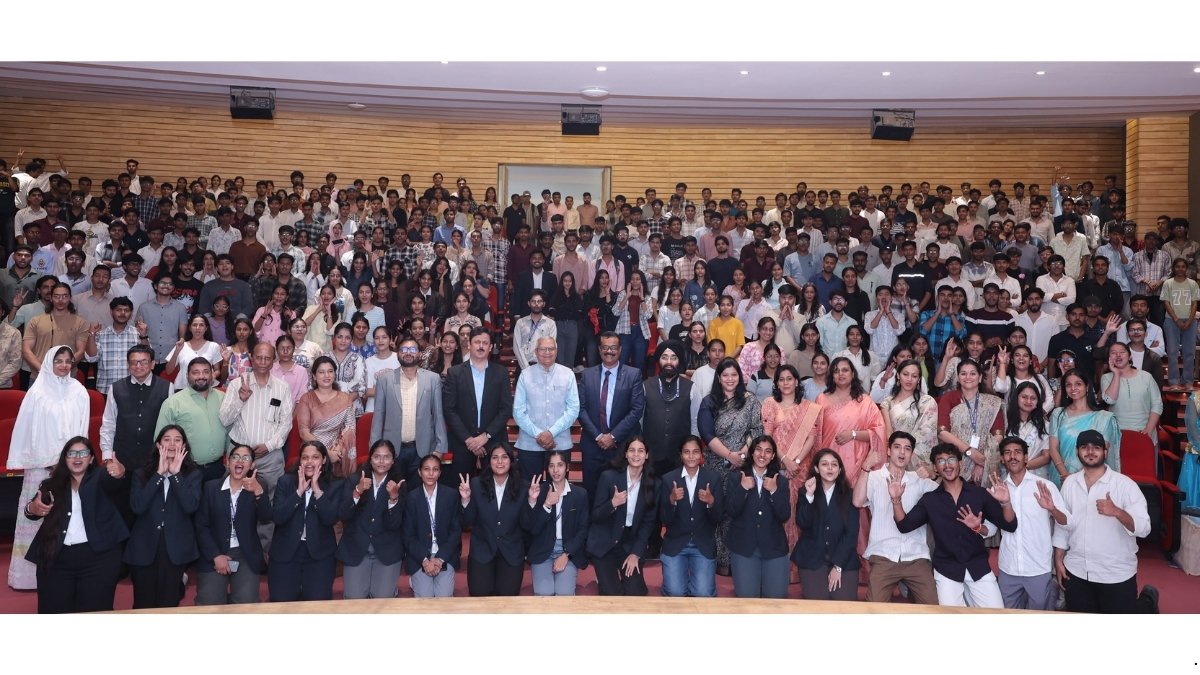
    Ahmedabad (Gujarat) [India], April 14: MICA – The School of Ideas, India’s premier institute for Strategic Marketing and Communication, hosted its 31st Convocation Ceremony, marking the graduation of 255 students across its flagship programmes—PGDMC, PGDM, CCC, and FPM. The ceremony was a celebration not only of academic achievement and industry recognition, but also of the unique, deeply personal journeys that shaped this graduating cohort.

    The Class of 2026 represents a new generation of professionals who are not defined by conventional paths, but by their willingness to explore, adapt, and innovate. From medicine to marketing, architecture to storytelling, and shared journeys to individual growth, these students exemplify the spirit of MICA—where creativity meets purpose.

    Beyond academic excellence, the Class of 2026 stood out for its diversity of backgrounds and transformative journeys.

    Among them were twins Aditi Jain and Aditya Jain, whose shared academic history evolved into distinct professional paths at MICA—one exploring advertising and the other fintech. Their journey reflects the institute’s ability to foster individuality even within shared experiences, offering both familiarity and independence.

    Dr. Dhruvam Ujjaval Nanavati, a trained medical professional, made the unconventional transition from medicine to marketing. His experience at MICA enabled him to embrace ambiguity, challenge perspectives, and apply his analytical rigor in new contexts, ultimately securing a role within the pharmaceutical industry.

    For Moksh Malhotra, MICA was a space to explore multiple dimensions of growth—from contributing to the Placement Committee to performing with the theatre society, Sankalp. His journey highlighted the importance of time management, collaboration, and continuous learning in a high-intensity environment.

    Yashasvi Shukla’s journey from Life Sciences to marketing highlights the strength of interdisciplinary thinking. Bringing a scientific mindset rooted in observation and analysis, she found at MICA that marketing was an extension of understanding human behaviour. Engaging in collaborative learning on campus, she demonstrated how diverse backgrounds can offer fresh, insightful approaches to marketing challenges.

    Sanya Sethi’s transition from architecture to marketing storytelling exemplifies interdisciplinary evolution. At MICA, she expanded her understanding of human-centered design into the realm of perception and narrative, culminating in a pre-placement offer from IBM following her internship in ecosystem marketing.

    The convocation was graced by Sushant Dash, CEO of Tata Starbucks Pvt. Ltd., who delivered an inspiring keynote address centered on the theme “Sparks of Excellence.” Emphasizing the importance of discipline, purpose, and sound judgment in an AI-driven world, he encouraged graduates to focus on long-term character over short-term brilliance.

    Director & CEO Jaya Deshmukh outlined the institute’s future vision through the MICA Lens, anchored in five pillars—Creativity, Culture, Communication, Commerce, and Community—reaffirming MICA’s commitment to nurturing creative leaders equipped for a rapidly evolving landscape.

    MICA continued to witness robust industry confidence in the Class of 2026, with over 130 companies participating in final placements and the highest CTC reaching ₹45.67 LPA (offered by Google). The summer internship process saw 229 students placed across 97 companies, marking a 31% increase in recruiter participation. 

    Compensation trends remained strong, with the highest stipend at ₹5.76 lakh, an average of ₹1.77 lakh (10% increase), and a median of ₹1.40 lakh (17% increase). Additionally, the CCC programme reported 47 students securing internships across 27 companies, further underscoring MICA’s sustained industry engagement.

    If you object to the content of this press release, please notify us at pr.error.rectification@gmail.com. We will respond and rectify the situation within 24 hours.

  • Vietnamese Women Connecting the World LETA’SCON Group sets World Record

    Vietnamese Women Connecting the World LETA’SCON Group sets World Record

    Formation of ‘Trong Mai Islet’ tourism icon by Vietnamese women

    New Delhi [India], April 14: The Vietnamese Women Connecting the World LETA’SCON Group has set a World Record for “The event forming the ‘Trong Mai Islet’ tourism icon by the world’s largest number of women wearing white ao dai and conical hats,” officially confirmed on April 11, 2026 by the World Records Union (WorldKings), an associate of the India Book of Records (IBR).

    The event took place on the morning of April 11, 2026, at Ha Long International Cruise Port in Ha Long City, Quang Ninh Province, Vietnam. More than 1,900 women dressed in white ao dai and conical hats gathered to recreate the iconic “Trong Mai Islet” formation. This achievement marks the largest number of women participating in such a coordinated cultural display, meeting all criteria for scale, synchronization, and visual accuracy.

    At the ceremony, a representative of Vietnam Records Organization (VietKings) officially presented the World Record Certificate, recognizing the group’s outstanding accomplishment.

    Beyond its scale, the event celebrated the elegance of Vietnamese women while promoting Ha Long Bay, a UNESCO World Natural Heritage site, to both domestic and international audiences.

    Founded as a nationwide community, the “Vietnamese Women Connecting the World LETA’SCON Group” connects women across Vietnam through networking and meaningful social initiatives. Under the leadership of Chairwoman Mrs. Le Thuc Anh, the group continues to expand its presence and foster activities that highlight cultural values, unity, and positive contributions to society.

    The World Records Union (WorldKings) is a global organisation responsible for adjudicating and verifying world records. It includes the India Book of Records (IBR) and the Vietnam Book of Records, and aims to celebrate remarkable achievements from around the world.

    For media inquiries, please contact: media@indiabookofrecords.in

    If you object to the content of this press release, please notify us at pr.error.rectification@gmail.com. We will respond and rectify the situation within 24 hours.

  • Roadgiant vs Other Bicycle Options in India (Detailed Comparison 2026)

    Roadgiant vs Other Bicycle Options in India (Detailed Comparison 2026)

    New Delhi [India], April 14: Buying an affordable bicycle in India today is no longer just about choosing the cheapest option available. Riders are more aware, expectations have evolved, and performance now matters just as much as price.

    If you’re exploring value-driven bicycles, it makes sense to review current models on Roadgiant’s Bicycles and browse the shop section to compare specifications, build quality, and pricing side by side.

    Instead of asking “which brand is best,” the more relevant question in 2026 is: Which bicycle actually gives you the best value for your money?

    Why This Comparison Matters

    The Indian bicycle market has clearly shifted in recent years. Buyers are no longer satisfied with just affordability — they want a better overall riding experience.

    Heavy steel frame bicycles are gradually being replaced by lightweight ones. Riders who cycle for fitness expect smoother performance over longer distances, while daily commuters want something that feels comfortable and effortless even with regular use.

    Because of this shift, comparing bicycles based on real-world usability has become far more important than simply looking at price tags.

    Understanding Your Indian Bicycle Market Options

    The market today offers a wide mix of choices, each built for a different type of rider.

    There are traditional bicycle manufacturers with strong offline networks, premium lifestyle bicycles that focus on design, budget bicycles that prioritize cost, and newer value-focused bicycle brands that aim to balance quality and affordability.

    While all of them serve a purpose, the experience they deliver can feel completely different once you start riding.

    Steel vs. Lightweight Aluminium Frames: The Real Difference

    The most noticeable difference between bicycles often comes down to frame material.

    Steel frames have been used for decades. They are durable and reliable, but also heavier, which can make longer rides feel tiring. This is why they are still commonly found in low budget bicycles in India.

    Aluminium frames (Alloy 6061) have become increasingly popular because they are lightweight, easier to handle, and more responsive. Over time, they reduce fatigue and make everyday riding noticeably smoother.

    In the ₹7,000–₹10,000 range, many bicycles still rely on steel, while better-value options now offer aluminium bicycles at similar pricing. That single shift in material can completely change how a bicycle feels on the road. This is also where Roadgiant bicycles stand out, making lightweight aluminium frames more accessible to everyday riders.

    Bicycle Pricing in India: What the Cost Actually Tells You

    At first glance, many bicycles across categories appear similarly priced. However, the value they offer can vary significantly.

    Entry-level bicycles are built primarily for affordability. They usually come with steel frames and basic components, making them suitable for limited or occasional use.

    The mid-range segment is where most buyers spend their time and also where confusion is at its highest. Prices overlap heavily, but quality does not. Some options still use heavier materials, while others focus more on design and positioning rather than actual performance.

    This is also the segment where value-focused brands stand out by offering better materials and components within similar price points.

    Premium bicycles focus more on design, branding, and enthusiast-level performance. While they offer a refined experience, they are not always necessary for everyday riders.

    Everyday Ride Quality and Bicycle Components

    While the frame forms the foundation, it is the components that define the riding experience.

    Gearing systems are now available across most segments, but smoother performance comes with better build quality.

    Braking systems vary as well. Entry-level models typically use V-brakes, while more refined bicycles come with disc brakes. The difference is noticeable — disc brakes provide better control, reliable stopping power, and improved safety.

    Wheel quality also plays an important role. Double-wall alloy rims tend to be more durable compared to single-wall options, especially for regular riders.

    Even small elements like cable routing contribute to the overall experience. Internal routing provides a cleaner look and better protection, while external routing keeps maintenance simple.

    Individually, these may seem like minor details, but together they shape comfort, performance, and durability.

    Choosing the Right Bicycle for Daily Commuting and Fitness

    A well-rounded bicycle range should cater to different types of riders and usage.

    This includes kids’ bicycles, MTB bicycles for rough roads, hybrid bicycles for city and fitness use, as well as both geared and non-geared bicycles.

    Some brands focus heavily on variety, while others focus on practical, everyday usability. The right choice depends entirely on how you plan to use your bicycle.

    Manufacturing Quality: The Factor Most Bicycle Buyers Overlook

    One aspect that often gets ignored is manufacturing quality.

    How a bicycle is made directly impacts its durability, consistency, and long-term reliability. Factors such as material selection, production control, and assembly precision all play a role.

    Brands that manage their own production and use advanced processes like robotic welding and precision cutting tend to deliver more consistent build quality.

    It may not seem important at first, but it becomes a key factor over time.

    How Online Bicycle Buying is Changing in India

    The way people buy bicycles in India is also evolving.

    Offline buying still exists, especially for those who prefer physical inspection and local servicing. However, offline buying often limits comparison and can lead to price variations.

    Online bicycle buying offers more transparency. It allows buyers to compare specifications, understand pricing clearly, and make decisions based on actual value.

    This shift toward research-driven buying is changing how purchase decisions are made.

    Which Option Works Best for You

    Different bicycles suit different types of riders.

    Budget buyers usually look for the lowest upfront cost and basic usability.

    Traditional buyers often prefer offline purchases and familiar options.

    Premium buyers focus more on design and higher-end performance.

    Then there are value-focused riders — people who ride regularly and care about comfort, performance, and long-term durability. They are less influenced by branding and more focused on the real riding experience.

    Final Thoughts on Finding the Best Value Bicycle

    Choosing a bicycle in 2026 is less about branding and more about real-world performance.

    While traditional options continue to offer familiarity and premium bicycles stand out in design, the biggest shift is happening in how people evaluate value.

    Riders today are paying closer attention to frame material, ride quality, comfort, and durability.

    In the ₹8,000–₹15,000 segment — where most purchase decisions happen — the difference becomes clear. Lightweight aluminium bicycles, better braking systems, and stronger components provide a noticeably better riding experience.

    This is why Roadgiant bicycles are gaining attention. Instead of settling for heavier builds or paying extra for branding, more riders are choosing bicycles that perform better in daily use.

    Why Roadgiant is a Smarter Bicycle Choice in 2026

    If you are comparing options, exploring lightweight aluminium bicycles in India can significantly improve your riding experience without increasing your budget.

    Take the time to compare models, review specifications, and choose based on your usage.

    Because in the end, what truly matters is not how a bicycle looks in a showroom — but how it performs every single day.

    If you object to the content of this press release, please notify us at pr.error.rectification@gmail.com. We will respond and rectify the situation within 24 hours.

  • From Goa to Gokarna: How India’s Beach Map Is Evolving

    From Goa to Gokarna: How India’s Beach Map Is Evolving

    New Delhi [India], April 14: There has been a transformation in the travel to the beaches of India, but not as the people tend to use the term change, they have not burst their dams, they have not re-invented themselves, they have just moved their weight, almost reluctantly, almost silently, off their shoulders, off their shoulders onto their minds.

    Today, when you search for beaches in India, Goa still appears at the top of the list, and that is not unexpected. Goa, which has decades of development as the default coastline of the country, is a destination that does not require introduction, just arrival. However, the actions behind those searches are different this time around, as the travelers are not content with merely arriving at a beach; they are also deciding which part of that coastline they fit into.

    North Goa has not lost its energy, speed, and predictability, but there is a shift towards the south, where everything seems less processed, less crowded, and more breathable. The beaches remain the same, but expectations do not, and that is sufficient to redraw the map.

    Gokarna has come out of the shadow into which it has so far been comfortable. It used to be called an alternative, a less noisy variant of something, but this framing is no longer applicable. Gokarna is not taking the place of Goa; it is what it is not attempting to be. The strolls along beaches, the wavy walks, the absence of too much organization–they are no longer nuisances; they belong to the charm, as they bring you some space between what one knows well.

    Then there is the greater jump, the one that entails commitment, since the Andaman and Nicobar Islands are not a destination that one visits randomly. They require planning, time, and the desire to travel further than normal, but in the process, they will provide what mainland beaches cannot offer. The water is less bubbly, the edges are less noisy, and the experience is less negotiated. Spots such as Havelock Island and Radhanagar Beach still feature in any discussion about the best beaches in India, not because they are setting any trends in the loudest way, but because they are invariably hard to rival.

    In the west, the coast at Varkala is altogether of another pattern, the ground swelling in advance of the water, and the beach being seen as much as it is used. The cliffs alter the beat of the spot, and a stay must be made, which those flat seashores seldom require, and that stay has already commenced to draw a kind of traveler, one who is not in a great haste to pass by.

    The same silent focus is coalescing around Puducherry, where the beaches are not necessarily the main subject, but the ambiance created around them is. The coast here plays about with culture, with architecture, with an impression of order, which is, perhaps, a little out of place with all the rest of the country, and which is enough to be interesting. The competition between Paradise Beach and Rock Beach does not happen at the scales but occurs at the character level.

    Further towards the western corridor, Tarkarli is being brought to prominence, which is not making too much noise. It is being found in smaller waves by travelers in search of clarity, clear water, clear space, and fewer interruptions. It is not trying to compete with larger destinations, and that is, in fact, what is attracting people to it.

    Even the long-established quieter outpost, Diu, is beginning to take its place in the modern trends of travel, with shorter journeys becoming more frequent and more easily accessible destinations becoming more significant. It is also easier to navigate with clean beaches, enhanced infrastructure, and contained geography, and ease has become a determining factor more than ever before.

    It is not similarity that makes all these places relate, but purpose. The notion of beach travel in India is no longer about getting to the most popular place of the ocean; it is about choosing the appropriate environment, the appropriate rhythm, the appropriate proportion between motion and stillness.

    Factor What It Is Changing
    Crowd fatigue Driving travellers away from overpacked beaches
    Experience preference Increasing demand for quieter, immersive stays
    Digital discovery Bringing lesser-known beaches into focus
    Flexible work culture Extending stays along coastal regions

    These are not radical changes but consistent ones, and consistent changes are what create sustained trends.

    FAQ

    So, which are the top beaches in India at the moment?

    Goa, the Andaman and Nicobar Islands, Gokarna, Varkala, and Puducherry are still among the most sought-after destinations.

    Which is the least crowded beach in India?

    Tarkarli and Gokarna are recognized as relatively less noisy.

    Is Goa the best beach destination in India?

    Goa remains a leader, but tastes are shifting in favor of certain areas within Goa and others outside it.

    Which is the most peaceful destination on a beach?

    Varkala and the Andaman and Nicobar Islands offer calmer, more immersive environments.

    Final Insight
    Indian beach destinations are not being replaced; they are being reimagined, as travelers are no longer enquiring about where the best beach is, but about which beach fits the way they wish to travel now, and that is the question slowly remaking the whole coastline.

    PNN Lifestyle

  • KTCC Opens Nominations for Karnataka Business Awards 2026

    KTCC Opens Nominations for Karnataka Business Awards 2026

    Bengaluru (Karnataka) [India], April 14: The Karnataka Traders Chamber of Commerce (KTCC) has officially opened nominations for the much-anticipated Karnataka Business Awards 2026 (KBA 2026), marking the return of its prestigious platform in its 6th edition. The awards ceremony is scheduled to take place on 23rd May 2026 at the iconic Royal Tripura Vasini, one of Bengaluru’s most prominent event venues.

    The initiative aims to recognize and celebrate outstanding achievements, innovation, and leadership across Karnataka’s thriving business ecosystem. With nominations now open, entrepreneurs, startups, SMEs, and large enterprises are invited to showcase their excellence on a highly respected state-level platform.

    A Platform for Business Excellence

    Over the years, the Karnataka Business Awards has established itself as a benchmark for recognizing excellence across diverse industries. The platform promotes innovation, quality, and growth, encouraging businesses to adopt global standards and elevate their performance.

    From technology and healthcare to travel, hospitality, manufacturing, and real estate, the awards encompass a wide range of sectors, reflecting Karnataka’s dynamic and diverse economic landscape.

    Grand Celebration in Bengaluru

    The 6th edition is expected to bring together leading entrepreneurs, industry experts, and innovators from across the state in Bengaluru. Hosted at the prestigious Palace Grounds, the event promises a grand celebration of success, networking, and industry collaboration.

    The awards will recognize 200+ achievers across 20+ categories, making it one of the largest and most inclusive business award platforms in Karnataka.

    President’s Message

    Sharing his vision for the upcoming edition, Abdul Musaddiq stated,

    “The Karnataka Business Awards has always been a platform to recognize the spirit of entrepreneurship and excellence that drives our state forward. With the 6th edition, we aim to create even greater opportunities for businesses to gain visibility, build credibility, and connect with the right ecosystem. We invite organizations across sectors to participate and showcase their achievements on this prestigious stage.”

    Opportunities Beyond Recognition

    Participating in the Karnataka Business Awards goes beyond winning accolades. It offers businesses enhanced brand visibility, credibility, and valuable networking opportunities with key stakeholders and industry leaders.

    The platform serves as a catalyst for growth, partnerships, and expansion, helping businesses strengthen their market presence and reach new heights.

    Industry Support & Media Ecosystem

    The growing influence of business recognition platforms is further strengthened by media and ecosystem enablers such as Travel Trade News, a leading voice in the travel, tourism, and hospitality industry that delivers global insights, industry updates, and promotional visibility to businesses.

    Complementing this is TTN Connect, a dynamic platform that brings together industry leaders, innovators, and entrepreneurs through curated events, awards, and global networking opportunities—creating a bridge between recognition and real business growth.

    Adding to this ecosystem is AuditCore Certifications, which plays a crucial role in ensuring quality, compliance, and operational excellence across organizations through professional certification and auditing services. Such frameworks enhance credibility and trust among businesses participating in award platforms.

    Call for Nominations

    With nominations now officially open, businesses across Karnataka are encouraged to apply early and secure their place among the state’s top performers. Given the scale and prestige of the awards, competition is expected to be high.

    For more details, nominations, and participation guidelines, visit:

    https://karnatakabusinessawards.com

    https://traveltradenews.world

    As KTCC continues its commitment to empowering the business community, the Karnataka Business Awards 2026 stands as a celebration of innovation, resilience, and entrepreneurial excellence—honoring those shaping the future of Karnataka’s economy.

    If you object to the content of this press release, please notify us at pr.error.rectification@gmail.com. We will respond and rectify the situation within 24 hours.

  • Dr. B.R. Ambedkar Jayanti 2026: A Nation Reflects on Equality, Power, and Progress

    Dr. B.R. Ambedkar Jayanti 2026: A Nation Reflects on Equality, Power, and Progress

    India on April 14: Reflection, Responsibility, Reform

    New Delhi [India], April 14: Ambedkar Jayanti is more than just a date on the national calendar. It is a time when India pauses, reflects and examines how far it has gone as compared to what B. R. Ambedkar thought. Dr. B.R. Ambedkar did not fear to meet with harsh realities. He stared right into the troublesome sections of the Indian society where inequality was not a new issue. Even before people could strive to make any effort, people had their opportunities determined in advance. His reaction was not only on the emotional or the expression of solidarity but he created real systems, systems based on legislation, representation of people and the means of doing things without having to rely on the whims of a single individual.

    The clearest thing he did is the Constitution, but what is important is the thought that went into it. One of the questions that Dr. Ambedkar posed is how can a nation that has so many different people and so much unfairness ever attain real justice and not just talk of it? This is the question which makes Ambedkar Jayanti significant in 2026.

    Meaning of the Day
    Ambedkar Jayanti is a festival on the birthday of Dr. B.R. Ambedkar on April 14, 1891. Yet this is a significant day as it marks the start of an entire new thinking in India regarding what it is like to be equal, to have rights and to be accountable.

    How India Changed
    – Constitution: Ensured that there was equality before the law.
    – Education: Provided people with means to advance in life.
    – Social Reform: Addressed unfair treatment through new regulations.
    – Economics: Ensured that work and respect were major issues.

    This wasn’t just ideas on paper. It was constructed to endure even in the tough political, social, and economic times.

    Ambedkar Jayanti 2026 in India
    In India, there is a sense of celebration of Ambedkar Jayanti which is really reflective of the extent to which Dr. B.R. Ambedkar transformed the nation. He has been celebrated in Parliament by leaders all over the country and Narendra Modi has remarked that India still follows the ideas of Dr. Ambedkar as it attempts to deliver justice, reach out to all and provide equal opportunities.

    Cities such as Mumbai and Nagpur are witnessing the convergence of many people at Chaitya Bhoomi and Deekshabhoomi. Citizens are actually taking part and they know that they are part of this significant history. Discussions, readings and debates on the ideas of Dr. B.R. Ambedkar and their relevance in the modern world are being conducted in schools, local groups and even in the form of a talk in the society, ensuring that it is not merely a ritual and actually makes a difference to people.

    Why This Day Still Matters
    India has become very large in size, capabilities and opportunities it presents, and how to ensure that everyone enjoys this growth has remained a huge challenge to the country. Old problems don’t just go away as the country grows; they change and need us to pay attention to them again.

    We continue to be curious about who receives what, what is fair and the strength of our institutions, be it with regard to schools, jobs or the way the government operates. The important thing that Dr. B.R. Ambedkar did in these changing times is that it has provided us with a mode of thought that emphasized on the simple rules, responsibility and long-term stability.

    Dr. B.R. Ambedkar made people start discussing the reality of equality in life and in our systems and this orientation of making things work in practice continues to shape our rules and the subject of conversation.

    Relevance in 2026
    Today, India is rather powerful, its digital maturity, its economic development, and its increasing influence in the world. However, when this power is not counterbalanced, it might result in new forms of injustices, and that is why big questions about equality remain quite significant indeed.

    The nation must examine whether all people in society are receiving opportunities, whether our systems are user-friendly and responsive, and whether our institutions have the power to defend the rights of people in a fair and consistent manner. These are real world issues which demonstrate how the government is performing and how far we have come. The thoughts of Dr. B.R. Ambedkar are still there to make us understand these things well and have a systematized manner of dealing with all the complexities of a country with so many different people.

    What Gives This Day Its Meaning
    The level of involvement of people in all parts of the country gives Ambedkar Jayanti its meaning.

    – The implications of the same to the country.
    – The knowledge of the work of Dr. B.R. Ambedkar will make people better-informed citizens.
    – Discussion of his ideas helps all to understand things better.
    – Supporting education provides more individuals with equal opportunities.
    – To make our institutions greater implies that justice will continue.

    Such little steps may appear to be minor, yet combined they do make a real contribution to the key messages that make our nation strong.

    FAQ
    Ambedkar Jayanti 2026: On what day do we celebrate?
    It’s on April 14th.

    What is the significance of Ambedkar Jayanti?
    It is a reminder of the fact that in our country we believe in equality, justice, and the values of our Constitution.

    Who was Dr. B.R. Ambedkar?
    He was an economist, a lawyer and the key figure in the making of the Indian Constitution.

    Why are the ideas of Dr. B.R. Ambedkar relevant to this day?
    His concepts remain relevant since the systems and principles implemented by him continue to assist in guiding India as it develops.

    Final Reflection
    Ambedkar Jayanti is not only a day to recall somebody but a call to us to do something. We must continue working with systems established by Dr. B.R. Ambedkar to make them stronger, and adjust them to continue working in our changing world. He did not merely have a vision about a specific period of time, he wanted to lead a nation forward and that path continues, and it seems even more pressing in 2026.

    PNN Lifestyle