Tag: lifestyle

  • From the Vedas to Ram Charita Manas, Morari Bapu’s Message Resonates in Delhi

    From the Vedas to Ram Charita Manas, Morari Bapu’s Message Resonates in Delhi

    New Delhi [India], January 28: Renowned spiritual leader and foremost voice of Sanatana Dharma, Morari Bapu, conducted a nine-day Ram Katha in the national capital from January 17 to January 25 at Bharat Mandapam, New Delhi. The Katha, titled Manas Sanatana Dharma, concluded symbolically a day ahead of Republic Day.

    Elaborating on the timeless nature of Sanatana Dharma through diverse perspectives and drawing from its foundational scriptures, beginning with the Vedas, Morari Bapu explained that Sanatana Dharma is the only perennial religion, beyond the confines of historical dating, and one that harmoniously links the essence of all spiritual traditions. He stated that its core values are Truth, Love, Compassion, and Non-Violence.

    Morari Bapu cautioned that although several attempts have been made to undermine Sanatana Dharma over the centuries, the greatest threat today arises from internal divisions. He expressed concern over sects that seek to promote their own deities and propagate false narratives by making unauthorized interpolations into sacred texts and circulating them as authentic.

    Bapu warned that while such sects may find support from other “gaadis” (powerful seats), they will never receive legitimacy from the Vyas Gaadi, which has remained, since time immemorial, steadfastly aligned with the authentic values, scriptures, and deities of Sanatana Dharma—namely Lord Ram, Lord Krishna, Lord Shiva, and Goddess Durga.

    From Vedas to Ram Charita Manas – Morari Bapu Defines the Canon of Sanatana Dharma

    The celebrated Ram Katha exponent reiterated that the sacred textual tradition of Sanatana Dharma begins with the Vedas, followed by the Upanishads, the established Puranas, and the Bhagavad Gita. He further stated that Goswami Tulsidas’ Ram Charita Manas is the final scripture in this continuum, and that no text written thereafter can be regarded as part of the canonical Sanatana Dharma corpus. This, he emphasized, is conclusively accepted by its adherents.

    Morari Bapu also poetically described the spiritual symbolism of Sanatana Dharma: its pravah (flow) is the Ganga, its sacred mountain is Kailasa, its holy tree is the Akshay Vat, its granth is the Vedas, its chakra is the Sudarshan Chakra, its cooling serenity is the Moon, and its illumination is Surya Bhagwan.

    The Katha was inaugurated by Vice President C. P. Radhakrishnan, while the inaugural and valedictory address was delivered by former President Ram Nath Kovind. During the week, Delhi Chief Minister Rekha Gupta attended the Katha and made a solemn commitment to Morari Bapu to fully clean the River Yamuna.

    On the very first day, Morari Bapu visited Raj Ghat and offered prayers at the samadhi of Mahatma Gandhi, the Father of the Nation.

    The Ram Katha was hosted by Acharya Lokesh Muni, noted Jain spiritual leader and founder of the World Peace Centre. The event was financially supported by devotees of Morari Bapu. Bapu also generously assisted Acharya Lokesh Muni in raising funds for the World Peace Centre through his personal contribution and by inspiring his followers—whom he affectionately calls “flowers”—to contribute.

    On Day 8, Acharya Lokesh Muni invited leaders of various faiths, who praised India’s the largesse of Sanatana Dharma and the inclusive spirit of its great democracy.

    Manas Sanatana Dharma marked Morari Bapu’s 971st Ram Katha and was open to all, irrespective of background or belief.

    It is noteworthy that Morari Bapu never accepts any remuneration for conducting Ram Katha. The discourses, as well as the meals served to attendees, are entirely free of charge.

    Rooted in the eternal values of Satya (Truth), Prem (Love), and Karuna (Compassion), the Ram Yatra continues to reaffirm Morari Bapu’s lifelong mission to spread the light of the Ram Charita Manas and to strengthen Sanatana Dharma across the nation.

    About Morari Bapu

    Morari Bapu was born on Mahashivratri of 1946. He has been reciting Ram Kathas for over sixty-five years, beginning his spiritual journey at the age of 14 under a village tree in Gujarat. He was initiated into the Ramcharitamanas by his grandfather and guru, Tribhuvana Das ji. Drawing from Vedic Sanatana Dharma, popularly known as Hindu Sanatana Dharma, Bapu’s narrations emphasize universal peace, truth, love, and compassion. Those attending his kathas belong to all regions, castes and creeds.

    Over the decades, Morari Bapu has conducted over 970 Ram Kathas in numerous cities and pilgrimage sites across India and around the world, including Sri Lanka, South Africa, Kenya, the United Kingdom, the United States, Brazil, Australia, Israel, and Japan, attracting millions of followers.

    Morari Bapu has conducted Kathas at all 12 Jyotirlingas in India as well as in all places associated with Ram Yatra during Lord Ram’s 14 years of exile, travelling by train. He has organized landmark events at the United Nations Headquarters in New York and at the University of Cambridge. He has also performed Kathas on a ship and on a plane during a circumnavigation of the globe.

    Beyond traditional venues, Bapu has also conducted Ram Kathas for marginalized communities, including sex workers and transgender individuals, and has been actively involved in humanitarian efforts in disaster-hit areas globally, including war-torn Ukraine and Israel.

    As a regular practice, free vegetarian meals are served as prasad for all those who come to the Katha.

    Official Website:https://chitrakutdhamtalgajarda.org

    Watch the live telecast of the event here:ChitrakutdhamTalgajarda

    https://youtube.com/@MorariBapu

    OfficialLinktree: https://linktr.ee/ChitrakutdhamTalgajarda

    Official Social Media Channels

    Instagram: @ChitrakutdhamTalgajarda https://www.instagram.com/chitrakutdhamtalgajarda/

    Facebook: @ChitrakutdhamTalgajarda – https://www.facebook.com/ChitrakutdhamTalgajardaMorariBapu/

    Twitter: @MorariBapu_ – https://twitter.com/MorariBapu_

    Telegram: @ChitrakutdhamTalgajarda-https://t.me/ramkathaclips

    If you object to the content of this press release, please notify us at pr.error.rectification@gmail.com. We will respond and rectify the situation within 24 hours.

  • Dr Vaidehi Taman to Launch Books on Veer Savarkar’s Nationalist Vision in Mumbai on January 31

    Dr Vaidehi Taman to Launch Books on Veer Savarkar’s Nationalist Vision in Mumbai on January 31

    Mumbai (Maharashtra) [India], January 28: Mumbai will witness a significant literary and intellectual event on January 31, 2026, with the launch of two books on the life, ideology, and nationalist vision of Veer Vinayak Damodar Savarkar, authored by senior journalist and author Dr Vaidehi Taman.

    The books — “Reclaiming Bharat: Veer Savarkar’s Vision for a Resilient Hindu Rashtra” and “Veer Savarkar: Rashtravaadachi Krantikari Yatra” — have been written in English, Hindi, and Marathi, aiming to reach a wider readership and present Savarkar’s ideas in a comprehensive and accessible manner. The works seek to examine Savarkar’s role as a revolutionary, thinker, and nationalist ideologue, while addressing contemporary debates surrounding his legacy.

    The book launch event will be held at Avion Hotel (Royale Hall), Vile Parle East, from 7:30 pm onwards. The programme will feature in-depth discussions on the books, along with addresses by eminent speakers on Veer Savarkar’s contribution to India’s freedom struggle, nationalism, and civilisational thought.

    Renowned spiritual and thought leader Shri Swami Vigyananand Maharaj Ji, Author and Founder & Global Chairman of the World Hindu Foundation, will grace the occasion as the Chief Guest, while Shri Swami Jeetendranand Saraswati Ji, National General Secretary of the Akhil Bharatiya Sant Samiti and Ganga Mahasabha, will attend as the Guest of Honour.

    In addition to the formal discussions and speeches, the event will also offer an interactive and immersive experience for attendees. Specially curated selfie spotsbook-themed installations, and exclusive merchandise related to the books and Savarkar’s ideas will be available, making the event engaging for readers, students, and young audiences alike.

    Speaking ahead of the launch, Dr Vaidehi Taman said the books aim to encourage informed dialogue and a deeper understanding of Savarkar’s vision for a strong, self-reliant, and culturally rooted Bharat. “This is an effort to present Savarkar beyond slogans and controversies, and to engage readers with his original thoughts and writings,” she said.

    The event is expected to draw intellectuals, scholars, media professionals, students, and readers interested in history, nationalism, and contemporary political thought.

    If you object to the content of this press release, please notify us at pr.error.rectification@gmail.com. We will respond and rectify the situation within 24 hours.

  • Taara Motion Pictures and Vijendra Singh Promotion Unveil Haryana-Rooted Cinematic Debut with Vijender Singh and Anuraag Malhan

    Taara Motion Pictures and Vijendra Singh Promotion Unveil Haryana-Rooted Cinematic Debut with Vijender Singh and Anuraag Malhan

    New Delhi [India], January 28: Taara Motion Pictures Pvt. Ltd. and Vijender Singh promotions marked its entry into the world of cinema with the unveiling of its first film project. The company positions itself as a creative platform committed to producing meaningful and engaging content for audiences across India and beyond.

    The debut project brings together Olympic boxer Vijender Singh and Anuraag Malhan in lead roles, marking a unique collaboration between two personalities from diverse professional backgrounds. While Vijender Singh is celebrated for his achievements in international boxing and was last seen on screen alongside Salman Khan in Kisi Ka Bhai Kisi Ki Jaan, Anuraag Malhan is widely recognised for his work in the digital entertainment space. The film draws strong inspiration from Haryana, with the region’s cultural roots, ethos, and landscape forming a core element of its narrative. Their coming together, united by shared Haryana roots, promises a fresh and compelling on-screen dynamic.

    The film will be directed by Sanju Sanjay Saini, who will helm the creative vision and storytelling of the project. His previous work includes the breakout series Akhada, which was rooted in Haryana and received recognition for its strong regional narrative. The production is being led by producers Shivani Malhan and Savita Malhan, with Jainandini Rathore serving as co-producer. Jainandini Rathore is the granddaughter of veteran actress Zubeida and His Highness Maharaja Hanwant Singh Ji of Jodhpur, bringing a distinguished cinematic and cultural legacy to the project.

    Details regarding the film’s storyline, genre, and release timeline are currently under wraps, as the project remains in its early stages of development. The makers have confirmed that further announcements will be made as the production progresses.

    With this inaugural venture, Taara Motion Pictures Pvt. Ltd. aims to establish itself as a contributor to the evolving entertainment landscape by supporting original storytelling and fostering collaborations across creative disciplines. This first project represents the beginning of the company’s broader vision within the film industry.

    If you object to the content of this press release, please notify us at pr.error.rectification@gmail.com. We will respond and rectify the situation within 24 hours.

  • KRAFTON India Brings the Future Fuel Backpack to BGMI with Latest Redeem Code Drop

    KRAFTON India Brings the Future Fuel Backpack to BGMI with Latest Redeem Code Drop

    Bengaluru (Karnataka) [India], January 27: KRAFTON India has released a new set of redeem codes for BATTLEGROUNDS MOBILE INDIA (BGMI), giving players a chance to unlock the Future Fuel Backpack along with additional in-game rewards. The latest drop continues BGMI’s ongoing reward campaign, offering players exclusive cosmetic items through official redemption channels.

    KRAFTON India Brings the Future Fuel Backpack to BGMI with Latest Redeem Code Drop-PNN

    Redeem codes are valid until 28th February 2026 and can be redeemed only on BGMI’s official channels.

    Redeem Codes:

    IBZCZXTXFTT4KK4V
    IBZDZX3DJFTQP939
    IBZEZEPPES36EXU6
    IBZFZHW8AQH5V8G6
    IBZGZCTWMDJHMS5P
    IBZHZB96X77HDXUS
    IBZIZ56NGASH4C6F
    IBZJZGPSVEGQ6QTF
    IBZKZS4UGDG8KMGN
    IBZLZCMDNSV4U35D
    IBZMZWH93P8QJUAP
    IBZNZ37XRGEG7UA7
    IBZOZEGSUXKMF67F
    IBZPZRM8T3PJ3444
    IBZQZ3RH6FSFB63U
    IBZRZGTTF4SAAT74
    IBZVZC7VXQAE34XS
    IBZTZG94SRUQW4PQ
    IBZUZAP4DV98K56R
    IBZBAZVQVCBHMRVF
    IBZBBZRDSR3PTPJS
    IBZBCZSTU8KRHHKT
    IBZBDZ4RCGWRJCDN
    IBZBEZ5NABS4HKSU
    IBZBFZRUDTUSMFCJ
    IBZBGZ3XBTU4DQS4
    IBZBHZCB5N8DHKQK
    IBZBIZH8BWQTU8CX
    IBZBJZ9B7VHMJEBU
    IBZBKZTVAA8SKQUX
    IBZBLZ4K4DGFXHCP
    IBZBMZNNFFMT5RA9
    IBZBNZ33A3PTVAPP
    IBZBOZDKFRSBW77Q
    IBZBPZRPHJCRA3M5
    IBZBQZEF68AP4UMM
    IBZBRZJG6RU5RJ3B
    IBZBVZFWWW75UKTG
    IBZBTZTNR3TAQGSA
    IBZBUZ3PHWMEM68B
    IBZCAZJMM94WH9DJ
    IBZCBZJT4T9QF343
    IBZCCZJVV5UHMD8V
    IBZCDZMJCMXSHRAW
    IBZCEZ36AEWAEPVU
    IBZCFZ9MX38CFT66
    IBZCGZP5W9TJBTM9
    IBZCHZ6JXQGHH4D8
    IBZCIZF8P8757PC5
    IBZCJZ8KC95569CW
    IBZCKZ733VXHXKPS
    IBZCLZS7CGKWA86N
    IBZCMZW4JQEJRXBT
    IBZCNZRX3FBB5KCV
    IBZCOZRTRFHDA4K5
    IBZCPZTVGMWX7DNP
    IBZCQZR5PKPG4NN6
    IBZCRZBTF45WMJS4
    IBZCVZGX93TQNDJE

    Steps to redeem:

    Players can follow these simple steps to claim their rewards:

    • Step 1: Go to the Redeem section on BGMI’s official website www.battlegroundsmobileindia.com/redeem
    • Step 2: Enter your Character ID
    • Step 3: Enter the Redemption Code
    • Step 4: Enter the verification/ Captcha code → A message will confirm “Code redeemed successfully”
    • Step 5: The reward will be delivered via in-game mail

    Rules to Remember:

    • A maximum of 10 users can redeem each code on a first come first served basis
    • A user cannot redeem a code twice
    • Users must claim their rewards via in-game mail within 7 days, or the mail will expire
    • If a player is among the first 10 users to redeem the code, a message will confirm “Code redeemed successfully”. Otherwise, users will see “Code expired” or a similar message
    • Each user account can redeem only one code per day
    • Redeem codes cannot be used via guest accounts
    • Rewards must be claimed within 30 days of receiving the in-game mail

    For the latest updates, follow BGMI’s official YouTube, Instagram and Facebook pages.

    About KRAFTON, Inc.

    Headquartered in Korea, KRAFTON, Inc. is dedicated to discovering and publishing captivating games that offer fun and unique experiences. Established in 2007, KRAFTON is built on a global network of 19 creative studios that include PUBG STUDIOS, Striking Distance Studios, Unknown Worlds, Neon Giant, KRAFTON Montréal Studio, Bluehole Studio, RisingWings, 5minlab, Dreamotion, ReLU Games, Flyway Games, Tango Gameworks, inZOI Studio, JOFSOFT, Eleventh Hour Games, OmniCraft Labs, Olivetree Games, Loonshot Games, and 9B STUDIO. Each independent studio strives to continuously take on new challenges and leverage innovative technologies. Their goal is to win over more fans by broadening KRAFTON’s platforms and services.

    KRAFTON is responsible for premier game IPs, including PUBG: BATTLEGROUNDS, PUBG MOBILE, PUBG: BLINDSPOTinZOISubnauticaMIMESISHi-Fi RushDinkumTERAMy Little Puppy, and more. With a passionate, driven team across the globe, KRAFTON is a tech-forward company with world-class development capabilities, continuously exploring new possibilities to enhance the gameplay experience — including AI and other emerging technologies. For more information, visit www.krafton.com

    About KRAFTON India

    In India, KRAFTON is responsible for premier mobile games, including BATTLEGROUNDS MOBILE INDIA (BGMI), which has surpassed 240 million downloads, Bullet Echo India, Road To Valor: Empires, and CookieRun India, among others. Committed to enhancing the start-up ecosystem in India, KRAFTON has invested over $200 million in several Indian startups across interactive entertainment, gaming, Esports, and technology, since 2021. KRAFTON actively supports India’s game development ecosystem through its KRAFTON India Gaming Incubator (KIGI) while strengthening the Esports ecosystem with flagship events like the BATTLEGROUNDS MOBILE INDIA SERIES (BGIS) and BATTLEGROUNDS MOBILE INDIA PRO SERIES (BMPS). For more information, visit https://krafton.in/

    If you object to the content of this press release, please notify us at pr.error.rectification@gmail.com. We will respond and rectify the situation within 24 hours.

  • KRAFTON India Builds the Future of Indian Esports Through Nationwide 128-College Campus Tour; Now in Its Second Year

    KRAFTON India Builds the Future of Indian Esports Through Nationwide 128-College Campus Tour; Now in Its Second Year

    Bengaluru (Karnataka) [India], January 27: As India’s Esports ecosystem enters a high-growth phase, KRAFTON India is doubling down on grassroots development through its nationwide College Campus Tour, now in its second year. Spanning 128 colleges across Tier 1, Tier 2, and Tier 3 cities, the initiative embeds structured Esports tournaments directly into college festivals – providing students a platform to compete in structured BGMI and Real Cricket tournaments, transforming casual gameplay into authentic competitive Esports experience.

    KRAFTON India Builds the Future of Indian Esports Through Nationwide 128-College Campus Tour; Now in Its Second Year-PNN

    The First edition engaged 50,000+ students, creating India’s largest college-level Esports pipeline.
    The initiative strengthens structured grassroots pathways for competitive opportunities in BGMI and Real Cricket, as India’s Esports ecosystem continues to scale rapidly.
    Rising viewership, participation, and prize pools are unlocking real career opportunities for young talent.

    The first edition of the Campus Tour engaged over 50,000 students, signalling strong on-ground demand for structured competitive platforms within college ecosystems. What began as a pilot on select campuses has now scaled into a national programme, reflecting the growing role of educational institutions as launchpads for Esports participation, community building, and early competitive exposure.

    Esports in India: From Niche to Mainstream Opportunity

    India’s Esports landscape is undergoing a fundamental shift – from fragmented competitive formats to a mainstream digital ecosystem that is creating opportunities across players, creators, organisers, and brands. Industry research indicates that the Indian Esports market is projected to exceed ₹1,100 crore in revenue by 2025, nearly a four-fold increase over recent years. This growth is being driven by rising participation, sponsorship, broadcasting, and monetisation avenues.

    At the grassroots level, the competitive base is expanding rapidly, with the number of active players expected to reach 1.5 million and organised teams projected to cross 250,000 in the same period. This surge underscores the need for early-stage structure – an area where college campuses are increasingly emerging as critical talent incubators

    Building Structure, Not Just Participation

    KRAFTON India’s Campus Tour is designed to go beyond casual competition. The programme integrates professionally structured Esports tournaments into annual college fests, executed in collaboration with experienced tournament organisers. While colleges drive on-ground participation, KRAFTON India supports the ecosystem through standardised competitive formats, prize pools, and oversight, ensuring consistency and credibility across regions.

    Crucially, the Campus Tour introduces clear progression pathways. Top-performing student teams advance from campus-level tournaments to zonal stages, with the Top 16 teams earning invitations to higher-level qualifiers within KRAFTON India’s broader Esports ecosystem. For many participants, this represents their first step from informal gaming into organised competitive play with long-term potential.

    KRAFTON India Builds the Future of Indian Esports Through Nationwide 128-College Campus Tour; Now in Its Second Year-PNN

    Momentum Driven by Student Demand

    The scale of the Campus Tour has been shaped by strong institutional and student response. Initially planned across 64 colleges, the programme expanded to 85 colleges in its earlier phase following sustained demand, marking nearly a 32 per cent increase over the original plan. The current expansion to 128 colleges reflects both rising awareness and a growing appetite for structured Esports opportunities across regions.

    Commenting on the initiative, Karan Pathak, Associate Director – Esports, KRAFTON India, said: “India’s Esports growth will be defined by how early we create access and structure for young talent. College campuses are where aspiration, competition, and community intersect. Through the Campus Tour, our focus is on building credible pathways – not just for participation, but for progression. By integrating Esports into campus ecosystems at scale, we’re helping shape the foundation of India’s next generation of competitive players.”

    Reinforcing Esports as a Mainstream Student Pathway

    As Esports continues its transition into a recognised career and participation avenue in India, initiatives like the Campus Tour highlight the expanding role of campuses in shaping the ecosystem’s next phase. By embedding competitive gaming into student life nationwide, KRAFTON India is reinforcing Esports as a mainstream, youth-driven pursuit grounded in access, structure, and opportunity.

    About KRAFTON, Inc.

    Headquartered in Korea, KRAFTON, Inc. is dedicated to discovering and publishing captivating games that offer fun and unique experiences. Established in 2007, KRAFTON is built on a global network of 19 creative studios that include PUBG STUDIOS, Striking Distance Studios, Unknown Worlds, Neon Giant, KRAFTON Montréal Studio, Bluehole Studio, RisingWings, 5minlab, Dreamotion, ReLU Games, Flyway Games, Tango Gameworks, inZOI Studio, JOFSOFT, Eleventh Hour Games, OmniCraft Labs, Olivetree Games, Loonshot Games, and 9B STUDIO. Each independent studio strives to continuously take on new challenges and leverage innovative technologies. Their goal is to win over more fans by broadening KRAFTON’s platforms and services.

    KRAFTON is responsible for premier game IPs, including PUBG: BATTLEGROUNDS, PUBG MOBILE, PUBG: BLINDSPOT, inZOI, Subnautica, MIMESIS, Hi-Fi Rush, Dinkum, TERA, My Little Puppy, and more. With a passionate and driven team across the globe, KRAFTON is a tech-forward company with world-class development capabilities, continuously exploring new possibilities that enhance the gameplay experience — including AI and other emerging technologies. For more information, visit www.krafton.com.

    About KRAFTON India

    In India, KRAFTON is responsible for premier mobile games, including BATTLEGROUNDS MOBILE INDIA (BGMI), which has surpassed 250 million downloads, Bullet Echo India, Road To Valor: Empires, and CookieRun India, among others. Committed to enhancing the start-up ecosystem in India, KRAFTON has invested over $200 million in several Indian startups across interactive entertainment, gaming, Esports, and technology, since 2021. KRAFTON actively supports India’s game development ecosystem through its KRAFTON India Gaming Incubator (KIGI) while strengthening the Esports ecosystem with flagship events like the BATTLEGROUNDS MOBILE INDIA SERIES (BGIS) and BATTLEGROUNDS MOBILE INDIA PRO SERIES (BMPS). For more information, visit https://krafton.in/

    If you object to the content of this press release, please notify us at pr.error.rectification@gmail.com. We will respond and rectify the situation within 24 hours.

  • Bajaj Foundation Takes Climate Conversations to College Campuses Ahead of Mumbai Climate Week

    Bajaj Foundation Takes Climate Conversations to College Campuses Ahead of Mumbai Climate Week

    Mumbai (Maharashtra) [India], January 27: As the city gears up for Mumbai Climate Week, a growing platform that brings together government, industry, civil society, and citizens to address urban climate challenges, Bajaj Foundation, in collaboration with UNICEF YuWaah, has announced a Campus Climate Roadshow across select city colleges from 9 to 16 February 2026. 

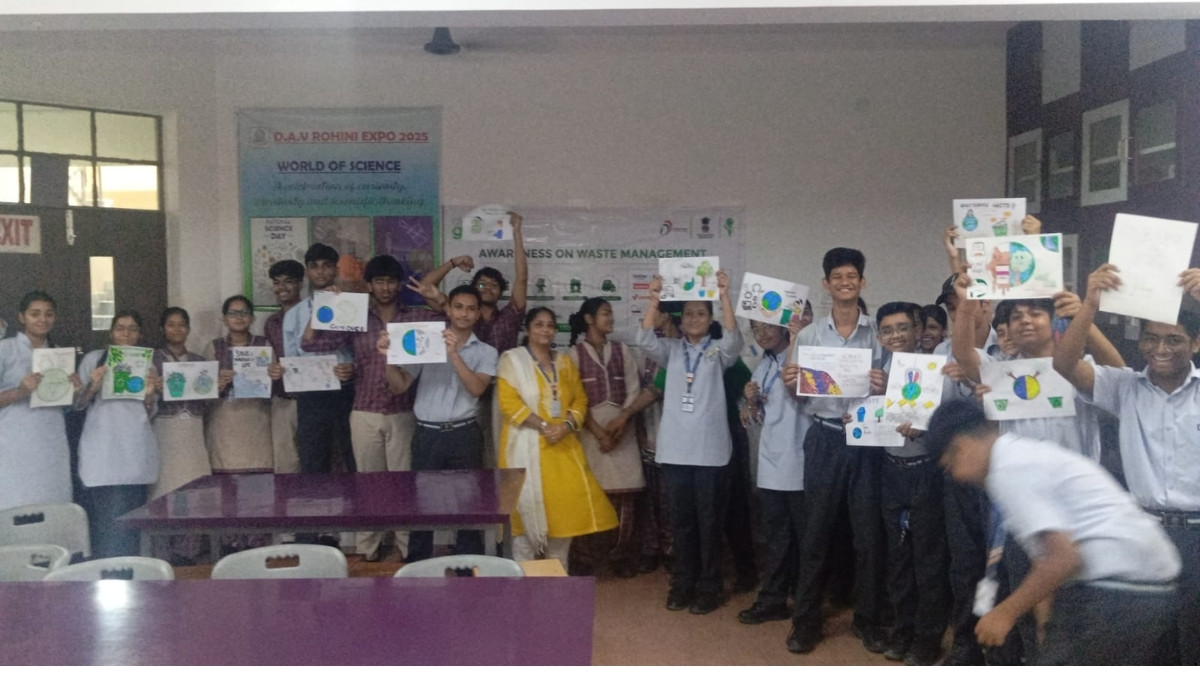
    The Roadshow will showcase a signature e-waste installation created during Special Campaign 5.0 under the aegis of Eco Clubs for Mission LiFE, Department of School Education & Literacy, Ministry of Education, in collaboration with the Ministry of Environment, Forest and Climate Change. The artwork celebrates the power of young people to unite for the cause of managing and reducing e-waste. By taking this installation to college campuses across the city, the Campus Climate Roadshow places young people at the centre of the climate discourse, recognising their role as both current stakeholders and future decision-makers. 

    Designed as a four-hour immersive, on-campus sustainability experience, the roadshow will also feature youth-led panel discussions, and interactive games and quizzes, addressing issues such as e-waste management, fast fashion, energy use, and everyday climate choices—encouraging students to engage critically and creatively with climate action. 

    Speaking on the initiative, Pankaj Bajaj, Founder, Bajaj Foundation said: 

    “Mumbai Climate Week provides an important city-level platform for climate dialogue. Through the Campus Climate Roadshow, we are extending this conversation to college campuses- where awareness, creativity, and action intersect most powerfully. Young people are not just participants in the climate conversation; they are shaping its direction.” 

    The Campus Climate Roadshow builds on Bajaj Foundation’s national experience of youth engagement through platforms such as the Youth Eco Summit, which has engaged thousands of schools and lakhs of students across multiple cities, fostering sustained dialogue on sustainability and responsible consumption. The roadshow mirrors this approach at a city scale—using art, dialogue, and participation to translate awareness into action. 

    Reflecting on the need to support youth-led climate action, Giorgia Varisco, Chief of YuWaah, said: Young people are already leading climate action in their communities. As Youth Engagement Partners for Mumbai Climate Week, UNICEF YuWaah is proud to support their leadership and changemaking 

    journeys, through initiatives like Campus Roadshows, that make climate education practical and action-driven.

    By integrating campus-level engagement into the broader build-up of Mumbai Climate Week, the initiative strengthens the city’s climate ecosystem— bridging policy conversations with grassroots youth participation and reinforcing the role of students in driving long-term climate solutions. 

    About Bajaj Foundation 

    The Bajaj Foundation is an NGO registered under the Section 8 of the Companies Act, 2013 with the Ministry of Corporate Affairs (MCA). Driven by a vision of a sustainable and compassionate world, Mr. Pankaj Bajaj founded Bajaj Foundation to turn his passion for positive change into tangible action. At the heart of its work lies the ethos of “Ek Sansaar, Ek Parivaar”- One World, One Family, a principle that reflects a belief in collective responsibility and unity while addressing the complex environmental and social challenges facing India. 

    Recognising that e-waste is the fastest-growing waste stream in Asia, the Foundation has focused its efforts on this pressing issue through sustained dialogue, advocacy, and action, empowering young people and communities to become champions of responsible consumption and recycling. 


    For more information, visit thebajajfoundation.org.

    If you object to the content of this press release, please notify us at pr.error.rectification@gmail.com. We will respond and rectify the situation within 24 hours.

  • Dr. Biswaroop Roy Chowdhury Launches English Edition Cure Autism Now (C.A.N.) on Netaji Subhas Chandra Bose Jayanti

    Dr. Biswaroop Roy Chowdhury Launches English Edition Cure Autism Now (C.A.N.) on Netaji Subhas Chandra Bose Jayanti

    New Delhi [India], January 27: Following the success of his Hindi book Autism se Azadi (ऑटिज़्म से आज़ादी), which became a No. 1 bestseller on Amazon, Dr. Biswaroop Roy Chowdhury launched its English edition titled Cure Autism Now (C.A.N.) on the occasion of Netaji Subhas Chandra Bose Jayanti, January 23, in New Delhi. The book launch ceremony was graced by Shri Sanjay Mayukh, MLC, Bihar, along with other distinguished guests.

    Addressing the gathering, Dr. Biswaroop stated that in present-day India, one out of every 100 children is affected by autism, whereas 30–40 years ago such cases were rarely reported. He attributed the sharp rise in autism cases to vaccination and referred to an observational study documented in the book to support his views.

    Dr. Biswaroop further stated that autism, according to him, is both preventable and curable. He emphasized that the book challenges commonly held beliefs regarding vaccines and presents what he described as extensive evidence questioning their effectiveness and safety. He urged readers to study the first module of Cure Autism Now to understand this perspective in detail.

    During the event, Dr. Biswaroop introduced the C.A.N. Protocol, developed by him, which comprises five major components aimed at reversing autism-related symptoms. He claimed that children following this protocol have shown rapid improvements, including the development of speech, reduction in hyperactivity, cessation of toe walking and hand flapping, improved cognitive skills, and better concentration, with noticeable changes observed within a few days.

    He highlighted Neem Therapy as the most important component of the protocol, describing it as a complete therapy in itself. He added that detailed information on this therapy is available in his earlier book Green Gold: The Neem-Farmacy, a long-standing bestseller on Amazon.

    Other components of the C.A.N. Protocol include the D.I.P. Diet, grounding practices, fermented drinks, and coconut-based recipes. All daily recipes recommended for children are provided in Module 3 of Cure Autism Now, while Module 4 presents an extensive observational study covering more than 1,000 reported successful cases.

    According to this study, children who followed the C.A.N. Protocol for an average duration of 26 days showed an average improvement of 52 percent in classic symptoms associated with neurodevelopmental disorders, with autism being the most prominent.

    On the occasion of the book launch, Dr. Biswaroop also presented 100 additional case studies conducted during the current month. Ten children affected by autism, along with their parents, attended the event and performed on stage. Among them, Vedanshi, Prasit, and Arnav were seen singing confidently, while Arakaansh and Abhyuday played the national anthem and other melodious songs, drawing appreciation from the audience.

    While releasing the book, Dr. Biswaroop expressed his gratitude to the entire team involved in its creation, including Ms. Rachna Sharma (Research), Swapan Banik (Graphic Design), Pankaj Singh (Translation), Dr. Namita Gupta (Parents’ Mentor & Report Collection), Kalpana Bourai, Pratiksha Vats, and Dr. Vanshika Tanwar (Technical Compilation).

    Dr. Biswaroop also spoke about the importance of keeping children away from chemicals entering the body through processed foods, fast food, allopathic medicines such as antibiotics and antivirals, and vaccines. He emphasized avoiding pesticides and chemical fertilizers in food and advocated the use of organic produce for better physical and mental health.

    Highlighting the issue of affordability of organic food in India, he introduced the Natural D.I.P. Diet for B.O.S.S., where B stands for Blood Pressure, O for Obesity, S for Sugar, and S for Stiffness. He stated that over the last 15 years, since the development of the D.I.P. Diet, millions of people have reported improvements in conditions related to blood pressure, obesity, diabetes-related issues, and stiffness such as joint pain and arthritis.

    To make chemical-free food more accessible, Dr. Biswaroop launched the Natural D.I.P. Diet for B.O.S.S. Box, a one-month supply of the main diet for one adult, requiring only fruits and vegetables to be purchased separately. The box contains eight varieties of pulses, five types of millets, five types of spices, and rock salt, all sourced from chemical-free farming.

    The Natural D.I.P. Diet for B.O.S.S. has been sourced through Devshree Naturals, founded by Anubhav Mittal, a farmer-linked sourcing initiative working directly with chemical-free farmers. By eliminating intermediaries, this direct-to-consumer model aims to offer organic food at prices comparable to conventionally grown produce.

    With this launch, chemical-free food is now available—at least to a limited number of consumers—at prices similar to non-organic food sold at local stores.

    The book Cure Autism Now and the Natural D.I.P. Diet for B.O.S.S. Box are available on major online platforms including Amazon, Flipkart, and Meesho, as well as on www.biswaroop.com/shop. (SGP)

    Disclaimer: This press release is for general information purposes only and should not be construed as professional medical advice. Always consult a doctor before taking any decisions.

  • Why Tea Is Still a Booming Business in India and Why Most Entrepreneurs Get It Wrong

    Why Tea Is Still a Booming Business in India and Why Most Entrepreneurs Get It Wrong

    New Delhi [India], January 26: Tea is still a booming business in India because it never needed permission to exist. That’s the part most entrepreneurs miss. Tea doesn’t care about branding decks, pitch days, or lifestyle adjectives. It’s there at 6 a.m. in chipped cups, at railway platforms smelling like burnt milk, in offices where nothing else works but deadlines and caffeine. It’s infrastructure. People confuse that with opportunity and then wonder why they get chewed up.

    India didn’t “discover” tea as a market. It inherited it, absorbed it, ritualised it. Tea isn’t consumed here; it’s leaned on. Emotionally. Economically. Culturally. A bad day still pauses for chai. A good one too. That demand doesn’t spike. It hums. Steady, boring, relentless. Which is exactly why it keeps growing while trend-based beverages flame out every few summers.

    Entrepreneurs see the volume and smell money. So they rush in with pastel cups and English names and the word “artisanal” is doing a lot of unpaid labour. And they immediately misunderstand what they’re up against. Tea drinkers in India are not waiting to be educated. They already know what tea should taste like. They know the price. They know the temperature. They know how long it should sit before the first sip. Deviate too much and they don’t complain. They just don’t come back.

    Here’s the uncomfortable truth: most tea startups fail because they’re built by people who don’t actually drink tea the way the market does. They drink it symbolically. As a habit borrowed from somewhere else. Which leads to bizarre decisions. Over-designed menus. Underwhelming cups. Prices that suggest the founders have never stood in line at a roadside stall counting coins. Tea has an internal price memory in India. Break it without offering something genuinely better, and you’re done.

    And the supply side isn’t forgiving either. Tea isn’t coffee, where roasting theatrics can mask inconsistencies. Bad leaves show up immediately. Milk ratios matter. Water quality matters. The person making the tea matters. Skill here isn’t scalable in a slide deck way. It’s trained. Repeated. Lost when staff churns. Which they do, often. Margins are thin. Rent isn’t. Reality sets in fast.

    The business keeps mushrooming anyway because the base is too wide to collapse. Tea moves through villages, cities, offices, construction sites, and college canteens. It doesn’t need aspiration to survive. It just needs habit. That’s why legacy players endure. They didn’t chase novelty. They chased consistency. Same cup. Same taste. Same disappointment-free experience. Day after day. For years. Boring wins here.

    Entrepreneurs, on the other hand, love to “disrupt” tea. Which usually means removing everything that made it work and replacing it with vibes. They talk about experience. Community. Storytelling. Fine. But tea drinkers are pragmatic. They want speed. Heat. Strength. Familiarity. They’ll listen to your brand story exactly once, maybe, and only if the tea earns it. Most don’t.

    There’s also the mistaken belief that urban equals premium. That Indian consumers are waiting to upgrade their chai like phones. Some are. Many aren’t. Tea doesn’t scale upward neatly. The more you dress it up, the more you narrow your audience. And the ones you narrow it to are fickle, trend-sensitive, and already looking at the next thing. Matcha today. Something fermented tomorrow. Tea doesn’t chase. It endures.

    Another quiet killer is operational arrogance. Entrepreneurs underestimate logistics. Procurement. Storage. Wastage. Tea leaves aren’t forgiving inventory. Milk turns. Sugar fluctuates. Labor disappears. Weather changes footfall. And suddenly the romantic idea of a tea brand collapses under the weight of daily decisions no one wants to Instagram.

    What actually works is unglamorous. Dense neighborhoods. Predictable demand. Tight control. Owners who show up. Brands that don’t overpromise. Businesses that accept tea’s limitations instead of fighting them. That’s why the market keeps growing while individual ventures keep dying. The system rewards patience and punishes fantasy.

    Tea in India is not an empty market waiting to be conquered. It’s a crowded room where everyone already knows each other. Walk in acting like a savior and you’ll be ignored. Or worse, tolerated briefly, then replaced by the guy next door who charges less and gets it right.

    The business will keep expanding. Demand isn’t the problem. It never was. The failure comes from mistaking ubiquity for simplicity. Tea looks easy until you try to make a living from it.

    And most people don’t last long enough to learn why.

    PNN Lifestyle

  • Why Emily Dickinson Still Feels Uncomfortably Modern

    Why Emily Dickinson Still Feels Uncomfortably Modern

    London [United Kingdom], January 24:  Emily Dickinson still feels modern because she never tried to be legible. That’s the part people keep circling without saying out loud. She didn’t smooth the edges. She didn’t explain herself. She didn’t care if you “got it,” and she definitely didn’t care if you liked her. “Tell all the truth but tell it slant—” wasn’t a clever line. It was an operating principle. That alone puts her closer to the present than most writers embalmed by syllabi.

    She wrote like someone who understood the mind is not a neat place. Thoughts interrupt each other. Meaning leaks. Certainty collapses mid-sentence. So she used dashes the way people now use half-finished texts. She broke grammar because grammar lied about how thinking actually works. I felt a Funeral, in my Brain,” she wrote, and then let the poem stagger. And the poems didn’t resolve. They just… stopped. Like the feeling does. Like the anxiety does. Like the grief that never quite wraps itself up.

    People love to talk about her isolation. The white dress. The upstairs room. Fine. But that’s not why she feels current. Plenty of recluses wrote safely ornamental things. Dickinson wasn’t ornamental. She was invasive. Her poems read less like finished objects and more like private notes that accidentally survived. “This is my letter to the World / That never wrote to Me—” isn’t wistful. It’s confrontational. You’re not invited. You’re overhearing.

    And the subjects. Death, obviously. Not the gothic kind. The administrative kind. The waiting room kind. The quiet, procedural certainty that it’s coming and you won’t be ready and nobody will explain the paperwork. “Because I could not stop for Death – / He kindly stopped for me—” is polite on the surface, chilling underneath. She wrote about death the way people now Google symptoms at 2 a.m., not to be dramatic, just to confirm the dread has a shape.

    Then there’s power. God. Authority. She didn’t reject belief so much as interrogate it until it started sweating. Her poems argue with God the way modern people argue with systems—politely at first, then with growing suspicion, then with a kind of exhausted sarcasm. “The Bible is an antique Volume— / Written by faded Men,” she said, and left it there. She didn’t need atheism. She needed leverage.

    And love. God, the love poems. They’re not sweet. They’re not even romantic in the way people expect. They’re territorial. Nervy. Sometimes humiliating. “Wild nights – Wild nights!” isn’t liberation. It’s exposure. She writes desire as something that disorganizes you, reduces you, sharpens you into someone you don’t fully recognize. No empowerment arc. No self-care ending. Just the admission that wanting someone can rearrange your moral furniture and leave it that way.

    What really keeps her contemporary, though, is her refusal to perform. She didn’t publish. Not because she was shy. That’s the story people like because it makes her safe. But the poems themselves don’t sound shy. They sound controlled. Withholding can be a strategy. Silence can be editorial. “Publication – is the Auction / Of the Mind of Man—” wasn’t bitterness. It was policy.

    She understood something we’re only pretending to rediscover: that exposure isn’t the same thing as connection. That being seen doesn’t automatically mean being understood. So she kept the work close. Let the poems exist without explanation. Let them misbehave.

    Modern readers recognize that instinct immediately. We live inside platforms that demand constant articulation. Opinions, identities, brand clarity. Dickinson offers none of it. She doesn’t contextualize herself. She doesn’t clarify her stance. She doesn’t apologize for contradiction. One poem asserts something. Another quietly undoes it. “Much Madness is divinest Sense—” and the line never settles. Both stay.

    And the voice. Flatly intense. Calm while saying unsettling things. She’ll state an emotional catastrophe like it’s a weather update. “After great pain, a formal feeling comes—” is basically dissociation before the term existed. That tone—controlled delivery, maximal content—is everywhere now. Podcasts. Essays. Therapy-speak with a blade hidden in it. She got there first.

    There’s also the matter of scale. Her poems are short. Brutally short. They don’t give you room to relax. They hit and leave. Like a notification you didn’t want but can’t ignore. Like “Hope is the thing with feathers—” until you realize it’s not reassurance, it’s endurance. Like a sentence you reread and feel slightly worse afterward, which is how you know it worked.

    She doesn’t teach lessons. She doesn’t offer comfort. She doesn’t even seem particularly invested in coherence. What she offers is recognition. The uncomfortable kind. The sense that someone else noticed the same quiet terror you did and didn’t try to dress it up. “I’m Nobody! Who are you?” isn’t cute. It’s a refusal.

    That’s why she survives every reinvention. Academic. Feminist. Pop-cultural. Minimalist. She outlasts them because she never aligned herself with any program. She just wrote what she saw from where she was, without adjusting for reception.

    Emily Dickinson feels modern because she wrote like someone who knew the future wouldn’t be clearer, kinder, or more stable. Just louder. “The Soul has Bandaged moments—” and some of them never heal. And she chose not to raise her voice to match the noise.

    The poems are still there. Unresolved. Watching. Waiting for you to catch up—or not.

    PNN Lifestyle

  • Jaun Elia and Indian Youth: How a Defiant Poet Became a Cultural Obsession

    Jaun Elia and Indian Youth: How a Defiant Poet Became a Cultural Obsession

    New Delhi [India], January 24: Jaun Elia did not arrive in India quietly. He arrived amplified. Through a microphone that was not his.

    For most Indian readers under thirty-five, Jaun Elia did not come from libraries, serious Urdu study, or the long lineage of Progressive Writers. He came through Kumar Vishwas. That is not an insult. That is a logistical fact. Cultural transmission rarely cares about purity.

    Vishwas didn’t reinterpret Jaun. He recited him. He named him. He repeated him on stages that reached places where Urdu poetry had not travelled in decades. Small towns. College auditoriums. Televised mushairas. You can dislike the circuit and still admit its reach. Without that reach, Jaun would have remained what he already was in India: a cult poet with no distribution.

    This is how influence actually works. Not romantically. Practically.

    Once the door was opened, Jaun Elia did the rest himself. He didn’t need an explanation. He needed exposure. Indian youth heard the lines and recognised the temperature immediately. Something colder than nostalgia. Sharper than heartbreak. A voice uninterested in emotional hygiene.

    Jaun does not console. He doesn’t guide. He doesn’t even argue properly. He states. Then retracts. Then mocks his own statement. The effect is destabilising, which is precisely why it works on a generation raised on certainty masquerading as wisdom.

    Take the lines that circulate endlessly now, usually stripped of attribution, floating free of context:

    “Main bhi bohat ajeeb hoon, itna ajeeb hoon ke bas
    Khud ko tabaah kar liya, aur malaal bhi nahin.”

    I am strange—strangely so;
    I ruined myself completely and felt no regret.

    There is no lesson embedded here. No redemption arc. Just self-recognition without apology. That tone is rare in Indian public culture, which prefers either moral victory or emotional recovery. Jaun offers neither.

    His popularity isn’t about sadness. That’s the surface reading. It’s about intellectual disobedience. He refuses to behave the way a poet is expected to behave. He doesn’t elevate pain. He interrogates it until it becomes tedious, then admits the tedium.

    “Shayad mujhe kisi se mohabbat nahin hui,
    Lekin yaqeen sab ko dilata raha hoon main.”

    Perhaps I never loved anyone at all,
    Yet I kept convincing everyone that I did.

    This is not romance. It’s a self-indictment. And it lands hard among young readers exhausted by curated sincerity.

    Jaun’s life feeds this voice, but doesn’t romanticise it. Born into scholarship, fluent across languages, burdened with intellectual inheritance—he still failed spectacularly at the basic logistics of living. Marriage collapsed. Politics disappointed him. Ideologies bored him. Migration gave him geography, not belonging. He never turned these failures into mythology. He left them raw, often embarrassing.

    That honesty is abrasive. Indian youth recognise it because it mirrors their own private disillusionment. Not dramatic despair. Quiet erosion.

    What Vishwas did—again, factually—is create the first large-scale Indian listening public for Jaun Elia. After that, social media finished the job. Clips became captions. Captions became passwords for emotional literacy. The poems detached from the stage and moved inward.

    Jaun Elia now lives in phone screens at 2 a.m. Not as inspiration. As permission.

    Permission to doubt one’s own feelings.
    Permission to distrust slogans.
    Permission to say “I don’t know” without packaging it as growth.

    “Kya kaha ishq jawaan hai?
    Abhi yeh bachcha hai.”

    You say love is young?
    No—it’s still a child.

    This line circulates because it punctures the fantasy without replacing it. That’s Jaun’s entire method.

    People worry about his effect on young minds. That he normalises despair. This misunderstands both the poet and the audience. Jaun didn’t create the disquiet. He gave it language. Sanitising that language would not make the disquiet disappear. It would only make it quieter and lonelier.

    Jaun Elia does not want to heal anyone. He doesn’t offer exits. He doesn’t respect optimism enough to argue with it.

    And Indian youth—introduced to him first by a voice they trusted, then claimed him on their own terms—didn’t ask him to.

    They heard him.
    They stayed.
    That was enough.

    PNN Lifestyle