Tag: lifestyle

  • Himalayan 450 vs Yezdi Adventure

    Himalayan 450 vs Yezdi Adventure

    Detailed Comparison, Real-World Riding Review, Price Breakdown, and Which Adventure Bike Actually Makes Sense

    You look at price first because that’s unavoidable. The Himalayan 450 sits higher on the invoice. You pay more upfront. On paper that seems like a disadvantage. The reality is you pay for a bigger tank, a more developed chassis, a brand with deeper service reach, and parts that actually exist in third-tier towns. This is not romance. This is travel math. The Yezdi Adventure is cheaper, yes—but you trade certainty for a lower sticker. In cities it barely matters. In real distance, it does.

    Engine & Performance

    Himalayan 450:

    • What you get: torque that never spikes, power you can predict in dust, gravel, pavement.

    • Price factor: you pay extra for that broad, tractable powerband.

    • Con: no fireworks. Overtaking takes patience.

    Yezdi Adventure:

    • What you get: punchier feel, eager midrange that feels quicker in short bursts.

    • Price factor: cheaper engine package, less refinement.

    • Con: sharp throttle means you’re always managing vibration and heat.

    Clutch & Gearbox

    Himalayan:

    • You get a light, progressive clutch. Gearbox is functional, not slick.

    • On-road price value: you spend less mental energy crawling through traffic or slow trails.

    • Con: shifts are not precision-machine smooth.

    Yezdi:

    • You get crisper shifts, heavier clutch.

    • Lower price means less refinement in leverage and modulation.

    • Con: harder to modulate in slow, technical sections.

    Chassis & Stability

    Himalayan:

    • You get planted straight-line behavior. Works over broken surfaces.

    • Price here buys stability and predictable compliance.

    • Con: slower direction changes on twisty tar.

    Yezdi:

    • You get sharper turn-in. On clean roads it feels more agile.

    • Lower price compromises settle-down composure on uneven surfaces.

    • Con: you’re always correcting.

    Suspension

    Himalayan:

    • Pros: compliant, absorbs rubble, predictable response.

    • Price buys comfort over long days.

    • Con: gives little feedback for aggressive riding.

    Yezdi:

    • Pros: firmer, feels controlled on smooth roads.

    • Price factor: cheaper damping tech, so sharp feedback on bad surfaces.

    • Con: endurance fatigue starts early.

    Braking

    Himalayan:

    • Pros: progressive, easy to modulate off-road.

    • Price investment buys confidence under varied traction.

    • Con: weak initial bite at speed.

    Yezdi:

    • Pros: stronger bite on road.

    • Price reduces refinement in modulation.

    • Con: demands precision off road.

    Ergonomics & Comfort

    Himalayan:

    • You get neutral posture, wide bars, seat that won’t fight you after hours.

    • Price is partly for that long-distance thoughtfulness.

    • Con: seat is firm, not cushy.

    Yezdi:

    • You get a compact, sporty feel.

    • Price buys style and initial comfort.

    • Con: comfort fades over extended stints.

    Heat & Vibration

    Himalayan:

    • Pros: managed heat, low vibration.

    • Price buys internal balancing and smoother mounts.

    • Con: engine feels muted to enthusiasts.

    Yezdi:

    • Pros: alive feel.

    • Price means more heat transmission and buzz.

    • Con: fatigue over hours.

    Fuel Range & Ownership

    Himalayan:

    • Large tank, better mileage.

    • Price includes parts network deeper in small towns.

    • Con: you pay more now for less worry later.

    Yezdi:

    • Smaller tank; range acceptable but tight on long runs.

    • Price lower, but parts and service reach are still growing.

    • Con: long trip logistics require planning.


    This isn’t a choice between nice things. It’s a ledger of trade-offs you’ll feel in your hands and hips. The Himalayan costs more because it gives you less to fight with on real distance. The Yezdi costs less but gives you more to manage as you ride. That’s the real price equation, and it’s the only one that matters once you’re on the road.

    Lifestyle

  • KRAFTON India Unveils Cobalt Storm Backpack via Latest BGMI Redeem Codes

    KRAFTON India Unveils Cobalt Storm Backpack via Latest BGMI Redeem Codes

    Bengaluru (Karnataka) [India], January 21: KRAFTON India has announced a new redeem code release for BATTLEGROUNDS MOBILE INDIA (BGMI) players, introducing the Cobalt Storm Backpack. The latest drop adds another standout cosmetic to the game, continuing BGMI’s ongoing reward initiative aimed at enhancing player customization through limited-time official codes.

    KRAFTON India Unveils Cobalt Storm Backpack via Latest BGMI Redeem Codes -PNN

    Redeem codes are valid until 28th February 2026 and can be redeemed only on BGMI’s official channels.

    Redeem Codes:

    HUZCZTQ8WWGNKF47
    HUZDZ9PTKWK8BD8U
    HUZEZJJMWB3PFCTT
    HUZFZ59KU95SNB4C
    HUZGZQ95W8KDT4GA
    HUZHZUWBX5RRMK3H
    HUZIZ6KW6UEPFTAQ
    HUZJZV5T7KJWXSBR
    HUZKZ6GEW9TUDCW3
    HUZLZUEWC64747MC
    HUZMZ3K7QM9J9EBP
    HUZNZM3B9FTWWX7U
    HUZOZW4SCKSUDMVD
    HUZPZDS4W76UCS4N
    HUZQZDD7MAVJXTUX
    HUZRZDN8KBW95FGJ
    HUZVZWWPX5QSRBD4
    HUZTZGMGTNAFTTSP
    HUZUZ6SFV77XVWU5
    HUZBAZ9HTH7N6SSR
    HUZBBZKA49T6W96V
    HUZBCZN7MTP3VRP5
    HUZBDZSTAQN5XWEN
    HUZBEZX57N3H9JBC
    HUZBFZMCC7PGPR9U
    HUZBGZ7WP9PDD9RT
    HUZBHZK5NUSJ4NRS
    HUZBIZW6RQCTQCSR
    HUZBJZ8DFCBTED3P
    HUZBKZMWC63PXH4R
    HUZBLZ4BX35CTPB4
    HUZBMZ7GP4MX5BRP
    HUZBNZAB5WRFC8CC
    HUZBOZJ5NKDXVB5D
    HUZBPZG3DNGGK8SS
    HUZBQZQUX8HQKHSB
    HUZBRZXPHRUMD7DP
    HUZBVZVHDQ966RNB
    HUZBTZ9DFKN77N6Q
    HUZBUZ3JGCAWT93D
    HUZCAZPD4FPMUKSW
    HUZCBZCBDT7MVFG4
    HUZCCZXTU57MFWSF
    HUZCDZDN4U57AEEC
    HUZCEZHTM4DN7U8J
    HUZCFZC5QUWT9D5U
    HUZCGZC3559T9RGR
    HUZCHZGGV7XQQWN8
    HUZCIZRWBXTWNW9U
    HUZCJZKQG7TDGDVU
    HUZCKZJGDQX8RATA
    HUZCLZ8U7WFN8QG9
    HUZCMZ8WNDVEDTC6
    HUZCNZUPNMPHTJU3
    HUZCOZTGQFPWN675
    HUZCPZGSK3569EFD
    HUZCQZAHA6XMUVPK
    HUZCRZRMX3AQJTR4
    HUZCVZHUG7GMHBV7

    Steps to redeem:

    Players can follow these simple steps to claim their rewards:

    • Step 1: Go to the Redeem section on BGMI’s official website www.battlegroundsmobileindia.com/redeem
    • Step 2: Enter your Character ID
    • Step 3: Enter the Redemption Code
    • Step 4: Enter the verification/ Captcha code → A message will confirm “Code redeemed successfully”
    • Step 5: The reward will be delivered via in-game mail

    Rules to Remember:

    • A maximum of 10 users can redeem each code on a first come first served basis
    • A user cannot redeem a code twice
    • Users must claim their rewards via in-game mail within 7 days or the mail will expire
    • If a player is among the first 10 users to redeem the code, a message will confirm “Code redeemed successfully”. Otherwise, users will see “Code expired” or a similar message
    • Each user account can redeem only one code per day
    • Redeem codes cannot be used via guest accounts
    • Rewards must be claimed within 30 days from receiving the in-game mail

    For the latest updates, follow BGMI’s official YouTube, Instagram and Facebook pages.

    About KRAFTON, Inc.

    Headquartered in South Korea, KRAFTON, Inc. is dedicated to discovering and publishing captivating games that offer fun and unique experiences. Established in 2007, KRAFTON is home to globally renowned developers that include PUBG STUDIOS, Striking Distance Studios, Unknown Worlds, VECTOR NORTH, Neon Giant, KRAFTON Montréal Studio, Bluehole Studio, RisingWings, 5minlab, Dreamotion, ReLU Games, Flyway Games, Tango Gameworks and inZOI Studio. Each studio strives to continuously take on new challenges and leverage innovative technologies. Their goal is to win over more fans by broadening KRAFTON’s platforms and services. With a passionate and driven team across the globe, KRAFTON is a tech-forward company that possesses world-class capabilities and is set on expanding its business horizons to encompass multimedia entertainment and deep learning. For more information, visit www.krafton.com.

    About KRAFTON India

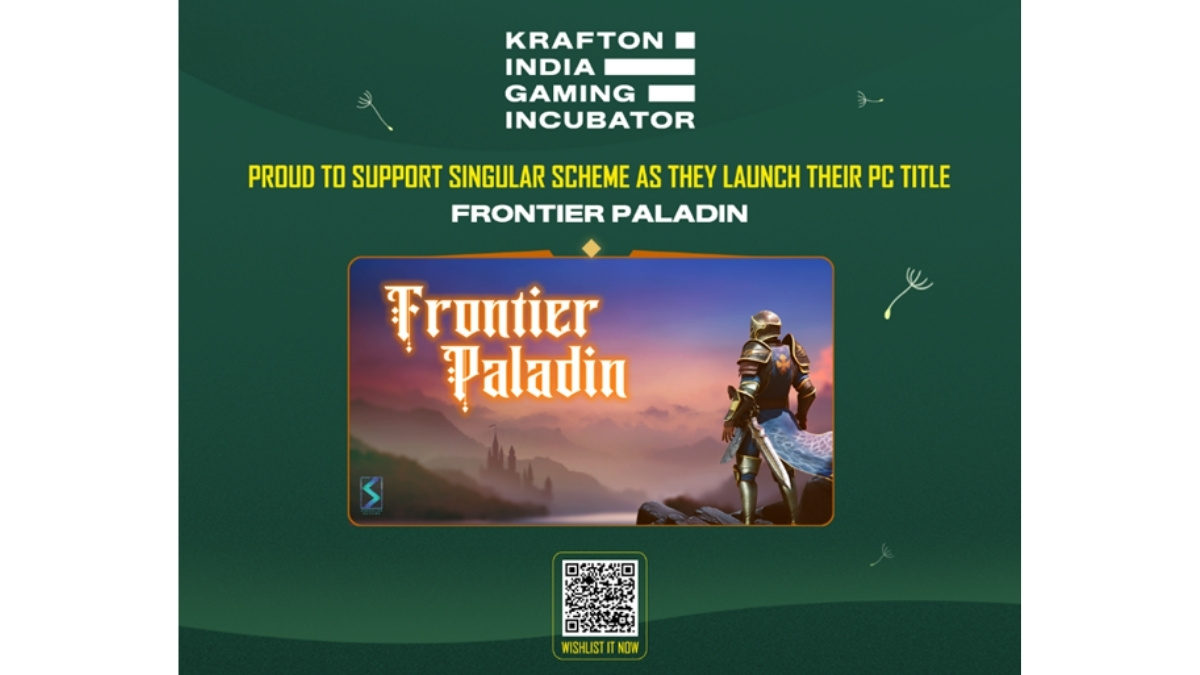
    In India, KRAFTON is responsible for premier mobile games, including BATTLEGROUNDS MOBILE INDIA (BGMI), which has surpassed 240 million downloads, Bullet Echo India, Road To Valor: Empires, and CookieRun India, among others. Committed to enhancing the start-up ecosystem in India, KRAFTON has invested over $200 million in several Indian startups across interactive entertainment, gaming, Esports, and technology, since 2021. KRAFTON actively supports India’s game development ecosystem through its KRAFTON India Gaming Incubator (KIGI) while strengthening the Esports ecosystem with flagship events like the BATTLEGROUNDS MOBILE INDIA SERIES (BGIS) and BATTLEGROUNDS MOBILE INDIA PRO SERIES (BMPS). For more information, visit https://krafton.in/]

    If you object to the content of this press release, please notify us at pr.error.rectification@gmail.com. We will respond and rectify the situation within 24 hours.

  • When Couture Learns To Stay Put: Elie Saab’s India Entry Turns Fashion Into A Fixed Address

    When Couture Learns To Stay Put: Elie Saab’s India Entry Turns Fashion Into A Fixed Address

    Mumbai (Maharashtra) [India], January 21: Luxury has always flirted with permanence, even when pretending to be seasonal. Runway collections vanish in months, trends expire faster than invitations, and yet the promise of luxury has always been about something lasting — legacy, lineage, and the quiet assurance that you’ve arrived. Elie Saab’s entry into India through branded residences feels less like a business expansion and more like a confession: fashion no longer wants to hang in your wardrobe; it wants to live with you.

    This is not a sudden pivot. It’s a carefully timed escalation.

    As global lifestyle brands increasingly move from selling aspiration to engineering environments, India — with its swelling cohort of ultra-high-net-worth individuals and culturally fluent luxury consumers — has become impossible to ignore. Elie Saab’s decision to anchor its aesthetic in Indian real estate is not merely about square footage. It’s about identity acquiring an address.

    And yes, about marble, chandeliers, and the luxury of never having to explain your taste.

    Luxury’s Quiet Realisation: Clothing Was Never Enough

    Luxury fashion once thrived on scarcity. Limited editions, invite-only shows, whispered exclusivity. But the modern luxury consumer has evolved — or perhaps matured — into someone who seeks coherence across life, not fragments of indulgence.

    What you wear, where you live, how you host, how you retreat — all of it is now part of a single narrative.

    Branded residences are the logical extension of this mindset. They promise:

    • Design continuity

    • Lifestyle symbolism

    • A sense of belonging to a global aesthetic club

    Elie Saab isn’t selling homes. It’s selling permanence wrapped in Parisian poise and Middle Eastern opulence, tailored carefully for Indian sensibilities.

    India Was Always On The Mood Board

    India’s luxury real estate market has been steadily transforming over the last decade. Demand for premium residences has risen sharply in metro cities and emerging luxury corridors, driven by:

    • Generational wealth consolidation

    • Entrepreneurial liquidity events

    • Return of global Indians seeking familiarity with finesse

    Branded residences, once seen as indulgent novelties, are now status shorthand. They communicate discernment without explanation.

    Elie Saab’s India entry signals that the market has reached a point where global fashion houses trust Indian buyers not just to purchase couture — but to inhabit it.

    That’s a different level of confidence.

    From Runway Drama To Residential Discipline

    Translating couture aesthetics into livable spaces is not as effortless as press releases suggest. A gown can be dramatic. A home must be functional. The challenge for Elie Saab lies in restraint — knowing when to soften signature flamboyance into everyday elegance.

    Early details suggest interiors that balance:

    • Signature detailing without visual fatigue

    • Neutral palettes punctuated by statement elements

    • Luxury that whispers instead of performing

    This matters. Indian luxury consumers are increasingly allergic to excess masquerading as taste.

    A chandelier can impress. Living with it every day is a different negotiation.

    Elie Saab - PNN

    The PR Brilliance — And The Risk Beneath It

    From a branding perspective, the move is impeccable. It positions Elie Saab not as a fashion house chasing relevance, but as a lifestyle architect shaping lived experience.

    The positives are obvious:

    • Enhanced brand longevity

    • Deeper emotional engagement with consumers

    • Entry into a high-margin, low-churn asset class

    But luxury real estate is not forgiving.

    The Risks Include:

    • Brand dilution if execution falters

    • Market sensitivity to economic cycles

    • Overreliance on aspirational pricing in a value-aware market

    Indian buyers may love labels, but they are pragmatic when it comes to real estate. Design alone does not justify premiums anymore. Location, delivery timelines, maintenance standards, and long-term resale value matter — obsessively.

    Fashion brands entering this space are discovering that trust here is slower, quieter, and harder-earned.

    Lifestyle Identity Now Comes With Maintenance Charges

    One uncomfortable truth about branded residences is that lifestyle branding doesn’t end at possession. It continues monthly through service quality, upkeep, and community experience.

    Luxury buyers are no longer impressed by brochures. They want:

    • Consistency post-handover

    • Service standards that age well

    • A living experience that doesn’t decline after the first year

    This is where many branded residences globally stumble. The brand name attracts attention; operational discipline sustains reputation.

    Elie Saab’s challenge in India won’t be selling homes. It will ensure that the lived reality matches the mythology.

    The Cultural Undercurrent No One Is Saying Aloud

    There’s also a subtle cultural shift embedded in this move. Luxury in India is becoming less about display and more about belonging — to a global design language, a shared aesthetic literacy, a quieter confidence.

    Owning an Elie Saab residence isn’t about impressing guests. It’s about reassuring oneself.

    That’s a powerful emotional lever — and a dangerous one if misused.

    The Economics Of Aspiration

    Industry estimates place branded luxury residences at a significant premium over comparable non-branded properties — often ranging between 20–40%, depending on location and services. Development costs rise accordingly, driven by bespoke design elements, imported materials, and brand licensing fees.

    These homes are not meant for speculative flipping. They are designed for:

    • Long-term ownership

    • Portfolio diversification

    • Emotional return on investment

    This aligns neatly with India’s new luxury buyer profile: less impulsive, more strategic, still indulgent — but selectively so.

    Is This The Future Of Fashion Houses?

    Almost certainly. Fashion brands entering hospitality, residences, and experiential living are not abandoning fashion. They are future-proofing relevance.

    Clothes age. Homes endure.

    For Elie Saab, India represents both opportunity and examination. Success here will quietly validate its transformation from fashion house to lifestyle institution. Failure will be remembered longer than a bad season.

    Final Thought: Luxury Isn’t Moving In — It’s Settling Down

    Elie Saab’s India debut in branded residences isn’t about expansion. It’s about anchoring identity in a market that understands legacy deeply.

    This isn’t fashion flirting with real estate.
    This is fashion admitting it wants to stay.

    And in a world obsessed with movement, permanence might just be the most luxurious statement of all.

    PNN Lifestyle

  • Anand Giri: Driving Affordable Housing Development in Mumbai’s Extended Suburbs

    Anand Giri: Driving Affordable Housing Development in Mumbai’s Extended Suburbs

    Mumbai (Maharashtra) [India], January 6: Real estate developer and entrepreneur Mr Anand Giri has emerged as a significant contributor to the affordable housing landscape in the Mumbai Metropolitan Region (MMR), with a focused presence in the fast-growing suburban corridors of Vasai, Virar, and Nala Sopara. His initiatives are centred on expanding access to formal housing while supporting sustainable regional growth.

    Mr Giri leads multiple real estate developments aimed at delivering legally compliant, quality, and affordable residential solutions, particularly for communities that have traditionally remained excluded from the formal property market. His projects are designed to enable home ownership for low-income families and residents transitioning from informal settlements, thereby fostering long-term social and economic stability.

    A strong social vision underpins his work. Mr Giri has consistently advocated inclusive urban development, emphasising the urgent need to provide dignified housing options for families living in slums across Mumbai. He has also actively positioned the Vasai–Virar–Nala Sopara belt as a promising residential and investment destination, highlighting its improving infrastructure, connectivity, and long-term growth potential.

    Affordability remains a cornerstone of his business philosophy. In a market often marked by high entry barriers, Mr Giri has introduced housing opportunities at highly accessible price points, with legally sanctioned flats offered at starting prices as low as ₹16 lakh, subject to eligibility and documentation norms. Transparency in transactions, including clearly defined pricing structures and loan eligibility processes, is a key differentiator of his approach.

    Beyond housing development, Mr Giri’s ventures have made a meaningful impact on the local economy. His growing business ecosystem supports an estimated 500 to 600 individuals, encompassing internal teams and an extensive network of channel partners, thereby generating sustained employment and livelihood opportunities across the region.

    Overall, Mr Anand Giri is recognised as a socially driven entrepreneur whose work reflects a balanced commitment to affordable housing delivery, economic empowerment, and inclusive regional development within Mumbai’s extended suburban landscape.

    If you have any objection to this article’s content, kindly contact pr.error.rectification@gmail.com to notify us. We will respond and rectify the situation in the next 24 hours.

  • The Listener Who Transformed Lives: Anitha Manickam’s Journey to Becoming an Iconic Marriage Coach

    The Listener Who Transformed Lives: Anitha Manickam’s Journey to Becoming an Iconic Marriage Coach

    Mumbai (Maharashtra) [India], January 17: When most marriage counsellors talk about their expertise, they cite degrees, certifications, and years of practice. But ask Anitha Manickam, recently recognised as an Iconic Relationship & Marriage Coach, what shaped her approach to healing relationships, and she’ll take you back to a twelve-year-old girl in a Tamil Nadu village who simply knew how to listen.

    In an era where relationship coaching has become an increasingly sought-after profession, Anitha’s story stands out—not just for her fifteen years of successful practice, but for how her personal journey of transformation became the very foundation of her professional calling. Her recognition comes at a time when marriage counselling is shedding its stigma in India, with more couples seeking help to navigate the complexities of modern relationships.

    A Childhood Rooted in Silence and Sensitivity

    The irony of Anitha’s childhood couldn’t be more striking. Born into a large joint family where everyone—on both her mother’s and father’s side—was a teacher, she grew up surrounded by educators and advisors. Yet, in a house full of voices offering guidance and instruction, she felt profoundly alone.

    “Everyone around me had something to teach, something to correct, but nobody was listening,” she reflects.

    In that vacuum, she made a quiet resolution that would define her life’s work:

    “I will listen.”

    That resolution manifested early. By the time she was twelve or thirteen, something unusual began happening. People started coming to her, not seeking advice or solutions, but simply to share their stories. She listened without the impulse to judge or fix, seeing each narrative as just that—a story. She loved stories, and this gift of holding space for others felt, even to her young mind, divinely ordained.

    What she didn’t realise then was that this intuitive ability would become the cornerstone of a career that would touch hundreds of lives.

    Education, Identity, and the Loss of Instinct

    After graduation, Anitha pursued what seemed like a natural extension of her inclination—she studied pastoral care and counselling as part of mission studies in college. But formal education brought an unexpected consequence. The techniques and methodologies she learned began to overshadow the pure, instinctive listener she had been. The gift was getting buried under the weight of learned responses and professional frameworks.

    Anitha Manickam

    Marriage as the Turning Point

    Marriage changed everything.

    Moving to Mumbai as a young bride, Anitha found herself in a city that stood in stark contrast to her village upbringing, married to a man who, like her family, was in the teaching field. But observing her husband’s work became a turning point. As she watched him create possibilities for people through his teaching, something dormant within her began to reawaken.

    The listener of her youth was returning—this time with maturity, lived experience, and depth.

    The Birth of Oomang Counselling Centre

    The year 2009 marked a pivotal moment when Anitha and her husband opened Oomang Counselling Centre.

    Initially conducting workshops for schools, teachers, students, and parents, Anitha found validation in the feedback from parents who noticed tangible differences in their children. Her teaching extended to colleges, but alongside her professional growth, she was also becoming a student—of her husband’s research in Human Design and of Ontology through their involvement with Landmark Education.

    The study of being and existence fundamentally reshaped how she understood human relationships.

    Academic Excellence and Social Commitment

    Driven by a commitment to social impact, Anitha immersed herself in women empowerment and gender sensitisation, writing research papers and presenting at conferences. She eventually taught Master’s courses in Emotional Intelligence and Coaching at Mumbai University, building impressive academic credentials.

    But her most profound education was unfolding elsewhere.

    Marriage: The Deepest Classroom

    When conflicts arose with her husband, Anitha made an unconventional choice. Instead of applying traditional resolution methods, she chose radical honesty and deep inquiry into the nature of partnership itself.

    What she discovered was revelatory.

    Every struggle, every question, every concern she faced in her marriage began appearing—almost identically—in the couples who sought her counsel. Her challenges weren’t unique; they were universal. More importantly, the solutions she forged for herself became pathways for others.

    This realisation transformed her practice.

    Anitha Manickam

    Core Philosophy: Truths from Fifteen Years of Practice

    Fifteen years of marriage counselling have distilled certain truths that Anitha now brings to every session. Chief among them is the concept of “joint ownership”—the recognition that marriage creates something greater than the sum of two individuals, and both partners must acknowledge each other’s contribution to this shared creation.

    She teaches that choice always exists in a relationship, and the fundamental question isn’t about perfection but about priority:

    “Do you value what you’re building together more than your individual grievances?”

    She states plainly:

    “There is no perfect human and no perfect couple.”

    Her philosophy is both pragmatic and profound, perhaps best captured in her observation:

    “Marriage is a journey from attraction to acceptance.”

    A truth born not from academic theory, but from lived experience.

    Recognition Beyond Achievement

    Today, Anitha Manickam’s recognition as an Iconic Relationship & Marriage Coach acknowledges more than professional success. It honours a journey that began with a lonely child in a Tamil Nadu village who chose to listen, continued through a young woman who nearly lost that gift to formal education, and culminated in a practitioner who rediscovered her authentic voice through the challenges of her own marriage.

    She brings to her work a rare blend of intuitive wisdom, academic rigour, and hard-won personal insight.

    In a field often dominated by theoretical frameworks and clinical distance, Anitha’s approach remains refreshingly human. She doesn’t just counsel couples—she witnesses their stories without judgment, creates space for radical honesty, and helps them uncover possibility within difficulty.

    From a small village to Mumbai’s metropolitan landscape, from a twelve-year-old listener to an iconic coach, her journey mirrors the transformation she facilitates in others:

    from isolation to connection,
    from conflict to understanding,
    from suppression to authentic expression.

    Perhaps that is the truest measure of her success—she became the listener her younger self needed, and in doing so, became the guide countless couples were searching for.

    If you have any objection to this article’s content, kindly contact pr.error.rectification@gmail.com to notify us. We will respond and rectify the situation in the next 24 hours.

  • Travel Grows Up In 2026 — And Leaves The Bucket List Behind

    Travel Grows Up In 2026 — And Leaves The Bucket List Behind

    Mumbai (Maharashtra) [India], January 20: For years, travel was marketed like a competitive sport. The more stamps on your passport, the more enviable your life appeared. Airports became backdrops, destinations became trophies, and experiences were reduced to captions written mid-boarding call. Somewhere along the way, travel stopped asking why and focused obsessively on where.

    2026, inconveniently for that narrative, has other plans.

    The language of travel is changing — not loudly, not dramatically, but decisively. Travellers are no longer chasing itineraries designed for applause. They are curating journeys that mirror their values, emotional bandwidth, and increasingly limited tolerance for chaos disguised as adventure. This is not wanderlust dying. This is wanderlust maturing.

    And yes, it’s slightly judging you for that “12 countries in 10 days” spreadsheet.

    When Travel Stopped Performing And Started Meaning Something

    The shift didn’t arrive overnight. It was gestating quietly through burnout culture, digital fatigue, climate anxiety, and the collective realisation that being exhausted in a beautiful place is still being exhausted.

    In 2026, travel has pivoted from spectacle to intention.

    People are choosing:

    • Shorter, richer journeys over extended logistical marathons

    • Cultural immersion over checklist sightseeing

    • Wellness and restoration over adrenaline-for-adrenaline’s sake

    This isn’t minimalism. It’s discernment.

    Travelers are asking better questions now:
    Will this change how I live when I return?
    Will this slow me down rather than speed me up?
    Will this feel like mine, or like something I’m supposed to want?

    The answers are shaping an entirely new itinerant economy.

    The Rise Of The Micro-Journey Economy

    Long vacations aren’t extinct — they’re just no longer the default fantasy.

    Micro-trips, often lasting three to five days, are becoming the preferred format. Not because people have less curiosity, but because they have less tolerance for disruption masquerading as indulgence.

    These shorter journeys focus on:

    • One town instead of five cities

    • One culture instead of a sampler platter

    • One purpose instead of a forced narrative arc

    The irony? These trips often cost more per day than traditional vacations. But travellers are willing to pay for coherence, comfort, and clarity.

    Time, not money, has become the luxury currency.

    Slow Travel Is No Longer A Trend — It’s A Correction

    Once dismissed as niche or impractical, slow itinerant has crossed into the mainstream. Staying longer in fewer places isn’t framed as “doing less” anymore. It’s framed as understanding more.

    This includes:

    • Train journeys replacing short-haul flights

    • Walkable neighborhoods over car-centric tourism

    • Rentals that prioritise local interaction over hotel anonymity

    The appeal isn’t romantic nostalgia. It’s psychological sustainability.

    Travellers don’t want to return home needing a vacation from their vacation.

    Wellness Travel Moves Beyond Spa Clichés

    Health-focused travel used to mean luxury spas, green juices, and guilt-inducing yoga schedules. In 2026, wellness itinerant looks far more practical — and far less performative.

    Today’s wellness journeys emphasise:

    • Sleep restoration

    • Nervous system regulation

    • Digital detox without moral superiority

    • Preventive health, not aesthetic transformation

    This isn’t about becoming a better version of yourself. It’s about becoming a functional one.

    Interestingly, many travellers now prefer understated wellness retreats over opulent resorts. Comfort matters. Excess does not.

    Cultural Immersion Without The Savior Complex

    One of the more encouraging evolutions is how cultural immersion is being reframed.

    Travellers are moving away from voyeuristic experiences toward participation that respects boundaries. Cooking with locals instead of photographing them. Learning context instead of extracting stories. Listening without narrating.

    There’s less interest in “authenticity” as a buzzword and more interest in reciprocity.

    The experience is no longer about being changed by a place. It’s about not damaging it.

    The Business Of Meaningful Travel Is Booming — Quietly

    Despite global economic caution, itinerant spending remains resilient. Industry observers note that while volume may fluctuate, value per traveller continues to rise. People are travelling less frequently but spending more intentionally.

    This has reshaped how destinations market themselves:

    • Fewer mass campaigns, more niche storytelling

    • Experiences over attractions

    • Local partnerships over generic itineraries

    The global itinerant economy remains a multi-trillion-dollar ecosystem, but its growth in 2026 isn’t driven by scale — it’s driven by selectivity.

    The Digital Paradox: Less Sharing, More Remembering

    Another subtle shift? People are documenting less — at least publicly.

    Private albums, delayed posting, and selective sharing are replacing real-time broadcasting. The memory is becoming more important than the metric.

    Ironically, this has made travel feel more luxurious. Not everything needs to be witnessed.

    Presence is the new premium feature.

    The Downsides Nobody Is Romanticising

    This evolution isn’t without complications.

    Access Inequality
    Meaningful itinerant often costs more, unintentionally turning intention into a privilege.

    Over-Tourism Still Exists
    Some “slow travel” destinations are becoming crowded precisely because they promise serenity.

    Greenwashing Risks
    Not all purpose-driven travel is actually responsible — some just learned better vocabulary.

    Decision Fatigue
    When every trip must align with your values, planning becomes a stressor in itself.

    Intentionality, like anything else, can be over-optimised into exhaustion.

    Why This Shift Feels Permanent

    This isn’t a trend driven by influencers or algorithms. It’s driven by lived experience. By people who returned from hyper-packed trips feeling oddly empty. By travellers who realised that motion is not the same as meaning.

    The 2026 traveller is no less curious. They’re just less interested in proving it.

    It has stopped being about escape and started being about alignment — with values, energy levels, relationships, and reality itself.

    And frankly, it was overdue.

    Final Thought: Travel Isn’t Smaller — It’s Sharper

    The future of itinerancy isn’t quieter because people care less. It’s quieter because they care more selectively.

    2026 doesn’t promise fewer journeys. It promises better ones. Journeys that linger after unpacking. Journeys that don’t require explanation. Journeys that don’t collapse the moment you return to your inbox.

    The bucket list isn’t cancelled.
    It’s just being rewritten — in pencil, not ink.

    PNN Lifestyle

  • 104 Years of Heritage: RudraTree’s Century-Long Legacy in Rudraksha, Navaratna & Natural Crystals

    104 Years of Heritage: RudraTree’s Century-Long Legacy in Rudraksha, Navaratna & Natural Crystals

    Bengaluru (Karnataka) [India], January 19: RudraTree Rudraksha & Gemstones, a Bengaluru-based heritage institution specialising in Rudraksha, Navaratna gemstones, and natural crystals, marks 104 years of uninterrupted legacy, tracing its origins to 1923. The organisation today operates through two retail stores and two wholesale facilities in Bengaluru, continuing a family-led tradition that blends Vedic wisdom with global gemological standards.

    Sacred Origins and the Birth of a Legacy (1920–1923)

    The roots of RudraTree date back to 1920, when Shanmuga Sundaram Pillai was commissioned by the Tirupati Balaji Temple to source 108 Tenmukhi Rudrakshas—a rare and spiritually demanding task that took three years to complete.

    Recognising the absence of dependable and ethical sourcing in sacred materials, he established RudraTree in Bengaluru in 1923, laying the foundation for an institution built on trust and authenticity.

    Temple Patronage and Early Trust (1923–1950s)

    The first RudraTree outlet was opened in Chitpeth, Bengaluru, dedicated exclusively to Rudrakshas. By 1943, the organisation had become a primary supplier of Rudrakshas to major temples and ashrams across South India, earning widespread recognition for purity and reliability.

    In 1952, RudraTree became an Associate Member of the Gemological Association of Great Britain, signalling its early commitment to scientific gemology alongside traditional practices.

    Expansion into Navaratna and Global Gemstones (1956–1970s)

    RudraTree entered the retail Rudraksha segment in 1956, followed by its expansion into the gemstone business as a wholesaler in 1957.

    By 1963, it had established itself in retail gemstones, supplying to leading international jewellery brands.

    The organisation developed deep expertise in the Navaratna gemstones—

    Ruby (Manik), Pearl (Moti), Coral (Moonga), Emerald (Panna), Yellow Sapphire (Pukhraj), Diamond (Heera), Blue Sapphire (Neelam), Hessonite (Gomed), and Cat’s Eye (Lehsunia)—each selected based on origin, treatment, clarity, and astrological relevance.

    In 1974, RudraTree was recognised as a leading gemstone supplier to the world’s Top 100 jewellery brands.

    A defining milestone followed in 1975, when it commenced government-approved mining operations in Sri Lanka for Blue Bead Gems and Diamonds, establishing a rare direct-source model.

    Mines-to-You & Tree-to-You Philosophy

    RudraTree’s sourcing culture is anchored in two guiding principles:

    “Mines-to-You” for gemstones and “Tree-to-You” for Rudrakshas.

    This approach ensures direct procurement from mines, farms, and primary trading regions, reducing intermediaries and preserving authenticity.

    Rudraksha Lineage and Sacred Varieties

    The organisation offers an extensive range of Rudrakshas from One Mukhi to Fourteen Mukhi, along with rare sacred forms such as Gauri Shankar Rudraksha, Ganesha Rudraksha, Trijuti Rudraksha, and Garbha Gauri Rudraksha. These are sourced through long-standing associations with Nepal and Himalayan Rudraksha regions.

    Crystals and Natural Stones

    RudraTree also works with a wide spectrum of natural crystals, including Clear Quartz (Sphatik), Rose Quartz, Amethyst, Citrine, Smoky Quartz, Green Aventurine, Tiger’s Eye, Lapis Lazuli, Black Tourmaline, Carnelian, Moonstone, Sunstone, and other traditional crystal varieties used in spiritual and wellness practices.

    Bengaluru Presence and Institutional Growth (1978–2000s)

    The company expanded its physical presence in Bengaluru with the opening of its second gemstone retail store in Sahakar nagar in 1978.

    Today, RudraTree operates two retail stores serving individual customers and two wholesale stores catering to jewellers, astrologers, and institutional buyers, reinforcing Bengaluru as its operational hub.

    Further strengthening its credibility, RudraTree became an Associate Member of the Gemological Institute of America (GIA) in 1984 and an Alumni Member of the International Gemological Institute (IGI) in 1988.

    International Footprint and the Modern Era (2014–Present)

    The organisation expanded internationally with a Bangkok branch in 2014, followed by a presence in Hong Kong in 2022, strengthening access to global gemstone markets.

    In 2023, RudraTree commemorated 100 years of legacy, entering its second century with a continued focus on heritage, transparency, and ethical sourcing.

    A Living Institution

    After more than a century, RudraTree remains a rare example of a legacy institution that has successfully bridged spiritual responsibility, gemological science, and global trade. Its 104-year journey stands as a testament to continuity, trust, and tradition in an evolving gemstone industry.

    If you object to the content of this press release, please notify us at pr.error.rectification@gmail.com. We will respond and rectify the situation within 24 hours.

  • Matrixbox Premium+ Drawer System Offers Seamless Installation and Enhanced Performance

    Matrixbox Premium+ Drawer System Offers Seamless Installation and Enhanced Performance

    MatrixBox Premium+ 

    New Delhi [India], January 19: As modern interiors continue to evolve, homeowners and professionals alike seek furniture fittings that combine refined aesthetics with effortless functionality. Responding to this demand, Hafele Matrixbox Premium+ Drawer System sets a new benchmark by offering a hassle-free installation experience, enhanced performance, and a distinctly premium look, engineered for today’s sophisticated living spaces.

    Designed with a focus on elevated aesthetics, Hafele Matrixbox Premium+ features clean lines and a refined finish that seamlessly integrates into contemporary cabinetry. Beyond its visual appeal, the system offers an increased weight-carrying capacity, ensuring long-lasting durability and smooth operation even under demanding everyday use. This balance of form and function makes it an ideal choice for kitchens, wardrobes, and storage solutions across residential and commercial interiors.

    Matrixbox Premium+ Drawer System Offers Seamless Installation and Enhanced Performance -PNN

    MatrixBox Premium+

    What truly sets Hafele Matrixbox Premium+ apart is its ease of installation. The use of counter-sunk head screws for mounting the runners enables a clean and efficient installation process without the need for pre-drilled cabinets. This thoughtful design results in a neater visual finish, with screws sitting completely flush with the runners, while also creating a more rugged and reliable drawer system that performs flawlessly over time. Complementing this is the newly engineered runner design, which allows quick and effortless mounting of the drawer unit, significantly reducing installation time and effort.

    By combining enhanced performance, superior load capacity, and installer-friendly innovation, the Hafele Matrixbox Premium+ Drawer System redefines convenience without compromising on aesthetics, delivering a seamless, long-lasting experience for both users and professionals.

    Log onto https://www.hafeleindia.com/en/info/service/contact-us/410/ to find the nearest

    Hafele showroom or design centre.

    Matrixbox Premium+ Drawer System Offers Seamless Installation and Enhanced Performance -PNN

    Customer Care Toll Free: 1800 266 6667

    Customer Care WhatsApp: +91 97691 11122

    Customer Care Email ID:customercare@hafeleindia.com

    Established as a wholly owned subsidiary of Hafele Global network, Hafele India has been operating in India since 2003. An authority in the field of architectural hardware, furniture and kitchen fittings and accessories, the company also has a strong presence in synergized product categories like Home Appliances, Interior and Furniture Lighting, Sanitary Solutions, and Surfaces positioning itself as a complete solution provider for interior solutions in India and South Asia. Hafele India has a strong nation-wide presence through its offices and design showrooms spread across the country. The showrooms function as a one-stop-shop for all home interior and improvement needs – from providing in-depth technical advice to kitchen and wardrobe designing services through a team of experts.

    If you object to the content of this press release, please notify us at pr.error.rectification@gmail.com. We will respond and rectify the situation within 24 hours.

  • PRISM launches Republic Day sale with 77% savings on OYO hotel bookings

    PRISM launches Republic Day sale with 77% savings on OYO hotel bookings

    Premium brand CheckIn also offers upto 25% discount

    New Delhi [India], January 19: PRISM (Parent of OYO) has launched a limited period republic day sale offering up to 77% discount across all OYO properties in India and upto 25% discount with free breakfast on CheckIn properties across India. As part of the campaign, travelers who book two or more nights in OYO properties can also avail an additional 10% discount. At CheckIn properties, travelers can enjoy an extra night at no additional cost on bookings of two or more nights.

    Travelers can avail the Republic Day offers by using coupon code RDAY77 for up to 77% off on OYO properties and an additional 10% discount wherever applicable. For CheckIn properties, guests can use FIRSTCHECKIN for upto 25% off, and STAYONUS for one complimentary extra night on eligible bookings.

    The offer is valid for bookings until January 27, 2026.

    PRISM PNN

    OYO includes brands such as Townhouse, Collection O and Capital O for value-conscious travelers while CheckIn is the collection of premium brands of hotels including SUNDAY Hotels, Clubhouse and Palette.

    This layered discount also allows families, couples and solo travelers to stretch their savings further and plan for multi-destination itineraries pairing popular destinations such as Delhi with Corbett’s adventure, Puri’s beaches with Konark Sun Temple, Jammu and Srinagar’s Himalayan charm, Jaipur with Pushkar’s spirituality, Chennai and Pondicherry’s coastal vibes, Lucknow alongside Ayodhya’s spiritual heart, or Varanasi with Prayagraj’s sacred confluence and more.

    Varun Jain, Chief Operating Officer-Asia, PRISM said “Our Republic Day offer is designed to encourage Indians to explore the country more deeply and frequently, while complementing government-led initiatives such as the Swadesh Darshan scheme that supports more than 100 thematic tourism projects developed across coastal, heritage, spiritual, and eco-tourism circuits”. 

    The launch comes at a time when domestic tourism continues to be a key growth driver for India’s travel and hospitality sector, with holiday-led travel, long weekends, and short leisure breaks seeing sustained demand. The Republic Day holiday, the first long weekend of 2026, is expected to be a high-intent travel period, especially for those looking for nearby leisure destinations.

    About PRISM: PRISM (formerly Oravel Stays Ltd.) is the corporate parent of OYO and a portfolio of brands with growing number of more than 22000 hotel storefronts and 123000 home storefronts in over 35 countries as on June 30, 2025. From short stays and extended living to luxury escapes, co-working hubs, celebration spaces, and hospitality technology solutions, PRISM simplifies and enriches urban living through scalable innovation.

    For more information, visit www.PRISMlife.com

    If you object to the content of this press release, please notify us at pr.error.rectification@gmail.com. We will respond and rectify the situation within 24 hours.

  • Amit Khanna and Pankaj Kharbanda Unite to Present RUBARU 2026: A Powerful Celebration of Indian Women

    Amit Khanna and Pankaj Kharbanda Unite to Present RUBARU 2026: A Powerful Celebration of Indian Women

    Mumbai (Maharashtra) [India], January 19: Acclaimed photographer Amit Khanna joins hands with renowned entrepreneur and pageant consultant Pankaj Kharbanda to present RUBARU 2026, this year’s Glar-Iconic calendar — an evocative visual tribute to Indian women across identities, journeys, and phases of life.

    Presented by Pankaj Kharbanda, Managing Director of Rubaru Mr. India, the calendar marks a compelling collaboration between two visionaries who believe that representation must move beyond surface-level glamour and into meaningful storytelling. RUBARU 2026 emerges as a nuanced, cinematic exploration of womanhood — rooted in strength, sensitivity, choice, and truth.

    Amit Khanna shares, “This calendar is not about how women are seen — it’s about how they exist. Each image is a
    quiet conversation with strength, vulnerability, desire, duty, and freedom. I wanted every frame to feel honest, timeless, and deeply human.”

    The concept of RUBARU — meaning face to face — becomes the soul of the project. Across twelve thoughtfully crafted frames, the calendar reflects women reclaiming space, rewriting tradition, and standing firmly in their individuality. From reimagining mythology to portraying modern realities, the visuals challenge outdated narratives while celebrating lived experiences with dignity and grace.

    Pankaj Kharbanda adds, “At Rubaru, we’ve always believed in platforms that shape confidence and character. With RUBARU 2026, the intention was to support a narrative that honours women not as symbols, but as forces — grounded, powerful, and unapologetically themselves.”

    A Stellar Line-Up of Faces Adding depth and resonance to the calendar is a diverse ensemble of celebrated personalities who embody the spirit of the project. RUBARU 2026 features:

    Shweta Tiwari, Jaya Bhattacharya, Gulki Joshi, Divya Agarwal, Akanksha Puri, Aneri Vajani, Jamie Lever, Ashnoor Kaur, Tinaa Dattaa, Rohit Verma, Rrahul Sudhir, Komica Anchal, Diandra Soares, Virraaj Babar, Nipun Singh, and Svara Mandlik.

    Each participant brings their own lived story, presence, and perspective — reinforcing the calendar’s ethos that empowerment is not one-dimensional, but deeply personal. With its refined aesthetic, old-world elegance, and contemporary relevance, RUBARU 2026 stands as more than an annual calendar — it is a cultural statement. One that invites audiences to pause, reflect, and meet women rubaru — face to face — beyond labels, judgments, and expectations.

    If you object to the content of this press release, please notify us at pr.error.rectification@gmail.com. We will respond and rectify the situation within 24 hours.