Tag: national

  • Namo Van Manesar and Land Reforms Drive Decisive Action in October 2025

    Namo Van Manesar and Land Reforms Drive Decisive Action in October 2025

    New Delhi [India], October 2: October kicked off with a bang. Environment Minister Bhupender Yadav laid the foundation of Namo Van Manesar, while the Government of Gujarat prepared for a nationwide National Conference on Land Administration and Disaster Management. Two events, one message: India means business on conservation and governance.

    Namo Van Manesar Foundation Laid

    On October 2, 2025, Manesar got a green upgrade. Yadav, joined by Haryana Cabinet Minister Rao Narbir Singh, unveiled the foundation stone of Namo Van, part of Wildlife Week 2025, which runs from October 2 to 8.

    The ceremony included a plantation drive under Ek Ped Maa Ke Naam. Students, forest officers, journalists, social workers, and local stakeholders planted saplings and received recognition for their efforts in forest and wildlife conservation.

    In a social media post on X, Yadav reminded citizens why Wildlife Week matters: to spotlight India’s flora and fauna and inspire action. This year’s theme, Sewa Parv, emphasizes environmental service as a civic duty.

    National Conference on Land Administration and Disaster Management

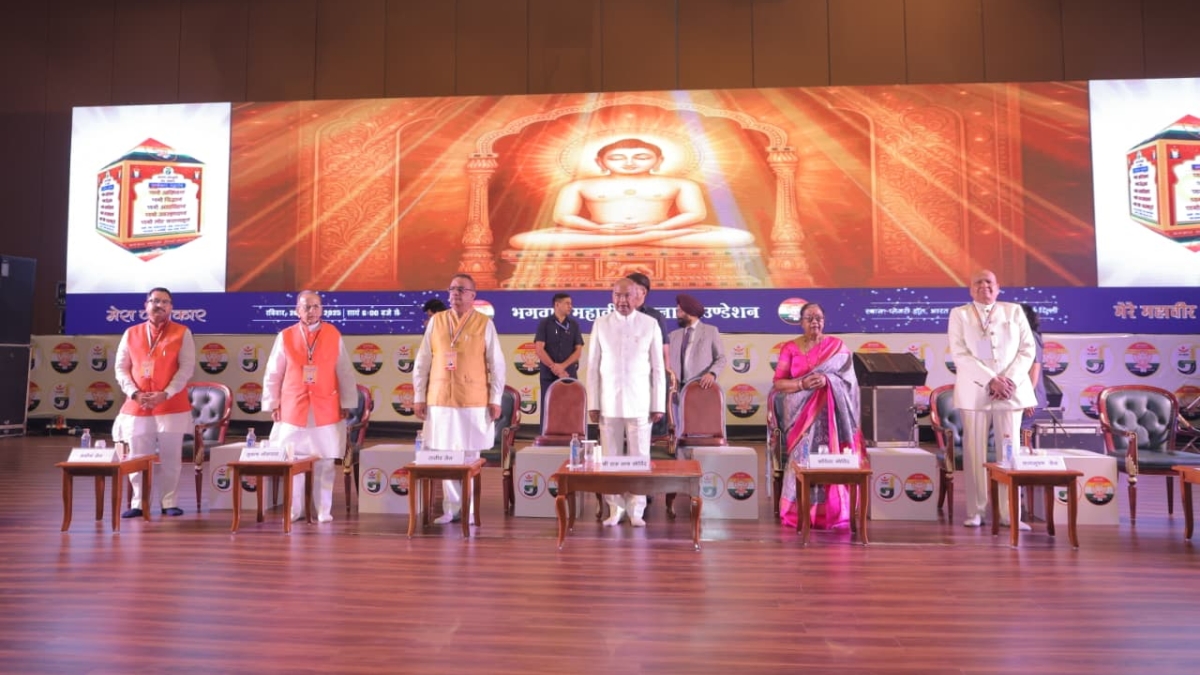
    While Haryana focused on trees, Gujarat focused on governance. The Department of Land Resources, Ministry of Rural Development, teamed with the Gujarat Revenue Department to host a two-day National Conference on October 3 and 4 at Mahatma Mandir, Gandhinagar.

    Chief Guest: Chief Minister Bhupendra Patel. Guest of Honor: Union Minister Shivraj Singh Chouhan. Other notable participants: Dr. Jayanti S. Ravi, Manoj Joshi, and Pankaj Joshi.

    Key conference topics included:

    • Modernizing revenue laws
    • Upgrading land records and urban registries
    • Re-engineering revenue court cases
    • Disaster management best practices
    • Resurvey efforts and human resource planning

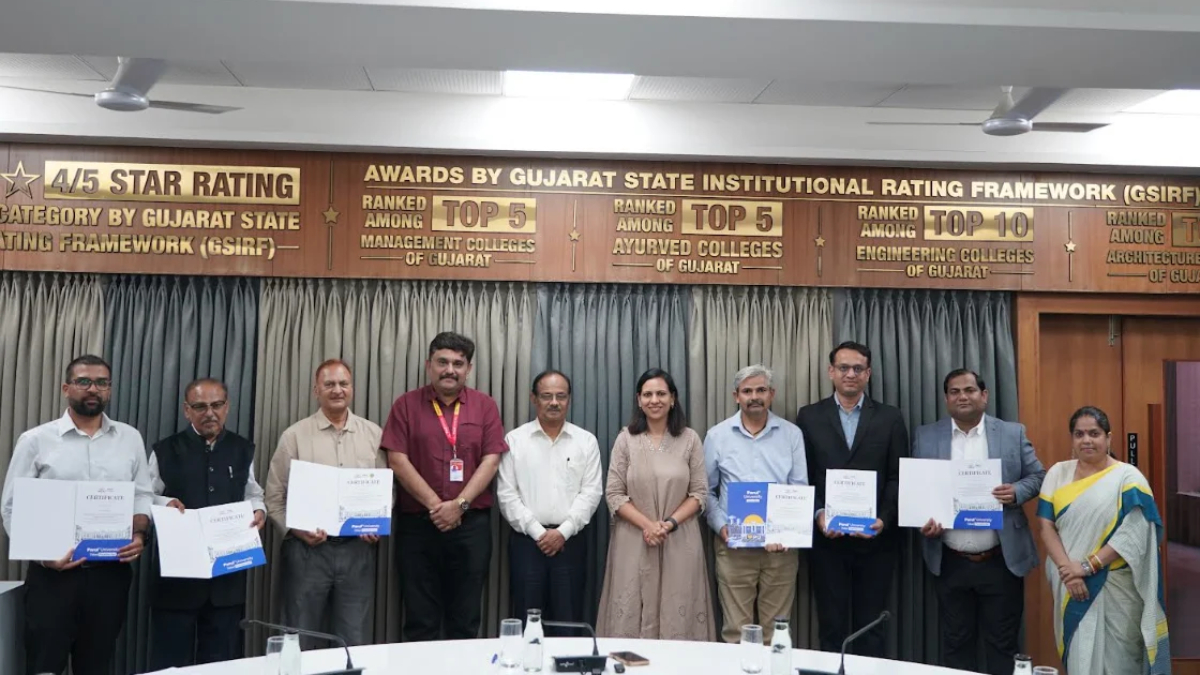
    The conference also saw the launch of the RO Diary Mobile Application, the inauguration of the Integrated Land Administration system, the distribution of SVAMITVA cards, safety kits for nomadic families, and MoU signings with academic institutions for establishing Centres of Excellence.

    Why These Moves Matter

    Namo Van Manesar is not just a tree-planting exercise. In industrializing Haryana, each sapling is a step against habitat loss, pollution, and civic apathy. It is visible, inclusive, and action-driven.

    Gandhinagar’s conference is more than meetings and speeches. Modern land administration is the backbone of disaster readiness, urban planning, and rural development. Launching apps and systems signals a government serious about implementation, not just discussion.

    In both cases, the message is clear: India wants tangible, measurable progress. One project breathes life into soil and wildlife. The other optimises the management of that land.

    Citizen and Official Engagement

    Both events had a strong human angle:

    • Manesar: school students planting trees, forest officers guiding, journalists reporting
    • Gandhinagar: officials and experts collaborating, sharing strategies, creating actionable plans

    Recognition of contributors reinforces participation and shows that public involvement is essential.

    The Context

    • Haryana: Namo Van provides a green buffer in rapidly industrializing zones and acts as a model for other urban areas.
    • Gujarat: Efficient land records and disaster management systems reduce disputes, improve rural development, and prepare communities for natural events.

    These events show a trend of government projects aiming to deliver visible results rather than just announcements.

    Takeaway

    Here is the blunt truth: these are small wins in a large country, but execution signals intent. From forests in Haryana to land systems in Gujarat, October 2025 is shaping up as a month of action, accountability, and citizen engagement.

    PNN News

  • RSS Centenary Celebrations: PM Modi Hails Century of Service

    RSS Centenary Celebrations: PM Modi Hails Century of Service

    New Delhi [India], October 1: A hundred years is a long time to prove a point. And the Rashtriya Swayamsevak Sangh (RSS) just pulled it off in front of the nation. At the grand centenary celebrations in the capital, Prime Minister Narendra Modi didn’t just attend, he stamped (literally) the Sangh’s century-long legacy with a commemorative coin and postage stamp. (RSS Centenary Celebrations)

    He called the RSS a “virtuous incarnation of India’s national consciousness.” That’s PM Modi-speak for: this organization has been in the trenches of India’s journey, weathering crises, building communities, and shaping the nation’s social muscle since 1925.

    RSS Centenary Celebrations: A Hundred Years in Uniform

    Founded during Navratri in 1925 by Dr. Keshav Baliram Hedgewar, the RSS has grown from a handful of men in khaki shorts to one of the world’s largest volunteer-driven movements. PM Modi, speaking at Delhi’s Dr. Ambedkar International Centre, reminded everyone that the Sangh isn’t just an outfit with daily drills, it’s a mindset.

    “The Sangh is not merely an organization, it is a flow of service, patriotism, and discipline that has touched every sphere of Indian life,” PM Modi said.

    From schools to relief camps, shakhas to service programs, the RSS has built a footprint so wide it’s hard to ignore.

    Stamp. Coin. Symbol. Legacy.

    The Government of India marked the centenary with two firsts that carry weight:

    • The ₹100 Commemorative Coin: Featuring Bharat Mata in Varad Mudra, saluted by swayamsevaks. This is the first time Bharat Mata appears on Indian currency. The symbolism is not lost, “Nation First” minted in metal.
    • The Special Stamp: A throwback to the 1963 Republic Day parade, when RSS swayamsevaks marched in uniform.

    PM Modi called them more than mementos. They are statements. The Sangh’s motto, Rashtraya Swaha, Idam Rashtraya, Idam Na Mama (For the Nation, Not for Me), now sits in the palm of every coin collector and philatelist.

    RSS as a River of Service

    If the RSS were a river, it would be the Ganga, branching, nourishing, and not always loved by everyone, but undeniably central. PM Modi painted the same picture:

    • Education: Vidya Bharati schools spread across the country.
    • Healthcare & Tribal Upliftment: Vanvasi Kalyan Ashram, Seva Bharati, clinics in remote corners.
    • Rural Empowerment: Agricultural and village initiatives keeping Bharat connected to its soil.
    • Women’s Empowerment: From cultural programs to welfare drives, a quieter but consistent thread.

    The Prime Minister boiled it down to one uncompromising principle: Nation First.

    The Shakha Effect

    If you want to understand the Sangh, you need to understand the shakha.

    Picture it: a field at dawn, men and boys in disciplined rows, sticks in hand, voices raised in unison. It looks simple. But that daily ritual of drills, debates, and discipline is where RSS volunteers are forged.

    PM Modi called the shakha a “sacrificial altar of character-building,” where selfishness gets burned off and replaced with collective responsibility. In Sangh lingo, it’s the transformation from “Me” to “We.”

    The Prime Minister outlined three pillars of this century-long model:

    1. Vision of nation-building
    2. Path of personal development
    3. Daily shakha as the method

    Sweat, Sacrifice, and Struggles

    Critics often forget one fact: the Sangh hasn’t been a spectator in India’s struggles. PM Modi reeled off a list:

    • Freedom Movement: Hedgewar and many swayamsevaks jailed.
    • Quit India, 1942: Atrocities faced by RSS workers in Chimur.
    • Partition, 1947: Relief camps for displaced families.
    • 1962 and 1971 Wars: Civil support for soldiers and refugee care.
    • Liberation of Hyderabad & Goa: RSS volunteers in the thick of it.
    • Emergency, 1975: Standing up when democracy was under lock and key.

    “Whether in times of war, natural disaster, or social upheaval, swayamsevaks have always been first responders,” PM Modi reminded.

    Firefighting in Real Time

    When India trembles, swayamsevaks show up. That’s been the pattern.

    • 1956 Gujarat Earthquake: Relief camps set up within hours.
    • 1984 Sikh Riots: RSS volunteers worked with Sikh families at a time when fear ran deep.
    • Floods from Punjab to Kerala: Food packets, rescue boats, on-ground muscle.
    • COVID-19 Pandemic: While most were locked inside, swayamsevaks delivered essentials, blood donations, and cremation support.

    Guruji Golwalkar once said: “To endure hardship to ease another’s suffering is the mark of a noble heart.” PM Modi quoted him to underline that this isn’t just ideology, it’s practice.

    Reform, Not Rhetoric

    The RSS has been branded with labels over the years, but PM Modi pointed to its reformist streak.

    • Social Equality: Gandhi himself, during a 1934 visit to Wardha, praised the Sangh for its spirit of equality
    • Untouchability: RSS leaders have long campaigned against caste discrimination.
    • One Well, One Temple, One Cremation Ground: The Current chief Mohan Bhagwat’s call for shared spaces is reshaping conversations in villages.

    Add tribal empowerment, Vanvasi Kalyan Ashram preserving traditions while building opportunity for 100 million tribal citizens, and you see a picture far bigger than the narrow labels.

    Panch Parivartan: Five Keys for India@2047

    Every century deserves a roadmap. PM Modi spotlighted the Sangh’s “Five Transformations” (Panch Parivartan) as guideposts for the next 25 years:

    1. Self-Awareness: Swadeshi, pride in roots.
    2. Social Harmony: End caste divides, strengthen unity.
    3. Family Enlightenment: Strong homes, empowered women, disciplined youth.
    4. Civic Discipline: Duties, respect for law, care for public spaces.
    5. Environmental Consciousness: Green energy, water conservation, balance with nature.

    This isn’t just RSS doctrine; it’s a checklist for India’s ambition of becoming a developed nation by 2047.

    Global Recognition, National Impact

    PM Modi wasn’t the first to tip his hat to the Sangh. Former Presidents A.P.J. Abdul Kalam and Pranab Mukherjee both acknowledged its discipline and service ethos.

    Yes, the RSS has faced bans, brickbats, and blame-games. Yet, here it is, marking 100 years with coins, stamps, and an undeniable national footprint.

    “The RSS has ignited pride, unity, and self-confidence in Indian society. It is not just an institution but a living current of national service,” PM Modi concluded.

    Legacy in Metal, Spirit in Motion

    Commemorative coins gather dust. Stamps fade in albums. But the Sangh’s centenary isn’t about collectables, it’s about credibility. A century of disciplined volunteers, countless relief operations, and steady social engineering.

    As India hurtles toward its 2047 dream, the RSS brand of service and discipline is still in play. Love it or loathe it, one fact is hard to deny: the Sangh has written itself into the script of India’s nation-building.

    PNN News

  • Rajhans Group Screens ‘Chalo Jeete Hain’ Film at HQ and Rajhans Cinemas Across India

    Rajhans Group Screens ‘Chalo Jeete Hain’ Film at HQ and Rajhans Cinemas Across India

    Surat (Gujarat) [India], October 1: Rajhans Cinemas turned Prime Minister Narendra Modi’s 75th birthday into more than a cake-cutting. They rolled out Chalo Jeete Hain nationwide, a short film on PM Modi’s early years that puts selflessness over spectacle.

    On September 17, marking PM Narendra Modi’s 75th birthday, the multiplex giant screened Chalo Jeete Hain across all its theatres.

    This wasn’t your usual weekend blockbuster. Chalo Jeete Hain is a short film built on PM Modi’s formative years, inspired by Swami Vivekananda’s words: “Only those truly live who live for others.”

    The film tracks a young Narendra wrestling with that line, trying to live by it. No high-octane chase scenes. No item songs. Just a story of purpose, grit, and service.

    Rajhans Group Chairman Jayesh B. Desai said.

    “We are honoured to celebrate the 75th birthday of our Hon’ble Prime Minister with this screening. His extraordinary journey, from humble beginnings to becoming a global leader, remains an enduring source of inspiration. Through this film, we want to nudge today’s generation toward compassion, dedication, and service,” Desai said.

    Back in Surat, the Rajhans family didn’t just sit back and watch box-office numbers. They hosted their own gathering, employees, department heads, reflections on leadership, and yes, cake. Because in India, no birthday is complete without cutting a cake and sharing sweets.

    The celebration stretched till September 24, 2025. To top it off, students at the screenings walked out with chocolates, specifically Hoppits. A small sugar rush to pair with the bigger takeaway: purpose.

    Youth left the halls with a lesson and a chocolate bar. That’s a smarter combo than most “youth-targeted” campaigns we’ve seen.

    Indian cinema has always carried more than just visuals. Mother India preached sacrifice. Lagaan sold us grit. Films here tend to carry values, not just VFX.

    Chalo Jeete Hain fits that tradition. It shows audiences, especially the young, that leadership doesn’t sprout overnight. It’s forged in small-town struggles, late-night questions, and relentless drive.

    For PM Modi, turning 75 is not just another milestone birthday. It’s a reminder of his political arc, rising from humble roots in Gujarat, hustling through decades of politics, and stepping into the role of a global statesman.

    Rajhans’ Bet on Values

    Sure, the easy play would be to pack houses with yet another rom-com or high-decibel action drama. But here, Rajhans doubled down on something else, branding with purpose.

    By tying PM Modi’s milestone to a film about values, they reaffirmed the bet that multiplexes can be more than Instagram check-ins. They can be modern temples of inspiration.

    India doesn’t lack screens or stories. What it often lacks is cinema that steps outside commercial formulas and still gets mass eyeballs. Chalo Jeete Hain reminds us that people will show up for narratives of selflessness too.

    For students, it was more than a free show. It was a nudge toward compassion in a culture increasingly obsessed with quick fame.

    For Rajhans, it was proof that even in an industry drowning in sequels and reboots, value-driven stories still have a place.

    Let’s zoom out. Bollywood and regional cinema alike have long been vehicles of cultural teaching. From mythological dramas to independence-era narratives, films have doubled up as moral classrooms.

    Chalo Jeete Hain falls neatly into that lineage. It’s not entertainment for distraction’s sake. It’s storytelling with intent.

    And that intent, service before self, echoes loud in India’s current climate.

    So what really happened here? A multiplex chain celebrated a Prime Minister’s birthday. But instead of a generic tribute, it used cinema to underline values.

    Audiences got something rare: a story about purpose, wrapped with a chocolate bar.

    Rajhans Cinemas got something too: a reputation burnished not just as a movie seller, but as a values messenger.

    In a country where entertainment often gets written off as shallow, this was a reminder that screens can preach just as much as they entertain.

  • Foreign diplomats connect with the soul of North Kolkata at Chaltabagan Durga Puja

    Foreign diplomats connect with the soul of North Kolkata at Chaltabagan Durga Puja

    Sundeep Bhutoria, Chairman, Chaltabagan Durga Puja, with diplomats and consular corps from Britain, France, Estonia, Guatemala, Germany, Italy, Sri Lanka and Ukraine

    Kolkata (West Bengal) [India], September 27: On the World Tourism Day, in a heartfelt celebration of heritage and community, the timeless lanes of North Kolkata witnessed a unique confluence of cultures today. The Chaltabagan Durga Puja pandal became a bridge between worlds as Ambassadors, High Commissioners and Consular corps from across the globe immersed themselves in the profound spirit of the festival, experiencing the fading, poetic charm of a bygone Kolkata.

    The delegation, representing a tapestry of nations including the United Kingdom, Estonia, France, Guatemala, Germany, Italy, Sri Lanka, and Ukraine, was welcomed by Mr Sundeep Bhutoria, Chairman of the Chaltabagan Durga Puja Committee. They were invited not merely as dignitaries, but as guests of honour to witness an intangible cultural heritage that Bengal has cherished for centuries.

    “The rhythm is engaging….it is a wonderful experience because it is inclusive. This is my first visit of Durga Puja but certainly not my last,” said Mr Antonio Enrico Bartoli, Ambassador of Italy in India.

    “This is such a great, beautiful and amazing experience that has exceeded all my expectations. I feel privileged to be here. The display in every pandal demonstrates dedication, love and pride of the people of Kolkata. I will cherish this unique experience all my life,” said Mr Omar Castaneda Solares, Ambassador of Guatemala in India.

    This year’s pandal, a work of art built around the dual themes of the “Evolution of Bengali Language” and ‘Mool’ (Roots), served as a poignant backdrop. It meticulously recreated the architectural soul of old North Kolkata—its heritage buildings, grand havelis, and intimate streetscapes—a sight that moved many diplomats to capture the moment with photographs and selfies. This year Chaltabagan Durga Puja won the Biswa Bangla Sharad Samman 2025 Award in the Sera Bhabna category.

    United Nations Information Centre, Director, Darrin Farrant, said, “This is once-in-a-lifetime experience. It’s so thrilling to be there in Kolkata.”

    “To walk from Shyambazar to Shobhabazar through these narrow, winding lanes is to traverse more than mere geography; it is a journey through the city’s soul,” reflected Mr Bhutoria. He spoke with a note of tender urgency about the neighbourhood’s changing identity. “The balconies and verandahs were not just architecture; they were the heart of the ‘rowak adda’ culture—the vibrant, informal conversations that forged our community bonds. As gentrification alters these streetscapes, we risk losing the very spaces that once defined our spirit.”

    “The initiative to invite the diplomatic corps was born from a desire to share this living archive with the world. “Chaltabagan Puja has always drawn foreign guests,” said Mr. Bhutoria. “This time, we thought, why not formally invite them to experience the heritage that UNESCO has recognised, and that we hold so dear in our hearts.”

    Founded in 1943 in the area historically known as ‘Lohapatty’ (the iron scrap neighbourhood), the Chaltabagan Durga Puja continues to be a guardian of tradition. For an evening, it successfully tugs at the heartstrings, reminding all who visit that while cities evolve, the roots of culture and community run deep, waiting to be discovered and embraced.

    If you object to the content of this press release, please notify us at pr.error.rectification@gmail.com. We will respond and rectify the situation within 24 hours.

  • FTA with EFTA to Power India’s Global Trade Momentum from 1st Oct 2025

    FTA with EFTA to Power India’s Global Trade Momentum from 1st Oct 2025

    New Delhi [India], September 27: India’s free trade deal with EFTA goes live in October 2025. Piyush Goyal says it’s just the start, India’s economy is flexing, and the world is lining up.

    India’s Big Play: FTA with EFTA

    Mark your calendars: October 1, 2025. That’s the day India’s Free Trade Agreement (FTA) with the European Free Trade Association (EFTA), Iceland, Liechtenstein, Norway, and Switzerland, takes effect. Commerce and Industry Minister Piyush Goyal dropped the news at the UP International Trade Show, and it landed like a thunderclap.

    This isn’t just paperwork. It’s India telling the developed world: the shop is open, and the shelves are stacked. After years of negotiation, the deal was wrapped up in March 2024. Now it’s execution time.

    Why It Matters?

    India already locked FTAs with the UAE, Australia, and the UK. EFTA is the next domino. Each pact isn’t just about tariffs; it’s about credibility. Global heavyweights now line up to deal with India instead of tiptoeing around. Goyal put it bluntly: developed nations are “keen” to sign with India. Translation? The tables have turned.

    Who’s Next in Line?

    Forget waiting lists at fancy restaurants. India’s FTA guest list is hotter. Talks are rolling with the US, EU, New Zealand, Oman, Peru, and Chile. Qatar and Bahrain want in. Even the Eurasia bloc has finalised its Terms of Reference. Goyal’s subtext was clear: India is no longer knocking at the door. Others are.

    GST Reform: The Shockwave

    Goyal didn’t just stop at FTAs. He called the latest GST reform a “gift” from Prime Minister Narendra Modi, timed for Navaratri no less. His words? “22 September will be written in golden letters in history.” That’s not shy language. He called it the biggest reform since Independence, with an impact lasting decades.

    For a country once infamous for tax chaos, simplifying GST is like upgrading from dial-up to 5G. Businesses know it. Consumers will feel it. And the signal to investors? Crystal clear.

    India’s Economic Flex

    Let’s do the scoreboard check. India’s foreign exchange reserves: $700 billion. Inflation: 2%, the lowest in a decade. GDP growth: 7.8% in the last quarter. Banking sector: solid. Interest rates: easing. Goyal reminded the crowd that India went from “fragile” in 2014 to the world’s 4th largest economy. Next stop? Third place, with a $5 trillion economy in the next two years.

    India is sprinting fast.

    Regional Focus: East and North-East

    Growth isn’t just for Mumbai and Delhi. Goyal said the Union Government is zooming in on the North-Eastern and Eastern states. The plan: inclusive growth with states as partners, not spectators. It’s a message that matters, especially in regions often left behind in the big India growth story.

    UP’s Transformation Story

    The UP International Trade Show wasn’t just a backdrop. It was proof. Goyal called out Uttar Pradesh’s “leaps and bounds” in growth. The state is the first in India with a dedicated Export Promotion Ministry. That’s not symbolism, it’s infrastructure for ambition.

    From expressways to airports, multimodal logistics hubs to container depots, UP is rewriting its economic playbook. The dedicated freight corridor now runs like a spine through the state, and inland waterways are being built into arteries of trade.

    ODOP: One District, One Juggernaut

    The One District, One Product (ODOP) initiative has gone national, now hitting over 750 districts. Over 1,200 products are under the spotlight, from khadi and cotton to cottage industry gems. Both the state and the Centre are pushing them into domestic and global markets.

    Unity Malls are next on the list. Each state will get one to showcase local products. Uttar Pradesh will house three: Lucknow, Agra, and Varanasi. Think of them as trade showrooms with permanent addresses.

    This isn’t just policy. It’s branding, scale, and distribution, rolled into one.

    Vocal for Local Goes Global

    Goyal’s punchline was a throwback to Gandhian swadeshi, but with modern flair: “Every product carries the blood and toil of Indian workers.” He urged Indians to buy local, but the vibe wasn’t nostalgia; it was ambition.

    “Vocal for Local, Local Goes Global” wasn’t a slogan. It was a commitment.

    MSMEs and Women Entrepreneurs in the Spotlight

    The UP Trade Show gave centre stage to MSMEs, women-led enterprises, and export-driven units. These aren’t footnotes; they’re the backbone of India’s trade surge. With GST reforms, FTA openings, and infrastructure upgrades, they now get the runway to scale.

    Step back, and the pieces connect:

    • FTAs stacking up.
    • GST shockwave reform.
    • FX reserves hitting record highs.
    • GDP racing ahead.
    • Infrastructure projects reshaping states.
    • Local products elevated to global stages.

    The message is blunt: India isn’t playing catch-up anymore. It’s leading.

    PNN News

  • Ajit Ravi’s 100 Life Challenge: Redefining Social Responsibility

    Ajit Ravi’s 100 Life Challenge: Redefining Social Responsibility

    Kochi (Kerala) [India], September 27: When empty social gestures often overshadow genuine compassion, Ajit Ravi chose a different path. In 2015, while serving as Superintendent of the Fire and Safety Department at Cochin International Airport Limited, he launched the 100 Life Challenge — a mission to support 100 lives through unwavering personal sacrifice. What began as a project to fund critical heart surgeries for the underprivileged grew into a wider initiative covering medical aid, education, and essential services.

    For 100 consecutive months, Ajit donated 100% of his post-tax salary for eight hours of work to charity. Even during the turbulent pandemic years, when salaries were uncertain, he ensured that his contributions never stopped. Rooted in the principle of Individual Social Responsibility (ISR), the challenge highlights how personal action can create lasting social impact.

    Yet, despite its noble cause, the challenge has remained his alone. Ajit notes that in a world where social service is often linked to fame or publicity, true charity rarely finds followers. His story stands as a reminder that real change comes from sacrifice, not spotlight.

    If you object to the content of this press release, please notify us at pr.error.rectification@gmail.com. We will respond and rectify the situation within 24 hours.

  • World Tourism Day 2025 India – Bold Step to Sustainable Growth

    World Tourism Day 2025 India – Bold Step to Sustainable Growth

    New Delhi [India], September 27: India didn’t just mark World Tourism Day 2025; it flexed. From global tie-ups with Netflix to digital overhauls, the Ministry of Tourism put sustainability front and center, aiming straight for Viksit Bharat 2047.

    Tourism as a Power Play

    World Tourism Day 2025 wasn’t a token ribbon-cutting. Delhi’s event, themed “Tourism and Sustainable Transformation”, brought in heavy hitters across government, academia, and industry. The clear message: India wants to play offense, not defense, in global tourism.

    Chief Guest Shri Suman Bery, Vice Chairperson of NITI Aayog, didn’t mince words. “Tourism is not just about leisure; it is a powerful instrument for economic transformation, environmental stewardship, and social inclusion.” Translation: stop treating tourism like a hobby. It’s business, policy, and soft power rolled into one.

    Sustainability as Non-Negotiable

    Bery drove home the point that India cannot afford “greenwashing.” Sustainability can’t sit in the margins of policy; it has to be the core strategy. That means convergence: transport, urban development, digital tech, and infrastructure must move in sync.

    If India nails seamless connectivity, road, rail, air, and waterways, it can deflate the pressure on overcrowded sites like Jaipur and Goa, while lighting up hidden gems from the Northeast valleys to Ladakh. This isn’t just tourism; it’s regional development with style.

    Minister’s Pitch: From Schemes to Groundwork

    Minister of State for Tourism, Petroleum & Natural Gas, Shri Suresh Gopi, turned up the volume. He spotlighted Swadesh Darshan 2.0 and PRASHAD as India’s eco-tourism engines. Add to that revamped digital platforms and a push for village tourism, and the message was clear: India is betting big on inclusive, tech-driven travel.

    Connectivity was his drumbeat. Airports, rail, highways, and even inland waterways are being redesigned to make travel seamless. Initiatives like UDAN aren’t just about cheap tickets; they’re the arteries feeding new tourist circuits. Better last-mile links mean no more “great idea, bad logistics.”

    Global Partnerships with Local Punch

    This wasn’t just about speeches. The Ministry locked in MoUs with Netflix, Atithi Foundation, and major OTAs (Online Travel Agencies).

    • Netflix tie-up: Expect Indian destinations on global screens, wrapped in cinematic storytelling. Soft power, meet marketing.
    • Atithi Foundation & OTAs: These partnerships will drive data-backed tourism policy, post-travel feedback loops, and capacity building for states. In short: fewer shots in the dark, more precision play.

    Digital Reinvention: PMIS and Data

    India’s tourism machine isn’t staying analogue. The Ministry launched the Project Management Information System (PMIS), a real-time digital tracker for infrastructure projects. Think of it as a control tower, transparent, efficient, and unflinchingly data-driven.

    The 66th edition of the India Tourism Data Compendium also dropped, confirming India’s climb: ranked 20th globally for international tourist arrivals. Domestic travel is booming too, fueling jobs and GDP.

    And for homestay owners? A new booklet, “Guide to MUDRA Loans for Homestays,” demystifies loan applications via the Jan Samarth portal. A rare moment where government paperwork may actually feel user-friendly.

    Case Studies, Tech, and Big Spectacle

    Tourism is about experiences, and India is showing off. High-level panels dissected connectivity with voices from aviation, shipping, rail, and road ministries. Case studies like Mahakumbh 2025 and the Statue of Unity showed scale and execution.

    Tech wasn’t sidelined either. Discussions on AI, AR/VR, and digital twins weren’t just buzzwords; they’re shaping how India plans destinations and curates visitor experiences. Imagine previewing a temple town in VR before you even book the ticket. That’s not sci-fi anymore.

    India’s Tourism Ambition: Viksit Bharat 2047

    The elephant in the room was ambition. The celebration wasn’t just about 2025; it was about 2047. By India’s centenary of independence, the tourism sector is being cast as green, inclusive, and unapologetically future-ready.

    The Vice Chairperson of NITI Aayog summed it up: communities must move from being “participants” to “beneficiaries.” In blunt terms, local people must win from tourism, not just watch from the sidelines.

    Why World Tourism Day 2025 Matters for India

    Here’s the kicker: tourism isn’t just vacations and Instagram reels. It’s jobs, foreign exchange, regional uplift, and cultural branding. India’s vision to climb from 20th place globally isn’t vanity; it’s economics with cultural swagger.

    For a country where every state feels like a different country, tourism is India’s most underrated strategic weapon. Sustainable tourism could be the bridge between preserving heritage and building highways.

    PNN News

  • India’s Monumental “Swadeshi” 4G Ascends | Global Elite Joined in Telecom Feat

    India’s Monumental “Swadeshi” 4G Ascends | Global Elite Joined in Telecom Feat

    In a historic development to prove the technological capability and the efforts put in by a country to be self-reliant, Prime Minister Narendra Modi today launched  Bharat Sanchar Nigam Limited (BSNL) 100 per cent indigenous “Swadeshi” BSNL 4G network stack. This was a monumental milestone that places India in the list of a mere five countries in the world, including China, Denmark, Sweden, and South Korea, that have the entire end-to-end capability to design, develop, and bring into deployment a homegrown 4G mobile telecommunication infrastructure.

    The introduction, which coincided with the commissioning of more than 97,500 new mobile 4G towers around the country, is a new step in digital inclusion. The Swadeshi 4G stack is a robust creation of a joint ecosystem of government and corporate organisations that were created all in India, a potent demonstration of the leadership of the Swadeshi vision of Atmanirbhar Bharat. This project not only promises the future communications infrastructure of India but also enables the nation to become a producer of high-standard, secure and affordable telecom infrastructure in the entire world.

    The Indigenous Technological Blueprint: A Collaborative Triumph

    The unprecedented integration of the best technology institutions and companies in India has led to the success of the Swadeshi 4G network. The integrated platform is called the Bharat Telecom Stack, which is based on three pillars:

    Core Network: This is the complicated switching and managing layer, which was entirely developed by the Centre of Dialogue of Telematics (C-DOT). This Core Application is the head of the network and is an application that offers security, scalability and control of the voice and data services.

    Radio Access Network (RAN): Tejas Networks was in charge of designing and producing the vital hardware and software of the base stations and radio units.

    Systems Integration / Deployment: The enormous, mission-mode deployment to all operational locations has been coordinated and controlled by the Tata Consultancy Services (TCS), which is the lead member of the consortium. TCS used its latest Cognitive Network Operations (TCS CNOPS™) platform, which guarantees the ability to manage the network in real time and 24/7, as well as leverages advanced data processing assurance to streamline service quality in the multi-vendor, multi-technology setting.

    It is a fully cloud-native, software-defined architecture, not just a substitute for imported equipment, but a leapfrog technology that can be upgraded to 5G in a seamless, non-disruptive software upgrade in just a few months.

    Joining the Elite Global Telecom Ranks

    Until recently, end-to-end telecom equipment was supplied globally by companies based in a very few countries. Through a successful implementation of its own indigenous stack, India has already attained real Digital Sovereignty and ensured its critical communications backbone is resistant to vulnerabilities in the global supply chain.

    Union Minister of Communications Jyotiraditya Scindia pointed to the historical importance: It is a day of great national pride. The fifth nation globally to have the capacity to design and manufacture its own core telecoms equipment is now India, a nation that is in the same league as telecom giants such as Denmark, Sweden, South Korea, and China. This action goes past technological progress, it is a national strategic move that enhances our economic and physical safety.

    Being able to own the whole technology stack, including both silicon design and software code, enables India to design the network to exactly match its geographical and security needs, as well as to meet international 3GPP standards of interoperability. This enables the country to be a self-sufficient and secure technological supply chain in terms of external pressure and predisposes India as an authentic global provider in the currently fast-changing telecom equipment market.

    Massive Scale and Transformative Impact on Rural India

    The extent of such a deployment has never been witnessed. The Prime Minister ordered 97,500 additional mobile 4G towers to be established at a cost of which it is estimated that it cost 37,000 crores to be deployed, and connected the final mile. Amongst them, more than 92,600 locations are using the newly revealed indigenous technology.

    One of the priorities of this rollout is the Digital Bharat Nidhi program, which specifically covers the installation of connectivity in over 26,700 villages that had no connectivity until now, located in remote areas, border areas, and sensitive areas. This growth is expected to yield more than 20 million new subscribers to the digital platform and close at last the rural-urban digital divide.

    The accessibility of 4G internet in the regions will create a socio-economic development tsunami:

    E-Governance: The provision of direct government services, pensions, and welfare schemes.

    Telemedicine: Remote patients and specialist doctors can meet with video consultation, changing the access to healthcare.

    Education: Transforming the rural schools by allowing students to take online courses and use digital educational materials.

    Digital Payments: enabling small businesses and farmers to use UPI and real-time market information.

    This massive implementation is a massive success of the Atmanirbhar Bharat program that proved that being self-reliant was equal to being globally competitive and equal to being helpful to the masses.

    The Path to Global 6G Leadership

    In the future, the native 4G stack is the stepping stone of the next generation of wireless communication in India. It has been specifically set to be 5G-compatible and contains a number of eco-friendly features, including the solar-powered towers, which form one of the largest networks of green telecommunication in the world.

    The Communications Minister continued, saying that we were followers in 4G, we are part of the 5G developments, and we are determined to be the leaders of the 6G. We have already been laying the groundwork, and we are aiming to own 10 per cent of the global 6G patents by 2030. Such a Swadeshi 4G success confirms the research, engineering, and deployment paradigm of India, so such a goal in the future is fully achievable.

    The swadeshi 4G network launch is not merely a commercial introduction, but a statement of Indian technical autonomy, digital connectivity and their rise as a worldwide player not only in the consumption of technology, but also in production and exports.

    About BSNL
    Bharat Sanchar Nigam Limited (BSNL) is a state-owned telecommunications company and the largest fixed-line service provider and fourth-largest mobile telephony provider in India. BSNL is determined to close the digital divide and, as a result, it is situated at the centre of bridging rural and remote regions of the country.

  • World Food India 2025: INR 1 Lakh Cr Deals Put India on Global Plate

    World Food India 2025: INR 1 Lakh Cr Deals Put India on Global Plate

    New Delhi [India], September 27: India just reminded the world who’s boss in food. At World Food India 2025, over ₹1 lakh crore in MoUs were signed in two days. Numbers like this don’t lie. Ambition? Check. Scale? Check. Global leadership? Absolutely.

    World Food India - Piyush Goyal - Minister of Commerce and Industry of India - PNN

    PM Modi Declares India the Global Food Leader at World Food India 2025

    On 25th September, Prime Minister Narendra Modi inaugurated the fourth edition of World Food India at Bharat Mandapam, New Delhi. His message was blunt: this summit isn’t a networking event. It’s a statement.

    “World Food India has emerged as the event of context, content, and creativity. India’s unique strengths, its diversity, demand, and scale give it a decisive competitive edge in the global food economy,” he said.

    World Food India - Union Minister Chirag Paswan

    PM Modi toured the exhibition pavilion, inspecting innovations in nutrition, healthier packaging, and reduced oil consumption. Alongside him were Deputy PM of Russia Dmitry Patrushev, Union Ministers Chirag Paswan and Prataprao Jadhav, signaling that this wasn’t just domestic fanfare; it was a global stage.

    The Prime Minister also reminded attendees that whenever the world faces challenges, India steps up. Global food security is not a buzzword here; it’s a strategic commitment.

    Day One: ₹76,000 Crore MoUs Signal Serious Business

    MoFPI wasted no time. Day one of the summit saw MoUs worth ₹76,000 crore signed with top domestic and international companies. Names like Britannia, PepsiCo, AMUL, ITC, Nestlé, Mondelez, Tata Consumer Products, Coca-Cola, and Marico weren’t just attending, they were investing.

    Investments spanned beverages, dairy, and confectionery, and covered states from Gujarat, Maharashtra, and Uttar Pradesh to Andhra Pradesh, Telangana, Karnataka, Punjab, West Bengal, and the North-East. If you thought food processing in India was regional, think again. This was nationwide.

    Nitin Gadkari, co-chair of the CEO roundtable and Minister of Road Transport & Highways, stressed that Atmanirbhar Bharat depends on agro-processing growing its share in GDP. Paswan assured industry leaders he would act as a bridge between government and industry. The CEOs seemed cautiously optimistic.

    Bottom line: India isn’t asking for investment. India is commanding it.

    CEOs and Policymakers Take the Stage

    The summit’s first day also included a high-level CEO roundtable with industry heavyweights sharing insights on growth, innovation, and global partnerships. Key discussions included:

    • Scaling agro-processing to meet domestic and export demand
    • Nutrition-led innovations
    • Plant-based and specialty food segments
    • Reducing environmental footprint while expanding production

    Industry leaders were candid. “If you bet on India’s food economy, the odds are stacked in your favor,” one executive remarked.

    The government wasn’t just observing. Ministers Ravneet Singh and Chirag Paswan actively engaged, signaling that policy and business aren’t running in parallel; they’re intertwined.

    Knowledge Sessions: Innovation Meets Strategy

    Over 25 knowledge sessions ran across two days, featuring states, ministries, and international participants. Highlights included:

    • Manipur showcased rural innovation in food processing
    • Russia shared expertise on agro-tech collaboration
    • Ministry of Rural Development, DPIIT, Department of Animal Husbandry, APEDA, and the Ministry of Agriculture & Farmers’ Welfare hosted sessions
    • Key topics: pet food, nutraceuticals, plant-based foods, alcoholic beverages, specialty foods

    This wasn’t a lecture series. It was a playbook for scaling India’s food economy globally.

    Day Two: ₹25,000 Crore More and Diplomacy

    The second day wasn’t just a repeat. Twenty-one companies signed MoUs worth ₹25,000 crore, taking the two-day total past ₹1 lakh crore.

    Sessions focused on:

    • Sustainability
    • Technology adoption
    • Investment opportunities
    • International partnerships

    High-level government-to-government meetings with Russia and Portugal strengthened bilateral collaboration in agriculture and food processing.

    The message was loud and clear: India is investment-ready, innovation-driven, and expects the global food industry to keep pace.

    World Food India - Chirag Paswan PNN

    Partner States and International Participation

    States like Uttar Pradesh, Gujarat, Punjab, Jharkhand, and Bihar hosted partner sessions, while countries like New Zealand, Vietnam, Japan, and Russia shared international insights.

    India’s food economy isn’t just domestic. This summit showed the world that collaboration, knowledge sharing, and tech transfer are actively invited.

    Meanwhile, the 3rd Global Food Regulators Summit by FSSAI ran alongside, focusing on harmonization of global food safety standards. The 24th India International Seafood Show (IISS) showcased India’s growing seafood export potential, linking domestic production to international markets.

    State-Wise and Sector Highlights

    • Gujarat: beverages and dairy innovation
    • Maharashtra: confectionery and processed foods
    • Uttar Pradesh: integrated agro-processing clusters
    • Telangana & Karnataka: tech-driven food startups
    • North-East: specialty crops and organic products

    This wasn’t a token representation. Every region brought scale, strategy, and actionable investment plans.

    Fact: India’s food industry is now a mosaic of regional strengths converging into a global powerhouse.

    The Government’s Role: Policy Meets Action

    Ministers Gadkari, Paswan, and Ravneet Singh made it clear: the government is not just a facilitator, it’s a co-strategist. Policies are aligned to encourage:

    • Agro-processing growth
    • Nutrition-driven product lines
    • Investment in plant-based and specialty foods
    • Export readiness and global collaboration

    By bridging CEOs, startups, and policymakers, India is making it impossible to ignore its food market.

    World Food India PNN

    India’s Food Future: Nutrition Security, Global Leadership

    World Food India 2025 wasn’t a vanity show. The summit sent three messages to global players:

    1. Invest now, India is ready.
    2. Innovate constantly, the market demands better nutrition, sustainability, and tech adoption.
    3. Collaborate globally, from Russia to Portugal, India is open for serious partnerships.

    The shift is clear: India is moving from food security to nutrition security. Production alone isn’t enough; health-conscious, innovative food products are the future.

    If you’re still thinking of India as a market for volume sales only, you’re behind.

    Key Takeaways

    • ₹1 lakh crore in MoUs in two days
    • Global CEOs and regulators actively participating
    • 25+ knowledge sessions, multiple international events
    • Strong state and sector representation
    • Government policies aligned with the Atmanirbhar Bharat vision
    • India positioning itself as the global food basket of the future

    This summit was a strategic declaration:
    India is leading, investing, innovating, and exporting on a global scale.

    PNN News

  • BIG FM Partners with Paralympic Committee of India for IndianOil New Delhi 2025 World Para Athletics Championships

    BIG FM Partners with Paralympic Committee of India for IndianOil New Delhi 2025 World Para Athletics Championships

    Mumbai (Maharashtra) [India], September 27: BIG FM, one of India’s largest radio networks, has announced its association as the Official Radio Partner of the IndianOil New Delhi 2025 World Para Athletics Championships. The prestigious event is scheduled to be held at the Jawaharlal Nehru Stadium from 27 September to 5 October 2025.

    Organized by the Paralympic Committee of India (PCI), the championships mark the first time this global para-athletics event is hosted in India, bringing together over 2,500 para-athletes from around the world. This landmark event underscores India’s commitment to inclusivity and sporting excellence.

    Through this partnership, BIG FM will leverage its extensive reach across metros and regional markets to build excitement, raise awareness, and spotlight the inspiring journeys of para-athletes participating in the championships. The radio network will roll out special segments, athlete interviews, and engaging listener initiatives to bring fans closer to the action.

    Speaking on the partnership, Sunil Kumaran and designation, CEO, BIG FM at BIG FM, said: “We are proud to partner with the Paralympic Committee of India for this historic championship. BIG FM has always believed in celebrating real heroes and impactful stories, and this association allows us to amplify the journeys of extraordinary para-athletes to millions of listeners across India.”

    Devendra Jhajharia, President of the Paralympic Committee of India, added:

    “The IndianOil New Delhi 2025 World Para Athletics Championships are not just about competition, but about changing perceptions and inspiring the next generation. BIG FM’s support as Radio Partner will help us reach households nationwide and ensure these stories resonate far and wide.”

    With this partnership, BIG FM reinforces its commitment to championing positive change and inclusivity through entertainment, while supporting one of the most significant sporting events in India’s history.

    If you object to the content of this press release, please notify us at pr.error.rectification@gmail.com. We will respond and rectify the situation within 24 hours.