Tag: national

  • PM Modi I-Day Address Made Simple: 5 Promises and Diwali Tax Break

    PM Modi I-Day Address Made Simple: 5 Promises and Diwali Tax Break

    New Delhi [India], August 15: On India’s 79th Independence Day, PM Modi spoke boldly from the Red Fort. He blended big goals with small, everyday benefits. The message was this: rules will get simpler, jobs will be pushed, India will make more things at home, and people should feel the change in their daily lives. If you want the long list in one short line, here it is: tax relief for many, Diwali GST changes, a chip by year’s end, big energy and defence plans, and a jobs scheme for millions. Now, let us walk through the main points in detail.

    01 Rules Made Easier, Money Left in Your Pocket

    The Prime Minister started with the basics. The government says it has removed more than 40,000 needless compliances and repealed over 1,500 old laws. In the last Parliament session, about 280 more provisions were taken out. What that means for us is fewer forms, less paperwork and simpler government work. He also talked about faceless income tax assessments, so the process is fairer and less scary.

    A headline many people will notice is the tax relief. People earning up to ₹12 lakh a year will pay no income tax under the new rules. That is likely to change monthly budgets for many families.

    02 Small Businesses and Diwali GST Relief

    PM Modi made a direct promise to shopkeepers, small businesses and neighbourhood vendors. A Task Force for Next-Generation Reforms will look at all economic rules and suggest cuts in compliance costs for startups and MSMEs. In easy words, the government wants it to be easier to start and run a small business. For shoppers and households, there is a timeline to watch.

    Next-Generation GST reforms are coming by Diwali and aim to lower taxes on daily-use items. He called it a Diwali gift to the common man. You could say it is meant to put a little extra money back into pockets just in time for the festival season.

    03 Tech, Manufacturing and Challenges for Youth

    There were big promises for technology and manufacturing! By the end of this year, India will roll out its first Made-in-India semiconductor chip. That is a big deal because chips run everything from phones to cars, and the world pays close attention to who makes them.

    PM Modi also urged young engineers and scientists to try building jet engines in India, pointing to past successes like vaccine manufacturing and UPI payments as examples of what India can do when it focuses. On space, he mentioned growing capability and startups. He named Group Captain Shubhanshu Shukla as an example of homegrown talent and said plans are on the table for an Indian space station.

    04 Energy, Minerals and Defence: Bigger, Cleaner, Safer

    Energy security was another clear theme. The government is working on 10 new nuclear reactors and aims to increase nuclear power capacity more than ten times by 2047. There is also a National Deepwater Exploration Mission to look for resources under the ocean and a National Critical Minerals Mission to explore 1,200 sites for minerals needed by industry and defence. Modi added that India has already met the target of 50% clean energy by 2025.

    On defence, he pointed to Operation Sindoor as proof of growing self-reliance and launched Mission Sudarshan Chakra to strengthen offensive capabilities. The message is that India will rely more on its own technology and resources.

    05 Jobs, Demography and Health: People First

    A major promise was about jobs. The PM Viksit Bharat Rozgar Yojana is a ₹1 lakh crore scheme that will give ₹15,000 to each newly employed youth and aims to help three crore young people. That is meant to turn some of the economic talk into real jobs.

    PM Modi also announced a High-Powered Demography Mission to deal with population issues in border areas caused by infiltration and illegal migration. On health, he urged more domestic research and development in medicines, pointing to India’s role as the pharmacy of the world during the COVID crisis. The call was to make more medicines and medical technology in India for Indians and for the world.

    Summary
    So what should a regular person expect? Short answer: a mix of small wins and long-term projects. In the near term, we will notice simpler paperwork and possibly lower GST on some everyday items by Diwali. If you earn up to ₹12 lakh a year, your tax bill could be zero under the new framework. For students and young workers, there is a clear push to create jobs and new technology work. For shopkeepers, the Vocal for Local push means a push to buy and sell more Made-in-India products. The bigger projects like chips, reactors and deepwater missions will take longer but are meant to secure jobs and resources down the road.

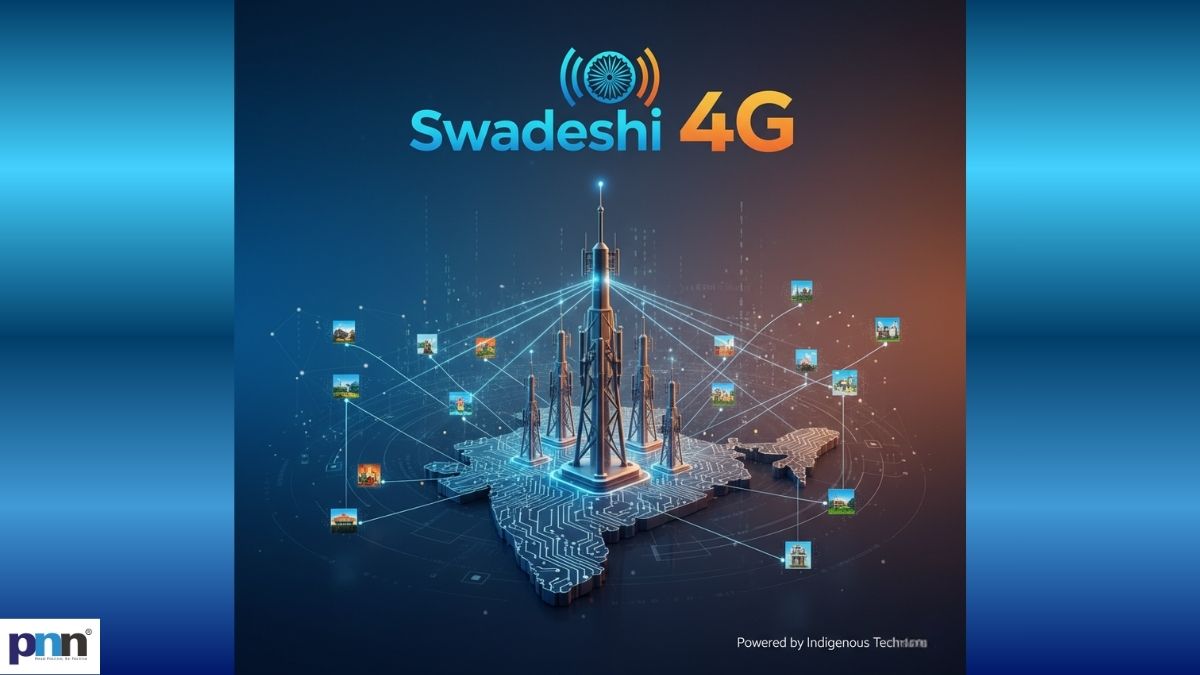
    PM Modi urged shopkeepers to put up Swadeshi boards and asked citizens to choose Indian-made goods out of pride, not compulsion.

    Full Speech

    PM Modi ended with a simple idea: do not keep measuring where others are. Extend your own line. In other words, focus on building capability at home and making the change visible for citizens. Some promises will arrive quickly, others will take a few years. The test will be delivery.

    For now, the tone is clear. The government wants reforms that affect daily life, and it wants to back them with big projects that make India less dependent on others. Whether you watch closely or wait to see, the speech was meant to say that independence now must mean the power to make, to secure and to employ our own people.

    PNN News

  • From Quiet Towns to Global Chip Hubs: India’s Rs 4,600 Crore Semiconductor Boost

    From Quiet Towns to Global Chip Hubs: India’s Rs 4,600 Crore Semiconductor Boost

    New Delhi [India], August 12: Bhubaneswar’s Info Valley isn’t exactly Silicon Valley. At least, not yet. The loudest noise on a humid Tuesday afternoon comes from a tea stall where the owner argues with a customer about India cricket scores while fanning his coals. But somewhere a thousand kilometres away in New Delhi, the Union Cabinet, led by Prime Minister Narendra Modi, has just decided that this quiet patch of Odisha will soon hum with the world’s most advanced semiconductor technology. Price tag? Rs 4,600 crore. Mood? Somewhere between “let’s get this done” and “finally, we’re in the big leagues.”

    India’s Semiconductor Mission Finally Picks Up Speed

    India’s semiconductor mission has been dragging its feet for years, plenty of talk, but little concrete action. Now it’s wearing a hard hat. These four new projects bring the total to ten under the India Semiconductor Mission, spread across six states, with an investment pile of Rs 1.60 lakh crore. Think of it as going from small-town cricket to the IPL, except the players here are wafers, substrates, and MOSFETs.

    Odisha Scores Big with Two High-Tech Facilities

    Odisha gets the real jackpot: two projects in the same industrial park. First, SiCSem Private Limited joins hands with the UK’s Clas-SiC Wafer Fab Ltd. to launch India’s first commercial compound semiconductor fab. Translation? They’ll be working with Silicon Carbide, the tough cousin of silicon that doesn’t melt under pressure, literally. Sixty thousand wafers and 96 million packaged units a year will roll out for use in EV chargers, railways, solar inverters, defence systems, you name it.

    Just down the road, the Americans are coming. USA’s 3D Glass Solutions Inc. will set up a plant making advanced semiconductor packaging so complex it sounds like sci-fi: glass interposers, silicon bridges, 3D Heterogeneous Integration modules. Output? About 70,000 glass panel substrates and 50 million assembled units a year. This stuff will end up in AI servers, photonics, automotive tech, and, yes, the kind of defence systems that make our neighbours nervous.

    Punjab Powers Up Mohali’s Electronics Legacy

    Mohali, Punjab, doesn’t need to reinvent itself; it’s already got an electronics pedigree. Continental Device India Private Limited is simply turning up the volume, producing high-power devices like MOSFETs, IGBTs, and Schottky diodes. The factory will pump out over 158 million units annually, most destined for EV charging infrastructure, renewable energy systems, and heavy-duty industrial use.

    Andhra Pradesh Joins the Chipmaking Race

    Meanwhile, Andhra Pradesh is stepping into the race with Advanced System in Package Technologies, teaming up with South Korea’s APACT Co. Ltd. Their focus is chip packaging for everything from mobile phones to cars, with a target of 96 million units a year. Not bad for a state better known for its coastline and biryani.

    Building the People Behind the Machines

    Of course, you can’t just buy fancy machines and expect them to run themselves. The government’s been busy training the next batch of chip whisperers; 278 academic institutions, 72 start-ups, and over 60,000 students have already been plugged into semiconductor design programmes. When these plants light up, they won’t just have cleanrooms; they’ll have people who know exactly what they’re doing.

    For now, the dust in Bhubaneswar, Mohali, and Andhra Pradesh is from construction, not production. But give it a few years, and these places might just make the chips that power your phone, your car, and maybe even your country’s defence shield. And who knows, somewhere in the middle of all that high-tech wizardry, that tea stall in Info Valley might start serving cappuccinos. Perhaps by then, the locals will swap cricket debates for chip specs, and visitors will speak of Bhubaneswar, Mohali, and Andhra Pradesh not just as cities, but as milestones in India’s rise as a true technology powerhouse.

    PNN News

  • Mega Tinkering Day 2025 Turned 4.7 Lakh Indian Students into Inventors

    Mega Tinkering Day 2025 Turned 4.7 Lakh Indian Students into Inventors

    New Delhi [India], August 12: Only in India could a vacuum cleaner become the hero of the day. On August 12, 2025, classrooms from the wind-whipped mountains of Leh to the coconut-scented breezes of Kanyakumari were buzzing, quite literally. In one school, a bottle-and-motor contraption wheezed to life, earning a round of applause. In another, the suction was so strong it almost swallowed the chalk. This was Mega Tinkering Day, an audacious, joy-filled experiment led by the Atal Innovation Mission (AIM) under NITI Aayog, uniting 4,73,350 students from 9,467 schools in India’s biggest-ever hands-on building spree.

    Mega Tinkering Day 2025 - India - PNN

    India Builds Together

    The challenge was simple enough to explain to a curious grandparent but tricky enough to keep an entire class hooked: build a working vacuum cleaner using only everyday lab materials. The how-to came via a live online session, but the magic happened in the improvisation.

    In Manipur, a group discovered that a bent plastic spoon made an excellent airflow guide. In Bhuj, one young scientist proudly announced, “It’s cleaning… but in reverse!” to which the teacher replied, “Well, now it’s a blower.” From the valleys of Kashmir to the banks of the Cauvery, students tinkered, adjusted, failed, laughed, and tried again, all in the same hour.

    This wasn’t about making the perfect appliance. It was about proving that innovation doesn’t care where you are on the map. Remote villages, busy cities, border towns, all part of one giant, nation-sized workshop.

    No Suits, Just Sleeves Rolled Up

    The AIM team didn’t just orchestrate the event; they joined in. Mission Director Deepak Bagla himself tinkered on-screen, holding up his half-finished model with a grin. His words carried both pride and purpose:

    “In line with the Hon’ble Prime Minister’s vision of Viksit Bharat, where innovation and youth are one of the driving forces of national transformation, Mega Tinkering Day 2025 is a milestone demonstration of grassroots innovation.”

    It’s not every day that the head of a national mission swaps conference tables for glue guns, but it sent a clear message: this was about participation, not perfection.

    The Bigger Picture Behind the Fun

    Since its inception, AIM has set up over 10,000 Atal Tinkering Labs, spaces filled with 3D printers, robotics kits, IoT devices, and enough tools to make any science enthusiast’s heart race. But as every teacher knows, gadgets are only half the story.

    The other half is the spark that comes when a student realises, “Wait… I can make this work.”

    Mega Tinkering Day served as the starting whistle for a year packed with challenges, mentorships, and student-led problem-solving projects. It was also a loud, cheerful reminder that science isn’t just something to be memorised, it’s something to be played with, questioned, and built upon.

    The Joy of Imperfect Suction

    Sure, some vacuum cleaners roared like champions. Others wheezed, sputtered, and politely refused to pick up so much as a paperclip. But in every case, the students walked away having learned more than they could have from any chapter heading.

    As one teacher in Arunachal Pradesh put it, “Today they didn’t just learn about circuits, they learned that mistakes are just the first step to making something work.” And somewhere in a classroom in Mizoram, a proud student was probably still holding up a duct-taped contraption, certain it could clean the whole school if only given the chance.

    Looking Ahead

    For AIM, this wasn’t a one-off stunt. The coming months will see more such nation-wide challenges, pushing students to solve problems rooted in their own communities. The hope is to normalise creation the way we’ve normalised cricket, something everyone can take part in, wherever they are.

    Because on August 12, India didn’t just run an event. It reminded itself that when you give young minds tools, trust, and a tiny spark, they don’t just build gadgets, they build confidence. And in the long run, that might just be the most powerful invention of all.

    PNN News

  • Eesha Agrawal Appointed Vice President of BJP Transport Cell Maharashtra Haji Arafat Shaikh Welcomes the Appointment

    Eesha Agrawal Appointed Vice President of BJP Transport Cell Maharashtra Haji Arafat Shaikh Welcomes the Appointment

    Mumbai (Maharashtra) [India], August 9: International author and criminal lawyer Advocate Eesha Agrawal has been formally appointed as the Vice President of the Transport Cell, Maharashtra State, of the Bharatiya Janata Party (BJP). The appointment was marked by a welcome ceremony led by BJP leader and Transport Cell Chairman Haji Arafat Shaikh, who expressed confidence that her experience would bring fresh direction to the organization’s work.

    The formal induction ceremony, organized by the Navbhartiya Shiv Vahtuk Sanghatna, was attended by senior party functionaries including Vijay Kadechkar (Vice President) and Vinay More (General Secretary).

     “Eesha Ji’s unmatched legal expertise and visionary outlook will inject fresh momentum into the BJP Transport Cell. Maharashtra’s transport sector faces complex challenges, and with her dynamic leadership, we will address them with clarity, courage, and commitment,”

    — Haji Arafat Shaikh, Chairman, BJP Transport Cell.

    Eesha

    In her address, Eesha Agrawal emphasized that for her, politics is not a means of attaining power, but a tool for driving meaningful change.

     “The transport sector affects the daily lives of millions, and I want our policies to create impact not just on paper, but on the ground. As a criminal lawyer, my experience will help bridge the gap between law and policy,”

    — Eesha Agrawal.

    Outlining her priorities, she stated that improving the daily travel experience for commuters, ensuring safer and more convenient transport facilities, and implementing substantial reforms in public transport, traffic management, and road safety would be at the forefront of her agenda.

    “Our work will begin from Mumbai, and we will gradually expand our policy initiatives to the state and national levels,”

    — Eesha Agrawal.

    Eesha Agarwal’s professional and social contributions span a wide spectrum. After completing her law degree, she specialised in criminal law and played a crucial role in securing justice in several high-profile criminal cases. As an international author, her books have focused on themes such as social justice, women’s safety, and legal reform. Her work and ideas have been presented on global platforms, where she has spoken candidly about India’s social challenges.

    In the social sector, Eesha has been actively involved in campaigns for women’s rights, access to justice, and simplifying legal processes. She has conducted workshops to raise awareness about law and civic responsibility among youth.

    Beyond her professional and social achievements, Eesha Agarwal has also made her mark in the glamour and public personality space. She was crowned “NariFirst Jewel of India (Empress Category)”, proving her ability to win hearts both through her professional expertise and her personal charisma. This honour reflects her multifaceted personality and diverse talents.

    With her entry into politics, there is strong optimism that Eesha Agarwal will bring positive change to the transport sector.

    Disclaimer: This is a sponsored article & for general information purpose only. This publication or its staff are not responsible for the accuracy of any facts, views, statements, and claims mentioned here are those of the quoted individuals or entity.

  • Raksha Bandhan Celebration Turns Historic as Donate Life Unites Hindu and Muslim Hearts

    Raksha Bandhan Celebration Turns Historic as Donate Life Unites Hindu and Muslim Hearts

    Surat (Gujarat) [India], August 9: An extraordinary moment that embodies love, emotion, and humanity has touched hearts across the nation today. In September 2024, 9-year-old Riya Boby Mistry was declared brain-dead at Surat’s Kiran Hospital. Through the noble efforts of Donate Life, her hands were donated — marking a historic milestone, as Riya became the youngest child in the world to donate hands at such a tender age.

    Riya’s right hand was successfully transplanted by Dr. Nilesh Satbhai at Global Hospital, Mumbai, into 15-year-old Anamta Ahmed, a resident of Goregaon. This wasn’t just a miracle for one family, but a revival of love and hope for two. Through this transplant, not only did a new life bloom, but today, the essence of sisterly love came alive once more in the life of Riya’s own brother.

    The moment Anamta tied the rakhi on Shivam’s wrist was filled with overwhelming emotion. With tears in their eyes, Riya’s family watched as the hands of their beloved daughter tied the sacred thread on her brother. “Riya is gone, but her touch isn’t,” said a family member.” Today, Shivam had a rakhi tied by those very hands.” Through this powerful gesture, an unbreakable thread of emotion, memory, and love was woven — beyond loss, beyond words.

    Stepping into the delicate phase of youth, Anamta didn’t just receive a pair of hands — she was given wings, gifted in the name of Riya. Her entire family holds deep gratitude towards Riya’s loved ones, Donate Life, and the team of doctors who made this miracle possible. And so, this Raksha Bandhan, Anamta Ahmed travelled to Valsad — not just to fulfil a tradition, but to honour a sacred debt. When she tied the Rakhi on Shivam’s wrist — with the very hands that once belonged to Riya, his late sister — an extraordinary Raksha Bandhan was born. This act of organ donation, through Riya’s hands, became a divine symbol this Raksha Bandhan — a true embodiment of both Ishwar and Allah’s grace.

    At R.J.J. School in Valsad, Shivam, a 10th-grade student and brother of the late Riya, found himself overwhelmed with emotion. He kept gently touching the hands of his beloved younger sister, now living through Anamta Ahmed, whose arms had been amputated up to the shoulders and replaced through a successful transplant with Riya’s donated hands. With every touch, the familiar warmth of Riya seemed to come alive again. In that tender moment, it felt as if his little sister hadn’t left — she was right there, holding his hand once more.
    Riya’s parents, Bobby and Trishna, shared their heartfelt emotions, saying, “It feels as if Riya has returned to us. Her Rakhi… her touch… it all feels so real, so alive once more.” They gently held Anamta’s hands — the very hands once belonging to their daughter — and embraced her as their own, pouring out love and affection as if Riya herself had come home.

    Anamta Ahmed shared, “I have no words to truly express my gratitude to Riya’s family.” In October 2022, I lost my right arm up to the shoulder due to an electric shock — and with it, I lost all light in my life. Everything felt dark and hopeless.”

    A Thought

    Riya’s passing became a blessing — a sacred offering that united two families, two faiths, and two hearts. In the hands Riya once called her own lived a bond reborn.

    “Riya may be gone, but her touch lingers… Today, it was with those very hands that a sister tied Rakhi to her brother — love reborn, through loss.”

    On 17th September 2024, the hands of 9-year-old Riya Boby Mistry were donated through Donate Life. When those hands were transplanted onto me, it felt like my life had been given a second chance — a brand-new beginning. And today, with those very hands, I tied a Rakhi on Riya’s brother. In Shivam, I’ve found a brother… and in Riya’s memory, a bond that will live forever.”

    Mr. Nilesh Mandalewala, President of Donate Life, shared, “This is not just a celebration of Raksha Bandhan — it is a powerful message to the world that humanity is the greatest religion of all.”
    From the skies above to the earth below, from temples to mosques — it wasn’t the echo of any one religion, but the resounding call of humanity that stirred every heart present.

    Through the efforts of Donate Life, a total of 1,336 organs and tissues have been donated — including 542 kidneys, 235 livers, 57 hearts, 52 lungs, 9 pancreases, 8 hands, 1 small intestine, and 432 pairs of eyes.
    These life-saving donations have brought new life and vision to 1,232 individuals across India and abroad, offering them not just survival — but a renewed chance at living with dignity and hope.

  • We Saw Science Happen: ICMR SHINE Program Sparks Wonder in 13,000 Indian Students

    We Saw Science Happen: ICMR SHINE Program Sparks Wonder in 13,000 Indian Students

    New Delhi [India], August 8: Some came in buses, others in travellers. A few arrived in pressed uniforms, while many were dressed in their everyday attire. But by the end of the day, all 13,150 students who walked into ICMR labs across India left with something new: a spark. A thought. Maybe even a plan.

    SHINE – short for Science, Health & Innovation for Nextgen Explorers – wasn’t a loud campaign. It didn’t flood headlines or break the internet. But in labs from Delhi to Dibrugarh, it gave teenagers across 16 states and union territories something that no textbook could: a real, breathing encounter with science.

    The Day Science Took Off Its Lab Coat

    Now, let’s be honest. Science has a bit of a branding issue. For many school kids, it’s still just that complex subject with tough exams and diagrams they cram at midnight. What SHINE did – on the 7th and 8th of August – was gently flip that idea on its head.

    Organized by the Indian Council of Medical Research (ICMR) along with the Department of Health Research (DHR), this nationwide open day invited students from over 300 schools into actual research labs – places that normally keep outsiders, especially kids, at arm’s length.

    But not this time. Lab doors opened wide. Posters went up. Scientists waited. And in walked India’s nextgen.

    “This is What We Do – and You Can Too”

    There were no fake promises or flashy lights. Just real researchers doing real work. Students joined guided tours of working laboratories. They saw how samples are handled. They watched live demonstrations of experiments in progress.

    And most beautifully, they asked questions.

    One boy up North wanted to know if AI could predict disease outbreaks. A girl from down South asked how Covaxin was developed so fast. A curious group in the East huddled around a researcher explaining how TB is diagnosed in the field.

    The mascot – Dr. Curio – helped ease nerves. But it was the human stories that really landed.

    One scientist, in between showing her work, casually mentioned how she had failed her Class 11 chemistry exam – and still made it here. That earned more applause than any video.

    When Science Felt Personal

    Each centre screened four short films, showcasing India’s cutting-edge public health efforts:

    • The making of Covaxin, India’s homegrown COVID-19 vaccine
    • The ambitious iDrone project – yes, real drones delivering medicines
    • Our fight against tuberculosis, told through real cases and solutions
    • And Vishanu Yudh Abhyas, a national drill to prep for future pandemics

    These weren’t dry, policy-heavy films. They were storytelling pieces – built to speak to young minds. They worked.

    “I didn’t know India was doing this much,” said a 15-year-old from the West. His friend nodded and added, “Nobody tells us this stuff.”

    But SHINE did.

    A Date with Legacy

    The second day of SHINE, August 8th, wasn’t picked randomly. It marked the birth anniversary of Dr. Vulimiri Ramalingaswami, a visionary Indian scientist and one of ICMR’s most respected former Director Generals.

    A few of the students had heard his name before walking in. But by the end, many said they wanted to read more about him.

    That alone speaks volumes. Real inspiration doesn’t shout – it lingers.

    A Rare Kind of Success

    If you asked teachers, many would say they didn’t expect students to be this engaged. One teacher from a remote area remarked, “Usually they’re bored halfway through a museum trip. Here? I had to pull them out of the last room.”

    There were no certificates handed out. No selfie booths. Just honest, open science, served up without pretence.

    That’s why it worked.

    India’s vision of Viksit Bharat 2047 needs more than budgets and buildings. It needs young people who believe science is for them. Not something elite, not something foreign – but something Indian, relevant, and possible.

    That’s what SHINE quietly proved.

    “I Think I Want to Be a Scientist”

    One line stood out across the event. Students repeated it, in different words, in different languages – but it was the same feeling.

    It’s a small detail, yes. But it’s how big things begin.

    SHINE may not have changed the world in two days. But it changed a few thousand minds. And sometimes, that’s enough.

    PNN News

  • A Rare Double for India’s Shipping – 2 Big Laws Cleared in a Single Day

    A Rare Double for India’s Shipping – 2 Big Laws Cleared in a Single Day

    New Delhi [India], August 6: If you were anywhere near Parliament on 6 August, you could feel it. Not the usual bustle alone, but that slightly charged air that comes when something off-script is about to happen. And it did. By evening, both Houses had signed off on two big maritime bills in the span of a single day, a first for the Ministry of Ports, Shipping and Waterways.

    In the Lok Sabha, the Merchant Shipping Bill, 2024, cruised through. A fresh, sleeker rulebook meant to replace the hefty 1958 Act that’s been groaning under amendments for decades. 

    Meanwhile, across the hall, the Rajya Sabha voted through the Carriage of Goods by Sea Bill, 2025, finally showing the 1925 colonial-era law the door. It was a day of paperwork, yes, but also a quiet reset for a sector that moves almost all of India’s trade.

    Why the Shipping Act Needed a Refit

    The original Merchant Shipping Act wasn’t exactly bedtime reading. At 561 sections, it could overwhelm even the most patient policy wonk. Over the years, it became a patchwork of fixes,  and still left big gaps.

    The new 2024 bill pares it down to 16 parts and 325 clauses. More manageable. More in line with global conventions. Minister Sarbananda Sonowal called it a “decisive step” towards making India a top-tier maritime hub. Stripped of political flourish, it’s meant to cut compliance clutter, raise safety standards, and look after the people who actually run these ships,  the seafarers.

    And there’s the other part: perception. In shipping, trust matters almost as much as tonnage. If the rules are clear and match international standards, foreign shippers are more willing to dock, invest, and partner. That’s the undercurrent here.

    The End of 1925, Finally

    Over in the Rajya Sabha, the atmosphere was different, but the mission was similar: clear the decks. The Carriage of Goods by Sea Act, 1925, had been around so long that it was almost invisible. Outdated, too.

    The 2025 bill swaps in the Hague-Visby Rules,  the same framework used by the UK and others, making contracts and cargo claims easier to understand and less likely to land in endless court battles. Minister of State Shantanu Thakur framed it as part of shedding “the colonial mindset” in laws. That line got nods, even from benches usually quick to push back.

    There’s a trade angle here as well. With modernised laws, India strengthens its hand in agreements like the Comprehensive Economic and Trade Agreement with the UK. For shipping companies, that means less uncertainty, faster clearance, and more predictable costs.

    Beyond the Fine Print

    It’s tempting to see these bills as just legal housekeeping. But they ripple out. Around 95% of India’s trade by volume moves by sea. When the laws guiding that trade are outdated, everyone feels it, from exporters in Surat to importers in Chennai, from port workers to shipping insurers.

    MPs did raise worries about smuggling and maritime security. The government responded that safeguards, both operational and legal, were being strengthened. For once, there seemed to be agreement across parties that this overhaul was overdue.

    And the pairing of the two bills in one day? That’s more than symbolism. One law tidies up governance of ships and crews; the other smooths the way for goods to move. Together, they make the system tighter and more transparent.

    Closing the Day

    By the end of the session, Minister Sarbananda Sonowal was talking about a “double endorsement” for the government’s maritime vision. Minister of State Shantanu Thakur spoke of swapping “outdated norms for modern standards.” It was classic framing. But in between the speeches and the procedures, you could see the practical side: rules that match the world we trade with today, not the one we inherited a century ago.

    Will it all work as smoothly as promised? Time, and the tides, will tell. But for now, the shipping sector has a pair of new anchors in law. And somewhere out at sea, a captain scanning the headlines might just allow himself a smile.

    PNN News

  • Three-Month Financial Inclusion Saturation Campaign Successfully Held at Agasi Branch

    Three-Month Financial Inclusion Saturation Campaign Successfully Held at Agasi Branch

    Surat (Gujarat) [India], August 5: In a quiet corner of Gujarat’s Surat district, something extraordinary unfolded. Not a festival, not a rally, but a campaign with the power to change lives. For three months, the Agasi branch of Union Bank of India became a beacon of financial empowerment. On July 25, 2025, that campaign reached a stirring culmination.

    What began as a government directive, the Financial Inclusion Saturation Campaign, turned into a grassroots movement, stitched together with resolve, outreach, and remarkable coordination. Guided by the Ministry of Finance and powered by Union Bank’s local and regional leadership, the campaign didn’t just check boxes. It opened real doors.

    In India, the words “Jan Dhan” have come to mean more than just savings accounts. They signify opportunity, the first step for a farmer, a tailor, or a daily wage worker to finally enter the formal economy. That’s precisely what happened in Agasi.

    For communities that have long existed at the financial margins, this wasn’t just another initiative. It was a bridge. Hundreds were enrolled under the Pradhan Mantri Jan Dhan Yojana (PMJDY), many for the first time. No more relying on cash under mattresses or informal lenders with exploitative rates. Now, these citizens had access to bank accounts, insurance, and dignity.

    You could say, in Agasi, financial inclusion stopped being a slogan and became a street-level reality.

    At the heart of this success story were individuals who didn’t just oversee the campaign, but owned it.

    Agasi - PNN

    Shri Akhilesh Kumar, General Manager and Zonal Head of Gandhinagar Zone, stood tall at the final event, not as a figurehead, but as a champion of the cause. “Financial inclusion is not just a policy; it’s a pathway to national development and social equity,” he said. You could feel the sincerity in the way he thanked the Agasi branch staff, not with corporate politeness, but with real appreciation.

    Joining him was Shri Bipin Kumar, Deputy Regional Head of RO Surat, whose operational insights made a real difference. His encouragement of “bottom-up solutions” and staff autonomy was more than motivational; it was strategic leadership in action.

    Their presence on the ground wasn’t just symbolic. It signalled that from the zonal boardrooms to the rural branch counters, this campaign mattered.

    Agasi may have been the focal point, but the ripple was felt across neighbouring branches. Heads from Vagaldhara, Dharampur, Chikhli, and Bilimora arrived, not just as guests, but as active contributors. They shared lessons, compared notes, and tackled challenges together.

    It’s not every day you see bankers from different regions huddled together, not in competition, but in shared purpose. That, in itself, is a quiet revolution. The cross-branch collaboration led to harmonised messaging, improved outreach, and a replicable model others can follow.

    The campaign also brought government-backed security schemes closer to home. For many, terms like “PM Jeevan Jyoti Bima Yojana” or “Atal Pension Yojana” were vague concepts. Now, they’re personal safety nets.

    From ₹2 lakh life insurance covers under the PMJJBY, to accident protection through PMSBY, and future-proofing retirement via the APY, rural citizens were equipped with real financial cushions. These aren’t mere schemes; they are shields against life’s uncertainties, especially for those living on daily wages or in informal employment.

    In effect, the campaign made complex systems simple and accessible.

    Agasi’s campaign wasn’t flashy. It didn’t grab national headlines or trend on social media. But it made an impact that will last far longer.

    This was a model built on ground-level awareness sessions, trust-building, door-to-door canvassing, and a patient explanation of why financial tools matter. It’s a model rooted in relationships, not just reach.

    Union Bank of India has, in many ways, showcased what financial institutions can and should do when armed with the right intent, support, and structure.

    Of course, campaigns end. But inclusion is a continuous journey. The next step? Ensuring these new account holders remain engaged through digital literacy, grievance redressal, and follow-up support. Access is only the beginning; usage is the real victory.

    The success in Agasi is both a milestone and a mirror. It shows what’s possible when public policy meets genuine execution. And if replicated at scale, this could be the framework that finally closes India’s financial gap, not in theory, but in truth.

  • Breakthrough Strategic Pact: India and Philippines Forge Bold Ties After 75 Years

    Breakthrough Strategic Pact: India and Philippines Forge Bold Ties After 75 Years

    New Delhi [India], August 5: It wasn’t a flashy affair. No sky banners, no roaring applause. Just two leaders, one from Delhi, the other from Manila, walking down a diplomatic path with quiet confidence and something more, mutual respect.

    The Philippines’ President arrived in India, but it didn’t feel like a routine trip. Something about it was different. You could sense it from the body language, the tone of the statements, even the cultural nods, “Mabuhay,” said the Indian PM, with a smile that didn’t feel rehearsed.

    This year, both countries complete 75 years of formal diplomatic relations. That’s a number. But the bond? That goes deeper, older, maybe even forgotten for a while. As PM Modi pointed out, the Ramayana itself, or at least its cousin version, Maharadia Lawana, lives in the Philippines too. That’s not just heritage. That’s shared cultural DNA.

    Not Just a Title, but a Test

    So what came out of this visit? A lot, actually. But let’s start with the headline: India and the Philippines have decided to become Strategic Partners. It’s official now. Not just handshakes and high tea. A full action plan has been signed and is ready to go.

    There’s something refreshing about the honesty here. Both sides admit that while trade has reached the 3 billion dollar mark, it can go further. And it should. They’re pushing to fast-track the ASEAN Free Trade Agreement review, and now, for the first time, they’re discussing a bilateral preferential trade deal too.

    But it’s not all about money. In fact, what made this visit interesting was how scattered, in a good way, the areas of cooperation are. Tech, health, automobiles, even rice research made the cut. Yes, rice. At a lab in Varanasi, scientists are developing rice with a super-low glycemic index. Healthier, smarter, probably tastier too. Turns out, food science is a part of diplomacy.

    Philippines’ President arrived in India - PNN

    Space, Science, and Some Serious Stuff

    There’s a lot happening behind the scenes. Artificial Intelligence, virology, and additive manufacturing, joint research is underway. A fresh science and tech cooperation roadmap was signed, giving the whole thing structure.

    And here’s the kicker: India and the Philippines are now working on space collaboration. No exaggeration. An agreement is in place, laying the groundwork for joint work beyond the atmosphere. No drama, just a quiet step toward a bigger frontier.

    Honestly, this part of the visit didn’t get much press. But it probably should have.

    Security, the Sea, and a Signal to the Region

    Now, let’s talk about the waters. India and the Philippines both sit in a complex ocean neighborhood. So naturally, defence matters came up, and not just in words.

    While the two leaders met in Delhi, three Indian naval ships were already participating in joint drills off Philippine shores. That’s a first. And they weren’t alone. A hydrography ship was there too, mapping and monitoring.

    Legal ties in security also deepened. New agreements on mutual legal help and transferring sentenced persons were signed. Again, not flashy. But important.

    Then came a moment that hit home. The Philippine President condemned the Pahalgam terrorist attack in Kashmir. It wasn’t performative. It felt like solidarity, plain and clear.

    India, for its part, welcomed the Philippines into the Indian Ocean Fusion Centre, a regional node for maritime intelligence sharing.

    Visas, Flights, and Faces

    There were things in this visit that will directly impact ordinary people. The Philippines announced visa-free entry for Indian travellers. A big deal, especially for young tourists and business folk. India responded with free e-visas for Philippine nationals.

    And yes, plans are already in motion to launch direct flights between Delhi and Manila. It’s about time. A Cultural Exchange Programme was also signed. This isn’t the kind that gets printed and forgotten. From performances to exhibits and educational tie-ups, it has the potential to keep this relationship alive where it matters, in hearts, not headlines.

    India also offered support in building cloud data infrastructure in the Philippines. Not very romantic, but pretty vital in today’s world. Plus, they’ll be adding more Quick Impact Projects, small, fast, local development efforts with big visibility.

    Beyond Diplomacy, Toward Direction

    The big picture? Both countries want a free, peaceful Indo-Pacific. They believe in rules, in order, in keeping the seas open. That much was made clear.

    And with the Philippines set to lead ASEAN next year, India has offered full support. That could mean more influence, more stability, and perhaps, fewer surprises in the region.

    Prime Minister Modi ended with a line that sounded more poetic than political: “India and the Philippines are friends by choice, and partners by destiny.”

    You don’t hear that kind of phrasing every day. But maybe you should.

    PNN News

  • India–UK CETA: A Boost for India’s Technical Textile Exports to the UK

    India–UK CETA: A Boost for India’s Technical Textile Exports to the UK

    Mumbai (Maharashtra) [India], August 4: The recently signed India–UK Comprehensive Economic Trade Agreement (CETA) by the Hon’ble Prime Minister of India, Shri Narendra Modi, and the Prime Minister of the United Kingdom, Mr. Keir Starmer, marks a transformative milestone in strengthening economic and trade ties between the two countries. 

    The Agreement offers 100% duty-free market access for Indian exports to the UK, covering 99% of the UK’s tariff lines, thereby unlocking new opportunities for several sectors, particularly Technical Textiles. 

     Bhadresh Dodhia, Immediate Past Chairman of MATEXIL (Manmade Fibre and Technical Textiles Export Promotion Council), who was part of the High-Powered Business Delegation accompanying Prime Minister Modi to the UK, said “This historic agreement is poised to open substantial new market opportunities for India’s Technical Textiles sector. India will now enjoy a significant competitive edge over China in this domain, as China does not  have any FTA with the UK.” 

    The UK currently imports Technical Textiles worth over USD 7 billion annually. India, with its growing capabilities, can scale up its exports in this segment from USD 240 million at present to over USD 1 billion by 2030. 

     Shaleen Toshniwal, Chairman, MATEXIL, welcomed the CETA and emphasized that key sub-segments such as Agrotech, Geotech, Hometech, Indutech, Packtech, and Sportech are poised for strong growth under the agreement, citing India’s cost competitiveness and manufacturing strength. Further , he added that “With the removal of tariff barriers, Indian exporters can now significantly enhance their footprint in the UK across high-potential categories like medical textiles, protective wear, geo-textiles, industrial fabrics, and agro-tech textiles.” 

    India already possesses the technical capability to produce high-performance textiles in line with global standards. The India–UK CETA will allow Indian manufacturers to compete on equal terms with global players in the UK market. 

    MATEXIL, which is entrusted with the export promotion of both Manmade Fibre Textiles and Technical Textiles, is actively collaborating with industry stakeholders and the Ministry of Textiles to: 

    • Identify priority export products, 
    • Support compliance with UK regulatory and sustainability standards, and 
    • Facilitate buyer–seller linkages and certification support. 

     Bhadresh Dodhia further advised exporters that “Until the agreement is fully implemented, Indian Technical Textile exporters should proactively study UK market requirements, technical standards, and sustainability norms to better position themselves and maximize the benefits of the CETA.” 

    To support the industry, MATEXIL will soon be organizing outreach programs, B2B meetings, and market intelligence sessions to ensure that Indian exporters are well-prepared to capitalize on the immense opportunities offered under the India–UK CETA. 

    If you object to the content of this press release, please notify us at pr.error.rectification@gmail.com. We will respond and rectify the situation within 24 hours.