Author: Sutun Nayak

  • Shipwaves Online Limited Secures International Order worth of USD 58,000 (equivalent of Rs.52,61,180 approx)

    Shipwaves Online Limited Secures International Order worth of USD 58,000 (equivalent of Rs.52,61,180 approx)

    Mumbai (Maharashtra) [India], January 19: Shipwaves is a global SaaS technology company transforming logistics and supply chain operations through intelligent, end-to-end digital platforms. Built for the complexities of modern global trade, Shipwaves enables enterprises to plan, procure, execute, track, and financially manage logistics operations on a single, unified system-driving efficiency, transparency, and resilience across supply chains.

    At the core of Shipwaves’ offering is a comprehensive logistics process management platform that automates and digitizes the entire lifecycle of trade and logistics. The solution includes Order Management, Procurement & Rate Management, Shipment Planning & Booking (Shipment Orchestrator), Document Management, and real-time end-to-end visibility across cargo movement, documentation, and the flow of money. By eliminating manual interventions and data silos, Shipwaves delivers actionable insights and control across multimodal supply chains.

    Shipwaves Online Limited Secures International Order worth of USD 58,000 (equivalent of Rs.52,61,180 approx)-PNN

    Founded in 2015, Shipwaves has grown into a trusted global technology partner for the logistics and supply chain industry. The company has a strong international footprint with offices in Mumbai, Mangalore, Dubai and other strategic locations. With a revenue of ₹108 crore and a robust 44.5% CAGR, Shipwaves continues to scale rapidly across geographies and industry verticals.

    Shipwaves is at the forefront of adopting AI and Machine Learning in logistics—not as bolt-on features, but through practical, real-world use cases that solve core industry challenges. A key example is its automated freight bill auditing solution, which intelligently validates carrier invoices against contracted rates, surcharges, shipment milestones, and service-level agreements, significantly reducing revenue leakages and manual effort. In addition, the platform enables intelligent rate benchmarking, shipment orchestration, predictive visibility, exception management, and data-driven decision support. By embedding advanced technologies deeply into day-to-day logistics workflows, Shipwaves delivers measurable cost savings, operational efficiency, and compliance benefits for shippers, manufacturers, and logistics service providers.

    A key pillar of Shipwaves’ mission is supporting the digital transformation of India’s trade and logistics ecosystem. The platform integrates seamlessly with businesses, banks, and government systems such as DGFT, ICEGATE, GSTN, and ULIP, helping digitize compliance, documentation, and trade workflows. Shipwaves actively enables national initiatives and policies including PM Gati Shakti, the National Logistics Policy, and Digital India, contributing to the Hon’ble Prime Minister Shri Narendra Modi ji’s vision of a multimodal, technology-driven logistics ecosystem that enhances ease of doing business. By providing a strong technology backbone, Shipwaves empowers Indian exporters and manufacturers to compete globally with a decisive digital edge.

    Shipwaves serves a diverse customer base across India, the Middle East, Europe, and the Far East, catering to industries such as CPG, Chemicals, Petrochemicals, Oil & Gas, Textile & Apparel, Manufacturing, Retail, Pharmaceuticals, and large global freight forwarding companies. Through a balanced approach to public-private partnerships and enterprise-grade SaaS innovation, Shipwaves plays a vital role in modernizing supply chains across multiple countries, delivering scalable, secure, and future-ready logistics technology at a global level.

    If you object to the content of this press release, please notify us at pr.error.rectification@gmail.com. We will respond and rectify the situation within 24 hours.
  • CEPT University Confers Degrees on 589 Students at Its 20th Convocation; Announces Launch of New Program – MBA in Real Estate

    CEPT University Confers Degrees on 589 Students at Its 20th Convocation; Announces Launch of New Program – MBA in Real Estate

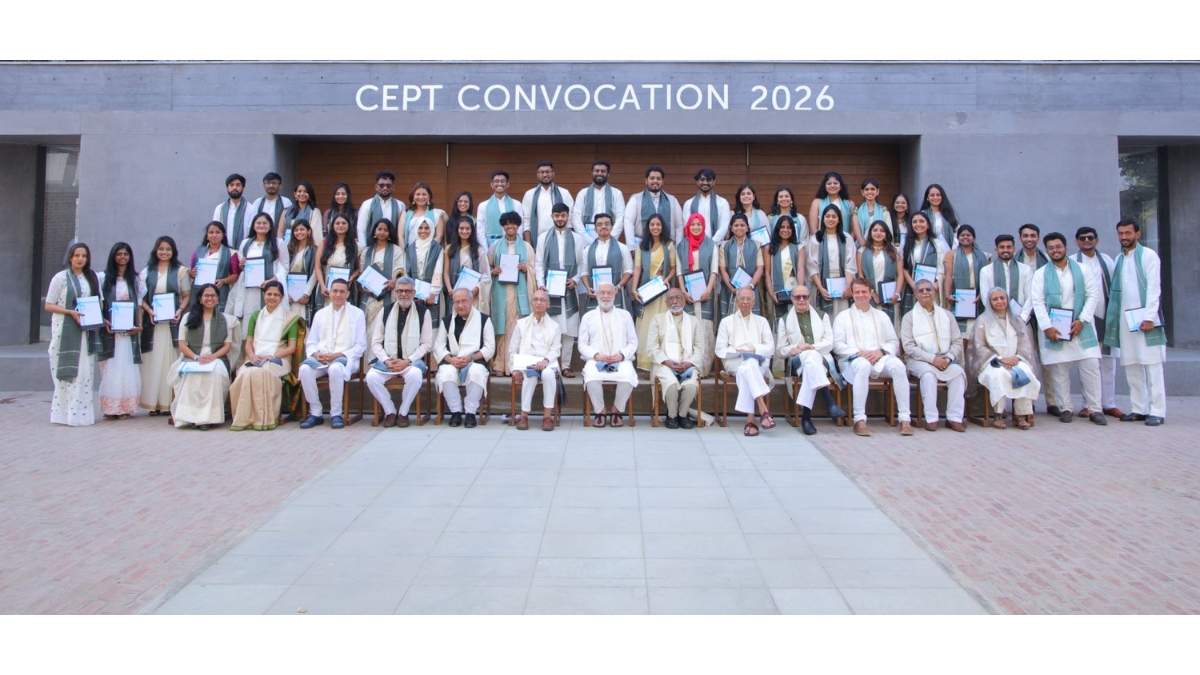
    Chennai (Tamil Nadu) [India], January 19: CEPT University marked a significant academic milestone today as it held its 20th Annual Convocation, conferring degrees on 589 students across undergraduate, postgraduate and doctoral programmes. The occasion also marked a pivotal moment in the University’s academic journey with the formal announcement of CEPT’s entry into MBA education, through its MBA in Real Estate Program under its Faculty of Management.

    Of the graduating cohort, 392 were postgraduates, 196 undergraduates, and one Doctor of Philosophy recipient, while 45 students were awarded University Awards of Proficiency in recognition of outstanding academic achievement. Graduates represented the full academic breadth of the University, with 213 students from the Faculty of Architecture, 95 from the Faculty of Design, 10 from the Faculty of Management, 151 from the Faculty of Planning, and 120 from the Faculty of Technology.

    The Convocation ceremony was graced by Prof. Ashoke Chatterjee, eminent design educator and former Executive Director of the National Institute of Design, as the Chief Guest.

    Welcoming the gathering, Prof. Barjor Mehta, President, CEPT University, reflected on the University’s evolving academic vision and announced the launch of the MBA in Real Estate, a new flagship programme under the Faculty of Management.  The launch of our MBA offerings marks an important milestone for CEPT University,” said Prof. Mehta. “The MBA in Real Estate recognizes the growing need for professionals capable of steering the rapidly expanding formal real estate sector in the country. CEPT is well-positioned to deliver high-quality education in this emerging field, drawing on our long-standing strengths in architecture, urban planning and design, structural engineering, construction and project management, and urban management. The new program will provide opportunities for students from diverse undergraduate backgrounds to build careers in the market-facing production and management of the built environment.”

    Dressed in CEPT’s customary off-white and beige ceremonial attire, accented by vibrant faculty stoles, graduating students arrived at the iconic Shrenikbhai Plaza and were welcomed by cheering family members and friends. The procession was led by Sanjay Lalbhai, Chairman, CEPT University; Prof. Barjor Mehta, President; Chief Guest, Prof Ashoke Chatterjee, former Executive Director, National Institute of Design (Ahmedabad) who walked on to the dais and were joined by Prof. Tridip Suhrud, Provost; Ms. Anita Hiranandani, Registrar; and the Deans of the respective faculties.

    Addressing the graduating students, Shri Sanjay Lalbhai emphasised that the cohort is entering a profession shaped by climate urgency and artificial intelligence, where technology must support—rather than replace—human judgement. He urged graduates to take responsibility for the long-term environmental impact of their design and material choices, cautioning against speed-driven, disposable construction and calling for buildings and cities that are resilient, humane, and built to endure.

    Delivering the Convocation Address, Chief Guest Prof. Ashoke Chatterjee drew from personal memories and decades of experience with public and institutional architecture, underscoring that meaningful architecture is defined by its emotional resonance and ethical grounding. He encouraged graduates to evolve into professionals who deliver architecture that cares for people, place, and collective memory.

    During the ceremony, Prof. Rasik. J. Shah, distinguished structural engineer, educator and consultant; and Prof. Vidyadhar K. Phatak, one of India’s distinguished urban planners, were conferred Honorary Doctorates (Honoris Causa) in recognition of their eminent contributions to structural engineering and urban planning, respectively. Prof. Shah’s career spans decades of teaching, professional practice, and research, with a profound influence on architectural and engineering education at CEPT University. Prof. Phatak is widely respected for his five-decade-long contribution to urban development, policy formulation, and planning education in India.

    Following the central Convocation, Faculty-level Convocations were held, during which students received their degrees from their respective Deans. The Convocation concluded on a celebratory note as graduating students came together with peers, faculty and staff to mark the culmination of their academic journey and the beginning of their professional paths.

    FACT SHEET

    Total Number of Graduates 589
    Post Graduate Students 392
    Under Graduate Students 196
    Doctor of Philosophy 1
    Faculty Wise Distribution
    Faculty of Architecture 213
    Faculty of Design 95
    Faculty of Management 10
    Faculty of Planning 151
    Faculty of Technology 120
    Students Who Won University Awards of Proficiency 45

    About CEPT University

    CEPT University is a recognized leader in education and research in the areas of architecture, planning, design, technology and urban management. Its teaching programs aim to build thoughtful professionals, and its research programs deepen understanding in its areas of expertise.  CEPT University also undertakes advisory projects to support the national, state and city governments and large sections of private industry. Through its education, research and advisory activities, the University strives to contribute to enriching the lives of people in India’s villages, towns and cities.

    The University comprises five faculties: viz. the Faculty of Architecture, the Faculty of Planning, the Faculty of Technology, the Faculty of Design, and the Faculty of Management. In December 2023, CEPT University was recognized by the Government of India as a Centre of Excellence in Urban Planning and Design. This comes with an endowment of Rs. 250 Crore to be used towards the research and training on India specific knowledge in Urban Planning and Design over the next 25 years. CEPT University was established by the CEPT University Act of 2005 enacted by the government of Gujarat. It was originally started in 1962 as the School of Architecture supported by the Ahmedabad Education Society. The Department of Scientific and Industrial Research (DSIR) of the Government of India recognizes the University as a Scientific and Industrial Research Organization (SIRO). CEPT University is recognized as a Centre of Excellence by the Government of Gujarat. CEPT University has over 30 ongoing collaborations and exchange programs with top-ranked universities across the world.

    For media queries, contact:

    Sunitha Aravind | sunitha.aravind@cept.ac.in | +91-8450900643

    If you object to the content of this press release, please notify us at pr.error.rectification@gmail.com. We will respond and rectify the situation within 24 hours.

  • The Fiction of Memory Versus Forgetting

    The Fiction of Memory Versus Forgetting

    Mumbai (Maharashtra) [India], January 17: Read a few writings of Kafka and you will notice something under your shoes; and this ground that you are standing upon, it would seem to collapse into an abyss of absurdist thoughts, thoughts that seek purpose, thoughts that would make you crawl under the bed and force you to die, a strange sense of metamorphosis, the one that woke Buddha up into a night and convinced him to leave his home and wife and children behind.

    When you discover something different from the sense of reality of other people; you are most prone to die, see for example, Galileo had to die for a discovery that the world did not buy into, Gregor Samsa of Kafka’s novel Metamorphosis too had to die because he discovered something strange in life, the realization of the absurdity of life, the utter sense of meaninglessness; the lie of life’s beauty shattered into pieces that one cannot collect.

    Since the emergence of human civilization, people had stories to tell and philosophers had doubts to be solved. The favorite question was ‘who’s the creator of us all?’ and this gave rise to the ideas of religion, the craft of storytelling flourished and the masses turned into a herd of believers, but the doubters were doubters still. For a story to survive, there should always be a believer. For the first quarter of 20th century, we enjoyed stories of human origin, the stories of Adam and Eve and all, but after the two world wars, the human psyche got another prominent question, “the purpose of human life” and the utter meaninglessness of it. The present realities were troublesome and people found solace into the memories of past, memories of cities that were now standing upon the debris of restlessness, memories of people who were turned into vapors by atomic bombs.

    The fiction of memories is also the fiction of forgetting; memories make us forget our present life scenarios but can we ever forget our memories at all? What are memories made up of; and are they capable of preserving our reality? Now one might ask, what is this reality we are talking about? As the holy audience of Christopher Nolan, we might get into the debate of whether the reality we perceive is real or it’s a mere dream; and are we capable enough to perceive it at all? Yes, you got it right, the petty debate of forth dimension. I’m no Dostoevsky, I would no more talk sickness, let’s get onto the point. Let’s talk about two things, precisely. One is the fiction based upon memories, and the other one is the idea of forgetting. Both are quintessential to understand our clumsy quotidian life. I’m aware of the absurd nature of my petty trail of thoughts, and therefore I would limit this discussion to a single author and a single book of him, I would avoid the Jacques Derrida way of meaning of the meaning of the meaning here; now let’s start with an esteemed author of Indian Diaspora, he is none other than Salman Rushdie.

    In his essay collection ‘Imaginary Homelands’, Salman Rushdie makes a confession that the Bombay of his ‘Midnight’s Children’ is not the actual city of present-day reality, but it was the Bombay of his memories. When Rushdie wrote about Bombay while sitting in London, he just looked at his window at times and recalled the city as it was in his mind; the city where Rushdie grew up, the city of memories and imagination. The fiction came out of it was real, but somewhere lost in translation. However, the beauty of translation is that we gain something too. It happens with most of the Diasporic writers and expatriate writers that they have to write about their native lands relying upon their memories and imagination. Sometimes, to remember the past and at other times to forget their present agonies and sorrows. Sometimes, to get a sense of belonging, and at times to forget the foreign belongings that they had adapted in order to survive. When people are fed up of the absurdities of life, they would either wait for Godot or recall the toothpastes and chutneys of their memories. Forgetting requires transporting of Coleridge’s type, but when we are back to the routine, do we really forget anything? As the humans of post lapsarian era, are we really capable of forgetting? Do we forget or do we get distracted? The literature written around memory and forgetting would make you question your realities. In the end you will realize that memory is nothing but a euphemism used for forgetting.

    If you object to the content of this press release, please notify us at pr.error.rectification@gmail.com. We will respond and rectify the situation within 24 hours.

    Lifestyle

  • A Late Bloom Or A Calculated Pause? Samsung’s Camera Catch-Up Finally Gets Serious

    A Late Bloom Or A Calculated Pause? Samsung’s Camera Catch-Up Finally Gets Serious

    Mumbai (Maharashtra) [India], January 17: There’s a peculiar moment in every long rivalry when imitation stops feeling embarrassing and starts feeling… inevitable. Samsung’s latest camera tweaks land squarely in that zone. Not revolutionary. Not headline-screaming. Just quietly competent, suspiciously familiar, and perhaps a little overdue.

    For years, Samsung has won spec wars while losing subtle ones. Megapixels soared, sensors ballooned, lenses multiplied like a tech hydra. Yet some of the most useful camera features — the kind you actually rely on when your coffee is cooling and your subject is blinking — were oddly absent. Now, those long-missing refinements appear to be trickling in.

    Not with fireworks. With a shrug. And maybe that’s the point.

    This isn’t a story about copying. It’s about conceding that sometimes the smallest changes carry the heaviest weight.

    The Long Game Of Camera Ego

    Samsung has never struggled with camera ambition. If anything, it has struggled with restraint.

    Over the past decade, the company poured staggering resources into imaging R&D — industry estimates place Samsung’s annual mobile R&D spend well into the tens of billions of dollars, with camera systems among the most aggressively funded verticals. Sensors became bigger. Zoom reached absurd distances. Night photography turned cities into neon fever dreams.

    And yet, everyday usability often lagged.

    While rivals focused on polishing the experience — consistent color science, reliable focus behavior, predictable video output — Samsung chased spectacle. It worked for marketing. It worked for spec sheets. It didn’t always work for people who just wanted to point, shoot, and trust the result.

    That’s the backdrop against which these “small” camera boosts land. Not as a breakthrough, but as an admission.

    When Small Features Feel Like Big Apologies

    The new additions reportedly include refinements that seasoned smartphone users will recognize instantly: improved subject consistency, better video stabilization logic, more intuitive portrait behavior, and less aggressive post-processing — features that photographers stopped asking for years ago because they assumed Samsung simply preferred its own chaos.

    From a PR perspective, this is spun as “fine-tuning.” From a user perspective, it feels more like long-delayed courtesy.

    The sarcasm writes itself: Samsung didn’t suddenly discover these ideas. It simply decided the timing was finally right to care.

    Pros Worth Acknowledging:

    • More Predictable Results: Photos now behave more consistently across lighting conditions, reducing the lottery effect.

    • Video Usability Improves: Stabilization and color continuity appear more disciplined, especially in mixed lighting.

    • User Trust Increases: Less over-processing means fewer “what happened here?” moments.

    The Subtle Catch:

    • These improvements don’t wow reviewers.

    • They don’t sell phones on posters.

    • They mostly please people who already bought Samsung devices anyway.

    Which makes them strategically brilliant — and just a little cynical.

    Innovation Fatigue Is Real

    There’s an unspoken truth in the smartphone industry: consumers are tired.

    Not bored. Not disengaged. Just exhausted by hyperbole.

    When every launch promises “revolutionary camera technology,” the quiet delivery of competence feels refreshing. Samsung appears to have noticed that fatigue — perhaps after watching year-on-year global smartphone shipments flatten despite increasingly powerful hardware.

    Global smartphone sales remain massive, but growth has slowed. The market no longer rewards spectacle alone. It rewards reliability.

    In that sense, Samsung’s camera shift isn’t reactive — it’s defensive.

    The Price Of Arriving Late

    Of course, there’s a downside to finally adopting what others normalized years ago: perception.

    Late adoption feeds the narrative that Samsung leads in hardware but follows in refinement. That it builds engines faster than it tunes suspensions. That it prefers numbers over nuance.

    Critics will argue that these changes should have arrived generations ago. They’re not wrong.

    And then there’s the uncomfortable question of pricing.

    Samsung devices now sit firmly in premium territory. With flagship models priced to rival any competitor, the tolerance for “we’ll fix it next year” has evaporated. Camera parity is no longer a bonus — it’s table stakes.

    A Strategic Reset Or A Temporary Course Correction?

    What’s intriguing isn’t the features themselves, but what they signal.

    Samsung appears to be recalibrating its camera philosophy from maximalism to maturity. That’s not a retreat; it’s a realignment. Hardware bravado is being tempered by software discipline. Feature lists are being trimmed in favor of coherence.

    If sustained, this shift could reposition Samsung not as the brand with the most camera tricks, but the one with the least frustrating ones.

    That’s a subtle but powerful pivot.

    The Economics Behind The Lens

    Camera improvements aren’t cheap — especially software-driven ones. They require prolonged testing cycles, regional tuning, and consistency across supply chains that span continents.

    Samsung’s ability to absorb those costs comes from scale. As one of the world’s largest smartphone manufacturers, it can amortise camera R&D across millions of units. Smaller brands can’t. That’s why these refinements matter — they signal Samsung leveraging its size for polish, not just power.

    And yes, that polish is expensive. Camera development alone accounts for a significant slice of a flagship phone’s bill of materials, even before marketing, logistics, and post-launch support enter the equation.

    Which makes this move less cosmetic and more structural.

    What Users Are Actually Saying

    Early reactions across forums and creator communities suggest cautious optimism.

    • Casual users appreciate photos that look “normal.”

    • Creators welcome reduced processing aggression.

    • Longtime Samsung fans feel validated — and slightly annoyed it took this long.

    There’s no mass hysteria. No viral applause. Just relief.

    In 2026, that might be the highest compliment tech can receive.

    The Bigger Picture: Convergence Is Inevitable

    Smartphone cameras are converging. The era of wildly different results across flagship brands is fading. What remains is tuning, philosophy, and trust.

    Samsung embracing proven camera conventions doesn’t weaken its identity — it strengthens it. The brand’s future advantage won’t come from inventing new tricks, but from executing familiar ones flawlessly.

    And yes, the irony is delicious.

    So, Is This A Win?

    Yes — strategically.
    Maybe — emotionally.
    Late — undeniably.

    Samsung’s camera upgrades aren’t flashy, but they’re honest. They don’t scream innovation; they whisper accountability.

    In an industry obsessed with firsts, arriving late — but arriving refined — might be the most adult move Samsung has made in years.

    Sometimes, the real upgrade isn’t what the camera can do.

    It’s what it finally stops doing.

    PNN Technology

  • Microsoft’s Late Arrival, Better Shoes: When Windows Decides Continuity Is Worth the Effort

    Microsoft’s Late Arrival, Better Shoes: When Windows Decides Continuity Is Worth the Effort

    Mumbai (Maharashtra) [India], January 17: For years, Windows users have lived with a peculiar contradiction. They owned powerful machines, often with superior hardware flexibility, yet watched helplessly as a certain fruit-branded ecosystem glided through devices like it owned gravity itself. Files followed users. Messages hopped screens. Calls politely waited where they were left. Meanwhile, Windows users were busy emailing themselves links, as if it were a productivity ritual from 2012.

    Now, Microsoft appears to have had a moment of existential clarity.

    The company is quietly but deliberately building a refined cross-device continuity experience—one that mirrors a feature Apple users have enjoyed for nearly a decade, but with enough Windows pragmatism to make it feel less like imitation and more like overdue evolution. This isn’t a flashy keynote moment. It’s a usability intervention. And frankly, it was needed.

    This isn’t about copying. It’s about survival in a world where convenience has become currency.

    The Philosophy Shift Nobody Announced

    Microsoft didn’t wake up one morning and decide to chase aesthetic harmony. This shift has been brewing for years, accelerated by hybrid work, multi-device dependency, and the realisation that productivity doesn’t live on a single screen anymore.

    The modern user starts work on a laptop, continues on a phone, answers calls from earbuds, and finishes tasks on a desktop—often without remembering which device began the story. Apple understood this early. Microsoft, historically focused on enterprise dominance and software licensing, took a scenic route.

    The new continuity push signals something deeper: Windows no longer wants to be just the place where work happens. It wants to be the place where life continues.

    What Microsoft Is Actually Building (And Why It Matters)

    At its core, Microsoft’s new continuity layer aims to make Windows feel less like an isolated operating system and more like a central nervous system.

    Key elements include:

    • Seamless App Continuation Across Devices
      Start an activity on a phone, pick it up on a PC without ceremonial syncing.

    • Unified Clipboard And File Awareness
      Copy once. Paste anywhere. No cloud gymnastics required.

    • Improved Device Proximity Intelligence
      Your laptop knows when your phone is nearby—and behaves accordingly.

    • Tighter OS-Level Integration
      Not an app pretending to be a solution, but baked-in system behavior.

    This matters because users no longer tolerate friction. They might endure it, but they resent it. And resentment is a dangerous emotion in consumer tech.

    For context, Apple’s continuity framework has been operational since 2014. Microsoft’s attempt isn’t late—it’s archaeological. But timing doesn’t always determine relevance. Execution does.

    The Positive Angle: Windows Grows Up

    Let’s be fair. Microsoft isn’t blindly cloning. There are areas where Windows could genuinely do this better.

    • Hardware Agnosticism
      Unlike Apple’s closed-loop hardware model, Microsoft has to support thousands of OEM configurations. If it pulls this off, it benefits a far larger user base.

    • Enterprise Compatibility
      Apple’s continuity shines in personal use. Microsoft’s version is being designed with work accounts, managed devices, and corporate policies in mind.

    • Scalable Ecosystem Thinking
      This isn’t just about phones and laptops. It’s about tablets, handhelds, desktops, and whatever form factor shows up next.

    In other words, Microsoft isn’t just catching up—it’s widening the playing field.

    Internal data suggests Windows still powers over 1.4 billion active devices globally, making even incremental usability improvements massively impactful. When Microsoft moves, it moves markets—slowly, sometimes awkwardly, but decisively.

    The Negative Reality Nobody Wants To Say Out Loud

    Now for the less flattering truth.

    Microsoft’s biggest enemy here isn’t Apple. It’s Microsoft.

    • Inconsistent Rollouts
      Features arrive unevenly across regions, hardware, and Windows versions.

    • Fragmented User Experience
      Some users get magic. Others get error messages and forums.

    • Trust Deficit
      Windows users have been promised seamlessness before. They’ve learned to wait skeptically.

    There’s also the awkward reality that copying a feature years later invites comparison—and comparisons aren’t kind to first drafts. Apple’s continuity works because it was designed in an era when simplicity still had executive backing. Microsoft’s version is being layered onto an OS that already carries decades of legacy logic.

    Elegance doesn’t come naturally in crowded rooms.

    Why This Move Is Also Strategic, Not Just Cosmetic

    This continuity push isn’t just about making users happy. It’s about keeping them.

    Microsoft knows that the real threat isn’t losing users to macOS overnight—it’s losing relevance over time. Cross-device continuity keeps users emotionally invested. It makes switching painful. And pain is retention.

    It also strengthens Microsoft’s ecosystem moat:

    • Windows + Mobile Integration

    • Cloud Services Dependency

    • Productivity Tool Stickiness

    This aligns neatly with Microsoft’s broader strategy of embedding itself quietly but indispensably into daily workflows. You don’t notice it working—until it’s gone.

    Backstory: Why Now, Not Earlier?

    The short answer: leverage.

    Microsoft didn’t have the ecosystem leverage earlier. Today, it does.

    • Cloud infrastructure is mature.

    • Device partnerships are stronger.

    • Windows 11 provides a cleaner base layer.

    • Users expect continuity now—not as a luxury, but as a baseline.

    In 2026, failing to offer cross-device fluidity isn’t a feature gap. It’s a credibility issue.

    Pros And Cons At A Glance

    Pros

    • Dramatically improved usability for Windows users

    • Competitive parity with premium ecosystems

    • Strong enterprise integration potential

    • Reduced reliance on third-party workarounds

    Cons

    • Late arrival means higher expectations

    • Risk of fragmented experiences

    • Heavy dependence on consistent updates

    • Apple comparisons are inevitable—and unforgiving

    What Users Are Saying (And Not Saying)

    Early feedback from power users is cautiously optimistic. There’s appreciation, but not celebration. The sentiment is less “Finally!” and more “Let’s see if this sticks.”

    That’s not cynicism—it’s learned behavior.

    The Bigger Picture: This Isn’t About Apple Anymore

    Ironically, the moment Microsoft stops chasing Apple is the moment it becomes competitive again.

    This continuity feature isn’t about winning design awards. It’s about restoring confidence in Windows as a modern, thoughtful platform. One that understands how people actually live—not how they’re supposed to use software.

    And if Microsoft gets it right? The conversation shifts. Not from “Apple vs Windows,” but from “Which ecosystem understands me better?”

    That’s the only rivalry that matters now.

    Final Thought

    Microsoft didn’t invent continuity. It just finally decided it couldn’t afford to ignore it anymore. Sometimes, progress isn’t about being first—it’s about arriving prepared, slightly sarcastic, and painfully aware of what users have tolerated long enough.

    PNN Technology

  • Polished, Predictable, And Still Powerful: The Galaxy S26 Leak Feels Like Samsung Playing It Safe (Again)

    Polished, Predictable, And Still Powerful: The Galaxy S26 Leak Feels Like Samsung Playing It Safe (Again)

    Mumbai (Maharashtra) [India], January 17: If smartphone launches were personalities, the Galaxy S26 would be the impeccably dressed overachiever who never misses a meeting — and never takes a real risk either. Recent benchmark sightings and feature leaks around Samsung’s next flagship suggest a device that is deliberately evolutionary, not revolutionary. And perhaps that’s the point.

    The Galaxy S26 series, including its much-discussed Exynos-powered global variant, has begun leaving digital footprints across testing platforms. On paper, the upgrades look sensible. In context, they look cautious. In reality, they reveal a company that understands exactly what its audience will tolerate — and what it won’t.

    Samsung, it seems, isn’t chasing shock value this cycle. It’s chasing stability. Whether that’s admirable or unimaginative depends on where you stand — and how much last year’s phone already does for you.

    The Leak Culture That No Longer Feels Like A Leak

    Let’s be honest: Samsung “leaks” have become a genre of their own. By the time a Galaxy device officially launches, most enthusiasts already know the processor class, camera direction, display tech, and battery philosophy. The S26 is no exception.

    Recent benchmark appearances point to:

    • Updated Exynos silicon for global markets

    • Modest CPU and GPU uplifts rather than radical redesigns

    • Refinements in AI-assisted processing and efficiency

    None of this screams disruption. But it does whisper polish.

    Samsung isn’t reinventing the smartphone. It’s sanding down the edges.

    Exynos Returns — Again — With A Reputation To Repair

    Ah yes. Exynos. The chip that refuses to quietly fade into history.

    Leaks suggest Samsung is once again betting on its in-house Exynos processor for several global Galaxy S26 variants, while select regions may still see Snapdragon alternatives. This alone is enough to divide the internet into predictable factions.

    To Samsung’s credit, recent Exynos generations have narrowed the performance and efficiency gap significantly. Thermal management appears improved. AI workloads are reportedly more optimized. And real-world performance may finally align with marketing promises.

    Still, history casts a long shadow. Power users remember throttling, battery drain, and inconsistent gaming performance all too well. Which raises the uncomfortable question: is Samsung asking for trust — or patience?

    Incremental Power: Enough, Or Just Convenient?

    Benchmark data indicates the Galaxy S26 will deliver:

    • Moderate CPU gains over the S25

    • Noticeable GPU efficiency improvements

    • Better sustained performance under load

    This is not a phone designed to blow past competitors. It’s designed to age gracefully.

    For most users, that’s actually good news. Flagship phones are no longer replaced annually by the masses. Longevity matters more than peak numbers. Samsung seems to be optimizing for year-three usability rather than launch-day bragging rights.

    Still, in an era of aggressive competition, playing it safe can look suspiciously like standing still.

    AI Everywhere — But Subtly This Time

    Samsung’s AI push isn’t slowing down, but leaks suggest it’s becoming less theatrical and more practical.

    Expected improvements include:

    • Enhanced on-device AI for photography and video

    • Smarter battery optimization via usage pattern learning

    • Improved real-time translation and contextual suggestions

    Not flashy demos. Not buzzwords. Just quieter integration.

    Which, frankly, feels like a relief.

    After a year of AI features shouting for attention, Samsung appears to be aiming for something more mature: AI that does its job without demanding applause.

    Samsung - PNN

    Design: Refinement Over Reinvention

    If you’re expecting a radical visual overhaul, you might want to sit down.

    Leaks suggest the Galaxy S26 will stick closely to Samsung’s established design language — refined edges, premium materials, subtle dimensional tweaks. In other words: familiar, but sharper.

    This is intentional. Samsung knows its visual identity works. Changing it dramatically would create more confusion than excitement. Still, minimalism can veer dangerously close to monotony.

    The S26 won’t shock you across the room. It will simply look expensive — and unmistakably Samsung.

    Cameras: Better Brains, Not Bigger Numbers

    Early whispers indicate camera improvements will focus less on megapixel escalation and more on computational photography.

    Expect:

    • Enhanced low-light processing

    • Faster image pipelines

    • Improved video stabilization

    • More consistent color science

    This aligns with broader industry trends. Hardware has plateaued; software now does the heavy lifting.

    The upside? More reliable results.
    The downside? Fewer headline-grabbing specs.

    Battery And Charging: Sensible, Not Sensational

    Leaks so far suggest Samsung isn’t chasing extreme charging speeds or massive battery jumps.

    Instead:

    • Slight efficiency gains

    • Smarter power management

    • Incremental battery longevity improvements

    In a market obsessed with charging speed wars, Samsung’s restraint feels almost rebellious — or conservative, depending on your mood.

    The Market Context Samsung Is Responding To

    Samsung isn’t operating in a vacuum.

    • Smartphone replacement cycles are lengthening

    • Consumers value reliability over novelty

    • Regulatory pressure discourages unnecessary hardware excess

    • Sustainability narratives favor incremental improvement

    The Galaxy S26 feels like a product born from these realities. It’s not designed to dominate headlines. It’s designed to dominate contracts, carrier shelves, and long-term user satisfaction.

    Pros And Cons, Without The Fanboy Filter

    The Positives

    • Improved efficiency and sustained performance

    • Mature AI integration

    • Refined design and software stability

    • Focus on long-term usability

    The Negatives

    • Minimal excitement for upgraders

    • Exynos skepticism remains

    • Conservative design choices

    • Few “wow” moments

    This is a phone that prioritises competence over charisma.

    What The Galaxy S26 Really Represents

    The Galaxy S26 isn’t trying to be revolutionary. It’s trying to be dependable. And that says more about the smartphone market than Samsung itself.

    Innovation has slowed because smartphones already do almost everything people need. The challenge now isn’t adding features — it’s perfecting the experience.

    Samsung appears to understand that.

    Whether consumers reward restraint or demand spectacle will decide how this strategy ages.

    The Galaxy S26 leak doesn’t shout.
    It clears its throat politely and gets to work.

    And in 2026, that might be Samsung’s most honest strategy yet.

    PNN Technology

  • OTT Series Launch India: 10 Must-Watch Premieres in Jan

    OTT Series Launch India: 10 Must-Watch Premieres in Jan

    New Delhi [India], January 17: OTT Series Launch India: It is January 2026, and OTT sites in India are flexing their content muscles. High-stakes entrepreneurship on Shark Tank India S5 and Hawkins’ ultimate confrontation in Stranger Things S5 are just the tip of the iceberg. The lineup this month proves streaming isn’t just TV—it’s a lifestyle.

    Sports and Reality – The OTT Edge

    WWE on Netflix
    Binge culture collides with professional wrestling. Netflix India ensures fans never have to wait for highlights or replays. With WWE available in all formats, viewers get fighting, entertainment, and mayhem—live.

    English Premier League on JioHotstar
    The football frenzy is back. Who will take the top spot? Which team is sinking fast? Fans witness every pass, goal, and heartbreak live, making January a soccer feast.

    UEFA Champions League & Europa League on SonyLIV
    European football lands in India. The Champions League showcases top clubs competing for glory. Meanwhile, the Europa League keeps the thrill alive with its own drama. SonyLIV delivers a front-row experience straight to viewers’ screens.

    Reality TV Reigns

    Bigg Boss Tamil Season 9 on JioHotstar
    Drama, commotion, and plenty of Vijay Sethupathi magic. Season 9 promises more sparks, surprises, and arguments that may even disrupt family dinners. Unapologetically Indian reality TV at its best.

    (https://www.youtube.com/watch?v=JWhFLRyVHa4)

    Shark Tank India S5 on SonyLIV
    Bold ideas, ambitious entrepreneurs, and Sharks ready to bite. Season 5 isn’t just a show—it’s negotiation, risk, and ambition in action. Every episode gives a front-row seat to India’s startup grit.

    https://www.sonyliv.com/trailer/shark-tank-india-1090498957

    Drama and Fantasy – Global Meets Local

    Stranger Things S5 Grand Finale on Netflix
    Hawkins faces its darkest hour. Past hurts resurface, friends become enemies, and the final showdown with Vecna begins. Millie Bobby Brown and the gang deliver a finale streamed for Indian audiences.

    https://www.youtube.com/watch?v=gysfObBhaFE

    The Pitt Season 2 on JioHotstar
    Healthcare meets heartbreak. This season explores hospital politics, emotional strain, and the personal lives of medical professionals. Not just drama—it’s a surgical strike on your emotions.

    Freedom at Midnight Season 2 on SonyLIV
    The historical drama returns with a blend of storytelling finesse and political intrigue. Perfect for viewers craving a narrative that goes beyond standard entertainment.

    (https://www.youtube.com/watch?v=XaY2TX4qpK80)

    Taskaree: The Smuggler’s Web on Netflix
    Dark, edgy, and intense. This Hindi drama takes viewers into the shadowy world of crime, strategy, and survival. Every scene hits like a cinematic punch.

    (https://youtu.be/u4it6ymhrLA)

    A Knight of The Seven Kingdoms on JioHotstar
    Fantasy fans, buckle up. Quests, battles, and kingdoms collide in a series that proves Indian OTT platforms can compete with global productions in scale and spectacle.

    (https://youtu.be/sItUCKJQLTU)

    Why January OTT Releases Matter

    • Content diversity: Sports, drama, reality, and fantasy—January caters to all tastes.

    • Global-quality production: Indian viewers don’t have to wait months; international standards are streaming directly.

    • Regional representation: Shows like Bigg Boss Tamil ensure audiences beyond Hindi and English get front-row entertainment.

    • Accessibility: Platforms like JioHotstar, SonyLIV, Netflix, and Prime Video make multi-language streaming seamless.

    This January lineup proves that OTT platforms are no longer chasing trends; they are setting them. Every series announced this month is designed to hook a specific audience, whether it is sports lovers, reality TV fans, or binge-watchers craving high-end drama.

    From global franchises to homegrown hits, each series adds depth to the streaming ecosystem. What stands out is how these series are released with precision, strong marketing, and multi-language accessibility. Together, these series reflect how streaming in India has matured from casual viewing into a full-fledged entertainment habit.

    January’s OTT series lineup signals a clear shift in viewer expectations. Audiences are no longer satisfied with casual watching; they want scale, stakes, and stories that linger long after the screen goes dark. Streaming platforms are responding with confidence, not caution.

    PNN News


  • CGC University Mohali Hosts Bharat AI: Pioneering The Future Of Inclusive, Responsible, And Impact-Led Artificial Intelligence

    CGC University Mohali Hosts Bharat AI: Pioneering The Future Of Inclusive, Responsible, And Impact-Led Artificial Intelligence

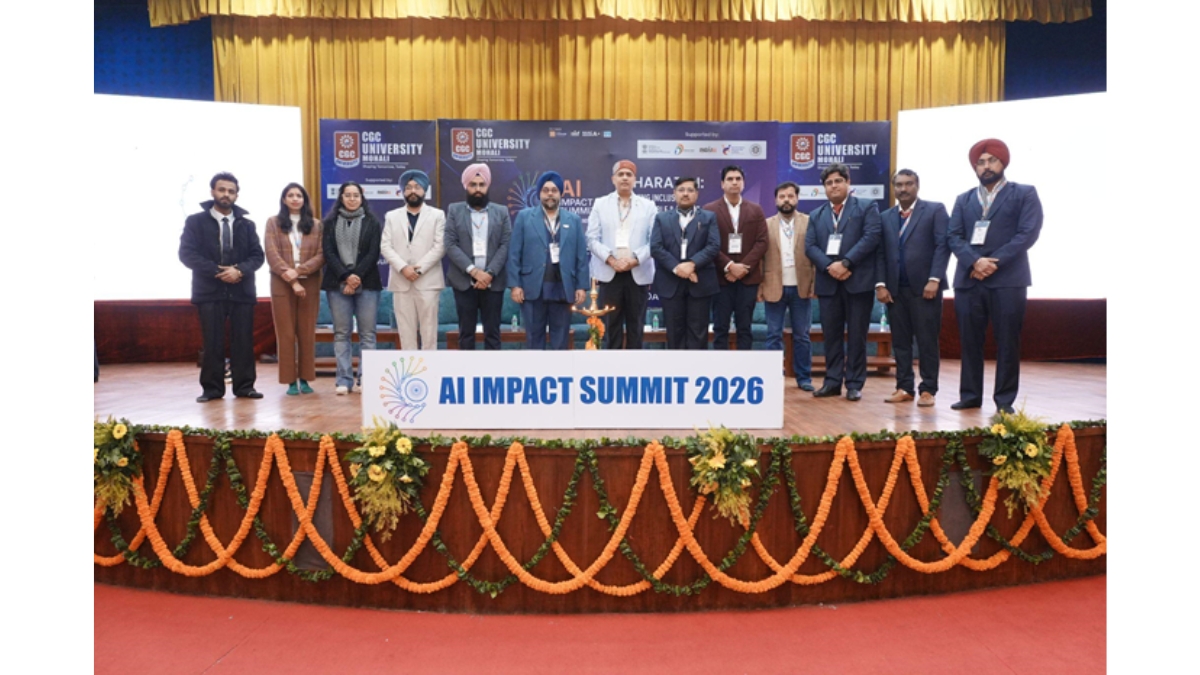
    New Delhi [India], January 17: In a dazzling celebration of innovation, intellect, and enterprise, CGC University, Mohali proudly hosted Bharat AI: Driving Inclusive, Responsible & Impact-Led Artificial Intelligence, the official pre-summit of the India–AI Impact Summit 2026, on the auspicious occasion of National Startup Day. Sanctioned and recognized by the Ministry of Electronics and Information Technology (MeitY), this landmark event reinforced the University’s position as a beacon of technological advancement, visionary thinking, and research excellence.

    The summit unfolded through a thoughtfully curated mix of a Keynote Address, Panel Discussion, Fireside Chat, and an Interactive Workshop, all anchored in the themes of governance, ethics, and real-world AI implementation. Together, these sessions ignited rich, forward-looking dialogues on bridging the gap between AI policy and practice, while emphasising the imperatives of trust, transparency, and meaningful societal impact.

    The gathering commenced under the distinguished presence of Mr. Amit Kataria, COO & Co-Founder, SARAS AI, who graced the occasion as the Chief Guest. The sessions featured a constellation of trailblazers, innovators, and thought leaders, each bringing a unique perspective on the evolving landscape of Artificial Intelligence:

    • Mr. Tarun Malhotra, Founder & CEO, Cyber Splunk
    • Mr. Suraj Kumar, CEO, Qyula Narratives Inc.
    • Ms. Tandeep Sangra, Founder, She Innovates AI
    • Mr. Bipanjeet Singh, Founder & Director, Digiwah Technosys LLP
    • Mr. Jigarjit Singh, Managing Director & Founder, JW Infotech
    • Ms. Neha Arora, Chief Operating Officer, Northern Region Science & Technology Cluster, Office of the Principal Scientific Adviser, Government of India
    • Mr. Anil Channa, CTO, Softwiz Infotech
    • Mr. Tanvir Singh, Senior Manager, Spoken Tutorial, IIT Bombay

    Adding a global dimension, Ms. Maya Sherman, Head of Technology & Innovation, Embassy of Israel in India, joined virtually to share international insights, futuristic trends, and cross-border collaborations, weaving a rich tapestry of ideas that bridged innovation with global best practices.

    A defining highlight of the event was the AI Project Showcase, where students and researchers from CGC University unveiled AI-powered solutions and functional prototypes spanning diverse domains, including healthcare, cybersecurity, smart systems, education, sustainability, and enterprise automation. The showcase stood as a testament to the University’s emphasis on applied research, innovation-driven learning, and industry-aligned problem solving, earning widespread appreciation from industry experts and attending delegates for its depth, relevance, and real-world impact.

    Echoing this vision, Mr. Arsh Dhaliwal, Honourable Managing Director, remarked:

    “Bharat AI reflects CGC University’s commitment to building a future-ready ecosystem where technology, ethics, and impact converge. By empowering our students, researchers, and innovators to work on responsible AI solutions, we aim to contribute meaningfully to India’s national AI mission and global technology leadership.”

    Dr. Ati Priye, CEO, Incubation and Startups at CGC University, added:

    “Hosting Bharat AI as an Official Pre-Summit Event of the India–AI Impact Summit 2026 is a proud milestone. The participation of industry leaders, global representatives, and our own student innovators demonstrates the power of collaboration in shaping responsible and inclusive AI for the future.”

    Key insights and outcomes emerging from Bharat AI will be formally shared with IndiaAI, contributing meaningfully to the wider discourse of the India–AI Impact Summit 2026, scheduled to be held in New Delhi on 19–20 February 2026. These deliberations will help inform national conversations on the future direction of Artificial Intelligence in India, reinforcing the summit’s vision of responsible, inclusive, and impact-driven AI adoption.

    The resounding success of Bharat AI cements CGC University, Mohali as a hub of research, technological exploration, and entrepreneurial spirit, fostering a generation of thinkers and doers who are equipped to shape the future of Artificial Intelligence in India and beyond. By seamlessly blending innovation, responsibility, and societal impact, the University continues to lead the way in cultivating a culture of inquiry, creativity, and transformative action.

    Web: https://www.cgcuniversity.in

    If you object to the content of this press release, please notify us at pr.error.rectification@gmail.com. We will respond and rectify the situation within 24 hours.

  • 2026 Gegeneophis valmiki Discovery: Rare Amphibian Unearthed in India

    2026 Gegeneophis valmiki Discovery: Rare Amphibian Unearthed in India

    Don’t expect flashy colours or big eyes. Gegeneophis valmiki is a blind caecilian, a rare amphibian that spends nearly its entire life underground. Its eyes are buried beneath bone. Its appearance? Earthworm-like. Its behaviour? Mostly subterranean.

    “This group of animals is incredibly difficult to study,” says K. P. Dinesh of the Zoological Survey of India. “They look so much like earthworms that even trained eyes might miss them.”

    Despite being hidden, Gegeneophis valmiki plays a vital role in ecosystem balance. It aerates soil, recycles nutrients, and maintains forest floors, quietly supporting life while larger creatures take the spotlight.

    Gegeneophis valmiki and India’s Biodiversity Hotspots

    • Ecological significance: Beyond aerating soil and recycling nutrients, Gegeneophis valmiki quietly maintains the health of the forest floor.

    • Biodiversity highlight: Its discovery underscores the Western Ghats as a hotspot for rare and undiscovered species.

    • Conservation impact: Documenting this species helps scientists and policymakers identify and protect critical habitats.

    • Scientific value: Each new find adds knowledge to India’s biodiversity records and informs global ecological research.

    The Discovery That Got Buried Underground.

    Finding the Valmiki Plateau in the Satara district of Maharashtra in 2017, K P Dinesh, a senior scientist at the Zoological Survey of India (ZSI). The majority of the citizens just passed by these soils without even a second thought. Dinesh didn’t. He discovered a worm-like animal that had never formally described before.

    Time travels to January 2026: the discovery has been published in an international journal called Phyllomedusa. It has been named Gegeneophis valmiki, after the ancient Maharshi Valmiki Mandir located in the surroundings. It is a small yet important species, and Indian scientists deserve credit for putting it on the map worldwide.

    The Importance of Science to Scientists — and to You.

    The Director of ZSI, Dhriti Banerjee, encapsulates it all in a succinct manner: 41 per cent of the world is on the verge of extinction. Others disappear before science even knows that they exist, what she terms as silent extinctions.

    That’s the real headline here. Gegeneophis valmiki is not a cool find. It is a warning. The undiscovered life in biodiversity hotspots is abundant such as the western ghats. Species documentation is important as it provides conservation with an opportunity to act before it is too late.

    The Race Against Silent Extinctions.

    Underground amphibians seldom have their time, in a world where large mammals and bright-colored birds are worshiped. However, they might vanish without any commotion, bringing with them the knowledge of the ecological habitat.

    The fact that Gegeneophis valmiki was discovered indicates that India is not waiting till it gets the fame or flash. They are diligently taking notes to make species known, named and conserved. And it may not be front page viral news, but it is the type of research that is long-term environmental health.

    The Biodiversity Hotspots of India in Focus

    The Western Ghats are not mere mountains. They’re a laboratory of life. It is a kind of melting pot with endemic frogs, rare reptiles and plants. Every new find, such as Gegeneophis valmiki, is a wake-up call that India still has its secrets hidden in the forests.

    Mapping of these species helps put conservation policy, forest management, and climate adaptation strategies into perspective. It’s not science for prestige. It’s a survival for ecosystems.

    In the end, Gegeneophis valmiki is more than just a rare amphibian. It is a reminder that nature often hides its treasures in plain sight, and discovery requires patience, curiosity, and a sharp eye. As K P Dinesh notes, “Even the smallest, most hidden creatures have stories worth telling.

    This discovery is a call to action: to explore, to document, and to protect India’s rich biodiversity. Because every species matters, seen or unseen, and every forest floor holds secrets waiting to be uncovered. In protecting the smallest life forms, we safeguard the future of the entire ecosystem.

    https://www.researchgate.net/publication/398754261_Discovery_of_a_new_species_of_Gegeneophis_Gymnophiona_Grandisoniidae_highlights_hidden_diversity_and_implications_for_regional_endemism_in_the_Western_Ghats_India

    PNN News

  • Finally, Some Mercy for Your Memories: Google Photos Learns to Slow Down (And Clean Up Its Own Mess)

    Finally, Some Mercy for Your Memories: Google Photos Learns to Slow Down (And Clean Up Its Own Mess)

    Mumbai (Maharashtra) [India], January 17: There’s something oddly poetic about Google Photos finally listening to its users. Not poetic in the grand, cinematic sense — more like a weary sigh of relief. After years of quietly hoarding our memories, sorting our lives into neat little timelines, and occasionally gaslighting us with “On This Day” reminders we didn’t emotionally consent to, Google Photos is reportedly preparing to roll out two features people have been asking for since… well, since smartphones learned how to record video.

    Video playback speed controls.
    Cleaner, less chaotic date separators.

    No fireworks. No rebrand. Just the digital equivalent of tidying your room and learning basic manners. And honestly? That might be the most radical update yet.

    This isn’t a flashy reinvention of cloud storage. It’s something far more human: a quiet acknowledgement that users don’t want more features — they want better ones.

    The App That Knows Too Much About Us

    Google Photos isn’t just an app anymore. It’s a personal archive, an emotional filing cabinet, and sometimes an unsolicited therapist. It stores first steps, last goodbyes, blurry concerts, accidental screenshots, and videos that absolutely did not need to be filmed in 4K.

    With over one billion users globally and trillions of photos stored across its servers, Google Photos has become the default memory vault for modern life. That scale matters. When an app this ubiquitous tweaks even the smallest detail, it subtly reshapes how people interact with their past.

    Which is why these upcoming changes — small on paper — feel oddly significant.

    Video Playback Speed: Because Not Everything Needs To Be Watched At Normal Speed

    Let’s address the obvious first.

    Yes, users have been asking for video playback speed controls for years. Yes, rival apps figured this out ages ago. And yes, it’s mildly astonishing that a platform capable of facial recognition and AI-powered memory curation couldn’t let you watch a video at 1.5x speed.

    But here we are.

    The addition of variable playback speeds finally gives users agency over how they consume their own content. Long birthday videos? Faster. Accidentally recorded five minutes of the floor? Much faster. Emotional family moments you want to linger on? Slow it down.

    It’s not just a convenience feature. It’s an acknowledgment that time matters — and not all memories deserve the same pacing.

    Date Separators: Order In The Timeline Chaos

    If you’ve ever scrolled through Google Photos and wondered why three different years seem emotionally adjacent, you’re not alone.

    The reported cleanup of date separators aims to declutter timelines and make navigation less visually exhausting. Clearer breaks. More intuitive grouping. Less mental gymnastics when trying to locate that one photo from “sometime around last Diwali but not that Diwali.”

    This matters more than it sounds. Digital clutter doesn’t just waste time — it drains attention. And in an era where attention is already under siege, small UX refinements carry outsized psychological weight.

    Why These Updates Are Arriving Now (And Not Five Years Ago)

    The timing isn’t accidental.

    Google Photos has been slowly transitioning from a “wow, unlimited storage!” novelty to a subscription-driven service. Since ending unlimited free uploads, expectations have shifted. Paying users are no longer impressed by promises — they want polish.

    And polish is exactly what these features represent.

    This is Google Photos growing up. Less about showing off AI tricks, more about respecting user experience. Less “look what we can do,” more “sorry we didn’t do this sooner.”

    The PR Angle: Listening Without Admitting Guilt

    From a PR standpoint, these updates are elegantly understated. There’s no grand announcement positioning them as revolutionary. No apology tour for the years of user requests ignored.

    Instead, it’s the classic tech move: quietly roll out improvements and hope people say, “Oh, finally,” instead of “Why did this take so long?”

    And to be fair — it works.

    The Slightly Uncomfortable Truth

    Of course, there’s a flip side.

    These features aren’t exactly groundbreaking. They don’t solve deeper concerns about privacy, data retention, or how much of our personal history one company should control. They don’t address lingering frustrations around storage limits, subscription tiers, or occasional algorithmic weirdness.

    In other words, while Google Photos is learning to walk more gracefully, some users still want it to answer bigger questions about trust.

    Pros And Cons, Without Sugarcoating

    The Upside

    • Long-requested playback control finally arrives

    • Cleaner timelines reduce cognitive fatigue

    • Improved usability without feature bloat

    • Signals renewed focus on user-centric design

    The Trade-Offs

    • Features feel overdue rather than innovative

    • Doesn’t address pricing or storage frustrations

    • Incremental updates may feel underwhelming to power users

    • Still heavily dependent on Google’s ecosystem

    Both truths coexist — and pretending otherwise would be dishonest.

    What This Says About Digital Memory In 2026

    There’s a deeper cultural shift hiding beneath this update.

    People are increasingly selective about how they revisit their past. Faster playback options and cleaner timelines suggest users want control, not nostalgia overload. They want to curate, not drown.

    Google Photos‘ adaptation to this mindset hints at a future where digital memory tools are less about hoarding everything and more about intentional engagement.

    Which is refreshingly mature, if a little late.

    What Users Are Saying Right Now

    Early reactions across tech communities suggest cautious optimism. Not excitement — relief. The kind that says, “About time,” rather than “Wow.”

    And perhaps that’s the best response Google could hope for. When a product becomes this deeply embedded in daily life, the highest compliment isn’t awe. It’s trust.

    What Comes Next (And What Should)

    If Google Photos is truly entering its refinement era, users will likely expect:

    • Smarter manual organisation tools

    • Better video editing basics

    • More transparent storage management

    • Fewer algorithmic surprises

    Small improvements build momentum — if they keep coming.

    PNN Technology