Author: Sutun Nayak

  • Anthology ‘When Gods Don’t Matter’ unveiled at the Jaipur LitFest 2026 by culturist Sundeep Bhutoria

    Anthology ‘When Gods Don’t Matter’ unveiled at the Jaipur LitFest 2026 by culturist Sundeep Bhutoria

    Swati Vashishtha, Sundeep Bhutoria, Jagdeep Singh (author), Namita Gokhale and Sanjoy K Roy formally unveiling an anthology ‘When Gods Don’t Matter’ at the Jaipur LitFest 2026

    Jaipur (Rajasthan) [India], January 17: A deeply reflective and intellectually stimulating session titled “When Gods Don’t Matter” captivated audiences at the Jaipur Literature Festival (JLF) 2026 at the AAF Bagaan venue. The session marked the unveiling of poet and PR professional Jagdeep Singh’s latest poetry anthology, When Gods Don’t Matter.

    Jagdeep Singh was in conversation with senior journalist and writer Swati Vashishtha, as they explored the philosophical, emotional, and existential layers of his poetry. The book was formally unveiled by author and culturist Sundeep Bhutoria, alongside Festival Co-Director Namita Gokhale and Sanjoy K. Roy, Managing Director, Teamwork Arts.

    During the discussion, Jagdeep Singh reflected on the core themes that shape his work—belief and doubt, identity, vulnerability, and the evolving human condition in a rapidly changing world. He shared that When Gods Don’t Matter is born out of lived experience and introspection, where poetry becomes a space to confront silence, faith, and personal truth.

    Guiding the conversation, Swati Vashishtha examined the role and relevance of poetry in contemporary times, noting how modern verse often moves away from the divine towards the deeply personal and social. The dialogue highlighted how Jagdeep Singh’s poetry resonates with readers navigating uncertainty, the loss of absolutes, and the search for meaning beyond traditional belief systems.

    Speaking on the occasion, Jagdeep Singh remarked that poetry, for him, is not about providing answers but about asking honest questions. He emphasised that When Gods Don’t Matter seeks to articulate moments when human vulnerability, nostalgia, and compassion take precedence over ideology or rigid belief structures.

    Adding an evocative and intimate dimension to the session, Jagdeep Singh also recited three to four poems from the collection, offering the audience a direct encounter with the emotional depth and sensitivity that define his work.

    Sharing his thoughts at the launch, Sundeep Bhutoria said, “I have known Jagdeep Singh for more than a decade now. I didn’t know that he could write poems as well, apart from being a hardcore PR professional. He is such a humble human being, with a heart for poetry.”

    If you object to the content of this press release, please notify us at pr.error.rectification@gmail.com. We will respond and rectify the situation within 24 hours.

  • PM Vishwakarma Haat 2026 Signals a Bold Push for Indian Crafts

    PM Vishwakarma Haat 2026 Signals a Bold Push for Indian Crafts

    New Delhi [India], January 17: India’s growth story is not only built in factories and offices. From January 18 to 31, it takes shape in wood, metal, fabric and clay at PM Vishwakarma Haat 2026 in New Delhi.

    The Ministry of Micro, Small and Medium Enterprises is organising PM Vishwakarma Haat 2026 at Dilli Haat, INA, turning the capital’s cultural hub into a living map of India’s traditional skills. Open daily from 10:30 AM to 10:00 PM, the exhibition is dedicated exclusively to artisans and craftspeople covered under the PM Vishwakarma Scheme.

    The event will be inaugurated by Union Minister for MSME Shri Jitan Ram Manjhi, in the presence of Minister of State for MSME Sushri Shobha Karandlaje. The message is clear. Crafts are not nostalgia. They are strategy.

    PM Vishwakarma Haat 2026 brings together more than 117 artisans from States and Union Territories across the country. That matters. This is not a token display. It is a pan-India representation of skills that have survived centuries and now need markets, not sympathy.

    From the Northeast to the Deccan, from coastal traditions to desert crafts, the exhibition captures the sheer range of India’s artisanal economy. Each stall is a business opportunity. Each product is a livelihood.

    The Haat is designed to do one thing well. Connect makers directly with buyers. National buyers. International buyers. Tourists. Policy stakeholders. Everyday Indians who value quality over mass production.

    This is not charity. It is commerce, rooted in culture.

    What PM Vishwakarma Haat 2026 Is Really About

    At its core, PM Vishwakarma Haat 2026 is an extension of the PM Vishwakarma Scheme. The scheme focuses on empowering traditional artisans and craftspeople by improving access to skills training, credit, tools and markets.

    The Haat addresses the last mile. Visibility. Sales. Recognition.

    By giving artisans a high-footfall, high-profile platform in New Delhi, the government is closing a gap that has long hurt traditional crafts. Skill existed. Demand existed. Access did not.

    Now it does.

    The exhibition aligns with the broader vision of “Vishwakarma Ka Abhiyaan, Viksit Bharat Ka Nirman”. Translation without slogans: India’s development cannot ignore the hands that built its economy long before startups became fashionable.

    Visitors to PM Vishwakarma Haat 2026 will see more than finished products. The exhibition features live craft demonstrations, giving people a front-row seat to how traditional skills actually work.

    This matters more than it sounds. Watching an artisan carve, weave or shape metal changes perception. Craft stops being decorative. It becomes technical, precise and demanding.

    Cultural experiences woven through the exhibition add context. These crafts come from communities, regions and histories. You cannot separate the object from the story behind it.

    And honestly, that story sells.

    India has no shortage of skilled artisans. What it has lacked is consistent market linkage. PM Vishwakarma Haat 2026 directly tackles that problem.

    The event is expected to attract national and international buyers. Representatives from foreign missions have also been invited. That signals intent. Indian crafts are not just for domestic shelves. They belong in global markets.

    For artisans under the PM Vishwakarma Scheme, this kind of exposure is rare and valuable. Orders placed here do not end on January 31. They ripple forward into sustained income.

    The MSME ecosystem depends on this. Small producers need predictable demand. Craftspeople need recognition as economic contributors, not cultural footnotes.

    Location is not accidental. Dilli Haat, INA, is one of New Delhi’s most visited cultural marketplaces. It attracts locals, tourists and international visitors in equal measure.

    By hosting PM Vishwakarma Haat 2026 here, the MSME Ministry is maximising footfall and visibility. The setting already understands craft. The audience is primed.

    It also reinforces a simple idea. Traditional skills deserve premium spaces, not side corners.

    PM Vishwakarma Haat 2026 reinforces the Government of India’s stated commitment to empowering artisans and preserving traditional skills. But more importantly, it shows up in execution.

    An organised exhibition. Clear timelines. National participation. International outreach. Direct ministerial involvement.

    This is policy stepping out of files and onto the ground.

    For the MSME Ministry, the Haat is also a signal to States and Union Territories. Support your artisans. Identify them. Prepare them for markets. The centre is creating platforms. The ecosystem must respond.

    India’s demographic story is young. Its skills story is ancient. PM Vishwakarma Haat 2026 sits at that intersection.

    Young buyers increasingly want authenticity. Sustainable products. Things with a story. Traditional crafts check all those boxes, without needing buzzwords.

    For artisans, especially in rural and semi-urban India, platforms like this validate their work in a rapidly modernising economy. It says your skill still matters. It still pays.

    And that matters in a country where migration often happens because traditional livelihoods fail, not because ambition disappears.

    Visitors can expect a curated selection of handcrafted products across categories. Textiles. Woodwork. Metal crafts. Clay and pottery. Decorative and utility items rooted in regional traditions.

    They can interact directly with artisans. Understand techniques. Place orders. Build relationships.

    They can also simply walk, observe and absorb the scale of India’s craftsmanship. No filters. No gloss. Just skill.

    For families, students, designers and entrepreneurs, PM Vishwakarma Haat 2026 doubles as an education. This is where ideas come from.

    PM Vishwakarma Haat 2026 is not meant to be a one-off spectacle. It is part of a larger shift in how India treats its informal and traditional sectors.

    Empowerment now means access, not applause. Markets, not medals.

    If scaled and repeated, such platforms can redefine how crafts fit into India’s growth story. Not as relics. As revenue.

    Read More

  • Bitcoin Meets Its Future Enemy — And Decides To Prepare Anyway

    Bitcoin Meets Its Future Enemy — And Decides To Prepare Anyway

    There’s a certain irony in watching a technology built on distrust quietly plan for a threat that doesn’t fully exist yet. Bitcoin, the original anti-establishment asset, has always prided itself on being resilient — immune to central banks, political whims, and conventional financial decay. Now, it’s squaring up to something far more existential: quantum computing. And instead of pretending it’s a distant sci-fi problem, a newly launched quantum-resistant Bitcoin testnet is doing what it does best — preparing quietly, methodically, and with just enough paranoia to stay relevant.

    This isn’t a dramatic pivot or a sudden panic response. It’s a rehearsal. A controlled environment where cryptographers and developers are stress-testing what it might look like in a world where today’s cryptography no longer holds absolute power. In other words, the blockchain equivalent of locking the doors before the storm clouds arrive.

    And yes, the storm clouds have names now.

    Why Quantum Computing Is Bitcoin’s Unspoken Anxiety

    For years, Bitcoin’s security has relied on cryptographic primitives that are, for all practical purposes, unbreakable by classical computers. Private keys, digital signatures, and hash functions — the whole elegant scaffolding rests on math that would take traditional machines longer than the age of the universe to crack.

    Quantum computers change the math.

    Algorithms like Shor’s algorithm, in theory, allow sufficiently powerful quantum machines to break elliptic curve cryptography — the same cryptographic foundation that protects its wallets today. To be clear: such machines do not exist at scale yet. But the trajectory is visible, and the crypto community has learned the hard way that ignoring trajectories is expensive.

    This is why the new testnet matters. Not because Bitcoin is about to be hacked tomorrow — but because waiting until “tomorrow” has historically ended badly in technology.

    The Testnet Isn’t Panic — It’s Prudence

    The launch of a quantum-safe Bitcoin testnet doesn’t rewrite it’s rules. It doesn’t fork the main network. It doesn’t even promise immediate adoption. What it does offer is something far more valuable: optionality.

    This testnet experiments with post-quantum cryptographic schemes, including lattice-based and hash-based signatures designed to resist both classical and quantum attacks. Developers can simulate transactions, wallet interactions, and network behavior under these new cryptographic assumptions — without risking real value.

    In simpler terms, Bitcoin is running a fire drill. No alarms. No smoke. Just preparation.

    And that alone signals maturity.

    The Bigger Picture: Trillion-Dollar Assets Don’t Get To Be Casual

    Bitcoin’s market capitalization has, at various points, comfortably crossed the trillion-dollar mark. Pension funds, institutional investors, sovereign entities, and long-term allocators are no longer watching from the sidelines. They’re participating.

    With that scale comes responsibility — not regulatory responsibility, but architectural responsibility.

    Ignoring quantum risk would be convenient. It would also be reckless.

    This testnet sends a subtle but powerful message: Bitcoin is no longer just an experiment. It’s infrastructure. And infrastructure plans for worst-case scenarios, not just likely ones.

    The Skeptics Have Entered The Chat (Of Course)

    Not everyone is applauding.

    Critics argue that quantum computing capable of threatening Bitcoin is still decades away. Some suggest that introducing quantum-resistant cryptography could bloat transaction sizes, slow verification times, and complicate an already delicate protocol.

    They’re not entirely wrong.

    Post-quantum algorithms often demand more computational resources and larger key sizes. Integrating them into a network that values efficiency and decentralization is not trivial. There’s also philosophical resistance — Bitcoin’s conservative culture doesn’t embrace change easily, and that’s by design.

    But skepticism isn’t opposition. It’s friction. And friction is how Bitcoin refines ideas before accepting them.

    A Subtle Shift In Bitcoin’s Cultural Posture

    Perhaps the most interesting part of this development isn’t technical — it’s cultural.

    Bitcoin was born out of distrust in institutions. Quantum computing, ironically, is being developed largely by institutions — governments, research labs, multinational corporations. Preparing for quantum threats means acknowledging that external technological forces matter, even if Bitcoin itself remains decentralized.

    That’s not surrender. It’s evolution.

    This testnet reflects a Bitcoin community that understands longevity requires adaptation — even if adaptation happens slowly, publicly debated, and occasionally mocked on social media.

    What This Means For The Broader Crypto Ecosystem

    Bitcoin rarely moves first — but when it moves, others watch.

    A serious exploration of quantum-safe cryptography at the Bitcoin level legitimizes similar efforts across blockchains, digital identity systems, and decentralized finance infrastructure. It nudges the industry away from speculative noise and back toward foundational engineering.

    It also raises uncomfortable questions:
    Which networks are prepared?
    Which are hoping quantum never shows up?
    And which are quietly hoping someone else solves the problem first?

    Spoiler: hope is not a security strategy.

    The Cost Of Preparation — And The Cost Of Delay

    Building and maintaining experimental testnets isn’t cheap. Developer time, cryptographic audits, infrastructure, and long-term research funding add up — even if exact figures aren’t public. But the cost of preparation is predictable.

    The cost of delay is not.

    If quantum threats emerge faster than expected, networks without a migration path could face mass fund freezes, emergency forks, or catastrophic trust erosion. In that context, today’s testnet investment looks less like speculation and more like insurance.

    Unsexy, necessary insurance.

    The Quiet Confidence Behind The Headlines

    There’s no flashy marketing here. No promises of “quantum-proof Bitcoin tomorrow.” No exaggerated fearmongering. Just a calm acknowledgment that technology doesn’t wait for ideology to catch up.

    And perhaps that’s the most Bitcoin-like response possible.

    The network that once disrupted finance by ignoring tradition is now preserving itself by respecting the future — even when that future arrives wearing a lab coat instead of a suit.

    Pros And Cons, Without The Hype

    The Upside

    • Future-proofing a trillion-dollar asset

    • Increased confidence for institutional and long-term holders

    • Leadership in post-quantum blockchain research

    • Reduced risk of sudden, chaotic protocol changes later

    The Trade-Offs

    • Increased complexity in protocol design

    • Potential efficiency and size challenges

    • Philosophical resistance from purists

    • No immediate, tangible benefit for everyday users

    Both can coexist. Bitcoin has always lived comfortably with contradiction.

    What Comes Next (And What Doesn’t)

    This testnet does not mean Bitcoin is switching cryptography tomorrow. It doesn’t mean wallets need updating overnight. And it certainly doesn’t mean quantum computers are lurking behind your next block confirmation.

    What it does mean is this: Bitcoin is choosing foresight over denial.

    And in an industry addicted to speed, hype, and short attention spans, that might be the most radical move of all.

    PNN Technology

  • ASEAN: India Digital Cooperation Powers Regional Growth in Its 6th Year of Collaboration

    ASEAN: India Digital Cooperation Powers Regional Growth in Its 6th Year of Collaboration

    New Delhi [India], January 17: The collaborations and partnerships seem to be on their knees in this new era of technology due to their ability to innovate. This was evident through the 6th ASEAN-India Digital Ministers’ Meeting on January 16, 2026, which was conducted online but with India and member countries in ASEAN refocusing on this critical aspect. The meet was titled Adaptive ASEAN: From Connectivity to Connected Intelligence, but it was much more than that: it marked the inception of ASEAN’s future, and India was leading this.

    Enhancing Dynamic Relationships in the Digital Age

    Telecom and digital ministers of 11 member countries of the ASEAN, Brunei, Cambodia, Indonesia, Lao PDR, Malaysia, Myanmar, Philippines, Singapore, Thailand, Timor Leste, and Viet Nam and their dialogue partners Australia, Canada, China, EU, India, Japan, Korea, Russia, United Kingdom and United States were present in the conference.
    The co-chairs, Shri Amit Agrawal, India, and Shri Nguyen Manh Hung, Viet Nam, not only networked but also mapped out the future path for ASEAN’s digital inclusion and integration.

    India certainly was not a low-profile agenda. The country boasts global connectivity via 4G (almost everywhere), launched 5G faster than anyone else, and BharatNet in rural areas, which can be seen as strengths of economies of scale and strategic decision-making in the national agenda. Agrawal talked of Digital Public Infrastructure like Aadhaar, UPI and DigiLocker as the secret sauce that is catalyzing the growth story of the country. And that was not all – e.g., the scheme by India is called Sanchar Saathi, which protects telecom subscribers against fraud, is being replicated in the ASEAN region now.

    India Digital Work Plan 2026

    The best moment was the green light regarding the ASEAN–India Digital Work Plan 2026. Imagine it as a 12-month plan for making digital infrastructure smarter, safer, and more inclusive. It focuses on:

    Capacity building and training in ICT.

    The India- ASEAN Regulators Conference.

    Implementation of telecom ICT solution.

    Implementation of ASEAN-India Fund of Digital Future.

    It is not just a case of bureaucratic paperwork. It is a roadmap of actionable regional projects that address the intersection of funding, training, and technological implementation.

    AI and the Intelligence Leap

    Connection was only the first step. The game-changing factor? Artificial Intelligence. The AI vision of India encompasses all things AI and prioritises trustworthy AI, although it has worked with ASEAN countries on AI standards and applications. Agrawal made it very practical and to the point: the next decade will be about AI, and it must be balanced with transparency.

    A valuable lesson for the region is that the entire world is talking about smart cities and fintech, but India is demonstrating how digital transformation can be more inclusive, responsible, and achievable.

    A Regional Prosperity Model.

    This gathering made it clearer that both are aiming for a common goal: an open, secure, inclusive, and innovation-driven digital space. ASEAN and the Indian government are not just chatting; they are harmonising their policies and best practices, and developing interoperable systems that will have a direct impact on businesses, citizens, and the government.

    For example, the fintech industry can easily implement cross-border payments, and data breaches can be avoided through cybersecurity across national borders. The trend of India signing up for the advancement of affordable, locally developed digital technologies within the region is a strong indication that ASEAN partners will not need to seek expensive technology from abroad.

    Why This Matters to India

    India plays two parts, participant and example. Its achievement in rural broadband, cellphone production, and digital government services provides a model of success for ASEAN nations with access disparities and regulatory loopholes. Through its experience, India becomes stronger in regional relations and establishes itself as a destination for tech and innovation in Asia.

    This is especially applicable to startups, telecom operators and AI developers in India who now have an organized structure to explore ASEAN markets as they can contribute to the growth of the region.

    Ahead: Between Connectivity and Connected Intelligence.

    The 6th ADGMIN meeting was not just a networking event, but a strategic impetus to transform the region into a smarter, safer, and digitally literate region. The second step, after having training programs, regulatory alignment, collaboration with AI and funding mechanisms, is execution. And India is announcing it — we know it is not going to be a follower.

    The Asian South East and the Indian digital future are not far away. It is an organized, strategic fact–and the plan is dynamic.

    https://asean.org/secretary-general-of-asean-to-participate-in-the-6th-asean-digital-ministers-meeting-and-related-meetings-in-hanoi-the-socialist-republic-of-viet-nam/

    PNN News

  • The Memory Shortage Nobody Warned Consumers About Is Finally Here

    The Memory Shortage Nobody Warned Consumers About Is Finally Here

    Mumbai (Maharashtra) [India], January 17: There’s a quiet irony unfolding inside the global tech supply chain. Just as consumers are told that artificial intelligence will make life smoother, faster, and cheaper, the physical components powering that intelligence are doing the opposite — tightening supply, inflating prices, and forcing uncomfortable trade-offs. Memory chips, once the most predictable line item in consumer electronics, are suddenly the bottleneck nobody wants to headline.

    As 2026 approaches, analysts are no longer whispering about shortages; they’re issuing polite warnings dressed up as forecasts. The reality is less polite. High-bandwidth memory (HBM) is being vacuumed into data centers feeding AI models, cloud inference engines, and enterprise automation. Smartphones and PCs — those quaint everyday devices — are being pushed to the back of the silicon queue.

    Progress, it seems, has priorities.

    This isn’t a sudden crisis. It’s a slow-motion consequence of years of strategic choices, capital concentration, and a collective industry decision to chase intelligence at scale, even if it means everyday tech gets pricier and less forgiving.

    When Artificial Intelligence Eats First, Everyone Else Waits

    Memory chips aren’t interchangeable commodities anymore. The surge in demand is overwhelmingly concentrated around advanced memory — HBM, DDR5, LPDDR5X — the kind required to keep AI accelerators fed and responsive. These chips are not only more complex to manufacture, they are also produced in limited volumes by a small number of players.

    The result? Allocation over availability.

    Manufacturers are diverting capacity toward data centers because that’s where margins are thick, contracts are long-term, and demand is insatiable. A hyperscale buyer ordering memory by the ton will always outrank a smartphone brand negotiating per-unit costs. This isn’t villainy. It’s arithmetic.

    The collateral damage lands squarely on consumer devices. Smartphones, tablets, laptops, and even gaming consoles are facing tighter memory supply and rising procurement costs — costs that brands are increasingly unwilling to absorb quietly.

    The Consumer Electronics Industry Learns A Familiar Lesson Again

    If this feels familiar, it should. The memory market has always been cyclical, oscillating between oversupply and scarcity. What’s different now is the structural shift in who gets priority when supply tightens.

    In previous cycles, consumer electronics were the primary demand drivers. Today, they are secondary beneficiaries of a supply chain optimized for AI workloads. The hierarchy has changed.

    For consumers, this means:

    • Flagship smartphones creeping upward in price without adding headline features

    • Entry-level devices quietly cutting memory configurations

    • PCs holding launch prices longer than expected

    • Fewer aggressive discounts, even during seasonal sales

    And yes, sales volumes may contract — not because people don’t want new devices, but because price elasticity still exists, no matter how much brands pretend otherwise.

    The Slightly Awkward Silver Lining Nobody Wants To Advertise

    There is, inconveniently, a positive angle here — though it doesn’t make the checkout experience friendlier.

    Higher memory costs are forcing manufacturers to rethink efficiency. Bloated software stacks, gratuitous RAM allocations, and lazy optimization are becoming expensive indulgences. Engineers are being nudged — sometimes dragged — back toward discipline.

    This pressure could lead to:

    • Better memory management at the OS level

    • Leaner software builds on mid-range devices

    • Longer support cycles instead of annual churn

    • Hardware differentiation based on longevity, not just specs

    Scarcity has a way of sharpening priorities. Whether brands lean into that or simply pass costs downstream remains to be seen.

    The Smartphone Market Faces A Reality Check It’s Been Dodging

    Smartphone sales have already plateaued in many regions. Replacement cycles are stretching. Innovation is incremental. Now add rising component costs to that equation, and the industry faces a delicate balancing act.

    Raise prices too aggressively, and demand softens further. Hold prices steady, and margins evaporate. The likely compromise? Subtle downgrades: storage tiers reshuffled, memory speeds tweaked, “new” models that feel suspiciously familiar.

    Consumers will notice. They always do.

    The more uncomfortable truth is that the era of ever-cheaper, ever-more-powerful smartphones may be ending — not because technology stalled, but because it found a more profitable audience elsewhere.

    Why This Isn’t Just A Supply Problem — It’s A Strategic One

    Memory shortages aren’t purely about manufacturing capacity. They’re about capital allocation. Building new fabs is expensive, time-consuming, and politically entangled. Scaling advanced memory production isn’t as simple as flipping a switch.

    At the same time, AI demand isn’t speculative anymore. It’s contractual. Enterprises, governments, and cloud providers are locking in long-term supply agreements. Consumer tech operates on shorter cycles, thinner margins, and more volatile demand.

    Guess who loses that negotiation.

    This imbalance could persist well beyond 2026 unless memory production expands meaningfully — and even then, pricing may never return to its previous baseline. Once industries adjust to higher price floors, they rarely look back.

    The PR Spin Will Be Elegant. The Receipt Will Not.

    Expect corporate messaging to lean heavily on phrases like “premium positioning,” “value-driven innovation,” and “strategic pricing alignment.” Translation: things cost more now, and we’re hoping you won’t revolt.

    To be fair, not all brands are equally exposed. Companies with tighter vertical integration or long-term supply contracts will weather the storm better. Smaller players, budget brands, and emerging markets may feel the squeeze more acutely.

    This could accelerate consolidation — fewer brands, fewer models, higher average prices. Choice narrows quietly while marketing assures you nothing has changed.

    What Consumers Can Actually Do (Without Panicking)

    This isn’t a call to hoard devices or doom-scroll supply charts. But it is a reminder to adjust expectations.

    Practical takeaways:

    • Buy based on actual need, not annual refresh pressure

    • Prioritize devices with higher base memory if longevity matters

    • Be skeptical of “new” models with suspiciously unchanged internals

    • Expect better deals on older generations — briefly

    Scarcity doesn’t eliminate choice; it reshapes it.

    A Future Where Intelligence Is Expensive — And So Is Everything Around It

    The memory chip shortage isn’t a tech apocalypse. It’s a recalibration. AI didn’t just arrive; it moved in, rearranged the furniture, and claimed the best seat at the table. Consumer devices are still invited — just not first.

    Whether this leads to smarter design, fairer pricing strategies, or simply higher bills depends on how honestly the industry responds. History suggests optimism should be cautious.

    In the meantime, the next time a phone costs a little more and offers a little less, remember: somewhere, a data center is thinking very hard — and it needed your memory to do it.

    PNN Technology

  • Indian Institute of Creative Skills Partners with All India Game Developers Forum to Boost Gaming and Interactive Media Skill Development in India

    Indian Institute of Creative Skills Partners with All India Game Developers Forum to Boost Gaming and Interactive Media Skill Development in India

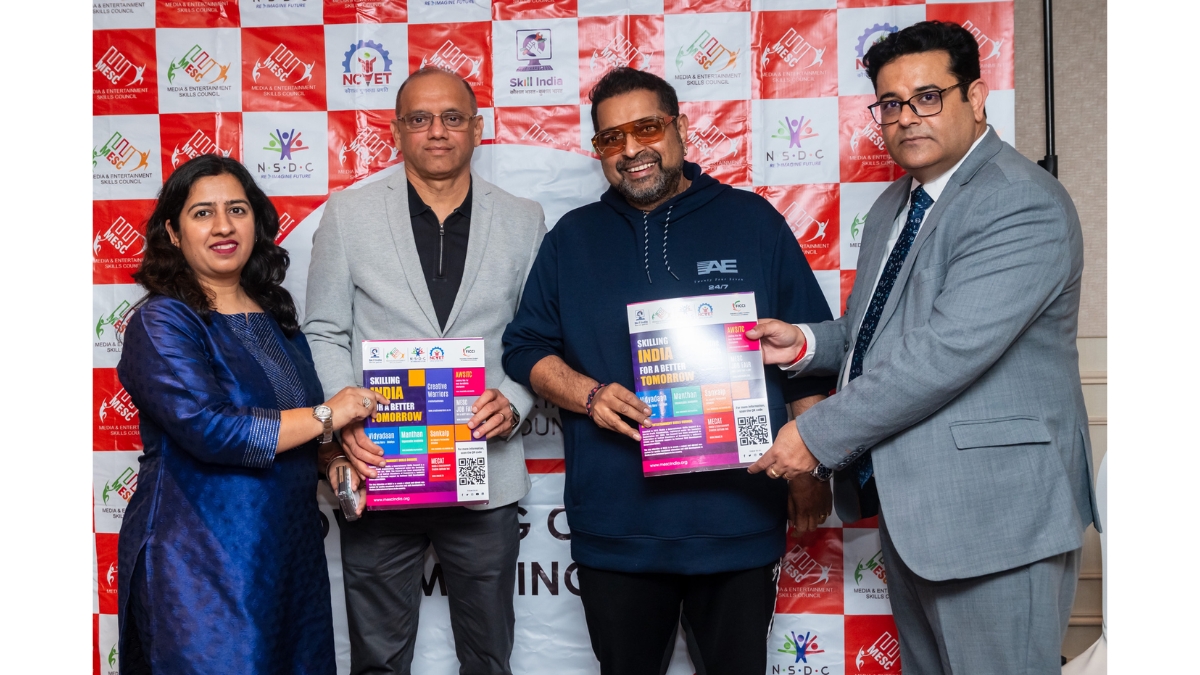
    Pooja Arora (COO, MESC), Roland Landers, Chair, All India Game Developers Forum (AIGDF), Shankar Mahadevan (renowned Musician & Chairman MESC, Mohit Soni, CEO MESC

    New Delhi [India], January 16: The Indian Institute of Creative Skills (IICS), under the aegis of the Ministry of Skill Development and Entrepreneurship (MSDE)National Skill Development Corporation (NSDC), and the Media & Entertainment Skills Council (MESC), has signed a Memorandum of Understanding (MoU) with the All India Game Developers Forum (AIGDF) to strengthen skill development, training, and career pathways in the gaming and interactive entertainment sector.

    This strategic collaboration aims to create a strong talent pipeline for India’s rapidly growing gaming ecosystem by aligning industry needs, emerging job roles, and structured skilling programs. The partnership will focus on building industry-ready professionals across game design, game art, game programming, quality assurance, live operations, and interactive media domains.

    Under the MoU, IICS and AIGDF will jointly design and deliver industry-aligned training programs, workshops, and certification pathways that reflect real-world game development studio workflows. The collaboration will also support curriculum development, industry mentorship, expert-led masterclasses, and exposure to contemporary gaming technologies and platforms.

    A key focus of the partnership will be industry engagement and employability, enabling learners to interact directly with game development studios, startups, and professionals through guest lectures, mentoring sessions, live projects, and career connect initiatives. The MoU also aims to promote innovation, entrepreneurship, and responsible game development practices within the sector.

    Speaking on the occasion, Padma Shri Shankar Mahadevan, renowned Singer, Musician & Chairman, MESC, said:

    “Gaming is an important pillar of India’s emerging digital economy. This collaboration with the All India Game Developers’ Forum will help build structured skilling pathways that align creativity, technology, and industry demand, empowering young talent to access meaningful career opportunities.”

    Mohit Soni, CEO, Media & Entertainment Skills Council (MESC), added:

    “The MoU between IICS and AIGDF is a timely step towards strengthening India’s gaming talent ecosystem. By bringing the developer community closer to skilling institutions, we can ensure learners are trained on relevant tools, workflows, and job roles required by the industry.”

    Representing the All India Game Developers Forum (AIGDF)Roland Landers, Chair – Industry Affairs, stated:

    “India’s game development ecosystem is expanding rapidly and requires skilled professionals across multiple disciplines. Partnering with IICS allows us to contribute to structured talent development while supporting innovation and sustainable growth in the sector.”

    Key Highlights of the MoU

    • Collaboration between Indian Institute of Creative Skills (IICS) and All India Game Developers Forum (AIGDF)
    • Development of industry-aligned skilling programs for game development and interactive media
    • Curriculum mapped to current and emerging game development job roles
    • Industry mentorship, masterclasses, and expert-led sessions
    • Career connect initiatives with game studios and startups
    • Strengthening India’s gaming and interactive entertainment talent ecosystem

    This collaboration aligns with national priorities such as Skill IndiaAtmanirbhar Bharat, and the National AVGC Policy, supporting India’s vision of becoming a global hub for gaming, animation, and interactive digital content.

    About Indian Institute of Creative Skills (IICS)

    The Indian Institute of Creative Skills (IICS) is a creative incubator and national initiative focused on nurturing creative talent through industry-integrated training, hands-on learning, global exposure, and strong academic–industry partnerships.

    About All India Game Developers’ Forum (AIGDF)

    The All India Game Developers Forum (AIGDF) is an industry body representing game developers and studios across India. AIGDF works to promote skill development, innovation, collaboration, and the sustainable growth of India’s game development ecosystem.

    About Media & Entertainment Skills Council (MESC)

    The Media & Entertainment Skills Council (MESC), established in 2012, is a not-for-profit organization under the Ministry of Skill Development & Entrepreneurship, dedicated to enhancing skill development in the Media & Entertainment sector. Initially funded by the National Skill Development Corporation (NSDC) and incubated at FICCI, MESC operates as an awarding body with the National Council for Vocational Education and Training (NCVET). Chaired by Padma Shri Shankar Mahadevan, MESC bridges the gap between academia and industry by providing high-quality, skill-based education.

    Admissions are now open at the Indian Institute of Creative Skills (IICS) for industry-integrated programs in Gaming, Interactive Media, and related creative domains. Aspiring learners, professionals, and institutions interested in building careers at the intersection of creativity and technology are invited to apply.

    For admissions, program details, and partnership enquiries, please write to:
    admissions@iicsindia.orginfo@iicsindia.org

    Contact Number: +91- 959-4949-959
    Website: www.iicsindia.org

    If you have any objection to this press release content, kindly contact pr.error.rectification@gmail.com to notify us. We will respond and rectify the situation in the next 24 hours.

  • A Day in the Life of a Himalayan School Student Reflects the Changing Face of Online Schooling in India

    A Day in the Life of a Himalayan School Student Reflects the Changing Face of Online Schooling in India

    New Delhi [India], January 17: As online schooling steadily becomes a mainstream choice for Indian families, the daily academic routine of students is undergoing a visible transformation. At The Himalayan School, a structured online K–12 institution, a typical school day offers insight into how digital education is evolving beyond basic screen-based learning into a balanced, student-centric model.

    For parents exploring online schools in India or comparing various online school programs, understanding how a day unfolds for a student provides a clearer picture than curriculum descriptions alone.

    Structured Mornings Without the Rush

    A Himalayan School student begins the day without the familiar rush associated with traditional schooling. There are no long commutes or crowded assembly halls. Instead, students log in from home for scheduled school online classes, starting their academic day calm, attentive, and prepared.

    Live sessions are teacher-led and follow a fixed timetable, offering the discipline parents expect while maintaining the flexibility that online schools are known for. Teachers address students by name, conduct attendance seamlessly, and move directly into lessons—creating a focused learning environment.

    Parents who previously searched for “online schools near me” often cite this calm start as a major advantage, particularly for younger learners and students prone to anxiety.

    Interactive Learning Replaces Passive Listening

    Contrary to common assumptions about online schools, classroom engagement remains central at The Himalayan School. Lessons are interactive, discussion-driven, and paced carefully to ensure understanding.

    During mathematics and science sessions, teachers use digital boards and visual tools to explain concepts in real time. Language classes encourage participation, reading, and spoken interaction. Students enrolled in high school online classes benefit from being able to ask questions without hesitation, while also having access to recorded sessions for later review.

    This approach has proven effective for students enrolled in online high school courses, where conceptual clarity plays a crucial role in academic progression.

    Balanced Screen Time and Breaks

    The school day includes planned breaks between academic sessions, allowing students to step away from screens. This structured balance helps reduce screen fatigue and maintain concentration levels.

    Parents considering kids home school or online homeschool options often express concern about excessive screen exposure. At The Himalayan School, screen time is purposeful and moderated, ensuring that learning remains effective without becoming overwhelming.

    Students are encouraged to engage in physical activity, creative hobbies, or quiet reflection during these breaks, contributing to overall well-being.

    Applied Learning Through Technology Integration

    Beyond live classes, students participate in applied learning activities that reinforce academic concepts. Virtual labs, project-based assignments, and cognitive STEM tasks allow students to explore practical applications of what they study.

    Science lessons include simulated experiments, while technology-focused modules introduce students to problem-solving and logical thinking. These activities support the broader objective of building skills alongside syllabus learning, aligning with national education priorities.

    Families transitioning from home schooling in India CBSE models often find this applied approach more engaging than traditional textbook-driven instruction.

    Consistent Teacher Support Throughout the Day

    One of the distinguishing aspects of a Himalayan School student’s day is continuous teacher access. Doubts are addressed promptly, and teachers monitor progress using digital tools that provide insight into individual learning patterns.

    This allows educators to identify gaps early and offer targeted guidance. For students who may feel overlooked in large offline classrooms, this level of attention makes a significant difference.

    Parents comparing best online schools often highlight teacher involvement as a key factor in their decision.

     Himalayan School-PNN

    Independent Learning Builds Responsibility

    As scheduled classes conclude, students move into independent learning time. Assignments, revision, and project work are completed using digital resources provided through the school’s learning platform.

    This phase of the day helps students develop time management and self-discipline. Over time, learners become more independent, a quality parents value when considering online schools or home schools near me alternatives.

    Students gradually take ownership of their learning rather than relying solely on external supervision.

    A Day That Ends Without Academic Burnout

    Unlike traditional school days that often extend into late evenings through homework and tuition, the academic day at The Himalayan School ends with time still available for family interaction, hobbies, and rest.

    Parents report that children are less fatigued and more willing to discuss what they learned. This balanced routine has contributed to the growing acceptance of online schooling as a sustainable long-term option rather than a temporary arrangement.

    Reflecting a Broader Shift in Education

    A day in the life of a Himalayan School student reflects a larger shift taking place across the education sector. Online schools in India are no longer limited to convenience-based solutions; they are emerging as structured, credible alternatives that combine academic rigour with flexibility.

    The Himalayan School’s approach demonstrates how online education can offer clarity, consistency, and personalisation without compromising discipline. As more families evaluate best online schools in India, models that prioritise student well-being, engagement, and real-world readiness are gaining attention.

    Looking Ahead

    As education continues to evolve, the daily experiences of students will increasingly shape how schooling is defined. The Himalayan School’s online model shows that learning can be calm, interactive, and effective—without the pressures traditionally associated with academic routines.

    For students, this means school days focused on understanding rather than endurance.
    For parents, it offers reassurance that online schooling can deliver both structure and balance.

    And for the education sector, it signals a future where quality learning is no longer bound by physical classrooms, but by thoughtful design and meaningful engagement.

    If you object to the content of this press release, please notify us at pr.error.rectification@gmail.com. We will respond and rectify the situation within 24 hours.

  • Green Energy Seva Records Strong Growth in Solar EPC and Franchise Operations Across India

    Green Energy Seva Records Strong Growth in Solar EPC and Franchise Operations Across India

    Mumbai (Maharashtra) [India], January 16: Green Energy Seva, one of India’s fastest-growing solar EPC and franchise networks, has reported strong growth across its solar project execution and franchise partner ecosystem, reinforcing its position as a key enabler in the country’s renewable energy transition.

    The company has witnessed significant traction across residential, commercial, and semi-urban markets, driven by rising solar adoption, favourable policy support, and increasing interest from entrepreneurs seeking structured entry into the clean energy sector. Green Energy Seva’s integrated model—combining EPC execution, CRM-driven project management, franchise enablement, and technical training—has enabled faster project turnaround times and improved execution quality across its network.

    Over the recent period, the company expanded its franchise footprint, onboarded new solar entrepreneurs, and strengthened its end-to-end delivery capabilities, from lead generation and system design to commissioning, net metering, and subsidy support. Its proprietary solar CRM platform has also seen increased adoption, helping partners streamline quotations, track EPC milestones, and monitor project analytics in real time.

    Commenting on the growth, Ms Shaipa Shah, Director, said that it remains focused on building a scalable, technology-led solar ecosystem that not only accelerates clean energy deployment but also creates sustainable livelihoods for local entrepreneurs, engineers, and installers.

    “With a strong pipeline of projects and an expanding national presence, Green Energy Seva plans to further deepen its franchise network, enhance its digital infrastructure, and continue supporting India’s transition toward affordable and decentralised solar power,” added Ms Reeta GuptaDirector.

    Green Energy Seva is an integrated solar solutions company and one of India’s fastest-growing solar EPC and franchise networks. It specialises in engineering, procurement and construction (EPC), solar CRM technology, franchise enablement, and clean energy training, supporting both individuals and businesses in launching and scaling trusted solar ventures.

    In the green solar segment, the company offers end-to-end solar EPC and franchise solutions designed to accelerate rooftop and distributed solar adoption across residential, commercial, and semi-urban markets. Its integrated model combines project engineering, procurement, construction, net-metering and subsidy assistance with a proprietary solar CRM platform that enables quotation management, EPC tracking, and real-time project analytics. Through structured franchise support, verified leads, branding, and technical training, the company empowers local entrepreneurs and installers to deliver reliable, high-quality solar systems at scale.

    Complementing its solar portfolio, the company has also built a distribution-led green fuel business focused on doorstep and localised fuel delivery through mobile fuel dispensing units, mini fuel pumps, fuel bowsers, and Fuel Dispensing Points (FDPs). The model enables entrepreneurs to establish scalable fuel supply operations catering to industrial, infrastructure, agricultural, logistics, and residential demand, particularly in underserved and remote regions. Designed to improve efficiency, safety, and transparency in fuel distribution, the green fuel vertical emphasises regulated delivery, reduced spillage, employment generation, and structured operational support for partners

    The company provides end-to-end support across the solar value chain—from lead generation and system design to project execution and commissioning—empowering solar entrepreneurs with verified leads, digital tools, branding, and operational systems. Its technology-driven approach helps partners improve efficiency, transparency, and execution reliability.

    Green Energy Seva’s mission is to accelerate the adoption of clean and affordable solar energy across India by empowering local entrepreneurs, engineers, and installers with modern digital tools, execution support, and structured business frameworks. It believes in building not just sustainable power solutions, but also sustainable livelihoods.

    Its vision is to enable a future where every rooftop in India harnesses solar energy, and every city is supported by thriving solar franchise partners delivering high-quality, reliable systems through a strong national network.

    Guided by the values of trust, innovation, sustainability, and community, Green Energy Seva continues to focus on transparency in operations, technology-led improvement, eco-friendly growth, and entrepreneurial empowerment.

    If you have any objection to this press release content, kindly contact pr.error.rectification@gmail.com to notify us. We will respond and rectify the situation in the next 24 hours.

  • The Bride Movie: 2026’s Dark, Daring, and Unforgettable Thriller

    The Bride Movie: 2026’s Dark, Daring, and Unforgettable Thriller

    New Delhi [India], January 17: The Bride Movie: Movie thrillers do not typically make one sit up straight, yet in the case of The Bride, by Maggie Gyllenhaal, it does. Jessie Buckley and Christian Bale dominate the screen with a movie that reinterprets Frankenstein in a suspenseful style and a touch of pop-punk melee.

     Maggie Gyllenhaal is Making a Brash Directorial Decision.

    Maggie Gyllenhaal turns the script inside out. She has a reputation of snatching scenes before the camera and now she is stealing behind it. The Bride Movie is not a shy one but it is uncouth, sleek and deliberate. The trailer is an allusion to the punk aesthetic, which is not overdone. Each frame is edited in a way to ensure you experience something, rather than merely see something.

    The Bride Movie: 2026’s Dark, Daring, and Unforgettable Thriller-PNN

     Jessie Buckley as The Bride

    Jessie Buckley is playing the title character in the magnetic intensity. The Bride is also a combination of a fragile and a hardcore person, a person who is struggling with trauma, identity, and the consequences of ambition. She is the heart of the emotion and she moves the story with a touch of subtlety. Buckley switches between silence and electric intensity, which makes the audience interested in every beat of her heart.

    The Bride Movie: 2026’s Dark, Daring, and Unforgettable Thriller-PNn

    Christian Bale as The Groom

    The Groom is a man, Christian Bale, who has a volatile streak hidden behind his cool facade. He maintains perfect balance between Buckley, who is menacing, irresistible and ambiguous. Everything he is in sparks; soon you cannot tell when his personality moves between endearing and chilling. Their online romance is the drive of the suspense in this thriller.

    Supporting Cast and Their Roles

    Amid the gothic tension, Jessie Buckley as the Bride delivers a performance that balances vulnerability with steel. Her quiet intelligence hides a simmering rebellion, while Christian Bale’s Doctor embodies a twisted brilliance that’s both magnetic and terrifying.

    The supporting characters are not mere filler:

    Nina Hoss is a mighty villain, whose strategic actions cause the heroes to get in moral and physical trouble.

    Bill Camp is a figure of mentoring whose motives are unclear, which puts guidance and manipulation in tension.

    Mark Strong appears as an authoritative figure of the law or controls to the society, which is the reflection of consequences and order.

    The group surrounding the leads: friends, allies and enemies gives realism and urgency, as well as the world of The Bride Movie is lived in.

    Plot, Tone, and Style

    The Bride Movie is essentially a crime thriller encircled by dark and atmospheric horror at its core. It reinvents the main themes of Frankenstein, namely, creation, obsession and consequence, into modern perspective. Look forward to control, revenge, and identity crises, in a stylish, pop-punk manner.

    The movie is not full of pretence. Dark, yet laced with dry humor. Never melodramatic, emotional. Each scene seems purposeful–as a thriller which is there to make you lean in your seat.

     The Bride Movie: Why It Is So Different.

    There is a lot of competition in the global cinema, and The Bride Movie stands out. Jessie Buckley performs an intense but sensitive acting. Christian Bale does not give it away, playing it too hard. All of which is brought together by Maggie Gyllenhaal in her direction, style versus substance.

    To Indian viewers, the moral is obvious: great movies do not exist solely on spectacle, but on characters, narrative tension, and vision.

    Release and Accessibility

    The trailer is already stirring up, giving us a hint of what is yet to happen. The Bride Movie will be launched in various international platforms, and this will make sure that it is available to viewers worldwide.

    https://www.imdb.com/title/tt30851137/

    PNN News

  • Sattvik Certifications to Host World’s First Vegetarian Certification Conclave SATCON 2026 in New Delhi

    Sattvik Certifications to Host World’s First Vegetarian Certification Conclave SATCON 2026 in New Delhi

    New Delhi [India], January 17: Sattvik Certifications is hosting the world’s first dedicated Vegetarian Certification Conclave – SATCON 2026 on January 19, 2026, at Le Méridien New Delhi from 9:00 AM to 6:00 PM IST. The event expects over 250 participants from FMCG, luxury hospitality, education, certification bodies, and policy circles to drive real progress in verified vegetarian and vegan food systems.

    SATCON 2026 centres on three pillars: Consciousness, Connect, and Collaboration to create a more aware and interconnected food industry. With people and partners coming from seven countries, including Singapore, Malaysia, Thailand, Indonesia, the UAE, Qatar, and South Korea, the event gives everyone a practical chance to exchange what works, build new working relationships, and spark changes that line up with what today’s consumers and brands are demanding.

    Abhishek Biswas, Founder of Sattvik Certifications, said: “ I am truly grateful to every dignitary, partner, and stakeholder who believes in the Sattvik philosophy,  Sattvik hai to shuddh hai. This conclave represents years of purpose-driven work towards creating a safer, more conscious food ecosystem. Our aim is to connect intent with action, policy with practice, and purity with progress.”

    The full-day event features insightful panels on education for Sattvik awareness, vegetarian opportunities in luxury hospitality, conscious leadership strategies, mindful culinary approaches, and global food standards. High-level inauguration and closing sessions reinforce collaborative pathways for stronger compliance, safety, and ethical consumption.

    Chief Guests Shri Santosh Gangwar Ji, Shri B.L. Verma, and Shri Arjun Ram Meghwal highlighted the event’s role in bridging gaps between stakeholders.

    “Conclaves such as SATCON 2026 play a crucial role in building a strong and meaningful bridge between industry, policymakers, and consumers.” Said Shri Santosh Gangwar Ji, Governor of Jharkhand and former Union Minister.  “By encouraging dialogue, knowledge-sharing, and collaboration, such platforms help align regulatory intent with industry practices and consumer expectations, thereby contributing to a more resilient, transparent, and responsible food ecosystem for the nation.”

    SATCON 2026 aims to bridge industry practices with regulatory frameworks and consumer expectations through panel discussions, keynote addresses, and networking sessions. It will set a real benchmark by bringing together people from across the food world to turn talk about ethical standards into concrete steps that actually help consumers, companies, and the wider industry. 

    Shri B.L. Verma, Minister of State for Social Justice and Empowerment and Consumer Affairs, Food and Public Distribution, stated, “Consumer trust is the cornerstone of a strong food economy. Initiatives like SATCON 2026 by Sattvik Certifications play an important role in strengthening transparency, accountability, and safety across the food value chain.”

    Rooted in Vedic principles of purity and balance, the event convenes leaders from FMCG, luxury hospitality, education, and certification sectors along with international representatives for targeted discussions on education-driven awareness, market opportunities in conscious hospitality, leadership strategies for ethical growth, mindful culinary practices, and the establishment of global benchmarks in food safety, sustainability, and compliance.

    Shri Arjun Ram Meghwal, Union Minister of State (Independent Charge) for Law and Justice, remarked: “When industry, certification bodies, and policymakers engage constructively, it leads to better implementation of laws and higher compliance standards. SATCON 2026 is an important step in this direction.”

    Being the first event focused entirely on vegetarian certification, it shows how much demand there is worldwide for properly verified vegetarian and vegan options built on purity, sustainability, and real trust. This is the kind of platform that helps move the whole sector toward more responsible practices. Sattvik Certifications is lining up to keep the energy going, all under the banner of #sattvikhaitoshuddhhai.

    If you object to the content of this press release, please notify us at pr.error.rectification@gmail.com. We will respond and rectify the situation within 24 hours.