Author: Sutun Nayak

  • One Two Cha Cha Chaa 2.0: Hilarious Bollywood Action Comedy

    One Two Cha Cha Chaa 2.0: Hilarious Bollywood Action Comedy

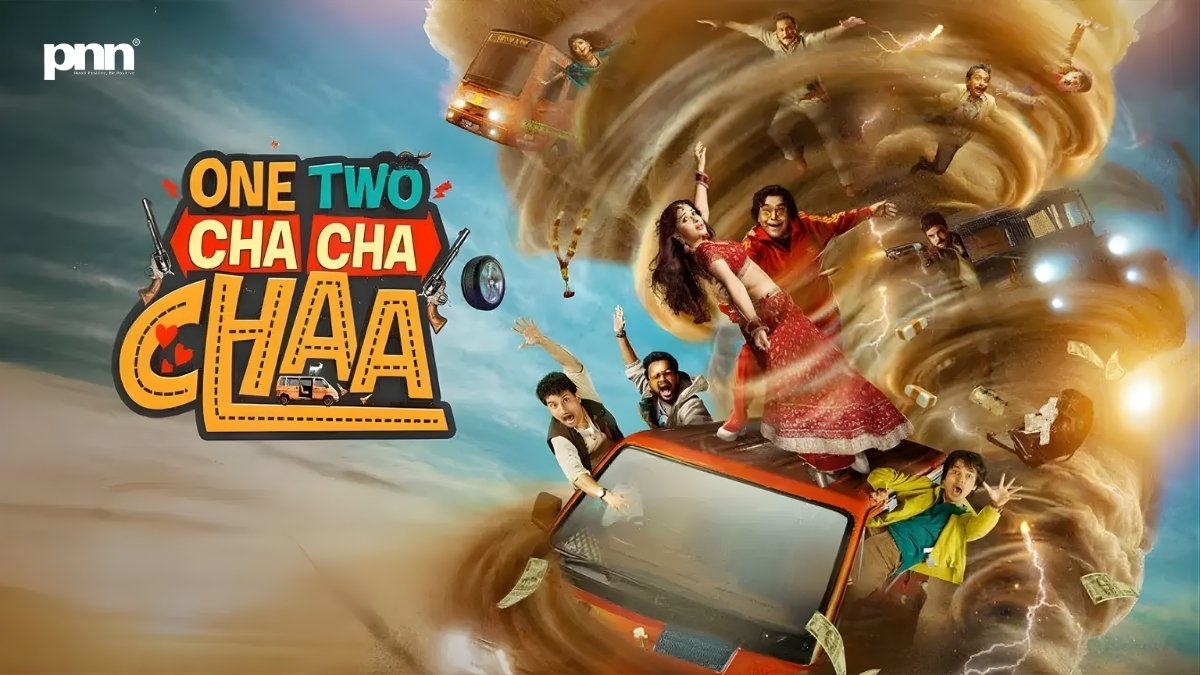
    New Delhi [India], January 17: The new Bollywood action-comedy One Two Cha Cha Chaa 2.0 hits screens with reckless energy, chaotic charm, and unapologetic fun. This is not your typical slapstick flick—it’s a calculated, wild ride that demands you let go and enjoy.

    The movie also marks a bold shift for its lead, showing that breaking away from a familiar image can be exhilarating for both actors and audiences.

    Characters and Roles That Drive the Chaos

    The film is populated with colourful, high-energy characters:

    • Harsh Mayar – the protagonist, shedding his previous “Gullak” image, transforms into a fast-talking, unpredictable action hero. His comic timing keeps the movie bouncing between laughter and edge-of-the-seat moments.

    • Ashutosh Rana – a standout surprise as the antagonist, blending menace and over-the-top hilarity. His presence elevates the film beyond simple comedy.

    • Mona Singh brings charm and wit to the mix, providing the much-needed balance between chaos and romance.

    • Sonam Bajwa – adds glamour and sass, keeping the audience invested in her scenes while supporting the frenetic energy of the leads.

    • Ahan Shetty – contributes youthful enthusiasm and physical comedy, often delivering the wildest stunts with a grin.

    • Supporting Cast: Medha Rana, Ananya Singh, and others round out the ensemble, each adding flavor to the whirlwind narrative.

    Together, these characters form a symphony of chaos that never quite repeats itself.

     One Two Cha Cha Chaa: Breaks the Mould

    From the very first scene, One Two Cha Cha Chaa 2.0 establishes that it isn’t aiming for safe, cookie-cutter comedy. Fast cuts, absurd situations, and a mix of witty dialogue with over-the-top action set the tone. Audiences are in for a ride where predictability takes a backseat.

    One Two Cha Cha Chaa-PNN

    Plot – Comedy Meets Chaos

    The story follows Harsh Mayar’s character as he navigates a bizarre web of mistaken identities, heists gone wrong, and hilariously timed chases. The antagonist, played by Ashutosh Rana, throws in unexpected complications, and every supporting character has a chance to steal the spotlight.

    Unlike traditional Bollywood comedies, this film embraces absurdity as a strength. The pacing is relentless, the punchlines are fast, and the action sequences double as comedic set pieces.

    One Two Cha Cha Chaa: Freshness and Familiarity

    What makes this movie click is its combination of chaotic energy and calculated comedy. It respects the audience’s intelligence—there’s nothing dumbed down here. The actors lean into their roles with confidence, embracing ridiculous situations without hesitation.

    This is also a lesson for Bollywood stars: reinventing oneself can be both risky and rewarding. Harsh Mayar’s transformation from a child-actor image to an action-comedy lead is the proof in the pudding.

     Visuals, Music, and Stunts

    The film doesn’t hold back visually. Vibrant sets, chaotic action choreography, and a high-energy soundtrack complement the comedic beats. Music punctuates punchlines and chase sequences, making every scene feel bigger than life.

    Critical Take – Laughter With Edge

    Reviews from The Times of India and Times Now highlight the film’s strength in creating laughter from absurdity. Ashutosh Rana’s performance is praised as a “surprise package,” while the ensemble cast ensures that no moment feels repetitive. For OTT audiences, the film’s pacing and humour make it binge-worthy.

    India Context – Why This Matters

    Bollywood comedy often teeters between slapstick and story-driven humour. One Two Cha Cha Chaa 2.0 proves that there’s room for films that are simultaneously chaotic, clever, and commercially viable. It also sets a benchmark for Indian action-comedies that embrace absurdity with intent.

    The latest comedy-action flick One Two Cha Cha Chaa has taken audiences by surprise with its wild mix of laughs and suspense. Fans of high-energy Bollywood films will find One Two Cha Cha Chaa a refreshing ride, blending quirky characters with a storyline that keeps you guessing till the very end.

    https://www.imdb.com/title/tt38283987/

    PNN News

  • Rafale Reloaded: Big Boost for IAF as India Green-Lights 114 Fighter Jets

    Rafale Reloaded: Big Boost for IAF as India Green-Lights 114 Fighter Jets

    New Delhi [India], January 17: India has finally hit the green button. A long-awaited plan to acquire 114 Rafale fighter jets from France has cleared a crucial hurdle, giving the Indian Air Force a much-needed shot in the arm.

    The Defence Procurement Board has approved a proposal to buy and jointly manufacture 114 Rafale fighter jets in a deal expected to run into several billion dollars. The decision was taken on Friday, according to senior officials familiar with the discussions. The board is chaired by the defence ministry’s top bureaucrat and handles India’s biggest military purchases.

    This approval does not mean signatures tomorrow. But it does mean the Rafale plan is officially alive and moving.

    For the Indian Air Force, that matters. A lot.

    India’s fighter fleet has been shrinking for years. Many aircraft are ageing. Others are being retired faster than replacements arrive. The bulk of the fleet still traces its roots to Russia, and numbers are falling below sanctioned strength. This deal aims to plug that gap with speed and scale.

    The India Rafale fighter jet deal is also a second act. Back in 2015, India scrapped plans to buy 126 Rafales after years of negotiations collapsed over quality guarantees for jets to be built domestically. That setback reduced the original ambition to a smaller, government-to-government purchase of 36 aircraft.

    Those 36 Rafales are now operational and widely regarded as among the most capable fighters in the region.

    Since then, the relationship has quietly deepened. In April this year, India signed another deal to buy 26 Rafale-M maritime fighters for the Navy, according to Bloomberg News. Add the proposed 114 jets, and France’s footprint in India’s air power story becomes impossible to ignore.

    New Delhi is already the world’s largest buyer of French military hardware, data from the Stockholm International Peace Research Institute shows. This deal would only widen that lead.

    Under the new plan, most of the 114 Rafale fighters will not roll out of French factories. They will be built in India.

    Officials say all but a few jets will be manufactured locally in partnership with Dassault Aviation, the French defence major behind the Rafale. Crucially, the agreement includes technology transfer to Indian partners.

    The goal is clear. By the time production stabilises, 50 percent to 60 percent of each aircraft should be made in India. That includes the airframe, avionics and even engine-related components once the transfer is complete.

    This fits neatly into the government’s Make in India push, but with sharper teeth. Unlike past licence-assembly efforts, this programme is designed to deepen domestic capability rather than just screw parts together.

    Look, it’s not charity. France keeps a major customer. India gains capacity, skills and leverage.

    The timing is also interesting. French President Emmanuel Macron is expected to visit India next month, according to Indian media reports. While officials deny any direct linkage, defence deals of this scale rarely exist in isolation from diplomacy.

    At the same time, India has been steadily reducing its reliance on Russian military hardware. Moscow remains the biggest supplier by volume, but new purchases have slowed over the past few years. Diversification is no longer a buzzword. It’s policy.

    Dassault Aviation has stayed tight-lipped. A company spokesperson declined to comment, and India’s Ministry of Defence and Air Force did not respond to queries after business hours.

    There are still hurdles ahead. Price negotiations must be wrapped up. The final proposal must go to the Union Cabinet for approval. Only then can contracts be signed and delivery timelines locked in.

    Still, clearing the Defence Procurement Board is the hardest political gate. Everything after that is mechanics.

    For the Indian Air Force, this approval signals intent. It says New Delhi recognises the urgency of fighter shortages and is willing to commit big money to fix it.

    For India’s defence industry, the India Rafale fighter jet deal represents something more structural. A chance to absorb advanced aerospace technologies at scale. A chance, finally, to move beyond screwdriver manufacturing.

    And for the region, it sends a message. India is not waiting around while its air power erodes.

    Read More

  • PANKHUDI Portal Launched: A 2026 Digital Push for Women and Child Welfare

    PANKHUDI Portal Launched: A 2026 Digital Push for Women and Child Welfare

    New Delhi [India], January 17: The Ministry of Women and Child Development launched a digital portal, PANKHUDI, on January 8, 2026, an integrated system to enhance partnerships for women and child development in India.

    Union Minister Smt. Annpurna Devi, Minister of State, Smt. Savitri Thakur and Secretary Shri Anil Malik officially launched the portal. The message was clear. Welfare cannot be supported only by paperwork and goodwill. It needs systems. Digital ones.

    The construction of PANKHUDI is based on a single-window platform. One login. One dashboard. It creates a common space where individuals, non-governmental organisations, corporate CSR contributors, research institutions, and government agencies come together with a shared goal. Deliver outcomes for women and children.

    Why the Portal Matters Now

    India already runs some of the largest women and child welfare programmes in the world. Scale has never been the problem. Coordination has.

    CSR funds exist. Voluntary efforts exist. Government schemes exist. What was missing was a clean bridge between them.

    That gap is where the PANKHUDI portal steps in.

    Aligned with Prime Minister Narendra Modi’s focus on technology as a connector between government and citizens, and rooted in the idea of Jan Bhagidari, the portal turns participation into a process. No ambiguity. No scattered efforts. No black boxes.

    One Platform, Multiple Stakeholders

    The real strength of the PANKHUDI portal lies in who it brings together.

    The platform is open to:

    Philanthropists and individuals
    Non-Resident Indians
    Non-Governmental Organisations
    Business organisations and CSR departments
    Central and State Government departments

    All stakeholders operate on the same interface. Contributions are mapped. Proposals follow defined workflows. Every participant knows where the support is directed.

    The thematic focus areas include nutrition, health, Early Childhood Care and Education, child protection, rehabilitation, women’s safety, and empowerment. Together, they cover the full lifecycle of care.

    How PANKHUDI Simplifies CSR

    CSR in India is not short of funds. It is burdened by complexity.

    Multiple approvals. Limited visibility. Weak tracking.

    PANKHUDI addresses these gaps.

    Donors can register, identify initiatives, submit proposals, and track approvals entirely online. Processes are structured. Guesswork is eliminated. Follow-up calls and lost emails are reduced.

    All financial contributions are accepted only through non-cash modes, ensuring built-in traceability. Transparency is not an aspiration here. It is the default setting.

    This directly improves the ease of doing CSR in a practical, operational way.

    Supporting Flagship Women and Child Missions

    The portal functions as a direct enabler of the Ministry’s flagship programmes.

    These include:

    Mission Saksham Anganwadi and Poshan 2.0
    Mission Vatsalya
    Mission Shakti

    PANKHUDI aligns CSR and voluntary contributions with mission priorities. Funding follows need. Partnerships follow outcomes. Monitoring becomes measurable.

    This is policy implementation through a dashboard.

    Transparency by Design

    Accountability is central to the PANKHUDI portal.

    Every proposal, approval, and contribution is digitally recorded. Progress is visible to stakeholders. Implementing agencies are clearly identified. Outcomes can be tracked over time.

    This level of transparency builds trust not only among corporates and NGOs, but also among citizens who rely on these services.

    It represents a quiet but meaningful upgrade in governance, where credibility becomes as important as funding.

    Impact on Anganwadi and Care Institutions

    The real impact unfolds on the ground.

    The portal strengthens infrastructure and services across:

    Over 14 lakh Anganwadi Centres
    Around 5,000 Child Care Institutions
    Nearly 800 One Stop Centres
    More than 500 Sakhi Niwas
    Over 400 Shakti Sadan

    These frontline institutions serve crores of citizens daily.

    Better coordination leads to improved nutrition delivery, safer environments, faster rehabilitation, and stronger support systems for women and children.

    This is digital governance translating into real-world outcomes.

    India Context and the Bigger Picture

    India’s welfare ecosystem is vast. Execution at scale has always been the challenge.

    PANKHUDI is part of a broader shift towards platform-based governance. One portal. Multiple stakeholders. Clear outcomes.

    For corporates, it reduces friction. For NGOs, it improves visibility. For the government, it brings order. For citizens, it enhances service delivery.

    This is not a disruption. It is discipline.

    What Comes Next

    The launch of PANKHUDI is a beginning, not a conclusion.

    Its impact will depend on adoption. Its success will rest on stakeholder participation. Continuous improvement will determine its longevity.

    What is already evident is the intent. India’s approach to women and child development is moving from a fragmented effort to a structured execution.

    And that is how systems deliver results.

    https://pankhudi.wcd.gov.in/

    PNN News

  • The Tradition Meets Urban Life: tattv reinvents Indian Bathing Rituals to the contemporary Metro way of life

    The Tradition Meets Urban Life: tattv reinvents Indian Bathing Rituals to the contemporary Metro way of life

    New Delhi [India], January 17: In a traditional Indian homes bathing was more than cleansing because they were based on nature and nurturing. Boiled neem water to cleanse the skin, freshly made ubtan to exfoliate and brighten, cooling herbs to cool in the heat, floral waters to calm and refresh, it was all purposeful and all related to seasons and skin requirements. These were not luxuries; they were family traditions.

    However, modern metro lives, with their rush, lack of space, time constraints, and more, have rendered traditional rituals hard to sustain. Spraying powders and drains, splattering pastes on tiles, and the necessity to wash dishes after taking a bath make nourishing practices a burden. This usually compels the urban consumers to make a decision between good ingredients and everyday convenience.

    Visit Tattv’s website at – https://www.tattv.care/

    tattv fills this gap by re-creating the old wisdom of bathing into contemporary, daily practical rituals. Its pH-balanced bathing bars are made by hand with natural and elemental ingredients, and their benefits of the past are retained without the inconvenience that was originally linked to them.

    Niraj Jain, Founder, tattv, said:

    “tattv was born from a very simple observation, our traditional bathing wisdom was never flawed, it just no longer fit the way we live today. We wanted to preserve the integrity of those ingredients and rituals, while redesigning them for modern homes, modern schedules, and modern expectations. What makes us happiest is seeing customers tell us that their skin feels healthier, their bathrooms feel calmer, and their daily routine feels more intentional. That tells us we’ve achieved what we set out to do, that is creating a brand that respects tradition, values simplicity, and delivers thoughtful, effective care without compromise.”

    A philosophy of the brand is based on the simplicity, purpose, and respect, towards the skin, towards space, towards conscious living. All bathing bars are sulphate-free, paraben-free, harsh-detergents-free, and each has a specific benefit, such as deep cleansing and oil control, hydration and soothing nourishment.

    Skin pH balance is central to tattv’s formulation approach. Natural skin has a pH of slightly acidic and most conventional soaps disturb this pH, resulting in skin drying, irritation, and sensitivity. tattv bars are created to clean without disrupting the natural oils and promote long-term skin health over short-term surface outcomes.

    tattv is also aware of the requirements of the modern bathrooms. The brand replaces powders on the floor, residue in the drain, and the use of bowls or additional clean-up since traditional ingredients are turned into solid bars, which makes it possible to perform self-care rituals even in small areas.

    In addition to their skincare properties, tattv bathing bars naturally cleanse bathrooms by using herbs and botanicals to counter-odorize the air-and this is the added advantage of body care and air care without the use of artificial fresheners.

    tattv is not one size fits all: the products are tailored to various skin types, seasons, and even sensory inclinations. With elemental inspirations, Tattv offers products in only 5 categories – Agni, Jal, Vayu, Akasa and Prithvi. The products are formulated using ingredients from these categories only. E.g – Agni category has Activated Charcoal Bathing bar because Charcoal is derived from Agni. As these 5 tattv’s are linked to Zodiac signs, the variations boast personality characteristics and preferences as customers love selecting the products according to their signs, thus portraying an element of self-expression instead of only astrological effectiveness.

    The tattv experience is embedded with transparency and accountability. All bathing bars are packed in reusable tin boxes and are covered in compostable corn-based plastic. Synthetic accessories are substituted by natural jute loofahs, and a pH test kit is provided with each bar to allow the users to check the skin-friendly formulation themselves, which strengthens the trust and education and the use of the product.

    The mission of the brand appeals to conscious consumers, in particular, busy people, families, and conscious urban residents who desire meaningful wellness but are not complicated by it. tattv is a brand that promotes self-care as a refined, efficient, and grounded ritual that can easily fit into modern lifestyles.

    Thoughtfully designed, deliberate ingredient-integrity, and a holistic user experience, unboxing to daily use, tattv is transforming Indian bathing rituals for the modern metro cities and making meaningful tradition relevant and lived.

    Tradition, refined. Ritual, transformed. Daily care, redefined.

    About Niraj Jain:
    Niraj Jain is the CEO & Founder of Tattv, a premium, purpose-led bathing & personal care brand under One Zero Zero Eight Company (formerly OZZEC Products Pvt. Ltd.). His vision is to bring traditional Indian bathing and personal care practices into the most usable, modern form, making them relevant for today’s urban homes and lifestyles. The skin-pH friendly bathing bar marks the beginning of this vision, blending time-honoured ingredients with clean, contemporary formulations. With over 15 years of experience in business management and marketing, he specializes in building customer-centric brands that blend tradition, science, and sustainability. He holds a degree in Business Management from XLRI, Jamshedpur, and an Engineering degree in Electronics & Telecommunication.

    If you object to the content of this press release, please notify us at pr.error.rectification@gmail.com. We will respond and rectify the situation within 24 hours.

  • Lenovo’s Rollable OLED Laptop Is Audacious, Addictive — And Slightly Uncomfortable In All The Right Ways

    Lenovo’s Rollable OLED Laptop Is Audacious, Addictive — And Slightly Uncomfortable In All The Right Ways

    Mumbai (Maharashtra) [India], January 16: There’s a moment at every major tech reveal when the room goes quiet — not because something is subtle, but because it’s bold enough to feel slightly illegal. Lenovo’s rollable OLED gaming laptop concept belongs squarely in that category. Not another thinner bezel. Not another RGB keyboard pretending to be innovative. This time, the screen literally grows.

    In an industry obsessed with shaving millimetres and repackaging déjà vu as progress, Lenovo chose spectacle — but with intent. A gaming laptop that expands its display on demand, stretching upward from a compact base into something that edges dangerously close to desktop territory, feels like a design thesis disguised as a product demo.

    And yes, it’s impressive. Also, yes, it raises uncomfortable questions about durability, pricing, and whether we actually asked for this. But that discomfort might be the point.

    Before we get to the mechanics, let’s acknowledge the subtext: portable gaming laptops have been stuck in an identity crisis for years. Too heavy to be truly mobile. Too compromised to replace desktops. Lenovo’s rollable OLED concept isn’t just hardware theatre — it’s a provocation.

    When Portability Meets Ambition, Things Tend To Stretch

    The rollable OLED display expands vertically, transforming what starts as a conventional laptop screen into a much larger canvas. For gamers, that means more vertical real estate for immersive worlds, expanded HUDs, or multitasking without feeling like you’re peering through a mail slot.

    For creators, it quietly hints at timelines, code windows, and layered workflows breathing a little easier.

    This isn’t Lenovo’s first flirtation with flexible displays. The company has a documented habit of treating laptops like experimental canvases rather than sacred objects. Dual screens. Foldables. Now rollables. While some of these concepts never reach mass production, they serve a strategic purpose: repositioning Lenovo as a company willing to fail publicly in order to evolve privately.

    The OLED choice matters here. Rollable technology demands panels that can bend without degrading image quality, colour accuracy, or refresh consistency — areas where OLED already holds an advantage. The result is a display that looks less like a gimmick and more like a proof of patience.

    Still, patience doesn’t pay repair bills.

    Gaming Laptops Have Been Playing It Safe For Too Long

    Let’s be honest: the gaming laptop category has been recycling the same silhouette for half a decade. Aggressive vents, muscular branding, and performance numbers that climb while actual user experience stagnates.

    Lenovo’s concept disrupts that inertia.

    By allowing the screen to expand only when needed, the device attempts to reconcile two opposing desires:

    • A laptop that fits into a backpack without apology

    • A display that doesn’t feel like a compromise once the game loads

    It’s clever. It’s theatrical. And it’s also a logistical nightmare waiting to happen if executed poorly.

    Movable parts age. Hinges loosen. Mechanisms fail. Gamers are not known for gentle handling. Lenovo knows this, which is why the concept remains exactly that: a concept.

    But concepts influence product roadmaps long before they hit shelves.

    The OLED Question Nobody Wants To Ask Out Loud

    OLED is gorgeous. It’s also notorious for burn-in anxiety, especially in static-heavy environments like gaming HUDs and productivity interfaces. Lenovo’s engineers have undoubtedly considered mitigation strategies, but skepticism is not cynicism here — it’s experience.

    Add motion mechanics to the equation, and the risk profile grows.

    This doesn’t invalidate the concept. It contextualises it.

    Early adopters don’t just buy products; they buy the privilege of discovering what breaks first. Lenovo’s rollable OLED laptop feels tailored for that audience — the kind that values novelty, visibility, and future-facing aesthetics as much as frame rates.

    The question is whether Lenovo wants this to stay aspirational or become transactional.

    A Subtle Message To Competitors: Stagnation Is A Choice

    The real impact of this reveal isn’t whether this exact device ships. It’s what it forces others to confront.

    If a screen can roll, why are we still locked into fixed aspect ratios?
    If portability can be adaptive, why does size remain binary?
    If laptops can physically change, why does design language remain static?

    Lenovo isn’t answering these questions outright — it’s baiting the industry to respond.

    And that’s smart PR.

    The Cost Of Being First Is Rarely Mentioned In The Keynote

    Let’s address the elephant that will eventually sit on the price tag.

    Rollable OLED displays are expensive. The engineering required to ensure longevity, consistency, and safety will not come cheaply. If commercialised, this laptop would sit firmly in the premium tier — possibly beyond what even high-end gamers consider reasonable.

    There’s also the question of repairing ecosystems. Modular? Proprietary? Serviceable or sealed? These details determine whether innovation becomes evolution or e-waste with a fanbase.

    Lenovo has an opportunity here to define not just a product, but a philosophy around futuristic hardware ownership. Whether it chooses to is another matter.

    Why This Concept Still Matters, Even If You Never Buy It

    Not every product needs to be purchasable to be influential.

    This rollable OLED gaming laptop does three important things:

    • It reframes what “screen size” can mean in mobile computing

    • It challenges the industry’s obsession with minimalism over imagination

    • It reminds consumers that laptops don’t have to be frozen in form

    In a market drowning in incremental updates, imagination itself becomes a feature.

    And Lenovo understands that perception often precedes adoption.

    The Future Of Gaming Laptops Might Be Flexible — Emotionally And Physically

    There’s something almost poetic about a screen that expands when needed and disappears when it doesn’t. It mirrors how people actually use technology today: adaptable, contextual, slightly indulgent.

    Is it practical? Debatable.
    Is it necessary? Probably not.
    Is it exciting? Absolutely.

    Innovation doesn’t always arrive asking for permission. Sometimes it rolls out — literally — and waits for the industry to catch up.

    Lenovo’s rollable OLED gaming concept isn’t here to replace your current laptop. It’s here to make it feel suddenly… dated.

    And that, quietly, might be its greatest achievement.

    PNN Technology

  • Celebrity Hair Transplant: You’d Never Guess They Had a Hair Transplant- But They Did

    Celebrity Hair Transplant: You’d Never Guess They Had a Hair Transplant- But They Did

    New Delhi [India], January 16: In the last few years, awareness about hair-related issues has increased significantly among people, especially celebrities, sports persons, and famous personalities. People no longer take hair loss and baldness lightly; instead, they promptly start looking for treatment. This is why the popularity of hair restoration treatments and hair transplants has increased considerably, particularly among celebrities. For film stars, a hair transplant is not just an aesthetic procedure; it’s the best way to enhance their looks, improve their personality, boost their self-confidence, and improve their public image. Many celebrities and Bollywood stars today want to get world-class hair transplants right here in India and prefer clinics that offer luxurious and premium treatment.

    Why Celebrities Choose Dr. Haror’s Wellness? 

    Dr. Haror’s Wellness, the best hair transplant clinic in Delhi, India, is at the forefront of offering world-class hair transplants with the help of the latest techniques, advanced technology, personalized plan, and expert care. Dr. Navnit Haror, founder of Dr. Haror’s Wellness, is a gold medalist dermatologist and international hair transplant surgeon who has helped numerous celebrities to achieve natural, dense, and long-lasting hair.

    • Certified & experienced surgeons
    • Modern techniques like FUE, URHT, DHT, Bio-FUE, etc.
    • Advanced equipment
    • State-of-the-art clinic
    • Premium facilities
    • Discreet procedure
    • Customized treatment plan
    • Expert care

    The list of celebrities who have had their hair transplant done is long and includes Hindi film actors, TV actors, famous comedians, etc. Here are some of our celebrity hair transplant results

    Celebrity Hair Transplant: You’d Never Guess They Had a Hair Transplant—But They Did!-PNNAshmit Patel

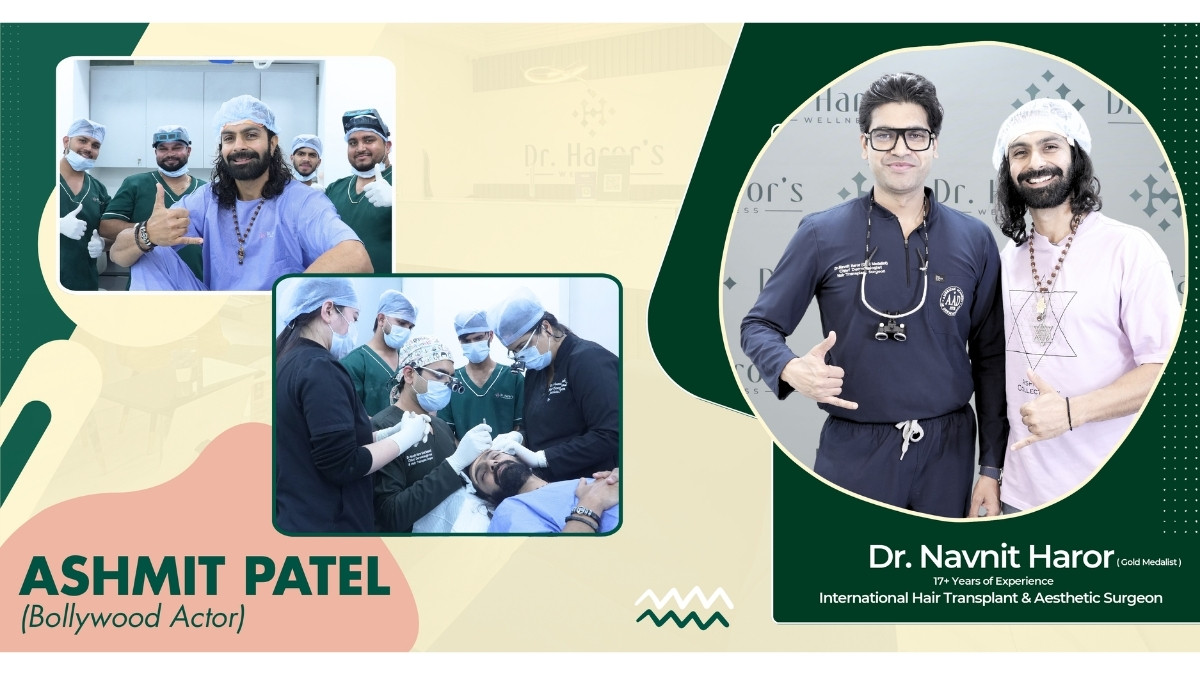
    Ashmit Patel, a popular Bollywood actor who has appeared in several popular Hindi films, including Murder, Inteha, Nazar, etc., and is also the runner-up of the reality show Bigg Boss Season 4, was experiencing vertex hair loss. This was affecting his on-screen appearance, and he didn’t take too much time to decide that a hair transplant could change his appearance forever. Considering his busy schedule and work commitments, Dr. Navnit performed the procedure using the unshaven hair transplant technique so that it wouldn’t affect his appearance or shooting schedule.

    Celebrity Hair Transplant: You’d Never Guess They Had a Hair Transplant—But They Did!-PNNSudesh Berry

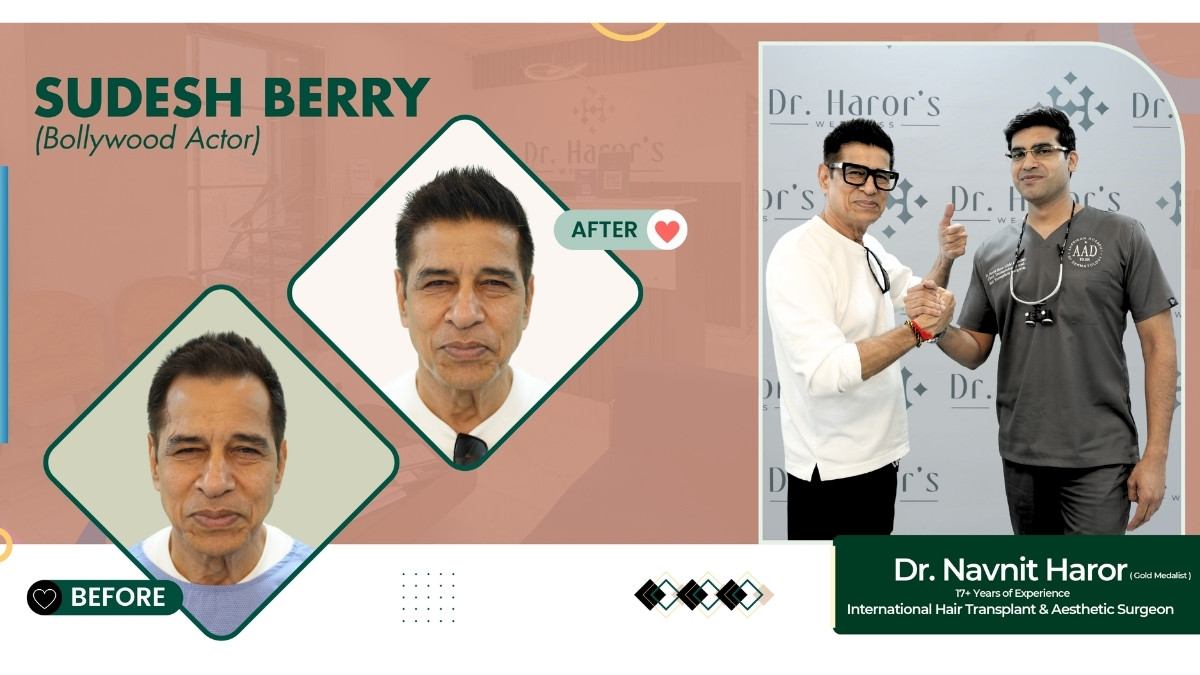
    Sudesh Berry, a popular face across Hindi films and Television. He portrayed the role of Naib Subedar Mathura Das in the iconic 1997 film Border. He was quite stressed due to hair fall and a receding hairline. Being from an industry where physical appearance matters a lot, he decided not to delay it further and trusted the expertise and experience of Dr. Haror’s Wellness for his transplant surgery. The procedure has been truly life-changing for him. His hair is looking dense and natural with a perfectly designed hairline.

    Celebrity Hair Transplant: You’d Never Guess They Had a Hair Transplant—But They Did!-PNN

    Pradeep Ram Singh Rawat

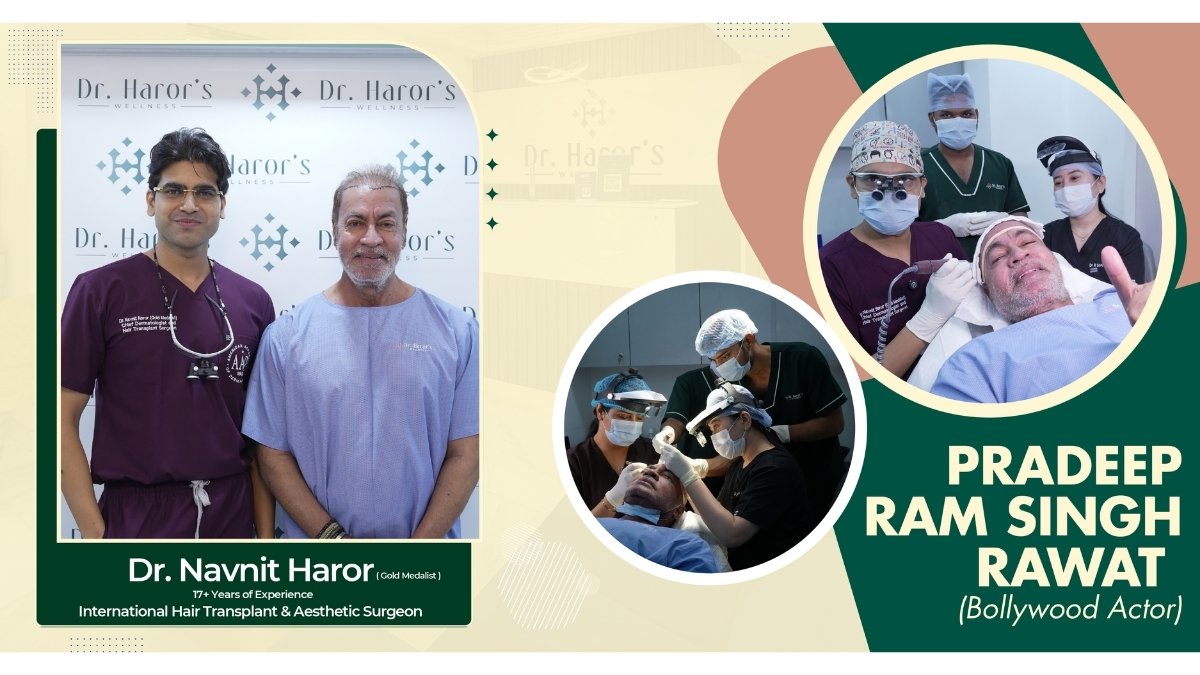
    Known for playing villainous roles, Pradeep Ram Singh Rawat is a well-known figure in the Hindi, Tamil, and Telugu film industry. He is widely recognized for his role as Ghajini Dharmatma in the hit film Ghajini (2008). He had previously undergone a hair transplant elsewhere, which was unsuccessful. Celebrities are known for their courage, and he demonstrated this by getting a corrective hair transplant from Dr. Haror’s Wellness.

    Missing your old hairline?

    Are you losing sleep over hair loss, thinning, or baldness? Hair transplant could be the best option for you, giving you natural, dense, and permanent hair. Book your consultation with us. We have helped many celebrities address their hair loss, and our experienced surgeons can help you tackle yours, too.

    Is a celebrity hair transplant the same as a normal hair transplant?

    Yes! Both a celebrity hair transplant and normal hair transplant are same. However, there are some minor changes in terms of customization, surgeon’s involvement, privacy, and lifestyle. But the result of both procedures remains same.

    How to choose the best hair transplant clinic in Delhi,India?

    The doctor’s experience, techniques used, past results, procedure cost, clinic’s facilities, after surgery care & support, etc., matter the most in getting natural and permanent hair transplant results. So, keep these factors in mind while looking for the best hair transplant clinic in Delhi.

    What is the unshaven hair transplant procedure?

    In this technique, surgeons don’t shave the donor or recipient area completely to extract and implant hair follicles. This procedure is generally preferred by those who want to maintain privacy about their surgery.

    How much does a hair transplant cost in Delhi? 

    The average cost of a hair transplant in Delhi ranges between Rs. 60,000 – Rs. 2,00,000. The cost also depends on other factors like the surgeon’s experience, the technique used, the number of grafts needed, the clinic’s reputation, location, etc.

    If you object to the content of this press release, please notify us at pr.error.rectification@gmail.com. We will respond and rectify the situation within 24 hours.

  • Seed Act 2026 Explained: QR Codes, INR 30 Lakh Fines, Real Accountability

    Seed Act 2026 Explained: QR Codes, INR 30 Lakh Fines, Real Accountability

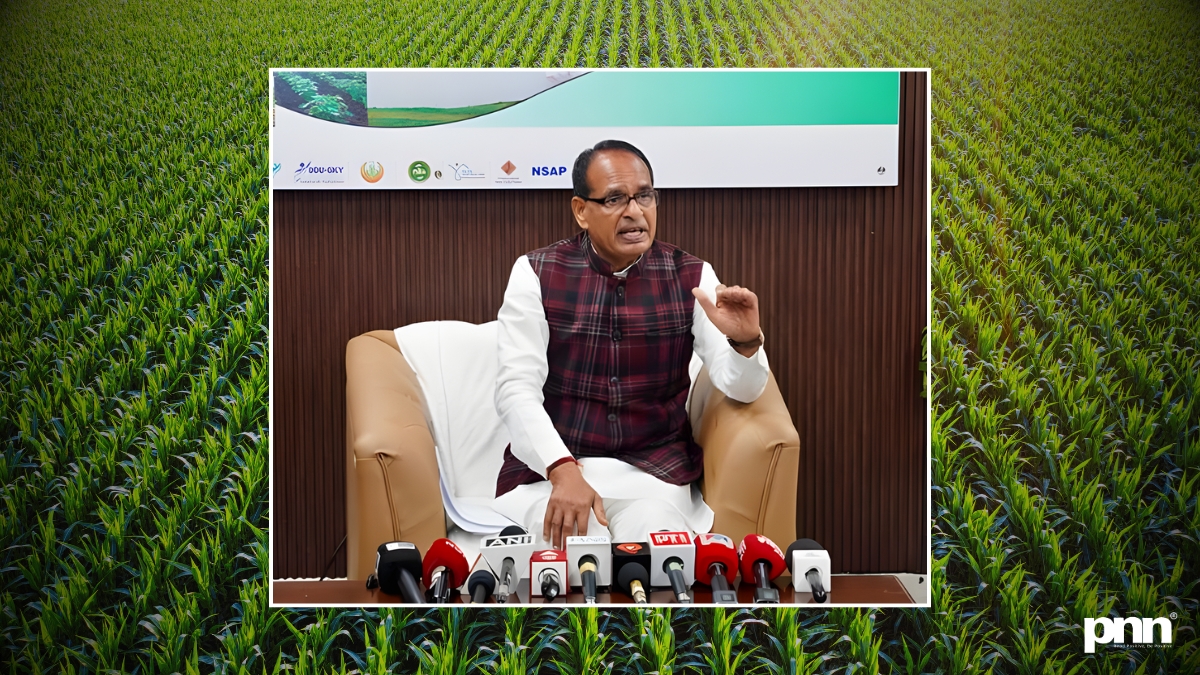
    New Delhi [India], January 16: Fake seeds have cheated Indian farmers for years. Seed Act 2026 is the government’s blunt answer, and it does not mince words.

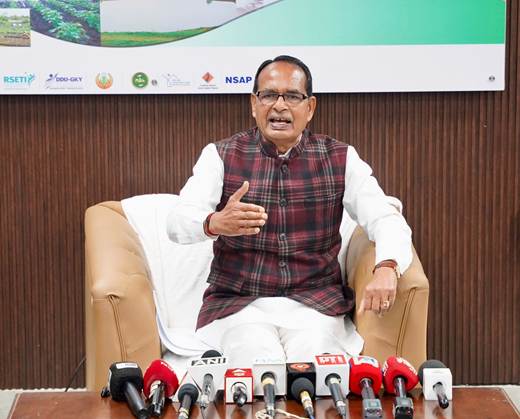
    India’s seed market has long had a credibility problem. Good companies played fair. Too many others didn’t. Farmers paid the price with failed crops, lost seasons and zero accountability. Union Agriculture Minister Shivraj Singh Chouhan is now drawing a hard line. Seed Act 2026, he says, is designed to end the chaos for good.

    This is not a cosmetic update. It is a structural overhaul of a law written in 1966, an era without QR codes, digital records or modern supply chains. According to the minister, that old framework simply could not handle today’s scale, complexity or abuse.

    Seed Act 2026 changes that equation.

    Every Seed Tells Its Story

    At the heart of Seed Act 2026 is a nationwide traceability system. In plain terms, every seed packet will now carry a QR code. Farmers scan it and instantly see where the seed was produced, who supplied it and who sold it.

    No mystery. No middlemen vanishing into thin air.

    Minister Chouhan made the intent clear. Farmers should know the complete story of every seed they buy. If something goes wrong, the system will point directly to the source. Accountability stops being theoretical and becomes immediate.

    This traceability also means enforcement shifts from reactive to preventive. Fake or substandard seeds are meant to be identified before they spread damage across entire regions. And if they slip through, action will be swift.

    The minister did not sugarcoat the problem. Fake and poor-quality seeds have thrived because enforcement was weak. Penalties were laughably small. A maximum fine of ₹500 was hardly a deterrent.

    There is now a proposal for penalties up to ₹30 lakh for selling substandard seeds. Deliberate offenders can face imprisonment of up to three years. This is zero tolerance, on record.

    Minister Chouhan acknowledged that not every company is guilty. But those who cheat farmers, he said, will face strict punishment. The message is simple. If you profit by ruining a farmer’s crop, expect consequences that actually hurt.

    Another quiet but powerful change is mandatory registration of seed companies. Under Seed Act 2026, only authorised, registered entities will be allowed to sell seeds.

    This wipes out fly-by-night operators who pop up for a season and disappear once complaints pile up. Farmers will have access to verified details of registered companies. Transparency moves from brochures to databases.

    Unauthorised sellers will be barred outright. That alone could clean up a large part of the market.

    One concern surfaced quickly. Would the new law restrict traditional seed practices?

    Minister Chouhan addressed it head-on. There will be no restriction on farmers using, saving or exchanging traditional seeds. Local seed-sharing systems, common across rural India, remain protected.

    Farmers can continue sowing their own seeds. They can exchange seeds with neighbours. Those age-old practices stay exactly as they are. Seed Act 2026 targets commercial malpractice, not cultural farming habits.

    Seed Act 2026 operates on three clear levels.

    First, public institutions. The Indian Council of Agricultural Research, agricultural universities and Krishi Vigyan Kendras remain central pillars. Their role in developing and validating quality seeds is reinforced.

    Second, domestic private companies producing high-quality seeds are encouraged. The law is not anti-business. It is anti-fraud.

    Third, foreign seeds. Imports will be allowed only after thorough testing and evaluation. No shortcuts. No blind approvals. The goal is to ensure Indian farmers are not experimental subjects for untested products.

    This balance matters. It keeps India’s seed ecosystem competitive while protecting farmers from being exploited.

    A strong law fails if people do not understand it. The government seems aware of that risk.

    Minister Chouhan pointed to initiatives like the Viksit Krishi Sankalp Abhiyan, where scientists, officials and progressive farmers go directly to villages. The aim is education, not paperwork.

    All 731 Krishi Vigyan Kendras across the country will play a key role. Farmers will be trained to identify quality seeds, understand QR traceability and use grievance mechanisms when something goes wrong.

    This matters. A QR code only works if someone knows to scan it.

    Another predictable worry was federal overreach. Agriculture is a state subject under the Constitution, and Minister Chouhan was careful to underline that states’ rights remain intact.

    Seed Act 2026 does not centralise power. The Centre coordinates. States implement. Cooperation, not control, is the official line.

    Given India’s diversity in crops, climates and farming practices, this clarity is essential.

    Why Seed Act 2026 Actually Matters?

    On paper, Seed Act 2026 looks tough. In practice, its success will depend on enforcement. But the architecture is finally right.

    Traceability brings transparency. Heavy penalties bring fear of consequence. Mandatory registration brings order. Protection of traditional seeds brings trust.

    For decades, farmers bore the risk while dishonest sellers pocketed profits. This law attempts to rebalance that equation.

    Read More

  • PNB MetLife Launches Dividend Leaders Index Fund: A Disciplined Way to Invest in Consistent Cash Flow Generators

    PNB MetLife Launches Dividend Leaders Index Fund: A Disciplined Way to Invest in Consistent Cash Flow Generators

    New Delhi [India], January 16: Dividend-led investing has emerged as a disciplined equity strategy for investors seeking stability alongside long-term growth. Companies that consistently distribute dividends often demonstrate strong governance, resilient cash flows, and prudent capital allocation. In volatile market environments, such attributes can add a layer of balance to equity portfolios.

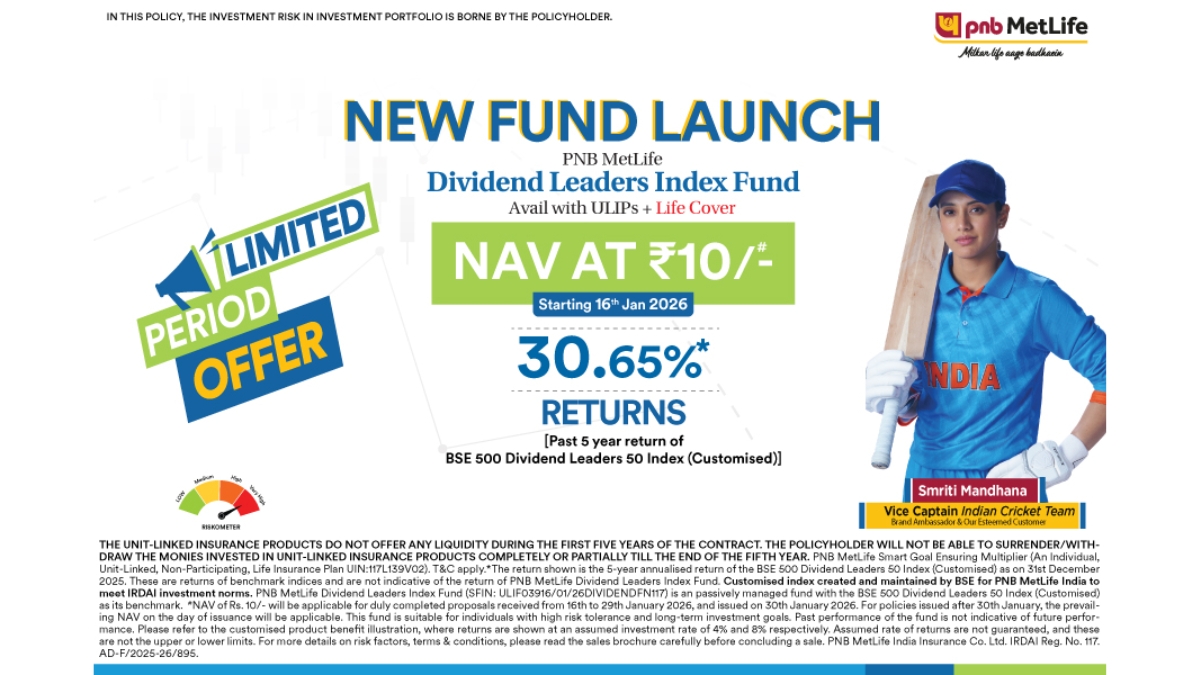
    For investors seeking a rules-based approach to investing in high dividend yield companies, PNB MetLife has launched the PNB MetLife Dividend Leaders Index Fund at an initial Net Asset Value (NAV) of ₹10. This new fund launch is available for a limited period and offers structured exposure to the BSE 500 Dividend Leaders 50 Index (Customised), enabling investors to participate in a rules-based portfolio of companies selected for their dividend yield and consistency.

    The index comprises the top 50 dividend-paying companies selected from the broader BSE 500 universe, based on predefined criteria around dividend yield and consistency. The fund follows a passive investment approach and aims to mirror the performance of the BSE 500 Dividend Leaders 50 Index (Customised), subject to tracking error.

    The fund is available to existing and new policyholders through select PNB MetLife ULIP plans.

    Benefits of the PNB MetLife Dividend Leaders Index Fund

    1. Exposure to Dividend-Focused Companies: The fund invests in companies drawn from the BSE 500 universe that have demonstrated a consistent history of dividend payments. These companies typically reflect mature business models and financial discipline, although dividend payments are not guaranteed.

    2. Passive, Index-Based Investment Strategy: The BSE 500 Dividend Leaders 50 Index (Customised) follows a transparent, rules-based methodology that removes subjective stock selection. Periodic index reviews and rebalancing ensure the portfolio continues to align with dividend-focused criteria over time.

    3. Diversified Sector Allocation: The index provides exposure across key sectors such as Energy, Information Technology, Commodities, Utilities, and Financial Services. This diversification helps reduce concentration risk while maintaining the fund’s dividend-oriented objective.

    4. Long-Term Wealth Creation Potential: Historical performance of the BSE 500 Dividend Leaders 50 Index indicates that reinvested dividends, reflected through the Total Return Index, can meaningfully enhance long-term returns. As of 31 December 2025, the BSE 500 Dividend Leaders 50 Index (Customised) has recorded a 5-year total returns CAGR of 30.65 percent as per Index provider’s data. While past performance does not indicate future results, it highlights the compounding role of dividends over extended investment horizons.

    5. Insurance and Investment in One Structure: Through the PNB MetLife Dividend Leaders Index Fund, investors can access market-linked equity exposure along with life insurance cover under a ULIP structure, subject to applicable policy terms and regulatory provisions. Dividends received from underlying companies are reinvested and do not result in direct payouts to policyholders.

    Who Should Invest?

    The PNB MetLife Dividend Leaders Fund may be considered by investors who:

    • Seek long-term equity exposure through a passive, index-based strategy
    • Prefer companies with a proven dividend-paying track record
    • Are comfortable with equity market volatility and market-linked returns
    • Have a medium- to long-term investment horizon of five years or more

    The fund carries a Very High risk classification due to its equity exposure and may not be suitable for conservative investors.

    The PNB MetLife Dividend Leaders Index Fund is available through select PNB MetLife ULIP plans via the company’s official website (www.pnbmetlife.com) and direct offline channels.

    Disclaimer:

    • IN THIS POLICY, THE INVESTMENT RISK IN THE INVESTMENT PORTFOLIO IS BORNE BY THE POLICYHOLDER. The unit-linked insurance products do not offer any liquidity during the first five years of the contract. The policyholder will not be able to surrender/withdraw the monies invested in Linked Insurance Products completely or partially till the end of the fifth year. TERMS AND CONDITIONS APPLY.

    • For more details on risk factors, terms & conditions, please read the sales brochure before concluding any sale.

    • PNB MetLife Dividend Leaders Index Fund (SFIN: ULIF03916/01/26DIVIDENDFN117) is a passively managed fund with the BSE 500 Dividend Leaders 50 Index (Customised) as its benchmark. *Customised index created and maintained by BSE Index Services Pvt. Ltd. for PNB MetLife India to meet IRDAI investment norms.

    • NAV of Rs. 10/- will be applicable for duly completed proposals received from 16th to 29th January 2026 and issued on 30th January 2026.

    • PNB MetLife India Insurance Company Limited (PNB MetLife) is one of the leading life insurance companies in India that combines the financial strength of MetLife, Inc. with the credibility of PNB, one of India’s oldest nationalised banks. PNB MetLife’s positioning, Milkar Life Aage Badhaein, is demonstrated through its customer-centric innovations and employee empowerment practices.

    • With a strong presence in 182 branches and access to customers in over 20,000 locations through bank partnerships, PNB MetLife offers a comprehensive insurance solutions portfolio covering Child Education, Family Protection, Long-Term Saving and Retirement. The Company has a wide range of protection and retirement products available through its sales channel of over 36,000 financial advisors and multiple bank partners, and caters to over 585 group relationships in India.

    For more information, follow us on:

    Facebook – www.facebook.com/PNBMetLife
    Instagram – https://www.instagram.com/pnb_metlife or
    Visit – https://www.pnbmetlife.com/

    If you have any objection to this press release content, kindly contact pr.error.rectification@gmail.com to notify us. We will respond and rectify the situation in the next 24 hours.

  • Is Martin Scorsese Overrated? Separating Cinematic Genius from Cultural Myth

    Is Martin Scorsese Overrated? Separating Cinematic Genius from Cultural Myth

    Santa Clara (California) [USA], January 16: In a time when franchise blockbusters and visual spectacle dominate the silver screen, there is a particular gravity to the name Martin Scorsese and his undeniable Legacy. His films are not mere tales; they are explorations of our stranded human nature, they are footprints of failed trails of one’s psyche towards the abandoned streets of morality and how society feigns to be strong yet comes out fragile at the back door. Occasionally, debate arises as to whether Scorsese is a true cinematic genius or a man who has been raised to cultural godhead status by the cultural reverence. Yet, looking back at his career and contribution, it can be seen that it left a legacy characterised by innovation, craft and lasting impact; not hype.

    From Mean Streets to The Irishman, Scorsese’s directorial fingerprints are clear all over some of the most influential films of modern cinema, classic cinema indeed. The films that are talked about like an old cliché among the groups of cinephiles, of our generation and the generation that preceded it. Truly, Scorsese and his work have inspired generations of filmmakers and filled audiences around the world with amazement and alacrity, and left a lasting impression on the art and business of filmmaking and the very consumption of it.

    A Career Based on Storytelling

    With a film like Taxi Driver (1976), Scorsese approached the theme of men’s alienation and morality with a great force of precision; his character spends sleepless nights working as a taxi driver, for him days go on and on and this loop seems endless, he wants to end this all, he wants to end his life. It clearly depicts the absurd nature of human life trapped in city life. Subsequent masterpieces such as Raging Bull, Goodfellas, and The Departed showed his capacity to combine genre energy and the deep character studies that brought him critical acclaim and industry recognition.

    Fame and Cultural Impact

    Scorsese’s success goes far beyond mere box office numbers. His multiple Academy Award nominations, including wins for Best Director, indicate the brilliance of a director who told the world a story of human agony with all the possible techniques of art and cinema one can apply to it; originality and artistic audacity in his craft are what most of his fans adore. Though some critics still opine that his overuse of film techniques strangles the emotional aspect at times and creates a void where his characters resemble nothing more than empty vessels; yet others say this void is a symbol of human absurdity and men’s alienation within society.

    His films being included in the U.S. Library of Congress National Film Registry attests to their long-term cultural significance. Moreover, Scorsese has advocated for film preservation through The Film Foundation, preserving cinema’s past for future generations.

    Understanding the Debate

    Whilst some critics may suggest that Scorsese’s fame may be exaggerating his talent, such opinions are often blind to the depth and influence of his work. Films that challenge audiences, such as Goodfellas or Silence, will cause audiences to have conversations, rather than provide easy entertainment.

    The discussion is not about overrating his skill, but about contrasting the modern blockbuster culture to the intricate, character-driven storytelling of Scorsese. What may seem to some as “overhyped” is in fact a reflection of a filmmaker whose work engages on many levels – emotionally, intellectually, and aesthetically.

    Enduring Relevance

    Scorsese is still innovating even into his eighties. Recent projects such as Killers of the Flower Moon has proven that he is still able to be relevant, to experiment with form, narrative, and subject matter. His work transcends the generations, proving that the Martin Scorsese Legacy is not a Museum of the Past but a living, evolving force in contemporary cinema. The real measure of his legacy is not in passing online debates, but in the lasting nature of his films and their impact on culture, art and filmmakers around the world.

    Conclusion: Beyond Myth: A Legacy

    The issue of whether Martin Scorsese is “overhyped” is missing the point. Not only limited to Hollywood cinema, but his craft also has a huge impact on world cinema as we see it today. He gave the camera a perspective where the characters are seen with their eyes and not through their skin alone. Scorsese gave his actors the freedom to explore their characters way beyond the written script, and that was the reason we have the epic character monologues like De Niro’s “You Talkin’ to Me?” in Taxi Driver. His films, advocacy, and yet continuation of exploring man’s experience are a definition whose legacy transcends the trends. The Martin Scorsese Legacy is decades of innovation, impact and commitment to storytelling that is deep and long-lasting. Rather than being a matter of hype, it is a testimony to a filmmaker who left behind works that would impact many generations to come, proving that there is such a thing as cinematic art that will truly outlast the test of time.

    If you object to the content of this press release, please notify us at pr.error.rectification@gmail.com. We will respond and rectify the situation within 24 hours.

    Entertainment

  • College for Creative Studies, Detroit, Explores India for Global Design Talent in Landmark Leadership Visit

    College for Creative Studies, Detroit, Explores India for Global Design Talent in Landmark Leadership Visit

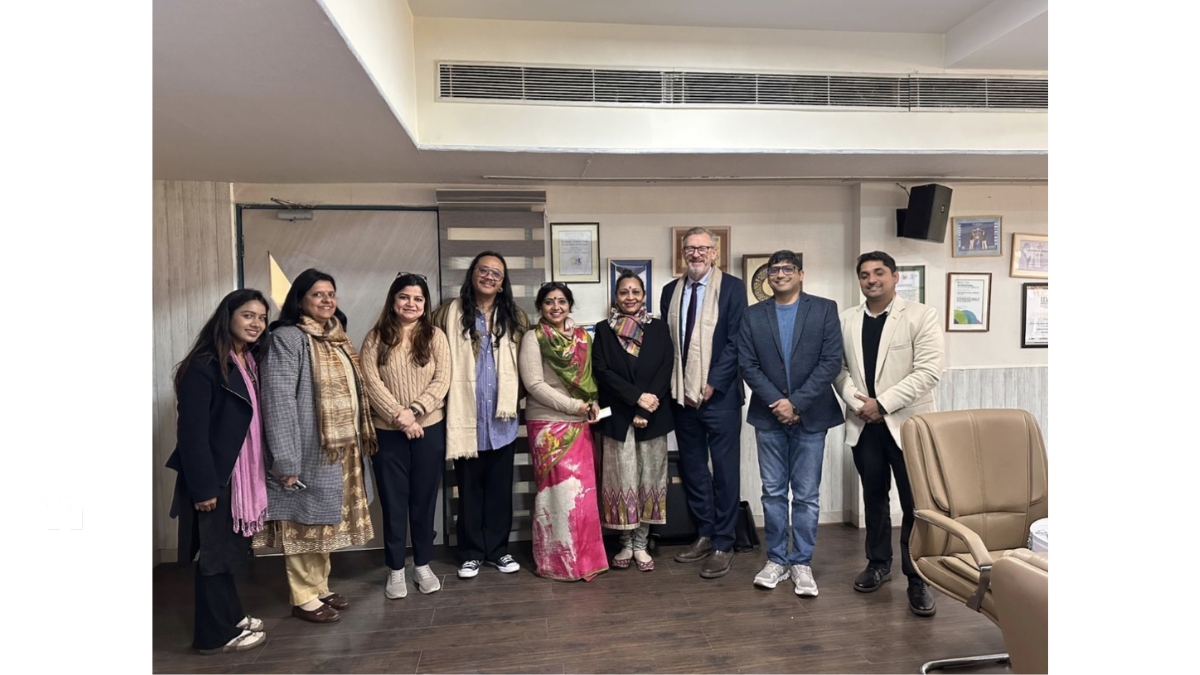
    New Delhi [India], January 16: In a significant milestone for India’s rapidly evolving creative education landscape, the College for Creative Studies (CCS), Detroit, one of the world’s leading institutions for art and design education, completed its first-ever leadership visit to India. The delegation was led by Don L. Tuski, President of the College for Creative Studies, along with Ray Pedor, Senior Faculty Member, Fashion Department.

    Founded over 120 years ago in Detroit, Michigan, CCS is globally recognised for producing industry-ready creative leaders across disciplines such as Transportation Design, Fashion Design, Communication Design, Strategic Design, and emerging digital and interdisciplinary design fields. This inaugural visit by the President of CCS underscores the institution’s growing commitment to engaging with India’s next generation of global creative talent.

    During the visit, the CCS leadership engaged extensively with school leadership teams, senior educators, high school students, parents, and counselors across multiple forums in New Delhi and Gurugram. These interactions focused on expanding awareness of future-focused art and design careers, global industry expectations, and the increasing demand for interdisciplinary, innovation-driven designers worldwide.

    Speaking during the visit, Don L. Tuski highlighted the evolving role of design in the global economy:

    “Today, art and design are central to innovation across mobility, sustainability, technology, fashion business, and human-centred experiences. India has immense creative potential, and our objective is to build clear, credible pathways for Indian students to access world-class design education and global careers.”

    In the Indian context, art and design education has traditionally been perceived through a narrow lens, often limited to fashion or interior design. CCS aims to broaden this narrative by showcasing future-forward disciplines such as Transportation Design, Concept Design, UI/UX Design, Strategic Design, Fashion Business Management, and Communication Design—fields that operate at the intersection of creativity, technology, and industry impact.

    CCS is particularly renowned for its Transportation Design program, widely regarded as one of the best in the world. Students regularly collaborate with leading global automotive and mobility companies through sponsored studio projects, designing vehicles, products, and mobility systems envisioned for the year 2050 and beyond. Graduates from CCS are actively recruited by major global automotive and design-led organisations, positioning the institution as a premier launchpad for future mobility and industrial design careers.

    The India visit was undertaken in collaboration with High School Moms (HSM)—one of the world’s largest parent-student communities—and GIDE AI, a Forbes India and D Globalist Select 200 company specialising in college and career advisory. Together, the partnership aims to build structured awareness, guidance frameworks, and access pathways for high-potential Indian students aspiring to global careers in art and design.

    Through this collaboration, CCS seeks to make its programs more accessible to Indian students—not only by increasing awareness and counselling support, but also by reinforcing its commitment to high-quality global education at a relatively affordable cost compared to traditional art and design study destinations.

    The visit reflects a broader shift in how leading global institutions are engaging with India—not merely as a recruitment market, but as a strategic contributor to the future of global design, innovation, and creative leadership.

    As India’s creative economy continues to expand across sectors including mobility, digital experiences, fashion technology, product innovation, and human-centred design, the College for Creative Studies’ India engagement represents a pivotal step toward building long-term academic, industry, and talent bridges between India and the global design ecosystem.

    If you object to the content of this press release, please notify us at pr.error.rectification@gmail.com. We will respond and rectify the situation within 24 hours.