Author: Sutun Nayak

  • Sigma Solve’s EBITDA Jumps 47% YoY to ₹26 Crore, Posts Strong Revenue Growth for 9M FY26

    Sigma Solve’s EBITDA Jumps 47% YoY to ₹26 Crore, Posts Strong Revenue Growth for 9M FY26

    Mumbai (Maharashtra) [India], January 16: Sigma Solve Limited (NSE- SIGMA | BSE- 543917 | INE0A0S01028), a leading AI and digital transformation company, operating across the USA, Australia, India, to deliverinnovative IT services and custom enterprise applications formaximizing businesses revenue, has announced its Unaudited financial results for Q3 & 9M FY25.

    Key Financial Highlights – 

    Q3 FY26 Consolidated Financial Highlights

    * Total Income of ₹ 2639.43 Lakhs, YoY growth of 33.49%

    * EBITDA of ₹ 951 Lakhs, YoY growth of 53.73%

    * EBITDA Margin of 36.03%, YoY growth of 474 Bps

    * PAT of ₹ 670.05 Lakhs, YoY growth of 58.44%

    * PAT Margin (%) of 25.39%, YoY growth of 400 Bps

    9M FY26 Consolidated Financial Highlights

    * Total Income of ₹ 7634.77 Lakhs, YoY growth of 40.96%

    * EBITDA of ₹ 2582.42 Lakhs, YoY growth of 47.22%

    * EBITDA Margin of 33.82%, YoY growth of 144 Bps

    * PAT of ₹ 1853.74 Lakhs, YoY growth of 51.15%

    * PAT Margin (%) of 24.28%, YoY growth of 164 Bps

    Q3 FY26 Standalone Financial Highlights

    * Total Income of ₹ 1066.20 Lakhs, YoY growth of 31.51%

    * EBITDA of ₹ 324.34 Lakhs, YoY growth of 81.44%

    * EBITDA Margin (%) of 30.42%, YoY growth of 837 Bps

    * PAT of ₹ 189.95 Lakhs, YoY growth of 75.68%

    * PAT Margin (%) of 17.82%, YoY growth of 448 Bps

    9M FY26 Standalone Financial Highlights

    * Total Income of ₹ 3072.74 Lakhs, YoY growth of 26.08%

    * EBITDA of ₹ 824.35 Lakhs, YoY growth of 24.85%

    * EBITDA Margin (%) of 26.83%, YoY decline of 26 Bps

    * PAT of ₹ 508.13 Lakhs, YoY growth of 21.86%

    * PAT Margin (%) of 16.54%, YoY decline of 57 Bps

    Key Recent Business Update – 

    Sigma Solve Limited unveiled a refreshed brand identity, including an updated logo and visual language. The rebranding reflects the Company’s evolution into a future-ready, AI-led digital transformation partner and reinforces its focus on innovation, scalability, and long-term value creation as it enters its next phase of growth.

    In a joint statement commenting on the performance, Mr. Prerak Parikh, Director, Sigma Solve Limited, and Mr. Biren Zaverchand, Co-founder, Sigma Solve Inc., said: “Our performance for the period reflects disciplined execution, strong client relationships, and sustained demand for our digital and AI-driven capabilities. We delivered healthy growth across revenues and profitability, supported by operational efficiencies and a resilient business model.

    Subsequent to the close of the quarter, we undertook a rebranding initiative with a refreshed logo and visual identity. This step represents our evolution as an organization and aligns our brand more closely with our long-term vision, expanded capabilities, and the opportunities we see ahead in the global digital transformation landscape.

    Looking ahead, we remain optimistic about growth prospects across our key markets. With continued investments in innovation, talent, and scalable solutions, we believe we are well positioned to sustain momentum and create long-term value creation.

    If you object to the content of this press release, please notify us at pr.error.rectification@gmail.com. We will respond and rectify the situation within 24 hours.

     

  • Thoughtful Beginnings and Insightful Dialogues Culminate the Third International Ethics Conference 2026 at XLRI Jamshedpur

    Thoughtful Beginnings and Insightful Dialogues Culminate the Third International Ethics Conference 2026 at XLRI Jamshedpur

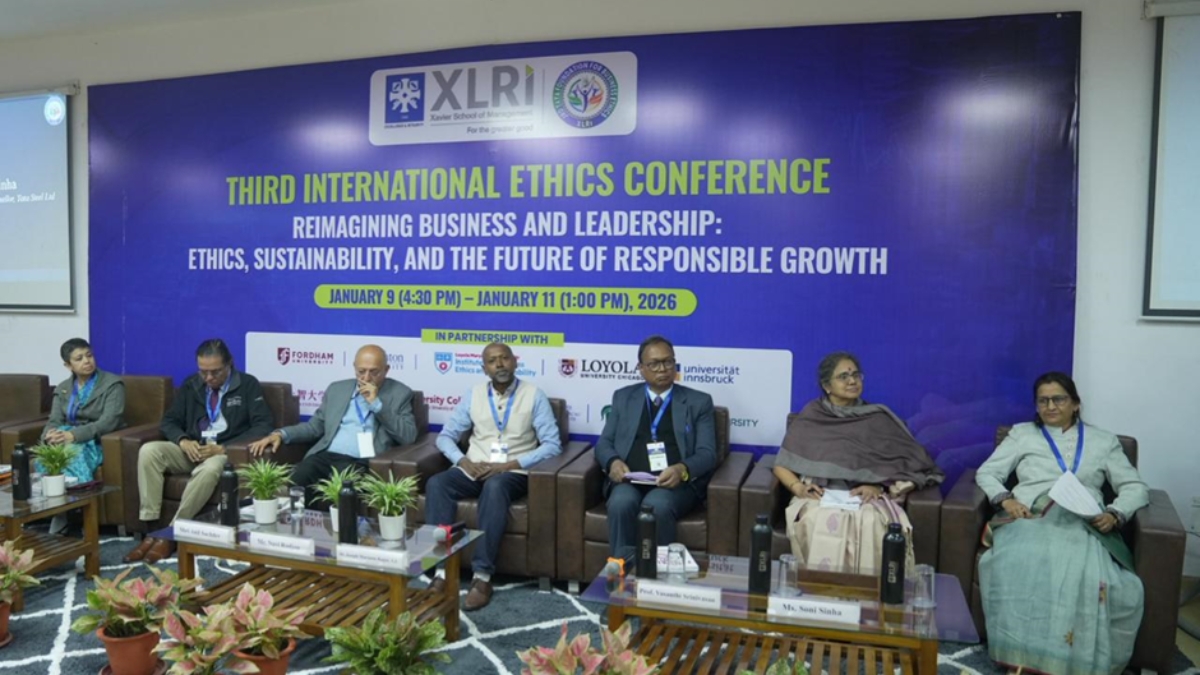
    Jamshedpur (Jharkhand) [India], January 16: XLRI – Xavier School of Management, Jamshedpur, successfully concluded the Third International Ethics Conference 2026, organised by the XLRI JRD Tata Foundation for Business Ethics from 9 to 11 January 2026, on the theme “Reimagining Business and Leadership: Ethics, Sustainability, and the Future of Responsible Growth.”

    The three-day international conference brought together leading academicians, industry leaders, researchers, students, and practitioners from India and abroad, creating a vibrant platform for dialogue on ethical leadership, sustainable business, and responsible growth in the context of India and other emerging economies.

    Inauguration and Opening Sessions

    The conference opened with a warm welcome by Dr Fr Donald D’Silva, S.J., Dean (Administration & Finance), followed by a formal inauguration by Dr Fr George Sebastian, S.J., Director, XLRI, who highlighted that authentic leadership is rooted not in ruthless competition but in compassion, ethical discernment, and integrity.

    Dr Sanjay Patro, Dean of Academics, and Dr Fr Joseph Mathew, S.J., Chair of the JRD Tata Foundation for Business Ethics, welcomed and felicitated all the chief speakers of the conference, setting a reflective and collaborative tone for the proceedings.

    A pre-conference panel on “Reimagining Leadership for Human-Centred and Ethical Organisations,” moderated by Ms Soni Sinha, Chief Ethics Counsellor, Tata Steel, featured distinguished speakers including Shri Anil Sachdev, Prof Vasanthi Srinivasan, Prof Arup Varma, Dr Joseph Marianus Kujur, S.J., Mr Navi Radjou, and Ms Pritha Dutt.
    The panel examined how ethics, inclusion, and sustainability must shape leadership in the next decade, and what concrete signals reveal genuinely human-centred organisations.

    Conference Themes and Key Discussions

    Across three integrated themes—

    • “Reimagining Leadership for Human-Centred and Ethical Organisations”

    • “The Ethical Path to Sustainability: Innovation and Frugality in a Resource-Constrained World”

    • “Ethical Horizons: Reimagining Inclusive Development and Business Value”

    —the conference featured keynote addresses, leadership workshops, panel discussions, research paper presentations, and a unique fireside storytelling evening.

    Renowned thought leaders such as Mr Navi Radjou, Dr Prasad Kaipa, Prof Vasanthi Srinivasan, Prof Arup Varma, Prof David Hillier, and Dr Joseph Marianus Kujur, S.J., offered insights on frugal innovation, values-based leadership, AI ethics, tribal economies, inclusive development, mental health and wellbeing, and women’s leadership.

    A major highlight was Mr Radjou’s call to use “jugaad” and frugal innovation responsibly to create greater value with fewer resources for the common good, alongside Dr Kaipa’s emphasis on moving “from smart to wise” through inner reflection and ethical self-awareness.

    XLRI

    Research, Participation, and Cultural Engagement

    Strongly grounded in Indian realities, the conference addressed tribal economies, community-based leadership, gender equity, workplace mental health, and local models of inclusive development, while maintaining global relevance.

    • Over 100 research papers were received

    • 22 papers were presented across thematic tracks

    • Best Abstract Awards were conferred on Ms Arpita Sahu, Mr Pankaj Kumar, Dr Abhijit Roy, Ms Anoushka Agnihotri, and Mr Amit Kumar Modak

    • Around 8 invited speakers and more than 80 participants joined in hybrid mode

    A special fireside storytelling session, conceptualised by Dr Fr Joseph Mathew, S.J., wove together art, music, and reflective dialogue, while an exhibition of products by tribal women’s self-help groups showcased ethical entrepreneurship and sustainable livelihoods.

    Conclusion

    In his closing reflections and vote of thanks, Dr Fr Joseph Mathew, S.J., reaffirmed XLRI’s enduring mission to form ethical, socially conscious leaders and to promote management scholarship that serves the greater good.

    The Third International Ethics Conference 2026 stood out as a compelling testimony to the centrality of ethics in shaping future-ready leadership and innovative business models anchored in compassion, responsibility, and human dignity.

    If you have any objection to this press release content, kindly contact pr.error.rectification@gmail.com to notify us. We will respond and rectify the situation in the next 24 hours.

  • Celebration of grand festival of “Urja Mahotsav”, from 7th to 12th January 2026

    Celebration of grand festival of “Urja Mahotsav”, from 7th to 12th January 2026

    Mumbai (Maharashtra) [India], January 16: The URJAA 500 Mahotsav, held from 7th to 11th January 2026 at the Richardson & Cruddas Grounds, Mulund (West), Mumbai, was concluded as a historic, grand, and spiritually transformative event that left a deep impact on millions of devotees across India and beyond. Dedicated to the monumental spiritual contribution of Padmabhushan Awardee Jainacharya Ratnasundar Surishwarji Maharaj Saheb, the Mahotsav celebrated the inauguration of 500th spiritual book “Prem Nu Vishva Vishwa No Prem” as well as creation of 500 spiritual books, marking an unparalleled milestone in Jain spiritual literature.

    On the occasion of inauguration of 500th spiritual book “Prem Nu Vishva Vishwa No Prem”, on 11th January, 2026, a video message was received from our beloved Prime Minister, Hon’ble Shi Narendra Modi haling the inauguration. In his message, he applauded the Maharaj Saheb and his 500th spiritual book stating that “Prem Nu Vishva Vishwa No Prem” is not only a book but ‘Mantra’, which introduces to the strength of Prem Ni Shakti (Power of Love), but also leads to the path of peace & devotion, for the troubled world.

    . The formal inauguration ceremony was conducted by Hon’ble Lok Sabha Speaker Shri Om Birla, who described the creation of 500 spiritual books as an act of national service and emphasized the relevance of Jain philosophy in today’s competitive world.

    The book was ceremoniously unveiled by the sacred hands of more than 1,200 Jain monks   (sadhus and sadhvis), marking a historic milestone in the history of Jainism. Never before has a spiritual book been inaugurated collectively by such a large number of ascetics, making this moment a landmark achievement in Jain spiritual literature and tradition.

    The book was inaugurated in 21 languages over & above Gujarati, Hindi.

    The Mahotsav commenced with a magnificent divine procession of the 500 spiritual books, symbolizing the timeless Jain values of ahimsa, compassion, discipline, penance, and self-realization. The procession was graced by the holy presence and guidance of Gachchhadhipati Param Pujya Shri Kalpataru Surishwarji Maharaj Saheb and Suvishal Gachchhadhipati Param Pujya Shri Rajendra Surishwarji Maharaj Saheb, along with more than 1,200 sadhu sadhviji Bhagwants and devotees from over 500 Jain sanghs of Mumbai.

    Over five spiritually charged days, the Mahotsav witnessed overwhelming participation across diverse programs. The Saraswati Sadhana saw the attendance of over 25,000 devotees, while Namo Shrutotsav – Shrut Aalekhan attracted more than 10,000 participants, reaffirming the significance of scriptural knowledge and inner purification. The Aadi Urjaa Concert, featuring performances by 108 renowned Jain singers, drew an audience exceeding 50,000 people, blending devotion with powerful spiritual expression. The grand 50-foot Aadeshwar Bhagwan Aarti witnessed participation from over 25,000 devotees, becoming one of the most visually and emotionally stirring moments of the Mahotsav.

    The reach of the Mahotsav extended far beyond the venue. More than 50 lakh viewers watched Gurudev’s discourses online, reflecting the global spiritual resonance of the event. Across five days, over 10 lakh devotees visited the Mahotsav in person

    During the landmark moment of the release of Gurudev’s 500th book, devoted followers contributed ₹6.66 crore towards jeevdaya (compassion for living beings) by donating to various panjrapoles, exemplifying the Jain ideals of mercy and non-violence in action.

    https://www.youtube.com/playlist?list=PLqjIEjkwmA-TJVwLUh_lkgHpuriK2x5o6

    If you object to the content of this press release, please notify us at pr.error.rectification@gmail.com. We will respond and rectify the situation within 24 hours.

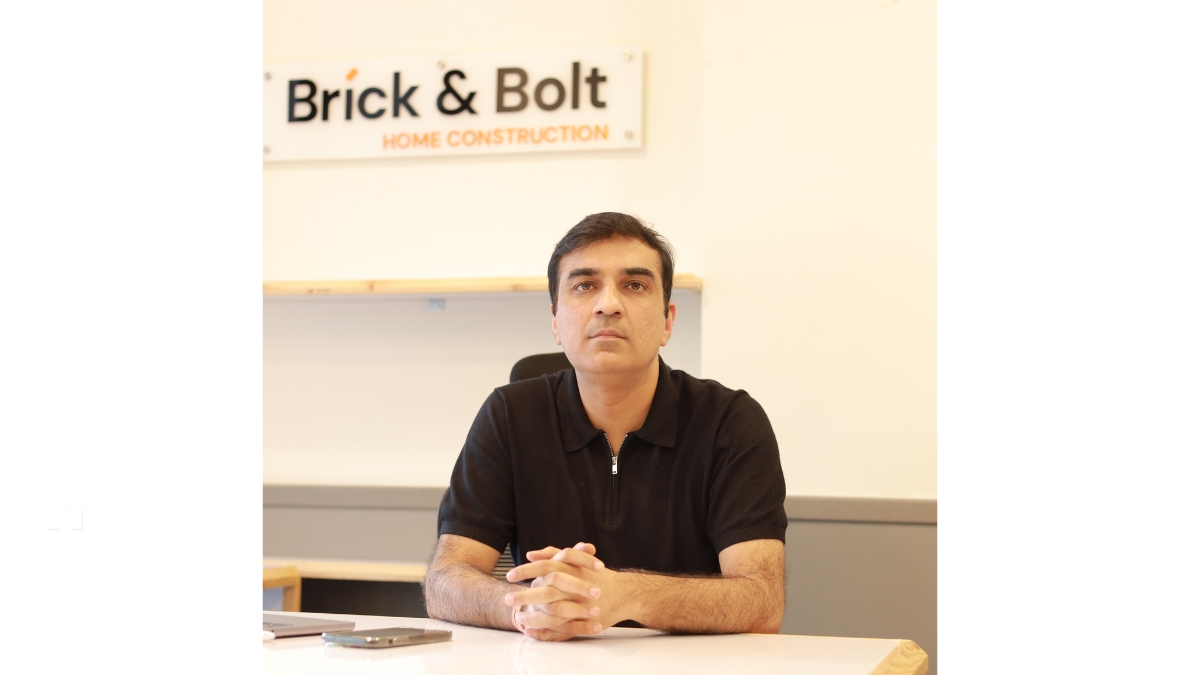
  • Brick & Bolt, India’s leading tech driven construction company, redefines Education infrastructure construction with AI Led predictability

    Brick & Bolt, India’s leading tech driven construction company, redefines Education infrastructure construction with AI Led predictability

    Brings execution certainty, regulatory compliance, and governance-first delivery to educational institutions where academic timelines are non-negotiable

    Bengaluru (Karnataka) [India], January 16: Brick & Bolt, India’s leading tech enabled construction company, recently announced their focused push on transforming how schools and educational institutions are planned, built, and delivered across the country. As part of the renewed focus, Brick & Bolt aims to leverage its technology-led, governance-first construction model to bring predictability, accountability, and execution certainty to education infrastructure construction, allowing institutions to focus on learning outcomes rather than construction challenges.

    Schools and education institutional construction in India has traditionally been marred by several challenges, including fragmented responsibility structure, limited transparency, and weak accountability, often resulting in time line over runs, and quality inconsistencies. For educational institutions, such delays directly affect academic schedules, admissions, brand credibility, and trust among parents and regulators.

    Brick & Bolt aims to address these challenges by creating an end-to-end execution model that offers single point accountability from design to handover, supported by AI-led planning, financial discipline, and structured quality governance. The company’s approach is to replace uncertainty with system-driven delivery, ensuring projects are completed on time, within the approved budgets, and built to last.

    Speaking about Brick & Bolt’s focus on education infrastructure, Mr Jayesh Rajpurohit, CEO, Brick & Bolt said, “Educational infrastructure plays a foundational role in learning outcomes, which is why execution certainty and quality of construction is critical in building academic infrastructure. At Brick & Bolt, we deeply understand the sector’s need for certainty, quality, and governance-led delivery. Our system-driven, AI-led construction platform brings clarity and control across design, compliance, quality, and timelines, enabling education leaders to build future ready campuses with confidence and long-term value.” 

    Brick & Bolt has onboarded a wide range of educational projects, from 5,000 sq. ft facilities to campuses exceeding 2 lakh sq. ft., including the Ryan International Academy (Multiple locations), KPIAS Academy, Gowtham Model School, T. John Institute,  MelFell Preschool and daycare, and many more. These projects reflect the company’s ability to manage design complexity, ensure quality consistency across campuses, and align handovers with strict academic timelines.

    At the heart of Brick & Bolt’s institutional offering is an AI-led digital ecosystem powered by more than 16 integrated applications. Every school project is enabled with Digital Twin (BIM) models, real-time progress dashboards, and stage-wise quality and financial tracking. This ensures institutional owners have access to complete visibility and control over the construction process, without the need for constant site visits. Each Digital Twin acts as a virtual, data-backed replica of the campus, covering classrooms, laboratories, corridors, services, and common areas – enabling early design validation, clash detection, and long-term lifecycle predictability.

    Quality assurance is institutionalised in Brick & Bolt through their proprietary, registered Quality Assessment System for Construction – QASCON®, which includes over 1,153+ structured quality check points and multi-level audits conducted at both, the main site, and the central levels. Quality is digitised, auditable and non-negotiable, ensuring consistency across geographies. Brick & Bolt is also fully compliant with the National Building Code (NBC) of India. This means that we are aligned with the structural safety, fire and life safety, occupancy-specific planning, universal accessibility standards, and MEP Systems and statutory approvals, thereby ensuring minimal re-work, faster approval rates, and regulatory approval for educational institutions.

    Timelines are contractually defined and digitally tracked, with live progress updates available through the Brick & Bolt’s customer app and delay accountability built into the system. This has resulted in an extremely low delay percentage across a large and growing institutional projects base. With over 10,142 projects delivered pan-India, Brick & Bolt has already demonstrated execution maturity at scale, supported by dedicated institutional project management teams with proven ability to deliver without quality dilution.

    Brick & Bolt works closely with school promoters and education trusts, large K-12 education groups, higher education institutions, preschool chains, and institutions expanding nationally. Through its technology-first, government-led approach, the company aims to continue shaping future-ready education infrastructure across India.

    About Brick & Bolt

    Brick & Bolt, founded in 2018 by Jayesh Rajpurohit (Co-founder & CEO, IIT Roorkee alumnus with 22+ years of experience) and Arpit Rajpurohit (Co-founder & CTO, VIT Vellore alumnus with 12+ years of experience), is transforming the construction industry with innovative technology, a focus on quality, and sustainability. With a vision to redefine the construction experience for property owners and address long-standing challenges like cost overruns and delays, Brick & Bolt offers comprehensive services from design to execution, ensuring seamless delivery backed by transparency, accountability, and trust. Customer satisfaction lies at the heart of its operations, supported by 100% money safety with an ESCROW payment mechanism, and three levels of auditing with 470+ quality checks through its trademarked Quality Assessment System – QASCON®. Currently catering to over 10,000+ units across 10+ cities including Bengaluru, Hyderabad, Chennai, Mysuru, Pune, Delhi, Noida, Ghaziabad, Gurgaon, and Faridabad, Brick & Bolt continues to expand while offering tailored solutions for residential dwellings, commercial spaces, and large projects. Its state-of-the-art experience centre is yet another initiative that helps customers make informed decisions about building their dream homes and commercial buildings – from design and raw materials to customized floor plans, making Brick & Bolt the go-to choice for quality construction in India.

    If you object to the content of this press release, please notify us at pr.error.rectification@gmail.com. We will respond and rectify the situation within 24 hours.

  • The Problem With CES 2026? Smart Living Works A Little Too Well

    The Problem With CES 2026? Smart Living Works A Little Too Well

    Mumbai (Maharashtra) [India], January 16: There was a time when consumer technology begged for attention. Flashy screens, exaggerated promises, gadgets designed less for living rooms and more for keynote applause. CES 2026 didn’t bother with that energy. It walked in, surveyed the room, and started rearranging daily life without asking permission.

    This year’s most telling revelation wasn’t a single device—it was a mood shift.

    Innovation no longer wants to be admired. It wants to be useful, preferably without you noticing. And if that sounds comforting and mildly unsettling at the same time, congratulations—you understood CES 2026 perfectly.

    Robots climbed stairs without applause. Smart homes learned routines without being asked. Laptops thought ahead so users wouldn’t have to. And somewhere between AR-assisted lighting tools and donation-ready mobility robots, one truth became painfully clear: AI has stopped flirting with convenience and started a committed relationship with control.

    The Slow Death Of “Smart” As A Buzzword

    The term smart has been abused for years. Smart TVs that required PhDs to navigate. Smart homes that froze because someone sneezed near the router. CES 2026 quietly retired the buzzword and replaced it with something less marketable but far more dangerous: reliability.

    Smart living this year wasn’t about voice commands or novelty automation. It was about systems that predict behavior, adjust environments, and reduce friction without demanding emotional investment. Lights that adapt based on circadian rhythm data. Climate systems that respond to occupancy patterns rather than schedules. Security systems that identify anomalies, not just motion.

    It sounds utopian until you remember: prediction requires observation. And observation, at scale, has consequences.

    Devices That Don’t Ask — They Anticipate

    Among the most discussed consumer devices were AI-powered laptops and hybrid computing systems that operate less like tools and more like collaborators. These machines aren’t faster because of raw hardware alone; they’re faster because they decide what matters before you do.

    Tasks are prioritised. Energy consumption is optimised. Performance adapts based on behavior history. In controlled tests, these systems demonstrated measurable gains in efficiency, battery longevity, and workflow management—particularly in creative and enterprise environments.

    From a PR lens, this is gold. From a human lens, it raises an eyebrow.

    When devices begin anticipating needs, they also begin shaping them. Convenience becomes subtle influence. Efficiency becomes quiet dependency.

    Smart Homes That Finally Behave Like Homes

    CES 2026 also marked a turning point for domestic technology. Instead of selling control panels and apps, companies focused on invisible intelligence. Homes that learn without being trained. Systems that adjust without manual input. Technology that disappears into routine.

    Highlights included:

    • Adaptive lighting systems enhanced by AR calibration tools, allowing precision placement and mood mapping.

    • Energy management platforms capable of reducing household consumption by double-digit percentages over time.

    • Integrated safety systems combining environmental sensors, predictive alerts, and automated responses.

    The upside? Lower bills, safer homes, fewer decisions.

    The downside? Homes are no longer passive spaces. They are data environments.

    Robots That Climb Stairs — And Moral High Ground

    Perhaps the most quietly radical devices at CES 2026 were mobility-focused robots designed for accessibility and assistance. Some are built to navigate multi-level spaces without retrofitting infrastructure. Others are intentionally designed to be donated—a concept that sounds noble until you realise it also functions as brand positioning at scale.

    These robots target aging populations, mobility-impaired users, and disaster-response scenarios. Early pilots show meaningful improvements in independence and safety. Manufacturing costs, while decreasing, remain significant—placing these solutions just on the edge of mass accessibility.

    PR loves the optics. Society loves the intention. The question remains whether affordability will follow empathy.

    When AI Becomes The Background Noise Of Life

    The unifying thread across devices and smart living at CES 2026 was not intelligence—it was integration. AI is no longer presented as a feature. It’s the operating context.

    From lighting systems to laptops, from homes to assistive robotics, automation is now assumed. The conversation has shifted from “what can it do?” to “how much should it decide?”

    This is where optimism meets discomfort.

    Pros:

    • Increased efficiency across consumer environments

    • Reduced cognitive load for users

    • Improved accessibility and inclusivity

    • Measurable sustainability gains

    Cons:

    • Escalating privacy concerns

    • Data dependency becoming normalized

    • Reduced human agency in micro-decisions

    • Rising cost barriers for premium integration

    The future is smoother. It’s also less transparent.

    The Business Reality Beneath The Polished Surfaces

    Behind the polished demos and minimalist booths lies a hard economic truth: smart living is expensive to build, test, and maintain. Development budgets for AI-integrated consumer products have ballooned over the last few years, with companies investing heavily in long-term ecosystems rather than one-off sales.

    Margins depend on scale. Scale depends on trust. And trust, once broken, is notoriously difficult to debug.

    CES 2026 reflected this tension. The optimism was real. So was the caution.

    A PR Narrative That Knows When To Whisper

    What made CES 2026 effective wasn’t noise—it was restraint. Messaging avoided utopian overreach. Claims were grounded. Language leaned toward partnership rather than domination. This wasn’t a sales pitch. It was reassurance.

    The subtext was clear: We know you’re wary. We are too.

    That self-awareness may be the smartest feature on display.

    Where Smart Living Actually Goes From Here

    CES 2026 didn’t answer every question. It reframed them.

    Smart living is no longer about gadgets. It’s about governance—of data, decisions, and dependency. The technology is ready. Society is still negotiating terms.

    And maybe that’s the most honest outcome of all.

    PNN Technology

  • HEC Infra Projects Limited Wins Rs 16.35 Cr Order for Battery Energy Storage System Project

    HEC Infra Projects Limited Wins Rs 16.35 Cr Order for Battery Energy Storage System Project

    Ahmedabad (Gujarat) [India], January 15: HEC Infra Projects Limited (HEC, The Company), (NSE Code: HECPROJECT), one of the leading players in the infrastructure sector, specializing in extra high voltage transmission and distribution projects has secured a ₹16.35 Cr work order from Advait Greenergy Private Limited for a Battery Energy Storage System (BESS) project in Gujarat.

    The order involves the supply, erection, testing, and commissioning of Balance of System (BoS) works, including both electrical and civil components, on a delivery-at-site basis. The project will be executed at the 220 kV Radhanpur Substation in Patan district and is part of a 60 MW / 115.37 MWh BESS installation, with execution scheduled over 12 months.

    Battery Energy Storage Systems are a critical part of modern power infrastructure. They store electricity for later use, helping manage peak demand, stabilize the grid, and support the integration of renewable energy sources such as solar and wind. By storing surplus power and releasing it when required, BESS improves reliability while helping reduce emissions.

    India’s demand for BESS is growing rapidly, driven by rising renewable capacity and the need for a stable and flexible power grid. This order strengthens HEC Infra Projects Limited’s position in the fast-growing energy storage segment and reflects the company’s focus on executing future-ready energy infrastructure projects across the country.

    On the receipt of the order, Mr. Gaurang Shah, Managing Director of HEC Infra Projects Limited said, “The Battery Energy Storage System project represents a strong strategic opportunity for the company as energy storage is emerging as a critical pillar of India’s power ecosystem. This order not only strengthens our presence in the energy storage segment but also enhances our execution credentials in large-scale, technology-driven projects.

    With significant opportunities emerging in the energy storage segment, this order is a meaningful step forward in strengthening our growth trajectory. It positions the company to scale its capabilities and move to the next phase of expansion. Building on this momentum, we intend to actively pursue similar opportunities with both private and government departments across multiple states, as we steadily expand our presence in the rapidly evolving energy storage and power infrastructure ecosystem.”

    If you object to the content of this press release, please notify us at pr.error.rectification@gmail.com. We will respond and rectify the situation within 24 hours.
  • Banana Club Starts the Year with a Purposeful Community Effort

    Banana Club Starts the Year with a Purposeful Community Effort

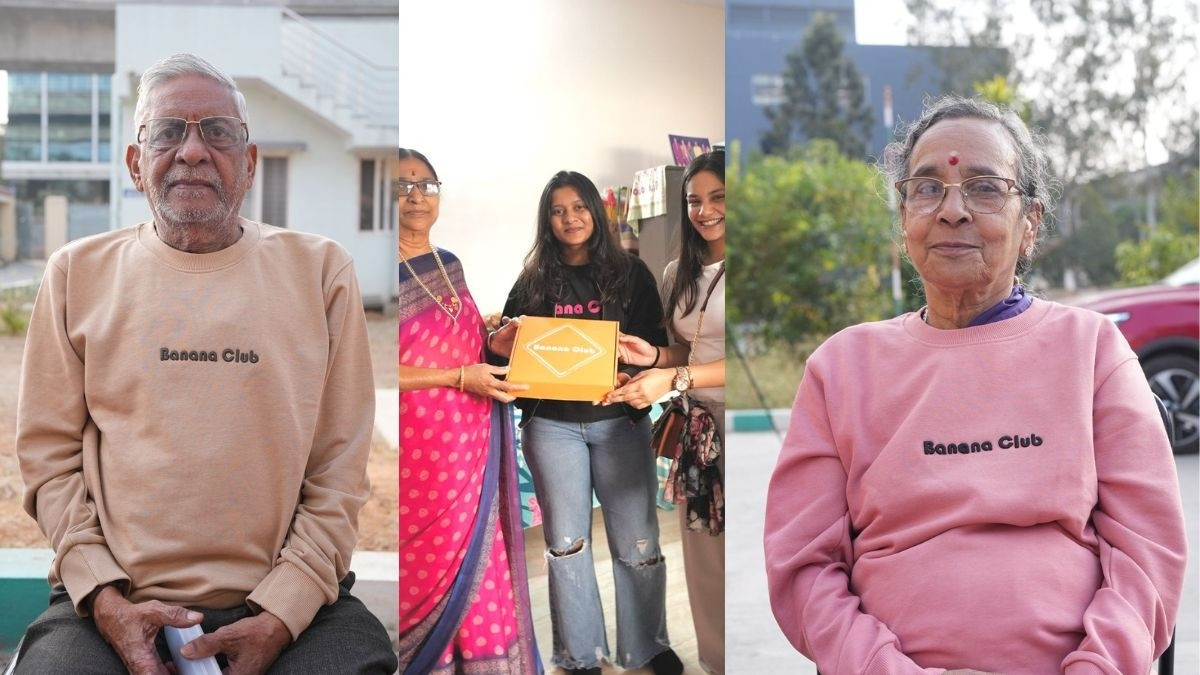
    Bengaluru (Karnataka) [India], January 16: As the year came to a close, Banana Club marked the moment with a heartfelt community initiative, choosing to invest time and care in building meaningful connections with residents of an old-age home rather than limiting the celebration to a one-day event.
    In the weeks leading up to the New Year, members of the Banana Club marketing team visited the home to spend time with residents and understand their daily routines, personal preferences, and the small comforts that bring them joy. These conversations and observations formed the foundation of an initiative rooted in empathy and thoughtful action.

    Guided by these insights, Banana Club created winter jackets individually tailored for each resident. Designed with comfort, warmth, and ease of wear in mind, every jacket was personalised with the resident’s name. The team remained closely involved at every stage—working directly with the factory and embroidery unit, reviewing samples, and personally ensuring each detail met the intended standard before production.

    On 30 December, the Banana Club team returned to the home to distribute the jackets and welcome the New Year together. What followed was a joyful day of shared meals, games, laughter, gift exchanges, and a cheerful fashion walk, turning the visit into a warm and memorable celebration for everyone involved.

    Led by the Banana Club marketing team, the initiative reflects the brand’s belief in celebrating moments with purpose—through empathy, care, and genuine human connection—going beyond conventional festivities to create lasting impact within the community.

     https://www.instagram.com/reel/DS7a-JTk7xX

    About Banana Club-
    Banana Club is a contemporary apparel brand driven by creativity, comfort, and community. Through thoughtful design and meaningful initiatives, the brand seeks to create experiences that extend beyond fashion and foster real human connections.

    If you object to the content of this press release, please notify us at pr.error.rectification@gmail.com. We will respond and rectify the situation within 24 hours.

  • CES 2026: When Machines Stopped Showing Off And Started Clocking In

    CES 2026: When Machines Stopped Showing Off And Started Clocking In

    Mumbai (Maharashtra) [India], January 16: Las Vegas has always thrived on spectacle. Neon promises. Artificial skies. Grand illusions carefully engineered to feel like destiny. So perhaps it’s fitting that CES 2026 didn’t arrive shouting about the future—it arrived quietly, rolling luggage through airports, scanning pulses at wrists, and answering questions before anyone bothered to ask them.

    This year’s show felt less like a tech carnival and more like a performance review.

    The message was blunt, almost unfashionably practical: artificial intelligence is done auditioning. It wants the job.

    Gone were the louder gimmicks of novelty screens and speculative prototypes that never survive beyond the demo floor. CES 2026 leaned into something more unsettling and, frankly, more powerful—technology that doesn’t ask for attention but assumes responsibility. AI headsets acting as cognitive co-pilots. Robots that don’t entertain, but operate. Health scanners that don’t gamify wellness but flag risk before symptoms learn how to introduce themselves.

    This wasn’t innovation chasing applause. This was infrastructure learning how to breathe.

    And that shift changes everything.

    The Long Road To A Less Glamorous Future

    To understand why CES 2026 feels different, one has to rewind a decade. The last ten years of consumer tech were dominated by spectacle: smarter phones, thinner screens, louder promises. AI existed, yes—but largely as a feature, not a force. Assistants answered weather queries. Algorithms suggested playlists. The future was always “coming next year.”

    That patience has expired.

    Global investment into AI-related technologies crossed the multi-hundred-billion-dollar mark well before 2025, with enterprise deployment outpacing consumer adoption by a wide margin. Healthcare systems, logistics networks, aviation hubs, and energy researchers were already using machine intelligence quietly, without flashy launches or keynote theatrics.

    CES 2026 simply acknowledged the obvious: the most important technologies no longer need applause—they need clearance badges.

    When AI Stopped Being Smart And Started Being Useful

    The most talked-about category this year wasn’t entertainment or personal computing. It was a delegation.

    AI-powered headsets emerged not as lifestyle accessories, but as decision filters—processing schedules, translating conversations in real time, summarising dense information streams, and reducing cognitive clutter. The pitch wasn’t productivity theatre. It was mental bandwidth preservation.

    Equally telling were autonomous service robots deployed for large-scale transit environments. These weren’t experimental novelties bumping into walls. They were designed for airports, security corridors, and logistics hubs—spaces where error margins are expensive, and patience is thin. Their selling point wasn’t charm. It was consistency.

    And then there were the health technologies.

    Advanced biometric scanners capable of tracking early markers for cardiovascular stress, metabolic disorders, and neurological irregularities drew both admiration and unease. These devices promise early intervention, personalised medicine, and reduced healthcare strain. They also raise the uncomfortable question: who owns your future diagnosis?

    Efficiency, it turns out, comes with paperwork.

    CES - PNN

    The Promise Is Real. So Are The Complications.

    For all its progress, CES 2026 didn’t pretend the road ahead is frictionless. If anything, the subtext of the show acknowledged what marketing decks rarely admit—scale magnifies consequence.

    On the positive side:

    • AI integration is reducing operational costs across healthcare, transport, and enterprise systems.

    • Automation is improving safety in environments too repetitive or hazardous for humans.

    • Preventative health monitoring could save billions in long-term care expenses.

    • Fusion energy modelling partnerships showcased genuine strides toward sustainable power simulations, with funding now crossing into serious scientific territory rather than speculative hype.

    But optimism doesn’t erase the fine print.

    On the darker edge:

    • Workforce displacement remains unresolved, especially in the service and logistics sectors.

    • Data governance around health biometrics is lagging behind technological capability.

    • AI dependency introduces systemic risk—when machines fail, they fail at scale.

    • Regulatory frameworks remain reactive, not predictive.

    The future may be efficient, but it isn’t automatically equitable.

    A PR Narrative With Teeth

    From a public relations standpoint, CES 2026 walked a careful line. The messaging wasn’t “look what we can build.” It was “look what already works.” That distinction matters.

    Companies framed AI as an assistant, not a replacement. As augmentation, not automation. Language softened edges that reality hasn’t yet dulled. And while the tone was measured, the ambition was unmistakable.

    Behind closed doors, conversations were less polished. Questions about liability, transparency, and long-term trust surfaced repeatedly. Executives spoke less about disruption and more about integration—a word that sounds harmless until you realise it means everything changes quietly.

    PR isn’t about spin anymore. It’s about reassurance.

    The Human Question Nobody Can Code Around

    Perhaps the most revealing aspect of CES 2026 wasn’t what was launched, but what lingered unspoken.

    As machines assume more real-world responsibility, human roles become harder to define. Creativity remains safe—for now. Empathy is still ours—mostly. But decision-making, once the final human frontier, is being shared with systems that don’t experience doubt.

    That’s efficient. It’s also unsettling.

    The show hinted at a future where humans supervise rather than operate, interpret rather than execute. A world where trust in systems becomes as essential as understanding them. And where opting out isn’t always practical.

    Convenience, after all, is a persuasive negotiator.

    What CES 2026 Quietly Confirmed

    This year’s event didn’t feel like a launchpad. It felt like a checkpoint.

    AI is no longer a guest in our lives. It’s moving in, unpacking, and reorganising the furniture. The question is no longer if it belongs—but how much control we’re willing to surrender for comfort.

    CES 2026 didn’t sell fantasies. It presented responsibilities wrapped in sleek hardware. It reminded us that progress doesn’t always arrive loudly. Sometimes it shows up on time, does the job better than expected, and waits patiently for instructions.

    And that may be the most unsettling innovation of all.

    PNN Technology

  • BGMI Continues Its Reward Streak With Redeem Codes on 16th January

    BGMI Continues Its Reward Streak With Redeem Codes on 16th January

    Bengaluru (Karnataka) [India], January 16: KRAFTON India has introduced a new set of redeem codes for BATTLEGROUNDS MOBILE INDIA (BGMI), offering players a chance to unlock the Smiling Pal Backpack to personalise their in-game look. Continuing the momentum of BGMI’s daily reward initiative, the latest drop keeps excitement high with limited-time collectibles designed for dedicated players.

    BGMI Continues Its Reward Streak With Redeem Codes on 16th January -PNN

    Redeem codes are valid until 28th February 2026 and can be redeemed only on BGMI’s official channels.

    Redeem Codes:

    HVZCZPBH9RXJSX6B
    HVZDZ5CKRXNKNQ6U
    HVZEZTAETPQEQJES
    HVZFZT3NA9H98M76
    HVZGZP77V7MA9X8W
    HVZHZEJUAAM77SWF
    HVZIZDBCAQWPBH56
    HVZJZFXXBKB4DHNS
    HVZKZ5SCBV9TRCDG
    HVZLZVX5TARWXDAE
    HVZMZU8GAFVK3GXQ
    HVZNZNQSXN8CNPRN
    HVZOZXCRTVAGQDDB
    HVZPZCVJJ6KFE73B
    HVZQZSS9NUQEUNGQ
    HVZRZEM35B7J4ABP
    HVZVZHPREAVEJ6RK
    HVZTZQCU65436HUP
    HVZUZCQKD4K46K9S
    HVZBAZVJA7VMDNCF
    HVZBBZ3J7865NDVK
    HVZBCZSCE8948JBS
    HVZBDZ5NPAW4CF3N
    HVZBEZFNAUNEW6U6
    HVZBFZRFXUVR53PD
    HVZBGZS3GWC7V9DJ
    HVZBHZ9XTPPQTEQE
    HVZBIZDBBMK6X6EC
    HVZBJZ97SR68NF3A
    HVZBKZUPQDD4DQ66
    HVZBLZ5CKVMCM89D
    HVZBMZSC4R48SD7S
    HVZBNZQQF768PJJS
    HVZBOZPSKQ7UK65E
    HVZBPZF44GM5APEK
    HVZBQZF9U998AUE4
    HVZBRZP4SWECEMPC
    HVZBVZH874KFWJBF
    HVZBTZVXMVHEA4QT
    HVZBUZE458TCSCSN
    HVZCAZJTW4JJ6DER
    HVZCBZSGBP8VH436
    HVZCCZR6J84H97RX
    HVZCDZWUPCXMKXKW
    HVZCEZHWD97K4JNA
    HVZCFZQF74GKBHCX
    HVZCGZK94GHT3W3P
    HVZCHZNRV9CNUK6W
    HVZCIZBSFBTQFDGU
    HVZCJZK5B73QMKWH
    HVZCKZ9HKX5GCSBX
    HVZCLZ97RC3WBAAP
    HVZCMZE4JCVDV9QC
    HVZCNZT95Q6NEMS9
    HVZCOZWWFTWFQ7VS
    HVZCPZBUJNE8NXQP
    HVZCQZ4J6ND9C8MF
    HVZCRZVRQE3BKH4B
    HVZCVZACJRKHMACS

    Steps to redeem:

    Players can follow these simple steps to claim their rewards:

    • Step 1: Go to the Redeem section on BGMI’s official website www.battlegroundsmobileindia.com/redeem
    • Step 2: Enter your Character ID
    • Step 3: Enter the Redemption Code
    • Step 4: Enter the verification/ Captcha code → A message will confirm “Code redeemed successfully”
    • Step 5: The reward will be delivered via in-game mail

    Rules to Remember:

    • A maximum of 10 users can redeem each code on a first come first served basis
    • A user cannot redeem a code twice
    • Users must claim their rewards via in-game mail within 7 days or the mail will expire
    • If a player is among the first 10 users to redeem the code, a message will confirm “Code redeemed successfully”. Otherwise, users will see “Code expired” or a similar message
    • Each user account can redeem only one code per day
    • Redeem codes cannot be used via guest accounts
    • Rewards must be claimed within 30 days from receiving the in-game mail

    For the latest updates, follow BGMI’s official YouTube, Instagram and Facebook pages.

    About KRAFTON, Inc.

    Headquartered in South Korea, KRAFTON, Inc. is dedicated to discovering and publishing captivating games that offer fun and unique experiences. Established in 2007, KRAFTON is home to globally renowned developers that include PUBG STUDIOS, Striking Distance Studios, Unknown Worlds, VECTOR NORTH, Neon Giant, KRAFTON Montréal Studio, Bluehole Studio, RisingWings, 5minlab, Dreamotion, ReLU Games, Flyway Games, Tango Gameworks and inZOI Studio. Each studio strives to continuously take on new challenges and leverage innovative technologies. Their goal is to win over more fans by broadening KRAFTON’s platforms and services. With a passionate and driven team across the globe, KRAFTON is a tech-forward company that possesses world-class capabilities and is set on expanding its business horizons to encompass multimedia entertainment and deep learning. For more information, visit www.krafton.com.

    About KRAFTON India

    In India, KRAFTON is responsible for premier mobile games, including BATTLEGROUNDS MOBILE INDIA (BGMI), which has surpassed 240 million downloads, Bullet Echo India, Road To Valor: Empires, and CookieRun India, among others. Committed to enhancing the start-up ecosystem in India, KRAFTON has invested over $200 million in several Indian startups across interactive entertainment, gaming, Esports, and technology, since 2021. KRAFTON actively supports India’s game development ecosystem through its KRAFTON India Gaming Incubator (KIGI) while strengthening the Esports ecosystem with flagship events like the BATTLEGROUNDS MOBILE INDIA SERIES (BGIS) and BATTLEGROUNDS MOBILE INDIA PRO SERIES (BMPS). For more information, visit https://krafton.in/

    If you object to the content of this press release, please notify us at pr.error.rectification@gmail.com. We will respond and rectify the situation within 24 hours.
  • The Future of Travel Is Flexible: Why Hour-Based Stays Are Emerging as the New Hospitality Standard

    The Future of Travel Is Flexible: Why Hour-Based Stays Are Emerging as the New Hospitality Standard

                             Prateek Singh, Co-Founder & CEO, Brevistay.

    New Delhi [India], January 16: The travel and hospitality industry is undergoing one of its most significant shifts in decades. While overnight hotel stays have long been the default, modern travel behaviour is increasingly shaped by flexibility, immediacy, and value. Today’s traveller, whether a corporate professional, digital nomad, or short-haul commuter, no longer wants to pay for unused hours. They want accommodation that adapts to their schedules, not the other way around.

    This evolving mindset is giving rise to hour-based stays, also known as microstays, an alternative hospitality model that allows travellers to book hotel rooms for a few hours instead of an entire night. What started as a niche concept globally has now found relevance in India’s fast-moving, experience-driven travel ecosystem.

    At Brevistay, this shift was not identified as a trend but as a clear market inefficiency. Traditional hotel models were built around fixed check-in and check-out times, often misaligned with real travel needs. Whether it’s a business traveller with a long layover, professionals attending interviews or meetings, families on road trips, or remote workers seeking a short-term workspace, the demand for flexible, time-based accommodation was evident but underserved.

    India’s travel market, especially among Gen Z and millennial travellers, is increasingly spontaneous. A growing percentage of bookings now happen at short notice, sometimes just hours before arrival. This behaviour aligns seamlessly with microstays, offering affordabilityconvenience, and relevance without the cost burden of a full-day booking. Flexibility is no longer a luxury; it is becoming an expectation.

    From a hotelier’s perspective, hour-based stays unlock significant untapped value. Across India, daytime occupancy remains a challenge, with many hotels seeing over half their inventory remain vacant during working hours. Microstays allow hotels to monetise these low-utilisation periods, improve overall occupancy, and optimise yield, often without impacting overnight bookings. It’s a smarter use of existing infrastructure, driven by demand-based pricing and operational agility.

    Technology has been the key enabler of this transformation. Real-time booking platforms, seamless digital payments, dynamic pricing models, and deep integrations with hotel property management systems have made flexible stays viable at scale. API-driven inventory connectivity now allows hotels to list rooms in time slots rather than fixed nights, opening access to entirely new demand segments. This blend of technology and strategy is central to how Brevistay operates and scales across markets.

    Beyond economics and efficiency, the cultural perception of hotels is also changing. Hotels are no longer viewed solely as places to sleep. They are becoming multifunctional spaces – for work, rest, transition, and productivity. Hour-based stays cater to these evolving use cases, offering hotels the opportunity to reposition themselves as flexible lifestyle enablers rather than static accommodation providers.

    What’s driving this shift is a broader rethinking of hospitality itself, from selling space to selling time. This pay-for-time model reflects how consumers already interact with mobility, entertainment, and digital services. Hospitality is now following suit.

    The future of travel is undoubtedly flexible. As consumer expectations continue to evolve, hospitality brands must rethink legacy models, invest in digital infrastructure, and adopt customer-centric operating frameworks. For Brevistay, microstays are not a passing trend but a long-term transformation, one that empowers travellers, optimises hotel operations, and redefines how value is created in the hospitality ecosystem.

    As India’s travel landscape continues to grow and diversify, flexible hospitality will move from alternative to standard. Those who adapt early will not only meet modern traveller needs but also unlock sustainable growth in an increasingly competitive market.

    If you object to the content of this press release, please notify us at pr.error.rectification@gmail.com. We will respond and rectify the situation within 24 hours.