Author: Sutun Nayak

  • From One Billboard to a 100+ Network: How Amit Mahadik Built Siddhivinayak Advertising

    From One Billboard to a 100+ Network: How Amit Mahadik Built Siddhivinayak Advertising

    Navi Mumbai (Maharashtra) [India], April 29: Growth stories in advertising often sound predictable, until you come across one that is built not on scale-first ambition, but on a deep, almost obsessive understanding of the market. That’s where Amit Mahadik’s journey stands apart.

    Before launching Siddhivinayak OOH Advertising Pvt. Ltd., Amit spent seven years working as a media planner. But this wasn’t just another job phase; it became his real classroom. Instead of limiting himself to campaign execution, he closely studied how cities behave. Traffic flows, visibility angles, commuter psychology, high-attention zones, and details most people overlook became his foundation.

    By the time he decided to start his own venture in 2018, the move wasn’t impulsive. It was calculated.

    A Single Billboard, A Long-Term Play

    The company didn’t begin with scale. It began with one billboard in Thane.

    That first site was less about revenue and more about validation. Could a carefully selected location outperform bulk inventory? Could consistency beat aggressive expansion?

    The early days weren’t easy. Prime locations were already dominated by established players. Regulatory hurdles slowed progress. Client trust had to be earned from scratch. But instead of chasing shortcuts, Amit focused on getting the basics right: execution, reliability, and delivery.

    Those choices quietly shaped Siddhivinayak’s reputation.

    Building a Network That Prioritizes Value Over Volume

    Fast forward to today, and that single billboard has grown into a network of over 100 premium locations across Mumbai, Thane, and Navi Mumbai.

    What’s notable is how this growth happened. The company didn’t expand by collecting inventory; it expanded by selecting impact-driven sites. Every location was chosen with intent: visibility, audience relevance, and measurable brand recall.

    Over time, Siddhivinayak Advertising has delivered more than 150 outdoor campaigns, working closely with brands to ensure not just placement, but performance.

    This shift, from being a vendor to becoming a results-focused partner, has been central to its positioning.

    Siddhivinayak 2.0: Moving Beyond Regional Strength

    The next chapter is where things get more ambitious.

    With its 2.0 phase, Siddhivinayak Advertising is transitioning from a strong regional operator into a PAN India OOH solutions platform. The focus is no longer limited to inventory; it’s about offering end-to-end campaign strategy and execution.

    This includes:

    • Insight-led media planning
    • Location strategy aligned with campaign goals
    • Creative support for outdoor formats
    • Seamless multi-city execution

    To support this, the company is investing in talent and centralized systems that can handle scale without compromising reliability.

    Redefining the OOH Client Experience

    One of the biggest gaps in outdoor advertising has always been fragmentation: multiple vendors, inconsistent execution, and lack of accountability.

    Siddhivinayak 2.0 is trying to change that.

    The goal is to offer brands a single, dependable partner who can manage large-scale campaigns across cities with the same level of precision. This execution-first approach is what the company is betting on as it enters a more competitive national space.

    The Road Ahead

    The vision is straightforward but demanding: to become a go-to name for brands looking for structured, scalable, and result-driven OOH campaigns across India.

    From one billboard in Thane to a growing national ambition, the journey reflects something simple but rare in today’s market: growth built on understanding before expansion.

  • Can a Machine Lead? SBS University’s 17th National Debate Competition Puts Artificial Intelligence, Talent, and Human Judgment in the Dock

    Can a Machine Lead? SBS University’s 17th National Debate Competition Puts Artificial Intelligence, Talent, and Human Judgment in the Dock

    Over 100 students from 46 universities across India gathered at North India’s oldest university to debate the question every institution, employer, and policy-maker is quietly wrestling with: what does talent look like in an age when machines can do almost everything faster than us? 

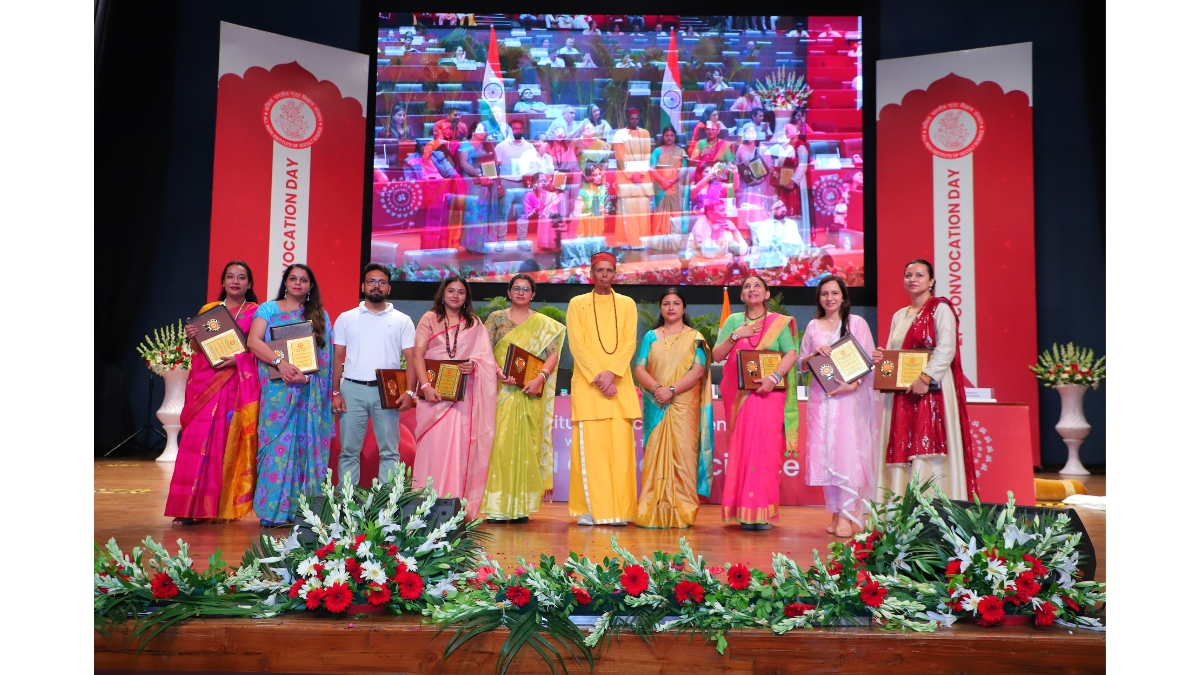
    Dehradun (Uttarakhand) [India], April 29: Dehradun (Uttarakhand) [India], April 28: There is something fitting about a debate on artificial intelligence taking place in a university that has been building human minds for over three decades. Sardar Bhagwan Singh University (SBS University), Dehradun, North India’s oldest university with a 32-year legacy, concluded the 17th edition of the Sardar Gurcharan Singh Memorial National Debate Competition on April 4, 2026, with the kind of intellectual energy that reminded everyone in the room why human conversation still matters, even in an AI-driven world. 

    The theme this year was not chosen at random: “The Age of Artificial Intelligence is Redefining the Meaning of Talent and Leadership.” With over 80 teams registered from universities across India, 46 shortlisted, and more than 100 students stepping onto the competition floor, the debate was as much a reflection of the times as it was a contest. For a single day on a 25-acre campus in Dehradun, young voices took on the biggest question in contemporary education: what does a human being bring to the table that a machine cannot? 

    A Stage Set with Purpose 

    The competition opened with the lamp-lighting ceremony and the university song, a deliberate nod to tradition in a conversation entirely about the future. In his welcome address, Prof. (Dr.) J. Kumar, Vice-Chancellor of SBS University, set the intellectual tone for the day immediately. 

    “In the age of AI, talent is no longer about being a walking encyclopedia. It is about cognitive agility and curiosity. When a machine can provide the answer in seconds, the truly talented individual is the one who knows how to ask the better question. Leadership in the age of AI requires ethical stewardship, human-centric vision, and sound judgment under

    uncertainty.” 

     — Prof. (Dr.) J. Kumar, Vice-Chancellor, SBS University 

    It was the kind of framing that set the competition apart from a standard university event. This was not a debate about whether AI is good or bad. It was a deeper reckoning, one that asked students to think carefully about what human beings are actually for, and what makes a leader worth following when algorithms can make faster decisions than any person in the room. 

    The Chief Guest: A Scientist’s Perspective on What Machines Cannot Do Dr. Ajay Kumar, Outstanding Scientist and Director of IRDE-DRDO, Dehradun, graced the inaugural session as Chief Guest. His address carried the weight of a career spent at the intersection of technology and national defence, a field where the stakes of getting AI wrong are higher than almost anywhere else. 

    “In this AI-driven landscape, talent has migrated from the technical to the conceptual. We no longer need human calculators; we need human architects of thought. Modern talent is found in the Three Cs: Critical Thinking, Creativity, and Compassion. While AI can synthesize existing data, it cannot experience a eureka moment born of lived experience. It can mimic style, but it cannot possess a soul. The talent of tomorrow lies in managing the machine, not competing with it.” 

     — Dr. Ajay Kumar, Outstanding Scientist & Director, IRDE-DRDO, Dehradun 

    The “Three Cs” framing, Critical Thinking, Creativity, and Compassion, became something of an anchor for the day’s debates. Students returned to it repeatedly as they argued their positions, and more than one judge cited it in their feedback. 

    The Valedictory: On Imagination as the Real Ceiling 

    The closing session was addressed by Dr. S. Farooq, President of Himalaya Wellness Company, whose perspective brought a corporate and entrepreneurial lens to a day dominated by academic voices. His core argument was simple, memorable, and hard to argue with.

    “We are transitioning from an age of knowing to an age of thinking. Technical skill is the floor, but imagination is the ceiling. AI is not a replacement for human intelligence; it is a magnifying glass for human creativity.” 

     — Dr. S. Farooq, President, Himalaya Wellness Company 

    Prof. Gaurav Deep Singh, President of SBS University, congratulated the winners, praised the organising team, and reaffirmed something that institutions with genuine legacy can say with credibility: that nurturing spaces for meaningful dialogue is not incidental to education. It is what education is for. 

    The Winners 

    After a day of closely contested rounds, the results were announced at the closing ceremony. The Best Team award went to Vaishali Singh and Aarushi Maikuri of SBS University itself, a moment that drew particular warmth from the home crowd. The First Prize in the English category was shared between Vaishali Singh (SBS University) and Rajshree (Doon University). Third Prize went to Aarushi Maikuri (SBS University). Bhavya Pathak (Divine College of Medical Sciences) received the Consolation Prize. The First Prize in the Hindi category to Aditya Kirti (Hindu College, University of Delhi). Second Prize to Vidhan Malik (Lovely Professional University). Third Prize to Pravez Khan (Jigyasa University, Dehradun). 

    The judging panel comprised Mrs. Damini Puri (Summer Valley School), Ms. Poonam Gupta (Head, Engineering Services & AFLAD, CSIR-Indian Institute of Petroleum, Dehradun), and Dr. Sunil Kumar Pathak (Chief Scientist and Head, Climate Change and Data Science Division, CSIR-Indian Institute of Petroleum, Dehradun). Their assessments drew on expertise spanning education, science, and applied research, a panel as multi-disciplinary as the competition’s theme demanded. 

    A University That Has Been Doing This for 32 Years 

    Events like the Sardar Gurcharan Singh Memorial Debate do not happen in isolation. They are expressions of a culture, and SBS University’s culture has been building for over three decades. As North India’s oldest university, UGC-listed and approved by AICTE, PCI, and IAP, the institution has long believed that what happens outside the lecture hall shapes students as much as what happens inside it. 

    The numbers reflect this. With a 90%+ placement rate, 500+ companies visiting campus annually, 200+ placements every year, and a highest package of ₹15 LPA+, SBS University’s graduates are clearly

    entering the workforce ready. The 70+ expert faculty, of whom 60+ hold Ph.D. degrees, work with a 15:1 student-faculty ratio that makes real mentorship possible, not just a talking point in a brochure. 

    The research ecosystem is equally serious. Over 1,000 research publications, 50+ patents, and 30+ government-funded projects, backed by more than ₹2 crore in research grants from DST, AYUSH, UCOST, and USERC, make SBS University one of the more productive research institutions of its size in the country. The dedicated Institution’s Innovation Cell (IIC) adds an entrepreneurial layer to this, giving students who want to build something a real infrastructure to do it in. 

    And then there are the 11,000+ alumni, working at AIIMS, Apollo, Fortis, PSUs, and international universities, who are themselves the most honest measure of what the university has built over 32 years. 

    About Sardar Bhagwan Singh University (SBS University) 

    Sardar Bhagwan Singh University (SBS University), located in Balawala, Dehradun, is North India’s oldest university with over 32 years of academic legacy. UGC-listed and approved by AICTE, PCI, and IAP, the university offers programs across pharmacy, science, engineering, management, and allied health sciences. With a 90%+ placement rate, 500+ recruiting companies, 70+ expert faculty, including 60+ Ph.D. holders, ₹2 crore+ in research grants, 50+ patents, and an alumni network of 11,000+ professionals working at AIIMS, Apollo, Fortis, PSUs, and international institutions, SBS University has built a quiet but consistent record of producing graduates who are genuinely ready for the world. has built a quiet but consistent record of producing graduates who are genuinely ready for the world.

    If you object to the content of this press release, please notify us at pr.error.rectification@gmail.com. We will respond and rectify the situation within 24 hours.

  • GAP Group Hosts GICEA Delegation in Dholera SIR

    GAP Group Hosts GICEA Delegation in Dholera SIR

    Dholera (Gujarat) [India], April 29: A delegation of 35 members from the Gujarat Institute of Civil Engineers and Architects (GICEA) recently visited the Dholera Special Investment Region (SIR) to gain first-hand insights into the rapidly developing smart city and explore its growing infrastructure, industrial, and real estate opportunities.

    The visit follows a brainstorming session hosted by GICEA earlier this month on Dholera Smart City, which highlighted the region’s emergence as one of India’s most significant greenfield developments and a future hub for semiconductor manufacturing.

    During the visit, the delegation toured the ABCD Building, the administrative hub of Dholera, where they visited the ICT department and the Dholera Experience Centre to understand the city’s master planning, infrastructure roadmap, and technological framework.

    The delegation also visited the headquarters of GAP Group, one of western India’s fastest-growing infrastructure developers and an early mover in Dholera’s Activation Zone. Members were briefed on the company’s role in shaping early development in the region and its ongoing projects.

    The members visited the site of the Rs. 91,000 crore Tata Electronics semiconductor fabrication facility, a joint venture with Taiwan’s PSMC, which is currently under development and is expected to begin production by 2027. The delegation also toured Renew Power’s solar cell manufacturing site. In addition, the group visited several public infrastructure projects being developed in Dholera, including the school, hospital, fire station, and sewage treatment plant, all of which are nearing completion.

    At the GAP Group headquarters, the delegation was given a detailed presentation on the Group’s Akhilam Township. Spanning more than 40 lakh sq ft of planned construction, Akhilam is envisioned as a large-scale mixed-use township integrating 1BHK studio apartments, 2BHK family residences, commercial spaces, co-working spaces, a clubhouse, food court, and corporate office infrastructure. The delegation was also informed about plans for a five-star Hyatt hotel being developed in partnership with GAP Group.

    Commenting on the visit, Ambrish Parajiya, Managing Director of GAP Group, said, “Dholera is rapidly transforming into one of India’s most important industrial and infrastructure destinations, particularly with the semiconductor ecosystem taking shape. Visits like these help industry professionals understand the scale of opportunity that exists here, not just in real estate, but across manufacturing, infrastructure and urban development.”

    “GAP Group has been working in Dholera since 2014 and has witnessed this transformation from the very beginning. We are proud to contribute to the development of the activation zone and help build the ecosystem that will support Dholera’s long-term growth,” he added.

    The visit provided delegates with first-hand exposure to the scale of development underway in Dholera. Located around 110 kilometres from Ahmedabad along the Delhi-Mumbai Industrial Corridor, Dholera spans 927 sq km and is positioned as India’s first platinum-rated greenfield smart city. Its connectivity has received a further boost with the Ahmedabad-Dholera Expressway.

    The visit concluded with GICEA members expressing keen interest in the long-term investment, infrastructure, and development opportunities emerging in Dholera.

  • Hettich Expands Its Experiential Touchpoints in North India with the Launch of the Hettich Exclusive (HeX) Store at Ludhiana

    Hettich Expands Its Experiential Touchpoints in North India with the Launch of the Hettich Exclusive (HeX) Store at Ludhiana

    Ludhiana exclusive HEX launch was graced by Mr. Amit Kumar, Mr. Vikram Singh, and Mr. Ankit Kulshrestha, marking an inspiring new beginning.

    Ludhiana (Punjab) [India], April 29: Hettich India, in its silver jubilee year is expanding its experiential presence in North India with the launch of its Hettich Exclusive (HeX) store in Ludhiana. The new store strengthens Hettich’s network of experiential touchpoints, offering customers an immersive space to explore and engage with innovative German furniture fittings and magical solutions.

    The HeX Ludhiana store offers an integrated solution-shopping experience with curated walk-throughs of contemporary furniture fitted with German furniture fittings, architectural door hardware,furniture lighting, and built-in kitchen appliances. Customers can also benefit from Free Design Services, where professional designers assist in visualising and designing furniture for living spaces.

    Commenting on the launch, Mr. Rahul Thakkar, Director – Sales, Hettich India, said: Ludhiana’s transformation into a city of modern homes and refined tastes reflects its progressive spirit. The appetite for high-quality, functional, and beautifully designed furniture fitted with premium fitting solutions is growing rapidly here. Our new HeX store brings award-winning German innovation closer to customers, giving them an immersive space to explore and experience our magical solutions.”

    The Ludhiana HeX store is part of Hettich’s strategic plan to open HeX stores across India this year, strengthening its experiential ecosystem alongside Experience Centres nationwide. Each solution from Hettich is designed to be smart, durable, and tailored for evolving lifestyles. 

    Step into HeX Ludhiana at Nexa Kitchens, 2617, Golden Plaza, Upper Ground Floor, Ferozepur Rd, near Nagpal Hotel, Ludhiana, Punjab 141001, Ph No. 9988090999

    About Hettich:

    Hettich is a 138-year-old family-owned German lifestyle brand, being one of the world’s largest manufacturers of Furniture Fittings with a global turnover exceeding 1.5 billion euros. In India, Hettich started operations at the dawn of the new millennium and within a short span of time gained an undisputed leadership position in the Indian furniture fittings industry. This year, the company celebrates 25 years of its operation in India, with the theme of ‘Built to Lead’, a powerful articulation of the journey and leadership mindset shaping its future. 

    Hettich’s product portfolio comprises a repertoire of Furniture Fittings, Architectural Hardware, Blaupunkt Built-in Appliances and Furniture Lights, providing magical interior solutions for all residential and commercial spaces.

    It is the recipient of ET Edge ‘Best Brands’ (2022 – 2025), ‘Most Preferred Brand’ 2025 and ‘Most Trusted Brands of India’ (2023 – 2027) by Marksmen Daily recognitions for its unwavering customer trust and strong brand equity. Hettich India has also been recognised among the Top 50 India’s Best Workplaces™ in Manufacturing (Large Category).

    If you object to the content of this press release, please notify us at pr.error.rectification@gmail.com. We will respond and rectify the situation within 24 hours.

  • Fredun Pharmaceuticals Expands Manufacturing Base with Fifth Facility at Palghar

    Fredun Pharmaceuticals Expands Manufacturing Base with Fifth Facility at Palghar

    Mumbai (Maharashtra) [India], April 29: Fredun Pharmaceuticals Limited (BSE – FREDUN | 539730), one of India’s leading pharmaceutical formulation manufacturing companies with a diversified presence across generics, cosmeceuticals, nutraceuticals, mobility, and animal healthcare products, has announced the establishment of a new manufacturing facility in Palghar, Maharashtra, marking the addition of its fifth facility.

    Manufacturing Expansion Highlights

    • 40,000 sq. ft. New Facility Added
      Marks a significant step in the Company’s expansion journey; expected to be operational by October 2026.
    • 50,000 sq. ft. Planned Expansion
      To be undertaken under strategic growth initiatives.
    • Supports Key Product Categories
      Veterinary products, supportive nutraceuticals, and pharmaceutical formulations.
    • Expected Operational Benefits
      Enhanced efficiency, improved production scalability, and the ability to meet growing domestic and international demand.
    • Stronger Manufacturing Footprint
      Integration with existing facilities strengthens presence across the pharmaceutical and nutraceutical sectors.

    The Company remains committed to maintaining high standards of quality, compliance, and innovation while strengthening its position as a leading manufacturing partner in the healthcare industry.

    Commenting on the development, Mr. Fredun Medhora, Managing Director, said: “As our business continues to expand, we are gradually strengthening our manufacturing footprint to stay aligned with our requirements. With opportunities opening up across our key segments, our focus remains on building a stronger and more scalable foundation.”

    If you object to the content of this press release, please notify us at pr.error.rectification@gmail.com. We will respond and rectify the situation within 24 hours.

  • Magellanic Cloud Limited Announces Massive $11 Million UAV Joint Venture to Advance India’s Make in India Defence Vision

    Magellanic Cloud Limited Announces Massive $11 Million UAV Joint Venture to Advance India’s Make in India Defence Vision

    Mumbai (Maharashtra) [India], April 29: Magellanic Cloud Limited (NSE: MCLOUD | BSE: 538891 | INE613C01026), a technology-driven enterprise focused on emerging and high-growth sectors, today announced the formation of a strategic joint venture (JV) to manufacture advanced Unmanned Aerial Vehicle (UAV) systems in India.

    The Company has entered into the JV with Rayonix Tech, an India-based defence technology company, in partnership with XTEND, an Israel-based AI-powered robotics, UAV, and software systems company. This development marks a significant step in Magellanic Cloud’s expansion within the fast-growing defence and security technology sector.

    ₹100 Crore Investment in Localised Manufacturing

    The joint venture, valued at ~US$11 million (~₹100 crore), will establish end-to-end manufacturing, testing, and distribution capabilities in India. These UAVs will cater to the evolving requirements of the armed forces and security agencies, supporting surveillance, reconnaissance, and mission-critical operations.

    XTEND’s XOS Operating System to Power Next-Generation UAV Platforms

    XTEND’s XOS operating system will serve as the software backbone of UAV systems manufactured by Magellanic Cloud, enabling:

    • Human-guided autonomy 
    • AI-driven navigation 
    • Mission planning 
    • Real-time operational control across multi-domain robotic systems 

    As XTEND’s exclusive manufacturing and distribution partner in India for selected platforms, Magellanic Cloud will support sovereign deployment under a unified software architecture.

    Advanced Tactical Drone Portfolio to Address Diverse Defence Applications

    XTEND’s advanced tactical drone portfolio includes:

    • SCORPIO 500 for precision strikes 
    • SCORPIO 1000 for extended missions 
    • XTENDER for micro-ISR operations 
    • HONEY BADGER for rugged mission-critical environments 
    • WOLVERINE for AI-assisted tactical and combat missions 

    Strategic Step Towards Capturing India’s Growing Defence Drone Opportunity

    The joint venture aims to cater to the growing demand for advanced UAV systems from India’s defence ecosystem. By leveraging XTEND’s proven autonomous operating systems and combining them with domestic manufacturing capabilities, the joint venture seeks to deliver mission-critical drone solutions built for Indian operational requirements.

    This strategic partnership further strengthens Magellanic Cloud’s growing presence in drone technologies, AI-led surveillance, and intelligent infrastructure solutions, reinforcing its position as a technology-driven enterprise focused on emerging and high-growth sectors and investing in future-ready technologies with strong national relevance.

    Commenting on the development, Mr. Joseph Sudheer Thumma, Global CEO & MD, Magellanic Cloud Ltd., said, “This joint venture marks a defining moment in Magellanic Cloud’s mission to revolutionise the defence ecosystem. By integrating XTEND’s globally battle-proven platforms – including their proprietary software XOS and products like Wolverine and Scorpio into our manufacturing capabilities, we are delivering more than just a drone; we are providing a sophisticated digital nervous system for modern warfare. Through the XOS autonomy platform, we will be delivering a unified command interface that enables seamless multi-platform force coordination and AI-assisted mission execution. This shift toward software-defined autonomy ensures the Armed Forces have the precision and agility required for the next generation of defence. This collaboration is a cornerstone of XTEND’s global operational footprint expansion and cements Magellanic Cloud’s position as a technology-led powerhouse driving indigenous defence innovation. Drawing from decades of industry evolution, I can state with certainty: this marks a definitive paradigm shift for the Indian drone market.”

    If you object to the content of this press release, please notify us at pr.error.rectification@gmail.com. We will respond and rectify the situation within 24 hours.

  • Where Education Meets Intent: Dr. Kiran Pai’s Blueprint for a Future-Ready India

    Where Education Meets Intent: Dr. Kiran Pai’s Blueprint for a Future-Ready India

    Bengaluru (Karnataka) [India], April 29: Not every change in education makes noise. Some of it happens quietly—over years, sometimes decades—through people who are more focused on building than announcing. Dr. Kiran Pai’s work sits somewhere in that space.

    As Co-Founder & Pro Chancellor of Vidyashilp University, and Managing Director of the Vidyashilp Education Group, she has spent over two decades working across different layers of the system. Policy, classrooms, institutions—it’s been a mix, not a straight line.

    Dr. Kiran Pai’s academic grounding and approach

    Her academic background, a doctorate in Organisational Change and Leadership from the USC Rossier School of Education, explains part of the approach. There’s structure in how things are built. But the bigger story is in how that thinking has been applied over time, without rushing it.

    Dr. Kiran Pai and the growth of the Vidyashilp ecosystem

    The Vidyashilp ecosystem didn’t appear all at once. It grew gradually—from the long-running Vidyasagar Preschool to Vidyashilp Academy, and then to newer formats like Vidyashilp Schools and Vidyashilp University. Each step seems to respond to a gap that was already visible, rather than chasing what was trending.

    Dr. Kiran Pai’s focus on learning beyond structure

    There’s a certain consistency in how these institutions function. Academics matter, but so does how students actually engage with what they’re learning. The classrooms are not entirely rigid, but they’re not loose either. Somewhere in between.

    Global practices are part of the mix, but they aren’t copied blindly. They’re adapted, sometimes quietly, sometimes over time. It’s less about showcasing innovation and more about making sure it works.

    Dr. Kiran Pai and the focus on access

    Another part of the work runs parallel to this—access. Through the Vidyashilp Community Trust, more than 3,000 students across 21 underserved schools are supported. It doesn’t feel like a separate initiative. More like an extension of the same idea.

    That education should reach beyond a certain circle.

    Dr. Kiran Pai’s recognition and long-term perspective

    Recognition has come along the way, including being named among the World Congress’s 50 Innovative Leaders. But that’s not really what defines the work. If anything, it’s the slower, less visible parts—the building, the adjustments, the continuity.

    At a time when education conversations often move fast, sometimes too fast, this kind of steady approach stands out. Not because it’s loud, but because it lasts.

  • ICONIC Travel and Tourism Summit 2026 Brings Together Top Voices from Travel, Aviation and Hospitality

    ICONIC Travel and Tourism Summit 2026 Brings Together Top Voices from Travel, Aviation and Hospitality

    New Delhi [India], April 29: Red Hat Communications successfully hosted the prestigious ICONIC Travel & Tourism Summit 2026, at ITC Maurya, New Delhi, bringing together some of the most influential voices from the travel, tourism, aviation, hospitality, and policy ecosystem.

    Held under the theme Tourism 4.0: Coding the Resilience of the New Tomorrow, the summit served as a dynamic platform to discuss the future of global travel, digital transformation, sustainable growth, and India’s expanding role in the international tourism landscape.

    The event witnessed participation from leading CXOs, policymakers, diplomats, and industry pioneers, who engaged in insightful conversations on emerging travel trends, AI-led innovation, aviation growth, hospitality excellence, and destination readiness. The summit highlighted how collaboration and technology will shape the next chapter of tourism growth.

    Addressing the summit as a keynote speaker, Ms. Jyoti Mayal emphasized the importance of collaboration, innovation, and skilling in shaping the future of India’s tourism ecosystem. She highlighted how platforms like ICONIC foster meaningful dialogue among industry leaders across travel, aviation, and hospitality, enabling the sector to collectively navigate challenges and unlock new growth opportunities. Underscoring the theme of “Tourism 4.0,” she spoke about embracing digital transformation and resilience to position India as a strong global tourism powerhouse.

    Prominent speakers included Jyoti Mayal, Chairperson, Tourism & Hospitality Skill Council (THSC) and CEO, Red Hat Communications; Nikhil Sharma, Managing Director & COO, South Asia, Radisson Hotel Group; JB Singh, Director, InterGlobe Air Transport Ltd. and President & CEO, InterGlobe Hotels; Sandeep Dwivedi, Managing Director & COO, Amadeus South Asia; Manish Puri, Head of Global Sales, Air India & Air India Express; Meena Bhatia, Vice President & General Manager, Le Méridien New Delhi; Yummi Talwar, COO, South Asia, VFS Global; Ranju Alex, CEO, India & South Asia, Accor;  Vasudha Sondhi, MD, Outbound Marketing Pvt. Ltd.; Dr. Navina Jafa, Heritage Tourism leader &Author; Ratna Chadha, CEO, TIRUN Travel Marketing; Parikshit Choudhary, Chief Business Officer – B2B and Customer Connect, MMT; Anil Parashar, Executive Director, ITQ Technologies Pvt. Ltd., and Hirendrasinh Dabhi, AGM, Marketing & Promotions, Tourism Corporation of Gujarat Limited, along with several eminent dignitaries and tourism stakeholders.

    The summit also welcomed senior diplomatic representatives from key international markets, including H.E. Mr. Kamel Zayed Kamel Galal, Ambassador of Egypt to India, H.E. Pradeepa Mahishini Colonne, Sri Lankan High Commissioner to India, and H.E. Aliki Koutsomitopoulou, Ambassador of Greece to India —reinforcing the importance of global partnerships in accelerating inbound and outbound tourism opportunities.

    Speaking on the successful conclusion of the summit, Ms. Jyoti Mayal, visionary behind the ICONIC platform and Chairperson, Tourism & Hospitality Skill Council (THSC), said: “It is always encouraging to see the travel and tourism industry come together on one platform to share ideas, discuss challenges, and look ahead with optimism. Through ICONIC Travel & Tourism Summit 2026, we aimed to create meaningful conversations that can support the growth of our sector. The response this year has been truly heartening, with leaders from across travel, hospitality, aviation, and tourism sharing valuable perspectives. I truly believe that with the right collaboration, innovation, and focus on skilling, Indian tourism has immense potential in the years ahead. Platforms like these are important because they help us learn from one another and move forward together as an industry.”

    The event also featured a fireside chat with Mr. Ashwani Lohani, Director of the Prime Minister’s Museum and Library, along with an interactive session with women travel content creators such as Mia Lakra, Deeksha Mishra, and Means Malhotra on the theme “She Travels, She Posts: The Truth About Solo Female Travel.”

    With strong participation, high-impact discussions, and powerful industry networking, the summit concluded with a renewed commitment towards building a smarter, more sustainable, and globally competitive tourism ecosystem. The overwhelming response to this year’s edition further cements ICONIC Travel & Tourism Summit as one of India’s most influential platforms for the travel and hospitality industry.

  • From Page One to AI Answers: How Tangence India Is Leading the Future of Search

    From Page One to AI Answers: How Tangence India Is Leading the Future of Search

    New Delhi [India], April 29: There is a simple test for any SEO agency worth hiring: can they rank their own website? It sounds obvious, but most agencies quietly fail it. Tangence India passed – ranking for some of the most competitive search terms like SEO Services, SEO Packages, etc. in the digital marketing industry, and then using that same playbook to do the same for their clients.

    What made this remarkable was not luck or a large budget. It was the fact that Tangence, a lean, focused agency, had managed to appear on the first page of Google for searches that thousands of businesses make every month when they are ready to invest in growing their online presence. These are searches dominated by big directories, global agencies, and established players with years of head start. Breaking through that noise takes more than good intentions.

    This is the story of how they did it. And it is also the story of why that achievement, as impressive as it is, is only one chapter in a much bigger shift happening in the world of search.

    The Honest Problem Most Agencies Never Talk About

    Here is something the digital marketing industry rarely admits: many agencies that sell SEO struggle to rank on Google themselves. The work for clients always takes priority. Internal growth gets pushed aside. And the agency’s own website quietly sits on page three, four, or beyond.

    Tangence India made a deliberate choice to be different.

    “If we are asking clients to trust us with their online visibility, we need to prove we can build our own,” the agency’s leadership has said. “Ranking for terms like SEO services or ‘SEO packages’ is not a vanity exercise for us. It is our most honest proof of work.”

    These are not easy keywords to rank for. When a business types “SEO services” into Google, they are ready to hire someone. That buying intent means these searches are fiercely competitive, dominated by large directories, established agencies with years of history, and international companies with enormous resources.

    Breaking into that space required a clear strategy, patience, and a willingness to do the hard work.

    Getting the Basics Right: Making the Website Work for Google and for People

    Before writing a single blog post or reaching out to a single publication, Tangence focused on something unglamorous but essential: making sure their website itself was in good shape.

    Think of it like preparing a shop before opening. The signage needs to be clear, the layout needs to make sense, and the experience needs to be smooth. On the internet, this translates to how fast a website loads, how easy it is to navigate, and whether Google can read and understand what the site is about.

    Google has a set of standards for good website experiences, things like how quickly a page loads on a phone, whether content jumps around while loading, and how responsive the site feels. According to Google’s own research, websites that meet these standards are significantly less likely to lose visitors before the page even finishes loading. For a business trying to compete on high-demand searches, this matters more than most people realise.

    Tangence also organised its website content in a logical, connected way. Rather than having random pages scattered across the site, they built a structured content system, a main page on SEO services, supported by related articles and guides on specific topics. Everything linked to everything else in a way that made sense, both for visitors and for search engines trying to understand what the site was about.

    Content That Actually Helps People And Ranks Because of It

    A few years ago, a common SEO tactic was to stuff as many keywords as possible into an article, regardless of whether the content was actually good. That approach no longer works and for good reason.

    Google made a significant shift in how it evaluates content. The question is no longer just “does this page mention the right words?” The question is now, “is this page genuinely useful to someone who lands on it?”

    This change rewarded agencies like Tangence that had always believed in creating content with real substance. Their blog posts and guides were not generic overviews copied from other sources. They were written by people who actually do SEO work, drawing on real campaign data and real client experiences. When Tangence wrote about how to improve search rankings, it was because their team had done exactly that, and they could show the numbers to prove it.

    This kind of content does something valuable: it earns trust. Not just from readers, but from other websites, journalists, and publishers who begin to reference it. When a respected industry publication links to your content because it found it genuinely useful and not because you paid for it, that is one of the strongest signals a website can send to Google.

    Building Credibility the Right Way: Getting Others to Vouch for You

    In the world of search, links from other websites to yours act like votes of confidence. The more reputable the website linking to you, the more that vote counts.

    But not all links are equal, and not all link-building strategies are ethical. Buying links, using link farms, or tricking websites into linking to you can result in Google penalties that do the opposite of what you intended.

    Tangence took a different path. They invested in producing original research, reports on how Indian businesses were using digital marketing, analyses of trends in the industry, and commentary that journalists and editors found worth referencing. These pieces appeared in news platforms, trade publications, and business media. Each mention built their reputation. Each link strengthened their standing in Google’s eyes.

    They also built genuine relationships with other businesses in the digital space, web designers, software companies, and marketing consultancies, where sharing each other’s useful content made sense for both parties.

    The result was a growing network of credibility that no shortcut could replicate. By the time their rankings for “SEO services” and “SEO packages” consolidated, Tangence had earned that visibility rather than manufactured it.

    A Shift That Changed Everything: When Google Started Answering Instead of Listing

    Even as Tangence was succeeding at traditional search optimisation, something significant was happening to Google itself.

    Not long ago, searching for something online always led to the same outcome: a list of blue links. You clicked one, read the page, found your answer, and went back if needed. Simple.

    That model is quietly being replaced.

    Today, when you search for many things on Google, you are increasingly likely to see a direct answer at the very top of the page, sometimes generated by an AI, sometimes pulled from a featured summary. You get what you need without clicking anything at all.

    Research shows that nearly 60% of Google searches in major markets now end without anyone clicking a link. People find their answer right there on the results page. For businesses that have invested heavily in getting to the top of those results, this creates a real challenge: you can rank number one and still lose the visitor to an AI-generated summary that appeared above you.

    In 2024, Google launched what it calls “AI Overviews”, a feature that places an AI-written answer at the very top of search results for millions of queries. Industry data suggests these AI summaries were appearing in more than a third of all Google searches within months of launch.

    The fundamental question for any business with an online presence shifted. It was no longer just: How do we rank on Google? It became: How do we become the source that Google’s AI or ChatGPT, or any other AI assistant, uses when it constructs its answer?

    Three Layers of Modern Search: SEO, AEO, and GEO

    To understand where digital marketing is heading, it helps to think of search optimisation as having three connected layers, each building on the last.

    • The first layer is traditional SEO – Search Engine Optimisation. This is the foundation. It covers all the work that makes a website findable on Google: the right content, a well-structured site, and good links from other websites. This has not gone away. If anything, it matters more than ever, because everything else is built on top of it.
    • The second layer is AEO – Answer Engine Optimisation. This emerged as voice assistants like Siri, Google Assistant, and Alexa became popular. When someone asks their phone a question out loud, they expect a direct spoken answer, not a list of links. AEO is the practice of writing content in a way that directly and clearly answers specific questions, so that these voice assistants and AI tools can pull from it confidently. It means writing in plain language, structuring content around real questions people ask, and providing clear, concise answers.
    • The third layer is GEO – Generative Engine Optimisation. This is the newest frontier, and it is rapidly becoming essential. As AI assistants like ChatGPT, Google Gemini, and Perplexity become common research tools, people are increasingly asking them questions rather than typing into a search bar. These AI systems generate answers by drawing on content from across the internet and they favour sources that are credible, well-organised, and frequently cited by others.

    Tangence India began preparing for this shift before most agencies had even heard the term GEO. Their view was straightforward: the tools people use to search are changing, but what those tools are looking for trustworthy, genuinely useful, well-sourced information remains the same. Build that, and you will be found, regardless of whether the search happens on Google, a voice assistant, or an AI chatbot.

    The New Goal: Being the Source AI Trusts

    Here is a useful way to think about how AI search works. When you ask ChatGPT, “which SEO agency in India should I consider?”, the AI does not randomly generate an answer. It draws on content it has learned from articles, guides, research, and reviews, and it leans on sources that have consistently been cited, referenced, and regarded as reliable by others.

    If your business has spent years producing genuine, expert content that other people have linked to and referenced, you are far more likely to be part of that answer. If your business has done the bare minimum, a thin website with a few pages and no real substance, you will likely be invisible.

    Tangence India understood this and built their content strategy accordingly. Every article, guide, or report they published was designed not just to rank on Google, but to be the kind of source that deserves to be referenced. Original data. Real-world examples. Clear explanations. Expert perspectives that could not be found just anywhere.

    The goal was simple: to be the agency that, when someone or some AI goes looking for expertise in search marketing in India, Tangence is naturally part of the answer.

    How People Search Has Changed Too

    One more shift worth understanding: the way people phrase their searches has changed significantly.

    A few years ago, most people typed short, clipped phrases into Google. “SEO agency Delhi.” “Best digital marketing.” Today, especially with voice search and AI assistants becoming more common, people ask full questions in natural language. “Which is the best SEO agency for a small business in Delhi?” “How do I get my business to appear on Google?”

    The intent behind these searches is the same. But the words are completely different and content that only works for the short, clipped version will miss the conversational, question-based version entirely.

    Tangence built its content to work for both. Their guides and articles answer real questions in plain language, the way a knowledgeable person would explain something to a friend. This approach serves readers well. It also serves the AI systems that increasingly process and relay those answers.

    What This Means for Businesses in India

    India has over 800 million internet users, and that number continues to grow. AI-powered tools are becoming part of everyday life for a rapidly increasing share of that population. The businesses that build genuine digital credibility now, through quality content, consistent online presence, and smart search strategy, will have a significant head start as these tools become mainstream.

    The rules of search are not getting simpler. But the underlying principle has not changed: be genuinely useful, be trustworthy, and be findable wherever people are looking.

    Tangence India’s own journey, from ranking on Google for competitive terms to preparing for an AI-driven search future, reflects exactly this principle. They did not chase shortcuts. They built real credibility, produced real content, and adapted to real changes in how search works. And they applied all of that to their clients as well as to themselves.

    The Bottom Line

    Search has changed dramatically in a short period of time. The blue links that defined Google for two decades are now just one part of a much wider picture that includes AI-generated answers, voice assistants, and conversational search.

    For businesses, this means that being visible online is no longer just about having a website that Google ranks. It is about being a trusted source of information that AI systems draw on, that voice assistants reference, and that people genuinely find helpful when they are making decisions.

    Tangence India has navigated this shift thoughtfully, building their own search presence the hard way, developing expertise across all three layers of modern search, and positioning itself as a resource that the industry genuinely values.

    In a world where search keeps changing, that kind of credibility is not just useful. It is everything.

    If you object to the content of this press release, please notify us at pr.error.rectification@gmail.com. We will respond and rectify the situation within 24 hours.

  • AVI Polymers Reports Breakout FY26 Performance; Revenue at Rs. 312 Cr, Profit Surges 25 times to Rs. 20.33 crore

    AVI Polymers Reports Breakout FY26 Performance; Revenue at Rs. 312 Cr, Profit Surges 25 times to Rs. 20.33 crore

    Anand, (Gujarat) [India], April 29: Avi Polymers Limited (BSE – 539288), a company engaged in the business of trading of agriculture products with a growing focus on technology-driven businesses, reported strong growth in FY 2025-26, marking a transformational year defined by strong financial performance, successful capital infusion, and strategic expansion into high-growth digital platforms.

    Highlights:-

    • FY26 marked AVI Polymers’ strategic evolution into technology-led businesses through its wholly owned subsidiaries in AgriTech and HealthTech.
    • FY26 a transformational year defined by strong financial performance, successful capital infusion, and strategic expansion into high-growth digital platforms.
    • On Q-o-Q basis, Revenue rise 13.6% Y-o-Y to Rs. 150.28 crore; PAT up 46.1% to Rs. 10.24 crore
    • Company is set to launch AVI Health AI this week through AVI AI Technologies Pvt. Ltd.
    • The diversification, to be driven by its subsidiary AVI AI Technologies, marks a key step in the Company’s transition toward a future-ready, technology-led business model.

    Company recently entered Agritech Space with launch of AI Powered ‘Krishibuddy’, aims to simplify farming decisions, improve farmer income and expand access to global markets

    For FY26, the company reported revenue of Rs. 312 crore, underpinned by robust growth in its core agri-trading business. Profitability witnessed a significant uplift, with net profit surging nearly 25 times year-on-year to Rs. 20.32 crore in FY26 as compared to Net profit of Rs. 81 lakh in the corresponding period last year reflecting improved scale, operational efficiencies, and disciplined execution. The Company delivered a Profit Before Tax (PBT) margin of 8.88% and a Profit After Tax (PAT) margin of 6.51%, demonstrating strong earnings quality in a high-velocity trading environment.

    Mr. Chintan Patel, Managing Director, AVI Polymers Ltd said, “FY26 represents a defining year for AVI Polymers, with strong financial delivery complemented by strategic investments that position the Company at the intersection of agri-tech and health-tech—two of India’s most promising sectors. We are thankful to our shareholders, partners, and stakeholders for their continued trust and support, which enabled this phase of accelerated growth and transformation. “

    On a sequential basis, performance remained strong in Q4 FY26. Revenue stood at Rs. 150.28 crore as compared to Rs. 132.32 crore in Q3 FY26, registering a 13.6% growth. Profit Before Tax rose 26.8% quarter-on-quarter to Rs. 13.78 crore, while net profit increased 46.1% to Rs. 10.24 crore as compared to net profit of Rs. 7.01 crore in Q3FY26.

    The company has successfully completed its rights issue, raising Rs. 89.99 crore by issuing 8,99,95,400 equity shares at Rs. 10 each. The issue, which opened on February 23, 2026 and closed on March 17, 2026, was fully subscribed, reflecting strong investor confidence. The proceeds have significantly strengthened the Company’s financial position and will support its next phase of growth.

    As a result of strong results, the Company closed FY26 with its strongest balance sheet to date. Net worth expanded sharply to Rs. 115.99 crore from Rs. 35.67 crore in the previous year, while cash and cash equivalents stood at Rs. 16.60 crore. The Company continues to maintain negligible borrowings, operating with a virtually debt-free balance sheet, providing significant financial flexibility.

    “The Company believes that focused investments in AI infrastructure and ecosystem growth will drive meaningful value creation over the medium term. The Board has evaluated capital allocation in light of strong growth opportunities across both the core trading business and the emerging AI subsidiaries. At this stage, reinvesting internal accruals is expected to deliver superior long-term value for shareholders”, added Mr. Patel.

    Further strengthening its digital portfolio, the Company is set to launch AVI Health AI this week through AVI AI Technologies Pvt. Ltd. The platform will offer real-time wellness analytics, AI-driven diagnostic support, and a scalable health-tech architecture tailored for India’s mobile-first population. This proposed diversification will be undertaken through its subsidiary, AVI AI Technologies, marking a significant milestone in the Company’s evolution toward a future-ready, technology-driven business model.

    The Company has successfully launched KrishiBuddy, an AI-driven smart farming platform developed by AVI Eco Spark Pvt. Ltd. The platform integrates multilingual conversational AI, satellite-based crop monitoring, predictive profitability tools, and market linkage capabilities, positioning AVI at the forefront of India’s rapidly growing agritech ecosystem.

    In view of the significant growth opportunities across both core and digital businesses, the Board has decided to defer dividend declaration for the current period, with a plan to revisit distribution in the next quarter as the newly launched digital platforms begin contributing to cash flows.

    About Avi Polymers Limited :

    Avi Polymers Limited is a listed company engaged in the manufacturing and trading of polymer compounds and specialty chemicals. Established in 1993, the company has built a diversified portfolio that includes polymer products, chemical intermediates, and water treatment solutions catering to multiple industries. Over the years, Avi Polymers has expanded its capabilities from manufacturing to becoming a multi-product trading and solutions provider, with a focus on quality, reliability, and customer needs. The company is now increasingly focusing on innovation and new-age business segments, including technology-driven initiatives through its subsidiary AVI Eco Spark Private Limited, as part of its long-term growth strategy.