New Delhi [India], November 26: Shubhankit Sharma (born 26 June 1999) is a multi-talented singer, lyricist and entrepreneur who is rapidly emerging as a notable public figure. Originally from Jaipur, Rajasthan, he began working at just 16, building himself from the ground up with hard work, consistency and an unshakeable vision.
His journey from Jaipur was far from easy. Shubhankit explored multiple industries, hustling day and night to fuel his dream of becoming a singer. Over the years, he expanded his skill set and crafted his identity as an independent artist and entrepreneur with grit and self-belief.
With time and perseverance, he moved to Dubai to chase bigger opportunities and upgrade his professional landscape. Alongside his business ventures, Shubhankit stepped into the music world and delivered music singles such as Dynamite (starring Archana Gautam, Shrutika Gaokkar and Ankita Khare), Khwaab (starring Mansi Yelane) and Dakshin Dilli (starring Joyita Chatterjee) – all directed by the renowned Dinesh Sudarshan Soi and released worldwide by DS Creations®️ Music. These tracks were written and sung entirely by him. He has also collaborated with popular artist KING, further strengthening his presence in the music industry.
Now, Shubhankit is all set to make audiences fall in love once again with his upcoming track “Sote Jaagte”, directed by Dinesh Sudarshan Soi. With this powerful artist-director duo joining hands again, expectations are sky-high, and the team is ready to create waves like always.
If you have any objection to this press release content, kindly contact pr.error.rectification@gmail.com to notify us. We will respond and rectify the situation in the next 24 hours.
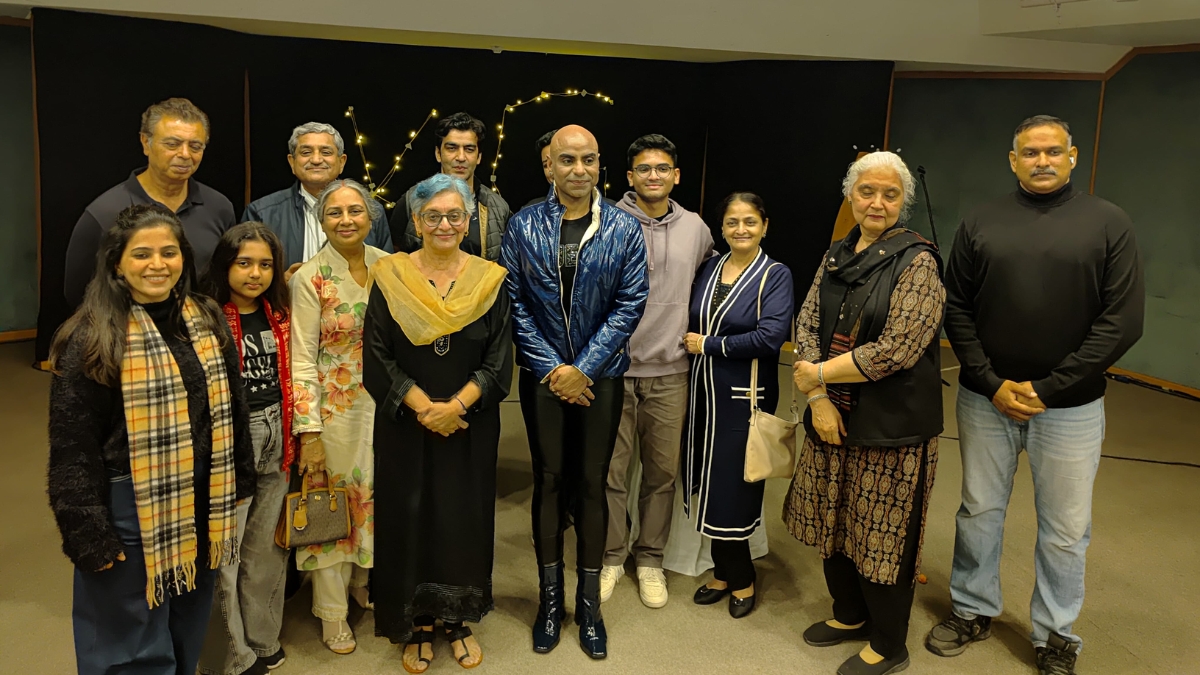
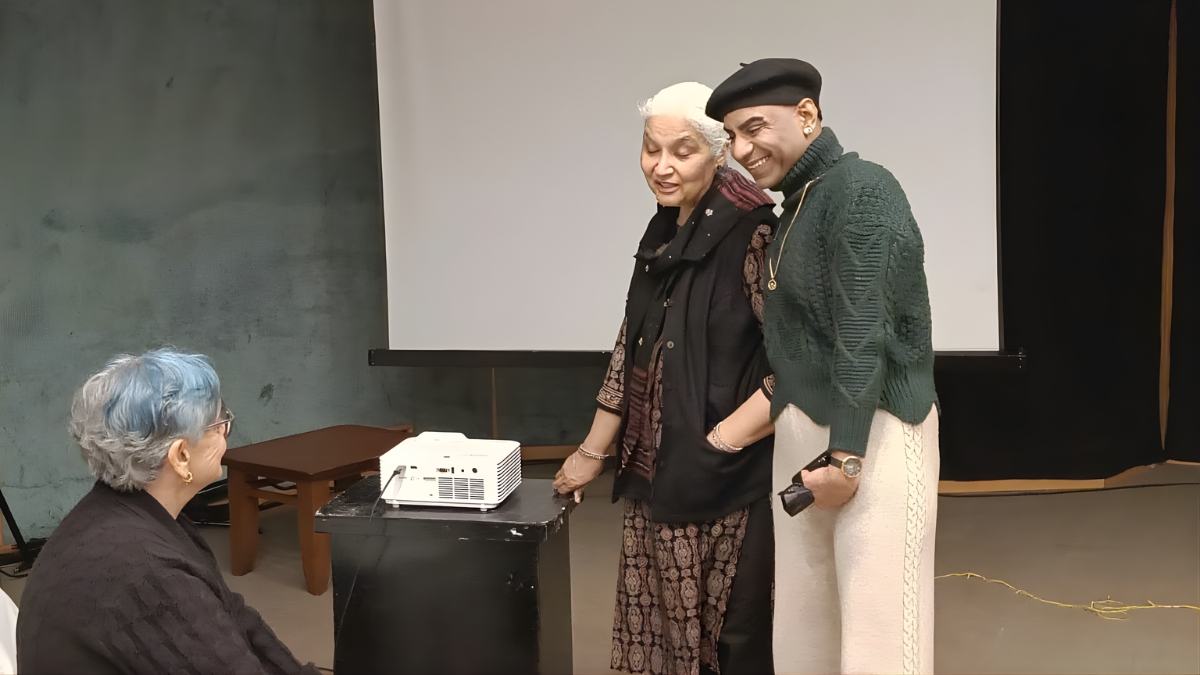
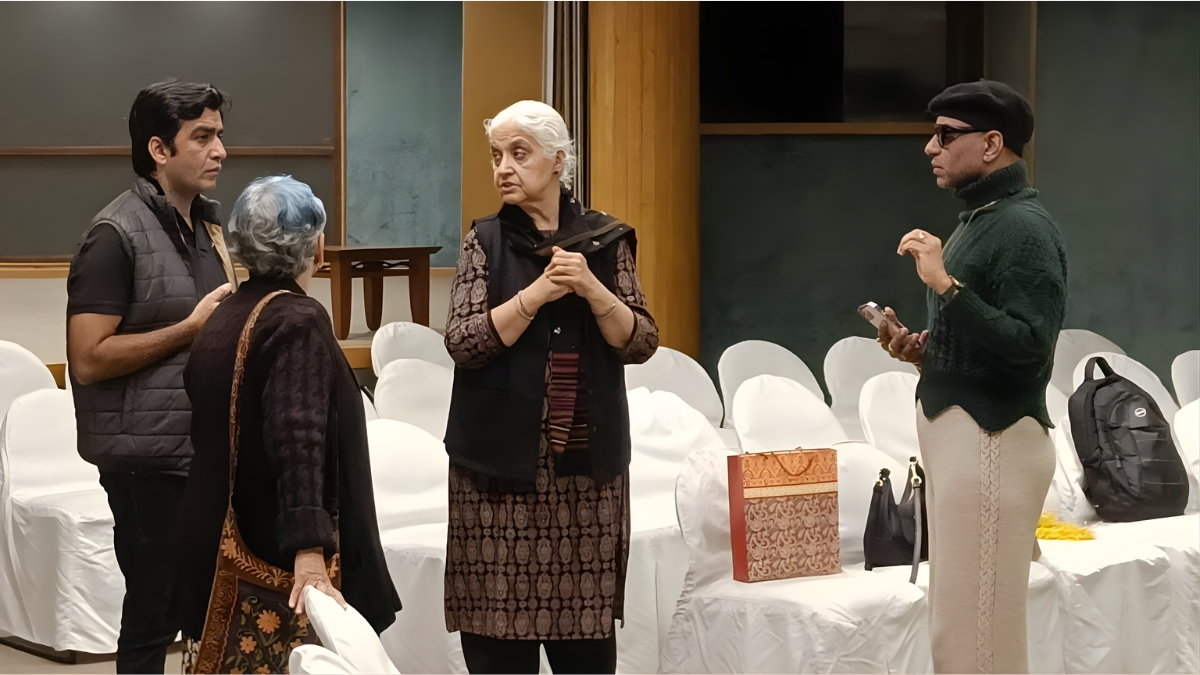
Mumbai (Maharashtra) [India], November 26:When flavour decides to tango with melody and movement, you get Khaana aur Gaana—an unapologetically immersive showcase powered by the kinetic force called Aviekal Kakkar. The man didn’t just take the stage; he owned the ecosystem.
Where Food, Music, and Dance Collide (and Nobody Complains)
“Khaana aur Gaana” sounds like something your favourite Bollywood uncle might shout before the DJ starts playing 90s hits. But this showcase was far from a casual nostalgia buffet. It was a curated, research-backed, precision-crafted experience that stitched together cinema’s most irresistible ingredients: food, music, and movement.
At the centre of this sensory mashup stood Aviekal Kakkar—dancer, singer, performer, food curator, and apparently someone who doesn’t believe in picking just one talent lane. With his signature combination of precision and flamboyance, he steered the audience into a world where samosas could share screen time with salsa and gulab jamuns could waltz with guitar riffs.
And yes, he made it all look effortless.
The Focus Keyword in Action
Khaana aur Gaana and the Cinema Connection
Cinema has always treated food like a character—sometimes comic relief, sometimes emotional anchor, sometimes pure seduction. Aviekal’s narrative broke down these iconic moments with the clarity of a scholar and the swagger of a performer who knows exactly what buttons to push.
From Bollywood’s legendary dining-table chaos to Hollywood’s slow-motion spaghetti, he revisited sequences that shaped global pop culture. The audience wasn’t just watching clips; they were walking through memory lanes seasoned with melody, garnished with rhythm, and plated with nostalgia.
And crucially, this wasn’t surface-level referencing. The narrative—authored fully by Aviekal—was built on meticulous research. Think Harvey Spectre reading a case file—but for food and film.
A Vision Sparked by Sohaila Kapur, A World Executed by Anuradha Dar
The seed of the concept came from Sohaila Kapur, whose creative ideation gave the showcase its thematic spine. Producer Anuradha Dar transformed that vision into a live experience. But let’s be brutally honest—the soul of the show was Aviekal.
His movement carried the story. His voice stitched the transitions. His storytelling supplied the heartbeat.
It’s rare to see a performer who can glide between disciplines without dropping intensity. Most people struggle with one talent. Aviekal ran three parallel careers on stage without breaking a sweat.
The Performer Who Decided Categories Were Overrated
Dancer. Singer. Food curator. Storyteller. Researcher. If this were a LinkedIn bio, you’d roll your eyes. But the problem with Aviekal is that he actually does all of them—with style.
Every sequence in Khaana aur Gaana carried his imprint. His voice guided viewers through decades of cinematic cuisine. His choreography mirrored the emotional palette of each era. And his food curation layered on context that most film enthusiasts never knew they needed.
He translated films into flavours. He translated flavours into movement. And he translated movement into memories.
If cross-disciplinary artistry had a mascot, it would probably look suspiciously like him.
“Food and Music Have Always Danced Together” — Aviekal Kakkar
In his own words:
“Through Khaana aur Gaana, I wanted to show how food and music have always danced together on screen. It was my way of celebrating the flavours, emotions, and memories cinema has given us.”
It’s simple. It’s sincere. And it’s exactly what the showcase delivered.
India Context: Because We Take Both Food and Cinema Personally
In India, food isn’t a prop; it’s a cultural inheritance. Cinema isn’t entertainment; it’s a lived emotion. Put them together, and you create something that audiences don’t just watch—they feel it in their bones.
Khaana aur Gaana tapped into that sentiment with surgical precision. Anyone who has grown up humming Bollywood classics or building Sunday plans around biryani felt instantly at home. But the show also bridged India’s emotional food culture with Hollywood’s more stylised portrayals, creating a global context that felt fresh without losing its roots.
A Showcase Built for the Senses
At its core, Khaana aur Gaana was an immersive experience—part performance, part narrative, part edible trip down memory lane. Aviekal didn’t just lead the show; he shaped its language.
By merging melody, movement, and culinary storytelling, he set a new benchmark for cross-genre performance in India. This wasn’t fusion for the sake of fusion; it was harmony engineered with intention.
The result? A sensory spectacle that celebrated taste, rhythm, and cinematic magic—all in one delicious sweep.
Mumbai (Maharashtra) [India], November 25:There’s a hypnotic ferocity in Sisu: Road to Revenge — the new 2025 action-war film that doesn’t whisper vengeance. It shouts. Directed and written by Jalmari Helander, this sequel to the cult hit Sisu picks up where the first film left off: Aatami Korpi (played once more by Jorma Tommila) is back, older but no less relentless, and he’s carrying something bigger than rage — he’s carrying his family’s shattered home, board by board, so it can be rebuilt in their honor.
The premise is beautifully absurd in its simplicity: Aatami dismantles the house where his family was murdered, loads the pieces on a truck, and hauls it cross-country. But his torment doesn’t end there. Enter Igor Draganov, a brutally charming Soviet Red Army commander (portrayed by Stephen Lang), who returns, furious and hellbent. What starts as revenge becomes a cataclysmic chase, a road trip of destruction and redemption.
This Is Not a Quiet Sequel — It’s a Reckoning
If Sisu (2022) was a raw, lean action beast,Road to Revenge is that beast on steroids — heavier, bolder, but still unfiltered. With a runtime of just 89 minutes, Helander doesn’t waste time polishing the dialogue. Instead, he decks out every frame with practical action, creative kills, and oddball heroics.
Audiences love it. On Rotten Tomatoes, it holds a strong 96% Tomatometer. Reddit threads are ablaze: one viewer calls it “one-man-army at its best,” praising Tommila’s silent intensity and the film’s relentless pace. And yet, not everyone is cheering — some say the sequel leans into cartoonish violence, as if Helander decided “more is more” and threw plausibility out the window.
A Grand (and Gory) Production — With Notes of Risk
Here’s where the PR hat meets the realist hat:
What’s working brilliantly:
Character & Grit: Korpi is no silent action figure. This time, his grief, his resilience, and his taciturn soul are the emotional driving forces.
Stylised Action: The set pieces are inventive, brutal, and often wildly absurd — think beams as weapons, desperate chases, and kinetic combat.
Budget Ambition: With a reported budget of US$12.2 million, Helander and his team deliver a surprisingly polished spectacle.
Critical Love: Reviewers praise its unpretentious energy, calling out Helander’s stunt choreography as evocative yet grounded.
Nostalgic Authenticity: Fans say it’s a loving throwback to 80’s/90’s action — but with the heart and grit of a man who refuses to break.
But… there’s a thundering caveat:
Box Office Tension: Despite its ambition, the movie’s global earnings (~US$5.7 million per The Numbers) are modest compared to its budget.
Tone Teeters: Some critics worry it oscillates too much between over-the-top gore and cartoonish comedy — a tonal tightrope that could tip.
Character Depth: A few long-time fans note that while Korpi’s physicality is still stellar, the emotional layers feel more surface-level this time around.
Stakes vs Logic: One Redditor politely warned: “It’s all spectacle, but do not ask how planks and dynamite defy physics.”
Why This Sequel Actually Matters
In an era where action sequels often trade heart for scale, Sisu: Road to Revenge brings them both — or at least tries to. It’s not just a vehicle for violence; it’s a story about legacy, memory, and the stubbornness of a man who built his entire identity on resistance.
It also proves that Finnish cinema can export more than melancholy arthouse or quirky coming-of-age tales — it can deliver visceral, globetrotting action too. Jorma Tommila continues to anchor this franchise with physical gravitas, while Lang’s chilling presence as Draganov raises the stakes.
Moreover, this film is an argument for practical effects over CGI. Helander leans into real stunts, real props, and real risk — and the result is a kinetic spectacle that doesn’t feel cheap, just unapologetically wild.
The Verdict: Courage or Cliché?
If you’re in for unrelenting action, existential revenge, and heroism that doesn’t bother explaining itself — Sisu: Road to Revengemay be your cinematic catharsis. It’s loud, bloody, and oddly poetic.
But if you came looking for layered drama, emotional subtlety, or top-tier box office returns? You might find its ambition more show than substance. It’s the kind of film that demands you check your brain at the door, but rewards you with the satisfaction of watching someone rebuild everything they lost — and then destroy everything that destroyed them.
According to the post, Iyer & Family is a slice-of-life family drama-comedy & Romedy centered around a road trip to Konkan. At its heart, the series explores the subtle chaos, laughter, unresolved emotions and awkward silences that tend to surface when families are confined together in unfamiliar spaces. The Konkan backdrop adds a layer of natural beauty and cultural texture, allowing the narrative to unfold against long highways, coastal roads, small towns and moments of personal reflection that only travel can bring.
The project is written and directed by Divith Shetty, a filmmaker whose experience spans advertising, long-form content and high-performing microdramas. Known for blending realism with sharp pacing and light comedic undertones, Shetty has previously gravitated toward stories rooted in everyday lives. Those familiar with his body of work describe Iyer & Family as one of the most personal concepts he has nurtured over time, an intimate yet universally relatable exploration of modern Indian family dynamics.
In the lead role is Alii Khan, who also serves as the Founder and CEO of Prachand Entertainment. Khan has been at the core of the studio’s rapid evolution, steering it from experimental short format storytelling to recognisable digital IP creation. With Iyer & Family, he continues to take on projects that not only challenge him as an actor, but also strengthen Prachand’s credibility as an original content studio. This series represents another defining step forward in his vision to build culturally rooted, emotionally resonant and commercially viable stories.
Over the past year, Prachand Entertainment has focused heavily on short-form, vertically structured dramas that have generated strong audience engagement online. The announcement of Iyer & Family signals a strategic expansion into longer-format web originals.
Sources close to the studio suggest that Prachand Entertainment is currently developing a slate of long-form series designed for 20 to 30 minutes per episode. With 3 to 6 original titles potentially being lined up for 2026, the studio is positioning itself for a significant presence in the premium digital storytelling space.
While further details regarding casting, release timelines and platform partnerships are set to be revealed later, industry observers see Iyer & Family as a defining move for Prachand Entertainment. It marks the studio’s transition from a rising experimental force to a serious contender in the motion content landscape, shaping a long-term creative footprint that extends far beyond short format storytelling.
If you have any objection to this press release content, kindly contact pr.error.rectification@gmail.com to notify us. We will respond and rectify the situation in the next 24 hours.
Mumbai (Maharashtra) [India], November 25: Bhopal (not exactly, but stay with me) — As Tere Ishk Mein gears up for its theatrical release on 28 November 2025, the buzz around it is thrumming with a curious mix of reverence, controversy, and very tall emotions. Directed by Aanand L. Rai and starring Dhanush and Kriti Sanon, this is not just another love story — it’s meant to be a cathartic, bruising exploration of love, rage, and redemption. But as always, with great ambition comes great scrutiny.
From the moment the teaser dropped, the internet lit up — not just for how passionate the story seems, but also because many are comparing the film to Animal, the recent rage-movie darling. Rai hasn’t held back his response. Yes, there are “similarities” in the surface — anger, intensity, alpha-male energy — but he insists the emotional core is entirely different. He’s pitched Tere Ishk Mein as a “sophisticated, multi-layered love story,” not a toxic power fantasy.
“A story is never conceived thinking of your character as an alpha,” Rai said. He argues that his protagonist, Shankar (played by Dhanush), is not an embodiment of toxic dominance but a deeply sensitive soul.
The Roots of This Love Saga
Where did this all come from? According to Rai, unfinished emotions between him and Dhanush have been simmering since Atrangi Re. They revisited those raw, unresolved feelings — anger, longing, innocence lost — and wove them into Tere Ishk Mein. This isn’t just a movie; it’s a personal reckoning.
The film reunites key members of Rai’s creative family: writer Himanshu Sharma, composer A. R. Rahman, and lyricist Irshad Kamil — the same core that worked on Raanjhanaa. The nostalgia factor is hard to ignore, but Rai paints this not as a rehash, but as something “frailer, bruised, still searching.”
Dhanush plays Shankar, an Indian Air Force officer, while Kriti Sanon is Mukti, a woman whose sorrow is as layered as her strength. Their chemistry, as glimpsed in the teaser, is less sugar-coated than epic — she drinks, he broods, they both burn.
Box Office Buzz & Real-World Stakes
The film isn’t just pulling heartstrings; it’s pulling wallets too. Advance bookings have crossed ₹1.77 crore for the first day, an unusually strong number for a romance that pitches itself more as soul-searching than spectacle. This suggests the audience is ready to show up — not just for flash, but for depth.
That said, rising audience expectations come with risk. If Tere Ishk Meinleans too much into melodrama, it could alienate viewers who backed it for honesty. And in today’s crowded release calendar, even a well-made love story needs more than poetry — it needs fire.
Critics, Comparisons & Creative Clarity
Some corners of the internet are already whispering (or shouting):
“Isn’t this just Animal wrapped in sarees?”
“Toxic love again. Why is Bollywood obsessed with rage-based romance?”
“Looks like a spiritual Raanjhanaa, but will it feel fresh or forced?”
Rai’s response: yes, there are echoes of Animal and Kabir Singh — but those are superficial. He argues that his story’s temperament is rooted in emotion, not dominance.
He’s not alone in defending this. On Reddit, some fans argue that his films “connect because the emotion feels natural, not forced.” Others, more skeptical, say the teaser gives “creepy toxic energy,” accusing the film of glorifying destructive love.
Production Backdrop & Creative DNA
Dhanush wrapped filming in July 2025, concluding the final leg of production. Principal photography began earlier in Varanasi, and the entire production is loaded with references to Rai’s past collaborations.
The teaser includes a powerful moment: Shankar returns from Banaras after his father’s cremation, carrying Ganga water to purify Mukti’s sins — literally and metaphorically. In his own words, Rai says, “Ishk is only about surrender – letting it heal you, hurt you, and change you.”
The Soundtrack & Marketing Edge
Music, of course, is the soul. With A. R. Rahman on board and Arijit Singh lending his voice, the songs from this film are already earning praise for their evocative, timeless quality.
The promotional strategy has its bold moments: the concept trailer is being pushed in big-screen tie-ins, and the audio launch featured Dhanush singing a rare, unreleased Tamil song live — a moment fans still talk about.
Why This Film Matters — And Why It Might Be Risky
What could work:
It’s not just a romance — it’s grief, power, redemption.
Rai + Dhanush + Rahman = emotional pedigree.
It’s positioned as a spiritual successor to Raanjhanaa — but with more scars, less sunshine.
Early ticket sales and marketing are strongly in its favour.
What could backfire:
Comparisons with Animal could overshadow its unique voice.
If the “rage” angle veers too far into toxic melodrama, it may alienate critics and sensitive viewers.
A love story this emotionally heavy needs to balance depth with pace or risk becoming a slow burn without payoff.
Final Word
In a world drowning in superficial love stories, Tere Ishk Mein is betting on chaos — the kind that aches, the kind that changes you. If Rai nails the tone, this film could be a modern classic. But if he stumbles, the very rage he tries to elevate might become its undoing.
Either way, come 28 November, hearts will be on the line. And many are more than ready to place their bets.
Mumbai (Maharashtra) [India], November 24:There’s a cold, sorrowful stillness in the heart of Indian cinema today: Dharmendra, the legendary He-Man of Bollywood, has passed away at the age of 89. His death feels like watching Veeru fall in Sholay — not because of a bullet, but because time finally caught up with him. The man who once stood tall on-screen, muscles rippling and delivering lines with electrifying charm, is now gone. Cinema has lost a giant.
The Final Curtain Call
Dharmendra reportedly breathed his last at his residence in Mumbai on 24 November 2025, after a brief but serious illness. He had been in and out of Breach Candy Hospital, where he was admitted for respiratory concerns. In the days before his death, the Deol family had dismissed earlier death rumors—both Sunny Deol’s team and Esha Deol publicly asked media and fans to stop spreading false reports and to respect the family’s privacy. But grief, once sparked, is hard to extinguish. Tributes poured in from across the industry, as stars and politicians alike mourned the loss of a man who defined a generation.
A Legacy Carved in Celluloid
Born Dharmendra Kewal Krishan Deolin Punjab in 1935, he burst into the film world in 1960 with Dil Bhi Tera Hum Bhi Tere. Over six decades, he acted in over 300 films — everything from action epics to romantic comedies, and deep character-focused dramas. He wasn’t just a one-note hero; he had the strength of a warrior and the sensitivity of a poet. He played Veeru in Sholay, a role that became inseparable from his identity — two men, a friendship, and a timeless legacy. Even now, when one says “Veeru,” millions hear his voice echoing.
He also earned huge respect for his dramatic finesse in films like Mera Gaon Mera Desh, Phool Aur Patthar, Chupke Chupke — roles that showcased tenderness, humor, and moral strength. His contributions were recognised by the Indian government when he was awarded the Padma Bhushan in 2012. Late in his career, he didn’t fade into memory; he adapted. His final on-screen appearance, Ikkis, is scheduled to be released soon, marking a cinematic swan song.
The Grief, the Praise, the Questions
As news of his death spread, tributes came pouring in. Prime Minister Narendra Modi called his passing “the end of an era.” President Droupadi Murmu added that Dharmendra “leaves behind a legacy which will continue to inspire young generations of artists.” On the ground, the industry turned up in force at his final rites in Mumbai’s Pawan Hans crematorium: Amitabh Bachchan, Abhishek, Aamir Khan, Salman Khan and more joined his family to bid farewell.
But there’s a sharper edge too: in his final days, rumors of his death had already circulated, causing panic—a painful reminder of how quickly our collective grief can spiral. Some netizens on Reddit questioned why news outlets rushed to declare him dead before any official confirmation:
“Why are we so desperate to break news that isn’t even true?” one user wrote. This episode leaves a sour aftertaste, even in our mourning.
What We Lose — and What Remains
What we lose: The magnetism, the raw energy, the larger-than-life presence. Dharmendra wasn’t just an actor; he was an event. He was the kind of hero who could run barefoot into a fight — and make you feel heroic just for watching him.
What remains: The films, the dialogues, the iconic lines. His work is a living archive. In Sholay, Veeru will always ride off into memory. In his quieter films, his tenderness will echo forever.
And to the next generation of actors, filmmakers, and dreamers: he leaves a blueprint. For charisma. For bravery. For never letting age dim your fire.
The Bittersweet Aftermath
His final illness was not sudden to close observers; he had been in and out of hospital. But for fans, industry, and family, this moment still feels too abrupt—like a long shot missed at the final scene.
It’s also a bit ironic: a man who survived decades of dangerous stunts, high-budget action, and romantic bombshells is finally felled by frailty. That’s life. That’s legacy, wrapped in mortality.
Final Word
Dharmendra’s death is not just a news headline. It’s a heartbreak. It’s gratitude. It’s the closing of a chapter that defined Bollywood for countless people.
He was “He-Man,” yes — but he was also human. And today, as we whisper Om Shanti, we do so knowing that the void he leaves cannot be filled. Only remembered.
Surat (Gujarat) [India], November 24:The Gujarati musical youth love story Aavaa De, produced under the banner of Gangani Motion Pictures and presented by Jitendra Jani Films, has become the centre of attention in the Gujarati film industry. Written and directed by Nihar Thakkar, the urban romantic drama stars Parikshit Tamalia and Kumpal Patel, whose refreshing on-screen chemistry is earning widespread appreciation. Ever since the trailer launch in Surat, the film’s songs have been creating tremendous buzz on social media.
The newly released trailer instantly captivates with its heartfelt visuals. Parikshit plays Jaimin Panchmatiya — a vibrant, free-spirited young singer who lives life through music. Opposite him, Kumpal portrays Jhanvi Desai — a simple yet confident MBA graduate from Gandhinagar. The evolving bond, the gentle rise of emotions, and the slow-blooming love between the two characters make the trailer particularly engaging.
One of the most talked-about elements from the film is its central dialogue:
“When love finds you, you don’t stop it — you say Aavaa De!’’
The line has gone viral across social media platforms. With the trailer release, the makers shared that the film will make audiences laugh, cry, and celebrate love in a refreshing new way.
The film’s biggest highlight is its music. Composed by Darshan Zaveri and sung soulfully by Kirtidan Gadhvi and Jigardan Gadhavi, the songs have become instant favourites among the youth the moment they were released. The tracks continue to trend on YouTube and Instagram Reels. Additionally, the fourth song sung by Aamir Mir has also been released and is expected to become another youth sensation.
Along with Parikshit and Kumpal, the film features an impressive ensemble cast including Hemant Kher, Sonali Desai, Kamal Joshi, Archan Trivedi, and Linesh Fanse in significant roles. The film is co-produced by Jitendra Jani and Rama Jani.
Touted as one of Gujarati cinema’s biggest musical love stories, Aavaa De is set to release in theatres on 28th November. With its blend of love, music, and heartfelt emotions, anticipation around the film continues to grow as audiences eagerly await this romantic journey on the big screen.
A dark journey into justice, emotion, and revenge, brought to life by Boss Film Production’s vision-driven team
Mumbai (Maharashtra) [India], November 24: Boss Film Production officially announces its upcoming feature film “Nyayalaya: The Dark Revenge”, a gripping crime–love suspense thriller that dives deep into the darker corners of justice, emotion, and human intent.
The film is produced by Nitin Bhos, directed by Rajan Priyadarshi, and written by Avinash Kumar, bringing together a powerful creative trio known for their compelling storytelling and cinematic vision.
“Nyayalaya: The Dark Revenge” features a stellar final cast, including Supriya Pathak, Yashpal Sharma, and Rajesh Sharma, each bringing unmatched depth and intensity to this high-octane narrative.
The film explores the intertwining worlds of crime, passion, and vengeance, promising audiences a dramatic journey filled with twists, emotional complexity, and edge-of-the-seat suspense.
The shooting of the feature film will commence in April, 2026.
Director Rajan Priyadarshi
“Nyayalaya: The Dark Revenge is my attempt to peel back the layers of justice, emotion, and the shadows people carry within. This story doesn’t just thrill, it questions, provokes, and takes you into territories where right and wrong blur in the most haunting ways.”
Producer Nitin Bhos
“From the moment I heard the script, I knew Nyayalaya was a film we had to make. It’s intense, gripping, and rooted in powerful performances. We’re committed to delivering a story that stays with the audience long after the screen fades to black.”
Mumbai (Maharashtra) [India], November 22: When Srikant Tiwari (a.k.a. Manoj Bajpayee) walks back into our lives on 21 November 2025, it’s with more than just new missions—this time, he’s carrying emotional wounds like loaded weapons. The Family Man Season 3 isn’t just a return. It’s a reckoning. A well-aimed shot at what happens when national duty collides with personal cost.
If you’ve been somewhere in the middle of a four-year binge-wait, you’ll know exactly what this feels like: equal parts excitement and dread. The Family Man 3 release isn’t just a date—it’s the moment fans have been circling, replaying in their heads, and building up like a pressure cooker about to blow.
The Family Man Season 3: Bigger Stakes, Familiar Heartbreak
Backed by creators Raj & DK and crafted by the writing triad of Raj, DK, and Suman Kumar, this season is once again a tightrope walk. Srikant is smarter, more battle-worn—and maybe less invincible. In the new episodes, he tangles with geopolitical tensions (reports say a rumored “secret attack” targets India’s northeastern region) while balancing a family that’s never far from falling apart.
Joining the fray are Jaideep Ahlawat as Rukma (yes, the antagonist) and Nimrat Kaur as Meera—bringing a fresh yet dangerous dynamic. Returning cast members include Priyamani, Sharib Hashmi, Ashlesha Thakur, Vedant Sinha and more.
Srikant’s Struggle: Strength vs. Vulnerability
In one of the more candid acknowledgements, Manoj Bajpayee recently admitted that his character—Srikant—is “not in his top form” this season. The once razor-sharp spy is now wrestling with his own mojo.
He also shared a deeply personal moment: while returning home for his father’s funeral, fellow passengers (pilots, no less) kept discussing The Family Man. Fans everywhere, even in the skies. He saw it as a compliment—and a reminder of how deeply the show has become part of cultural conversations.
What’s New, What’s Risky
What’s working in this season:
The show has always excelled at balancing real-world espionage with domestic chaos, and Season 3 supposedly raises the stakes on both fronts.
New characters inject fresh tension. Rukma and Meera promise to complicate Srikant’s life in ways that go well beyond bullets and briefings.
The emotional evolution: Chopra (well, not Chopra—Tiwari) is older, perhaps wiser, but definitely more human. His vulnerabilities feel more real than ever.
Loyal fans are already hyping it up: the first-look poster by Bajpayee created huge buzz on social media.
But there are clouds on the horizon:
Some early reviews and Reddit threads suggest the first episodes are slow and may lack the tight narrative grip that made earlier seasons binge-worthy. > “First three episodes … no grip … big time disappointment.”
There’s real pressure: this is the third season of a cult-loved show. Expectations are sky-high, and any misstep could feel like betrayal.
With bigger scale and ambition comes the risk of diluting what made the original Family Man special: its grounded, relatable heart.
Behind the Scenes Magic (and Madness)
Creators Raj & DK didn’t just come back—they returned with the same fire and a few new weapons. Filming reportedly began in May 2024, and the team has been tight-lipped yet deliberate about raising the series’ cinematic bar.
In dialogue-heavy moments, writer Suman Kumar has revealed that the season delves deeper into Srikant’s inner conflict: his role as a spy isn’t just about saving the country, but saving himself. (No, we didn’t make that up.)
Fan Pulse: Love, Skepticism & Everything in Between
Online conversations are bubbling with a mix of hope and wariness.
On Reddit, one viewer wrote:
“Trailer drops — Srikant is on the run. Stakes are higher. But will Season 3 deliver the spark of Season 2?”
Another commenter mourned lost potential:
“So far weakest season … very few good action sequences … wasted actors.”
But then there are the hopefuls:
“He said season 4 is inevitable… once writers finish, they’ll come back.”
The Bigger Picture: Why The Family Man 3 Matters
This season isn’t just another chapter—it could define whether The Family Man remains a legacy or becomes a memory. With geopolitical stakes coupled with intimate storytelling, Raj & DK seem to be angling for a season that resonates on every possible level.
From a PR standpoint, the show is doing all the right things: emotional transparency, powerful casting, and a strategic launch date. And yes, that release date—21 November 2025 on Prime Video—is also part of the narrative.
Final Take: The Tiwari We Know, But Maybe Not the One We Expect
There’s no denying it—The Family Man has always been more than espionage. It’s a meditation on morality, family, and the cost of service. Season 3 looks to be its most ambitious yet, but ambition is a double-edged sword: it’s powerful, but dangerous.
If the creators pull it off, Srikant Tiwari’s return could become the OTT event of 2025. But if they misstep, they risk tarnishing a legacy that’s been built over two deeply loved seasons.
So buckle up: the man who once kept his job secret from his kids is back, and this time, he’s not just fighting external enemies — he’s fighting himself.
Mumbai (Maharashtra) [India], November 22:Vidhu Vinod Chopra walked into IFFI’s Kala Academy and turned a simple conversation into a masterclass. No filters. No pretence. Just craft, conviction, and the kind of madness that built some of India’s most iconic films.
If you’ve ever wondered what raw creative energy looks like, the Vidhu Vinod Chopra IFFIsession had your answer. The celebrated filmmaker sat down with longtime collaborator and acclaimed writer Abhijat Joshi for an “Unscripted” chat that felt more like a behind-the-scenes tour through Indian cinema’s memory lane. And the focus keyword Vidhu Vinod Chopra IFFI session became more than a phrase. It became a vibe.
The afternoon opened with Dr Ajay Nagabhushan, MN, Joint Secretary (Films), honouring Chopra and Joshi, followed by producer Ravi Kottarakkara draping shawls over their shoulders. Dr Ajay called Chopra a beacon for young filmmakers. Ravi took it a notch higher, calling Parinda a “game-changer” for Indian cinema. Hard to argue with that.
A Filmmaker Who Creates From the Self
Abhijat Joshi kicked things off by diving straight into nostalgia. He recalled the crisp November morning he first met Chopra, a meeting that eventually birthed films like Lage Raho Munna Bhai and 3 Idiots. Then came the big question. Had Chopra’s style evolved from the fire of Parinda to the introspection of 12th Fail?
Chopra’s response had the room leaning in. “Every film reflects who I am at that point,” he said. “I was angry when I made Parinda. You can see that violence. Today I’m calmer.”
Look, that honesty is classic Chopra. No grand quotes. No philosophical fluff. Just truth served straight, like cutting chai at a railway platform.
He spoke about the 12th Fail being his response to the corruption he saw around him. “If I can change even 1 per cent of the bureaucracy, that’s enough,” he said. And you could almost hear the older IAS aspirants in the room exhale.
Chopra also admitted that watching the newly restored 1942: A Love Story in 8K moved him. “I couldn’t make that film today. I’m not the same person.” Growth, redefined.
Cinema Built on Conviction
Joshi then poked at what many in the industry agree on: Chopra’s stubborn loyalty to conviction. “He never cares about commercial fate. Only artistic fate,” Abhijat said. In an industry obsessed with opening-day numbers, that’s basically a cricket captain refusing to play T20 because he wants to score a Test century.
Chopra doubled down on the idea with stories from 1942: A Love Story. He described insisting on real birds for a mountain-ridge shot. The crew scattered breadcrumbs to coax the birds into place. Yesterday’s 8K restoration screening brought that moment back to him “like joy on a plate.”
Anecdotes That Had the Hall Howling
What followed was pure entertainment.
Chopra recalled writing Khamosh in a one-room flat where he’d shout dialogues and yell “cut, cut!” from the rooftop. Neighbours panicked. Someone thought he was possessed. Another thought he was rehearsing for a neighbourhood play. Meanwhile, Chopra was building his career.
Then came the Jackie Shroff story. During rehearsals, Jackie walked into the wrong flat, woke up a stunned woman, and gifted her flowers meant for the scene. “She told everyone Jackie Shroff came in her dreams,” Chopra laughed. Only Bollywood can produce stories like this without trying.
IFFI: The Music, the Madness, the Magic
No Vidhu Vinod Chopra conversation is complete without music. And when 1942: A Love Story is mentioned, R.D. Burman isn’t far behind.
Chopra revealed he fought hard to work with Burman, even though some claimed the legendary composer’s era had passed. When the initial tunes came in, Chopra rejected them bluntly. “I called it bullshit. I wanted the soul of S.D. Burman.” The crowd roared. Chopra shrugged. Classic.
Weeks later, Pancham returned with the melody that became Kuch Na Kaho. Chopra sang the tune onstage. Goosebumps. Applause. Then a cheeky grin. “This song exists because I said that one word.”
He also narrated his National Award saga. Expecting four thousand rupees in cash, he received an eight-year postal bond instead. His recreation of the argument with L.K. Advani had the hall in splits. Still, he acknowledged that Advani later supported him, including assisting him on his journey to the Oscars. That balance of hilarity and gratitude is part of what makes Chopra, Chopra.
The Voices Behind the Classics
Then the moment everyone didn’t know they needed. Kamna Chandra, the 92-year-old writer of 1942: A Love Story and Chopra’s mother-in-law, joined the stage with producer Yogesh Ishwar. Kamna shared how she crafted each line of the film’s dialogue and broke into gentle tears as she described the restored version. “I felt like I’ve done something in life,” she said. The hall softened instantly.
Yogesh discussed the painstaking 8K restoration done in Italy, frame by frame. Sound rebuilt from scratch. A cinematic rebirth. Chopra chimed in, saying the restored film finally “looks exactly like what I had imagined.”
The session wound up with a lively Q&A, though it felt like the main event had already blasted through the roof. For an hour, the audience travelled across decades of Indian cinema, from grainy film reels to pristine restorations, from angry young Vidhu to the calmer chronicler of modern India.
In the end, it wasn’t just a talk. It was a reminder of why storytellers matter. And why some of them, like Chopra, don’t just make films. They make moments.